Aizu-Wakamatsu, in the western reaches of Fukushima, is the most story-soaked castle town in all of Tohoku — about 80 minutes from Tokyo to Koriyama by bullet train, then roughly 70 minutes on the Banetsu West Line. It has three signatures: Tsuruga Castle, the only red-tiled keep in Japan that took a month of shelling in 1868 and never fell; Mt. Iimoriyama, where the teenage Byakkotai samurai died; and an hour out of town, the thatched-roof post town of Ouchijuku, frozen in the Edo period — plus a bowl of soba you eat with a whole leek instead of chopsticks. But here's the one honest line up front: Ouchijuku has no direct train, you change at Yunokami-Onsen Station onto the Saruyu-go shuttle bus (which runs in winter too) — the biggest trap in planning an Aizu trip. This guide covers Tsuruga Castle's fares, Iimoriyama and Sazaedo, the Ouchijuku transfers, negi-soba, and where to soak. To extend north, pair it with Sendai.
- About 2.5 hours from Tokyo: Shinkansen to Koriyama, then the Banetsu West Line to Aizu-Wakamatsu
- Ouchijuku's street is free to walk, but there's no direct train — Aizu Railway to Yunokami-Onsen, then the Saruyu-go shuttle (runs daily, year-round) or a taxi
- Negi-soba is eaten with a whole long leek as your utensil — Ouchijuku's most memorable bite
- Tsuruga Castle keep ¥410 (¥520 combined with the Rinkaku tea house) — Japan's only red-tiled keep
- Mt. Iimoriyama + Sazaedo: the Byakkotai death site and a rare double-helix wooden pagoda (Sazaedo ¥400)
📖 Contents
- 1. Why visit Aizu-Wakamatsu and Ouchijuku
- 2. Ouchijuku: a post town frozen in the Edo era
- 3. Negi-soba: eating soba with a leek
- 4. Tsuruga Castle: Japan's only red-tiled keep
- 5. Mt. Iimoriyama, the Byakkotai and Sazaedo
- 6. Nanukamachi street and Aizu crafts
- 7. Getting there and where to stay
- 8. A two-day, one-night itinerary
- 9. FAQ
Why visit Aizu-Wakamatsu and Ouchijuku
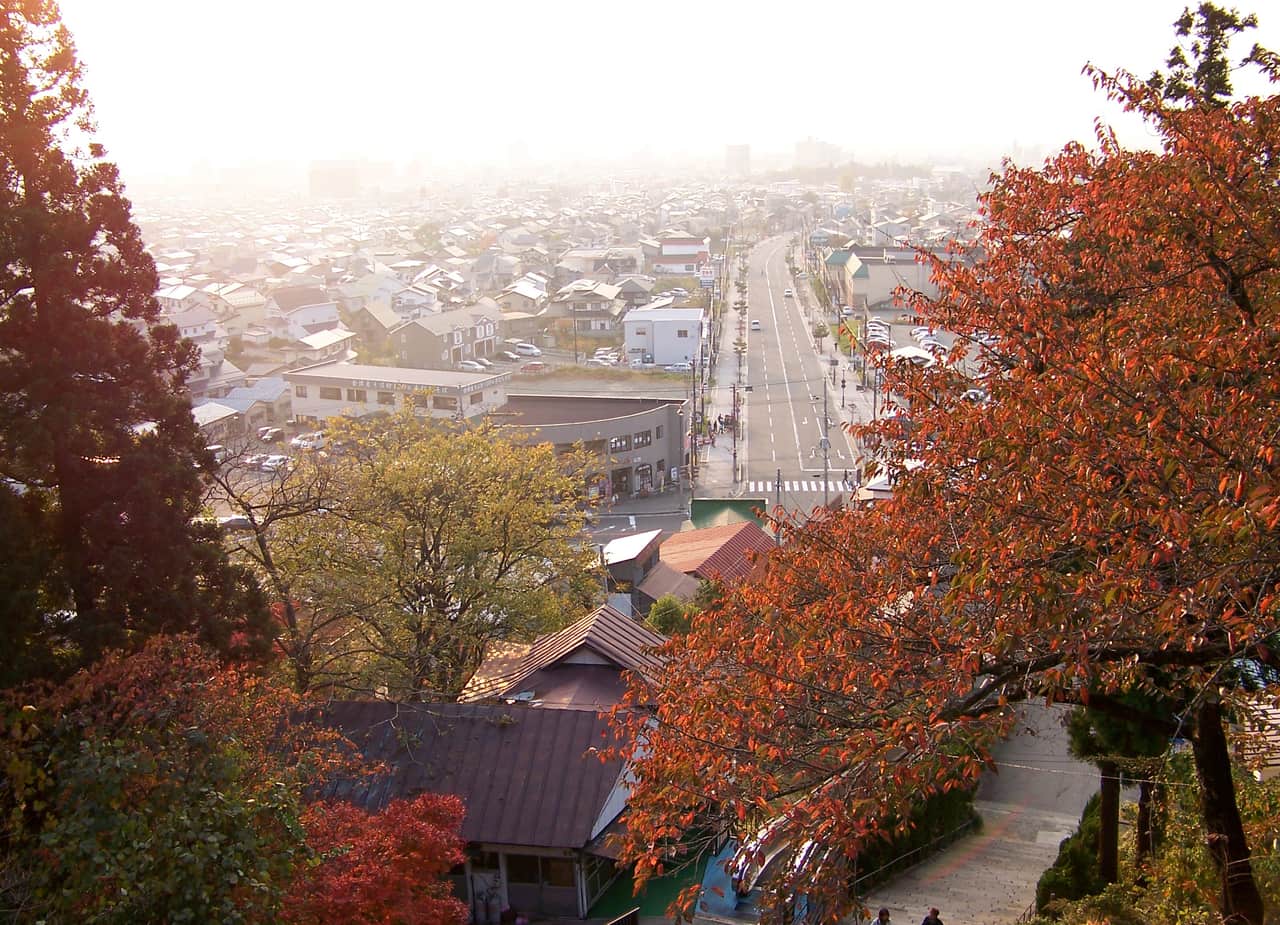
Honestly, Aizu isn't the kind of place that makes you gasp the moment you step off the train. What it sells is the weight of history and a quality of being left behind by time. This was the castle town of the Aizu domain, and in the final act of the samurai era it played the tragic lead — the holdout against the new Meiji government. You'll see a keep that took cannon fire, and the graves of teenage soldiers; these aren't set dressing, they actually happened here. It suits two kinds of traveler: anyone drawn to bakumatsu history and samurai culture, and anyone who wants the real old Japan without the over-polished tourist gloss. If you're after a dense checklist of photo spots, Aizu runs slow and the sights are spaced out. But if you can slow down, it has a depth you won't find on a Tokyo day trip. My framing is simple: Aizu-Wakamatsu is where you read the story; Ouchijuku is where you see the era — do them together for the full picture.
Ouchijuku: a post town frozen in the Edo era
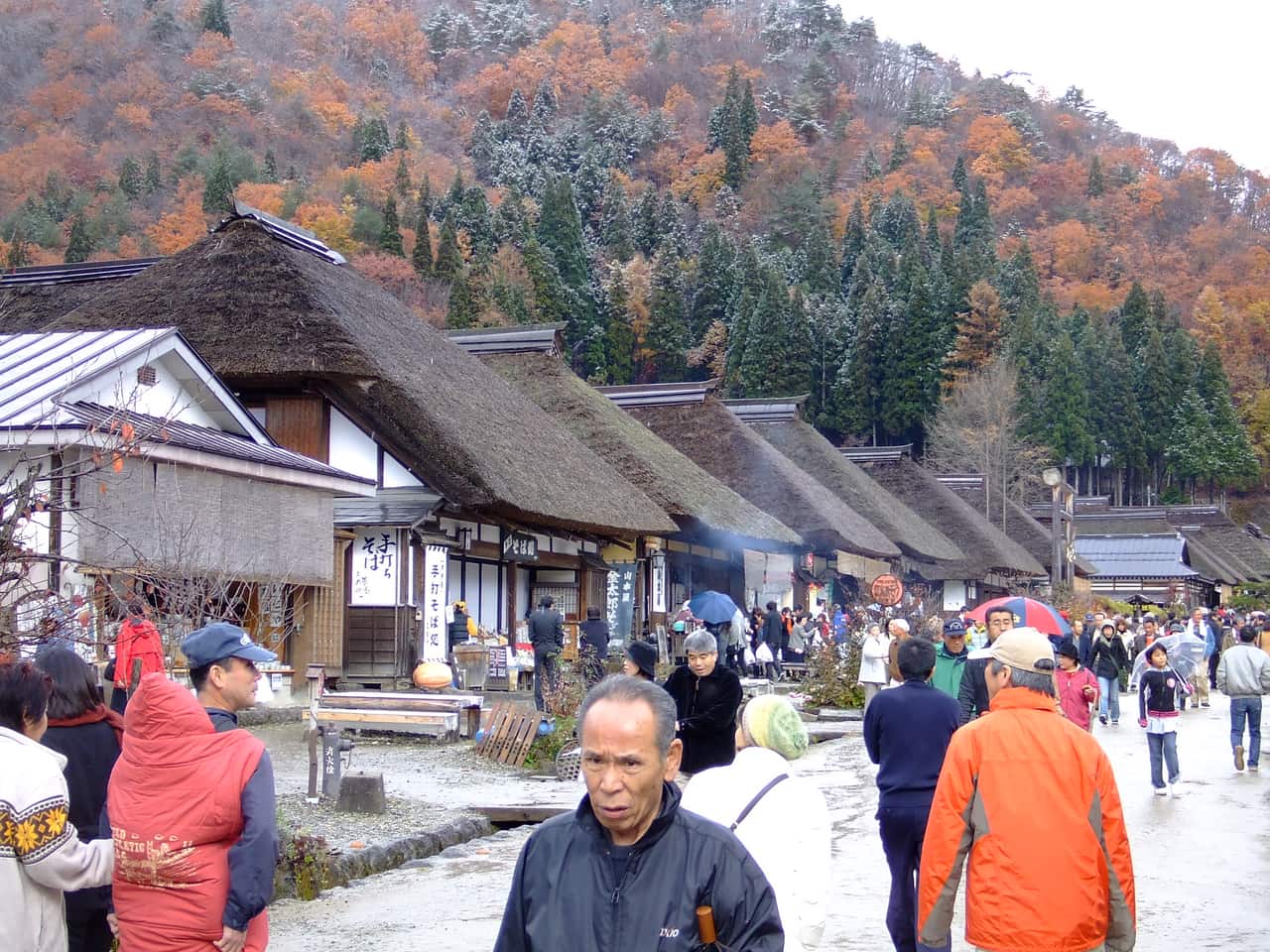
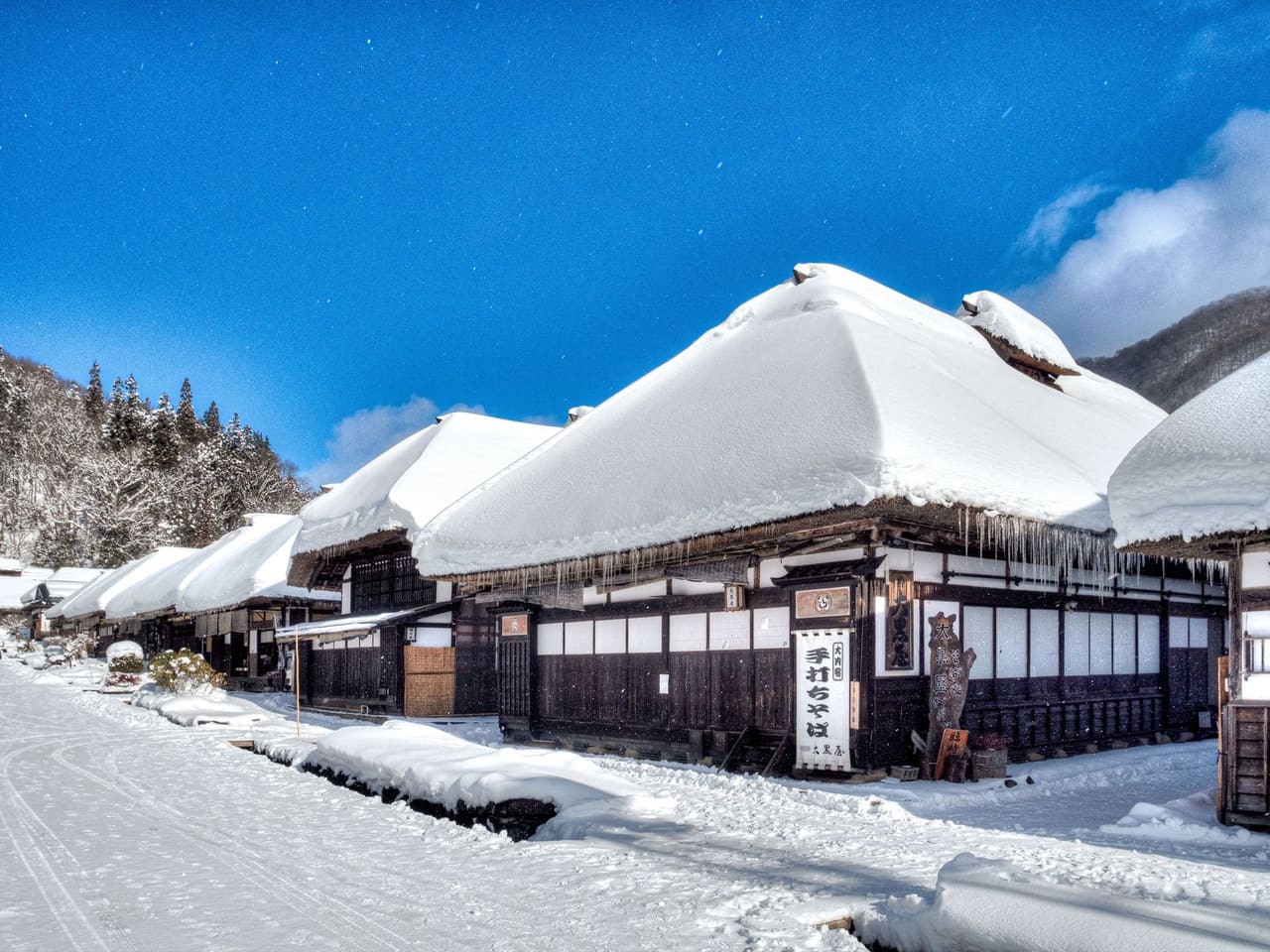
Ouchijuku is the star of this trip. It was once a post-station town on the Aizu Nishi Kaido, the road linking Aizu and Nikko, where Edo-period travelers lodged and changed horses. When the railways routed around it after the Meiji era, the town was forgotten — and as a result it kept its Edo streetscape intact: more than 40 thatched-roof houses lining a single lane. It was designated a Preservation District for Groups of Traditional Buildings in 1981 and is now one of Japan's three great thatched villages. Walking the street is free — roughly 450 meters of earthen lane flanked by thatched houses, most now soba shops, souvenir stores and cafes, with only a few charging museums.
The one thing you must do: climb to the viewpoint (Koyasu Kannon) at the top of the street. Looking back from up there, the whole row of thatched roofs opens out below you — this is the classic Ouchijuku postcard shot, and basically every photo you've seen of the place was taken from here. Come before 9 a.m. or after 3 p.m. to dodge the midday tour-bus crowds; the lane with no one on it is a completely different mood. Honestly, Ouchijuku is small — a proper wander plus a bowl of negi-soba, and 2–3 hours is plenty. Don't block out a whole day for it.
Negi-soba: eating soba with a leek
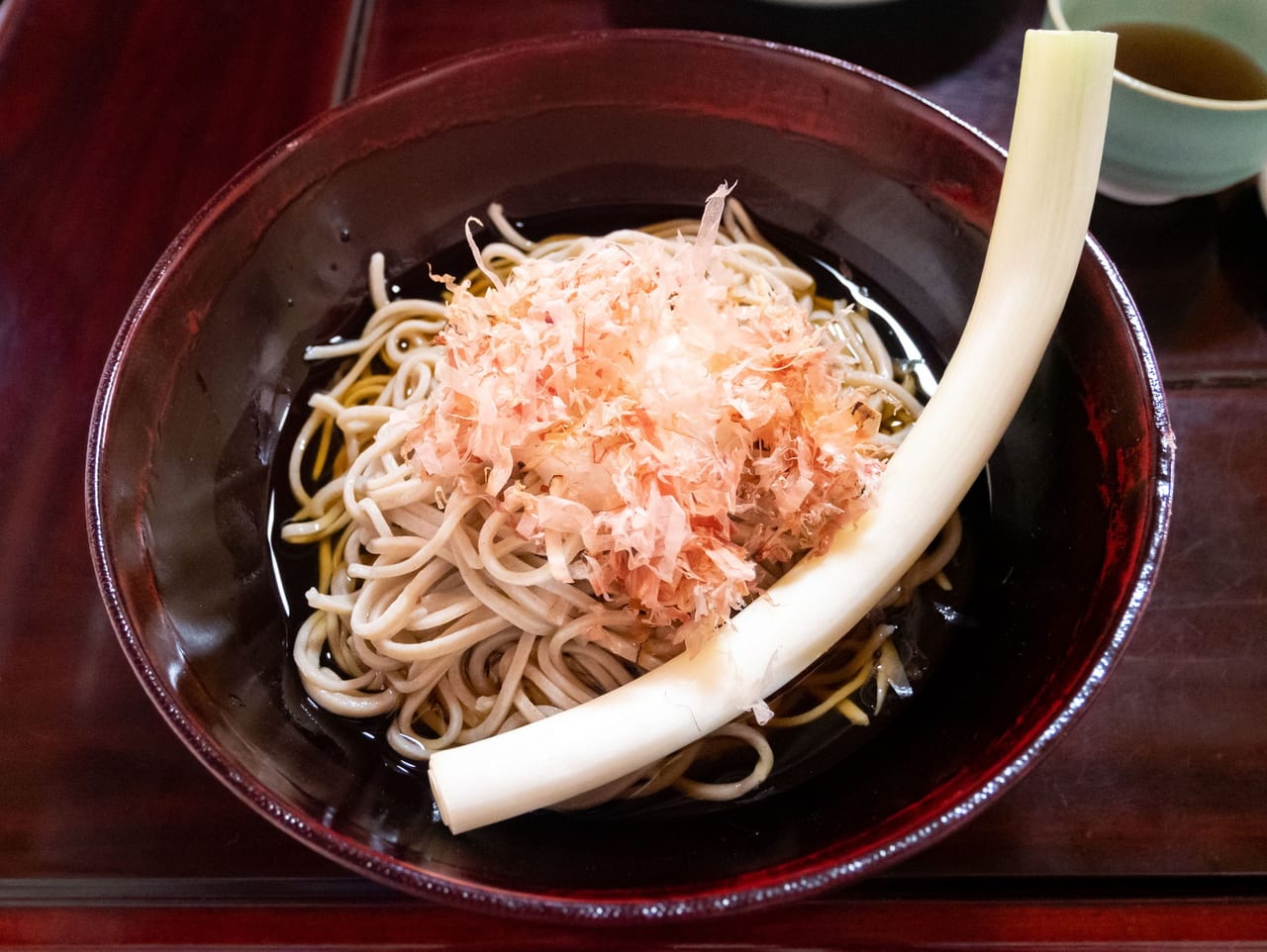
Coming to Ouchijuku and skipping negi-soba is missing the point. Its trick: no chopsticks. A single trimmed long leek stands in the bowl, and you're meant to scoop the buckwheat noodles with the leek while biting it as a sharp, raw condiment. The origin stories vary, but the popular one ties the negi to a wedding pun — negi sounding like "not severing the bond" — making it a good-luck dish at celebrations. Today it's simply Ouchijuku's most memorable experience, served at nearly every shop for around ¥1,300 a bowl.
The honest catch: this bowl runs salty, and the raw leek is pungent — not to everyone's taste, and you're unlikely to actually finish the leek as food. My take: treat it as an experience, not a meal. Order one to share and photograph, then get a normal chopstick soba or the local salt-grilled char (iwana) to actually fill up — better value. Leek-averse? Just ask the shop for chopsticks; nobody cares. Yamagataya and Misawaya are the popular old-street picks.
While you're eating your way down the lane, two other Aizu specialties are worth a look. Tochi-mochi — chewy rice cakes made with horse-chestnut flour — is a thatched-village staple sold warm off the grill, and the deeply earthy jugo-dango (dango glazed in a savory miso-walnut sauce) shows up at several stalls. If you want a sit-down meal rather than a leek showdown, look for shops doing the standard buckwheat zaru-soba; Ouchijuku's water and cold climate make for genuinely good soba, leek or not. Round it off with a bottle of local Aizu sake from one of the souvenir shops — this is brewing country, and the dry, clean Aizu style travels home well.
Tsuruga Castle: Japan's only red-tiled keep
Back in the city, the landmark is Tsuruga Castle (formally Wakamatsu Castle). What makes it singular is the red-tiled (akagawara) keep — currently the only red-tiled restored keep in Japan, using an Aizu technique built to resist the cold without cracking. From a distance the keep wears a warm red crown, nothing like the usual gray-black tiled castles. The history is the real draw: in the Boshin War of 1868 the Aizu domain held out here through a full month of bombardment by the new government's army before the lord chose to surrender. Stand on the walls and the scale of that siege is easy to imagine.
The practical bit: the keep alone is ¥410 for adults (¥150 for elementary/junior-high students); to add the Rinkaku tea house, the symbol of Aizu tea ceremony, the combined ticket at ¥520 is better value. Open 8:30–17:00 (last entry 16:30). Inside is a modern history museum walking through the fall of the Aizu domain, and the top floor overlooks the whole Aizu basin. The standout season is mid-to-late April — around 1,000 cherry trees ring the red-tiled keep with evening illumination, one of the best sakura scenes in Fukushima. Snow on the red tiles in winter has its own quiet appeal too.
Mt. Iimoriyama, the Byakkotai and Sazaedo
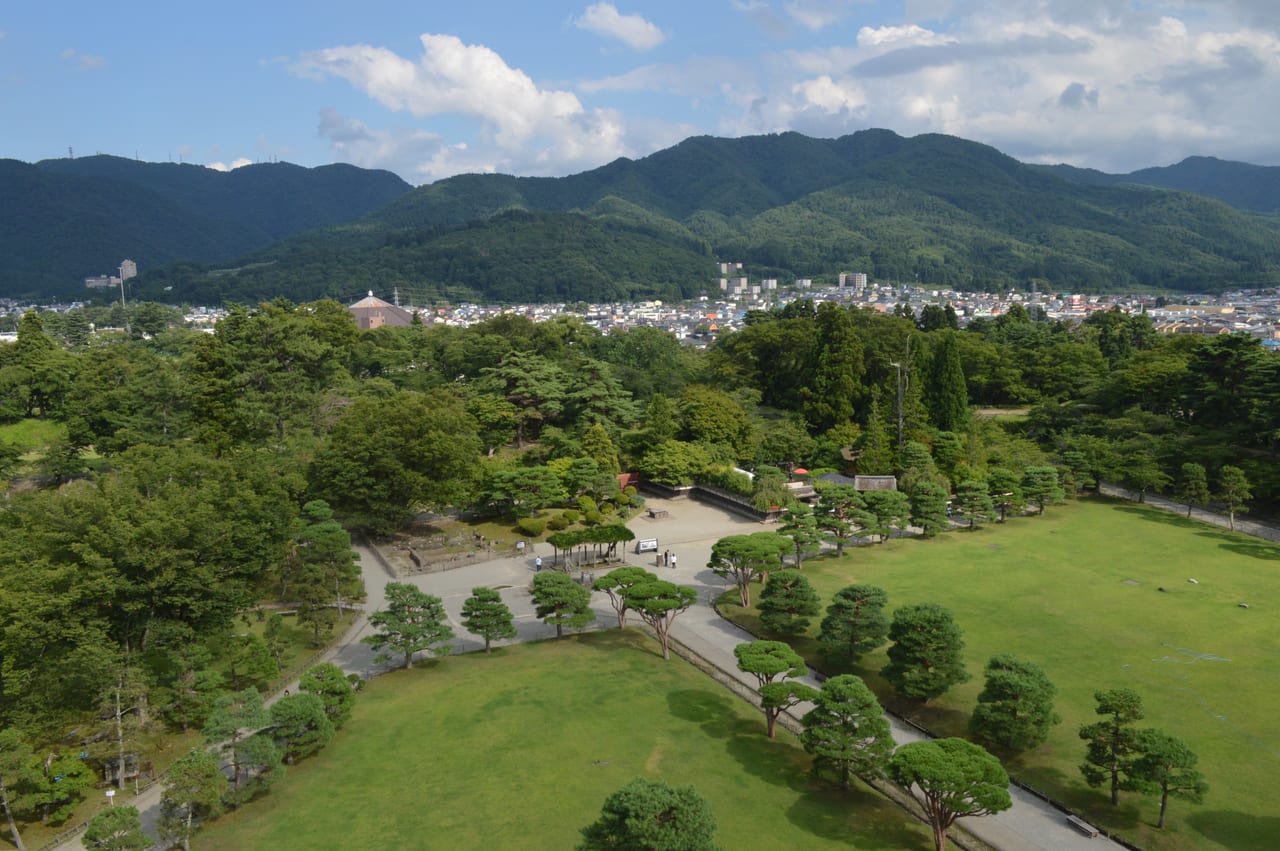
Mt. Iimoriyama is Aizu's heaviest stop, and the one most worth understanding. In the Boshin War of 1868, the Aizu domain formed the Byakkotai ("White Tiger Force") from boys aged 16–17. One unit fell back to Iimoriyama, looked out from the hill, and saw smoke rising toward Tsuruga Castle — they assumed the castle had fallen and the lord was dead, and in despair the young soldiers took their own lives. The castle was in fact still holding. The grave of the nineteen (one was revived and survived) draws incense year-round, and it's a key site for grasping the tragedy of the bakumatsu. Stand where they died, look toward the castle, and the cruelty of that misreading lands.
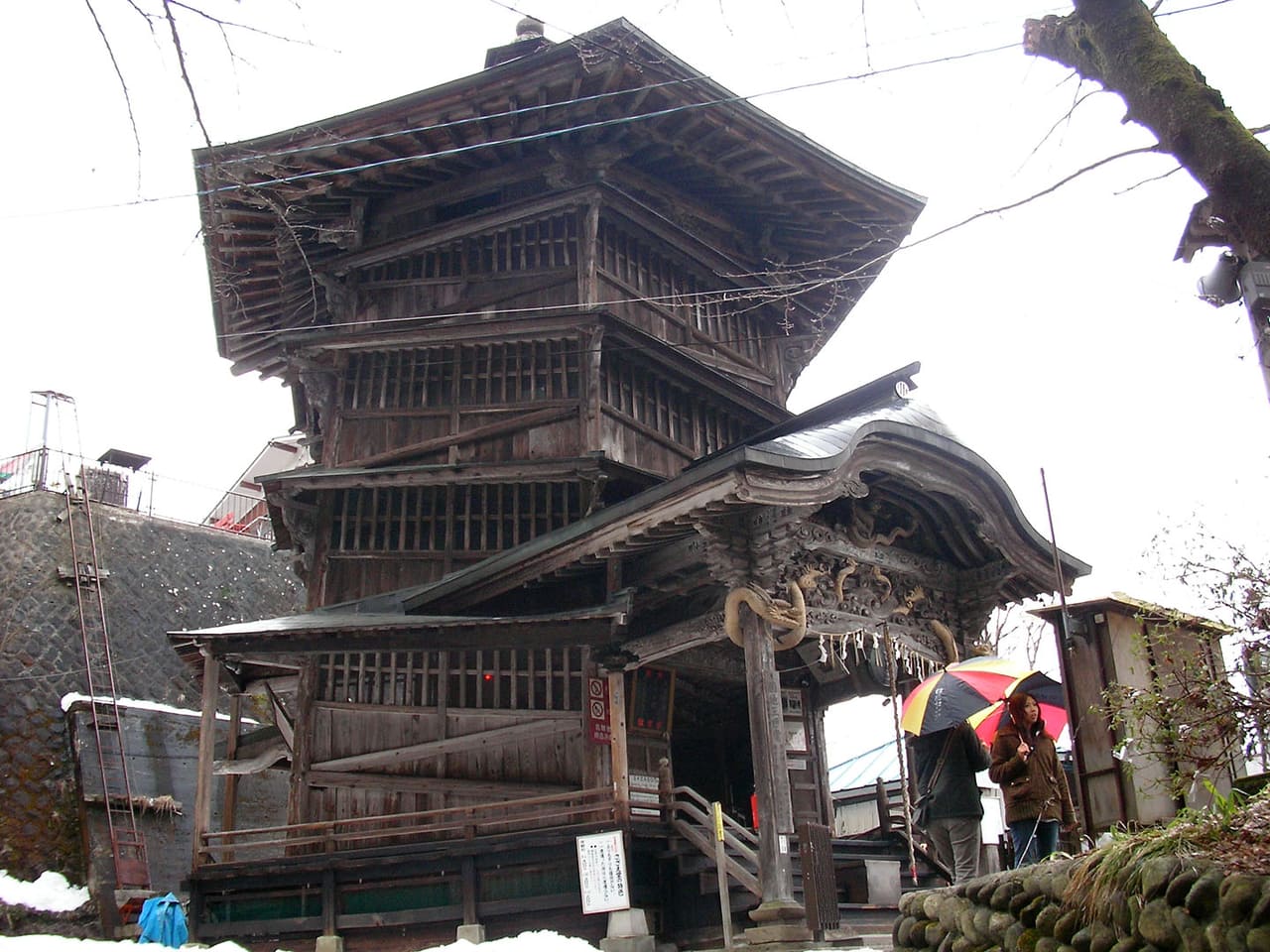
On the same hill stands an architectural marvel, Aizu Sazaedo (formally Entsu-sansodo). Built in 1796, it's a roughly 16.5-meter hexagonal three-story wooden tower and a national Important Cultural Property. Its genius is inside: a double-helix ramp — you climb one spiral up and descend a separate spiral down, so the people going up and the people coming down walk entirely different paths and never meet. A "single-stroke double helix" in timber is extraordinarily rare worldwide, and walking it leaves you wondering how a carpenter dreamed it up over two centuries ago. Admission is ¥400 for adults and well spent. The climb up Iimoriyama includes a steep stone staircase; a "moving slope" escalator (about ¥250) runs alongside if you'd rather save your legs.
Nanukamachi street and Aizu crafts
The soft landing for the city day is Nanukamachi-dori, an old street lined with Taisho- and Showa-era Western-style buildings. It's one stop from Aizu-Wakamatsu Station to Nanukamachi Station, and the lane is full of cafes, sake shops, lacquerware and Aizu-cotton stores in converted old townhouses. Aizu's crafts are the souvenir highlight here: Aizu lacquerware (a 400-year tradition), Aizu cotton (a hard-wearing striped weave), and two rotund red mascots — the roly-poly okiagari-koboshi tumbler doll and the akabeko (red cow), both Aizu good-luck charms that make a perfect take-home. Sake fans shouldn't miss the local brews; this is famous brewing country, and several breweries offer tours and tastings. There's no need to rush Nanukamachi — half an afternoon with a coffee or a cup of local sake is the right speed.
If history is your reason for coming, two more sites round out the Aizu story without adding much travel. Aizu Bukeyashiki, a reconstructed samurai mansion of the domain's chief retainer, walks you through how the ruling class actually lived — its scale and the grim Byakkotai-era exhibits make the bakumatsu drama concrete. And the Oyakuen garden, a strolling pond garden once used by the Aizu lords to cultivate medicinal herbs, is a quiet, well-kept spot that few foreign visitors reach. Neither is essential if you're tight on time, but if you've come this far for the samurai story rather than the scenery, both reward an extra hour. On the food front, save room for Aizu's home cooking: kozuyu, a delicate dried-scallop broth served in lacquer bowls at celebrations, and — for the more adventurous — basashi (horse-meat sashimi), a regional staple that's far milder than it sounds.
Getting there and where to stay
This is the most important section for planning Aizu, so read it before you fix your itinerary. Getting in is two legs: the Tohoku Shinkansen Tokyo → Koriyama in about 80 minutes, then the JR Banetsu West Line Koriyama → Aizu-Wakamatsu in about 65–75 minutes, roughly 2.5 hours in all. The Banetsu West Line isn't frequent and some departures wait for connections at Koriyama, so check times in advance. Whether to buy a JR Pass depends on the wider route — for a plain Tokyo round-trip to Aizu, point-to-point tickets usually win; only multi-city Tohoku trips make a pass pay, and the math is in our JR Pass guide.
Ouchijuku access needs real care because there is no direct train:
- Aizu Railway → Yunokami-Onsen Station → shuttle: take the Aizu Railway from Aizu-Wakamatsu to Yunokami-Onsen Station (a lovely thatched-roof station building), then transfer to the Saruyu-go shuttle bus, about 20 minutes, into Ouchijuku. The free-ride ticket, bought on board, is ¥1,100 for adults and ¥500 for children, valid for 2 days. It's about an hour from Aizu-Wakamatsu.
- The Saruyu-go runs in winter too: the current timetable is daily, running until the Aizu Railway timetable change in mid-March 2027. Reserve by 19:00 the day before for priority boarding; without a reservation you wait for the next bus if one is full. If you miss a bus, take a taxi from Yunokami-Onsen, about 15 minutes.
- The second weekend of February is the Ouchijuku Snow Festival: in 2026 extra evening Saruyu-go runs were added from Ouchijuku back to the station (none extra in the other direction); the 2027 schedule hasn't been announced.
- From the Aizu-Wakamatsu side, buy the combined Ouchijuku discount ticket to cover the Aizu Railway plus the Saruyu-go in one. Driving is also easy; Ouchijuku has a large car park (it fills in peak season and during the snow festival).
For lodging, I strongly suggest a night in one of Aizu's onsen districts. The closest to the city is Higashiyama Onsen (about 15 minutes out, the historic retreat of the Aizu lords, with plenty of long-established inns); toward Ouchijuku there's Ashinomaki Onsen (on the Aizu Railway line, which sets up the next morning nicely). The point of an onsen ryokan is that once the day-trippers clear out you can soak in quiet and hit the sights early without the daily shuffle. Aizu has a wide range of inns and price points; cherry season and snow-festival weekends get tight, so book early. If you like old-school communal baths and onsen culture, the reasoning in our Ginzan Onsen: day trip vs overnight piece applies here too — the onsen town earns an overnight, not a daytime dash. For weather and what to pack, see our Japan weather and clothing guide; Aizu gets heavy snow in winter and cool summer nights, so carry a jacket.
A two-day, one-night itinerary
Here are the sights above pulled into one workable line:
- Day 1 (Aizu-Wakamatsu city + onsen): Tokyo Shinkansen to Koriyama → Banetsu West Line to Aizu-Wakamatsu → start at Tsuruga Castle (red-tiled keep, top-floor basin view, the ¥520 combined Rinkaku ticket) → take the "Haikara-san" loop bus to Mt. Iimoriyama for the Byakkotai graves and Sazaedo → late afternoon stroll Nanukamachi for lacquerware and an akabeko → check into Higashiyama Onsen for a soak, dinner of Aizu home cooking (kozuyu, horse meat).
- Day 2 (Ouchijuku): head out early, Aizu Railway from Aizu-Wakamatsu to Yunokami-Onsen Station → transfer to the Saruyu-go into Ouchijuku → beat the crowds up to the viewpoint for the thatched-street panorama and a bowl of negi-soba → browse the souvenir shops → back to Aizu-Wakamatsu in the afternoon → Shinkansen home from Koriyama (or push on to Sendai and northern Tohoku).
If you only have a day return, it's honestly a scramble — I'd pick one: either the city (Tsuruga Castle + Iimoriyama + Nanukamachi) or Ouchijuku, because cramming both into one day means living on trains. From Aizu you can push north to Sendai (see our Sendai travel guide) for a 3–4 day deep dive into Tohoku; the Tokyo end is in our Tokyo 5-day itinerary.
FAQ
- Q1:How many days do you need for Aizu-Wakamatsu and Ouchijuku?
- Based on how things are spread out, an overnight (two days) works best. The city itself — Tsuruga Castle, Mt. Iimoriyama, the Nanukamachi old street — fills one day, and Ouchijuku sits down the Aizu Railway line with several transfers, so it deserves a half-day to a day of its own without rushing. A Tokyo day return is brutal — the round-trip to Aizu-Wakamatsu alone is close to five hours before you add the Ouchijuku transfers, so you'd spend the whole day moving. Aizu's onsen districts (Higashiyama, Ashinomaki) are well worth a night: soak in the evening, hit Ouchijuku the next morning. To push further north, pair it with Sendai.
- Q2:Does Ouchijuku charge admission, and how do I get there?
- Walking the street is free — Ouchijuku is a preserved Edo-era post town of thatched-roof houses, and the whole lane is open to stroll; only some shops and small museums charge. Access is the hard part: there is no direct train. The usual route is the Aizu Railway to Yunokami-Onsen Station (a beautiful thatched-roof station building), then the "Saruyu-go" shuttle bus about 20 minutes into Ouchijuku; the free-ride ticket sold on board is ¥1,100 for adults and ¥500 for children, valid for 2 days. The Saruyu-go runs daily, winter included; reserve by 19:00 the day before to get priority boarding. If you miss a bus, a taxi from Yunokami-Onsen takes about 15 minutes. It's roughly an hour from Aizu-Wakamatsu; the combined Aizu Railway + bus discount ticket is the cheaper way to do it.
- Q3:What is negi-soba, and do you really eat it with a whole leek?
- You really do. Ouchijuku's signature negi-soba comes with no chopsticks — instead a single long Japanese leek (negi) is stuck in the bowl as your utensil. You scoop the soba with the leek and bite the leek itself as a sharp, raw condiment. The custom is tied to a local wedding pun (negi sounding like "not cutting ties"), and it's now Ouchijuku's most memorable bite. Honestly the flavor runs salty and the leek bite is pungent — not everyone loves it — but skipping it would be missing the point of coming here. Shops like Yamagataya serve it; a bowl runs about ¥1,300. Leek-averse? Just ask for chopsticks; no one minds.
- Q4:How much is Tsuruga Castle (Aizu-Wakamatsu Castle), 2026?
- Per the official Aizu-Wakamatsu tourism info, the keep alone is ¥410 for adults (¥150 for elementary/junior-high students); to add the Rinkaku tea house, the combined ticket is ¥520 and is the better value. Open 8:30–17:00 (last entry 16:30). Tsuruga Castle is the only red-tiled (akagawara) keep in Japan — the red tiles are an Aizu technique built to survive hard winters — and it withstood a month-long bombardment in the Boshin War of 1868 without falling. Inside is a modern history museum, and the top floor overlooks the whole Aizu basin. The cherry-blossom season (mid-to-late April) is its peak, with around 1,000 sakura around the red-tiled keep and evening illumination.
- Q5:What is the Byakkotai story at Mt. Iimoriyama, and is Sazaedo worth it?
- Mt. Iimoriyama is Aizu's most sober stop. During the Boshin War in 1868, the Byakkotai ("White Tiger Force") — boys aged 16–17 — retreated here, saw smoke rising toward Tsuruga Castle, and wrongly believed the castle had fallen, taking their own lives in despair (the castle was in fact still holding out). The grave of the nineteen stands here, and the mood is heavy. On the same hill is Aizu Sazaedo (formally Entsu-sansodo), an 1796 hexagonal three-story wooden pagoda and Important Cultural Property with a rare double-helix ramp inside — people going up and coming down never cross paths. It's genuinely worth a walk-through (¥400 adults). The climb up Iimoriyama has steep stone steps; a slope escalator (about ¥250) runs alongside if you'd rather not.
- Q6:How do I get to Aizu-Wakamatsu from Tokyo? Do I need a JR Pass?
- The mainstream route is the Tohoku Shinkansen Tokyo → Koriyama in about 80 minutes, then the JR Banetsu West Line to Aizu-Wakamatsu in about 65–75 minutes — roughly 2.5 hours total. The Banetsu West Line isn't frequent and some connections wait at Koriyama, so check times in advance. JR Pass or not? For a simple Tokyo round-trip to Aizu, point-to-point tickets usually beat a pass; only multi-city Tohoku trips (Sendai, Yamagata, Morioka) tip it the other way — run the math with our JR Pass guide. An alternate approach is the Tobu Railway from Asakusa via Kinugawa into the Aizu Railway, which lets you fold in Nikko and lands you on the Ouchijuku line, but with more transfers and time. For the Tokyo end, see our Tokyo 5-day itinerary.
Related reading:
Sendai Travel Guide 2027: Matsushima, Aoba Castle, Zuihoden & Gyutan
Tohoku's gateway and City of Trees — Matsushima of the Three Views, Date Masamune's Aoba Castle ruins and Zuihoden, Jozenji-dori, gyutan and zunda.
Ginzan Onsen Day Trip vs Overnight Stay 2026
By day it is crowded; the gaslight magic happens after sunset — day trip or overnight, and is the extra night worth it?
JR Pass 2026: Is It Still Worth It?
Four real routes calculated, six alternatives that may beat the Pass.