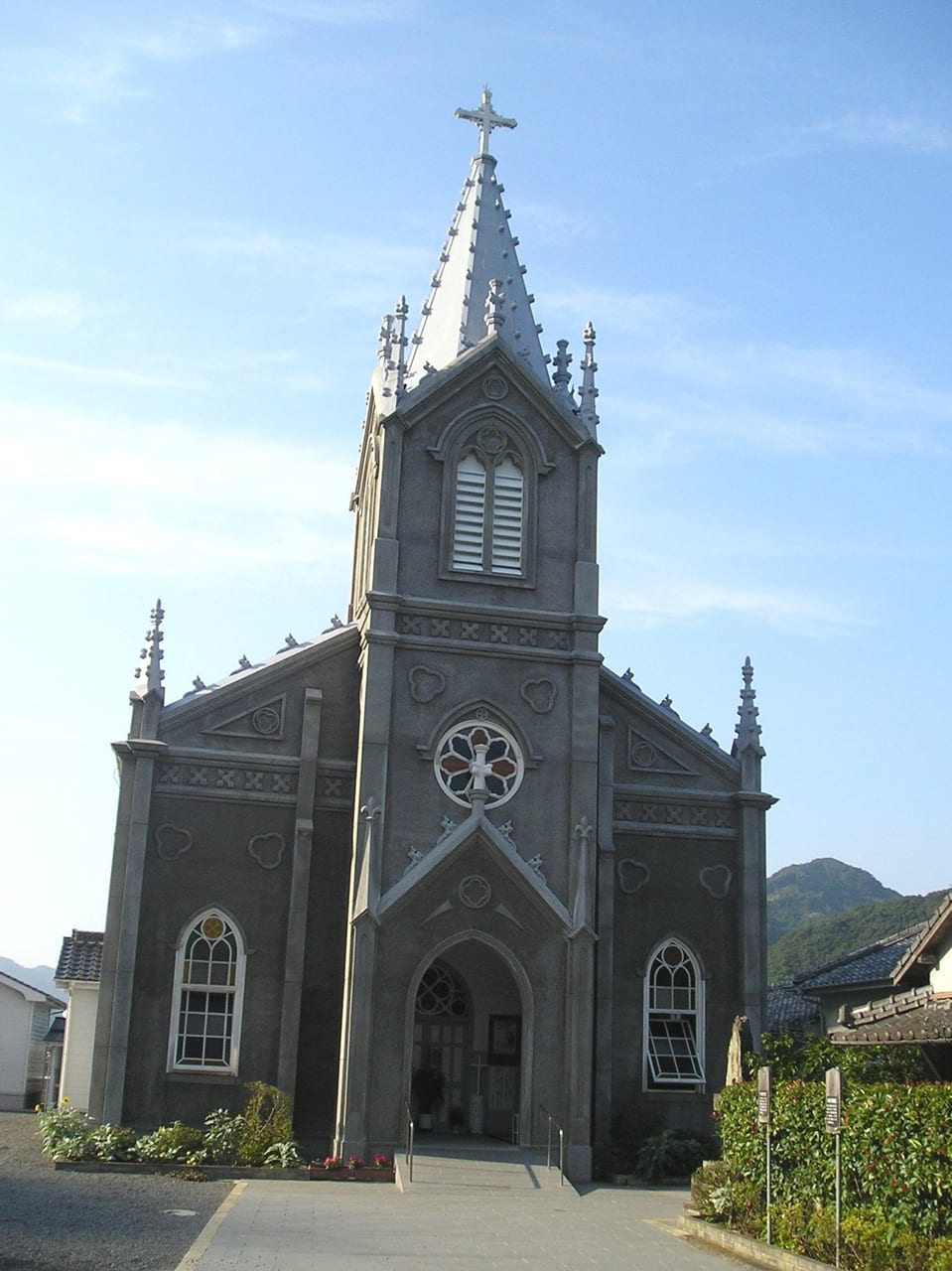
Amakusa is a group of islands off the coast of Kumamoto, often left on the edge of a Kyushu plan — but it holds two cards that are hard to find anywhere else: around 200 wild bottlenose dolphins resident off Tsujishima, with a 90%+ sighting rate year-round, and the 2018 UNESCO World Heritage Sakitsu Church and fishing village — a Gothic church with a rare tatami-mat floor, its altar built on the very spot where hidden Christians were once forced to trample on holy images. Add the 1966 Five Bridges (Pearl Line) drive, East China Sea sunsets, and tiger prawns and sea urchin, and Amakusa is a genuinely underrated island getaway. But here is the blunt thing to know up front: Amakusa's sights are far apart and public transport is thin — this is a destination where you really need a rental car, and most people drive in from Kumamoto City over the bridges. This guide covers the dolphin boats, the Sakitsu and Oe churches, the Christian history, the Five Bridges, the sunsets, the seafood, and access from Kumamoto and Shimabara. To thread Amakusa into a wider Kyushu loop, see our Kyushu 3-day rail itinerary.
- 90%+ wild-dolphin sighting rate: ~200 resident bottlenose dolphins off Tsujishima, year-round; boats from about ¥3,000 for adults
- Sakitsu Church = World Heritage: inscribed 2018, tatami interior, altar on the old fumi-e site; reserve ahead to enter, no photos inside
- Oe Church: a hilltop white Romanesque chapel that pairs with Sakitsu to complete Amakusa's Christian story
- The Five Bridges (Pearl Line), opened 1966 — the classic self-drive sea-view route
- Rent a car, strongly advised: ~2 hours from Kumamoto City over the bridges; seafood means tiger prawn, sea urchin, and the East China Sea sunset
📖 Contents
Why visit Amakusa
Honestly, Amakusa is not the kind of place that overflows with back-to-back sights. Its value is that it gathers, on one set of islands, a handful of things you rarely get together: reliably-seen wild dolphins, a genuine World Heritage church, four centuries of hidden-Christian history, East China Sea sunsets, and a first-rate fishing ground. Each is fine on its own, but getting all of it in a single trip is the real draw. It suits two kinds of traveler — families and couples who want wildlife without a rushed conveyor-belt, and thoughtful travelers drawn to history and religious heritage. If you want a dense, walkable urban checklist, Amakusa is not it; it runs on driving. But if you are willing to rent a car and roll slowly between the bridges and the west coast, it is one of the few corners of Kyushu where you can genuinely switch off. My framing is direct: Amakusa is a dual-axis "island getaway + World Heritage" destination, not a drive-by day trip — give it two days and it gives the most back.
Wild dolphins, Amakusa's signature
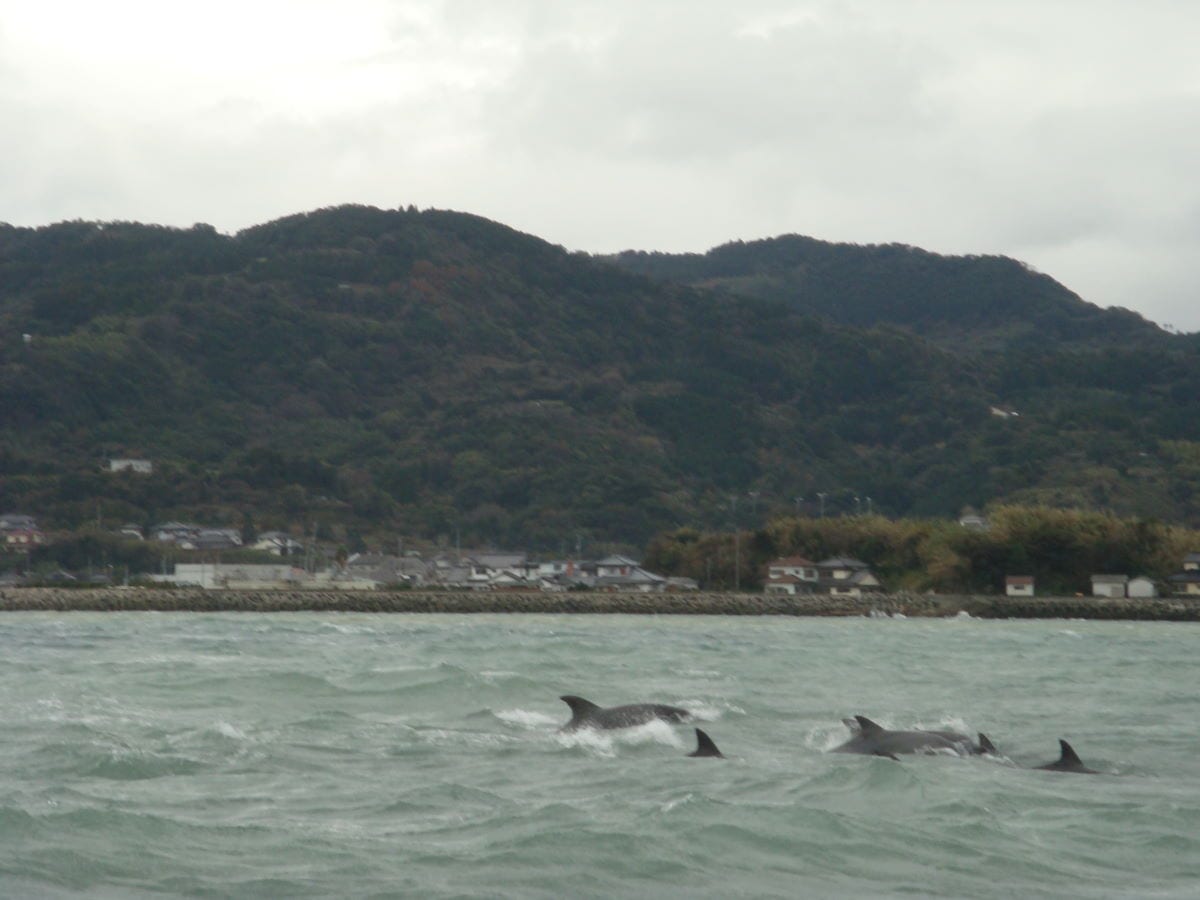
If you do one thing in Amakusa, make it a wild-dolphin cruise. This is not a show or a captive marine-park animal — it is a pod of around 200 wild bottlenose dolphins resident off Tsujishima, at the north tip of the lower island. Per the Amakusa dolphin-cruise operators and the city tourist office, because this is a resident, non-migratory pod living in these current-rich waters, you can sail out and find them year-round, with a sighting rate above 90%. For something filed under "wildlife watching," that number is honestly absurd.
The practicals: boats are roughly ¥3,000 and up for adults (junior-high age and over), about ¥2,000 for children, cruises run 60–90 minutes, and most operators cluster around Futae in Itsuwa, near Tsujishima. The one thing to keep in mind — these are wild animals, so 90% is not 100%, and strong wind or swell cancels the sailing outright, which is a safety call, not laziness. So call or check the website the day before to confirm and reserve; to improve your odds, the calmer morning sailings often beat the afternoon. When the boat closes in, the dolphins ride the bow wave and even breach — kids lose their minds, and it is the core reason I think Amakusa is worth a dedicated trip.
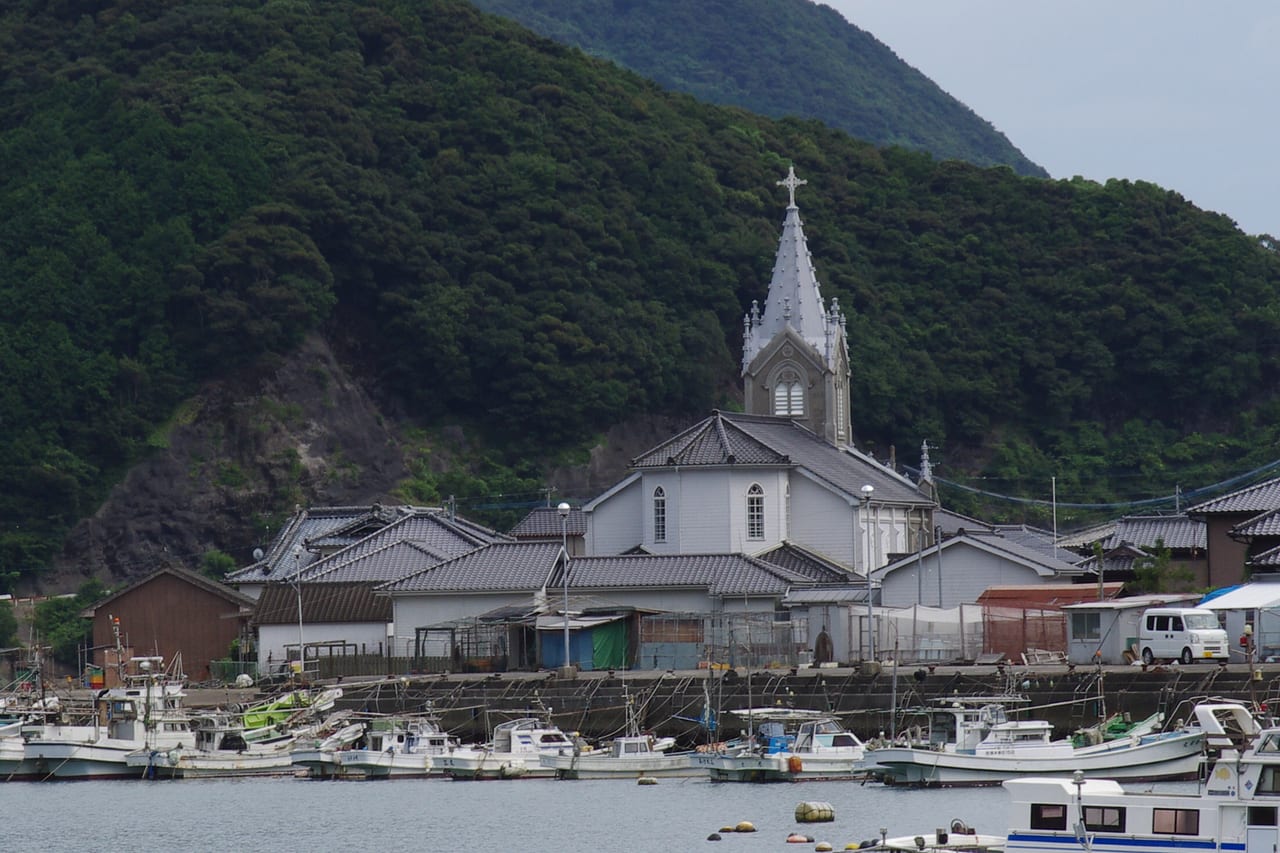
Sakitsu Church & village (World Heritage)
Amakusa's cultural anchor is the Sakitsu village and Sakitsu Church. In July 2018 it was inscribed as a component of the UNESCO World Heritage "Hidden Christian Sites in the Nagasaki Region" — note that this is the same listing as the hidden-Christian sites in Nagasaki (Oura Cathedral, the Sotome district and others); Sakitsu is the Amakusa piece of it. In other words, walking Sakitsu, you are tracing the same chapter of history — keeping a forbidden faith alive in secret — as Nagasaki.
The present church was designed and built by the master craftsman Tetsukawa Yosuke, completed around 1934, with a dark Gothic exterior set squarely in the middle of the fishing village. Its most remarkable feature is not the exterior but the interior: the nave is floored with rare tatami mats, and the altar stands precisely on the spot where villagers were once forced to trample on holy images (the fumi-e) — turning a place of humiliation into the heart of worship, a detail that carries Sakitsu's full historical weight. A practical note: because it is a working church and a place of worship, entering the nave requires contacting the official desk in advance (a reservation), photography inside is prohibited, and you should keep quiet. No booking is no problem — admiring the church from outside and walking the whole village (stone lanes, the seaside torii, the marks of faith on every house) is entirely free and open, because what is inscribed is the entire "cultural landscape," not just the one building.
Oe Church & the Christian history
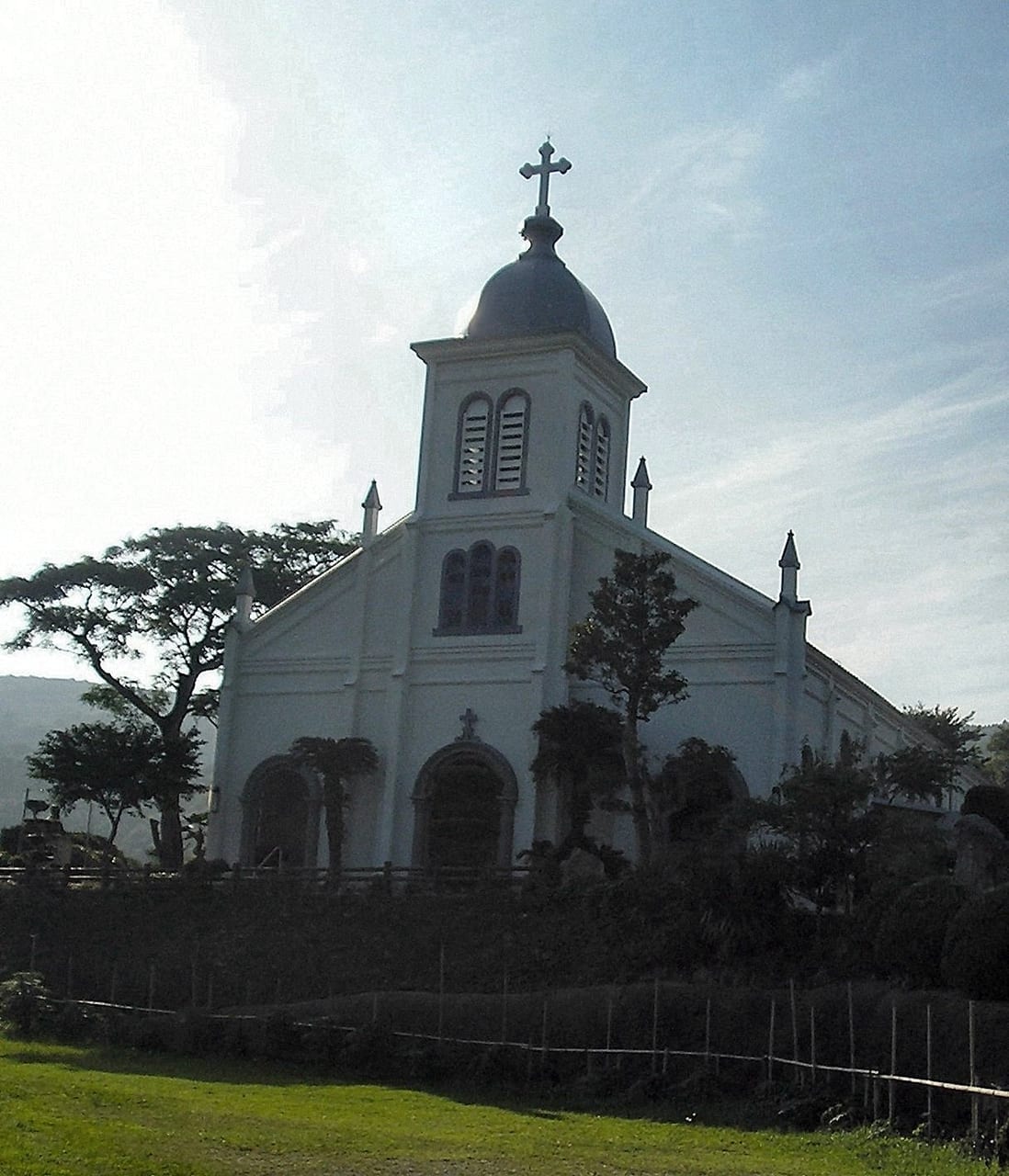
About a 15-minute drive from Sakitsu sits a church with the opposite character — Oe Church (Oe Cathedral). Standing on a green hill, it is a white Romanesque chapel, built in 1933 by the French missionary Father Garnier together with local believers — the priest never returned home and lived out his life in Amakusa. White walls against blue sky and green hill make it very photogenic, and it is one of the earliest churches built in Amakusa after the ban on Christianity lifted. Against Sakitsu's heavy "seaside, history, tatami" mood, Oe feels bright, open, and high above the sea.
Put the two churches side by side and Amakusa's Christian story comes into focus. The Shimabara-Amakusa Rebellion (Shimabara Rebellion) of 1637 was the largest uprising of Christians and farmers in Japanese history, with the teenage Amakusa Shiro raised as its spiritual leader before the shogunate crushed it at Hara Castle — a history laid out in full at the Amakusa Shiro Museum in Kamiamakusa. After the revolt, the shogunate banned Christianity outright, and Amakusa's believers went "hidden" — outwardly renouncing the faith while secretly passing it down for more than two centuries, until the Meiji-era repeal brought it back into the light. Sakitsu and Oe are the witnesses to that "keeping the faith" history. My advice: start at the Amakusa Shiro Museum for the historical backdrop, then walk Sakitsu and Oe — the whole Christian thread becomes far more three-dimensional.
The Five Bridges & island-hopping drive
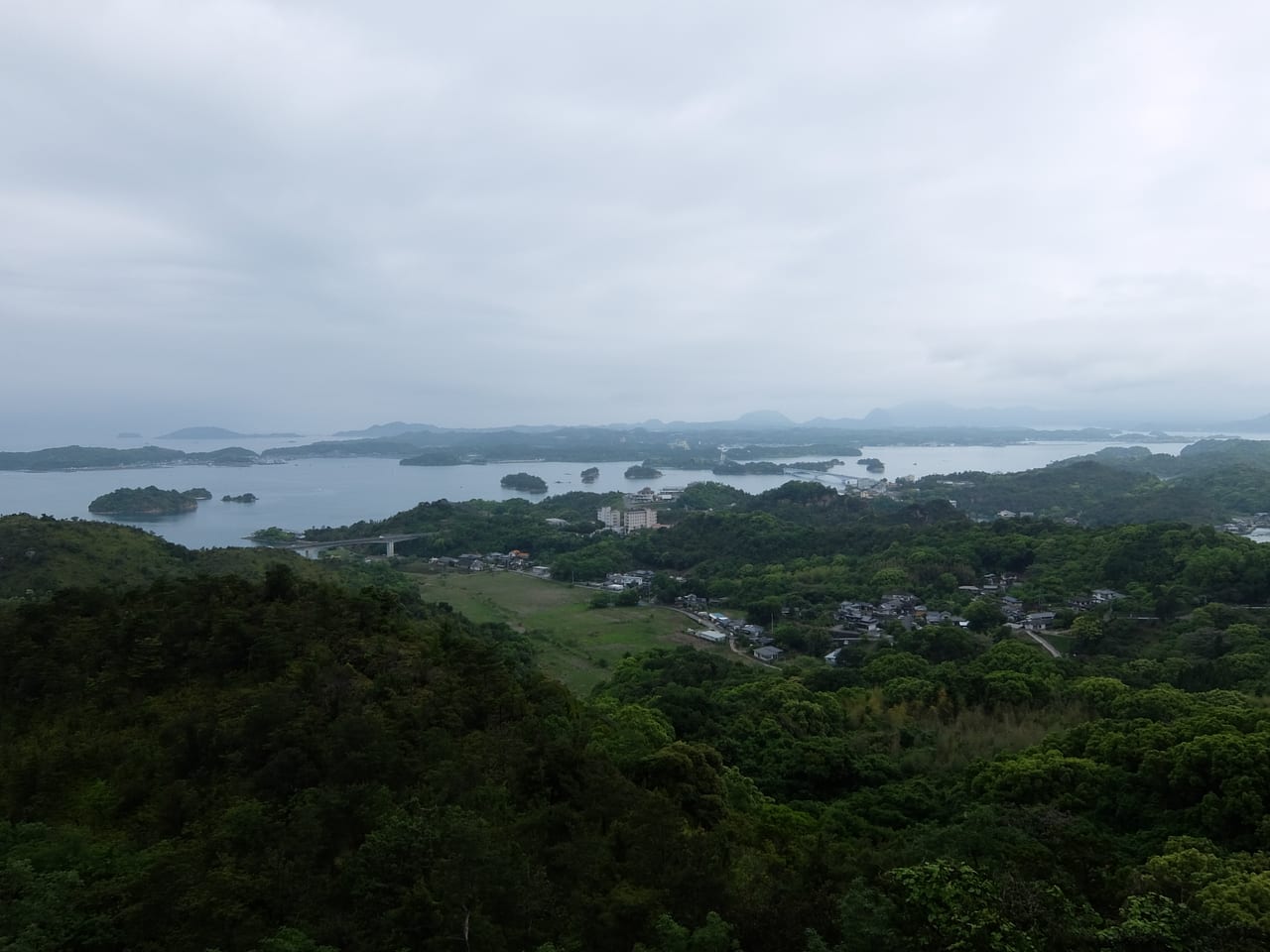
Getting in and out of Amakusa is itself part of the scenery, and the star is the Five Bridges (Pearl Line). These are five bridges opened in September 1966 that link Misumi, at the southern tip of the Uto Peninsula on the Kyushu mainland, across several small islands and on to the upper Amakusa island — when they opened, Amakusa went overnight from boat-only to road-connected, visitor numbers surged, and it became the start of modern Amakusa tourism. The route past Amakusa-Matsushima threads sea bridges and scattered islets, blue water against bridge spans making the classic drive, with viewpoints (like Mt. Senganzan) looking down over the whole chain of islands and bridges.
This is exactly why I keep saying you should rent a car in Amakusa: the Five Bridges drive is part of the experience itself. Crossing the sea one bridge at a time, with that sense of "heading out to the islands," is something a bus simply cannot give you. There are viewpoints and roadside stations to pull over and resupply along the way, so if you are not rushing, drive the bridges slowly and stop as you go — it beats barreling straight for the town center.
West-coast sunsets & seafood
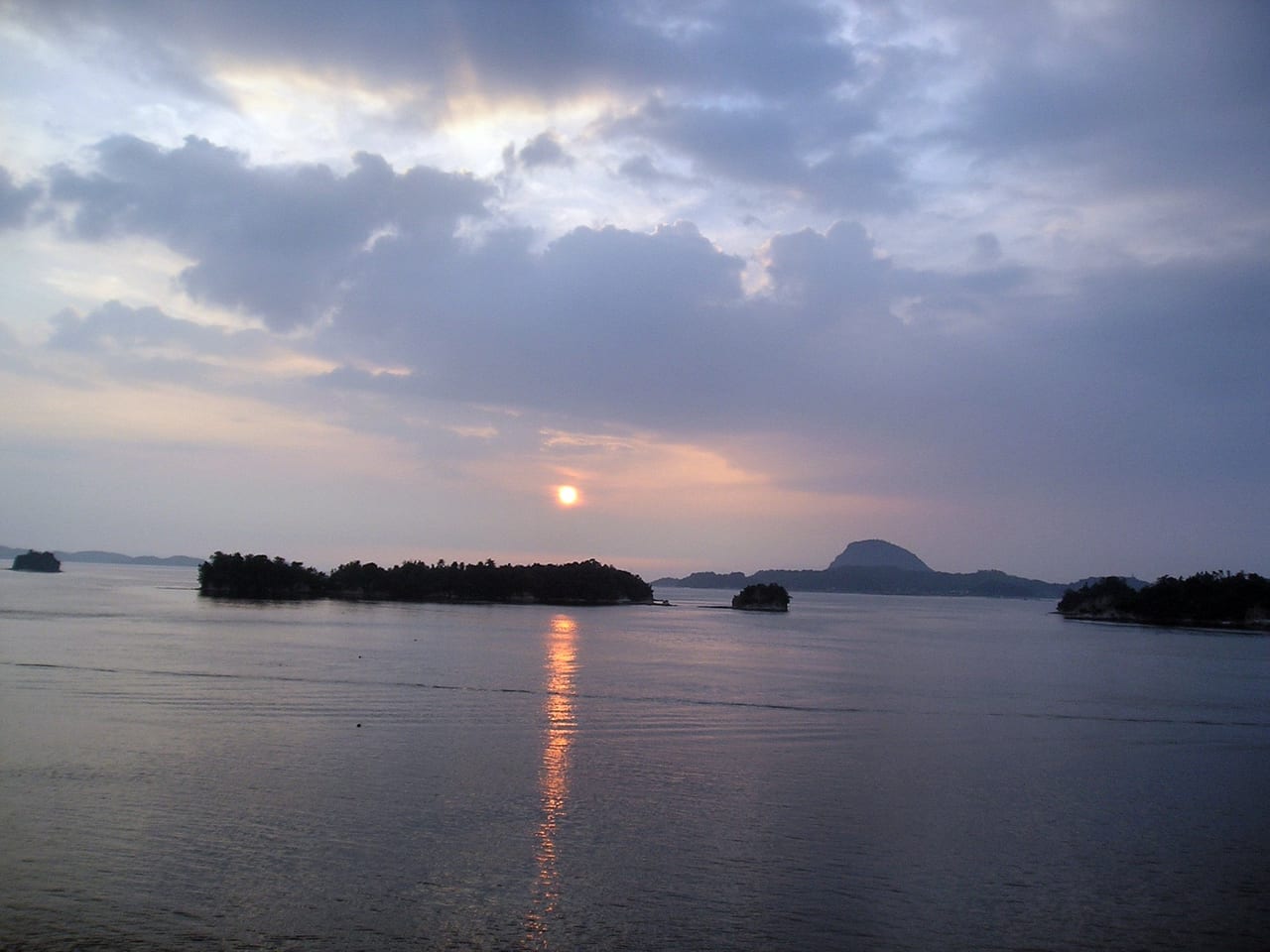
Amakusa's two great pleasures — for the eyes and the stomach — both gather on the west coast. The west coast of the lower island faces the East China Sea and is a superb sunset spot: the sun drops into an unobstructed sea horizon, and the cliffs and rock stacks around Myokenura set against the setting sun are Amakusa's signature view, so do not rush back to the hotel at dusk. Stay at Shimoda Onsen and watching the East China Sea sunset from the bath is a genuinely indulgent way to end the day.
On the food side, Amakusa is one of Kumamoto's top fishing grounds, and the seafood is genuinely worth it. Signatures include kuruma-ebi (tiger prawn), uni (sea urchin), all manner of live-fish sashimi, and Amakusa Daio (a large local Kumamoto chicken breed). A dedicated tiger-prawn meal in season (live-prepared, salt-grilled, tempura) pays for itself, and there are plenty of seafood diners and ryotei-style inns on the west coast and in town — staying a night for a kaiseki dinner is the fullest way to taste Amakusa's sea. As an aside, Amakusa has long been famous for Amakusa pottery stone (a key raw material for Japanese ceramics), so craft-minded travelers can add a kiln visit.
Transport & lodging (why you need a car)
This is the most important section for planning Amakusa, so read it before you build the itinerary. The mainstream way is to drive from Kumamoto City over the Five Bridges: via Uto and Misumi, across the bridges to the main island, about 2 hours to Kamishima / the Hondo town area, and further still to Sakitsu and Oe at the southern end of the lower island. Without a car you have two alternatives, both limited:
- Rapid Amakusa-go bus: a highway bus linking Kumamoto City and Hondo town — it gets you to Hondo, but Amakusa's highlights are far apart (the dolphin port up north, Sakitsu and Oe in the southwest) and local bus service is thin, so once you arrive you are still stuck without a car. Best for those focused on Hondo town or joining local tours.
- Ferry island-hopping: as an island group ringed by sea, Amakusa is reachable by ferry across the Ariake Sea from Shimabara (Nagasaki Prefecture), or via the Nagashima–Amakusa route toward Kagoshima. That makes Amakusa easy to slot into a Kyushu loop (e.g. Nagasaki → Shimabara → ferry → Amakusa → Kumamoto), a connector between Nagasaki and Kumamoto/Kagoshima rather than a dead end.
The conclusion is blunt: Amakusa is a "rent a car, strongly recommended" destination, and the easiest play is to rent in Kumamoto City (or at Kumamoto Airport), drive in over the bridges, and leave the same way or by ferry. For lodging, I would point you to Shimoda Onsen on the west coast — close to the East China Sea sunset and with hot springs, a nicer mood than the town — while Hondo town has more choice for a convenient base. Amakusa lodging skews toward onsen ryokan, seafood inns, and business hotels; popular places tighten up in peak season (summer, long holidays), so book early. If the wider Kyushu trip uses cross-prefecture rail, run the break-even with our JR Pass guide first — but note that Amakusa has no JR; on the islands it is all driving or local buses, and a pass only gets you as far as Kumamoto. Pre-trip weather and packing are in our Japan packing & weather guide — it is windy on the water, so bring a windproof jacket.
A two-day plan
Here is the same content shaped into a self-drive route that flows (bus/ferry travelers should pad the transfers):
- Day 1 (in + dolphins + history): rent a car in Kumamoto City → drive the Five Bridges (stop at Amakusa-Matsushima and the Mt. Senganzan viewpoint for the sea view) → the Amakusa Shiro Museum in Kamiamakusa for the historical backdrop → midday to the north tip for a wild-dolphin cruise (reserve a morning or afternoon sailing ahead) → drive to Shimoda Onsen on the west coast at dusk, soak while watching the East China Sea sunset, dinner of tiger prawn or a seafood kaiseki.
- Day 2 (the World Heritage churches): morning at Sakitsu Church and village at the southwest end (reserve the nave ahead, no photos inside; exterior and village are free to walk) → about 15 minutes to hilltop Oe Church for the white Romanesque chapel → another seafood lunch → afternoon back over the bridges to Kumamoto, or by ferry toward Shimabara/Nagasaki to continue the Kyushu loop.
If you can only manage a day trip, it will honestly be rushed — at minimum rent a car and take just one main line, "Five Bridges + dolphins" or "Sakitsu + Oe," because doing both means all day at the wheel. North of Amakusa you can chain Kumamoto Castle and Aso (see whether Kumamoto Castle is open and the Aso crater status), or northeast to Nagasaki for its hidden-Christian sites and Gunkanjima (see our Nagasaki travel guide — Sakitsu is, in fact, part of the same World Heritage listing as Nagasaki), to build a 4–5 day deep dive into western Kyushu.
FAQ
- Q1:Is the dolphin sighting rate in Amakusa really that high? How much is a boat?
- It genuinely is. Per the Amakusa dolphin-cruise operators and the city tourist office, around 200 wild bottlenose dolphins live off Tsujishima (the north tip of the lower island), they are there year-round, and the sighting rate runs above 90% — because this is a resident, non-migratory pod, the off-season barely dents your odds. Boats are roughly ¥3,000 and up for adults (junior-high age and older), about ¥2,000 for children, cruises run 60–90 minutes, and most operators launch from the Itsuwa/Futae area around Tsujishima. The caveat: these are wild animals, so 90% is not 100%, and strong wind or swell cancels sailings outright — call or check the website the day before to confirm departure and reserve. This is the single most worthwhile thing you can do in Amakusa, full stop.
- Q2:Do you have to reserve to enter Sakitsu Church? Can you photograph inside?
- You do need to contact them in advance (reserve) to go inside the nave — it is not a walk-in. Sakitsu Church is one of the component sites of the UNESCO World Heritage "Hidden Christian Sites in the Nagasaki Region," inscribed in 2018, and because it is a working Catholic church and a place of worship, photography inside is prohibited and you are asked to stay quiet, with entry booked through the official desk (KASSE JAPAN / the Kyusanko call center). Without a booking you can still admire the Gothic exterior and walk the Sakitsu fishing village freely and for free, so a missed indoor slot is not a wasted trip. The standout detail: the nave has a rare tatami-mat floor, and the altar stands exactly where villagers were once forced to trample on Christian images (the fumi-e) — that is where Sakitsu's historical weight sits.
- Q3:What is the difference between Sakitsu and Oe Church? Do I need to see both?
- They are about a 15-minute drive apart on the western lower island and feel completely different, so if you have the time, both are worth it. Sakitsu is the "church by the sea" — built in the middle of the fishing village, dark Gothic exterior, the World Heritage site itself, tatami interior; it is the cultural and historical anchor. Oe Church is the "church on the hill" — a white Romanesque chapel built in 1933 by the French priest Father Garnier together with local believers, perched on a green rise with white walls against blue sky, one of the earliest churches built in Amakusa after the ban on Christianity lifted. My split: Sakitsu for history and village, Oe for architecture and view — together they round out Amakusa's Christian story.
- Q4:What are the Amakusa Five Bridges, and do I have to drive?
- The Five Bridges (also called the Amakusa Pearl Line) are five bridges opened in September 1966 that chain the Kyushu mainland — from Misumi at the southern tip of the Uto Peninsula — across several small islands all the way to the main Amakusa island; visitor numbers surged after they opened, and they remain Amakusa's lifeline. The route past Amakusa-Matsushima is a classic sea-view drive. Can you skip driving? Technically yes — the Rapid Amakusa-go bus and other public transit reach the main towns — but Amakusa's highlights (Sakitsu, Oe, the dolphin port, the west-coast sunsets) are far apart with thin local-bus service, so you will be badly limited without a car. Honestly, Amakusa is a "rent a car, strongly recommended" destination — most people rent in Kumamoto City and drive in over the bridges, which is how the place is meant to be seen.
- Q5:How do I get to Amakusa from Kumamoto? Can I come via Shimabara or Kagoshima?
- The mainstream route is to drive from Kumamoto City over the Five Bridges: via Uto and Misumi, across the bridges to the main island, about 2 hours to Kamishima / the Hondo town area (and further still to Sakitsu at the southern end of the lower island). Without a car you can take the Rapid Amakusa-go highway bus linking Kumamoto City and Hondo. Because Amakusa is an island group ringed by sea, you can also island-hop by ferry: ferries cross the Ariake Sea from Shimabara (Nagasaki Prefecture), and there is a Nagashima–Amakusa route toward Kagoshima — which makes Amakusa easy to thread into a Kyushu loop (e.g. Nagasaki → Shimabara → ferry → Amakusa → Kumamoto). To stitch a few Kyushu days together, see our Kyushu 3-day rail itinerary, and run the cross-prefecture rail math first with the JR Pass guide.
- Q6:How many days does Amakusa need, where should I stay, and is the seafood worth it?
- Plan at least an overnight (two days). The lower island is long north-to-south — the dolphin port is up north, Sakitsu and Oe are at the southwest end — so cramming it into one day gets eaten by driving. For lodging I would pick Shimoda Onsen on the west coast of the lower island — close to the East China Sea sunset and with hot springs, a nicer mood than the town center — while Hondo town has more choice if you want a convenient base. The seafood is genuinely worth it: Amakusa is one of Kumamoto's top fishing grounds, with kuruma-ebi (tiger prawn), uni (sea urchin), live fish, and Amakusa Daio chicken as signatures — a tiger-prawn meal in season is itself a reason to come. The Myokenura cliffs on the west coast and the sunset are Amakusa's signature scenery, so do not rush back to the hotel at dusk. For another Kyushu port city, branch out with our Nagasaki travel guide.
Related reading:
Is Kumamoto Castle Open? 2026 Quake Status, Tickets & Hours
Kumamoto Castle reopened on 13 August 2026, but Wakuwakuza is closed, combo tickets are off sale and one car park is shut — tickets, hours and Shiro Akari.
Nagasaki Travel Guide 2027: Inasa Night View, Glover Garden & Gunkanjima
Japan's closed-country window to the world — Mt. Inasa's night view, the World Heritage Glover Garden and Oura Church, Dejima, Peace Park and Gunkanjima.
Kyushu 3-Day Rail Itinerary 2026
Yufuin no Mori + Aso Boy chain Hakata → Yufuin → Beppu → Kumamoto → Aso. JR Kyushu Pass saves ~¥2,500 post-hike.