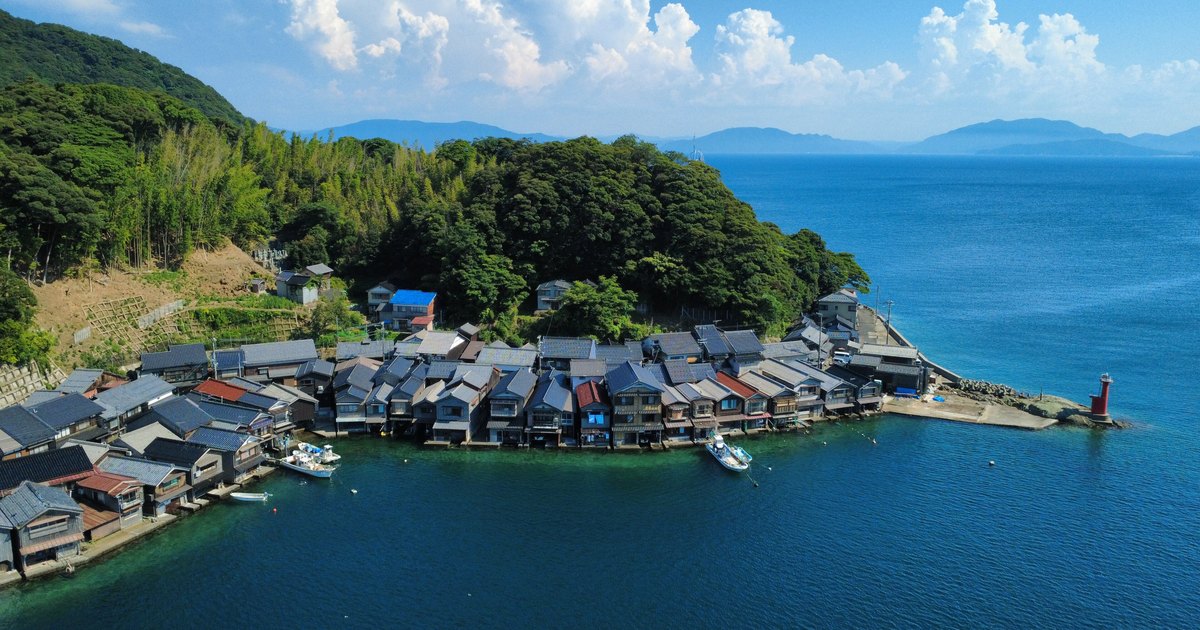
The 230 or so boathouses lining roughly 5 km of Ine Bay are houses people live in, not an attraction. The Ine Tourism Association puts that on its front page, not buried in a notice: the funaya, the main houses and the land under them are private property, and entering without the owner's permission is not permitted. The boat operator Tango Kairiku Kotsu goes further and bans looking in through the windows. But once that is understood, the useful question is: which ones can you actually go into? The tourism association lists four, opened by the residents themselves, starting at ¥200 for Koyomaru. This guide works through every named option on both sides of the bay: the two officially sanctioned ways to see the funaya from the water (¥1,200 on the big boat versus ¥1,000 on a twelve-seat sea taxi), the published prices of those four boathouses, the fact that Japan's official viewpoint count here is four rather than two, why the two observation decks share no ticket, the capped ¥400 bus fare that has quietly made Ine cheap to reach, and the November 6 to March 20 snow crab window. Every figure was checked against official pages in August 2026.
🦀 This guide covers when crab is landed here and what the local brands are called. Species identification, tag grading and how to pick a crab dinner are handled in the Kinosaki Onsen guide and the Japanese winter food guide, and are not repeated here.
- The funaya are private property — official wording bans entering without permission, and Tanko bans looking in through windows. Four are open to paying visitors: Koyomaru ¥200, Tomobutoya ¥300, Yoraku ¥500, Seikaiha from ¥500 — all irregularly closed
- Two ways to see them from the water: the Ine bay cruise at ¥1,200 (25 min, every 30 min, 150 seats, no closed days) or a sea taxi at ¥1,000 (8 boats, identical fares, max 12 people, phone the skipper)
- Amanohashidate to Ine is ¥400, about 53 minutes, 15 services a day under the capped-fare zone system, and the operator says services are being increased
- The two observation decks share no ticket: View Land ¥1,000 (includes the return chairlift or monorail; there is no walking route up) versus the Kasamatsu cable car at ¥800 return — and every Tanko pass covers Kasamatsu only
- Three winter timing traps: View Land stops selling tickets at 16:30 from Nov 16; the Nariaiji mountain bus loses its dense weekend timetable and 16:30 run in December; the Kasamatsu chairlift is weekends-only from Jan 6
📖 Table of Contents (click to expand)
- The rule at Ine is stricter than you think
- Cruise boat vs sea taxi: the comparison nobody runs
- The four boathouses you can pay to enter
- Four official viewpoints, not two
- "Three Views of Japan" was written on the path to Nariaiji
- Matanozoki and that Ig Nobel Prize
- Getting there — and one fare I will not quote
- Passes: three worked examples
- Snow crab: November 6 to March 20
- Goshuin at Chionji, Nariaiji and Kono Shrine
- Eating: chie-no-mochi and the street you must not eat on
- Is it worth the trip from Kyoto? An honest verdict
- FAQ
The rule at Ine is stricter than you think
Start here, because it governs every move you make on the ground.
The Ine Tourism Association does not hide this in a terms page. It sits at the top of the front page, in three consecutive statements: most of the buildings including the funaya are private land, and visitors are asked to help protect the life and culture of Ine; the funaya and main houses and the ground they stand on are privately owned, so entering without the owner's permission is not possible; and people live in these buildings, with laundry often hung on the sunny sea-facing side, so anyone taking photos or video is asked to be considerate. The same page carries a colloquial version of the message that translates roughly as "please don't just wander into the boathouses" — and when an official body resorts to that register, it usually means the problem has happened often enough to warrant it.
Tango Kairiku Kotsu, which runs the cruise boat, words it harder and adds an action worth taking seriously:
The interiors, the grounds and the jetties of the funaya are all private property. Entering the grounds without permission, or peering inside through the windows, is firmly refused.
Using the Ine Bay Cruise or a sea taxi lets you enjoy the village safely without disturbing residents' lives.
That second clause — looking in through a window — is the part to internalise. It puts "standing in the lane and glancing inside" in the same category as trespassing. The lanes at Ine are narrow and the windows are at arm's height, so the "I'm only looking" gesture is not a grey area here. It is named.
The association's visitor code adds four more requests, and together they explain why Ine needs to ask at all:
- Photographing people: visitors are asked to make an effort to obtain the consent of anyone who becomes the subject of a photograph.
- Noise: making noise at night or early morning, and leaving engines idling in car parks, is described as threatening residents' daily life.
- Parking: stopping outside designated car parks or on private land is asked against.
- Rubbish: take out whatever you bring in.
📄 Ine also publishes an official manners PDF, but the file exceeds 10 MB and I could not retrieve it. The four points above come from the association's own visitor page. If that PDF contains further rules — drone use, minimum approach distance for private boats — they are not reflected here, and this guide says so rather than guessing.
What a funaya actually is: the ground floor is a boat garage
Now the reason it is worth the journey. A funaya has its ground floor open to the sea as a boat store, with the living space upstairs. The original purpose was to haul boats out of the water and protect them from wind, rain and marine borers; the upper floor was historically used for drying nets and storing fishing gear. Today the freed-up ground floor is used for handling fish and drying laundry — what the association calls, simply, the space of a life lived by the sea.
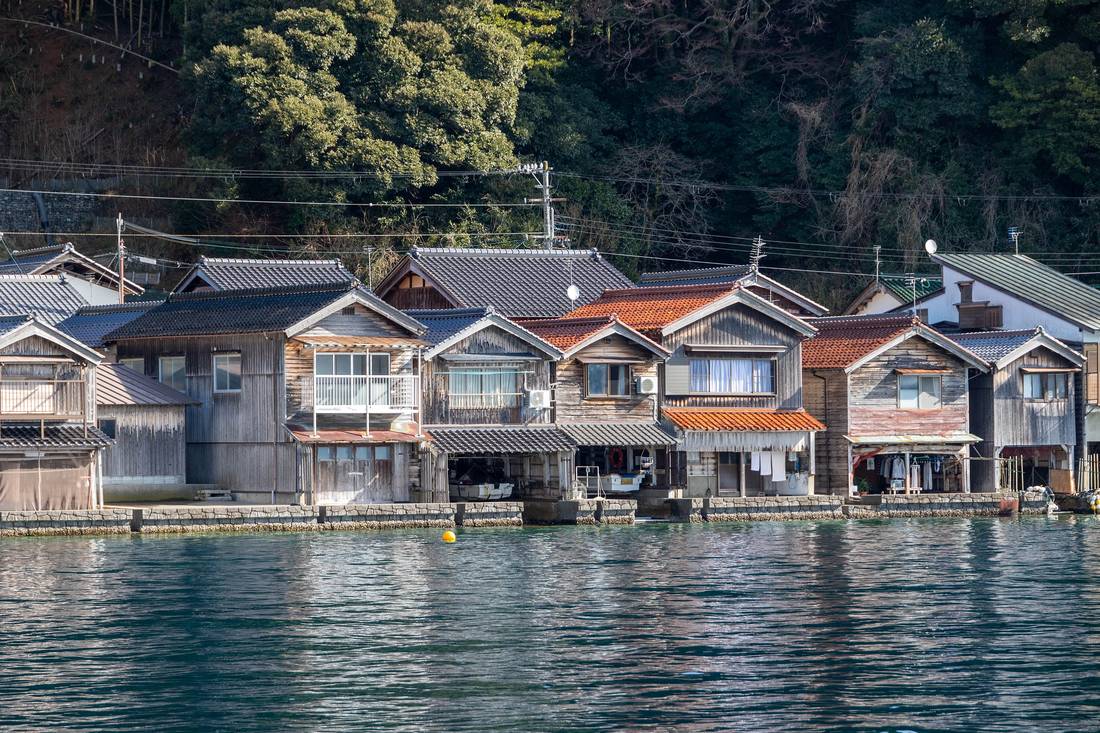
This is also why Ine underwhelms people who only see it from the road. From the lane you are looking at the backs of these houses. The facade faces the water. The image everyone comes for — an unbroken row of ground floors opening directly onto the sea — physically cannot be seen from land. That is architecture, not a sales pitch for boat tickets.
Two more facts worth carrying. The bay is calm as a lake because Aoshima, an island sitting across its mouth, works as a natural breakwater against open-sea swell. And Ineura was designated an Important Preservation District for Groups of Traditional Buildings on July 22, 2005, categorised as a fishing village, covering 310.2 hectares — that is the Agency for Cultural Affairs' own listing. You will see claims that it is the largest such district in Japan; this guide did not compare all the listed districts, so it gives the absolute figure and skips the ranking. Ine is also a member of the "Most Beautiful Villages in Japan" association.
Cruise boat vs sea taxi: the comparison nobody runs
There are two officially sanctioned ways to see the funaya. This is the most practical comparison in the article.
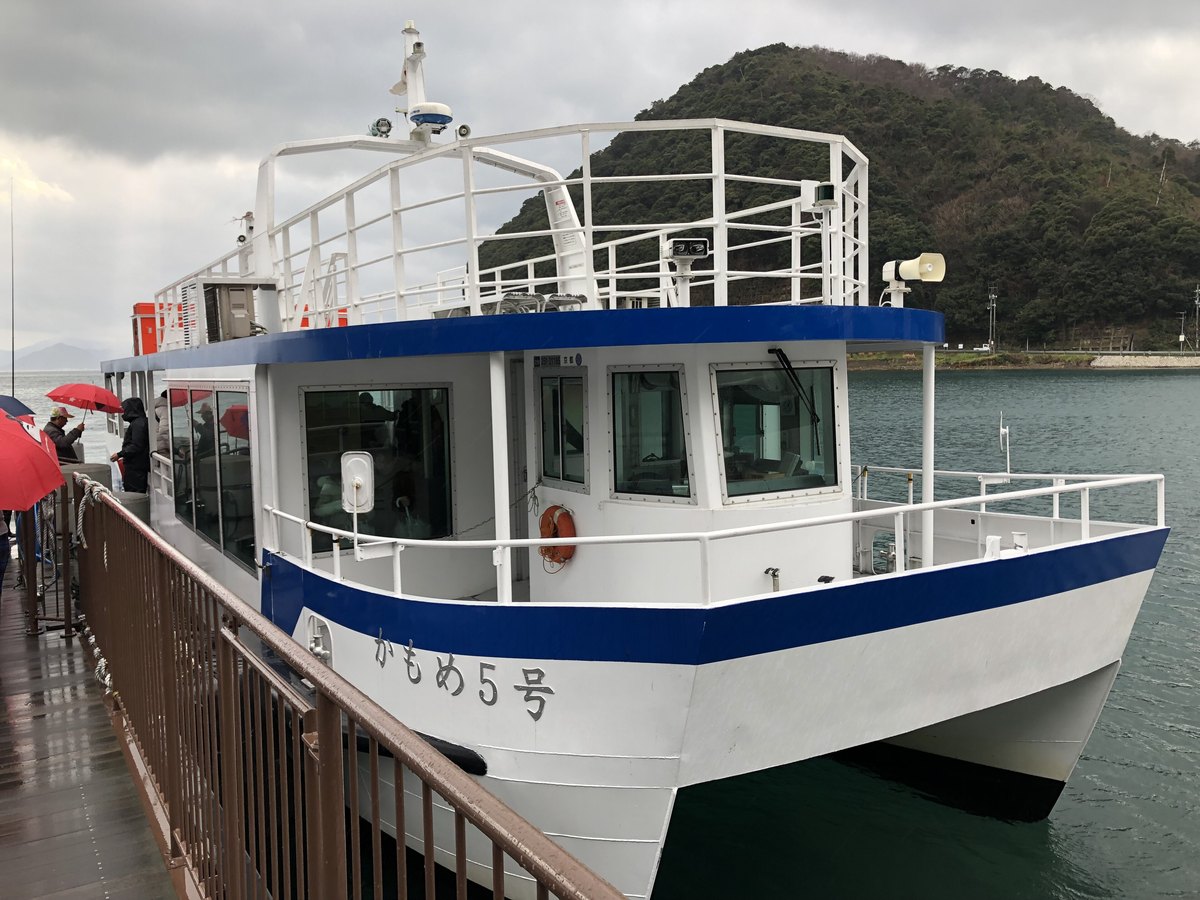
| Item | Ine Bay Cruise (large boat) | Sea taxi (small local boats) |
|---|---|---|
| Adult | ¥1,200 | ¥1,000 |
| Child | ¥600 (elementary) | ¥500 (elementary); preschool free |
| Duration | About 25 minutes | About 25 minutes |
| Capacity | Up to 150 people per sailing | 11–12 per boat; officially 12 maximum |
| Frequency | First 9:00, last 16:00, on the hour and half hour; every 15 minutes at peak times | Officially 8 boats in regular operation |
| Booking | Open year-round; buy at the pier | Phone the skipper directly; parties of about five or fewer can usually turn up on the day |
| Departs from | Hide pier, Ine-cho Hide 11 | Varies by boat |
My call: couples and solo travellers who want to get close should take the sea taxi. Three reasons. It is cheaper — ¥1,000 against ¥1,200, which is a rare inversion at a tourist site. A twelve-seat boat can approach far closer than a 150-seat one, and closeness is the entire point when the subject is a ground floor opening onto water. And the person driving is a local fisherman, so those 25 minutes are a conversation rather than a recorded announcement — something structurally impossible on the big boat.
The cruise boat's advantage is that it requires no negotiation: no closed days, a departure every 30 minutes, and a ticket window at Hide pier. No phone call in Japanese, no worrying whether a skipper is free. Travelling with older relatives or small children, or working to a tight schedule, take the big boat without hesitation. Feed for the gulls is sold at the pier and on board, though no price is published, so no figure appears here.
⚓ This guide deliberately names none of the sea-taxi operators. The eight boats listed officially charge identical fares — ¥1,000 per adult, ¥500 per elementary student, preschoolers free — and that identical price is the only comparable figure published. Recommending one would be endorsing something unverified. Take the list from the tourism association's own page, or ask at the information centre.
One winter variable to plan around: boats get cancelled. The Ine cruise is suspended at wind speeds of 10 m/s or more, wave heights of 0.8 m or more, or visibility of 300 m or less, and the Amanohashidate sightseeing boat uses the same thresholds. The Sea of Japan coast is rough in winter, so anyone coming for crab should treat a lost sailing as an ordinary outcome rather than a disaster. For the general logic of rebuilding a day when transport fails, see our guide to delays and suspensions in Japan.
The four boathouses you can pay to enter
Once the prohibition is understood, the reader's next question is where they can go. These four are listed by the Ine Tourism Association itself as same-day experiences — this is not crowd-sourced.
| Boathouse | Price | Hours | What to know |
|---|---|---|---|
| Koyomaru | Adult (junior high and up) ¥200 / elementary ¥100 | Weekdays 11:00–16:00 / weekends and holidays 10:00–17:00 | Closed Wednesdays. Displays old fishing gear and photographs. Ine-cho Hirata 555 |
| Tomobutoya | Visit only: adult ¥300 / child ¥100 (preschool free); with gelato ¥700 | Weekdays 10:00–16:00 / weekends and holidays 9:00–17:00 | Irregular closing. Over 80 years old. Ine-cho Hirata, Hakkasaki 501 |
| Yoraku | Adult (junior high and up) ¥500 / elementary and below free | 11:00–15:00 | Irregular; closed when the owner is out. A short walk from the Ine tourist information office, beside the Ineura Park car park |
| Seikaiha | ¥500 with a guide and coffee or water / ¥1,000 with a drink and gelato, both elementary age and up | Irregular | Built in 1861, late Edo period; a traditional Ineura structure with the main house and boathouse integrated. Officially, you may visit only when a viewing sign is displayed at the entrance; phone booking or ringing the bell both work |
"Irregularly closed" is the operative phrase, and it is not a flaw. These are not businesses; they are homes that someone opens. If the owner is at sea, minding a grandchild or at the doctor, the door stays shut, and there is no call centre and no notice. So do not make any of them a pivot of your itinerary. Treat them as bonus items that you are glad to catch.
How I would choose among them. If you simply want to confirm what a funaya looks like inside, Koyomaru — ¥200 is a price you will not find anywhere else in Japan, and what is displayed is gear that was actually used, not a staged set. If the building itself interests you, Seikaiha — an 1861 structure with the main house and boathouse under one roof, plus a guided explanation and a drink for ¥500, is good value by any standard. With children, or when legs are tired, Tomobutoya: gelato plus the visit for ¥700 makes it the closest thing to a rest stop.
And then the sentence this whole article exists for: the way to meet Ine is to pay two hundred yen, ring a bell once and let the owner show you around — not to push open the door that has no sign on it. These four exist because someone chose to open their home. Whether that stays true depends on everyone else treating the unmarked ones as off limits.
The association lists a few more same-day activities whose prices are not published, so they appear here by name only: a guided walk through the village and shoreline, an audio-guided version of the same walk, and e-bike or power-assisted bicycle rental. The guided walk carries an official caveat worth passing on verbatim in substance — because of a shortage of guides, there are many dates on which guiding cannot be accepted. There is also a free community bicycle scheme, and the official wording is blunt: no advance booking is possible and there are only 13 bicycles, three of them children's. That is a lottery, not a transport plan. Electric kick-scooter rental also appears, but the association explicitly notes it is not an association-run activity and it accepts no responsibility for problems arising — where that disclaimer appears, I do not recommend.
Four official viewpoints, not two
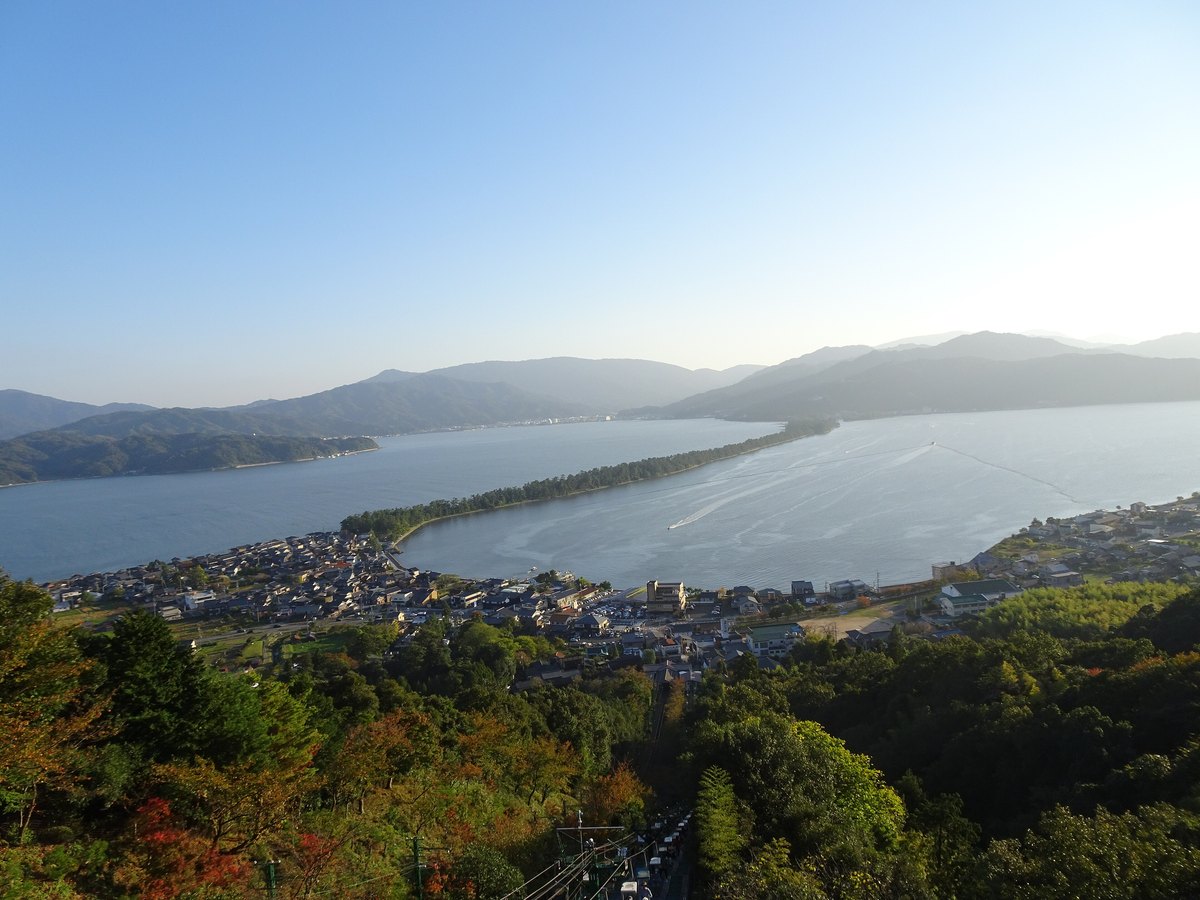
Most visitors arrive believing Amanohashidate is a choice between a southern deck and a northern one. That is not the official framing. Tango Kairiku Kotsu lists four named viewpoints:
| Viewpoint | Location | Side |
|---|---|---|
| Shoryukan (rising dragon) | Kasamatsu Park | North |
| Hiryukan (flying dragon) | Amanohashidate View Land, Monjusan summit | South |
| Ichijikan (the character "one") | Ouchi-toge Ichijikan Park | West |
| Sesshukan (after the painter Sesshu) | Shishizaki Inari Shrine | East |
⚠️ Access, opening hours and whether Ichijikan and Sesshukan charge anything I did not find published, so this guide gives names and directions only and invents nothing. Ask locally if you want to chase them. They are still worth knowing about, because "Amanohashidate has two viewpoints" is itself an information gap rather than a fact.
The two main decks: different companies, different tickets, no overlap
| Item | Amanohashidate View Land (south) | Kasamatsu Park (north) |
|---|---|---|
| Viewpoint | Hiryukan | Shoryukan |
| Operator | Amanohashidate View Land (independent) | Tango Kairiku Kotsu |
| Price | Admission ¥1,000 adult / ¥500 elementary | Cable car or chairlift return ¥800 adult / ¥400 child; the park itself is free |
| What the ticket covers | Official FAQ: the fare includes the return chairlift or monorail ride plus admission | Cable car and chairlift on one interchangeable ticket — different vehicle up and down is allowed |
| Going up | Chairlift (6 min) or monorail (7 min), your choice | Cable car (about 4 min, at :00 :15 :30 :45) or chairlift (6–8 min) |
| Can you walk up? | No. Official FAQ states there is no road or footpath | Not specified officially; this guide makes no claim |
| Closed days | None — open all year | Not specified; chairlift has suspension days in Jan–Feb |
| On site | Ferris wheel, cycle cars, go-karts, carousel, shooting gallery, view restaurant, and the Hiryukan corridor (officially may close in strong wind, snow or lightning) | 130 m above sea level; circular Sky Deck with a glass floor over a 40 m drop, the Kanmurijima–Kutsujima worship point, and kawarake disc throwing (price not published) |
| Suggested stay | Officially 40 minutes to 1 hour for the view alone; 1–2 hours with the rides | Not specified |
The conclusion is hard-edged: no official ticket covers both. Every Tanko pass — all of them itemised further down — covers Kasamatsu only, because View Land is not a Tanko property. So the question is not which represents better value, it is whether the second angle is worth a second full-price ticket.
My reading. First visit, half a day, planning to buy a pass: go to Kasamatsu. The ride is already inside the pass, and Kono Shrine and the Nariaiji mountain bus terminus are right there, so the route is continuous. Travelling with children, or specifically after the classic "flying dragon" composition: go to View Land — ¥1,000 covers the ride up and the whole park, the rides are a genuine bonus for kids, and the operator itself suggests 40 minutes to an hour for the view. Both in one day? Honestly, that is ¥1,800 of tickets plus an extra crossing by boat or bus. Unless you are staying overnight in Amanohashidate, I would spend that time in Ine instead.
🕓 If you are visiting View Land between November 16 and February 15, note that this is the shortest operating window of the year: last tickets at 16:30, closing at 17:00. In midsummer the equivalent cut-off is 18:00. Anyone hoping for late afternoon light in winter needs to arrive considerably earlier than they expect.
Kasamatsu has the mirror-image problem. The cable car runs 9:00–17:00 in December and January, to 17:30 in February and November and to 18:00 from March to October; the chairlift runs 10:00–16:00 from December 1 to January 5, then weekends and holidays only from January 6 to the end of February, with suspension days noted for January and February. The frequently recommended "chairlift up for the air, cable car down" plan does not exist on a weekday in midwinter.
"Three Views of Japan" was written on the path to Nariaiji
This is the most interesting thing about Amanohashidate, and it comes straight from official pages.
The phrase has two layers. First, Hayashi Shunsai (Hayashi Gaho) in 1643, in Nihon Kokujiseki-ko, introduced Matsushima, Miyajima and Amanohashidate as "three remarkable views". Second, and this is the one that produced the actual phrase, Kaibara Ekiken's Kishi Kiko of 1689 is credited with the first use of "the three views of Japan". Tanko quotes the passage, in which Ekiken is climbing from Fuchu up towards Nariaiji, and part-way up the slope looks back at Amanohashidate, the Monju hall at Kireto, and the waters of Yosa and Aso spread out below — and writes that the scene defies language, and may fittingly be counted as one of the three views of Japan.
Turn that into a picture: he was on the slope from Fuchu up to Nariaiji, the Kasamatsu Park area of today, looking back over his shoulder.
Which means the original viewpoint behind the phrase "Three Views of Japan" is Shoryukan, not Hiryukan. The photograph you have most likely seen is the southern flying-dragon composition fromView Land, yet the title itself was born on the northern slope. That does not make one deck prettier than the other — that is taste — but it does give the northern side a historical claim the southern one cannot make.
One more attributed view, flagged as attributed: the folklorist Kunio Yanagita, in Chimei no Kenkyu, argued that "Hashidate" originally referred to steep rocky mountains resembling a raised ladder, and that Mount Nariai is the true origin of the name, with the name and its reputation later migrating to the sandbar in the bay. That is Yanagita's argument rather than settled fact, but it points the same way as Ekiken: the meaning of Amanohashidate has long depended on looking down from above.
The sandbar itself — where the official figures disagree
| Item | Official figure |
|---|---|
| Length | About 3.6 km (tourism association and Tanko agree) |
| Width | About 170 m at the widest, about 20 m at the narrowest |
| Number of pine trees | The tourism association says about 6,700; Tanko says about 8,000 — both are official |
| Formation | Sand carried into Miyazu Bay by the Sea of Japan current, plus sediment from the Noda River flowing into the inner Aso Sea, deposited over a long period |
| Walking across | Official FAQ: about 40–50 minutes |
| Cycling across | 15–20 minutes one way |
| By boat | About 12 minutes (¥800 one way) |
The pine count is not a typo. The tourism association publishes roughly 6,700 and the transport operator publishes roughly 8,000 — a gap of thirteen hundred trees, from two official sources. I am not going to pick whichever looks more authoritative and present it as fact. Pines die and get replanted; this was always an estimate. Knowing it is somewhere between six and eight thousand is enough.
On how to cross, my advice is blunt: do not walk the whole thing. The difference between the first fifteen minutes of a pine-lined path and all fifty minutes of it is small, and the price is an hour and a pair of legs. Renting a bicycle is the best-value answer — ¥500 for two hours, then ¥300 per additional hour, from a fleet of 50 twenty-inch bikes. The key detail is that the operator explicitly allows one-way use with drop-off on the far side (both Amanohashidate and Ichinomiya piers rent and receive), so "cycle across, drop the bike, ride the cable car, return by boat" is a legitimate plan. Note also that reservations are not accepted and there are no children's bicycles, so families should take the boat instead.
Before you ride across, one thing to hold on to: bicycles ride on the left in Japan, pedestrians have priority on the sandbar path, and the same left-side rule resumes the moment you rejoin a public road. Since April 1, 2026, bicycle offences carry blue-ticket fixed penalties for riders aged 16 and over, though police figures for the first month show 2,147 tickets against 135,855 verbal warnings — a warning first remains the norm. The item with no warning stage is holding a phone while riding, at ¥12,000, which is worth knowing on 3.6 km of pine grove where everyone wants to film as they go. A helmet is a duty of effort, not a fine. Detail in our guide to which riding habits carry a fine.
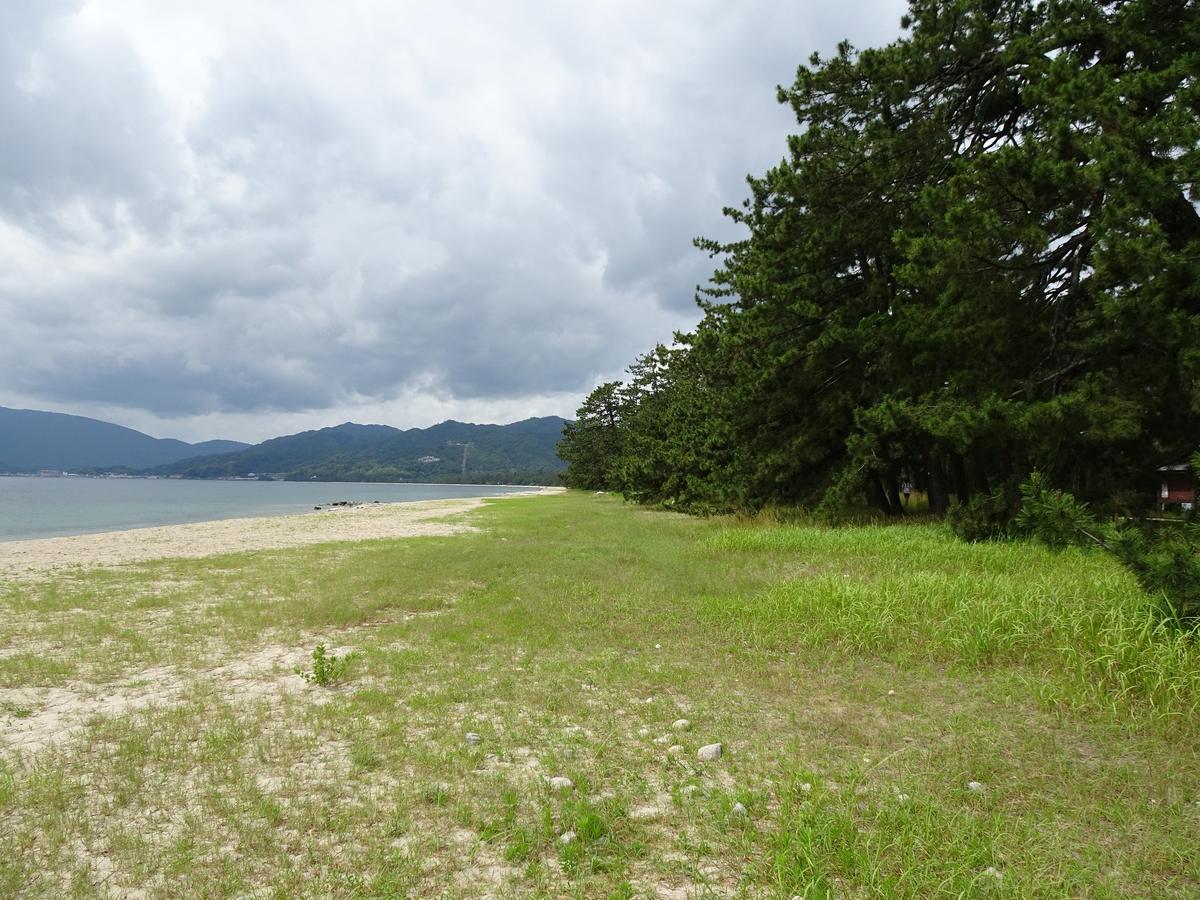
One bridge deserves a pause. Kaisenkyo connects the sandbar to the land where the Monju hall stands, and it rotates 90 degrees every time a boat needs to pass — officially "as many as about 50 times a day" at busy periods. It was built in 1923 as a hand-operated bridge and was motorised in May 1960. Wait a few minutes near Chionji and there is a fair chance of seeing it swing.
Matanozoki and that Ig Nobel Prize
This is the single most distorted claim about Amanohashidate in circulation, so it gets its own section.
Tanko's official wording is that viewing the scene through your legs produces an optical effect in which it appears shrunk, flattened and reduced in depth compared with normal viewing.
There is real research behind it. The 2016 Ig Nobel Prize in Perception went to Atsuki Higashiyama of Ritsumeikan University and Kohei Adachi, for "Perceived size and Perceived Distance of Targets Viewed From Between the Legs: Evidence for Proprioceptive Theory", published in Vision Research vol. 46 no. 23 (2006), pp. 3961–76.
🚫 But the finding is not "it looks like a dragon." The paper concerns perceived size and distance, not perceived shape. The dragon impression comes from inverting the composition so the sandbar appears to float in the sky — a framing effect, and a separate matter from the study. Claims that "science proves it turns into a dragon" or that "research shows matanozoki is the best view" are an overreach that welds two unrelated things together.
A second common mistake: Kasamatsu Park describes itself as a place that is "also said to be" the birthplace of matanozoki. That is folklore register, not an official designation, and this guide keeps the same hedge the park uses.
So should you try it? Yes — as a bit of fun, not as a rite to be completed. The flattening effect is genuinely odd to experience. But if you arrive expecting a dragon to materialise when you bend over, you will be disappointed. What actually determines the quality of the view is which deck you are standing on and what the weather is doing.
Getting there
🚫 No official page gives a through fare from Kyoto to Amanohashidate. The Kyoto Tango Railway publishes only a band for travel within its own network (ordinary fares of ¥150–1,500 and limited-express supplements of ¥350–1,250), with the full fare table available as a PDF. Run "Kyoto to Amanohashidate" through the official JR West or Kyoto Tango Railway fare search before you travel, and note that the Hashidate limited express is a through service crossing two companies. Whether a JR Pass covers the route needs the same check — JR West's own page does not list the Kyoto Tango Railway.
What can be quoted, item by item, is the bus network.
Kyoto to Amanohashidate by highway bus
| Section | Duration | Official fare |
|---|---|---|
| Kyoto Station → Amanohashidate Station | About 120 minutes | Normal season ¥3,100–3,200 / peak season ¥3,300–3,400 (children half) |
| Kyoto Station → Miyazu Station / Miyazu-Amanohashidate IC | — | Same band |
| Kyoto Station → Nodagawa Tankai-mae | — | ¥3,400–3,600 |
| Kyoto Station → Taiza | — | ¥4,000–4,200 |
Three booking channels: the Hassha Oraing net service (05:00–26:00, with a 2% online discount), phone on 0772-42-0321 (09:00–18:00), and the Tanko bus counter. Five southbound departures a day. If you are driving, Ine's own official figures are about 2 hours from Kyoto, about 2 hours 30 from Osaka, about 2 hours from Kobe and about 2 hours 15 from Tsuruga; by public transport, about 3 hours 30 from Osaka and about 3 hours from Kyoto.
🚌 Do not plan around a direct Kyoto–Ine bus in autumn or winter. Tanko's page states that the through service from Kyoto Station to the Ine Bay Cruise stop at Hide was a demonstration run from July 1 to September 30, 2026, with one departure a day (Kyoto 8:20 → Hide 11:04). Nothing has been announced about it continuing beyond that period. For any trip from October onwards, plan it as Kyoto → Amanohashidate → Tanko route bus, 53 minutes, to Ine. If you specifically want the through bus, check Tanko's site for a new announcement before you commit.
Amanohashidate to Ine: the capped fare changed this route
Here is the third correction in this article: "Ine is expensive and awkward to reach" is out of date.
Tanko operates a capped-fare zone system across Kyotango City, Miyazu City, Yosano Town and Ine Town: however far you ride within one zone the fare caps at ¥200, and crossing two zones caps at ¥400. The official worked example is exactly the journey visitors make — Amanohashidate Station to the Ine Bay Cruise stop at Hide crosses two zones, so the one-way fare is ¥400. The zone boundary on the Ine line is the Yosa-no-umi Byoin stop.
| Item | Official figure |
|---|---|
| Fare | One way ¥400 |
| Duration | Amanohashidate Station → Hide about 53 minutes (about 54 in reverse) |
| Frequency | 15 services a day each way; the operator has announced that the Ine and Kamanyu lines are currently being increased |
| Last bus | Hide 18:00 → Amanohashidate Station 18:54 |
| Payment | Cash, coupon tickets, commuter passes, contactless cards and QR payment; take a numbered ticket on boarding, and note the on-board changer accepts only ¥1,000 notes and coins |
Four hundred yen each way, fifteen services a day and more being added — reassess "should I bother with Ine?" against those numbers and the answer differs from what it would have been three years ago. The change-machine restriction is worth acting on too: break your ¥10,000 notes before you board.
Moving around Amanohashidate itself
| Section | Mode | Duration | Fare |
|---|---|---|---|
| Amanohashidate pier ⇄ Ichinomiya pier | Sightseeing boat | About 12 min | Adult one way ¥800 / return ¥1,300 |
| Miyazu pier ⇄ Ichinomiya pier | Same | — | Adult return ¥2,200 |
| Fuchu ⇄ Kasamatsu | Cable car / chairlift (one ticket) | About 4 min / 6–8 min | Return ¥800 / one way ¥400 |
| Kasamatsu → Nariaiji | Mountain bus | About 7 min | Adult ¥1,120 (admission included) / junior high ¥720 |
| Ichinomiya pier → Fuchu station | Walk | About 5 min | — |
| Amanohashidate Station → Monju (View Land) | Walk | About 7 min | — |
| Fuchu → Ine cruise pier | Car | About 20 min | — |
The mountain bus timetable shrinks in winter, and few people know it. Officially it runs a 30-minute interval on weekdays (departing Kasamatsu 9:30–16:00) and a 20-minute interval on weekends and holidays (9:30–16:10), with the note that the 16:30 departure runs only on weekends and holidays from March to November. In practice that means December to February weekends have neither the denser service nor the 16:30 run — take the 16:10 down. Nariaiji itself is open 8:00 to 16:30, so the two constraints stack.
A domestic detail that matters more than it sounds: Fuchu station, at the foot of the cable car, has coin lockers measuring 770 mm high by 350 wide by 450 deep at ¥500 — but only 8 of them. In peak season they go. Do not arrive with large luggage assuming otherwise.
Passes: three worked examples
Tanko sells enough ticket variants to make comparison exhausting, so here are three typical days costed out with official fares. Find yours.
| Pass | Adult / child | Validity | Covers |
|---|---|---|---|
| Tango Amanohashidate Ine Free Pass | ¥3,500 / ¥1,750 | 2 days | Route buses, Amanohashidate sightseeing boat, Ine bay cruise, cable car/chairlift, Nariaiji mountain bus (temple admission extra) |
| Umi-no-Kyoto Amanohashidate & Ine Pass, 1 day | ¥3,550 / ¥1,780 | 1 day | All of the above plus the entire Kyoto Tango Railway (local, rapid, limited express non-reserved) |
| Umi-no-Kyoto pass, 2 days | ¥4,550 / ¥2,280 | 2 consecutive days | As above |
| Amanohashidate Kasamatsu ticket, ¥1,500 type | ¥1,500 / ¥750 | 2 days | Boat one way plus cable car return plus mountain bus return (admission extra) |
| Kasamatsu ticket, ¥2,000 type | ¥2,000 / ¥1,000 | 2 days | Boat upgraded to return |
| Kasamatsu ticket, ¥2,400 type | ¥2,400 / ¥1,200 | 2 days | Boat return but on the Miyazu–Ichinomiya section |
| Ine Kasamatsu ticket | ¥1,800 / ¥900 | 2 days | Cable car return, mountain bus return, Ine bay cruise. ⚠️ Does not include the bus to Ine |
Case A: Amanohashidate plus Ine in one day
- Amanohashidate Station → Ine by route bus ¥400
- Ine bay cruise ¥1,200
- Ine → Amanohashidate Cable-shita by route bus ¥400
- Cable car or chairlift return ¥800
- Nariaiji mountain bus return, admission included ¥1,120
- Sightseeing boat one way, Ichinomiya → Amanohashidate ¥800
- Total bought individually: ¥4,720
→ The Tango Amanohashidate Ine Free Pass at ¥3,500 for two days saves about ¥1,220. The pass excludes the Nariaiji admission, but stripping that out of the ¥1,120 line also requires adding it back on the pass side, so the net saving is still about ¥1,220. If you are also riding the Kyoto Tango Railway that day — arriving via Fukuchiyama or Nishi-Maizuru, say — the Umi-no-Kyoto 1-day pass at ¥3,550 adds the whole railway for fifty yen more, which makes it the obvious pick.
Case B: both sides of the sandbar, skipping Ine
- Boat one way ¥800 + cable car return ¥800 + mountain bus return with admission ¥1,120 = ¥2,720
→ The ¥1,500 Kasamatsu ticket covers the same three items with admission separate; net of admission the individual cost is about ¥2,320, so the ticket saves roughly ¥820.
Case C: Ine plus Kasamatsu, no sightseeing boat
- Cable car return ¥800 + mountain bus return net of admission ¥720 + Ine bay cruise ¥1,200 = ¥2,720
→ The Ine Kasamatsu ticket at ¥1,800 saves about ¥920. But state the trap plainly: it does not include the route bus to Ine, which adds about ¥800 return. Put that back and it sits very close to the ¥3,500 pass — so if Ine is in your plan, buy the one that includes the bus.
The single test, restated: if your day includes the cable car, the mountain bus and any one boat, a pass pays for itself, with savings landing between ¥800 and ¥1,220. The real decision is whether you are going to Nariaiji, because the ¥1,120 mountain bus is the most expensive individual item on the list; without the temple, every pass loses about half its edge.
Where to buy. The official sales points are the ticket windows at Amanohashidate pier, Ichinomiya pier and Fuchu station, the Tanko bus head office (0772-42-0321), the Miyazu tourist information office, the Hide cruise terminal and the Ine Tourism Association — you can simply buy them on the spot, with no need to book online. Tanko's page also mentions that some tickets can be bought online through KKday, without saying which ones; judge by what you actually see on the platform.
🎫 The Ine bay cruise does not need pre-booking. It runs year-round, every 30 minutes, with 150 seats — walk to Hide pier and buy a ticket. Packaged "Amanohashidate and Ine day tour" products do exist and suit travellers who want to avoid transfers and return to Osaka or Kyoto the same day. If you are already planning to travel independently, the route bus is ¥400 each way and doing it yourself is entirely straightforward.
Snow crab: November 6 to March 20
Here is the hard date, from a first-tier source: the Kyoto Prefectural Agriculture, Forestry and Fisheries Technology Centre's Marine Centre states that within the bottom-trawl season, snow crab is landed from November 6 to March 20 the following year, about five months, and that the four markets run by the Kyoto Prefectural Fisheries Cooperative — Maizuru, Miyazu, Taiza and Amino — come alive with snow crab landings after the November 6 opening day.
The trawl season itself runs September 1 to May 31, with a closure from June to August. Outside the crab window, the catch shifts to flatfish, sandfish, deep-sea smelt and rosy seabass.
⚠️ The closing date for female crab (koppe or seko-gani) is not stated on the official page.
Kyoto Prefecture runs a formal branding scheme, and the geography matters:
- Maizuru crab (registered regional collective trademark): Maizuru and Miyazu markets
- Taiza crab (registered regional collective trademark): Taiza market, boats from Tango-cho, Kyotango City
- Daizen crab: Amino market
- Males are known locally as tategani
📍 Taiza crab is not an Ine or Amanohashidate speciality. Taiza and Amino are in Kyotango City, not Ine Town or Miyazu City. Writing "come to Amanohashidate for Taiza crab" implies a proximity that does not exist. Miyazu, where Amanohashidate is, is genuinely one of the four landing markets, so crab season here is real — but do not blend brands from different cities into one claim.
Two more official details worth knowing: since 2020 the prefecture's crab tags have been colour-coded, with Maizuru crab tagged gold above 1.2 kg, silver above 1.0 kg and green above 0.8 kg, while momo-gani carry a white tag common to all markets. And mizu-gani, freshly moulted males, have been banned from capture in Kyoto Prefecture under a voluntary restriction since 2008 — so you will not see them here, unlike in neighbouring prefectures.
That is where this guide stops on crab. Species identification, reading the tags, choosing between a crab kaiseki and an all-you-can-eat, and whether a one-night crab plan is worth the premium are covered in more depth in the Kinosaki Onsen guide and the Japanese winter food guide. The only question this article answers is when to come. November 6 to March 20.
A practical judgement to close the section: should you shift your trip into crab season for this? If the funaya and the viewpoints are your reason for coming, no — the Sea of Japan is rough in winter, both boats have low cancellation thresholds, and you may pay a seasonal accommodation premium only to find nothing sailing. If crab is the actual point of the trip, come anyway but hold a plan B: on a day when boats are cancelled, the four enterable boathouses, the Kasamatsu cable car and Nariaiji all keep running.
Goshuin at Chionji, Nariaiji and Kono Shrine
Three worthwhile stamp destinations sit on one continuous half-day line: Chionji → boat or bicycle across the sandbar → Kono Shrine → cable car → Nariaiji.
Chionji: free entry, and one of Japan's three Monju halls
| Item | Official |
|---|---|
| Admission | Free |
| Hours | Car park and main hall counter 8:00–17:00 |
| Status | One of the three great Monju halls of Japan, known as the Monju hall of Kireto; the temple describes itself as the first of the three |
| Signature omikuji | Suehiro sensu omikuji, fortunes in the form of a folding fan |
| Location | Walking distance from Amanohashidate Station, beside the rotating bridge |
What can be confirmed officially: there are three regular goshuin, plus limited designs during four annual events — New Year, Toka Ebisu, the flower festival and the Defune festival. Goshuin books come in three versions, ¥2,000 large, ¥1,700 small and ¥2,500 for the original design, and the temple notes that the goshuin fee is already included in those book prices. Postal issue is available.
✍️ The fee for a single goshuin is not published by Chionji, and neither are the counter's hours or location. The same principle applies here as at Meiji Jingu: where a temple or shrine does not publish a figure, go by the notice at the counter on the day and carry small change. Do not budget from someone's blog post from two years ago. The general etiquette and how to prepare a book are in our goshuin beginner's guide.
Nariaiji: 28th temple of the Saigoku pilgrimage, plus an official contradiction
Nariaiji is the 28th temple of the Saigoku Kannon pilgrimage, so the demand for nokyo here is real. Opening hours are 8:00–16:30.
The entry fee needs an honest note. The temple publishes ¥500 for an individual adult, free for junior high age and below, and ¥400 for groups of 30 or more. Tango Kairiku Kotsu's mountain bus page states that the Nariaisan entry fee is ¥400 for high-school age and above. Both are official, and they disagree.
💴 The individual price here is the temple's own ¥500, on the principle that the party collecting the money publishes the authoritative figure. It might be that the bus company remits at a group rate, or that its page is out of date, but that is speculation and this guide will not dress it up as explanation. Go by the notice at the temple. The two sources do agree on one thing: the charging threshold is high-school age and above.
Note that the mountain bus fare of ¥1,120 officially includes the entry fee, so riders do not buy a separate ticket — while none of the Tanko passes include it. Two different things; do not conflate them.
Kono Shrine: what this guide can and cannot tell you
Kono Shrine is the ichinomiya of Tango Province and a moto-ise — a place where, in the official account, Amaterasu and Toyouke were enshrined before being moved to what is now Ise. The inner shrine, Manai Shrine, is about a 10-minute walk from the main precinct. The address is Ogaki 430, Miyazu (0772-27-0006), immediately beside Fuchu station at the foot of the Kasamatsu cable car, and Tanko route buses stop at a dedicated Kono Shrine stop on the Ine and Kamanyu lines, one stop past Amanohashidate Cable-shita. Parking exists and is paid, with some exemptions noted officially for stays under 30 minutes.
⚠️ The shrine's official website refused connection during verification, so this guide states nothing about its opening hours, whether any fee applies, goshuin fees, or the photography and worship restrictions at Manai Shrine. Manai in particular has clearly posted rules — read the signage on site. The blank here is deliberate, not an oversight.
Eating: chie-no-mochi and the street you must not eat on
The signature snack in front of Chionji is chie-no-mochi, "wisdom mochi". The temple's own account of its origin is that long ago an old woman began selling mochi at the gate for people coming to worship at Chionji. Today the approach has four teahouses, known collectively as the shiken-jaya, the four teahouses.
🍡 Neither the temple nor the transport operator publishes the four shop names or their prices. There are four teahouses at the gate selling chie-no-mochi — pick one when you arrive. Prices are whatever is on the board.
And one instruction that matters: eat it in front of the shop before you move on. At the Chionji approach this is a matter of manners. In Ine it is more serious — those are narrow residential lanes where the authorities ask you to be considerate even about photographs, and walking through them handling skewers and wrappers is exactly what not to do. Two of the four enterable boathouses (Tomobutoya and Seikaiha) serve a drink or gelato as part of the visit; sitting down and finishing it there is both easier and closer to how the village actually works.
Two more options this guide can only confirm exist: Ine Onsen Megumi-no-yu, a day-use hot spring that opened in April 2024 and is described officially as about 10 minutes by car from the funaya, though no price or opening hours were obtained; and the Michi-no-Eki Funaya-no-Sato Ine, which likewise has only descriptive text and no citable figures. Names given so you know they are there; check details on site.
One more small thing: feed for the gulls is sold both at Hide pier and on board the Ine cruise, but no price is published, so none appears here. Carry a little change — gulls tracking the boat for 25 minutes is what most people remember longest.
Is it worth the trip from Kyoto? An honest verdict
The scheduling conclusion first: Amanohashidate plus Ine needs a full day as a minimum and is comfortable over two; with only half a day, drop Ine and do one side of the sandbar properly.
The reason is that 53-minute bus. One hour each way is two hours of the day gone; add the 25-minute cruise and slack for the boathouses and Ine needs four hours minimum. Force it into a half day and you have travelled two hours to stand in Ine for fifty minutes, which is worse than not going.
For a full day, this is the order I would use:
- Ine first thing — the first or second Tanko bus from Amanohashidate Station, about 53 minutes. Two reasons: all four boathouse visits are irregularly closed, so arriving early leaves time to switch to a plan B; and morning light comes from the east, putting the sea-facing fronts in front light.
- Bay cruise or sea taxi, 25 minutes, then walk a stretch of the shoreline and ring the bell at one or two of the enterable boathouses.
- After lunch, bus back to Amanohashidate Cable-shita (about 53 minutes); you step off beside Kono Shrine and Fuchu station.
- Cable car or chairlift up to Kasamatsu (4–8 minutes) for the Shoryukan view, matanozoki and kawarake throwing.
- Nariaiji mountain bus, 7 minutes, admission included — unmissable if you want the 28th Saigoku stamp, but note the 16:30 closing and the 16:10 last bus in winter.
- Cross back by sightseeing boat, 12 minutes, so you see the sandbar from the water once, finishing at Amanohashidate Station.
The reason this runs Ine-first rather than Ine-last is the last bus. Hide 18:00 arriving 18:54 looks generous, but if you put Ine in the afternoon and then hit a closed boathouse or a cancelled sailing, your recovery time is zero. Put Ine in the morning and everything on the Amanohashidate side becomes something you can shorten at will.
Over two days, give the second day to the other viewpoint and the sandbar itself: rent a bicycle (¥500 for two hours), ride the 3.6 km, drop it on the far side and go up View Land for Hiryukan. That gives you two of the four official viewpoints plus the ground-level experience.
So, the underlying question: is this worth a dedicated trip from Kyoto? My answer is yes, but not because of the "Three Views of Japan" title. At ground level Amanohashidate is a 3.6 km pine path and not much more; its value is concentrated in the forty minutes at the top and in the fact that the phrase itself was written on the climb to Nariaiji. What makes the trip singular is Ine — a working fishing village of roughly 230 boathouses, still lived in, whose official guidance asks you not to enter, and where four households will nonetheless take two to five hundred yen and walk you through their home. There is no second place in Japan like that.
All three of the Three Views now have their own guide: Matsushima in Miyagi, Miyajima in Hiroshima, and this one. Choosing between them: Miyajima sells you a single frame, Matsushima sells you a landscape, and Amanohashidate sells you a viewpoint that only exists once you climb — with a living fishing village attached. Fitting it into a wider Kansai trip? Take the skeleton in our Osaka and Kyoto 5-day itinerary and extend north by a day.
Last practical note: almost everything here has to be checked on the day — whether a boathouse is open, whether the wind has cancelled sailings, when the last bus goes, what the mountain bus is actually running in December. On a trip shaped like that, working data is not a luxury, and a Japan eSIM from KKday is the usual answer. How the five main providers compare and how much data you need is in our Japan eSIM guide.
Frequently Asked Questions
- Q1:Can you go inside the boathouses at Ine?
- Not freely, but four of them will let you in for a fee, and the distinction matters. The Ine Tourism Association states on its own front page that the funaya, the main houses and the land they stand on are all privately owned, and that entering without the owner's permission is not possible. The boat operator Tanko puts it harder still, explicitly banning not only stepping onto the property but also looking in through the windows. These are lived-in homes; the sunny sea-facing side is where residents hang their laundry. The other half of the answer is that the tourism association lists four boathouses whose owners open them to paying visitors: Koyomaru from ¥200, Tomobutoya from ¥300, Yoraku ¥500 and Seikaiha ¥500 including a drink. All four are irregularly closed, and Seikaiha only admits visitors when a sign is displayed at the entrance. Use those four doors, not an unmarked one.
- Q2:Amanohashidate View Land or Kasamatsu Park — and does one ticket cover both?
- No ticket covers both, because they are run by two different companies. View Land, on the southern Monjusan side, is an independent operator; admission is ¥1,000 for adults and ¥500 for elementary students, and its own FAQ states that the price already includes the return ride on either the chairlift or the monorail. The same FAQ says plainly that there is no road or footpath up the hill, so walking up to save money is not an option. Kasamatsu Park on the northern Fuchu side is operated by Tango Kairiku Kotsu (Tanko); the park charges no admission of its own, and what you pay is ¥800 for a return trip on the cable car or chairlift, which are interchangeable on one ticket. Crucially, every Tanko pass covers the Kasamatsu side only. So the question is not which is better value — it is whether you want to buy a second full-price ticket for the other angle.
- Q3:How do you get from Amanohashidate to Ine, and is there a direct bus from Kyoto?
- Take the Tanko route bus, and note that the fare is capped by zone rather than charged by distance. Tanko operates a capped-fare zone system across Kyotango, Miyazu, Yosano and Ine: ¥200 maximum within one zone, ¥400 maximum across two. The official example is literally the route you want — Amanohashidate Station to the Ine Bay Cruise stop at Hide crosses two zones, so the one-way fare is ¥400. It takes about 53 minutes, runs 15 services a day each way, and Tanko has announced that the Ine and Kamanyu lines are currently being increased. The last bus back leaves Ine at 18:00 and reaches Amanohashidate Station at 18:54. As for a direct Kyoto–Ine bus: Tanko trialled one highway service, but it was a demonstration run from July 1 to September 30, 2026, one departure a day, and nothing has been announced about it continuing. Plan autumn and winter trips as Kyoto to Amanohashidate, then the local bus.
- Q4:Does the "peering between your legs" trick really make it look like a dragon?
- No, and this is the most widely distorted claim about Amanohashidate. Tanko's official wording is that matanozoki produces an optical effect in which the scene appears smaller, flatter and shallower in depth than when viewed normally. There is genuine research behind it: Atsuki Higashiyama of Ritsumeikan University and Kohei Adachi won the 2016 Ig Nobel Prize in Perception for "Perceived size and Perceived Distance of Targets Viewed From Between the Legs", published in Vision Research in 2006. But that paper is about size and distance perception, not about the sandbar turning into a dragon. The dragon impression comes from inverting the composition so the sandbar appears to hang in the sky — a framing effect, not a finding of the study. Kasamatsu Park, incidentally, describes itself only as a place "said to be" the birthplace of the practice, which is folklore wording rather than an official claim.
- Q5:When is snow crab actually available in this part of Kyoto Prefecture?
- There is a hard official date. The Kyoto Prefectural Marine Center states that while the bottom-trawl fishing season runs from September 1 to May 31, snow crab is landed only from November 6 to March 20, roughly five months. The four markets operated by the Kyoto Prefectural Fisheries Cooperative — Maizuru, Miyazu, Taiza and Amino — come alive after the November 6 opening day. Miyazu, the city Amanohashidate sits in, is one of those four, so crab season here is real. Two cautions. First, this guide deliberately does not cover crab species, tag grading or how to choose a crab kaiseki; that belongs to our Kinosaki Onsen and Japanese winter food guides. Second, Taiza crab comes from Kyotango City, not from Ine or Miyazu — a geographical mix-up that English and Chinese guides make constantly.
- Q6:Which Tango pass is worth buying?
- The test is simple: if your day includes the cable car, the Nariaiji mountain bus and any one boat, a pass pays for itself. Using official individual fares, the standard Amanohashidate-plus-Ine day comes to ¥4,720 — ¥400 each way on the bus, ¥1,200 for the Ine bay cruise, ¥800 return on the cable car, ¥1,120 return on the mountain bus with admission included, and ¥800 for a one-way crossing on the sightseeing boat. The Tango Amanohashidate Ine Free Pass at ¥3,500 for two days saves about ¥1,220. If you are also arriving or leaving on the Kyoto Tango Railway, the Umi-no-Kyoto 1-day pass at ¥3,550 adds the whole railway for fifty yen more. The real decision point is whether you are going to Nariaiji, because the ¥1,120 mountain bus is the single most expensive item; skip the temple and the passes lose roughly half their advantage. Note that none of the passes include the Nariaiji entry fee.
- Q7:What should I watch out for visiting in winter?
- Three timing traps and one weather risk. First, View Land sells its last ticket at 16:30 between November 16 and February 15, its shortest window of the year, closing at 17:00. Second, the Nariaiji mountain bus runs a 20-minute weekend timetable with a 16:30 departure only from March to November, so in December, January and February there is neither the denser weekend service nor that last 16:30 run — aim for 16:10. Third, the Kasamatsu chairlift runs weekends and holidays only from January 6 through the end of February, with additional suspension days noted by the operator, so the popular "chairlift up, cable car down" plan simply does not exist on winter weekdays. The weather risk: both the Ine bay cruise and the Amanohashidate sightseeing boat are cancelled at wind speeds of 10 m/s, wave heights of 0.8 m or visibility below 300 m. On the Sea of Japan coast in winter, assume sailings can be lost.
Read next
Is Matsushima Worth It? Three Views Bay Guide 2026
Zuiganji rose to ¥1,000 in April 2026 and closes at 16:00 in November. The 50-minute cruise, Entsuin’s Oct 24–Nov 23 illumination, oyster season and the station trap.
Miyajima Guide 2026: Floating Torii Tides, Mt. Misen & Oysters
World Heritage Itsukushima Shrine — how to time the floating torii by tide, the Mt. Misen ropeway, ferries, the visitor tax and grilled oysters.
Kinosaki Onsen Guide 2026: Yukata, 7 Baths & Crab
The willow-lined town where you stroll between seven public baths in a yukata. The Yumepa pass, snow-crab season, the ropeway, and access from Kyoto and Osaka.
📊 See the 2026 Price Index (JR Pass, DPA, eSIM, Airport Transport) →