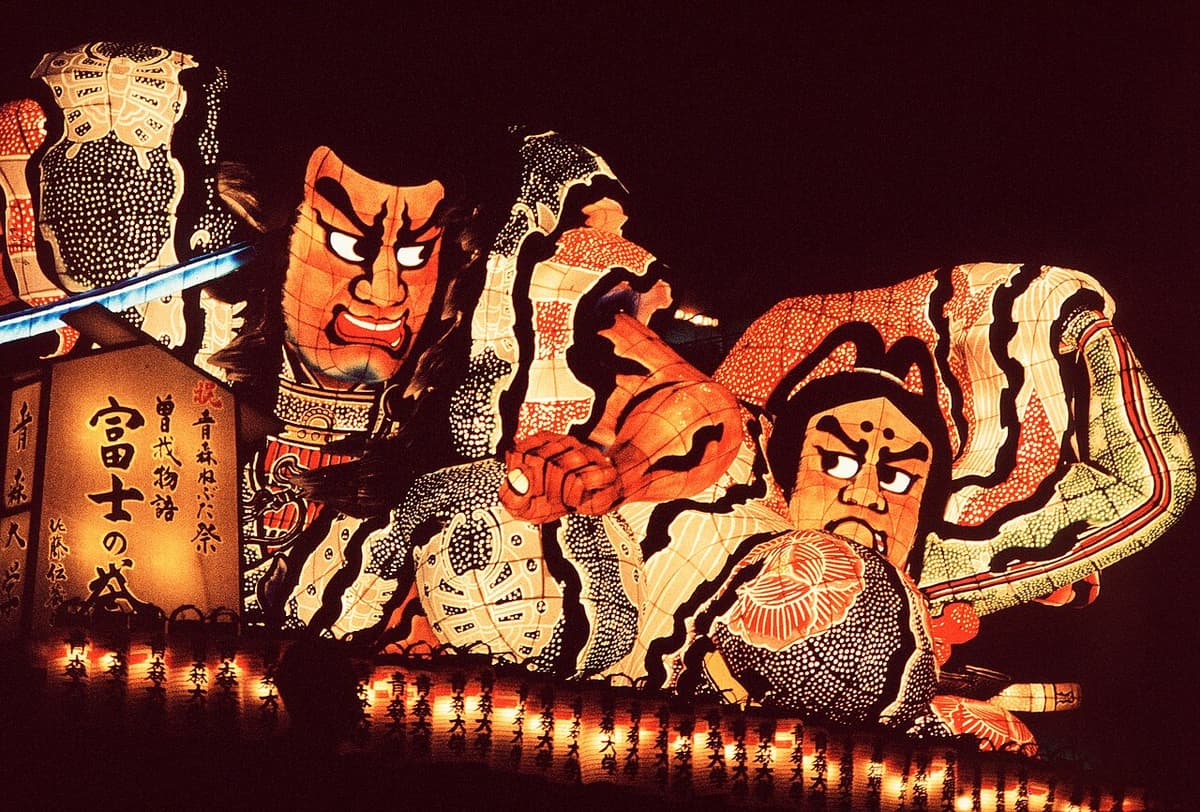
Most great Japanese festivals keep visitors on the pavement. Aomori Nebuta puts this on its own website instead: haneto is open participation, with no advance registration and no same-day sign-up. Buy or rent the full costume, stand at the assembly point before the floats move off, and you are inside the procession — not watching it. That single sentence is the reason this guide exists. The second fact worth fixing early is the calendar: Nebuta runs August 2 to 7 every year, stated as such on the official site and in the national cultural property database, which makes it one of the few Japanese festivals you can book a year out without waiting for an announcement — 2027 runs Monday 2 to Saturday 7 August. What follows: the day-by-day schedule and what actually differs between those six days, all four seat prices and the sales rhythm behind them, the costume rules and the assembly point, the confusing two-organiser ticketing on August 7, the museum closure that catches people out, and how to stack three different lantern festivals into one week.
📍 This guide covers the festival itself. For the city year-round — Sannai-Maruyama, the fish market, Hakkoda, day trip versus overnight — see the Aomori travel guide. For continuing south into Lake Towada and Oirase Gorge afterwards, see the Towada-Hachimantai guide.
- Fixed dates, not a floating weekend: official wording is every year August 2–7, so 2026 is Aug 2 (Sun) to Aug 7 (Fri), with a preview event on Aug 1
- Anyone can dance: no registration, no sign-up — but the full costume is non-negotiable; rental runs about ¥4,000 a set, with tabi, zori and hanagasa charged separately
- Reserved seats ¥4,000 per person, flat across Aug 2–6 and the Aug 7 daytime parade; the Aug 7 daytime plus fireworks package is ¥9,500
- Two separate ticket systems on Aug 7: the fireworks organisers sell their own S ¥5,500 and A ¥4,500 seats — different body, different channel
- Wa Rasse closes Aug 9–10 to swap the entire display for the year's prize winners — arrive from Aug 11 for the newest exhibits of the year
🏮 If you came here for Hirosaki or Goshogawara, this is the wrong article. This one covers Aomori City's Nebuta (Aug 2–7). Hirosaki Neputa runs Aug 1–7 and Goshogawara Tachineputa runs Aug 4–8 — three separate organisers whose ticketing systems do not talk to each other. And Hirosaki's August 7 is a 10:00 morning course, not an evening one, which is the single easiest way to lose a day. For the day-by-day running times and how seats are actually sold, read Hirosaki Neputa 2027 times and how to buy a seat.
📖 Contents
- Is Nebuta worth the trip to northern Honshu?
- The schedule: six days, six different events
- Reserved seat vs free viewing: which is the better buy
- Dancing as a haneto: costume, assembly, rules
- August 7: fireworks, floats on water, two ticket systems
- Wa Rasse: the year-round option, and its closure trap
- Nebuta vs Neputa vs Tachineputa: three festivals, one week
- History and titles: it is not a UNESCO listing
- Transport and lodging: the honest version
- Planning 2027 around fixed dates
- FAQ
Is Nebuta worth the trip to northern Honshu?
Let me answer this before the logistics, because the answer decides whether the rest of the page is relevant to you.
If you simply want to see a Japanese festival, Nebuta is not the efficient choice. It sits at the far northern end of Honshu, it demands a serious long-distance journey, and the week it runs is the single worst week of the year for lodging and transport in the region. Kyoto and Osaka offer plenty of spectacular festivals at a fraction of the logistical cost.
If you want to take part rather than watch, there is almost nothing comparable in Japan. The core processions of most major festivals are closed systems: they require local ties, group sponsorship, or applications made a year in advance. Nebuta reduces the barrier to two things — wear the correct clothes, and turn up on time at the start. Renting a costume for around 4,000 yen puts you inside the procession on one of six nights. That is a categorically different kind of travel from buying a seat and sitting down, and it is the honest justification for the flights.
There is also a third answer, which applies to more people than the first two: if your dates simply do not line up, the festival is still legible year-round through the museum by the station. More on that below, including the two days you must avoid.
The schedule: six days, six different events
It is easy to file this away as "August 2 to 7, parades at night". The official schedule page says otherwise: the content, the start time and even the time of day change across the run. Here is the full picture from that page, as published for 2026 — the 2027 version follows the official announcement.
| Date | What happens | Start |
|---|---|---|
| Aug 1 (Sat) | Maeyasai preview event, Aoi Umi Park special stage | Listed as 17:00–21:00 (planned), with a separate official note that 2026 is planned to start from 10:00 |
| Aug 2 (Sun) & Aug 3 (Mon) | Around 10 children's nebuta plus around 15 large nebuta | 19:00 (children's floats lead) |
| Aug 4 (Tue) – Aug 6 (Thu) | Large nebuta only, around 20 floats; the Nebuta Taisho and other prizes are announced on Aug 6 | 18:45 (large floats lead) |
| Aug 7 (Fri), daytime | Daytime parade: around 20 large nebuta, prize winners at the front | 13:00 |
| Aug 7 (Fri), evening | 72nd Aomori Fireworks Festival plus nebuta on the water, Aomori Port; 4 large floats (planned) sail the harbour | 19:15 to around 21:00 |
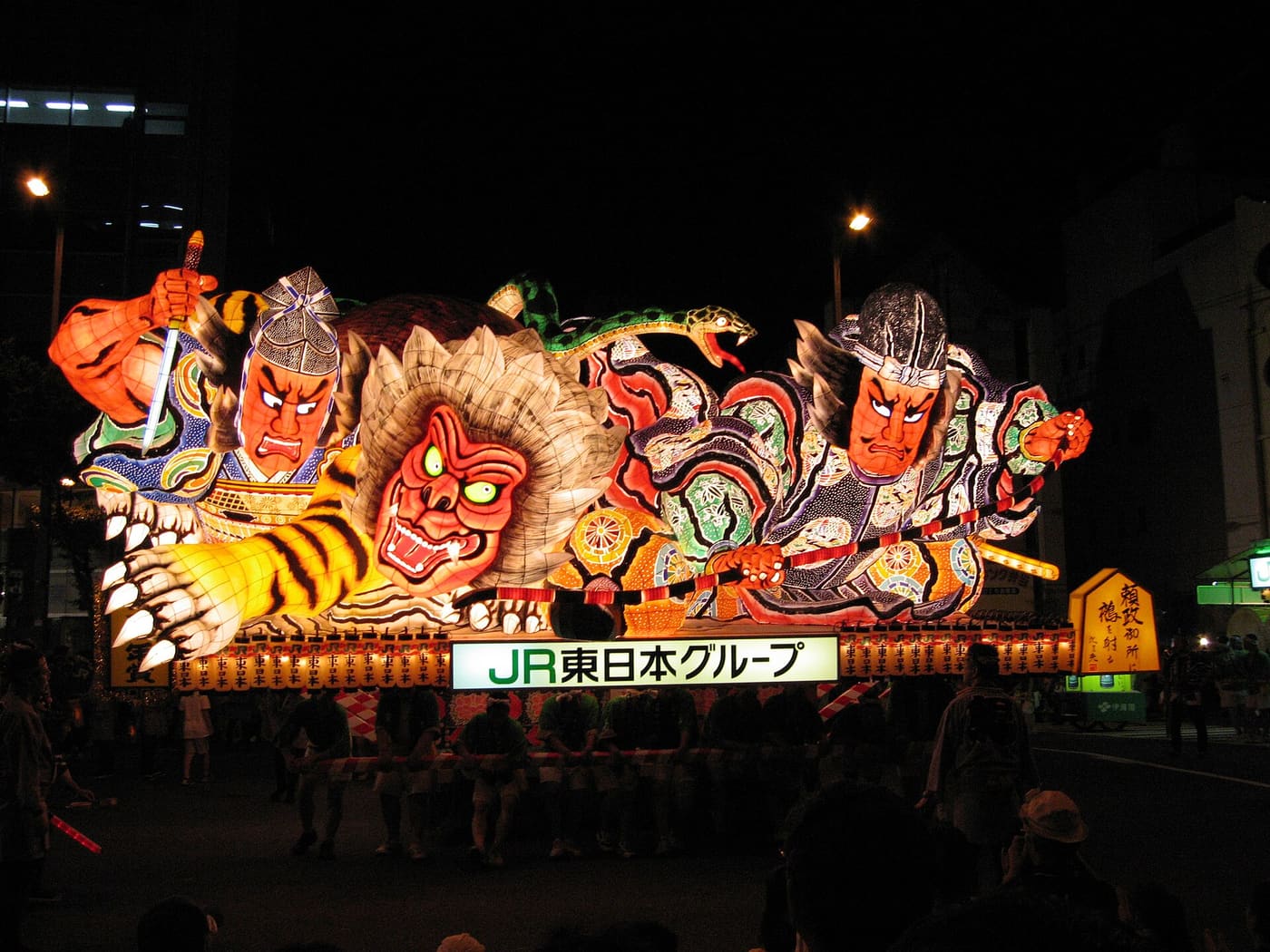
Four things to read out of that table.
The preview event has two official times, and I am not going to reconcile them for you. The schedule page carries both "17:00–21:00 (planned)" and a note that 2026 is planned to start from 10:00. Both are the organisers' own words. The safe practical response is to keep all of August 1 free: be available from the morning, and expect stage programming until 21:00.
August 6 is the peak of the run. Judging takes place across August 2 to 5, and the results are announced on August 6, after which the winning floats parade on the 6th and 7th carrying their award plaques. If you can only attend one evening, take August 6 — it combines the full complement of around 20 large floats with the charge of a just-announced result. No other night has both.
August 7 is effectively a different festival. The 13:00 daytime parade is the only chance in the run to see the brushwork, the paper layering and the wire structure in daylight, rather than as a glowing silhouette. The evening then relocates to the harbour for fireworks and floats on water. It is the only day where you can have both legibility and spectacle — which is also why its tickets are the hardest to get.
The organisers admit you may not see everything. The schedule page states outright that the floats may not manage to complete the course, so there is a possibility of not seeing all of them. That admission is not a disclaimer to skim past; it directly determines how free viewing should be approached, which is the next section.
How the course runs
From August 2 to 6 the large floats depart from two separate starting points, one at the Shinmachi-dori and Yanagimachi-dori intersection and one at the Kokudo and Yanagimachi-dori intersection, and travel the central loop anticlockwise. The published route from the first of those runs Shinmachi-dori, Hakko-dori, Kokudo, Heiwa Koen-dori, Hommachi Teramachi-dori. On August 2 and 3 the children's floats start from the Shinmachi-dori and Hakko-dori intersection with the large floats following behind. On August 7 the daytime parade departs from the Shinmachi-dori and Yanagimachi-dori intersection with prize winners leading.
The western edge of that loop is the Shinmachi-dori area immediately outside Aomori Station, walkable from the platform. I am deliberately not quoting a walking time here — the organisers publish none, and an invented number is worse than no number when you are timing an arrival.
Reserved seat vs free viewing: which is the better buy
Here is my position up front: buy a seat if you are attending exactly one night; stand on the street if you are attending two or more. The reasoning follows the numbers.
The four 2026 seat prices
| Seat type | Price (tax included, guidebook supplied) |
|---|---|
| Aug 2–6 individual seat | ¥4,000 per person |
| Aug 7 daytime parade | ¥4,000 per person |
| Aug 7 daytime plus fireworks package | ¥9,500 per person |
| Wheelchair seating | ¥3,200 user / ¥4,000 companion (up to 2 companions per user) |
Notice what the pricing does not do: it does not vary by date. Every individual seat costs the same whether it is a quiet Sunday, the prize-announcement Thursday, or the daytime finale. So "which night is best value" is not a pricing question at all — it is purely a question of what happens that day, which the schedule section above answers.
The 2026 sales calendar, and why it matters for next year
| Channel | 2026 opening date |
|---|---|
| Aug 2–6 advance lottery | June 1 (Mon) |
| Aug 2–6 general sale, first round | June 27 (Sat) |
| Aug 2–6 general sale, second round | July 18 (Sat) |
| Aug 7 daytime plus fireworks package | June 26 (Fri) |
| Aug 7 daytime only | June 29 (Mon) |
| Wheelchair seating | June 20 (Sat) |
| Groups of 10+, first round (outright purchase) | Apr 7 – Apr 13 (closed) |
| Groups, second round (reservation) | From Apr 16 (open) |
Compressed into one sentence: individual seats follow an early-June lottery, late-June general sale, mid-July second round rhythm, while groups open in early April. That rhythm is the single most useful thing on this page for anyone planning 2027, and I come back to it at the end.
Sales run through the official website, convenience stores and telephone. One point of honesty that matters more than it looks: no affiliate travel platform resells these seats. There is no third-party shortcut, no resale marketplace worth trusting, and no point searching booking sites. The only route is the organisers' own reserved seat page, which means you need either a card that clears on a Japanese payment page or the willingness to operate a convenience store terminal.
On availability, I will report only what was verifiable. As of the organisers' July 27, 2026 status notice, the Aug 2–6 individual seats (parties of nine or fewer) were still on sale across all three channels, while the August 7 packages and most group allocations showed as sold out. Availability shifts daily, so treat that as a snapshot rather than a promise in either direction.
Free viewing done properly
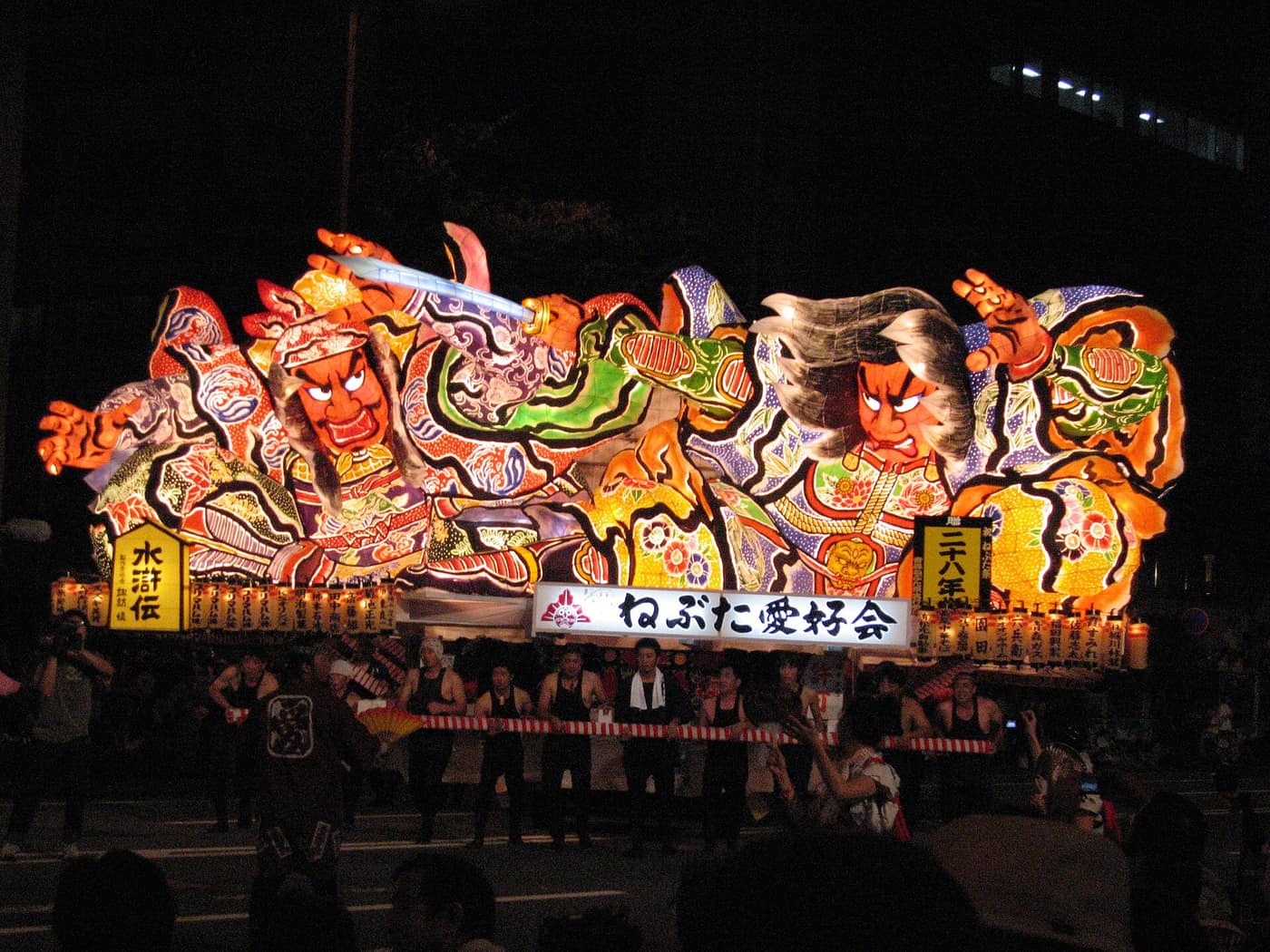
Recall the organisers' own warning that floats may not complete the course. Translated into behaviour, that means do not just find an empty stretch of kerb. An empty stretch may be empty precisely because the floats turn back before reaching it.
There is exactly one correct method: consult the official course map, which publishes estimated passing times at each intersection, choose a junction where floats are scheduled during the window you can attend, and get there early. The current year's map is posted as a PDF on the route map page. Save it to your phone before you travel, because the city centre during festival week is exactly where mobile data goes to die. If you would rather have working data on the ground for timetables and live notices, a prepaid unlimited plan sorted before departure removes the problem — compare the five Japan eSIM options is the usual choice, and our eSIM comparison weighs five providers against each other.
So what does 4,000 yen actually buy? Not a better view — certainty. You are paying to not stand for three hours and to know the floats will reach you. For a first visit with one available night, that is a fair trade. For a second night, the street is genuinely better: the haneto pass within a metre of you, the drums are physical rather than ambient, and none of that reaches a seated row.
Dancing as a haneto: costume, assembly, rules
This is the section that justifies the whole article. Nebuta is one of the very few large Japanese festivals a visitor can simply join, and the openness goes further than most people expect.
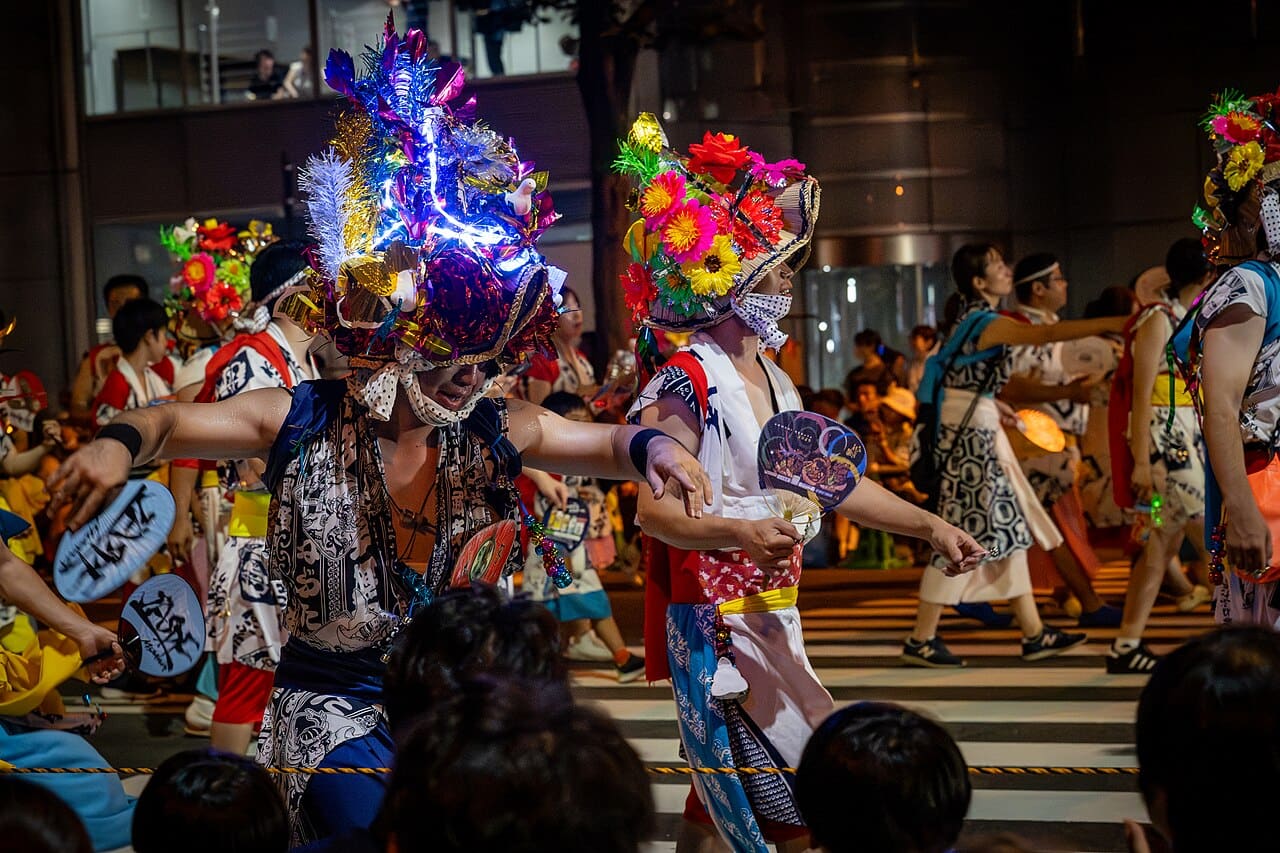
🏮 Official wording (participation page): haneto is open participation, so there is no advance registration and no same-day reception; you can take part even without belonging to a group.
The one hard requirement
No paperwork, but the costume is mandatory and the instruction is unambiguous: wear the haneto outfit as formal dress and join a waiting float group, with the hanagasa on your head. The outfit consists of:
- Hanagasa — the flower-decorated hat, the most conspicuous element
- Tasuki — the cord that ties back the sleeves
- Yukata
- Shigoki — the sash at the waist
- Gagashiko and okoshi — the under layers
- White tabi socks and zori sandals
Arriving incomplete can get you turned away, and it is worth understanding why that is not officiousness. Haneto are a component of the procession, not an audience wearing a theme. The visual uniformity is part of what the festival is.
Getting a costume: the real numbers
The organisers list both rental and purchase shops. Rental for a full set runs around ¥4,000, but note the condition the official page attaches: tabi, zori and hanagasa are generally charged separately, so budget above that headline. Eight rental shops are listed, among them Kobeya (017-723-3389), Kimono Atsuraedokoro Minagawa (017-781-7004), Nebuta Kashi-isho Narumiya (017-775-3011) and Nebuta Rental Isho Owl (017-777-3955), alongside Matsuriya, Koshuya Yofukuten, Hanetoya and Marubun Fukushi Gofukuten; seven purchase shops are listed separately. The full and current list sits on the official haneto costume page.
One gap I will flag rather than paper over: the official pages do not publish purchase prices for costumes, and there is no official figure for dressing assistance either. Numbers circulating elsewhere have no primary source I could verify, so this guide does not quote them — ask the shops directly. Festival week is the busiest week of their year, so reserve by phone well ahead rather than assuming walk-in stock.
Assembly point and timing
The haneto assembly point is at Shinmachi Yanagimachi intersection, sea side. The sequence is: arrive in full costume, join a waiting float group before departure, and move off with the procession.
The organisers add a warning that decides plans: joining partway along the route may be refused depending on how crowded the haneto ranks are. In plain terms, if you intend to dance, be at the start on time. Do not plan to watch for an hour and slip in later. This is the most consequential sentence in the entire haneto section and the easiest to miss.
What is explicitly prohibited
- Moving backwards against the procession
- Bringing whistles or similar noisemakers
- Fireworks and firecrackers
- Bringing one-sho sake bottles
- Discarding empty cans
Individually these read as housekeeping. Together they say something clear: the haneto ranks are a disciplined procession, not a carnival. The chant and the jumping step follow a set rhythm; copy the people around you. Anyone arriving with a "nobody will mind, I am a tourist" attitude will feel the group's disapproval quickly, and deservedly.
August 7: fireworks, floats on water, two ticket systems
The final evening is the festival's climax and its most confusing purchase. The structure, laid out side by side:
| Nebuta Festival side | Fireworks Festival side | |
|---|---|---|
| Organiser | Aomori Nebuta Festival Executive Committee | Aomori Fireworks Festival Executive Committee — a separate body, running under Nebuta co-sponsorship |
| What it sells | Aug 7 daytime parade plus fireworks package | The fireworks event's own paid seating |
| Price | ¥9,500 per person | S ¥5,500 / A ¥4,500 (folding chairs) |
| 2026 on-sale | June 26 (Fri) | July 7 (Tue) 10:00 |
| Channels | Official site / convenience stores / telephone | Web / telephone / convenience stores via pomit.jp; enquiries 017-718-1135 |
Choosing between them is straightforward once the structure is clear. Want the daytime parade too? Buy the Nebuta side's package, which bundles the 13:00 parade with the evening in one transaction. Only free in the evening? Go direct to the fireworks organisers at aomorihanabitaikai.jp and save well over half.
What you are actually watching deserves explaining. From 19:15 the fireworks and the nebuta sea procession run simultaneously: four large floats (planned), award winners among them, sail across Aomori Port while shells burst behind them. It is the only occasion in the six days when the floats leave the streets and appear on water, which is why August 7 is treated as unmissable. In heavy rain the event moves to the following day.
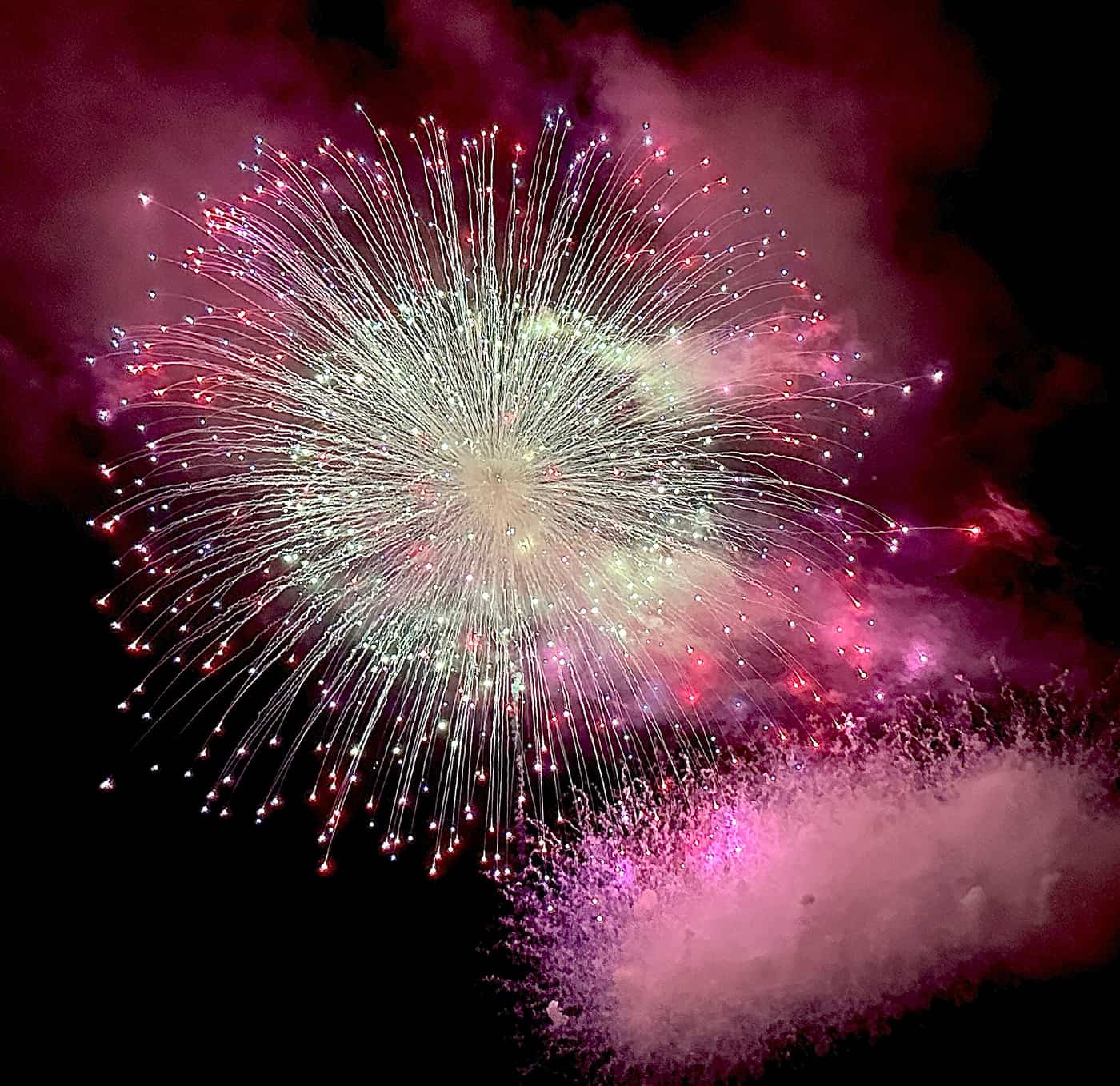
Two limits worth stating plainly: the organisers publish no shell count, so any "10,000 fireworks" figure you find elsewhere is unverified here; and the four floats on the water are described as planned, not guaranteed. For how this event sizes up against Japan's other summer fireworks, our summer fireworks guide lines up the major events by date and scale.
Wa Rasse: the year-round option, and its closure trap
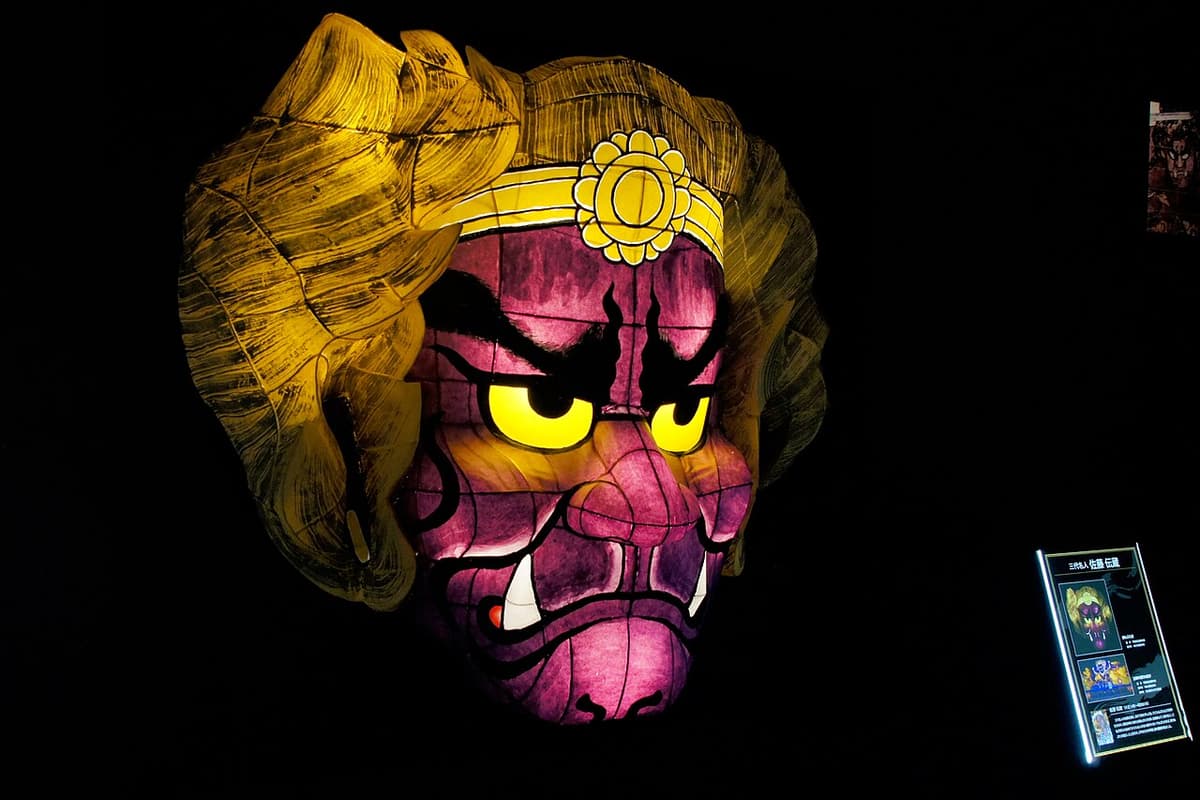
Not everyone can be in Aomori across those six days. The consolation is unusually good: the Nebuta Museum Wa Rasse beside Aomori Station displays large nebuta all year, and you can walk directly beneath one. That vantage shows you the wire armature, the way light passes through layered washi paper, and the actual brushwork on the faces — none of which is visible during the parade, when the floats read as glowing shapes.
| Item | Detail |
|---|---|
| Admission | Adults ¥620 / high school ¥460 / elementary and junior high ¥260 |
| Groups (10+) | ¥550 / ¥410 / ¥230 |
| Free entry | Aomori city elementary and junior high students; disability certificate holders plus one companion (original certificate required) |
| Hours, May–Aug | 9:00–19:00 (last entry 18:30) |
| Hours, Sep–Apr | 9:00–18:00 (last entry 17:30) |
| Closed | Aug 9 and Aug 10 (complete display changeover), plus Dec 31 and Jan 1 |
Those two August closure days are the practical takeaway. The reason is a full changeover of the displayed floats, swapping in the ones that just won prizes days earlier. So two things follow. Anyone rushing to the museum immediately after the festival risks a locked door. But anyone arriving from August 11 sees the newest exhibits of the entire year — the just-crowned winners, days old. If your itinerary has any flex, shifting the museum to August 11 or later is a free upgrade.
Practical notes: advance tickets are group-only and there is no online purchase, so individuals simply buy at the door, where cashless payment is accepted. Drivers pay ¥220 for the first hour of parking, with one hour free for museum visitors.
Nebuta vs Neputa vs Tachineputa: three festivals, one week
Here is the itinerary idea worth building the week around: Aomori Prefecture holds three structurally different lantern festivals in overlapping windows. Based in Aomori City, one trip can take in all three.
| Festival | 2026 dates | Lantern form | Distinguishing feature |
|---|---|---|---|
| Aomori Nebuta | Aug 2–7 | Three-dimensional warrior figures, wide | Open haneto participation; Aug 7 sea procession and fireworks |
| Hirosaki Neputa | Aug 1–7 | Fan-shaped (ogi neputa) | Largest floats exceed 9 m; listed among Japan's 100 soundscapes worth preserving; Aug 7 runs at 10:00 |
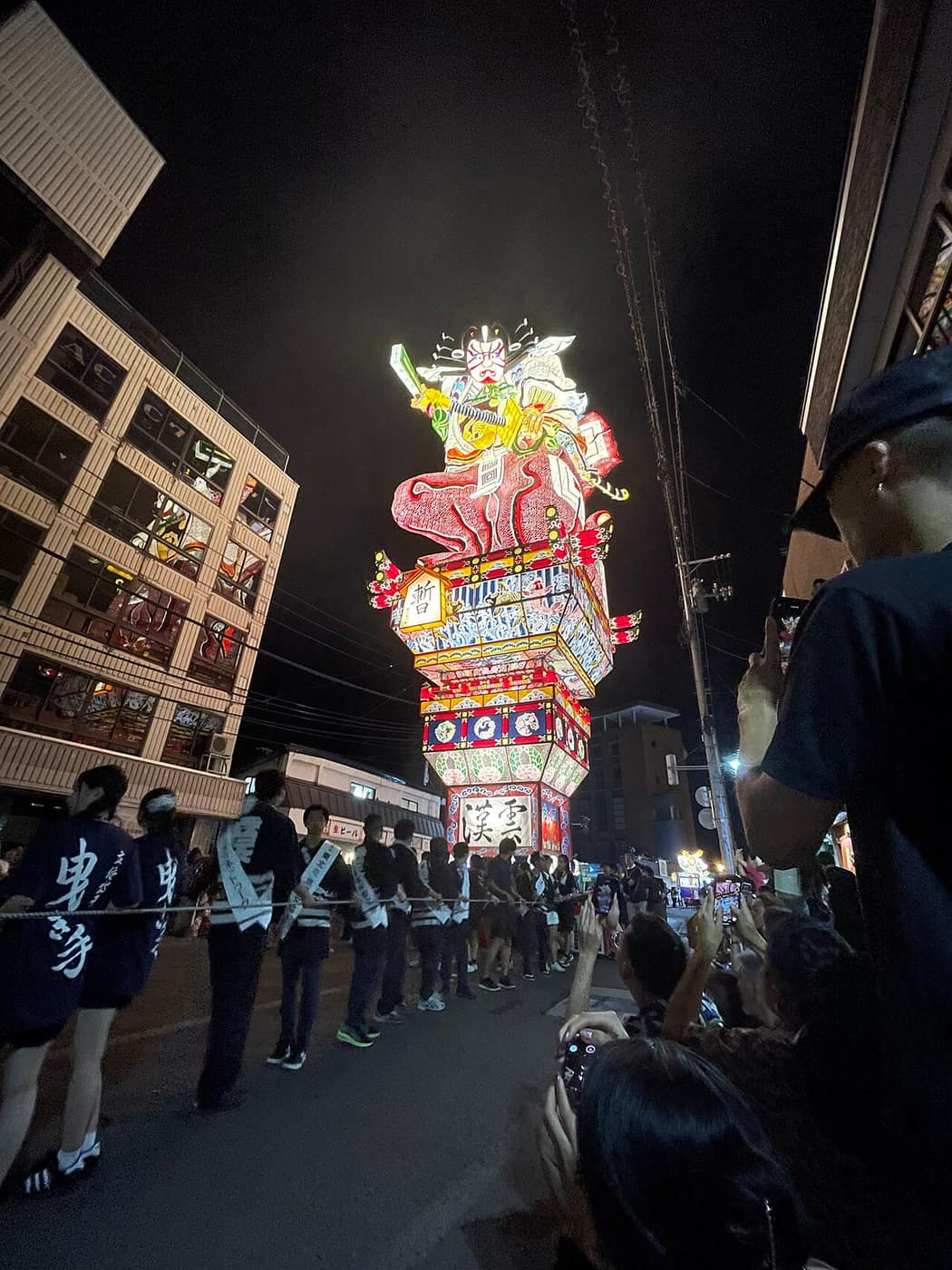
| Goshogawara Tachineputa | Aug 4–8 | Vertical towering lanterns | About 23 m tall and 19 tonnes; 3 large, 5 medium and 9 small floats; the large three meet at the departure point on the first and last days |
Hirosaki Neputa officially runs August 1 to 7 each year, split three ways: the Dotemachi course from August 1 to 4 at 19:00, the station-front course on August 5 and 6 at 19:00, and on August 7 the Dotemachi morning course starting at 10:00 — the detail that most often costs visitors an entire day. Individual reserved seats do exist, at ¥3,000, but they go on sale only from June 22, are never sold over the counter, and sit under no roof with umbrellas prohibited. For the full day-by-day route table, the three incompatible ticketing systems, the August 7 closing rite and the choice it forces, see our Hirosaki Neputa and Goshogawara Tachineputa guide. Hirosaki's other identity, as Japan's most famous late cherry blossom city, is covered in our Hirosaki and Hokkaido cherry blossom guide.
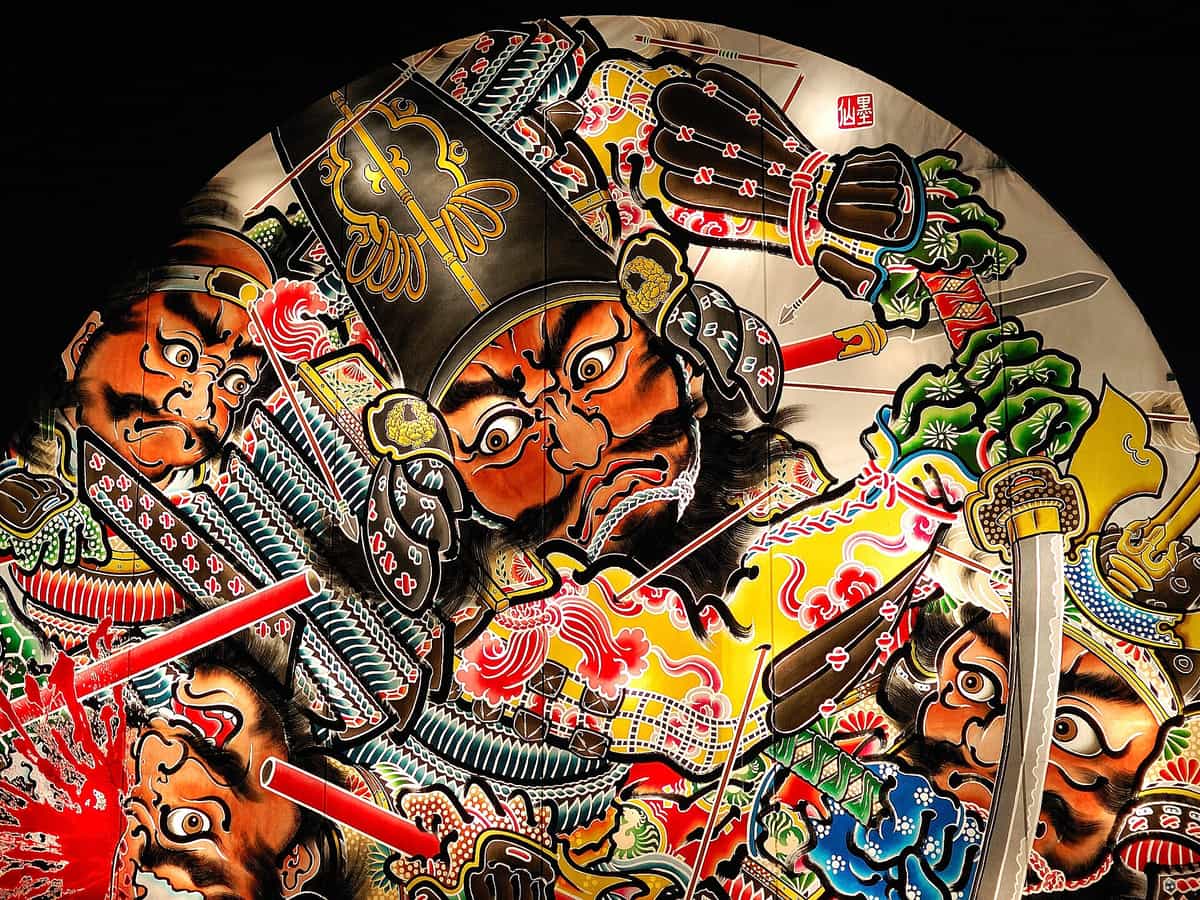
Goshogawara Tachineputa states its dates as August 4 to 8 every year regardless of weekday, 19:00 to a planned 21:00 finish. Its floats stand vertically, a third structural logic entirely distinct from Aomori's broad figures and Hirosaki's fans. On the opening and closing days the three large floats gather at the departure point for the omiai, which makes those two dates the ones to target. One fact that surprises most visitors: Goshogawara has no official ticket office — its chamber of commerce states in writing that it does not sell viewing seats, leaving six private groups selling by telephone. Details are in our Hirosaki and Goshogawara guide.
Outside the festival window, the Tachineputa no Yakata museum displays the floats year-round: ¥800 for adults, ¥500 for high school students and ¥300 for elementary and junior high students, with a combined ticket including the art gallery at ¥1,000 for adults. ⚠️ Two things to know: the museum closed in April 2025 for a major renovation and only reopened on July 10, 2026 (exhibition viewing from July 11), and during the festival, August 4 to 8, the exhibition hall closes at 17:00, with the three large floats leaving the building shortly after 17:30 on August 4 and 8.
A correction to an earlier caveat here: the height of the Tachineputa floats, about 23 metres and roughly 19 tonnes, is an official figure — both the City of Goshogawara and tachineputa.jp state it, confirmed on re-verification dated August 15, 2026. The July 2026 version of this page withheld it for lack of a source; that is now resolved.
My recommended stack: with three days, take August 5 to 7 — Hirosaki's station-front course on the 5th, Aomori's prize night on the 6th, Aomori's daytime parade and sea fireworks on the 7th. With five days, add August 4 for Goshogawara's opening omiai. Two structural facts are worth knowing before you build the plan: August 7 is the only day official special trains let you see two festivals (Hirosaki in the morning, Goshogawara at night), and August 8 belongs to Goshogawara alone, with the other two already finished. The full clash matrix and the choice August 7 forces are in our Hirosaki and Goshogawara guide. The payoff for seeing all three is conceptual as much as visual: you watch a single lantern tradition resolve into three completely different forms across three towns, which no single festival can show you.
History and titles: it is not a UNESCO listing
Correcting the most persistent error first: Aomori Nebuta is not a UNESCO Intangible Cultural Heritage.
Its actual title is Important Intangible Folk Cultural Property at national level, designated under the name Aomori no Nebuta on January 28, 1980, with the Aomori Nebuta Festival Preservation Society as protecting body — all itemised in the Agency for Cultural Affairs national designated property database. The UNESCO inscription people confuse it with is Yama, Hoko, Yatai float festivals, listed December 1, 2016, comprising 33 entries nationwide at the time. Aomori Prefecture's entry on that list is the Hachinohe Sansha Taisai float event, and Nebuta is not on it.
⚠️ One update to add: the list moved again on 8 December 2025. UNESCO's 20th intergovernmental committee adopted decision 20.COM 7.b.52, whose text states that the new inscription "incorporates and replaces" the 2016 entry for Yama, Hoko, Yatai float festivals (No. 01059), and that the Japanese inventory "comprises the thirty-three float festivals included in the original nomination, along with four additional festivals included between 2016 and 2021." So 33 is the 2016 number, not the present one — the decision does not spell out which four were added, or state a new total, so this guide does not invent either. None of that changes the Nebuta answer: it was never on the list to begin with.
This is worth a paragraph because it works as a quality test. A page that upgrades Nebuta to UNESCO status has generally not checked primary sources for its prices or schedule either.
While we are on titles: "one of Tohoku's three great festivals" is a tourism convention, not an official designation. None of the three organisers uses the phrase on their Japanese-language sites, yet the same publisher's Chinese-language material does — same year, same body, inconsistent across languages. This guide uses the phrase as shorthand but does not treat it as an official title.
Origins: even the organisers hedge
On origins, the official Chinese-language page says the festival is said to have developed from Tanabata observances — note that the organisers themselves use the hedging construction. The idea that floating Tanabata lanterns evolved into a parade of giant figures is the most widely accepted hypothesis, but it is not settled fact, and this guide keeps the organisers' framing rather than promoting it to history.
Far more interesting is the origin story the organisers actively demolished. The festival's top prize, established in 1962, was originally called the Tamuramaro Prize after Sakanoue no Tamuramaro. In fiscal 1995 it was renamed the Nebuta Taisho, and the reason given on the official prize history page is blunt: neither Tamuramaro's campaign against the Emishi nor any use of nebuta during it can be substantiated.
In other words, the popular story that Nebuta began as lanterns used to lure out enemies during Tamuramaro's northern campaign was formally disowned by the organisers in 1995, at the cost of renaming their own top award. That was my favourite discovery of this research round. A festival willing to demote its most marketable legend to unverifiable — and to pay for that position by changing a prize name — has earned some credibility on everything else it publishes.
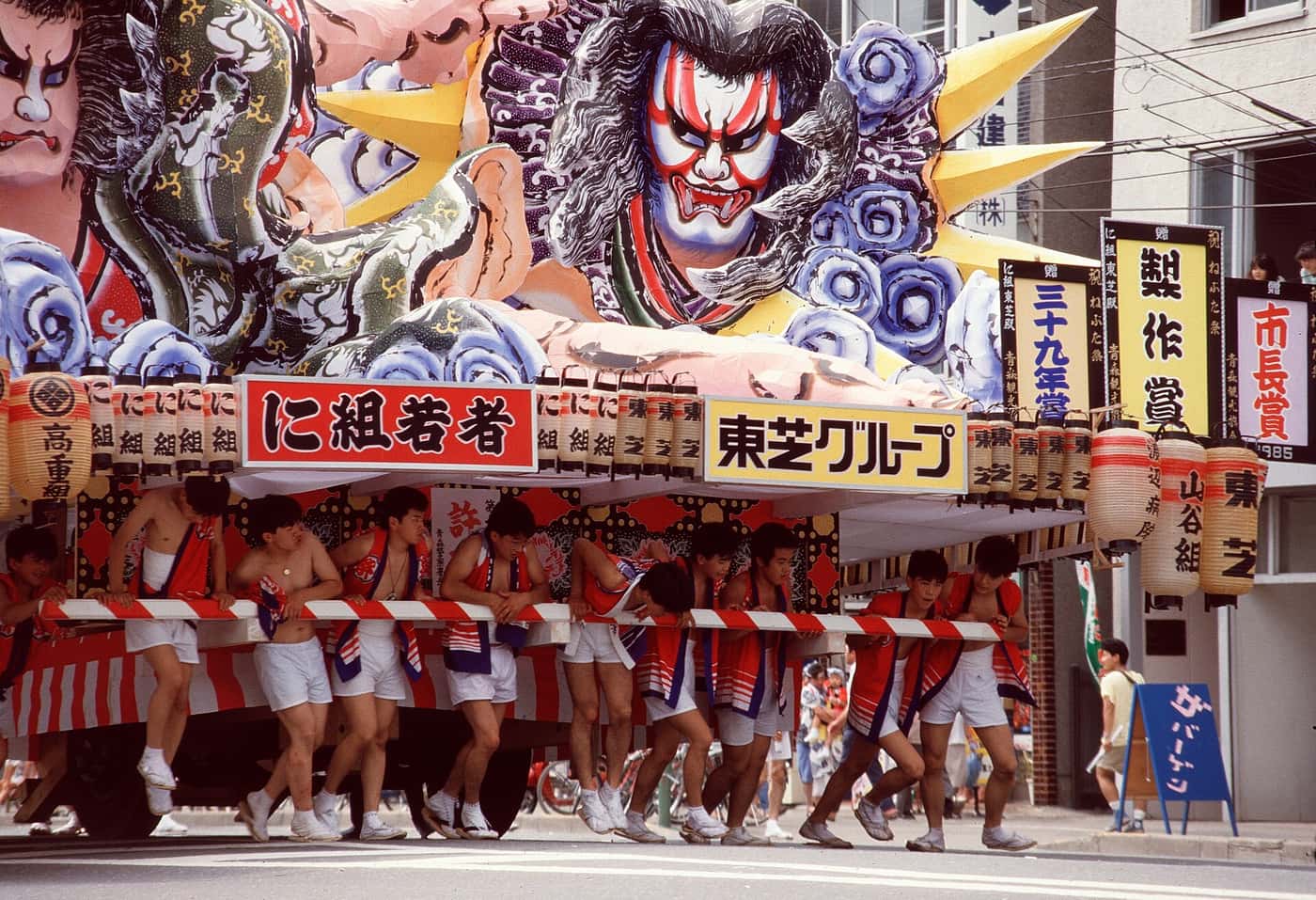
On the makers themselves, the same prize history page lists the recurring master builders, with names such as Kitamura Takashi, Chiba Sakuryu and Takenami Hiroo appearing repeatedly. Matching floats to their makers afterwards is the festival's second layer of interest.
A final disclosure: the year the sea procession began, and annual visitor numbers, are two figures I could not source officially, so they do not appear here. Treat the two-million-visitor claims you will find elsewhere accordingly.
Transport and lodging: the honest version
This section is deliberately conservative, because some numbers I could not verify, and a wrong transport figure during festival week does real damage.
Lodging is the actual constraint
Accommodation in central Aomori is extremely tight during the festival — every source agrees, and the practical instruction is to book months ahead. I will not tell you it sells out a year in advance; I found no official or reliable basis for that specific claim.
Three fallback bases, with their honest caveats:
- Around Shin-Aomori Station — the Shinkansen station, close to the centre, the most obvious first alternative.
- Hirosaki — but note that Hirosaki is running its own festival that same week (August 1–7), so it is not a quiet overflow option. It is a good choice because you probably want to go anyway, not because rooms are easy (see the Hirosaki Neputa schedule and seating).
- Hachinohe — another Shinkansen base, which also hosts the Hachinohe Sansha Taisai from July 31 to August 4, the festival that actually holds the UNESCO listing discussed above.
Returning to Tokyo the same night? Don't
Evening parades finish around 21:00, which makes a same-night return to Tokyo marginal at best. An explicit disclosure: I could not verify last Shinkansen departure times from a primary source, and special services frequently run during the festival, so this guide quotes no departure times. Check JR East's timetable for your date directly.
The practical advice is one sentence: stay in the Aomori area, Hirosaki or Hachinohe, and keep "back to Tokyo tonight" out of the plan. Streets and stations after the parade are saturated, and a single delay collapses the chain. For what else Aomori supports as a northern base — Hakkoda, Oirase, the Shimokita Peninsula — the Aomori travel guide covers day-trip versus overnight in full; to continue south towards Matsushima and gyutan, see the Sendai guide.
For the same reason, this guide quotes no journey times between Aomori and Hirosaki or Hachinohe. The JR East website has returned 403 to every attempt I have made, festival-week services differ from normal operation, and copying an off-peak figure would be actively misleading. The one documented exception is the four JR special services between Hirosaki and Goshogawara on August 4 to 8, published in Goshogawara's own festival guide and tabulated in our Hirosaki and Goshogawara guide. Otherwise, confirm against the current timetable before you travel — and since central Aomori's mobile network is congested all week, compare the five Japan eSIM options is what keeps that check possible at all.
Planning 2027 around fixed dates
Nebuta's most underrated quality is that it does not move. Most large Japanese festivals follow rules like "the second weekend of", which means waiting for an annual announcement before you can book anything. Nebuta's official site and the national cultural property database both state August 2 to 7, every year.
The consequence: you can already block out Monday August 2 to Saturday August 7, 2027. The Saturday finish is unusually convenient for flights home.
Three caveats, stated so nobody mistakes a projection for an announcement:
- The organisers have published nothing specific about 2027 as of this verification date — the site is still on the 2026 edition throughout. The dates above are a projection from the official annual wording plus a calendar check, not a published schedule.
- The 2027 timings, float counts and route are all pending. These have been stable year to year, but I will not present the 2026 timetable as a 2027 guarantee.
- 2027 seat prices and sales dates are equally unpublished. What transfers is the rhythm: on 2026's pattern, expect an early-June lottery, late-June general sale and mid-July second round for individual seats, with groups in early April. Setting a reminder to check the official site around June 1 is the practical move.
How I would sequence a 2027 trip: book flights and rooms the previous autumn or winter, which is a rare luxury made possible by the fixed dates; watch the site from the start of June for the advance lottery, and fall back to the late-June general sale if unsuccessful. Reserve a costume by phone as soon as dates are locked, since festival week is the rental shops' busiest of the year.
And the final word on what to prioritise: one night in a seat for certainty, one night in the ranks for the experience, and the museum from August 11 for the craft. If you only get one day, take August 6's prize night or August 7's daytime parade and harbour fireworks. If you miss the window entirely, Wa Rasse is open all year — and honestly, standing beneath a single float and seeing how it is built teaches you more about the tradition than a distant view of a whole evening.
Frequently Asked Questions
- Q1:What are the Aomori Nebuta Festival dates, and will they change in 2027?
- The Nebuta Festival runs on fixed calendar dates rather than a floating weekend rule. The official site states plainly that it is held every year from August 2 to August 7, and the Agency for Cultural Affairs national designated property database lists the same window, August 2 to 7 annually, in its entry for Aomori no Nebuta. That makes it one of very few major Japanese festivals you can book a year ahead with confidence. For 2027 that means Monday August 2 through Saturday August 7, a convenient finish for flights home. One honest caveat: the organisers have published nothing specific about the 2027 edition yet, so the dates are safe but any exact schedule is not. Detailed timings and seat sales will follow the official announcement, which based on the 2026 rhythm should begin in early June.
- Q2:Is a reserved seat worth 4,000 yen, or should you watch for free?
- It depends entirely on how many nights you have. If you are seeing exactly one night, buy the seat, because what 4,000 yen actually buys is certainty rather than a better view: a guaranteed spot without standing for three hours. If you are watching two or more nights, spend the second night on the street, where the floats and the haneto pass within arm reach and the physical sense of the parade is far stronger than it is from a seat. There is one complication that pushes some people towards a seat. The organisers themselves warn on the official schedule page that the floats may not complete the entire course, so there is a possibility of not seeing all of them. Free viewing therefore is not a matter of finding any empty kerb: you need to check the official course map, which lists the estimated passing time at each intersection, pick a junction where floats will actually pass during your window, and arrive early.
- Q3:Can foreign visitors really dance as haneto without registering?
- Yes, and the official wording leaves no ambiguity. The participation page states that haneto is open participation, with no advance registration and no same-day sign-up, and that you can take part without belonging to any group. That level of openness is genuinely rare among major Japanese festivals. The one hard requirement is the costume. The organisers instruct you to wear the haneto outfit as formal dress, put on the hanagasa flower hat, and join a waiting float group before departure. The full outfit comprises the hanagasa, tasuki sash, yukata, shigoki waistband, gagashiko and okoshi underlayers, white tabi socks and zori sandals. Missing pieces can get you turned away, because haneto are part of the procession rather than spectators. Costume rental from the shops the organisers list runs around 4,000 yen for a set, with tabi, zori and hanagasa typically charged separately.
- Q4:How much are Nebuta reserved seats and when do they go on sale?
- For 2026 the individual seat price is flat across the run: 4,000 yen per person for August 2 through 6, the same 4,000 yen for the August 7 daytime parade, and 9,500 yen per person for the August 7 daytime parade plus fireworks package. All prices include tax and come with a guidebook. Wheelchair seating is 3,200 yen for the user and 4,000 yen for a companion, with up to two companions per user. The 2026 sales calendar ran as follows: advance lottery for August 2 to 6 opened June 1, the first general sale June 27 and the second July 18; the August 7 daytime and fireworks package opened June 26, daytime only June 29, and wheelchair seating June 20. Group bookings of ten or more opened much earlier, in early April. Sales channels are the official website, convenience stores and telephone. No travel platform resells these seats, so go direct.
- Q5:Is the Aomori Nebuta Festival a UNESCO Intangible Cultural Heritage?
- No, and this is one of the most common mix-ups about the festival. Aomori Nebuta holds the Japanese national designation of Important Intangible Folk Cultural Property, registered under the name Aomori no Nebuta on January 28, 1980, with the Aomori Nebuta Festival Preservation Society as the protecting body. All of that is verifiable in the Agency for Cultural Affairs database. The UNESCO listing people are thinking of is Yama, Hoko, Yatai float festivals, inscribed on December 1, 2016, covering 33 entries nationwide at the time. That 2016 entry was superseded on 8 December 2025 by an expanded inscription, so 33 is the historical figure rather than the current one. Either way the Aomori Prefecture entry on that list is the float event of the Hachinohe Sansha Taisai, not Aomori Nebuta. The distinction matters beyond pedantry: both the Agency for Cultural Affairs database and the UNESCO decision text are public, so the claim can be checked against the primary sources directly.
- Q6:Are the August 7 fireworks tickets the same as the Nebuta reserved seats?
- No, and this is the single easiest thing to buy wrong. The 72nd Aomori Fireworks Festival on the evening of August 7 is run by the Aomori Fireworks Festival Executive Committee, a separate organisation from the Nebuta Festival Executive Committee, and appears under the banner of a Nebuta Festival co-sponsorship. It sells its own paid seating at 5,500 yen for S seats and 4,500 yen for A seats, both folding chairs, which went on sale at 10:00 on July 7, 2026 through web, telephone and convenience stores via the pomit.jp platform, with enquiries on 017-718-1135. Separately, the Nebuta Festival side sells the 9,500 yen package combining the August 7 daytime parade with the fireworks. Two independent ticketing systems. Buy the package if you want the daytime parade as well; buy direct from the fireworks organisers if you only want the evening.
- Q7:What if you arrive after the festival is over?
- You can still see the floats, but avoid two specific days. The Nebuta Museum Wa Rasse beside Aomori Station displays large nebuta year-round, at 620 yen for adults, 460 yen for high school students and 260 yen for elementary and junior high students. It opens 9:00 to 19:00 from May to August, last entry 18:30, and 9:00 to 18:00 from September to April, last entry 17:30. The trap is the closure on August 9 and 10, when the museum swaps its entire display for the floats that just won awards at the festival. So arriving straight after the festival ends can leave you at a locked door, while arriving from August 11 gets you the freshest exhibits of the entire year. The museum also closes December 31 and January 1. Advance tickets are sold to groups only and there is no online purchase, but cashless payment is accepted on site.
Read next
Aomori Travel Guide 2027: Sannai-Maruyama, Hakkoda & Oirase
Honshu's northern tip of Jomon heritage and gateways — the World Heritage Sannai-Maruyama site, year-round nebuta floats at Wa Rasse, Hakkoda and Oirase, plus Oma tuna and apples.
Lake Towada, Oirase Gorge & Hachimantai Guide 2026
The 14 km Oirase Gorge foliage walk (peak late Oct), Choshi Otaki falls, the double-caldera Lake Towada, and Hachimantai's snow corridor and Dragon Eye pond — with the honest no-train access plan.
Japan Fireworks Festivals 2026: 8 Hanabi Worth Flying For
Sumida 7/25, Nagaoka 8/2–3, Suwa 8/15, Yodogawa shifted to 10/17 — ticket timing, hidden viewpoints, weather rules.
📊 See the 2026 Price Index (JR Pass, DPA, eSIM, Airport Transport) →