If Yufuin is the "quality" of hot springs, Beppu is the "volume" — a city with Japan's highest hot-spring output, eight onsen districts and white steam rising everywhere. Beppu plays differently from an ordinary soaking town: by day you go to look at the cobalt-blue, blood-red and geysering "hells," then lie in a seaside sand bath and steam a meal over the earth's vents in Kannawa, and only in the evening return to the public baths and ryokan to actually soak. This guide covers the hells combined ticket, sand baths, jigoku-mushi steam cooking and the Beppu Hatto, and how to pair it with Yufuin. The rail loop is in our Kyushu 3-day rail itinerary. One thing worth knowing before you pick a bath: Beppu City publishes its own definitions of source water, piped water, free-flowing and recirculating — and its definition of kakenagashi is source water fed into the tub without controlling the flow, which says nothing at all about added water or added heat. That differs from the Japan Spa Association's voluntary standard, and neither is law. What a given bath actually does is settled by the statutory notice on its wall.
- Japan's highest hot-spring output: the Beppu Hatto, steam everywhere — lively, varied "volume"
- Seven hells, combined ticket ¥2,400 adult (¥2,200 online): the hells are a spectacle to look at, not to soak in
- Seaside sand bath ~¥1,500: lie down and get buried in onsen-heated sand
- Kannawa jigoku-mushi: steam seafood and vegetables over the ground vents, DIY possible
- Best paired with Yufuin: 50-min bus — see the hells in Beppu, overnight in Yufuin
📖 Table of contents
What kind of onsen city Beppu is
Beppu sits in Oita on the Seto Inland Sea and has Japan's highest hot-spring output — steam rises from rooftops and street corners all over town, as if the whole city were gently simmering. It's the opposite of refined, quiet Yufuin: Beppu is lively, full of tourist spectacle, with a wide choice of public baths and ryokan, from a few-hundred-yen neighborhood bathhouse to a big resort hotel with a sea view on the hill.
The key thing about Beppu is that "looking at onsen" and "soaking in onsen" are two separate things. Those cobalt, blood-red and erupting pools are the "hells" — too hot to enter, a sightseeing spectacle you only look at; to actually bathe you go to the public baths and ryokan. So a standard Beppu day is: hell tour plus sand bath plus jigoku-mushi by day, then a relaxing soak at a public bath or your inn in the evening. Get that structure and the itinerary plans itself. Kyushu has one other "hell" spectacle worth comparing — the sulfur-fuming Unzen jigoku and Nita-toge ropeway in Nagasaki, also for looking rather than soaking; seeing both makes the two faces of Kyushu's volcanic onsen click.
The hell tour: seven hells and the ticket
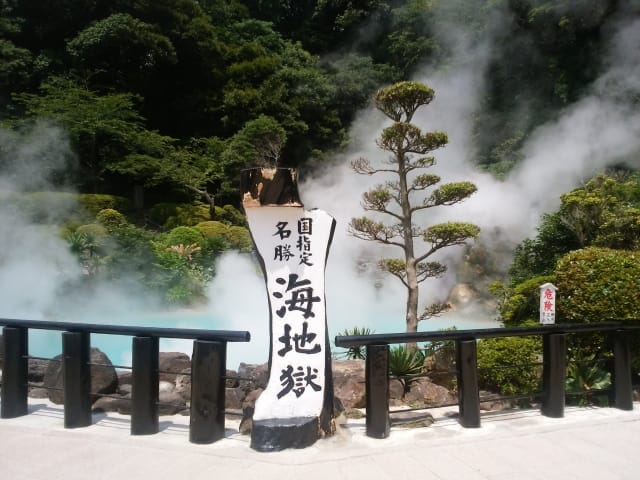
The "hell tour" (jigoku-meguri) is Beppu's signature outing — seven distinct hells spread across the Kannawa and Kamegawa areas:
- Umi Jigoku (Sea Hell): the largest and most iconic, a cobalt-blue pool under white steam, with a greenhouse of water lilies, a foot bath, and steam-cooked eggs and pudding for sale.
- Chinoike Jigoku (Blood Pond Hell): Japan's oldest natural hell, turned blood-red by red clay, with a "blood pond ointment" sold on site.
- Tatsumaki Jigoku: a geyser that erupts roughly every 30-40 minutes, so you time your visit and wait.
- Kamado Jigoku ("cooking pot hell"): several different pools together, a foot bath and drinkable hot spring — the most interactive.
- Oniyama Jigoku: uses the thermal heat to breed crocodiles, hence "crocodile hell."
- Shiraike Jigoku (White Pond Hell): a milky-white pool with a Japanese garden and a tropical-fish house.
- Oniishibozu Jigoku: grey mud bubbling up like a monk's shaved head.
Pricing: the seven-hell combined ticket is ¥2,400 for adults and ¥1,200 for elementary/junior-high students, discounted to ¥2,200 for adults if bought online or at a convenience store, valid for two days, open 8:00-17:00 year-round. Honestly, you don't need to see all seven — Umi and Kamado are the most rewarding, and Chinoike's red is memorable too; the five in Kannawa (Umi, Oniishibozu, Kamado, Oniyama, Shiraike) are within walking distance of each other, while Chinoike and Tatsumaki are about 3 km away by bus, so do the Kannawa five first if you're tight on time.
The seaside sand bath
A "sand bath" is well worth slotting into a Beppu day — one of its most memorable experiences. You lie down in a yukata and an attendant shovels onsen-heated sand over your whole body, and the weight and warmth bring on a slow sweat; after about 10-15 minutes you get up and rinse the sand off, warmed right through and deeply relaxed. Unlike a soak, it's the heavy, enveloping pressure of the sand that most first-timers remember.
Two main spots: the seaside Beppu Beach Sand Bath (municipal) at about ¥1,500, where you're buried with an ocean view (ages 5+), and the downtown Takegawara Onsen sand bath, also ¥1,500, inside a century-old wooden building (a plain indoor bath there is just ¥300). Both queue in peak season, so confirm the booking method or arrive when they open.
Kannawa Onsen and jigoku-mushi
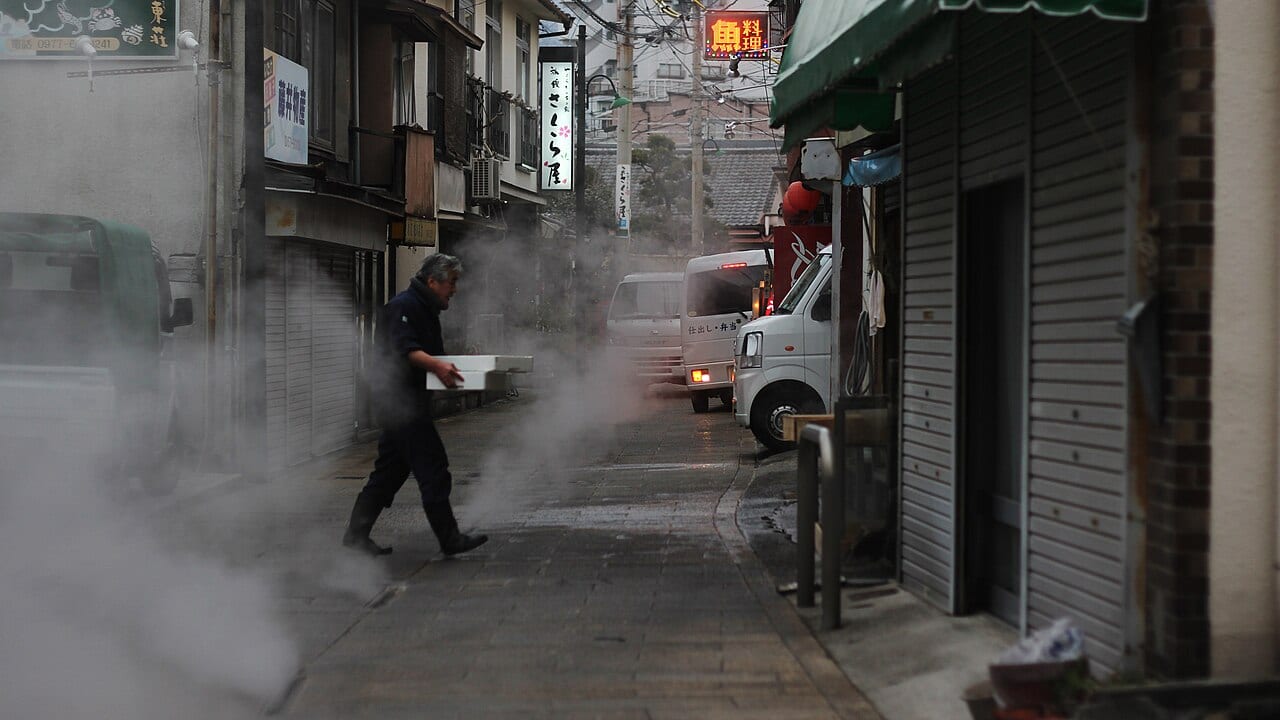
Kannawa is the most steam-shrouded of Beppu's onsen districts — white plumes drift through the alleys — and the birthplace of jigoku-mushi cooking. Jigoku-mushi steams ingredients directly over the high-temperature steam venting from the ground — seafood, vegetables, eggs, meat — and the steam's natural saltiness leaves them sweet and not greasy, a genuinely healthy way to eat.
The best way to do it is to steam your own at the "Jigoku-mushi Kobo Kannawa" workshop: rent a steamer slot, buy or bring ingredients, drop them over the steam vent and wait a few minutes — the process itself is fun. Don't want to cook? Plenty of shops serve jigoku-mushi as a set meal. As you wander Kannawa you'll also pass free or coin-priced "foot steamers" and foot baths to try along the way.
Beppu Hatto and the public-bath culture
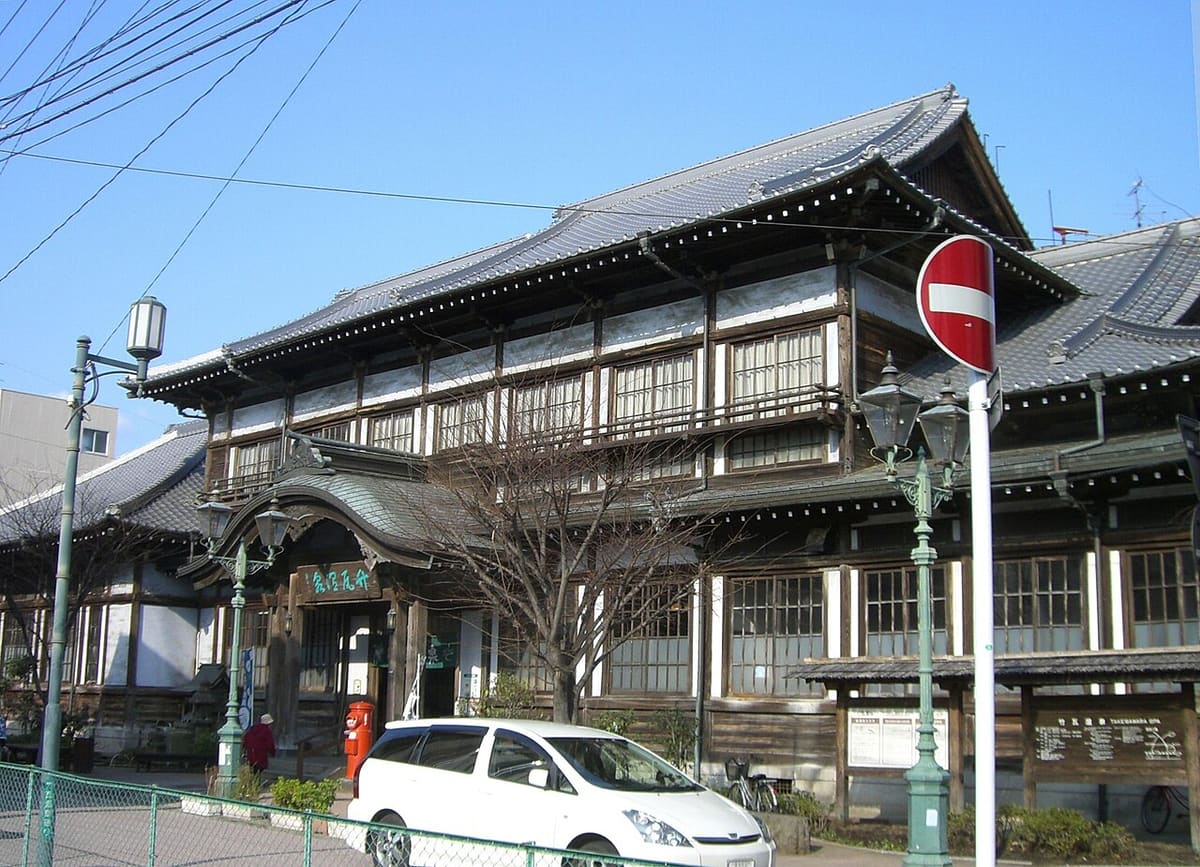
"Beppu Hatto" is the collective name for the city's eight onsen districts — Beppu, Hamawaki, Kankaiji, Hotta, Myoban, Kannawa, Shibaseki and Kamegawa — each with its own water, color and atmosphere, and the essence of Beppu's "volume." The hells are for looking; for actual soaking you rely on these public baths and ryokan:
- Takegawara Onsen: a Beppu symbol, an old wooden building with a karahafu gable; the indoor bath is just ¥300 — the first choice for the local public-bath culture.
- Myoban Onsen: a sulfur-spring district up the hill, with milky blue-white water, thatched "yunohana huts" that make mineral bath crystals, and views over Beppu Bay.
- Kankaiji Onsen: a cluster of big resort hotels with sea-view bathing decks, ideal for an overnight soak.
Beppu's public baths are many and cheap, which suits a "one hells ticket plus a bath or two in the evening" plan. One caveat: neighborhood baths like Takegawara usually refuse visible tattoos, so if you have ink, our onsen with tattoos guide helps you pick baths you can use or prep cover patches. To learn how to choose a Japanese onsen ryokan, see our 5 best Japanese onsen ryokans.
A sample one-day plan and costs
If you only have one day, here's a flow that wastes no backtracking and hits everything that matters:
- Morning (2 hrs): start in Kannawa and walk the five clustered hells — Umi, Oniishibozu, Kamado, Oniyama, Shiraike. Linger longest at Umi (the cobalt pool and greenhouse) and Kamado (the interactive pools and foot bath).
- Lunch: steam your own at the Jigoku-mushi Kobo Kannawa, or grab a jigoku-mushi set meal nearby.
- Early afternoon (45 min): bus over to the Kamegawa/Shibaseki side for Chinoike (Blood Pond) and Tatsumaki (the geyser) — time it for an eruption.
- Mid afternoon: a sand bath, either the seaside Beppu Beach Sand Bath or downtown Takegawara.
- Evening: soak at a public bath (Takegawara, ¥300) or your ryokan, then dinner.
Rough costs per person: the hells combined ticket is ¥2,200-2,400; a sand bath ¥1,500; DIY jigoku-mushi roughly ¥1,000-2,000 once you add ingredients and the steamer rental; a public bath from ¥300. If you'll ride the local buses several times between the hells, the sand bath and town, a Kamenoi bus day pass can pay for itself — check the current price at the station or bus terminal. Add a ryokan night on top if you stay. All told, the sightseeing portion of a Beppu day runs well under ¥6,000 before meals and lodging, which makes it one of Kyushu's better-value highlights.
A few practical tips: Beppu works year-round, but autumn and winter are the most rewarding — cool air makes the steam billow far more dramatically over the hells and the town, and a sand bath or soak feels best when it's cold out; summer is fine but the steam is less photogenic and standing at the hot pools can be sweaty. Mornings are quieter at the hells, with the tour buses arriving from late morning, so an early start beats the crowds. Wear shoes you can slip off easily for the many foot baths, bring a small towel for impromptu soaks, and don't over-pack the day — Beppu rewards a slow, steam-wrapped pace more than a checklist sprint. For what to wear by month, see our Japan packing & weather guide.
Access, day-trip vs overnight, and pairing Yufuin
Access: from Fukuoka (Hakata) the Sonic limited express reaches Beppu in about 2 hours; from Yufuin the Kamenoi bus takes about 50 min for ¥1,100; around town you move between the hells and baths by local bus or taxi. The Fukuoka end is in our Fukuoka travel guide. You'll want to check bus and hell routes the moment you arrive, so set up a KKday Japan eSIM online first.
Day-trip vs overnight: the hell tour plus sand bath plus jigoku-mushi fills a full day nicely, but with so many public baths and the good mood of an evening soak, an overnight rounds it out. The plan I'd most recommend is pairing it with Yufuin — see the hells, sand bath and steam cooking in Beppu by day, then take the Kamenoi bus over the mountains to overnight in Yufuin and earn Lake Kinrin's dawn mist the next morning. One lively and one refined, the two onsen towns complement each other perfectly and give the most satisfying single trip. Before you go, see our Japan packing & weather guide for what to bring.
Frequently Asked Questions
- Q1:How much is the Beppu hells combined ticket, and which hells does it cover?
- The combined ticket for the seven hells is ¥2,400 for adults (¥1,200 for elementary/junior-high students), and buying online or at a convenience store discounts adults to ¥2,200; it's valid for two days (purchase day plus the next). It covers Umi (Sea), Chinoike (Blood Pond), Tatsumaki (geyser), Shiraike (White Pond), Oniishibozu, Oniyama (crocodile) and Kamado Hells. Hours are 8:00-17:00, open year-round. Prices per the official rate (Feb 2025); reconfirm on the Beppu Jigoku Association site before you go.
- Q2:Do I need to see all seven hells, and how should I plan it?
- No. The seven split into two areas: Umi, Oniishibozu, Kamado, Oniyama and Shiraike cluster in the Kannawa district, all within walking distance of each other; Chinoike and Tatsumaki are about 3 km away in the Kamegawa/Shibaseki area and need a bus or car. Short on time? Do the five in Kannawa (Umi and Kamado are the best), then ride out to Chinoike's red pond and Tatsumaki's geyser if you still have the appetite. Seeing them all unhurried takes about 2-3 hours.
- Q3:What is Beppu's sand bath, and how much does it cost?
- A sand bath is a Beppu specialty — you lie down in a yukata and attendants shovel naturally onsen-heated sand over your whole body; the weight and warmth make you sweat for about 10-15 minutes before you rinse off. The seaside Beppu Beach Sand Bath (municipal) is about ¥1,500 (ages 5+), with an ocean view while you're buried; the downtown Takegawara Onsen sand bath is also ¥1,500 (a plain indoor bath there is just ¥300). Both queue in peak season, so check the booking method or arrive at opening.
- Q4:What is "jigoku-mushi," and can I steam food myself?
- Jigoku-mushi (hell steaming) is the traditional cooking method of Kannawa Onsen — steaming ingredients directly over the high-temperature steam venting from the ground: seafood, vegetables, eggs, meat, all picking up a faint natural saltiness and onsen aroma. At the "Jigoku-mushi Kobo Kannawa" workshop you can rent a steamer and do it yourself, buying ingredients or bringing your own — a very Beppu experience. Plenty of shops also serve jigoku-mushi set meals if you'd rather just order.
- Q5:What is "Beppu Hatto," and where can I actually bathe besides the hells?
- "Beppu Hatto" refers to the city's eight onsen districts — Beppu, Hamawaki, Kankaiji, Hotta, Myoban, Kannawa, Shibaseki and Kamegawa — each with different water and atmosphere. The hells are for looking, not soaking; to actually bathe you go to the public baths and ryokan. Picks: Kannawa's steam streets, Myoban's milky-blue sulfur baths and thatched "yunohana huts," and downtown's Takegawara Onsen (a ¥300 retro public bath). One hells ticket plus a couple of public baths captures Beppu's onsen "volume."
- Q6:How do Beppu and Yufuin pair up, and which should I stay in?
- Both are in Oita, about a 50-minute bus apart, and complement each other: Beppu is lively, with the spectacle of the hells and many public baths; Yufuin is refined and quiet, for staying in a luxury ryokan and earning Lake Kinrin's dawn mist. The smoothest plan is "see the hells in Beppu, overnight in Yufuin," or a night in each. For a single night, pick Beppu for buzz and varied baths, Yufuin for a quiet resort feel and the ryokan experience. See our Yufuin onsen guide.