A lot of Tokyo trips hit the same snag: you want a little mountain air, a real shrine, and a side of Japan that is not fully polished for tourists — without traveling too far. Chichibu and Nagatoro fill that gap neatly. The Seibu Laview limited express runs from Ikebukuro in about 80 minutes, dropping you from the city straight into a basin ringed by mountains: spring carpets of moss phlox at Hitsujiyama Park, a wolf-guarded mountain shrine at Mitsumine, wooden boats poling down the Arakawa past the Iwadatami rocks, and in winter the Chichibu Night Festival — one of Japan’s three great float festivals, complete with rare cold-weather fireworks. It is not a one-big-attraction place; it stacks nature, faith, an old town, and anime pilgrimage into a single small basin. This guide lays out the transport, the seasonal timing and prices, and the "Anohana" pilgrimage. For how it slots into a wider plan, read it alongside our Tokyo 5-day itinerary.
- 80 minutes from Ikebukuro: Seibu Laview to Seibu-Chichibu, ¥900 limited-express surcharge (advance purchase)
- Hitsujiyama moss phlox: peaks mid-April to early May, paid entry ¥500 (dates shift yearly)
- Mitsumine Shrine: a wolf shrine at ~1,100 m; the white amulet has been suspended since 2018
- Nagatoro line-down boats: down the Arakawa past Iwadatami, about ¥2,000 (¥2,200 peak)
- Chichibu Night Festival: fixed Dec 2–3, a top-three float festival with rare winter fireworks
📖 Contents
- 1. Why visit Chichibu & Nagatoro
- 2. Getting there from Tokyo (Laview & Chichibu Railway)
- 3. Hitsujiyama Park moss phlox
- 4. Mitsumine Shrine, the wolf shrine
- 5. Nagatoro: Iwadatami, boats & Mt. Hodo
- 6. Chichibu Shrine & the Night Festival
- 7. The "Anohana" anime pilgrimage
- 8. Suggested routes & lodging
- 9. FAQ
Why visit Chichibu & Nagatoro
Honestly, Chichibu does not show up on "Tokyo top 10" lists, and that is exactly why it is fun. It is a basin in western Saitama, walled by mountains, with Mt. Buko standing like a folding screen behind the town. Its value is variety packed close together: in one trip you can see vast carpets of moss phlox, step into a deep-mountain shrine, ride a wooden boat through rapids, and wander a town that still keeps an old-street feel — a mix you do not often get this near Tokyo. Add that it sits close to the city with a single limited express, and the cost of "tacking on a day or a night" is low. That makes it a great pick for anyone who has done Tokyo once or twice and wants out of a purely urban itinerary. My take is blunt: if you have one day, lock in the moss phlox (spring) or Nagatoro (other seasons) plus the town; if you can stay a night, get the deeper Mitsumine Shrine in, because that is Chichibu’s heaviest card.
Getting there from Tokyo (Laview & Chichibu Railway)
The workhorse into Chichibu is the Seibu Railway. The fastest, most comfortable way is the Laview limited express, running direct from Ikebukuro to Seibu-Chichibu Station in about 80 minutes (the quickest services around 1 hour 17 minutes, branded the "Chichibu" service). The Laview is Seibu’s 2019 flagship — huge floor-to-ceiling windows, cream seats, and a worthwhile run through the Okumusashi hills. On top of the base fare you pay a limited-express surcharge (Ikebukuro to Seibu-Chichibu ¥900 for adults, ¥450 for children), which is worth reserving online or at the station — Seibu states plainly that buying on board instead adds ¥200, making it ¥1,100. To skip the surcharge, ride a standard express or rapid express and change at Hanno; that stretches the trip to roughly 1.5–2 hours and suits budget-first travelers.
Once you arrive, get one thing straight: Seibu Railway ends at "Seibu-Chichibu Station," but the "Chichibu Railway" is a separate company that handles the Nagatoro direction. You change between them at the nearby Ohanabatake Station (walkable). So a typical flow is: Ikebukuro → Laview → Seibu-Chichibu (the buses for town, the moss phlox, and Mitsumine all start here) → walk to Ohanabatake → Chichibu Railway toward Nagatoro. A pure Chichibu trip barely uses JR, so a nationwide JR Pass does nothing for it; whether to buy one is a question for your whole-Japan route — see the break-even math in our JR Pass guide. To check bus times, tides, and bloom updates on the move, you want steady data — I set up an unlimited eSIM before flying: a KKday Japan eSIM, scan the QR and go, no hunting for Wi-Fi once you reach the mountains.
Hitsujiyama Park moss phlox
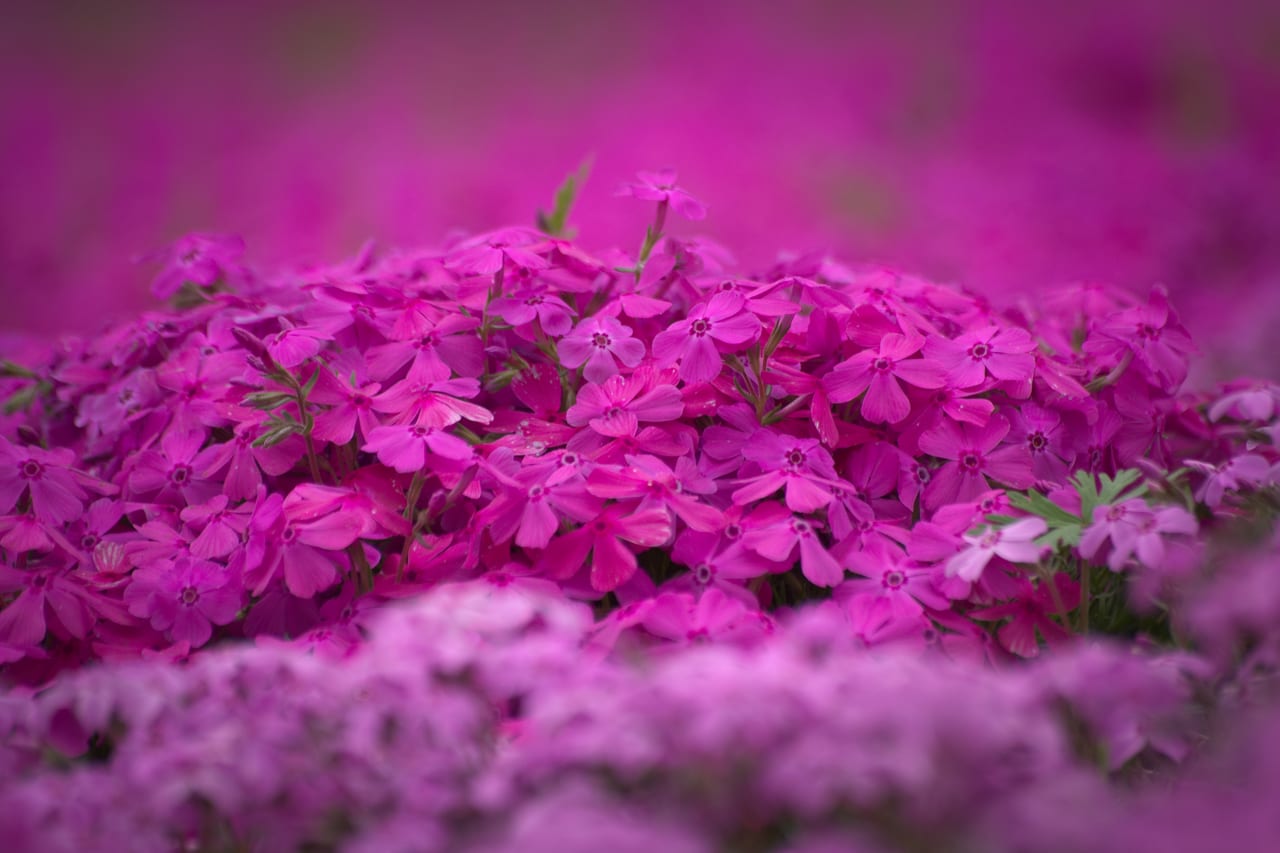
In spring, almost everyone comes for the "Hill of Moss Phlox" (Shibazakura no Oka) at Hitsujiyama Park. Moss phlox is not a cherry tree but a low, ground-hugging perennial (shibazakura in Japanese), and in full bloom it turns a whole slope into a quilt of pink, magenta, and white. Hitsujiyama’s display runs to about 10 varieties and over 400,000 plants, one of the larger ones in the Kanto region, with Mt. Buko squarely behind it for a clean composition.
A few practical notes first. The peak runs roughly mid-April to early May, but moss phlox is weather-sensitive, so the exact peak shifts year to year. During the bloom there is a paid period, roughly early April to early May (hours about 8:00–17:00 per the current-year notice), with admission ¥500 and free for junior-high students and under (¥400 for groups of 20 or more). Here is the catch: the dates, price, and end date are adjusted each year to the actual bloom — per official information, in some years when the flowers fade early the association announces a switch to free entry ahead of schedule. So do not copy last year’s dates or price; check the Chichibu tourism association’s notice for the current year before you go. To dodge crowds, arrive at the 8:00 opening or pick a weekday; on season weekends and holidays both the park and the trains in get packed. Outside the season the park is free — just an open grassy slope with a town view.
Mitsumine Shrine, the wolf shrine
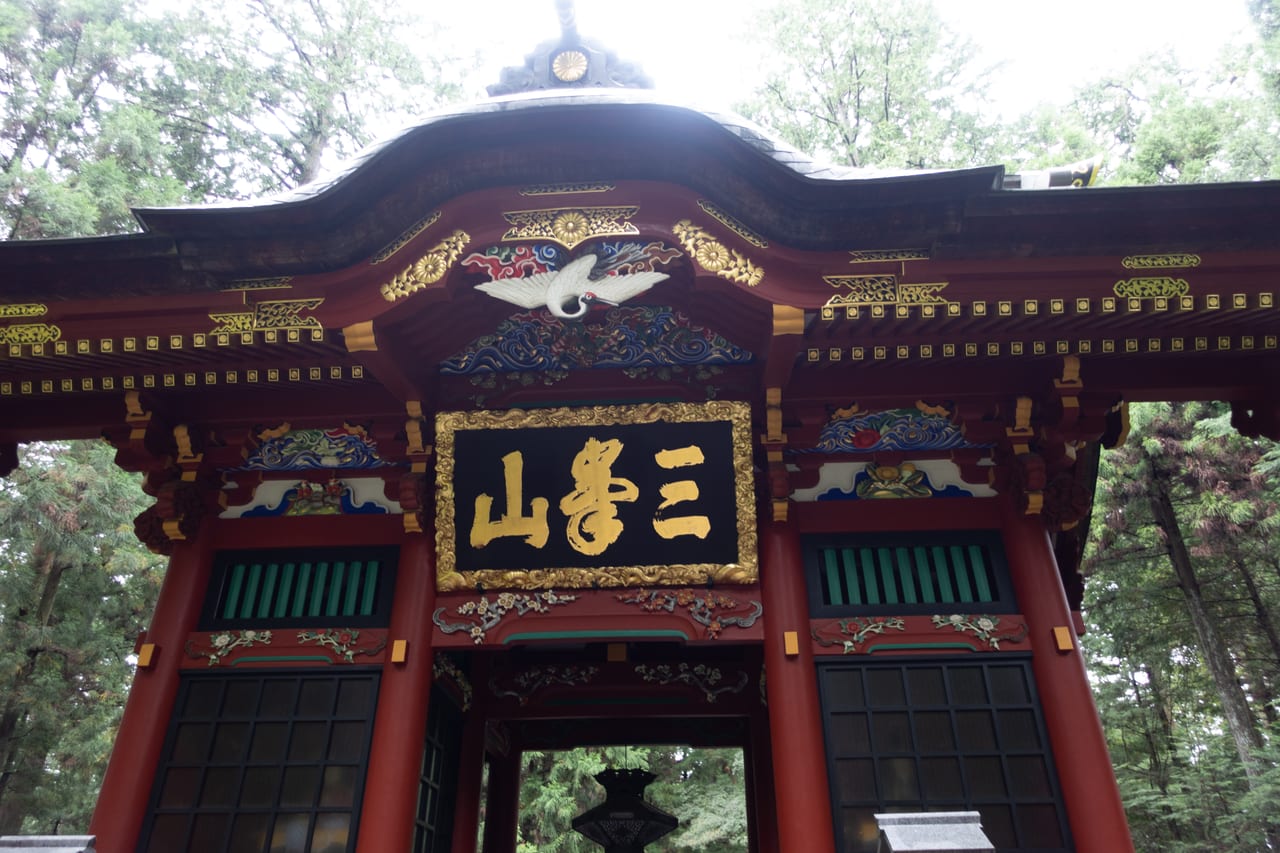
If you can pick only one "heaviest" spot in Chichibu, travelers often rank Mitsumine Shrine first. It sits at about 1,100 meters in the mountains west of Chichibu, ringed by tall cedar, and is one of the Kanto region’s best-known "power spots." Its draws are concrete: a rare three-ringed torii (three torii joined side by side), guardian beasts that are wolves rather than the usual lion-dogs (from this region’s wolf-as-divine-messenger belief), and the cedar-forest atmosphere and frequent sea of clouds. The whole feel is a world away from a town shrine.
About the "white amulet" many people have heard of — the bottom line is that it is still suspended and you cannot get it. This first-of-the-month-only white charm became so popular that, per official notices, April 1, 2018 brought a roughly 25-kilometer traffic jam on the mountain road that blocked emergency vehicles, so the shrine suspended distribution from June 2018, with no restart announced as of 2026. So do not make "chasing the white amulet" your reason to climb up — other amulet colors and ordinary charms are available, and the shrine itself is the point.
Be ready for the access. Mitsumine is deep in the hills: a Seibu Kanko bus on the "Mitsumine Shrine Line" runs from Seibu-Chichibu Station, about 75 minutes one way, ¥1,100 in cash. (Seibu’s official Chichibu-area page publishes cash fares only — there is no IC column — so we do not quote an IC figure.) This line also shuts down for long stretches when the mountain road fails: after a rockfall on National Route 140 on 11 July 2025, Seibu posted a “suspended until further notice” notice. The official Obon special timetable for August 2026 does show departures, but we could not find a formal resumption announcement, so we will not tell you it is definitely running. Check Seibu Bus’s service-disruption page before you go — a ¥150 fare difference is trivial next to a bus that is not running. Service is not frequent, so check the day’s timetable and pin down the last bus back. The round trip alone burns most of a half-day, which is why I would set it aside as its own "early start up the mountain" on day two rather than cramming it into the Nagatoro day. It is cooler than the town and prone to afternoon fog, so bring a jacket and good shoes.
Nagatoro: Iwadatami, boats & Mt. Hodo
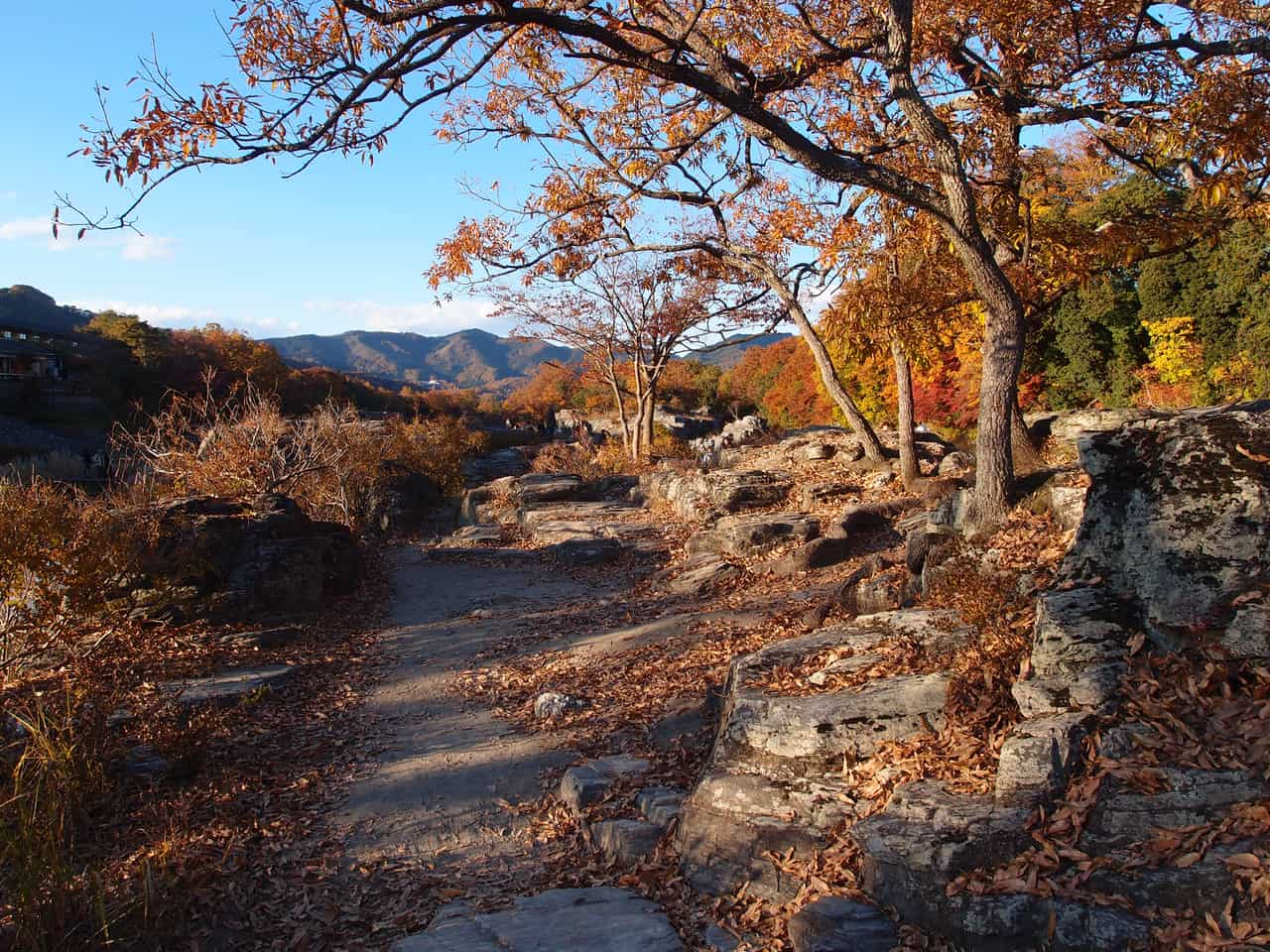
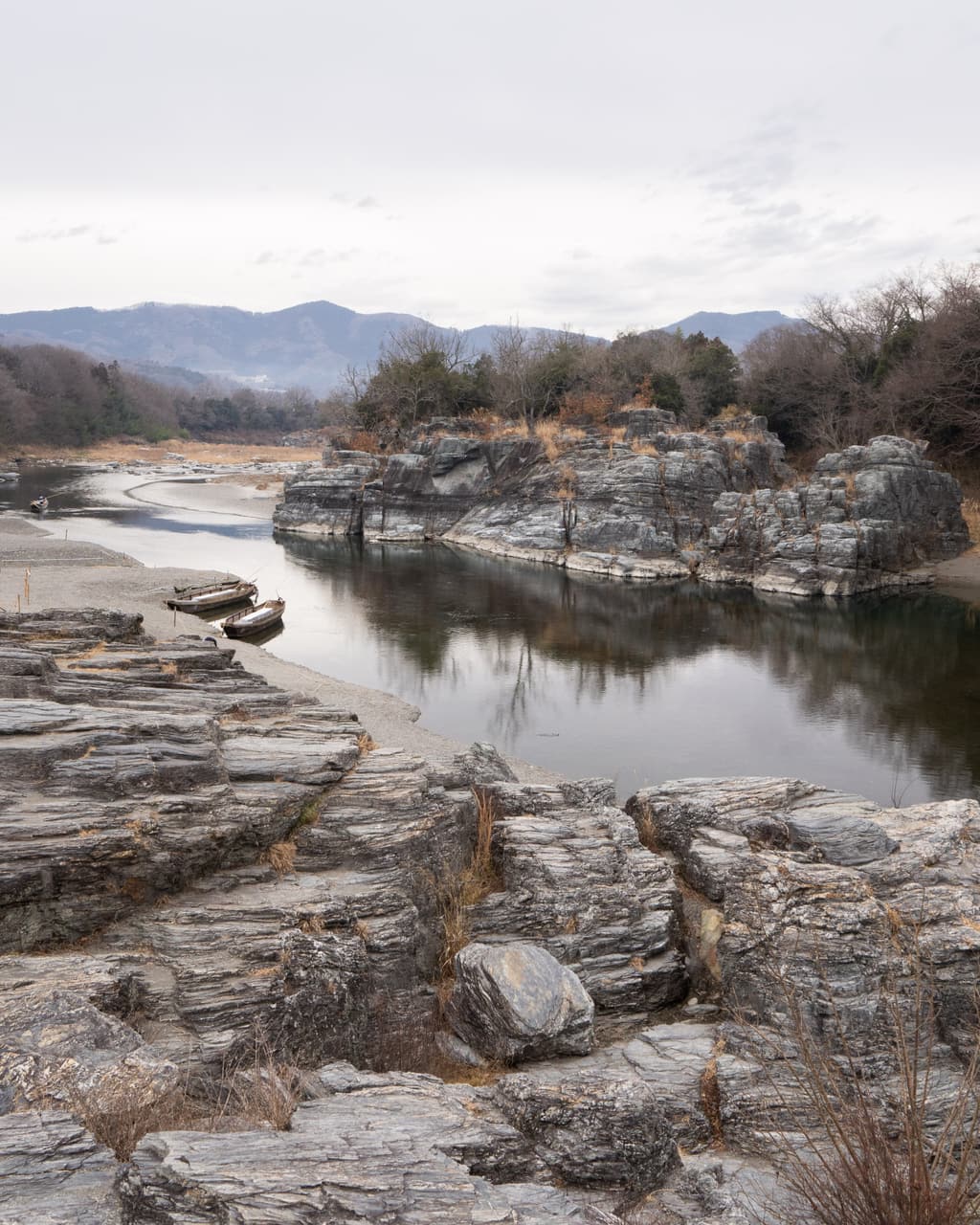
Nagatoro, north of Chichibu on the Chichibu Railway, is the trip’s water playground. Its most famous feature is the Iwadatami — broad, flat rock slabs the Arakawa River has worn smooth over ages, like natural paving laid along the bank. Designated a national natural monument, it lets you stroll the riverside and take in the gorge walls opposite.
The thing to do in Nagatoro is the "line-down" boat ride: board a wooden boat and let the boatman pole you down the Arakawa through the Iwadatami and the gorge, with little jolts of excitement at the rapids. The route splits into two legs — Oyahana Bridge to Iwadatami, and Iwadatami to Takasago Bridge, each about 20 minutes, roughly 6 km in all — and you can ride one leg or both. Per official 2026 information, the regular-season weekday fare is about ¥2,000 for adults and ¥1,000 for children, rising to about ¥2,200 / ¥1,100 in peak periods (Golden Week, summer holidays, autumn foliage). Operation generally runs March to early December and suspends or switches legs during high water, heavy rain, strong wind, or the winter low-water season, so check the official operating status before you go. For a wetter thrill, commercial rafting operators run here too.
On the other side of Nagatoro Station is Mt. Hodo (Hodosan), reached by the Hodosan Ropeway. The summit’s draw is seasonal flowers: the wintersweet (roubai), in bloom late January to late February, is one of the Kanto region’s top displays. Per official information the summit garden holds around 800 plants and entry is free, and the yellow, faintly fragrant blooms against the winter peaks are genuinely soothing; from mid-February the summit’s plum garden follows in red and white. At the base, Hodosan Shrine has a handsome vermilion hall and fine carvings worth a look. If you visit Chichibu in winter and are not chasing the festival, "Nagatoro wintersweet + Mt. Hodo" makes a fine off-season pairing.
Chichibu Shrine & the Night Festival
The faith center of the town is Chichibu Shrine, with over two thousand years of history. Its hall carries detailed colored carvings attributed to the Hidari Jingoro school — a tiger and cubs, a north-star owl — well worth a stop on its own. But what put it on Japan’s map is its winter grand festival, the Chichibu Night Festival.
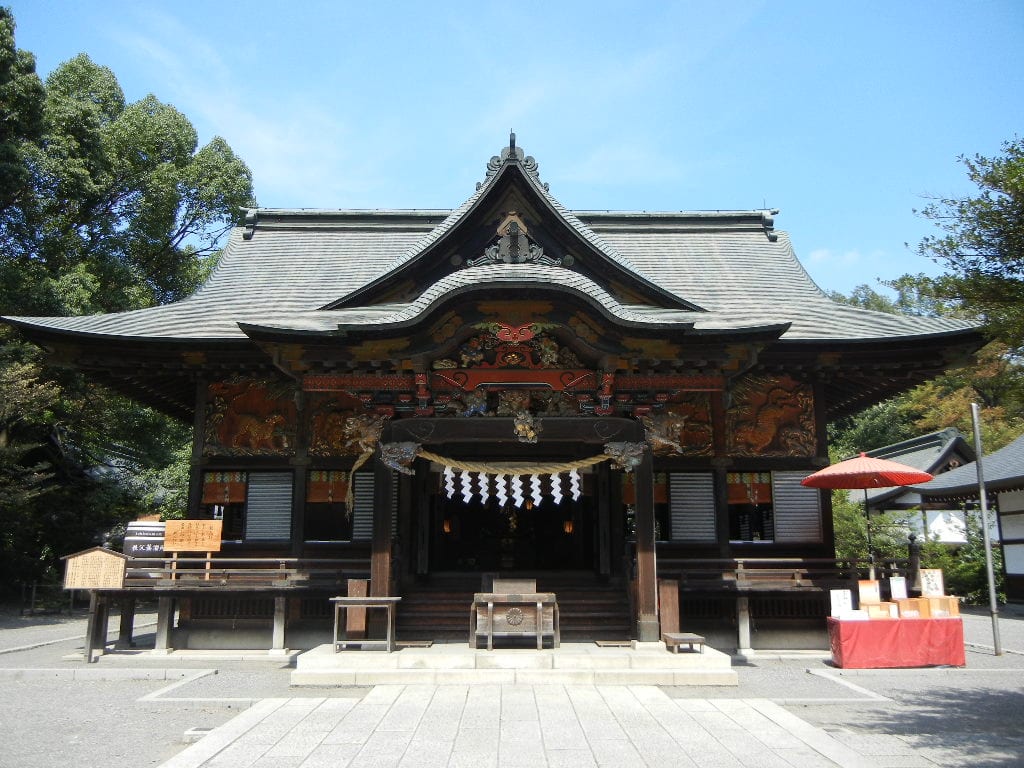
The Chichibu Night Festival ranks with Kyoto’s Gion Matsuri and Takayama’s festival as one of Japan’s three great float festivals, and it was inscribed on the UNESCO Intangible Cultural Heritage list in 2016. For contrast, see how the Gion floats and the mikoshi divide the work in Kyoto. It runs December 2 (eve) and 3 (main day) every year, so 2026 is Dec 2–3. The peak is the night of the 3rd: six floats, the heaviest around 20 tons, hung with lanterns, are hauled by hand up the roughly 25-degree "Dango-zaka" slope — the moment the crowd roars loudest. Rarer still, it pairs with winter fireworks. Most Japanese hanabi are a summer event, so Chichibu is one of the few places to see giant floats and a cold-night fireworks display at once. If you want to go, book Chichibu or Nagatoro lodging and return tickets months ahead; the town and the Seibu line get extremely crowded, and check the release timing for paid grandstand seats.
The "Anohana" anime pilgrimage
For anime fans, Chichibu has another identity: it is the setting of the hit series "Anohana" (Anohana: The Flower We Saw That Day). The whole town and its surroundings stand in as backdrops, and per fan discussion and the official pilgrimage map, the classic stops include the Old Chichibu Bridge (Kyu-Chichibu-bashi) — a triple-arch bridge completed in 1931 that appears in the key visual and recurs throughout the show; the Ryusei Hall and the nearby Mukujinja rocket tower, the model for the scene where the characters launch a homemade rocket (ryusei); and Hitsujiyama Park itself, which appears in the opening. The Chichibu tourist information center (in front of Seibu-Chichibu Station) hands out an official pilgrimage map, so grab one before planning a route. Even if you are not a fan, these spots sit on the normal sightseeing line, so they are easy to fold in.
Suggested routes & lodging
Here is the same content shaped into routes that walk well, in one-day and two-day versions:
- Day trip (spring version): early Laview from Ikebukuro → Seibu-Chichibu → Hitsujiyama Park for the moss phlox (fewer people early) → back to town for lunch, Chichibu Shrine, and the Banba-dori old street → walk to Ohanabatake and ride the Chichibu Railway to Nagatoro → Iwadatami stroll plus one leg of the line-down boat → evening Chichibu Railway back to Seibu-Chichibu → Laview to Ikebukuro.
- Two days (recommended): Day 1 as above, town plus Nagatoro, overnight in Chichibu or Nagatoro; Day 2 an early bus from Seibu-Chichibu up to Mitsumine Shrine (about a half-day round trip), then back to town for a miso-katsu rice bowl or soba before heading home. A winter version swaps the Nagatoro leg for the Hodosan Ropeway and wintersweet, or targets the Chichibu Night Festival on Dec 2–3 directly.
For lodging, base yourself around Seibu-Chichibu Station / the town center for easy access to the express and the buses; the town has plenty of hot-spring inns and business hotels, and for something quieter you can pick a small ryokan along the Nagatoro line. Room rates run gentler than central Tokyo, but moss-phlox-season weekends, autumn foliage, and the December festival get very tight, so book early. Chichibu is an inland basin with a wide day-night temperature swing, and Mitsumine up the mountain is colder still, so layers and good shoes pay off — see our Japan packing & weather guide for pre-trip prep. To string Chichibu together with another Kanto day trip, the nearby "Little Edo" town of Kawagoe pairs well on the same swing — see our Kawagoe guide.
FAQ
- Q1:How many days do you need for Chichibu and Nagatoro? Is a day trip enough?
- It depends on how deep you want to go. If you only target Hitsujiyama Park moss phlox, the Chichibu town center, and the Nagatoro Iwadatami rocks, a day trip from Ikebukuro works — but it is rushed, and you will not fit in Mitsumine Shrine. Mitsumine sits deep in the mountains, roughly a 75-minute bus ride one way from Seibu-Chichibu Station, so the round trip alone eats most of a day. So if you want Mitsumine in, plan one overnight: day one for town and Nagatoro, day two for an early run up to the shrine. Weekends during the shibazakura season (mid-April to early May) and the autumn/festival peaks get crowded, so take the earliest Laview if you are doing it in a day. For how this slots into a wider Tokyo plan, see our Tokyo 5-day itinerary.
- Q2:What is the fastest way to Chichibu from Tokyo, and which train do I take?
- The fastest option is the Seibu Railway Laview limited express, which runs direct from Ikebukuro to Seibu-Chichibu Station in about 80 minutes (the quickest services around 1 hour 17 minutes). On top of the base fare you pay a limited-express surcharge (Ikebukuro to Seibu-Chichibu ¥900(池袋 → 西武秩父(大人)) for adults, half for children) — and note that is the advance-purchase price: Seibu adds ¥200 if you buy it on board. To save money you can ride a standard rapid/express and change at Hanno (no surcharge, but longer). At Seibu-Chichibu, Nagatoro means switching to the separate Chichibu Railway (connecting at the adjacent Ohanabatake Station), while Mitsumine Shrine means a bus from in front of the station. You barely touch JR on a pure Chichibu trip, so a nationwide JR Pass does not help here — see our JR Pass guide for whether one pays off across your whole route.
- Q3:When should I visit the Hitsujiyama Park shibazakura, and is there an entry fee?
- The shibazakura (moss phlox) peaks roughly mid-April to early May, and Hitsujiyama Park’s "Hill of Moss Phlox" holds around 10 varieties and over 400,000 plants — one of the larger displays in the Kanto region. During the bloom, the paid period runs roughly early April to early May (hours about 8:00–17:00), with admission ¥500(一般) and free for junior-high and under. Note that the dates, price, and end date are adjusted each year to the bloom — in some years the park switches to free entry early when the flowers fade. Always check the Chichibu tourism association’s notice for the current year rather than copying last year’s dates. Outside the season, the park itself is free, just a grassy slope to stroll.
- Q4:Can you still get the famous "white amulet" at Mitsumine Shrine?
- No — the white kimamori is still suspended. This first-of-the-month-only white amulet became so popular that, per official notices, on April 1, 2018 it caused a roughly 25-kilometer traffic jam on the mountain road, blocking emergency vehicles. The shrine therefore suspended distribution from June 2018, and as of 2026 it has announced no restart date. So do not climb up just to chase the white amulet. Mitsumine’s real value is the place itself: an ancient shrine at about 1,100 meters, wrapped in tall cedar, with a rare three-ringed torii and wolves (rather than lions) as its guardian beasts — the atmosphere and the sea of clouds are the reason to go. Other amulet colors and ordinary charms are available as usual.
- Q5:How much is the Nagatoro line-down boat ride, and what season is best?
- Nagatoro’s signature is the "line-down" boat ride — a boatman poles you down the Arakawa River past the Iwadatami rocks and the gorge. The route splits into two legs (Oyahana Bridge to Iwadatami, and Iwadatami to Takasago Bridge), each about 20 minutes, roughly 6 km total. Per official 2026 information, the regular-season weekday fare is about ¥2,000 for adults and ¥1,000 for children, rising to about ¥2,200 / ¥1,100 in peak periods (Golden Week, summer holidays, autumn foliage). Boats generally run from March to early December and suspend during high water, heavy rain, strong wind, or the winter low-water season. For more of a thrill there is also commercial rafting. Cool in summer, best of all framed by autumn color.
- Q6:What is the Chichibu Night Festival, and when is it in 2026 — are there fireworks?
- The Chichibu Night Festival is the grand festival of Chichibu Shrine, ranked alongside Kyoto’s Gion Matsuri and Takayama’s festival as one of Japan’s three great float festivals, and inscribed on the UNESCO Intangible Cultural Heritage list in 2016. (The festival it gets ranked against, Gion Matsuri, actually holds two separate parades, which makes it a very different animal.) It is held on December 2 (eve) and 3 (main day) every year, so 2026 is Dec 2–3. The highlight is the night of the 3rd: six floats, the heaviest around 20 tons, are hauled by hand up the roughly 25-degree "Dango-zaka" slope, set against rare winter fireworks. Most Japanese fireworks are a summer thing, which makes this one of the few places to see giant floats and a cold-night hanabi display together. Book Chichibu lodging and return tickets months ahead.
Related reading:
Kawagoe Guide 2026: Little Edo, Bell of Time & Hikawa
The closest "Little Edo" to Tokyo — about 30 minutes from Ikebukuro. Kurazukuri street, the Bell of Time, Candy Alley, Hikawa Shrine wind chimes, and the Kitain arhats.
Nikko Guide 2026: Toshogu, Kegon Falls & Lake Chuzenji
About 1h50 from Asakusa by Tobu express — the World Heritage Toshogu (Yomeimon, three monkeys, sleeping cat), Kegon Falls, Lake Chuzenji, and the Irohazaka autumn hairpins.
Tokyo 5-day itinerary 2026
A clear 5-day plan: Shinjuku base, two zones per day, honest budget.