Two things decide how you plan this trip. First, an official viewing seat now costs ¥4,000 — it was 3,000 yen in both 2024 and 2025, so this is the first rise in three years, and how to buy one is not published until 10 October. Second, going without a seat is not a problem you can solve by arriving early, because the city writes it down in black and white: the Otabisho and the area around Dangozaka, where the whole festival culminates, are restricted from around 17:30 to around 22:30 and cannot be viewed, against a crowd Chichibu Shrine itself puts at over 200,000 people in a typical year. This guide is not, however, an argument for staying home. The same official documents that close Dangozaka also mark free float viewing points and firework areas, and a ticketless visitor still gets six nationally designated floats moving through narrow streets under lanterns plus a winter fireworks programme that ran to 4,100 shells in 2025. What follows: how the ticketing actually works, what you can see for free, the full running order for both days, and the transport detail that decides where you can sleep — the railway is physically de-energised and stops running for three hours on festival night.
📍 This guide covers the festival itself and the two festival days only. For the moss phlox at Hitsujiyama Park, Mitsumine Shrine, the Nagatoro river boats and Mt. Hodosan, see our Chichibu and Nagatoro area guide — none of that is repeated here.
- Seats are up to ¥4,000: 3,000 yen in both 2024 and 2025, so a third more this year; sales rules land Saturday 10 October
- Not a crowding problem: the city states Otabisho and Dangozaka are restricted 17:30–22:30 on Dec 3 and cannot be viewed without a seat
- But ticketless is not pointless: official free float viewing points (17:00–19:00 and 19:00–21:30) and named firework spots
- Trains stop: overhead wires are physically disconnected — no service Chichibu to Kagemori 19:30–22:30, free replacement bus instead
- The private sajiki stand is sold out for 3 December: its page no longer lists a price either — the official seat is the only route to Dangozaka
📖 Table of contents
- The seat price is up to 4,000 yen; how to buy lands 10 October
- Dangozaka is closed, not crowded
- How the ticketing really works
- What you can see without a ticket
- Running order for December 2 and 3
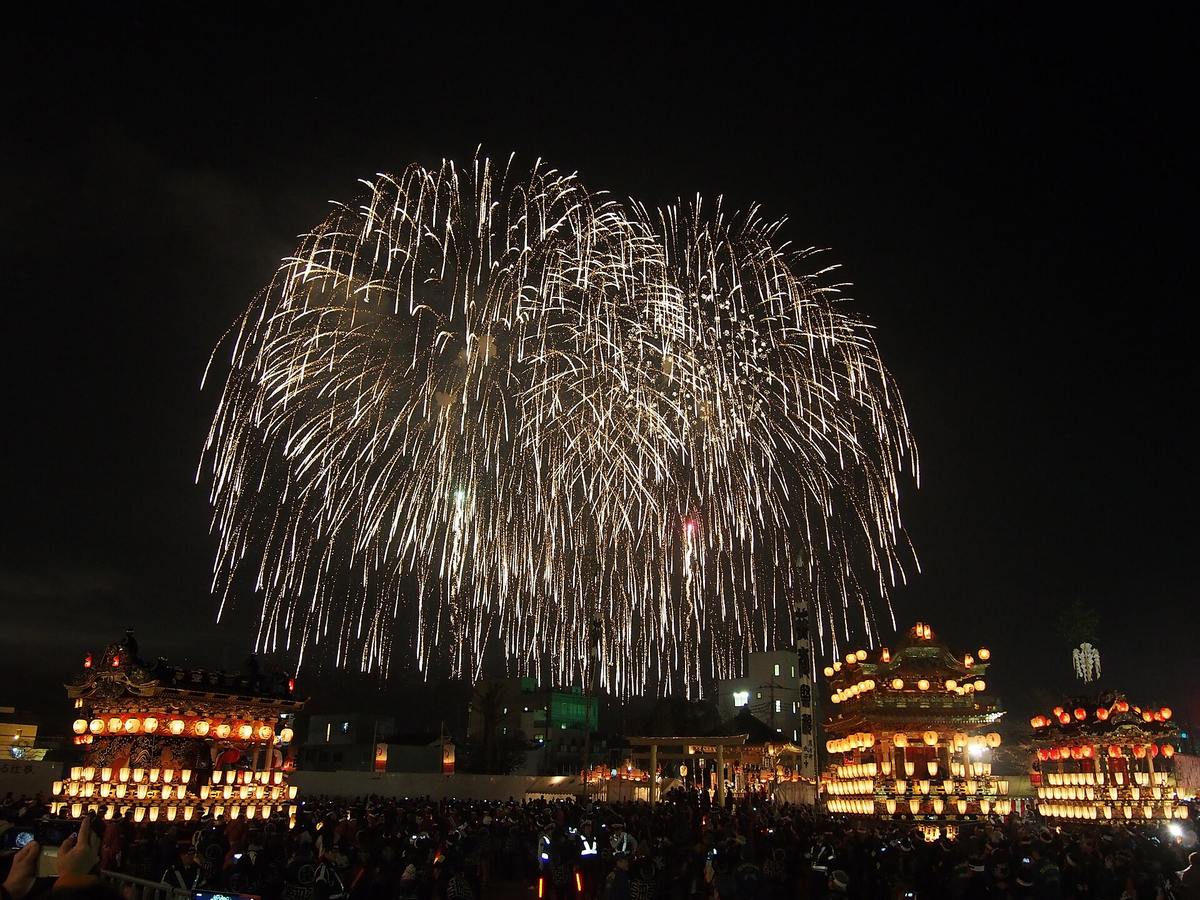
- Winter fireworks: three parts and where to stand
- Festival night transport and the three-hour rail gap
- Driving and parking: the specific reasons not to
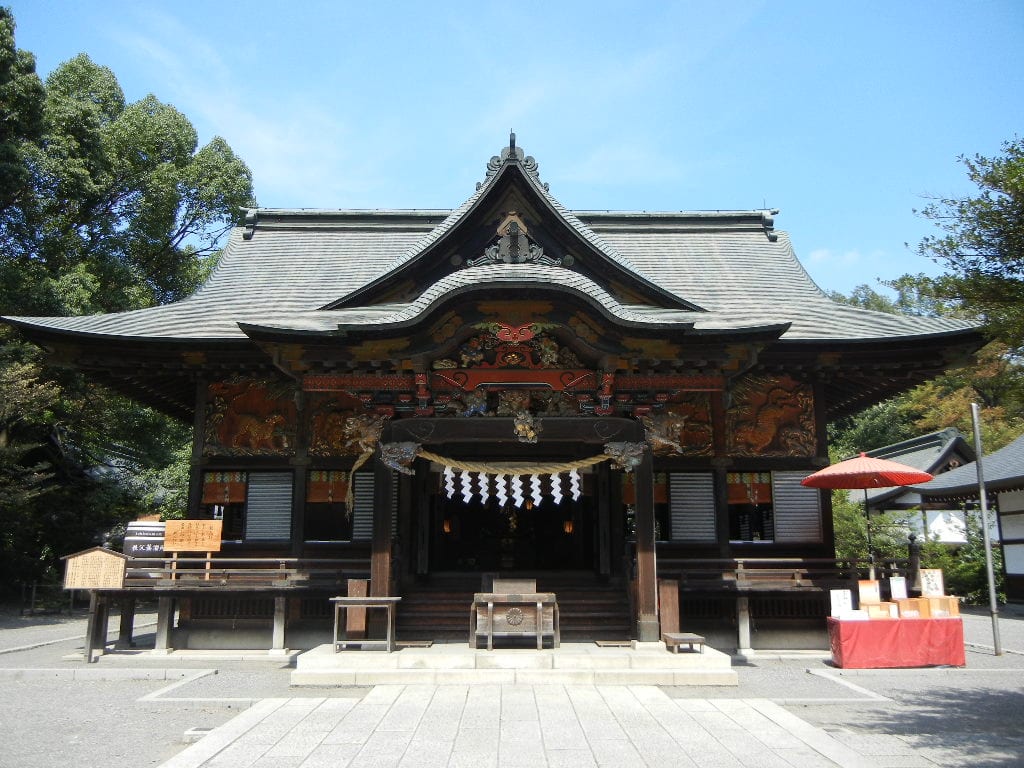
- Chichibu Shrine: why December 3
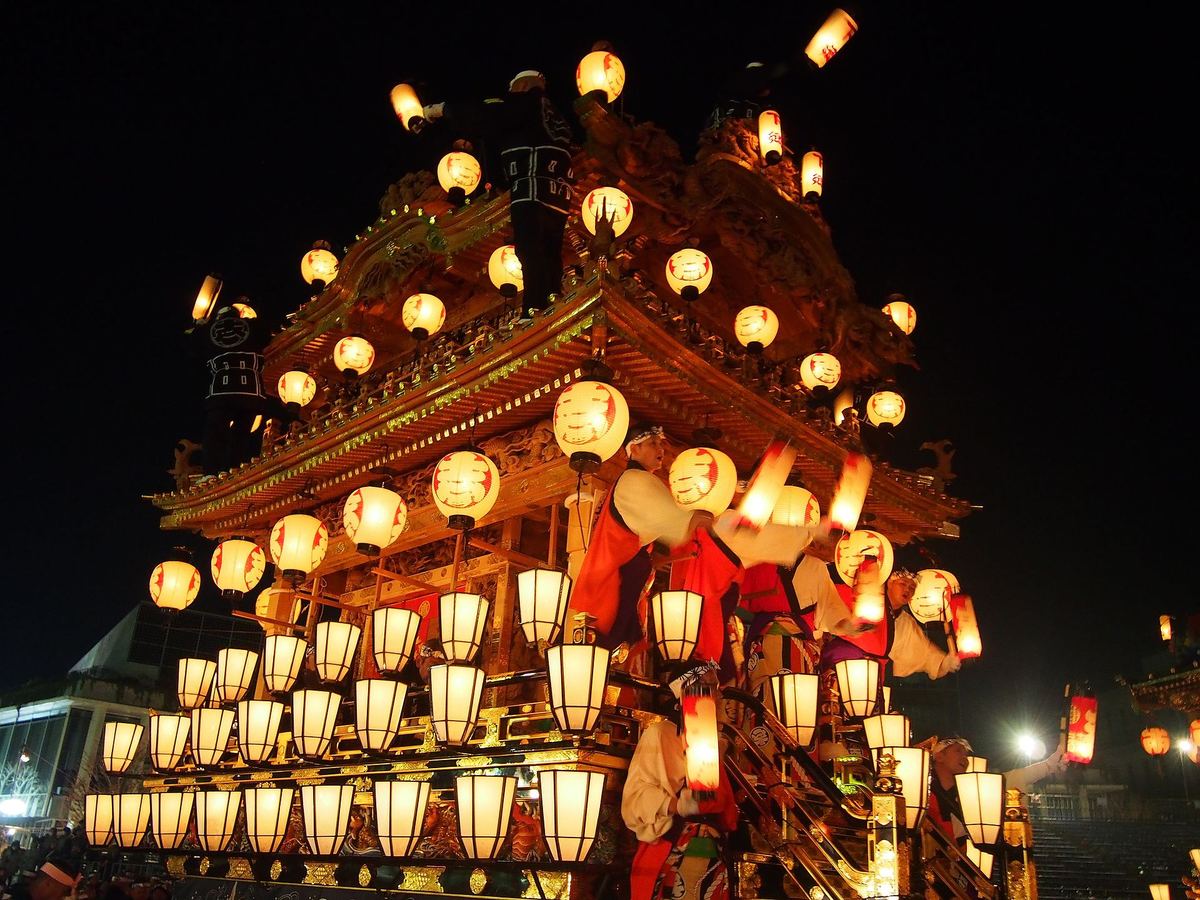
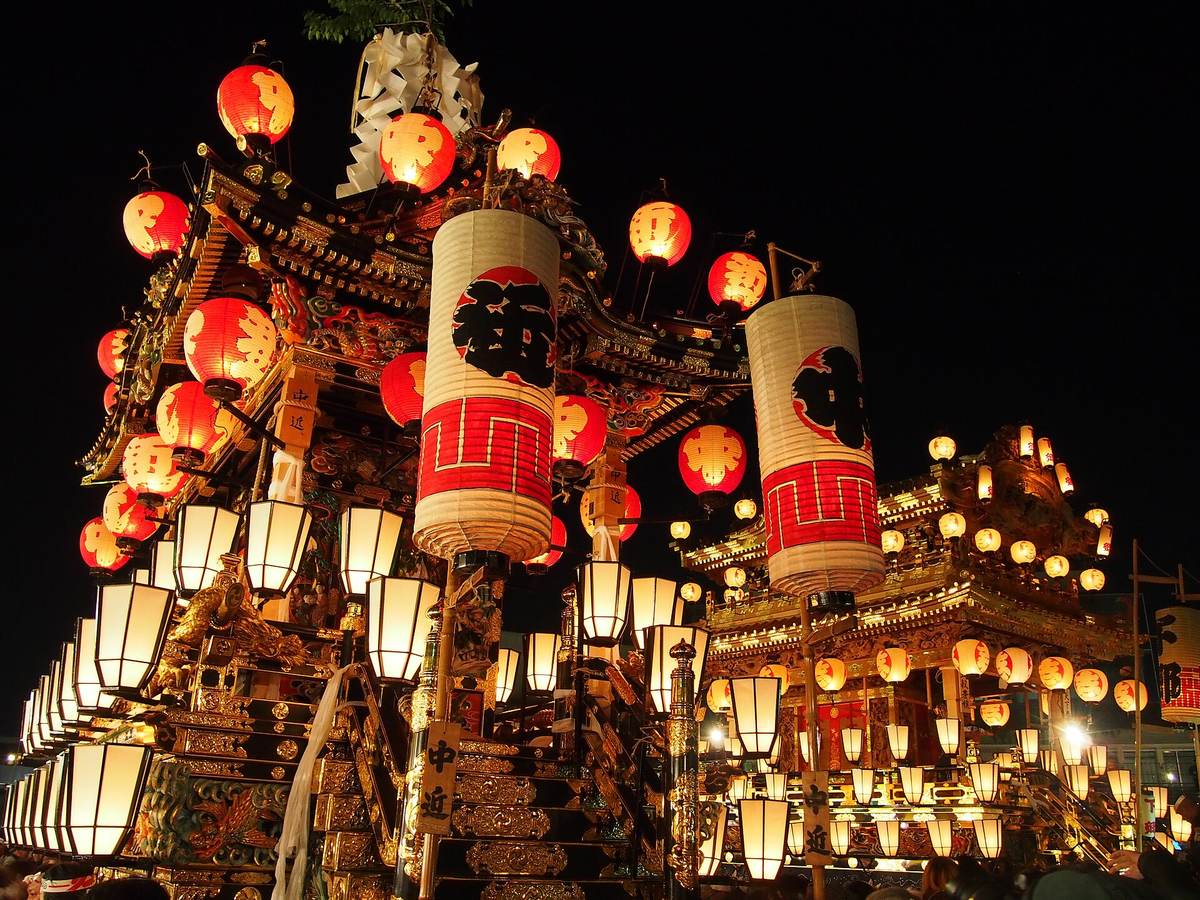
- The six floats and a glossary worth knowing
- The silk market, souvenirs and an honest note on food
- How I would plan it
- FAQ
The seat price is up to 4,000 yen; how to buy lands 10 October
A 2026 viewing seat costs ¥4,000, a thousand yen more than last year. The advance notice of 12 September published the price and the seat format only, and named its own date for the rest:
| Item | 2026 official advance notice |
|---|---|
| Price | ¥4,000 incl. tax, seat only — ticket postage charged separately |
| Seat format | Folding chairs, all reserved (the notice draws no A/B distinction) |
| Set-up | Thursday 3 December, 17:00–22:30 (provisional) |
| Venue | Temporary stand in front of Chichibu City Hall, inside the Otabisho grounds |
| Sales agent | Yao Travel Salon, 5F Yao department store (1-5-9 Kamimachi, Chichibu; tel 0494-22-6445) |
| Sales rules | Saturday 10 October on the tourism association site, and in the October issue of the city bulletin |
Both 2024 and 2025 were 3,000 yen, so 2026 is the first increase in three years.
🏮 Even this price can still move, and that caveat is the organisers' own: the notice states that the festival programme is still under discussion by the parties involved, and that depending on the outcome the content may change substantially.
So what to do now and what to wait for splits cleanly:
- The dates need no announcement. Chichibu City states the festival is held every year on December 2, the eve festival, and December 3, the main festival. For 2026 that is Wednesday December 2 and Thursday December 3. Flights and rooms can be booked today.
- Check the association site on 10 October. The seat count, the counter and postal windows, any per-person limit, and whether there is an A seat at all — none of that is published for 2026. The next section sets out how 2025 worked; treat it as preparation, not as this year's rules.
- Firework counts, float timings and the traffic map are still the 2025 versions. The city's combined festival page carrying all three, plus the rail shutdown, was only created on 12 November last year, so expect the 2026 edition around mid-November.
- What to do now: lodging and transport. The reason is in the transport section below — one rail section shuts down for three hours on festival night and the entire town centre bans stopping and parking. Neither of those changes if you book late.
Dangozaka is closed, not crowded
The standard advice you will find about this festival is that it gets busy, so arrive early. That advice is correct for most Japanese festivals and wrong for the climax of this one.
The Chichibu City official traffic notice for December 3, 2025 leaves no room for interpretation:
🏮 Official wording: the Otabisho and the area around Dangozaka, where the Chichibu Night Festival reaches its climax, are subject to entry restrictions from around 17:30 until around 22:30 for accident prevention, and cannot be viewed.
The same year float route map adds that the Otabisho grounds are closed to through traffic from around 17:30 on the 3rd. The city Q&A puts it more diplomatically — it notes that the Dangozaka area is very narrow, that temporary paid viewing seats are installed there, and that as a result viewing by anyone without a seat reservation is close to impossible.
Stack those three documents together and the conclusion is unambiguous. For roughly five hours on December 3, the Otabisho and Dangozaka form a controlled zone, and the only legitimate way to be inside it is a viewing seat ticket. The question is not what time to arrive; it is whether you hold a ticket, and if not, where you will be during those five hours.
If you have seen a specific gradient quoted for Dangozaka, ignore it. No such figure appears anywhere on the Chichibu City, Chichibu Shrine or tourism association sites, nor in any of their PDFs; the official language throughout is simply a steep slope. What matters is qualitative: it is steep enough that hauling a float weighing up to about 20 tonnes up it takes several hundred people.
How the ticketing really works
First, kill a story that circulates in several languages: that tickets are sold by three unrelated organisations. They are not. There are two systems, and the municipality publicly disowns one of them.
System one: the official paid float viewing seats
These are run by the Chichibu Tourism Association, which is also the festival executive committee. The stand goes up in front of Chichibu City Hall within the Otabisho grounds, and there is exactly one sales agent: the Yao Travel Salon on the fifth floor of the Yao department store. Yao is not an independent third vendor — it is the association appointed window, so this is one channel, not three.
For 2026 the seats are not split into A and B. The advance notice lists one category only — "viewing seat", ¥4,000, folding chairs, all reserved. Last year's A/B split first appeared in the 10 October sales notice, so whether it returns is another thing that waits for that date.
The table below is how 2025 was sold. The 2026 rules are not published; use this to know what to prepare — cash, a postmark, a body in the building — not as this year's procedure:
| Item (2025 record) | Counter sale | Postcard application |
|---|---|---|
| Price | ¥3,000 in 2025; for 2026 it is ¥4,000 | |
| Quantity | 200 seats | 150 seats |
| Method | First come, first served | Lottery |
| Window | Oct 30 – Nov 4, 10:00–18:30 | Oct 20 – Oct 23, postmark date only |
| Result | On the spot | Drawn Nov 1; winners notified by the tickets arriving |
| Payment | Cash only | Bank transfer |
| Limit | 4 per person | Not stated (you write the number wanted) |
| Children | Age 3 and over pay full price (under-3s occupying a seat also charged) | |
Two things hold whichever year you go:
- There is no online card payment anywhere in this process. Last year the counter channel required a person, in the building, with cash, and the postal channel required a postcard whose postmark date is what counts — post it a day late and the application is void regardless of when it arrives. Neither is a spur-of-the-moment option, so be ready to act the moment the rules appear on 10 October.
- A ticket does not guarantee a fireworks view. The association wrote on last year's sales page that the view of the floats and of the fireworks varies according to seat position, and that anywhere other than your reserved seat means standing at the back. Buying a seat to watch fireworks is the wrong purchase — see the fireworks section.
System two: the private sajiki stand, sold out for 3 December 2026
This route is closed for this year. The private sajiki stand near Dangozaka opens its own page by stating that all reservations for 3 December 2026 are sold out, and the page no longer displays a price at all. So even if you were willing to pay more for certainty, the official seat is the only remaining way into Dangozaka in 2026.
Worth knowing for next year. These stands have no connection to the city or the executive committee, and the Chichibu City Q&A says so directly: neither the city nor the executive committee provides guidance on private sajiki seats. The conditions the operator states on its own page: a second-floor standing place is not a reserved seat; applications are accepted by email only and processed in the order received; if payment is not received within three days the booking is treated as cancelled; no cancellation is possible after payment; and no refund is given even if the floats never reach Dangozaka. Wristbands are issued from 10:00 on the day and allow re-entry, there are separate temporary toilets, and you may bring your own food; tripods, monopods and selfie sticks are banned. The operator also warns that the second-floor standing area catches a strong, very cold north wind and recommends heat packs, a lap blanket and a hat — advice that applies equally at any free viewing point.
What you can see without a ticket
This is the section that justifies the trip. The advice that you should not bother going without a seat is simply wrong, because the organisers themselves publish free viewing arrangements:
| Official designation | Time (2025 route map) | Notes |
|---|---|---|
| Float viewing point | around 17:00–19:00 | Marked as a good place to see the floats and kasaboko on the 3rd |
| Float viewing point (pavement) | around 19:00–21:30 | Same, pavement side |
| Fireworks viewing area | — | Marked with a star on the official map |
The city Q&A separately answers where the floats can be watched on December 3: in the daytime, mainly around Chichibu Shrine and the main street; at night, at Chichibu Shrine, in front of Chichibu Station on the Chichibu Railway, and along the Honcho, Nakamachi and Shonin streets.
Put together, a ticketless day is a full day. Spend the morning at the shrine for the float visits, the dancing dedications and the Chichibu kabuki procession — all free, all in daylight, all with a fraction of the evening crowd. From 17:00, take an official float viewing point and watch six lantern-covered floats work through the streets. From 19:30, move to a fireworks position for over two hours of winter fireworks. The only thing you have given up is the twenty-odd minutes of each float being hauled up Dangozaka.
And that trade is less painful than it sounds. Even with a ticket, what you are watching is six floats ascending over roughly two hours — by one private operator observation, not an official figure, starting around 20:00 with roughly twenty minutes between floats and the sixth passing around 22:00. It is a slow ceremony, not a continuous crescendo. Meanwhile the free half of the festival — heritage-designated floats under lantern light in narrow streets, the drums close enough to feel, 4,100 shells overhead — is already something Japan produces almost nowhere else in December.
Running order for December 2 and 3
A quick correction first: the Night Festival is not a six-day event. Chichibu Shrine grand festival calendar does run December 1 to 6 — the opening prayer rite on the 1st, the silk-thread rite on the 4th, yabusame horseback archery on the 5th, the closing report on the 6th — but the Night Festival proper is December 2, the eve, and December 3, the main day. In 2026 both fall mid-week, while the yabusame on December 5 lands on a Saturday, which is a scheduling quirk unique to this year. The 2025 yabusame ran at 14:00 behind Michi-no-Eki Chichibu; the 2026 time is not yet published.
December 2, the eve festival, which the organisers themselves recommend
The eve is routinely dismissed as a warm-up. The city Q&A disagrees: it states that the 2nd includes night-time float passing manoeuvres and is easier to view than the 3rd, and therefore recommended. The 2025 programme:
| Time (2025 record) | Event |
|---|---|
| from around 9:00–11:00 | Four floats (Miyaji, Kamimachi, Nakamachi, Honcho) circulate along the main street |
| 11:00–14:00 | Floats drawn into the Chichibu Shrine precinct and set in place |
| 12:00–16:30 (some from the morning) | Shrine visits and town circuit |
| 18:00–20:00 | Evening circuit and float kabuki at the former Best Denki site (2025 duty float: Nakamachi) |
| 19:00 | Suwa-watari at Bamba-cho |
| 19:00–20:00 | Fireworks (2025: single bursts and star mines, 370 shells) |
| by 20:00 | Float circuit ends |
December 3, the main festival, all six floats
| Time (2025 record) | Event |
|---|---|
| around 8:00–9:00 | All six kasaboko and floats begin the town circuit |
| around 9:00–12:00 (some to 16:00) | Shrine visits and town circuit |
| 10:00–13:00 | Float dancing dedication and Chichibu kabuki procession |
| 10:30 | Grand festival rite with the imperial envoy offering |
| 10:40–14:00 | Float kabuki at the former Best Denki site |
| around 16:00 | Chichibu kabuki performance |
| around 17:30 | Otabisho closed to entry — this is the moment ticketless visitors are shut out |
| 18:00 | Goshinko rite; the portable shrine departs Chichibu Shrine for the Otabisho |
| 18:45 | All six floats set off in procession |
| 19:30 | Fireworks opening (part one) |
| around 20:00 – around 22:00 | Floats ascend Dangozaka (private operator observation: roughly one every 20 minutes, six in total) |
| 20:20 | Competitive fireworks by the sponsor districts (part two) |
| 21:00 | Rainbow star mine (part three) |
| 21:50–21:55 | Finale, the Golden Waterfall |
| 22:20 | Rite at the Otabisho |
| 23:20 | Floats return; the portable shrine goes back to Chichibu Shrine |
An honest technical note: the city also publishes a minute-by-minute timetable for each individual float, but the text extracted from that PDF came out with its columns badly misaligned and could not be read reliably. This guide therefore gives no per-float minute times. If you want to track one specific float — the huge Shimogo kasaboko, say — pick up the printed timetable on the day or read the official PDF yourself.
The most underrated block in those tables is the daytime. The word "night" in the name makes it easy to plan only for the evening, but on the official timetable the floats are on the streets from 08:00 on the 3rd, the shrine visits run 09:00 to 12:00, and the dancing dedications and kabuki procession run 10:00 to 13:00. Those hours have a fraction of the evening crowd, good light, and floats that are either stationary or moving slowly. If you came to actually look at the carving, lacquer and textiles, the morning is when you do it.
Winter fireworks: three parts and where to stand
Japanese fireworks are overwhelmingly a summer thing. Chichibu is one of the rare exceptions, and not a token one. The 2025 official record:
| Item | 2025 official record |
|---|---|
| December 2 | 19:00–20:00, single bursts and star mines, 370 shells |
| December 3 | 19:30–21:55, 4,100 shells |
| Launch site | Inside Hitsujiyama Park (with restricted-entry periods) |
| Part one, 19:30 | Opening star mine competition (Chichibu Tourism Association) |
| Part two, 20:20 | 71st competitive fireworks by the sponsor districts association, five-inch shells |
| Part three, 21:00 | Rainbow star mine competition (five-inch: purple, green, red, blue, gold) |
| Finale, 21:50 | The Golden Waterfall |
⚠️ Shell counts and times change every year. The 2026 programme will differ; check the official fireworks programme for the current edition before you travel.
On positioning, the city Q&A is refreshingly blunt: places where you can see the floats and the fireworks at the same time are limited, but for fireworks alone it recommends in front of Seibu-Chichibu Station, in front of Chichibu Station, in front of the Civic Hall, and along National Route 140. The tourism association version further specifies Route 140 between the Seibu-Chichibu Station signal and the Ueno-cho intersection, plus the Chichibu City Hall car park as a designated fireworks viewing venue.
Which leads to a piece of advice that is better for you than it is for anyone selling tickets: if fireworks are your priority, do not buy a viewing seat. The organisers concede that seat position changes what you can see, whereas the free Route 140 corridor is recommended specifically for fireworks, costs nothing, involves no lottery and does not tie you to one chair. Conversely, if floats on Dangozaka are your priority, the seat is the only route — and you accept that a building may clip a corner of the fireworks. The both-at-once position is, in the city own word, limited.
One hard rule to finish: drones are banned outright across the regulated zone, the float route and the fireworks venue, and the official notice warns specifically that filming at the fireworks venue will cause the fireworks display to be halted. No piece of footage is worth being the person who ended the show. Worth knowing where that rule comes from: flying above a gathering of many people is restricted by the Civil Aeronautics Act itself, not invented by the organiser — see the drone rules in Japan.
Festival night transport and the three-hour rail gap
From the official Chichibu City traffic notice:
🚃 Because the overhead wires are disconnected to allow the floats to pass, no trains run between Chichibu Station and Kagemori Station from 19:30 to 22:30. A free bus operates from beside the Chichibu Library to Kagemori Station, timed to connect with services on the Kagemori to Mitsumineguchi section.
In plain English: the floats have to cross the Chichibu Railway at a level crossing, and they are far too tall to pass beneath a live catenary, so the line is physically de-energised. This is not a handful of cancelled services; there is no power in that section. The practical consequence is that anyone staying west of Kagemori, or heading toward Mitsumineguchi, has no train for those three hours and must use the replacement bus. If your hotel is out that way, this needs to be resolved at booking time, not at 21:00 on a freezing platform. For how to read Japanese rail disruption notices and replacement-bus arrangements generally, our guide to Japanese train disruptions covers the basic reflexes.
Three stations, three different jobs
Chichibu station layout catches first-timers out. The city Q&A is specific: Seibu Railway users should ride to the terminus, Seibu-Chichibu Station, from where the shrine is normally about a 15-minute walk, though it takes longer during the festival; Chichibu Railway users should alight at Chichibu Station, which is the nearest station to Chichibu Shrine.
| Station | Operator | To Chichibu Shrine | Official fireworks spot? |
|---|---|---|---|
| Chichibu | Chichibu Railway | Nearest station (official) | ✅ Station forecourt |
| Seibu-Chichibu | Seibu Railway (terminus) | About 15 min on foot; longer during the festival | ✅ Station forecourt |
| Ohanabatake | Chichibu Railway | — | — |
So the common assumption that Seibu-Chichibu is the shrine station is wrong — officially it is Chichibu Station on the Chichibu Railway. On an ordinary day that costs you a few minutes; on a night with 200,000 people in town it can cost a great deal more. One further data point, again an operator claim rather than an official figure: the private sajiki operator reports that from around 18:00 until around 23:00 or 23:30 crowd-control measures close the short cut to Seibu-Chichibu Station, leaving a 30 to 40 minute walk depending on congestion. Treat every walking time you have planned as a floor, not a ceiling.
Extra trains and last services
The tourism association states that rail travel is strongly recommended, and that on December 3 all railways run extra trains until around midnight.
Do not plan around a last-train time you read second-hand. The Chichibu Railway 2025 festival page has been taken down and the 2026 festival timetables are typically published in November, so confirm the time against the operator own timetable once it appears. Getting this wrong means an unplanned night in Chichibu.
Coming from Tokyo, the mainstay is the Seibu Laview limited express: the limited express fee from Ikebukuro to Seibu-Chichibu is ¥900 for adults and ¥450 for children, on top of the basic fare. Seibu states that if you do not buy in advance, ¥200 is added to the listed fee — so buying on board costs more, and on a night like this there is no reason not to reserve. Ticketless purchase runs through Seibu Smooz app, or use station ticket machines and counters.
You will want working mobile data on the day for the route map, event changes and the replacement bus stops — with 200,000 people concentrated in one basin town, congested networks are the norm. Sorting a Japan unlimited-data eSIM before you fly is the simplest fix; our comparison of five Japan eSIM providers covers the options.
Driving and parking: the specific reasons not to
The tourism association position is unambiguous — rail travel is strongly recommended, and car parks in the central area are expected to fill. If you drive anyway, know these numbers first (2025 record):
| Item | December 2 (eve) | December 3 (main) |
|---|---|---|
| Temporary car parks | Miyaji Ground only (9:00–21:00) | Eight sites, P1–P8 (from 7:00 or 9:00 to 24:00) |
| Charge | Free | Paid (below) |
The December 3 handling charge per vehicle: standard cars including kei cars ¥1,000, medium vehicles ¥3,000, large vehicles ¥5,000, motorcycles ¥500. Three official sentences deserve close reading:
- A charge applies even if you are only dropping passengers off. That is the official wording, not our interpretation.
- No advance reservations, and no overnight parking across December 2 to 3.
- On December 3, 10:00 to 22:00 is a vehicle exclusion zone in which even moving a vehicle is prohibited. Park inside it in the morning and you cannot retrieve the car until 22:00. On top of that the city states that stopping and parking are prohibited across the entire town, so roadside spaces and commercial car parks are not fallbacks.
Free shuttle buses run on December 3 between the main gate of Chichibu Daiichi Junior High School and Miyagawa Children Park (10:00–23:00), and between Kagemori Ground and the Chichibu Library car park (13:00–23:00). Live space availability is posted on the city parking page on the 3rd only. Pets are in principle not accepted on the shuttles and must be carried in a case if unavoidable.
Two more day-of rules: from 20:00 taxis must be taken from the rank in front of Chichibu Station, and the city runs a temporary traffic information line on December 3 only. Pedestrian control is equally real — the Otabisho closes from around 17:30, further closures for the float procession from around 18:30, and temporary pedestrian restrictions between 19:00 and 22:00. Assume you cannot simply walk around a blocked street in the evening; plan the night as a sequence of positions, not a wander.
Chichibu Shrine: why December 3
The Night Festival is the grand festival of Chichibu Shrine, and once you know that, the choreography stops looking like a show and starts looking like what it is: an annual send-off for a god.
Start with the date. The shrine explains that the festival was formerly held on the third day of the eleventh lunar month, and that the Meiji calendar reform moved it to December 3, where it has stayed. The date was never chosen for tourism; it is a lunar date that the solar calendar inherited.
Then the story. Chichibu City words it as a romance: the goddess of Chichibu Shrine, Myoken-sama, and the male deity of Mt. Buko, the dragon god, meet once a year at the Otabisho. The shrine own telling adds the detail that makes it work — the wife of the Mt. Buko deity is Osuwa-sama, enshrined nearby, so the pair may only meet on this one night, with her permission.
That premise is written into the choreography. As the night procession passes along Honcho street near the Chichibu brand hall, the Suwa-watari takes place: the float drums stop and the musicians pass in deliberate silence, a courtesy to the nearby Suwa Shrine. The Honcho float goes further and halts while children of the district read aloud a written request for passage. Knowing this, when the drumming suddenly cuts out you will not mistake it for a break — it is the most theatrical thirty seconds of the night.
There is an older layer beneath that. The straw dragon wound around the great sakaki branch at the head of the procession is a water deity brought down each April 4 from the dragon pond at Imamiya Shrine, whose spring water is regarded as groundwater from Mt. Buko. The dragon is welcomed down from the mountain in spring and sent back at the Night Festival in winter. Under the tourism, this is a complete water-deity cycle.
Some further shrine background worth carrying: the four enshrined deities are Yagokoro-omoikane-no-mikoto, Chichibuhiko-no-mikoto, Ame-no-minakanushi-no-kami (the Hokushin Myoken, merged in during the Kamakura period) and Prince Chichibu Yasuhito, younger brother of Emperor Showa, enshrined in 1953. The present hall was donated by Tokugawa Ieyasu in 1592 and is a Saitama Prefecture designated tangible cultural property; in 2014 the shrine marked 2,100 years since its founding, and that year the December 3 rite received a special imperial offering. Applications for prayers and blessings are accepted daily 09:00 to 16:30 at the reception hall in front of the main sanctuary. If you are new to shrine etiquette, our guide to visiting Japanese shrines walks through the sequence.
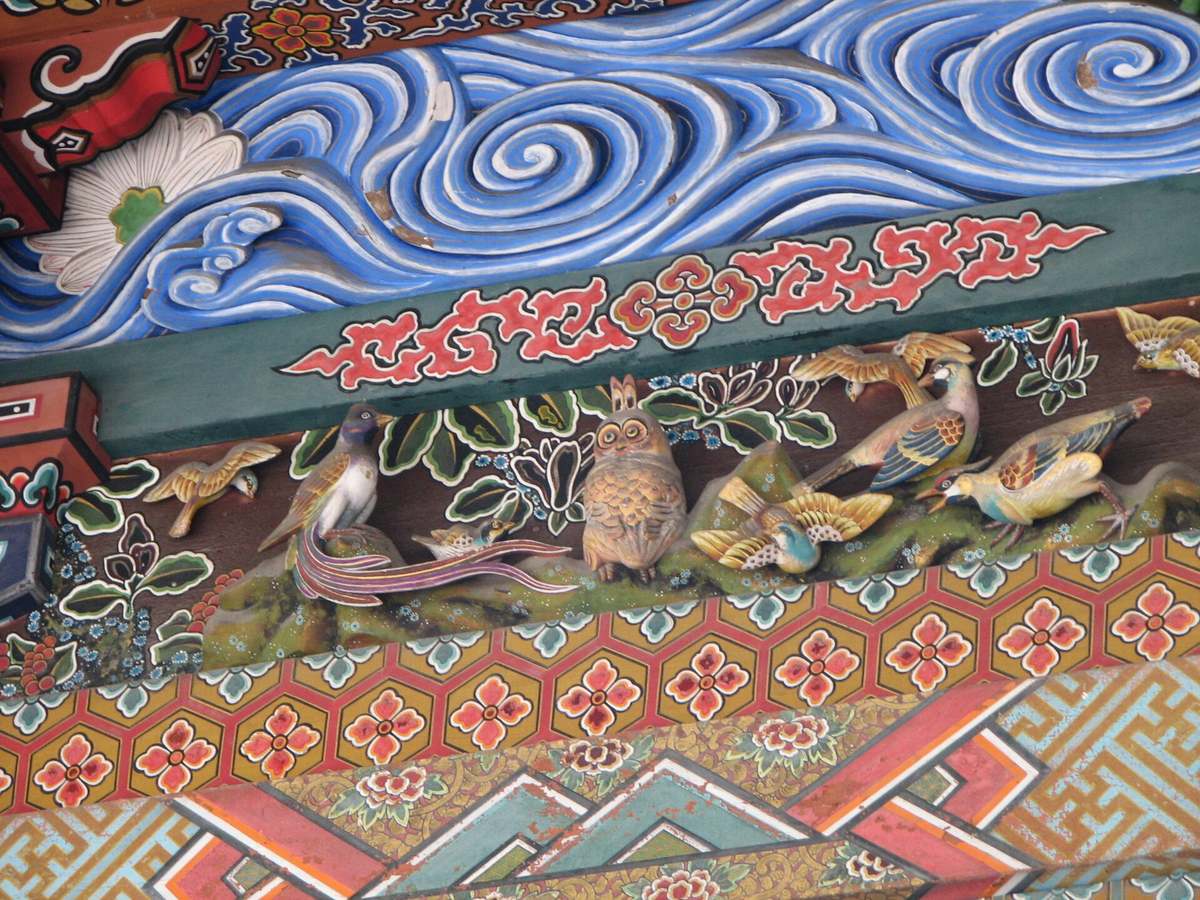
The six floats and a glossary worth knowing
Six vehicles take part: two kasaboko (Nakachika and Shimogo) and four yatai (Miyaji, Kamimachi, Nakamachi, Honcho). They are designated Important Tangible Folk Cultural Property at national level — and note the pairing, because the festival is a double national designation, tangible and intangible, which is unusual. The 2016 UNESCO inscription, meanwhile, covered a group listing of 33 float events nationwide under the Yama, Hoko, Yatai heading, in which the Chichibu component is formally named the float event and kagura of the Chichibu Festival. The same list contains the Takayama Festival float event and the Kyoto Gion Yamahoko event, so describing Chichibu as individually inscribed is inaccurate. (one caveat: the Kyoto Gion Yamahoko event and Hitachi Furyumono had already been inscribed individually back in 2009, and the 2016 list is an extension built on those two — so the "not individually inscribed" point applies to Chichibu, not to Gion.)
⚠️ Note the tense on that 33. The list changed again on 8 December 2025. UNESCO's 20th intergovernmental committee adopted decision 20.COM 7.b.52, which records that the new inscription "incorporates and replaces" the 2016 entry for Yama, Hoko, Yatai float festivals (No. 01059), and that the Japanese inventory "comprises the thirty-three float festivals included in the original nomination, along with four additional festivals included between 2016 and 2021." So 33 is the 2016 count, not the present one. The decision text does not name the four additions or state a new total, and this guide will not guess at either. Chichibu itself is unaffected: the original entries were carried over wholesale, so the float event and kagura of the Chichibu Festival remain on the list.
As for the label one of the three great float festivals of Japan, alongside Gion and Takayama: Chichibu City, the tourism association and the shrine all use it verbatim on their own sites, so it is not folklore and you can repeat it. The Japanese verb, though, means counted among — a long-standing customary grouping, not a national certification. Compare this with the Takayama case, where the three most beautiful festivals label is purely a tourism phrase; the Chichibu wording has more official backing, but neither is a designation.
The thing nobody tells you about the kasaboko
Buried in the official route map is a sentence that changes what you should expect: the kasaboko are normally pulled with their kasa removed.
This matters because the official specifications are given with the kasa attached. The largest, the Shimogo kasaboko, stands about 7 metres and weighs about 20 tonnes with its kasa, making it the biggest and heaviest of the six. That is not the object you will see rolling down the street. So if you arrive expecting towering flower-topped canopies, adjust. This guide quotes only the conservative figure — the Shimogo kasaboko at about 20 tonnes — because the per-float weights in the official PDF came out with misaligned columns and we will not publish numbers we cannot attribute cleanly.
Glossary from the official Q&A
- Girimawashi — four-wheeled floats have no steering, so cornering means levering the rear up on a pole and pivoting on a single point. As they turn, the music switches to a small-drum piece called tamaire (the Kamimachi float uses a device of its own named kirin). When the drumming changes, look up: a turn is coming.
- Surechigai — when two floats meet, they stop and the musicians switch to a powerful piece called onami, competing with each other. The city notes that these passing manoeuvres also happen on the night of the 2nd, which is the eve festival hidden selling point.
- Momiai — several hundred pullers draw the ropes out to the full width of the street and then close them in a single collision, which the city notes also serves to keep everyone warm in December.
- Miyamairi — all six floats present themselves at the shrine gate during the day for the priests prayers and offerings, with the four yatai performing dancing dedications. This is the best-value block of the daylight programme.
- Horyai — the call from the musicians at the front of each float, properly horai, derived from the mythical Mt. Horai. The city describes the red-and-white robed musicians as the stars of the festival, chosen once in a lifetime by their district.
If the dates simply do not fit your trip, there is a year-round substitute: the Chichibu Matsuri Kaikan displays real kasaboko and yatai permanently. Admission is ¥500 for adults and ¥250 for elementary and junior high students, normally 9:00–17:00 (from 10:00 between December 4 and March), with last admission 30 minutes before closing. During the festival it opens longer — in 2025, 9:00–20:00 on the 2nd and 9:00–21:00 on the 3rd. Going in during the day to study the carving and then watching the same objects move that night is an efficient way to do this festival.
The silk market, souvenirs and an honest note on food
Two side events have published official times and are worth building into the day:
- Chichibu Night Festival silk market: December 2, 11:00–19:00 and December 3, 11:00–20:00, on Kuromon-dori and Kaitsugisho-dori, a minute on foot from Chichibu Shrine. Silk goods, a traditional-crafts artisan exhibition and Chichibu Meisen textile talks. This is not a modern tourism add-on — the festival itself grew out of the silk market held at Chichibu Shrine in the mid-Edo period. The silk trade is the economic root of the whole thing.
- Chichibu souvenir products fair: December 1–6 on the first floor of the Chichibu Local Industry Centre, 10:00–18:00, extended to 10:00–22:00 on December 3 — convenient for picking up gifts as the fireworks crowd disperses.
- Chichibu Shrine kagura (a nationally designated Important Intangible Folk Cultural Property) at the kagura hall: 9:30–16:00 on the 2nd, 9:30–15:30 on the 3rd, 9:30–16:00 on the 6th.
- Chichibu festival drumming demonstrations at the Yao department store from around 11:00, among other venues.
On food, the one thing you can rely on in advance is the official festival route map, which names the businesses on the route — among them Hachimanya, Mitoya, Omura, the soba shop Hirai, the taiyaki shop Koizumi, Takasago Horumon, Chichibu Nakamuraya and the Buko sake brewery — plus the miso pork bowl specialist Yurin in Nagatoro, which is operated by the Chichibu Railway itself. Everything else, confirm on the day.
One safety note belongs here. Do not eat while walking on festival days. This is not fussiness about etiquette: 200,000 people are packed into a small town centre, pedestrian flow is actively controlled, and multi-tonne floats are being moved by hand through narrow streets. Buy it, eat it in front of the shop, then move on. That is the version that keeps both you and the people around you safe.
How I would plan it
- No ticket, one day available → take December 2. That is the organisers own recommendation, not a contrarian take. Four floats are out from the morning, there are night passing manoeuvres, and there were 370 shells of fireworks in 2025 — at a fraction of the crush. Most of what the festival is, without the part that hurts.
- No ticket, two days available → floats on the 2nd, atmosphere and fireworks on the 3rd. Spend the morning of the 3rd on the shrine visits and dancing dedications, which is the easiest time all day to get close to a float; take an official viewing point from 17:00; move to Route 140 or a station forecourt after 19:30. Do not burn the evening trying to edge toward Dangozaka — it closes at 17:30.
- You want Dangozaka → set a reminder for Saturday 10 October. The price is already out (¥4,000); what is not out is how to buy, and the association named that date itself. Last year the postal lottery counted the postmark date and the counter sale was cash, in person, at a department store in Chichibu — both need preparation. The private stand is already sold out, so there is no fallback.
- Lodging: if Chichibu is full, retreat eastward. The only things the organisers actually put in writing are the 200,000-plus crowd, the strong recommendation to travel by rail, and extra trains running until around midnight on December 3. Room counts and festival-period rates for Chichibu could not be verified from official sources, so this guide invents no booked-out-three-months-ahead claim. What the official timings do support is that falling back toward Kumagaya, Hanno or Ikebukuro and returning to Tokyo the same night is a legitimate plan — provided you confirm that year extra-train timetable rather than assuming late services exist.
- Clothing: this is an inland basin in December and you will stand still for hours. Even the private stand operator warns about the cold north wind and recommends heat packs, a lap blanket and a hat. If you are stitching this into a broader winter itinerary, our Tokyo winter day trips guide has compatible routings.
A closing verdict. Chichibu needs no defending as a winter festival: double national designation, a place on the UNESCO Yama, Hoko, Yatai list, one of the three great float festivals by the official phrasing, and one of very few places in Japan where you can watch enormous floats and thousands of fireworks in the same December sky. But it is also a festival that writes its own uncertainty into its official documents: the best position is closed to you without a ticket, how the tickets are sold is not published until 10 October, and a stretch of railway is deliberately switched off for three hours. So the recommendation is go, but do not build the plan around seeing Dangozaka. Set the goal as six cultural properties moving through narrow streets, a genuine winter fireworks programme, and a send-off rite that has been running since before the calendar changed. Those three things are free, need no lottery, and are guaranteed. Dangozaka is the bonus if the postcard comes back.
Frequently Asked Questions
- Q1:When is the Chichibu Night Festival in 2026?
- The Chichibu Night Festival runs on fixed calendar dates rather than a floating weekend rule. Chichibu City states plainly that it is held every year on December 2, the eve festival known as yoimiya, and December 3, the main festival known as taisai. For 2026 that means Wednesday December 2 and Thursday December 3 — both weekdays. If you can only travel at weekends that is bad news, but for an independent traveller trying to avoid Japanese domestic tour groups and family crowds, a mid-week year is the softer configuration. One common misunderstanding worth clearing up: the full grand festival calendar of Chichibu Shrine actually spans December 1 to December 6, taking in the opening prayer rite on the 1st, the silk-thread rite on the 4th, the yabusame horseback archery on the 5th and the closing report rite on the 6th. Only the 2nd and 3rd are the Night Festival itself. Guides that describe a six-day Night Festival are quoting the wrong calendar. There is also a 2026-only scheduling bonus: the yabusame on December 5 falls on a Saturday, so anyone staying the week can add it without taking extra leave. The 2025 edition ran at 14:00 behind Michi-no-Eki Chichibu; the 2026 time has not been announced.
- Q2:Can you watch the Chichibu Night Festival without a ticket?
- Yes, but you need to understand exactly which part is off limits. The official Chichibu City traffic notice for December 3, 2025 states in writing that the Otabisho and the area around Dangozaka, where the festival reaches its climax, are subject to entry restrictions from around 17:30 to around 22:30 for accident prevention, and that viewing is not possible there. That is not a matter of arriving early enough to get a good spot — without a seat ticket you are simply not admitted. The other half of the answer is that the organisers themselves mark free viewing points elsewhere. The official float route map designates a float viewing point for roughly 17:00 to 19:00 and a pavement-side viewing point for roughly 19:00 to 21:30, plus starred firework viewing areas. The city Q&A also names the places you can watch the floats at night: Chichibu Shrine, the plaza in front of Chichibu Station on the Chichibu Railway, and the Honcho, Nakamachi and Shonin streets. Fireworks are free to watch from several officially recommended spots. So a ticketless visitor still sees six heritage-designated floats moving through the streets under lanterns and a two-and-a-half-hour winter fireworks programme. The single thing you miss is the haul up Dangozaka.
- Q3:How do you buy Chichibu Night Festival viewing seats, and what do they cost?
- One seat costs ¥4,000, tax included, seat only, with the ticket postage charged separately; the seats are folding chairs, all reserved. Both 2024 and 2025 were 3,000 yen, so this is the first rise in three years and it is a full 1,000 yen. How to buy is not answerable yet: the advance notice published on 12 September 2026 states that the details will appear on the association's own site on Saturday 10 October, so the seat count, the counter and postal windows and any per-person limit all wait for that date. What is settled is the single sales agent — the Yao Travel Salon on the fifth floor of the Yao department store (tel 0494-22-6445) — with no online card payment and no travel-platform channel. The same notice adds that the programme is still under discussion and the content may change substantially, so even this price can move. See the ticketing section.
- Q4:Are the private sajiki seats sold online official?
- No — and for 2026 it is no longer buyable either. The operator page now opens by stating that all seats for 3 December 2026 are sold out, and it no longer displays any price at all. Keep the two systems straight: the official one is run by the Chichibu Tourism Association, which doubles as the festival executive committee, and sold exclusively through the Yao Travel Salon; the other consists of private sajiki stands near Dangozaka run by commercial operators, and the Chichibu City Q&A states in writing that neither the city nor the executive committee provides information about them. So for 2026, the only remaining route to Dangozaka is the official sales rules due on 10 October.
- Q5:What happens to the trains during the Chichibu Night Festival?
- This is the single most useful and least reported piece of practical information about the festival. The official Chichibu City traffic notice states that because the overhead power lines are physically disconnected to let the floats pass, there are no trains running between Chichibu Station and Kagemori Station between 19:30 and 22:30, and that a free bus operates between the side of the Chichibu Library and Kagemori Station to connect with services on the Kagemori to Mitsumineguchi section. In plain terms: the floats have to cross the Chichibu Railway tracks, they are too tall to pass under a live wire, so the line is de-energised for three hours. If your accommodation or your onward plan lies west of Kagemori, those three hours have no train service at all and you are on the replacement bus. Two more points. The station nearest Chichibu Shrine is officially Chichibu Station on the Chichibu Railway, not Seibu-Chichibu Station — the city notes that Seibu-Chichibu is normally about a 15-minute walk from the shrine and that it takes longer during the festival. And the tourism association states that on December 3 all railways run extra trains until around midnight, but the exact last services are published each year in the operators own timetables, so do not rely on any specific time you read second-hand.
- Q6:Is the eve festival on December 2 worth going to?
- If your goal is to actually see the floats rather than to experience the crush, December 2 is arguably the better day, and that is the organisers own recommendation rather than ours. The city Q&A states that the eve festival on the 2nd includes night-time float passing manoeuvres and is easier to view than the 3rd, and therefore recommends it. The 2025 programme for December 2 was far from a warm-up act: four floats, Miyaji, Kamimachi, Nakamachi and Honcho, began moving along the main street from around 9:00 to 11:00, the shrine visits and town circuit ran through the middle of the day, an evening circuit and the float kabuki performance ran from 18:00 to 20:00, and fireworks were staged from 19:00 to 20:00 with 370 shells of single bursts and star mines. December 3 offers three things the eve festival cannot: all six floats out at once, the Dangozaka climax with the Otabisho rite, and a fireworks programme running 19:30 to 21:55 with 4,100 shells in 2025. The honest recommendation is this — if you have one day and no ticket, take December 2 and you will see more comfortably; if you have two days, use December 2 to study the floats up close and December 3 for the atmosphere and the fireworks.
- Q7:Is the Chichibu Night Festival a UNESCO listing, and is it officially one of the three great float festivals?
- These two claims have different standing, so treat them differently. On UNESCO: Chichibu Shrine words it precisely, saying that in 2016 it was inscribed as one of 33 festivals nationwide making up the Yama, Hoko, Yatai float festivals on the UNESCO Intangible Cultural Heritage list. What was inscribed is that group listing, and the Chichibu component within it is formally named the float event and kagura of the Chichibu Festival. (⚠️ 33 is the 2016 count, not the current one: UNESCO decision 20.COM 7.b.52 of 8 December 2025 states that a new inscription "incorporates and replaces" the 2016 entry, No. 01059, and that the Japanese inventory now comprises the original thirty-three plus four festivals added between 2016 and 2021. Chichibu remains on it.) So describing the Chichibu Night Festival as individually inscribed by UNESCO is inaccurate; the same list contains the Takayama Festival float event and the Gion Festival Yamahoko event. (one caveat: the Kyoto Gion Yamahoko event and Hitachi Furyumono had already been inscribed individually back in 2009, and the 2016 list is an extension built on those two — so the "not individually inscribed" point applies to Chichibu, not to Gion.) Domestically the festival carries something older and arguably harder: it is designated both an Important Intangible Folk Cultural Property and an Important Tangible Folk Cultural Property, a double national designation. On the three great float festivals label, alongside the Gion Festival and the Takayama Festival: Chichibu City, the tourism association and the shrine all use that phrase word for word on their own sites, so it is not internet folklore and you can safely repeat it. But the Japanese verb they use means counted among, which is the language of a long-standing customary grouping rather than a national certification scheme.
Read next
Chichibu & Nagatoro Guide 2026: Shibazakura to Festival
About 80 minutes from Ikebukuro by Laview: Hitsujiyama moss phlox, the wolf shrine at Mitsumine, Nagatoro line-down boats and Iwadatami, and the winter night festival.
Takayama Festival 2026 & 2027: Dates, Seats, Schedule
There are no paid grandstand seats — the city says so outright. Autumn 2026 falls on Oct 9–10, spring 2027 on April 14–15, and rain cancels floats outright.
Aomori Nebuta Festival 2027: Dates, Seats & Joining In
Fixed dates every August 2–7, so 2027 runs Mon 2 to Sat 7 August. Haneto dancers need no registration — seat prices and sales timing, costume rules and the Wa Rasse closure trap.
📊 See the 2026 Price Index (JR Pass, DPA, eSIM, Airport Transport) →