The essence of Okinawa's main island is the central-north — home to the hugely popular Churaumi Aquarium, the bridge-linked Kouri Island, the sea-cliff Cape Manza, and the resort beaches and seaside hotels around Onna and Motobu. It plays differently from Naha city: driving-led, with the sea and resort time at its core, best with a night or two to take it slow. This guide covers the Churaumi Aquarium's tickets and highlights, Kouri and Cape Manza, the northern route, access from Naha and day-trip vs overnight. It's the northern-resort deep-dive for Okinawa; the gateway Naha is in our Naha guide.
- The main island's resort heart: driving-led, the sea and resort time at its core
- Churaumi Aquarium: whale sharks and manta rays in the Kuroshio Sea, ¥2,180 adult
- Kouri Island: a 2 km bridge over blue-green sea, plus the Heart Rock
- Cape Manza + Onna beaches: the Elephant Rock cliff and the resort-hotel belt
- About 2 hours by car from Naha: plan a full day or stay over in the north
📖 Table of contents
How to do northern Okinawa
If Naha is Okinawa's gateway and history, the central-north is its sea and resort. From Onna northward, the coast is a string of resort beaches and large seaside hotels, with the Churaumi Aquarium out on the Motobu Peninsula and islands like Kouri and Sesoko, reachable by car or on foot, dotting the offshore. This area runs not on public transport but on driving — north along the west coast, watching the sea, hopping spots, soaking up the beaches.
One principle for planning the north: the round trip from Naha is about 4 hours of driving, so it's not worth going just for Churaumi. The smoothest way is to chain same-direction stops — Churaumi, Kouri, Cape Manza — into a full day, or simply stay a night or two around Onna or Motobu and make the north the heart of a resort trip. Below, along the route.
The Churaumi Aquarium
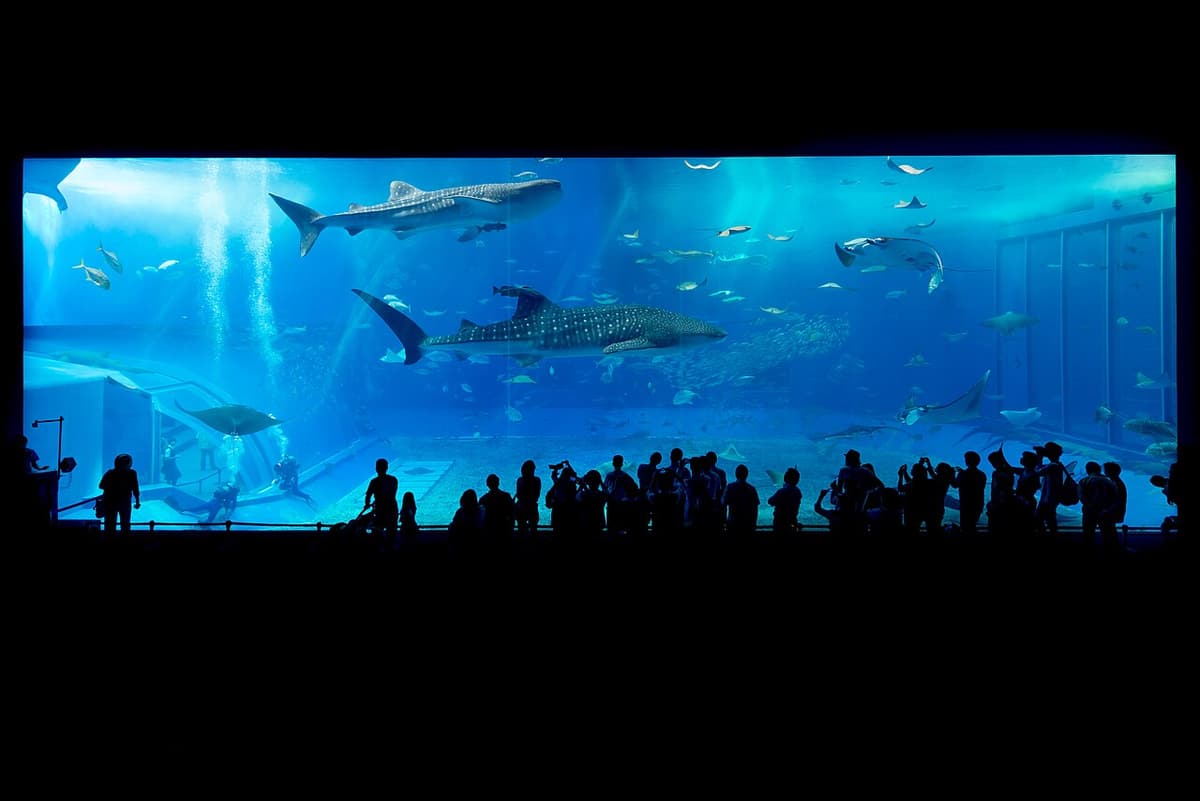
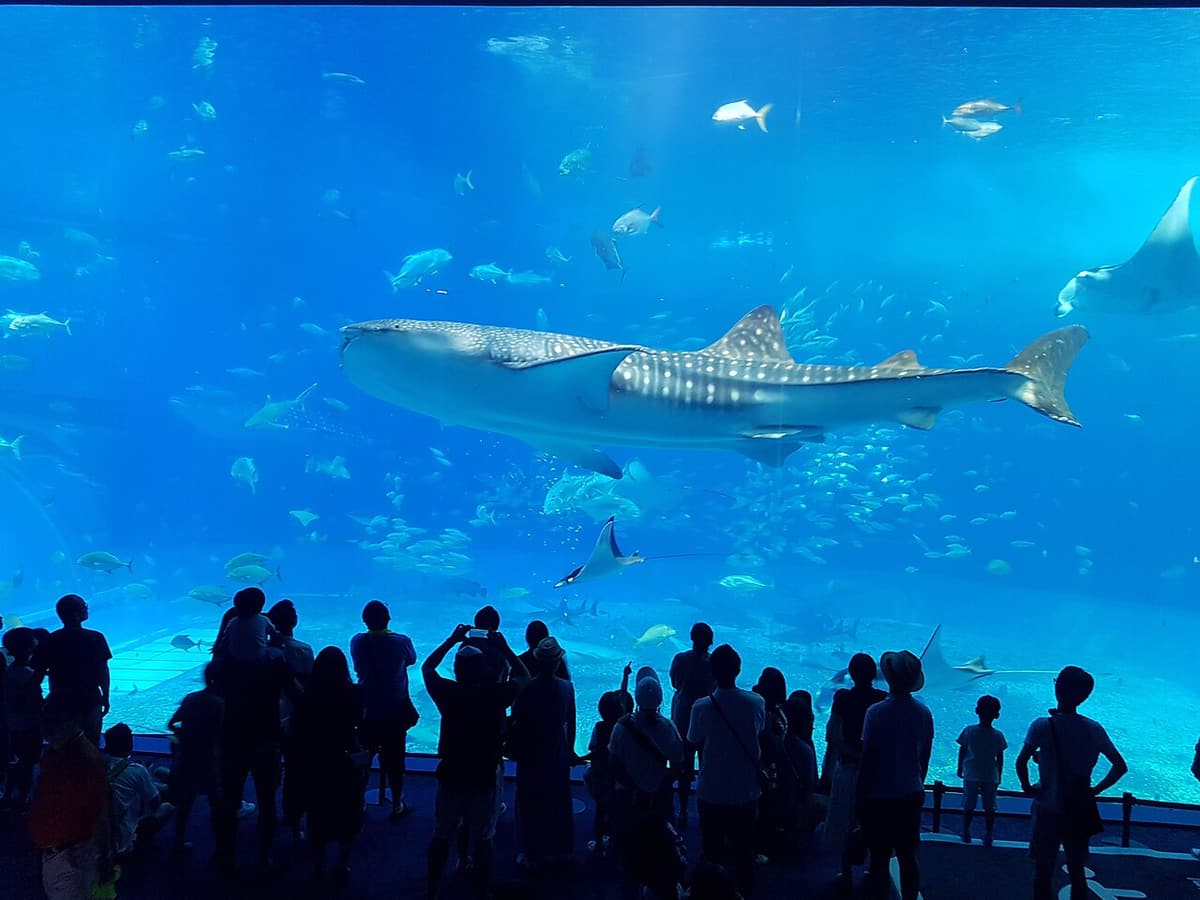
The Okinawa Churaumi Aquarium is Okinawa's most popular attraction, inside Ocean Expo Park in Motobu. Its star is the vast "Kuroshio Sea" main tank — nearly 7,500 cubic meters, home to several whale sharks and manta rays that glide past in front of you behind a giant acrylic viewing panel, an unforgettable sight. Other zones cover coral reefs and deep-sea creatures. Admission is ¥2,180 for adults (¥1,440 high school, ¥710 elementary/junior-high, free under 6).
The surrounding Ocean Expo Park is free to enter, with a free dolphin show (Okichan Theater), a sea turtle and manatee house, and the white-sand Emerald Beach — worth combining with the aquarium for a full half day. Convenience stores, roadside stations and online sellers often have advance tickets a little cheaper than the gate, and buying ahead saves queuing.
Kouri Island
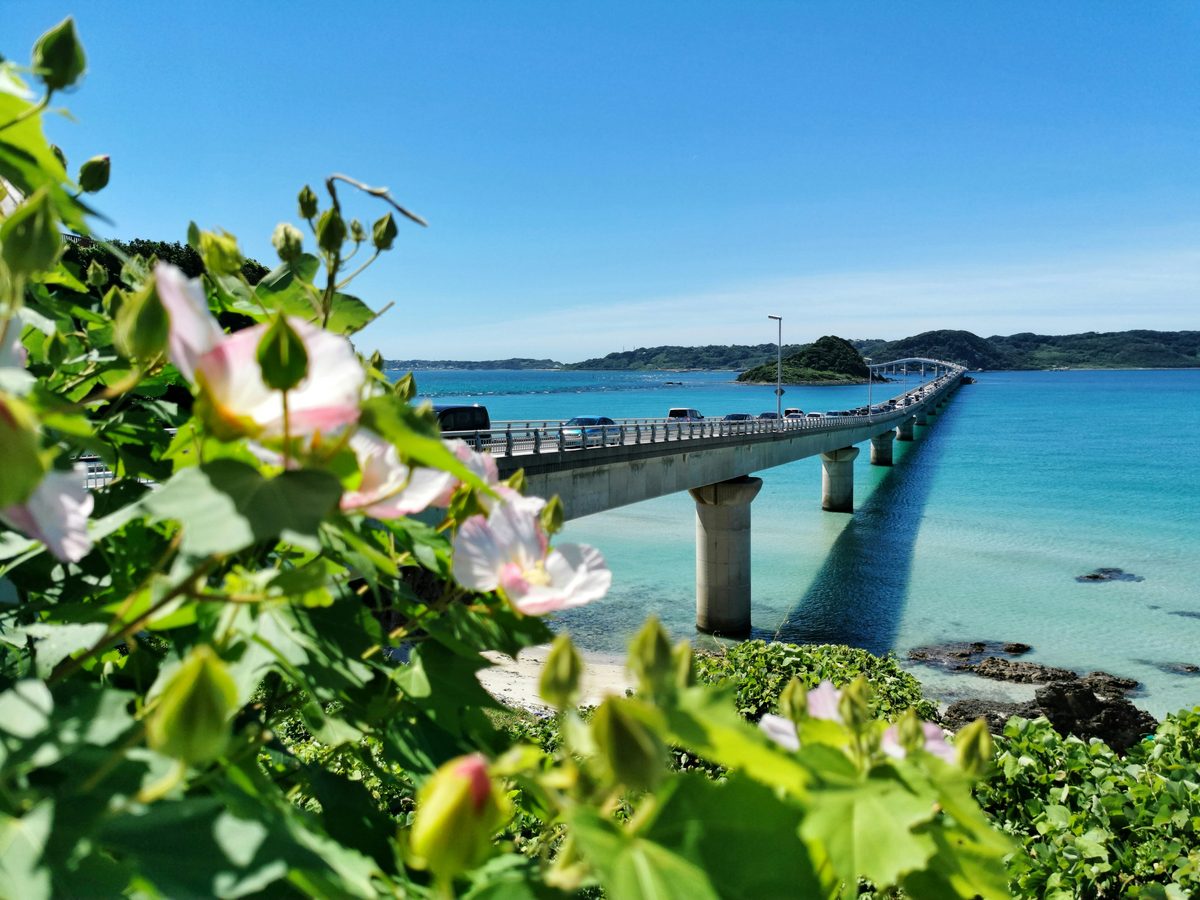
Kouri Island is one of the most popular highlights of the northern drive. It's linked to the main island by the roughly 2 km Kouri Bridge, and crossing it with clear, translucent blue-green sea on both sides — the open feeling of "driving over the ocean" — is its signature. The far end has parking and a beach to wade and photograph.
The island has few sights but a relaxed feel: the Heart Rock on the north coast, two sea-eroded rocks forming a heart shape, is a popular photo spot, and there are a few sea-view cafes and restaurants around the loop. Kouri is close to Churaumi (about 20-30 minutes), ideal to pair on the same northern day — a high-value, easy add.
Cape Manza and the Onna beaches
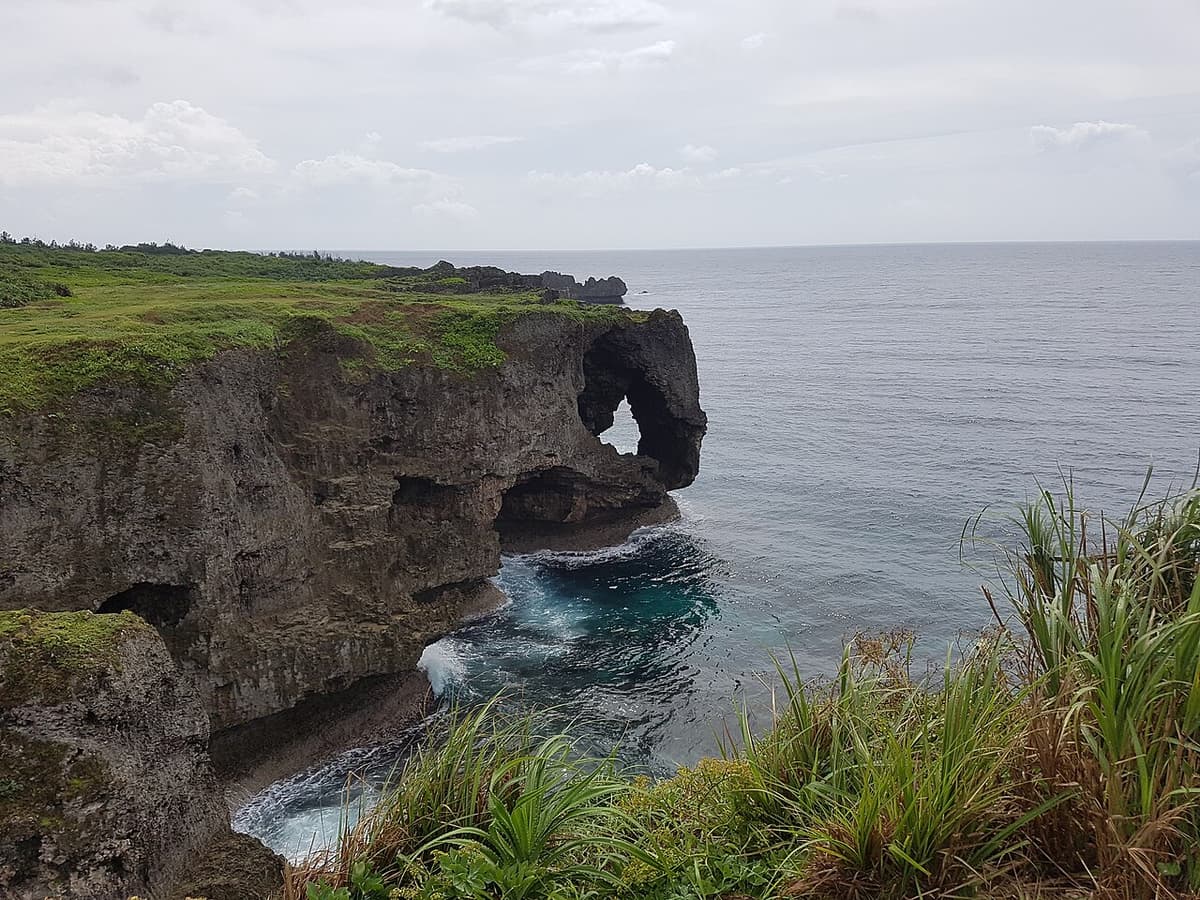
Heading north from Naha into Onna is Okinawa's densest stretch of resort beaches. The coastal landmark Cape Manza is an uplifted coral rock shaped like an elephant's trunk (Elephant Rock) standing in the sea, with a broad grassy clifftop where a loop path overlooks the deep-blue East China Sea — a classic west-coast stop, with visitor facilities and parking alongside.
The Onna area concentrates many of Okinawa's large seaside resort hotels and fine beaches, making it the natural place to base your northern nights — by day head north to Churaumi and Kouri, by evening return to the hotel for the beach and sunset. Adding Cape Manza on the drive from Naha toward Churaumi is an easy, natural stop.
Onna is also the hub for Okinawa's marine activities. The famous "Blue Cave" (Aono-Doukutsu) at Cape Maeda is a sea cave where sunlight turns the water a glowing blue, and snorkeling or diving tours there are among the island's most popular half-day outings; the reefs off Onna's beaches are good for snorkeling generally. These run mainly in the warmer months and book up in summer, so reserve ahead if a swim or dive is part of why you came to the north.
More of the north: Nakijin Castle, the Bise tree road
The north has a few more worthwhile stops. Nakijin Castle ruins, a Ryukyu gusuku inscribed with Shuri Castle as World Heritage, has winding walls along a ridge with sea views, and in late winter (about late January-February) is a famous spot for Okinawa's cold-cherry (kanhizakura) blossoms. Near Churaumi, the Bise fukugi tree road is a green tunnel of old windbreak trees you can walk, cycle or ride a water-buffalo cart through, at an unhurried pace.
Also in Nakijin Village is JUNGLIA, the theme park that opened in July 2025. A free 30-minute shuttle runs from Orion Hotel Motobu next to Churaumi, so bolting it onto an aquarium day costs almost nothing in transport — but its tickets come in two tiers and overseas visitors pay the higher one. Details in our JUNGLIA Okinawa ticket guide.
For islands, Sesoko Island is bridge-linked with a lovely beach, also an easy add to a northern day. Chaining Churaumi, Kouri, Cape Manza, Nakijin and these stops along the route, with lodging at Onna or Motobu, makes a complete northern-Okinawa resort trip.
For those going further, the island's far north is Yanbaru — a subtropical forest inscribed in 2021 as a Natural World Heritage site for its rare endemic wildlife (like the flightless Okinawa rail). It's a different trip in feel from the resort coast: winding mountain roads, mangroves and quiet capes such as Cape Hedo at the island's northern tip, better suited to a second visit or travelers who want nature over beaches. Most first-timers stop at Churaumi and the resort belt, but it's worth knowing the wild north is there.
Access and day-trip vs overnight
Access: northern Okinawa is best by car — about 2 hours from Naha on the Okinawa Expressway to Motobu, and driving up the west coast lets you flexibly chain Cape Manza, Onna, Kouri and Churaumi. Without a car, take a highway bus (like the Yanbaru Express) to Nago or Motobu, or a day-tour/charter including Churaumi, though free spot-hopping is harder. For car comparison and insurance, see our Okinawa car rental guide.
Day-trip vs overnight: at a push, Churaumi plus Kouri and Cape Manza can be done as a same-day round trip from Naha (but the drive is long and rushed); better to stay a night or two around Onna or Motobu and make the north the resort core — aquarium and islands by day, beach and sunset by evening, skipping the long daily drive to Naha. A common main-island trip is 3-5 days: Naha 1-2 days (city and airport) plus the north 2-3 days (staying at Onna/Motobu). For Naha, see our Naha guide. Before you go, see our Japan packing & weather guide — Okinawa has typhoons in summer-autumn and a May-June rainy season, so keep sea activities and the plan flexible. Winter (Dec-Feb) brings fewer typhoons, milder weather and lower hotel rates, making it a popular season for visiting Okinawa in winter — see our Okinawa winter escape guide.
Onna and Motobu are two different bases: Onna is closer to Naha, with Cape Manza and the seaside resort hotels around it; Motobu is next to Churaumi, easiest for walking into the aquarium at opening the next morning. Listings for both:
| Where to stay | Platform | Before you click |
|---|---|---|
| Onna | Booking.com Onna stays → | The list opens on today's date; change it to your nights first |
| Motobu | Booking.com Motobu stays → | The list includes places in neighbouring Nakijin and other villages; check each location |
A few practical tips: the aquarium is busiest in the late morning to early afternoon, so arrive near opening or go late afternoon for a calmer look at the Kuroshio Sea tank (and check the dolphin-show times to slot one in). For the beaches, the official swimming season is roughly April to October; outside it you can still walk the sand but not always swim, and water sports may pause. Cape Manza and the west-coast beaches face west, so they're prime for sunset — a good note to end a driving day on. And mind the driving distances: gas up before the long stretches, and don't over-pack the day, since the north's appeal is a slow coast rather than a checklist sprint.
Frequently Asked Questions
- Q1:How much is the Churaumi Aquarium, and what's the must-see?
- Okinawa Churaumi Aquarium admission is ¥2,180(成人) for adults (¥1,440(高中生) high school, ¥710(中・小學生) elementary/junior-high, free under 6). The star is the vast "Kuroshio Sea" main tank — home to whale sharks and manta rays, gliding past behind a giant acrylic viewing panel. The surrounding Ocean Expo Park also has a free dolphin show (Okichan Theater), a sea turtle and manatee house, and Emerald Beach, all worth combining. Convenience stores and online sellers offer advance tickets, usually a little cheaper than the gate.
- Q2:How do I get to the Churaumi Aquarium from Naha?
- Churaumi is in Motobu in the north, about 90-100 km from Naha. Driving the Okinawa Expressway (exit at Kyoda IC) takes about 2 hours, the easiest and most flexible way, letting you add Kouri and Cape Manza. Without a car, take a highway bus (such as Yanbaru Express) or a day-tour bus, though services are limited. Because it's far, plan Churaumi with the north as a full day, or stay a night around Onna or Motobu. For choosing a car, see our Okinawa car rental guide.
- Q3:How long does Churaumi need?
- The aquarium itself takes about 2-3 hours with a careful look and the dolphin show, up to a half day with the rest of Ocean Expo Park. But since the round trip from Naha is about 4 hours of driving, going only for Churaumi is a waste — pair it with same-direction stops like Kouri Island, Nakijin Castle ruins and the Bise fukugi tree road for a full day, or stay a night in the north to take it slower.
- Q4:Is Kouri Island worth it?
- Yes, a favorite of the northern drive. Kouri Island is linked to the main island by the roughly 2 km Kouri Bridge, and crossing it with clear blue-green sea on both sides — the feeling of "driving over the ocean" — is its signature. The far end has parking and a beach to paddle and photograph. On the island, the Heart Rock (two sea-eroded rocks forming a heart) is a popular photo spot, with a few sea-view cafes. Kouri is close to Churaumi (about 20-30 minutes), ideal to pair on the same northern day.
- Q5:What is Cape Manza?
- Cape Manza is a sea-cliff scenic spot on the Onna coast, where an uplifted coral rock shaped like an elephant's trunk (Elephant Rock) stands in the sea, with a wide grassy clifftop and a path overlooking the deep-blue East China Sea — a classic stop on the west coast. Right alongside is the Onna resort-beach and seaside-hotel belt, an easy add on the drive from Naha toward Churaumi.
- Q6:Should I stay overnight in the north? Can I go without a car?
- Staying over is strongly recommended — Okinawa's resort core (the Onna and Motobu beaches and seaside hotels) is in the central-north, and a night or two lets you take it slowly and skips the long daily drive from Naha. You can go without a car, but it's limited: a highway bus to Nago then a local bus or taxi, or a day-tour/charter including Churaumi; but to freely hop between Kouri, Cape Manza and hidden beaches, a rental car is still the easiest.