Don Quijote ("Donki") is the go-to for restocking and souvenir hauls in Japan — around 669 stores nationwide, with big-city branches open late or 24 hours, covering everything from snacks and cosmetics to electronics and anime goods. But many shoppers leave money on the table: stack 10% tax-free with the official scan coupon (5% over ¥10,000, 7% over ¥30,000) and the total comes to around 17% off. This guide shows how to stack it, what to buy, the MEGA/Picasso formats and the best branches, plus how Donki compares with drugstores and electronics chains so you buy each thing in the right place. It's written for first-time visitors doing a souvenir-and-supplies run, but even regulars miss the coupon stack. For the full all-store coupon logic, see our Japan discount coupons guide.
- Max savings: tax-free 10% + scan coupon (5% over ¥10,000 / 7% over ¥30,000) ≈ up to ~17%
- Scan coupon: official, shown live online at checkout — no app download, no screenshots
- Order: show the coupon first, then do tax-free (passport, ¥5,000 at one store)
- Formats: MEGA (largest, with fresh food) / standard / Picasso (small) / Eki- & Sora-Donki
- Must-buys: snacks, the Jonetsu Kakaku private label, cosmetics, beauty appliances, anime goods
📖 Contents
What Don Quijote is & the store formats
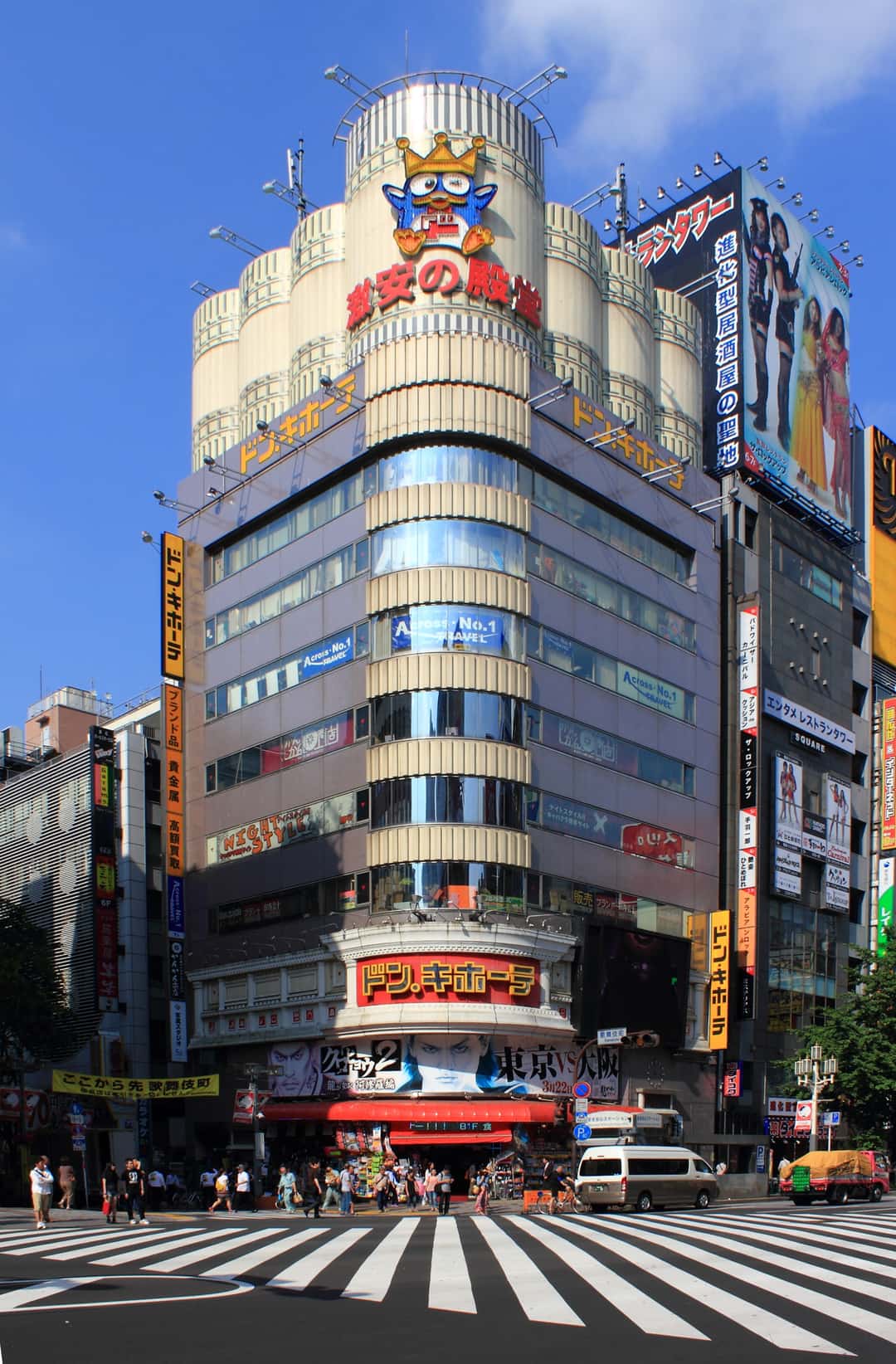
Don Quijote is Japan's signature discount megastore — yellow signs, the penguin mascot "Donpen," ceiling-high "compressed display" stacking and walls of handwritten POP. The range is vast: food, cosmetics, medicine, electronics, clothing, toys, party and adult goods, plus flash deals — you can knock out souvenirs and supplies in a single store. There are about 669 stores in Japan, in several formats:
- Don Quijote: standard stores, in cities and suburbs.
- MEGA Don Quijote: large stores adding fresh food and a fuller electronics/clothing range; the Shibuya flagship is a tourist favorite and the easiest to browse.
- Picasso and other small formats: tucked into busy districts, compact but focused on popular items.
- Eki-Donki (stations) / Sora-Donki (airports): handy for a quick restock or a last grab before flying home.
For one-stop shopping head to a MEGA; if you're just passing, a station or small-format store is quicker.
How to stack the discounts
Saving at Don Quijote is two discounts stacked:
- Official scan coupon: the Don Quijote scan coupon issued via LiveJapan (a JNTO-partner platform) — at the register, open the live page on your phone online and show it to be scanned (no app download, no screenshots). Common discount: 5% over ¥10,000, 7% over ¥30,000.
- Tax-free 10%: present your passport; spend ¥5,000 (pre-tax) at the same store on the same day.
The order is "coupon first, tax-free second" — the coupon applies to the item price and tax-free to the tax, so they don't conflict and stack to about 17% total off. You can also install "majica" (iOS / Android) for points. The scan coupon only opens with a live connection, so check your phone is online before you walk in. For the full tax-free system and the Nov 2026 reform, see our Japan tax-free guide.
How much do you save? A worked example: say you buy ¥30,000 (pre-tax) of souvenirs and a beauty appliance. The tax-inclusive list price is about ¥33,000; tax-free saves the ¥3,000 consumption tax (you pay ¥30,000), and the 7% scan coupon for ¥30,000+ knocks off about ¥2,100 — you pay roughly ¥27,900, saving about ¥5,100. The same haul with no coupon and no tax-free would be ¥33,000, a real difference — which is why it pays to concentrate your Don Quijote shopping in one store and reach the threshold in a single checkout.
How the tax-free counter works: most large stores have a dedicated Tax-free counter — bring your passport, the receipt and the goods. Bought up to 31 October 2026: the counter hands the tax back on the spot and consumables (snacks, drinks, cosmetics) are sealed and mustn't be opened in Japan. Bought from 1 November 2026 (purchase date decides it, not departure date, and there is no transition period): the general/consumable split and the sealed bags are abolished — you pay the full tax-inclusive price and register your refund method at the till, then on departure day scan your passport at a self-service kiosk landside, before the security checkpoint, and before you check any bags, since a checked bag cannot be pulled back. Customs clears one receipt at a time, so one missing item voids the whole receipt; snacks, drinks or cosmetics consumed in Japan kill that receipt too — in that case skip the kiosk and declare at the manned customs desk. You have 90 days from purchase to leave, and the airport pays you nothing: Don Quijote or its refund operator sends the money afterwards. Pay at a normal register first then visit the tax-free counter, or at some stores do it all at a designated register — look for the in-store "Tax-free" signs.
Must-buy list
The categories visitors sweep most (list first — it's easy to get lost):
- Snacks & souvenirs: matcha and region-only KitKats, Jagabee and Jagariko, Shiroi Koibito, Tokyo Banana and endless Japanese sweets. Multi-packs and gift boxes are cheaper per piece than airport shops, and they help you clear the coupon thresholds in one go.
- The "Jonetsu Kakaku" private label: Don Quijote's own brand spans instant food, drinks, snacks and household goods at aggressive prices — the line that built Donki's "kyoan" (shockingly cheap) reputation, and an easy way to try a lot for little.
- Cosmetics & drugstore items: sheet masks, eye drops, plasters, OTC medicine and drugstore makeup. Prices are usually close to a drugstore, but Donki's late hours and one-stop range make it convenient — compare on big-ticket cosmetics.
- Beauty appliances: hair dryers, straighteners, curlers and facial massagers are perennial buys. Check the voltage and plug shape — many Japanese models are 100V only and may run weakly or need a converter at home.
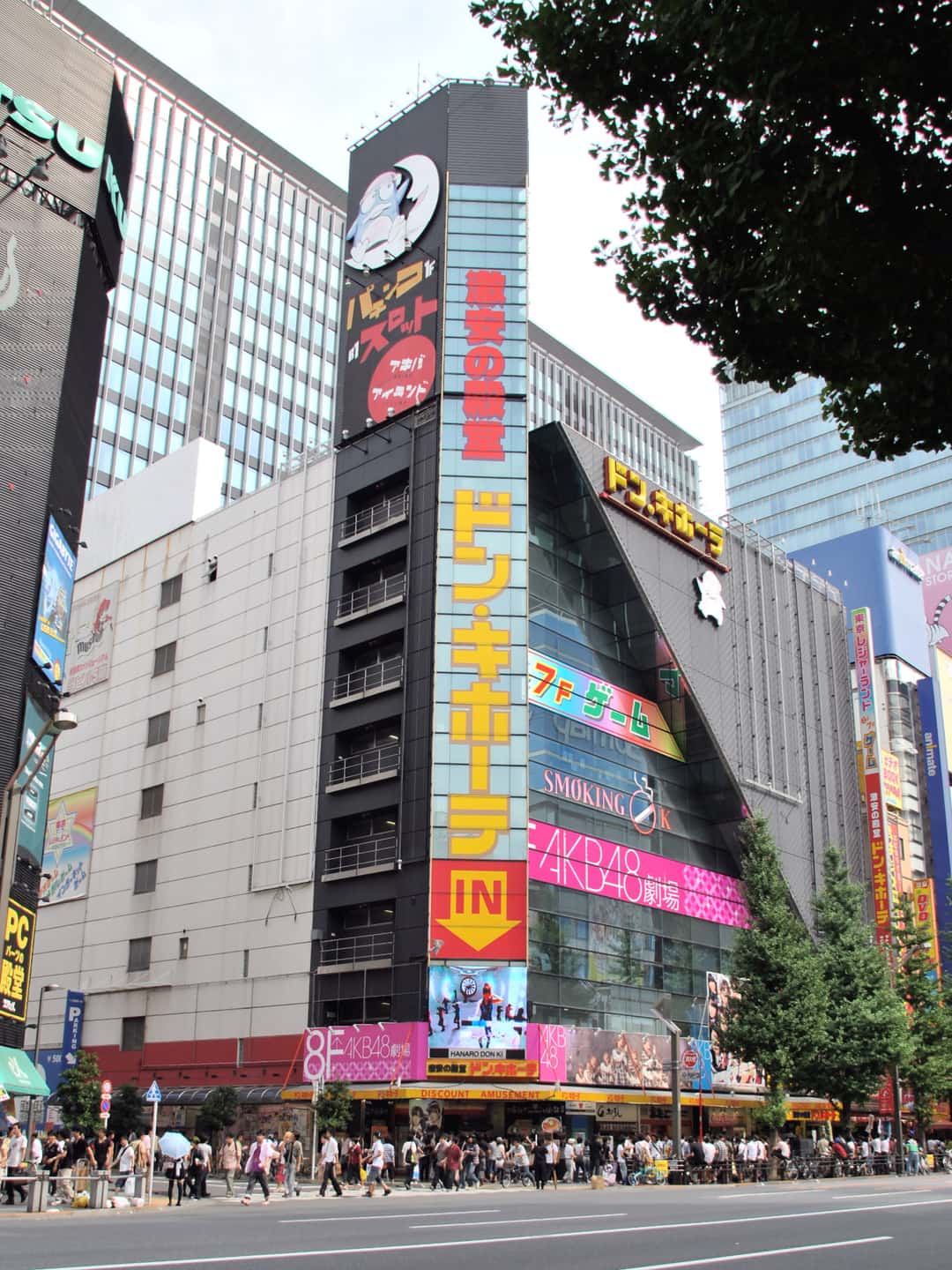
- Anime goods & ichiban-kuji: gachapon, character figures and ichiban-kuji prize draws, deepest at the Akihabara and Ikebukuro stores — handy to pair with an anime-pilgrimage day.
- "Kyoan" deal items & oddities: the pyramid-POP flash deals and the famously random aisles (costumes, gadgets, party goods) are where the treasure-hunt fun lives — and where you stumble onto gifts you didn't know existed.
Shopping smart: batching, timing and the maze
A few habits make a Don Quijote run cheaper and less stressful:
- Batch into one store, one checkout: the coupon tiers (5% over ¥10,000, 7% over ¥30,000) and the ¥5,000 tax-free threshold are all per store. Splitting the same haul across two branches can mean missing a tier — so pool your buys and settle them together. If you're close to ¥30,000, it's often worth adding one more box of snacks to cross into the 7% band.
- Go off-peak if you can: weekday mornings and early afternoons are far calmer than late evening, when tourist-heavy stores like Shibuya and Dotonbori get packed and the tax-free counter queues. The late-night atmosphere is fun, but allow extra time to pay.
- Work the maze methodically: the compressed-display aisles are deliberately disorienting. Grab a basket, start from one end or the top floor and sweep down, and keep your phone list handy so you don't double back.
- Cards and QR are fine: major branches take Visa/Mastercard, Apple Pay and the like, so you don't need a wad of cash — but the coupon must still be shown live online.
One more tip for gifts: Don Quijote is strong on regional and limited-edition snacks (area-only KitKat flavors, seasonal treats) that make better souvenirs than the generic airport selection — and buying them by the box clears the coupon and tax-free thresholds at the same time.
Best branches
The easiest stores for tourists:
- Tokyo: MEGA Don Quijote Shibuya (one of central Tokyo's largest, 24 hours), Shinjuku East, Akihabara, Ikebukuro — the city is in our Tokyo 5-day itinerary.
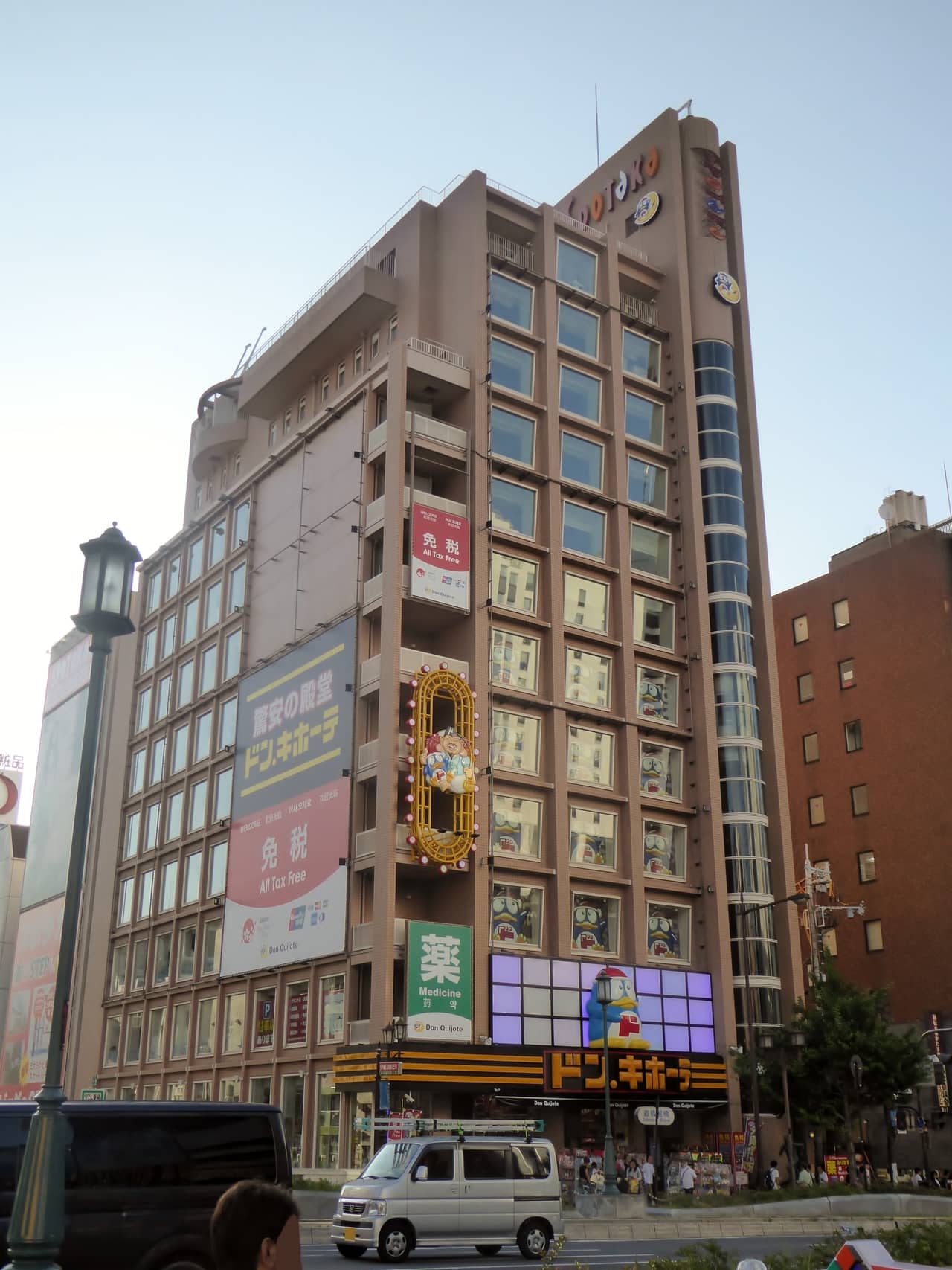
- Osaka: Dotonbori (the "Ebisu Tower" Ferris wheel sits on the store) and Namba — Kansai is in our Osaka & Kyoto 5-day itinerary.
- Elsewhere: Kyoto, Fukuoka Tenjin, Naha's Kokusai-dori, Sapporo's Tanukikoji — most big-city stores run late or 24 hours, ideal for an after-dinner restock at the end of your day.
Two situational picks worth knowing: the Sora-Donki at the airport and Eki-Donki at stations are made for a last-minute souvenir top-up on your way out — handy if you forgot something, though the range is smaller than a MEGA. And in Okinawa, the Kokusai-dori store doubles as a shopping-street landmark, good for regional-limited snacks and the late-night browse that's become part of the Naha evening. Wherever you are, check the individual store's hours before a late visit — most big-city branches run very late, but smaller or suburban ones don't.
Don Quijote vs drugstores / electronics
Honestly, Don Quijote isn't "cheapest at everything" — its edge is one-stop shopping, late hours and frequent flash deals. How to choose:
- Snacks, souvenirs, sundries, party goods: Don Quijote is usually the most convenient and cheap enough — buy souvenir boxes here.
- Medicine, sheet masks, drugstore makeup: prices are close to Matsumoto Kiyoshi, SUNDRUG etc. — worth comparing; drugstores have a fuller range and their own coupons (see our Japan discount coupons guide).
- Pricey cameras, laptops, appliances: go to Bic Camera, Yodobashi and the like — full model lineups, clear warranties, plus tax-free + up to 7% coupons; Don Quijote's electronics skew toward beauty gadgets and deal items.
- Stationery, storage, clothing and household goods: Muji and Loft beat Don Quijote on quality and design, but go in knowing that Muji issues no tourist coupon at all — its single 10% discount is members-only and, per the official terms, mutually exclusive with tax-free. There you get one layer of savings, not the coupon-plus-tax-free stack available here.
Why is Don Quijote often cheap? A lot of it is the private label, bulk packs, end-of-line clearance and a no-frills, pile-it-high model — plus the coupon-and-tax-free stack on top. Where it loses is depth and assurance: a camera chain will have the exact laptop spec, the international-warranty paperwork and staff who can talk voltage, while a drugstore will carry the full cosmetics line and run its own member coupons. So the savings math isn't just sticker price — it's "right product, right place, with the right coupon."
In short: sundries and snacks at Don Quijote, big electronics at the camera chains, drugstore items compared between both — buy each category where it's best. If you only have time for one stop and just want souvenirs and supplies, though, Don Quijote with the scan coupon and tax-free is hard to beat for convenience-per-yen.
Things to watch out for
A few things to keep the trip smooth:
- Tax-free rules: ¥5,000 (pre-tax) threshold, bring your passport; from 1 November 2026 it switches to a pay-first, refund-later system (what decides it is the purchase date, not your departure date, and there is no transition period) (see our Japan tax-free guide).
- Scan coupon: shown live online, no screenshots — confirm you have a signal.
- Crowds and flow: maze aisles and dense POP mean popular stores get crowded late with checkout queues; browse off-peak if you want calm.
- Exclusions: some sale items, tobacco/alcohol and brand goods may be excluded from coupons — ask before paying if unsure.
Get the "scan coupon + tax-free" routine down and the savings on a box of souvenirs or a beauty appliance add up fast. For every store's coupon and a one-page overview, see our Japan discount coupons guide and the coupons hub.
Frequently Asked Questions
- Q1:How do I get and use a Don Quijote coupon?
- The best value is the official authorized scan coupon (issued via LiveJapan, a JNTO-partner platform) — at the register, open the live coupon page on your phone online and show it for the clerk to scan; no app download, no screenshots. The common discount is, on top of 10% tax-free, 5% off over ¥10,000 and 7% off over ¥30,000. You can also install the "majica" app (iOS / Android) for points and member deals. Discounts and thresholds change, so check the official coupon page for the current terms.
- Q2:Can I use tax-free and a coupon together, and in what order?
- Yes — that's the key to saving most. At checkout, show the scan coupon first (knocks off 5–7%), then do tax-free (removes the 10% consumption tax); they apply to the item price and the tax respectively and don't conflict, stacking to around 17% total off. For tax-free, bring your passport and spend ¥5,000 (pre-tax) at the same store on the same day. The full tax-free + coupon logic is in our Japan discount coupons guide.
- Q3:What's the difference between the store formats (Donki / MEGA / Picasso)?
- Don Quijote has about 669 stores in Japan in several formats: (1) Don Quijote standard stores; (2) MEGA Don Quijote — large stores that add fresh food and a fuller range of electronics and clothing; the Shibuya flagship is a tourist favorite; (3) Picasso and other small formats tucked into busy districts, compact but easy to browse; plus Eki-Donki (stations) and Sora-Donki (airports). For one-stop shopping go to a MEGA; for a quick restock, a station or small-format store is faster.
- Q4:What should I buy at Don Quijote?
- Popular picks (make a list first — the maze-like layout is easy to get lost in): (1) snacks & souvenirs — matcha/regional KitKats, Jagabee, Shiroi Koibito, by the box for gifts; (2) the private label "Jonetsu Kakaku" — good-value food and daily goods; (3) cosmetics & drugstore items — sheet masks, eye drops, OTC medicine, drugstore makeup; (4) beauty appliances — hair dryers, curlers, massagers (mind the voltage/plug); (5) anime goods and ichiban-kuji; (6) "kyoan" deal items — the pyramid-POP flash sales are part of the treasure-hunt fun.
- Q5:Which branches are best for tourists?
- Tokyo: MEGA Don Quijote Shibuya (one of central Tokyo's largest, 24 hours), Shinjuku East, Akihabara, Ikebukuro; Osaka: Dotonbori (with the yellow "Ebisu Tower" Ferris wheel right on the store) and Namba; also Kyoto, Fukuoka Tenjin, Naha's Kokusai-dori, and Sapporo's Tanukikoji. Most big-city stores run late into the night or 24 hours, ideal for an after-dinner souvenir run at the end of your day.
- Q6:Anything to watch out for when shopping?
- A few things: (1) tax-free threshold is ¥5,000 (pre-tax) and you need your passport; up to 31 October 2026 consumables are sealed and can't be opened in Japan, and from 1 November 2026 (by purchase date, not departure date) you pay tax-inclusive at the till and the shop refunds you after customs confirms the goods at departure — that check happens landside before security and before bag drop, and it clears one receipt at a time, so one missing item voids the lot (see our Japan tax-free guide); (2) the scan coupon must be shown live online, no screenshots — make sure you have a signal; (3) maze-like aisles and dense POP mean popular stores get crowded late with checkout queues, so leave time; (4) some sale items, tobacco/alcohol and brand goods may be excluded from coupons — ask if unsure.