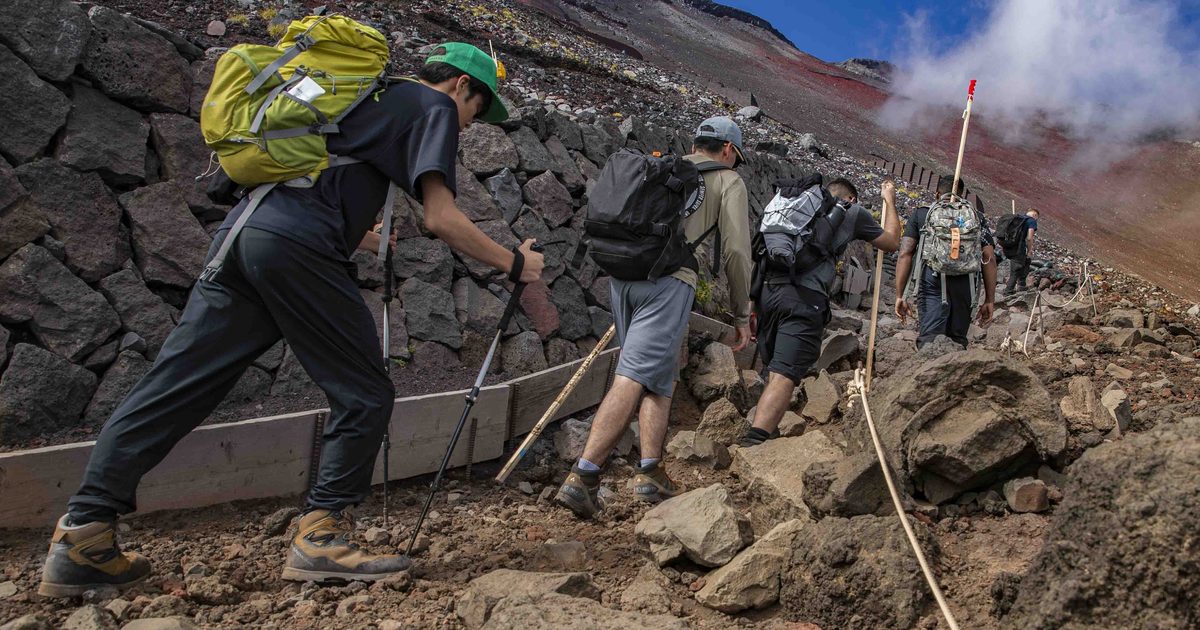
All four trails charge ¥4,000, which makes it easy to file the whole thing under one sentence: Fuji now costs ¥4,000. Underneath that number sit two prefectures, two legal instruments, two sets of paperwork, and two refund policies that point in opposite directions. Yamanashi collects a toll. Shizuoka collects an entry fee under a prefectural ordinance — and makes you pass a test before it hands over your permit. Meanwhile the obvious worry — that you must book early because of the 4,000-per-day cap — is contradicted by the prefecture's own published record: zero days at capacity in 2024, zero days in 2025. This guide works from the official wording to show that the thing worth worrying about is not losing a slot — it is picking the side that will not give your money back.
📍 This is about climbing. If what you actually want is to photograph Fuji, ride a ropeway with a view of it, or plan a day around Lake Kawaguchi, our Tokyo to Mt. Fuji transport guide covers the non-climbing half.
- The daily cap has never been reached: officials publish "2024: 0 days, 2025: 0 days," state that reserving is optional, and hold back a same-day allocation
- Refund rules are opposites: Shizuoka refunds in full up to the day of your climb with no fee; Yamanashi charges the full cancellation fee from two days after payment, and counts transport delays as your own fault
- Paying is not enough on the Shizuoka side: you need e-learning plus a perfect score on the Fuji test to receive your permit; Yamanashi only asks you to tick 13 pledges
- Hoei Crater costs money, Kofuji does not: the Fujinomiya-side Hoei Crater course is inside the restriction, while Gotemba's Futagoyama and Subashiri's Kofuji are outside it
- The ¥1,000 conservation donation no longer exists: officials confirm it was merged into the entry fee from FY2025 — delete it from any older guide you are reading
📖 Contents
The cap that has never filled
If you have researched climbing Fuji, you have read that Yamanashi limits the trail to 4,000 climbers a day and that you should book early. The first half is true. The second half points you at the wrong risk.
The official FAQ publishes the record directly: the cap was reached on zero days in 2024 and zero days in 2025. It has existed for two seasons and has never actually turned anyone away. The same document states that making a reservation is optional, that you can reserve on the day itself, and that a separate same-day allocation exists for people who do.
So what is a reservation worth? It saves you the on-site registration queue. That is the entire benefit — and the cost is the part this section is really about.
🔴 Once you pay online on the Yamanashi side, the refund terms are unusually harsh for travellers. Officials state that a full cancellation charge applies from the day after next following the payment date, and that cancellations for your own reasons, explicitly including transport delays, are not refunded. Read that parenthesis again — a delayed flight or a stopped train is classified as your problem. Only prefecture-side causes that prevent passage trigger a refund.
And one more that is easy to miss: a paid reservation does not exempt you from the gate. If you have not passed the fifth-station gate by 2 pm, the restriction applies to you regardless.
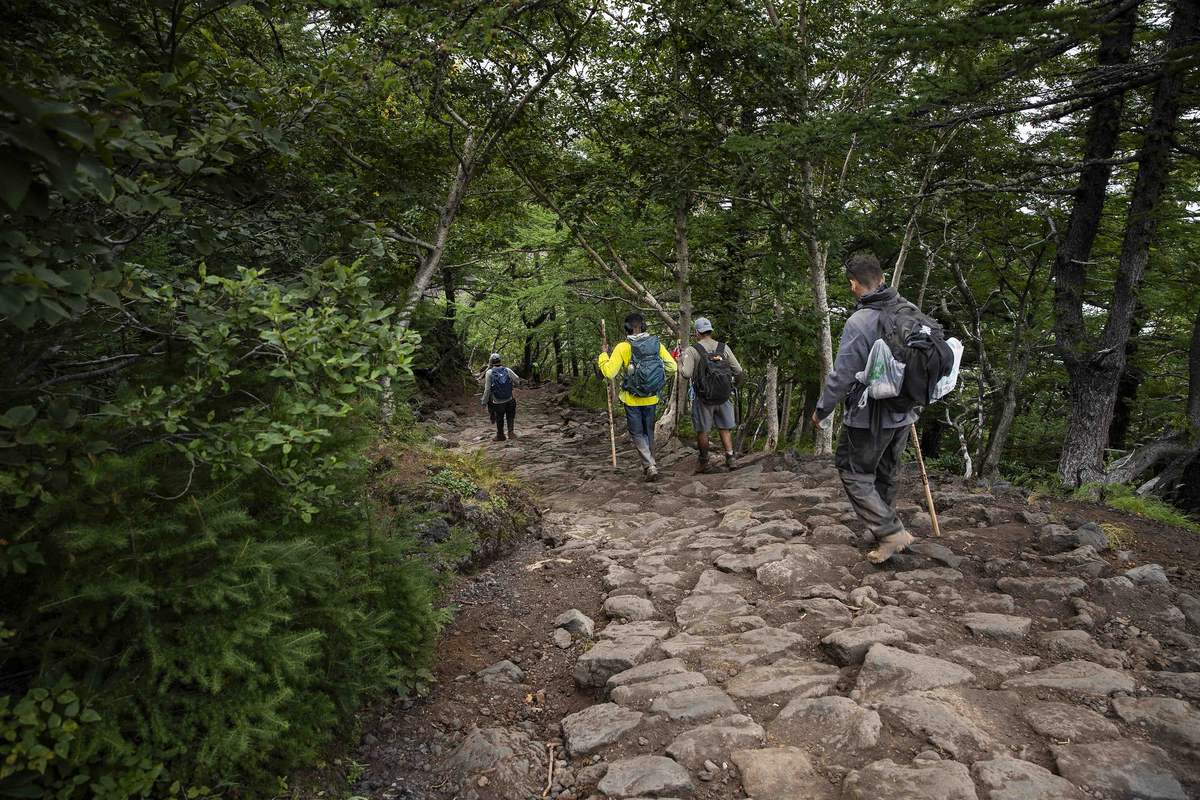
Two prefectures, two different ¥4,000
Same number on both sides, so it reads like one national fee. It is not: the legal basis, the paperwork, and the consequences of changing your mind are all different.
| Item | Yamanashi (Yoshida) | Shizuoka (Fujinomiya / Gotemba / Subashiri) |
|---|---|---|
| Name | Toll | Entry fee |
| Amount | ¥4,000 | ¥4,000 |
| Stated legal basis | The word "ordinance" does not appear on the official page | Officially "under a prefectural ordinance" |
| What you do beforehand | Tick 13 pledge items | Complete e-learning + pass the Fuji test perfectly |
| Daily cap | 4,000 (0 days reached in two years) | Officially no cap set |
| Cancellation | 🔴 Full charge from 2 days after payment; own reasons incl. transport delays not refunded | 🟢 Full refund until the climbing day, no fee (not cancellable after on-site check-in) |
| On-site proof | Gate passage | Permit QR exchanged for a wristband |
⚠️ An honest boundary here: Shizuoka's page uses the phrase "under a prefectural ordinance" verbatim, but the word "ordinance" appears nowhere on Yamanashi's official page, and I did not obtain the Yamanashi ordinance text itself. So the accurate statement is that Shizuoka describes its fee as an ordinance obligation. Writing "both prefectures passed ordinances" would be an inference, not a quotation.
Practically, the choice is simple. If your plans could still change, or you care about the weather, Shizuoka is structurally the safer side — a full refund right up to the day means you keep the weather risk in your own hands. If your hut is already booked and the date cannot move, Yoshida's supply and rescue infrastructure is the best on the mountain, and that safety margin is worth accepting the refund terms for.
The four trails, by official numbers
Everything below comes from the per-route detail sections of the official comparison page. ⚠️ The site's summary page carries a rounded set of times (Yoshida as "about 6 hours up, about 4 down") that differs from the detail pages — this table uses the detail pages throughout.
| Trail | Prefecture | Trailhead | Ascent | Descent | Official characteristics |
|---|---|---|---|---|---|
| Yoshida | Yamanashi | 2,305 m | 6.8 km / ~6h10m | 7.0 km / ~3h35m | Most huts, separate up/down paths, 3 first-aid stations |
| Fujinomiya | Shizuoka | 2,400 m | 4.3 km / ~5h10m | 4.3 km / ~2h40m | Shortest; one shared path, single first-aid station |
| Subashiri | Shizuoka | 2,000 m | 6.9 km / ~6h25m | 6.2 km / ~3h20m | Forest section, merges with Yoshida, scree descent |
| Gotemba | Shizuoka | 1,440 m | 10.5 km / ~8h40m | 8.4 km / ~3h30m | Longest, ~2,300 m gain, officially no first-aid station |
My call, stated plainly: climb Yoshida the first time. It is neither the shortest nor the prettiest, but hut density, separated up and down paths, and three first-aid stations together give it the highest tolerance for things going wrong. Fujinomiya suits people with a fitness base and a compressed schedule — 4.3 km of ascent genuinely saves time, but sharing one path means descending against a stream of climbers, with a single first-aid station behind you. Subashiri's selling point is the way down: the sunabashiri scree descent drops fast, and is correspondingly hard on knees.
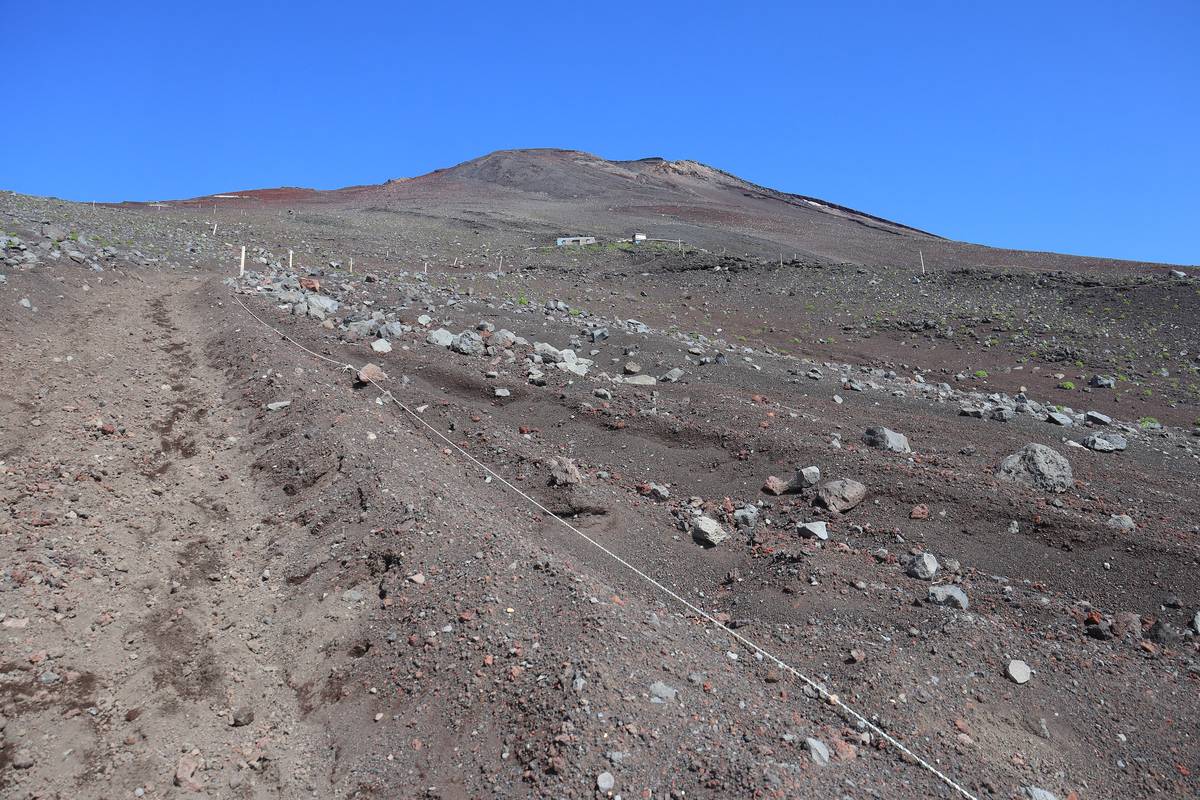
As for Gotemba, that official sentence — no first-aid station — is the qualification test for the trail. Ten and a half kilometres, 2,300 m of gain, few huts, no medical post. This is a trail for people who know their own limits and their bail-out points. It is not a way to avoid crowds.
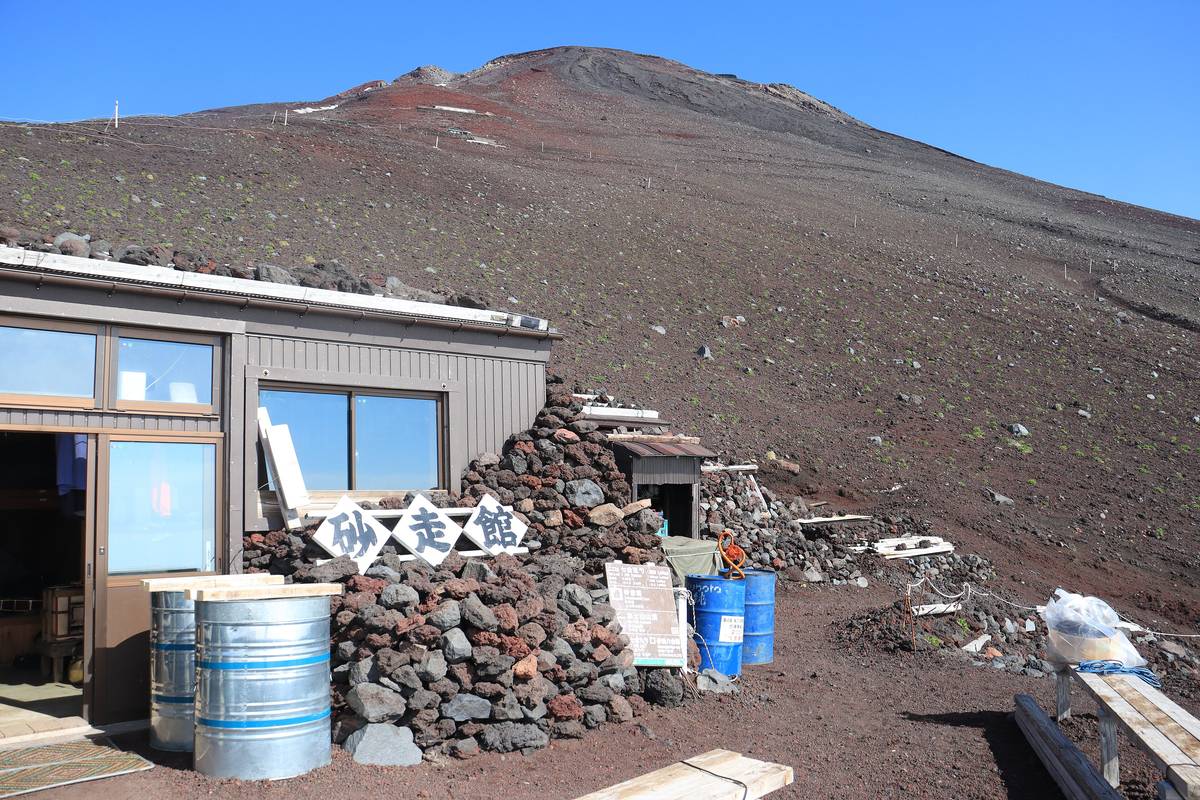
What is free and what costs ¥4,000
This is the section where people either overpay or arrive without the money they needed.
Free: Yamanashi states that no toll is required for walking the Ochudo trail or for sightseeing at the fifth station outside the gate. Shizuoka's FAQ lists three things outside the restriction: the Futagoyama route at Gotemba, the Kofuji route at Subashiri, and visits to Komitake Shrine.
🔴 But the same answer contains the exception: the Hoei Crater course from the Fujinomiya trailhead is subject to the restriction. Hoei Crater is the huge flank crater on Fuji's side. It requires no summit attempt and the walk is short, which is exactly why it gets recommended as the relaxed alternative to a real climb — and it costs ¥4,000.
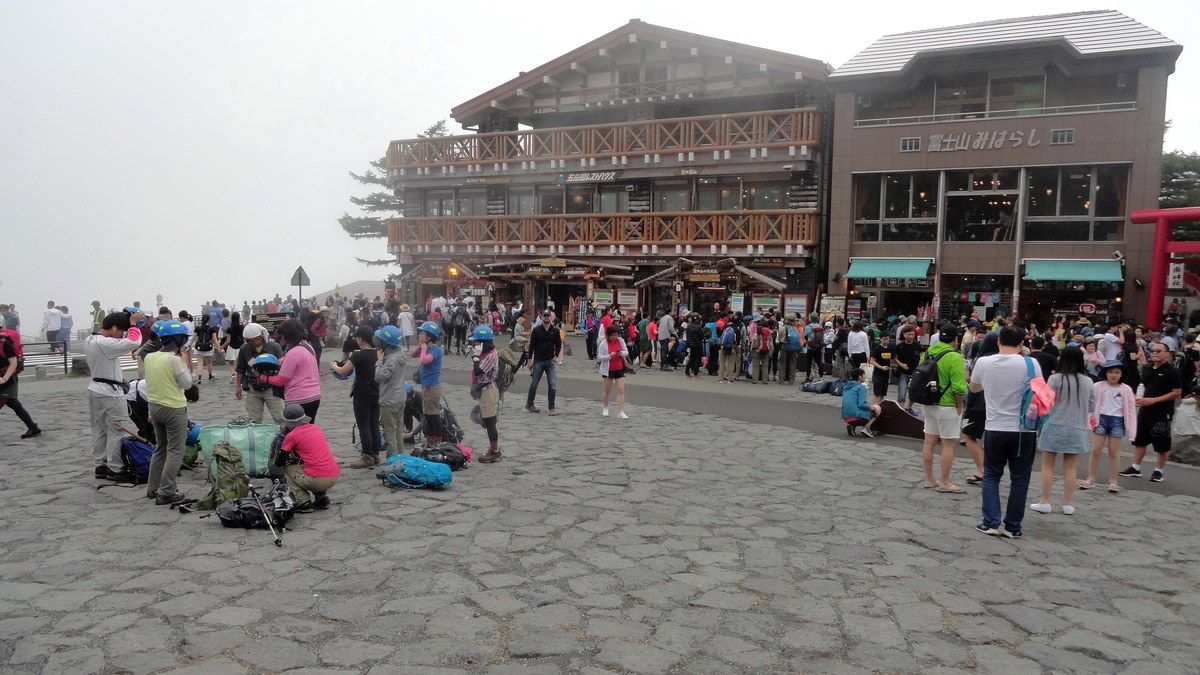
So: two similar day hikes near the fifth station, one trailhead apart, 0 yen versus 4,000 yen. If Hoei Crater is on your list, budget for it. If you want height and views without paying, Futagoyama and Kofuji are the officially sanctioned free options.
Bullet climbing: now physically gated
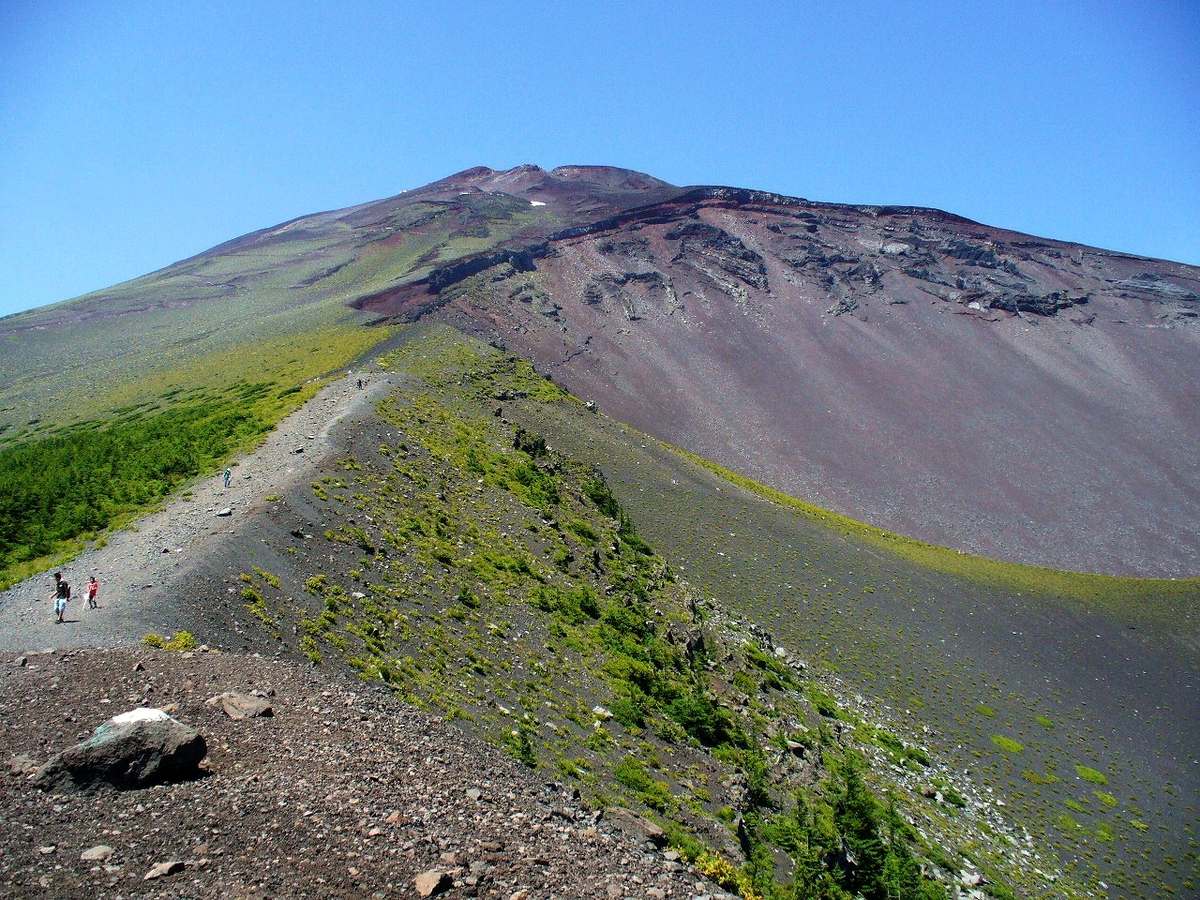
Starting at night and reaching the summit for sunrise has a Japanese name — dangan tozan, bullet climbing — and officials spent years discouraging it. It is no longer discouragement. It is a gate.
All four trails share one restricted window: you cannot begin climbing between 2 pm and 3 am, with an exception stated only for mountain hut guests. Yamanashi closes a physical gate; officials add that descent remains possible at any time during closure, so it blocks upward movement only. Shizuoka enforces the same window through the permit and hut booking confirmation.
Yamanashi writes it into the pledge you must tick before paying — item 4 commits you to not climbing through the night without a hut stay. Item 10 of the same pledge is worth copying down too: it has you acknowledge that Fuji is an active volcano and an eruption is possible. That is not boilerplate. Reading the volcano section of our Japan disaster preparedness guide before you go costs you nothing.
Pledge item 12 is a specific and very practical route warning: the Yoshida and Subashiri descent paths diverge near the eighth station, and you are asked to confirm the split on a map beforehand. This is a real navigation error — the two trails merge on the way up, and climbers who miss the fork on the way down end up at the wrong trailhead in the wrong prefecture.
Opening dates, roads and car restrictions
Official 2026 opening comes in two waves: Yoshida and Subashiri on 1 July, Fujinomiya, Gotemba and the summit crater circuit on 10 July.
🔴 Subashiri changed in 2026. Officials write that it had opened on 10 July in past years and is scheduled to open on 1 July from 2026. The 10 July date is the old one and no longer applies.
⚠️ An honest boundary: what officials announce for 10 July is the summit crater circuit (ohachi-meguri). The name "Kengamine" — Japan's highest point — returns zero hits across the official site, meaning there is no official statement specifically about it. What you can and cannot reach from the summit between 1 and 9 July is something to confirm from on-site signage and the latest official notices. I am not going to infer it for you.
If you are driving, the other table that matters is the private-vehicle restriction, during which trailhead roads are shuttle-only:
| Road (trail) | 2026 private-vehicle restriction |
|---|---|
| Fuji Subaru Line (Yoshida) | 3 Jul 18:00 – 10 Sep 18:00 |
| Fujisan Skyline (Fujinomiya) | 10 Jul 9:00 – 10 Sep 18:00 (officially 63 consecutive days) |
| Fuji-Azami Line (Subashiri) | 1 Jul 9:00 – 10 Sep 18:00 (72 consecutive days) |
| Prefectural Route Taroubou Line (Gotemba) | Officially no private-vehicle restriction |
Gotemba has no car restriction and roughly 450 free parking spaces — the one respect in which it is the easiest of the four. It is also the longest, with no first-aid station.
Two more useful timings: the summit crater circuit runs 10 Jul – 10 Sep, and Yoshida notes that on 11 September the descent path below the eighth station stays usable until midday — a half-day buffer on closing day.
Paying, and what to do without a smartphone
Online and on-site accept different things, and officials are unusually specific about it. On-site takes credit cards including Visa, UnionPay, Alipay+, au PAY, d払い, JKOPAY and PayPay among others. Online takes only credit cards and PayPay.
⚠️ There is no ATM at Fuji's fifth station — officials answer the question with a flat "there is none." Huts and toilets above that point largely want cash, so draw what you need before you start up. The summit public toilet on the Fujinomiya side takes a tip of ¥300 and officially accepts PayPay, but individual huts set their own toilet charges and no unified price is published — do not assume that figure applies mountain-wide.
Without a smartphone you are still fine: Shizuoka states the whole process can be completed on-site at the fifth station, while noting it takes about 30 minutes. If your schedule is tight, do it online.
Two more practical notes: officials support a single representative paying for up to 100 people, and on the Yamanashi side cancellation is possible until the day after payment and date changes until the day before your climb — but the number of people cannot be changed.
What is actually known about 2027
The honest answer first: nothing has been announced. On 22 August 2026 I full-text searched the six main pages of the official Fuji climbing site for both "Reiwa 9" and "2027". Zero hits. Any page giving you 2027 opening dates, fees, or pre-registration dates did not get them from an official source.
What you can use as a rhythm is 2026: Shizuoka pre-registration opened 8 May, trails opened 1 and 10 July, everything closed 10 September, and vehicle restrictions started roughly in step with opening. Useful for deciding when to start watching. Not a statement about next year.
One planning note for readers who want the official English and Chinese materials: the site's traditional Chinese web version is currently broken (the /tc path returns 404 and the language switcher is commented out in the source), but the official multilingual material exists as PDFs, including the 2026 Shizuoka climbing regulation pamphlet. If the web version will not load, go looking for the PDFs rather than assuming nothing exists.
On preparation: Fuji's temperature range deserves its own treatment. The gap between the fifth station and the summit is severe, and even in July and August the summit can approach freezing. The high-altitude section of our Japan weather and packing guide covers the layering logic, so this article does not repeat it.
Frequently Asked Questions
- Q1:How much does it cost to climb Mt. Fuji now, and is it the same on both sides?
- The number is the same, the thing you are paying for is not. All four trails charge 4,000 yen per person per climb, but Yamanashi Prefecture (Yoshida trail) calls it a "toll" while Shizuoka Prefecture (Fujinomiya, Gotemba, Subashiri) calls it an "entry fee" and states in writing that climbers entering from the Shizuoka side must complete entry procedures under a prefectural ordinance. That means the Shizuoka payment comes bundled with two conditions: you must finish an e-learning module, and you must pass the Mt. Fuji test with a perfect score before your entry permit is issued. Yamanashi asks you to tick 13 pledge items instead — no test. One more thing that is easy to get wrong: the fee does not scale with age. The official wording is that there is no difference by climber age and the fee is a flat 4,000 yen, so children pay full price. Holders of disability certificates and school-curriculum groups can apply for an exemption in advance. And the old 1,000 yen voluntary "Fuji conservation donation" no longer exists — officials state it was folded into the entry fee from fiscal year 2025.
- Q2:There is a 4,000-climber daily cap. Do I need to book early to get a slot?
- This is the single most-repeated piece of bad advice about climbing Fuji. The official FAQ publishes the actual record: the cap was reached on zero days in 2024 and zero days in 2025. In two full seasons the gate has never once closed on capacity. Officials also state plainly that making a reservation is optional, that you can reserve on the day of your climb, and that a same-day allocation is held back for exactly that purpose. So running out of slots is not the risk here. The risk runs the other way. Once you pay online on the Yamanashi side, the official rule is that a full cancellation charge applies from the day after next following your payment date, and that cancellations for your own reasons — explicitly including transport delays — are not refunded. A delayed flight, a stopped train, or bad weather you want to reschedule around all fall on your side of that line. Booking buys you peace of mind and costs you flexibility, and whether that trade is worth it depends entirely on how firm your itinerary already is.
- Q3:Can I get a refund if I cancel?
- This is where the two prefectures differ most, and they differ in opposite directions, so check it before you pick a trail. Shizuoka (Fujinomiya, Gotemba, Subashiri) states that entry procedures can be cancelled with a full refund up until the day of your climb, and that no fee is charged for changes or cancellations. The only cut-off is on-site verification — once you have been checked in at the trailhead, you can no longer cancel. Yamanashi runs the reverse: a full cancellation charge kicks in from the day after next following payment, and cancellations for your own reasons are never refunded, transport delays included. Only prefecture-side causes that prevent passage trigger a refund. So if your plans are still fluid, or you want to keep a weather escape hatch, the three Shizuoka trails are structurally friendlier to you. There is one more Yamanashi trap worth knowing: even with a paid reservation, if you have not passed through the fifth-station gate by 2 pm on your climbing day, the restriction still applies to you.
- Q4:If I am not summiting and just want to walk around the fifth station, do I still pay 4,000 yen?
- Usually not — but there is one exception that catches people out. Yamanashi states clearly that no toll is required for walking the Ochudo trail or for sightseeing at the fifth station outside the gate. Shizuoka publishes a list of what falls outside the restriction: the Futagoyama route from the Gotemba trailhead, the Kofuji route from the Subashiri trailhead, and visits to Komitake Shrine. None of those cost anything. But the same official answer contains the catch: the Hoei Crater course from the Fujinomiya trailhead is subject to the restriction. Hoei Crater is the enormous flank crater on Fuji, it needs no summit push, and precisely for that reason it gets recommended everywhere as the easy alternative to a real climb — which means a lot of people arrive expecting it to be free. It is 4,000 yen. Put bluntly: two similar-looking day hikes near the fifth station, one trailhead apart, and the difference is 0 yen versus 4,000 yen.
- Q5:Can I climb through the night to catch sunrise from the summit?
- Not any more, and this is a hard gate rather than a recommendation. All four trails share the same restricted window: you cannot start climbing between 2 pm and 3 am the following morning, and the official wording carves out only one exception — people staying at a mountain hut. On the Yamanashi side this is a physical gate that closes; officials note that descending remains possible at any time, so the barrier only stops upward traffic. Shizuoka enforces it through the entry permit and hut booking confirmation instead. The only legal way to see sunrise from high on the mountain is to book a hut for the night and continue upward in the early hours. Yamanashi puts it directly into the pledge you have to tick before paying, item 4: no overnight climbing without staying at a mountain hut — no bullet climbing. Budget for the hut. It is not an optional upgrade any more.
- Q6:Which of the four trails should I pick?
- Short version: first-timers who want margin for error take Yoshida; fit climbers on a tight schedule who can accept sharing one path both ways take Fujinomiya; people who want forest scenery and a fast scree descent take Subashiri; and only climbers who genuinely know their own limits should look at Gotemba. The official route comparison gives the numbers. Yoshida starts at 2,305 m, ascends 6.8 km in about 6 hours 10 minutes and descends 7.0 km in about 3 hours 35 minutes, has the most huts, keeps ascent and descent paths separate, and has three first-aid stations. Fujinomiya starts highest at 2,400 m with the shortest ascent at 4.3 km and about 5 hours 10 minutes, but ascent and descent share one path and there is a single first-aid station at the eighth station. Subashiri starts at 2,000 m with roughly 1,700 m of gain, opens through forest, merges with Yoshida at the main eighth station, and offers the sunabashiri scree descent. Gotemba starts lowest at 1,440 m with about 2,300 m of gain and a 10.5 km ascent taking around 8 hours 40 minutes, and officials state flatly that Gotemba has no first-aid station. That last fact is itself the entry requirement for that trail.
- Q7:Are the 2027 dates and fees known yet?
- Nothing has been announced. On 22 August 2026 I full-text searched the six main pages of the official Fuji climbing website for both the Japanese era year Reiwa 9 and the Western year 2027, and the hit count was zero. Any content stating 2027 opening dates, fees, or pre-registration dates is not coming from an official source. What is settled is that the 2026 framework is now in force, and 2026 itself brought one change worth recording: the Subashiri trailhead moved its opening from the usual 10 July forward to 1 July, with officials writing that it had opened on 10 July in past years and is scheduled to open on 1 July from 2026. Whether 2027 keeps the same rules or the same price is not something anyone can tell you yet. As a planning reference only, Shizuoka opened pre-registration on 8 May in 2026 — useful for guessing when to start watching, not a guarantee.
Read next
Tokyo to Mt. Fuji day trip guide
Kawaguchiko, Oshino Hakkai, Arakurayama — bus times, prices, must-knows.
Japan Disaster Alerts 2026: New Names, and Your Phone
Japan renamed every weather warning on 29 May 2026. The new Level 3-5 names, what JMA says to do in the first minute, and whether a roaming phone alerts at all.
Chureito Pagoda: is the 398-step climb worth it?
The pagoda-and-Fuji postcard after 398 steps — 2026 festival cancellation, timing, and access.
📊 See the 2026 Price Index (JR Pass, DPA, eSIM, Airport Transport) →