Fukui was long the most underrated stop in Hokuriku, but the March 2024 Hokuriku Shinkansen extension to Tsuruga changed that overnight: Tokyo to Fukui now takes about 2 hours 51 minutes, with no transfer at Kanazawa. Its three headline draws could not be more different: Eiheiji, a Soto Zen head temple in the mountains where you can sit zazen or even stay the night; Tojinbo, a basalt sea cliff about 25 meters high, sheared into columns by the waves; and the Fukui Prefectural Dinosaur Museum, one of the world’s great dinosaur halls, run entirely on timed reservations. This guide lays out the fees, reservation rules, and zazen etiquette, then adds the Ichijodani ruins, Maruoka Castle, Echizen crab, and how to plan two days that actually flow. For the Kanazawa side, see our Kanazawa guide.
- The bullet train reached it: the Hokuriku Shinkansen extended in March 2024 — Tokyo to Fukui in 2h51m at best
- Eiheiji ¥700: a Soto Zen head temple with zazen, sutra copying, and a shukubo stay (apply in advance)
- The Dinosaur Museum is reservation-only: ¥730 adults, buy a timed slot online; the 2026 season runs Apr 17–Nov 3
- Tojinbo is free: the clifftop path costs nothing; the boat is ¥1,800 for adults (about 30 minutes)
- Two days suits Fukui best — sights are scattered with thin service, so check bus times first
📖 Contents
Why visit Fukui
Honestly, Fukui is not the kind of place where you step off the train into a cluster of sights. They are spread out, and you stitch them together with transfers and buses. But that is exactly the upside: few crowds, little tourist polish, and three completely different experiences in three directions. In a single day you can stand in Eiheiji’s cedar forest listening to wooden bells and the footsteps of monks, then watch the Sea of Japan crash against the basalt at Tojinbo — one utterly still, one utterly dramatic. Add the world-class dinosaur museum in Katsuyama and the authentically reconstructed Warring States town at Ichijodani, and Fukui turns out to be a destination of clear, non-overlapping themes. My advice is blunt: do not treat it as a half-day add-on to Kanazawa. Give it at least one night and two days, and go deep on two of the three headliners rather than skimming all of them.
Fukui works in any season, but two windows stand out. Spring brings cherry blossoms — Maruoka Castle is on Japan’s top-100 sakura list, and the Asuwa River blossom tunnel is famous. Winter into early spring is the season for Echizen crab (Echizen-gani), roughly November to March, when eating fresh snow crab on the Mikuni and Echizen coast is the headline meal. What needs care, ironically, is the Dinosaur Museum’s opening period: it is not open year-round — per official notice the 2026 season ends November 3, with scattered closed days — so anyone coming for the dinosaurs should check the calendar to avoid a wasted trip. Winter Hokuriku gets heavy snow and buses can run late, so the inland routes to Eiheiji and Katsuyama deserve generous buffers.
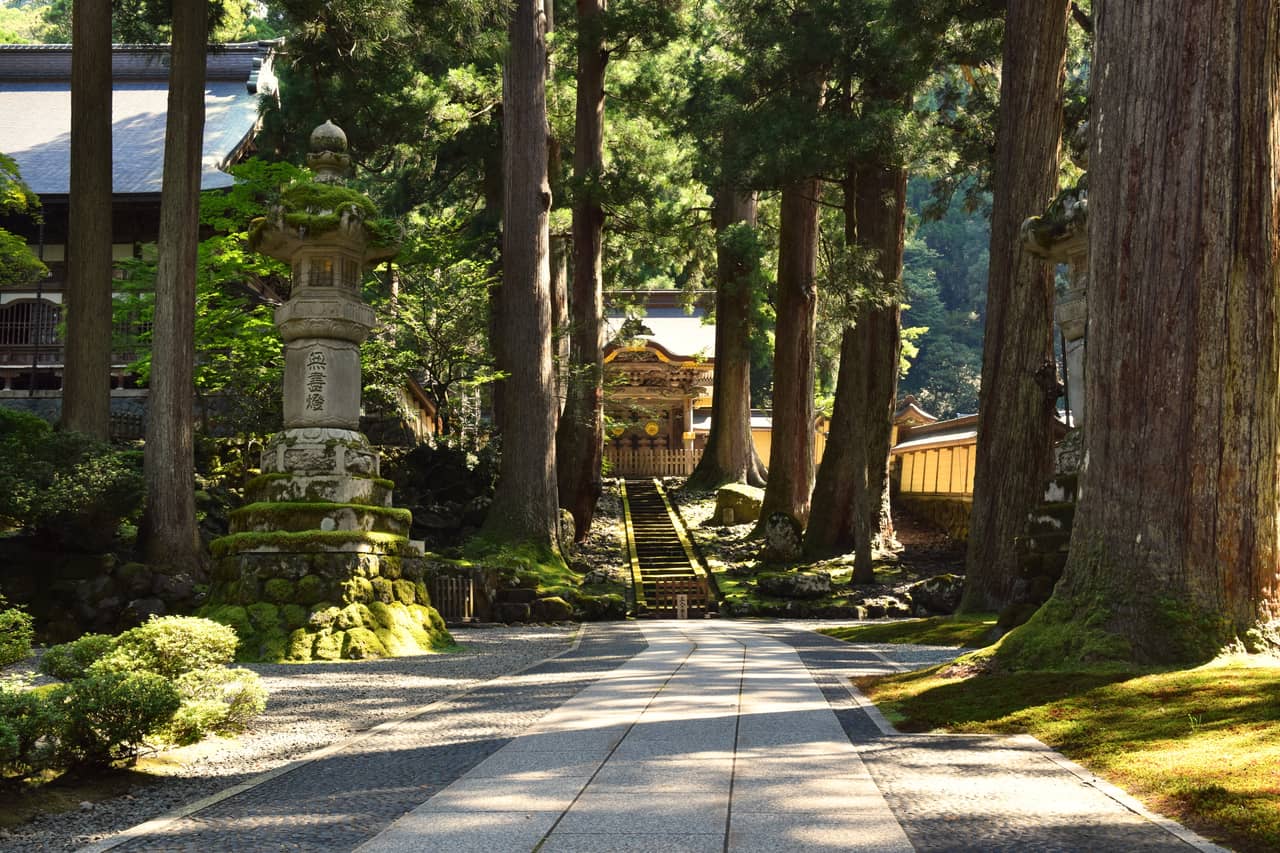
Eiheiji: zazen and the temple stay
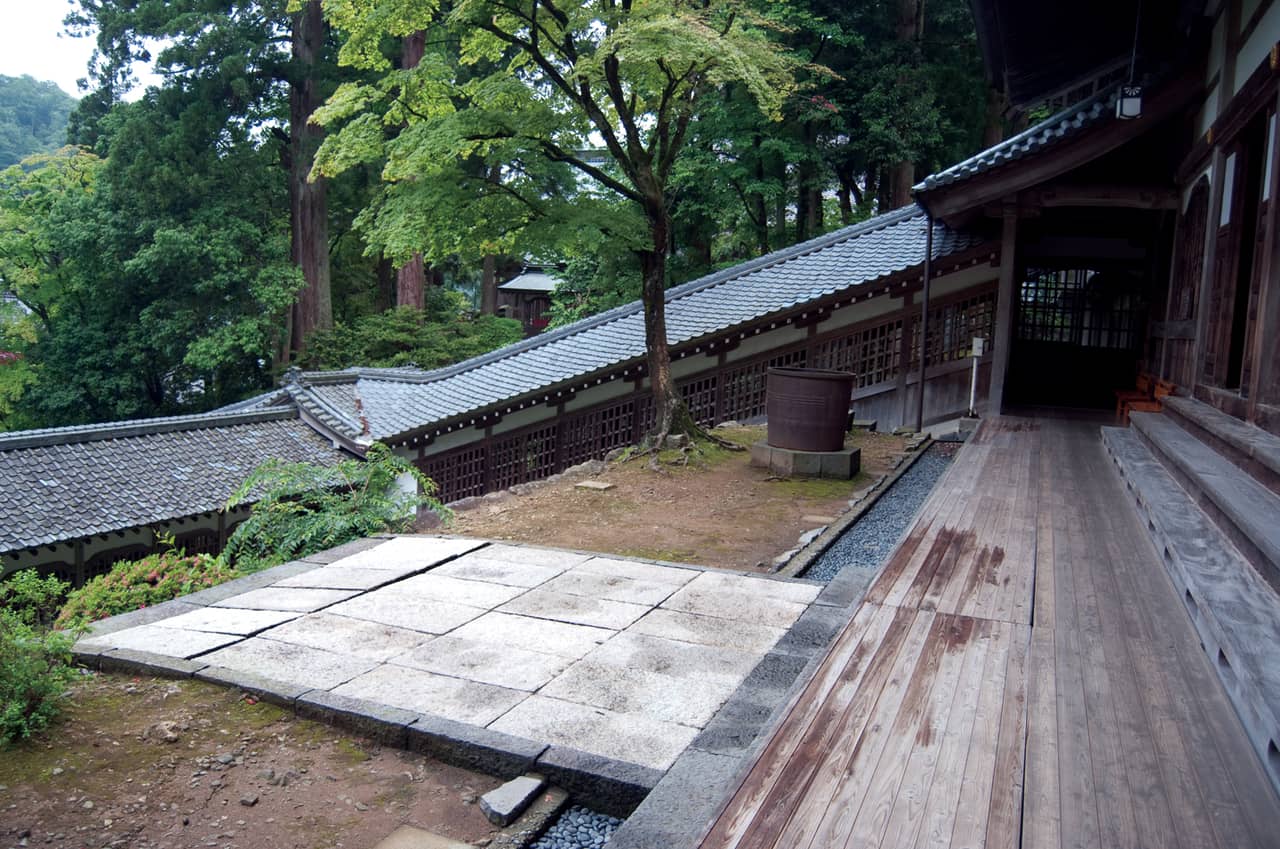
If Fukui gets just one "do not miss," travelers’ consensus points to Eiheiji. This is not an ordinary sightseeing temple but a head temple of the Soto Zen school — founded by the monk Dogen in 1244, nearly eight centuries old, and one of Japan’s most important Zen training monasteries. The complex climbs the mountainside, its 70-plus halls linked by a long covered corridor, rising from the main gate through the Buddha Hall and Dharma Hall under towering cedars. Monks (unsui) still live here, keeping an austere round of pre-dawn chanting, meditation, and formal meals. Walking that sloping wooden corridor as it ties the halls together, the quiet and the gravity are Fukui’s most weighted moment.
The practical details: per official information, admission is ¥700 for adults, ¥300 for school children, open 8:30–16:30 (last entry 16:00). What sets it apart is that it offers experiences, not just viewing — daytime zazen and sutra copying, plus a shukubo temple stay where you keep the monks’ schedule for a night: the early service, meditation, and shojin ryori (vegetarian temple cuisine). But be clear:
- The temple stay must be arranged in advance — you cannot just queue up on the day. Spaces are limited, with rules around schedule and etiquette (early rising, silent periods, no casual photography), so book per the temple’s instructions.
- It is a working monastery, not a guesthouse. Approach it as entering a space where others are actually practicing — quiet and respect matter more than getting a photo.
- A daytime visit is perfectly fine too; the corridor, the painted ceiling of the Sanshokaku hall, and the cedar approach already justify the ticket.
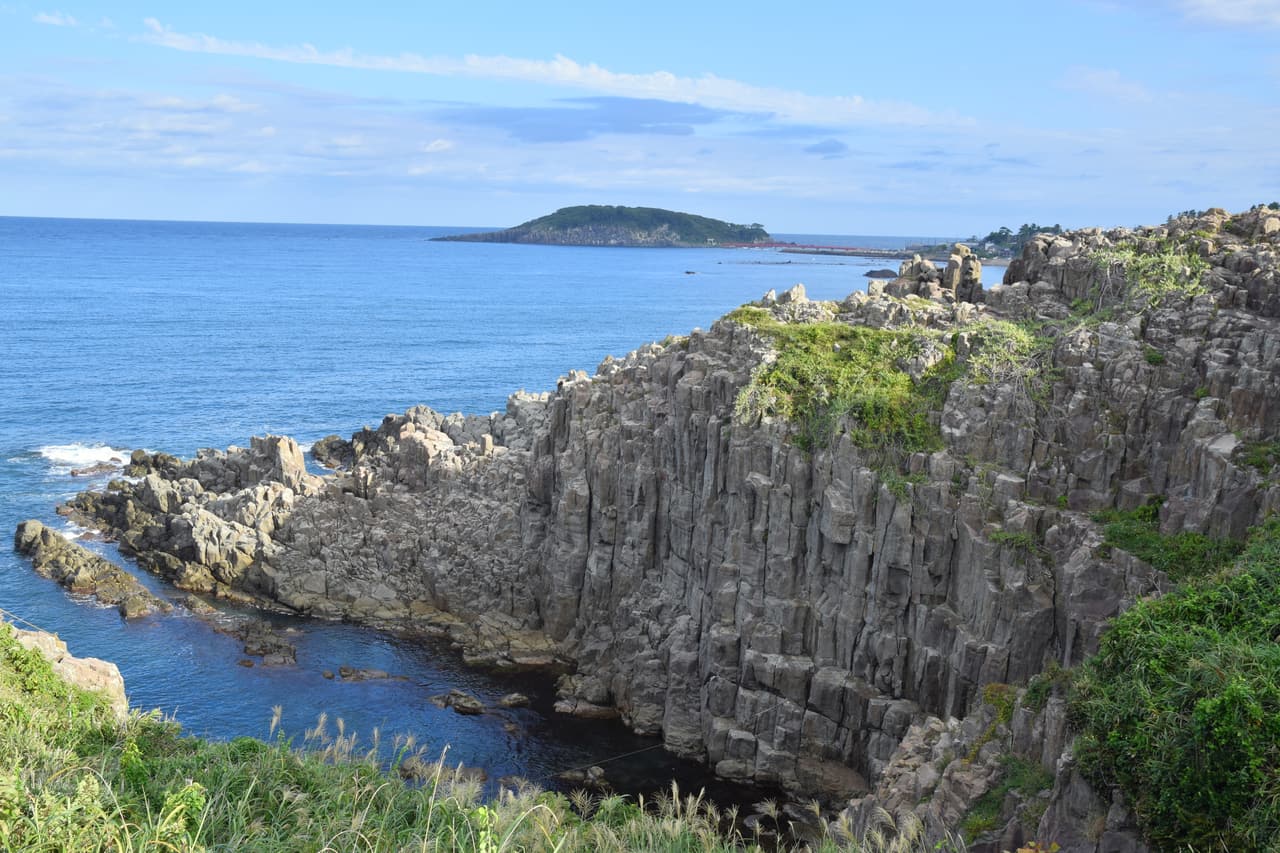
Tojinbo: the basalt sea cliffs
Tojinbo is Fukui’s most famous natural sight, and the exact opposite of Eiheiji in mood: Eiheiji is profoundly still, Tojinbo profoundly dramatic. It is a stretch of columnar basalt cliff about 25 meters high, carved by the Sea of Japan (pyroxene andesite) into a wall of hexagonal pillars — a formation rare at this scale anywhere in the world. Walk the clifftop path and the waves break right below you; on a clear day the Sea of Japan opens out to the horizon, and the sunset is the classic shot. Tojinbo itself is free — the clifftop path and surrounding walk cost nothing. Say that clearly, because some product pages imply you must "buy a ticket to get in."
What you pay for is the sightseeing boat. Per official information, it is ¥1,800 for adults, ¥900 for children, about a 30-minute cruise that looks up at the whole columnar wall from the water and rounds neighboring Oshima, also a honeycomb of basalt columns. The sense of scale from below is nothing like the view from the top. It runs 9:00–16:00 (Apr–Oct) and to 15:00 (Nov–Mar), and bad weather can cancel it or shift boarding to Mikuni Sunset Beach. My take: if you want the dramatic angle and have time, take the boat; for a sunset stroll, the free clifftop path is plenty. One warning — most of the cliff edge has no railing and the rock gets slippery, so be careful getting close for photos; the wind and surf are strong, and no shot is worth stepping out toward the edge.
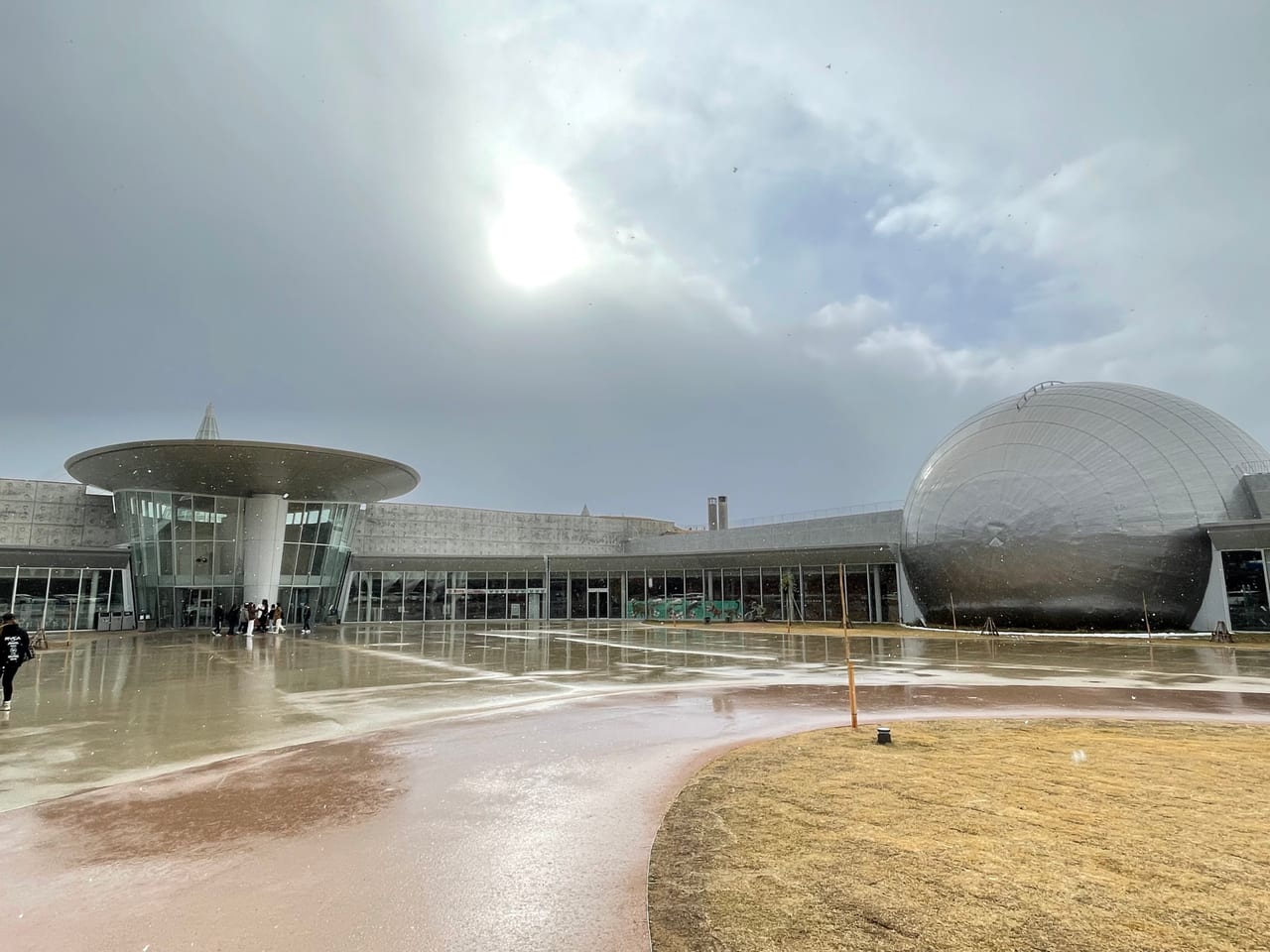
The Fukui Dinosaur Museum (reservations)
Fukui yields more dinosaur fossils than any other prefecture in Japan, which is why the Fukui Prefectural Dinosaur Museum in Katsuyama is one of the world’s great dinosaur halls. Inside a huge egg-shaped dome stand dozens of full skeletons, including locally named dinosaurs such as Fukuiraptor, alongside recreated dig sites and moving models. A major 2023 expansion made it bigger still — budget 2–3 hours across three floors. For families with kids, this alone can justify flying to Fukui.
But two things you must know up front, or you risk a wasted trip:
- It runs entirely on timed advance tickets: per official notice, in principle you buy a slot online (with payment) before arriving, and same-day machine tickets are only released if capacity remains — peak days and holidays sell out, so do not bet on walking up; book online first. Permanent-exhibit admission is ¥730 adults, ¥420 high-school/university, ¥260 elementary/junior-high, free for preschoolers, with the fossil-dig experience an extra ¥1,050.
- It is not open year-round: per official notice, the 2026 season runs April 17 to November 3, with several scattered closed days, so cross-check the official calendar before locking in your dates.
Factor in the transport too: the museum is in Katsuyama, reached by the Echizen Railway Katsuyama-Eiheiji Line to Katsuyama, then a shuttle bus — about an hour-plus one way, with thin service. Plan the museum as a half-day to full-day trip on its own, working backward from your reserved slot rather than squeezing it against other sights.
Ichijodani, Maruoka Castle & Echizen crab
Beyond the three headliners, Fukui has a few stops worth adding depending on your interests.
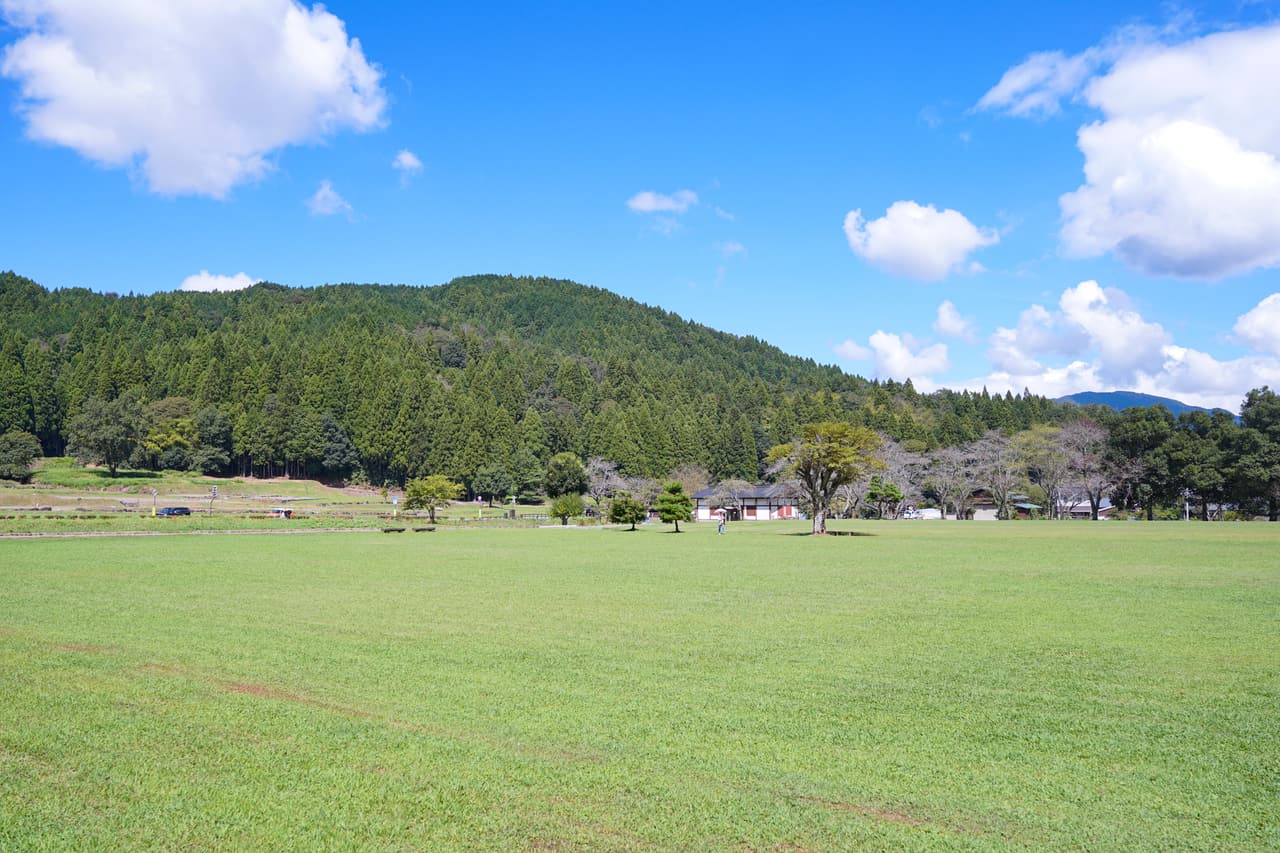
The Ichijodani Asakura Clan Ruins are the stop I would push for history lovers. This is the site of the castle town the Asakura lords ran for over a century; after the clan fell, the whole valley was buried, then excavated on a large scale, and today an entire townscape has been reconstructed on the actual excavated stone foundations and post holes — samurai residences, townhouses, and shops lined up in a row. Walking in feels like stepping into a Warring States street, a rare case of an entire castle town being rebuilt. The restored townscape is ¥330 for adults, free for high-schoolers and under, open 9:00–17:00, near Fukui city and easy to combine with Eiheiji into a "near-city culture" day. The adjacent Fukui Prefectural Ichijodani Asakura Clan Museum is worth pairing with it.
Maruoka Castle is Hokuriku’s only surviving keep and one of Japan’s oldest (¥450 for adults). Its small, stone-tiled, wooden austerity is nothing like the later concrete reconstructions, and the castle grounds are on Japan’s top-100 cherry-blossom list. But note first: per official notice, the keep is undergoing seismic repairs from March 2026 to around November 2027, during which it may well not be climbable — confirm the latest status before making a special trip. The grounds and the cherry blossoms are unaffected, but going purely to climb the keep could disappoint.
On food, Fukui’s signature is Echizen crab (Echizen-gani) — the premium, yellow-tagged snow crab caught off Fukui, in season roughly November to March. Eating a freshly boiled one at a coastal ryokan in Mikuni or along the Echizen coast is the season’s headline meal (it is not cheap, and prices swing widely by size). Outside crab season, the cheap local staples are Echizen soba (oroshi soba, with grated daikon) and Fukui’s sauce-katsu rice bowl (sauce katsudon), both easy to find around the station.
Transport & lodging
Getting in is Fukui’s biggest recent change. Per official information, the Hokuriku Shinkansen extended to Tsuruga on March 16, 2024, putting Fukui on the bullet-train network — Tokyo to Fukui in about 2 hours 51 minutes at best, roughly 36 minutes faster than the old transfer at Kanazawa, with new stops including Awara-Onsen and Fukui. From Osaka or Nagoya you currently take the Thunderbird or Shirasagi limited express to Tsuruga, then transfer to the Hokuriku Shinkansen to Fukui. In other words, Fukui and Kanazawa are now one stop apart on the same line, which makes an "into Kanazawa, out of Fukui" loop of 3–4 days flow best.
Getting around is where Fukui needs the most homework — sights are scattered with thin service, so without a car you must plan buses and local rail ahead:
- Eiheiji: a direct Keifuku bus on the Eiheiji line from Fukui Station (about 30 minutes), limited frequency — note the last buses both ways.
- Dinosaur Museum: Echizen Railway Katsuyama-Eiheiji Line to Katsuyama, then a shuttle bus (about an hour-plus combined); direct sightseeing buses run on some holidays.
- Tojinbo: to Awara-Onsen or MikuNiko, then a Keifuku bus to Tojinbo — windy on the coast and even sparser service.
- Ichijodani: JR Etsumi-Hoku Line or a bus from Fukui Station, plus a short walk.
Group same-direction sights together (Eiheiji + Ichijodani one day, the Dinosaur Museum + Katsuyama another, Tojinbo + Awara-Onsen another) so you are not stranded at a stop for an hour. A nationwide JR Pass rarely pays off on a Fukui trip built on local rail and buses; whether to buy one is covered in our JR Pass guide and its break-even math.
For lodging, think in two modes. If you want easy connections as a Hokuriku-loop base, stay around Fukui Station — simplest for Shinkansen in-and-out, and handy for sauce katsudon and Echizen soba. If you want to soak, choose Awara Onsen, Fukui’s largest hot-spring town, close to Tojinbo and pairing with an Echizen-crab kaiseki in winter — a good base for a "onsen + cliffs + crab" version of Fukui. For something different, the Eiheiji shukubo mentioned earlier is a wholly other option: not a holiday but a night inside the monastery’s routine — the early service, zazen, and shojin ryori — arranged in advance with the temple.
A two-day Fukui plan
Here is the same content shaped into a route that flows, using Fukui Station as a base:
- Day 1 (near-city culture): arrive by Shinkansen and drop bags → bus to Eiheiji for a quiet morning along the corridor, the Sanshokaku hall, and the cedar approach → on the way back, visit the Ichijodani Asakura ruins’ reconstructed townscape → back to Fukui Station by evening, dinner of sauce katsudon or Echizen soba.
- Day 2 (dinosaurs or cliffs): dinosaur-leaning or with kids → early Echizen Railway to Katsuyama and, timed to your reservation, the Dinosaur Museum plus Katsuyama all day; nature-leaning or wanting to soak → to Awara Onsen, the Tojinbo basalt cliffs in the afternoon (boat optional), then back to the hot-spring town to bathe (with an Echizen-crab kaiseki in winter).
With only one day, pair "Eiheiji + Tojinbo" or do "the Dinosaur Museum on its own" — forcing all three into one day leaves you on transport all day, seeing none in depth. One stop north of Fukui is Kanazawa, which continues naturally (see our Kanazawa guide); if you are stitching Hokuriku onto a Tokyo trip, the pacing logic in our Tokyo 5-day itinerary is a useful reference for shaping the whole thing. Hokuriku winters bring heavy snow, so always build in generous transfer buffers.
FAQ
- Q1:How many days do you need in Fukui? Does it pair well with Kanazawa?
- Fukui’s sights are spread out and many need transfers, so two days works best: day one for Eiheiji plus the Ichijodani ruins (the mountains and ruins near the city), day two for the Dinosaur Museum plus Tojinbo (one inland in Katsuyama, one on the coast at Mikuni, so the routes split cleanly). With only one day, pick either "Eiheiji + Tojinbo" or "the Dinosaur Museum on its own" — cramming all three leaves you on transport all day. Since the Hokuriku Shinkansen extension in March 2024, Fukui sits on the same line as Kanazawa, one stop away (no more transfer), which makes a "into Kanazawa, out of Fukui" loop of 3–4 days very natural. See our Kanazawa guide for that side.
- Q2:How much is Eiheiji, and can you really do zazen or stay overnight?
- Per official information, Eiheiji admission is ¥700 for adults, ¥300 for school children, open 8:30–16:30 (last entry 16:00). It is the head temple of the Soto Zen school, founded by the monk Dogen in 1244, a working training monastery where 70-plus halls climb the mountainside and monks (unsui) still live and practice. It genuinely offers experiences: daytime zazen seated meditation and sutra copying, plus a shukubo temple stay where you keep the monks’ schedule — early-morning service, formal meals, meditation. Numbers are limited and there are rules, so you must apply with the temple in advance; you cannot just turn up. Even a daytime visit for the long corridor and cedar approach is worth it.
- Q3:Do you need a reservation for the Fukui Dinosaur Museum? What about fees and opening dates?
- Yes, you need to reserve — this is the key point. Per official notices, the museum uses a timed advance-ticket system: in principle you buy a slot online (with payment) before arriving, and same-day machine tickets are only released if capacity remains — do not bet on walking up. Permanent-exhibit admission is ¥730 adults, ¥420 high-school/university, ¥260 elementary/junior-high, free for preschoolers; the fossil-dig experience is an extra ¥1,050. The other trap: it is not open year-round — the 2026 season runs April 17 to November 3, with several scattered closed days, so check the official calendar before you plan. Allow 2–3 hours across three floors.
- Q4:Is Tojinbo free? Is the sightseeing boat worth it?
- Tojinbo itself is free — it is a stretch of columnar basalt sea cliff about 25 meters high, carved by the Sea of Japan, and walking the clifftop path to watch the waves hit the rock costs nothing. It is Fukui’s most famous natural sight. The paid part is the sightseeing boat: per official information, ¥1,800 for adults, ¥900 for children, about a 30-minute cruise that looks up at the whole columnar wall from the water and rounds nearby Oshima island, also honeycombed with basalt columns. It runs 9:00–16:00 (Apr–Oct) and to 15:00 (Nov–Mar), and bad weather can cancel it or move boarding to Mikuni Sunset Beach. Worth it for the dramatic angle; for a sunset stroll the free clifftop path is plenty.
- Q5:Are side trips like Ichijodani and Maruoka Castle worth it?
- It depends on your taste. The Ichijodani Asakura Clan Ruins are the remains of the Asakura lords’ castle town, and an entire townscape has been reconstructed on the actual excavated stone foundations — samurai residences, townhouses, shops — so walking in feels like stepping into the Warring States period; the restored townscape is ¥330 for adults, free for high-schoolers and under, near Fukui city and easy to pair with Eiheiji. Maruoka Castle is Hokuriku’s only surviving keep and one of Japan’s oldest (¥450 adults), but note: per official notice, the keep is undergoing seismic repairs from March 2026 to around November 2027, during which it may not be climbable, so confirm before you go. The cherry-blossom grounds remain walkable.
- Q6:How do you reach Fukui from Tokyo, Osaka, or Nagoya, and how do you get around?
- Per official information, the Hokuriku Shinkansen extended to Tsuruga on March 16, 2024, giving Fukui its own bullet-train service — Tokyo to Fukui in about 2 hours 51 minutes at best (roughly 36 minutes faster than the old transfer), with new stations including Awara-Onsen and Fukui. From Osaka or Nagoya you take the Thunderbird or Shirasagi limited express to Tsuruga, then transfer to the Shinkansen. Local and suburban sights are scattered with infrequent service: Eiheiji is a bus from Fukui Station, the Dinosaur Museum needs the Echizen Railway to Katsuyama plus a shuttle, and Tojinbo means a bus from Awara-Onsen or Mikuni. Without a car, check bus times first and group same-direction sights so you are not stuck at a stop for an hour.
Related reading:
Kanazawa Travel Guide 2027: Kenrokuen, 21st Century Museum & Chaya
The craft old capital of Kaga — the three-great-garden Kenrokuen, the 21st Century Museum pool, Higashi Chaya gold leaf and Omicho Market seafood.
Hida-Takayama Guide 2027: Old Town, Jinya, Hida Beef & Festival
The little Kyoto of Hida — the Sanmachi old streets, Japan's only surviving jinya, the morning market, Hida beef and the Takayama Festival.
Tokyo 5-day itinerary 2026
A clear 5-day plan: Shinjuku base, two zones per day, honest budget.