If you had to pick the "most fun and most delicious entry-level Japanese city," Fukuoka is hard to beat. It's Kyushu's gateway, and the airport is just 5 minutes by subway from Hakata Station — one of Japan's closest major airports to the city center — with a compact, walkable downtown, unrivaled evening yatai food-stall culture, and day trips to Dazaifu Tenmangu and Mojiko retro. This guide covers Hakata, Tenjin and Nakasu, how to do the yatai, what to eat, the Dazaifu and Mojiko day trips, and transit and lodging. It's the Fukuoka deep-dive for Kyushu; the rail loop is in our Kyushu 3-day rail itinerary. Coming in November or December? Start with where to see autumn colour within a day trip of Fukuoka — Akizuki and Raizan Sennyoji both qualify.
- The ideal Kyushu base: 5 min by subway to Hakata, with shinkansen/JR to Yufuin, Beppu, Kumamoto, Nagasaki
- Unrivaled yatai culture: 200+ stalls, evening to late night, Nakasu's riverside the most atmospheric
- A great food city: Hakata ramen, motsunabe, mizutaki, mentaiko, local udon
- Dazaifu day trip: 26 min from Tenjin (¥480), the god of learning + umegae mochi + a design Starbucks
- Mojiko retro: ~1.5 hrs by JR, a nostalgic port town with yaki-curry
📖 Table of contents
Why visit Fukuoka
Fukuoka's appeal is "convenience × food × friendliness" combined: it's Kyushu's biggest city and transport hub, yet downtown is human-scaled and more relaxed than Tokyo or Osaka. The most practical edge for independent travel is access — Fukuoka Airport is just 5 minutes by subway from Hakata Station, one of Japan's closest major airports to the city center, so you're in town almost seamlessly on arrival; and shinkansen and JR link Yufuin, Beppu, Kumamoto, Nagasaki and Kagoshima. Many do "in via Fukuoka, out via another city" around Kyushu.
The city: Hakata, Tenjin, Nakasu, Momochi
Downtown Fukuoka divides into four areas, each with its role:
- Hakata: the station hub and old Fukuoka. Kushida Shrine (the city's guardian, and where the Oiyama race starts at 4:59am), Canal City Hakata (a big mall with a fountain show), and the ramen alley and souvenirs inside Hakata Station.
- Tenjin: the liveliest shopping and business district — department stores, underground malls, drugstores — and the Nishitetsu departure point for Dazaifu and Yanagawa.
- Nakasu: an island in the Naka River and Kyushu's largest entertainment district, where the riverside lights up at dusk and yatai and izakaya open — the heart of the nightlife and the yatai.
- Momochi: the seaside new-center, with Fukuoka Tower (234m) and a beach, lovely at sunset — good for later in the trip to unwind. The same waterfront holds Mizuho PayPay Dome Fukuoka, the SoftBank Hawks' home and one of the easiest ballparks in Japan for a visitor to reach — read up on ticket prices and which block you are allowed to sit in first, then roll straight from the tower into a night game.
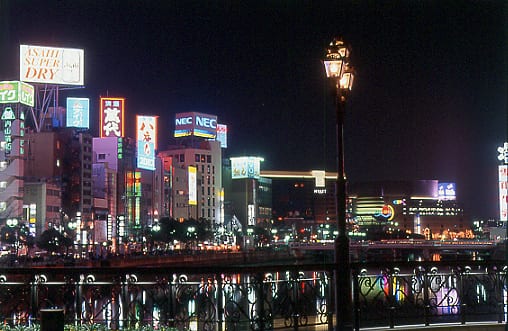
Yatai culture: how to do it right
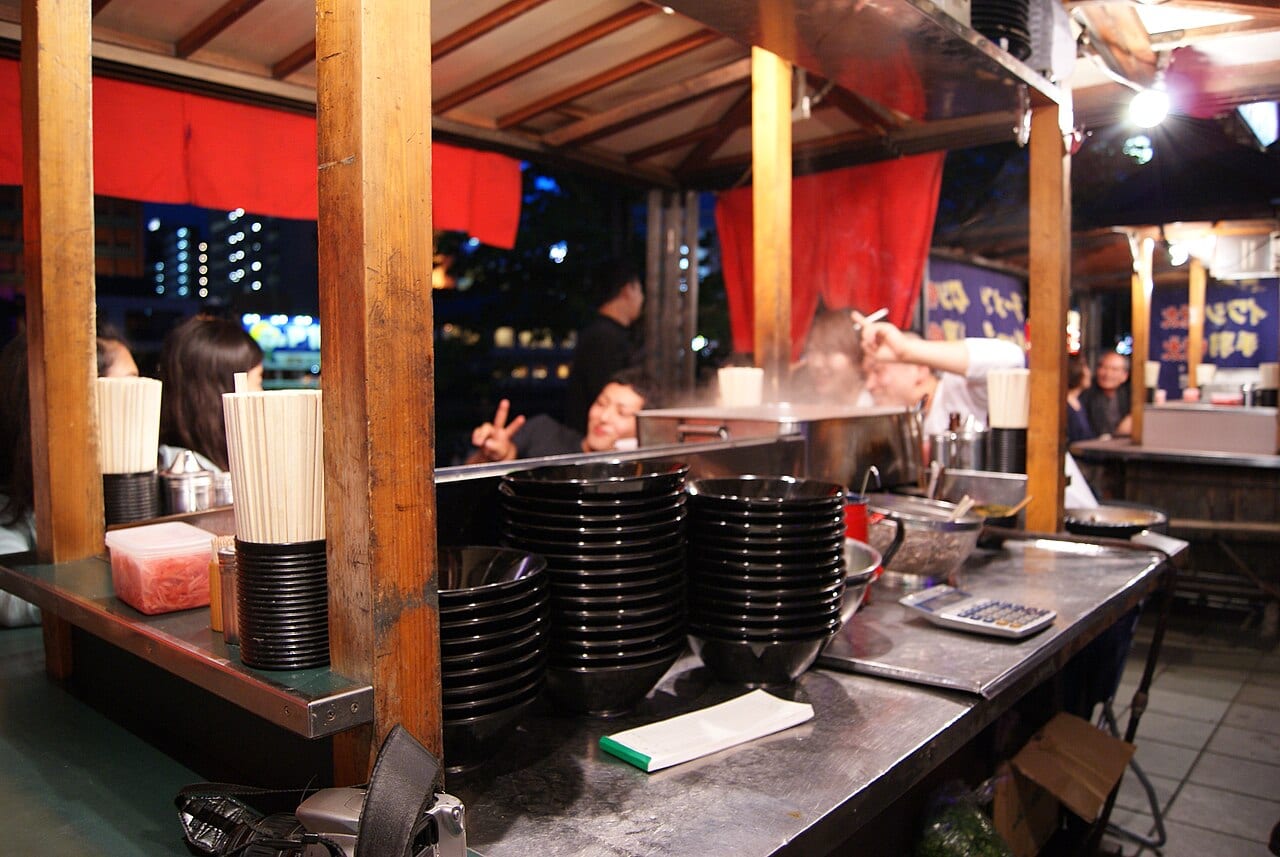
Yatai are Fukuoka's most distinctive food culture — mobile roadside stall eateries that open in the evening and run late, with 200+ across the city, clustered in Nakasu (the riverside is the most atmospheric), Tenjin and Nagahama. Order Hakata ramen, mentaiko tamagoyaki, yakitori, oden and pan-fried gyoza. A few things to know:
- Seats are limited and popular stalls queue: they fill as soon as they open, so go early or avoid weekend peaks for the popular ones.
- Most are cash-only: bring enough coins and small bills.
- 2-3 items per stall, then move on is the local way — don't camp too long; prices are usually clear, but ask if unsure.
Reach them on foot from Nakasukawabata or Tenjin stations. The yatai are the most authentic way to experience a Fukuoka evening — almost a must on any visit.
What to eat in Fukuoka
Fukuoka is one of Japan's great food cities; beyond the yatai, don't miss these specialty shops:
- Hakata ramen: rich tonkotsu broth, very thin straight noodles, with "kaedama" noodle refills. Ichiran and Ippudo were born here, but local shops are worth seeking out.
- Motsunabe: beef-offal hotpot loaded with chives and cabbage in a soy or miso broth — deeply warming in winter.
- Mizutaki: chicken hotpot in a clear broth; sip the broth first, then poach the chicken and vegetables.
- Mentaiko: spicy cod roe, incredible with rice and Fukuoka's signature souvenir.
- Local udon: the soft-noodle udon of Makino and Sukesan is a Fukuoka daily staple.
Day trips: Dazaifu and Mojiko
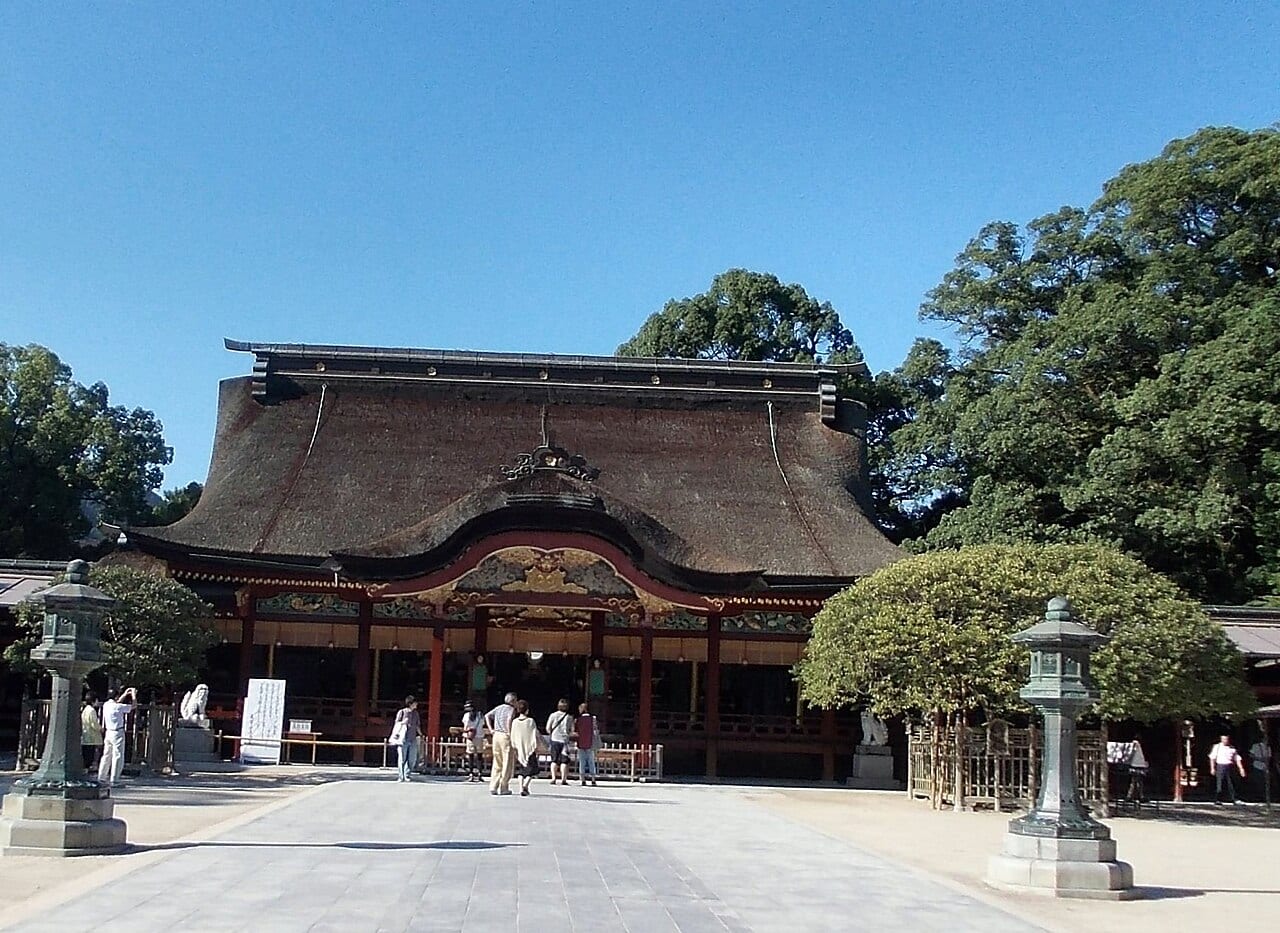
Dazaifu Tenmangu (half day)
Take the Nishitetsu Omuta Line from Tenjin, transfer at Nishitetsu Futsukaichi to the Dazaifu Line, and reach Dazaifu Station in about 26 minutes, ¥480 one way. Dazaifu Tenmangu enshrines Sugawara no Michizane, the god of learning, and is where students across Japan pray for exam success; the grounds have ~6,000 plum trees, best in the February-March plum season. On the approach, try the "umegae mochi" (a grilled rice cake in a plum-branch shape) and the strikingly designed Starbucks Dazaifu. Note the main hall is under a once-in-124-years restoration, so you currently pray at Sou Fujimoto's temporary shrine — full details and access in our Dazaifu Tenmangu guide. With the visit and the approach stroll it's a half day, usually paired as "1 day in the city + a half day at Dazaifu."
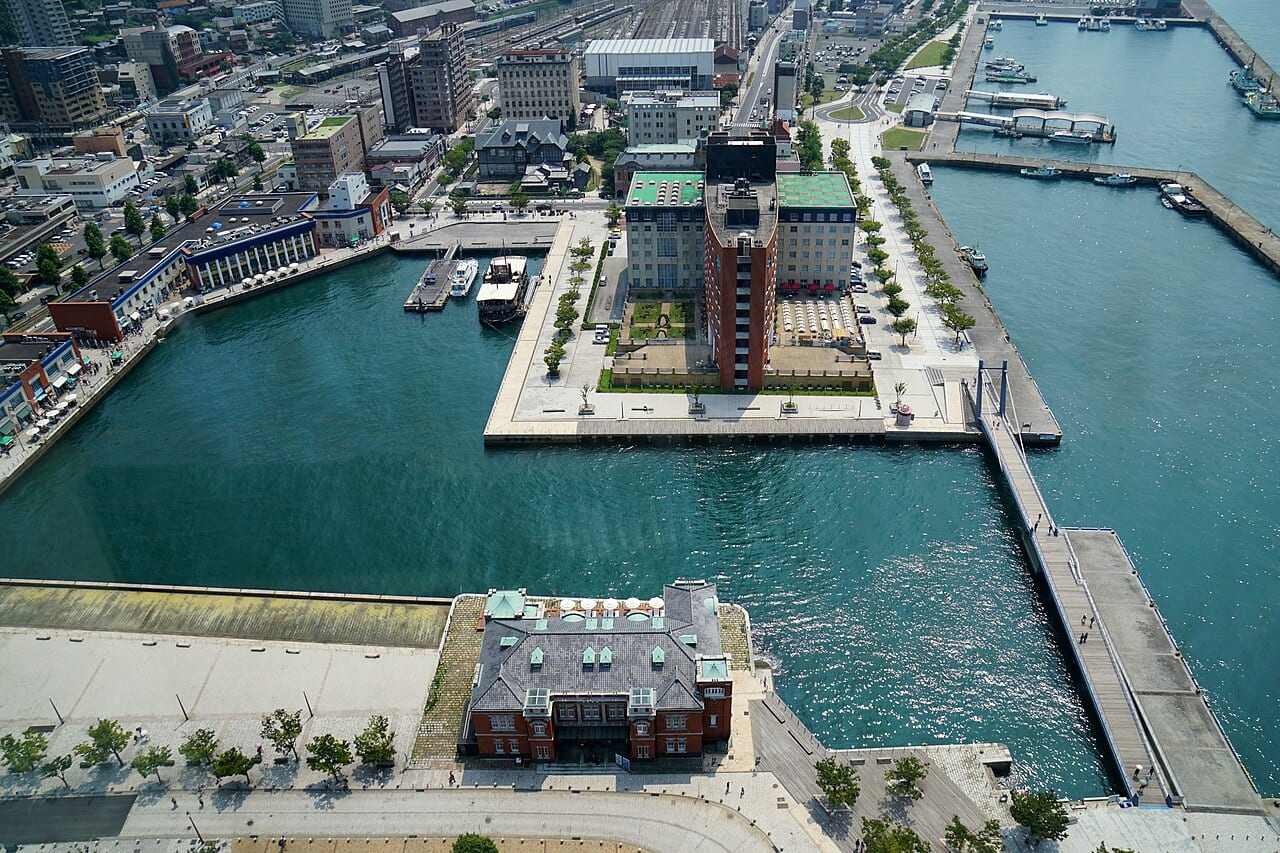
Mojiko Retro (half to full day)
On the Kanmon Strait in Kitakyushu, Mojiko preserves Taisho and Showa-era Western-style red-brick buildings, the whole port town radiating nostalgia — the "Mojiko Retro" district. Its specialty is yaki-curry (baked curry rice); a harborside stroll, the old Osaka Shosen building, and a hop across the Kanmon Strait to Shimonoseki all flow nicely. It's ~1.5 hours from Hakata on the JR Kagoshima Main Line — a good half-to-full day for anyone who loves old architecture and port-town atmosphere. If you'd rather head west, neighboring Saga is about an hour from Hakata by limited express, where the porcelain town of Arita plus Karatsu and Ureshino Onsen make an equally rewarding day trip.
Transit and lodging
Transit: Fukuoka Airport is 5 minutes by subway to Hakata, ~11 minutes to Tenjin — extremely convenient on arrival. Around town, the subway (Kuko and Nanakuma lines) plus buses cover most sights; use Nishitetsu for Dazaifu and Yanagawa, and JR for Mojiko. A day pass or IC card covers short city trips — you don't really need a JR Pass unless you're looping Kyushu (then see our JR Pass guide and the Kyushu pass).
Lodging: stay around Hakata Station or Tenjin — easy subway, bus and airport access, and convenient for both sights and onward Kyushu cities. Compare Fukuoka hotels on Trip.com; book early for peak and weekends. Kyushu weather and packing are in our Japan packing & weather guide, and pre-trip prep (entry, tax-free) is in our Japan prep checklist.
A suggested 2-day Fukuoka itinerary
For a first visit covering the city and a day trip, this flows well:
- Day 1 (city): morning in Hakata (Kushida Shrine + Canal City) → Hakata ramen for lunch → Tenjin shopping in the afternoon → sunset at Fukuoka Tower in Momochi → Nakasu yatai at night.
- Day 2 (day trip): morning Nishitetsu to Dazaifu Tenmangu (umegae mochi + the design Starbucks) → lunch back in the city → afternoon Mojiko retro (old buildings + yaki-curry) or a Yanagawa river-boat ride.
With a third day, continue to Yufuin or Beppu onsen, or take the shinkansen to Kumamoto — using Fukuoka as the start of a Kyushu loop; the full rail loop is in our Kyushu 3-day rail itinerary.
Frequently Asked Questions
- Q1:How many days for Fukuoka, and is it a good base for Kyushu?
- The city plus day trips like Dazaifu and Mojiko fit nicely in 2-3 days; it's also the ideal starting point for a Kyushu trip — Fukuoka Airport is one of Japan's closest to the city center, just 5 minutes by subway to Hakata Station, with shinkansen and JR linking Yufuin, Beppu, Kumamoto and Nagasaki. Many travelers do "in via Fukuoka, out via another city" around Kyushu. The full rail loop is in our Kyushu 3-day rail itinerary.
- Q2:What are Fukuoka's "yatai," and how do you do them right?
- Yatai are mobile roadside food-stall eateries that open in the evening and run late; Fukuoka has 200+ of them, clustered in Nakasu (the riverside is the most atmospheric), Tenjin and Nagahama. Order Hakata ramen, mentaiko tamagoyaki, yakitori, oden and gyoza. Tips: seats are limited and popular stalls queue; most are cash-only; the local way is 2-3 items per stall, then move on — don't camp too long. Reach them from Nakasukawabata or Tenjin stations.
- Q3:What should I eat in Fukuoka?
- Fukuoka is one of Japan's great food cities: (1) Hakata ramen (rich tonkotsu broth, thin noodles, "kaedama" noodle refills); (2) motsunabe (beef-offal hotpot loaded with chives and cabbage); (3) mizutaki (chicken hotpot in a clear broth); (4) mentaiko (spicy cod roe, incredible with rice and the signature souvenir); (5) local udon (the soft-noodle Makino or Sukesan udon locals love). You'll find these at both yatai and specialty shops, with the most around Hakata Station and Tenjin.
- Q4:How do I get to Dazaifu Tenmangu, and how long does it take?
- Take the Nishitetsu Omuta Line from Tenjin, transfer at Nishitetsu Futsukaichi to the Dazaifu Line, and reach Dazaifu Station in about 26 minutes, ¥480 one way (after the April 2026 fare revision). Dazaifu Tenmangu enshrines Sugawara no Michizane, the god of learning, and is where Japanese pray for exam success; the grounds have ~6,000 plum trees (best in the Feb-March plum season). On the approach, try the "umegae mochi" grilled rice cake and the strikingly designed Starbucks Dazaifu. With the visit and the approach stroll it's a half day, usually paired as "1 day in the city + a half day at Dazaifu." Full details (including the main-hall restoration and the museum) are in our Dazaifu Tenmangu guide.
- Q5:How do I handle the airport and getting around the city?
- Fukuoka Airport is one of Japan's closest major airports to the city — just 5 minutes by the Kuko subway line from the domestic terminal to Hakata Station, ~11 minutes to Tenjin, almost seamless on arrival. The subway (Kuko and Nanakuma lines) plus buses cover most sights; use Nishitetsu for Dazaifu and Yanagawa, and JR (~1.5 hrs) for Mojiko. A day pass or IC card covers short city trips — you don't really need a JR Pass unless you're looping around Kyushu.