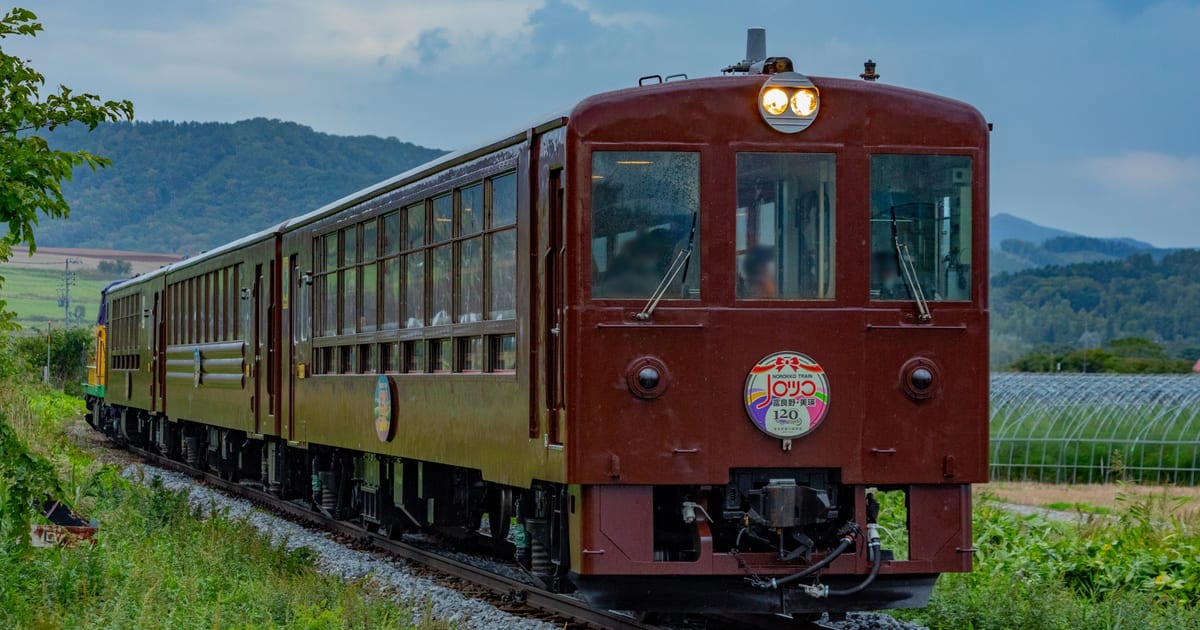
On March 25, JR Hokkaido released a press release titled "これまでの歩みに感謝を込めて。ノロッコラストイヤー開幕" — roughly: "With gratitude for the journey so far. The Norokko Last Year begins." Translation in plain English: the red sightseeing train that has crossed Furano's lavender fields for 28 years runs for the final season in 2026, with the last train on September 23. If you are in Hokkaido this September, this is the last chance to ride it. Miss it and the open-window carriages — different from anything else still on JR Hokkaido's roster — are gone for good.
📢 Official announcement: JR Hokkaido 2026-03-25 press release (PDF, Japanese), plus the Asahikawa Branch 2026-08-20 Last Run operating outline (PDF, Japanese). 28 years of operation (1998–2026). Final run: September 23, 2026, stated in the August release as the day operations end.
- Book now, book the Asahikawa ↔ Furano full route (90 minutes, ¥2,380 / KKday NT$453). Peak dates sell out a month ahead.
- Nine running days are left: September 5, 6, 12, 13, and then daily from the 19th to the 23rd. The lavender is finished — what you get now is autumn colour across the hills.
- Don't make Sept 23 your first choice — it is the last day of a five-day holiday run and carries the Last Run headmark, so collectors lock the seats up early. The headmark goes on from Sept 19, so an earlier day gets you the same photo.
- From 2027, the route continues as Furano Lavender Express (Sapporo-direct limited express, no transfers) — faster but without the open-window carriage feel.
Final year, peak dates sell out a month ahead — reserve the three-leg Norokko ticket online →
Is this really the last year?
Yes. JR Hokkaido's wording is "Last Year" and "Last Run" — not "temporary suspension" or "maintenance break," which would imply a return. One nuance worth noting: the official English PDF hedges slightly, ending operations "using the current cars," so what is strictly being retired is this generation of rolling stock.
One widespread misconception is worth clearing up here: the only services with an announced end date are the two Norokko trains (Furano-Biei and Kushiro Shitsugen). The SL Fuyu-no-Shitsugen has no retirement announcement at all. JR Hokkaido's 8 January 2026 press release, the official English sightseeing-train PDF of 13 April 2026 and an archived capture of the official SL microsite contain none of the phrases “last year”, “last run” or “end of operation” — the version circulating online that lumps the two together has no official basis (an earlier version of this article did the same; corrected August 2026). For the SL's current status, prices and booking rules, see our guide to Japan's winter sightseeing trains.
JR Hokkaido didn't spell out the reason in the press release, but the logic is straightforward:
- The carriages are 28 years old. Norokko stock was converted from older diesel coaches in 1998. A 30-year service life for converted rolling stock is at the upper end — replacing them with new builds would cost far more than maintaining the current rotation already does.
- JR Hokkaido is consolidating loss-making services. Several rural branch lines and tourist trains have been retired over 2024–2026. The Norokko is one entry on that list — not a uniquely failing service, just part of the broader trim.
- The tourism corridor is being handed to the Lavender Express. The same press release confirms the Furano Lavender Express (Sapporo-direct limited express) continues running. The route isn't losing tourism service; it's losing the open-window carriage experience specifically.
So when you read headlines about "Norokko's last year," don't interpret it as a tourism collapse — it's an operating decision. But for travellers who've ridden it, the open-window carriages don't have a replacement. Limited-express stock is faster and more comfortable; the windows don't open and you can't lean out for a photo of lavender rows blurring past.
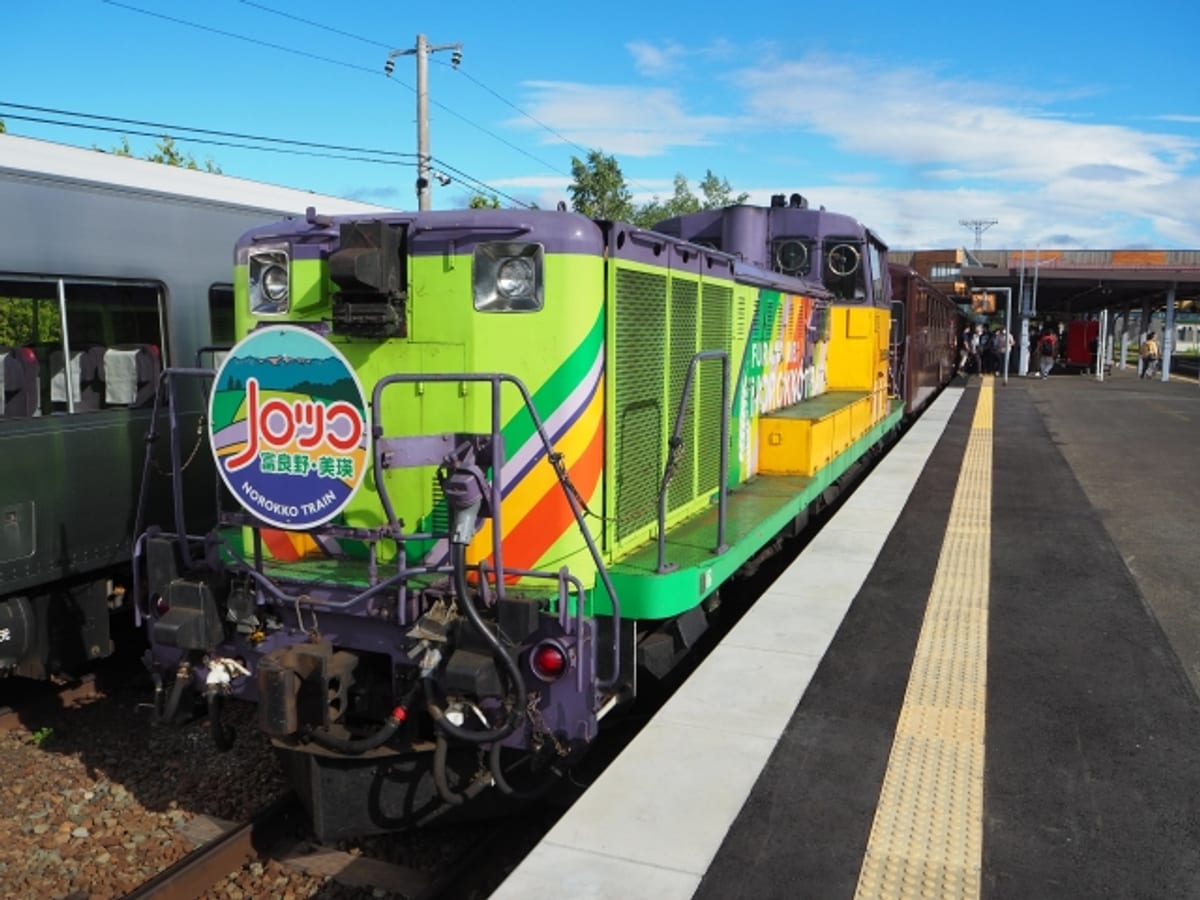
2026 schedule and timetable
Per the official PDF, the Norokko runs three numbered services in 2026 (Norokko 1, 3, and 5 in each direction). Here's what you'll actually use — the downbound (Asahikawa → Furano) schedule:
Operating days
- June: 6, 7, 13, 14, 20, 21, 27, 28 (weekends only)
- July: Daily from July 1 (summer holiday peak)
- August: Daily
- September: 5, 6, 12, 13, 19, 20, 21, 22, 23 (weekends through the 13th, then daily from the 19th to the 23rd — Sept 23 is the final run)
Read the September row carefully. The first two weekends are the usual Saturday-Sunday pattern, but September 19 (Sat) through 23 (Wed, a public holiday) is a five-day run with a train every day, and the whole stretch carries the commemorative Last Run headmark. From September 24 there is no Norokko on this line at all.
Downbound timetable (Asahikawa → Furano)
| Station | Norokko 1 | Norokko 3 | Norokko 5 |
|---|---|---|---|
| Asahikawa dep | 10:00 | — | — |
| Biei dep | 10:42 | 13:08 | 14:51 |
| Bibaushi dep | 10:53 | 13:19 | 15:02 |
| Kami-Furano dep | 11:06 | 13:36 | 15:18 |
| Lavender Field dep | 11:15 | 13:45 | 15:27 |
| Naka-Furano dep | 11:22 | 13:52 | 15:34 |
| Furano arr | 11:40 | 14:08 | 15:50 |
⚠️ The table above does not apply on September 23. The final day runs a special two-round-trip diagram between Asahikawa and Furano (Norokko 5 and 6 do not run), and Norokko 1 leaves Asahikawa at 9:14 — 46 minutes earlier than usual. Full timings: Biei arr 9:42 / dep 10:02, Bibaushi 10:13, Kami-Furano arr 10:25 / dep 10:45, Lavender Field arr 10:52 / dep 10:54, Naka-Furano arr 10:58 / dep 11:18, Furano arr 11:36. Biei, Kami-Furano and Naka-Furano each get a 20-minute stop for farewell events run by local residents — something you get on no other day, but it also makes the trip nearly an hour longer than usual. Three cars, all seats reserved.
Which service should you take? My pick: Norokko 1 (10:00 Asahikawa departure, 11:40 Furano arrival). Three reasons:
- Only Norokko 1 starts at Asahikawa. Norokko 3 and 5 begin mid-route at Biei, so if you want the full 90-minute experience, this is the only option.
- 10:00 misses the JR Furano Line commuter peak — the carriage stays mostly tourists.
- Arrival at 11:40 lands you in Furano right at lunch — Furano's "Yui-ga-Dokuson" curry with local wine is a classic post-train pairing.
Asahikawa is itself the gateway to Furano-Biei, so many travellers overnight there the night before the Norokko — pairing it with the Asahiyama Zoo penguin walk and behavioral exhibits makes for a clean routing. See our Asahikawa & Asahiyama Zoo guide.
Norokko 3 (13:08 from Biei) works if you spent the morning exploring Biei's Patchwork Road and want to ride the lavender stretch in afternoon light. Norokko 5 (14:51 departure) feels too late — you'll arrive Furano at 15:50 with limited time before the return.
Fare structure: JR base fare + ¥1,000 seat reservation
All seats are reserved; the platform gate won't let you in without a reservation. The formula is simple:
JR base fare (varies by segment) + Norokko reserved-seat supplement ¥1,000 (uniform across all segments)
| Segment | JR base | + Reservation | Total | KKday (TWD) |
|---|---|---|---|---|
| Asahikawa ↔ Furano (90 min) | ¥1,380 | ¥1,000 | ¥2,380 | NT$453 |
| Biei ↔ Furano (51 min) | ¥800 | ¥1,000 | ¥1,800 | NT$335 |
| Asahikawa ↔ Biei (30 min) | ¥680 | ¥1,000 | ¥1,680 | NT$310 |
Three things to know:
- Children (6–11): half-fare on JR base + ¥500 reserved-seat supplement.
- Under 6: free (no seat assigned).
- JR Hokkaido Rail Pass: base fare is covered but you still pay ¥1,000 for the seat supplement at a station window (Eki-net is not open to overseas residents).
Which segment is worth riding? Honestly, only one
Asahikawa ↔ Furano full route, 90 minutes, NT$453. That's my one recommendation. The other two segments I'd actively suggest skipping.
Why only the full route?
- Complete scenery arc. From Asahikawa city → Biei's rolling hills with the Tokachi mountain range in the distance → Kamifurano's gentler slopes → Nakafurano's lavender belt → Furano terminus. The 90 minutes plays like a continuous documentary of central Hokkaido summer — every segment carries its own visual identity.
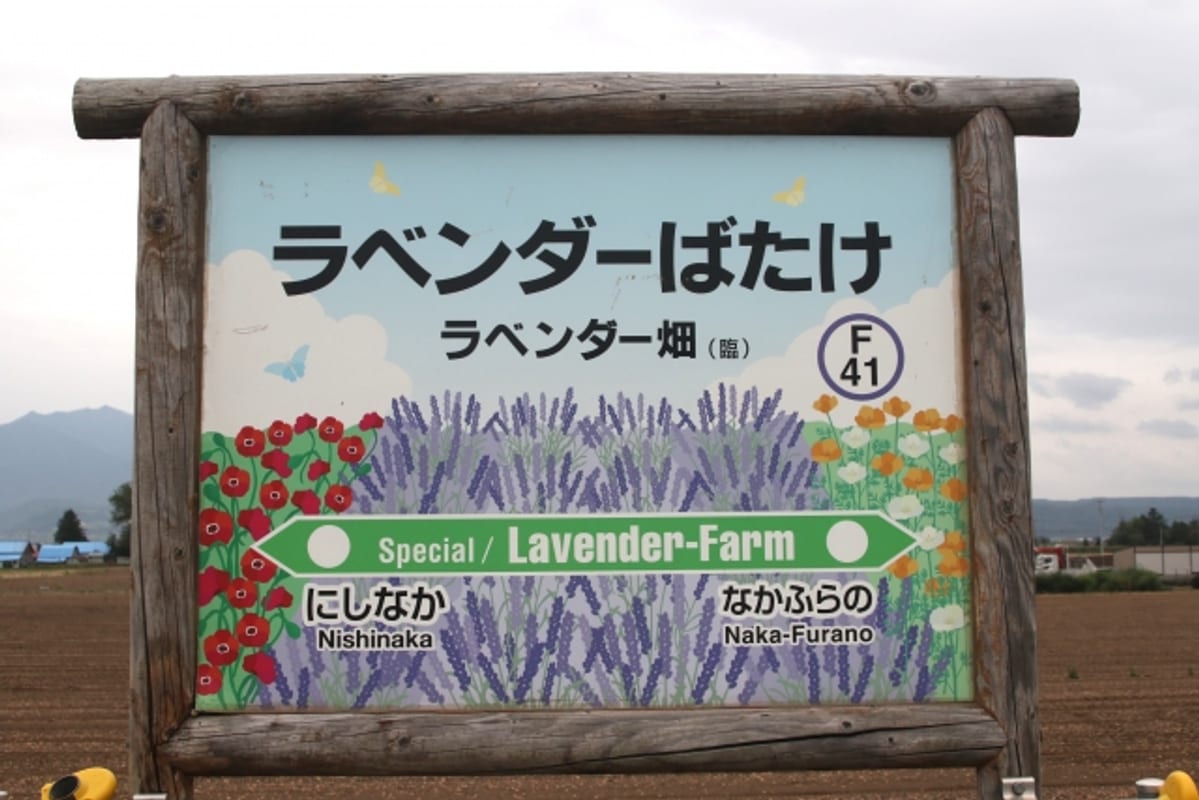
- 3-minute stop at Lavender Field Station. This is a Norokko-exclusive seasonal halt — no regular local train stops here. You step off for three minutes and shoot the station sign, the flower beds, and the red carriage in the same frame. The shorter segments still pass through, but the brief stop means you can't actually do this.
- The per-minute math actually favours the full route. Full route: ¥2,380 ÷ 90 min = about ¥26 per minute. Short segment: ¥1,800 ÷ 51 min = about ¥35 per minute. The fixed ¥1,000 reservation supplement amortises better over longer journeys.
Why I'd skip Asahikawa ↔ Biei (30 min, ¥1,680). Most of this segment runs through Asahikawa suburbs and low-rise farmland — no signature scenery, no lavender. You're paying ¥1,000 essentially for the experience of sitting in the carriage itself. If your destination is Biei's Patchwork Road, take the local train for ¥680 and rent a bike from the Biei Environment Council kiosk — you'll see more landscapes that way.
Biei ↔ Furano (51 min, ¥1,800) — situational. Reasonable if you've spent the morning in Biei and want to board Norokko 3 (13:08) for the afternoon lavender stretch into Furano. Still, if you can plan it, the full route on Norokko 1 is the cleaner choice.
How to book: skip the queue, use KKday
Three booking channels, in order of how much I'd recommend them:
1️⃣ KKday (easiest for international travellers)
Three segments sold separately, seat reservation included, e-ticket QR scans you onto the train. Nine running days are left — September 5, 6, 12, 13, then daily from the 19th to the 23rd. Book the moment you know your date; once these sell out there is no second chance.
2️⃣ Official online booking (⚠️ Eki-net is closed to overseas residents)
Reserved seats go on general sale one month ahead at 10:00 Japan time. One eligibility rule has to come first, though: Eki-net is officially restricted to residents of Japan — JR East FAQ entry 4131, updated 10 March 2026, states that people living overseas cannot use it, and directs them to JR-EAST Train Reservation instead. If you live abroad, do not start by registering for Eki-net. Your workable channels are JR-EAST Train Reservation, a reseller such as KKday, or simply a Midori-no-madoguchi window or reserved-seat machine once you are in Japan. Eligibility, collection and card requirements across all three official systems are set out in our guide to booking Japanese train tickets online.
3️⃣ Midori-no-Madoguchi (in-person, not recommended)
JR Hokkaido ticket windows (Sapporo, Asahikawa, Furano all have them) sell same-day reservations if anything is left. Don't rely on this now — the September 19-23 holiday run will be sold out long before you reach a counter. Treat it as a fallback only.
Five photo moments — separated for general tourists and railfans
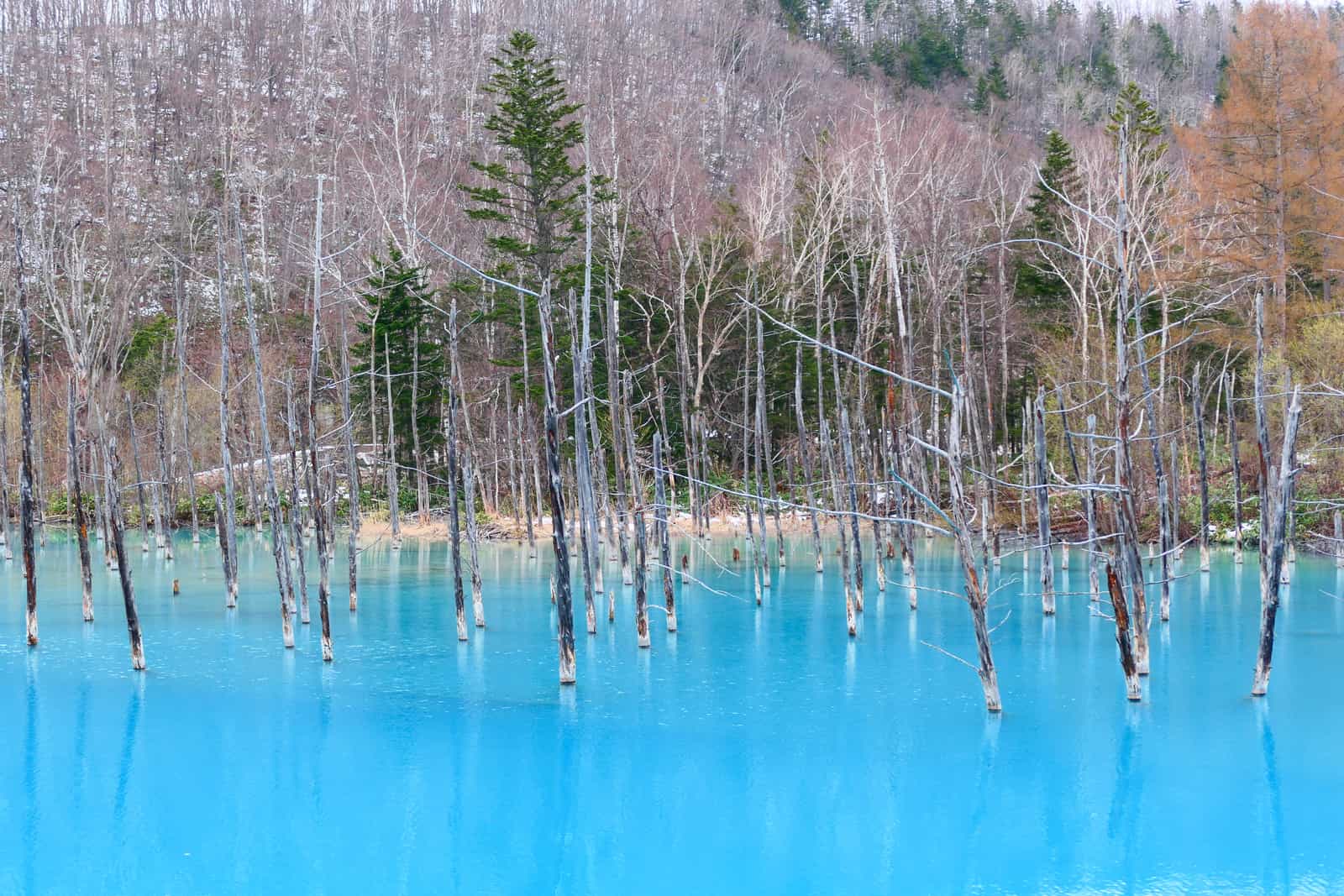
General tourist — 3 must-shoot moments:
- 3-minute stop at Lavender Field Station. Norokko 1 arrives 11:15, Norokko 3 at 13:45. The afternoon side-light at 13:45 hits purple lavender beautifully — if peak July, choose Norokko 3 over 1 for the better light angle.
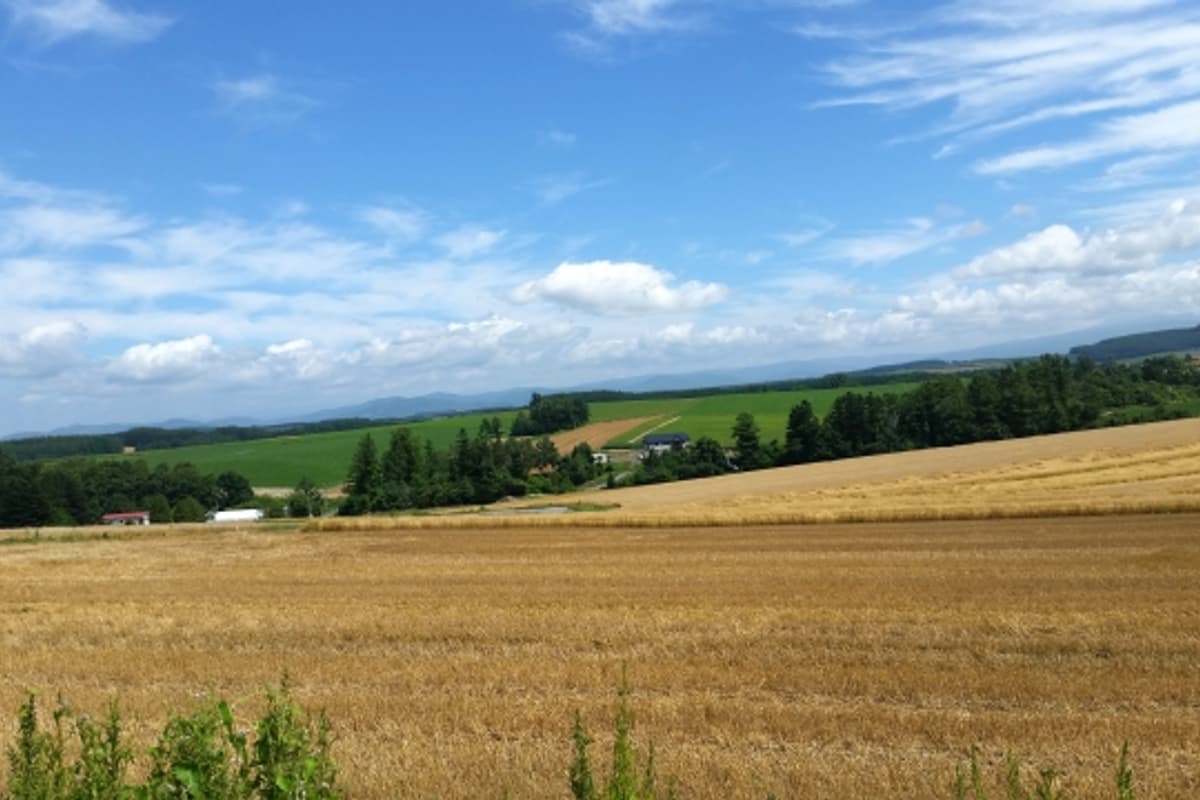
- Biei-Bibaushi window shot. The hills here are arguably Japan's most photographed farmland. Norokko's windows open — local trains have sealed windows that reflect the carriage interior. This is the Norokko's unique frame.
- Furano station arrival. Red carriage + wooden station shelter + "FURANO" station sign is the Instagram classic. Don't rush off the platform; circle around to shoot the train head-on for a minute.
Railfan — 2 advanced shots:
- Tail-car open balcony. Norokko carriages have an open observation platform at the rear (some services only) — you can shoot the train pulling away through lavender as a long-lens motion frame. Nothing else on JR Hokkaido lets you compose this.
- Sept 23 Final Run. The special diagram parks the train for 20 minutes each at Biei, Kami-Furano and Naka-Furano while local residents hold farewell events — the only day all year you can photograph the carriages at leisure from the platform. Real talk: it is the last day of a five-day holiday run, seats get locked up by collector railfans well in advance, and the platform will be a wall of cameras. If you're a general tourist, ride Sept 19 or 20 instead — the Last Run headmark is already fitted from the 19th, so you get the same frame with room to move.
Can't book? Don't force it
Plenty of people will force their way onto the September 23 train and come home with miserable photos — packed platforms, packed carriages, every frame full of strangers' heads. My direct advice: if these last nine days don't work out, let it go. The route isn't dying — from 2027 the Furano Lavender Express (Sapporo-direct limited express, 2 hours, reserved seating) keeps running through the same lavender corridor. You lose the open-window carriage experience; you keep the landscape.
Other ways to see Furano-Biei without the Norokko:
- Rent a car. Asahikawa → Furano is ~1 hour, Asahikawa → Biei is ~30 minutes. You can stop freely at lavender farms, Shikisai-no-Oka, the Blue Pond, etc. Budget about ¥8,000/day including insurance. Caveat: July lavender season and August summer holiday mean crowded roads and tight parking — sometimes more frustrating than the train.
- JR Furano Line local train. Runs daily, no reservation needed, cheap (¥1,380 Asahikawa-Furano single). Doesn't stop at Lavender Field Station. Use this if you simply need to move between Asahikawa and Furano without paying the Norokko premium.
- Furano-Biei Smooth Access Bus. Tourist shuttle from Asahikawa and Furano stations to lavender farms, Shikisai-no-Oka, the Blue Pond, and other key sites. About ¥3,500 for a day pass. Best for non-drivers who want to see multiple spots in one day.
Pairing with the JR Hokkaido Rail Pass
If your Hokkaido trip runs 3+ days across multiple cities (Sapporo–Asahikawa–Furano–Biei–Otaru is a classic loop), the JR Hokkaido 5-day Pass ¥22,000 (KKday NT$4,358) paired with the Norokko reservation supplement is the most efficient combination:
- Pass covers base fares free: Sapporo↔Asahikawa ¥5,440 × 2 + Asahikawa↔Furano ¥1,380 × 2 + Furano↔Sapporo ¥4,760 = ¥18,400 saved.
- Norokko ¥1,000 supplement still applies — pay it at a Midori-no-Madoguchi window when you show your Pass.
- The Pass isn't just for the Norokko — it covers the entire Hokkaido itinerary.
📍 Full JR Hokkaido Pass breakdown: JR Hokkaido Rail Pass 2026: ¥22,000 Price Breakdown.
Bottom line
2026 is the final season for a sightseeing train that's been running for 28 years. If your September plans already include Hokkaido, fit the Norokko in — you don't need to fly out specifically for it, but if your route already passes through Furano-Biei, this 90-minute ride is worth the ¥2,380.
When to book: only September 5, 6, 12, 13 and 19-23 remain, and seats go day by day. Which segment: Asahikawa ↔ Furano full route. Which service: Norokko 1, 10:00 Asahikawa departure — 9:14 on September 23. The September 23 final run is for railfans; general tourists get the same headmark on the 19th or 20th.
🎫 Book Asahikawa ↔ Furano on KKday — NT$453
Frequently Asked Questions
- Q1:Why is the Norokko Train being discontinued?
- JR Hokkaido's 2026-03-25 press release didn't give a specific reason, but the cause is straightforward: the carriages are 28 years old (converted from older diesel coaches in 1998), and JR Hokkaido has been consolidating its loss-making regional and sightseeing trains over the past few years. The same route will continue with the Furano Lavender Express limited-express train (direct from Sapporo to Furano), so the corridor isn't losing service — it's losing the open-window sightseeing carriage experience. Worth stating plainly: the only services JR Hokkaido has announced an end date for are the two Norokko trains, Furano-Biei and Kushiro Shitsugen. The SL Fuyu-no-Shitsugen carries no discontinuation notice — the version circulating online that puts the steam train on the same countdown has no official basis. See our guide to Japan's winter sightseeing trains for the full picture.
- Q2:When does the Norokko run in 2026? When is the final run?
- First train: June 6, 2026. Final run: September 23, 2026, a public holiday in Japan. June and early September are weekends-only, July and August run daily, and the last five days, September 19 to 23, run daily — that stretch is a five-day holiday run and every train carries a commemorative Last Run headmark. On September 23 itself the train switches to a special two-round-trip diagram between Asahikawa and Furano, with farewell events at stations along the line, so railfans will pack it. Want the headmark without the crush? Ride September 19 or 20 instead; the same headmark is already on the train.
- Q3:Can I board without a reservation?
- No. The Norokko is all-reserved and JR Hokkaido states it plainly: passengers without a reserved-seat ticket cannot board. The platform gates will not let you through either. Peak dates (mid-July lavender weekends, and the Sept 19-23 final holiday run) typically sell out a month ahead. The simplest path for international travellers is to book through KKday now — three segments sold separately, e-ticket QR scans you onto the train.
- Q4:Which segment is worth riding?
- Direct answer: Asahikawa ↔ Furano full route (90 minutes, ¥2,380 / NT$453). You get the complete scenery arc — Asahikawa city, Biei rolling hills, Kamifurano mountain backdrop, Nakafurano lavender fields — plus the 3-minute stop at Lavender Field Station (where you can step off and shoot). The short Asahikawa ↔ Biei (30 min) segment goes through mostly suburban farmland with no signature scenery; paying ¥1,000 for the reserved seat there is pure waste. Take the JR local for ¥640 instead and rent a bike in Biei.
- Q5:Does the JR Hokkaido Rail Pass cover the Norokko?
- Partially. The Pass covers the base fare (¥1,380 Asahikawa-Furano) but you still pay the ¥1,000 reserved-seat supplement (uniform across all segments). Pass holders should buy the seat supplement at a Midori-no-Madoguchi window showing the Pass — note that Eki-net is officially restricted to residents of Japan. If your trip includes Sapporo-Asahikawa-Furano-Otaru-Hakodate, the ¥22,000 5-day Pass plus the ¥1,000 supplement still beats single tickets by ¥15,000+.
Related reading
Read next
Hokkaido JR Pass Complete Guide 2026
Five routes recalculated with 2026 fares — all-reserved limited expresses and the post-2024 Furano line closure change the math.
Hokkaido Winter 7-Day Itinerary 2026
Sapporo → Otaru → Biei → Hakodate over 7 days, with JR Pass math, how to reach the Furano slopes, and a real two-person budget.
📊 See the 2026 Price Index (JR Pass, DPA, eSIM, Airport Transport) →