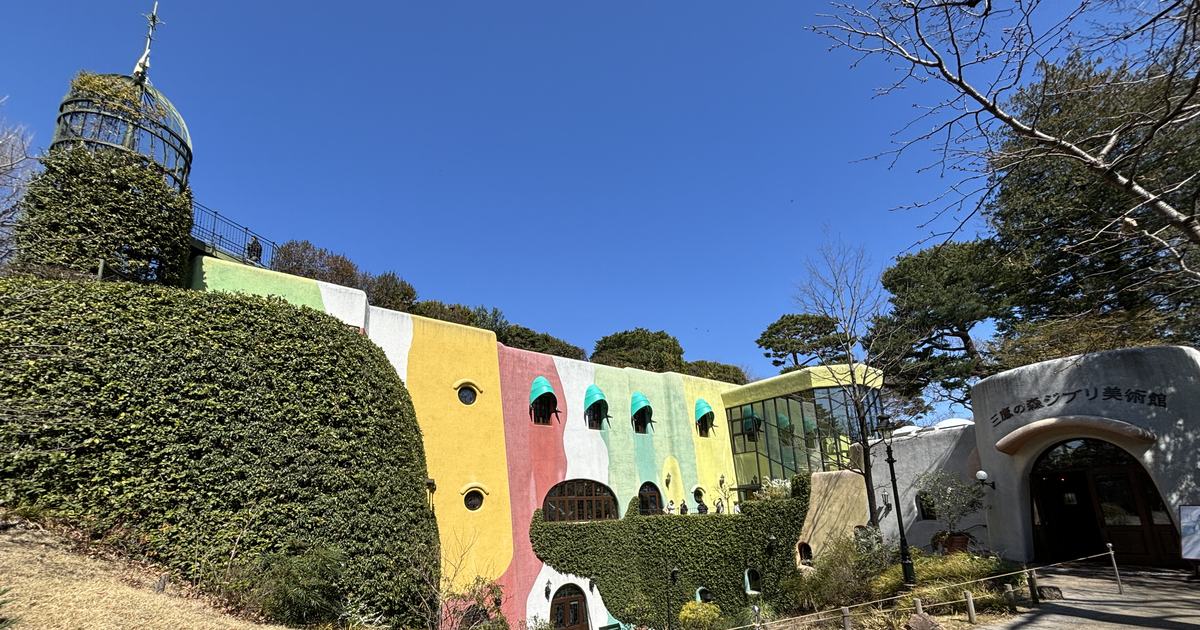
An adult ticket costs ¥1,000, which makes this one of the cheapest headline attractions in Tokyo. The price is not the problem. The problem is that the rules determining whether you actually get through the door are split across three separate websites: the museum’s Japanese pages, the museum’s English pages, and the Japanese-only page of LAWSON, the company that actually sells the tickets. The three do not say the same things — and the page written in the language you can read is the one missing the rules that waste trips: the seven hourly entry slots, the one-hour window in which you must physically walk in, and the fact that leaving the building ends your visit. This guide stacks all three documents on top of each other, and adds one thing that not even the museum’s own news index mentions: fifteen consecutive closed days in November 2026.
First, a distinction that trips up a lot of trip planning. This guide is about the Ghibli Museum in Mitaka, in western Tokyo. The one in Aichi Prefecture is Ghibli Park — a different prefecture, a different ticketing system, a different release time, and not one shared rule. For that one, see our guide to choosing between Ghibli Park’s seven passes.
- The official site exists in Japanese and English only — the language switcher offers nothing else, and Chinese-language paths return a hard 404
- Seven rules are missing from the English page: entry slots, final entry time, the one-hour entry window, Tuesday closures, no re-entry, one film screening per person, and the Catbus age limit
- The rules that actually bind you are on the ticket seller’s site: six tickets per person, no date changes, no refunds, and possible ID checks on the booker
- Missing the 10th is not elimination — the official wording is that tickets sell until the designated date and time unless they sell out first
- Closed 4–18 November 2026, fifteen days straight — none of the seven most recent official news posts mentions it; it appears only on the calendar
📖 Contents
- Which languages does the official site have?
- What is missing from the English page?
- Who actually sells the tickets?
- Is missing the 10th really the end of it?
- What should your ticket cost?
- Do small children need a ticket?
- When do you go in, and how long can you stay?
- Which days will waste your trip?
- What are the options if the date is sold out?
- What to settle before you leave the hotel
- Is it worth it, and how should you plan it?
- FAQ
Which languages does the official site have?
Two: Japanese and English. Nothing else exists.
Verifying that took about a minute. The language switcher in the site’s own markup contains exactly two links, one for Japanese and one for English. Every common Chinese-language path returns a 404 — and the same 236-byte error page each time. To rule out the possibility that unknown paths were quietly redirecting to the home page, an invented nonsense path was requested as a control; it returned exactly the same thing. So those languages are genuinely absent rather than hidden under some other address.
The practical value of knowing this is that it sets your expectations correctly. If you cannot read Japanese you will land on the English page by default — and the English page is not a translation of the Japanese one. It is a shorter, separately written version. The table in the next section lays the two side by side, rule by rule.
One related trap worth flagging, because the URL looks reassuring and is not. The JTB group’s Sunrise Tours runs a bus tour that includes museum admission, and that company does operate genuine Chinese-language pages — its home page really is in Chinese. But the Ghibli page has not been translated: the Chinese-language and English versions of it are byte-for-byte identical, and the Chinese one contains zero Chinese characters. A language code in the address bar is not evidence that the page underneath is in that language.
What is missing from the English page?
Not adjectives. Rules — and the missing ones are the ones that waste trips.
The table below comes from reading three documents against each other: the museum’s Japanese tickets page, its Japanese visitor-information page, and its English tickets page.
| Rule | Japanese page | English page |
|---|---|---|
| Entry slots | Seven, on the hour: 10, 11, 12, 13, 14, 15, 16 | Absent |
| Final entry | 16:00 | Absent |
| Entry window | Enter within one hour of your slot | Absent |
| Weekly closure | Closed Tuesdays; other closures vary by year | No such sentence, only a calendar |
| Re-entry | No re-entry | Absent |
| Film screening | One viewing per person in the film room | Absent |
| Catbus | Primary-school age and under only | Absent |
| Under-fours | Free, and no reservation needed | Free only |
| Price grading | School level (adult/university, high & junior high, primary, infant) | Age (19+, 13–18, 7–12, 4–6) |
| Residents’ allocation | Has a section on the Mitaka-area residents’ scheme | Absent |
| Opening calendar | Links out to the ticket agent | Fifteen months embedded on the page |
That last row is the one line in the table that runs the other way, and it is the single most useful sentence here: the official page you can actually read the opening calendar on is the English one. The Japanese page hands the calendar off to the ticket agent’s site, which does not respond to requests from outside at all.
Two more rules sit on different Japanese pages and mislead if read in isolation. The tickets page says the museum does not operate in timed sessions — nobody will move you along, and you may stay until closing. The visitor-information page says there is no re-entry — step outside and your visit is over. Put together they form one complete rule: stay as long as you like, but you only get to walk in once. Neither sentence appears in English. So if you were planning to duck out for lunch and come back, that plan does not work.
Who actually sells the tickets?
LAWSON does, and the museum window sells nothing at all.
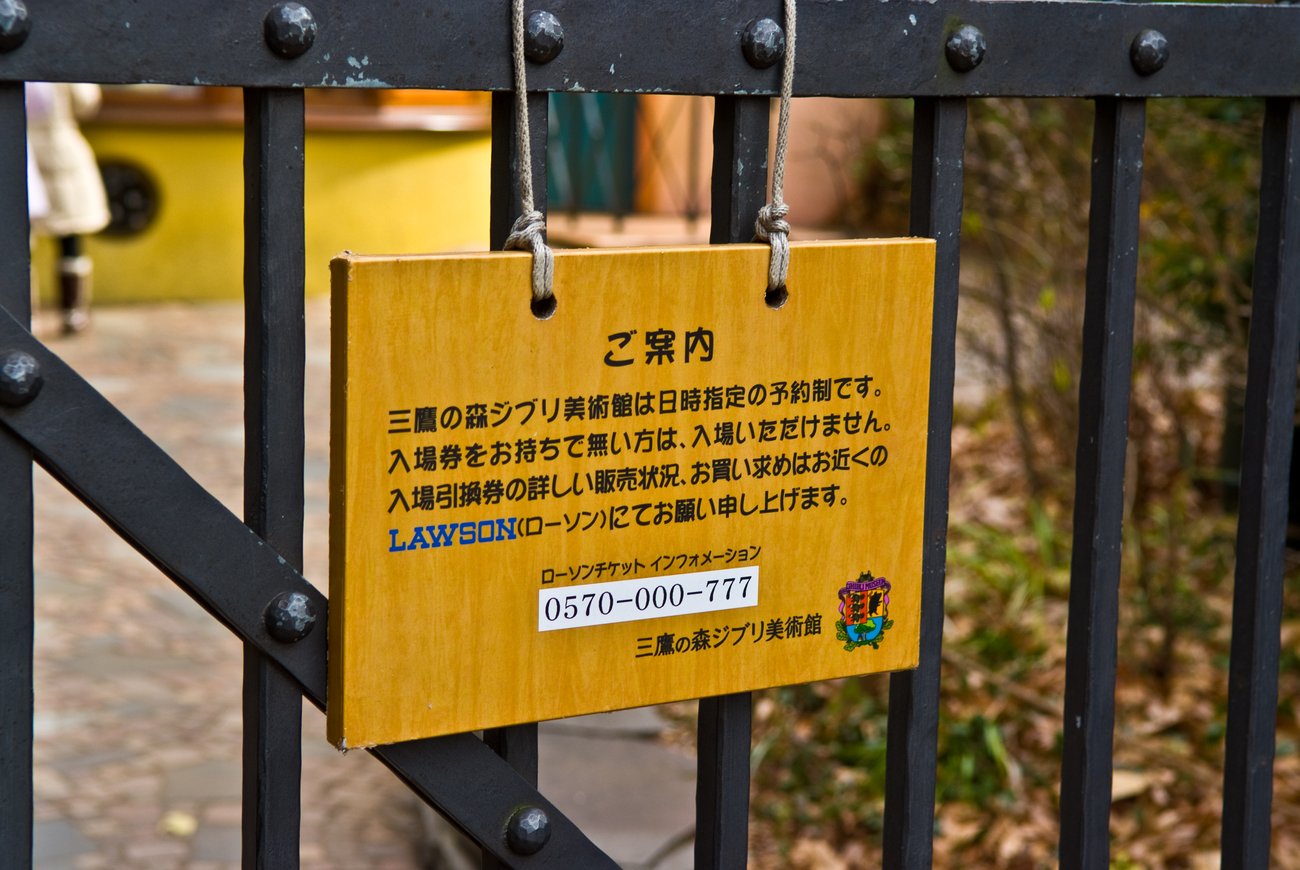
Three independent sources say the same thing in three different phrasings. The Japanese tickets page states that reservations are handled on the LAWSON ticketing site and that the museum window does not sell tickets. The English page states that all admission is by advance reservation only and that no reservation or purchase can be made at the museum. LAWSON’s own dedicated page says it twice, once at the top and once again in the notes. So the strategy of turning up and seeing what is available — which works at plenty of Japanese attractions — does not exist here.
The layer beneath that is the one worth memorising: the transaction rules that decide whether you get in are not on the museum’s website at all. They are on LAWSON’s Japanese page. Four of them, and none is optional reading:
- Six tickets per person, maximum. A party of seven or more must split into two bookings made by two different people.
- No date changes and no refunds, whether or not the ticket is used. The same passage adds that a ticket cannot be used outside its designated date and time.
- The entrance may verify the identity of the ticket purchaser. The verb is conditional, not absolute, and the person checked is the booker rather than every companion. A passport is on the list of accepted documents.
- Companions are asked to enter together with the booker. This is the one with the largest practical consequence: if the booker does not show up, nobody in the party gets in.
Read the last two together and the answer to the most common planning question falls out: yes, a friend living in Japan can book for you — but that friend has to walk through the door with you on the day. And ignore the widely repeated claim that the buyer’s name is printed on the ticket; that sentence exists only on the page describing the local residents’ allocation, which is a separate scheme with separate rules.
The purchase process itself has two gates. LAWSON states that buying requires registration as a free web member plus mobile phone number verification. Electronic tickets require its app and can only be booked from a smartphone. The paper option is collected from a machine in a LAWSON store in Japan, which is not realistically available to someone who has not yet arrived — so if you want a ticket in hand before you fly, the electronic route is the route. If you do end up dealing with a convenience-store machine once you are in Japan, our guide to convenience-store payments and machine screens covers the interface and its countdown timers.
One thing this guide deliberately does not tell you: whether LAWSON’s English-language purchase entry point requires a Japanese phone number or accepts overseas-issued cards. That entire domain returned nothing to every request made during verification, across two HTTP versions and five paths. Claiming it does require them and claiming it does not are equally unsupported, so neither claim appears here.
Is missing the 10th really the end of it?
No. The official rule is that tickets sell until the designated date and time, unless they sell out first.
The release mechanic first. At 10:00 Japan time on the 10th of every month, the whole of the following month goes on sale. Tickets for July go on sale on 10 June, tickets for August on 10 July, and so on in a rolling one-month window. The English page confirms the same clock in the same words.
You may be assuming that missing that moment means waiting a month. LAWSON’s own wording says otherwise: tickets are sold up to the designated date and time, with a note that they may sell out first, and elsewhere, that sales end once capacity is reached. What that describes in practice is uneven demand. Weekends, public holidays and school holidays will be cleared on the 10th. Quiet weekday slots frequently are not, and often sit on the calendar until close to the day. So the correct response to missing the drop is to change the date and change the slot, then look again — the 10:00 opening slot and the 16:00 final slot on a weekday are the two most likely to still be there.
How fast does it normally sell out? There is no answer, and the absence is at the official level rather than at the research level. The museum’s Japanese tickets page, its English tickets page, its news index, LAWSON’s dedicated page and the Mitaka tourism association page were all searched, and none of them publishes any figure or even an adjective for sell-out speed. The only official language on the subject is the two conditional phrases above. Numbers circulating elsewhere have no official source behind them, so none is repeated here.
What should your ticket cost?
It depends which page you opened — the same person can differ by ¥300.
There are four price bands and the amounts match on both pages. The disagreement is in the axis: the Japanese page grades by school level, the English page by age.
| Price | Japanese page (school level) | English page (age) |
|---|---|---|
| ¥1,000 | Adults and university students | 19 and over |
| ¥700 | High-school and junior-high students | 13 to 18 |
| ¥400 | Primary-school pupils | 7 to 12 |
| ¥100 | Infants aged four and over | 4 to 6 |
| Free | Under four, no reservation needed | 3 and under |
For most visitors the two systems agree. For four fairly ordinary situations they do not, and the gap is ¥300 each time.
| This person | By the Japanese page | By the English page | Gap |
|---|---|---|---|
| 18, first year of university | University student, ¥1,000 | 13–18, ¥700 | ¥300 |
| 19, still at high school | High-school student, ¥700 | 19 and over, ¥1,000 | ¥300 |
| 6, first year of primary school | Primary pupil, ¥400 | 4–6, ¥100 | ¥300 |
| 12, first year of junior high | Junior-high student, ¥700 | 7–12, ¥400 | ¥300 |
There is a third document, and it sides with the Japanese one: LAWSON’s purchase page also grades by school level. So two of the three documents use school level, and the one that uses age is the only one readable without Japanese.
No official statement says which grading wins, and this guide will not invent one. The practical instruction is a single sentence: if your party contains one of those four people, budget using the school-level version and carry the higher amount. Overestimating costs you ¥300. Underestimating means being asked for the difference at the door.
One more line that closes off a common search: there are no group rates, no advance-purchase discounts and no discount schemes of any kind, stated flatly on the Japanese tickets page. There is no promo code to hunt for.
Do small children need a ticket?
From four years old, yes. Under four is free and needs no reservation at all.
Those last four words matter, and they exist only in Japanese — the English page says only that under-fours are free. Read the English page literally and you might go looking for a ticket slot for a two-year-old, then find yourself blocked on a date showing only three remaining tickets. That child does not consume a ticket.
A second Japanese-only rule matters specifically for families: the Catbus may only be used by children of primary-school age and under. This is worth explaining to your children before you leave the hotel, particularly if one of them is at junior high — it is often the thing they most want to do, and the rule does not bend.
A third affects how long you should allow. The basement film room screens original Ghibli shorts that are not shown anywhere else, but each person may watch only once. Do not plan a visit around catching one screening early and another later; that is not available.
Finally, one point for anyone travelling with a pushchair: the JTB bus tour route states plainly that pushchairs cannot be taken into the museum.
When do you go in, and how long can you stay?
Seven entry slots on the hour from 10:00 to 16:00, with one hour to walk in — then stay as long as you like, but you cannot come back.
This entire section is absent from the English page; it comes from the Japanese tickets page and the LAWSON page. Four separate facts:
- Open 10:00 to 18:00, final entry slot 16:00. What you book is not a span of time, it is which of the seven hourly slots you take.
- Enter within one hour of your slot. Book the 14:00 slot and arriving after 15:00 puts you at risk. LAWSON repeats the same sentence on its own page, which suggests they take it seriously.
- No timed sessions. Nobody moves you out at a set hour; you may stay until closing.
- No re-entry. Stepping outside ends the visit.
Combine the last two and your day plans itself: eat before you go in or eat in the museum café, because leaving and returning is not an option. The slot you choose then compounds that. Take the 16:00 slot and you have two hours, which is tight for a first visit. Take the 10:00 slot and the whole day is still yours. My own preference is unambiguous here: book the first slot of the day and leave the afternoon for Inokashira Park and Kichijoji next door, so that the entry time is not quietly deciding the shape of your day for you.
What about a typhoon? There is no standing rule, but there is a precedent worth knowing. In June 2026 the museum announced that it would open as normal on a particular day, and that for that day only visitors arriving later than their printed entry time would still be admitted, given expected disruption to public transport. Note the framing: that was an individual announcement for one date, not a permanent policy. If weather threatens your date, check that day’s official notice rather than assuming the concession applies.
Which days will waste your trip?
4 to 18 November 2026 — fifteen consecutive days — and the museum’s own news index has not mentioned it once.
This is the most actionable section in the guide. The only official surface carrying those fifteen days is the calendar embedded in the English tickets page. Read cell by cell, it gives the following.
| Month | Closed days |
|---|---|
| September 2026 | 1, 8, 15, 29 |
| October 2026 | 1, 3, 6, 13, 20, 27 |
| November 2026 | 4–18 (fifteen days), 24 |
| December 2026 | 1, 8, 15, 22, 27–31 |
| January 2027 | 1, 2, 12, 19, 26 |
| February 2027 | 2, 9, 16 |
| March 2027 | 2, 9, 16, 23, 30 |
No reason has been published for the November closure, and none is invented here. What can be said is that there is a precedent: an eight-day maintenance closure in May 2026 was announced by news release which named the reason and the reopening date. A November notice may well follow the same pattern, but as of verification none had appeared, and the seven most recent posts on the news index are all about other things. If you are booking November, the calendar is the only place this exists.
Then the rule and its exceptions. The rule is closed on Tuesdays. The exceptions are numerous enough that deriving dates yourself is unsafe:
- Open on a Tuesday: 11 August 2026, 22 September 2026, 3 November 2026, 5 January 2027, 23 February 2027. Most of those fall on public holidays, but not every one of them is explained by that.
- Closed on a non-Tuesday: Thursday 1 October 2026 and Saturday 3 October 2026. No explanation has been published for either.
So the test is the same one that applies at Ghibli Park: do not derive the date from the rule, open the calendar. The difference here is that the calendar is only readable on the English page.
One knock-on effect reaches your transport as well: the community shuttle bus between Mitaka Station and the museum does not run on closed days. Turning up on the wrong day means no admission and no bus.
What are the options if the date is sold out?
Three, each with its own cost, and none of them is turning up hopefully.
Clearing the ground first: the museum window sells nothing, as three separate sources state. There is, however, one physical ticket window in operation, and it is not the museum’s — the Mitaka tourism association office sells a local residents’ allocation over the counter, restricted to people living, working or studying in six named municipalities, with the page stating explicitly that no telephone or internet reservations are accepted. Visitors cannot use it. Knowing it exists saves you the time otherwise spent chasing rumours that walk-up tickets are available somewhere.
The three routes that are genuinely open:
One: change the date and slot and check LAWSON again. This is the cheapest option and the one most often skipped, for the reason set out above — unsold dates remain purchasable until the designated time. Exhaust this before considering either of the others.
Two: the JTB Sunrise Tours bus tour. The museum itself lists this on its tickets page as one of the two official overseas purchasing routes. The tour includes admission and allows two and a half hours inside; its other stop is the Edo-Tokyo Open Air Architectural Museum. Two features make it uniquely useful for anyone who wants to get in tomorrow: bookings are accepted until 5:00 on the morning of the tour, and the minimum party size for the tour to run is one. The constraints are real, though. Assembly is at 10:20 at the Keio Plaza Hotel in Shinjuku and latecomers forfeit the booking; cancellation charges begin ten days out and reach half the fare on the day; the whole tour is cancelled if the museum closes unexpectedly; and it is sold strictly to international visitors, with residents of Japan explicitly excluded. The fare could not be verified — that page loads its prices dynamically by date and carries no figure in the static page — so no price is quoted here. Pick a date on the tour page to see it.
Three: a guided tour that bundles admission. These exist in English and suit one specific situation: your date is sold out and it is the only day you are in Tokyo. Do the arithmetic before you commit. The official ticket is ¥1,000, while this kind of tour starts in the mid-sixties in US dollars — roughly ten times the official admission. What the difference buys is a guide and someone else solving the booking problem, not better access once inside. Note also that it points the same way as the museum’s own policy: the product page states that the tickets are non-refundable and cannot be changed once issued, so this is not a flexible insurance policy.
See guided tours that include admission (GetYourGuide) → About 1.5 hours, rated 4.27 from 455 reviews; non-refundable and unchangeable once issued
When not to take route three: if your dates are still flexible, the premium is money burned — go back and pick a weekday. It only makes sense when the date is fixed, the official allocation for it is gone, and what you are buying is certainty.
What to settle before you leave the hotel
Photography inside the museum is prohibited, and this is one of the few rules both language versions state identically.
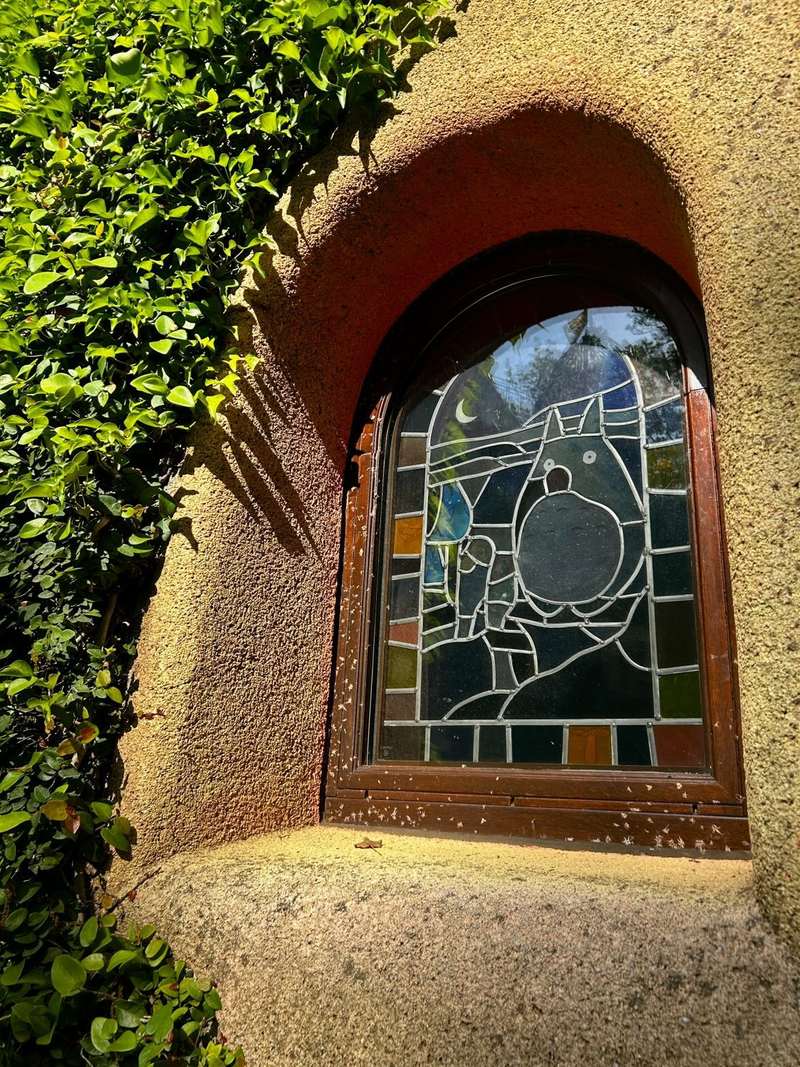
The Japanese wording asks visitors to refrain from taking photographs or video inside; the English asks you not to take photos or videos inside. The Japanese page adds the museum’s own reasoning, which is worth reading before you go: the museum describes itself as the entrance to a story, and says that becoming the protagonist of that story means looking with your own eyes and feeling the space with your body rather than pointing a camera at it. It also explains why every photograph in this guide was taken outdoors.
Four more things that shape the day:
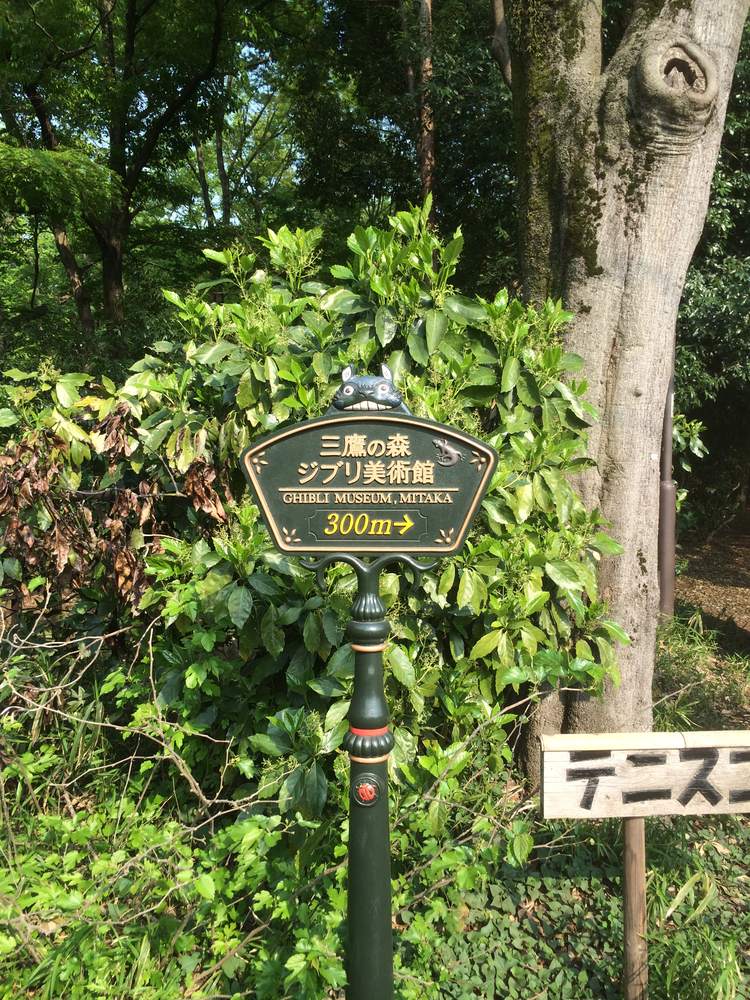
- There is no car park. The museum states that no dedicated parking exists on or around the site and asks visitors not to drive. Bicycle parking holds around a hundred.
- Ninety-six lockers (eighty small, sixteen medium), coin-operated with the ¥100 returned. Check that against how much luggage you plan to arrive with.
- Return tickets on the shuttle bus have been discontinued; only one-way fares are sold now. Current fares are ¥230 for adults in cash or by IC card, and ¥120 in cash for children — but only ¥50 by IC card, so top up an IC card before you travel with children. The walk from Mitaka Station takes about fifteen minutes and is pleasant enough if you are not in a hurry.
- The bus does not run on closed days, which is worth remembering alongside the calendar.
Is it worth it, and how should you plan it?
Do three things in order and this guide has paid for itself.
First, pick your date from the calendar on the English page. Strike out 4 to 18 November 2026 entirely, strike out every Tuesday, then go back and check the exceptions — Thursday 1 October and Saturday 3 October are closed, while Tuesday 3 November is open. Fix the date before anything else.
Second, buy at 10:00 Japan time on the 10th of the month for the following month, having already completed the free membership registration and phone verification. My own preference here is firm: do not start creating an account on the morning of the 10th. Set up the account and save the card the night before, so that on the day itself you are only choosing a date and paying. And if you miss it, change the day and the slot and look again before you start pricing guided tours.
Third, if your party includes one of those four age-versus-school-level cases, budget by the Japanese grading and carry the extra ¥300. At the same time, brief everyone on the three LAWSON rules — six tickets per person, no refunds or changes, and the booker has to be there. That last one is the only rule capable of stopping the entire group at the door.
If your trip also takes in Kansai, one more thing worth keeping separate: the Nintendo Museum in Uji is likewise advance-booking only with no box office, but the difficulty lives somewhere else entirely — its tickets are bound to the names of the people entering, and the terms of use prohibit agency purchases, naming the traveller who requests one as a party to the breach. Not one rule carries across. See our guide to why you cannot have someone enter the Nintendo Museum lottery for you.
An honest closing verdict. This is a cheap ticket to a small museum with a lot of rules attached. It is not somewhere you slot casually into an afternoon: it wants your date locked a month ahead, it does not let you photograph anything inside, and it does not let you step out and return. If what you want is a set of beautiful photographs, it will disappoint you. If what you want is to stand inside the places you have watched for years, ¥1,000 is probably the best value admission in Tokyo. To build the rest of that day around indoor options nearby, see our Tokyo rainy-day guide; for routes and ticket maths with children in tow, the Tokyo with kids guide goes into more detail.
Appendix: official wording (Japanese, click to expand)
The longer official passages quoted above are collected here so you can check them yourself.
1. No tickets sold at the museum window (ghibli-museum.jp, tickets page)
チケットの予約は、ローチケWEBサイトにて受け付けます。(※ジブリ美術館窓口では販売していません。)
English page, same rule: All admission to the Ghibli Museum is by advance reservation only. No reservation or ticket purchase can be made at the Museum.
2. Release time
チケットは、毎月10日の10時から、翌月入場分を発売します。
3. Sold until the designated date and time, subject to selling out (LAWSON page)
チケットは指定日時まで販売しますが、入場締切時間がありますのでご注意ください。(売り切れの場合もございますのでご了承ください)
チケット(入場引換券)は定員になり次第販売を終了させていただきます。
4. Entry slots and the one-hour rule
開館時間 10時~18時(最終入場回:16時)
入場時間 ①10時、②11時、③12時、④13時、⑤14時、⑥15時、⑦16時
※指定入場時間から1時間以内にご入場ください。
※入れ替え制ではありません。
※毎週火曜は休館。その他の休館日や長期休館は、年度ごとに変動します。
5. No re-entry, one screening per person, Catbus age limit (visitor information)
再入場はできません。
映像展示室内での映画鑑賞は、お一人様1回限りとさせていただきます。
ネコバスの利用は小学生以下のお子様のみとさせていただきます。
6. Identity verification and companions (LAWSON page)
美術館入り口にてチケット購入者の本人確認を行う場合がありますので、身分証明書(免許証、各種保健証、学生証、パスポート、マイナンバーカードのいずれか)をご持参くださるようお願いいたします。また、お連れの方はご一緒に入場していただきますようご協力ください。
7. Six-ticket limit, no changes, no refunds
お1人様6枚までとなります。
チケット(入場引換券)はご使用されなくとも日時変更、払い戻しはできません。
指定日時以外のご利用はできません。
8. Membership, phone verification, smartphone-only e-tickets
※チケットをご購入の際は、ローソンWEB会員(無料)への登録および携帯電話番号認証が必要です。
※「電子チケット」の受け取りには「ローチケ」アプリが必要です(スマートフォンからのみの予約受付となります)。
9. No group rates and no discounts
※団体や前売り他各種割引制度は、実施しておりません。
10. Under-fours free, no reservation required
※4歳未満は無料(チケット予約不要)です
11. The two official overseas routes
JTBグループを通してご購入いただく方法と、ローソンチケット英語サイトにて予約・ご購入していただく方法がございます。
From the JTB tour plan page: This is a special tour for international visitors. Please understand that residents of Japan cannot make bookings for this tour. / Tour bookings may be made until 5:00 in the morning on the day of the tour.
12. No photography inside, and the museum’s stated reason
美術館内での写真撮影、動画撮影はご遠慮ください。
ジブリ美術館は物語の入り口です。物語の主人公になるには、カメラを向けるのではなく、この空間をご自分の目で見て、体で感じてください。
13. No car park
美術館敷地内外に専用の駐車場がありません。お車での来館はご遠慮ください。
14. Shuttle bus suspended on closed days, return tickets discontinued
※美術館休館日には運休となります。
「三鷹の森ジブリ美術館ルート」往復乗車券の発売は終了
15. The May 2026 maintenance closure notice (precedent for November)
2026年5月12日(火)~2026年5月19日(火)まで、ジブリ美術館はメンテナンスのため休館となります。次の開館日は2026年5月20日(水)です。
16. Individual typhoon-day notice (not a standing rule)
明日6/27(土)、ジブリ美術館は【通常通り開館】いたします。ただし、公共交通機関の乱れなどが予想されますので、明日に限り、チケット券面の指定入場時間に遅れてもご入場いただけます。
17. Mitaka-area residents’ allocation (Mitaka City Tourism Association)
お電話やインターネット等でのご予約は承っておりません
Frequently Asked Questions
- Q1:If I miss the 10th of the month, do I have to wait until next month?
- Not necessarily. LAWSON, the official ticket agent, states on its own page that tickets are sold right up to the designated date and time, with the caveat that they may sell out first, and separately that sales end once capacity is reached. Read together, that means popular dates get cleared on the 10th, but quieter dates often sit on the calendar until the day itself. So the right move after missing the drop is not to give up — it is to reopen the calendar, skip weekends and public holidays, and look at weekday slots, especially the 10:00 opening slot and the 16:00 final slot. As for how fast tickets normally sell: no official page publishes a figure. The museum's Japanese pages, its English pages, its news index, the LAWSON page and the Mitaka tourism association page were all checked, and none gives a sell-out time.
- Q2:Is there a Chinese version of the official site? Which language page should I use?
- There are only two languages, Japanese and English. The site's own language switcher offers nothing else, and Chinese-language paths return a hard 404. That matters more than it sounds, because the English page is not a full translation of the Japanese one — it is a shorter rewrite, and several rules that can waste your trip appear only in Japanese: the seven hourly entry slots, the 16:00 final entry, the one-hour window to actually walk in, the Tuesday closure, the no-re-entry rule, the one-viewing-per-person limit in the film room, and the Catbus being limited to children of primary-school age and under. The English page is not simply worse, though: the fifteen-month opening calendar is embedded directly in it, while the Japanese page only links out to it. Open both.
- Q3:How many tickets can one person buy, and can I get a refund or change the date?
- Six per person, and no — no date changes and no refunds, used or unused. None of those three rules appears on the museum's own website; all of them are on the Japanese-language LAWSON page, which also states that a ticket cannot be used outside its designated date and time. Settle your group size before you buy: a party of seven or more has to split into two separate bookings made by two different people. And build in no flexibility mentally — weather, a delayed flight and a sick child are all treated the same way.
- Q4:Will they check ID at the entrance? Can a friend book on my behalf?
- They may, and what they check is the buyer. The LAWSON wording is that the museum entrance may carry out identity verification of the ticket purchaser, and it asks visitors to bring ID; a passport is on the accepted list. Three qualifiers travel with that sentence and none can be dropped: it says may, not will; the person checked is the booker, not every member of the party; and the same paragraph asks that companions enter together with the booker. In practice that means a friend in Japan can absolutely book for you — but that friend has to walk in beside you on the day. One widely repeated claim to ignore: the line about the buyer's name being printed on the ticket comes from the page for the Mitaka residents' allocation, a separate scheme, and does not describe ordinary tickets.
- Q5:What age counts as a child, and how much is a child ticket?
- Four and over needs a ticket, but the official site grades ages two incompatible ways. The Japanese page grades by school level: adults and university students ¥1,000, high-school and junior-high students ¥700, primary-school pupils ¥400, and children aged four and up ¥100. The English page grades by age: 19 and over ¥1,000, 13 to 18 ¥700, 7 to 12 ¥400, 4 to 6 ¥100. Four ordinary situations land ¥300 apart depending on which page you read: an 18-year-old university fresher, a 19-year-old still at high school, a six-year-old in year one of primary school, and a 12-year-old in the first year of junior high. No official statement says which grading takes precedence, so budget using the Japanese school-level version, which is the more conservative of the two. Children under four are free, and the Japanese page adds that they need no reservation at all — the English page says only that they are free.
- Q6:Can I visit in November 2026?
- Not between the 4th and the 18th — that is fifteen consecutive closed days, plus Tuesday the 24th. Those fifteen days appear on exactly one official surface: the calendar embedded in the English tickets page. The museum's news index carries seven recent posts and none of them mentions November, and no reason has been published. There is a precedent — an eight-day maintenance closure in May was announced by news release, naming the reason and the reopening date — so a November notice may well follow, but as of verification it had not appeared. Note also that "closed on Tuesdays" is a rule with many exceptions: Tuesday 3 November is open, while Thursday 1 October and Saturday 3 October are closed. Do not derive dates from the rule; open the calendar.
- Q7:Is the Ghibli Museum in Mitaka the same thing as Ghibli Park?
- Two entirely different places, on two ticketing systems that share nothing. This guide covers the Ghibli Museum in Mitaka, western Tokyo: tickets through LAWSON, released at 10:00 Japan time on the 10th of each month for the following month, one ticket type priced in four bands, nothing to choose between. Ghibli Park is in Nagakute, Aichi Prefecture, near Nagoya: tickets through Boo-Woo, released at 14:00 on the 10th of the month two months ahead, seven ticket types you have to pick correctly because nothing is sold inside the park. Release times, channels and rules do not overlap at any point, so keep the two sets of notes apart.
Read next
Ghibli Park Tickets 2026: The Choice You Can't Undo
The ¥3,300 Standard pass misses Satsuki and Mei's House, and nothing is sold inside the park. Seven ticket types, the on-sale clock, and what the overseas channels actually stock.
Tokyo in the Rain: 10 Indoor Spots 2026
Ten indoor picks for a wet day: teamLab, Skytree, LaQua onsen, Pokémon Center — the plays that save a trip.
Tokyo with kids: the honest family guide
Stroller routes, kid-friendly restaurants, and the attractions worth the tantrum risk.
📊 See the 2026 Price Index (JR Pass, DPA, eSIM, Airport Transport) →