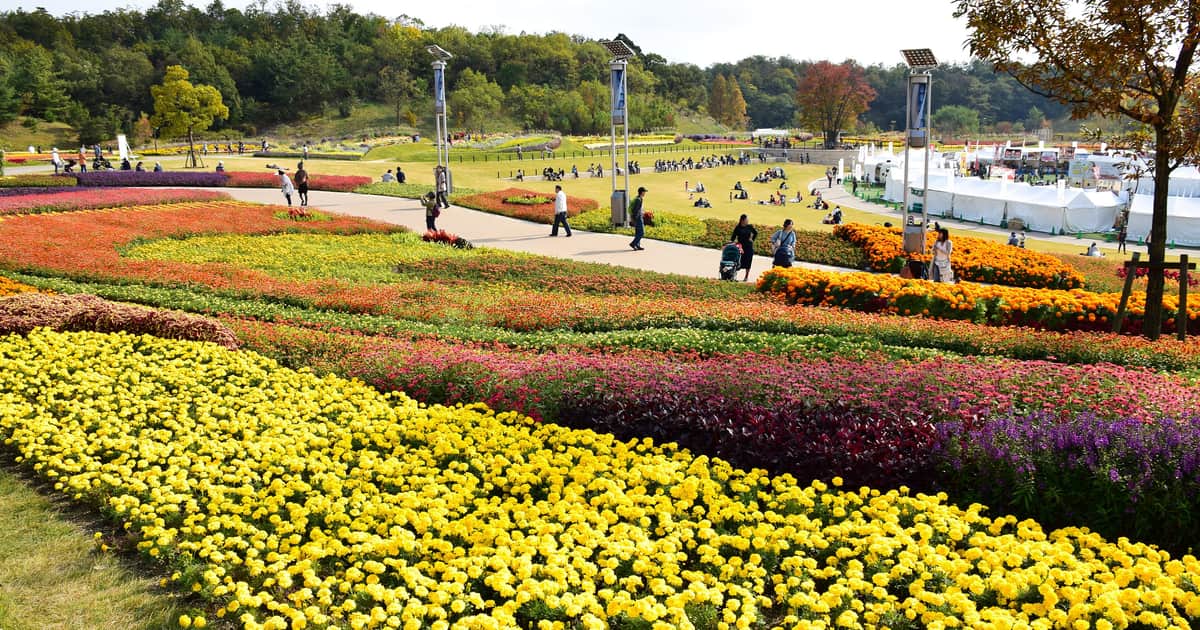
Buy the ¥3,300 O-Sanpo Day Pass Standard and you will not see Satsuki and Mei’s House — the Totoro house — and no amount of money will fix that on the day, because the operator states plainly that no tickets are sold anywhere inside the park. Ghibli Park’s real barrier is not that its pricing is complicated; the structure is no harder than Fuji-Q Highland’s. The barrier is that every decision is irreversible. Tickets go on sale two months ahead, cannot be changed or refunded, are registered to a named applicant who must show up, and are ID-checked at random at the gate. Which patches of ground you can walk on is settled the moment you press pay. This guide covers what each of the seven tickets actually buys, how the on-sale clock works, what the three overseas channels really stock, the two routes from Nagoya Station, and the nine-day closure sitting on the official calendar with no announcement attached to it.
Ghibli Park is in Nagakute, Aichi, inside the Expo 2005 Memorial Park — not in Nagoya city itself. For fitting it into a wider trip see our Nagoya travel guide; for autumn colour nearby see the Nagoya autumn foliage guide. ⚠️ Note too that the Ghibli Museum in Mitaka, Tokyo is an entirely separate place — sold through LAWSON, released at 10:00 on the 10th of each month for the following month, with no rules in common.
- Standard misses the Totoro house: it sits in Dondoko Forest, which Standard does not cover, and nothing is sold inside the park
- Two ¥3,300 tickets, completely different goods: the Valley of Witches & Mononoke Village pass includes all three special buildings; Standard makes you queue for a numbered ticket and pay ¥1,800 more
- First-come, not a lottery: 14:00 Japan time on the 10th, two months before your entry month
- Overseas gets two passes, and the good one was sold out: area tickets are Japan-only by stated policy, and Premium showed sold out for all three entry months on the official overseas page — leaving Standard
- Avoid early December 2026: the calendar shows a nine-day closure from November 30, and the operator has published nothing about it
📖 Contents (click to expand)
- How many tickets are there?
- Can I fix a wrong ticket on the day?
- Which ticket reaches the Totoro house?
- What about Howl’s Castle?
- When do tickets go on sale?
- Buying from outside Japan
- Getting there from Nagoya Station
- How big is this place?
- No roller coasters — so what do you do here?
- Which days is it shut?
- What to deal with before you arrive
- Which ticket should you buy?
- FAQ
How many tickets are there?
Seven. And they are not tiers — they are a map of which parts of the park you may walk into.
The park has five areas: Hill of Youth, Ghibli’s Grand Warehouse, Dondoko Forest, Valley of Witches and Mononoke Village. Three combination passes and four area tickets make seven. Read the whole table before you decide, because most wrong purchases happen when someone reads the first two rows and stops.
| Ticket | Areas covered | Weekday adult / child | Weekend & holiday adult / child |
|---|---|---|---|
| O-Sanpo Day Pass Premium | All five areas plus every building interior | ¥7,300 / ¥3,650 | ¥7,800 / ¥3,900 |
| O-Sanpo Day Pass Standard | Grand Warehouse + Mononoke Village + Valley of Witches (three areas; three buildings extra on the day) | ¥3,300 / ¥1,650 | ¥3,800 / ¥1,900 |
| Valley of Witches & Mononoke Village | Two areas, all three special buildings included | ¥3,300 / ¥1,650 | ¥3,800 / ¥1,900 |
| Satoyama Stroll Pass | Dondoko Forest hilltop + Mononoke Village + Valley of Witches (afternoon) | ¥1,000 / ¥500 | ¥1,500 / ¥750 |
| Ghibli’s Grand Warehouse (area only) | Grand Warehouse only | ¥2,000 / ¥1,000 | Same price every day |
| Hill of Youth (area only) | Hill of Youth only, including the World Emporium | ¥1,000 / ¥500 | Same price every day |
| Dondoko Forest (area only) | Dondoko Forest only, including Satsuki and Mei’s House | ¥1,000 / ¥500 | Same price every day |
Two details in that table repay a second look. First, weekday and weekend pricing applies to only half the range: the three combination passes and the Valley of Witches ticket split into two rates, while the three single-area tickets cost the same every day of the year. Visiting the Totoro house on a Saturday costs exactly what it costs on a Tuesday. Second, the Standard pass and the Valley of Witches & Mononoke Village ticket carry an identical price. One covers three areas, the other two — yet the two-area ticket is the one that includes Howl’s Castle and its two neighbouring buildings. That pairing is where the money gets lost, and it gets its own section below.
Two smaller costs are easy to miss. Every ticket carries a ¥110 booking-system fee, and "child" means ages four to the end of primary school, with under-fours free. The operator’s English page renders that as "age 4–12", which is not quite the same thing: a twelve-year-old already in junior high pays the adult rate under the Japanese definition. Where the two pages disagree, the Japanese page governs.
Can I fix a wrong ticket on the day?
No. Nothing is sold inside the park.
The operator says it twice on the same page, in two different phrasings: tickets are not sold within Ghibli Park, and tickets are not sold at the entrance to each area. The English page is blunter still, adding the one carve-out — the same-day tickets sold inside Valley of Witches for Okino Residence, Howl’s Castle and the Witch’s House. So the strategy that works at almost every other park, walk in and decide as you go, does not work here.
Four further layers are just as final, and each one strands people:
- No date changes, no refunds. The wording covers both used and unused tickets. Bad weather, a sick child, a delayed flight — the answer is the same.
- Tickets are name-registered, and if the applicant does not show up the ticket is void. To deter resale, staff run random identity checks on the lead applicant at the entrance; the English page tells overseas visitors to bring a passport. Whoever’s name goes on the booking has to be standing there on the day.
- Your party enters together, and e-tickets cannot be split. Premium relaxes this slightly, but even then everyone must enter the first area, and the Grand Warehouse, at the same time.
- Premium wristbands must be exchanged by 12:00 on the day. The wristband is what makes Premium’s free movement between areas work; miss noon and you have paid the Premium premium for nothing.
Stack those together and you have the cleanest contrast in Japanese theme parks. Fuji-Q lets you walk in free and decide how much to spend once you are inside, adding single-ride tickets or priority passes at will. Ghibli Park makes you decide two months out and then locks the door behind you. Ten extra minutes before you book is worth more than ten thousand yen on the day.
Which ticket reaches the Totoro house?
The Dondoko Forest area ticket at ¥1,000, or the Premium pass. The ¥3,300 Standard does not.
The chain is short and every link is in the operator’s own words. Standard is described as a pass circulating the Grand Warehouse, Mononoke Village and Valley of Witches. Satsuki and Mei’s House — the home the Kusakabe family live in in My Neighbour Totoro — is described under the Dondoko Forest ticket. Nothing is sold inside the park. Put those three together: a Standard holder who decides on the day that they want to see the Totoro house cannot buy their way in.
This matters more than it might sound, because all three overseas routes converge on the same ticket. The official overseas purchase page sells only Premium and Standard, and area tickets are Japan-only by stated policy; when it was checked in late August 2026, Premium was sold out for all three entry months on offer, leaving Standard. Klook lists Standard alone, and Standard is what KKday’s bundles include. In other words, booking from abroad gets you the ticket that misses Totoro by default — and Totoro is what most first-time visitors come for.
Two ways in, then. If the house is the point of the trip, buy the Dondoko Forest area ticket at ¥1,000, the same price every day, one of the cheapest doors into the park. If you want the whole park in one day, buy Premium. There is no middle option that includes the house. And watch the wording on the new Satoyama Stroll Pass: it lists Dondoko Forest, but the operator limits it to the hilltop zone, and the house is down the hill.
What about Howl’s Castle?
You can buy in on the day, but you must collect a numbered queue ticket the moment the park opens, and they run out.
Valley of Witches contains three buildings that cost extra: Okino Residence, Howl’s Castle and the Witch’s House. The rules changed on July 1, 2026. Same-day tickets for all three now require a numbered ticket, distributed near the small hut in Valley of Witches at the moment of opening, handed out in order of the sales start time printed on them, and cut off at each building once the day’s allocation is gone. The stated reason is to cut queueing time in the summer heat.
Once you hold a numbered ticket, you pay at the ticket wagon between the time printed on it and 16:30. Howl’s Castle is ¥1,000 for adults; Okino Residence and the Witch’s House are ¥400 each. These three same-day tickets do not carry the ¥110 system fee.
Now the arithmetic that decides this section. A Standard holder who wants all three buildings pays ¥3,300 plus ¥1,800, or ¥5,100 — after queueing at opening, with no guarantee of getting a numbered ticket at all. The Valley of Witches & Mononoke Village ticket costs the same ¥3,300 and includes all three outright, no queue involved; the trade is that you give up the Grand Warehouse. Premium holders skip the whole numbered-ticket system.
So the rule is simple. If you are coming for Howl’s Castle, do not buy the Standard pass. Two tickets, identical price tags, and one of them charges you ¥1,800 and a morning queue for what the other hands over at the gate.
When do tickets go on sale?
14:00 Japan time on the 10th of the month two months before your entry month. First come, first served — not a lottery.
The line is printed beneath every ticket type. In practice: for a November 2026 visit, sales open on September 10, 2026 at 14:00 Japan time — the same timestamp appears on the official overseas purchase page. For December, October 10. Online sales run through Boo-Woo Ticket, which requires a free account; within Japan you can also buy at Loppi terminals in LAWSON and MINISTOP stores, and from abroad through LAWSON TICKET’s overseas page. If you are already in Japan and heading for a Loppi machine, the guide to what happens at that terminal and its 30-minute clock walks through the whole flow.
Several rules trip up groups. Each person may apply once per ticket type, choosing at most six tickets in that application. Seven or more people must split into sub-groups of six or fewer, each with its own applicant, and every person enters with their own group’s applicant. Buying on behalf of someone who is not entering is explicitly prohibited. One inconsistency worth knowing: the Japanese page says once per ticket type, while the English page renders it as "limited to once per month" — an extra condition the Japanese original does not contain. Follow the Japanese page.
The 27th of each month is Aichi Prefectural Residents Day, when part of the allocation switches to a lottery open only to people living in Aichi. The operator’s wording is that residents are given priority in booking; it has never published what share is reserved, and it has never said non-residents cannot buy on the 27th. The honest reading is that some of that day’s stock is drawn by residents first, and everyone else meets the remainder on the 10th.
Is it actually hard to get in? Here is a counter-intuitive data point from a live check in late August 2026: on the overseas retail calendar, almost every September date still had Standard availability, including dates two days out. The "Ghibli Park is impossible to book" line does not hold for the Standard pass right now. What is genuinely scarce is Premium on desirable dates, and peak-season weekends.
Buying from outside Japan
Of the seven tickets, overseas buyers get two — the operator states that area tickets are sold only in Japan.
The Japanese page directs overseas buyers to a purchase page hosted by LAWSON TICKET. The official English ticket page carries two online links, LAWSON TICKET and Klook, and names JTB, Viator and KKday among the agencies selling accommodation bundles. The decisive sentence is on the overseas page itself: two types of ticket are available there, the O-Sanpo Day Pass Premium and the O-Sanpo Day Pass Standard, followed by the parenthetical that area-specific tickets will only be sold in Japan. So the ¥1,000 and ¥2,000 single-area tickets are not hiding somewhere on the site — they are not offered to you at all.
| Channel | What it stocks | Catch |
|---|---|---|
| Boo-Woo (Japan domestic) | All seven ticket types | Account required, Japanese interface, Japan only |
| LAWSON overseas page | Premium and Standard only — area tickets stated as Japan-only | Premium showed Sold Out for all three entry months listed |
| Klook | Standard pass only, weekday and weekend versions | Roughly thirteen per cent above official once converted; page text still promises "Standard or Premium" |
| KKday | No standalone ticket — day-tour, shinkansen and hotel bundles | Japan residents excluded by policy; Grand Warehouse slot locked to 10:00–10:59 |
The Sold Out column is the real story of this section. In late August 2026 the official overseas page carried exactly six listings — three entry months by two ticket types — and Premium was sold out in August, September and October alike. Three months, three times. So overseas buyers nominally have two options and in practice have one, and the surviving option is the pass that misses the Totoro house. This is not just a Klook merchandising decision; the operator’s own overseas channel funnels everyone onto the same ticket. To be precise about the limits of that claim: this was the state of those three months when checked, not proof that Premium is never obtainable. Check the stock yourself once a new month opens.
On price: official is ¥3,300 plus the ¥110 service charge, or ¥3,410. Klook’s weekday listing converts to roughly thirteen per cent more, and the weekend gap is similar. Exchange rates drift, so treat that as a direction rather than a precise figure: a reseller costs you something over a tenth extra for a familiar checkout. The official overseas page charges the same as domestic — Premium ¥7,300 weekday and ¥7,800 weekend, children half price — plus the same ¥110.
Several rules on that page will decide whether you actually get through the gate, so read them before you book. You must show the booker’s own passport on entry. E-tickets run on MOALA Ticket, and screenshots and printed QR codes are both invalid — it has to be the live screen. Everyone in the party must enter at the same time. Each person may buy once per month per ticket type, six tickets maximum. The refund clause is even blunter than the Japanese one: no refunds or changes to dates, times, ticket types or the number of tickets. And from July 2026 entry, re-entry is a Premium-only privilege (with the Grand Warehouse restricted to after 15:00). The operator runs a multilingual phone line on +81 50 3626 2455 covering English, Mandarin, Korean, Portuguese, Spanish, Thai and Vietnamese — though you cannot buy tickets by phone.
KKday’s cheapest option is a Nagoya-departure day tour including coach, guide and a Standard pass, with the Grand Warehouse entry fixed at 10:00–10:59 and no re-entry after you leave. That suits travellers who want nothing to do with the on-sale scramble or the transport, and suits nobody who wants to set their own pace. Two errors on that same product page are worth flagging as a general lesson: it describes Hill of Youth as recreating scenes from Howl’s Moving Castle (Howl’s Castle is in Valley of Witches), and it claims Tuesdays are not closure days during school holidays, which the official August 2026 calendar contradicts three times over. Reseller copy is not an official announcement; check dates and coverage against the operator’s own calendar and ticket page.
So how do you get a cheap area ticket — the ¥1,000 one that reaches the Totoro house? You cannot buy it from abroad; it has to come from Boo-Woo inside Japan. If you ask someone in Japan to book it, factor in the name-registration rule first: their name goes on the ticket, so they have to be standing at the entrance with you, and the gate runs random ID checks. For a lot of travellers that limitation means the real choice is to give up on the Totoro house or move the whole party up to Premium.
And when Premium is showing sold out on the official overseas page, moving up to it has one fallback left: pay someone to queue on Boo-Woo for you. A Nagoya operator lists exactly that on GetYourGuide — a booking service for the O-Sanpo Day Pass Premium plus roughly two hours of English entry support (meet at 10:00 at the north gate information counter for a walk-through of the layout, entry procedure, wristband rule and a suggested route, then explore on your own), capped at six people. See the Premium booking-service listing on GetYourGuide.
Four things have to be said plainly before you book it, because each one can leave you thinking you hold a ticket when you do not. First, what you buy is a booking service, not a ticket already in hand. The listing says so itself: tickets are extremely limited and cannot be guaranteed at the moment you book, and if it fails you are offered alternative dates or a full refund. Second, it costs several times the official fare. Premium on a weekday is ¥7,300 plus the ¥110 service charge; the premium you are paying buys someone else’s attempt to secure it, with your money back if they cannot. Third, the name-registration rule still applies — the listing requires the passport name of a person who will actually attend, and the original ID has to be produced at the gate, so this is no way around the identity check. Fourth, it is not a guided tour inside the park; the listing states that in as many words, and says staff may not accompany you into the Grand Warehouse or the Premium-only buildings. The wristband deadline of 12:00, the unselectable Grand Warehouse slot and the 16:30 cut-off for the other four areas all apply exactly as they would if you had booked it yourself.
Getting there from Nagoya Station
41 minutes and ¥670 by subway plus maglev, or 40 minutes and ¥1,200 by direct bus. Same journey time; the difference is that a full bus leaves without you.
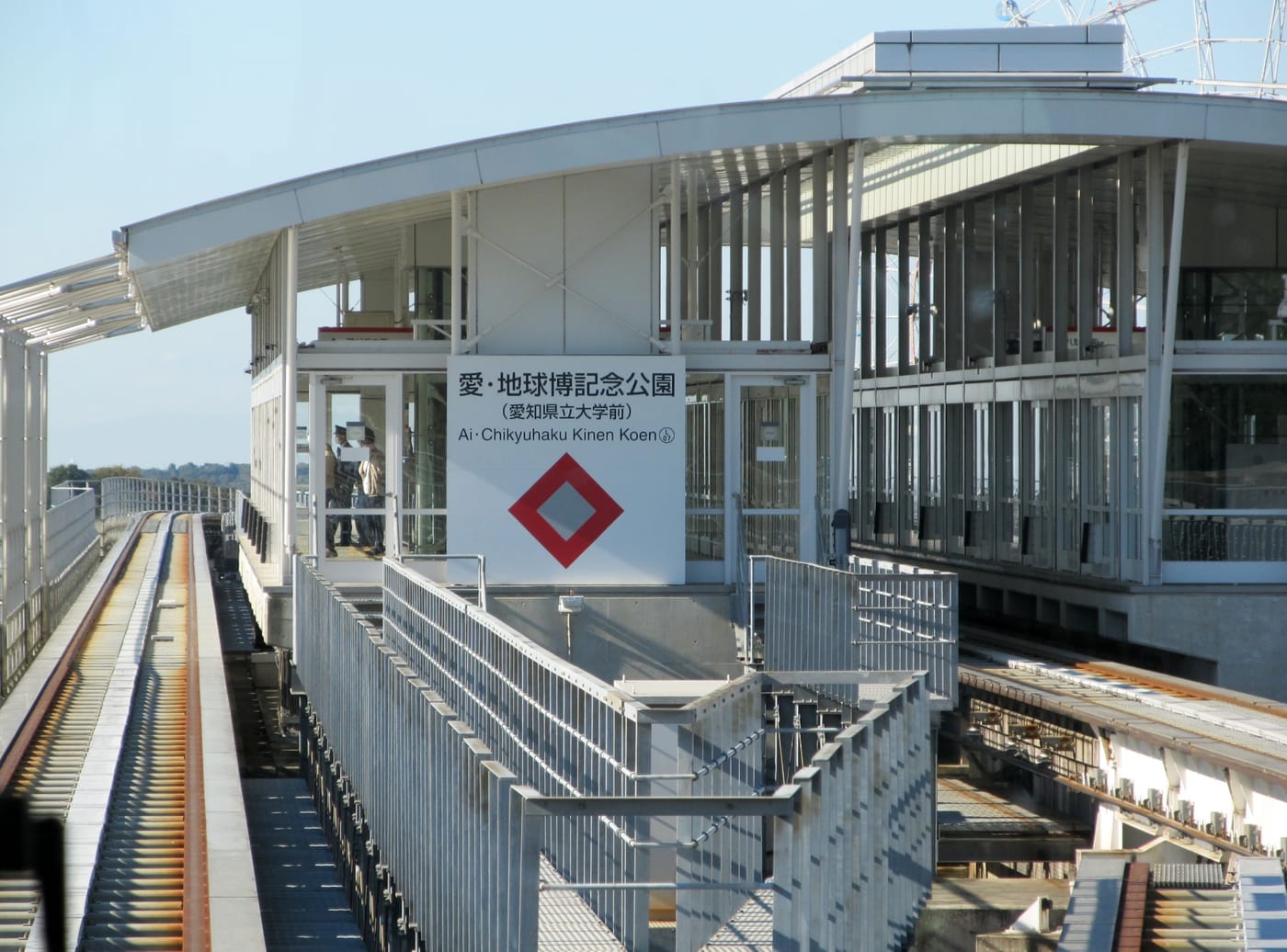
The prefectural park authority publishes the reference route as Nagoya Station to Fujigaoka by subway, then the Linimo maglev to Expo Memorial Park station: 41 minutes, ¥670. That page also notes the figure excludes the walking time at the interchange, so budget more. The maglev leg itself is ¥360 and takes 13 minutes, and the park is immediately outside the station.
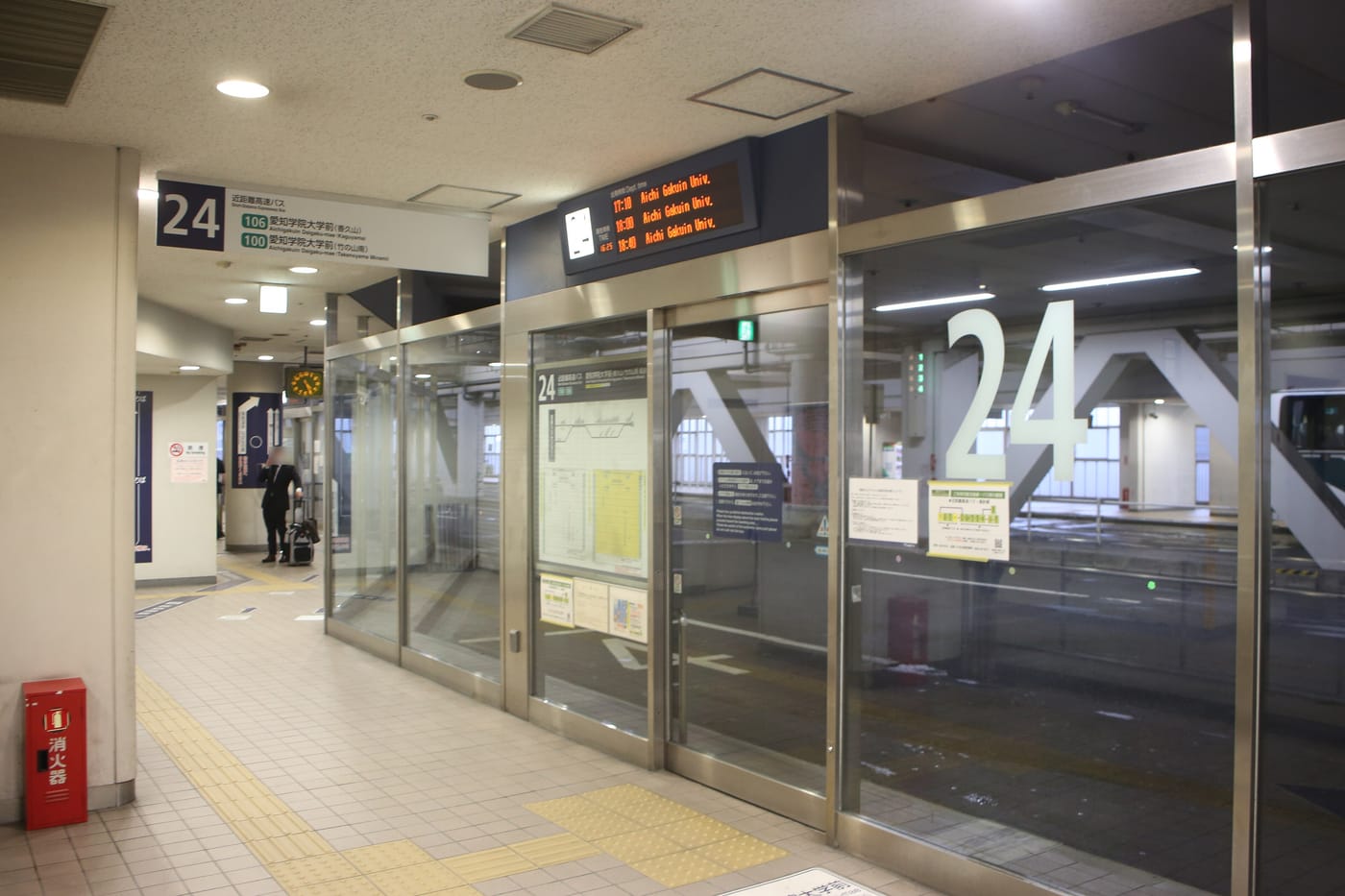
The Meitetsu direct bus leaves from bay 24 on the fourth floor of the Meitetsu Bus Center, costs ¥1,200 one way and takes 40 minutes (59 via the indirect service). No transfers, no reservation — but three officially documented catches, each capable of ruining a day:
- No standing. The operator states that because this is a highway coach, standing passengers cannot be carried and a full bus cannot take you. That is the price of not booking.
- Direct services are suspended on park closure days and when the park shuts for weather.
- The last return bus is 17:30, and the park closes at 17:00. Thirty minutes, and Dondoko Forest is a long walk from the bus stop.
Two more routes are worth knowing. Chubu Centrair Airport to the park is ¥2,000 and about 1 hour 17 minutes, but runs once a day in each direction (10:00 from the airport, 15:00 from the park), and the operator explicitly bars using it for the Fujigaoka–park section alone. The Seto Station service is ¥420 and runs weekends and holidays only.
On busy dates, take the operator’s own advice and avoid Fujigaoka: Nagoya Station to Kozoji on the JR Chuo Line, Aichi Loop Line to Yakusa, then the maglev — 47 minutes, ¥1,000. The park authority states outright that Fujigaoka station is expected to congest during large events and recommends this instead. From Sakaemachi it is 45 minutes and ¥960; from Okazaki, 52 minutes and ¥840.
Finally, two ideas to kill off. Skip the Linimo day ticket: at ¥800 it costs ¥80 more than the ¥720 return fare, and Ghibli Park does not appear anywhere on the eleven-venue list of discounts the pass unlocks. And do not drive: the operator states flatly that Ghibli Park has no dedicated car park and asks visitors to come by public transport. The park’s own published 2025 figures make the point — the largest lot, North 1 with 850 spaces, has filled by 09:30 on weekends, and the park opens at 09:00.
How big is this place?
It is 1.3 km from the maglev station to Dondoko Forest, and Ghibli Park is only one tenant of the park it sits in.
The operator publishes the distances, which beats any adjective. From the maglev station: 400 m to the Grand Warehouse, 300 m to Hill of Youth, 800 m each to Mononoke Village and Valley of Witches, and 1,300 m to Dondoko Forest by the west-gate route (1,000 m via the forest-floor garden). Between areas: Grand Warehouse to Valley of Witches 400 m, to Mononoke Village 600 m, to Dondoko Forest 550–850 m.
Add it up and a Premium holder covering all five areas walks several kilometres before counting anything inside the areas themselves. Treat Ghibli Park as a full day, wear real shoes, and do not schedule anything tight afterwards.
One more number is worth carrying around. The operator states on its access page that the park is reservation-only with a daily capacity of around 5,000 people, while the surrounding Expo Memorial Park averages 9,000 visitors on weekends and holidays. Put the two together and the crowd around you is not all Ghibli ticket holders — some are people walking, cycling and riding the Ferris wheel in a large former Expo site. That is why "the grounds looked packed" and "Ghibli Park tickets are hard to get" are two separate claims.
Between Mononoke Village and Dondoko Forest there is a paid shortcut that does not appear on the ticket page at all: the APM Catbus, a roughly ten-minute ride along a forest track closed to pedestrians, at ¥1,000 for adults. Its restrictions are unusually hard: one-way only, no return tickets; sold only at a dedicated vending machine inside the Expo Memorial Park, never online; capped at a daily quota that stops sales once reached; and no photography on board. Ticketing opens at 9:15 on weekdays and 8:15 at weekends. Put that price in context — one way costs the same as a full weekday Satoyama Stroll Pass, and Standard holders cannot enter Dondoko Forest anyway, so the ride is useless to them.
No roller coasters — so what do you do here?
You look at buildings and exhibits, and most interiors are off-limits to cameras.
This is where expectations break, so let us be direct. Ghibli Park has no large rides of any kind; the experience is walking into buildings and recognising what is inside them. The operator’s visitor guide says photography and video are declined inside the facilities except in a few places, that flash is banned even where shooting is allowed, and that monopods, tripods and selfie sticks are prohibited throughout — only a palm-sized handheld device held in one hand below head height is acceptable.
Adjust expectations on the playful installations too. Four are restricted to children of primary school age (12) and under: the Catbus Room and Children’s Town in the Grand Warehouse, Dondoko-do in Dondoko Forest, and Okkotonushi in Mononoke Village. What adults can actually pay to ride amounts to two things in Valley of Witches — the merry-go-round at ¥1,000 for junior-high age and up, and the Flying Machine at ¥500, which the operator itself labels a children’s ride. One detail is easy to get wrong: there are two Catbuses, and the one at the Grand Warehouse entrance is explicitly described as rideable by adults and children alike. The one adults cannot board is in the Catbus Room.
Mononoke Village’s Tatara hut has hands-on sessions, no reservation, same-day sign-up: charcoal-grilled goheimochi at ¥1,500 per person and stone-milled kinako with warabimochi at ¥1,000 per person. Under-nines cannot take part (they may enter), and under-13s need an accompanying guardian.
So what makes the trip worth making? In 2026 the most concrete answer is Night in the Valley of Witches, the first original short film Studio Ghibli has made specifically for this park, directed by Goro Miyazaki and Akihiko Yamashita. It has screened at the Grand Warehouse’s Orion cinema since July 8, 2026, and nowhere else. The operator lists exactly three tickets that reach it: Premium, Standard, and the Grand Warehouse area ticket at ¥2,000. The same day, the Grand Warehouse exhibition room opened the Panorama Box exhibition with 31 new works drawn by Hayao Miyazaki.
And one misconception to clear: no new area opened in 2026. All five have been complete since Valley of Witches opened in March 2024. What is new this year is content (those two exhibitions) and rules — the July ticket restructure, the numbered-ticket system, and the removal of the Grand Warehouse’s 15:00 slot. Anything promising a new land is recycled news.
Which days is it shut?
Tuesdays, plus a nine-day closure from November 30 to December 8, 2026 that appears only on the calendar and has never been announced.
Those nine days first. The official operating calendar marks 30 November through 8 December as closed, yet as of the verification date not one of the roughly four dozen 2026 news items on the operator’s site mentions it, and no reason has been published. We are not going to invent one. The pattern from the two previous maintenance closures was a press release about a week beforehand, so until the operator posts something, the calendar page is the only place this exists. Anyone planning Aichi for early December should open that calendar before booking flights.
Otherwise the park closes every Tuesday, moving to the next weekday when a Tuesday falls on a public holiday, plus the new-year period and designated maintenance days:
| Month | Closed days |
|---|---|
| Sep 2026 | 1, 8, 15, 24, 29 |
| Oct 2026 | 6, 13, 20, 27 |
| Nov 2026 | 4, 10, 17, 30 |
| Dec 2026 | 1–8, 15, 22, 28–31 |
| Jan 2027 | 1, 2, 3, 5, 12, 19, 26 |
| Feb 2027 | 2, 9, 16, 24 |
| Mar 2027 | 2, 9, 16, 23, 30 |
The exception to the rule is sitting in that table: Tuesday 24 November 2026 is marked open. It fits neither "closed every Tuesday" nor the public-holiday deferral, and the operator has not explained it. Which is the practical lesson — do not derive dates from the rule, read the calendar. Nothing beyond March 2027 has been published yet.
Opening hours are 10:00–17:00 on weekdays, 9:00–17:00 at weekends and holidays, and 9:00–20:00 on designated evening days. Last entry is 16:30, except the Grand Warehouse, which runs one hour from your booked slot. The operator specifically warns that Hill of Youth and Dondoko Forest get extremely crowded from 16:00 until closing, that entry reception ends at 16:30, and that you may not get in at all — an expensive way to waste a single-area ticket.
Grand Warehouse entry slots are 9:00 (only on 9:00 opening days), 10:00, 11:00, 12:00, 13:00 and 14:00. The 15:00 slot was removed from July 2026 entry onwards. The good news is that once you are in, there is no time limit: you enter within an hour of your slot, and it is not a rotation system.
From 30 October 2026 the Valley of Witches winter illumination begins, with that area and Mononoke Village extending to 19:00 (last entry 18:30) on the opening day. The operator has announced only the start date and has not said when it ends. Details of the autumn Dondoko festival (30 October to late November) were promised for early September.
What to deal with before you arrive
Your suitcase. There are no lockers inside the park, and large bags are not allowed in at all.
The operator is explicit: there are no coin lockers and no cloakroom inside the Ghibli Park areas. Lockers exist at the Expo Memorial Park’s north information centre, the Global Citizens Exchange Centre and the west information centre, and they are limited in number. Large items such as suitcases cannot be brought into the areas. So the plan of arriving straight from Nagoya with luggage in hand does not work; deal with the bags at a station or hotel first.
A few more to file away:
- There is nowhere to eat food you bring in. The operator states there is no place within the areas to consume your own food.
- Strollers and umbrellas cannot go inside buildings (with some exceptions); racks are provided.
- The whole park is non-smoking, and you take your rubbish out with you.
- Your phone is your ticket, and a screenshot will not do. Tickets bought through the overseas page run on MOALA Ticket, where screenshots and printouts of the QR code are both explicitly invalid. A flat battery is a lost ticket — bring a power bank.
- Bring your passport. The overseas purchase page states that the booker’s own passport must be shown on entry, and the gate checks at random.
On accessibility, wheelchairs are welcome throughout, though the operator notes that parts of some buildings — Satsuki and Mei’s House in particular — cannot be navigated or viewed by wheelchair because of how they are built; Dondoko Forest has a slope car to the hilltop. Payment is broad: all six major international cards, transit IC, and QR wallets including Alipay and WeChat Pay. Merchandise is in-park only; the operator states there is no online shop.
Which ticket should you buy?
Answer why you are coming and the ticket picks itself. No hedging here:
- Coming for Totoro, or with young children: the Dondoko Forest area ticket, ¥1,000, same price every day. If you genuinely want everything, jump straight to Premium — every option in between misses the house.
- Half a day, or here for the short film: the Grand Warehouse area ticket, ¥2,000, same price every day, largely indoors and weather-proof. Best value in the range.
- Here for Howl’s Castle and Valley of Witches: buy the Valley of Witches & Mononoke Village ticket at ¥3,300, not the identically priced Standard. All three buildings included, no dawn queue for a numbered ticket. This is the most expensive mistake available.
- All five areas in one day: Premium at ¥7,300. It is the only ticket that bypasses the numbered-ticket system entirely — swap your wristband before noon, and expect several kilometres of walking.
- Booking from overseas: accept the constraint first — only Premium and Standard are sold abroad, area tickets are Japan-only by policy, and Premium was sold out across all three months checked. What you can realistically buy is Standard, the pass without Totoro’s house. The only two ways round it are to be there when a new month opens and take Premium, or to have someone in Japan buy an area ticket through Boo-Woo and stand at the gate with you.
An honest closing verdict: if you have no particular attachment to Studio Ghibli, this is not a must-visit. There are no rides, interiors are largely off-limits to cameras, and the areas are a long way apart. The pleasure comes from recognising things. If you can pick out the clock in the World Emporium or the bathhouse sign on sight, it is worth a full day — but choose the right ticket two months out, because on the day you cannot change it. For the other advance-booking traps first-timers hit in Japan, see the guide to the mistakes first-time visitors make; to pair the trip with the castle and the city centre, see the Nagoya Castle guide.
Frequently Asked Questions
- Q1:Is Ghibli Park a lottery, or first-come-first-served?
- First-come-first-served. Tickets for a given entry month go on sale at 14:00 Japan time on the 10th of the month two months earlier — for a November visit, that is September 10. Each person may apply once per ticket type, up to six tickets per application; groups of seven or more must split into sub-groups of six with their own applicant, and each person enters alongside their own applicant. The only lottery anywhere in the system is "Aichi Prefectural Residents Day" on the 27th of each month, and only people living in Aichi may apply for it. English-language guides that describe the whole park as lottery-based have merged these two things into one.
- Q2:Can I upgrade or add areas once I am inside the park?
- No, and this is the single most important sentence in this guide. The operator states twice on its own ticket page that tickets are not sold inside the park and not sold at any area entrance. The one exception is the same-day tickets for the three special buildings in Valley of Witches, and even those now require a numbered queue ticket collected at opening. On top of that, purchases cannot be changed to another date and cannot be refunded, tickets are name-registered, and staff run random ID checks on the lead applicant at the gate. Whatever you picked two months ago is what you get.
- Q3:Which ticket gets me into Satsuki and Mei's House from My Neighbour Totoro?
- The Dondoko Forest area ticket at ¥1,000 for adults, or the top-tier O-Sanpo Day Pass Premium. The ¥3,300 Standard pass does not include it: Standard covers the Grand Warehouse, Mononoke Village and Valley of Witches only, and the house sits in Dondoko Forest. Since nothing is sold inside the park, a Standard holder who wants to see the house that day has no option at any price. Note also that the new Satoyama Stroll Pass reaches only the hilltop part of Dondoko Forest, not the house below it.
- Q4:Where can I buy Ghibli Park tickets from outside Japan?
- Two, and only two. The official overseas purchase page run by LAWSON TICKET states outright that it sells the O-Sanpo Day Pass Premium and the O-Sanpo Day Pass Standard, and adds that area-specific tickets are only sold in Japan — so the five cheap single-area tickets, including the ¥1,000 one that reaches Totoro's house, cannot be bought from abroad at all. Stock matters even more: checked in late August 2026, that page showed Premium sold out for all three entry months on offer (August, September and October), leaving Standard as the only ticket actually purchasable — the one that misses Totoro's house. That was the position across those three months and does not mean Premium is never available. Klook likewise lists only Standard, at roughly thirteen per cent above the official fare plus the ¥110 service charge, while its own page text promises a choice of Standard or Premium. KKday sells no standalone ticket — only day-tour, shinkansen and hotel bundles, explicitly closed to Japan residents, with the Grand Warehouse slot locked to 10:00–10:59. For an area ticket, someone in Japan has to book it through Boo-Woo, and the name-registration rule then applies.
- Q5:How do I get to Ghibli Park from Nagoya Station?
- Two official routes, one minute apart in journey time and ¥530 apart in price. The prefectural park authority publishes the subway-plus-maglev route as 41 minutes and ¥670 (Nagoya to Fujigaoka by subway, then the Linimo maglev to Expo Memorial Park station), noting that the figure excludes walking time at the interchange. The Meitetsu direct bus is 40 minutes and ¥1,200 one way, no reservation needed — but it is a highway coach, standing is not permitted, and a full bus simply leaves without you. The last return bus departs at 17:30 while the park closes at 17:00, and direct services do not run on park closure days. On crowded dates the park authority itself recommends routing via Yakusa instead of Fujigaoka: 47 minutes, ¥1,000.
- Q6:Are there rides, and can I take photos?
- There are no roller coasters or large rides of any kind, and photography indoors is declined except in a few specified places; flash is banned even where shooting is allowed, and monopods, tripods and selfie sticks are prohibited throughout. Four of the playful installations — the Catbus Room and Children's Town in the Grand Warehouse, Dondoko-do in Dondoko Forest, and Okkotonushi in Mononoke Village — are restricted to children of primary school age (12) and under. Adults can pay to ride the merry-go-round in Valley of Witches at ¥1,000, and there is a second Catbus at the Grand Warehouse entrance that the operator explicitly states adults may board. Since July 8, 2026, the Grand Warehouse cinema has been screening the first original short film Studio Ghibli made specifically for this park.
Read next
Nagoya Travel Guide 2027: Castle, Ghibli Park & Nagoya Meshi
Chubu's gateway and an underrated food city — Nagoya Castle's Honmaru Palace, the Aichi Ghibli Park, Atsuta Shrine and hitsumabushi.
Nagoya Autumn Foliage 2026: Which Garden Is Worth It?
The October price rise skipped two of the gardens, so the one with the most maples is also the cheapest. The city peaks one to two weeks after Korankei — by early December, Korankei is bare.
Can you go inside Nagoya Castle? 2026 ticket guide
The keep is shut but the grounds are open — how the October 2026 price doubling works, and why the Honmaru Palace is the real draw.
📊 See the 2026 Price Index (JR Pass, DPA, eSIM, Airport Transport) →