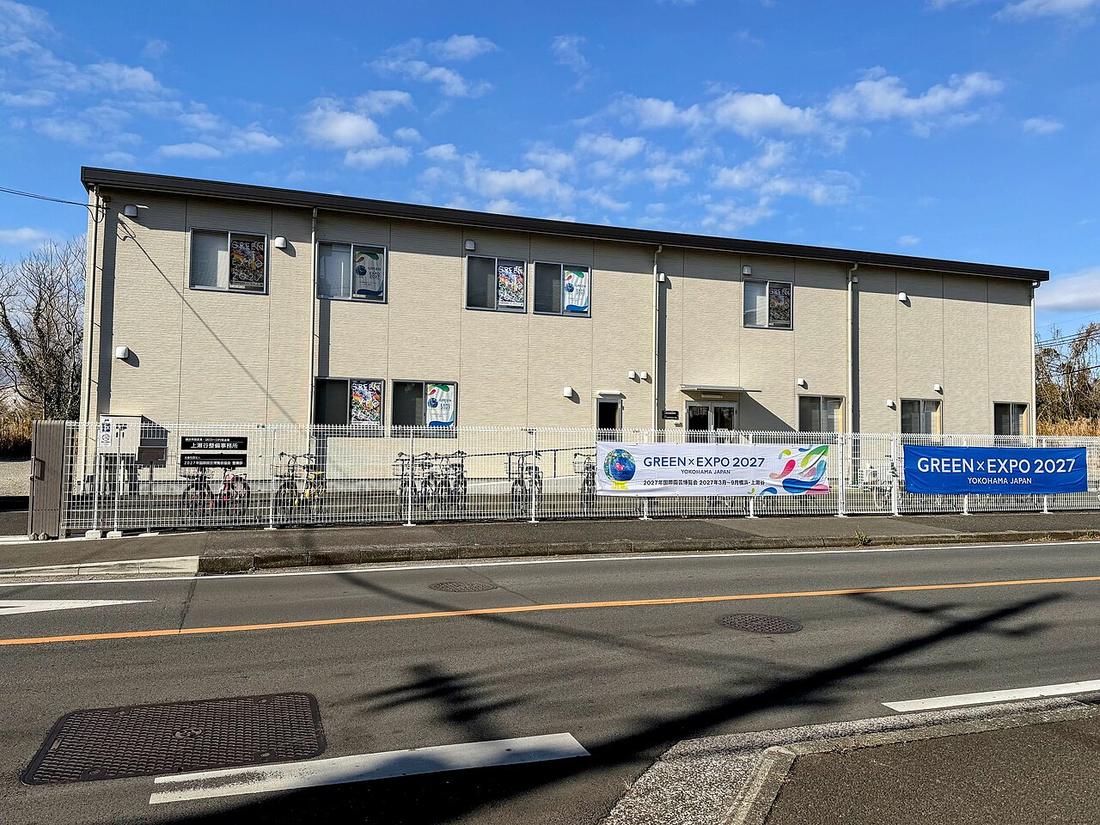
GREEN×EXPO 2027 had sold 2,332,652 tickets as of 18 August 2026, and not one of those 2.33 million tickets carries a visit date. At this expo the entry QR code is not generated until the holder completes a separate visit date-and-time reservation, and paper tickets are no different — buying is only step one. That reservation system opened on 18 September 2026 and released all 192 days, 19 March to 26 September 2027, at once, with a capacity ceiling on every time slot. This guide covers the seven ticket types, the four ways to buy (including a convenience-store route that skips the website entirely), how the shuttle booking works, and the 19 dates the organisers themselves flag as peak.
- A ticket is not entry. The QR code appears only after a date-and-time reservation; paper tickets must first be registered to an official account
- Booking is open now. All 192 days were released at once, first come first served, across seven entry slots, each with a capacity ceiling
- The fastest route if you are in Japan: 7-Eleven, Lawson and FamilyMart machines sell dated paper tickets you scan straight at the gate — but only for the 09:30 slot
- No price pressure: the advance one-day ticket at ¥4,900 stays on sale until 18 March 2027, and a booked date can be changed three times
- Avoid the 19 peak dates the organisers published — they cluster in Golden Week and September; March is not among them
- The shuttle is booked separately at ¥200 one way, and cancelling after 17:00 the previous day costs 50%
The basics
| Official name | 2027 International Horticultural Expo (GREEN×EXPO 2027), Class A1, AIPH-approved and BIE-recognised |
| Dates | 19 March 2027 (Fri) – 26 September 2027 (Sun), 192 days, no closed days |
| Hours | 09:30–21:30, last entry 21:00 |
| Location | Former Kamiseya Communications Site, Seya and Asahi wards, Yokohama, Kanagawa / 5936 Seya-machi, Seya-ku, Yokohama 246-0003 |
| Size | About 100 hectares of expo zone (80 of it the venue itself), 10 million plants |
| Entrance gates | One is planned |
| Admission | Advance one-day adult ¥4,900 (full table below) |
| Reservations | A visit date-and-time reservation is mandatory; shuttle bus and car park are each booked separately |
| Time needed | 100 hectares, open until 21:30 — half a day to a full day |
| Official sites | expo2027yokohama.or.jp/en, tickets at ticket.expo2027yokohama.or.jp/en |
📖 Contents
- 1. The ticket you hold cannot generate a QR code yet
- 2. How the date booking works: seven slots, 192 days open
- 3. Where to buy, and what is still left to do
- 4. Every ticket type, and the discount that does not exist
- 5. Buying from abroad: account, card, language
- 6. Do pavilions need their own booking?
- 7. Which stretch to pick: the 19 dates they named
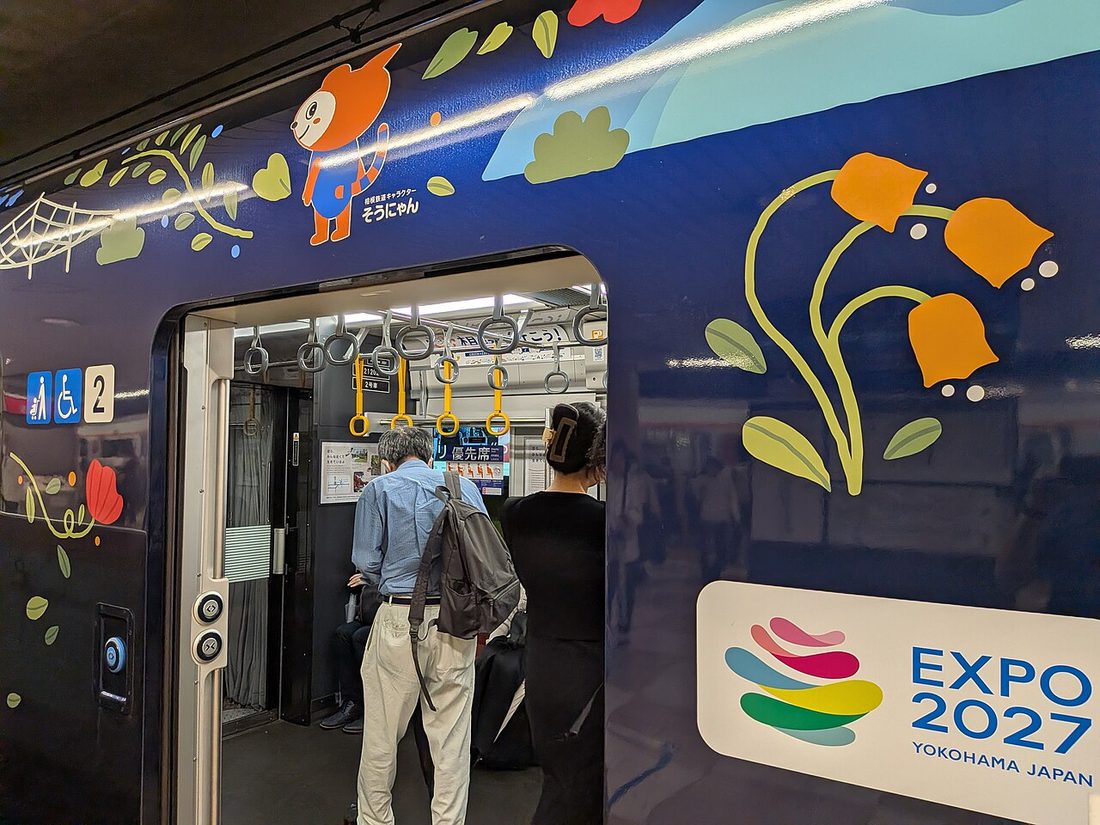
- 8. Getting there: shuttle, a 30-minute walk, or booked parking
- 9. The English pages still say booking has not opened
- 10. Six things still unpublished
- 11. How I would sequence it
- 12. FAQ
The ticket you hold cannot generate a QR code yet
Buying a ticket does not get you in — the entry QR code is generated only after you complete a visit date-and-time reservation. The official FAQ puts it plainly: the QR code is displayed after a visit date and time has been reserved against that ticket. Open your ticket page today and there is no entry code on it, because it has not been created.
The wording on paper tickets is blunter still: you cannot enter while it remains a paper ticket, and a paper ticket with no date reserved cannot be used for entry. Holders must create an account on the official ticket site, register the 10-digit ticket ID under the additional-registration flow, and only then book a slot.
And booking is not one procedure but three: entry date, shuttle bus and car park each run on their own system. The organisers attach a warning of their own — if either the entry slot or the shuttle cannot be secured, the other will need changing, so check both before you commit.
The single exception is the dated paper ticket sold at Japanese convenience stores, which prints with the reservation already attached and goes straight to the gate reader (see where to buy).
How the date booking works: seven slots, 192 days open
Every date from March to September 2027 is bookable right now, released all at once, first come first served. Reservations opened on 18 September 2026 for anyone who already holds a ticket and has registered an official account, and they cover the whole run rather than rolling out day by day. Shuttle bus and car park bookings opened the same morning.
There are seven entry slots, and which ones you can pick depends on your ticket:
| Entry slot | Ticket types that can book it |
|---|---|
| 09:30 / 10:30 / 11:30 / 12:30 / 13:30 / 14:30 | One-day, special discount, season pass, summer pass |
| 17:00 | All of the above plus the evening ticket |
The slot you book is an earliest entry time, not a fixed window — the organisers state that you may enter at any point during the day once your reserved time has passed. Booking 10:30 does not lock you out at 11:30; it only stops you entering before 10:30.
Each slot will carry a capacity ceiling set according to expected crowding. That much is official; the numbers are not published. What is scarce here is the slot on a popular date, not the fare.
If you booked the wrong date
You can change it three times. Season and summer passes have no limit. If the third rebooked date still does not work, there is one more escape hatch: from 00:00 on the day of the booked visit you may make a same-day entry reservation if slots remain — but only for that same day.
The two passes have their own limits: a season pass can hold four dates at a time, a summer pass three, and you have to actually attend one before booking the next. You can also book for family and friends in one go using their individual 10-digit ticket IDs, up to ten people at a time.
Turning up with nothing booked: if slots remain that day you can buy and book on your phone at the gate, and if they do not, you may not get in. An on-site same-day ticket counter is still “under consideration”, so it is not a fallback.
With 2.33 million tickets already in circulation and a ceiling on every slot, ten minutes spent pinning a date down is worth it once you know you are going — especially since you keep three free changes.
Where to buy, and what is still left to do
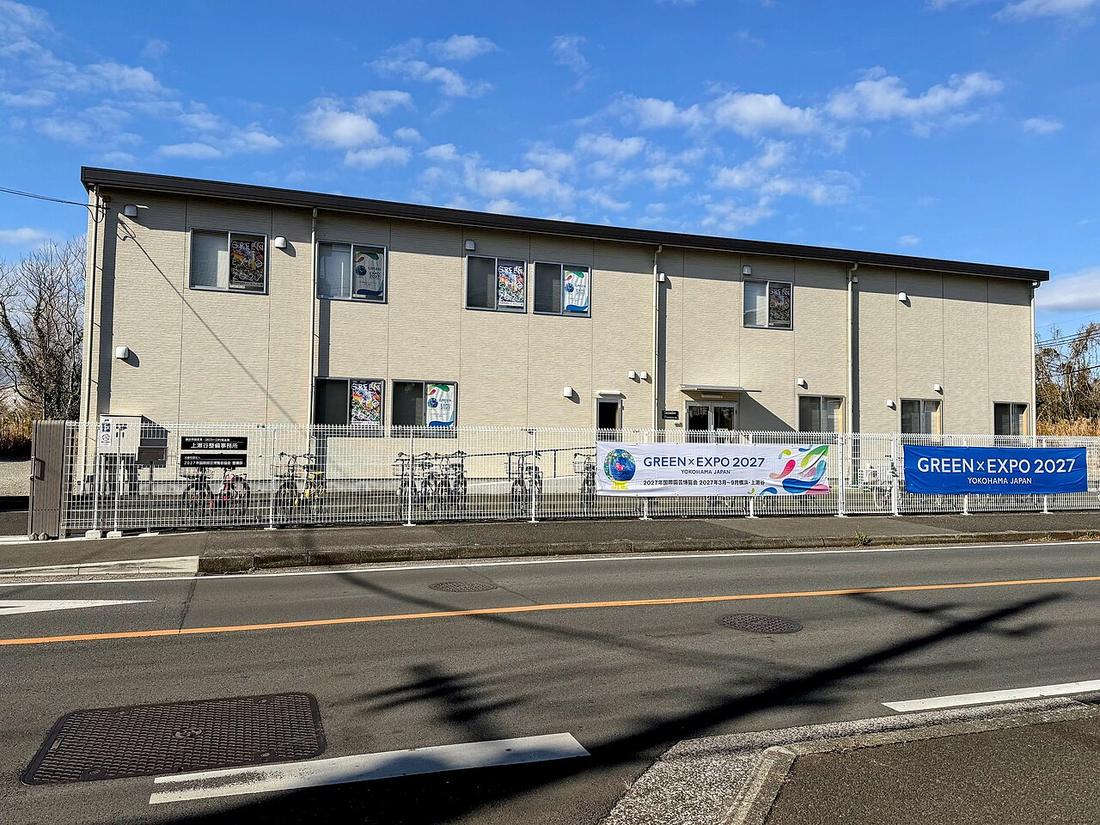
Four routes, and only the convenience-store one is finished when you pay. The other three hand you a ticket ID that still has to be registered and dated on the official site.
| Channel | What you get | What is left to do |
|---|---|---|
| Official ticket site (Japanese and English) | E-ticket | Create an account (two-factor) → pick a date and slot → QR code is generated |
| Convenience-store machines across Japan (7-Eleven, Lawson, FamilyMart) | Paper ticket with the date reservation and QR code already on it | Nothing. Take it to the gate |
| Overseas resellers (for example KKday, in Chinese) | 10-digit ticket ID | Register on the official site → add the ticket ID → book a date |
| Authorised agents (Hankyu, JTB, Pia, HIS, J-market, Cainz, one in Taipei) | Paper ticket with a ticket ID | Same as above — register, add, book |
Convenience stores: done at the counter, but 09:30 only
Since 18 September 2026 the in-store machines at 7-Eleven, Lawson and FamilyMart sell tickets with the visit date reservation already included. No exchange, no website, and the price matches the official site (individual chains may add an issuing fee). The trade-off is that the only entry slot on offer is 09:30, and the bookable date range is being widened in stages:
| On sale | Ticket types | Visit dates you can choose |
|---|---|---|
| 18 Sep 2026 – 8 Dec 2026 | Advance one-day, special discount | 19 Mar – 30 Jun 2027 |
| 9 Dec 2026 – 18 Mar 2027 | Advance one-day, special discount | Whole run |
| 19 Mar – 26 Sep 2027 | Standard one-day, special discount, evening | Whole run |
So if you are already in Japan and intend to spend a full day there, this is the least painful route: walk in, choose 09:30, pay, take the ticket. To change the date afterwards, or to book a pavilion, you still have to register on the official site with the 10-digit ID printed on the ticket. Lost tickets are not reissued, but that ID alone lets you re-register as an e-ticket, so photograph the ticket ID before you leave the store. The machine flow is the same one used for paying with a 13-digit number at a convenience store.
Authorised agents, including one in Taipei
The association publishes a list of authorised ticket agents: Hankyu Travel (paper only), JTB, Pia, HIS, Meitetsu Kanko, J-market, Cainz, Rakuten and others in Japan, plus Nichimei International in Taipei, which sells a one-day ticket in Chinese for NT$1,100 by bank transfer. What agents genuinely offer is a paper ticket (the official site sells e-tickets only) and a way around the Japanese account and 3-D Secure hurdles. What they do not offer is a discount, or the date booking — that door only the official system opens. One agent page is also publishing a rule the organisers contradict; see the section below.
Every ticket type, and the discount that does not exist
None of the seven prices has changed since tickets went on sale in March 2026. The ticket page and the third edition of the official ticket-system PDF (updated 18 September 2026) agree:
| Ticket | Adult (18+) | Youth (12–17) | Child (4–11) | Availability |
|---|---|---|---|---|
| One-day (advance) | ¥4,900 | ¥3,000 | ¥1,400 | Advance only, until 18 Mar 2027 |
| One-day (standard) | ¥5,500 | ¥3,300 | ¥1,500 | From 19 Mar 2027 |
| Evening (entry from 17:00) | ¥3,500 | ¥1,900 | ¥900 | During the event only, from 19 Mar 2027 |
| Special discount | ¥2,800 | ¥1,700 | ¥800 | Disability certificate holder + 1 carer |
| Summer pass (1 Jul – 31 Aug) | ¥12,000 | ¥7,000 | ¥3,000 | Until 31 Aug 2027 |
| Season pass (whole run) | ¥28,000 | ¥16,000 | ¥6,500 | Until 26 Sep 2027 |
| Group (15+ people) | ¥5,200 | ¥3,100 | ¥1,400 | Through an authorised seller |
| Age 3 and under | Free, no ticket, no pre-registration required | — | ||
(School groups have their own rates: ¥1,700 for high-school students and ¥900 for junior-high, elementary and kindergarten pupils, arranged under the association's group rules.)
Four things to know before you buy
One: there is no senior discount. The FAQ says so in a single sentence. Japanese venues so commonly offer senior pricing that visitors assume it exists and only discover otherwise at the gate.
Two: the age cut-off is 1 April 2027, except in March. Bands are assessed on your age as of 1 April 2027, but visitors coming during March 2027 are assessed as of 1 April 2026. If your child sits on the 11-to-12 or 17-to-18 boundary in spring 2027, the correct band differs between a March visit and an April one.
Three: season and summer passes require a registered facial photograph. Once registered it cannot be changed, the pass is valid only for the person in the photograph, and transfer or lending is prohibited. These are not passes a family can share in rotation.
Four: refunds are not offered as a rule, and ticket types cannot be swapped. That includes unused tickets, with exceptions only for cancellation attributable to the association itself. The type you buy is the type you keep.
Two special tickets: the commemorative card and the RING PASS
The commemorative ticket is a lanyard card with the QR code printed on the back, so you can enter without a phone. Any ticket type can be switched to it in the cart, for the admission price plus a ¥1,980 card fee and ¥990 delivery; first deliveries are due in December 2026. It cannot be cancelled or changed once bought, and the window for converting already-purchased tickets closed on 31 August 2026.
The RING PASS is made from reclaimed timber from the Grand Ring at Expo 2025 Osaka-Kansai: ¥50,000 including tax, a season pass and shipping, limited to 2,027 units, adults with a season pass only, and awarded by ballot rather than first come. Applications ran from midday on 18 September 2026 to 30 September 2026, with results emailed in early October and delivery in mid-February 2027. Existing season-pass holders pay the ¥22,000 difference; one per person.
Buying from abroad: account, card, language
The official ticket site works from overseas, with no Japanese phone number or address required. Three points of friction follow.
Friction one, the account. Registration requires email, password, language preference, name and country of residence, and login uses two-factor authentication. The verification code is six digits with a five-minute expiry, so use a mailbox that delivers instantly. Under-16s may not purchase on the official site themselves. A single transaction is capped at 14 tickets; one account may hold up to 100 unused tickets and 14 each of the season and summer passes.
Friction two, the card. There are exactly two payment methods: a credit card (AMEX, Diners, JCB, Mastercard or Visa, single payment only), or cash at a Japanese convenience store — Lawson, Ministop, FamilyMart, Seicomart or 7-Eleven — by 23:59 on the third day after purchase. The second does not exist for anyone outside Japan, so the card is the only route. When the FAQ lists reasons a card payment fails, the first item is a 3-D Secure card with no enrolment or password configured. This is the same pattern as our breakdown of Japan's online rail booking systems: in Japanese ticketing, the card, not the language, is the hidden gate. Find out now whether your bank uses SMS one-time codes or app approval.
Friction three, the language. The ticket domain declares ja, en and x-default and nothing else — no Chinese in either script. Browser translation handles it, but it is also why non-Japanese channels lag behind the organisers.
Do pavilions need their own booking?
Some exhibits will use a same-day booking system, not an advance one. The organisers have confirmed they are doing it and published the rules; only the list of facilities is still missing.
- One ticket can book one exhibit per day, so a second one means queuing.
- Slots are released in three waves across the day, so missing the first wave is not fatal.
- You can book before entering the site, for any slot later than the current time.
- Cancel at least 15 minutes before your slot; arriving more than 15 minutes late burns the allowance.
- Some exhibits will keep a walk-up queue running alongside the bookings.
The flower and greenery exhibits, the theme pavilion, the horticultural pavilion and the Japanese government garden all carry no extra charge (retail aside). The main facilities now have names: theme pavilion NEKKO, horticultural pavilion IROHA-GARDEN, and indoor exhibition facility HANAMEGURI, whose displays rotate with the seasons. The programme also includes national days for 59 countries and organisations, and a permanent Aomori Nebuta float in the association's festival project.
Which stretch to pick: the 19 dates they named
To avoid crowds, avoid the 19 dates the organisers flagged as peak. They published the list with the parking rules, defining peak as “Golden Week, September and similar weekends and public holidays”:
| Month | Peak dates in 2027 |
|---|---|
| April | 29 |
| May | 2, 3, 23, 29, 30 |
| June | 6, 13 |
| August | 14, 15 |
| September | 4, 11, 12, 18, 19, 20, 23, 25, 26 |
March, the opening month, is not on the list at all, while the nine September dates take in Silver Week and closing day. You may assume opening week is the crush; expo attendance curves usually say otherwise, with the “last chance” effect before closing producing the real spike. The organisers also created a standalone summer pass for 1 July to 31 August, which tells you the school holidays are treated as a demand block of their own.
What is in bloom, month by month
The official brochure lists a representative bloom for each month of the run:
| Month | Representative blooms |
|---|---|
| March | Pansies and violas (including the “Yokohama Selection”), flowering peach (Kanagawa's Terute series) |
| April | Cherry blossom (Accolade), azalea (Noto-kirishima) |
| May | Surfinia petunias, calanthe orchids |
| June | Lilies, hydrangeas |
| July | Sunflowers, balloon flowers |
| August | Celosia, fountain grass |
| September | Dahlias, boneset |
Note what this is: a month-level guide, not per-variety bloom dates. The brochure itself adds that timing varies with the weather and that the list is only a sample.
The opening period: 40 varieties, 600 trees
Official material states that around 600 cherry trees of some 40 varieties bloom at the start of the run. The varieties illustrated include Kawazu-zakura, Maihime, Somei-Yoshino, kiku-zakura, yae-beni-shidare and Koshi-no-higan, supervised by the Japan Flower Association. The point of 40 varieties is duration, not count: a conventional hanami site is dominated by Somei-Yoshino, which gives you about a week. Kawazu-zakura opens far earlier and kiku-zakura and yae-beni-shidare far later, so staggered like that the opening period holds blossom much longer. For how blossom timing across Kanto behaves, see our read on forecast timing and the wider cherry blossom overview.
So the call I would make: for blossom, target late March into April — the organisers put cherry blossom in the April column and March is off the peak list, a rare case where the best sight and the quietest window coincide. If you are tied to the summer holidays, accept the crowds and look at the evening ticket: entry from 17:00 at ¥3,500 is about a third below the standard one-day rate, a summer evening beats a summer midday, and the site stays open to 21:30.
Getting there: shuttle, a 30-minute walk, or booked parking
The venue is nowhere near Minato Mirai or Chinatown, so it needs its own day in the plan. It sits on the former Kamiseya Communications Site straddling Seya and Asahi wards — two wards, not one. The site is part of roughly 242 hectares returned by the US military in 2015, of which the expo uses about 100. For the harbour side of the city, see our Yokohama day-trip guide.
The four-station shuttle (booking required)
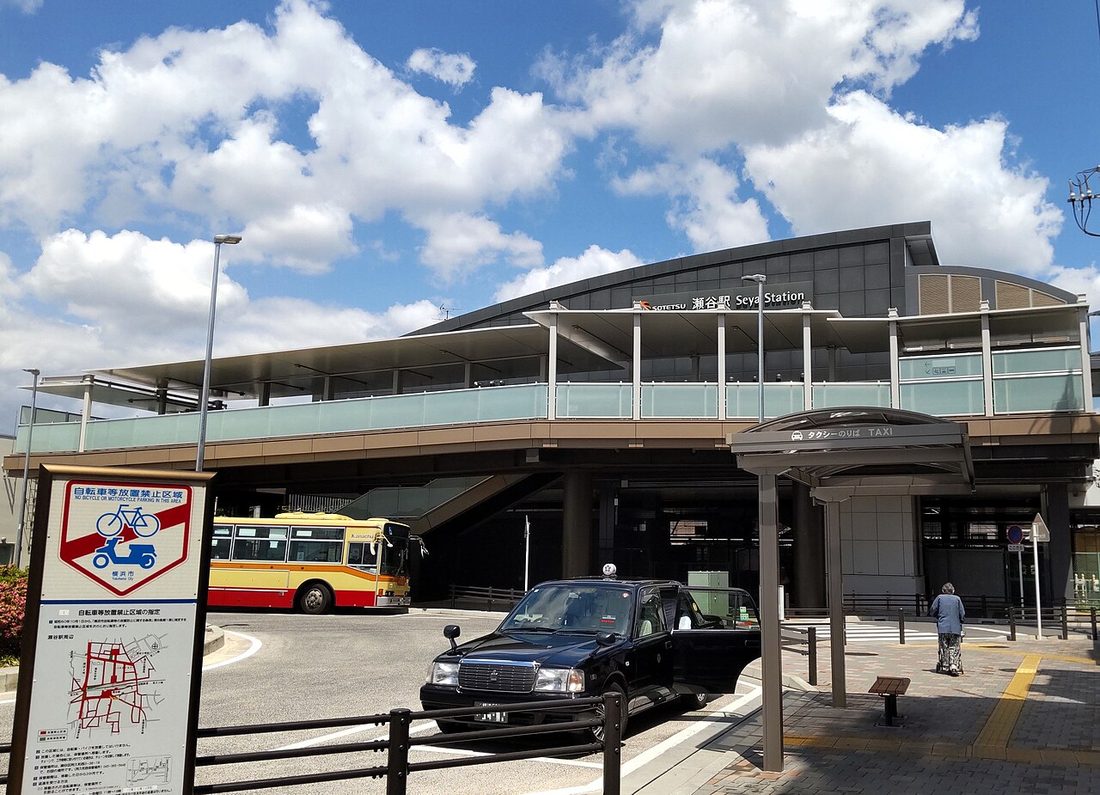
- Seya, Sotetsu Main Line — the most direct hop from Yokohama Station
- Mitsukyo, Sotetsu Main Line
- Minami-machida Grandberry Park, Tokyu Den-en-toshi Line — easiest from Shibuya
- Tokaichiba, JR Yokohama Line — easiest from Shin-Yokohama
Each station is 10–25 minutes from the venue. One way, general fare: adult ¥200, child ¥100; with a disability concession, ¥100 and ¥50. “Child” means age 1 to under 12; under-1s travel free, and each paying passenger may bring two children aged 1 to under 6 free of charge.
Several booking rules have teeth:
| Bookable time bands | Outbound, from each station: 30-minute bands between 08:30 and 13:00, hourly after that. Return, from the venue: hourly 12:00–15:00, 30-minute bands 15:00–21:30, hourly after that |
| Per day | One outbound and one return booking, up to 40 people |
| Booking far ahead | Book 181 or more days before travel and it is only provisional — payment opens 180 days out. The organisers email you; unpaid provisional bookings are cancelled automatically |
| Cancellation | Free until 17:00 the previous day; after that, 50% of the fare up to five minutes before departure; no cancellation inside five minutes |
| Changing date, station or party size | Cancel and rebook (free before 17:00 the previous day). Changing only the departure time is a feature the organisers are targeting for later in 2026 |
| Same-day booking | If slots remain, you can book and pay up to five minutes before departure |
| Payment | Credit card, charged at booking. QR payments (PayPay, d-barai, au Pay) are planned but the system is still being built |
From Tokyo the cleanest routing is Tokyo → Shinagawa → Yokohama → Sotetsu Main Line → Seya or Mitsukyo. From the Shibuya side, take the Den-en-toshi Line to Minami-machida Grandberry Park. If you are slotting this into a Tokyo trip, our five-day Tokyo itinerary helps decide which day to head south.
If you would rather not book: walk from Seya
It is about a 30-minute walk from Seya Station to the venue, with no reservation of any kind. The shuttle saves you twenty-odd minutes of walking but adds a booking, a departure time to meet and a cancellation fee. If your day is flexible, walking is a real option — though not in August.
Boarding-point locations and station exits have not been published yet, and neither have shuttle frequency or first and last departures, so “10–25 minutes by shuttle from those four stations” is as precise as this can currently get.
Direct buses (being finalised)
The organisers have confirmed direct buses to the venue from Shin-Yokohama Station, Yokohama Station, the Minato Mirai and Kannai waterfront area, and Haneda Airport. Operators, timetables, fares and booking methods are all still being finalised. The Haneda link is the one to watch if you plan to head straight there on arrival.
If you drive (everything is pre-booked)
On-site parking for private cars is ¥5,000 on weekdays and ¥7,000 on weekends and public holidays; motorcycles ¥2,000. The car parks are split north and west, with motorcycle, accessible and priority bays on the north side only; arrive via Route 246, the Hodogaya Bypass or the Tomei Expressway for the north side, and from the south of the venue for the west.
Arrival slots are 30-minute bands from 08:30 to 14:00 and hourly from 14:00 to 20:00, with final exit at 22:30; you cannot enter before your slot, and plate recognition opens the barrier. One booking per day, and same-day booking is possible if slots remain. Bookings made 46 or more days ahead are provisional, with payment opening 45 days out. Cancellation is free until the day before and impossible, with no refund, on the day itself.
Park-and-ride at ¥3,000 operates only on those 19 peak dates, at three named lots: Aeon Mall Yamato, Ito-Yokado Yamato-Tsuruma, and the Sagamiono multi-storey car park, each 20–30 minutes from the venue by shuttle. Bicycle parking is free.
The English pages still say booking has not opened
The English ticket site is correct; the English information pages are not. The ticket site's home page states that reservations are open and that slots remain across the whole run. But the organisers' English ticket page still reads “Reservation of visit date and time will be introduced at a later date” — a sentence that is now wrong rather than merely incomplete. The English access page carries no shuttle fares and nothing on the direct buses, and its group-bus note still says the system is scheduled to open in August. The English news list stops at 10 September 2026, missing the entire 15–18 September batch: booking opening, convenience-store sales, the RING PASS and the facility names.
The practical instruction is short: read the ticket site, not the information pages. Where a secondary page and the primary source disagree, follow the primary source — which applies to resellers too. The Taipei agent's page currently tells buyers that reservations open six months before the desired visit date, with date selection expected “around autumn 2026”. Both statements contradict the organisers, and a buyer who believes them will assume only March dates are obtainable and will not compete for summer or closing-week slots.
Six things still unpublished
- The capacity ceiling on each entry slot. The organisers say a ceiling exists but publish no number, so nobody can tell you how many places remain on a given date.
- Shuttle frequency and first and last departures. Only the bookable time bands above are public.
- Direct bus operators, timetables, fares and booking. Four origins confirmed, nothing else.
- Shuttle boarding points and station exits.
- Which pavilions use same-day booking, and whether on-site booking terminals will exist.
- An on-site same-day ticket counter. Officially “under consideration”, so not a fallback. Overseas group booking channels are likewise still being arranged.
How I would sequence it
- Pick the stretch you can take leave for, then buy. Advance pricing holds until 18 March 2027, so choose your window first and cross-check it against those 19 peak dates.
- In Japan, use a convenience store. Abroad, fix your card's 3-D Secure before opening an account. It is the first failure cause the organisers list.
- Check shuttle availability before confirming your entry slot. They are separate bookings; have two or three fallback dates ready.
- If you book the shuttle more than 180 days out, go back and pay. Provisional bookings are cancelled automatically.
- Book the exhibit you want on your phone before you set off. One per ticket per day, with slots released in three waves.
Frequently Asked Questions
- Q1:What is GREEN×EXPO 2027 and when does it run?
- GREEN×EXPO 2027 is the formal 2027 International Horticultural Expo, an AIPH-approved, BIE-recognised Class A1 expo — the top tier. It runs 19 March 2027 (Fri) to 26 September 2027 (Sun), 192 days, with no closed days, on the former Kamiseya Communications Site straddling Seya and Asahi wards of Yokohama. Published hours are 09:30–21:30 with last entry at 21:00.
- Q2:I already bought a ticket. Can I just turn up?
- No. The entry QR code is only generated once you complete a visit date-and-time reservation, and paper tickets are the same — holders must first create an account on the official ticket site and register the 10-digit ticket ID before a slot can be booked. The one exception is the dated paper ticket sold at Japanese convenience stores, which prints with the reservation already attached.
- Q3:Can I still book a date, and how?
- Yes. Date reservations opened on 18 September 2026 and cover the entire event period, 19 March to 26 September 2027, released all at once on a first-come basis. There are seven entry slots: 09:30, 10:30, 11:30, 12:30, 13:30, 14:30, plus 17:00 for evening tickets. The organisers state that each slot will carry a capacity ceiling, though the numbers are not published.
- Q4:Is there a way to buy without opening a Japanese account?
- If you are already in Japan, yes: since 18 September 2026 the in-store machines at 7-Eleven, Lawson and FamilyMart sell paper tickets with the date reservation already included, at the same price as the official site — scan and walk in, no website required. The catch is that the only slot offered is 09:30. Buying from an overseas reseller gives you a ticket ID only, so you still have to register on the official site and book the date yourself.
- Q5:Are the early-bird tickets about to sell out or expire?
- Neither. The advance price runs until 18 March 2027, the day before opening: adult ¥4,900, youth 12–17 ¥3,000, child 4–11 ¥1,400, switching to the standard adult rate of ¥5,500 from 19 March 2027. There is no price urgency — what runs out first is the time slot on a popular date.
- Q6:Is there a senior discount, and from what age do children pay?
- There is no senior discount; the FAQ says so in one line. The age bands are adult 18+, youth 12–17, child 4–11, and children aged 3 and under enter free with no ticket at all. Age is assessed as of 1 April 2027, except for March 2027 visits, which use age as of 1 April 2026 — Japanese school-year logic.
- Q7:Which dates are busiest?
- The organisers name 19 peak dates in 2027: 29 Apr; 2, 3, 23, 29, 30 May; 6, 13 Jun; 14, 15 Aug; and 4, 11, 12, 18, 19, 20, 23, 25, 26 Sep. They cluster in Golden Week and September weekends and holidays, and March, the opening month, is not on the list at all.
- Q8:How do I get there, and does the shuttle need booking?
- The four-station shuttle costs ¥200 adult and ¥100 child one way, takes 10–25 minutes from each station, and needs its own reservation separate from your entry slot. If you would rather skip that, it is about a 30-minute walk from Seya Station with no booking of any kind. Note the cancellation rule: after 17:00 the day before travel, you forfeit 50% of the fare.
- Q9:Do pavilions need their own booking?
- Some exhibits use same-day booking, not advance booking. One ticket can reserve one exhibit per day, slots are released in three waves across the day, and you can book before you even enter the site. Which facilities are covered has not been announced, and some exhibits will keep a walk-up queue alongside.
What I would do
On a single day and a first visit, I would take a weekday in late March or April 2027, book the 09:30 or 10:30 slot, ride the Sotetsu Main Line from Yokohama to Seya, and give the whole day to the site. Cherry blossom sits in the April column and March is off the peak list, so crowds and flowers are not fighting each other for once.
If summer is the only window, I would buy the evening ticket, book 17:00 and stay until 21:30 — again on a date outside those 19. As for the season pass, adult ¥28,000 needs roughly six visits to pay for itself, so unless you live in Kanto it is not worth thinking about.
Official information
Tickets and rules: expo2027yokohama.or.jp/en/tickets-index. Access and parking: expo2027yokohama.or.jp/en/access. Buying and date booking: ticket.expo2027yokohama.or.jp/en. Prices, times and booking rules follow the organisers' latest announcements.
Official wording (Japanese)
※各時間帯には、混雑状況に応じて予約可能人数の上限を設ける予定です。/※予約した時間以降であれば、当日中はいつでも入場できます。
2026年9月18日(金)より、全国のセブン‐イレブン、ローソン、ファミリーマートの各店頭の端末にて、来場日時予約付きチケット(QRコード付)を販売します。/●販売価格 公式チケットサイトと同額です。/●来場日時予約時間 9時半入場枠
一部の展示施設では、混雑緩和および展示内容に応じた観覧機会の提供を目的として、当日予約制を導入します。
ご利用日の181日前までに予約した場合は、即時決済ではなく仮予約となり、ご利用日の180日前から決済が可能になります。上記期間中に決済がない場合、仮予約は自動キャンセルとなります。
ご利用日前日の17時以降のキャンセルについては、キャンセル料として、お支払いいただいた運賃の50%を収受いたします。
繁忙期の19日間(4月29日 5月2,3,23,29,30日 6月6,13日 8月14,15日 9月4,11,12,18,19,20,23,25,26日)
これまでのところ、横浜駅、新横浜駅、横浜都心臨海部(みなとみらい・関内地区)、羽田空港から、会場への直行バスが運行予定となっています。
シニア割引の設定はございません。
会期初めには、約40種600本の桜が咲き誇ります。