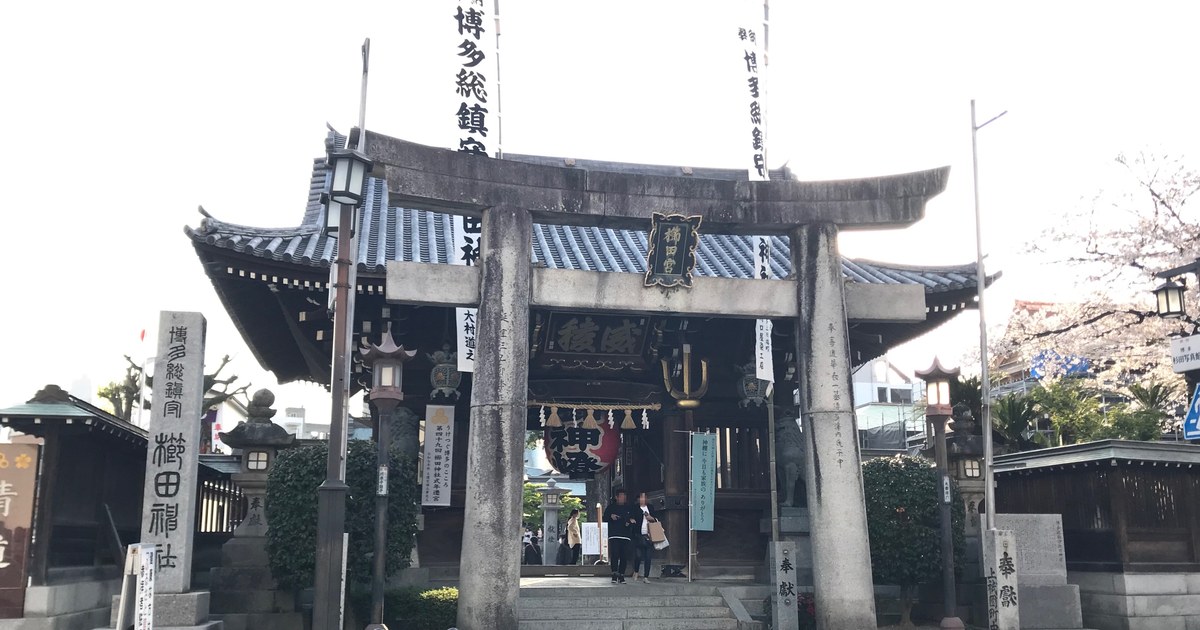
The dates you will find for this festival are 1 to 15 July, fifteen days. That is accurate, and it is also the reason people book the wrong week. What begins on 1 July is a display. The kazariyama are gorgeous, ten metres and more of gilded figures, and they do not move. The floats that get hoisted onto a hundred shoulders and run through the streets of Hakata — the kakiyama — do not appear until 10 July. Six days out of fifteen. And the climax, the Oiyama, starts at 4:59 in the morning on 15 July, with road closures from 1:00am and the floats lined up on Doi-dori by half past one, while the earliest special train can only put you at Kushida-jinja-mae at 3:52. This guide lays out the timetables the organisers have already published, including the part most visitors never hear: the organisers own designated highlight is not on the morning of the Oiyama at all.
- Six moving days out of fifteen: 1 July starts the static kazariyama displays; the carried floats first appear on 10 July
- Three fixed times, every year: 12 July Oiyama-narashi 15:59 / 13 July Shudan Yamamise 15:30 / 15 July Oiyama 4:59 — unchanged across five checked years
- 4:59 has nothing to do with sunrise. Official wording: no relation to the movement of the heavens. The minute is for the first float to sing
- The organisers name their own highlight: near each districts float hut on 10, 11 and 14 July — not the Oiyama
- Tickets are priced but unobtainable: ¥7,000 and ¥3,000, with reservations of any kind explicitly refused
- The decorative floats come down before the Oiyama begins — around midnight on the 15th, roughly five hours ahead of the run
- Participating and watching are different questions. Carrying a float is closed to women, to tattooed applicants and to visitors; watching has no restrictions at all
📖 Contents
- 1. Fifteen days, six of which have moving floats
- 2. The day-by-day timetable
- 3. The 4:59 start, explained by the organisers
- 4. The official highlight is not the Oiyama
- 5. Tickets: priced, published, unobtainable
- 6. Watching for free: three flags the organisers named
- 7. The logistics of 4:59am
- 8. Carrying a float: participation versus spectating
- 9. Ground rules, and the trademark on festival photographs
- 10. Six claims worth checking before you repeat them
- 11. How I would plan the trip
- 12. Frequently asked questions
Fifteen days, six of which have moving floats
The association describes its own festival as running "from the opening of the kazariyama displays on 1 July to the Oiyama in the early hours of the 15th." Read that again and notice which noun does the work: opening of the displays. What starts on 1 July is an exhibition.
The schedule page is unambiguous about when that changes. Under 10 July it reads: from this day "the floats begin to move, and the character of the festival changes from the stillness of the kazariyama to the motion of the kakiyama."
| Period | Days | What is actually happening |
|---|---|---|
| 1-8 July | 8 | Kazariyama only — thirteen static displays, free to view. Atmosphere, but nothing in motion |
| 9 July | 1 | Oshoi-tori: each district walks to Hakozaki beach for purifying sand, arriving between 18:00 and just after 19:00 |
| 10-15 July | 6 | The carried floats are out. District runs, dawn runs, cross-district runs, the rehearsal, the group display, the Oiyama |
There is a second, independent way to confirm this. The association issues an official list of the events registered participants may join, and that list begins with Oshoi-tori on 9 July. The first eight days of the festival are not on it. When the organisers themselves plan their manpower, they start counting from the 9th.
None of which means the kazariyama are a disappointment — only that you should know what you are looking at. The association explains their existence in one very concrete sentence: floats sixteen metres tall were once carried, but in the Meiji era, when electricity arrived and power lines went up over the streets, the tradition split into a carried float and a display float. One object, divided in two by overhead cables. The carried version got shorter; the display version kept its height and stopped moving.
In 2026 there were thirteen kazariyama, officially "displayed in thirteen locations." The numbering misleads: the floats are numbered up to seventeen — the shrine itself as bangai, then Nakasu at number one, Higashi at seven, Kamikawabata-dori at eight, Hakata Station shopping association at nine, Canal City at ten, and so on to Fukuoka Dome at seventeen — but numbers two through six were not built that year. The numbers are a roster of districts and shopping streets, not a total.
One viewing tip that changes the experience: each kazariyama has two faces with different subject matter. The side facing Kushida Shrine is the omote and usually depicts warriors and historical battles; the reverse is the miokuri and tends toward folk tales and television anime. Plenty of visitors photograph one side and walk away having seen half of it.
The day-by-day timetable
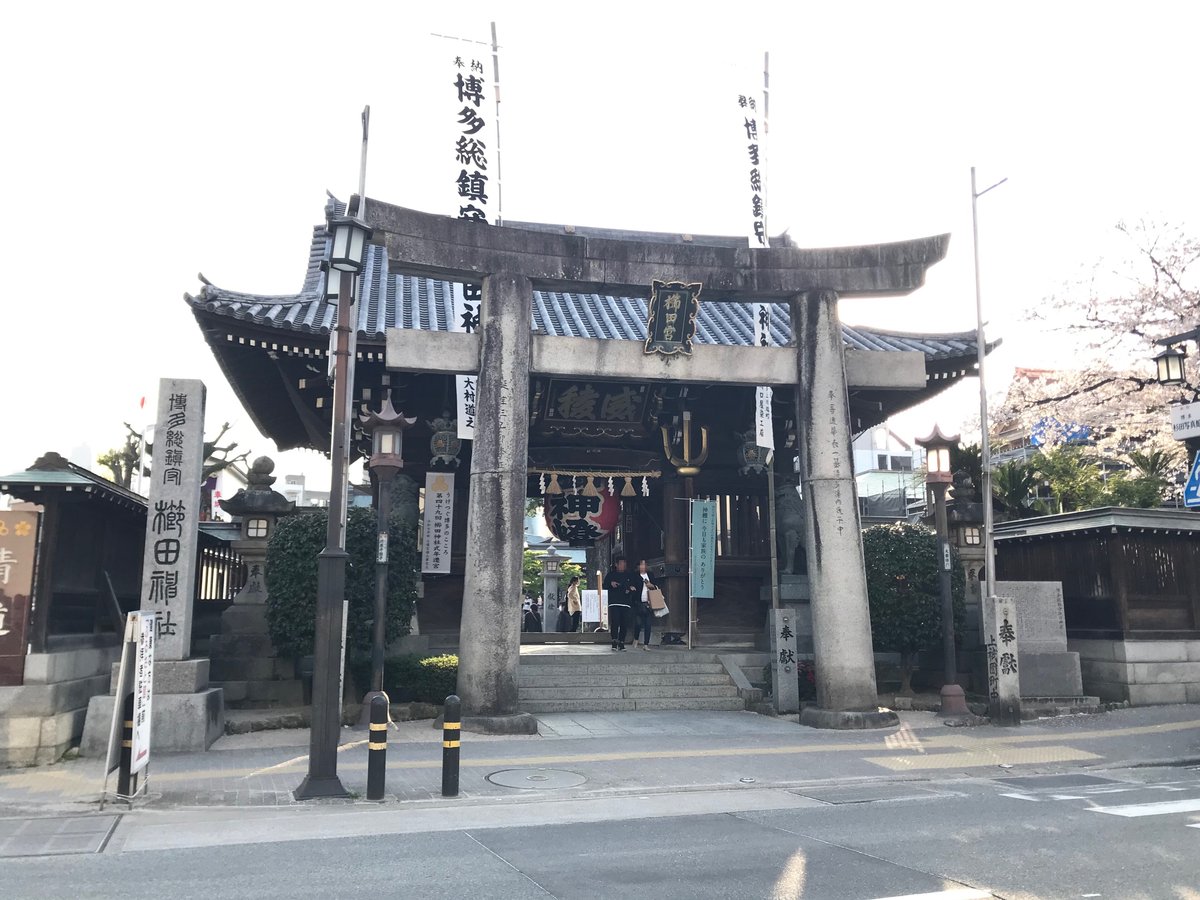
The three set-piece times do not move from year to year, and that is a checked statement rather than an assumption: the official schedule pages for 2018, 2021, 2022, 2023 and 2026 all carry 15:59 on the 12th, 15:30 on the 13th and 4:59 on the 15th, identical to the minute.
| Date | Event | Time | Notes |
|---|---|---|---|
| 1 Jul | Shimeoroshi, goshin-ire, district Oshoi-tori | — | Kazariyama open to the public after the deity is invited in. Caution: Ebisu district does its shimeoroshi a month early, on 1 June, a survival of the lunar calendar |
| 9 Jul | All-district Oshoi-tori | 18:00-just after 19:00 at Hakozaki beach | Each district claps toward the setting sun for safety, then visits Hakozaki-gu and Kushida Shrine on the way back |
| 10 Jul | District run (nagare-kaki) | Districts depart 16:00-18:00 | 🔴 First movement of the festival. Official highlight: near the float huts |
| 11 Jul | Dawn run (asa-yamakasa) | 05:00-06:00 | An early-morning run to receive district elders |
| 11 Jul | Cross-district run | 15:00-17:30 | The only day floats run twice. Caution: in 2026 only four districts took part |
| 12 Jul | Oiyama-narashi (rehearsal) | 15:59 | About 4km. Grandstand ¥3,000 |
| 13 Jul | Shudan Yamamise (group display) | 15:30 | Gofukumachi crossing to Tenjin, about 1.3km each way. Created in 1962 at Fukuoka Citys request |
| 14 Jul | District run | Districts depart 16:00-17:00 | Official wording: the insider viewing spot is near the float hut before departure. Caution: only five districts in 2026 |
| 15 Jul | Oiyama | 04:59 | About 5km, finishing at Sasakimachi. Grandstand ¥7,000 |
| 15 Jul | Shizume no noh | 06:00 | Kushida Shrine noh stage. The festival does not end at the finish line |
Not every district runs on every day
This is the single most practical correction in the schedule, because it determines whether a trip to a float hut on the 11th or the 14th is worth making at all.
Hakata is divided into seven nagare — Nakasu, Nishi, Chiyo, Ebisu, Doi, Daikoku and Higashi. The association explains the number simply: seven is considered auspicious, so there are seven districts. But they do not all turn out every day, and which ones do changes from year to year. The 2026 course map states it explicitly in its own captions:
- 11 July cross-district run: "in 2026, four districts take part: Nakasu, Chiyo, Daikoku and Higashi"
- 14 July district run: "in 2026 this is held by five districts: Nakasu, Nishi, Ebisu, Doi and Daikoku"
⚠️ That allocation is for 2026 and the 2027 version is not published. If you intend to stake out a particular districts float hut on the evening of the 14th, check the current years course map first, or you may spend the evening waiting outside a hut that is not going anywhere.
One piece of official text that has quietly expired
There is a contradiction on the official site, and for once it resolves in the visitors favour. The older evergreen schedule text says of 10 July that the routes vary by year and that no official announcement is made, so you must ask someone connected with a district in advance. Nearly every guide still repeats this.
But the 2026 course map page publishes the routes for the 10th, 11th and 14th along with each districts departure time. The old sentence is out of date. The correct version is: the organisers do publish, but they publish for the current year only, and the page carries its own caveat that times and routes are subject to change. You no longer need an inside contact — you do still need this years map rather than last years.
The 4:59 start, explained by the organisers
Everyone who meets the time "4:59am" reaches for the same two explanations: sunrise, or some calendrical significance. The organisers have ruled both out. Their glossary page states that the 4:59 start, now running a month behind the old lunar reckoning, has no relation to the movement of the heavens.
The real reason is in the next clause, and it is much better than an astronomical one:
The start was moved forward by one minute to provide time for the Hakata Iwai Uta, which only the first float is permitted to sing. The second float therefore departs six minutes later, and floats from the third onward depart at five-minute intervals.
So the hour is really 5:00. One minute was carved off the front of it for a song. Which produces this departure sequence:
- First float 4:59, including the minute for the Hakata Iwai Uta
- Second float 5:05, six minutes later
- Third onward every five minutes: 5:10, 5:15, 5:20, 5:25 and so on
This matters for planning more than it looks. You do not have to pin everything on a single instant at 4:59, because the Kushida-iri continues for over half an hour. Eight floats enter in sequence, and the last of them — the running kazariyama of Kamikawabata-dori — sets off close to 5:30.
What the Kushida-iri actually measures
The Kushida-iri is the opening stretch, about 112 metres, and the association notes that districts now cover it "in the low thirty seconds," timed to a hundredth of a second for accuracy. The 2026 results give the scale:
| Order | District | Kushida-iri | Full course (~5km) |
|---|---|---|---|
| 1st | Nakasu | 34.14 sec | 34 min 10 sec |
| 2nd | Nishi | 30.07 sec | 31 min 14 sec |
| 3rd | Chiyo | 31.99 sec | 30 min 07 sec |
| 4th | Ebisu | 32.36 sec | 32 min 47 sec |
| 5th | Doi | 36.15 sec | 32 min 05 sec |
| 6th | Daikoku | 34.77 sec | 30 min 54 sec |
| 7th | Higashi | 32.05 sec | 29 min 40 sec |
| 8th | Kamikawabata-dori (running kazariyama) | 58.56 sec | — (does not run the course) |
Two things stand out. The eighth entry has a Kushida-iri time and no full-course time, because the running kazariyama offers only the Kushida-iri and does not attempt the five kilometres; it is also close to twice as slow over those 112 metres, being far taller and heavier than the others. And the fastest Kushida-iri and the fastest full course belong to different districts: Nishi took the sprint at 30.07, Higashi the distance at 29 minutes 40.
⚠️ Do not read those as competition results. The association states flatly that there is no victory banner and no certificate. The timing exists for the record, not for a ranking.
As for who leads: the first-float honour rotates in a fixed cycle — Nakasu, Nishi, Chiyo, Ebisu, Doi, Daikoku, Higashi — advancing one place each year (2023 was Doi, 2025 Higashi, 2026 Nakasu). ⚠️ By that pattern 2027 should fall to Nishi, but this is a regularity inferred from three years of official records, not something the organisers have announced. Treat it as an expectation, not a fact.
The official highlight is not the Oiyama
This is the most counter-intuitive section here, and the most useful.
The standard advice treats the Oiyama as the only thing worth seeing: get up at three, squeeze into a crowd, watch thirty seconds of Kushida-iri. The organisers do not say that. Their course map page carries this line:
The highlights on the 10th, 11th and 14th are near each districts float hut.
And the caption on the 14 July map goes further:
The insider spot for viewing is near the float hut before the district run sets off. You can feel the heat of the moment right before the real thing.
The Japanese word used there, anaba, means the place insiders know about. Which is to say: on their own official map, the organisers point both their "highlight" and their "insider spot" at the float huts on the 10th, 11th and 14th — not at the Oiyama on the 15th.
Why? My reading is that the Oiyama is the result and the float hut is the process. The hut is where a district stores and prepares its float, and in the hour before departure the carriers gather there, tie their sashes, throw water, call to each other and lift the float to test its balance. There is no wall of people between you and any of that; you can stand a few metres away and watch the whole preparation. On the morning of the Oiyama you are behind a crowd and the float is in front of you for a matter of seconds.
So the recommendation is direct: if you only have one evening, take the float huts on 14 July rather than the small hours of the 15th. No all-nighter, no competing with the national press pack for a position, and it is the spot the organisers themselves nominated. The Oiyama has a scale nothing else matches — but the price of that scale is that you will mostly be looking at the back of someone head.
⚠️ Float hut locations and departure times are published for the current year only. On the 2026 map, the 14 July departures were Nakasu 16:00, Nishi 17:00, Ebisu 16:00, Doi 17:00 and Daikoku 17:00, with Chiyo and Higashi not participating. The 2027 map should appear around mid-June 2027 — the 2026 map image was filed under a name dated 13 June.
Tickets: priced, published, unobtainable
| Ticket | Price | Date | Reservable? |
|---|---|---|---|
| Oiyama grandstand (inside Kushida Shrine) | ¥7,000 | 15 July, 4:59 | 🔴 No reservations of any kind |
| Oiyama-narashi grandstand (inside Kushida Shrine) | ¥3,000 | 12 July, 15:59 | 🔴 No reservations of any kind |
That last column is the associations own phrasing, not a paraphrase: reservations are not possible at all. Total capacity is around 1,800 seats.
How are they sold, then? In person at Kushida Shrine, on a single morning before the festival. The only dated instance on the official site is 2023: sales at 9:00am on 26 June, described as same-day sales only.
⚠️ That date cannot be used to predict 2027. Neither the 2026 nor the 2027 sale date has been announced. The only contact channel offered is a telephone number for Kushida Shrine — the site footer states that enquiries about grandstand tickets and viewing should be made by phone to the shrine. There is no online form, no email address and no ticketing page.
For an overseas visitor the conclusion is straightforward: do not plan around a grandstand ticket. A ticket sold from 9am one late-June morning in Fukuoka, roughly 1,800 seats, no reservations accepted — the odds for someone who is not in Japan are effectively nil. And if a platform offers to sell you Oiyama grandstand seating, that should trigger suspicion rather than a purchase: if the organisers accept no reservations, no legitimate advance channel exists.
It is worth distinguishing this from a superficially similar case. For Kyotos Gozan no Okuribi, the organisers sell no viewing seats at all, so anyone claiming to have them is selling nothing. Hakata Gion Yamakasa is different: seats exist, prices are published, and reservations are refused. One is "does not exist," the other is "exists but you cannot reach it." The action is the same — do not buy — but the reasoning is not.
Two more patterns have since turned up. Kyoto's Gion Matsuri has paid stands and a working booking system, but the following year's prices are not out yet. Tokyo's Kanda Matsuri is the extreme case: across sixteen pages of the official festival site and twenty-three FAQ entries, the word for "viewing seat" appears exactly once, and it refers to seating for tea-ceremony guests at a separate rite. Planning that festival is entirely a question of where to stand, because there is nothing to buy. Lined up together, the four cases save a lot of time otherwise lost to resale sites.
The good news is that none of this affects the festival you actually came for. Across the entire official site no admission or viewing fee is attached to anything else: the thirteen kazariyama displays, the Oiyama, the rehearsal, the group display, the district runs, Oshoi-tori and the shizume no noh are all free. The two grandstand tickets buy a seat beside the ritual course inside the shrine, and nothing more.
Watching for free: three flags the organisers named
The three seidoki on the Oiyama course
From the glossary entry on the ritual flags: three seidoki are set along the Oiyama course, and "since every district float rounds them, they are also viewing points." The first stands in the Kushida Shrine ritual ground; the second in front of Tochoji, the third in front of Jotenji.
A flag is a mark the float must round, and rounding means slowing. These are viewing points nominated by the organisers, and two of the three sit outside the shrine, where no ticket applies.
| Position | Ticket needed? | Character |
|---|---|---|
| Kushida Shrine ritual ground (first flag) | Grandstand inside; roadside outside is free | The Kushida-iri itself, timing start, heaviest crowds |
| In front of Tochoji (second flag) | Free | Officially named viewing point; floats round the flag |
| In front of Jotenji (third flag) | Free | Officially named viewing point; floats round the flag |
| Sasakimachi finish | Free | End of the ~5km course; districts arrive from around 5:30 |
The float huts on 10, 11 and 14 July
Covered above. Officially nominated, free, and uncrowded. If your schedule allows exactly one outing, this is where I would spend it.
The group display on 13 July
The one occasion when all seven districts travel the same route at the same time, and structurally unlike every other day: it was created in 1962 at the request of Fukuoka City, fixed since 1983 to the roughly 1.3km stretch of Meiji-dori between Gofukumachi crossing and Tenjin, and extended in 2010 so the return leg counts as part of the course too.
Three reasons it suits certain travellers better than the Oiyama: it starts at 15:30, so no early start and no all-nighter; the route is short and runs along a wide boulevard rather than the narrow lanes of old Hakata; and it happens in Tenjin, so if that is where your hotel is, you walk out of the door and you are there. The outbound leg has its own draw — the association notes that local notables ride on top of the floats on the way out. Travelling with older relatives or small children, this is the day I would pick.
The logistics of 4:59am
There are special trains, but they cannot buy you a position
Fukuoka City Subways announcement of 18 June 2026 states that special services would run on 15 July for early-morning spectators, in the 3am, 4am and 5am hours, across the entire network. The 2026 timings:
| Line | Station | Arrivals, 15 July 2026 |
|---|---|---|
| Nanakuma Line (toward Hakata) | Kushida-jinja-mae (closest to the shrine) | 3:52 / 4:02 / 4:12 / 4:22 / 4:37 / 4:57 / 5:17 |
| Kuko Line (toward Fukuoka Airport) | Nakasu-Kawabata | 4:10 / 4:20 / 4:31 / 4:40 / 4:50 / 5:10 / 5:28 |
| Kuko Line (toward Fukuoka Airport) | Gion | 4:12 / 4:22 / 4:33 / 4:42 / 4:52 / 5:12 / 5:30 |
Return services ran too: Hakata toward Hashimoto 3:58-5:10, Nakasu-Kawabata toward Meinohama 4:28-5:23, and from Fukuoka Airport from 4:25. The first Nanakuma Line service left Hashimoto at 3:25.
Convenient, until you set it beside two other official documents. The joint traffic-control notice from the association and the Hakata and Chuo police stations places the float assembly area under pedestrian-only control from 01:00 to 07:00, the course itself from 04:30, and vehicle closures from 04:00. The glossary states the floats are lined up along Doi-dori from around 01:30. Stack the timeline:
| Time | State of play |
|---|---|
| 01:00 | Assembly area becomes pedestrian-only. The crowd can take position |
| 01:30 | Eight floats line up in order along Doi-dori |
| 03:52 | First special train reaches Kushida-jinja-mae |
| 04:00-04:30 | Vehicle closures and course control take full effect |
| 04:59 | First float begins its Kushida-iri |
| 05:05 onward | Second float, then one every five minutes |
| ~05:30 | Districts reach the Sasakimachi finish |
| 06:00 | Shizume no noh at the Kushida Shrine noh stage |
The trains get you to the start. They cannot get you to a position. Arriving at 3:52 means joining a crowd that formed nearly three hours earlier. For sightlines there are two options: walking distance, or a taxi.
Which is the one place on this trip where money genuinely buys something: staying inside walking distance of Kushida Shrine — Nakasu-Kawabata, Kamikawabata, Gion, Reisenmachi — beats any ticket. Mid-July is already high season in Hakata, and the night before the Oiyama concentrates demand into a single date. If you are committed to seeing it, book early. Compare Fukuoka hotels on Trip.com and the same search on Agoda are both reasonable ways to weigh Nakasu-Kawabata against the Hakata Station cluster — the same room is often priced differently on each, and the cancellation terms can differ too, but check one thing before booking: how many minutes it is on foot to Kushida Shrine. That number matters more than the star rating.
⚠️ All train times and road closures above are the 2026 versions. The 2027 special-train timetable is published around mid-June 2027, and the traffic-control PDF follows the same rhythm. Do not reuse last years numbers.
And it will not be cool at four in the morning
This deserves its own heading because "bring a jacket for the early start" sounds sensible and will make your morning worse.
Japan Meteorological Agency normals for Fukuoka, 1991-2020: the July daily minimum is 24.6°C with 75% relative humidity, tied with June for the most humid month of the year. Standing on Doi-dori at four in the morning is a warm, sticky experience. What you want is water, a towel and something breathable.
The other number is arguably more important: July is Fukuokas wettest month at 299.1mm, nearly 90mm more than August. Catching the tail of the rainy season during Yamakasa is the norm rather than bad luck. Bring rain gear — just not for warmth. For how Japanese conditions actually feel month by month, and what that means for packing, see our month-by-month weather and clothing breakdown.
Carrying a float: participation versus spectating
This section needs more precision than any other, because the two questions get merged constantly and the merged version is wrong.
The short version: participation has hard gates and visitors are excluded outright; spectating has no restrictions whatsoever.
Participation: four official gates
These are not rumours or things a local mentioned. They are required fields on the associations 2026 application forms, open from 1 March to 31 May 2026:
| Gate | Official wording | Effect |
|---|---|---|
| Gender | General applicants must tick a declaration reading "I confirm that my gender is male," with one selectable option; on the parent-and-child form, the child gender field offers "boy" as its only value | Women cannot register to carry |
| Nationality and residence | In the organisers own English: "Foreign residents who wish to participate in Yamakasa are accepted only if they live in Fukuoka." | 🔴 Visitors cannot take part. The address dropdown lists only the 47 prefectures |
| Tattoos | Required declaration that the applicant has no tattoos | Disqualifying, with no stated exception |
| Cost | Participants must purchase the yamakasa outfit; the association puts an adult set at 30,000-40,000 yen and notes it varies by neighbourhood | Self-funded; child outfits 15,000-25,000 yen |
Other required declarations cover having no connection to organised crime, never driving under the influence, and observing the customs and discipline of the district. The parent-and-child form adds that a parent registering a child must take part and run alongside them, buying an outfit as well — so a parent-and-child pair starts at 45,000 to 65,000 yen in clothing before anything else. A neighbourhood contribution may also apply, at an amount that is not published.
One element is more open than expected: the form asks applicants to select from "resident in a yamakasa district," "working or studying in a yamakasa district," and "neither applies to me" — so Japanese residents living outside the districts can apply. The residence rule is specifically an additional condition on foreign residents.
The tattoo clause, incidentally, is not an isolated quirk. It is the hardest edge of a much broader pattern in Japan — for how onsen and public baths actually handle this in practice, see our guide to tattoos and Japanese bathing facilities, where cover stickers, private baths and time-slot arrangements at least exist as workarounds. Here the exclusion happens at the application form.
Spectating: no restrictions at all
⚠️ Everything above governs participation only.
Neither the official site nor either application form places any restriction on women watching. Grandstand tickets carry no gender condition. Roadside viewing carries none. The kazariyama displays carry none. The commonly repeated line that "women cannot take part in Yamakasa," stated without a qualifier, reads to most people as "women cannot go" — and that is false.
The Japanese phrase for "women prohibited" appears zero times across all 474 pages of the official site. The only two hits for the word "woman" are inside a plot summary of the kabuki play Dojoji, described on a decorative float. The rule is real, but it lives in the required fields of a participation form rather than on any public-facing page — which is itself the clearest evidence of what kind of rule it is.
Ground rules, and the trademark on festival photographs
Three things that will get you stopped
| Behaviour | Official position |
|---|---|
| Shooting from a stepladder or step stool | 🔴 Prohibited. The association states that stepladder photography is banned at the request of Fukuoka Prefectural Police, except for accredited armband holders — and adds that no new armbands are issued or lent. There is no application route |
| Drones | 🔴 Banned in the shrine precinct outright, with drone use on public roads and in crowds asked to be refrained from, and an explicit statement that drone use will be reported to Fukuoka Prefectural Police on sight |
| Smoking while walking | Fukuoka Citys ordinance designates the Tenjin/Daimyo area and the area around Hakata Station as street non-smoking districts, with a citywide duty to refrain from smoking while walking or cycling |
There is a geographical wrinkle on that last one: the festivals core area — Kushida Shrine, Reisenmachi, Gionmachi, Kamikawabata — falls outside both designated districts, leaving only the citywide duty. That is not licence to light up in a packed crowd, and the Hakata Station district is exactly where you will be arriving and departing. ⚠️ The penalty amount is not published on any official page. Japans smoking rules vary so sharply between municipalities that the regime can change at a street corner; our city-by-city breakdown of Japanese smoking rules covers seven of them, and Fukuoka is not among them.
If you want to use your own float photographs
The association maintains a page on trademark rights which states that the trademark rights to "Hakata Gion Yamakasa" and "Hakata Yamakasa" belong to the association and others, and that producing photographs, video, illustrations, physical objects or the name itself for commercial use without the associations permission is strictly prohibited. Commercial users are directed to the associations own paid publicity photograph process, which explicitly does not accept applicants supplying their own stock imagery.
Personal shooting and sharing sits on a different line from commercial use, so ordinary holiday photos are not a problem. But if you intend to use your own Yamakasa photographs commercially, including on a sponsored social account, read that page first.
Six claims worth checking before you repeat them
1. "You cannot eat cucumber during the festival" — not found on any official source
The explanation usually offered is that a cucumber in cross-section resembles the Gion crest. But a full-text search of all 474 pages of the official site returns zero matches for cucumber in either common spelling — not even on the glossary page, which exists to explain exactly this kind of tradition and carries twenty entries. Enjoy it as folk lore; do not change your lunch order over it.
2. "One of Japans three great Gion festivals" — the organisers never say this
"Three great" appears seven times on the official site, every single one inside a description of the subject matter depicted on a decorative float — three great kabuki works, three great castles of Japan, three great vendettas — and never once about the festival itself. Chichibu Yomatsuri can carry the label because the city, the tourism association and the shrine all use it; for Hakata, no official body does.
3. "It runs for a full fifteen days" — see the first section
Six days of movement. The organisers own participant event list also starts on 9 July.
4. "The routes are never published, you have to ask an insider" — expired
That sentence does still sit on the official schedule page, but the 2026 course map published the routes and departure times for the 10th, 11th and 14th. Use the newer page.
5. "You can see the Oiyama and then look at the decorative floats" — chronologically impossible
Official wording: the kazariyama are open until around midnight on 15 July. The Oiyama is at 4:59 the same morning. The displays come down roughly five hours before the run starts. To see both, be in the city on 14 July. The sole exception is the Kamikawabata-dori running kazariyama, which you will see at the shrine on Oiyama morning — eighth in 2026, with a Kushida-iri of 58.56 seconds.
6. UNESCO "33 across Japan" — out of date since December 2025
Hakata Gion Yamakasa is on that list; the association chairmans message records the 2016 UNESCO inscription, and its older domestic status is designation as an Important Intangible Folk Cultural Property in 1979.
The list itself has moved, though. On 8 December 2025 the twentieth session of the UNESCO intergovernmental committee adopted decision 20.COM 7.b.52, whose text states that the new inscription "incorporates and replaces" the 2016 entry for Yama, Hoko, Yatai float festivals (No. 01059), and that the Japanese inventory "comprises the thirty-three float festivals included in the original nomination, along with four additional festivals included between 2016 and 2021."
So the figure of 33 you will find quoted everywhere is the 2016 number, not the current one. ⚠️ The decision names neither the four additions nor a revised total. Hakatas own status is unchanged — the new inscription absorbed the old one whole.
The same list includes the float ceremonies of the Takayama Festival. One distinction matters, though: Kyotos Gion Matsuri had its Yamahoko ceremonies inscribed separately in 2009, and the 2016 list of 33 was an expansion built on that entry. So Kyotos position in the system is structurally different from Hakatas — Hakata is a member of the list, Kyoto is one of the two points the list was expanded outward from. Both carry the name Gion because both descend from the same cult, not because they share an administrative status.
How I would plan the trip
- Decide whether you want scale or texture. Scale means the Oiyama on the 15th, paid for with an all-nighter, a crowd and poor sightlines. Texture means the float huts on the evening of the 14th — the spot the organisers themselves call the insider one.
- One day only, and not an early riser? Take 13 July. The group display starts at 15:30, covers 1.3km along Meiji-dori and ends in Tenjin. This is the day for travelling with older relatives or children.
- Want the Kushida-iri without the small hours? Take 12 July. The rehearsal at 15:59 includes the same Kushida-iri over a 4km course rather than 5km, and the grandstand at ¥3,000 is cheaper — though equally unobtainable.
- For the decorative floats, arrive by 14 July. They come down around midnight on the 15th. All thirteen are free and scattered across Hakata and Tenjin; remember to walk round the back for the miokuri face.
- If you commit to the Oiyama, the room matters more than the ticket. Staying within walking distance of Kushida Shrine beats any seat. The first special train only reaches the station at 3:52, by which point the crowd is two and a half hours old.
- Do not plan on a grandstand ticket. Reservations are explicitly refused; roughly 1,800 seats sell in person on one morning before the festival. Treat any online offer as a red flag.
- Water and a towel, not a jacket. July in Fukuoka means a 24.6°C daily minimum at 75% humidity, and it is the wettest month of the year at 299.1mm. Bring rain gear, not warmth.
- Check again in mid-June 2027. Daily routes, district departure times, special-train timings, road-closure hours and the ticket sale date are all still unpublished.
If Yamakasa is one stop in a longer Kyushu trip, our three-day Kyushu rail routing shows which days work best for heading south, and the food and city logistics of the base city are covered in the Fukuoka city guide. For how the rest of the Japanese summer stacks up — which fireworks displays and festivals collide with which — see our summer fireworks and festival calendar.
Three closing points
One: the official timetable and the visitors assumptions are comprehensively out of step, and every square of that timetable is published. Six moving days out of fifteen. A 4:59 start with road closures from 1:00. Decorative floats struck five hours before the run. An official "highlight" located on the 10th, 11th and 14th rather than the 15th. All of it sits on the associations own website.
Two: participating and watching are separate questions and must not be answered together. Carrying a float is gated hard — men only, foreign residents only if they live in Fukuoka, no tattoos, 30,000 to 40,000 yen of self-funded clothing — and those gates are required fields on an official form. Watching carries no restrictions of any kind, and no official page says otherwise.
Three: you cannot get a ticket, and you do not need one. Only two paid items exist across the whole festival and both refuse reservations outright. Everything else — the displays, the Oiyama, the rehearsal, the group display, the district runs, the closing noh — is free, and the organisers have gone as far as naming three ritual flags and the float huts as places to stand. This is a festival that costs nothing and demands that you spend your planning on time instead.
⚠️ Every specific time here marked as 2026 describes the shape of the event, not a 2027 commitment. Only three times are fixed year on year: 15:59 on 12 July, 15:30 on the 13th and 4:59 on the 15th.
Frequently Asked Questions
- Q1:When is Hakata Gion Yamakasa, and does it really last fifteen days?
- It runs 1-15 July every year, and yes, that fifteen-day figure is the organisers own wording — but it hides the thing you need to know. The Hakata Gion Yamakasa Promotion Association describes the festival as running "from the opening of the kazariyama displays on 1 July to the Oiyama in the early hours of the 15th." The word that matters is display. What starts on 1 July is the public exhibition of the kazariyama: ten-metre-plus decorative floats that stand still. The floats that get carried at a run, the kakiyama, do not appear until 10 July, and the association says so directly in its own schedule: from that day "the floats begin to move, and the character of the festival changes from the stillness of the kazariyama to the motion of the kakiyama." So of the fifteen days, six have moving floats. There is independent confirmation of this too: the official list of events that registered participants may join begins on 9 July. Nothing between 1 and 8 July appears on it at all.
- Q2:Why does the Oiyama start at 4:59am? Is it timed to sunrise?
- No, and the organisers say so explicitly. Their glossary page states that the 4:59am start "has no relation to the movement of the heavens." The real explanation is in the same passage and it is far more human: 5:00am is the actual hour, and the whole thing was pulled forward by exactly one minute to give the first float, the ichiban yamakasa, time to sing the Hakata Iwai Uta, a privilege granted to that float alone. The sequence that follows is fixed: the second float departs six minutes later at 5:05, and every float after that leaves at five-minute intervals. That detail is genuinely useful for planning, because it means the spectacle does not end at 4:59 — the last float, the running kazariyama of Kamikawabata-dori, sets off closer to 5:30.
- Q3:Can I buy a grandstand ticket for the Oiyama?
- The tickets exist and are openly priced, but you almost certainly cannot get one, because the organisers accept no reservations of any kind. The official FAQ lists 7,000 yen for the Oiyama on 15 July and 3,000 yen for the Oiyama-narashi on 12 July, both for grandstand seating inside Kushida Shrine, and then states verbatim that reservations are not possible at all. There are roughly 1,800 seats. Sales happen in person at Kushida Shrine on a single morning before the festival: the only dated record on the official site is 26 June 2023 at 9:00am, described as same-day sales only. The 2026 and 2027 sale dates have not been announced, so that 2023 date cannot be extrapolated. The only contact channel the organisers offer is a telephone number for Kushida Shrine. The practical conclusion for an overseas visitor is simple: do not build a plan around getting a ticket, and treat any platform claiming to sell Oiyama grandstand seats with suspicion. None of this affects your ability to watch — roadside viewing has always been free.
- Q4:Can women watch Hakata Gion Yamakasa? I have read it is men-only.
- This has to be split into two separate questions, because merging them produces a false answer. Taking part — putting on a happi coat and carrying a float — does exclude women, and the evidence is not folklore but the organisers own 2026 application forms, where one of the required declarations reads "I confirm that my gender is male," with a single selectable option, and the parent-and-child form offers "boy" as the only value for the child gender field. Watching is not restricted in any way. Nothing on the official site or in either application form limits female spectators; grandstand tickets carry no gender condition and roadside viewing certainly does not. The phrase for "women prohibited" appears zero times across all 474 pages of the official site. The rule genuinely exists, but it lives in the required fields of a participation form, not on any public-facing page — which is itself the clearest indication that it governs participation rather than entry.
- Q5:Can a tourist carry a float?
- No, and the organisers wrote that sentence in English themselves. Both application forms open with the line: "Foreign residents who wish to participate in Yamakasa are accepted only if they live in Fukuoka." The address dropdown on the form offers only the 47 Japanese prefectures; there is no overseas option. Residence is only the first of four gates. The second is a required declaration that you have no tattoos. The third is the gender declaration above. The fourth is money: participants must buy the yamakasa outfit, which the organisers put at 30,000 to 40,000 yen for an adult and note varies by neighbourhood; a child outfit runs 15,000 to 25,000 yen, and a parent registering a child must join and run alongside them, buying an outfit too. A parent-and-child pair therefore starts at 45,000 to 65,000 yen in clothing alone. There may also be a neighbourhood contribution, the amount of which is not published. One thing is more open than expected, though: Japanese residents who live outside the yamakasa districts can apply — the form has an explicit "neither applies to me" option. The residence restriction is specifically on foreign residents.
- Q6:Can I see the Oiyama and then go look at the decorative floats afterwards?
- No — the timing makes it impossible, and this is the easiest way to waste a morning. The official kazariyama page states that the displays are open "from 1 July until around midnight on 15 July." Midnight on the 15th means the night of the 14th. The Oiyama starts at 4:59am on the 15th. By the time you have watched it, the decorative floats came down roughly five hours earlier. If you want to see both, you need to be in the city on 14 July, during the day or early evening. There is exactly one exception: the association notes that "currently only the Kamikawabata-dori kazariyama, as a running kazariyama, performs the Kushida-iri at the Oiyama-narashi and the Oiyama" — that one runs, so you will see it at Kushida Shrine on the morning of the 15th. One number to correct: the kazariyama are numbered up to seventeen, but in 2026 there were thirteen of them. Numbers two through six were simply not built that year. The numbering is a fixed roster of districts and shopping streets, not a count.
- Q7:Where should I stand if I do not have a grandstand ticket?
- The organisers have published two separate answers, and neither of them is the Oiyama. The first comes from the glossary entry on the seidoki, the ritual flags: three of them are placed along the Oiyama course, and the association states that "since every float from every district rounds them, they are also viewing points." The first stands in the Kushida Shrine precinct; the second is in front of Tochoji temple and the third in front of Jotenji temple. Floats must turn at each flag, and turning means slowing down. The second answer is blunter still. The official course map page states verbatim that the highlights on the 10th, 11th and 14th are near each districts float hut, and the caption on the 14 July map adds that "the insider spot for viewing is near the float hut before the district run sets off — you can feel the heat of the moment right before the real thing." The organisers own designated highlight, and their own designated insider spot, are on the days before the Oiyama, not on the Oiyama itself.
- Q8:Is there public transport at 4:59 in the morning, and when do I need to arrive?
- There are special trains, and they will get you there for the start — but not for a good position. Fukuoka City Subway announced on 18 June 2026 that it would run special services across the entire network in the 3am, 4am and 5am hours on 15 July for Oiyama spectators. On the Nanakuma Line, arrivals at Kushida-jinja-mae, the closest station to the shrine, were timed at 3:52, 4:02, 4:12, 4:22, 4:37, 4:57 and 5:17. On the Kuko Line, Nakasu-Kawabata arrivals ran 4:10, 4:20, 4:31, 4:40, 4:50, 5:10 and 5:28. The problem appears when you place that against two other official documents. The traffic-control notice issued jointly by the association and the Hakata and Chuo police stations puts the float assembly area under pedestrian-only control from 1:00am to 7:00am, and the glossary states that the floats are lined up along Doi-dori in front of Kushida Shrine from around 1:30am. Arriving on the first special train at 3:52 puts you behind a crowd that has been in place for well over two hours. If you want sightlines, the options are walking distance or a taxi. Caution: those are 2026 timings; the 2027 versions are published around mid-June.
- Q9:Is it true you cannot eat cucumber during the festival?
- No official source mentions it. A full-text search across all 474 pages of the Hakata Gion Yamakasa Promotion Association site returns zero matches for cucumber, in either of the two common Japanese spellings. Even the glossary page, which exists precisely to explain the festivals traditions and carries twenty entries, does not mention it. The usual version of the story is that a cucumber in cross-section resembles the Gion shrine crest, so it is avoided during the festival — a perfectly ordinary piece of folk logic, but not a rule the organisers publish anywhere. Treat it as an interesting piece of local lore rather than something to observe. The label "one of Japan three great Gion festivals" is not used by the organisers about themselves either. The phrase "three great" appears seven times on their site, every one of them inside a description of the subject matter depicted on a decorative float, and never once applied to this festival.
- Q10:Is the festival over once the Oiyama finishes?
- Not quite — there is one more item on the official schedule after 4:59. The association lists, for 15 July, a performance of the shizume no noh on the noh stage at Kushida Shrine from 6:00am, offered to settle the deities after a fortnight of commotion. The arithmetic works nicely: the Oiyama course is about five kilometres, and in 2026 the districts completed it in between 29 minutes 40 seconds and 34 minutes 10 seconds, so with the first float away at 4:59 the finish line at Sasakimachi is busy from around 5:30. That leaves half an hour to walk back to Kushida Shrine for the noh. It is the quietest half hour of the entire festival. One more correction: the Oiyama is not a race with a winner. The association states plainly that there is no victory banner and no certificate. The Kushida-iri is timed to a hundredth of a second, but that is record-keeping, not ranking.