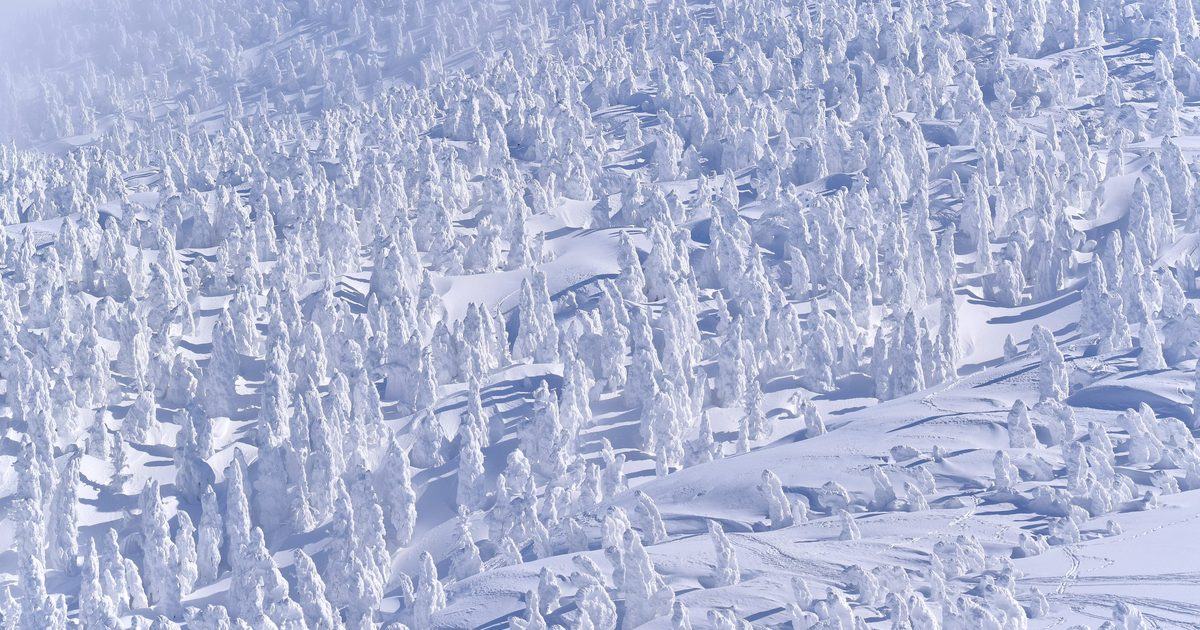
The Hakkoda snow monsters usually look their best from January to late February, and the ropeway gets you to the top in 10 minutes. What actually makes or breaks the day is the bus: in winter there is just one route from Aomori Station, the Hakkoda-go, you have to reserve online to board there, and the last bus from the ropeway back to Aomori leaves at 15:03, almost an hour before the last ropeway down at 16:00. Many people assume they can just queue at Aomori Station, but when the bus is full, passengers without a reservation are turned away. This guide builds three day-trip plans from the official timetables, explains when to stay at Sukayu Onsen and when to stay in Aomori city, and covers what non-skiers can do up top. In Japanese the snow monsters are called 樹氷 (juhyō).
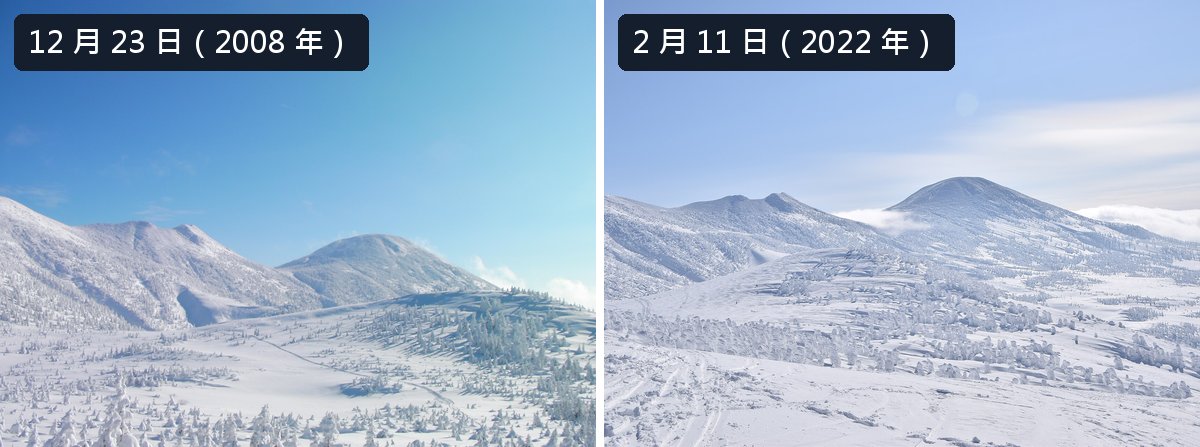
- Go between January and late February: the official best viewing period starts in January; December is not included
- Book the bus first: boarding at Aomori or Shin-Aomori Station requires a WILLER TRAVEL reservation, which opens at 10:00 three months before travel, JR EAST PASS holders included
- Plan around 15:03: the last bus from the ropeway back to Aomori leaves before the last ropeway, so work backward from it
- No skiing needed: you see the snow monsters from the cabin and the summit observation room; a round trip can take as little as about 30 minutes
- The ropeway stops in strong wind: check the status box on its homepage before you go and keep a spare day
- The smoothest day: snow monsters in the morning, Sukayu Onsen bath at midday, back at Aomori Station at 15:58
Are the Hakkoda snow monsters right for you?
If you want to see snow monsters in a day from Aomori city without skiing, Hakkoda is an easy one to fit in. The bus from Aomori Station to the ropeway takes 60 minutes at its fastest, and the ropeway reaches the summit in 10.
A good fit if
- You are in Aomori in January–February and want one day for snow monsters plus a soak at Sukayu
- You do not ski and just want to look from the cabin and observation room
- You have a JR EAST PASS or JAPAN RAIL PASS, which covers the bus fare
- You are an intermediate or advanced skier after the summit's ungroomed runs
You can skip it if
- You can only go in December: the official best viewing period starts in January
- You want illuminated snow monsters: Hakkoda's winter ropeway comes down by 16:00 at the latest; this is a daytime sight
- Your trip has no spare day and you absolutely must see them: the ropeway stops in strong wind
- You want to add Oirase Gorge or Lake Towada in winter: the scheduled bus from Aomori only runs as far as Sukayu in winter. A separate reservation-only winter bus, the Fuyu no Oirase-go, runs from Hachinohe to Lake Towada on set days from December 25 to February 28 in the 2026-27 season, with reservations needed for every stop (mostly weekends in January, daily February 4–23); booking is open now. See Oirase Gorge winter buses
Hakkoda Ropeway winter basics
Buy ropeway tickets at the window on the day; the thing to sort out in advance is the bus reservation.
| Base station | Aomori City, about 24 km from central Aomori; the bus stop is 八甲田ロープウェー駅前 (Ropeway-eki-mae) |
|---|---|
| Nearest station | JR Aomori or Shin-Aomori Station, then the Hakkoda-go bus, about 60–85 minutes depending on the run |
| Winter hours | Mid-November to February: first car 9:00, last up 15:40, last down 16:00 From March: last up 16:20, last down 16:40 |
| Frequency and ride | Every 15–20 minutes, about 10 minutes one way |
| Fares | Adults (junior-high age and up) round trip ¥2,500 / one way ¥1,550 Children (elementary school) round trip ¥700 / one way ¥450; preschoolers free |
| Suspensions | Winds of 25 m/s or more, or bad weather; fully closed November 8–20, 2026 |
| Time needed | About 1–2 hours for the ropeway and snow monsters; half a day to a full day with a Sukayu bath |
| Summit | Sancho Koen Station (1,324 m), with an indoor observation room, wooden deck and shop |
| Base | Free parking for about 350 cars; restaurant レストハウス八甲田 (Rest House Hakkoda) 10:00–15:00 |
| Luggage | No coin lockers; the base and summit station windows keep bags for ¥200 per item |
| Accessibility | Wheelchair accessible, with elevators and multipurpose toilets at both stations; no pets |
| Website | Hakkoda Ropeway (tel. 017-738-0343) |
When to go: can you see the snow monsters in December?
Go between January and late February. The ropeway company says the snow monsters' best viewing period is usually January to late February, and Aomori Prefecture's official tourism site says January–February too.
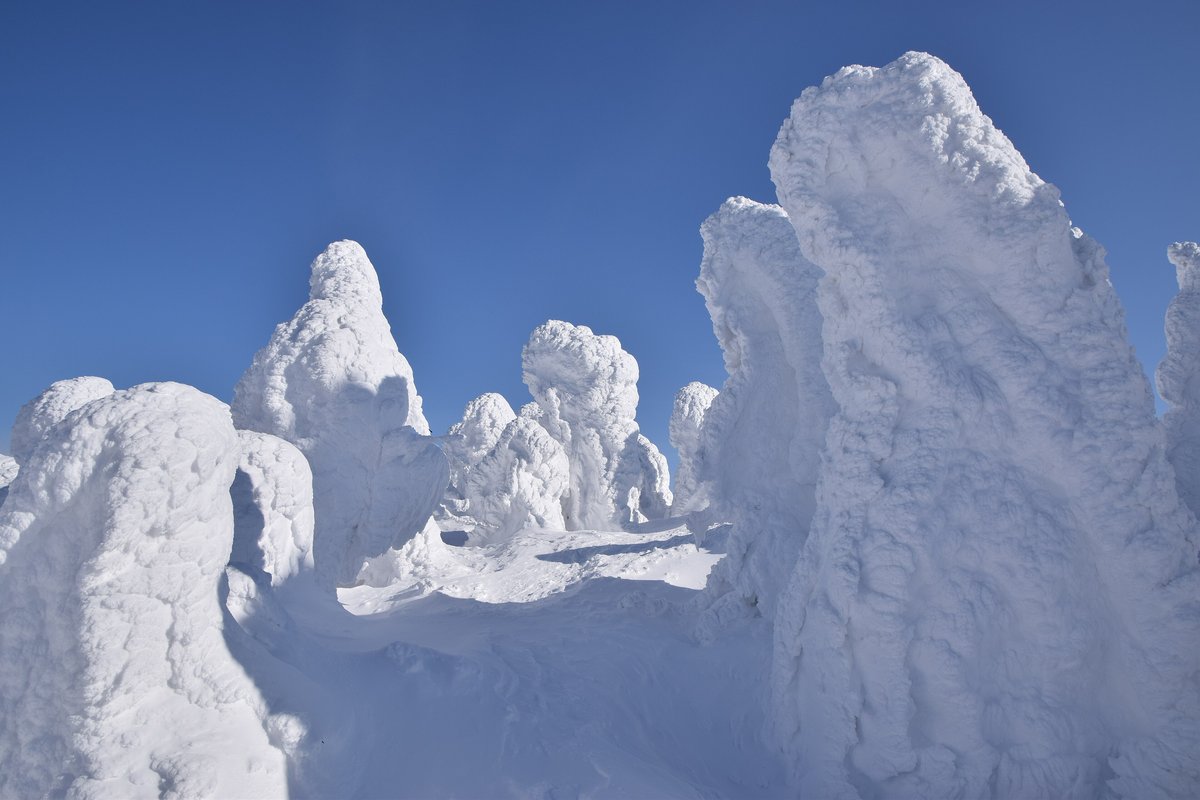
The snow monsters are Aomori firs (アオモリトドマツ), which grow in large numbers on Hakkoda, coated layer by layer in ice and snow. Snow season starts in early December, but the official best viewing period only begins in January, and March is not listed either, so if the snow monsters are the point, go in January or February. The official sources do not name a best week and do not issue forecasts.
According to the ropeway company's 10 a.m. readings, the summit sits at around -10°C in January–February, down to about -15°C on cold days, and around -7°C in December.
Does the Hakkoda Ropeway stop in winter? What then?
Yes, it stops in winds of 25 m/s or more or in bad weather. No suspension rate is published, so if you are going for the snow monsters, keep a spare day in your plans.
Before heading out, open the ropeway homepage: the 現在のロープウェー運行状況 (current operating status) box shows whether it is running, alongside the summit's weather, temperature, wind speed and visibility (◎○△✕). There is no live camera, so this box is what to go by. For snow depth lower down, Sukayu Onsen's website links to the tenki.jp Sukayu weather station.
If the ropeway is stopped, you have three options:
- Ride the bus on to Sukayu for a bath anyway: the bus runs regardless of the ropeway
- Stay in Aomori city and try another day: this is what the spare day is for
- Join a guided tour that switches to the base area: some snowshoe tours walk around the foot of the mountain when the ropeway is down
Separately, the ropeway is fully closed November 8–20, 2026 for inspection and power work, which does not affect snow monster season.
How to get there from Aomori Station: do you need to book the Hakkoda-go?
Yes. In winter, boarding at Aomori or Shin-Aomori Station requires an advance online reservation. The only winter route to Hakkoda is the JR Bus Tohoku Hakkoda-go (はっこうだ号, Aomori–Sukayu line), running November 12, 2026 to March 31, 2027 with three runs each way daily. It only goes as far as Sukayu Onsen, not Oirase or Lake Towada.
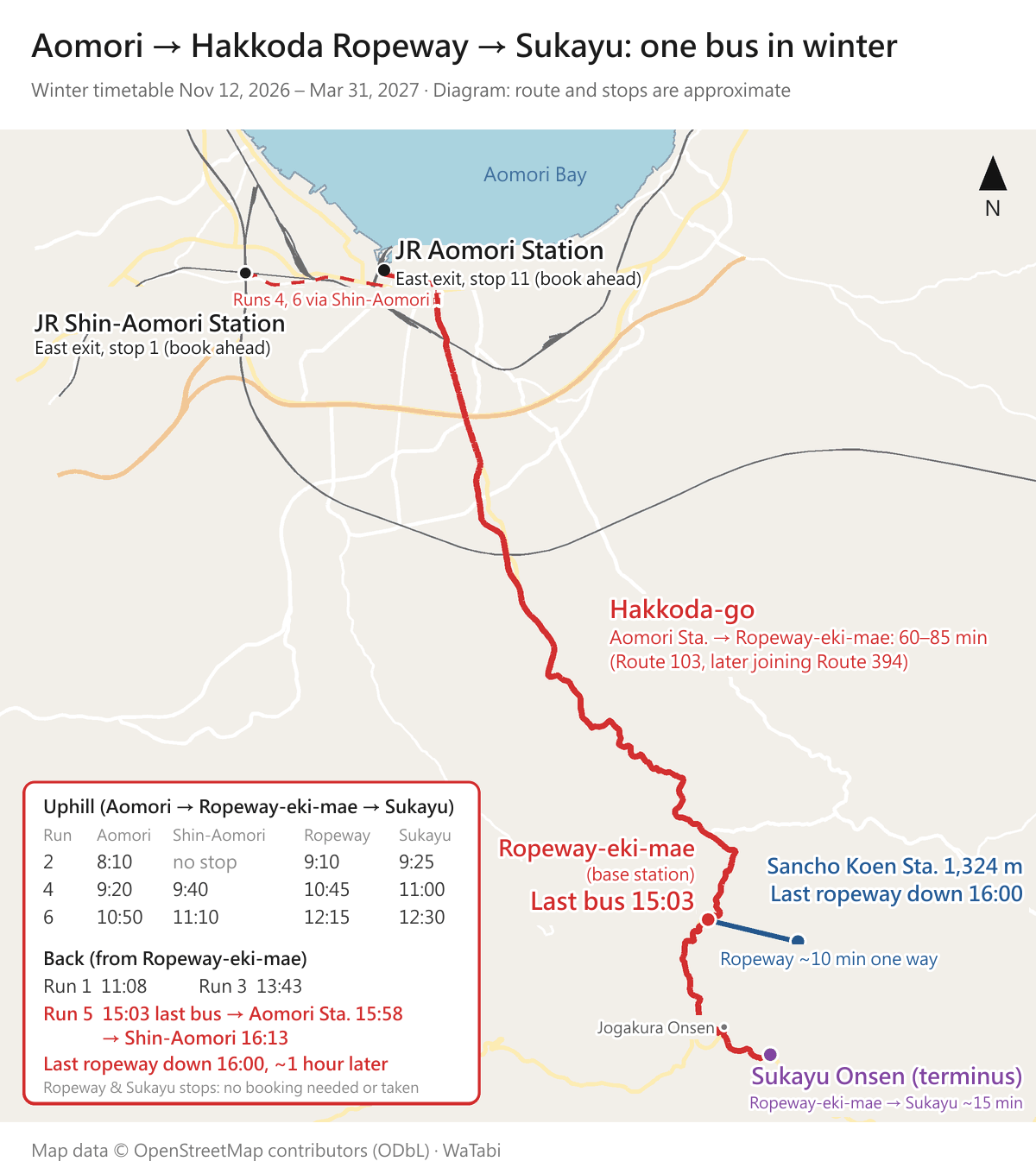
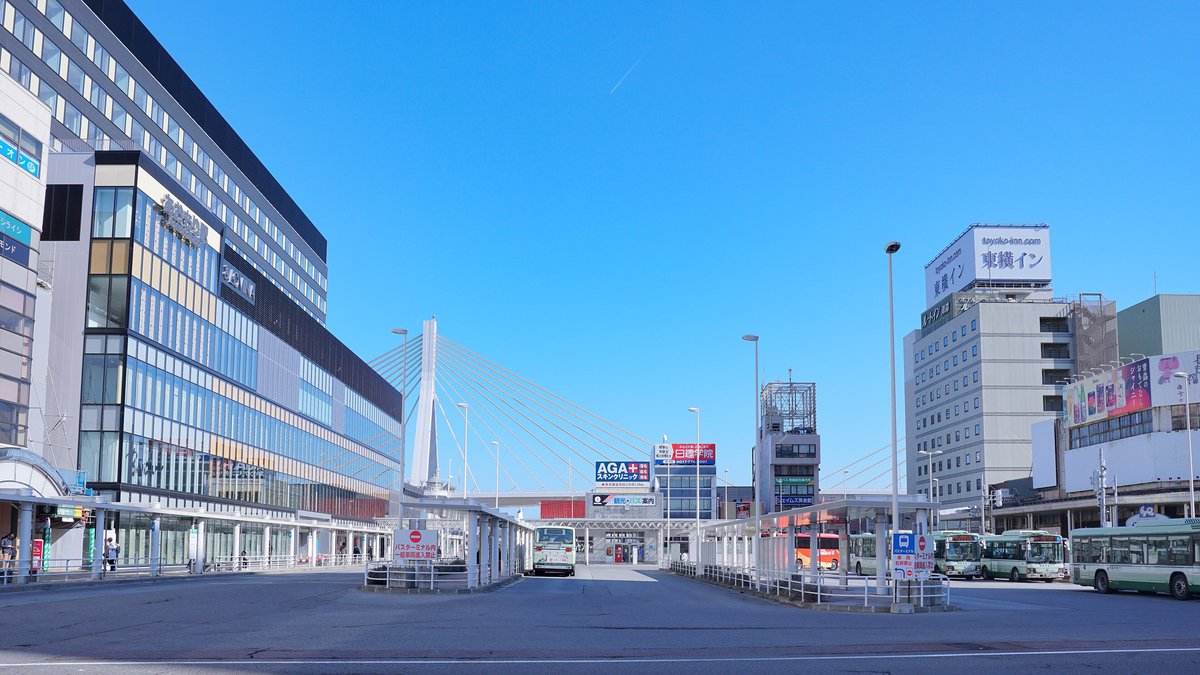
Uphill (Aomori Station → Sukayu):
| Run | Aomori Sta. east exit, stop 11 | Shin-Aomori Sta. east exit, stop 1 | Ropeway-eki-mae | Sukayu Onsen |
|---|---|---|---|---|
| No. 2 | 8:10 | Does not stop | 9:10 | 9:25 |
| No. 4 | 9:20 | 9:40 | 10:45 | 11:00 |
| No. 6 | 10:50 | 11:10 | 12:15 | 12:30 |
Downhill (Sukayu → Shin-Aomori Station):
| Run | Sukayu Onsen | Ropeway-eki-mae | Aomori Sta. | Shin-Aomori Sta. |
|---|---|---|---|---|
| No. 1 | 10:55 | 11:08 | 12:03 | 12:18 |
| No. 3 | 13:30 | 13:43 | 14:38 | 14:53 |
| No. 5 | 14:50 | 15:03 | 15:58 | 16:13 |
There is one more stop, Jogakura Onsen, between Ropeway-eki-mae and Sukayu; see the official timetable for its times.
| Fare (adult / child) | Amount |
|---|---|
| Aomori / Shin-Aomori Sta. → Ropeway-eki-mae | ¥1,290 / ¥650 |
| Aomori / Shin-Aomori Sta. → Jogakura Onsen | ¥1,500 / ¥750 |
| Aomori / Shin-Aomori Sta. → Sukayu Onsen | ¥1,570 / ¥790 |
| Ropeway-eki-mae → Sukayu Onsen | ¥460 / ¥230 |
| Ropeway-eki-mae → Jogakura Onsen | ¥350 / ¥180 |
| Jogakura Onsen → Sukayu Onsen | ¥200 / ¥100 |
Pay the fare when you get off, in cash or with a transit IC card such as Suica (see Suica vs ICOCA). The reservation fee of ¥300 per person is paid online when you book, separately from the fare. If paying cash, carry ¥1,000 notes and coins: from October 1, 2026 the bus cannot change ¥10,000 or ¥5,000 notes, and IC card top-ups on board do not give change for notes.
- Boarding at Aomori or Shin-Aomori Station: reservation required. Without one you only get a seat if there is space, and you are refused when the bus is full
- Boarding at Ropeway-eki-mae, Jogakura Onsen or Sukayu: no reservation needed, and none possible; seats go in queue order
- With a JR EAST PASS or JAPAN RAIL PASS: show it on board and the fare is covered, but you still need a reservation
Weather and road conditions can delay the bus, and facilities on Hakkoda may close for weather; the bus company states it is not responsible, so check both before you set out.
How to reserve the Hakkoda-go
Online only, through WILLER TRAVEL, which has an English page.
STEP 01: Book from 10:00 three months before travel
Open the WILLER TRAVEL Hakkoda-go page, choose the date, run and boarding stop, and pay the ¥300 per-person reservation fee. Runs in late January can be booked from late October.
STEP 02: Keep the confirmation email you get the day before
A confirmation email arrives the day before you travel; show it when boarding. Seats are not assigned.
STEP 03: Board at Aomori Station east exit stop 11 or Shin-Aomori Station east exit stop 1
Pass holders show their pass to the driver; everyone else pays on getting off. To change runs, you can do it yourself online before the bus leaves its first stop.
STEP 04: Get off at Ropeway-eki-mae and buy ropeway tickets at the window
Buy a round-trip ropeway ticket at the base station window; no need to buy ahead.
Not taking the bus: private car, self-drive or taxi?
To escape the 15:03 last bus, a private charter is the least hassle; only self-drive if you have snow driving experience.
| Option | What to sort out first | Return limit | Best for |
|---|---|---|---|
| Hakkoda-go bus | Online reservation | Last bus 15:03 from Ropeway-eki-mae | Most independent travelers, JR Pass holders |
| Private charter | Book, set your own route | Your own schedule | Families or small groups who do not want to chase the last bus |
| Self-drive | Snow tires (mandatory Nov–Apr) | Last ropeway down 16:00 | People who can drive on snowy roads |
| Taxi | Book a fixed-fare plan yourself | No taxi rank at the ropeway | People who have arranged a pickup |
It is about 24 km by car from central Aomori, and the base station has free parking for about 350 cars. For winter mountain driving, see driving in Japan in winter.
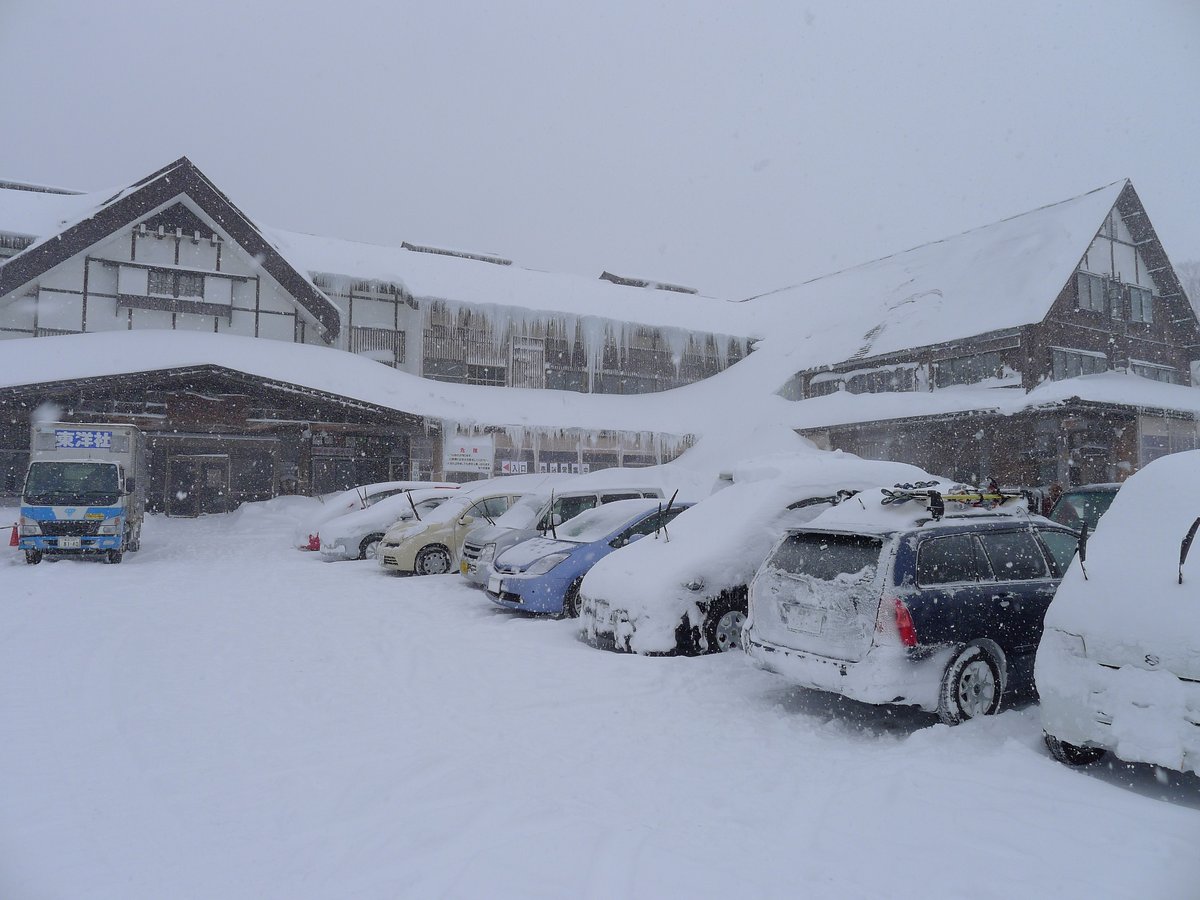
Taxis are not stationed at the ropeway; the official site points to Aomori taxi companies' zone-based fixed-fare plans, so arrange your return in advance.
For a charter, KKday has an 8-hour private car from Aomori, priced per vehicle, on your own schedule with no bus booking. The listing's "classic route" goes via Tsuta-numa and Oirase, which are closed in winter, so set a custom route when you book (for example Aomori → Hakkoda Ropeway → Sukayu → Aomori). Ropeway and bath costs are extra, and the charter is still charged if the ropeway is closed.
KKday Aomori 8-hour private car (set a custom route in winter) →
Can non-skiers go up? How long, and what to wear?
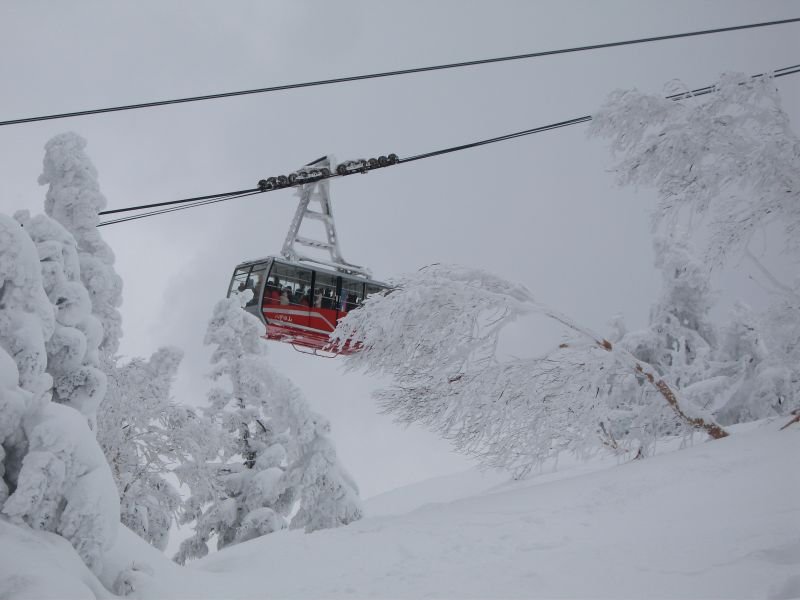
Yes. Riding the ropeway is the main way to see the snow monsters. The ropeway company promotes "an aerial stroll past the snow monsters" as one of its winter activities: the lower section passes through deciduous forest, and the snow monster forest only starts near the summit.
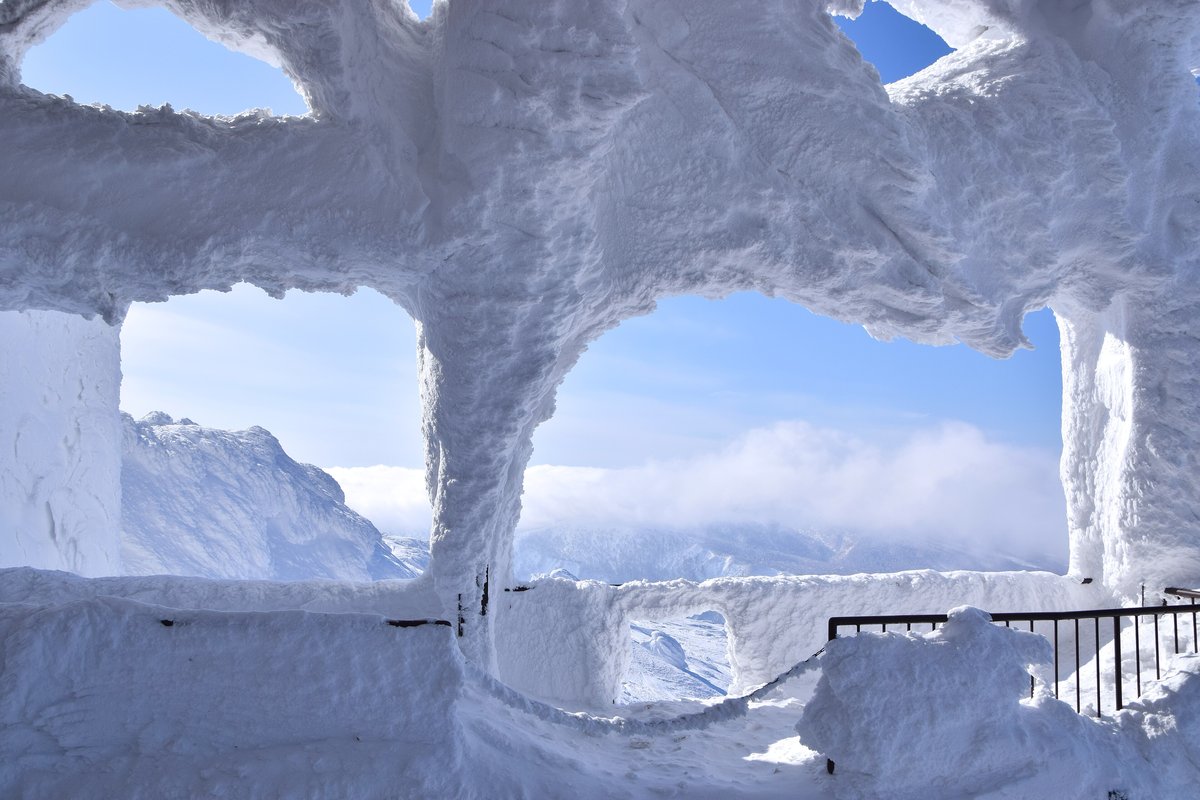
At Sancho Koen Station there is an indoor observation room to shelter from the wind and a wooden viewing deck outside. With cars every 20 minutes a round trip can be done in about 30 minutes; add photos from the room and the deck and 1–2 hours is plenty.
The summit runs are ungroomed and meant for intermediate and advanced skiers, and the separate "tour route" lies outside the managed ski area: if you have an accident or get lost, you pay for the search and rescue. Non-skiers should not head off into the snow on their own; to walk among the snow monsters, join one of the guided tours in the next section.
Dress the way the official guided tours ask: snow jacket and pants, hat and gloves. The summit is around -10°C in the morning and feels colder in strong wind; for other winter clothing, see the Japan winter clothing guide.
Should you join a snowshoe tour?
Not if you just want to look from the summit; yes if you want to walk among the snow monsters, rather than going alone. Neither of the two local tours below has published 2026-27 dates or prices yet.
| Tour | What it is |
|---|---|
| Sukayu Onsen Ryokan, 酸ヶ湯周辺スノーハイク体験 (snow hike around Sukayu) | About 60 minutes uphill from Sukayu to see snow-covered Aomori firs; this season's dates and price not yet published |
| Matatabi Club, 八甲田樹氷ウォッチング (Hakkoda snow monster watching) | Last season's fee included the ropeway round trip, snowshoe and pole rental, guide and insurance; junior-high age and up, 3–10 people; moves to the base area with a partial refund if the ropeway is stopped; this season's dates not yet published |
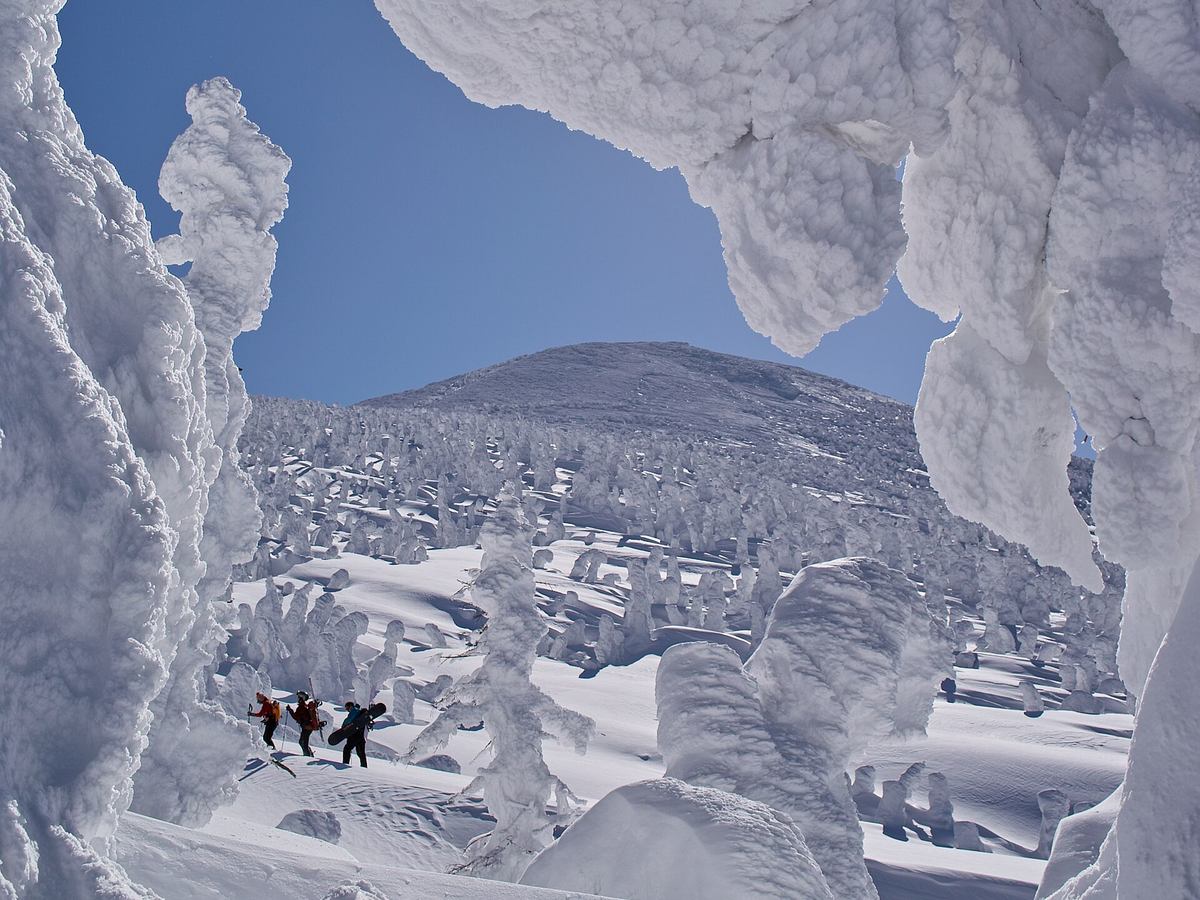
KKday also has a Hakkoda snowshoe tour open for booking now, with departures from December 14, 2026; the price includes the ropeway round trip and snowshoe and snowsuit rental. If the ropeway is stopped, the tour switches to snowshoeing around Sukayu and is still charged. Your preferred date may sell out, so book once your dates are set.
Can you just bathe at Sukayu Onsen? Hours and prices from December
Yes, but from December 1, 2026 the hours are shorter, the price is higher, and it is cash only. Sukayu is the bus terminus, a short ride on from the ropeway. "Day bathing" (日帰り入浴, higaeri nyūyoku) means paying to bathe without staying the night.
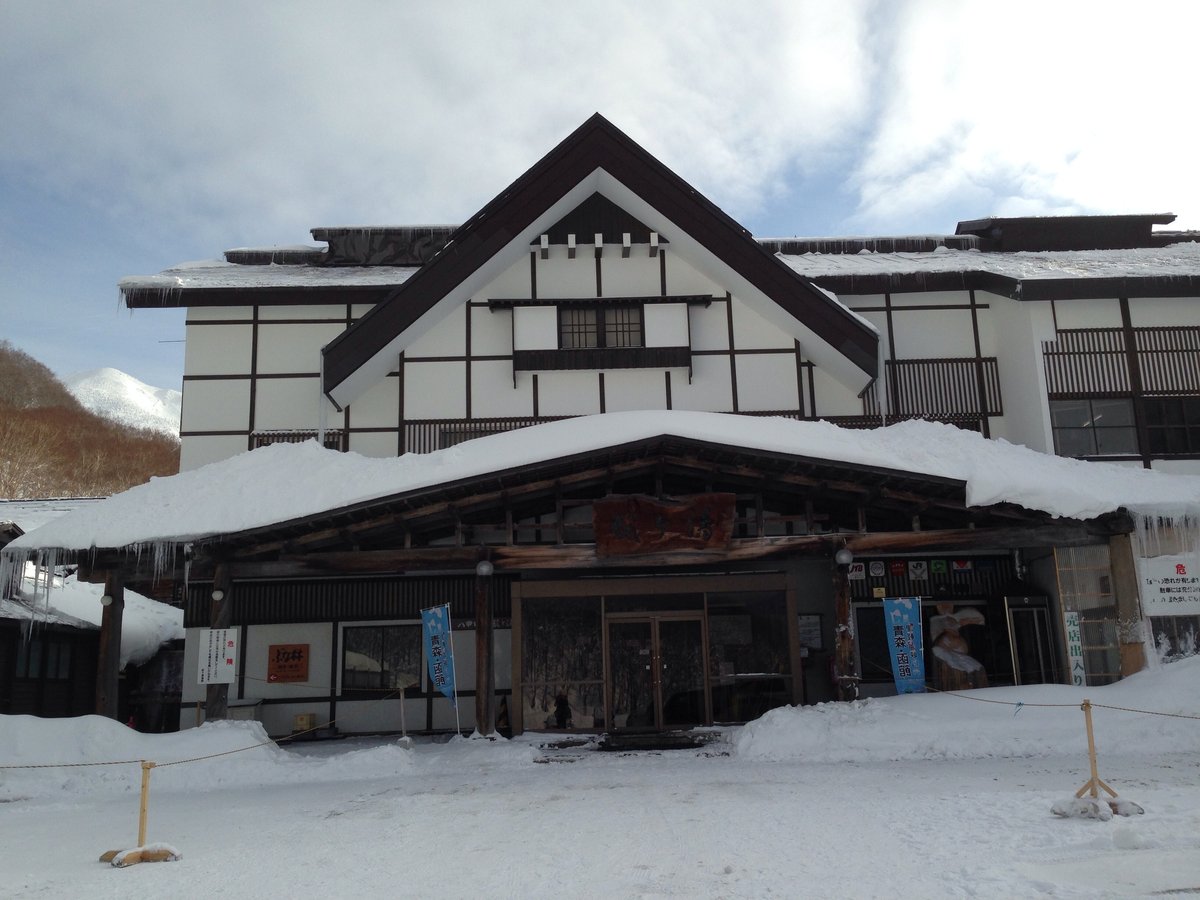
| Hours (from Dec 1) | 9:00–16:00, ticket sales end 15:30 |
|---|---|
| Price (from Dec 1) | Adults (junior-high age and up) ¥1,500, elementary students ¥500, preschoolers free; includes a rental bath towel and a hand towel to keep |
| Payment | Ticket vending machine, cash only |
| Baths | Both the ヒバ千人風呂 (Hiba Sennin-buro, mixed-gender) and 玉の湯 (Tama-no-yu, separate men's and women's) are included |
| Until Nov 30 | Sennin-buro 7:00–18:00 (women only 8:00–9:00), Tama-no-yu 9:00–17:00, adults ¥1,000. The whole inn closes Nov 16–18 (day bathing ends 17:00 Nov 15 and resumes 12:00 Nov 19) |
| Website | Sukayu Onsen Ryokan |
The Sennin-buro is mixed bathing; if that bothers you, choose the gender-separated Tama-no-yu.
Day trip or overnight? Sukayu or Aomori city?
For the snow monsters alone, a day trip works; to catch the first ropeway in the morning or avoid racing for the 15:03 bus, stay on the mountain.
| On the mountain (Sukayu, Hakkoda, Jogakura) | Aomori city | |
|---|---|---|
| Upside | Ride the first ropeway next morning, free of the last-bus limit | More rooms, shinkansen access, and you can go up another day if the weather turns |
| Watch out | The latest bus up is No. 6 (Aomori Station 10:50). Sukayu's inn runs a free shuttle from Shin-Aomori Station east exit (10:15 and 14:00); book it with your room | You need to make the 15:03 last bus back |
| Best for | An onsen night and morning photos of the snow monsters | Trips with a spare day and other plans in the city |
Sukayu and the Hakkoda mountains are administratively part of Aomori City, so the "Aomori City" listings on the three sites below mix city business hotels with mountain onsen inns; check the map location before you book. Booking.com's list is mostly city hotels, with Sukayu not on the first page; Agoda's includes Jogakura Hotel and Hakkoda Hotel; Rakuten Travel's includes Sukayu Onsen Hakkoda Hotel, Jogakura Hotel and Berjaya Hakkoda.
| Where to stay | Book |
|---|---|
| Aomori City (city center and Hakkoda mountains) | Booking.com Aomori City stays → |
| Agoda Aomori City stays → | |
| Rakuten Travel Aomori City stays → |
For what else to do in Aomori city, see the Aomori travel guide.
Hakkoda or Zao? How to choose if you can only do one
If you are in Aomori and want a bus day trip, pick Hakkoda; if you want illuminated snow monsters, pick Zao. Official sources do not tell you which has bigger or prettier snow monsters, so do not choose on that basis.
Hakkoda's strengths are a direct winter bus from Aomori Station (reservation required, three runs a day), a 10-minute ropeway to the summit, Sukayu's mixed-gender Sennin-buro at the bottom, and it is a daytime sight. For Zao's illuminations, snow cats and Zao Onsen ski area, see the Zao snow monsters guide; to fit both into one Tohoku winter trip, see the 5-day Tohoku winter itinerary.
The third of Japan's big three snow monster spots is Mt. Moriyoshi in Akita. It is far quieter, at the cost of having no bus for the way up: you need a reserved shared taxi.
Arriving by shinkansen, half a day only, or staying on the mountain
If you arrive at Shin-Aomori by shinkansen that day
Take No. 4 (Shin-Aomori 9:40) or No. 6 (Shin-Aomori 11:10) up, then No. 5 back, leaving Ropeway-eki-mae at 15:03 and reaching Shin-Aomori at 16:13, in time for an evening shinkansen. No. 2 at 8:10 does not stop at Shin-Aomori, so board it at Aomori Station.
If you only have half a day
Take No. 2 from Aomori Station at 8:10, reach Ropeway-eki-mae at 9:10, ride the ropeway up and down, then catch No. 1 at 11:08 and be back at Aomori Station at 12:03. That gives you about two hours on the mountain and the afternoon free in the city.
If you are staying at Sukayu or a Hakkoda onsen inn
The 15:03 last bus does not matter. Go up on No. 4 or No. 6 on day one, bathe in the evening, and take the 9:00 first ropeway the next morning. Boarding back from Sukayu or Ropeway-eki-mae needs no reservation; queue and get on if there is space.
Common first-timer mistakes
⚠️ ① Queuing at Aomori Station without a reservation. In winter, boarding at Aomori or Shin-Aomori Station requires a reservation, and you are turned away when the bus is full.
⚠️ ② Assuming a JR Pass means no reservation. The pass only covers the fare; you still have to book.
⚠️ ③ Waiting at Ropeway-eki-mae for No. 6 to Sukayu and not getting on. Intermediate stops cannot be reserved, so if the bus filled up at Aomori, you will not get a seat. In that case take No. 5 at 15:03 straight back to Aomori.
⚠️ ④ Getting the Shin-Aomori stops wrong. On the way to Sukayu, buses boarding at Aomori Station do not let you off at Shin-Aomori; on the way back, you cannot board at Myoken or Aomori Station.
⚠️ ⑤ Going in mid-November. The ropeway is fully closed November 8–20, 2026 and Sukayu Onsen closes completely November 16–18; the bus starts on November 12, but that week you may miss both the ropeway and the bath.
⚠️ ⑥ Bringing only a credit card to Sukayu. From December 1 bath tickets are sold by vending machine, cash only.
How I would plan it: snow monsters plus Sukayu in one day
Snow monsters in the morning, lunch and a bath at Sukayu at midday, back in Aomori by late afternoon, with nothing else that day. All times follow the 2026-27 winter timetable.
| Time | Where | What |
|---|---|---|
| 8:10 | Aomori Sta. east exit, stop 11 | Board your reserved Hakkoda-go No. 2 |
| 9:10 | Ropeway-eki-mae | Buy a round-trip ticket at the window, ride up |
| 9:30 | Sancho Koen Station | Snow monsters from the observation room and deck, about 2 hours |
| 12:15 | Ropeway-eki-mae | Queue for No. 6 (no reservations; seats only if space) |
| 12:30 | Sukayu Onsen | Lunch, then the Sennin-buro or Tama-no-yu |
| 14:50 | Sukayu Onsen | Board No. 5 back (no reservation needed) |
| 15:58 | Aomori Station | Back in the city |
What you pay that day (adult): bus Aomori → Ropeway-eki-mae ¥1,290, Ropeway-eki-mae → Sukayu ¥460, Sukayu → Aomori ¥1,570, reservation fee ¥300, ropeway round trip ¥2,500, bath ¥1,500. If you cannot get on the 12:15, wait at Ropeway-eki-mae for No. 5 at 15:03 back to Aomori and save the bath for another day.
FAQ
- Q1:When is the best time to see the Hakkoda snow monsters? Can I see them in December?
- January to late February. Both the ropeway company and Aomori Prefecture give January–February as the usual best viewing period. December is outside it, so if you want to be sure of seeing the snow monsters, go in January or February.
- Q2:How do I get from Aomori Station to the Hakkoda snow monsters?
- Take the JR Bus Tohoku "Hakkoda-go" to Ropeway-eki-mae, about 60–85 minutes depending on the run, ¥1,290 for adults. In winter, boarding at Aomori or Shin-Aomori Station requires an online reservation on WILLER TRAVEL, with a ¥300 reservation fee per person.
- Q3:Can I do the Hakkoda snow monsters as a day trip from Aomori?
- Yes, but the last bus back leaves Ropeway-eki-mae at 15:03. Leave Aomori Station at 8:10, spend two hours on the mountain and you are back in Aomori at 12:03. Other options are in the "three scenarios" section.
- Q4:How much is the Hakkoda Ropeway in winter, and does it shut down?
- Adult round trip is ¥2,500 (new price from August 1, 2026), bought at the window. It stops in winds of 25 m/s or more or in bad weather, so check the status box on the ropeway homepage before you go. It is fully closed November 8–20, 2026.
- Q5:Do I still need to reserve the Hakkoda-go bus with a JR East Pass?
- Yes. The JR EAST PASS and JAPAN RAIL PASS cover the fare when shown on board, but boarding at Aomori or Shin-Aomori Station still requires an online reservation.
- Q6:Can non-skiers go up Hakkoda to see the snow monsters?
- Yes. You see the snow monsters from the ropeway cabin, and the summit station has an indoor observation room and a wooden deck; a round trip takes as little as about 30 minutes. The summit runs are for intermediate and advanced skiers, so non-skiers should not wander off into the snow.
- Q7:Is there a live camera for the Hakkoda Ropeway?
- No live camera on the official site. Use the operating status and summit weather box (weather, temperature, wind speed, visibility) on the ropeway homepage instead.
- Q8:Can I just bathe at Sukayu Onsen in winter without staying?
- Yes. From December 1, 2026 day bathing is 9:00–16:00, ¥1,500 for adults. Buy your ticket at the vending machine, which takes cash only.
What I would do
For a first visit to Hakkoda, I would go between late January and February and spend two nights in Aomori city: one day for the "snow monsters plus Sukayu" plan above, the other kept as a spare in case the ropeway stops. I would book the bus the moment reservations open three months ahead; it is the only thing on this trip that needs doing in advance. If you mainly want the onsen and do not want to rush, I would stay one night at Sukayu or elsewhere around Hakkoda and take the first ropeway the next morning. If December is your only option, I would not build the trip around the snow monsters.
Official information
- Hakkoda Ropeway (operating status, summit weather, fares and hours)
- JR Bus Tohoku, Aomori–Sukayu line Hakkoda-go (timetable, fares, reservation rules; Japanese)
- WILLER TRAVEL Hakkoda-go reservations (English)
- Sukayu Onsen Ryokan (day bathing hours and prices)
- Aomori Prefecture tourism: Hakkoda snow monsters
Prices and times follow the latest official announcements.