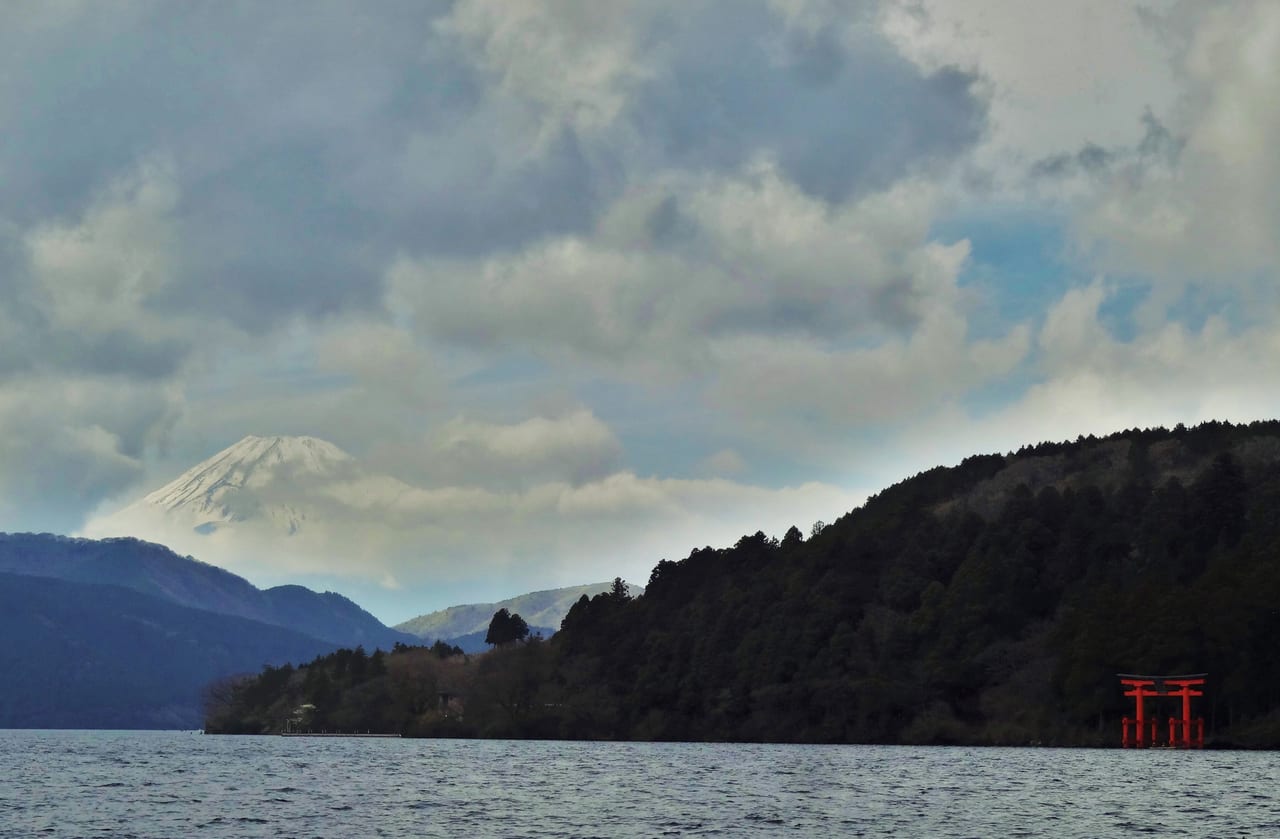
The easiest mistake with Hakone foliage is treating it as a single spot you visit on one good weekend. The truth: on the same day, the Lake Ashi shore can be fully red while Owakudani up high is already fading and the Gora onsen town below is still half green. The elevation drop from Hakone-Yumoto to the summits stretches the foliage season into more than a month — the high band turns first in late October, and Yumoto drags on into early December. Understand the gradient and you can both pick the right date and, in a single day, ride the mountain railway, cable car, ropeway, and cruise from low elevation to high, collecting several peak bands into one trip. This guide is organized entirely around that elevation gradient: a spot-by-spot timing table, how the Free Pass strings the loop together, the Sengokuhara pampas-grass add-on, and how to dodge the ropeway queues.
📍 For the full 5-region Japan koyo timing map, see Japan Autumn Foliage 2026. This article is the Kanto deep-dive on Hakone; for the four-season Hakone playbook (onsen, museums, itineraries), see the Hakone travel guide.
- Hakone foliage is an elevation gradient, not one date: high (Kamiyama/Kintoki) late Oct → mid (Sengokuhara/Lake Ashi) early Nov → low (Gora/Miyanoshita) mid-late Nov → Yumoto into early Dec
- For the most layers in one day, target mid-November: mid-band at full color, low band just starting, high band at its tail
- The Free Pass strings the elevation into one loop: Shinjuku 2-day adult ¥7,100, covering the railway, cable car, ropeway, cruise, and buses
- Sengokuhara pampas grass runs Sep–Nov and pairs with mid-elevation foliage on the same day — one gold, one red
- Hit the Owakudani ropeway early in foliage season: it is the biggest bottleneck in Hakone, and afternoon cloud crowds it further
📖 Table of Contents (click to expand)
The elevation gradient: why Hakone foliage lasts over a month
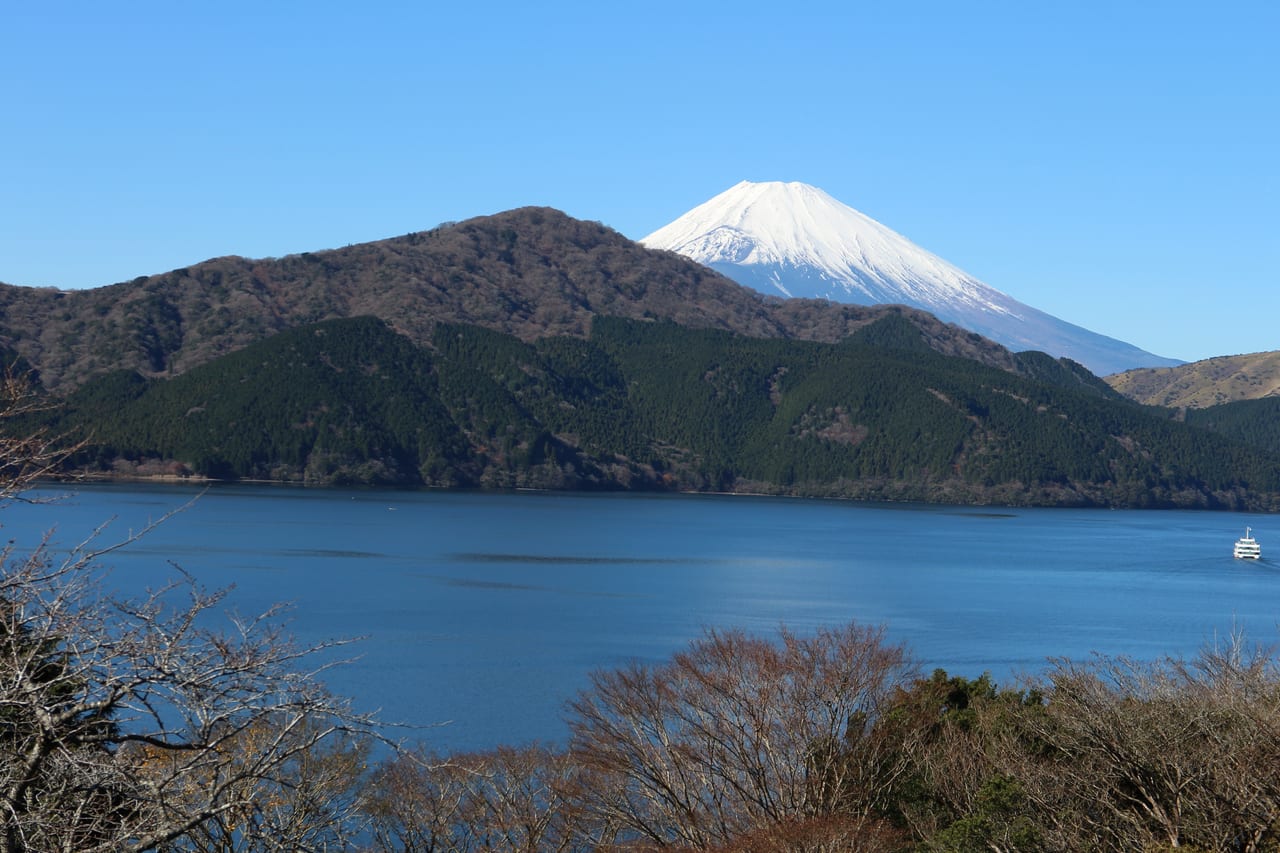
Most foliage spots are one place with one peak week; reading the timing means pinning one date. Hakone is different: it is an entire volcanic landform, climbing from the low valley mouth at Hakone-Yumoto up to Owakudani, Komagatake, and Mount Kintoki. Every step up in elevation drops the temperature a little, so the maples turn a little earlier — high turns first, low turns last. That physical drop stretches the Hakone foliage season from a week into more than a month.
Per the Hakone Tourism Association region-by-region peak categories, the gradient roughly splits into four layers:
- High elevation (Mount Kamiyama, Kanmurigatake, Mount Kintoki): starts coloring in late October, the earliest layer in Hakone, and the first color you see when overlooking from the ropeway.
- Mid elevation (Sengokuhara, Motohakone, the Lake Ashi shore, Komagatake, Futagoyama, Kozukayama): peaks in early November, with the Motohakone area running into mid-November. This layer is the main stage of Hakone foliage, and the water-plus-maple composition on the Lake Ashi shore is the signature shot.
- Low elevation (Gora, Kowakidani, Miyanoshita): mid-to-late November. The Hakone Museum of Art in Gora is the recognized viewing spot here, and the official average peak is marked mid-to-late November.
- Lowest (Hakone-Yumoto, Tonosawa, Ohiradai): late November into early December — the association explicitly calls Yumoto the last place in Hakone you can still see foliage.
The gradient carries two practical meanings. First, your date decides which layer you see: come in late October and only the summits are red while the base is all green; come in mid-November for the best multi-layer window; come in early December and the high spots are already bare, leaving only Yumoto to finish. Second, you can also climb the gradient in a single day using the transport — which is exactly what makes Hakone foliage more interesting than most spots, and the loop section below unpacks it.
Spot-by-spot timing table: which band turns when
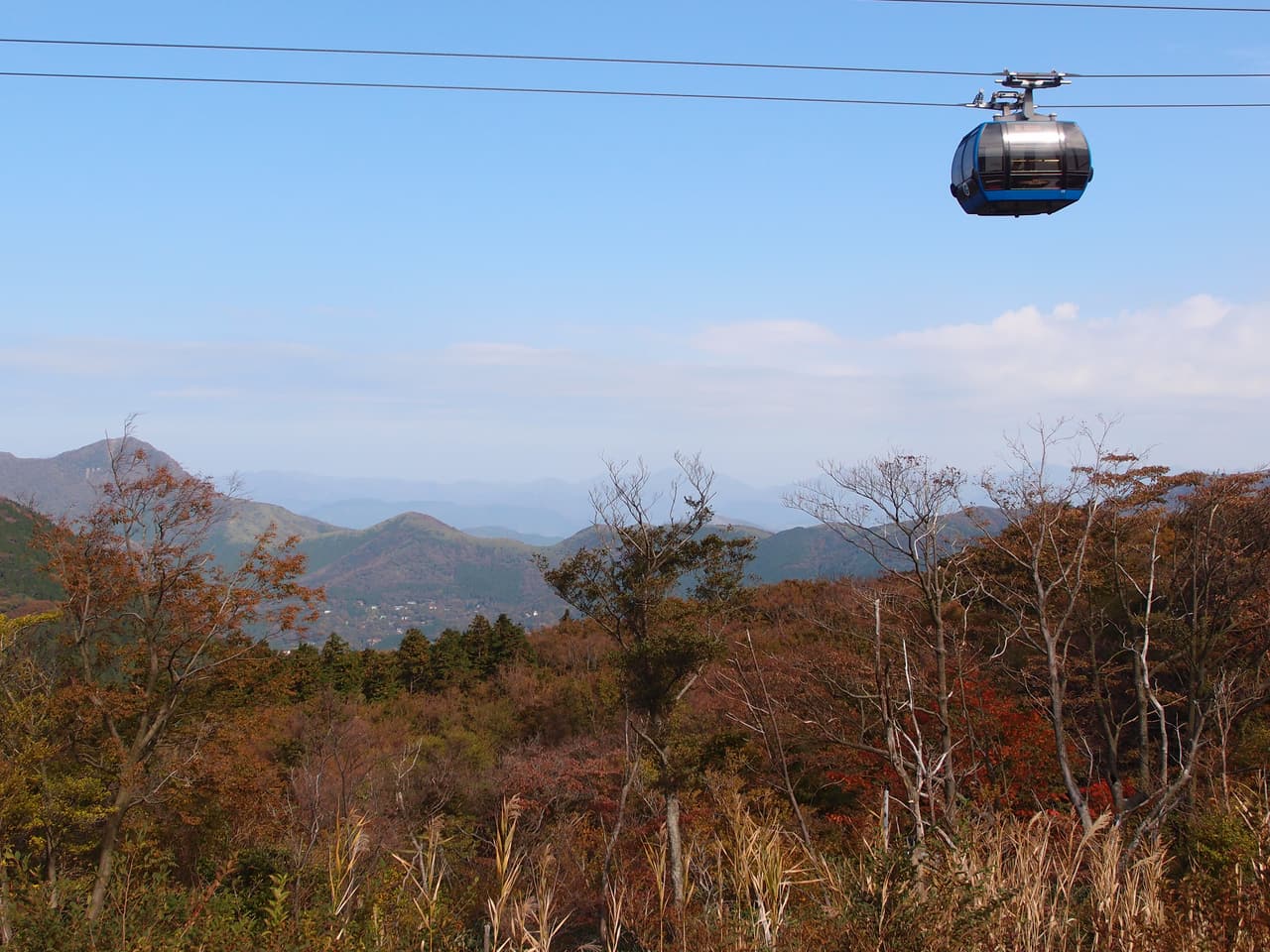
Lay the four elevation layers into one table and you can match at a glance the spot you want, the date you should come, and the transport that passes it. The peak windows below follow the Hakone Tourism Association region-by-region categories:
| Spot / area | Elevation band | Average peak window | Transport that passes it |
|---|---|---|---|
| Kamiyama · Kanmurigatake · Kintoki | High | Starts coloring late Oct | Ropeway overlook, Kintoki trailhead bus |
| Sengokuhara (incl. pampas field) | Mid | Maple early Nov / pampas Sep–Nov | Sengokuhara-direction mountain bus |
| Motohakone · Lake Ashi shore · Komagatake | Mid | Early–mid Nov | Pirate-ship cruise, Komagatake ropeway, Motohakone port |
| Gora · Kowakidani · Miyanoshita | Low | Mid–late Nov | Mountain railway Gora Station, Hakone Museum of Art |
| Hakone-Yumoto · Tonosawa · Ohiradai | Lowest (valley mouth) | Late Nov–early Dec | Mountain railway start, the last foliage in Hakone |
How to use it: first decide which picture you most want. For water-mirrored foliage plus Mt. Fuji on the Lake Ashi shore, that is the mid band — target early to mid November. For onsen-town garden foliage (the Gora Hakone Museum of Art type), push to mid-to-late November. If late October is your only window, weight the day toward the high-elevation Owakudani and ropeway section and do not expect the base to be red yet. The table also makes one thing plain: there is no single day when all of Hakone is at its reddest — every date has one layer at full color and another not yet in or already gone, so the trick is picking the layer you came for.
The Free Pass loop: one ticket up the whole elevation line
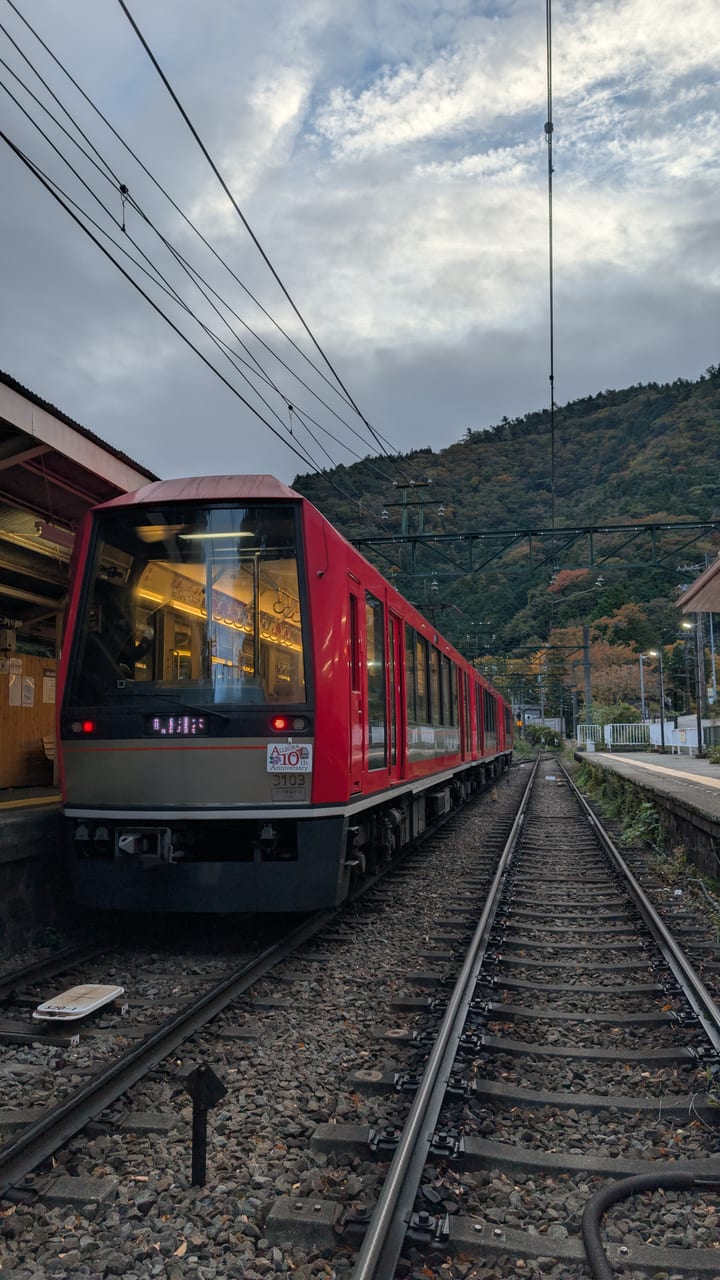
The smartest way to do Hakone foliage is to hand the elevation gradient to the transport and let it climb for you. The Hakone golden-loop transit rundown, dropped into foliage season, becomes a perfect low-to-high-to-low viewing line:
- Hakone-Yumoto → Gora (mountain railway): passing the low-elevation foliage at Tonosawa, Ohiradai, and Miyanoshita, the train switchbacks up the slope — a moving viewing gallery in itself.
- Gora → Sounzan (cable car): the continuation of the railway, climbing another stretch of elevation.
- Sounzan → Togendai (ropeway): over the Owakudani volcanic zone, the highest segment of the whole loop, overlooking high-elevation foliage and Mt. Fuji on clear days — and the most crowded segment (see below).
- Togendai → Motohakone (pirate-ship cruise): across Lake Ashi, switching your view from overlook to the water-level, mid-elevation foliage.
- Motohakone → Hakone-Yumoto (mountain bus): closing the loop back to the valley mouth.
- ⚠️ Not a foliage-season problem, but this loop breaks on one day of the New Year holiday: on the outbound day of the Hakone Ekiden (2 January), buses from Hakonemachi Port toward Hakone-Yumoto and Odawara were suspended roughly 10:00–14:30 last year, so the final leg disappears and you have to retrace. See what closes in Hakone during the Ekiden.
This full loop strings together the mountain railway, cable car, ropeway, pirate-ship cruise, and mountain buses — five modes. Buying each leg separately quickly exceeds the pass price, and in foliage season queuing to buy tickets at each station eats large chunks of time. The Hakone Free Pass is built for exactly this loop: the Shinjuku 2-day adult price is ¥7,100 per Odakyu official, covering the Odakyu Line round trip from Shinjuku to Odawara plus unlimited rides on all five modes inside Hakone. For anyone doing the full loop it is almost always worth it — unless you only plan to soak in Yumoto without going up, in which case you never touch the ropeway or cruise and do not need it.
So where do you actually buy one? This guide previously skipped that. The Hakone Freepass is sold by Odakyu itself, and these are the official routes: the easiest option is Odakyu's digital ticket app, EMot, which lets you buy before you fly and tap through the gates with your phone. Once you land you can also buy at ticket machines on the Odakyu line or at the Odakyu Sightseeing Service Center in Shinjuku. Fares and sales points are on Odakyu's official fares-and-outlets page (rechecked 2026-08-22: adult ¥7,100).
KKday and GetYourGuide also sell the same Shinjuku-departure pass online, but both give you an e-voucher, not a tap-through digital ticket like EMot. The KKday voucher has to be exchanged for a physical pass at the Odakyu Sightseeing Service Center at Shinjuku West or at Odawara (exchange it at Odawara and it only works from Odawara onward); the GetYourGuide one can only be exchanged at Shinjuku Station. The counters keep set opening hours, so if you plan an early start, check that they line up.
One practical warning: checking live ropeway status, matching the sea of clouds and Fuji visibility for the day, and rerouting on the fly all need data — but the Hakone mountains, with their many tunnels, drop signal in and out. Set up an unlimited eSIM before you fly and connect on landing with a QR scan, rather than hunting for Wi-Fi up the mountain — for how the five main eSIMs compare, see the Japan eSIM guide.
Sengokuhara pampas add-on: gold-and-red autumn
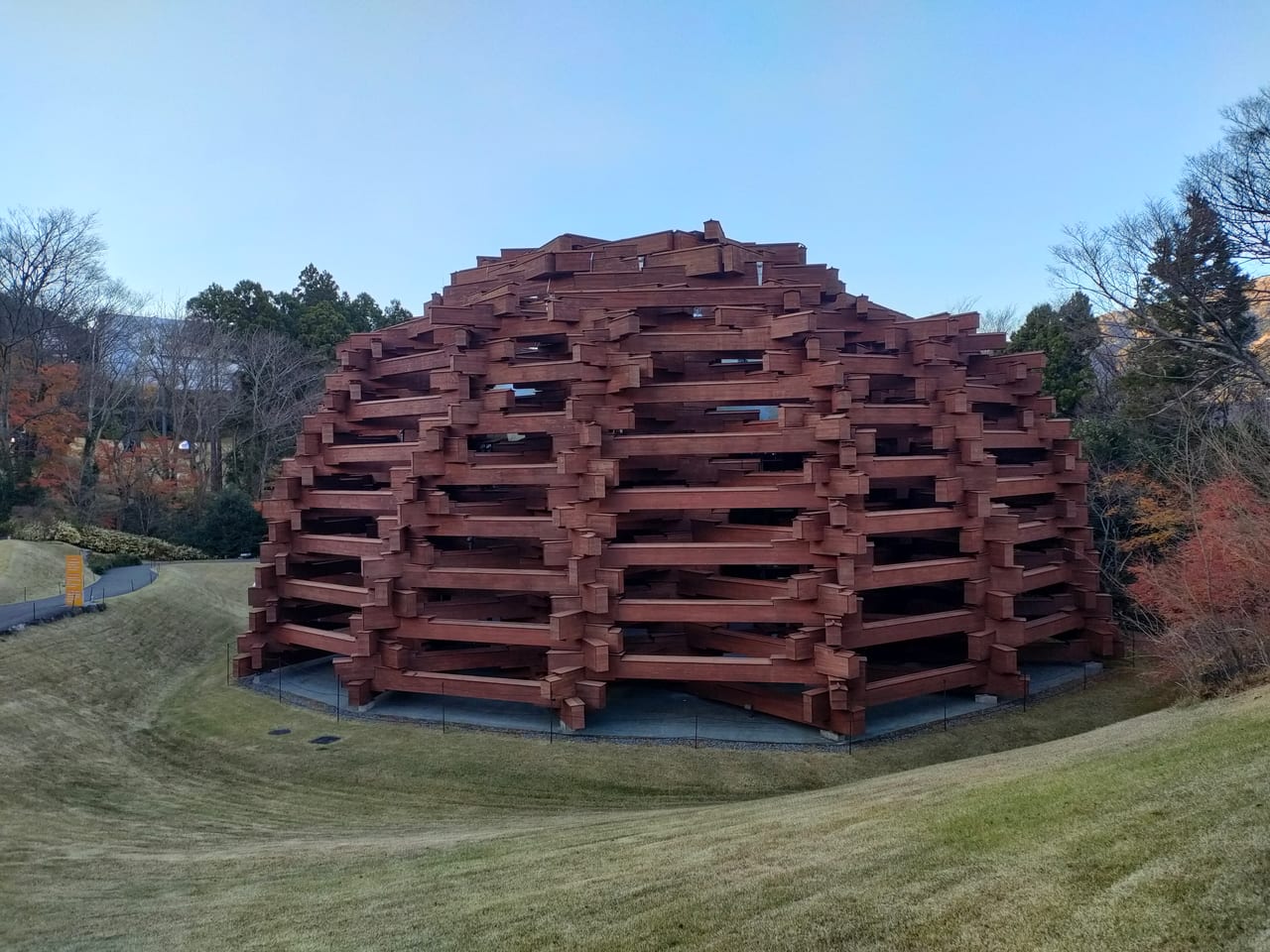
Hakone foliage has an easily missed add-on: the Sengokuhara pampas-grass (susuki) field. It is not maples, but it is the other signature color of a Hakone autumn. Per the Hakone Tourism Association, the Sengokuhara pampas peaks across a long window from September to November: the plumes turn near-golden from mid-September and keep shifting color through November. So when you come for mid-elevation foliage in early November, the pampas field is still there — a sweep of golden-brown grass down the mountain skirt, a completely different texture and color temperature from the red maples. One gold, one red.
The two pair neatly on an itinerary: Sengokuhara sits in the mid-elevation band with maple foliage peaking around early November, and it shares the Sengokuhara-direction mountain bus line with the Lake Ashi shore. A smooth one-day combination: the pampas field in the morning (the grass is most striking backlit, and morning light angles work well), then Motohakone and the Lake Ashi shore in the afternoon for water-mirrored foliage. One bus line strings them together, and a single day banks both the golden grass and the lakeside red. The association gives no more precise best-week for the pampas, so use the qualitative read: near-golden from mid-September, still viewable through November, with early November — where it overlaps foliage season — the sweet spot for having both in frame.
Beating the crowds: dodging the ropeway queue
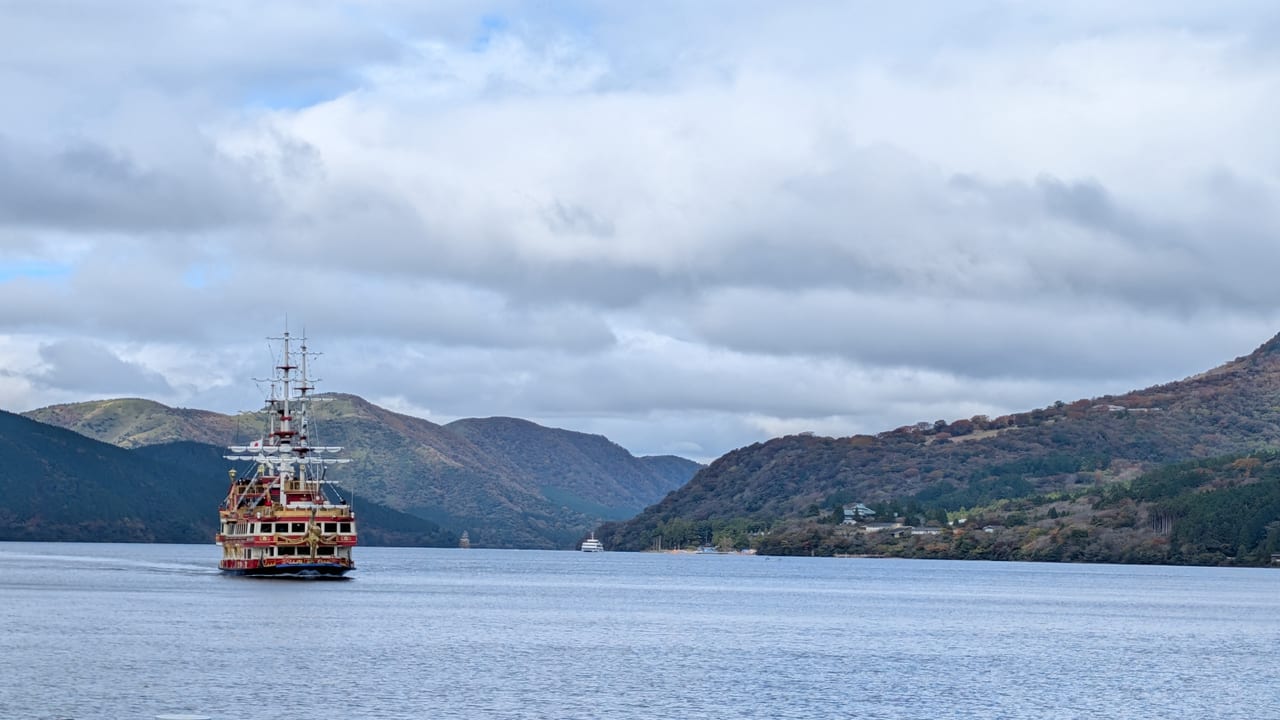
The Hakone foliage-season pain point is concentrated: the Owakudani ropeway section is the biggest bottleneck of the whole loop. It is the unavoidable link between high-elevation viewing and the Mt. Fuji vista, so tour groups and independent travelers all funnel through it; afternoon cloud often hides Fuji, so everyone also wants to go up in the morning while visibility is best, piling the crowd into the same time on the same segment. The association does not publish actual foliage-season queue times, but the congestion is predictable. Two ways to dodge it:
- Hit Owakudani and the ropeway first thing. Put the most jam-prone segment at the very front. The opening window has the fewest people and the clearest visibility (Fuji only clouds over in the afternoon). Routing clockwise — Yumoto to Gora to Owakudani to Lake Ashi, leaving early — is far calmer than going counterclockwise and reaching the ropeway in the afternoon. This is my top move.
- Avoid peak weekends if you can take a weekday. The crowd gap between weekdays and weekends in Hakone is enormous, and peak-foliage Saturdays and Sundays especially so. Same foliage, a completely different experience on a weekday — ropeway queues, cruise seating, and restaurant waits are all much gentler midweek.
To repeat the routing point: clockwise, leaving early is the optimal solution for foliage-season Hakone. Clear the most jam-prone and weather-dependent segment — the Owakudani ropeway — in the morning, then move to the Lake Ashi shore around midday to walk slowly and shoot the water-mirrored foliage; by the afternoon peak you are already on the more dispersed lakeside rather than stuck in a ropeway queue. Allow 6 to 8 hours for the loop with photos and meals, and do not over-pack the schedule — every transport segment runs slower than usual in foliage season.
Frequently Asked Questions
- Q1:When is Hakone autumn foliage at its best in 2026?
- There is no single answer, because Hakone foliage turns in layers up one mountain. Per the Hakone Tourism Association official region-by-region peak categories: the high-elevation band (Mount Kamiyama, Kanmurigatake, Mount Kintoki) starts coloring in late October; the mid-elevation band (Sengokuhara, Motohakone, the Lake Ashi shore, Komagatake) peaks in early November, with Motohakone running into mid-November; the lower onsen towns of Gora, Kowakidani, and Miyanoshita peak mid-to-late November; and the lowest points, Hakone-Yumoto, Tonosawa, and Ohiradai, run late November into early December, with the association calling Yumoto the last place in Hakone you can still see foliage. To catch the most layers in a single day, aim for mid-November, when the mid-elevation is at full color, the low band is just starting, and the high band is at its tail.
- Q2:Is the Hakone Free Pass worth it for a foliage trip?
- If you plan to complete the full loop — mountain railway, cable car, ropeway, sightseeing cruise, and mountain buses — the Hakone Free Pass is almost always worth it. The Shinjuku 2-day adult price is ¥7,100 per Odakyu official, covering the Odakyu Line round trip from Shinjuku to Odawara plus unlimited rides on all five transport modes inside Hakone. A foliage day is built on chaining these modes across different elevations, and buying each leg separately quickly exceeds the pass price while costing you queue time at ticket windows. The only time it does not pay off is if you only plan to soak in Yumoto without going up the mountain, in which case you never touch the ropeway or cruise.
- Q3:Can I see Hakone foliage in one day, and how should I route it?
- You can see the highlights in a day, but you have to move with the elevation. The standard route climbs from Hakone-Yumoto by mountain railway to Gora (passing the low-elevation foliage at Ohiradai and Miyanoshita), switches to the cable car up to Sounzan, then the ropeway over the Owakudani volcanic zone (the highest vantage, overlooking high-elevation foliage and Mt. Fuji on clear days), down to Togendai for the pirate-ship cruise across Lake Ashi to Motohakone, and finally a mountain bus back to Yumoto. The loop is itself a low-to-high-to-low elevation line, so a single day passes through several peak bands at once. Allow 6 to 8 hours with photos and meals.
- Q4:When can I see the Sengokuhara pampas grass, and does it pair with foliage?
- Yes, and it pairs well. Per the Hakone Tourism Association, the Sengokuhara pampas-grass field peaks across a long window from September to November: the plumes turn near-golden from mid-September and keep shifting color through November. That means when you come for mid-elevation foliage in early November, the pampas field is still there — a sweep of golden-brown grass down the mountain skirt, a completely different autumn texture from the red maples. Sengokuhara itself is in the mid-elevation band, with maple foliage peaking around early November, so a morning at the pampas field plus an afternoon of lakeside foliage at Lake Ashi is a smooth one-day combination — both stops sit along the Sengokuhara-direction mountain bus line.
- Q5:How long are the ropeway queues in foliage season, and how do I avoid crowds?
- The association does not publish actual foliage-season queue times, but the Owakudani ropeway section is the biggest bottleneck in all of Hakone during foliage season — it is the unavoidable link between high-elevation viewing and the Mt. Fuji vista, so tour groups and independent travelers all funnel through it, and afternoon cloud often hides Fuji, pushing everyone to go up in the morning when visibility is best. Two ways to dodge it: first, hit Owakudani and the ropeway early — the opening window has the fewest people and the clearest visibility; second, avoid peak weekends and come on a weekday, since the crowd gap between weekdays and weekends in Hakone is enormous. Routing clockwise — Yumoto to Gora to Owakudani to Lake Ashi, leaving early — is far calmer than going counterclockwise and reaching the ropeway in the afternoon.
- Q6:Have the official 2026 Hakone foliage peak dates been announced?
- The Hakone Tourism Association region-by-region categories are a historical convention, not a precise year-by-year forecast — they tell you roughly which elevation band turns in which window, but the actual peak shifts a few days each year with how early the cold arrives. As of September 2, 2026, none of the three Japanese foliage trackers has published a 2026 peak forecast, and each names a different start date on its own page: Walkerplus says early September for peak-timing forecasts and mid-September for color reports, tenki.jp says late September, and WeatherNews only says September 2026. One thing worth knowing: Walkerplus republishes WeatherNews for its peak-timing forecast, so there are really only two independent sources, tenki.jp and WeatherNews. The practical approach: use the elevation-band averages here to book transport and lodging in broad strokes, then recheck the current-year forecast about two weeks before you travel. A warm autumn pushes everything later; an early-cold year pulls it earlier — do not just reuse last year dates.
Read next
Japan Autumn Foliage 2026: Peak Forecast & 5-Region Guide
Region-by-region peak-forecast map from late-September Hokkaido to mid-December Kyushu, with itineraries and booking timing.
Hakone Guide 2026: Free Pass, Owakudani & Lake Ashi
About 85 minutes from Shinjuku by Romancecar — the 2026 Hakone Free Pass, Owakudani, Lake Ashi pirate ships, the floating torii, and a two-day onsen loop.
Tokyo to Mt. Fuji day trip guide
Kawaguchiko, Oshino Hakkai, Arakurayama — bus times, prices, must-knows.
📊 See the 2026 Price Index (JR Pass, DPA, eSIM, Airport Transport) →