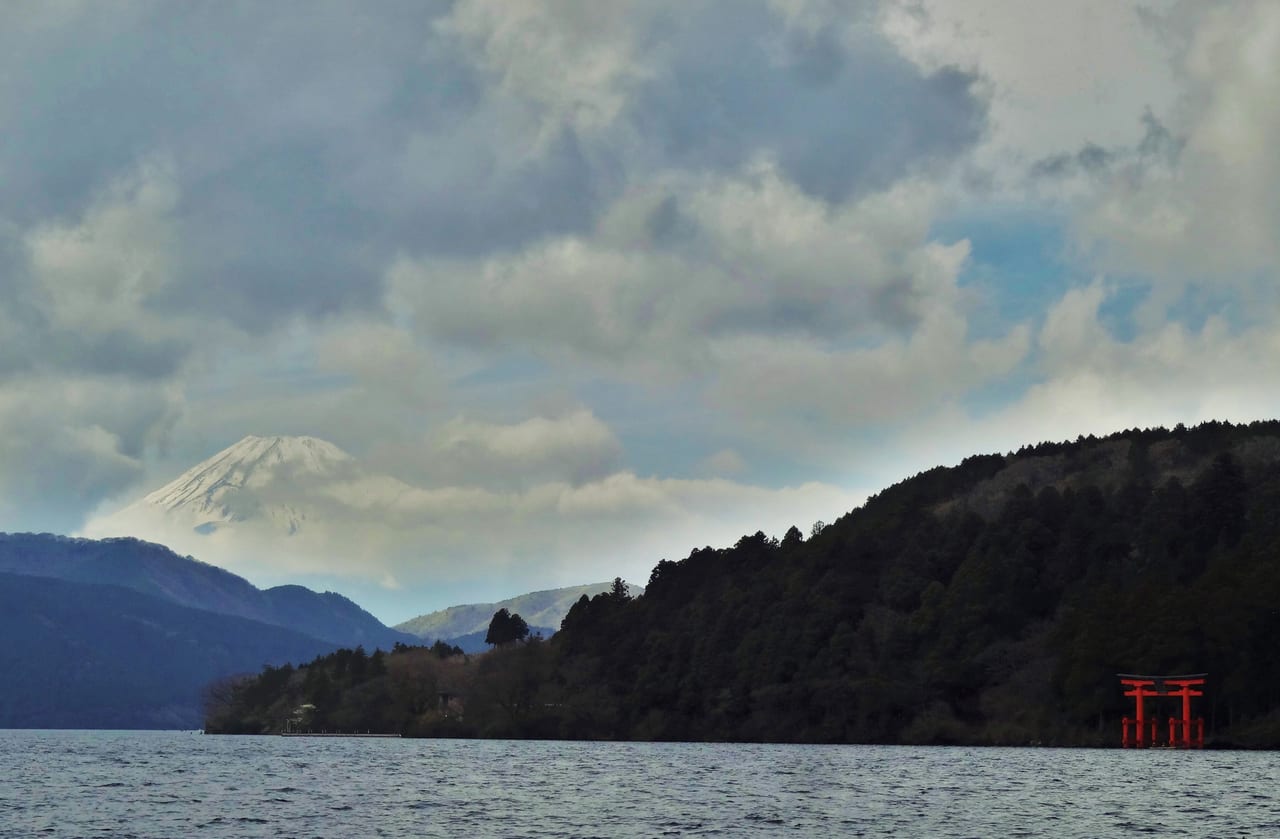
Hakone is the safest bet for a getaway near Tokyo — the Odakyu Romancecar runs direct from Shinjuku to Hakone-Yumoto in about 85 minutes, and you step off into an onsen town. It packs a volcano, a lake, Mt. Fuji, art museums, and hot-spring inns into one looping route: a switchbacking mountain railway, a ropeway over the sulfur-steaming Owakudani valley where you eat "life-extending" black eggs, a pirate ship across Lake Ashi, and that vermilion torii of Hakone Shrine that seems to float on the water. This guide covers the 2026 Hakone Free Pass price (¥7,100 for the 2-day from Shinjuku), Owakudani's current volcanic status, how to ride the golden loop, the Open-Air Museum, and the Gora/Miyanoshita onsen — with a two-day plan at the end. To see more of Mt. Fuji, read it alongside our Tokyo to Mt. Fuji guide.
- ~85 min direct from Shinjuku: the Odakyu Romancecar to Hakone-Yumoto — the most convenient onsen trip near Tokyo
- Hakone Free Pass: ¥7,100 for two days from Shinjuku: covers eight modes; the loop almost always pays it off (Romancecar costs extra)
- Owakudani is open in 2026: volcano alert Level 1, black eggs on sale — but it is an active volcano and can suspend service on high gas days
- The golden loop: mountain railway → cable car → ropeway over Owakudani → pirate ship → the floating torii, with no backtracking
- Onsen is the soul of Hakone: stay a night in Gora or Miyanoshita; a same-day return skips the best part
📖 Contents
Why visit Hakone
Honestly, Hakone is not the only onsen town near Tokyo, but it tops the list year after year because it crams the widest variety of scenery into the shortest travel distance. About ninety minutes out of Shinjuku, you can in one day ride a switchbacking mountain railway, watch an active volcano steam at Owakudani, cross a caldera lake by boat, photograph Mt. Fuji beside a floating torii, and soak in a century-old ryokan that night. That density is something other day trips near Tokyo cannot match — Kamakura is temples and the sea, Nikko is World Heritage and waterfalls, but Hakone is the all-in-one of volcano, lake, and onsen.
Its real strength is that the system is so well designed. In Hakone the transport itself is the attraction: the mountain railway has to switchback three times to climb, the ropeway hangs over a steaming volcanic valley, the pirate ship crosses the lake — and these link into a no-backtracking loop, all wrapped in one Hakone Free Pass. For independent travelers, that "buy one ticket and follow the route" simplicity is wonderfully low-stress. My positioning is simple: if you have spent a few days in Tokyo and want a relaxing onsen escape nearby, Hakone is almost the default — just do not make it a same-day round trip, because that skips its most valuable part: the hot springs.
The Hakone Free Pass: 2026 price & value
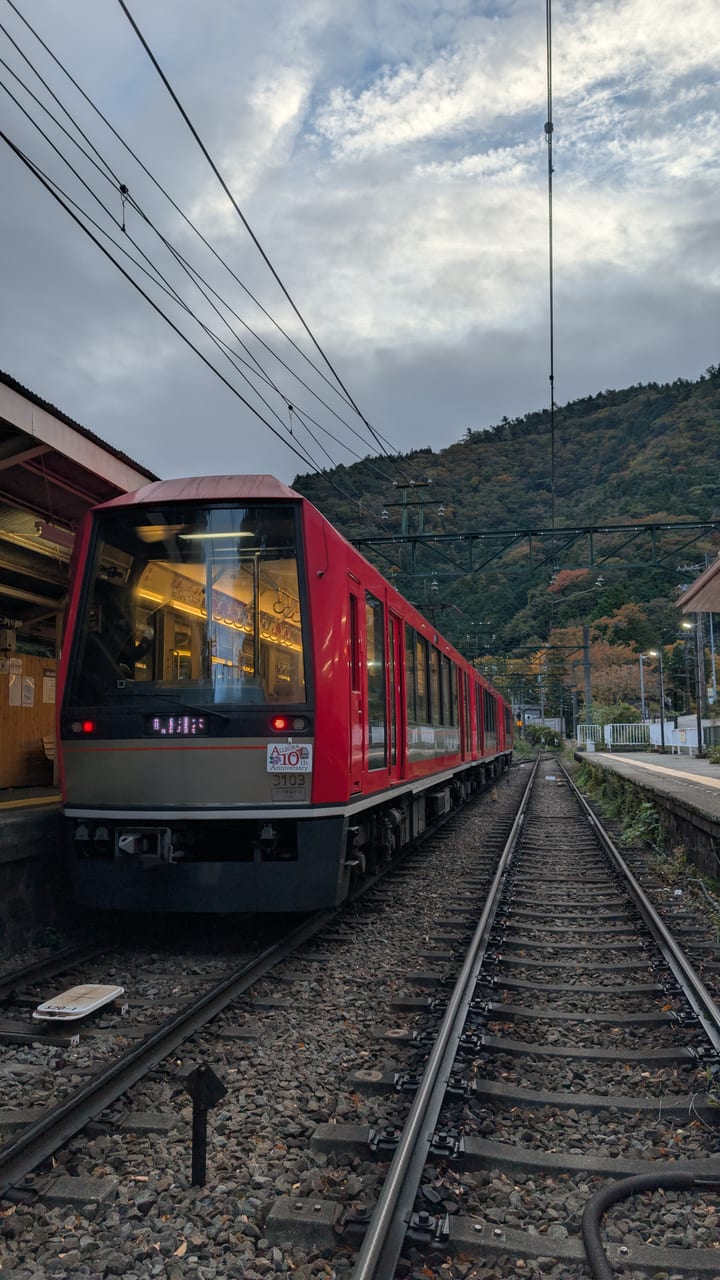
Sort this out first and the rest of your transport falls into place. The Hakone Free Pass is Odakyu's sightseeing ticket, and per its official 2026 pricing:
- From Shinjuku: ¥7,100 for the 2-day, ¥7,500 for the 3-day (includes the Shinjuku–Odawara Odakyu Line round trip)
- From Odawara (Hakone-area version): ¥6,000 for two days, ¥6,400 for three (pick this if you are already at Odawara or arriving by JR)
It covers eight modes of transport: the Odakyu Line, the Hakone Tozan Railway, the cable car, the ropeway, the Lake Ashi pirate ships, the Hakone Tozan bus, and designated Odakyu highway and Tokai buses. In other words, nearly everything the golden loop uses is included. The one catch: the Romancecar is not — for that comfortable reserved limited express you add a ticket of about ¥1,200 each way.
Is it worth it? Here's the quick math: the train + cable car + ropeway (round trip over Owakudani) + cruise, bought separately, already come close to the pass price, and once you add the Shinjuku–Odawara Odakyu fares both ways, the pass almost certainly pays off if you ride the loop at all. The only time you would skip it is if you just want to soak at Hakone-Yumoto and go nowhere. My conclusion is blunt: if you're riding the loop, buy the pass and don't pay leg by leg — it saves money and the time you'd lose queueing for tickets at every station. Buy it at the Odakyu counter in Shinjuku, or book the Hakone Freepass online beforehand — just know what you are buying: online you get a voucher, and you still have to exchange it for the physical pass during opening hours at the Odakyu Sightseeing Service Center at Shinjuku west exit or the Odakyu Tourist Information Center in Odawara, the same counter you would have queued at. What you save is the payment queue and the on-the-spot currency conversion, not money — and once redeemed it cannot be changed or refunded. If your dates are still moving, buying on the day is the more flexible option.
There is more than one online channel, and both sell the same pass. What differs is where you can redeem the voucher and what currency you are quoted in:
| Channel | Redeem at | Priced in | Watch for |
|---|---|---|---|
| KKday | Shinjuku west exit or Odawara | TWD | The one that works if you reach Hakone via the Tokaido Shinkansen to Odawara |
| GetYourGuide | Shinjuku only | USD (4.3 from 178 reviews) | Do not buy this one unless you are starting from Shinjuku; the USD figure moves with the exchange rate |
Both cover Odakyu ordinary carriages only, so the Romancecar limited-express supplement is extra either way — that has nothing to do with where you bought it. Which one suits you is decided by where you enter Hakone from, not by the price.
The golden loop, step by step
Hakone's smartest design is this circular "golden loop" — every mode of transport links into one ring with no backtracking. The classic order, starting from Hakone-Yumoto, is:
- 1. Hakone Tozan Railway: Hakone-Yumoto → Gora, switchbacking three times up the mountain; gorgeous in the June hydrangea season.
- 2. Cable car: Gora → Sounzan, a funicular up the steep slope.
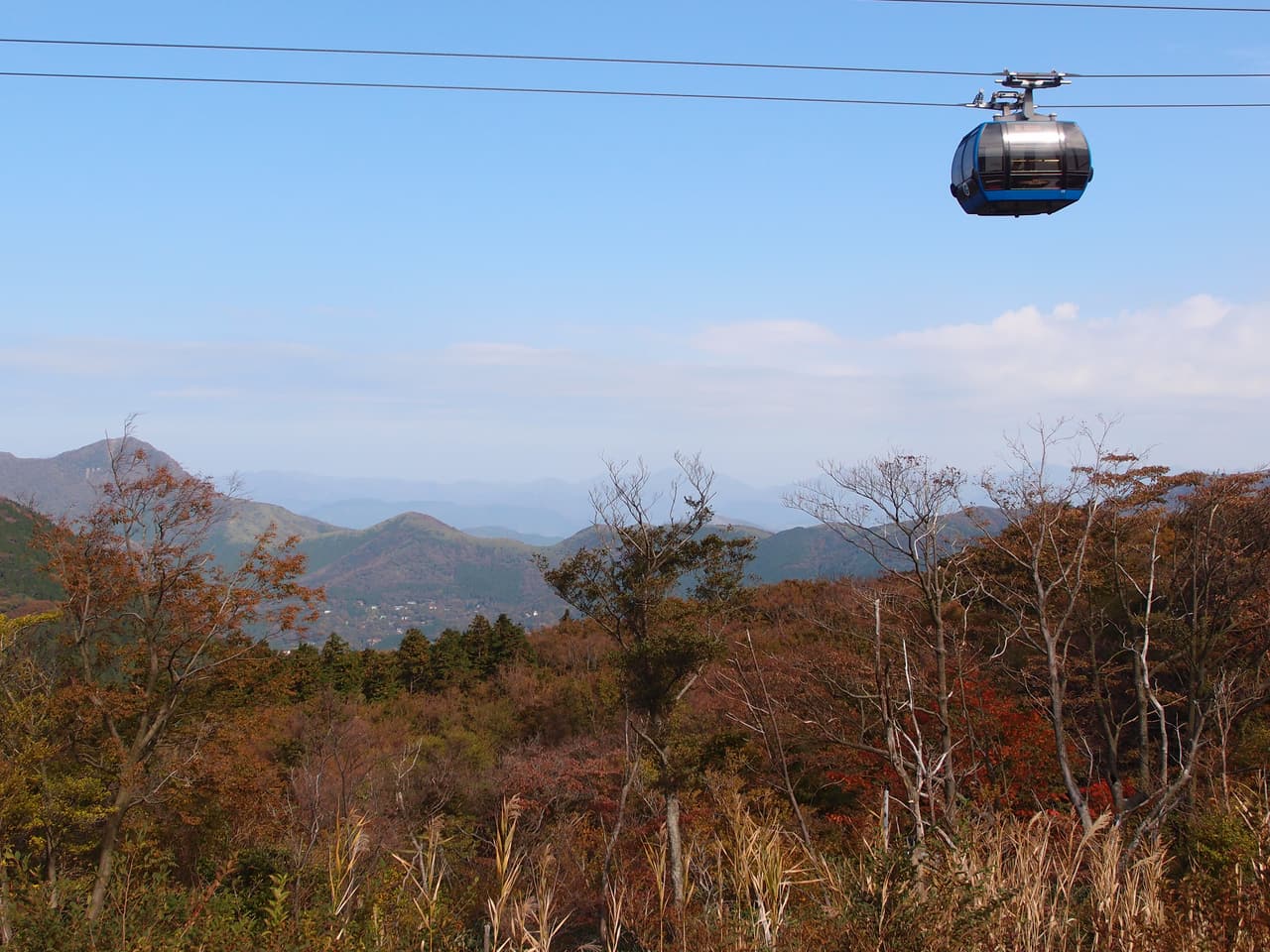
- 3. Ropeway: Sounzan → over Owakudani → Togendai; hop off at Owakudani for black eggs and the steaming valley, with Mt. Fuji on a clear day.
- 4. Lake Ashi pirate ship: Togendai → Moto-Hakone / Hakonemachi, crossing the caldera lake.
- 5. Hakone Shrine: get off at Moto-Hakone and walk to the floating torii on the lakeshore.
- 6. Tozan bus: Hakonemachi → Hakone-Yumoto, closing the loop back to the start.
⚠️ Step 6 does not work on 2 January. On the outbound day of the Hakone Ekiden, buses from Hakonemachi Port toward Hakone-Yumoto and Odawara were suspended roughly 10:00–14:30 last year (and Togendai in the same direction 10:45–13:00), so the loop breaks at the lake. Retrace instead: cruise back to Togendai → ropeway → cable car → mountain railway, all still covered by the Free Pass. Details in what closes in Hakone during the Ekiden.
Either direction works, but I'd hit Owakudani and the cruise early: afternoons cloud over and hide Mt. Fuji, and tour groups pile into the ropeway after midday — early gives you visibility and fewer people. Allow 6–8 hours for the loop with photos and meals. Signal drops in and out along the way (mountains, tunnels), so check ropeway operating status before you set off, while you still have a bar at Hakone-Yumoto.
Owakudani & black eggs (volcano status)
Owakudani is Hakone's signature image: a crater scar left by an eruption roughly 3,000 years ago, with the whole hillside venting sulfurous white steam and the air smelling of hot-spring egg. The ropeway flies over the valley, and at Owakudani station you get off to see the fumaroles up close and buy the black eggs (kuro-tamago) said to add seven years of life each — the shells turn black from the sulfur and iron in the spring water, while inside it's just an ordinary boiled egg, but the atmosphere makes it.
On the all-important volcano status, to be clear: per the Japan Meteorological Agency and Hakone Town, the Hakone volcano alert in 2026 sits at Level 1 (normal); Owakudani and the ropeway are operating and accessible, and the black eggs are on sale. But Hakone is an active volcano, so have two expectations: (1) the ropeway stations constantly monitor gas and temperature, and service can be suspended or the area closed temporarily on high-gas or elevated-activity days (entry was restricted during the 2015 and 2019 alerts); (2) the old trails into the central crater are permanently closed, so you stay in the designated viewing zones. Check the day-of ropeway status and volcano advisory before you go — and if the ropeway is suspended, the pass lets you reroute by replacement bus, so the sight is not "gone forever," just possibly off your route that day. Keep the distinction clear: a ropeway suspension is not a permanent Owakudani closure.
Lake Ashi pirate ships & the floating torii
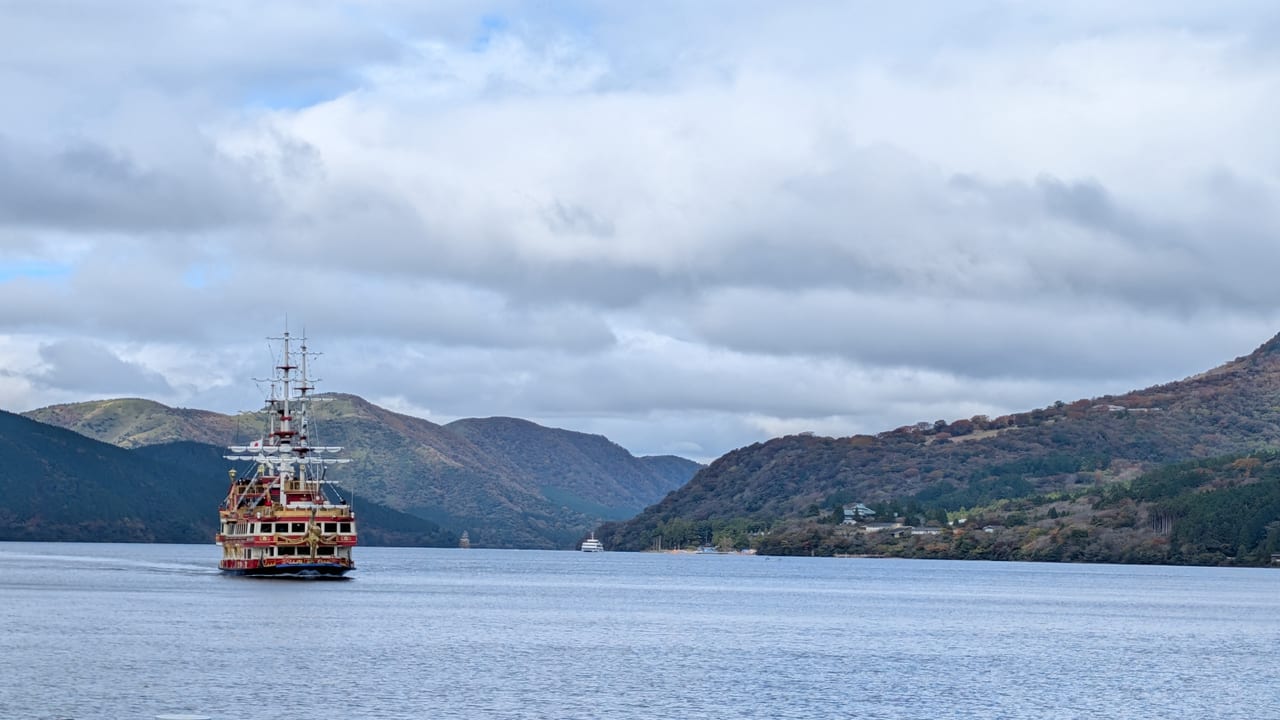
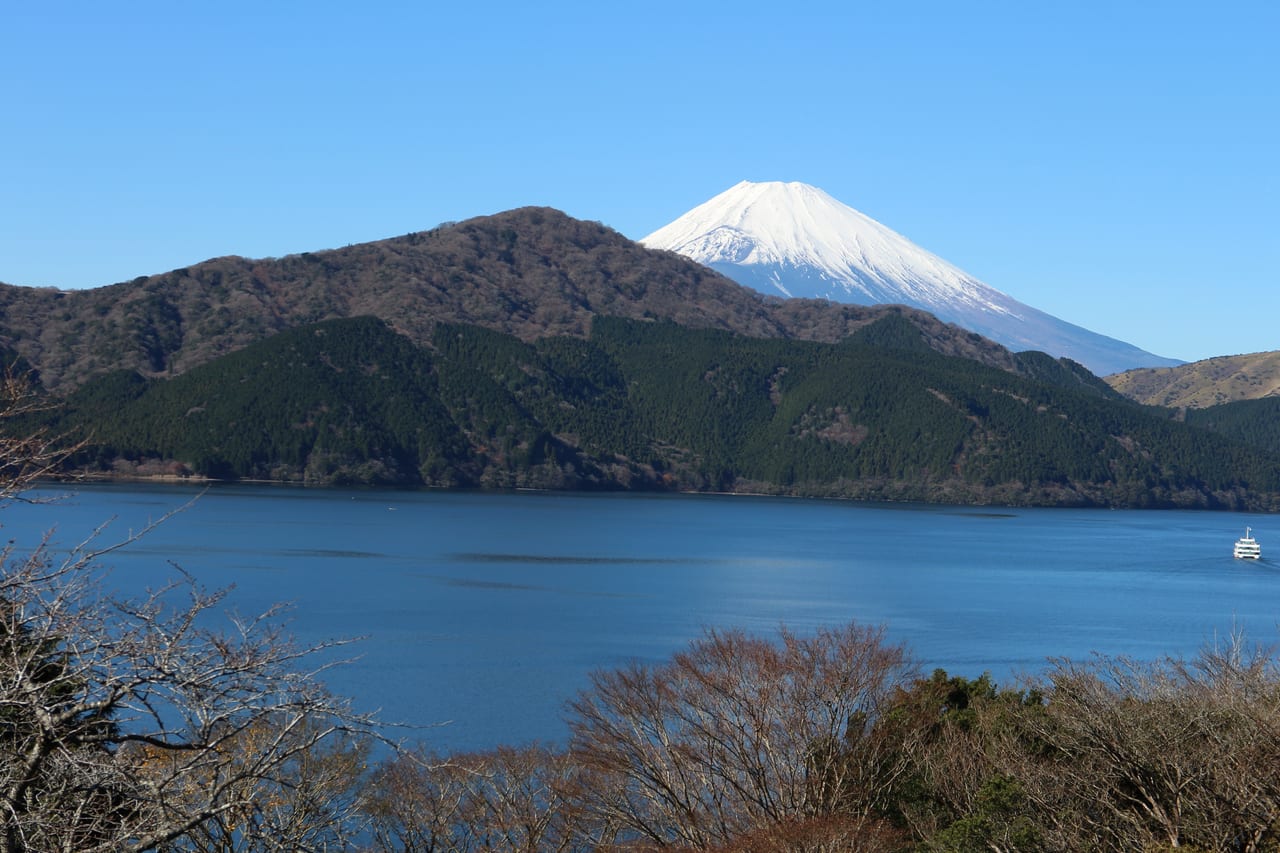
Once the ropeway clears Owakudani and reaches Togendai, the next leg of the loop is the Lake Ashi pirate ship. Lake Ashi is a caldera lake formed by volcanic activity about 3,000 years ago, sitting at roughly 723 meters, and on a clear day Mt. Fuji reflects in the water at the far end. The sightseeing boats are built as extravagant European-style pirate ships (three different designs currently rotate), and while it leans theme-park, crossing the caldera lake from the deck with Mt. Fuji and forested shores is surprisingly pleasant. The cruise is included in the pass, runs frequently, and takes about 30–40 minutes from Togendai to Moto-Hakone or Hakonemachi.
Get off at Moto-Hakone and walk to the lakeside Hakone Shrine. The shrine dates to the Nara period (traditionally 757 AD), but what made it go viral is the vermilion "Torii of Peace" standing right in Lake Ashi, appearing to float on the surface, often with Mt. Fuji behind it — the most iconic shot of Hakone (and the cover of this guide). One reality check: it is so popular that the photo queue can be very long, so come early (or in the evening after the day-trippers leave) for a clear frame and good light. The cedar-lined approach and the main hall are atmospheric too — don't shoot the torii and bolt.
The Open-Air Museum & Gora Park
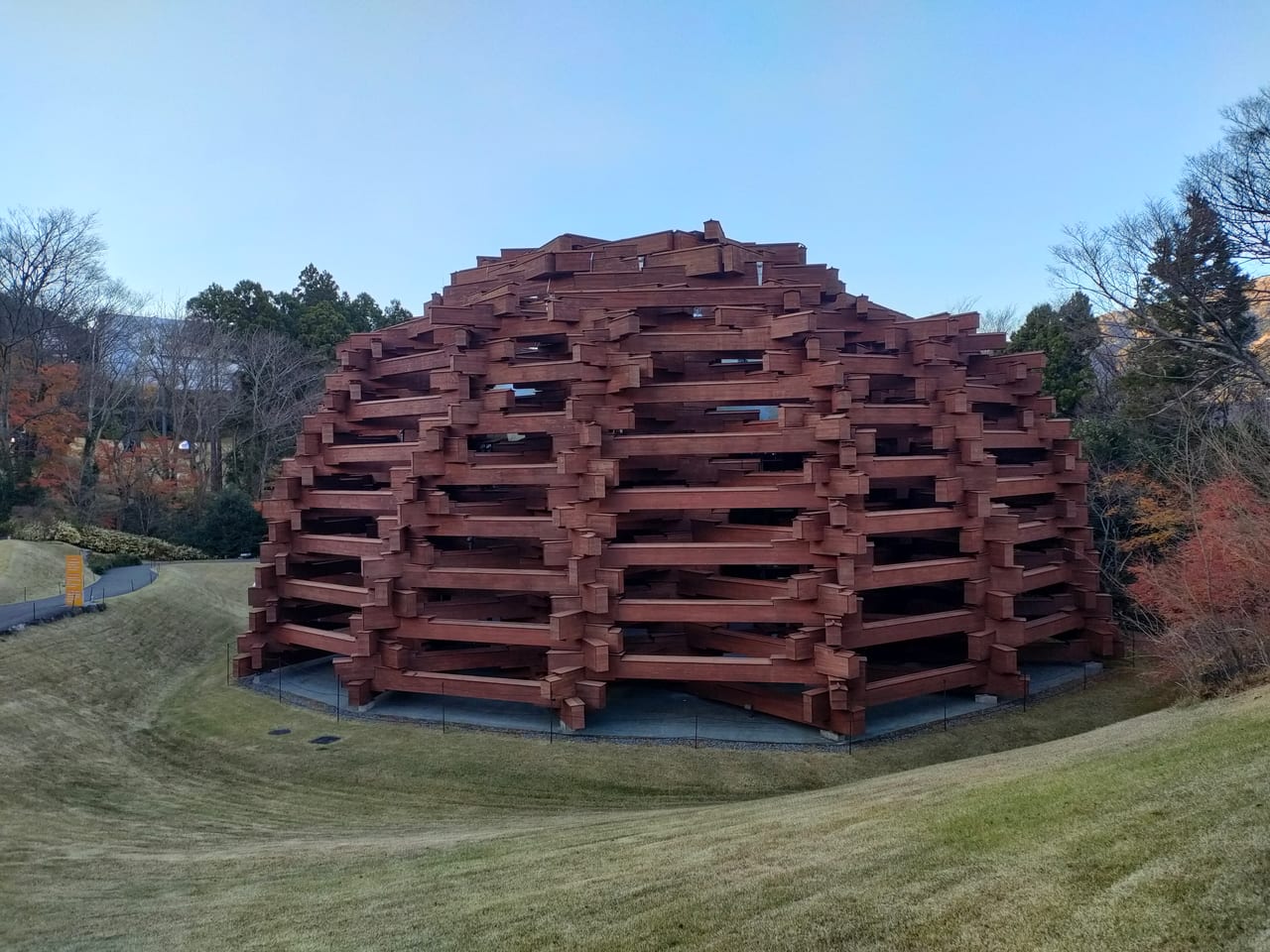
Hakone is not only nature — its museum density is among the best of any day trip in Japan. The one most worth a stop is the Hakone Open-Air Museum, Japan's first open-air sculpture museum, with a hundred-plus large works across hillside lawns, a Picasso pavilion holding some 300 pieces, and a climbable stained-glass tower ("Symphonic Sculpture"). Per official info, admission is ¥2,000 for adults, ¥1,600 for university and high-school students, and ¥800 for elementary/junior-high (¥100 off with the Hakone Free Pass). It sits right by the "Chokoku-no-Mori" Tozan railway stop, so it's easy to reach, and it's worth half a day if you have kids or like modern art — there's even a net-art structure kids can climb through, one of the few spots that serves adults and children equally.
If time is short and you'd rather not go inside a museum, Gora Park beside the railway terminus at Gora is a lighter alternative: Japan's first French-style formal garden, with a fountain, rose beds, and greenhouses, cheap to enter and walkable in half an hour. Think of it as "a stroll, a few photos, and somewhere to fill the gap while you wait for the cable car" — not a destination in itself, but worth ducking into when you pass. If you're not into art and your focus is onsen and Mt. Fuji, treat both of these as optional and don't squeeze the loop too tight to force in a museum.
Onsen & lodging: Gora, Miyanoshita
In the end, the soul of Hakone is the onsen. Its hot-spring towns spread across the so-called "seventeen springs of Hakone," and the two most convenient for independent travelers are Gora and Miyanoshita:
- Gora: at the railway terminus and the foot of the cable car, it is the transfer hub of the golden loop — easiest in and out, with plenty of onsen ryokan, ideal if you want to base in Hakone and keep looping on day two.
- Miyanoshita: an old-line onsen street along the railway, home to Hakone's most historic hotel — the Fujiya Hotel (founded 1878, a Western-style inn that has hosted foreign guests since the Meiji era) — plus retro shops and cafes, with more character than Gora.
Hakone's inns range from high-end ryokan with two meals to budget guesthouses, generally pricier than a city hotel (this is Hakone — the ryokan is the main event). I strongly recommend staying a night: after the day-trippers clear out, soaking in a room's private open-air bath or the big communal one and eating a kaiseki dinner is the real draw, something a same-day return never gives you. In peak seasons (autumn foliage, holidays, hydrangea-season weekends) rooms go fast, so book ahead. Visiting in fall? Check Hakone autumn foliage timing by spot first. On a tighter budget, pick a cheaper inn near Hakone-Yumoto station, ride the loop by day, and return to soak at the public baths. For onsen-ryokan etiquette and how to choose one, see our dedicated ryokan feature on the site. If one soak isn't enough, Gunma's Kusatsu Onsen — with its famous yubatake and yumomi water-stirring show — offers a harder, more old-school spring; and for hot springs paired with highland air and a ropeway, Tochigi's Nasu Highlands bundle onsen, farms and Mt. Chausu together — both worth a separate trip beyond Hakone.
A two-day, one-night plan
Here is the same content shaped into a route that walks well:
- Day 1 (loop + onsen): early Romancecar from Shinjuku to Hakone-Yumoto (~85 min) → drop bags → Tozan railway to Gora → cable car to Sounzan → ropeway over Owakudani (black eggs, steaming valley) → pirate ship across Lake Ashi from Togendai → the floating torii at Hakone Shrine in Moto-Hakone → Tozan bus back to Gora → check into an onsen ryokan, soak and have a kaiseki dinner. (Not on 2 January: that bus is suspended and runs on the restricted Route 1, so retrace by ropeway and rail instead — and limited-express tickets boarding at Odawara are not sold that morning. See what closes during the Hakone Ekiden.)
- Day 2 (art + slow morning): catch the early, crowd-free views → the Open-Air Museum (about half a day) or Gora Park → stroll the Miyanoshita onsen street and a coffee at the Fujiya Hotel → souvenir onsen-manju along the Hakone-Yumoto shopping street → afternoon Romancecar back to Shinjuku.
If you truly only have one day, compress Day 1's loop into a single push and drop the overnight and the museum — but it's rushed and you skip the onsen, which is exactly why I keep saying Hakone is worth one night. You can also chain Hakone toward Mt. Fuji — from here you can route via Gotemba to Lake Kawaguchiko and the Fuji Five Lakes, covered in our Tokyo to Mt. Fuji guide; and Gotemba itself hosts the 290-store Gotemba Premium Outlets, a direct ~44-minute bus from Gora if you want a shopping half-day on the way. If you're planning the whole Tokyo-and-around stretch, start with our 5-day Tokyo itinerary to slot the city and its day trips together, then decide which day Hakone goes on. Visiting in winter, see our roundup of the best Tokyo winter day trips for how Hakone stacks up against the other options.
FAQ
- Q1:How much is the Hakone Free Pass in 2026, and is it worth it?
- Per Odakyu's official 2026 pricing, from Shinjuku the 2-day pass is ¥7,100 and the 3-day is ¥7,500; if you start from Odawara (or arrive by JR), the Hakone-area version is ¥6,000 for two days and ¥6,400 for three. It covers eight modes of transport — the Odakyu Line (Shinjuku–Odawara round trip), Hakone Tozan Railway, the cable car, the ropeway, the Lake Ashi pirate ships, the Hakone Tozan bus, and designated highway buses — but the Romancecar is not included (add roughly ¥1,200 each way for the limited-express seat). If you plan to ride the loop at all, the train + cable car + ropeway + cruise alone come close to the pass price, so it almost always pays off. That is why I'd just buy the pass rather than paying leg by leg.
- Q2:Is Owakudani open in 2026, or is it closed for volcanic activity?
- Per the Japan Meteorological Agency and Hakone Town, the Hakone volcano alert in 2026 sits at Level 1 (normal), so Owakudani and the Hakone Ropeway are operating and accessible, and the famous black eggs (kuro-tamago) are still sold. But keep two things in mind: (1) this is an active volcano — the ropeway stations constantly monitor gas concentration and temperature, and service can be suspended or the area closed temporarily when gas levels or activity rise (entry was restricted during the 2015 and 2019 alerts); (2) some trails into the central crater remain permanently closed, so you stay in the designated viewing zones. Check the day-of ropeway status and volcano advisory before you go. A ropeway suspension is not the same as Owakudani being permanently closed — the pass lets you reroute by bus.
- Q3:Can you do Hakone in one day, or do you need to stay over?
- It depends on whether you want a checklist or a soak. If you just want to ride the loop — Owakudani black eggs, the Lake Ashi pirate ship, and the floating torii at Hakone Shrine — a single day round trip from Shinjuku is doable, but it is rushed and you may queue for the ropeway and cruise. I recommend two days, one night: ride the loop on day one and check into an onsen ryokan in Gora or Miyanoshita; on day two, take your time at the Open-Air Museum or Gora Park before heading down. Onsen is the soul of Hakone, and a same-day return skips the most valuable part. To extend toward Mt. Fuji, pair it with our Tokyo to Mt. Fuji guide.
- Q4:What is the fastest way from Tokyo (Shinjuku) to Hakone?
- The most comfortable option is the Odakyu Romancecar, a reserved-seat limited express built for sightseeing that runs direct from Shinjuku to Hakone-Yumoto in about 85 minutes with big panoramic windows. You can also take a regular Odakyu express to Odawara and transfer to the Tozan railway — cheaper, but with a change and a longer total time. Note the Romancecar is not included in the Hakone Free Pass; the limited-express ticket is about ¥1,200 each way. If you are comparing passes, see our JR Pass guide — but be clear that Hakone is Odakyu territory, a JR Pass barely helps here, and the Hakone Free Pass is the right call.
- Q5:How do you ride the Hakone "golden loop" — clockwise or counter-clockwise?
- The classic loop from Hakone-Yumoto runs: Hakone Tozan Railway (switchbacking up the mountain) → Gora → cable car → Sounzan → ropeway over Owakudani (hop off for black eggs) → Togendai → Lake Ashi pirate ship → Moto-Hakone / Hakonemachi (the floating torii at Hakone Shrine) → Tozan bus back to Hakone-Yumoto — one full loop with no backtracking, which is exactly how the eight pass-covered modes connect. Either direction works, but I would hit Owakudani and the cruise early: afternoons bring cloud that hides Mt. Fuji, and tour groups flood the ropeway after midday. Allow 6–8 hours for the loop with photos and lunch. There is exactly one day you cannot ride it this way: 2 January. On the outbound day of the Hakone Ekiden, the closing bus leg from Hakonemachi Port toward Hakone-Yumoto and Odawara was suspended from roughly 10:00 to 14:30 last year, so that day you retrace your steps instead.
- Q6:How much is the Hakone Open-Air Museum, and is it worth a stop?
- Per official info, the Hakone Open-Air Museum is ¥2,000 for adults, ¥1,600 for university and high-school students, and ¥800 for elementary/junior-high (¥100 off with the Hakone Free Pass). It is Japan's first open-air sculpture museum, with a Picasso pavilion and a hundred-plus large works scattered across hillside lawns, plus a stained-glass tower you can climb. Kids can run and adults can shoot photos — one of the few spots in Hakone that balances art and the outdoors. If you have kids or like modern art, it is worth half a day; if onsen and Mt. Fuji are your focus and time is tight, skip it for the loop. It sits right beside the "Chokoku-no-Mori" Tozan railway stop.
Related reading:
Kamakura Day Trip 2026: Great Buddha, Hasedera & Enoden
About 57 minutes from Tokyo on the JR Yokosuka Line — the Great Buddha you can step inside, Hasedera in hydrangea season, and the Enoden out to Enoshima.
Nikko Guide 2026: Toshogu, Kegon Falls & Lake Chuzenji
About 1h50 from Asakusa by Tobu express — the World Heritage Toshogu (Yomeimon, three monkeys, sleeping cat), Kegon Falls, Lake Chuzenji, and the Irohazaka autumn hairpins.
Tokyo to Mt. Fuji day trip guide
Kawaguchiko, Oshino Hakkai, Arakurayama — bus times, prices, must-knows.