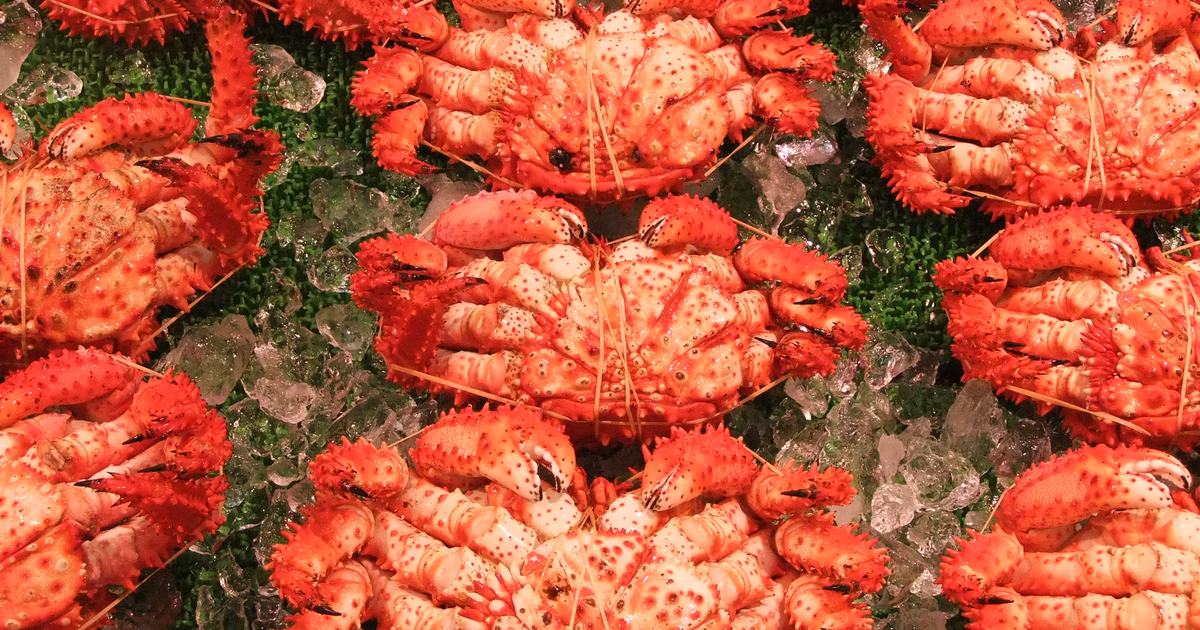
Start with the answer most people get wrong: hanasaki crab season is summer, not winter. The licensed fishery on the Nemuro Peninsula — the only place in Japan this crab is commercially caught in volume — runs July 1 to the end of September, and in 2026 boats went out five days early, on July 5, as a high-water-temperature measure. In other words, right now is the one window of the year when you can eat this crab live at the source. Second surprise, with prefectural-government backing: hanasaki crab is not technically a crab — it is a relative of the hermit crab. And third, a hard deadline: the Nemuro Crab Festival 2026 runs August 22–23, the two days a year with an official promise of below-market crab prices. This guide covers how the season actually works, where to eat hanasaki crab in Nemuro, Sapporo and Kushiro, what teppo-jiru is, what a crab costs, and how to reach Nemuro on the JR Hanasaki Line — all checked against official and news sources in August 2026.
📍 Scope note: this article is about hanasaki crab only. The four-way comparison of kegani, king crab, snow crab and hanasaki — plus how to pick an all-you-can-eat crab deal — lives in our Japan winter food guide; Kushiro city, the Washo Market kattedon bowl and Lake Akan are covered in the Kushiro & Akan guide. No duplication here.
- Season = summer: Nemuro fishery runs July 1 to late September; 2026 opened early on July 5. Winter-menu hanasaki is almost always boiled-frozen stock
- Not a crab: officially classed by the Hokkaido government as a hermit-crab relative in the king crab family; named for the scarlet "bloom" of its shell when cooked
- Nemuro Crab Festival 2026 = Aug 22–23: Nemuro Port, free entry, crab officially sold "below market price" — the cheapest two days of the year
- Lowest-risk first taste: the hanasaki crab teppo-jiru at Nemuro Hanamaru — served at all branches per the official notice, including the one inside Sapporo Station
- Prices float: 2026 opening-day wholesale was ¥3,974/kg (female, Habomai market) — a magnitude reference, not a retail price
📖 Contents
- Hanasaki crab season: July to late September
- What is hanasaki crab? A hermit crab in disguise
- Nemuro Crab Festival 2026: August 22–23
- Where to eat hanasaki crab in Nemuro
- Teppo-jiru: one bowl explains the whole crab
- Sapporo and Kushiro: eating it without the long haul
- Prices: market rates, the wholesale anchor, live vs frozen
- Getting there: JR Hanasaki Line and the Cape Nosappu bus
- Hanasaki crab vs king crab
- Can you eat it in Tokyo or Osaka? (honest answer)
- FAQ
Hanasaki crab season: July to late September
Search "hanasaki crab season" in English or Japanese and you will find three different date ranges that appear to contradict each other — April–September, May–September and July–September. All three are technically correct; they just describe different things. Here is the reconciliation in one table:
| Source level | Stated season | What it means for you |
|---|---|---|
| Nemuro Peninsula licensed fishery (the home ground) | July 1 – end of September; opened early on July 5 in 2026 | This is the range that matters for eating live crab — landings concentrate at the Hanasaki, Habomai and Ochiishi markets |
| Fishing co-op practice (Ochiishi co-op) | Pot fishery, mid-July to late September | The working peak — consistent with the row above |
| Nemuro City overview | May–September (pot fishery) | The city’s broad framing; nearly all landings happen at ports within Nemuro City (excluding Nemuro Port itself) |
| Hokkaido prefectural government (all Hokkaido) | April–September | The widest frame, covering other sea areas — not the rhythm of the Nemuro home fishery |
One-sentence verdict: if you want live hanasaki crab, go to eastern Hokkaido between early July and the end of September. Other Hokkaido waters have wider windows on paper (the prefecture lists April–September), but the home fishery in Nemuro peaks in exactly those three summer months.
The 2026 season also produced a news item worth knowing: per the Kushiro Shimbun, Nemuro's fleet opened five days earlier than usual, on July 5, as a countermeasure against high water temperatures — the first landing on July 6 brought in 3.7 tonnes across 17 boats, down 6.6% on the previous year. An early opening is a management response, not a new normal; treat future opening dates as something announced fresh each year by the co-ops and local press.
Two common misconceptions to clear while we are here. First, this is not a males-only fishery — female crab are landed too, and the widely reported 2026 opening-day wholesale price was in fact quoted for females (more in the price section). Second, scarcity here is by design: the Ochiishi fishing co-op notes that size selection is enforced rigorously for resource protection, and the prefecture lists minimum sizes of 8 cm shell length for males and 11.5 cm for females. Small catch, tight rules — that is where both the price and the mystique come from.
What is hanasaki crab? A hermit crab in disguise
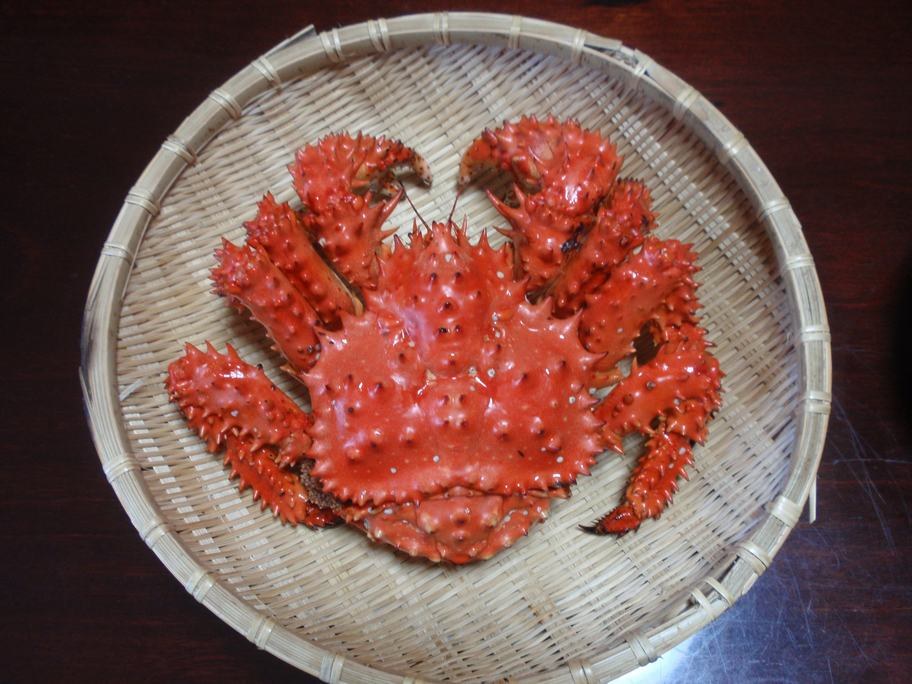
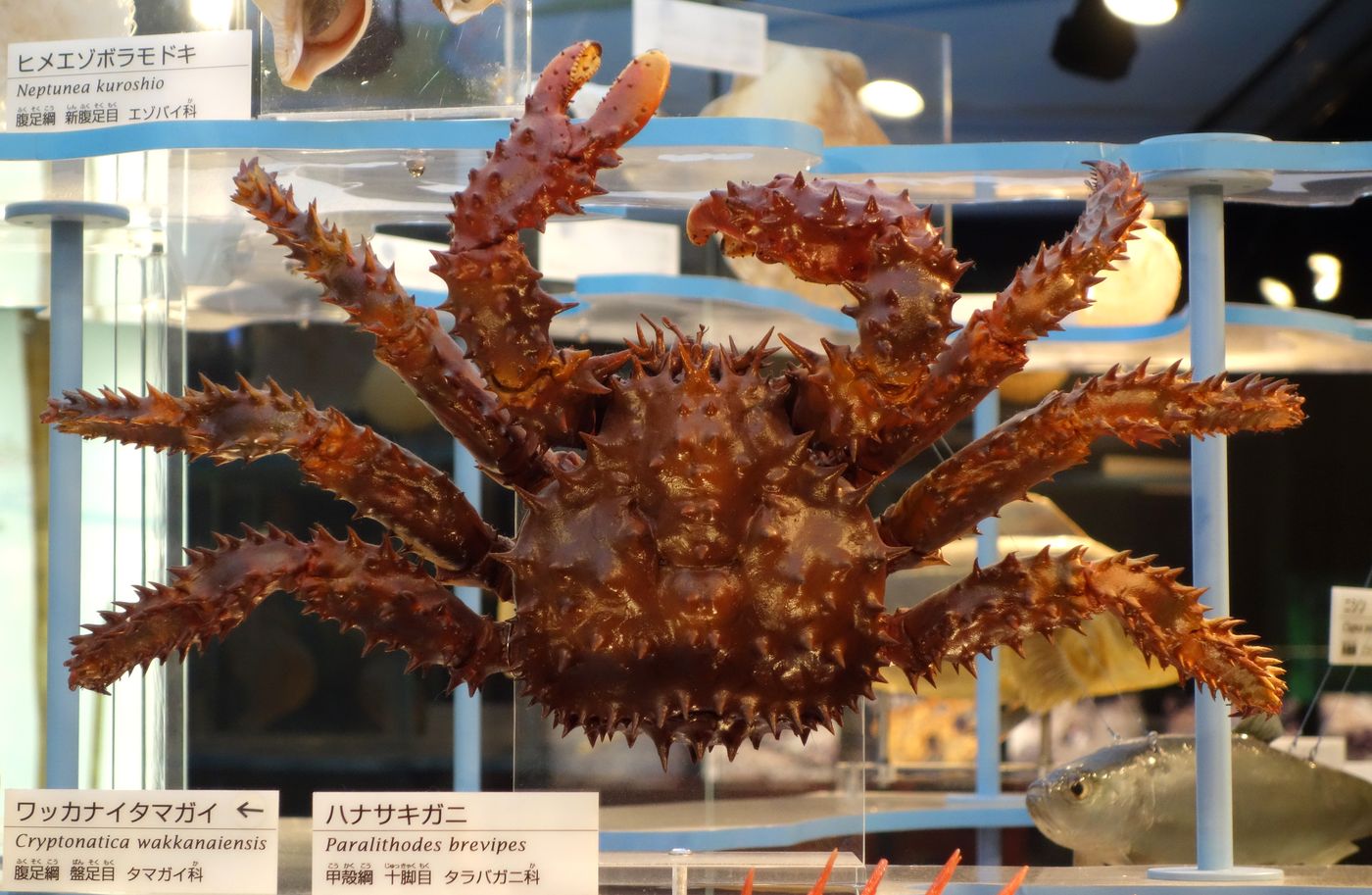
This is the piece of trivia the whole article hangs on, and it carries an official citation: hanasaki crab is not a crab. Per the Hokkaido prefectural government's fisheries department, it belongs to the king crab family and is classified as a relative of the hermit crab. That puts it in the same lineage as red king crab — both are "hermit-crab cousins that look like crabs" — while kegani and snow crab are the genuine, short-tailed true crabs. Look closely at one on a market stall and you will notice the leg arrangement does not match a true crab's standard four walking pairs; that family resemblance to king crab is no coincidence.
The name also has an official origin, and it is prettier than most: the prefecture states the crab was named because heating turns its shell a vivid scarlet — the "hanasaki" (flower-blooming) moment. Nemuro Hanamaru's official blog uses the same framing: boiled, it turns "a red like a flower opening." You will also find a competing theory online tying the name to Hanasaki Port; no official source supports it, so this article does not use it.
What makes hanasaki crab genuinely rare is its postage-stamp range. The prefecture maps its distribution as the Pacific between Cape Erimo and Cape Nosappu, plus the Okhotsk side of the Nemuro Peninsula; Nemuro City pinpoints the fishing grounds as the waters from Cape Nosappu to Ochiishi. An entire commercial species locked to one peninsula's coastline — and, per city data, roughly six years for a crab to reach maturity. The Ochiishi co-op calls it the "phantom crab" and "the product that stands as Nemuro's synonym." Set that self-description next to the numbers above and it stops sounding like marketing.
Nemuro Crab Festival 2026: August 22–23
If your Hokkaido itinerary touches late August, read this section carefully — these are the only two days of the year with an official promise of cheap crab.
🦀 Officially announced: the Nemuro Crab Festival 2026 runs Saturday August 22, 10:00–16:00 and Sunday August 23, 9:00–15:00 at a special venue in Nemuro Port (Honcho 5-chome), organized by the Nemuro Tourism Association (0153-24-3104). Per the event listing: free entry, about a 20-minute walk from JR Nemuro Station (5 minutes by car), roughly 500 free parking spaces.
On content, honesty is required: the official site currently says "2026 details coming soon." So beyond the dates, the venue and the one announced stage guest — singer Leon Niihama, performing August 23 from 12:15 for about 45 minutes — everything else has to be described in typical-year terms. Per the tourism association's standing page and event listings, a normal edition includes crab sold below market price, live boiling demonstrations, teppo-jiru and other food stalls, and the very photogenic crab-grabbing speed-eating contest. That phrase "crab sold cheaper than market price every year" is the association's own wording — for a crab that trades at market price all year, this is the one officially backed bargain window.
Two practical notes. First: if you buy freshly boiled crab at the festival, eat it at the venue's table area before moving on — shell-on seafood is a dripping, shell-shedding mess to handle while walking, and the venue gives you tables for a reason. Second: if you miss 2026, the pattern is stable — the festival is held in late August at Nemuro Port in a typical year. Get 2027's dates from the official site (nemuro-kanifes.com) when they publish; do not pencil in this year's dates for next year.
Where to eat hanasaki crab in Nemuro
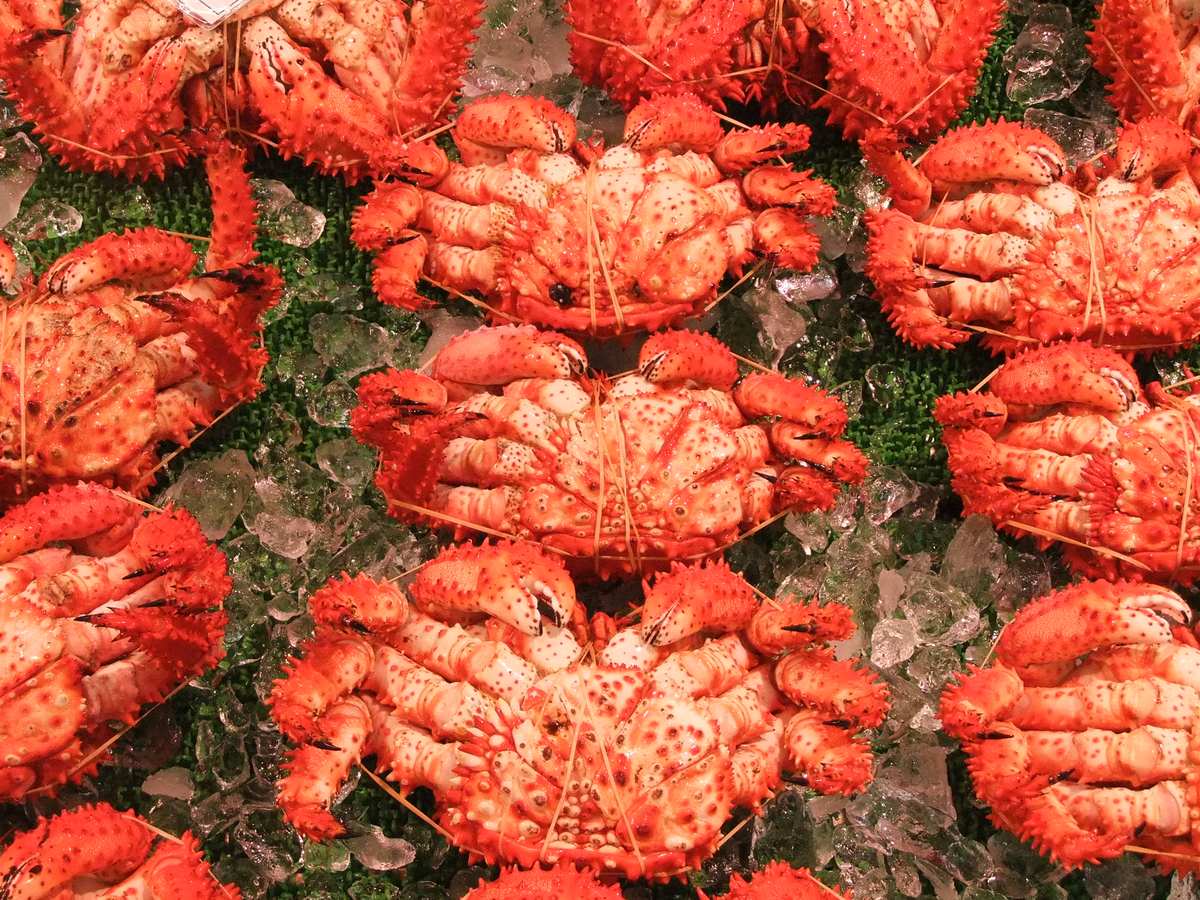
Once you are actually in Nemuro, here are the options I can vouch for, ranked by how hard they are to get wrong:
Kaiten-zushi Nemuro Hanamaru, Nemuro main branch
The conveyor-belt sushi chain Nemuro Hanamaru was founded here (Hanazono-cho 9-35, about 10 minutes on foot from JR Nemuro Station, 0153-24-1444). Its link to this crab is documented by the company itself: hanasaki crab teppo-jiru is the house signature soup, and the official blog describes it as served since founding, brewed from roe-rich shell pieces. Drinking that bowl at the original branch, in season, is the lowest-threshold and most reliable stop on any hanasaki crab pilgrimage. Some blog reviews claim the main branch makes it with live crab; the company does not say that anywhere official, so this article will not vouch for it — what lands in your bowl is whatever the shop is serving that day.
Michi-no-Eki Swan 44 Nemuro: hanasaki crab kamameshi, ¥2,500
This roadside station sits on National Route 44 by Lake Furen, on the Kushiro side of Nemuro. Its restaurant's menu currently lists a hanasaki crab kamameshi (kettle rice) at ¥2,500 (as of August 2026; it is a market-price-adjacent item, so reconfirm before you go). Restaurant hours: April–October 11:00–15:30 (last order 15:00), November–March 11:00–14:30, closed Mondays (pushed to the next day if Monday is a holiday). The honest catch is access: it is on a highway with no Hanasaki Line station nearby, so this is realistically a stop for drivers — if you are car-free, spend your appetite in central Nemuro and at the festival instead.
Around Cape Nosappu: restaurants exist, but the lineup keeps changing
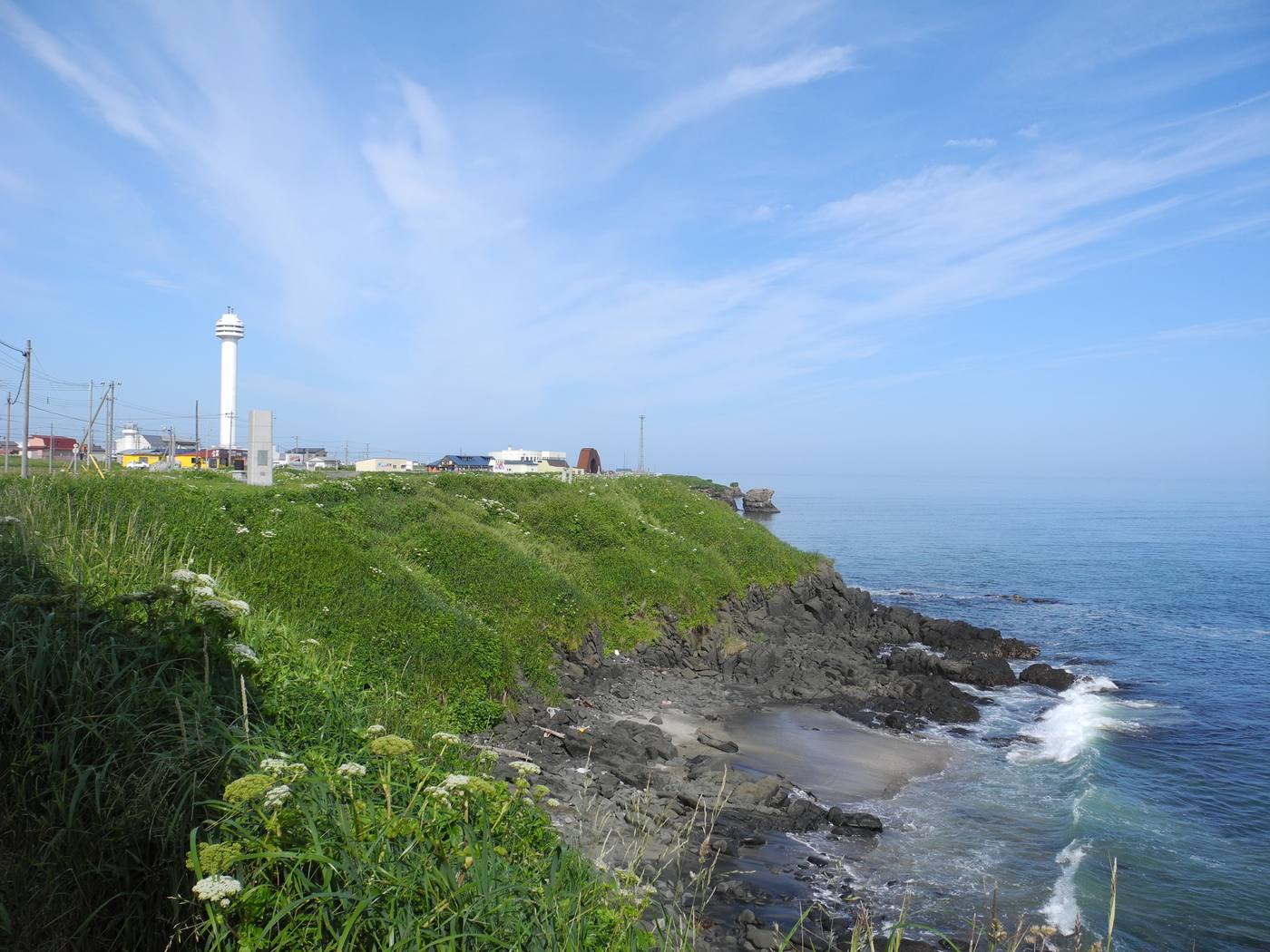
Cape Nosappu (the easternmost point of Japan's main islands — the transport section covers getting there) has eateries serving crab dishes, but businesses in this area have changed hands, names and locations in recent years, so any shop name you saw before this year may no longer match reality. I found no official first-hand source solid enough to endorse, so no names here. Check Google Maps for currently-open status and recent review dates before you commit — including against what you read here.
Teppo-jiru: one bowl explains the whole crab
If this article could recommend exactly one dish, this is it. Teppo-jiru is shell-on chunks of hanasaki crab simmered in miso soup — a Nemuro home dish in which the shell and the crab roe steep their entire depth into the broth. It is the most direct delivery mechanism for what this crab does best, and it is the framing Nemuro City's own page uses when introducing the species.
The name is wonderfully literal. Per Nemuro Hanamaru's official blog, you eat it by pushing a chopstick into the crab leg to poke the meat out — a motion that looks like ramrodding a rifle barrel, hence "gun soup." It is also a fixture at the Nemuro Crab Festival in a typical year, where a bowl of it fresh off the burner is the cheapest hanasaki crab experience the event offers.
There is a budget logic to putting this dish so early in the article. A whole hanasaki crab is a market-price, high-ticket purchase; a single bowl of teppo-jiru delivers the crab's most recognizable trait — that dense, roe-rich broth — for the price of a soup, and it is available from Nemuro all the way to Sapporo (next section). Use it as a taste test: drink the soup first, then decide whether the whole crab deserves your budget. That order of operations is the one I would actually defend.
Sapporo and Kushiro: eating it without the long haul
Sapporo: the Hanamaru teppo-jiru is the no-fail entry point
If eastern Hokkaido is not on your route, Sapporo holds one officially backed answer to "where to eat hanasaki crab in Hokkaido" — Nemuro Hanamaru serves its teppo-jiru at all branches, per the company's own notice covering every conveyor-belt shop, every Shiki Hanamaru sit-down shop and every standing sushi bar in the group. The most convenient is the JR Tower Stellar Place branch (6F, directly connected to Sapporo Station): step off the train, ride the escalator, drink Nemuro. Cost of entry: one bowl of soup.
For a whole crab, Nijo Market has crab specialists and the Curb Market (Jogai Ichiba) shops carry hanasaki products — canned hanasaki teppo-jiru from Sugiyama Suisan, for example. But the honest caveat: no shop's official page confirms that whole hanasaki crab is reliably in stock in Sapporo. During the July–September season it appears on stalls more often; treat finding one as luck, not a guarantee. For how to work Sapporo's markets and everything else in the city, see the Sapporo travel guide.
Kushiro: Washo Market's summer stalls
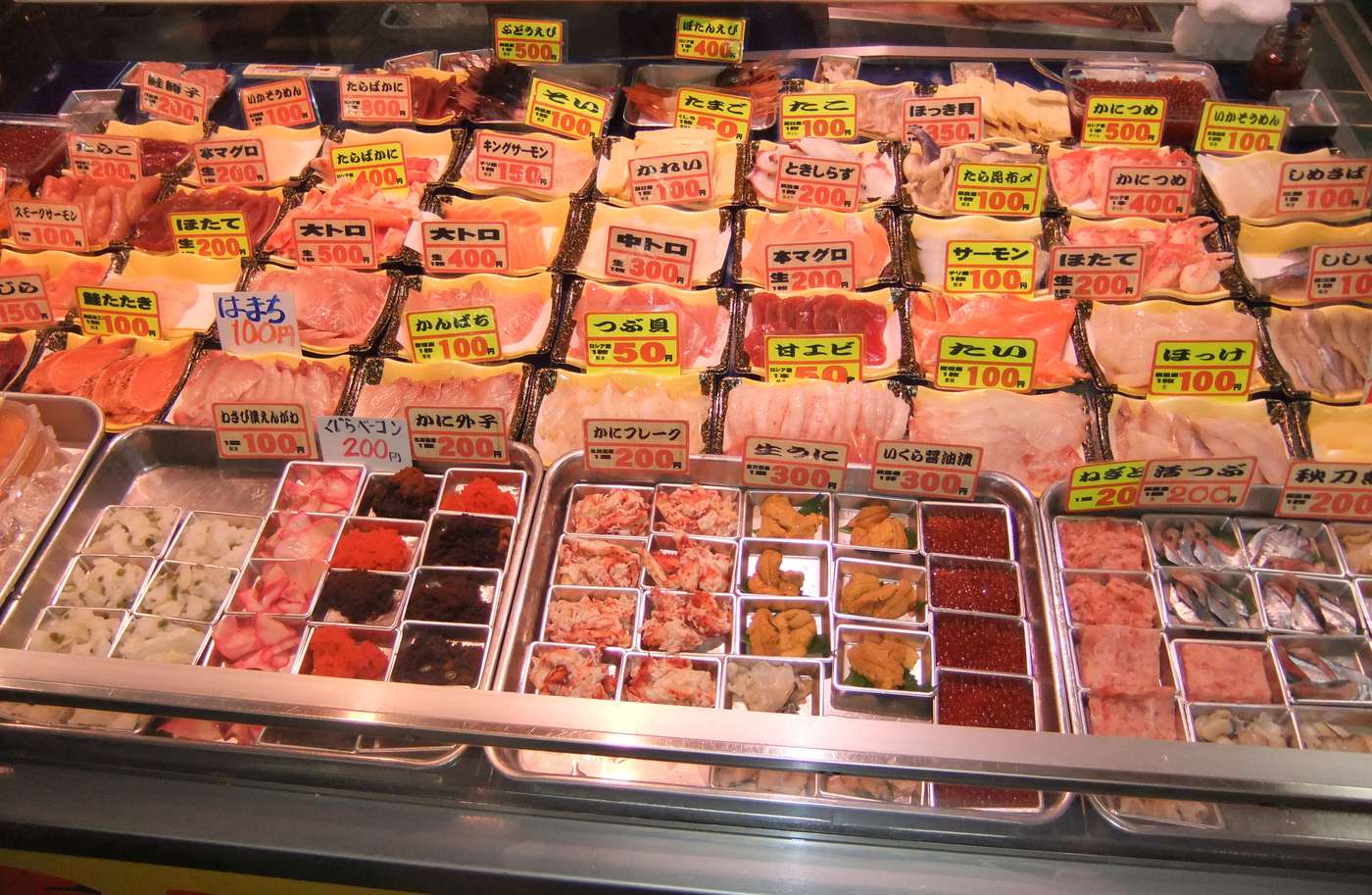
Anyone riding the Hanasaki Line to Nemuro starts in Kushiro, and there is a worthwhile stop right by the station: Washo Market (Kuroganecho 13-25, an easy walk from JR Kushiro Station), open Monday–Saturday 8:00–17:00, Sundays irregular (check the official calendar). Its headline act is the kattedon build-your-own seafood bowl, but in the July–September window, hanasaki crab shows up on the seafood stalls too. If you buy a whole one, you can ask the shop whether they will cut it for you to eat inside the market — note this is a traveler-reported custom, not an officially listed service, so whether it happens depends entirely on the shop's answer that day. The full Washo Market playbook and the rest of the itinerary live in the Kushiro & Akan complete guide; this article stays on the crab.
Prices: market rates, the wholesale anchor, live vs frozen
Rule before numbers: hanasaki crab trades at market price. Retail moves with the day's landing volume, crab size and live-versus-frozen state, so any fixed "one crab costs ¥X,000" figure is already expiring the day it is written. What I can give you is two auditable anchors and one officially backed bargain window:
- Wholesale magnitude: on the 2026 season's first landing day (July 6), female crab fetched ¥3,974 per kg including tax at the Habomai market (Kushiro Shimbun; verified August 2026). That is the dockside price — retail and tourist-area restaurants build upward from it. Read it as an order of magnitude, not a menu price.
- Restaurant anchor: hanasaki crab kamameshi at Michi-no-Eki Swan 44 Nemuro, ¥2,500 (official site, August 2026).
- Cheapest window of the year: the Nemuro Crab Festival (Aug 22–23), officially described as selling crab "below market price" every year.
Now the distinction you will actually use when ordering: live versus boiled-frozen. The logic is simple — the fishery runs July–September only, so live crab essentially circulates only within the production area in summer. In every other season, anywhere in Japan (winter crab-course menus included), the hanasaki crab in front of you is overwhelmingly boiled-and-flash-frozen summer catch. That is not a defect — it is the only way a three-month fishery supplies twelve months of demand — but it eats differently from a live crab cooked to order. No need to guess at the counter: just ask whether it is live or boiled-frozen; any serious shop can answer instantly. This is the same logic laid out in our Japan winter food guide, which also carries the full four-crab comparison table.
One sentence on mail order: Washo Market and the Sapporo Curb Market shops both run online stores selling hanasaki crab — but they ship within Japan only. For overseas visitors the correct play is the one this whole article describes: eat it in eastern Hokkaido in season, or fall back to a bowl of teppo-jiru in Sapporo.
Getting there: JR Hanasaki Line and the Cape Nosappu bus
Kushiro to Nemuro: the JR Hanasaki Line
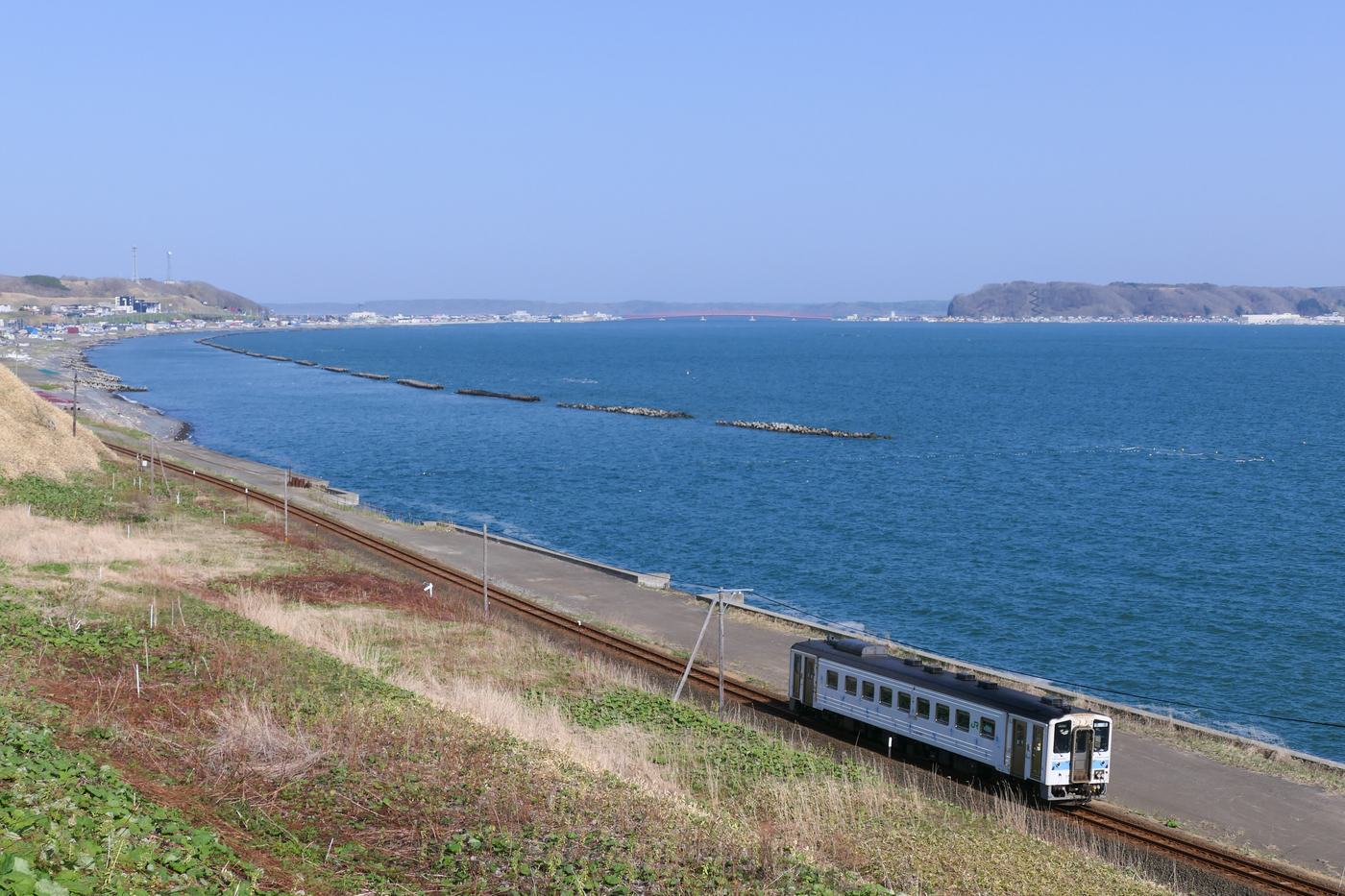
The Kushiro–Nemuro stretch of the Nemuro Main Line carries a lovely nickname — the Hanasaki Line — and runs 135.4 km through wetlands and coastline, with an official promotion site ("Earth Exploration Railway Hanasaki Line") maintained by the local line association. Fare and time: ¥3,080 one way, about 2 hours 32 minutes direct — figures from a third-party fare database (queried August 2026). JR Hokkaido revised fares in April 2025 and I could not cross-check this number on the official site, so confirm on JR Hokkaido's fare search before buying.
More important than the fare: the Hanasaki Line runs only a handful of trains per day. Look up both your outbound and return departures before committing — a same-day Kushiro–Nemuro crab run is doable, but it consumes the entire day. Coming from Sapporo, take the Limited Express Ozora to Kushiro and transfer; the whole route is covered by the JR Hokkaido Rail Pass (5-day pass: ¥22,000; sold as an e-ticket on KKday). Note that JR Hokkaido limited expresses are now all-reserved, so pass holders still need a seat reservation before boarding the Ozora. The math on whether a pass pays off for an eastern-Hokkaido long haul is in our Hokkaido JR Pass breakdown. Pairing the September tail of the season with an eastern-Hokkaido road trip? See the central & eastern Hokkaido autumn drive route.
Nemuro Station to Cape Nosappu: the Nemuro Kotsu bus
To bolt the easternmost point of Japan's main islands onto your crab day, ride Nemuro Kotsu's Nosappu Line from the bus terminal in front of Nemuro Station — 47 minutes per the operator. Fares per the official page: round-trip ticket ¥2,460, one-day free pass ¥2,600 (the Nosappu Line is covered). Two cautions: the operator publishes only those two ticket prices — no one-way fare is officially listed, and the contradictory one-way numbers floating around online should be ignored; and departures are sparse, so plan around the official timetable. The cape has the Northern Territories museum and is famous for the first sunrise of the year at Japan's eastern edge — but the deep dive on Cape Nosappu belongs to a future eastern-Hokkaido article; here it is simply the after-crab side trip. For structuring the whole island, start at the Hokkaido guides hub.
Hanasaki crab vs king crab
First instinct for most people: "it looks like a small king crab." Genetically, that instinct is right — both are in the king crab family, both are hermit-crab relatives per the Hokkaido government's classification. On the plate, they diverge completely. King crab's value is in the legs: long, thick, heavy with meat — you are buying volume. Hanasaki crab is short-shelled and heavily spined, with denser flavor and a rich, rough-edged crab miso; the classic preparations are a simple salt boil or the miso soup treatment. King crab is the crab you eat for meat; hanasaki is the crab you eat for flavor. Add a range locked to one peninsula and a three-month season, and hanasaki runs a "local-only, low-volume, market-price" business model that has nothing in common with king crab's year-round tourist-market ubiquity.
Which one should you order? The call here is blunt: if you are in eastern Hokkaido between July and September, eat a live hanasaki crab once in your life — outside that time-and-place combination, its advantages get diluted by freezing and freight. If what you want is armfuls of leg meat, or your itinerary stays in Sapporo and Otaru, king crab and kegani give you far more options. The full four-crab comparison table and the all-you-can-eat decision guide are in Japan winter food: the crab and hot pot guide — that table is not rebuilt here.
Can you eat it in Tokyo or Osaka? (honest answer)
Straight answer: Tokyo — possible but never promised. Osaka — assume no.
Tokyo's situation: during the summer season, live Hokkaido hanasaki crab does have a documented history of arriving through Toyosu Market channels, and some high-end Japanese restaurants take small allocations — but volume is tiny, seasonality is brutal (when I checked, even the market e-commerce listing had already gone offline, which rather proves the point), and prices sit above what the same crab costs in Nemuro. Every "best hanasaki crab restaurant in Tokyo" result I found was the restaurant's own marketing page — I will not relay or name them. For Osaka, no auditable supplier could be verified at all, and nothing will be invented to fill the gap.
So the action plan collapses to three tiers: serious about it — build a July–September eastern Hokkaido leg and go to Nemuro; decent fallback — teppo-jiru at Nemuro Hanamaru in Sapporo; Tokyo and Osaka — keep your expectations at zero and save the budget for your next Hokkaido trip.
Frequently Asked Questions
- Q1:When is hanasaki crab season? What months can I eat it live in Hokkaido?
- The window for eating live hanasaki crab at the source is early July to the end of September. The licensed season for the Nemuro Peninsula — the crab's home fishery — runs July 1 to the end of September, and in 2026 the fleet actually opened five days early, on July 5, as a high-water-temperature measure. You will also see wider date ranges online: the Hokkaido prefectural government lists April–September (that covers other sea areas across Hokkaido), and Nemuro City's own overview says May–September. But for a traveler, the answer that matters is the Nemuro summer peak: July, August and September are when the day's live catch lands at the local markets. Hanasaki crab on a winter menu is almost always boiled-and-frozen summer stock, not a fresh catch.
- Q2:Is hanasaki crab really not a true crab?
- Taxonomically, yes — and this comes straight from the Hokkaido prefectural government's fisheries department, not a trivia site. Hanasaki crab belongs to the king crab family (Lithodidae) and is officially classed as a relative of the hermit crab, the same lineage as red king crab. Kegani (horsehair crab) and snow crab are the true crabs; hanasaki and king crab are hermit-crab cousins that happen to look the part. The name has an official explanation too: the shell turns a vivid scarlet when cooked — like a flower blooming, hence "hanasaki" (flower-blooming) crab. Its range, per the prefecture, is the Pacific coast between Cape Erimo and Cape Nosappu plus the Okhotsk side of the Nemuro Peninsula — which is why it is essentially synonymous with Nemuro.
- Q3:When is the Nemuro Crab Festival 2026, and does it cost anything?
- Officially announced: Saturday August 22, 2026 (10:00–16:00) and Sunday August 23 (9:00–15:00) at a special venue in Nemuro Port (Honcho 5-chome, Nemuro), organized by the Nemuro Tourism Association. Per the event listing, entry is free, the site is about a 20-minute walk from JR Nemuro Station (5 minutes by car), and there are roughly 500 free parking spaces. Based on how it runs in a typical year: crab sold below market price, live boiling demonstrations, teppo-jiru stalls and a crab-grabbing speed-eating contest; the one confirmed 2026 stage guest is singer Leon Niihama (Aug 23, from 12:15, about 45 minutes). The organizers still say "full details coming soon," so recheck the official site before you go. Missed 2026? It is held in late August at Nemuro Port in a typical year — wait for the official 2027 dates rather than copying this year's.
- Q4:Where can I eat hanasaki crab in Sapporo without going to Nemuro?
- There is one near-foolproof entry point: the hanasaki crab teppo-jiru (miso soup) at conveyor-belt sushi chain Nemuro Hanamaru. Per the chain's official notice, the soup is served at every Kaiten-zushi Nemuro Hanamaru, every Machi-no-Sushiya Shiki Hanamaru and every standing sushi bar in the group — including the JR Tower Stellar Place branch on the 6th floor, directly connected to Sapporo Station. The official blog describes it as a signature soup served since the company's founding, brewed with roe-rich shell pieces. For a whole crab, Nijo Market and the Curb Market (Jogai Ichiba) are more likely to have it on display during the July–September season, but supply is never guaranteed — treat a whole live crab in Sapporo as a lucky find, not a plan.
- Q5:How much does a hanasaki crab cost?
- Hanasaki crab is a market-price item — there is no list price worth memorizing. The one auditable wholesale anchor from 2026: on the season's opening landing day in July, female crab fetched ¥3,974 per kilogram including tax at the Habomai market (Kushiro Shimbun report; verified August 2026). That is the dockside wholesale level — retail stalls and tourist-area restaurants price above it. The cheapest window of the year has official backing: the Nemuro Crab Festival's own description says crab is sold "below market price" every year, which makes August 22–23 the two days to buy. One verifiable restaurant anchor: the hanasaki crab kamameshi (kettle rice) at Michi-no-Eki Swan 44 Nemuro is ¥2,500 as of August 2026.
- Q6:Is the hanasaki crab on winter menus fake?
- Not fake — it is boiled-and-frozen stock. The fishery only operates in summer, so live hanasaki crab essentially circulates only within the production area between July and September. Everything else, including the hanasaki crab on winter crab-restaurant menus across Japan, is overwhelmingly summer catch that was cooked and flash-frozen for year-round distribution. Boiled-frozen is not a scam — it is the only way a three-month fishery reaches the rest of the country — but the texture is a different experience from a live crab cooked to order. If it matters to you, just ask the restaurant directly whether it is live or boiled-frozen. For the four-crab comparison (kegani, king, snow, hanasaki), see our Japan winter food guide.
- Q7:What is teppo-jiru, and why is it named after a gun?
- Teppo-jiru is Nemuro's local soul dish: shell-on chunks of hanasaki crab simmered in miso soup, so the sweetness of the shell and the richness of the crab roe steep straight into the broth. The name — literally "gun soup" — has an official origin story from Nemuro Hanamaru's blog: you push a chopstick into the crab leg to poke the meat out, and the motion looks like ramrodding a rifle barrel. It is a fixture at the Nemuro Crab Festival in a typical year, and it is the cheapest possible way to experience what makes this crab distinctive — one bowl of soup delivers the crab's signature depth without whole-crab prices.
Read next
Kushiro & Lake Akan Guide 2026: Cranes, Marimo & Ainu Kotan
Red-crowned cranes over Kushiro Marsh in winter, marimo algae balls and Japan's largest Ainu Kotan at Lake Akan, plus the ultra-clear Lake Mashu — the ¥2,700 marimo cruise and Dec–Mar crane feeding grounds.
Japan Winter Food Guide: Which Crab Is Worth It?
How the four crab species differ, where and when to eat them, plus ishikari nabe, fugu, oysters and warm sake — Japan's winter table, decoded.
Hokkaido JR Pass Complete Guide 2026
Five routes recalculated with 2026 fares — all-reserved limited expresses and the post-2024 Furano line closure change the math.
📊 See the 2026 Price Index (JR Pass, DPA, eSIM, Airport Transport) →