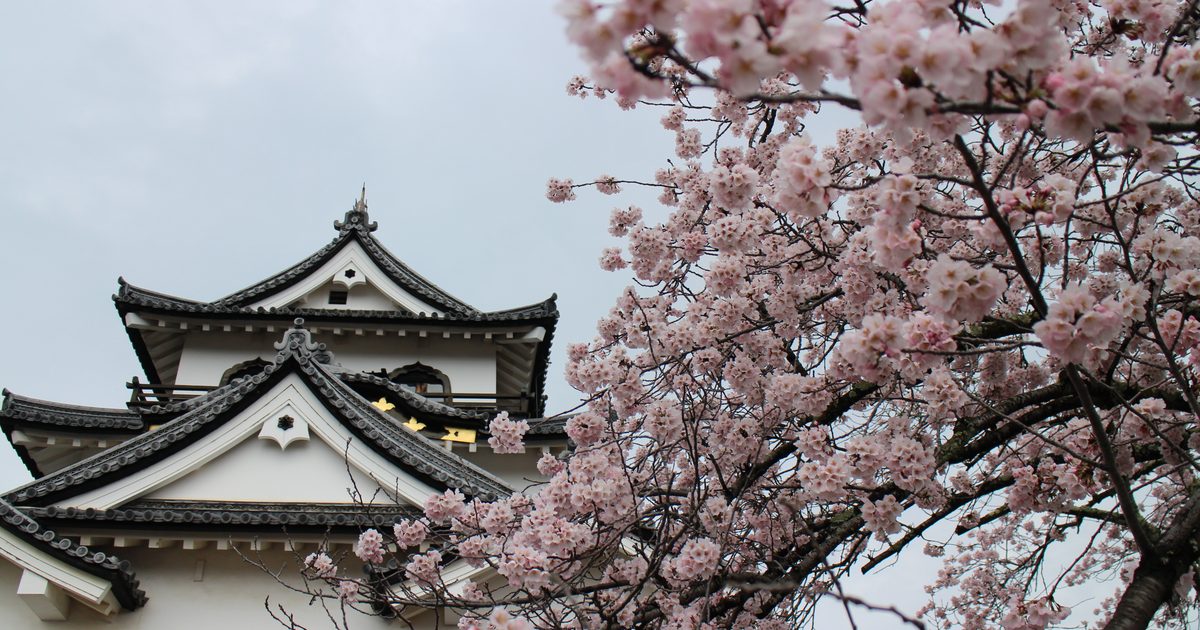
Hikone Castle has been in the queue for 34 years. It joined Japan's World Heritage Tentative List in 1992 and is still not inscribed — and right now Japan has nothing at all pending with UNESCO. Search in English and you will be told the vote happens in 2027. That year is wrong: the official schedule published in May 2026 puts the ICOMOS site mission in 2027 and the Committee deliberation in 2028. The source of the error is not a content farm. It is two Shiga Prefecture pages that are still online, still returning 200, and carry no correction notice. This article lines up all three conflicting official timelines, tells you which one governs, and then works out what a 2027 trip to Hikone actually gets you: a National Treasure keep with no scaffolding on it, nine consecutive exhibitions on exactly the theme the nomination rests on, and two National Treasure buildings that have quietly been shut since 2020.
📍 This guide covers the inscription question only — whether it has happened, when it might, and which year to go. For the trip itself (ticket types, getting there from Kyoto, Hikonyan's appearance times, and the wider Lake Biwa loop), see Lake Biwa & Hikone: the easiest day trip from Kyoto.
- 2027 is not the decision year. 2028 is. The current official assumption: ICOMOS mission in FY2027, Committee deliberation in FY2028 — with an explicit official caveat that the schedule is undecided.
- Three official timelines are live simultaneously and disagree. A 2023 Shiga page says "inscribed 2027", a 2025 Shiga page says "FY2027 deliberation", the 2026 council page says 2028. Only the last one governs.
- The ICOMOS assessment was not negative. It "suggests there is a possibility of meeting criterion (iii)", and calls protection and management free of issues. The one real doubt is whether one castle can express a whole system.
- Whether Japan nominates it in 2026 is still unpublished. The subcommittee met on August 3; the deadline is September 30. Half of this article may change in October.
- Visit in 2027 and the keep has no scaffolding. Next fundamental repair is pencilled in for around 2046 — while Himeji's main keep is wrapped from July 2026 to July 2027.
📖 Contents (tap to expand)
- Is it inscribed yet?
- The three official timelines that contradict each other
- Why it slipped a year
- What ICOMOS actually said
- Three properties left in the queue
- Is 2026 Hikone's turn?
- Why 2027 is worth it anyway
- Is waiting for inscription worth it?
- Three National Treasure buildings, two of them shut
- Appendix: original Japanese sources
Is it inscribed yet?
No — and Japan currently has zero properties pending with UNESCO.
Two things get conflated constantly, so separate them first. Hikone Castle is on the Tentative List, and has been since 1992. That list is the inventory a country draws up of properties it intends to nominate at some future point; Japan's is now down to three entries, namely the ancient capital of Kamakura, Hikone Castle, and an extension to the Hiraizumi inscription. Being on it is standing in a line, not arriving. Hikone has been standing in that line for 34 years.
For the live status you have to read a different page. The Agency for Cultural Affairs maintains one listing cultural properties currently under nomination, and the text on it is "there are no properties currently nominated". Japan has nothing at UNESCO awaiting review. The verb on the campaign's own homepage is still "is aiming for".
So has a dossier been submitted at all? Yes — but to the Agency, not to UNESCO. Shiga Prefecture and Hikone City submitted a draft on July 11, 2025, and submitted again on May 25, 2026, labelled by the officials themselves as the fifth version. The same notice records the submission method as a data submission and the submitters as the prefecture and the city. No official explanation has been published for why it took five versions, and this article will not invent one.
The whole position in one line: Tentative List complete since 1992, preliminary assessment obtained in October 2024, five draft dossiers filed — and now stuck at the step where Japan decides whether to nominate it at all, a step that must resolve before September 30, 2026.
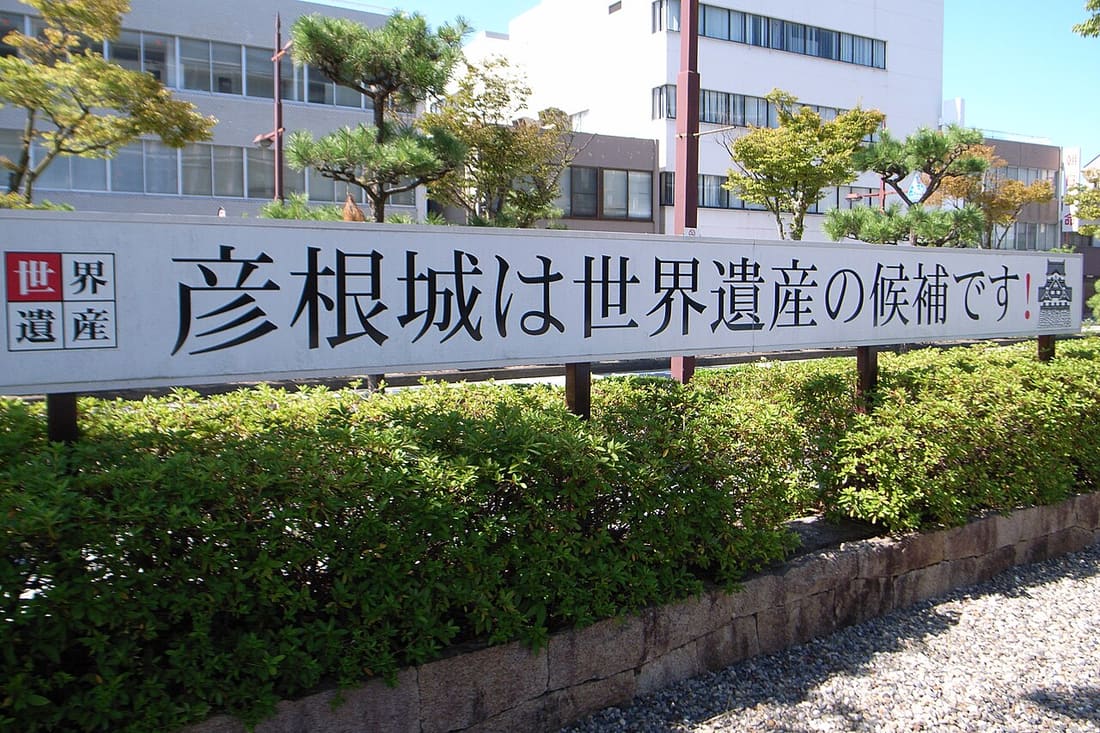
The three official timelines that contradict each other
All three are official, all three are live, and all three give different years.
This is the section to remember, because it explains why almost everything you find is wrong. Lay them side by side.
| Source | Page date | Inscription year it gives | Trust it? |
|---|---|---|---|
| Shiga Pref., cultural properties division | 2023 | "2027: inscribed as World Heritage" | 🔴 Two revisions out of date |
| Shiga Pref., prefectural report page | July 11, 2025 | "FY2026 site survey, FY2027 deliberation and decision" | 🔴 Superseded |
| Promotion council, official site | May 25, 2026 | FY2027 ICOMOS mission, FY2028 deliberation | 🟢 Current |
All three were checked and all three returned HTTP 200. None has been taken down. None carries so much as a line saying the information has been superseded. Search for "Hikone Castle 2027" and the first hits are the top two rows — which is precisely how the wrong year propagated into every guide in every language.
The row to use is the third. In full it runs to four lines: by September 30, 2026 the national Council for Cultural Affairs reviews nomination candidates and Japan submits a draft dossier and English translation to UNESCO; by February 1, 2027 the final dossier goes in; FY2027, the ICOMOS site mission; FY2028, deliberation at the World Heritage Committee. The campaign homepage's timeline has been updated to match, reading "2028 (target): World Heritage inscription", and an April 2026 official video release is blunter still — its headline names Reiwa 10, 2028, as the goal.
Even 2028 is only an assumption
Do not read that table as a fixed plan. In the same notice, immediately after the schedule, officials write that the specific content and schedule of future deliberations are undecided. The word used throughout is "assumed schedule" — assumed, not decided.
Which gives a three-layer answer. 2027 will not produce a result; all three official documents agree on that. 2028 is a target that officials themselves flag as undecided. And before either, one step remains unresolved — the subject of the next section.
Why it slipped a year
Because in August 2025 the domestic step did not clear.
On August 26, 2025 the Agency published the Council for Cultural Affairs' opinion. The official register is restrained: the dossier drafted in light of earlier comments shows progress in its examination, but issues remain, and specifically, if the nomination is to proceed as a single property as drafted, "continued effort is needed to enrich the explanation".
The annex lists four issues. Three of them are worth reading, because they define what the 2026 version had to fix.
- Where the comparison line is drawn. The dossier selects a set of castles to compare using the daimyo's house rank, stipend, closeness to the shogunal house, and whether the castle was newly built in the early modern period. The council's concern is that the validity and objectivity of those criteria and the resulting cut-off could draw comment from ICOMOS.
- Survival must be classified. Archaeological remains, standing structures, and cases combining both need to be distinguished, and the qualitative screening must not invite doubts about its objectivity.
- The key terms are undefined. This is the damaging one: does "castle" include administrative facilities and the castle town? What range of people does "daimyo" denote? The council states plainly that these concepts, central to the daimyo governance system, are not demonstrated with sufficiently persuasive grounds.
Watch the vocabulary here. Japanese media, and English coverage following it, reported this as a "deferral". That word does not appear in the Agency's document. The official phrasing is that continued effort is needed. The two register very differently to a reader: one sounds like a rejection, the other like a request for more paperwork.
What ICOMOS actually said
Five positives and one doubt — and the doubt is not "not good enough", it is "one castle may not carry a whole system".
The October 2024 preliminary assessment is almost universally reported as bad news, usually via the line that proof of Outstanding Universal Value was insufficient. That sentence does not exist in the primary document. Neither "insufficient" nor "proof" appears in it. It is a media paraphrase.
Here is what the annex published by the Agency on October 9, 2024 actually says, section by section.
| Assessment area | What ICOMOS said | Direction |
|---|---|---|
| The property itself | Components are clear; the proposal is well explained from abundant historical sources | 🟢 |
| Value proposition | Supports placing the strategy on the importance of the Tokugawa-era daimyo governance system | 🟢 |
| Integrity | Development pressure well managed; conservation of the proposed attributes appears good | 🟢 |
| Protection and management | There appear to be no issues at this point | 🟢 |
| Community involvement | No particular concerns at this point | 🟢 |
| The core doubt | Whether a single property fully expresses the daimyo governance system | 🟡 |
The conclusion's first clause is affirmative: the assessment suggests there is a possibility of meeting criterion (iii). The "however" comes second — at this point in time, there is the question of whether a single property can completely express the daimyo governance system. ICOMOS's recommendation is that a serial nomination should be considered while the dossier is being written; and that if the nomination is not serial, it must show more firmly that Hikone Castle is important within the system and that the system's operation can be explained through Hikone Castle.
Why "serial nomination" is bad news if you want to visit
A serial nomination bundles several separate properties into one submission. It is a legitimate route, but for a traveller it translates into time: new sites to select, a fresh comparative analysis, a rewritten dossier, and another pass through the domestic review. That route does not land in 2028. As of now the nomination is still framed as a single property — confirmed by the fact that the 2025 council opinion addresses "a single-property application" directly.
How Hikone itself put it
Hikone City's public bulletin of November 22, 2024 compressed the assessment into one sentence: in October Hikone Castle received a preliminary assessment from ICOMOS of "there is a possibility of World Heritage inscription". That is not false. It is, however, a selective summary — the passage about a single property possibly not expressing the whole system is simply absent. Read both halves, or what you have is a press release.
Three properties left in the queue
And one country may submit one nomination per year.
That rule is stated in the council's own explanation of the process: nominations go to UNESCO at a rate of one property per country per year. Japan's Tentative List now holds three entries — Kamakura, Hikone Castle, Hiraizumi's extension — competing for that single annual slot.
The process itself runs to seven stages, all set out officially: Tentative List entry; preliminary assessment; refining the draft dossier; the state deciding which property to nominate; submission to UNESCO; the ICOMOS evaluation (roughly eighteen months); and deliberation and decision at the World Heritage Committee, which meets once a year. Two deadlines are fixed: the draft is recommended by September 30, the final version by February 1 following. The body that picks the candidate is the World Cultural Heritage subcommittee, after which the Cabinet formally decides the Japanese government's nomination.
The one genuinely hard deadline nobody writes about
A preliminary assessment does not last forever. A note in the Agency's press release records that under UNESCO's rules the result is valid for five years, and if a final dossier is not submitted by February 1 of the fifth year, the property must go through preliminary assessment again. For Hikone that date is February 1, 2030.
That is the only hard deadline in this entire article. 2028 is an assumption; September 30 is a gate that resets every year; February 1, 2030 is the one where missing it means starting the assessment over.
One thing you may say, but not as cause and effect
On July 26, 2026 the World Heritage Committee issued its decision on "the Asuka-Fujiwara palaces and related properties", meaning Japan's most recent submission has cleared and the slot is free. But "therefore 2026 is Hikone's turn" is an inference, not an official statement. Two other properties are still in the same queue.
Is 2026 Hikone's turn?
Officials have not said, and the deadline is about a month away.
This is the shortest-lived section in the article, so it is written as a published/unpublished split.
| Item | Status (verified August 28, 2026) |
|---|---|
| Subcommittee meeting date | 🟢 Published: August 3, 2026, 13:00–15:00 |
| Agenda for that meeting | 🟢 Published, verbatim: "selection of candidate properties deemed appropriate for inscription" |
| Meeting outcome / minutes | ⚪ Not published |
| Who Japan's 2026 candidate is | ⚪ Not published |
| Japan's nomination status at UNESCO | 🟢 Published, verbatim: "there are no properties currently nominated" |
| Draft dossier deadline | 🟢 Published: September 30, 2026 |
Pull the Agency's full list of August 2026 press releases and there are seven of them, none touching Hikone Castle or World Heritage nominations. Compare last year, when the opinion landed on August 26. This year the meeting was held on August 3 and by August 28 there is still silence.
Which means this section in particular may not survive October. If you are reading this after October 2026, check the Agency's press release index and the promotion council's news page directly — those are the two places that update first.
Why 2027 is worth it anyway
Because what will genuinely happen at Hikone in 2027 is more useful to a traveller than inscription would be.
Start with the firm date. On February 11, 2027 the Hikone Castle Museum turns 40, and to mark it the museum is running a programme titled "Series THE DAIMYO", spotlighting Hikone's history and treasures handed down in the Ii family across nine consecutive exhibitions. The coincidence is worth pausing on. The museum's year-long subject is the daimyo — and the daimyo governance system under the Tokugawa is precisely the value proposition the castle is being nominated on. ICOMOS asked for a firmer demonstration that the system's operation can be explained through Hikone. For a visitor trying to understand what the nomination is even about, the museum in 2027 is a more direct answer than the keep.
Second, the 420th anniversary of the castle's founding. From September 20 to 22, 2026, the Hikone Tourism Association is holding a free-entry "National Treasure Hikone Castle 420th Anniversary Pre-Event: Hikone Castle Historical Picture Scroll" at Kinki Children's Park. The name tells you the main event falls in 2027.
Flag the evidence honestly, though: "2027 is the 420th anniversary" is derived, not quoted. The official 420th-anniversary page contains neither "2027" nor "Reiwa 9" anywhere in it. The derivation runs through the 410th anniversary festival, whose official site records that it closed on December 10, 2017; back out the base year of 1607, add 420, and you get 2027. The content and dates of the 2027 main programme have not been announced.
The third reason runs the other way, and it is the next section.
Is waiting for inscription worth it?
No — but not for the reason usually given, because "it gets crowded after inscription" has no official basis.
Take that inference apart first. The standard move is to treat Himeji as a trailer for Hikone: it gets inscribed, prices rise, crowds arrive, so go now. Himeji's numbers themselves are sound — the city's data published on April 24, 2026 records March 2026 total admissions down 16.8%, or 28,263 people, on the same month a year earlier, with foreign visitors down 24.8% and Japanese visitors down 9.6%.
But those figures are evidence for something else. Himeji was inscribed in 1993. What happened in March 2026 was admission going from ¥1,000 to ¥2,500 — a price reaction, thirty-three years downstream of inscription. Using it to predict Hikone requires a missing link, namely that inscription causes the price rise or the crowding, and that link has no primary source.
More to the point, the same official dataset dilutes its own headline: FY2025 total admissions were 1,567,674 against FY2024's 1,532,111, roughly 35,000 more. The price more than doubled and the annual figure went up.
So Himeji demonstrates exactly one thing: a price rise dents a single month and does not stop the year. The instinct that going before inscription is cheaper or quieter is not something Himeji proves for you. And for what it is worth, Hikone already had its rise — October 1, 2024, ¥800 to ¥1,000, on its own maintenance costs, unrelated to UNESCO. The full context of the Himeji increase and what it did on the ground is in our Himeji Castle after the price rise.
The real reason to go now: no scaffolding
This one has a document behind it. Hikone City's conservation and utilisation plan for the keep and six other structures, dated March 31, 2023, contains a repair programme table recording the keep's previous work as the 1996 full re-roofing, with seismic reinforcement completed in 2024, and setting the next repair at "roughly 50 years after the previous repair".
Fifty years from 1996 lands around 2046. In other words, nothing large is scheduled at Hikone anywhere near 2027.
Set that beside Himeji and it becomes an actual decision. Scaffolding stands around Himeji's main keep from July 2026 to July 2027, and the city states outright that it affects the viewing experience, the keep's appearance, and the night illumination. If you want a photograph of an unobstructed National Treasure keep in 2027, Hikone can give you one now and Himeji cannot. Japan has five National Treasure keeps; for these two years, one of them is clear and another is wrapped.
One unrelated reminder that catches people every year: the inscription has not happened, so do not label Hikone a World Heritage Site on your itinerary. If you collect castle stamps, the rules vary sharply between the surviving keeps — see gojoin castle stamps and the 12 original keeps.
Three National Treasure buildings, two of them shut
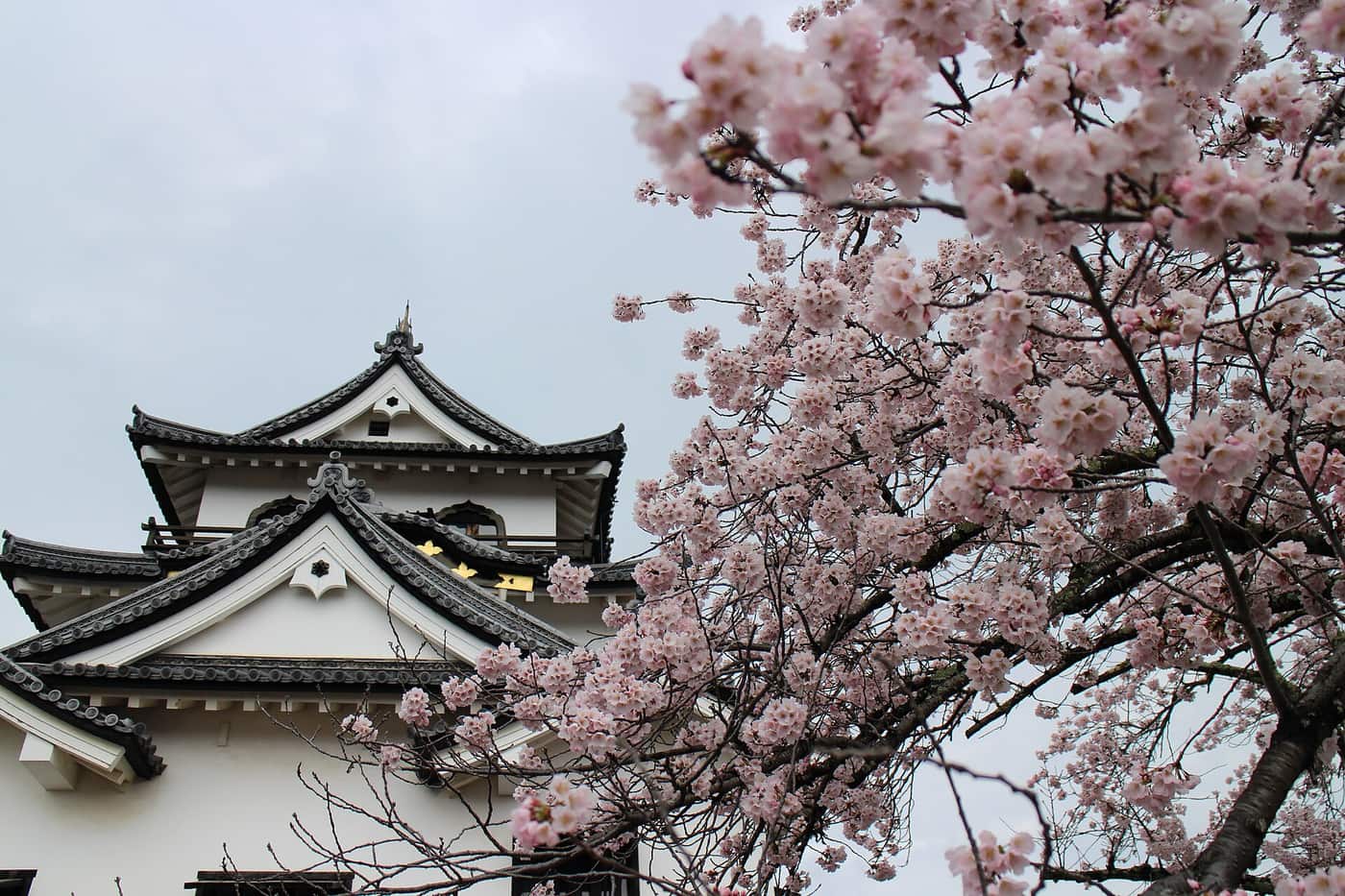
Hikone's National Treasure designation covers three structures — keep, attached turret and multi-bay turret — and two of them have been closed to the public since June 2020.
Almost every guide writes "National Treasure keep, attached turret and multi-bay turret" in a way that reads as though you walk through all three. You do not. Hikone City's conservation plan is direct about it: seismic diagnosis carried out between 2017 and 2019 confirmed problems with the seismic resistance of both the structures and the stone rampart, and public access to the attached turret and the multi-bay turret has therefore been suspended since June 2020.
A third structure is in the same position. The Ninomaru Sawaguchi multi-bay turret was specially opened via a temporary staircase from the 2008 "Ii Naosuke and the 150th anniversary of the opening of Japan" events until 2016, and is currently closed; the plan says it will be opened to the public again at some future point.
There is an indirect corroboration that fits. The buildings the official visitor page lists as closing their interiors at 16:45 are the keep, Tenbin-yagura, Taiko-mon-yagura, Nishinomaru Sanju-yagura and the stable — the attached turret and multi-bay turret are not on that list.
Be clear about how old the evidence is, though: the primary source for the suspension is a March 2023 plan document. There has been no reopening announcement, and the visitor page does not mention the turrets — but officials have also never stated in as many words that they remain closed today. Take the on-site notices as final.
One last thing before you go in: last entry 16:30, doors shut 16:45
Pricing, briefly, because the day-trip article covers it properly: adult admission is ¥1,000 including Genkyu-en, raised from ¥800 on October 1, 2024, in a revision that also abolished the old 100-person and 300-person group tiers. Ticket types and how to buy are in the Hikone day-trip guide.
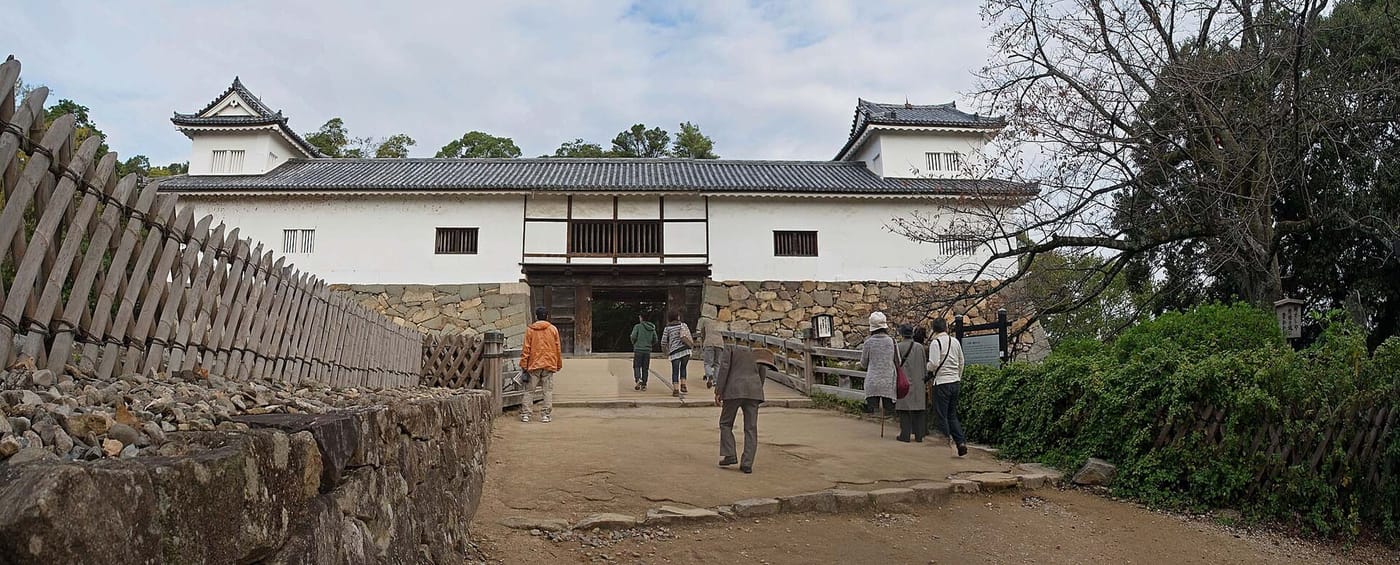
The number to remember is a time. Official last entry is 16:30 — but the same page adds that so visitors can be out by closing, the interiors of the keep, Tenbin-yagura, Taiko-mon-yagura, Nishinomaru Sanju-yagura and the stable close at 16:45.
Put the two sentences together and you have a trap. Enter at 16:30 and you have fifteen minutes to get from the front gate up the slope, through Tenbin-yagura, and into the keep. It does not work. Be through the gate by 16:00 if climbing the keep matters to you. The Kaikoku Memorial Hall and the stable are free; the memorial hall closes December 25–31 and the castle is otherwise open year-round.
A closing word on picking a year. If you are waiting so you can see a World Heritage Site, you are waiting for 2028 at the earliest, on a schedule officials themselves call undecided, with four gates still unpassed: September 30, 2026, the Cabinet decision, the February 1, 2027 final dossier, and the ICOMOS mission. If you are going to see an Edo-period wooden keep, 2027 is a good year — no scaffolding, nine daimyo exhibitions, and a 420th anniversary. The question is whether you want the plaque or the castle. For how Hikone compares with the other Kansai castles worth a day, see Osaka Castle keep guide.
Appendix: original Japanese sources (tap to expand)
The Japanese originals behind the quotations above, gathered here so you can check them yourself. Sources are the Agency for Cultural Affairs (bunka.go.jp), the Hikone Castle World Heritage promotion council's official site (hikonejo-worldheritage.jp), Hikone City (city.hikone.lg.jp), the official Hikone Castle site (hikonecastle.com), the Hikone Castle Museum (hikone-castle-museum.jp) and Himeji City (city.himeji.lg.jp).
1. The current assumed schedule (May 25, 2026, promotion council)
令和8年9月30日まで 国の文化審議会において、推薦候補について審査、国からユネスコへ推薦書(暫定版・英訳版)を提出
令和9年2月1日まで 国から推薦書(正式版)をユネスコへ提出
令和9年度 イコモス(世界遺産委員会の諮問機関)の現地調査
令和10年度 世界遺産委員会における登録審議
今後の具体的な審議内容やスケジュールについては未定でありますが、これまで県および市、そして地域の皆さんと一緒に進めてきた世界遺産登録に向けた取組が、また一歩前進したことを報告させていただきます。
2026(目標)国内で推薦候補に決定 → 2027(目標)ユネスコに推薦書を提出/イコモスによる審査 → 2028(目標)世界遺産登録
令和10年の世界遺産登録を目指す、彦根城!
2. ICOMOS preliminary assessment, conclusion (Agency for Cultural Affairs, October 9, 2024, annex)
「彦根城」の事前評価は、評価基準(ⅲ)を満たす可能性はあることを示唆するものの、現時点では、単独の資産で大名統治システムを完全に表現できているかどうかという点がある。今後推薦書を作成する過程ではシリアル推薦も考えるべきであり、シリアル推薦でない場合には、大名統治システムにおいて彦根城が重要であり、彦根城によりこのシステムの運用が説明できることについて、よりしっかりと示すことが必要である。
「彦根城」自体の構成要素は明確であり、本提案は豊富な史資料に基づいてよく説明されている
イコモスは、推薦戦略を徳川期日本における大名統治システムの重要性に置いたことを支持する
開発圧力は良く管理されており、提案されたアトリビュートの保存状況も良好なようである
(保存・管理について)現時点で課題はなさそうである。
現時点では、地域コミュニティの参画について特段の心配はない
3. The five-year validity of the assessment (note in the same press release)
※ユネスコのルール上、本事前評価結果は5年間有効であり、5年目の2月1日までに正式版推薦書が提出されない場合は、改めて事前評価を受ける必要がある(本件の場合は令和12年2月1日)。
4. The 2025 domestic review opinion (Agency for Cultural Affairs, August 26, 2025, annex)
これらの指摘を踏まえて作成された推薦書案については、別添1に示すとおり、検討に進捗が見られるものの、なお、課題が残る点がある。今後のイコモスの審査を見据えて、推薦書案にあるような単独の資産での申請を行うためには、説明の充実に向けて引き続き取組が必要である。
城の歴史的側面の比較分析として、大名の家格、知行高、将軍家との親疎関係、近世に新築されたか否かといった観点から、一定の範囲の城を抽出することについては、それらの比較の観点や具体的な線引きの基準の妥当性や客観性に関して、イコモスから指摘を受ける可能性がある
「城(城郭)」には行政実務を行う施設や城下町が含まれるのか、「大名」とはどの範囲を指し示すのかなど、大名統治システムの鍵になる概念について十分に説得的な根拠を持って示されていない
5. The current formal status
現在推薦中の物件はありません。
彦根城は世界遺産登録をめざしています
推薦書(案)を提出しました。(第5版)
6. The process and the one-per-country rule
ユネスコに推薦書を提出(1年で1か国につき1件)
イコモスによる調査(約1年半の審査)
世界遺産委員会で審議(年1回開催)
ユネスコに9月30日までに暫定版を提出することが推奨され、翌2月1日までに正式版を提出します(曜日によって変わります)。
文化審議会世界文化遺産部会で推薦候補にふさわしいかの判断が示され、その後、閣議により日本国政府としての推薦が決定されます。
7. The 2026 subcommittee (Agency for Cultural Affairs, July 27, 2026)
文化審議会第10期世界文化遺産部会(第2回) 令和8年8月3日(月)13:00~15:00
(2)世界遺産一覧表に記載されることが適当と思われる物件の候補の選定について
8. The two superseded timelines
2027年 世界遺産に登録(Shiga Prefecture, 2023 page)
26年度に現地調査、27年度に…登録可否の審議・決定…想定されています(Shiga Prefecture, July 11, 2025 page)
9. The keep's repair schedule and the two closed turrets (Hikone City, March 31, 2023 plan)
A01 天守 平成8年 屋根全面葺替/令和6年 耐震補強済 次回修理予定:前回修理後、50年を目安
附櫓及び多聞櫓は平成29年(2017)から令和元年(2019)に実施した耐震診断により、建造物及び石垣の耐震性に問題があることが確認されたため、令和2年(2020)6月から公開を休止している。
(二の丸佐和口多聞櫓)平成20年(2008)の「井伊直弼と開国150年祭」に合わせ、平成28年(2016)まで入口部分に仮設階段を設けて特別公開されたが、現在は公開を休止している。将来的には一般公開する予定である。
10. Opening hours and the 16:45 closure (official Hikone Castle visitor page)
終了時間までに退出いただくため、天守、天秤櫓、太鼓門櫓、西の丸三重櫓、馬屋の建物内は16:45に閉門します
開国記念館、馬屋は無料で入場いただけます
年中無休(開国記念館は12月25日から12月31日まで休館します)
11. The two 2027 events
令和9年(2027年)2月11日(木・祝)に、彦根城博物館は開館40周年を迎えます。これを記念し、「シリーズ THE DAIMYO」と題し、彦根の歴史や井伊家伝来の名宝にスポットを当てた展覧会を9回連続で開催します。
国宝彦根城築城420年プレイベント 彦根城歴史絵巻(2026年9月20日〜22日、入場無料)
平成29年12月10日をもちまして閉幕いたしました(国宝・彦根城築城410年祭)
12. Himeji Castle admission figures (Himeji City, April 24, 2026)
総入城者数は、令和7年3月と比べると、16.8%、28,263人の減でした(夜桜会来場者を除く)。
日本人入城者数は、令和7年3月と比べると、9.6%、10,790人の減でした。
外国人入城者数は、令和7年3月と比べると、24.8%、14,258人の減でした。
Frequently Asked Questions
- Q1:Is Hikone Castle a UNESCO World Heritage Site?
- Not yet, and it is further from it than most sources imply. Hikone Castle joined Japan's Tentative List in 1992 — that list is now down to just three entries (Kamakura, Hikone Castle, and an extension to Hiraizumi) — but a tentative listing is a queue, not an inscription. The sharper statement of the current status comes from the Agency for Cultural Affairs, whose page for "cultural properties currently nominated" reads, verbatim, "there are no properties currently nominated". Japan has nothing sitting with UNESCO right now. The official campaign site's own homepage still uses the verb "is aiming for" World Heritage inscription. So: Hikone Castle is a National Treasure and a Special Historic Site. It is not a World Heritage Site, and the formal nomination dossier has not reached UNESCO at all.
- Q2:Will Hikone Castle be inscribed in 2027?
- No. The schedule the promotion council published on May 25, 2026 is explicit: FY2027 is the ICOMOS site evaluation mission, and FY2028 is the World Heritage Committee deliberation. The same site's homepage timeline now reads "2028 (target): World Heritage inscription", and an official video release from April 2026 says outright that the campaign is aiming at inscription in Reiwa 10, i.e. 2028. The "2027" you find online traces to two Shiga Prefecture pages — one from 2023 that flatly says "2027: inscribed as World Heritage", and one from July 11, 2025 saying deliberation and decision in FY2027. Both are still live, both return HTTP 200, and neither carries any notice that it has been superseded. One more caveat: even 2028 is officially only an assumption. The same May 2026 release adds that the specific content and schedule of future deliberations are undecided.
- Q3:Did Hikone Castle fail the ICOMOS preliminary assessment?
- No — and this is the single most mangled fact in English and Chinese coverage alike. The Agency for Cultural Affairs published the assessment on October 9, 2024. The conclusion's opening clause states that the assessment "suggests there is a possibility of meeting criterion (iii)". Section by section, the wording is positive: the property's components are clear and well explained from abundant historical sources; ICOMOS supports the strategy of framing the value around the importance of the daimyo governance system under the Tokugawa; development pressure is well managed and conservation of the proposed attributes appears good; on protection and management "there appear to be no issues at this point"; on community involvement, "no particular concerns at this point". There is exactly one substantive doubt: whether a single property can fully express an entire governance system. ICOMOS therefore suggests considering a serial nomination. The direction is "your argument can work, but one castle may not carry a whole system" — not a failing grade. Note also that "insufficient proof" and "deferral" are media phrasings; neither appears in the official documents.
- Q4:Should you visit before inscription to beat the crowds and the price rise?
- The premise has no official basis. Nobody official has said inscription will make Hikone more expensive or more crowded, so building a trip around that assumption is guesswork. Two things are documented. First, Hikone Castle already raised its price on October 1, 2024, from ¥800 to ¥1,000 for adults, citing its own maintenance costs — nothing to do with UNESCO. Second, the Himeji comparison everyone reaches for does not do the work people think it does. Himeji was inscribed in 1993; the 16.8% year-on-year drop in March 2026 visitors was the immediate reaction to admission going from ¥1,000 to ¥2,500, thirty-three years after inscription. And the same Himeji city dataset undercuts the single-month headline: FY2025 total admissions were 1,567,674, up about 35,000 on FY2024's 1,532,111. The price more than doubled and the full-year figure still rose. What Himeji proves is that a price rise dents one month and does not stop the year.
- Q5:Is inscription in 2028 a done deal?
- Far from it — the process has not even cleared the domestic step. The Council for Cultural Affairs' World Cultural Heritage subcommittee met on August 3, 2026, with the published agenda item "selection of candidate properties deemed appropriate for inscription", and Japan must submit a draft dossier to UNESCO by September 30. As of August 28, 2026 the Agency has published nothing: all seven of its August press releases are unrelated to World Heritage nominations. After that step come a Cabinet decision, the final dossier by February 1 of the following year, the ICOMOS mission, and only then the Committee. Last year the process stalled at exactly this domestic step — the August 26, 2025 opinion said that while progress was visible, issues remained, and that "continued effort is needed to enrich the explanation" if the single-property nomination was to go ahead.
- Q6:What is actually worth seeing at Hikone in 2027?
- A National Treasure keep with no scaffolding on it, plus two things tied directly to the nomination's own theme. On the building: Hikone City's conservation and utilisation plan records the keep's last major work as the 1996 full re-roofing, with seismic reinforcement completed in 2024, and sets the next round of fundamental repair at "roughly 50 years after the previous repair" — around 2046. Nothing large is scheduled anywhere near 2027. That is the mirror image of Himeji, where scaffolding stands around the main keep from July 2026 to July 2027. On events: the Hikone Castle Museum turns 40 on February 11, 2027 and is marking it with "Series THE DAIMYO", nine consecutive exhibitions on Hikone's history and the Ii family's treasures — the exact subject the nomination is built on. Separately, 2027 is the 420th anniversary of the castle's founding, though note this is derived from the 410th anniversary festival that closed in 2017: the official 420th page mentions only a September 2026 pre-event, and the 2027 main programme has not been announced.
- Q7:How much is admission, and what time do you need to arrive?
- Adult admission is ¥1,000 including Genkyu-en garden, raised from ¥800 on October 1, 2024 — a revision that also abolished the deeper 100-person and 300-person group tiers, leaving only the 30-plus group rate at 20% off. The number that actually matters is a time, not a price. Official last entry is 16:30, but the same page adds that so visitors can be out by closing, the interiors of the keep, Tenbin-yagura, Taiko-mon-yagura, Nishinomaru Sanju-yagura and the stable close at 16:45. Arrive at 16:30 and you have fifteen minutes to walk uphill to the keep — in practice you will not make it. Aim to be through the gate by 16:00 if you want to climb. The Kaikoku Memorial Hall and the stable are free; the memorial hall closes December 25–31, and otherwise the castle is open year-round.
Read next
Lake Biwa & Hikone Guide 2026: Castle & Lake Torii
Shiga's underrated escape, ~50 min from Kyoto by JR: National-Treasure Hikone Castle (¥1,000 with Genkyuen), the Shirahige lake torii, the Omihachiman canals, and Enryakuji on Mt. Hiei.
Is Himeji Castle worth ¥2,500? 2026 tickets & hours
Admission is now ¥2,500, and the city says entries fell 16.8% in month one — so it is quieter. But scaffolding stands until July 2027, and the gate stops admitting at 16:00, not 16:30.
Gojoin Castle Stamps: 12 Original Keeps Guide
What gojoin are, how they differ from goshuin, plus all 12 original castle keeps mapped.
📊 See the 2026 Price Index (JR Pass, DPA, eSIM, Airport Transport) →