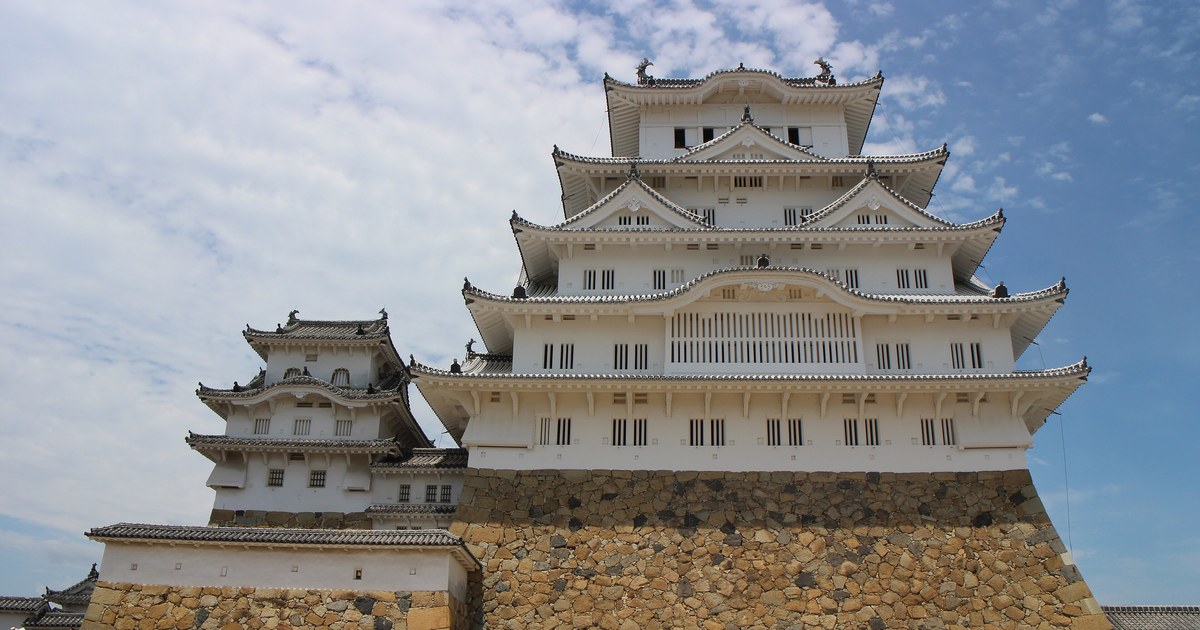
General admission to Himeji Castle has been ¥2,500 since March 1, 2026 — ¥1,500 more than the old fare. Then, on April 24, Himeji City published what that increase did: in the first month under the new price, entries fell 16.8% against the same month a year earlier, a drop of 28,263 people. Put those two facts side by side and you have the argument of this guide — the ticket got more expensive, but the castle genuinely got emptier, and it is a better visit now than it was through 2024 and 2025. Two things to settle before you go, though: conservation scaffolding stands around the main keep from July 2026 until July 2027, and although the castle stays open until 17:00, the gate stops admitting people at 16:00. Below: the real ticket structure, the official month-by-month crowd figures, what the scaffolding actually blocks, the climb, and the arithmetic on the combined ticket and the loop bus — with a straight answer on who should and should not spend the ¥2,500.
📍 This guide covers the castle itself — tickets, hours, the climb, nearby passes. For how Himeji fits into a Kansai trip and what to do around the station, see our Himeji day-trip guide; for the wider route, the Osaka and Kyoto 5-day itinerary.
- General admission ¥2,500 since March 1, 2026; the ¥1,000 rate is for city residents, not Japanese nationals — under-18s are free
- Official data: entries fell 16.8% in the first month after the rise, so it is quieter (the city notes its domestic/foreign counting method changed in June 2025)
- Scaffolding on the keep surrounds from July 2026 to July 2027, officially affecting views and the night illumination
- Open 9:00–17:00 but last entry is 16:00 — the 16:30 figure is when buildings start closing their windows
- Buy the ¥2,600 combined ticket; skip the loop bus day pass — buying it for the discount costs you ¥350 to ¥610 more
📖 Contents
- The ¥2,500 fare, and what it is not
- The official numbers on what the rise did
- When the castle is least crowded
- Open until 17:00, last entry 16:00
- The scaffolding: July 2026 to July 2027
- The climb: an hour, 1,000 per hour, shoes off
- Getting there, and the loop bus that loses money
- Koko-en, the zoo, and Mt. Shosha
- Gojoin stamps: an honest blank
- So is it worth ¥2,500?
- FAQ
The ¥2,500 fare, and what it is not
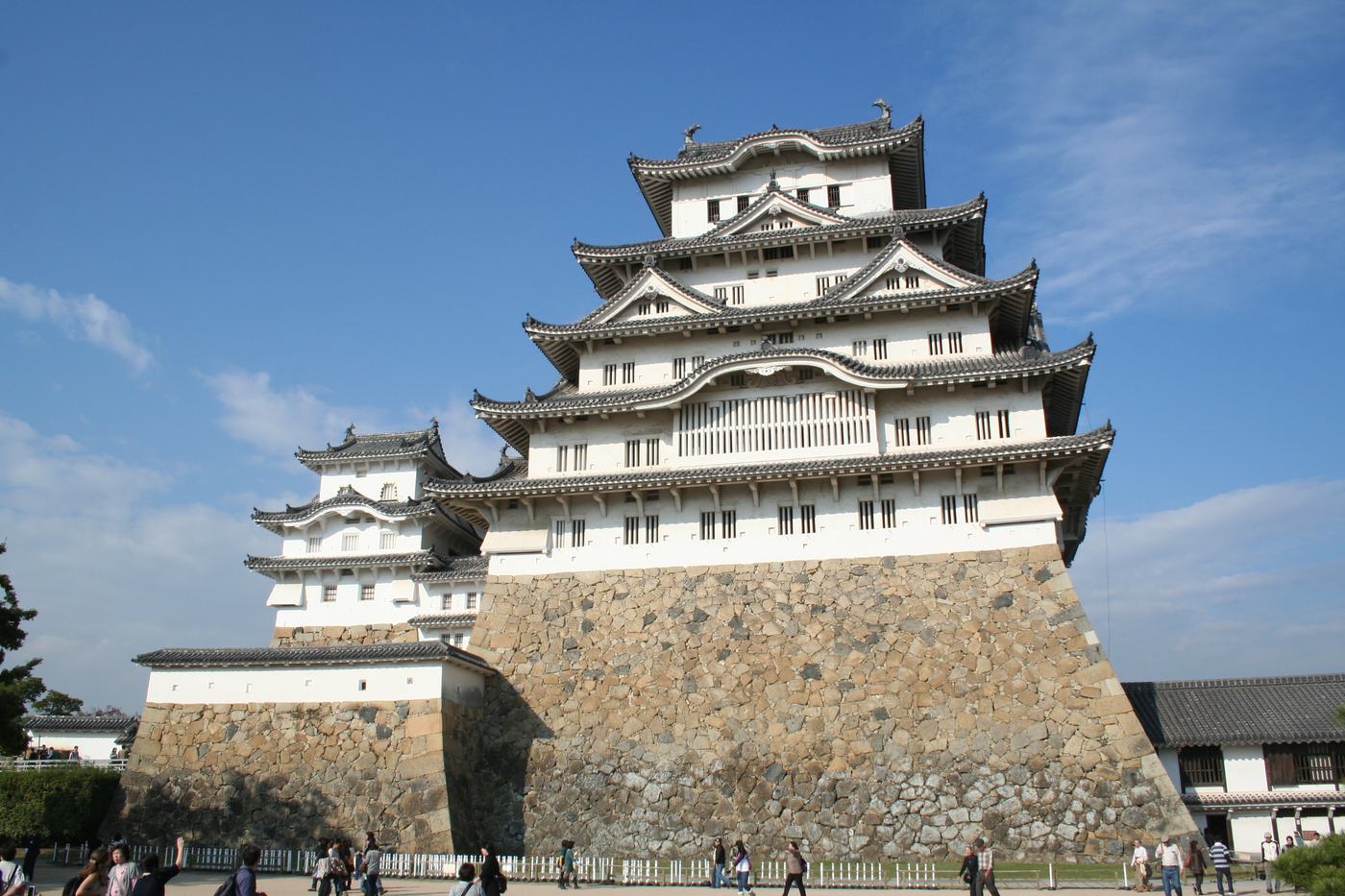
Start with the claim that needs correcting, because it has spread fast: Himeji Castle does not charge foreign visitors a higher price. The city did introduce differential pricing on March 1, 2026, but the line it draws is residency, not nationality.
The official definition of a "citizen" rate is a person with a registered address in Himeji City. The accepted proof documents are the My Number card (the paper notification card is not accepted), a driver's licence, and — this is the decisive part — any other government-issued document showing photo, name and address, explicitly including the zairyu residence card carried by foreign residents of Japan. In plain terms: a foreign national living in Himeji pays the resident rate; a Japanese citizen living in Tokyo pays the general rate. A nationality-based surcharge was not what the city adopted; its published rationale is a ten-year projection of maintenance, operating and restoration costs for the special historic site.
For a visitor from abroad the practical upshot is simple: you pay ¥2,500, unless you happen to live in Himeji. Here is the full current structure.
| Ticket | From Mar 1, 2026 | (Before) |
|---|---|---|
| General (18 and over) | ¥2,500 | ¥1,000 |
| Himeji resident (18–64) | ¥1,000 | — |
| Under 18 | Free | ¥300 child fare |
| Himeji resident 65+ | Free (senior welfare card required) | — |
| Castle + Koko-en combined | ¥2,600 | ¥1,050 |
| Group of 30+, general | ¥2,000 | ¥800 |
| Annual pass | ¥5,000 | — |
Three points deserve pulling out of that table:
- Free entry for under-18s is the most substantial part of the revision for families. The old child fare for elementary through high-school students was ¥300; it is now zero, and the rule extends coverage from a person's 18th birthday through the following March 31, so a final-year high-school student stays free for the whole academic year. For a family of four with two children, the increase falls only on the two adult tickets.
- Do not treat the ¥5,000 annual pass as a saving. Two visits break even, true, but the official terms are strict: named holder only, non-transferable, application form required, photograph taken on site at the castle management office to make the card, no refunds after issue, no replacement if lost, and purchase only between 9:00 and 16:00 at the staffed gate. A short-stay visitor will almost never use it twice.
- Payment options are unusually broad. Cash, credit cards including UnionPay, transport IC cards (ICOCA, Suica, PASMO and the rest), e-money, and QR payments including PayPay, WeChat Pay and Alipay+. There is no need to hold cash back specifically for admission.
There are three official ways to buy, and none of them needs a third party. The official Shirasagi digital ticket is sold online, can be booked up to 90 days ahead for a chosen date, releases 500 tickets per 30-minute arrival slot between 9:00 and 15:30, and covers up to 10 people per transaction. Ticket machines on site sell general and combined tickets; the staffed window handles resident and group tickets. One warning from the official page: depending on digital-ticket sales, there may be time slots where same-day tickets are not sold at all. On a peak weekend, either book online or arrive early. Once a digital ticket's QR code has been scanned at the gate it cannot be cancelled, and changing the date or headcount means cancelling and rebooking.
The official numbers on what the rise did
None of this is commentary or a press estimate — it is Himeji City's own press release dated April 24, 2026, under a heading that translates as "visitor trends following the admission revision." Compared with the same month a year earlier, and with the night-cherry-blossom event attendance already excluded:
| Category | March 2026 vs March 2025 |
|---|---|
| Total entries | −16.8% (−28,263 people) |
| Japanese visitors | −9.6% (−10,790) |
| Foreign visitors | −24.8% (−14,258) |
The city's own caveat has to travel with those figures, or the comparison is invalid: the same document states that the method of counting Japanese versus foreign visitors changed in June 2025 (it now aggregates ticket-machine language selection, digital-ticket nationality data, and counts by window), and asks readers to bear that in mind. So "the foreign drop was 2.6 times the domestic drop" is a single-month observation under a changed methodology, not evidence of a structural shift. The total figure, measured consistently, is the more reliable one.
My reading of this differs from the news headlines. The press framing is that a price rise drove tourists away. From the point of view of somebody actually planning a trip, it is good news. Himeji has never had a shortage of visitors — what it lacked was the experience of not waiting an hour at the keep entrance. Fiscal 2024 brought 1.53 million entries with foreign visitors at 35.8% of the total, and fiscal 2025 brought 1.56 million. That is a textbook over-tourism site. If losing 16.8% of that buys you a keep staircase you are not being pushed up, and a clear moment to photograph from Bizenmaru, then ¥2,500 arguably delivers more than ¥1,000 used to.
An honest limit on that claim: this is one month, and March is not Himeji's peak in the first place. The city has not published full-year fiscal 2026 figures, so whether crowds return at the higher price is simply unknown, and this guide will not guess.
When the castle is least crowded
Rather than the usual "spring and autumn are best" filler, here are Himeji City's published monthly entry figures for fiscal 2025, from the same press release.
| Month | Entries | What it feels like |
|---|---|---|
| January | 86,986 (year's lowest) | Best for space; cold, and no heating in the keep |
| December | 91,513 | Second lowest; avoid the Dec 29–30 closure |
| July | 92,148 | Low totals but hot; no air conditioning inside |
| June | 102,551 | Rainy season, thin crowds |
| February | 106,711 | Tail of the low season |
| September | 113,777 | Lingering summer heat |
| August | 128,887 | Summer holidays push it back up |
| March | 145,584 | Run-up to cherry blossom |
| May | 156,624 | Still high after Golden Week |
| October | 164,127 | Autumn busy |
| November | 178,693 | Autumn peak |
| April | 200,073 (year's highest) | Cherry blossom: prettiest and most packed |
One thing jumps out of that table: Himeji's high season is not only cherry blossom — November outdraws May. If your dates are flexible, weekdays in January and February are the thinnest window, at the cost of an unheated keep and cold wooden floors underfoot (thick socks, genuinely). July also has low totals, but there is no air conditioning anywhere in the grounds, drinking fountains exist only in front of the Hishi Gate and at Bizenmaru, and the single vending machine is in front of the Hishi Gate. Carry water in summer.
One related fact the official data confirms: the April and March totals include attendance at the night-cherry-blossom event (11,291 and 4,867 people respectively), so the Nishi-no-maru evening blossom event is real. But the 2027 dates have not been published — the city announces them each spring — so no dates appear here. Any source giving you a specific 2027 date right now has no official basis for it.
Open until 17:00, last entry 16:00
This rule is simple, and it is the single most common way visitors waste a trip to Himeji.
| Time | What it actually means |
|---|---|
| 9:00 | Opening |
| 16:00 | Gate closes — last entry. After this you cannot buy a ticket or go in |
| 16:30 | The keep, Nishi-no-maru and Hyakken-roka begin closing windows (this is not last entry) |
| 17:00 | Closing |
Since the official time allowance is about an hour for the keep cluster and 1.5 to 2 hours for the whole paid area, arriving at 15:55 buys you a rushed lap, not a visit. Aim to be inside by 15:00 at the latest, and ideally at the 9:00 opening.
Two related rules to file alongside it. The castle closes only on December 29 and 30, and on those days the commemorative stamp books cannot be served either. And there is no re-entry — once you exit the gate, that visit is over, so you cannot leave for lunch and come back. Koko-en next door keeps the same 9:00 to 17:00 hours but takes its last entry at 16:30, half an hour later than the castle, which matters when you sequence an afternoon.
No extended summer hours are currently published. The official castle information site and the Himeji City page both show the standard schedule — 9:00 to 17:00, entry until 16:00 — with only a note that hours vary by season, and no seasonal table at all. If your plan depends on an evening visit, check the official notice before you travel rather than assuming the 18:00 closing of past years.
The scaffolding: July 2026 to July 2027
If only one section of this guide survived, it would be this one, because it is information no guide written before mid-2026 can contain and it directly changes whether you get the photograph you came for.
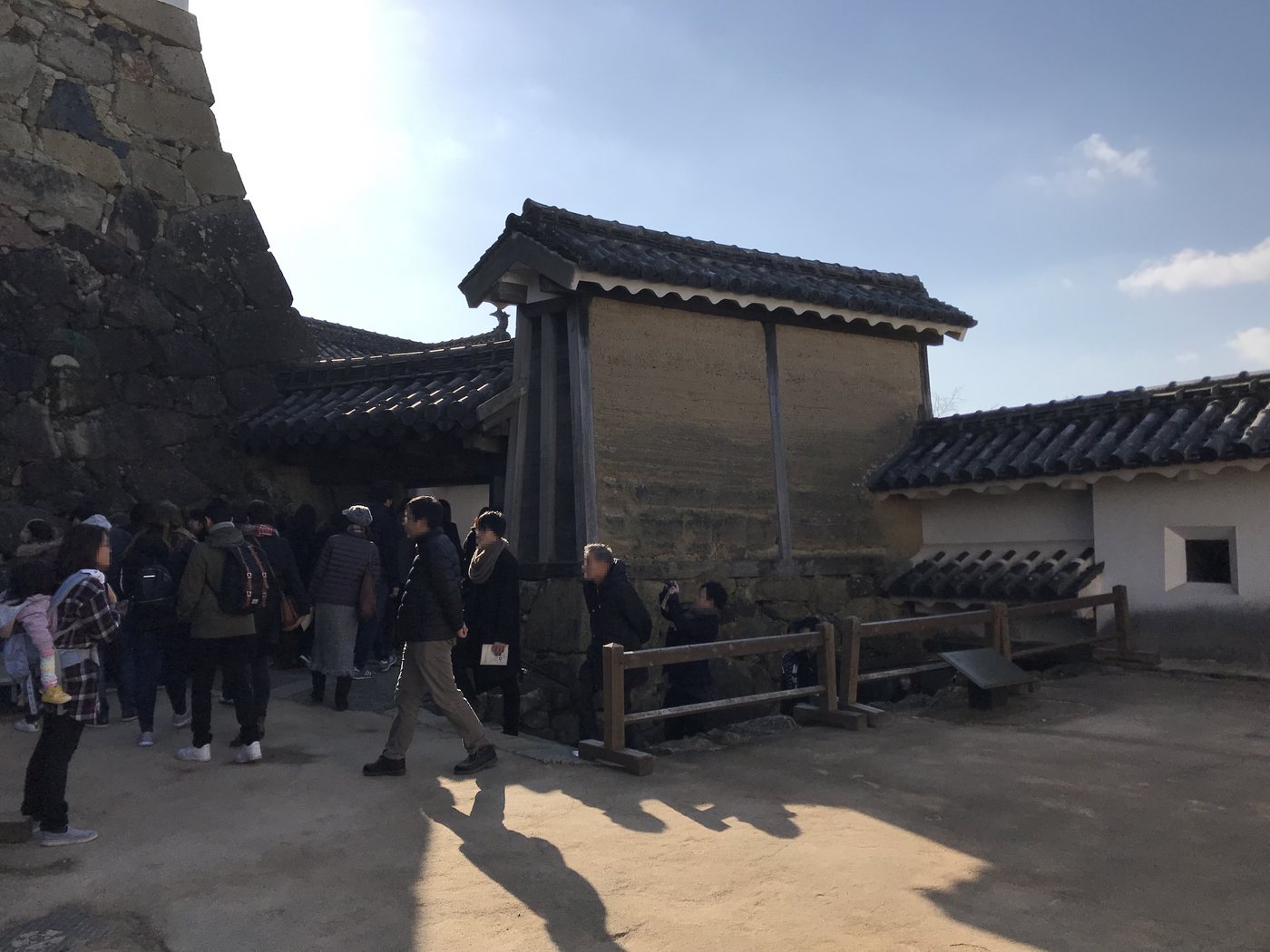
A Himeji City notice updated on July 30, 2026 states that conservation work runs from early July 2026 to approximately late July 2027. The scope covers the Ni-no-yagura turret and the plaster wall south of it, the Mizu-no-ichimon gate and the walls to its north and west, and the Mizu-no-nimon gate. Every one of those sits on the climbing route to the main keep. This is not a distant corner of the grounds.
The official description of the impact is unambiguous: the work will cause disruption to the viewing environment, the appearance of the main keep, and the night-time illumination. In practice that means:
- Scaffolding erected around the structures, which will appear in photographs taken from certain angles.
- Part of the Bizenmaru terrace used as a materials store — Bizenmaru is one of the classic spots for looking up at the keep, so the usable area shrinks.
- Some visitor routes narrowed, with work vehicles entering the grounds during the period.
- Night illumination affected. Normally the castle is lit white from sunset until 24:00 (white plaster takes light beautifully), with a 15-minute seasonal colour sequence at 20:00 and again at 21:00, but the effect is compromised during the works.
The practical advice is blunt. If the point of your trip is a photograph of Himeji with no construction visible, come after summer 2027. If the point is to walk into Japan's finest surviving keep, the scaffolding will not ruin it — the keep interior and the main climbing route remain open, and the work is concentrated on turrets and walls. Note that the listed scope does not include Nishi-no-maru, but the city has not issued a separate notice about Nishi-no-maru's status either, so check the day's announcements before you go.
The climb: an hour, 1,000 per hour, shoes off
Himeji is not a flat walk-around site. It is a hirayama-style castle built on a hill roughly 46 metres high, and the official description of the route to the keep compares it to a light hike. Budget accordingly:
- Keep cluster: about 1 hour (official FAQ figure)
- Whole paid area, keep cluster plus Nishi-no-maru: 1.5 to 2 hours
- In peak periods, the main keep entrance queue alone runs about 1 hour
- The official digital-ticket page phrases it as 90 to 120 minutes for a normal visit
Two persistent myths deserve killing here. First, the "15,000 visitors per day" cap does not exist on any current official page; the published limit is 1,000 people per hour climbing the main keep, imposed for cultural-property protection and safety, with waiting at the keep entrance when volumes are high. Second, a digital ticket does not let you jump the line — the castle states in two places that there is no reservation system, and the digital ticket's own description says it serves smooth entry and does not guarantee priority in crowded conditions.
Then there are the rules you only discover after the gate, which are much easier to handle if you know them first:
- Shoes come off inside the buildings. Since March 1, 2026 the castle issues an original shoulder-strap carry bag to each visitor for shoes and small bags, replacing the plastic bags formerly handed out at the keep and Hyakken-roka entrances. However, a separate official notice dated June 1, 2026 asks visitors to bring their own shoe bag where possible. The two official notices do not agree, so the safe move is to carry a bag and treat the issued one as a bonus. The castle also warns that this is old timber and visitors do occasionally catch splinters, recommending indoor shoes or thick socks.
- No lift, no escalator, no air conditioning. The stairs are very steep and narrow; handrails exist but only help so much.
- Wheeled luggage must go into a paid coin locker, and the lockers are limited in number. Strollers and walking trolleys are in principle not permitted inside and must be left at a designated place. If you are coming straight from the station with a suitcase, use the station lockers first.
- Entry is refused after drinking alcohol, and there is no re-entry.
Accessibility needs to be stated precisely, because an optimistic answer here does real harm. The official position: wheelchair visitors cannot tour the interiors of the buildings, and cannot visit the grounds unaccompanied; with two to three experienced assistants, a wheelchair user can be brought from the ticket gate as far as the vicinity of the keep cluster, and the castle explicitly warns that a single assistant is dangerous. So the correct expectation is "reaching the foot of the keep," not "an accessible route to the top." An official wheelchair route PDF is available and worth downloading in advance. Disability certificate holders enter free with one carer, or with up to three carers when using a wheelchair — but the official information page states that the physical certificate must be shown, and photocopies or photographs are not accepted, while a separate Himeji City page announces acceptance of the Mirairo ID app and the city zoo explicitly allows it. These two official statements conflict, and whether the castle itself accepts the app cannot be determined, so bring the physical certificate.
Finally, a rule new in 2026: pets have been banned from the paid area since March 1, 2026 (guide dogs and hearing dogs excepted), replacing the previous carrier-allowed policy, and no temporary holding is provided. The free areas outside, such as the Sannomaru plaza, remain open to dogs. Watch out for the mismatch: Koko-en next door still admits pets carried fully inside a closed carrier with the face not exposed. Two adjacent sites, two different rules. Also note that the Sannomaru plaza has been closed daily from 00:00 to 05:00 since June 1, 2025, which matters if you plan a late-night illumination shot.
Getting there, and the loop bus that loses money
Official journey times to Himeji: about 30 minutes from Shin-Osaka by Shinkansen, about 1 hour from Osaka on the Special Rapid, about 40 minutes from Sannomiya, about 20 minutes from Okayama by Shinkansen (or 1 hour 25 minutes on local lines), and about 1 hour 30 minutes from Hanshin Umeda to Sanyo-Himeji on the direct limited express. If your trip spans Osaka, Kobe, Himeji and Okayama, a Sanyo-area rail pass usually beats paying leg by leg — run it through the break-even method in our JR Pass guide first.
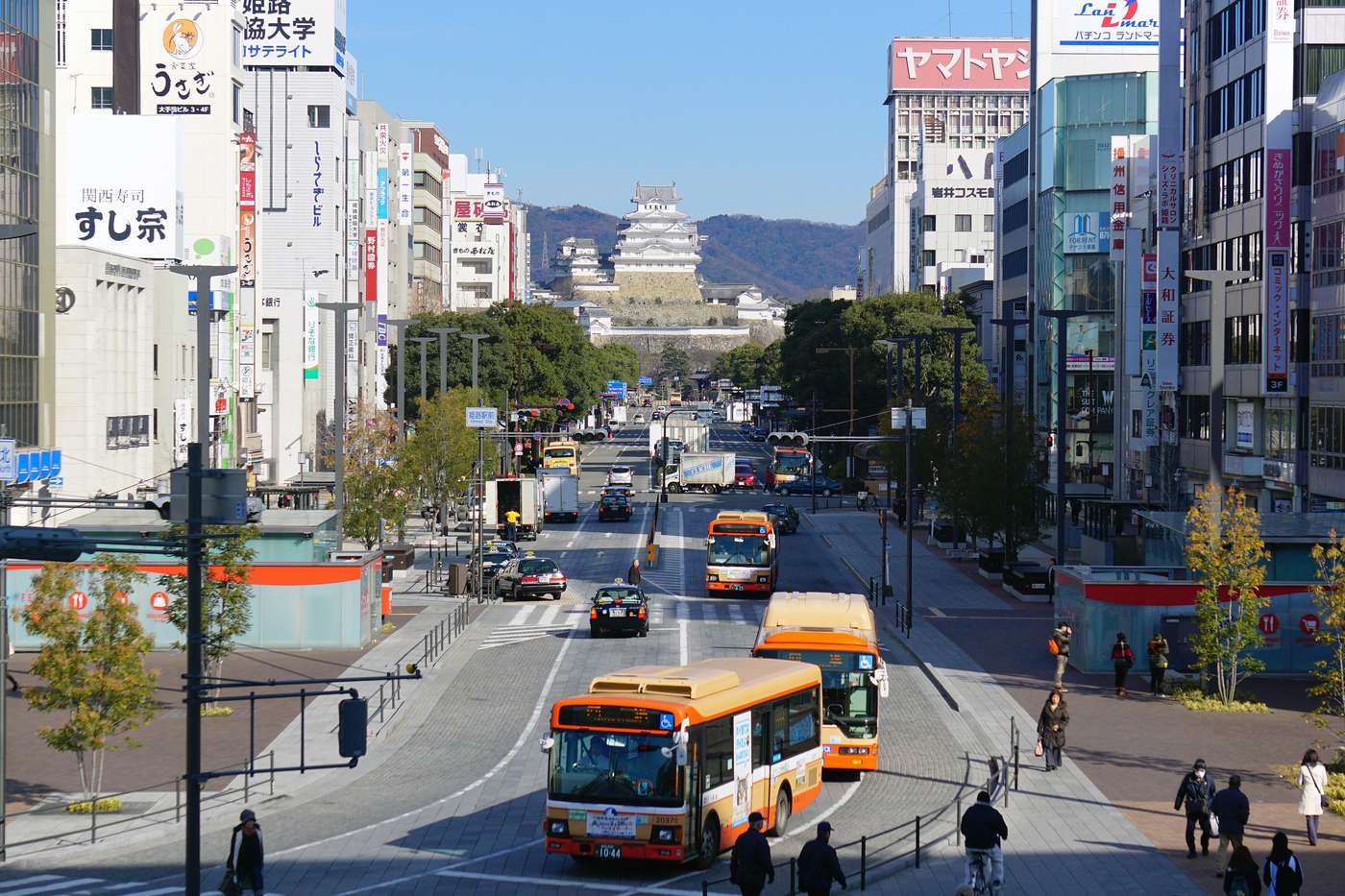
From the station to the castle, the official walking time is 20 minutes (15 minutes assumes brisk walking and no photo stops). Leave JR Himeji or Sanyo-Himeji Station on the north side and walk straight up Otemae-dori, which points directly at the white keep. By bus, take a Shinki bus from the north exit and get off at Otemon-mae, then walk 5 minutes. Single fares on the ordinary route buses are not currently published online; read the fare display at the front of the bus. Over this distance walking is faster anyway.
The Castle Area Loop Bus: do the arithmetic first
This bus changed its fares recently, so work from the current official figures:
| Item | Current (official) | Widely quoted old value |
|---|---|---|
| Single ride, adult | ¥210 | ¥100 |
| Day pass, adult | ¥600 | ¥400 |
| Castle / Koko-en discount | 10% | 20% |
The fares changed on October 1, 2024, so any page still printing ¥100 or ¥400 is two years stale. And while the day pass does grant 10% off at the castle and Koko-en, the official page also states that it cannot be combined with other discount vouchers or with the facilities' combined ticket. Put the numbers on the table:
| Scenario | Walking / no day pass | With ¥600 day pass | Difference |
|---|---|---|---|
| Castle only | ¥2,500 | ¥600 + ¥2,250 = ¥2,850 | ¥350 worse |
| Castle + Koko-en | Combined ticket ¥2,600 | ¥600 + ¥2,250 + ¥360 = ¥3,210 | ¥610 worse |
The conclusion is unambiguous: buying the day pass for the discount always costs you money. It earns its keep in exactly three situations — limited mobility or travelling with elderly companions, weather bad enough that the 20-minute walk is unappealing, or a day that genuinely takes in three or more stops along the route. And that third case has weakened, because the Himeji City Museum of Art is fully closed from April 1, 2026 until the end of December 2027 (planned) for major renovation, removing one of the two museums where the pass gives 20% off.
Two more operational facts. The bus runs daily from March to November, but on weekends and public holidays only from December to February — that gap ruins more plans than the fare ever will. A full loop takes 20 minutes (Otemon-mae at 5 minutes, Koko-en-mae at 14), departing at :00 and :30 each hour on weekdays from 09:00 to 16:00, increasing to every 15 minutes in the 10:00–14:00 hours on weekends and holidays with a final departure at 17:00. Nationwide transport IC cards and contactless credit cards work; Shinki Bus's own NicoPa card does not.
Koko-en, the zoo, and Mt. Shosha
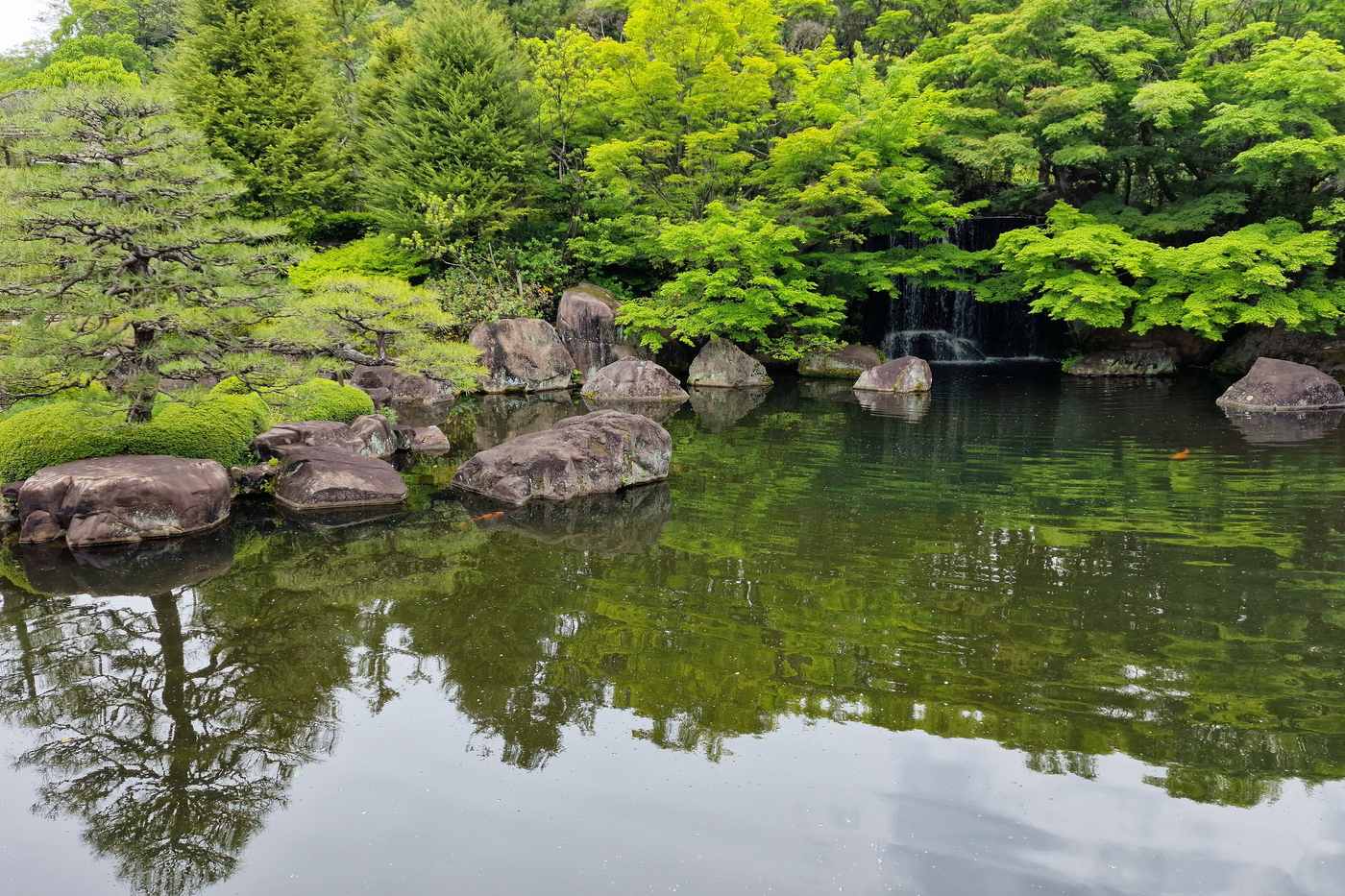
Koko-en: the one add-on worth buying
Koko-en costs ¥400 for adults on its own (under-18s free), and the combined ticket at ¥2,600 beats buying separately by ¥300. This is the only add-on this guide recommends without qualification: if you will set foot in the garden at all, buy the combined ticket. Allow 40 to 60 minutes, which lands nicely after the physical effort of the keep. Remember that its last entry is 16:30, half an hour later than the castle, so castle-then-garden is the correct order; the reverse gets you stuck. There is a ¥100 coin locker in front of the management office and free loan of a garden wheelchair, and the garden publishes its own wheelchair route PDF (there are some level changes, so a companion helps). No autumn-foliage dates appear here — I could not find an official peak-foliage announcement, and the dates circulating online have no official basis.
Himeji City Zoo: the family workaround
Himeji City Zoo sits inside the castle grounds, its main entrance on the right after you pass through the Otemon gate, and it does not require a castle ticket. Admission is ¥250 for adults, ¥50 for children aged 5 through junior high, free under 5.
In the ¥2,500 era that suddenly matters for families: adults can take turns climbing the keep while the other stays with a small child at a ¥250 zoo, and since under-18s enter the castle free anyway, no arrangement costs you more. Hours are 9:00 to 17:00 with last entry at 16:30, and the closure period is December 29 to January 1 — different from the castle's December 29 and 30, so check both separately around New Year. Guinea-pig handling sessions run twice daily, 10:30–11:30 and 13:30–14:30.
Mt. Shosha and Engyo-ji: the best half-day extension
With a full day in Himeji, the strongest addition beyond the castle is Engyo-ji temple on Mt. Shosha. The ropeway is ¥1,200 return for adults (¥700 one way), and the temple's entry donation rose on March 19, 2026: ¥800 for junior-high age and above (from ¥500) and ¥500 for elementary students (from ¥300), effective from the day the ropeway resumed service. That increase has gone almost entirely unreported outside Japanese sources.
Allow enough time: it is a 25-minute walk from the upper ropeway station to the main hall (Maniden), and the temple advises budgeting 2 hours to include the Mitsunodo halls used as a film location; a paid shuttle minibus is also available on request. The critical warning is seasonal: the operator states that the ropeway has an extended annual closure around February for inspection and maintenance — in 2026 it was closed February 5 to March 18. A winter visitor who does not check this loses the entire excursion. If you want a package, the Shiro-no-Machi-Meguri 2-Day Ticket is ¥1,900 for adults, covering two days of free travel in the ¥250 zone from Himeji Station plus the Mt. Shosha ropeway line, a return ropeway ticket and one loop-bus ride, sold at the Shinki Bus information office in front of Himeji Station. It does not include the temple entry donation.
Gojoin stamps: an honest blank
For stamp collectors, the answer here may not be the one you want, but it is the only one that currently stands up.
Searching every Himeji Castle page on the city website and the official castle information site in August 2026 returns zero mentions of gojoin. The event page the local tourism bureau once used to sell one now redirects to its homepage, meaning it has been withdrawn, and the domain of the official in-castle shop did not resolve for me.
So this guide prints no price, no sales location, and no claim about whether you need a castle ticket to buy one. All three figures circulate online; none can be confirmed against a primary source, and publishing them would only help spread unverifiable numbers. The practical advice is to ask at the shop near the exit gate when you are on site, and to treat a gojoin as a bonus rather than a reason to reshape your route. For which castles reliably sell them and how gojoin differ from shrine goshuin, see our gojoin castle stamp guide; for the opposite extreme — a castle site with nothing but stone walls left — see Takeda Castle.
So is it worth ¥2,500?
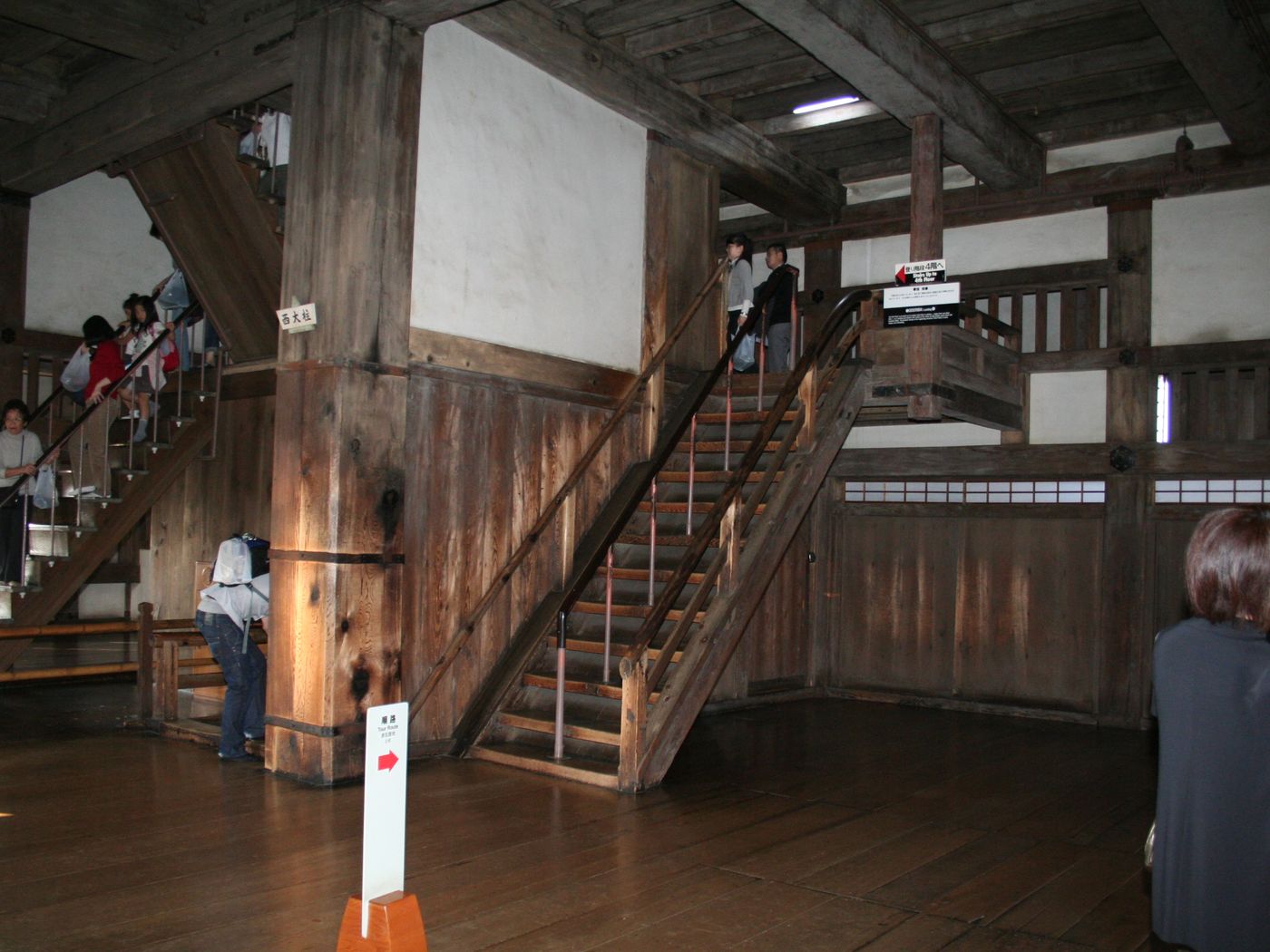
This guide should take a position, so here it is: yes, but the conditions are tighter than they were.
Spend the ¥2,500 if you are one of these:
- You want the real thing. The keeps at Osaka and Nagoya are 20th-century reinforced-concrete reconstructions. Himeji is an original wooden structure, a National Treasure, and one of Japan's first World Heritage Sites in 1993. The stairs are genuinely four centuries old and the defensive design is real. There is no substitute product; ¥2,500 is not cheap, but nowhere else sells this.
- You can climb, and you will give it two hours. The full paid area needs 1.5 to 2 hours. If you plan to spend 40 minutes and leave after a photo, the value looks poor.
- You are travelling with children. Under-18s are free, so the increase lands only on adult tickets, and the ¥250 zoo gives you a split-the-group option. Families came out of this revision relatively well.
Skip it, or change the plan, if you are one of these:
- You just want a photo to prove you were there. Honestly, the moat, Otemae-dori and the free Sannomaru plaza give you a complete composition of the keep, and the standard white illumination runs from sunset to midnight. Putting the ¥2,500 toward a proper anago rice bowl is a defensible trade.
- You have limited mobility and expect an accessible route to the top. Interiors cannot be toured by wheelchair, and reaching the keep cluster requires two to three experienced assistants. Rather than being disappointed on site, weight the day toward Koko-en, which lends wheelchairs and publishes a route.
- Your goal is a construction-free photograph. Scaffolding stands from July 2026 to July 2027. Wait a year.
On the two recurring purchase questions: the combined ticket is a buy if you are entering Koko-en at all, saving ¥300 with no grey area; the loop bus day pass loses money whenever the reason is the discount, and only makes sense on mobility grounds; and the ¥5,000 annual pass is a product for locals that short-stay visitors should leave alone.
The most efficient plan, in one line: enter at the 9:00 opening and go straight to the main keep, ahead of the 1,000-per-hour bottleneck; come down via Nishi-no-maru and Bizenmaru for the keep-cluster shots; leave for lunch; be in Koko-en by 13:30 (last entry is 16:30, but do not cut it fine); split the group to the zoo if you have small children. That is a half day, leaving the rest for the station area or Mt. Shosha. For how Himeji slots into a wider Kansai trip and what to eat around the station, see our Himeji day-trip guide; to pair it with Kobe on the same day, see our Kobe travel guide.
FAQ
- Q1:How much is Himeji Castle now, and does it charge foreigners more?
- General admission for anyone 18 and over is ¥2,500(一般(18 歲以上)), effective March 1, 2026, and that is the price essentially every visitor pays. The claim that Himeji charges foreigners more is wrong. The split is residents versus non-residents, not nationality. The city defines a "citizen" as a person with a registered address in Himeji, who pays ¥1,000(姬路市民(18 歲以上 65 歲未滿)) (18 to 64), and the official list of accepted proof-of-residency documents explicitly includes the zairyu card — the residence card issued to foreign nationals living in Japan. So a foreign resident of Himeji pays the resident rate, while a Japanese person living in Tokyo pays the general rate. Separately, everyone under 18 enters free regardless of nationality or residency, and Himeji residents aged 65+ enter free with a city-issued senior welfare card.
- Q2:What time does Himeji Castle close, and when is last entry?
- The official page lists three different times side by side, which is where this comes apart. The hours are 9:00 to 17:00, but the gate closes to new entries at 16:00 — a full hour before closing. The 16:30 figure is something else entirely: it is when the main keep, Nishi-no-maru, and the Hyakken-roka corridor begin closing their windows in sequence. If you arrive at the ticket gate at 16:10 you are not getting in. The castle closes only two days a year, December 29 and 30, and on those days even the commemorative stamps (Japan 100 Famous Castles and others) are unavailable. Note that neighbouring Koko-en garden has a 16:30 last entry, 30 minutes later than the castle, so the two are not interchangeable when you plan an afternoon.
- Q3:Is Himeji Castle under scaffolding in 2026?
- Yes, and this is the most important thing to know for a 2026 or early-2027 visit. The famous "Heisei Great Repair" finished back in 2015, but a Himeji City notice updated on July 30, 2026 states that conservation work runs from early July 2026 to late July 2027 on the Ni-no-yagura turret, the Mizu-no-ichimon and Mizu-no-nimon gates, and the surrounding plaster walls. The official wording is explicit: the work will affect the viewing environment, the appearance of the main keep, and the night-time illumination. On site that means scaffolding around the structures, part of the Bizenmaru terrace used as a materials yard, some visitor routes narrowed, and work vehicles entering. All of these sit directly on the climbing route to the keep, so it is not a distant corner of the grounds. If your goal is a photo with no construction visible anywhere, come after summer 2027.
- Q4:How long does it take to climb Himeji Castle, and can you skip the queue?
- Per the official FAQ, the keep cluster takes about 1 hour, and the full paid area (keep cluster plus Nishi-no-maru) takes 1.5 to 2 hours; in peak periods the queue at the main keep entrance alone runs about an hour. The official digital-ticket page words it slightly differently, saying a Himeji Castle visit normally needs 90 to 120 minutes. As for skipping the line — the castle states outright that there is no reservation system. Busy periods are first come, first served, and the official description of the Shirasagi digital ticket says it exists only to smooth entry and does not guarantee priority once the grounds are crowded. What the digital ticket really buys you is not queueing at the ticket machines, plus insurance against same-day tickets selling out in certain time slots. There is also a cap of 1,000 climbers per hour for the main keep; the "15,000 per day" figure that circulates online does not appear anywhere on the current official pages.
- Q5:Is the Koko-en combined ticket worth it? What about the loop bus discount?
- The combined ticket is worth it; the loop bus discount is not. The castle plus Koko-en combined ticket is ¥2,600(姬路城・好古園 共通券) against ¥2,500(一般(18 歲以上)) plus ¥400(大人(18 歲以上)) bought separately, so it saves ¥300 — buy it if you intend to set foot in the garden at all. The Castle Area Loop Bus is the opposite. Current fares are ¥210(1 回乘車・大人) per ride and ¥600(1 日乘車券・大人) for a day pass (the ¥100 and ¥400 figures still quoted all over the web were superseded on October 1, 2024), and the day pass grants only a 10% discount at the castle and Koko-en, not the 20% often claimed — and it cannot be combined with the combined ticket. Run the numbers: castle only, walking costs ¥2,500 while the day pass route costs ¥600 plus ¥2,250, or ¥2,850, which is ¥350 worse. Castle plus garden, the combined ticket is ¥2,600 while the day pass route totals ¥3,210, which is ¥610 worse. Buying the day pass for the discount always loses money. One more trap: the loop bus runs daily only from March to November, and from December to February it operates on weekends and holidays only.
- Q6:When is Himeji Castle least crowded? Did the price rise actually thin the crowds?
- It did, and for once there are official numbers. In a press release dated April 24, 2026, Himeji City published a section headed "visitor trends after the admission revision": compared with the same month a year earlier, entries in March 2026 fell 16.8%, or 28,263 people, with Japanese visitors down 9.6% and foreign visitors down 24.8%. The city attaches an important caveat that has to travel with those numbers: the method of counting Japanese versus foreign visitors changed in June 2025, so the domestic/foreign split is not directly comparable across that boundary. Treat the split as a single-month observation, not a trend. The monthly totals are consistent, though, and they answer the crowding question directly: in fiscal 2025 the quietest month was January (86,986 visitors), followed by December and July, while the busiest by a wide margin was April (200,073), then May and November. Weekdays in January and February are the thinnest window — the price being cold, and no heating inside the keep.
- Q7:Does Himeji Castle sell a gojoin castle stamp?
- The honest answer is that the official sources say nothing at all. Searching every Himeji Castle page on the city website and the official castle information site in August 2026 returns zero mentions of gojoin, and the event page that the local tourism bureau once used to sell one now redirects to its own homepage, meaning it has been taken down. Prices and sales locations do circulate on blogs, but none of it can be confirmed against a primary source, so this guide does not print them. Practical advice: ask at the shop near the exit gate when you are there, and treat a gojoin as a nice-to-have rather than something to plan a route around. For which castles reliably do sell them, and how gojoin differ from shrine goshuin, see our gojoin castle stamp guide.
Related reading:
Himeji Day Trip 2026: Castle, Koko-en & Mt. Shosha
Thirty minutes from Shin-Osaka and fifteen from Shin-Kobe, Himeji is the easiest day trip in Kansai — how to sequence the castle, Koko-en, Engyo-ji and the zoo into a route that actually walks.
Takeda Castle 2026: That Photo Was Not Taken From the Castle
The castle itself tells you to go to Ritsuunkyo, the mountain opposite. It also shuts from 4 Jan, and no bus runs in December at all.
Is Osaka Castle worth visiting? Tickets & honest tips
A 1931 citizen-funded reconstruction — whether the ¥1,200 tower is worth it, the gojoin trap, and which station to use.