Himeji is the easiest day trip in Kansai: 30 minutes from Shin-Osaka by Shinkansen, 15 from Shin-Kobe, so you can leave after breakfast and be back in Osaka for dinner. It also packs more into one stop than most people realise — Himeji Castle, a surviving wooden National Treasure keep; Koko-en, nine gardens in one enclosure next door; a city zoo inside the castle grounds for ¥250; and Engyo-ji temple up a ropeway on Mt. Shosha. This guide does not re-litigate ticket details (those live in the dedicated castle guide). It sequences these into a route that actually walks: the half-day version, what to add for a full day, whether to stay overnight, and how long the walk from the station really takes. For admission, hours, the climb and the value question, see our Himeji Castle tickets and climb guide; for the wider route, the Osaka & Kyoto 5-day itinerary.
- 30 min from Shin-Osaka, 15 from Shin-Kobe by Shinkansen — a classic half-day-to-full-day trip with no overnight needed
- An original wooden National Treasure keep: one of Japan's first World Heritage Sites (1993, with Horyu-ji), not a concrete rebuild
- Half day = castle 1.5–2 hrs + Koko-en 40–60 min; full day adds Engyo-ji on Mt. Shosha (budget 2 hrs there alone)
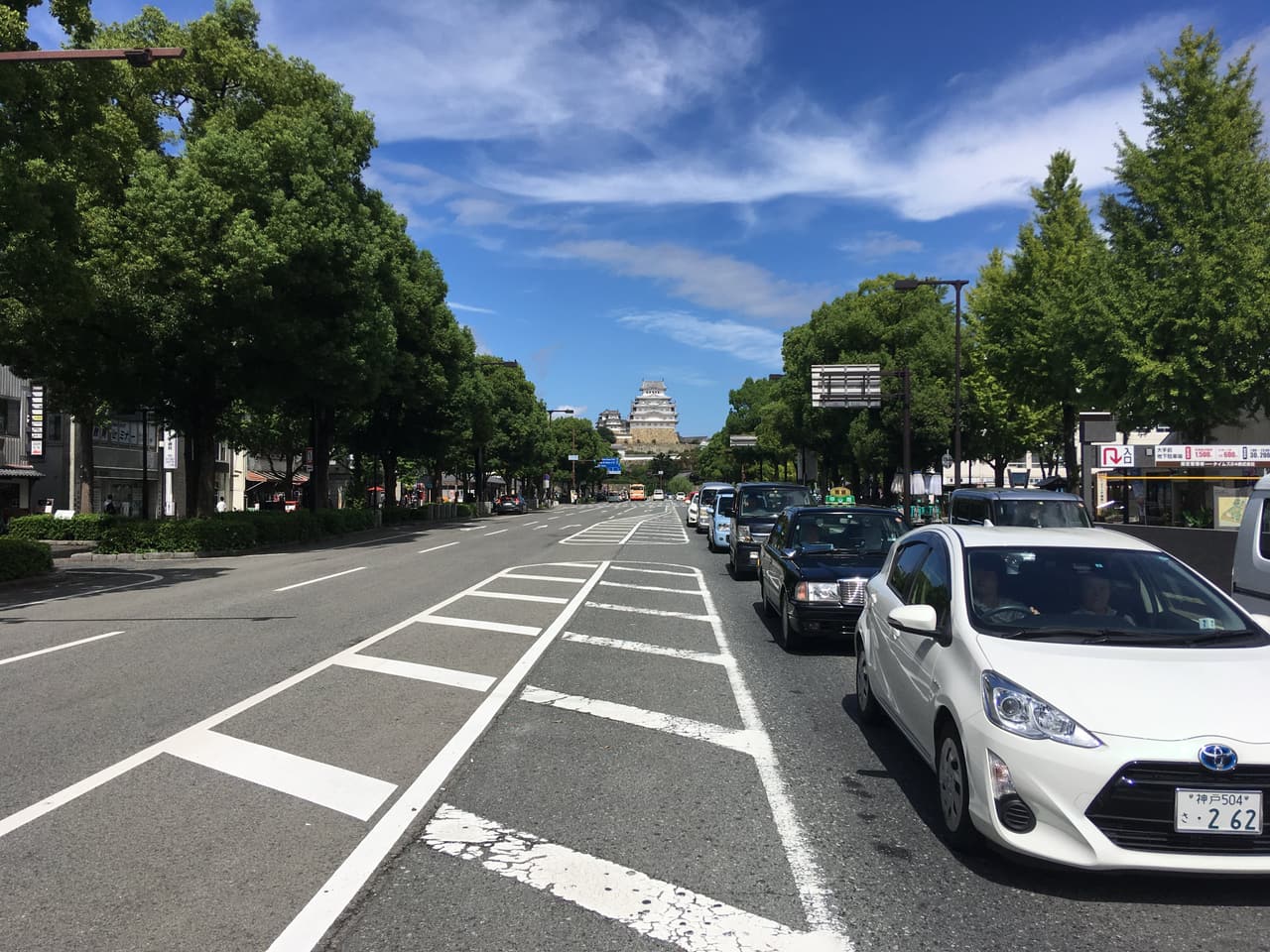
- Official walk from the station is 20 minutes up Otemae-dori, straight at the keep; by bus, Otemon-mae then 5 minutes
- Order matters: the castle stops admitting at 16:00, Koko-en at 16:30 — castle first, garden second
📖 Contents
Why Himeji is worth the detour
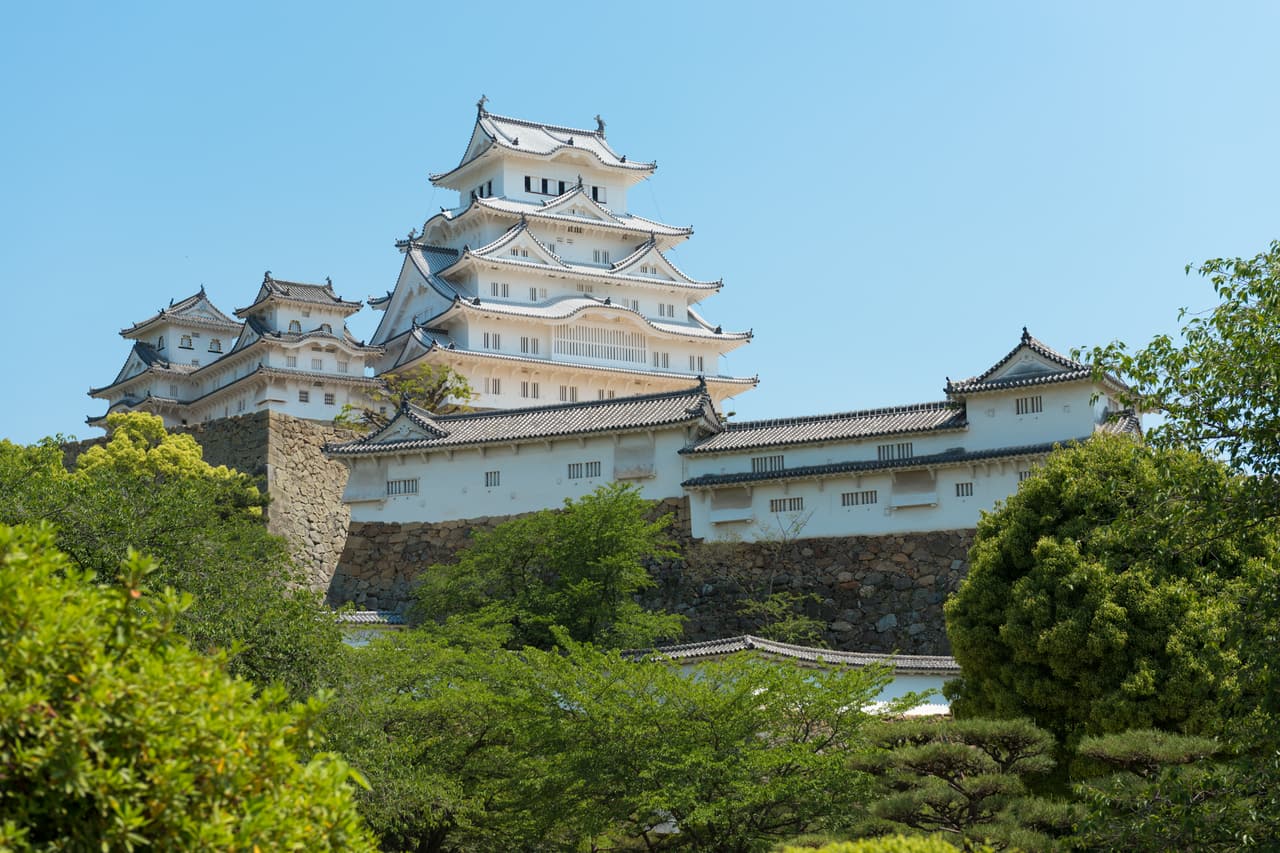
Honestly, most "castles" in Japan look impressive and then turn out to be an elevator and a museum inside — Osaka Castle and Nagoya Castle are both 20th-century reinforced-concrete exterior reconstructions. Himeji is different. It is the real thing. After Ikeda Terumasa completed the present main keep in 1609, Himeji Castle survived war, the Meiji-era castle-demolition decree, and WWII air raids without being leveled, leaving it the largest and most complete of Japan's 12 surviving original keeps. In 1993 it was registered alongside Horyu-ji in Nara as one of Japan's two earliest World Heritage Sites, and it is a National Treasure as well. In other words, the wooden stairs you climb are genuinely 400 years old, and the defensive design you walk through is real, not a decorative shell.
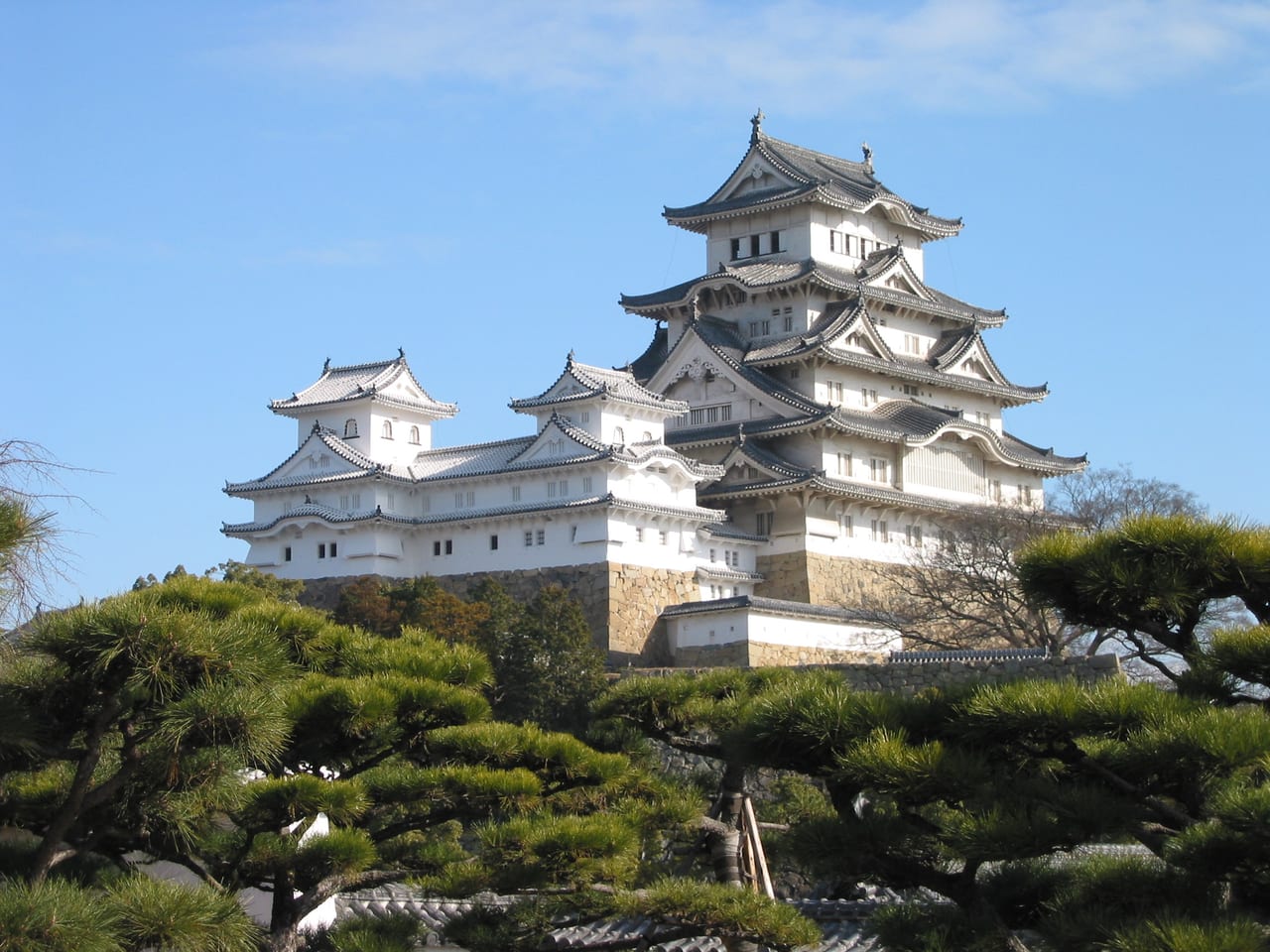
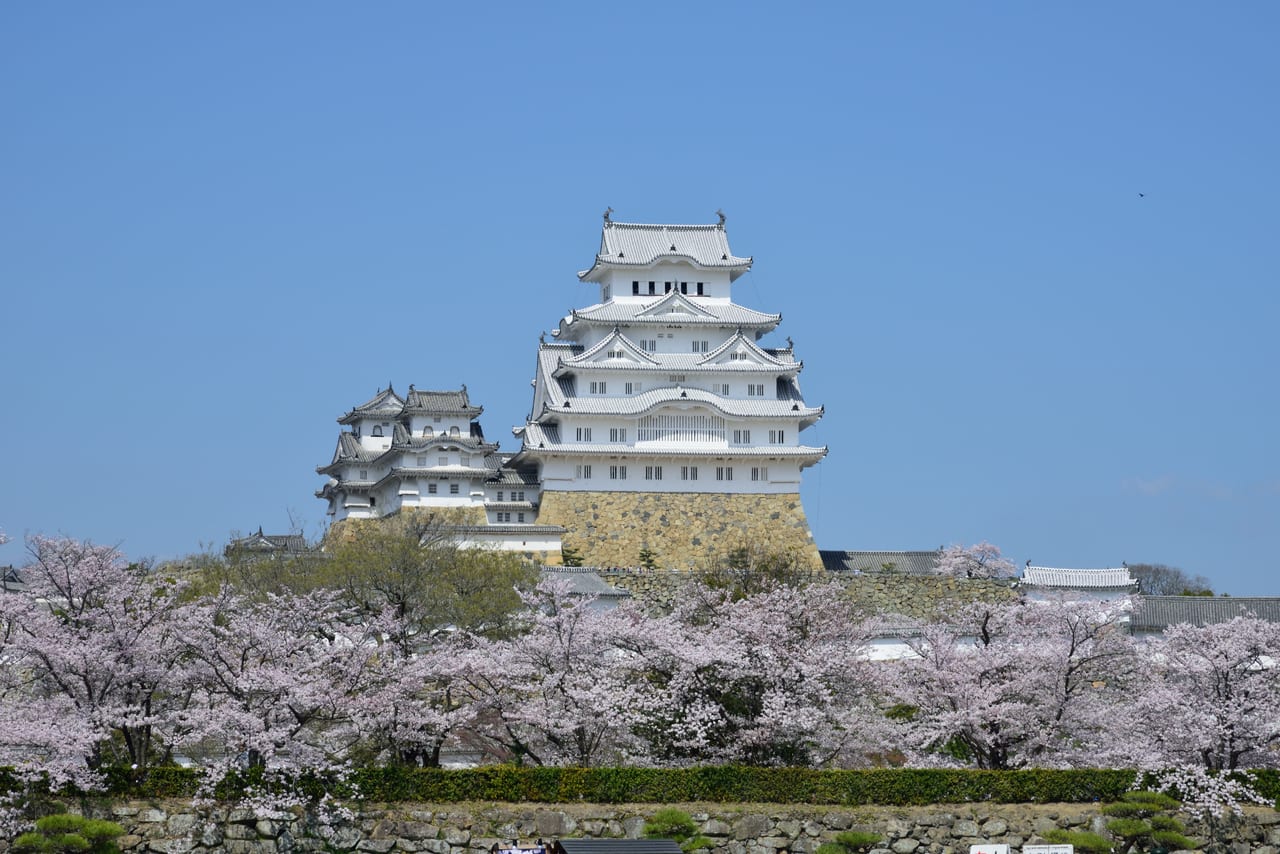
Its nickname, Shirasagijo or "White Heron Castle," is not marketing either — the keep's walls, right down to the joints between roof tiles, are coated in white fire-resistant plaster, so from afar it resembles a heron poised to take flight. Per official sources, that white-plaster technique is both fireproofing and aesthetics, and it is part of why the castle is considered the pinnacle of Japanese castle architecture. My take is blunt: if you only have room for one Kansai castle, skip concrete Osaka Castle and make time for the wooden National Treasure at Himeji. And because it sits right on the Shinkansen line, the cost of a same-day return is so low there is really no reason not to go.
The castle: what a day-tripper needs
Tickets and the climb get their own guide; this section keeps only what changes your itinerary. General admission (18 and over) is ¥2,500 as of March 1, 2026, and under-18s are free. If you are also entering Koko-en, buy the combined ticket at ¥2,600, which saves ¥300 over separate tickets.
Allow 1.5 to 2 hours. The official FAQ gives about an hour for the keep cluster and 1.5 to 2 hours for the whole paid area including Nishi-no-maru, and in peak periods the queue at the main keep entrance alone can run an hour. The castle is open 9:00 to 17:00, but last entry is 16:00 — this is the single most common way visitors waste the trip, because 16:30 is when the buildings start closing their windows, not last admission. Also note that conservation scaffolding stands around the keep surrounds from July 2026 to July 2027, which the city says affects views and the night illumination.
The climbing route, the shoe-bag rules introduced in 2026, the 1,000-per-hour capacity limit, wheelchair and stroller policy, the official verdict on gojoin stamps, and a straight answer on who should spend the ¥2,500 are all in our Himeji Castle tickets and climb guide.
Koko-en: the stroll garden next door
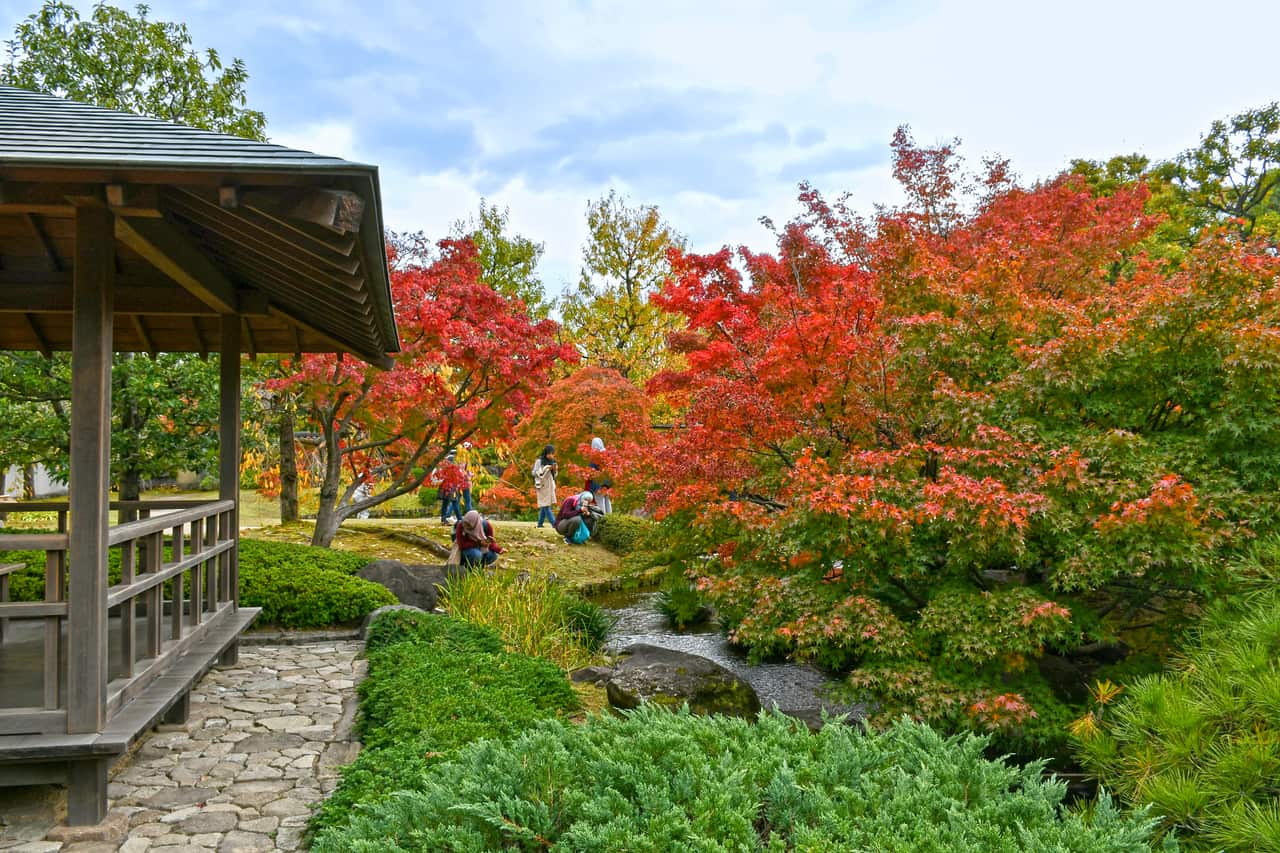
After the intensity of the keep, the adjacent Koko-en is the perfect cool-down. It is a pond-and-stroll Japanese garden opened in 1992 for the 400th anniversary of the castle's construction, built on the ruins of the Edo-era West Residence (Nishi-Oyashiki), and made up of nine distinct small gardens — the residence garden with its large pond and waterfall, a tea garden, a flowing-water garden, a flower garden, a bamboo garden, and more — so a single loop feels like walking through several styles of Japanese garden in miniature. Autumn foliage, early-summer green, and summer-evening illuminations each have their moment, and the on-site Soju-an tea house serves matcha while a restaurant lets you eat with a garden view.
Pricing: adults ¥400 (free under 18), but since you are already here, the castle + garden combined ticket at ¥2,600 saves ¥300 and is nearly a must-buy. Koko-en takes about 40–60 minutes and complements the keep climb nicely — one is the tension of climbing upward, the other the ease of a flat stroll, and together they make a complete afternoon. Per traveler discussion, it is also a popular spot for autumn-foliage and kimono photo shoots, with the late-afternoon light in autumn being the prettiest. No peak-foliage dates appear here: I found no official announcement, and the dates circulating online have no official basis.
Two timing details worth filing. Koko-en takes last entry at 16:30, half an hour later than the castle's 16:00, so castle-then-garden is the sequence that works; the reverse leaves you stranded. And a rule mismatch that catches people out: the castle banned pets from its paid area on March 1, 2026, but Koko-en still admits animals carried fully inside a closed carrier with the face not exposed. Two adjacent sites, two different policies. The garden also has a ¥100 coin locker in front of its management office and lends a garden wheelchair free of charge.
Engyo-ji on Mt. Shosha & the city zoo
Most visitors do the castle and Koko-en and leave by mid-afternoon. If you have a full day, or you are travelling with small children or at a slower pace, these two change the shape of the visit completely.
Engyo-ji: the one add-on that fills a full day
Engyo-ji sits on Mt. Shosha northwest of the city — the 27th temple of the Saigoku Kannon pilgrimage, and a filming location several films have used. You reach it by the Mt. Shosha Ropeway, ¥1,200 return for adults (¥700 one way). The temple charges a separate entry donation, and it rose on March 19, 2026: ¥800 for junior-high age and above (from ¥500) and ¥500 for elementary students (from ¥300), effective from the day the ropeway resumed operating.
Budget properly: it is a 25-minute walk from the upper ropeway station to the main hall (Maniden), and the operator advises allowing 2 hours to include the Mitsunodo halls; a paid shuttle minibus can be arranged with the temple. The critical caveat is seasonal: the ropeway takes an extended annual closure around February for inspection — in 2026 it was shut from February 5 to March 18. Check before a winter visit, because this one cancels the whole excursion. If you want a package, the Shiro-no-Machi-Meguri 2-Day Ticket at ¥1,900 for adults bundles two days of free travel in the ¥250 zone from Himeji Station and the Mt. Shosha ropeway line, a return ropeway ticket, and one castle loop-bus ride (the temple donation is not included). It is sold at the Shinki Bus information office in front of Himeji Station.
Himeji City Zoo: the family workaround
Himeji City Zoo is inside the castle grounds, its main entrance on the right once you pass through the Otemon gate, and it does not require a castle ticket — ¥250 for adults, ¥50 for children aged 5 through junior high, free under 5. With castle admission now at ¥2,500, this is genuinely useful for families: adults can take turns climbing the keep while the other stays with a small child at the zoo, and because under-18s enter the castle free anyway, no arrangement costs extra. Hours are 9:00 to 17:00 with last entry 16:30, and the closure is December 29 to January 1 — different from the castle's December 29 and 30. Guinea-pig handling runs twice daily, 10:30–11:30 and 13:30–14:30.
One thing to remove from any older itinerary: the Himeji City Museum of Art is fully closed from April 1, 2026 until the end of December 2027 (planned) for major renovation. It still appears in plenty of route suggestions, and it will simply waste your walk.
Getting there from Osaka, Kobe, Kyoto
Himeji is on the JR Sanyo Main Line and the Sanyo Shinkansen, so it is quick from every Kansai city:
- Shin-Osaka → Himeji: Sanyo Shinkansen (Nozomi/Mizuho/Sakura), about 30 minutes — the fastest option.
- Shin-Kobe → Himeji: Shinkansen, about 15 minutes, making a Kobe + Himeji day very smooth.
- Kyoto → Himeji: Shinkansen, about 45 minutes.
- Osaka → Himeji (budget option): the JR Kobe Line "Special Rapid" in about 60 minutes for a fraction of the Shinkansen fare — the way most locals travel; take it if you are not in a hurry.
At JR Himeji Station, exit the central (north) gate, head north, and walk straight up Otemae-dori — the official walking time is 20 minutes (guides saying 15 assume brisk walking with no photo stops); the avenue points right at the white keep and is worth photographing along the way. By bus, take a Shinki bus from the north exit to Otemon-mae, then 5 minutes on foot. The Castle Area Loop Bus day pass is ¥600 (¥210 per ride), and while it grants 10% off the castle and Koko-en, it cannot be combined with the combined ticket, so buying it for the discount always loses money (full arithmetic in the castle guide) — it earns its place only on mobility or bad-weather grounds, and it runs weekends and holidays only from December to February. If your trip spans Osaka, Kobe, Himeji, and Okayama along the Sanyo line, paying for each Shinkansen leg gets pricey, and a Sanyo-area JR Pass is usually better value — run your days and route through the break-even math in our JR Pass guide first, and only if it clears look at the JR Kansai WIDE Area Pass (5 days), which covers the Shin-Osaka–Himeji–Okayama stretch of the Sanyo Shinkansen. If Himeji is a single day trip, do not buy it — a return on the Special Rapid from Osaka costs a fraction of any pass. Himeji also pairs naturally with Kobe over one day; for that, see our Kobe travel guide.
A day-trip plan & lodging
Himeji is a classic half-day-to-full-day trip; most people do it as a same-day return from Osaka or Kobe and do not stay overnight. Two versions.
Half day (castle + Koko-en, what most people do)
- Morning: take an early Shinkansen or Special Rapid to Himeji → stroll up Otemae-dori photographing the keep (20 min) → enter right at the 9:00 opening and head straight for the main keep, ahead of the 1,000-per-hour bottleneck → come down via Nishi-no-maru and Bizenmaru for the keep-cluster shots.
- Midday: lunch near the castle or along Otemae-dori (local specialties include anago/conger eel, Himeji oden with ginger-soy sauce, and local sake; if you buy a snack to go, eat it standing at the shop rather than walking).
- Afternoon: stroll the adjacent Koko-en (40–60 min) and have a bowl of matcha in the tea house to wind down → browse the shopping arcade and underground mall by the station for souvenirs → catch an evening train back to Osaka or Kobe.
Full day (add Engyo-ji on Mt. Shosha)
- Morning: castle first, at the 9:00 opening, 1.5 to 2 hours.
- Midday: lunch back near the station, and confirm the ropeway is running (extended closure around February).
- Afternoon: bus to Shosha station, ropeway up, 2 hours at Engyo-ji (remember the 25-minute walk from the upper station to Maniden) → back down in the early evening.
- The trade-off: on the full-day version, drop Koko-en. Its last entry is 16:30, and coming back from Mt. Shosha in time usually does not work — forcing both leaves you rushing at each.
Around the station, and whether to stay the night
Himeji Station is more useful than its reputation suggests, and it matters because the walk to the castle starts and ends here. The north side opens onto Otemae-dori with the keep framed at the far end, and a covered shopping arcade and an underground mall run off the station concourse — which is where most day-trippers end up for souvenirs, coffee, or shelter when the weather turns. Practically, this is also where you should leave a suitcase: wheeled luggage is not allowed into the castle and has to go into a paid coin locker there, and the castle's lockers are limited in number, so using the station lockers on arrival saves a detour.
On food, the local names to know are anago (conger eel, usually served over rice), Himeji oden — which is ordinary oden eaten with ginger-soy sauce rather than mustard, and is genuinely a regional habit rather than a marketing invention — and Harima-area sake. This guide deliberately does not print specific restaurants, opening hours or prices: those churn constantly and I verified none of them, so treat the specialties as what to order rather than where.
Should you stay overnight? For most itineraries, no. Himeji is 30 minutes from Shin-Osaka and 15 from Shin-Kobe, and the sights close by late afternoon, so an overnight buys you an evening with relatively little to do. The three cases where it does earn its place: you want the keep at dawn with nobody in the frame; you are doing the full-day Mt. Shosha version and would rather not rush the last train; or you are using Himeji as a cheaper base than Osaka, which does work — hotel supply around the station is plentiful and rates are gentler.
All in — castle 1.5–2 hours + Koko-en 1 hour + transport and lunch — fills a half day comfortably, and adding Mt. Shosha makes a solid full day. Only consider staying a night near Himeji Station (plenty of hotels at gentler prices than Osaka) if you genuinely want a slower pace, or to shoot the empty keep at dawn or the evening illumination (standard white lighting runs from sunset to midnight, though it is affected by the 2026–27 works). Himeji slots beautifully into an Osaka–Kyoto trip as a "hop one stop for a World Heritage day" — see the full Kansai route in our Osaka & Kyoto 5-day itinerary. For pre-trip weather and packing, see our Japan packing & weather guide. Cherry-blossom season is the most photogenic window of the year and also the most crowded — official monthly figures put April at 200,073 entries, the highest of the year — so arrive early.
FAQ
- Q1:How much is Himeji Castle admission? Did it really go up in 2026?
- Yes. Since March 1, 2026, general admission (18 and over) is ¥2,500(一般(18 歲以上)) and everyone under 18 is free. One thing to get right: the ¥1,000(姬路市民(18 歲以上 65 歲未滿)) rate is for Himeji city residents aged 18 to 64 — the split is registered address, not nationality. The official list of accepted proof documents explicitly includes the zairyu residence card, so a foreign resident of Himeji pays the resident rate while a Japanese person living in Tokyo pays the general rate. Himeji residents aged 65+ enter free with a city senior welfare card. If you will also visit Koko-en next door, the castle + garden combined ticket at ¥2,600(姬路城・好古園 共通券) saves ¥300 over separate tickets. For the full ticket structure, the three official ways to buy, and whether it is worth it, see our Himeji Castle tickets and climb guide.
- Q2:How is Himeji Castle different from Osaka or Nagoya Castle? Is it worth the trip?
- It is the difference between real and replica. The keeps at Osaka and Nagoya are 20th-century reinforced-concrete exterior reconstructions, with elevators and museums inside. Himeji Castle is an original wooden keep — completed in 1609 and never destroyed by war or demolition. It is the largest and best-preserved of Japan's 12 surviving original keeps, and in 1993 it became one of Japan's very first World Heritage Sites (registered alongside Horyu-ji), as well as a National Treasure. So you climb genuine 400-year-old wooden stairs and see real defensive design, not a concrete shell. Per official sources it is regarded as the pinnacle of Japanese castle architecture. If "the real thing" matters to you, this is the one Kansai castle to prioritize.
- Q3:How do I get to Himeji from Osaka, Kyoto, or Kobe, and how long does it take?
- The Sanyo Shinkansen is fastest: Shin-Osaka → Himeji in about 30 minutes (Nozomi/Mizuho), Shin-Kobe → Himeji in about 15 minutes, and Kyoto → Himeji in about 45 minutes. On a budget, the JR Kobe Line "Special Rapid" runs Osaka → Himeji in about 60 minutes for a fraction of the fare — the way most locals go. If your route spans Osaka, Kobe, Himeji, and Okayama, a Sanyo-area JR Pass usually beats paying leg by leg; check the break-even math in our JR Pass guide first. Himeji is a classic half-day-to-full-day trip, perfect as a same-day return from Osaka or Kobe.
- Q4:How do I walk from the station, and how much time does the castle need?
- Exit JR Himeji Station's central (north) gate and walk straight up Otemae-dori — the official walking time is 20 minutes (guides quoting 15 assume brisk walking with no photo stops). The wide, dead-straight avenue points right at the white keep and makes a great first photo. By bus, get off at Otemon-mae and walk 5 minutes. For planning, the official FAQ gives about 1 hour for the keep cluster and 1.5 to 2 hours for the whole paid area (keep cluster plus Nishi-no-maru), and in peak periods the queue at the keep entrance alone can run an hour. Note the timing trap: the castle is open 9:00–17:00 but last entry is 16:00 — 16:30 is when buildings start closing their windows, not last admission. For the climbing route, capacity limits, shoe rules and accessibility, see our Himeji Castle tickets and climb guide.
- Q5:What is Koko-en, and should I add it on?
- Koko-en is a stroll-style Japanese garden just west of the castle, opened in 1992 for Himeji's 400th castle anniversary and built on the ruins of the old West Residence (Nishi-Oyashiki). It is made up of nine distinct gardens — a pond garden with a waterfall, a tea garden, a flowing-water garden, a bamboo garden, and more — and it is photogenic in autumn foliage and early-summer green, with a tea house and a restaurant on site. Adult admission is ¥400(大人(18 歲以上)) (free under 18), but since you are already here, the castle + garden combined ticket at ¥2,600(姬路城・好古園 共通券) saves ¥300 and is the obvious buy. Allow 40–60 minutes. One sequencing note: Koko-en takes last entry at 16:30, half an hour later than the castle's 16:00, so castle-then-garden is the order that works.
- Q6:Is Himeji Castle under renovation in 2026?
- The keep itself is open to climb as normal, but there is conservation work on the surrounding structures, and it does affect photographs. The "Heisei Daishuri" restoration finished in 2015 and the scaffolding that once shrouded the whole keep is long gone. However, per a Himeji City notice updated July 30, 2026, work runs from early July 2026 to late July 2027 on the Ni-no-yagura turret, the Mizu-no-ichimon and Mizu-no-nimon gates and the surrounding plaster walls, and the city states explicitly that it affects the viewing environment, the appearance of the main keep, and the night illumination — with scaffolding on site, part of Bizenmaru used as a materials yard, and some routes narrowed. So: plan the visit as usual if you want to walk into a surviving wooden keep; come after summer 2027 if you want a photo with no construction in frame. Details in our Himeji Castle tickets and climb guide.
Related reading:
Is Himeji Castle worth ¥2,500? 2026 tickets & hours
Admission is now ¥2,500, and the city says entries fell 16.8% in month one — so it is quieter. But scaffolding stands until July 2027, and the gate stops admitting at 16:00, not 16:30.
Kobe Travel Guide 2026: Beef, Kitano & Night Views
30 minutes from Osaka: certified Kobe beef teppanyaki, the Kitano foreign houses, free Nankinmachi Chinatown, the reopened Port Tower, the Rokko and Maya night views, and Arima Onsen.
Osaka & Kyoto 5-day itinerary
Dotonbori, Kiyomizu, Arashiyama — full tested route.