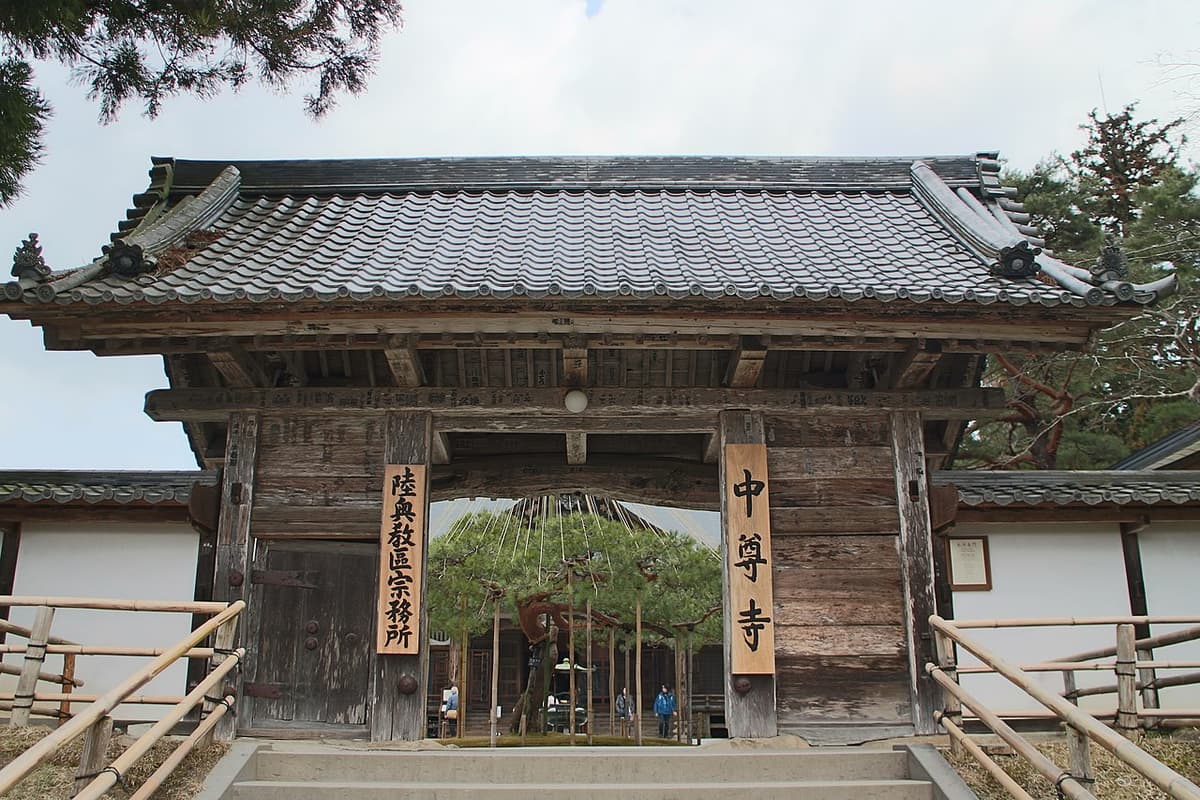
Hiraizumi is a quiet town in southern Iwate that nonetheless left a golden page in Japanese history. In the 11th-12th centuries the Northern Fujiwara, funded by the region's gold, built here a golden culture to rival Kyoto, raising temples and gardens around the Buddhist idea of the "Pure Land" — the result being the gold-leaf National Treasure Chusonji Golden Hall and the Pure-Land garden of Motsuji, together a World Heritage site since 2011. This guide covers Chusonji and the Golden Hall, the Motsuji garden, the history of Yoshitsune and Basho, plus tickets, the loop bus and chaining the Tohoku traverse. It's the World Heritage culture deep-dive for Tohoku; the gateway Sendai is in our Sendai guide.
- The World Heritage golden-age capital of the Northern Fujiwara: temples and gardens of the Pure Land
- Chusonji Golden Hall: a gold-leaf National Treasure, ¥1,000, no photos inside
- Motsuji Pure Land garden: a Heian garden around the Oizumi pond, ¥700
- Where Yoshitsune died: Takadachi Gikeido and Basho's famous haiku
- Access: ~2-2.5h Tokyo to Ichinoseki, then 8 min local to Hiraizumi
📖 Table of contents
What kind of place Hiraizumi is
Hiraizumi's story begins with the Northern Fujiwara. At the end of the 11th century, after years of war, Fujiwara no Kiyohira set out to build in Tohoku a Buddhist Pure Land free of killing, funded by the region's abundant placer gold. Over three generations — Kiyohira, Motohira and Hidehira — and about a century, Hiraizumi grew into a city whose population and culture rivaled Kyoto, leaving temples and gardens like the Golden Hall and Motsuji. The clan was later destroyed by Minamoto no Yoritomo for sheltering Yoshitsune, and Hiraizumi's splendor abruptly ended.
So Hiraizumi isn't only "seeing the Golden Hall" — it's a history of splendor risen and fallen, of faith pursuing peace. Today it's a quiet town, its two World Heritage sites (Chusonji and Motsuji) and a few historic spots scattered about, a half-day to a day to visit, a fine addition to a Tohoku traverse. Below, along the route.
Chusonji and the Golden Hall
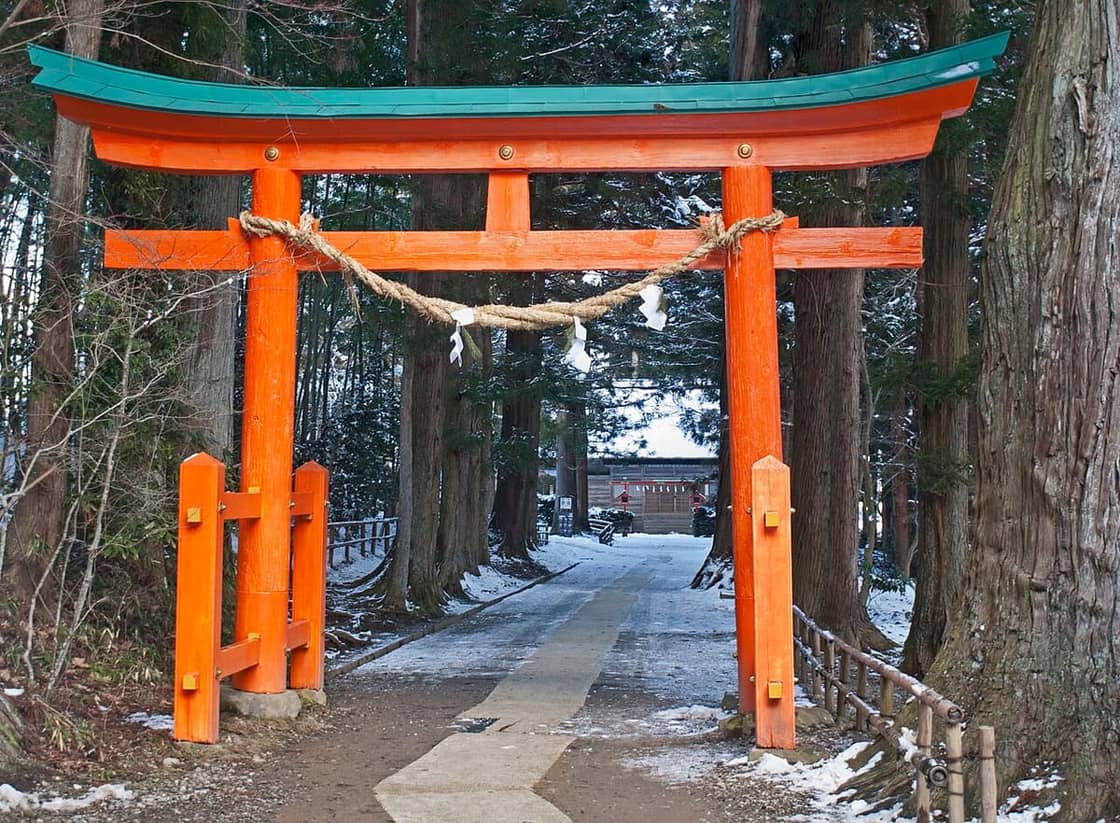
Chusonji is the core of Hiraizumi, built on the slope of Mt. Kanzan. From the foot you climb the Tsukimizaka approach lined with towering cedars, past the main hall and several smaller halls — a very old-temple atmosphere. Chusonji's approach and grounds are free, but seeing the temple's great treasure, the Golden Hall, needs a ticket.
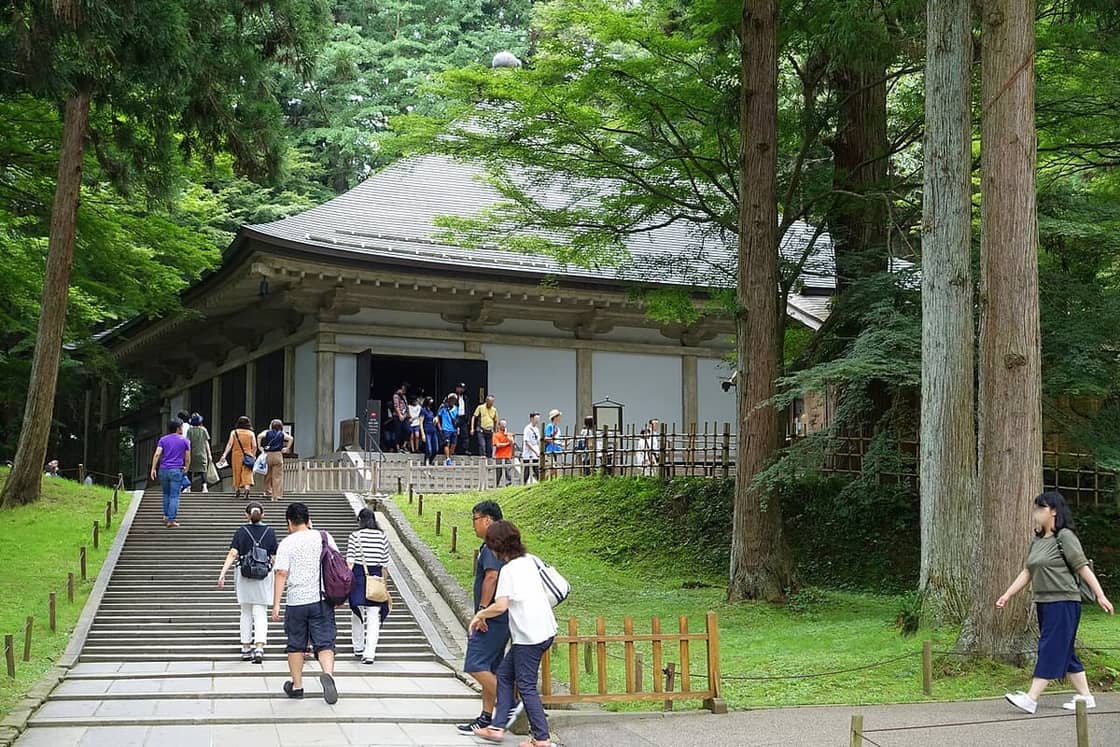
The Golden Hall (Konjikido) is an Amida hall built by the Northern Fujiwara in 1124, a National Treasure — the whole building but the roof covered in gold leaf, the interior worked to the limit in mother-of-pearl, maki-e and luminous shell, with the bodies of three Fujiwara generations enshrined beneath the altar: the peak of Heian gold-leaf craft and Pure Land faith. An important note: for its protection, the actual Golden Hall sits inside a modern concrete shelter hall and is viewed through glass, with no photography allowed inside; it's also small. Knowing that, seeing that gold glowing in the dim light in person is all the more striking. The ticket is ¥1,000 for adults (covering the Golden Hall and the Sankozo treasure house).
Motsuji and the Pure Land garden
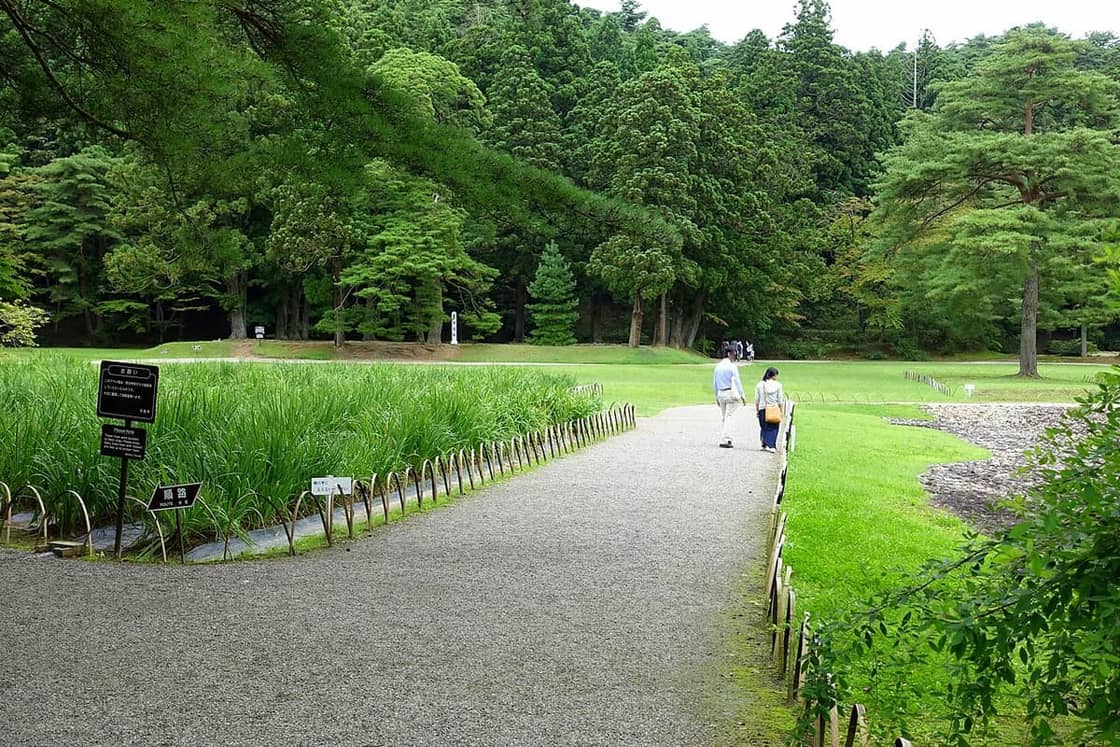
Closer to Hiraizumi Station, Motsuji is the other World Heritage core. At the Fujiwara peak it was a vast temple, and though most of its halls were lost to war, leaving only foundation stones, its Pure Land garden is beautifully preserved — centered on the Oizumi-ga-ike pond, with a shoreline of pebble beaches, standing stones and a yarimizu (winding stream), recreating the Pure Land of the sutras, a masterwork of Heian-era gardens.
A slow loop of the pond, the water mirroring sky and trees, is deeply quiet. Each season has its mood — irises by the pond in early summer (June), cherry blossoms in spring, maples in autumn — and the preserved yarimizu channel, used for the "winding-stream banquet," is a clue to Heian aristocratic culture. Admission is ¥700 for adults. The gold of Chusonji's hall and the calm of Motsuji's garden together complete the two faces of Hiraizumi.
Yoshitsune and Basho: Takadachi and history
Hiraizumi's historical weight also comes from two figures. The tragic hero Minamoto no Yoshitsune was sheltered at Hiraizumi as a boy by Fujiwara no Hidehira, later helped his brother Yoritomo win the realm, and yet, hunted by him, fled back here and took his own life at Takadachi; Takadachi Gikeido, the small hall commemorating him, overlooks the Kitakami River with a wide view — a place to reflect on that history.
Five centuries later, in 1689, the master poet Matsuo Basho visited Hiraizumi on his "Narrow Road to the Deep North," and before the ruins of the Fujiwara and Yoshitsune wrote his enduring haiku, "the summer grasses — all that remains of the warriors' dreams." Nearby, Hiraizumi also has cliff-built sites like the Takkoku-no-Iwaya Bishamon Hall. Holding the stories of the Fujiwara, Yoshitsune and Basho, Hiraizumi carries more weight than a simple temple visit.
For those who want the full picture, the World Heritage listing covers more than the two famous temples. The Kanjizaio-in and Muryoko-in garden remains were once Pure Land gardens like Motsuji's, now quiet sites of foundation stones and ponds; and the small sacred mountain Kinkeisan was a deliberate axis in the town's Pure Land layout. You won't see grand buildings at these — they're for visitors who want to read the whole planned "Buddhist paradise on earth" rather than just tick off the Golden Hall. Even a quick look at the maps and the cleared sites makes the ambition of the Fujiwara's city far more legible.
Access and day-trip vs overnight
Access: from Tokyo the Tohoku Shinkansen reaches Ichinoseki in about 2-2.5 hours, then about 8 minutes by the JR Tohoku Main Line local to Hiraizumi Station; from Sendai it's about 40 minutes to an hour to Ichinoseki, then the transfer. The "Runrun" loop bus links Hiraizumi Station with Chusonji, Motsuji and Takadachi, timed for sightseeing; you can also cycle or walk (Motsuji is walkable from the station, Chusonji is farther and better by bus). For a multi-leg Tohoku rail loop, compare a JR East Pass; set up a KKday Japan eSIM first to check bus times.
Day-trip vs overnight: the two World Heritage sites take a half-day to a day, and most people make it a day trip from Sendai or Ichinoseki without staying in Hiraizumi. The smoothest plan is to slot Hiraizumi into a Tohoku traverse: a day in Sendai (gyutan and Matsushima), a half-day to a day in Hiraizumi, then north to Morioka in the same Iwate prefecture (its three noodle specialties and Koiwai Farm) or Kakunodate. For how to connect, see our Sendai guide and Kakunodate guide; further north for gorge scenery there's Lake Towada and the Oirase stream. Before you go, see our Japan packing & weather guide — Tohoku is snowy in winter, and Hiraizumi's approach and garden have their own beauty then, but dress warm and watch your footing.
When to go and a sample plan: Hiraizumi is rewarding year-round, but a few moments stand out — fresh green and the pond irises in early summer, cherry blossoms in late April, autumn maples over the Tsukimizaka approach in late October-early November, and a hushed snow over the garden in winter. A clean half-day route: take the Runrun bus to Chusonji first thing, climb Tsukimizaka and see the Golden Hall before the tour groups, then bus down to Motsuji to walk the Pure Land garden, with lunch on wanko-soba or local fare near the station. With a full day, add Takadachi Gikeido for the river view and the Yoshitsune story. Pairing Hiraizumi with a Sendai day on one side and Morioka or Kakunodate on the other makes a tidy two-to-three-day cultural slice of Tohoku.
Frequently Asked Questions
- Q1:Can I photograph the Golden Hall? Is there an admission fee at Chusonji?
- No photography is allowed inside the Golden Hall — this gold-leaf National Treasure is enclosed in a modern concrete shelter hall and viewed through glass for its protection, so you see the hall itself only with your eyes. Chusonji's approach and grounds are free, but to see the Golden Hall and the Sankozo treasure house you buy a ticket, ¥1,000 for adults (¥700 high school, ¥500 junior-high, ¥300 elementary), open 8:30-17:00 (to 16:30 Nov 4-end of Feb). Go in knowing the hall is small and can't be photographed, and seeing that glow in person lands harder.
- Q2:How long does Hiraizumi need?
- The two great World Heritage sites (Chusonji and Motsuji) are close together, so a half-day to a day covers the visit. Chusonji — climbing the Tsukimizaka approach and seeing the Golden Hall and main hall — takes about 1.5-2 hours; Motsuji's Pure Land garden about an hour. Add Takadachi Gikeido and Takkoku-no-Iwaya for a full day. Most people make it a day trip from Sendai or Ichinoseki, or slot it into a Tohoku traverse (Sendai → Hiraizumi → Morioka).
- Q3:What's the difference between Chusonji and Motsuji?
- Both are core to the Hiraizumi World Heritage, but with different draws. Chusonji's highlight is the Golden Hall — an Amida hall built by the Northern Fujiwara in the 12th century, covered in gold leaf, enshrining the bodies of three generations of the clan, the peak of gold-leaf craft and Pure Land faith. Motsuji is famous for its Pure Land garden — a Heian-era garden centered on the Oizumi-ga-ike pond, recreating the Buddhist Pure Land; its buildings are mostly gone but the garden is beautifully preserved and serene. One for the Golden Hall, one for the garden — complementary.
- Q4:How do I get to Hiraizumi from Tokyo or Sendai?
- From Tokyo the Tohoku Shinkansen reaches Ichinoseki in about 2-2.5 hours, then about 8 minutes by the JR Tohoku Main Line local to Hiraizumi Station; from Sendai it's about 40 minutes to an hour to Ichinoseki, then the transfer. The "Runrun" loop bus links Hiraizumi Station with Chusonji, Motsuji and Takadachi, timed for sightseeing; you can also cycle or walk (Motsuji is near the station, Chusonji farther). For a multi-leg Tohoku rail loop, compare whether a JR Pass pays off.
- Q5:Why is Hiraizumi World Heritage, and who were the Northern Fujiwara?
- Hiraizumi was inscribed in 2011 as "Temples, Gardens and Archaeological Sites Representing the Buddhist Pure Land." In the 11th-12th centuries the Northern Fujiwara, funded by the region's abundant gold, built here a culture rivaling Kyoto, flourishing over three generations for about a century, the Golden Hall its symbol. The clan was later destroyed by Minamoto no Yoritomo for sheltering Yoshitsune, and Hiraizumi's glory ended with it — that sense of splendor risen and fallen is a distinctive layer of the place.
- Q6:What is Hiraizumi's link to Yoshitsune and Basho?
- Both run deep. The tragic hero Minamoto no Yoshitsune was sheltered at Hiraizumi in his youth, then, hunted by his brother Yoritomo after helping him win the realm, fled back here and took his own life at Takadachi; Takadachi Gikeido is the small hall commemorating him, overlooking the Kitakami River. Five centuries later the poet Matsuo Basho visited, and before the ruins of the Fujiwara and Yoshitsune wrote his famous haiku, "the summer grasses — all that remains of the warriors' dreams." Holding these stories, Hiraizumi carries more weight than a simple temple visit.