By the time Tokyo and Kyoto's cherries have mostly fallen in early April, Hirosaki and Hokkaido are just opening. This is Japan's latest bloom front — late April to early May, landing right over Golden Week. For anyone who can only travel in early May, or who wants to escape the Honshu crush, it's the last and most rewarding stop; and Hokkaido even gives you cherries and plums blooming together, which you won't see further south. This guide covers Hirosaki Castle's petal raft and night cherries, Hakodate's star-fort blossoms, Matsumae and Sapporo timing, and a Golden Week booking timeline. It's the Tohoku-and-Hokkaido late-front companion to our Japan cherry blossom guide — cross-check the nationwide peak-bloom timing forecast before locking your Golden Week dates.
- Japan's latest bloom front: Hirosaki ~April 26, Hakodate late April, Sapporo ~May 6 full bloom (averages)
- It lands on Golden Week — the late-front escape from Honshu crowds, but book transit and rooms earlier
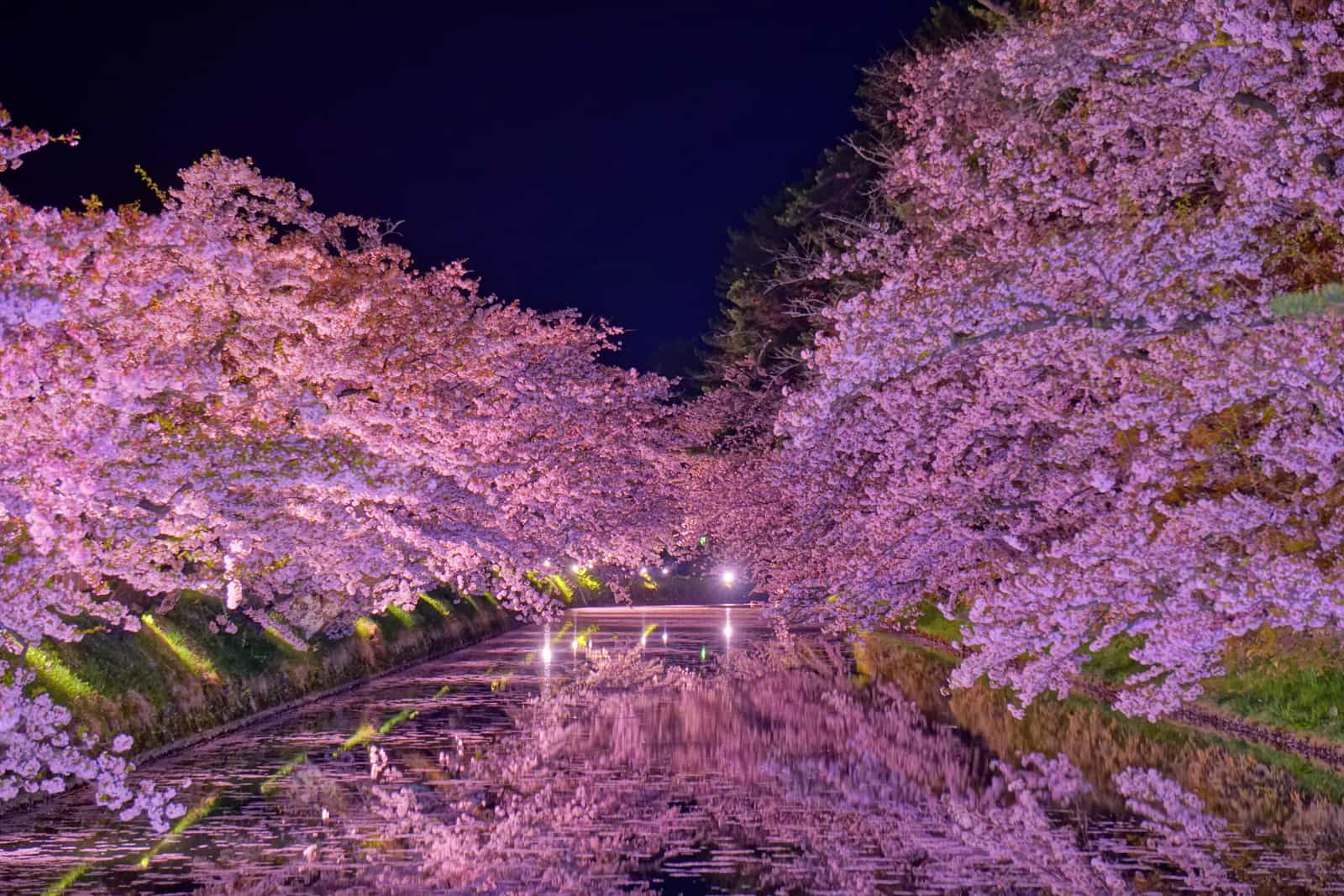
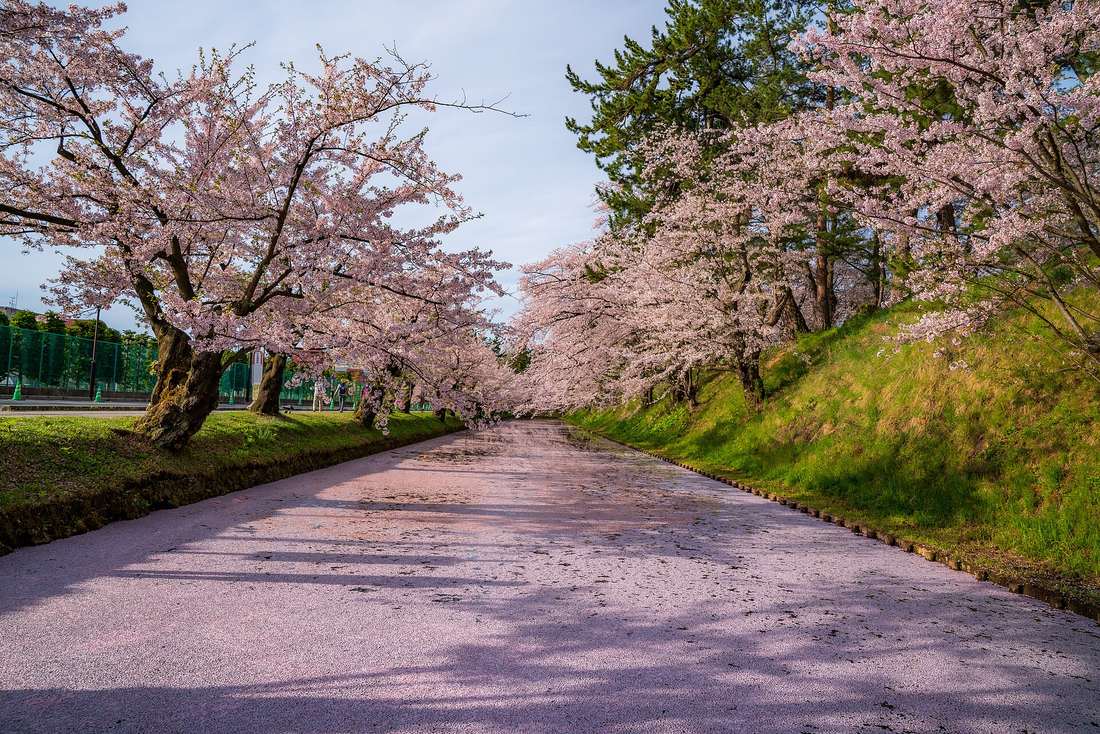
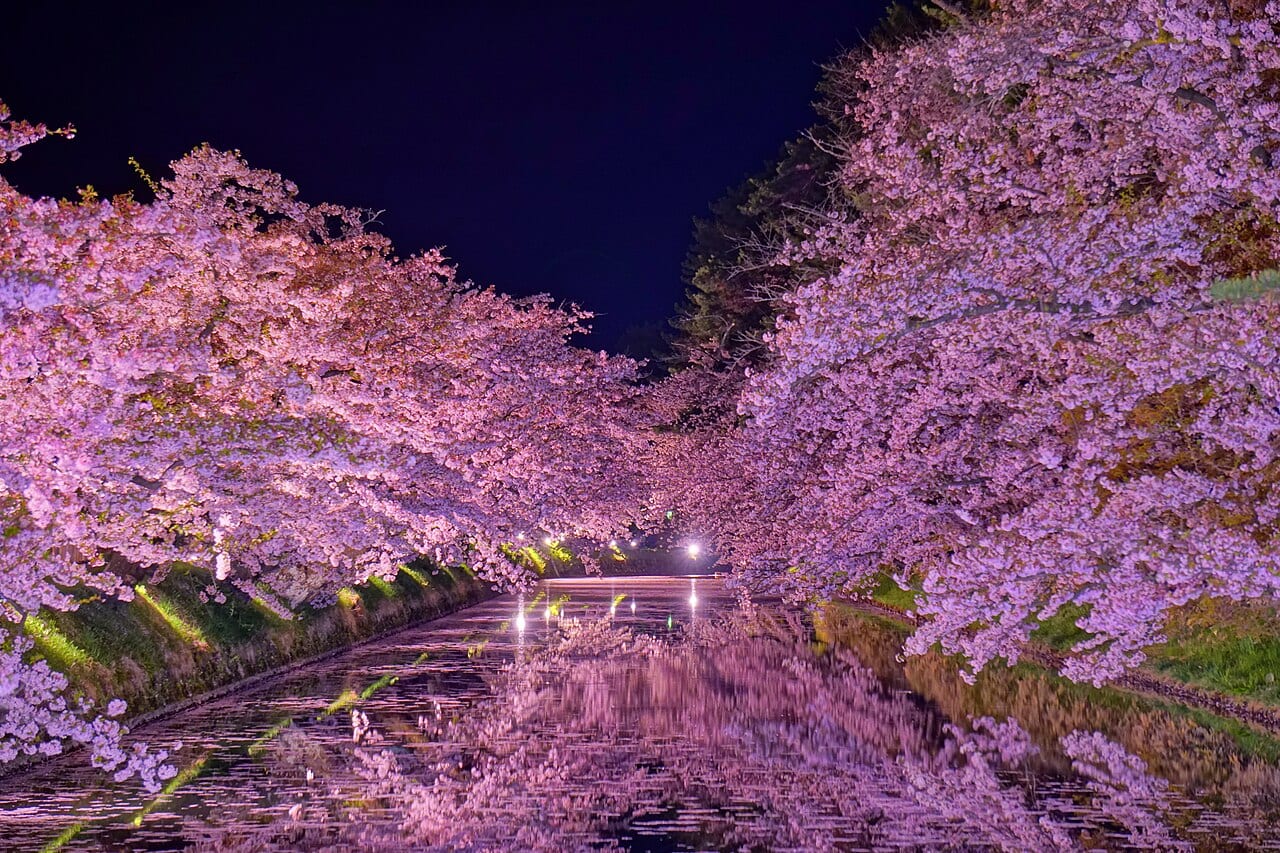
- Hirosaki Castle's "hanaikada" petal raft is the signature: fallen petals carpet the whole moat, plus night illumination mirrored in the water
- Hakodate's Goryokaku: a star-shaped fort outlined in blossom, best seen from the tower
- Hokkaido's cherries and plums bloom together — a combination Honshu never gets
📖 Table of contents
The latest bloom front: timing
The bloom front climbs from south to north, and it ends in northern Tohoku and Hokkaido. By JMA 1991-2020 averages, Hirosaki (Aomori) reaches full bloom around April 26, Hakodate about late April, and Sapporo around May 6 — a full month after Tokyo (March 31). That means two things: if you missed the Honshu cherries, flying to Tohoku or Hokkaido is a genuine second chance; and the bloom here lands right on Golden Week (around April 29-May 5).
Golden Week is Japan's peak domestic travel period, so crowds and rates spike — but in exchange it's warm and comfortable by day, without the cold Honshu dawns of late March. Because spring arrives late and fast in Hokkaido, cherries often bloom alongside plums and magnolias, a scene Honshu never gets. The nationwide timing is in the pillar's Japan cherry blossom guide.
Hirosaki Castle: petal raft and night cherries
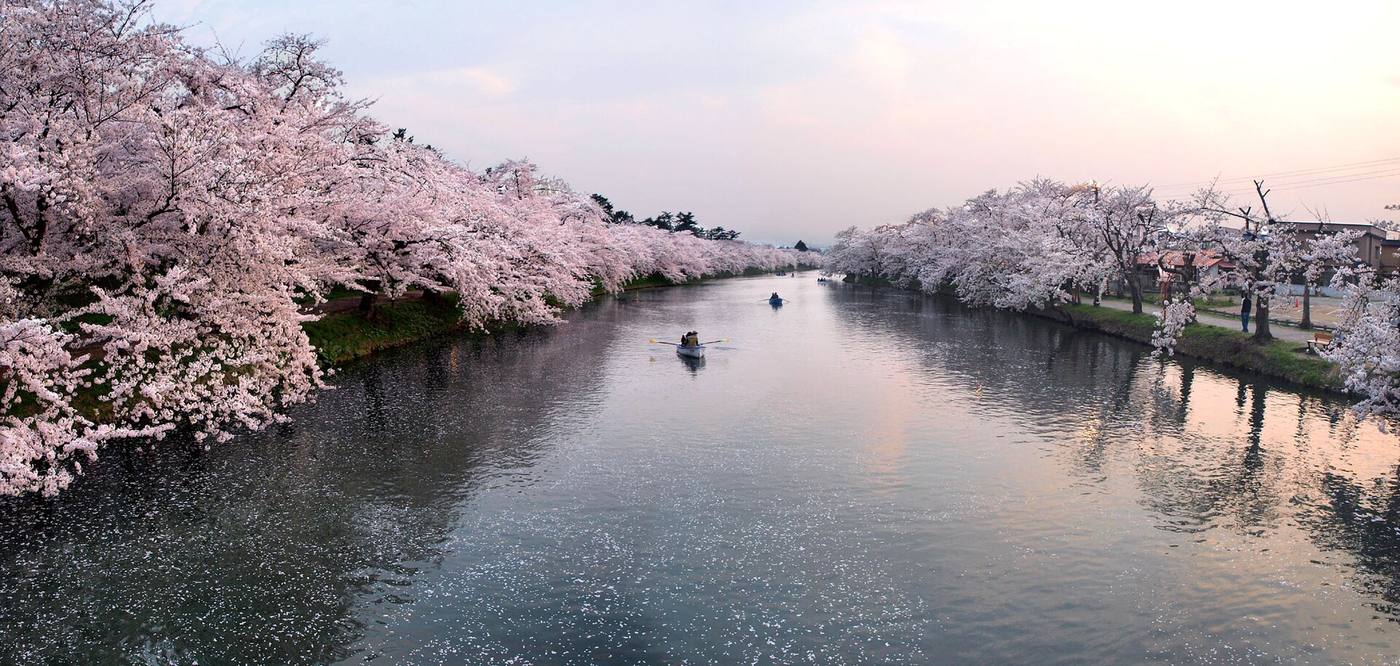
Hirosaki Park (Hirosaki Castle) is one of Tohoku's — and Japan's — most iconic cherry-blossom castles, with cherry trees ringing the Honmaru and its multiple moats. The park fills up twice a year, the other occasion being the Neputa floats that run August 1-7 — if you struggle to find a room in blossom season, that summer week is just as tight. The two signature scenes:
- Hanaikada: after full bloom, fallen petals carpet the entire outer moat into a pink waterway — unique to Hirosaki, and visible only for a few days after peak.
- Night cherries: the whole park is floodlit from sunset to 22:00. The reflection shot everyone comes for is on the west moat (Nishi-bori) — the city calls it sakasa-zakura, "upside-down cherries," with the blossoms laid out symmetrically on still water. ⚠️ Do not expect the keep in that frame: the inner moat under the keep was filled in in December 2014 for the stone-wall project and the keep itself was moved off its base in 2015, so there has been no water beside it for eleven seasons. Hirosaki City plans to restore the inner moat only after the keep's conservation work ends (FY2032). For what the keep actually looks like after being hauled back onto its base in November 2026, see what you can and can't see once the keep is back on its platform.
Access: take the Tohoku Shinkansen from Tokyo to Shin-Aomori, then the JR Ou Line to Hirosaki — about 3.5-4 hours. The festival draws big crowds, so dawn and the tail end of the night illumination are the better times to shoot.
Hokkaido: Goryokaku, Matsumae, Sapporo
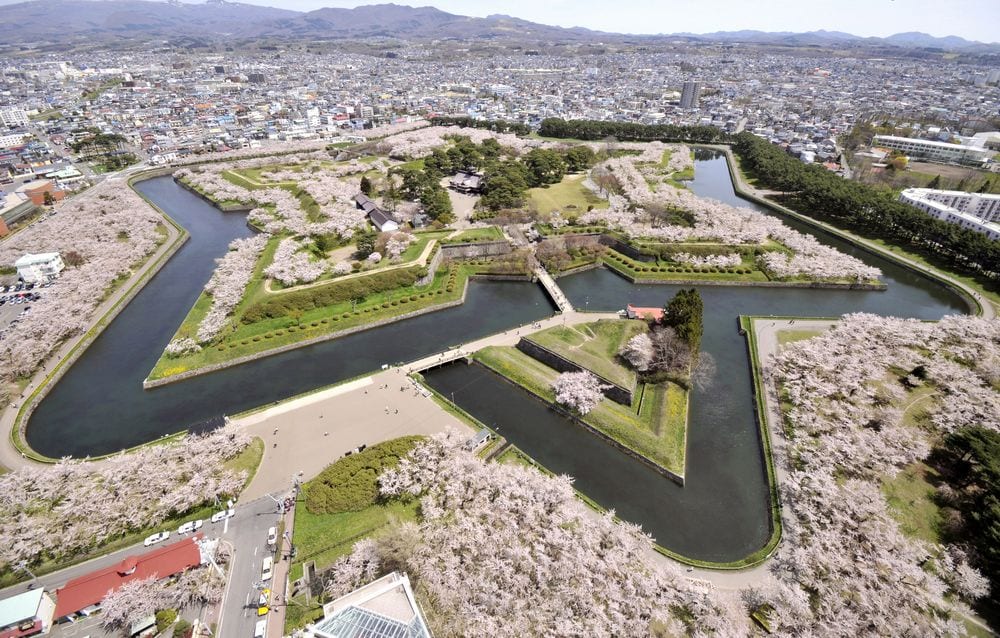
1. Hakodate Goryokaku — a star fort outlined in blossom
Goryokaku is Japan's first Western-style star fort, with ~1,600 cherry trees planted along its five-pointed moat, so that at full bloom the entire star is outlined in cherry blossom — a scene you can only take in fully from the Goryokaku Tower, and Hakodate's signature spring view. Full bloom is around late April.
2. Matsumae Castle & Park — Hokkaido's only Japanese castle
In southern Hokkaido, Matsumae Castle is the island's only Japanese-style castle, and Matsumae Park has ~250 varieties and tens of thousands of trees, early to late bloomers, giving an overall season nearly a month long. Precisely because the varieties and season are so broad, even if your dates miss a single variety's peak, Matsumae is most likely to still have blossoms. Access is harder, so a car or day tour is best.
3. Sapporo Maruyama Park & Hokkaido Shrine — Japan's latest
Sapporo's Maruyama Park and Hokkaido Shrine are Japan's latest bloom front, full bloom around early May, often synced with Golden Week. The shrine grounds have cherries and plums blooming at the same time — a combination Honshu never gets — while Maruyama Park is Sapporo's liveliest hanami ground.
Golden Week booking and transit timeline
Northern Tohoku and Hokkaido's full bloom lands on Golden Week, Japan's peak domestic travel period, so flights, reserved shinkansen seats and hotels all need booking earlier than a normal sakura trip:
- 12 weeks out: book hotels in Hirosaki, Hakodate and Sapporo — Golden Week is one of the year's tightest windows.
- One month before travel: reserve shinkansen seats the moment they open (JR reserved seats go on sale at 10:00 one month before the travel date); popular Golden Week trains sell out fast.
- Flights: fares to New Chitose or Hakodate spike over Golden Week — the earlier the better.
Compare lodging with Trip.com Sapporo hotels or Trip.com Hakodate hotels. How to set up transit and a regional pass within Hokkaido is in our Hokkaido JR Pass guide. Set up a KKday Japan eSIM online first. Late April to early May in Hokkaido is still cold morning and night; packing is in our Japan packing & weather guide.
More late-front spots in Tohoku & Hokkaido
If you're going beyond Hirosaki alone, a few more spots on this latest bloom front are worth the trip:
- Kakunodate samurai district (Akita): the "Little Kyoto of Tohoku," where black-walled samurai residences are draped in weeping cherries, contrasting with the Somei-Yoshino avenue along the Hinokinai River — Tohoku's other signature sakura scene. Peak is around late April, easy to pair with Hirosaki and reachable by the Akita Shinkansen.
- Kitakami Tenshochi (Iwate): with Hirosaki and Kakunodate, one of "Tohoku's three great cherry spots" — a ~2 km tunnel of tens of thousands of trees along the Kitakami River, with sightseeing boats and horse carriages, one of the few places you can view cherries from the water.
- Shizunai Nijukken Road (Hokkaido): a 7 km dead-straight cherry avenue in the Hidaka region lined with ~2,200 trees — Hokkaido's largest cherry avenue, peaking around early May. Public transport is poor, so a car is best.
Frequently Asked Questions
- Q1:When do Hirosaki and Hokkaido bloom, and are they Japan's latest?
- Yes. While Tokyo and Kyoto are over by late March to early April, Hirosaki and Hokkaido are just opening — Japan's latest bloom front. By JMA averages, Hirosaki (Aomori) reaches full bloom around April 26, Hakodate about late April, and Sapporo around May 6. That lands right over Golden Week (around April 29-May 5), making it the best option if you can only travel in early May or want to escape the Honshu crowds.
- Q2:What is Hirosaki Castle most famous for?
- Two scenes. First, the "hanaikada" (petal raft) — after full bloom, fallen petals carpet the entire outer moat, turning the waterway pink; it's unique to Hirosaki and only appears for a few days. Second, the night illumination: the whole park is floodlit from sunset to 22:00, and the reflection shot everyone comes for is on the west moat (Nishi-bori), which the city calls sakasa-zakura, "upside-down cherries." ⚠️ Do not expect the keep in that frame: the inner moat under the keep was filled in in December 2014 for the stone-wall project and the keep itself was moved off its base in 2015, so there has been no water beside it for eleven seasons. Hirosaki City plans to restore the inner moat only after the keep's conservation work ends (FY2032).
- Q3:Blooming over Golden Week — is it hard to book and expensive?
- Yes. Hokkaido and Tohoku's full bloom coincides with Golden Week, Japan's peak domestic travel period, so flights, reserved shinkansen seats and hotels all need booking even earlier than a normal sakura trip. Book hotels 12 weeks out and reserved seats the moment they open (one month before travel). The upside: it's warm and comfortable by day, and you can see cherries and plums blooming together — impossible on Honshu.
- Q4:Are Hakodate's Goryokaku and Matsumae Castle worth it?
- Both, yes. Hakodate's Goryokaku has ~1,600 cherry trees tracing a star-shaped fort; the view from Goryokaku Tower of the star outlined in blossom is Hakodate's signature spring scene. Matsumae Castle (southern Hokkaido) is Hokkaido's only Japanese-style castle, and Matsumae Park has ~250 varieties and tens of thousands of trees, early to late, giving a season nearly a month long — an insider favorite, though access is harder, so a car or a day tour is best.
- Q5:How do I chain Hirosaki to Hokkaido?
- You can chase the bloom "Hirosaki → Hakodate → Sapporo," south to north. Take the Tohoku Shinkansen to Shin-Aomori, transfer to Hirosaki; from Shin-Aomori the Hokkaido Shinkansen reaches Shin-Hakodate-Hokuto in about an hour. Use a regional JR pass within Hokkaido. The full transit and pass comparison is in our Hokkaido JR Pass guide. Because the trip spans Aomori plus Hokkaido with long distances, locking in reserved seats and hotels first is the priority.
- Q6:Anything to know about visiting with kids or older travelers in sakura season?
- Three things: (1) the Hirosaki festival and Goryokaku draw big daytime crowds with long walking distances, so with older travelers, slow the pace and use park shuttles or taxis rather than walking the whole circuit; (2) late April to early May in Hokkaido can still drop below 5°C morning and night, so pack a warm jacket and hat — don't assume "cherry blossoms means warm"; (3) Golden Week means queues at restaurants and popular spots, so reserve online where you can rather than waiting with kids. Overall this late front is warm and comfortable by day — more so than a March Honshu trip — which actually suits families well.