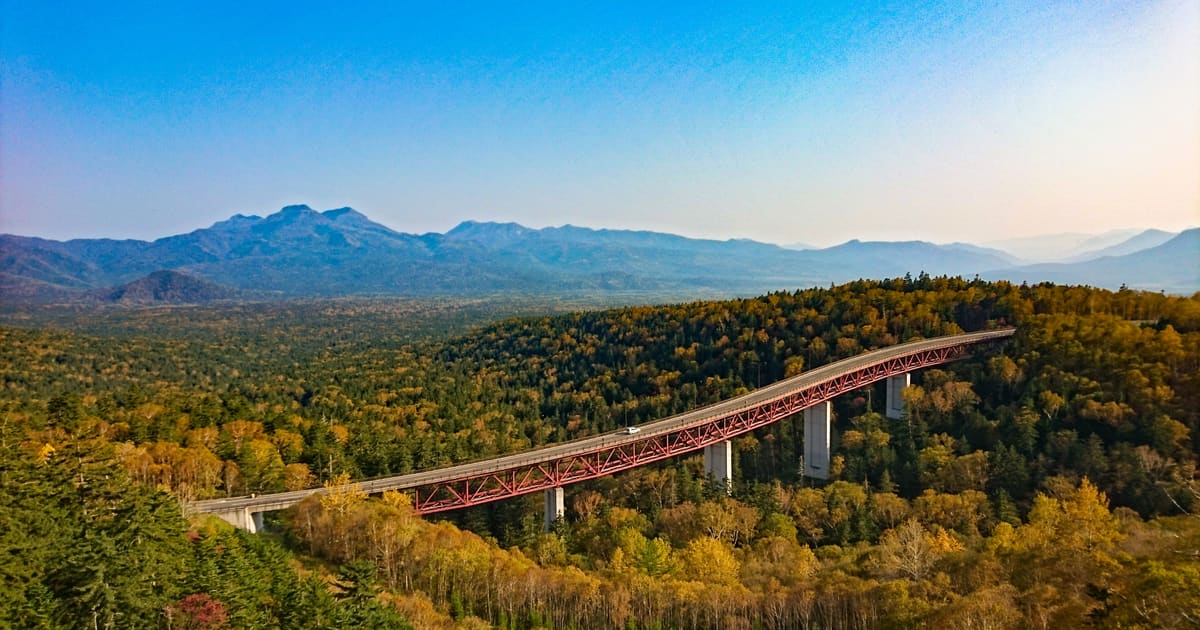
Mt. Kurodake turns red in late September while Sapporo is still green in late October — Hokkaido's autumn front travels 600 km and six weeks down from the high peaks. A 5-day Central-East loop (Sapporo–Biei–Sounkyo–Lake Shikaribetsu–Obihiro–Sapporo) is the most efficient way to chase that front, because the named foliage spots cluster on mountain national routes that JR doesn't reach, autumn buses run thinned schedules, and taxis hit ¥15,000 per one-way leg. This guide breaks down four rental companies, real toll and fuel numbers, day-by-day routing, and autumn-specific safety — synthesised from each operator's published pricing, NEXCO East Japan toll tables, tenki.jp foliage forecasts, and traveller community reports.
- The Sep 25 – Oct 15 window is gold — Daisetsuzan peak Sep 25 – Oct 5, Furano-Biei Oct 5 – Oct 20, Shikaribetsu Oct 1 – Oct 10. One 5-day loop catches three peak zones.
- Pick Toyota or Nissan first — 30+ Hokkaido branches including every regional airport, full Chinese/English nav. → See Toyota Hokkaido on KKday
- 5-day HEP at ¥9,600 (post-2024-10 restructure) vs ~¥12,500-13,000 in tolls — saves about ¥3,000 across the four expressway segments this loop uses.
- No 4WD needed before November — FWD on summer tires handles the entire paved route, saving ¥1,650/day.
- Autumn rentals run 20–30% under July–August peak — avoid Oct 10–13 and Oct 17–20 long-weekend spikes for the lowest combined rate.
📖 Contents (click to expand)
Why drive Hokkaido in autumn — vs JR Pass
Hokkaido's autumn problem is geographic dispersion. Kurodake sits at 1,520 m above the Sounkyo gorge; Furano-Biei threads through agricultural rolling hills along national routes; Lake Shikaribetsu hides in a forest interior; the Tokachi plain spreads east of the central mountains. Three things they have in common: JR doesn't reach them, autumn buses thin out, taxi one-ways break ¥15,000. Driving's value is much higher in autumn than in summer (when buses cover most spots) or winter (when snow conditions discourage non-resident drivers).
Three places where driving beats JR Pass
- Foliage names sit off the rail map. Sounkyo Onsen has no JR — you transfer at Kamikawa to a Dohoku Bus (1.5 hr, ¥2,140). Lake Shikaribetsu's nearest station is Shintoku, still 90 minutes by bus. Mikuni Pass has zero public transit. A car covers all three in a day; JR-plus-bus could need two.
- Autumn buses cut frequency. Dohoku Bus and Hokkaido Chuo Bus shift scenic-route services to winter schedules in early November. By mid-October some routes already trim runs or move to reservation-only. Last-minute bus plans break down at the autumn tail.
- Rental rates dip in the pre-ski window. December onwards pushes 30–50% above shoulder prices as Sapporo and Niseko fill with ski travellers. September and October sit between the summer peak and ski peak — the second-cheapest window of the year (the cheapest being April–May).
Inverted: if your trip is Sapporo + Hakodate or Sapporo + Asahikawa as city point-to-point, the Hokkaido JR Pass's 5-day at ¥22,000 or 7-day at ¥28,000 can still beat driving. This guide is specifically for the off-rail foliage chase.
Hokkaido foliage timing map: 4 zones
The foliage front in Hokkaido descends from peak elevation to coast. Compiled from tenki.jp, Walkerplus, and weathernews five-year observations and 2026 forecasts:
| Zone | 2026 estimated peak | Elevation | Anchor sights |
|---|---|---|---|
| Daisetsuzan (Kurodake, Ginsendai) | Sep 25 – Oct 5 | 1,500–2,000 m | Kurodake ropeway, Sounkyo basalt gorge |
| Furano · Biei · Shikaribetsu | Oct 1 – Oct 20 | 200–900 m | Patchwork Road, Blue Pond, Lake Shikaribetsu |
| Lake Toya · Lake Shikotsu | Oct 15 – Nov 5 | 200–700 m | Toya Naka-jima, Shikotsu lakeshore |
| Hakodate · southern Hokkaido | Oct 25 – Nov 15 | 0–300 m | Kosetsuen, Goryokaku Tower view, Motomachi ginkgo |
This Central-East loop targets the top two zones (Daisetsuzan + Furano-Biei + Shikaribetsu-Tokachi). Total length is 600 km over 5 days — long enough to follow the front from peak to plain. Travellers who want the southern half (Toya + Hakodate) should look at the companion piece "Hokkaido Central-South 7-day Drive" (publishing soon). For the national-scale comparison, see Japan Autumn Foliage Complete Guide.
5-day Central-East loop overview
Pickup and return both at New Chitose (CTS). Total ~600 km:
| Day | Route | Distance | Stay | Highlights |
|---|---|---|---|---|
| 1 | CTS → Sapporo → Jozankei | 80 km | Jozankei Onsen | Hoheikyo Dam foliage, Futami Suspension Bridge |
| 2 | Jozankei → Furano → Biei | 180 km | Biei or Furano | Farm Tomita, Blue Pond, Shikisai-no-Oka, Patchwork Road |
| 3 | Biei → Asahikawa → Mikuni Pass → Sounkyo | 160 km | Sounkyo Onsen | Mikuni Pass, Ginsendai, Kurodake ropeway |
| 4 | Sounkyo → Lake Shikaribetsu → Obihiro | 180 km | Obihiro | Lake Shikaribetsu, Tokachi Millennium Forest, Obihiro butadon |
| 5 | Obihiro → Sapporo (expressway) → CTS | 230 km | — | Tokachi plain views, return buffer |
Best fit: first-time Hokkaido drivers (everything stays on numbered national routes — low navigation risk), foliage photographers (three elevation tiers in one trip), families with seniors (daily distances stay moderate, no forced long hauls). Not ideal: Sapporo + Hakodate travellers (use the Central-South piece instead), 1–2 day attempts (foliage front needs time to traverse).
Day-by-day breakdown
Day 1: CTS → Sapporo → Jozankei (80 km)
Pick up at New Chitose (set pickup ~1 hour after arrival as a buffer). Doo Expressway from CTS to Sapporo runs about 45 minutes and ¥1,430. Sapporo to Jozankei on Route 230 is roughly an hour at no toll.
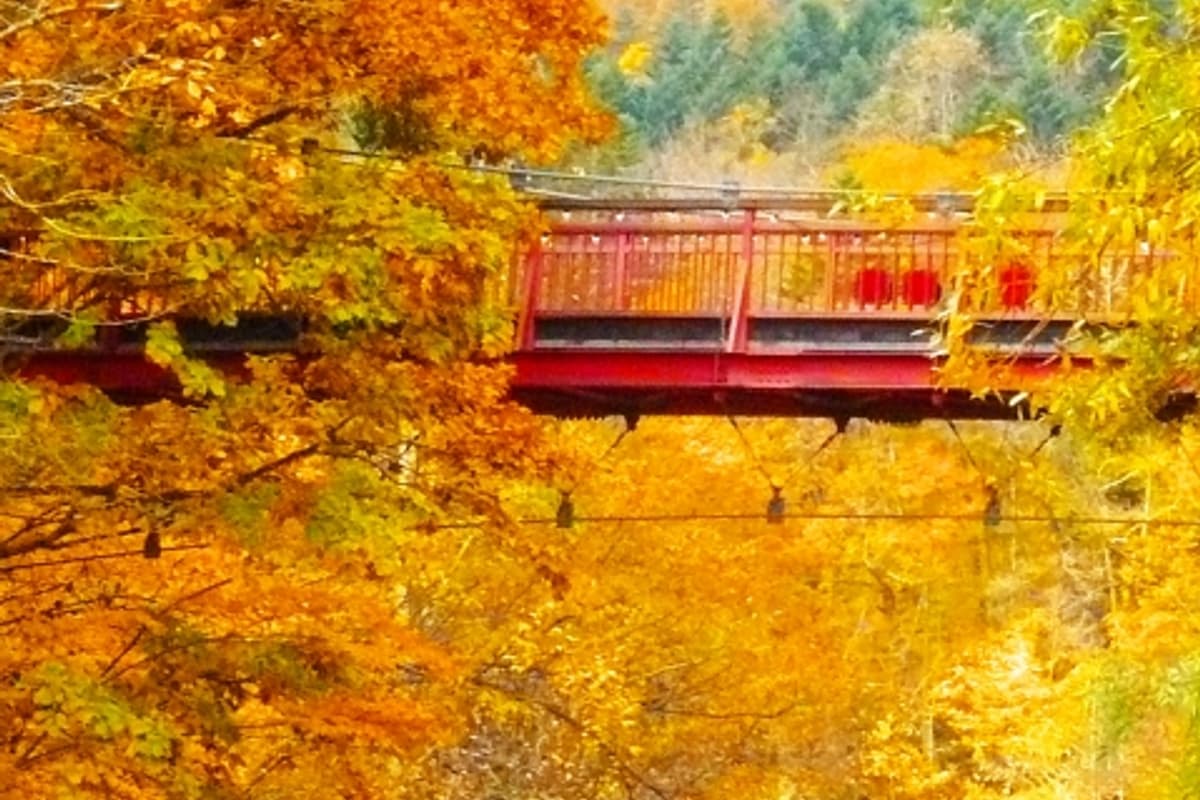
Jozankei's foliage peaks in mid-October. Hoheikyo Dam's gorge canopy is the most photographed angle; Futami Suspension Bridge looks down on the Toyohira River with a 30-minute level walk return. Jozankei Onsen rooms with one breakfast and dinner run ¥18,000–26,000/person per published rates, weekend foliage premium adds 20–30%. Alternative: stay in Sapporo and day-trip out — try Sapporo hotels on Trip.com.
Day 2: Jozankei → Furano → Biei (180 km)
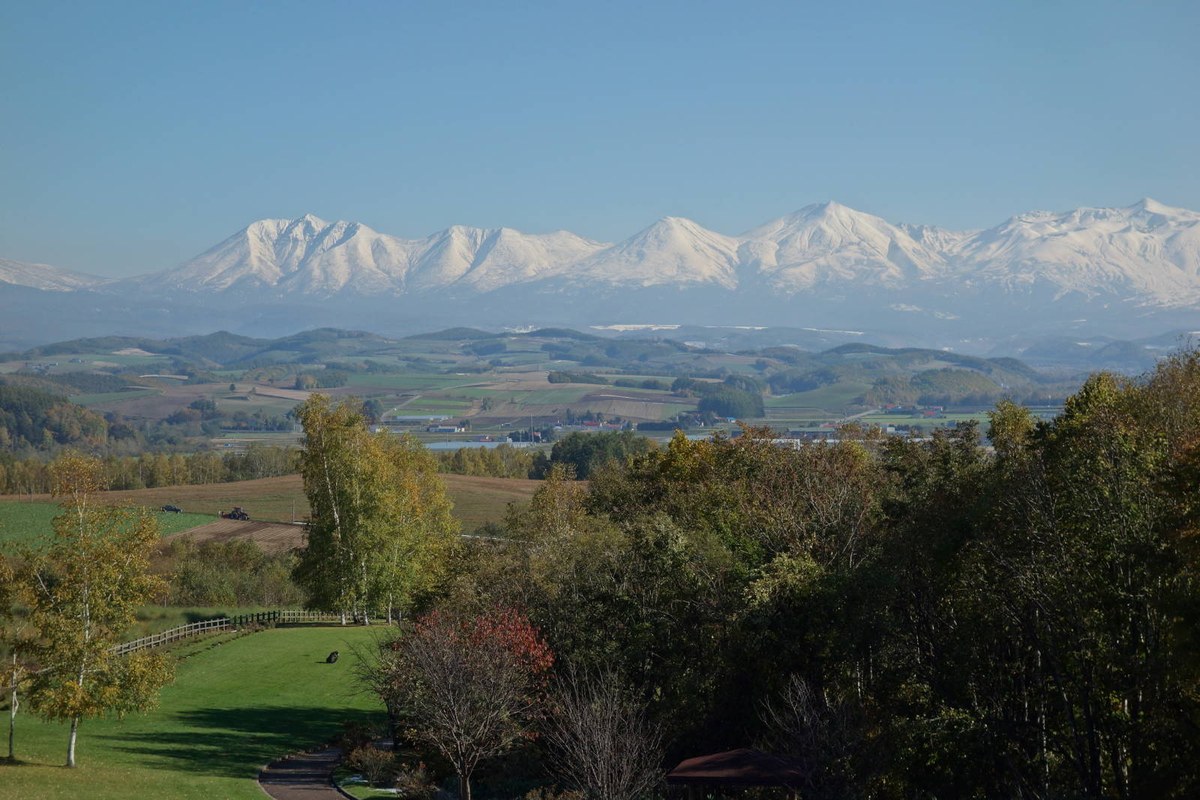
Jozankei to Furano via Routes 230, 274, 38 — roughly 3 hours, no expressway, scenic through Yubari and Shintoku. Early October catches Furano winery-area maples and Farm Tomita's free "Sai-no-Hatake" beds (lavender's autumn cousin).
Afternoon shifts to Biei: Blue Pond (October peak per published schedule — turquoise water against red leaves), Shikisai-no-Oka, Patchwork Road (Route 237). Stay at a small inn near Biei Station or hotels around Furano Station.
Day 3: Biei → Asahikawa → Mikuni Pass → Sounkyo (160 km)
North through Asahikawa (breakfast tip: Baikohken ramen). Pick up Route 273 to Mikuni Pass. Mikuni Pass at 1,139 m elevation is Hokkaido's highest national-route pass — early October foliage spills from the summit down both sides of the valley. The viewpoint parking is free.
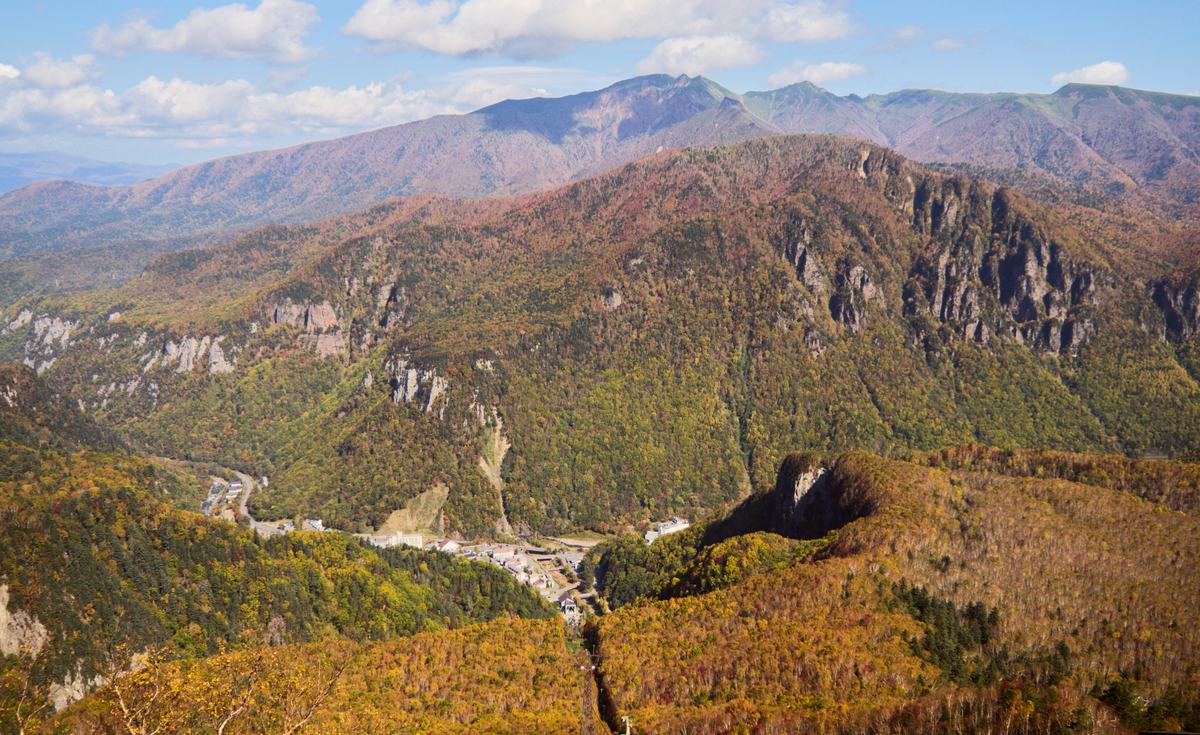
Afternoon reaches Sounkyo. The Kurodake ropeway round-trip combo (ropeway 1,300 m + lift 650 m) sits at ¥2,400/person per published rate, lifting riders to a 1,520 m platform overlooking the foliage canopy. The 6 AM first car is the iron rule of Daisetsuzan foliage — late September summit temperatures 4–7°C with low wind give the clearest visibility; 9 AM-onwards group tours fill the platform. For the deeper single-region Kurodake breakdown, see Hokkaido Daisetsuzan Autumn Guide.
Stay at the Sounkyo Onsen street's three established inns: Choyotei, Sounkyo Kanko Hotel, Sounkaku. Peak week (Sep 27 – Oct 5) wants 6–8 weeks lead time, autumn published rates ¥18,000–30,000/person with two meals.
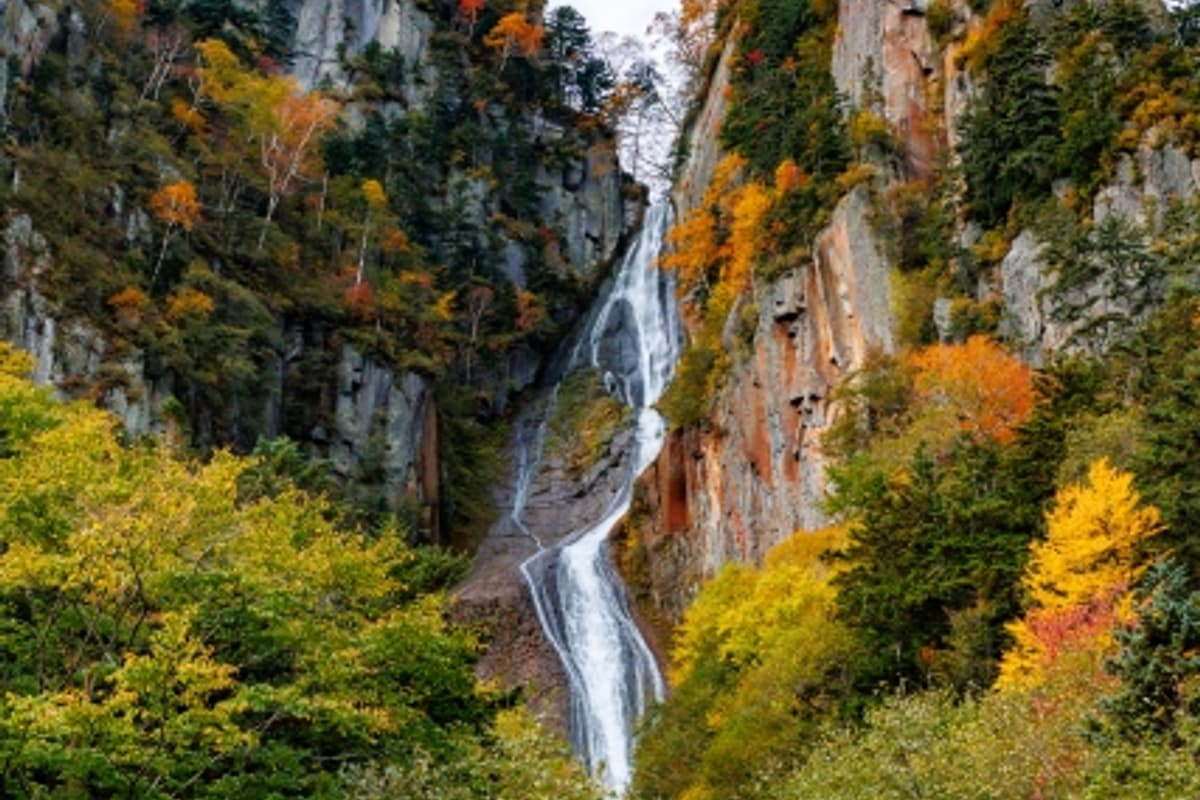
Day 4: Sounkyo → Lake Shikaribetsu → Obihiro (180 km)
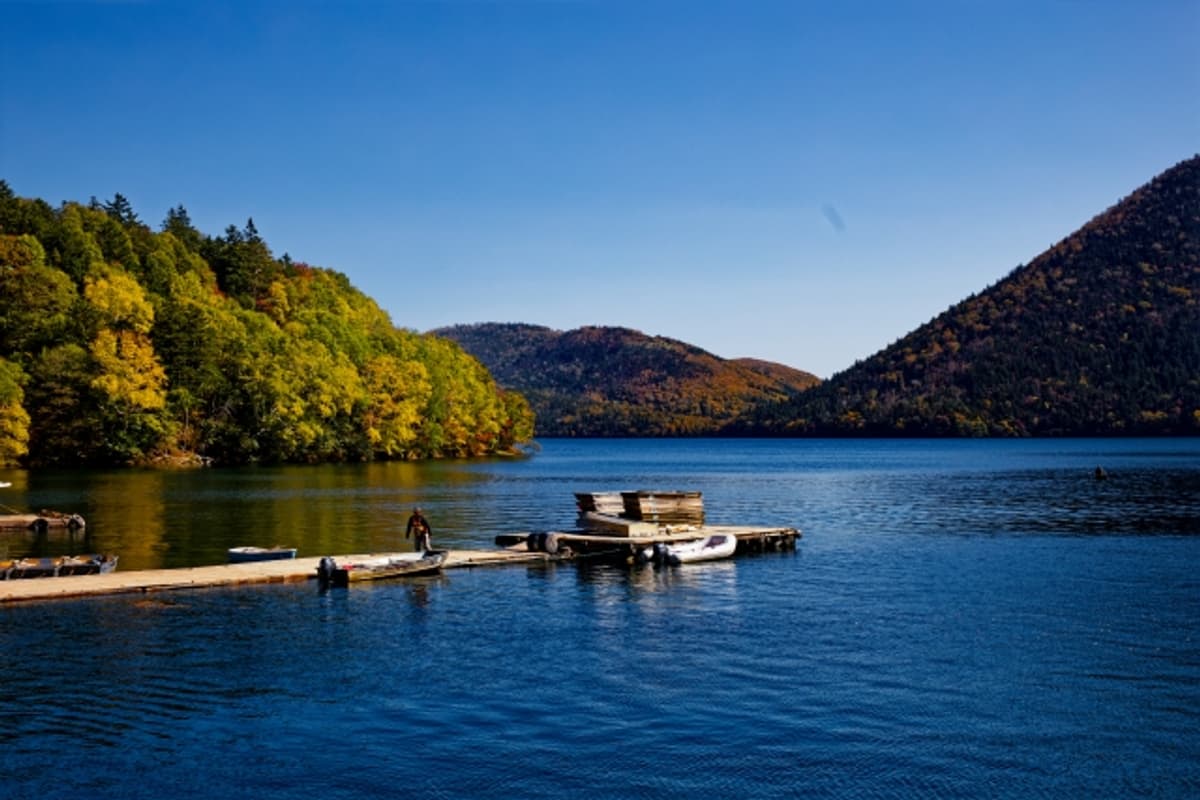
South on Route 273 to Lake Shikaribetsu. Lake Shikaribetsu at 810 m is Hokkaido's highest natural lake — early-October lakeshore foliage reflected on still water is the day's headline. A 30-minute lakeshore loop walks the south bank; the lake's "Shika-no-yu" hot spring offers rare mixed-bath open-air pools (time-segmented by gender per published schedule).
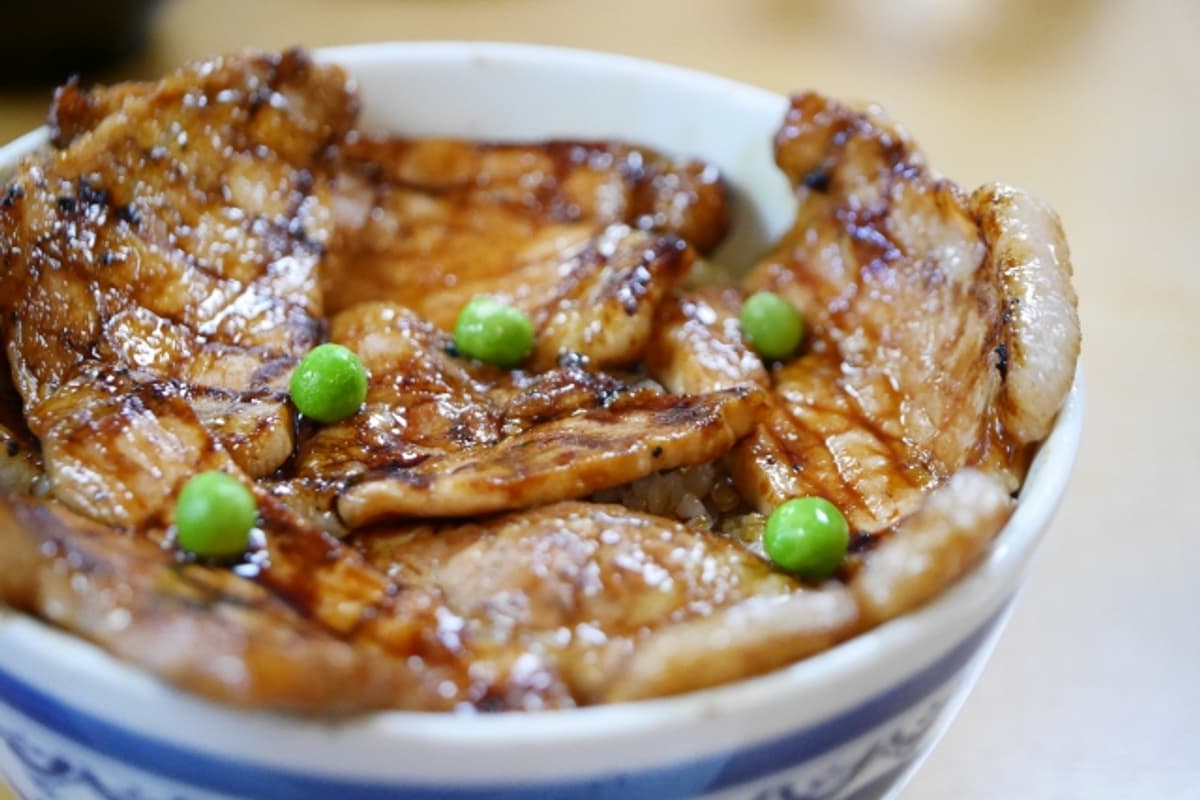
Afternoon descends through Shihoro and Kamishihoro to Obihiro. Tokachi Millennium Forest stays open through mid-October per their site — the first Japanese garden to win "Garden of the Year" pairs autumn maples with open prairie. Evening Obihiro: dinner at Pancho or Indian Curry around the station, butadon ¥1,200–1,800 per published pricing.
Day 5: Obihiro → Sapporo (expressway) → CTS (230 km)
Doto Expressway plus Doo Expressway runs Obihiro to Sapporo in ~3 hours at ¥4,490 (NEXCO East Japan). Optional stop at the Tokachi Plain Observation Deck (near Yubari PA on the Doto Expressway) for an open plain view. Budget 4–5 hours total including souvenir time in Sapporo; return by 2 PM gives the loosest schedule.
Refuel before return — ENEOS Chitose or Idemitsu Chitose sit 1–3 km from the airport branches. Branch-side: vehicle inspection → shuttle to airport → 90-minute check-in buffer.
Rental comparison: Toyota, Times, Nissan, Niconico
Hokkaido has seven or eight mid-to-large rental chains, but four cover international travellers with Chinese / English service. Comparison from each operator's autumn published rates, KKday and Klook platform inventory, and traveller community reports (compact-class autumn weekday base, before CDW and ETC):
| Item | Toyota | Times | Nissan | Niconico |
|---|---|---|---|---|
| Compact autumn weekday | ¥6,500–8,500 | ¥6,000–8,000 | ¥6,200–8,200 | ¥4,500–6,000 |
| Compact foliage weekend | ¥9,000–12,000 | ¥8,500–11,000 | ¥8,800–11,500 | ¥6,500–8,500 |
| Hokkaido branches | 30+ (every regional airport) | 20+ (Sapporo-dense) | 25+ (CTS · Sapporo · Asahikawa · Hakodate) | 10+ (CTS-focused) |
| EN/CN nav | ✅ All vehicles | ✅ All vehicles | ✅ All vehicles | ⚠️ Some classes |
| One-way (within Hokkaido) | ¥3,000–6,000 (occasional free promos) | ¥3,000–5,000 | ¥3,000–6,000 (occasional free promos) | ¥5,000–10,000 |
| Winter tire switch window | Oct 15 – Nov 10 | Oct 20 – Nov 15 | Oct 15 – Nov 10 | Oct 25 – Nov 20 |
| KKday direct booking | ✅ Product 36489 | ⚠️ Via search page | ✅ Product 21486 | ✅ Product 4147 |
| Overall recommendation | ⭐⭐⭐⭐⭐ Top pick | ⭐⭐⭐⭐ Value | ⭐⭐⭐⭐ Wide network | ⭐⭐⭐ Budget |
Which one to pick
Top pick: Toyota Rent a Car. Most Hokkaido branches (including Hakodate, Wakkanai, Nemuro regional airports), broadest vehicle range, full English/Chinese navigation, most stable foliage-weekend availability. Toyota's "Hokkaido Have Fun Pass" voucher (bundled with rentals per published terms) discounts area attractions — autumn usage rate is high. → See Toyota Hokkaido on KKday
Best value: Times Car Rental. Branches concentrate in Sapporo and CTS, rates run 5–10% under Toyota. Times's domestic app is the most polished — booking flow is smooth. Most flexible chain for foliage-weekend last-minute. KKday doesn't have a dedicated Times Hokkaido product page, but the Hokkaido rental search page surfaces Times inventory.
Family or one-way: Nissan Rent a Car. Network spans CTS, Sapporo, Asahikawa, Hakodate — the easiest pick for "Sapporo pickup, Hakodate drop-off" or vice versa. Larger MPVs (Serena, Elgrand 7–8 seater) are the strongest selection here. → See Nissan Hokkaido on KKday
Budget: Niconico Rent a Car. 30–40% under the major three, older fleet (3–5 year vehicles), CTS-focused branches, narrow class selection. Best fit when the 4-day total budget needs to stay under ¥20,000. → See Niconico Hokkaido on KKday
License, insurance, ETC card mechanics
Japanese license translation: JAF Sapporo or pre-trip
Taiwan, Hong Kong, and several other licenses are not directly usable in Japan, and the Geneva-convention International Driving Permit does not cover them either. The required document is the Japanese translation of your home license. Two options:
- Pre-trip from home: any government-recognised issuer (Taiwan motor vehicles office, Hong Kong Automobile Association equivalent, etc.) issues it for a modest fee. Same validity as the source license, but each Japan entry resets the in-country one-year clock.
- On arrival: JAF (Japan Automobile Federation) Hokkaido branch in Sapporo issues same-day for ¥4,000 per published rate. Useful fallback if you forgot or recently renewed.
Insurance: CDW and NOC stacking
Base rental includes mandatory insurance, but with high deductibles (¥50,000–100,000). Autumn mountain driving (Mikuni Pass, Shikaribetsu approaches) warrants at minimum:
- CDW (Collision Damage Waiver): roughly ¥1,100/day per published rates — drops collision/personal-injury deductibles to zero. Treat as mandatory.
- NOC (Non-Operation Charge waiver): roughly ¥550/day — waives the post-accident business-loss compensation (typically ¥20,000–50,000). Strongly recommended for autumn mountain routes.
Five days of CDW + NOC: about ¥8,250. Many KKday rental bundles already include CDW — verify before adding manually.
ETC card cross-region use
Hokkaido Doo and Doto expressway tolls accept cash, credit, or ETC. ETC advantages: (1) skip the toll booth queue, (2) some windows discounted per NEXCO East Japan (overnight 0:00–4:00 30% off, weekday commute 70% off), (3) pairs with the Hokkaido Expressway Pass for unlimited use. Rental ETC card: ¥330/day, 5 days = ¥1,650.
Tolls and autumn fuel math
5-day Central-East loop expressway segments (regular passenger car, per NEXCO East Japan published table):
| Segment | Distance | Standard | HEP applies |
|---|---|---|---|
| CTS IC → Sapporo North IC (Doo Expressway) | ~47 km | ¥1,430 | ✅ |
| Sapporo North IC → Asahikawa North IC (Doo Expressway) | ~134 km | ¥3,560 | ✅ |
| Asahikawa North IC → Obihiro JCT (Doto Expressway) | ~180 km | ¥3,160 | ✅ |
| Obihiro JCT → Chitose Higashi IC (Doto Expressway) | ~220 km | ¥4,490 | ✅ |
| Total expressway tolls | — | ~¥12,640 | — |
| 5-day HEP Pass (post-2024-10 restructure) | Unlimited | ¥9,600 | Saves ~¥3,040 |
※ Note: NEXCO East Japan restructured HEP on 2024-10-01. Old 2/3/5/7/10/14-day tiers discontinued; new tiers are 4-day ¥7,700 / 5-day ¥9,600 / 6-day ¥11,600 / 7-day ¥13,500 / 8-day ¥15,400. The 5-day tier rose +54.8% (¥6,200 → ¥9,600). Tolls per NEXCO「ドラぷら」calculator, May 2026; actual cost varies ±10% by ramp choice and ETC time-of-day discount.
Autumn fuel math
Total loop ≈ 600 km. Compact automatic (Vitz, Fit class) does 15–18 km/L, total fuel 33–40 litres. Autumn Hokkaido Regular (92 octane) per ENEOS / Idemitsu / COSMO and the prefectural average runs roughly ¥168–172/L (verified 2026-05-31; briefly spiked to ¥190 in March before settling) — 5-day fuel cost ¥5,500–6,900. Mid-class (Corolla) at 12–15 km/L brings the same loop to ¥6,700–8,600.
Hokkaido's remote segments thin out stations. Refuel at quarter-tank. The Mikuni Pass → Sounkyo segment and Lake Shikaribetsu surrounds can run 30–50 km without a station — and rural stations close by 7 PM.
Autumn-specific mountain safety
Hokkaido's paved national routes are generally safe in autumn, but four seasonal risks deserve attention:
Pre-dawn frost (from October)
October mountain pre-dawn temperatures drop below 0°C around Mikuni Pass, Shikaribetsu, and the Sounkyo approach. Pavement develops "black ice" — invisible thin glaze. Plan mountain departures for after 9 AM, when sun has dried the surface. If you must leave earlier, hold speeds under 40 km/h and brake well before corners.
Deer strikes (late October – November)
Hokkaido Yezo deer expand activity range in autumn. Doto-region Routes 38 and 240 (Obihiro, Tokachi, Akan) are documented strike-heavy stretches. Dusk after 4 PM to dawn before 8 AM combines low visibility with peak deer movement — avoid long-distance night driving. When "ヘラジカ注意" deer warning signs appear, drop to 60 km/h.
Visibility (fog, rain)
Hokkaido's autumn days are short — late October sunset hits 4:30–5:00 PM. Combined with frequent morning mist and rain-fog in the mountains, finish all driving before 5 PM to avoid blind mountain stretches. Use fog lights in fog (not high beams — high beams scatter and worsen visibility); reduce speed by 30%.
Sparse 24-hour fuel
Hokkaido's remote stations close after 7–8 PM. 24-hour stations cluster around Sapporo, Asahikawa, and Obihiro. Top off before leaving a major city in the evening. The same routes face elevated risks in winter — see the seasonal contrast in Hokkaido Winter 7-Day Itinerary.
Frequently Asked Questions
- Q1:Do I need 4WD for Hokkaido in autumn?
- FWD is enough through late October; only consider 4WD if you plan to drive into November mountain passes. The Central-East loop (Sapporo–Biei–Sounkyo–Obihiro) stays on paved national routes. Subzero pre-dawn dew turns to frost, not ice, in late September and early October — summer tires handle it fine. From mid-November, rentals begin switching to winter tires; if your trip straddles the changeover (October 15 to November 10 depending on company), book a vehicle scheduled for post-changeover pickup and you avoid the awkward mixed period.
- Q2:Is one-way return (Sapporo pickup, Asahikawa or Obihiro drop-off) worth it?
- For a closed loop back to New Chitose, no — same-point return is free and the loop already passes through Sapporo. For a true one-way, expect ¥3,000–6,000 one-way fees depending on distance (Asahikawa cheaper, Hakodate steepest). Toyota Rent a Car and Nissan Rent a Car run "within-Hokkaido one-way free" promotions in autumn shoulder weeks — search "乗り捨て無料" (norisute muryou / one-way free) when booking. Niconico charges materially more and has fewer drop-off points.
- Q3:Is the Hokkaido Expressway Pass (HEP) worth buying?
- Only if you take two or more expressway segments across a 4+ day trip. HEP is a foreign-tourist unlimited-use expressway pass. Major restructure on 2024-10-01: the old 2/3/5/7/10/14-day tiers were discontinued; current tiers are 4-day ¥7,700 / 5-day ¥9,600 / 6-day ¥11,600 / 7-day ¥13,500 / 8-day ¥15,400 (passenger car, per NEXCO East Japan). The Central-East loop's four expressway segments total roughly ¥12,500-13,000 per the 2026-05 NEXCO calculator, so a 5-day HEP at ¥9,600 still saves around ¥3,000. If your route stays on scenic national routes (Route 39, Route 273), HEP is wasted.
- Q4:Is autumn cheaper or more expensive for rentals than summer?
- Late September through mid-October is the value window — 20–30% cheaper than the July–August peak. Hokkaido rental rates peak in July–August (beach + festivals) and the New Year holiday (Dec 29 – Jan 3). The lowest rates are April and late November to early December (between summer and ski season). Autumn falls in between — foliage weekends nudge up but weekdays and non-foliage weekends still beat summer. Picking up Tuesday and returning Friday, and avoiding the October 10–13 and October 17–20 long weekends, gives the lowest combined rate.
- Q5:How far in advance should I book for foliage weekends?
- Daisetsuzan peak week (Sep 25 – Oct 5) wants 6–8 weeks lead time; Furano-Biei weekends (Oct 5 – Oct 20) wants 4–6 weeks. Toyota, Nissan, and other major chains open booking three months out, and popular vehicle classes (compact automatic, 4WD SUV) book out within a month for foliage weekends. Niconico, Orix, and other mid-tier chains keep more last-minute availability but offer fewer body types. For last-minute trips (under two weeks out), comparison platforms like KKday and Klook are the fastest way to find what stock remains.
One last thing
The point of the Hokkaido Central-East loop isn't to check off attractions — it's to keep pace with a moving foliage front. Starting at Kurodake's 1,520 m and descending toward the Tokachi plain, the leaves shift in colour every 100 km and every 200 m of elevation. That "travelling with the front" experience is something only driving allows.
Late September Daisetsuzan. Early October Furano-Biei. Mid-October Shikaribetsu and Obihiro. Five days is the right shape. → Book Toyota Hokkaido on KKday
Read next
Japan Autumn Foliage 2026: Peak Forecast & 5-Region Guide
Region-by-region peak-forecast map from late-September Hokkaido to mid-December Kyushu, with itineraries and booking timing.
Hokkaido Daisetsuzan Autumn 2026: Japan’s Earliest Foliage
Mt. Kurodake ropeway, Sounkyo basalt gorge, Jozankei — chase Japan’s earliest foliage in late September.
Hokkaido JR Pass Complete Guide 2026
Five routes recalculated with 2026 fares — all-reserved limited expresses and the post-2024 Furano line closure change the math.
📊 See the 2026 Price Index (JR Pass, DPA, eSIM, Airport Transport) →