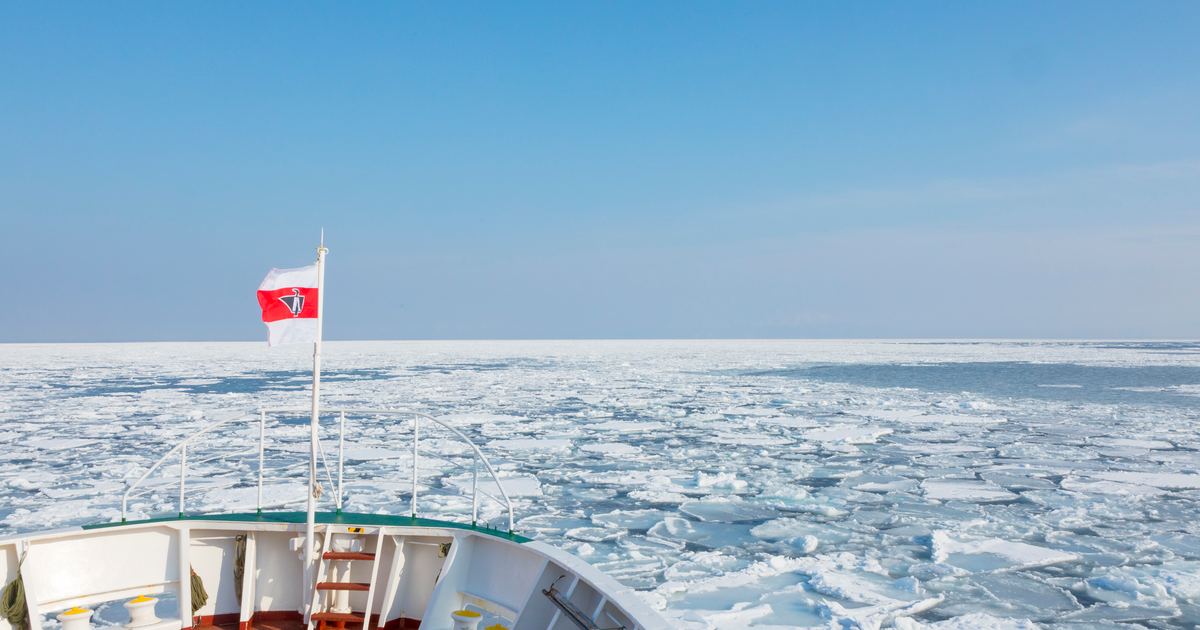
Abashiri's Aurora icebreaker sails January 20 to March 31, 2027, at ¥7,000 per adult — more than last season, and no longer priced by month. Phone booking opens October 15, 2026, and Monbetsu's Garinko-go is due to open bookings on October 9. Sailing is not the same as ice, though: the long-term average date for ice reaching the shore at Abashiri is February 4, and over the last three years it has ranged from January 22 to February 17, so a late-January trip mostly gets open sea. Below: which ship, which month, what it costs, what happens when there is no ice, and how to reach the pier from Memanbetsu Airport and Sapporo. On official pages drift ice is written 流氷 (ryuhyo), and the Shiretoko activity where you walk out onto it is 流氷ウォーク, the drift ice walk.
- When to go: mid-February to the first week of March. At Abashiri, ice is first visible offshore around January 22 on average and reaches shore around February 4
- Aurora (Abashiri): January 20–March 31, about 1 hour, adults ¥7,000, children ¥3,500, same fare January through March; phone booking from October 15, online from early November
- Garinko-go (Monbetsu): winter 2027 booking due to open October 9; last season adults paid ¥5,000 (¥6,000 in February), one fare for the whole ship
- No ice on the day: the large Aurora still sails, as a sea cruise to Cape Notoro; the small Aurora 3 is cancelled
- Drift ice walk (Shiretoko): February 1–March 31, ¥8,000 per person (¥7,500 from March 11), 99 kg weight limit
- Doable without a car: the Memanbetsu Airport bus reaches the Aurora pier in about 40 minutes, and a winter bus runs twice a day from the pier to Utoro in Shiretoko
- Cancellations are not sent to you individually — check the operator's status page that morning; set up a KKday Japan eSIM before you land to check the latest ice reports on the go
Table of Contents (click to expand)
- Is a drift ice trip right for you?
- Which month can you actually see drift ice?
- Abashiri's Aurora: 2027 fares, timetable and booking
- Monbetsu's Garinko-go: booking date and last season's fares
- Aurora or Garinko-go?
- The Shiretoko drift ice walk: price, limits and meeting point
- What first-timers most often get wrong
- Getting there: airports, Sapporo and on to Shiretoko
- How I would plan it
- FAQ
- If it were my trip
- Official information
Is a drift ice trip right for you?
A good fit
- You can be in eastern Hokkaido between mid-February and early March, and will stay a night in Abashiri or Monbetsu
- You are travelling with elders or children: Aurora is a large ship that rolls little while breaking ice, and the cruise is only an hour
- You are not driving: a bus runs from Memanbetsu Airport straight to the Aurora pier, and a winter bus continues to Shiretoko
You can skip it
- You can only go in late January: the ships sail, but in most years the ice has not reached shore
- You are staying in Sapporo the whole trip: Abashiri is 5 hours 25 minutes each way, so a day trip is not realistic
- You want to stand on the ice rather than ride a ship: book the Shiretoko drift ice walk instead — but not if anyone is over 99 kg or below elementary-school age
Which month can you actually see drift ice?
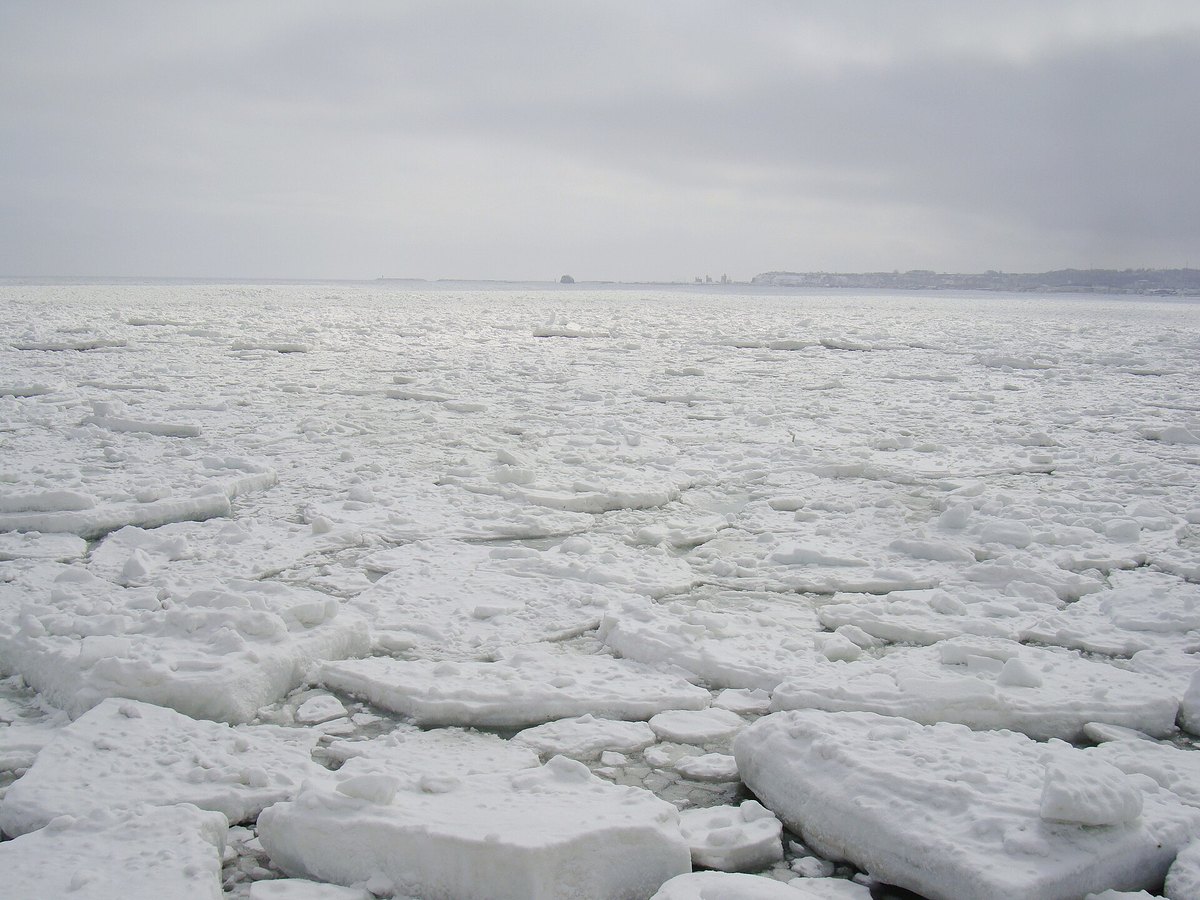
Mid-February to the first week of March has the best odds, and that is the window I would pick. The ice forms in the northern Sea of Okhotsk and is pushed south by wind and current, so its arrival date and thickness change every year. Two dates matter: the "first drift ice day", when ice is first visible out at sea, and the "first shore day", when it reaches the coast. At Abashiri the long-term averages are January 22 and February 4.
Aurora starts sailing on January 20, which means that for the first two weeks of the season, most years have no ice in reach or only a line of it in the distance. The spread between years is wide too: Abashiri's first shore day was January 22 in 2024, February 17 in 2025 and February 1 in 2026, nearly four weeks apart. Aurora's operator names mid-February to early March as the high-probability window and says in writing that arrival has been running later in recent years, making past data less reliable; Garinko-go's operator gives early February to early March as the peak.
Aurora publishes two figures each year, a "drift ice experience rate" and a sailing rate. Plan around the weaker years:
| Year | Drift ice experience rate | Sailing rate |
|---|---|---|
| 2026 | 77% | 93% |
| 2025 | 63% | 76% |
| 2024 | 84% | 86% |
| 2023 | 68% | 84% |
| 2022 | 85% | 90% |
In one hour the ship can only get about 10 km out; if the ice is sitting beyond that you will not see it, and that is only known on the day.
Abashiri's Aurora: 2027 fares, timetable and booking
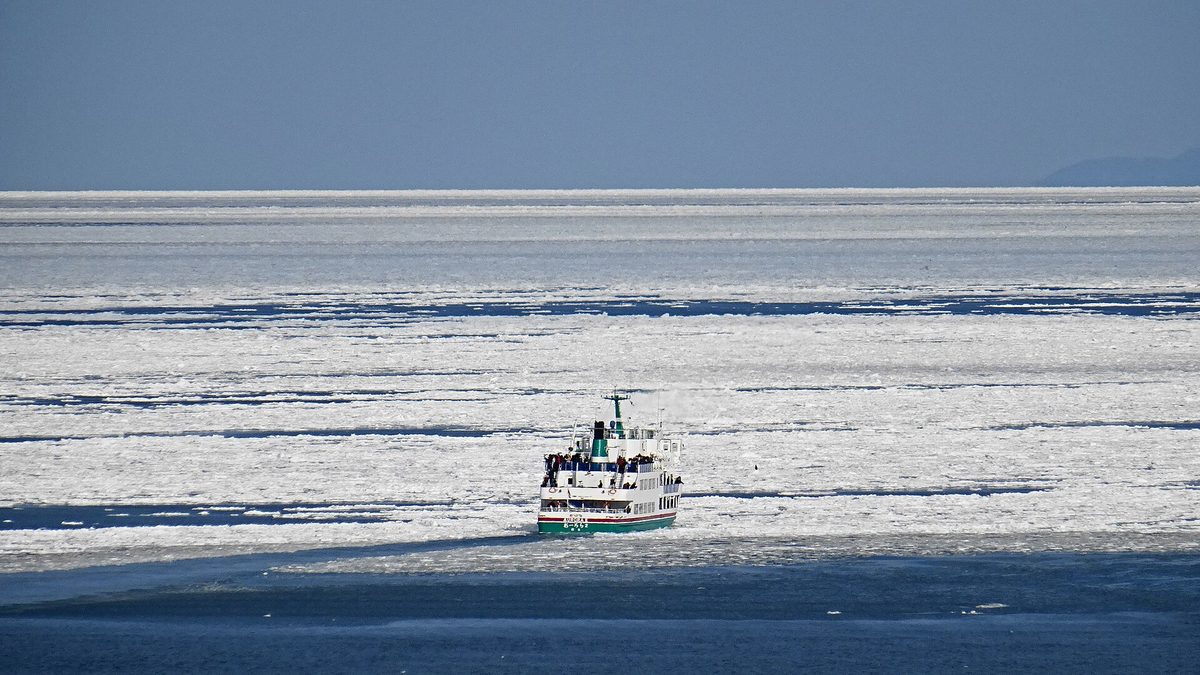
The 2027 season is set: January 20 to March 31, adults ¥7,000, the same fare from January through March. Last season it was ¥5,000 in January and March and ¥6,000 in February, so the fare has gone up and going in January or March no longer saves money.
| Season | January 20–March 31 |
| Departures | Jan 20–31: 9:00 / 11:00 / 13:00 / 15:00 February and Mar 1–14: 9:30 / 11:00 / 12:30 / 14:00 / 15:30; February also has extra sailings at 8:00 and 16:45, bookable only once they are confirmed Mar 15–31: 9:30 / 11:30 / 13:30 |
| Cruise length | Aurora (large ship) about 1 hour; Aurora 3 (small ship) about 2 hours |
| Fare (Aurora) | Adults (junior-high age and up) ¥7,000, elementary-school children ¥3,500, pre-schoolers free |
| Fare (Aurora 3) | Adults ¥9,800, children ¥4,900; planned for March at 9:00 and 13:00, both as extra sailings |
| Special seats | Add ¥500; 50 seats at the front of the 2nd deck, not bookable, first come first served on board, paid after departure |
| Booking | Phone from Thursday, October 15, 2026 (0152-24-2146); online from early November (the booking page says November 1, subject to system changes) |
| Payment | Some credit cards (Visa, Mastercard and others) and QR-code payment accepted |
| Check-in | Finish check-in 20 minutes before departure; it closes 5 minutes before. A passenger manifest form is required and can be downloaded from the official site beforehand |
| If there is no ice | The large ship still sails, as a sea cruise to Cape Notoro, and you are told at the counter that day; Aurora 3 is cancelled |
| Where | Michi-no-Eki Ryuhyo Kaido Abashiri (道の駅 流氷街道網走, Minami 3-jo Higashi 4-5-1, Abashiri); free parking, coin lockers on the 1st floor |
| Official site | ms-aurora.com/abashiri/en |
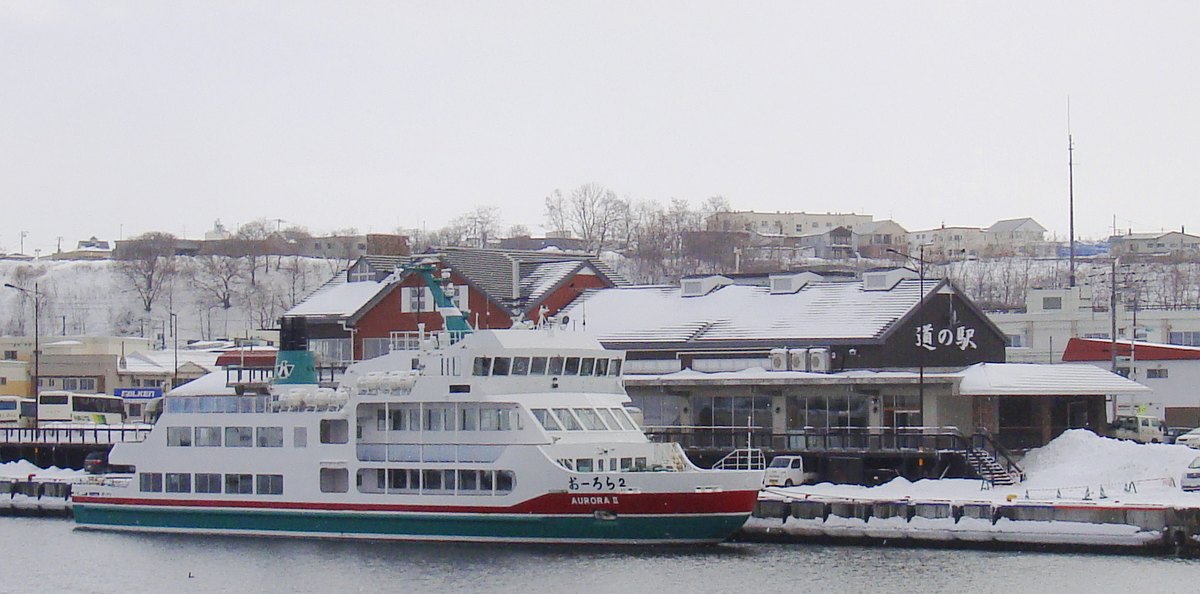
All seating is unreserved and boarding is in queue order, and there are fewer seats than the ship's capacity, so arrive early if you want to sit. The operator asks passengers to book only their first-choice sailing and not to hold backup slots. The ship is not reservation-only — you can buy a ticket and board on the day if space is left — but book ahead for February weekends and holidays.
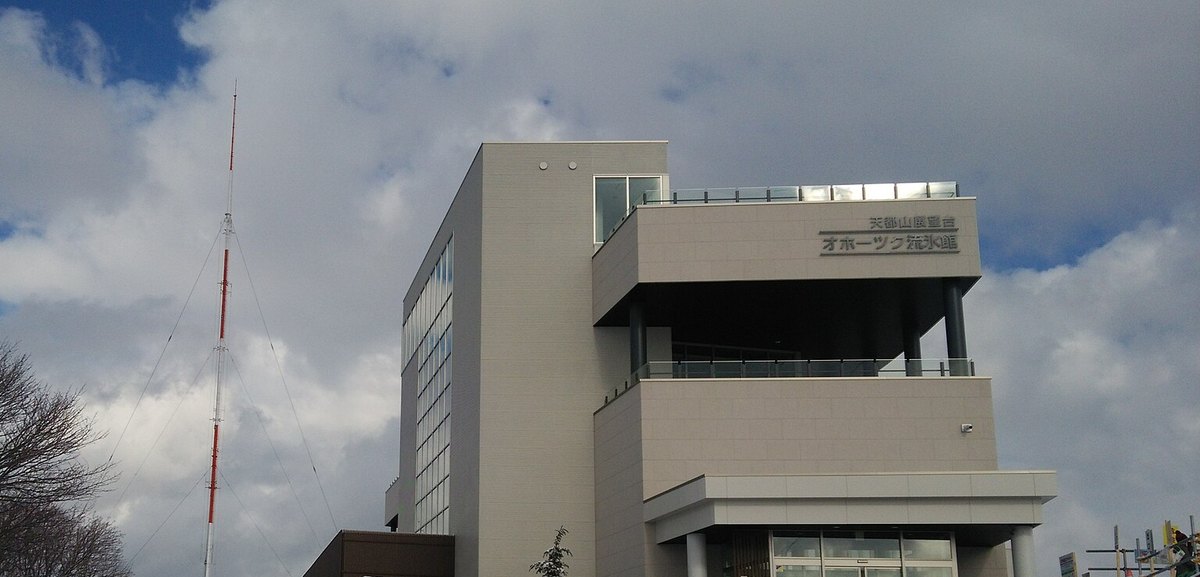
If the ship is cancelled, the backup in Abashiri is the Okhotsk Ryu-hyo Museum on Mt. Tento: open 9:00–16:30 from November to April (last entry 16:00; 10:00–15:00 from December 29 to January 5), no closing days, adults ¥990, high-school students ¥880, elementary and junior-high students ¥770. The observation deck is free.
Monbetsu's Garinko-go: booking date and last season's fares
Booking for winter 2027 is due to open on Friday, October 9, 2026, online and by phone; take the season's dates, timetable and fares from the official page when you book. The table below gives last season's values (January–March 2026) for budgeting. There is one fare for the whole ship, with no cabin classes.
| Booking | Due to open Friday, October 9, 2026; online at booking.o-tower.co.jp, phone 050-1743-5848 (9:00–17:00). Online bookings are prepaid by card |
| Last season's dates | January 16–March 31, 2026, daily |
| Last season's fares | Adults (junior-high age and up) ¥5,000 in January and March, ¥6,000 in February; elementary-school children ¥2,500 / ¥3,000; pre-schoolers free. A set ticket including Okhotsk Tower admission is also sold |
| Last season's departures | January: four sailings between 10:00 and 16:00. February: mainly 8:45 / 10:30 / 12:30 / 14:30 / 16:15, plus early-morning sunrise sailings |
| Cancellation fees | 10% from 14 to 8 days before, 30% from 7 to 2 days, 50% the day before, 100% on the day; you can change sailing until 17:30 the day before |
| Check-in | Opens 60 minutes before departure and closes 30 minutes before. A passenger manifest form is required and can be downloaded beforehand |
| Ship | Garinko-go III IMERU, in service since 2021, capacity 235, two screw drills at the bow; the 2nd deck is barrier-free and wheelchairs can board directly (phone ahead) |
| Where | Kaiyo Koryukan (海洋交流館, Kaiyo Koen 1, Monbetsu); free parking |
| Official site | o-tower.co.jp/garinkogo.html |
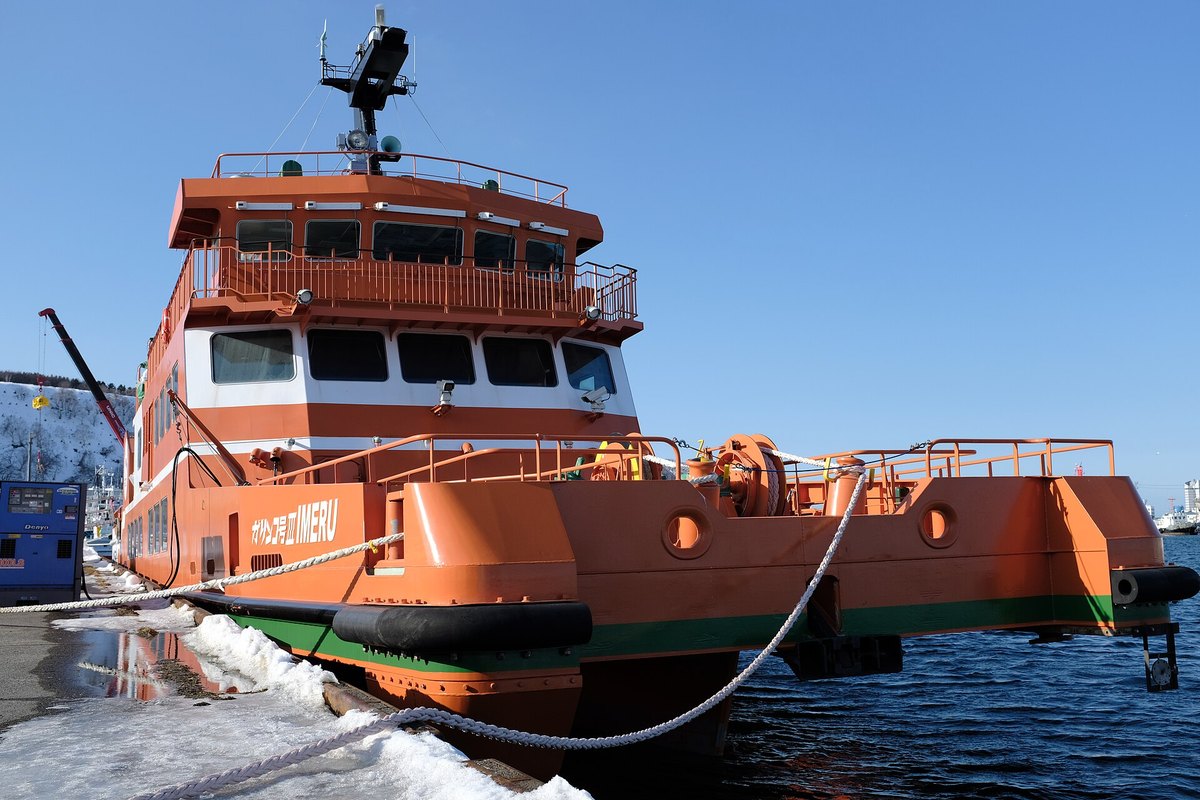
The difference from Aurora is at the bow: Garinko-go moves by turning two Archimedean screw drills into the ice. Like Aurora it is not reservation-only, and you can board on the day if seats are left. The operator gives early February to early March as the peak for ice.
Note that check-in closes earlier than Aurora's, a full 30 minutes before departure. Cancellation fees also start 14 days out, so do not prepay before your dates are fixed.
Aurora or Garinko-go?
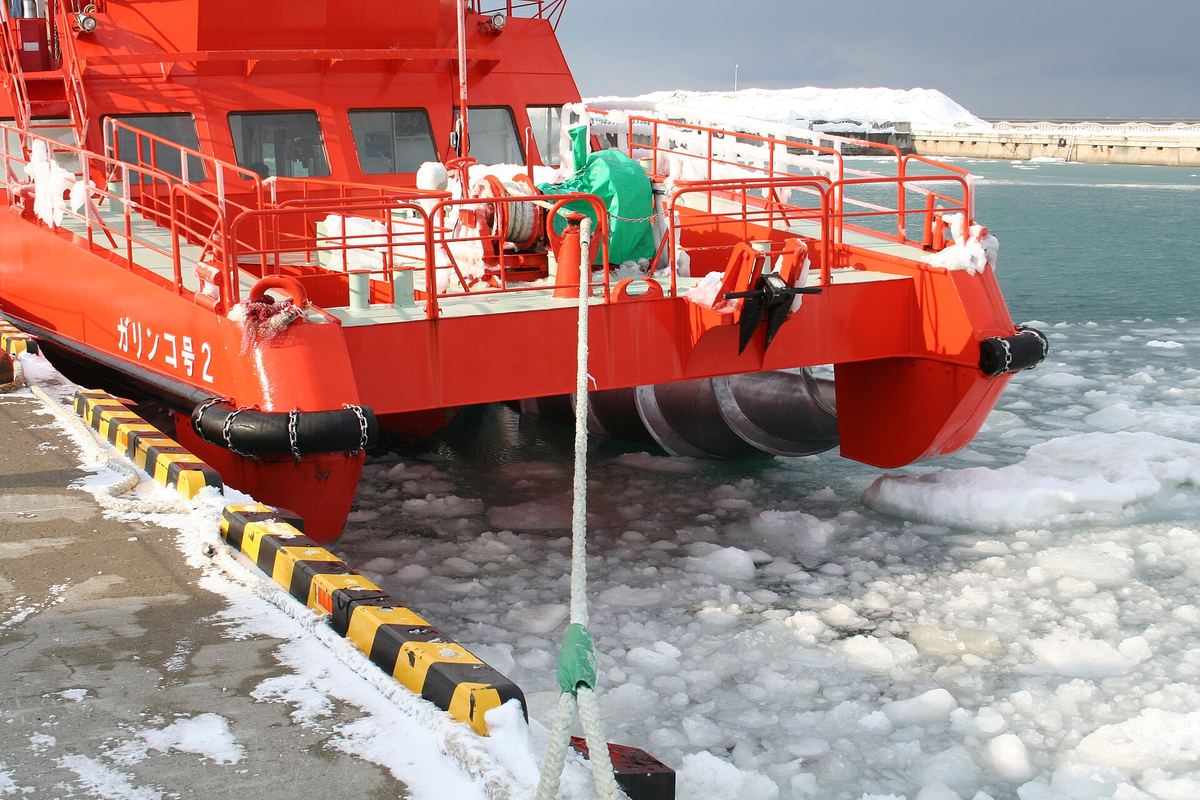
It comes down to where you enter and leave: Aurora if you use Memanbetsu Airport or are continuing to Shiretoko, Garinko-go if you are working east by bus from Asahikawa or Sapporo. Pick one ship per trip.
| Aurora (Abashiri) | Garinko-go (Monbetsu) | |
|---|---|---|
| How it breaks ice | Large ship, little rolling while breaking ice | Two screw drills at the bow turn into the ice |
| Cruise length | About 1 hour (large ship) / about 2 hours (small ship) | About 1 hour (last season) |
| Adult fare | ¥7,000 (2027 season, same January–March) | Last season ¥5,000 (Jan/Mar) / ¥6,000 (Feb) |
| Booking opens | Phone October 15, 2026; online early November | October 9, 2026 (planned), online and phone |
| Nearest airport | Memanbetsu; bus to the pier in about 40 minutes | Monbetsu; free shuttle in about 8 minutes, one Haneda flight a day |
| From Sapporo | JR Limited Express Okhotsk, direct, about 5 hours 25 minutes | Highway bus about 4 hours 20 minutes, then a local bus |
| Best for | Seasickness concerns, elders and children, continuing to Shiretoko | Seeing the drill bow at work; a route east from Asahikawa or Sapporo |
If I could only take one, I would take Aurora: the airport bus runs right to the pier, a bus to Shiretoko leaves from the same place after the cruise, and with five sailings a day in February there is a next one if yours is cancelled.
The Shiretoko drift ice walk: price, limits and meeting point
This is walking out onto the ice in a dry suit — a different activity from a cruise, and one with height and weight limits. These are the terms of SHINRA, an operator in Utoro, Shiretoko:
| Season | February 1–March 31 |
| Sessions | 6:30 (until March 15 only) / 9:30 / 13:00 / 15:30, about 1.5 hours each |
| Price | February 1–March 10: ¥8,000 per person; March 11–31: ¥7,500 per person |
| Who can join | Elementary-school age and up, 130–190 cm tall, 99 kg or under, 74 or younger; each person's height and weight is entered when booking |
| Meeting point | Michi-no-Eki Utoro Shirietoku (道の駅うとろ・シリエトク), meet on site; pickup available within the Utoro area |
| Official site | shinra.or.jp/ryuhyo_walk.html; booking is split into two entry points, February 1–March 10 and March 11–31 |
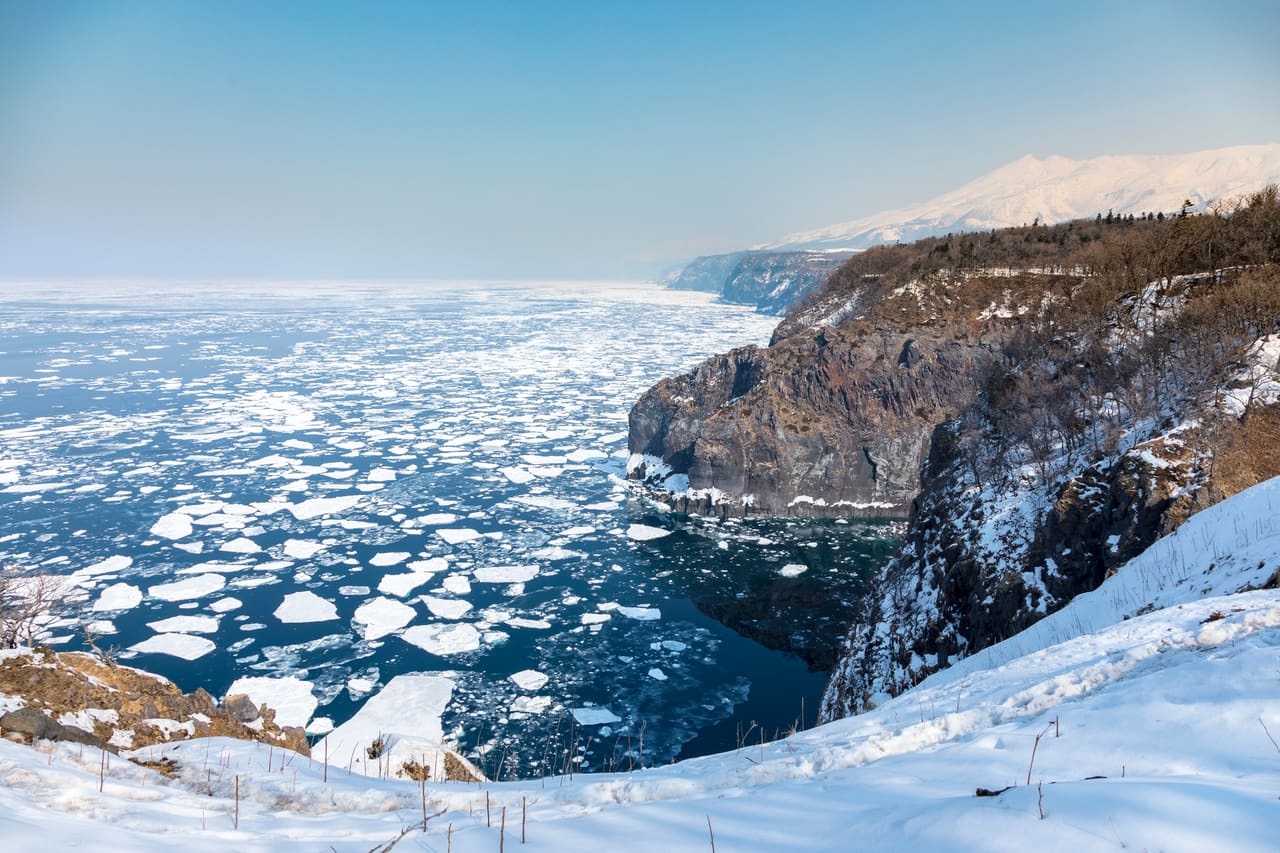
It depends on the day's ice more than a cruise does: when ice or weather is wrong, the walk is limited to the near-shore area or cancelled. A ship can still go to sea without ice; the walk has nothing to do without it. So put it on the morning after your night in Shiretoko and keep the afternoon as a fallback. For the rest of the peninsula, see our Shiretoko guide.
What first-timers most often get wrong
⚠️ 1. The first sailing date is not the ice date. Aurora starts on January 20, but Abashiri's average first shore day is February 4. In late January, most years, what you get is the sea cruise.
⚠️ 2. Nobody tells you about a cancellation. Aurora decides about 1 hour before departure, and you have to check the "本日の運航状況" (today's operation status) box on the official site yourself. Tickets prepaid online are cancelled and refunded by the operator when a sailing is cancelled.
⚠️ 3. There is no direct bus from Memanbetsu Airport to Monbetsu. The connection takes 4–5 hours, and the operator suggests renting a car or using the winter-only Express Bus. Fly into Memanbetsu and you take Aurora; for Garinko-go, come in from Asahikawa, Sapporo or Monbetsu Airport.
⚠️ 4. Only two limited expresses a day run direct from Sapporo to Abashiri. The Taisetsu stopped being a limited express on March 15, 2025 and is now a Special Rapid; to use it you first ride the Limited Express Lilac to Asahikawa and change.
⚠️ 5. The airport bus can only change ¥1,000 notes. It cannot break a ¥5,000 or ¥10,000 note, so have small money ready before boarding at Memanbetsu.
Getting there: airports, Sapporo and on to Shiretoko
The easiest route is to fly into Memanbetsu Airport: the bus reaches the Aurora pier in about 40 minutes. Overland from Sapporo, either port takes half a day.
| Leg | How | Time | Fare |
|---|---|---|---|
| Memanbetsu Airport → Aurora pier | Abashiri Bus airport line, timed to flights; it only runs through to the pier while Aurora is operating | About 40 min | ¥1,150 |
| Memanbetsu Airport → Abashiri Station / Abashiri Bus Terminal | Same bus | About 26 min / about 35 min | ¥1,050 |
| Abashiri Station → Aurora pier | Taxi | About 8 min | About ¥1,000 |
| Sapporo → Abashiri (direct) | Limited Express Okhotsk, twice a day: 6:52 → 12:17 and 15:30 → 20:52 | About 5 h 25 min | Reserved seat ¥10,870 |
| Sapporo → Abashiri (other times) | Limited Express Lilac to Asahikawa, then the Special Rapid Taisetsu (no express surcharge, all unreserved) | About 5.5 h | ¥10,060 |
| Sapporo → Monbetsu | Highway bus (reservation required) to Monbetsu Bus Terminal, then a city bus of about 7 minutes to the "Okhotsk Tower Iriguchi" stop and a walk of about 15 minutes to Kaiyo Koryukan | Bus about 4 h 20 min | See the bus operator |
| Asahikawa Station → Monbetsu | Bus to Monbetsu Bus Terminal, then as above | About 3 h | See the bus operator |
| Monbetsu Airport → Garinko-go pier | Free shuttle bus; one ANA flight a day from Haneda | About 8 min | Free |
| Memanbetsu Airport / Aurora pier ⇄ Utoro (Shiretoko) | Shiretoko Airport Liner, twice daily from January 16 to March 7, 2027, no reservation needed | Pier to Utoro about 1 h 45 min | From the airport ¥4,000; from the pier ¥3,250 |
Shiretoko Airport Liner times: outbound it leaves Memanbetsu Airport at 9:35 / 13:30, runs via Abashiri Station, calls at the Aurora pier at 10:08 / 14:02 and reaches Utoro Onsen Bus Terminal at 11:48 / 15:46. Inbound it leaves Utoro at 9:30 / 12:20, calls at the pier at 11:27 / 14:01 and reaches the airport at 12:00 / 14:34. With this bus, a morning cruise and an afternoon transfer into Shiretoko works without a rental car.
JR times and fares follow JR Hokkaido's official timetable, which is revised every March, so anyone travelling in late March should look them up again before buying. If your trip also covers Sapporo, Asahikawa or Hakodate, it's worth comparing whether a Hokkaido Rail Pass pays off — see our Hokkaido JR Pass complete guide for the route-by-route math.
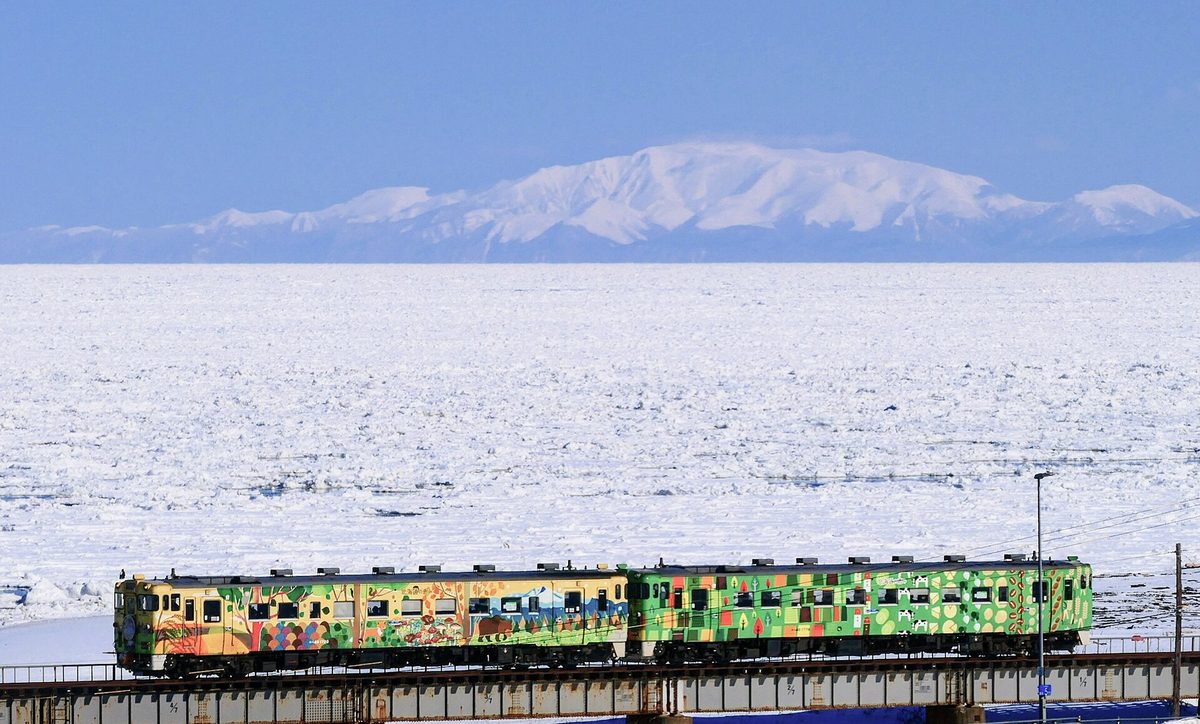
Between Abashiri and Shiretoko-Shari there is also a winter sightseeing train along the Okhotsk coast, the Ryuhyo Monogatari. JR Hokkaido announces its running dates each autumn; how to ride it and reserve seats is in our winter sightseeing trains guide.
Do not economise on clothing: grip-soled snow boots, a windproof and waterproof shell, a thermal base layer plus fleece, and waterproof gloves for the frosted deck railings. The full list is in the Hokkaido section of our Japan climate and clothing guide; if you want to add the Sapporo Snow Festival to the same trip, the dates are in our Sapporo Snow Festival guide.
How I would plan it
Two days, one night in Shiretoko: the ship on day one, the ice walk on day two, all by bus. Sleep in Abashiri the night before, and choose dates between mid-February and the first week of March (the Shiretoko Airport Liner stops running after March 7).
| Time | What |
|---|---|
| Day 1, 10:30 | Arrive at Michi-no-Eki Ryuhyo Kaido Abashiri; check the operator's same-day status, check in and fill in the passenger form |
| 11:00–12:00 | Aurora (the second February sailing) |
| 12:00–14:00 | Lunch and waiting time; bags can go in the 1st-floor coin lockers |
| 14:02 | Board the Shiretoko Airport Liner at the pier |
| 15:46 | Arrive Utoro Onsen Bus Terminal, check in |
| Day 2, 9:30–11:00 | Drift ice walk, meeting at Michi-no-Eki Utoro Shirietoku |
| 12:20 | Airport Liner back from Utoro |
| 14:34 | Arrive Memanbetsu Airport (or get off at the Aurora pier at 14:01 for Abashiri) |
If the 11:00 sailing is cancelled there is still the 12:30, which gets back in time for the 14:02 bus. To extend this into Akan and Kushiro, slot these two days into our Hokkaido winter 7-day itinerary.
Hokkaido Drift Ice FAQ
- Q1:When does booking open for the 2027 Hokkaido drift ice cruises?
- Abashiri's Aurora takes phone bookings from October 15, 2026 and online bookings from early November; Monbetsu's Garinko-go is due to open on October 9, 2026, online and by phone. Neither ship is reservation-only — you can board on the day if seats are left — but book ahead for February weekends and holidays.
- Q2:How much is the Aurora icebreaker in 2027, and how long is the cruise?
- Adults (junior-high age and up) pay ¥7,000, elementary-school children ¥3,500, pre-schoolers ride free, and the fare is the same from January through March. The cruise takes about 1 hour. The smaller Aurora 3 runs about 2 hours at ¥9,800 for adults, planned for March as extra sailings only. The season is January 20 to March 31; departure times are in the Aurora section.
- Q3:How much does Garinko-go in Monbetsu cost?
- Last season (January–March 2026) adults paid ¥5,000 in January and March and ¥6,000 in February, children half that, pre-schoolers free. There is one fare for the whole ship, with no cabin classes. Booking for winter 2027 is due to open on October 9, 2026; the season's dates, timetable and fares are on the official Garinko-go page.
- Q4:Which month gives the best chance of seeing drift ice?
- Mid-February to the first week of March. At Abashiri the long-term average is January 22 for the first ice visible offshore and February 4 for ice reaching the shore, and over the last three years the shore date has ranged from January 22 to February 17. In the first two weeks after sailings start on January 20, most years have no ice at the coast yet.
- Q5:Does the icebreaker still sail if there is no drift ice?
- The large Aurora still sails, as a sea cruise out to Cape Notoro; the small Aurora 3 is cancelled when there is no ice. The operator's own published "drift ice experience rate" was 77% in 2026 and 63% in 2025. Weather cancellations are decided about 1 hour before departure and nobody is contacted individually, so check the operator's same-day status page yourself.
- Q6:Aurora in Abashiri or Garinko-go in Monbetsu — which one?
- Take Aurora if you fly in and out of Memanbetsu Airport or are continuing to Shiretoko; take Garinko-go if you are working east by bus from Asahikawa or Sapporo. Aurora is a large ship that rolls little while breaking ice; Garinko-go breaks ice with two screw drills at the bow. There is no direct bus from Memanbetsu Airport to Monbetsu, and the connection takes 4–5 hours.
- Q7:How much is the Shiretoko drift ice walk, and who can join?
- SHINRA's drift ice walk costs ¥8,000 per person from February 1 to March 10 and ¥7,500 from March 11 to 31, and lasts about 1.5 hours. Participants must be elementary-school age or older, 130–190 cm tall, 99 kg or under, and 74 or younger, and you enter each person's height and weight when booking. Poor ice or weather can limit the walk to the near-shore area or cancel it.
- Q8:How do I get from Sapporo to Abashiri for the drift ice?
- Take the Limited Express Okhotsk, which runs direct twice a day in about 5 hours 25 minutes; a reserved seat is ¥10,870. At other times, take the Limited Express Lilac to Asahikawa and change to the Special Rapid Taisetsu. A same-day round trip is not realistic, so plan at least one night in Abashiri; for whether a rail pass pays off, see our Hokkaido JR Pass guide.
- Q9:What should I wear on the icebreaker deck?
- Grip-soled snow boots, a windproof and waterproof shell, a thermal base layer plus fleece, and waterproof gloves. January to March is the coldest part of the Hokkaido year, the deck is windier than town, and the railings frost over. The full list is in the Hokkaido section of our Japan climate and clothing guide.
If it were my trip
For a first drift ice trip I would book Aurora in late February, fly in and out of Memanbetsu, and spend one night in Abashiri and one in Shiretoko. Aurora's online booking does not open until early November, so anyone aiming at a February holiday should phone from October 15. If standing on the ice is the main goal, I would stay two nights in Shiretoko so a cancelled walk can move to the next day. And if late January is the only time available, I would treat drift ice as a bonus on a trip built around something else rather than detour to eastern Hokkaido for it.
Official information
Fares, timetables and operating dates follow each operator's latest announcement.
- Abashiri Drift Ice Sightseeing Icebreaker Aurora
- Monbetsu Garinko-go
- SHINRA drift ice walk
- Abashiri Bus, Memanbetsu Airport line
- Okhotsk Ryu-hyo Museum
Read next
Shiretoko Travel Guide 2026: Five Lakes, Cruises & Drift Ice
A UNESCO World Heritage wilderness — the free Five Lakes boardwalk, cruises past waterfalls and shore bears, and a February drift-ice walk. Remote enough that a car is the honest answer.
Hokkaido Winter 7-Day Itinerary 2026
Sapporo → Otaru → Biei → Hakodate over 7 days, with JR Pass math, how to reach the Furano slopes, and a real two-person budget.
Hokkaido JR Pass Complete Guide 2026
Five routes recalculated with 2026 fares — all-reserved limited expresses and the post-2024 Furano line closure change the math.