Ise-Shima rarely makes a first-trip Japan list, yet it is the spiritual home many Japanese feel they must visit once in a lifetime. Here is Ise Jingu, Japan's holiest Shinto shrine — and free to enter; the Shikinen Sengu, the ritual rebuild repeated every 20 years with the next in 2033; the Meoto Iwa "wedded rocks" joined by a sacred rope over the sea; and down the coast, Toba's pearl island, the most species-rich aquarium in Japan, and the broken ria coastline of Shima's Ago Bay. It sits between Kansai and Nagoya, a single Kintetsu limited express away. This guide covers the Geku-then-Naiku order, Okage Yokocho and Akafuku, Meoto Iwa, how to do Toba and Shima, and how to ride Kintetsu's premium Shimakaze. To continue south into Kumano, see our Kumano Kodo guide.
- Ise Jingu is free: Naiku (Amaterasu) + Geku (Toyouke); tradition is Geku first, then Naiku
- Rebuilt every 20 years: the next Shikinen Sengu is 2033, with rituals starting around 2025
- Okage Yokocho + Akafuku mochi: the old street at the Naiku's Uji Bridge; eat the 300-year-old Akafuku
- Meoto Iwa + Toba & Shima: rope-joined rocks, ama pearl divers, Japan's only dugong, Ago Bay's islands
- Direct Kintetsu express from Osaka, Kyoto, and Nagoya; the Shimakaze train is worth it — plan two days
📖 Contents
Why visit Ise-Shima
Honestly, Ise-Shima is not a checklist destination dense with photo spots. Its value is in weight and quiet. Ise Jingu is the closest thing Shinto has to a head shrine — to Japanese people it is "O-Ise-san," the place to visit at least once in a life — and the southern Mie coast wrapped around it folds the sacred together with seafood, pearls, and a broken ria bay, so there is both stillness and movement. Its two strongest cards are the hard-to-describe sacredness of the shrine and the Shima coastline — one settles you, the other gives you a sea to stare at. And it sits between Kansai and Nagoya, a direct limited express away, so the cost of slotting in two days is low. The advice is simple: with one day, do the shrine and Toba; with a night to spare, add Meoto Iwa and Ago Bay, which is where the "Shima" in the name earns its keep.
On timing: Ise-Shima works year-round, but a couple of windows stand out. Late spring to early summer (roughly May to July) is when the sun rises between the Meoto Iwa rocks at dawn — the reason photographers set an early alarm in Futami. Autumn brings clear air for the island views over Ago Bay from the Yokoyama Observatory, and cooler walks along the shrine's cedar approach. The window to flag for care is the run of Japanese holidays and summer weekends, when the coastal onsen ryokan around Toba and Shima fill fast — book early. Summer on the bay is also hot and humid, so pace the outdoor stops. As for what to skip: do not treat the inner sanctuaries as a photo op (they are restricted, and the point is the atmosphere), and if your time is tight, choose Toba or the Shima viewpoints rather than rushing both.
Ise Jingu: Geku, Naiku & the Shikinen Sengu
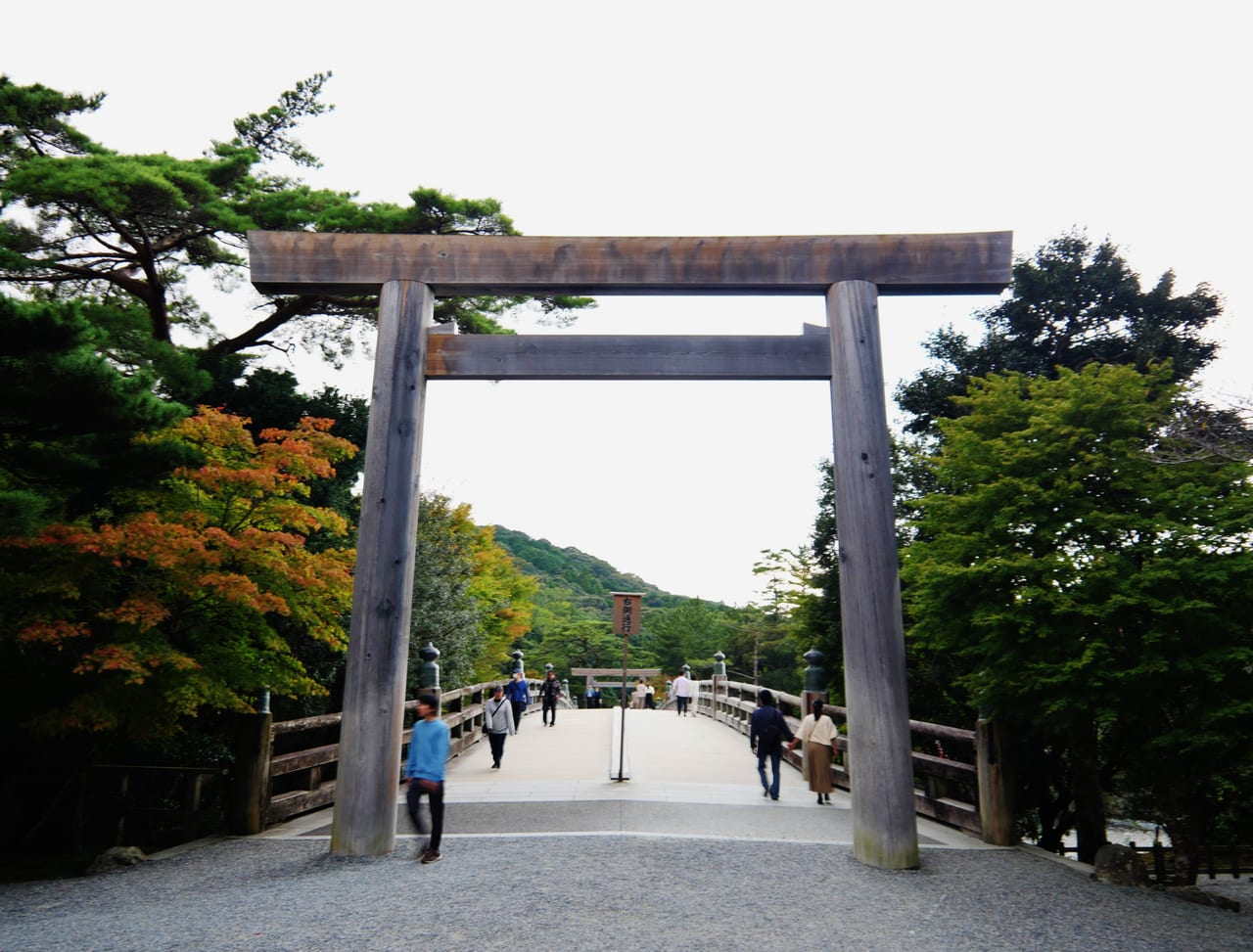
First, the big picture: what people call "Ise Jingu" is actually a collective name for 125 shrines, centered on two main sanctuaries. The Naiku (Inner Shrine) enshrines Amaterasu Omikami, the imperial ancestral deity and the highest in rank; the Geku (Outer Shrine) enshrines Toyouke Omikami, guardian of food, clothing, shelter, and industry. The two sit about 5–6 km apart — Geku beside Iseshi Station, Naiku across the Uji Bridge on the Isuzu River. The most important thing to know: visiting is free, which in a country where so many sights charge admission is genuinely rare.
The order matters. Tradition is Geku first, then Naiku (geku-sakimoude), because the shrine's rituals were always performed at the Outer Shrine before the Inner. If you are tight on time, most travelers head straight to the Naiku and the Uji Bridge — the cedar-lined approach, the Mitarashi spot at the Isuzu River (where you purify your hands in the stream), and the atmosphere before the main sanctuary are the can't-miss part. A reminder: photography is restricted across much of the sacred grounds, especially before the main sanctuary, so keep the camera for the Uji Bridge, torii, and approach, then put the phone away and visit quietly.
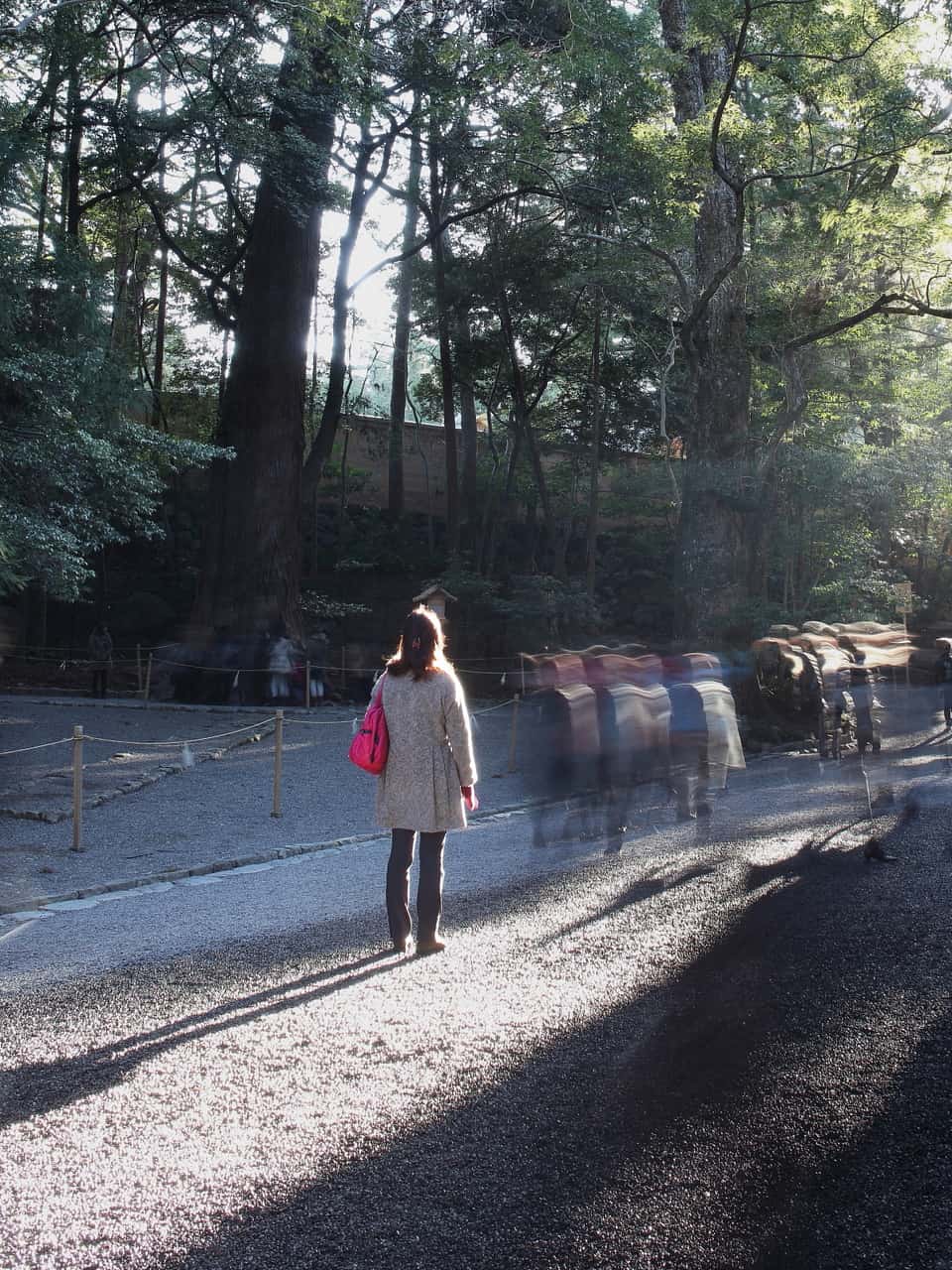
The one word to understand at Ise is "Shikinen Sengu." In short, the shrine rebuilds its main sanctuaries from scratch on the adjacent plot every 20 years, moves the sacred objects into the new buildings, and dismantles the old — a ritual carried on for over 1,300 years. Behind it is the idea of tokowaka: staying eternally young and pure through constant renewal, while passing the carpenters' craft down the generations. Per official info, the next (63rd) transfer is scheduled for 2033, and the full set of associated rituals actually began around 2025, spanning roughly eight years. For travelers, the meaning is concrete: the sanctuaries you see now are from the 2013 rebuild, and the closer you get to 2033, the more you can watch old and new sanctuaries stand side by side — worth aiming your trip at those years if this cultural thread appeals to you.
Okage Yokocho, Oharaimachi & Akafuku
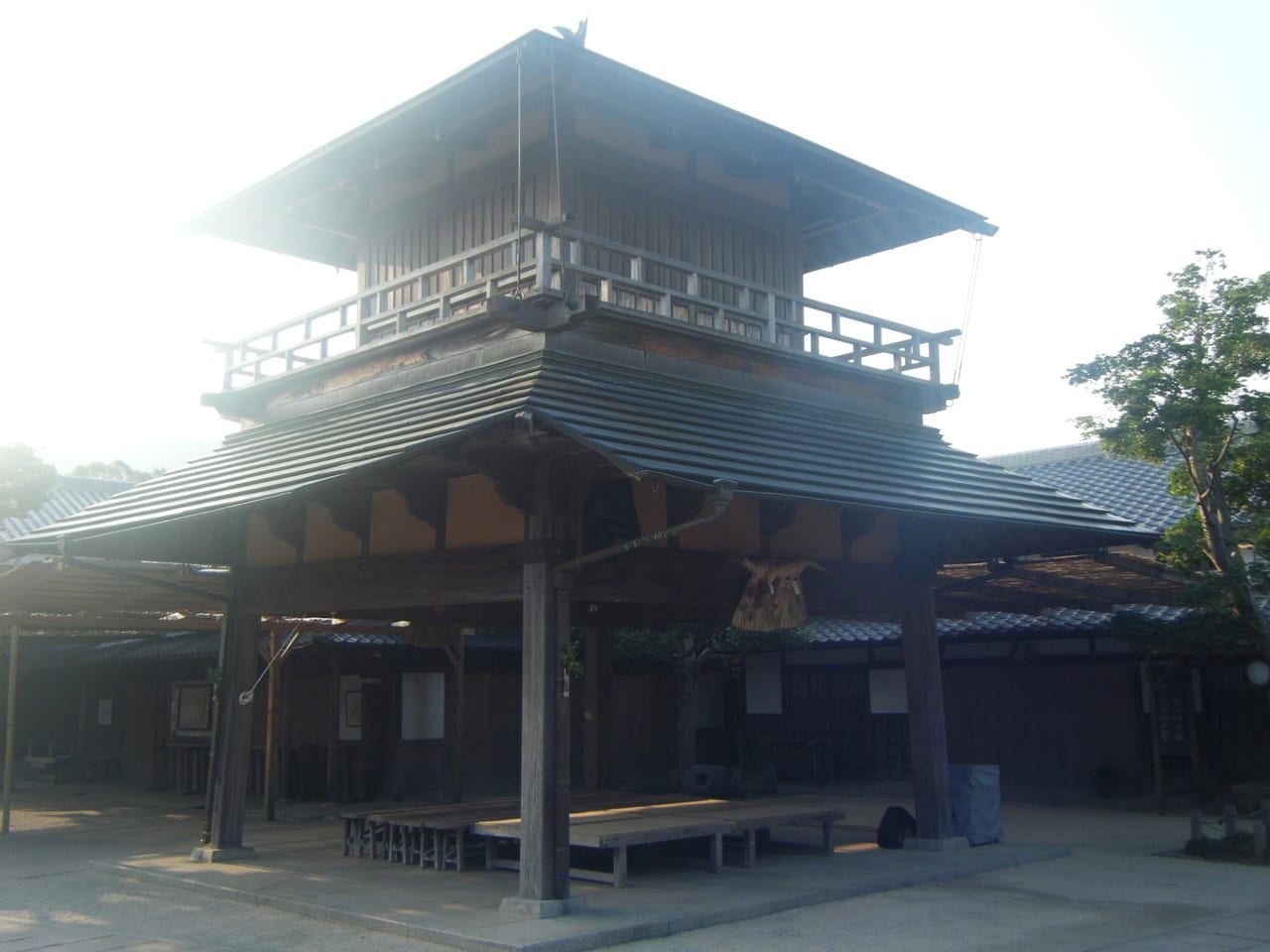
After the Naiku, walking back out across the Uji Bridge drops you onto Oharaimachi — an 800-meter old street paved in stone along the Isuzu River, lined with Edo-style wooden machiya selling Ise udon, seafood, local sake, and souvenirs. Tucked off the middle of it, Okage Yokocho is a quarter that Akafuku built in 1993 to recreate the Edo-to-Meiji streetscape, gathering food stalls, tea houses, and shops in one place. It is a "rebuilt old town," but the materials are careful and walking in genuinely feels like stepping back to the Edo period — the most convenient place to eat and shop for souvenirs.
The signature here is Akafuku mochi, Ise's defining sweet: a soft rice cake under a smooth layer of red-bean paste, its three ridges echoing the flow of the Isuzu River. The main shop sits on Oharaimachi and has traded for over 300 years. Per traveler discussion, freshly made Akafuku with a cup of bancha tea is the way to eat it, and summer brings the shaved-ice version, "Akafuku-gori." Beyond Akafuku, this street's Ise udon (dark, sweet sauce over soft noodles), tekone-zushi, grilled seafood, and sake tastings are all worth grazing on. Pair "Naiku visit + Oharaimachi/Okage Yokocho grazing" into one half-day, then move to the coast once you are full.
Meoto Iwa & Futami Okitama Shrine
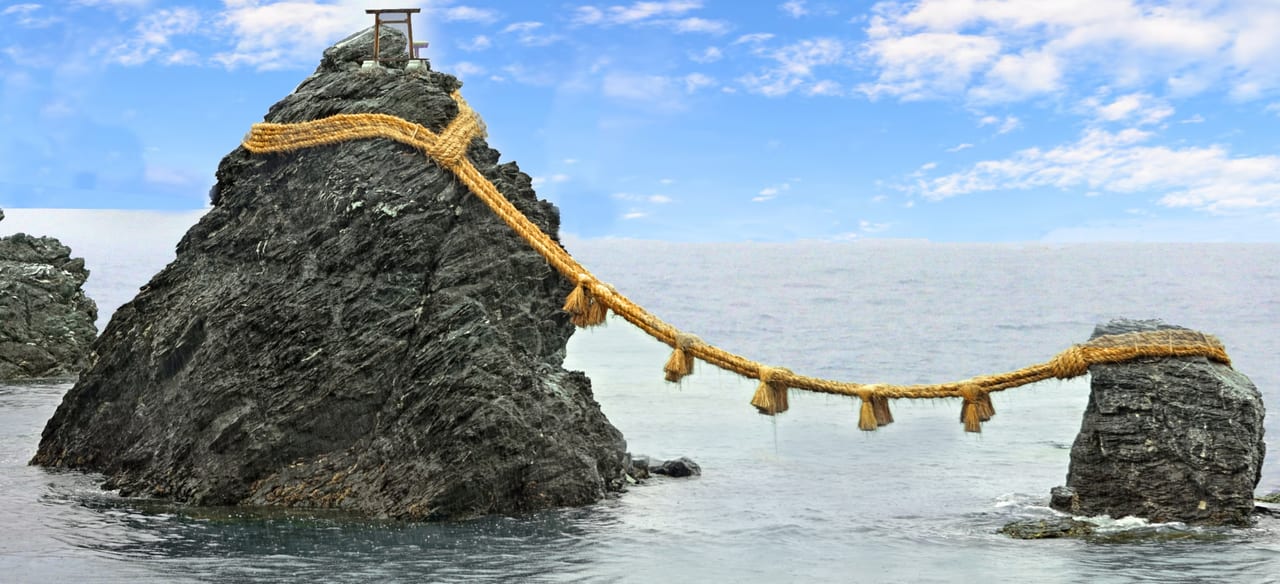
About 20 minutes by car from central Ise, the town of Futami holds the region's most symbolic image — the Meoto Iwa (wedded rocks). Two rocks, one large and one small, are joined by a sacred rope (shimenawa) about 35 meters long, symbolizing marriage and good matches, and they rank among Japan's best-known relationship spots. They stand in the grounds of Futami Okitama Shrine, which enshrines Sarutahiko Okami and is known for a purification tradition: pilgrims would cleanse themselves here before visiting Ise Jingu — hence the old route of "Futami first, then Ise."
One detail for seeing Meoto Iwa: the best moment is sunrise around the summer solstice — between May and July, the sun rises right between the two rocks, and on a clear day the silhouette of Mt. Fuji can sit on the far horizon, which is why photographers come at dawn. In other seasons you miss the "sun-between-the-rocks" shot, but seeing the rope span the sea by day, with the wind and the shrine atmosphere, is still worthwhile — and since it sits right on the road from Ise to Toba, the cost of a quick stop is low. The rope is replaced three times a year by the shrine, a rare living tradition.
Toba: pearl island & aquarium
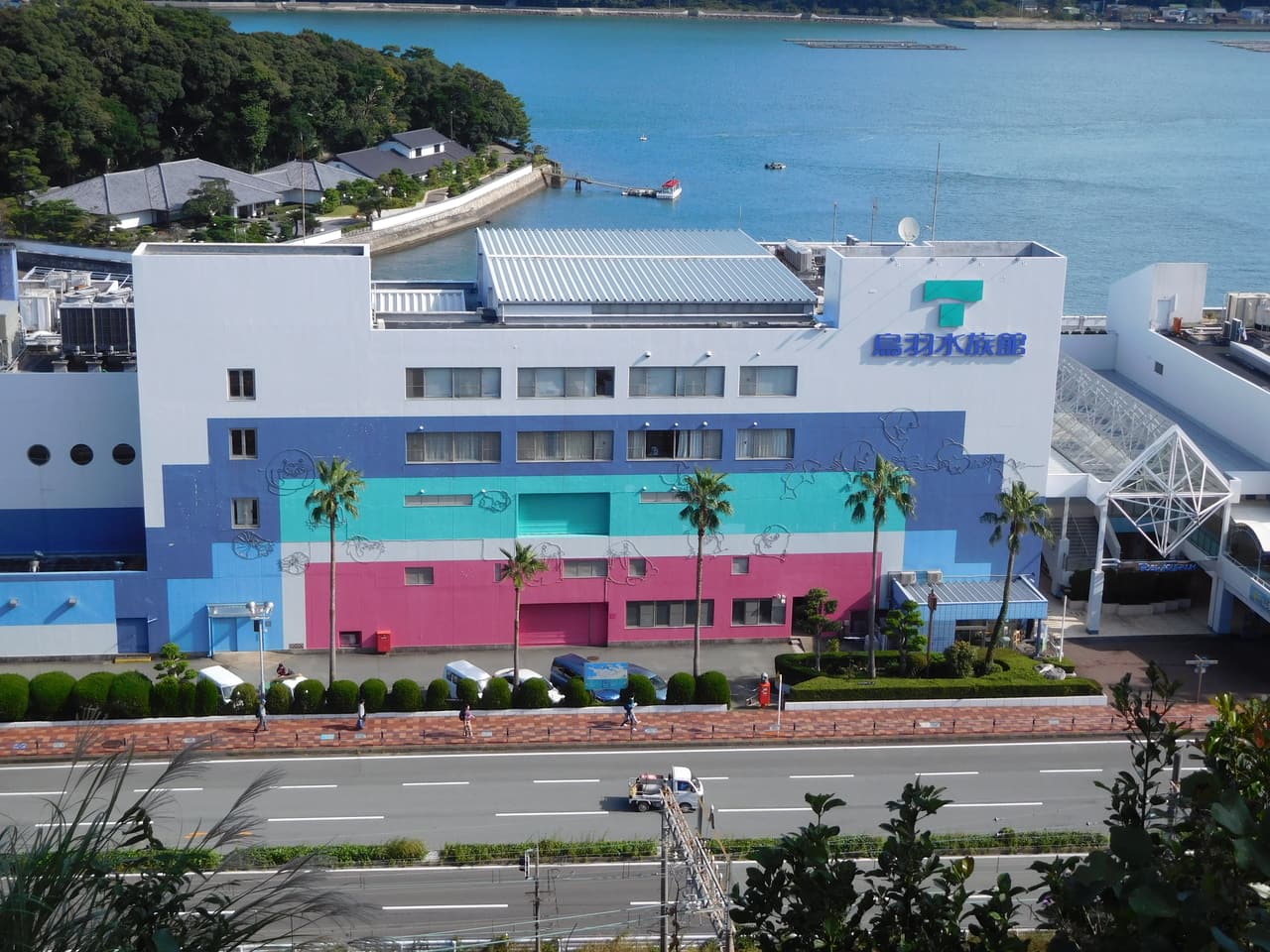
Further along the coast is Toba, the heart of pearl country and ama (female diver) culture, where two headline sights sit side by side. Mikimoto Pearl Island is where Kokichi Mikimoto succeeded in culturing the world's first pearl here in 1893; the island has live ama diving demonstrations (per official info, about 7 shows a day on the hour, reviving the tradition of white-clad divers gathering shellfish by hand) and a pearl museum walking you through the whole cultivation process. Admission runs about ¥1,650 for adults and ¥820 for ages 6–15, with hours roughly 9:00–17:00 (slight seasonal variation).
Next door, Toba Aquarium is not to be missed — it keeps the most species of any aquarium in Japan, and its biggest draw is Japan's only captive dugong, "Serena," alongside crowd-favorite sea otters and walrus shows. The layout is free-flowing rather than a fixed route, and it easily eats up 2–3 hours, making it a great pick with kids or as a rainy-day backup. Per official info, admission is about ¥2,800 for adults, ¥1,600 for school-age children, and ¥800 for ages 3+. The two attractions are adjacent and combo tickets (including with bay cruises) are sold on site, so one afternoon covers both nicely.
Shima: Ago Bay & Yokoyama Observatory
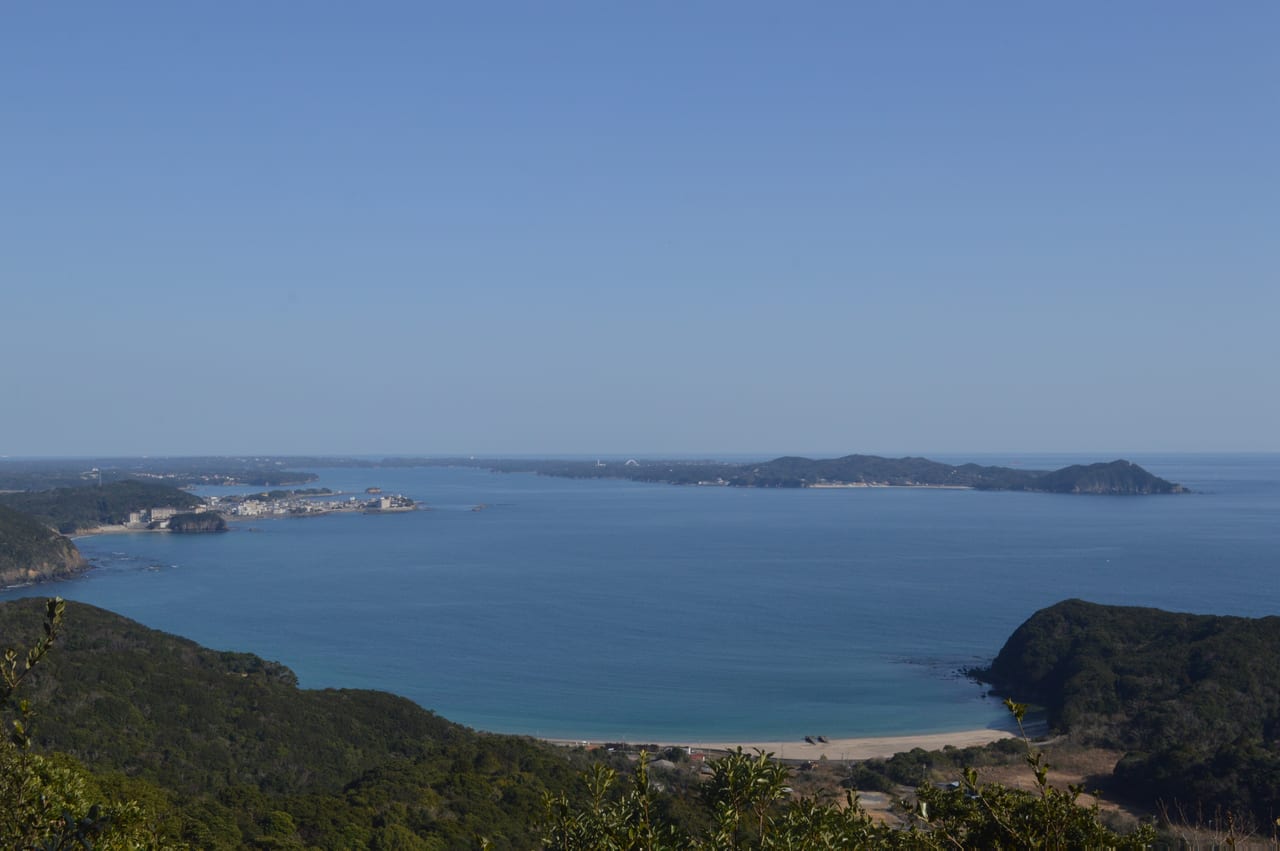
At the southern tip of the region, Shima is the core of Ise-Shima National Park, and its centerpiece is Ago Bay — a classic ria coastline scattered with dozens of small green islands, and the main stage of pearl farming, so the water is often dotted with rows of cultivation rafts. To take in the view, the top pick is the Yokoyama Observatory: it sits partway up Mt. Yoko at about 203 meters, and after renovation added a "Sky Cafe Terrace." Both the observatory and the visitor center are free, it is about 3 km from Kintetsu's Shima-Yokoyama Station (a few minutes by car or taxi), and on a clear day the island-studded bay opens up below — especially lovely at dusk.
Shima has two more spots that come up often. One is Kashikojima, the terminus of the Kintetsu Shima Line and the site of the 2016 G7 (Ise-Shima) Summit, where you can board an Ago Bay sightseeing cruise. The other is Shima Spain Village (Shima Supein Mura), a Spanish-themed amusement park plus onsen that went briefly viral on social media in recent years — good for families or anyone who wants rides. Per official info, Shima's sights are more spread out and service is sparser, so to go deep into Ago Bay and the Yokoyama Observatory, set aside half a day and consider a rental car or the tourist buses.
Transport (Kintetsu / Shimakaze / JR) & lodging
Getting in runs mainly on Kintetsu Railway: limited expresses go direct from Osaka-Namba, Kyoto, and Nagoya to Iseshi, Ujiyamada, Toba, and Kashikojima. Remember Ise has two main stations — Iseshi Station, shared by JR and Kintetsu and right by the Geku; and Ujiyamada Station, Kintetsu-only but more convenient if you arrive by Kintetsu. The one worth flagging is the Shimakaze: Kintetsu's premium sightseeing express, with luxury leather seats, an observation car, and a cafe car. Per the official timetable it leaves Osaka-Namba around 10:40 and reaches its terminus Kashikojima around 13:03 (no service on Tuesdays) — a "the journey is the experience" ride that needs an extra car charge and, in peak season, an early reservation since it often sells out.
JR reaches Ise too, but with fewer options: from Nagoya, the Rapid Mie takes about 90 minutes to Iseshi Station, though JR Pass holders pay roughly ¥520 extra on board (it borrows non-JR track for part of the way). Overall, Kintetsu is more frequent and has more direct stops, so it is the easier way in. If your route is "in via Osaka or Kyoto, through Ise-Shima, out via Nagoya" — a sweep across Kansai into Chubu — compare Kintetsu's Ise-Shima passes against the nationwide JR Pass; the break-even math for the national pass is in our JR Pass guide. Getting around the region: route and sightseeing buses (such as the "CAN Bus" looping Ise, Toba, and Futami) connect Geku↔Naiku, Meoto Iwa, and Toba; for the more scattered Shima area, a rental car saves the most hassle.
For lodging, split it by purpose. To keep the shrine close, stay around Iseshi or Ujiyamada Station — easy in and out for the shrine and Oharaimachi, ideal for a one-night stopover. To enjoy sea views and onsen and treat Ise-Shima as a resort, stay in Toba (over Toba Bay) or Shima (along Ago Bay), where a number of onsen ryokan look out over the water and serve Ise lobster and abalone kaiseki; the bay after the day-trippers leave and the quiet at dawn are scenes a same-day return never gets. Japanese holidays and summer weekends fill fast, so book early. If you are continuing the trip, the pre-trip weather and trail notes in our Kumano Kodo guide are useful for the rainy season and the walking south of here.
A two-day Ise-Shima plan
Here is the same content shaped into a route that walks well:
- Day 1 (shrine + Toba): arrive by Kintetsu and drop bags → visit the Geku first (the traditional order) → bus to the Naiku for the Uji Bridge, cedar approach, and the Isuzu River purification spot → lunch and Akafuku on Oharaimachi / Okage Yokocho → afternoon to Toba for Mikimoto Pearl Island (ama show) and Toba Aquarium (dugong, sea otters) → overnight in Toba with an Ise-lobster kaiseki and bay views.
- Day 2 (Meoto Iwa + Shima): rise early for the summer-solstice sunrise at Meoto Iwa (Futami Okitama Shrine) → head south to Shima and up the Yokoyama Observatory (free) over Ago Bay's islands → choose between an Ago Bay cruise from Kashikojima and Shima Spain Village → evening Kintetsu or Shimakaze back to Osaka or Nagoya for your next leg.
With only one day, do the full Day 1 shrine and Oharaimachi and pick one of Toba or Shima — but you give up the Meoto Iwa dawn and the Ago Bay views, which is exactly why one night is worth it. South of Ise-Shima the coast leads along the Kumano-nada to the Kumano Kodo and the Kumano Sanzan shrines (see our Kumano Kodo guide); north is back to Nagoya, west to the Kyoto-Osaka-Nara core (start with our Nara guide). Work out the rail passes before you go — compare our JR Pass guide against Kintetsu's regional passes for your route.
FAQ
- Q1:How many days do you need in Ise-Shima? Is one day enough?
- Visiting Ise Jingu itself (the Geku and Naiku) plus lunch on Okage Yokocho takes most of a day. But the Ise-Shima region is more than the shrine: the Meoto Iwa rocks sit in Futami, Toba has the pearl island and aquarium, and Shima has Ago Bay and the Yokoyama Observatory — each requires a Kintetsu or bus hop. Per official info and traveler discussion, pairing the shrine and Toba on day one with Meoto Iwa and Ago Bay on day two works best, so budget two days. One day forces a choice between the shrine and the coast. South of here the route connects to the Kumano Kodo — see our Kumano Kodo guide.
- Q2:How much does Ise Jingu cost, and do you visit Geku or Naiku first?
- Ise Jingu is completely free to visit — neither the Naiku (Inner Shrine, enshrining Amaterasu) nor the Geku (Outer Shrine, enshrining Toyouke) charges admission, which sets it apart from most paid sights. On order, tradition is Geku first, then Naiku (geku-sakimoude): rituals were historically held at the Outer Shrine before the Inner. The two sit about 5–6 km apart — Geku beside Iseshi Station, Naiku across the Uji Bridge — linked by a 15–20 minute bus. Short on time, many skip Geku and go straight to Naiku and the Uji Bridge. Note that photography is restricted in the inner sanctuaries, so shoot the Uji Bridge, torii, and approach.
- Q3:What is the Shikinen Sengu, and when is the next one?
- The Shikinen Sengu is the ritual in which Ise Jingu rebuilds its main sanctuaries from scratch every 20 years and moves the sacred objects to the new buildings — a tradition over 1,300 years old, central to the shrine's idea of tokowaka, staying eternally new through renewal. Per official info, the next (63rd) transfer is scheduled for 2033, with the full sequence of associated rituals already beginning around 2025 and spanning roughly eight years. For travelers, the practical point: the sanctuaries you see now date from the 2013 rebuild, and the years approaching 2033 are a special window to watch old and new stand side by side.
- Q4:How do Okage Yokocho, the Meoto Iwa rocks, and Akafuku fit in?
- These three are the soul of the shrine's surroundings. Oharaimachi is an 800-meter old street of Edo-style wooden machiya leading from the Naiku's Uji Bridge; midway, Okage Yokocho was built by Akafuku in 1993 to recreate the Edo–Meiji streetscape, packed with snacks, tea houses, and souvenirs. The must-eat Akafuku mochi — soft rice cake under sweet red-bean paste — comes from a shop over 300 years old on this street. Meoto Iwa, the "wedded rocks," sits in the grounds of Futami Okitama Shrine: two rocks joined by a 35-meter sacred rope, with the sun rising between them around the summer solstice. Route them as Naiku → Oharaimachi, then Meoto Iwa on the way to Toba.
- Q5:Are Toba's pearl island and aquarium worth it? What do they cost?
- It depends on whether you have kids and care about the sea and pearls. Mikimoto Pearl Island is where Kokichi Mikimoto cultured the world's first pearl; it has live ama (female diver) demonstrations — per official info, about 7 shows a day on the hour — and a pearl museum, at roughly ¥1,650 for adults and ¥820 for ages 6–15. Next door, Toba Aquarium keeps the most species of any aquarium in Japan, and its headline is Japan's only dugong plus crowd-favorite sea otters; admission is about ¥2,800 for adults, ¥1,600 for school-age, ¥800 for ages 3+. The two are adjacent and combo tickets exist — a strong rainy-day or family pick.
- Q6:How do you get to Ise-Shima — Kintetsu or JR? What is the Shimakaze?
- The backbone is Kintetsu Railway, with limited expresses running direct from Osaka-Namba, Kyoto, and Nagoya to Iseshi, Ujiyamada, Toba, and Kashikojima. The standout is the Shimakaze, Kintetsu's premium sightseeing express with luxury seats, an observation car, and a cafe car; per the official timetable it leaves Osaka-Namba around 10:40 and reaches Kashikojima around 13:03 (no service on Tuesdays) — a "the journey is the experience" ride that needs an extra car charge and an early reservation. JR also reaches Ise: the Rapid Mie from Nagoya takes about 90 minutes to Iseshi, but JR Pass holders pay roughly ¥520 extra on board (it borrows non-JR track). Overall Kintetsu is more frequent and convenient; whether the nationwide JR Pass pays off is in our JR Pass guide.
Related reading:
Nara Guide 2026: Todaiji, the Deer Park & Kasuga Taisha
About 40 minutes by Kintetsu from Osaka or Kyoto — the Todaiji Great Buddha, feeding roughly 1,700 free-roaming deer, Kasuga Taisha lanterns, and the Kofukuji pagoda restoration status.
Kumano Kodo Guide 2026: Three Shrines & Nachi Falls
A UNESCO pilgrimage route dual-listed with the Camino. The three Kumano shrines, 133m Nachi Falls, the beginner 7km Hosshinmon-to-Hongu walk, the Tsuboyu onsen, and honest transport advice.
JR Pass 2026: Is It Still Worth It?
Four real routes calculated, six alternatives that may beat the Pass.