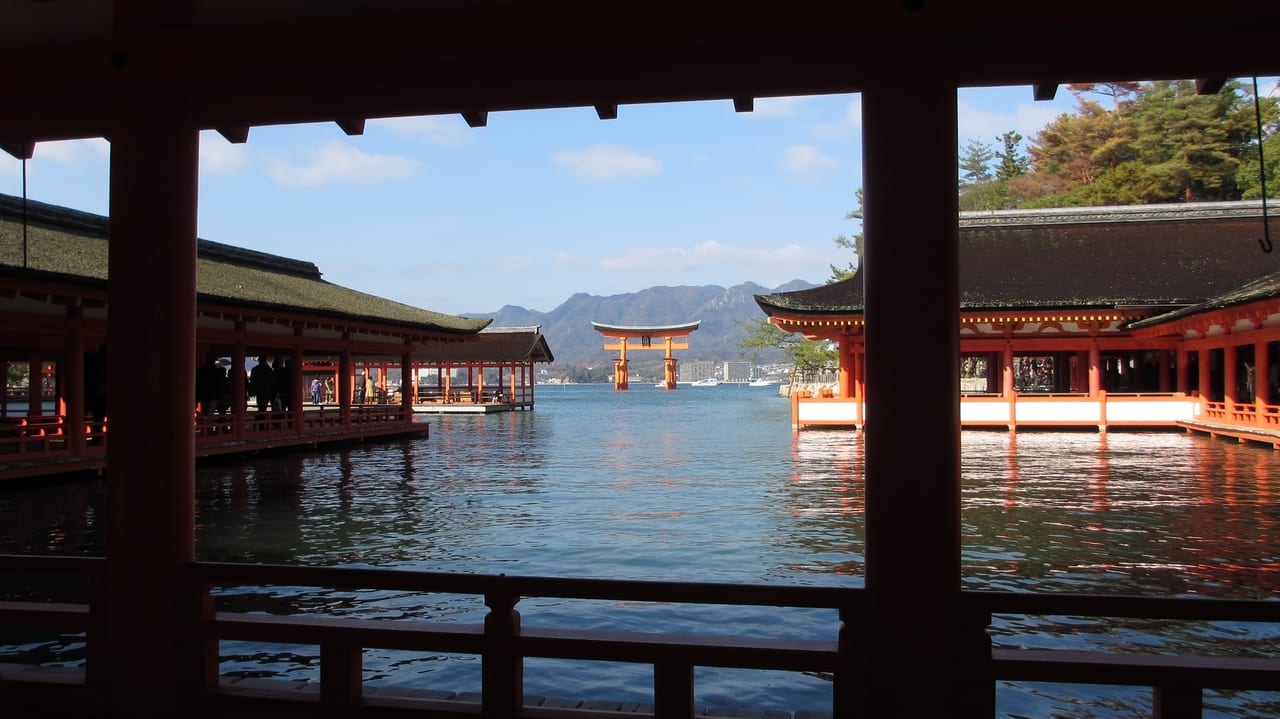
The floating torii does not appear simply because it is high tide. Per the Miyajima Tourist Association, the shrine and the great gate only read as "floating" when the tide level clears 250 cm, and you can only walk out to the base of the torii when it drops below 100 cm — and both figures are measured against Hiroshima Port, not the island. Two numbers and a reference port decide whether you come home with the postcard shot or a photo of mudflats. This piece covers reading the official tide table for your own dates, admission and the five-band seasonal closing schedule, the three restoration projects still running in 2026, the fixed festival dates for the second half of the year, and the honest state of goshuin information. For the wider island — ferries, staying overnight, a full-day route — see the Miyajima island guide.
⏰ Timely for 2026: the torii is fine, the pagoda may not be
Per the shrine's official construction status page: the great torii restoration was completed in December 2022 with no new work scheduled. But conservation repairs to the five-storey pagoda run to December 20, 2026, and East Corridor reinforcement is due to finish in December 2026. Also: Kangensai falls on Thursday, July 30, 2026, from 15:00 to around 23:00.
- Read centimetres, not the words high tide: above 250 cm for the floating shrine, below 100 cm to walk to the torii, measured at Hiroshima Port
- Admission ¥300 for adults; the shrine plus Treasure Hall combined ticket is ¥500 against 600 yen bought separately
- The autumn timing trap: the shrine closes at 17:30 from Oct 15 and 17:00 in December, while the ropeway's final descent is 16:30 — the afternoon-mountain plan fails
- 2026 works: torii complete since Dec 2022; pagoda repairs to Dec 20, 2026; East Corridor reinforcement to Dec 2026
- Goshuin, honestly: the shrine publishes no amount and the seal sits inside the paid route; Daisho-in lists five seals plus kirie designs, 8:00–17:00
📖 Table of Contents (click to expand)
- How to read the tide: centimetres, not "high tide"
- Working the official tide table for your own dates
- The 2026 restoration picture
- Admission, the Treasure Hall and Senjokaku
- Seasonal closing times and the autumn trap
- The Misen ropeway and how its clock meets the shrine's
- Fixed 2026 festival dates (and one myth to kill)
- Goshuin: what is published and what is not
- Getting there: two ferries, the World Heritage route, the visitor tax
- Eating and buying: five named shops, and finish it at the counter
- Is Itsukushima Shrine worth a special trip?
- FAQ
How to read the tide: centimetres, not "high tide"
The most useful section goes first. The usual method for planning Miyajima is to look up the day's high tide time, write it into the itinerary, and turn up on schedule. That method has one fatal flaw: high tide is not a fixed height. The same phrase can mean 340 cm on one day and 220 cm on another, and in the field those are two completely different scenes.
The Miyajima Tourist Association is unusually direct about this on its tide explainer page: treating "high tide equals floating shrine" as common knowledge is, in its words, misinformation. What it gives instead is two hard thresholds in centimetres:
- Above 250 cm: the shrine and the great torii read as floating on the sea. This is the condition under which the postcard, the poster and every viral photo were taken.
- Below 100 cm: the flats are exposed and you can walk out to stand beneath the torii and look at the enormous main pillars up close.
- Between 100 and 250 cm: the association gives this range no name, but in practice it is the dead zone where neither view works — the water has not reached the corridors and the flats have not dried out. Photographs taken in this window tend to look awkward, and it is the state most disappointed visitors actually encountered.
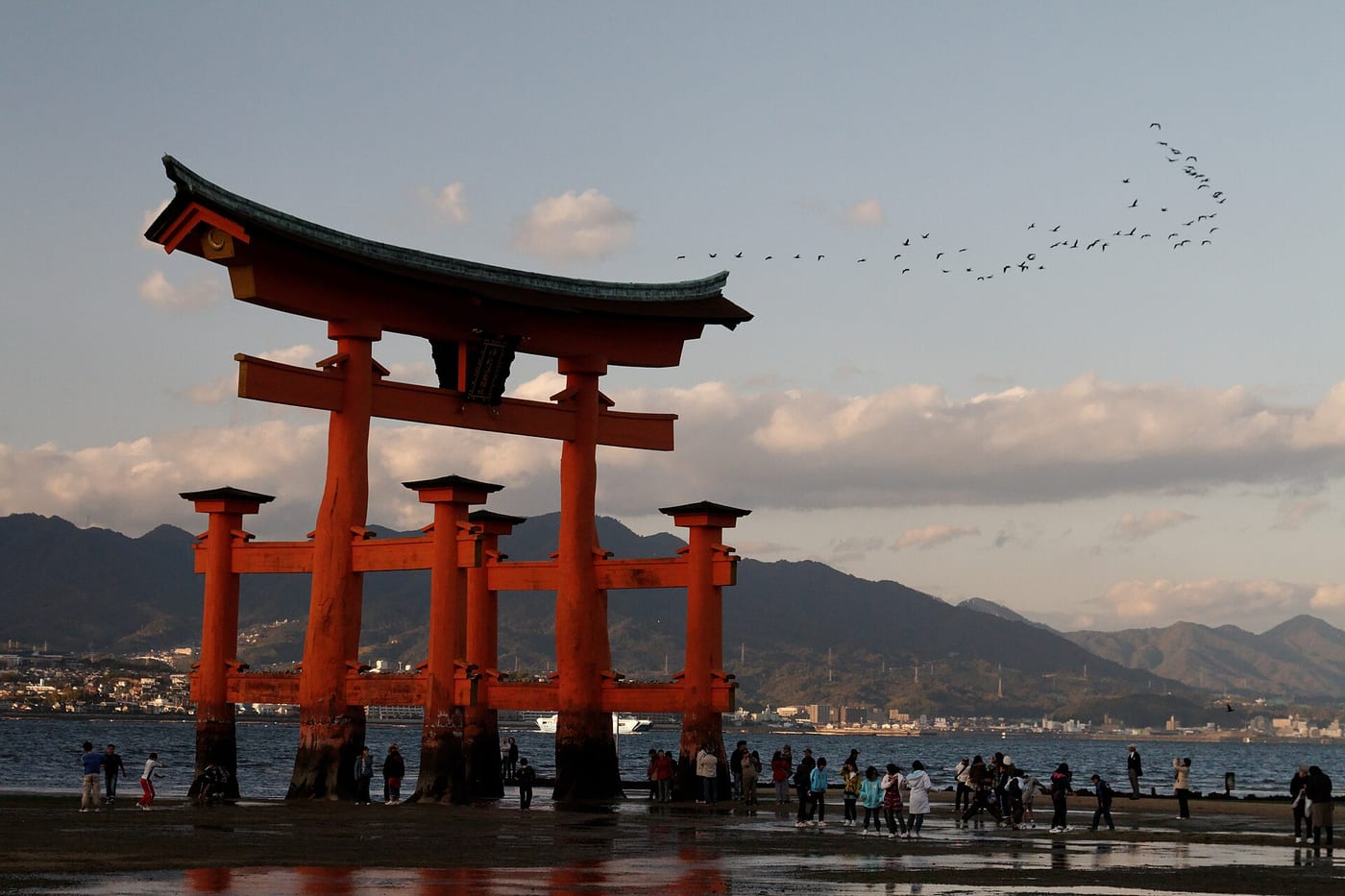
The second detail lives on the same page and matters just as much: the figures are referenced to Hiroshima Port. Open a generic tide app, pick a nearby station, and your numbers may not correspond to the 250 and 100 thresholds at all, which means you would be making the decision on the wrong data. Use the association's own table so the numbers and the thresholds share a baseline.
Honestly, this is the single most under-rated piece of Miyajima homework. A perfect forecast will not give you the floating shrine at 130 cm, and a grey overcast day at 280 cm still will. Let the tide table lead the itinerary rather than the weather forecast — it is the one rule here I would apply without exception.
Working the official tide table for your own dates
Knowing the thresholds is half of it; the other half is the lookup. The tourist association's annual tide table now covers all twelve months of 2026, one page per month, listing each day's high and low water times with the level in centimetres. Work it in this order:
- Open the month page and find your date. A day typically shows two highs and two lows, each with a time and a centimetre figure.
- Mark any window above 250 cm. If there is one, the floating view is available that day. If there is none, no arrival time will produce it — that is a signal to change the day, not the hour.
- Mark any window below 100 cm. That is when you can walk out to the pillars.
- Measure the gap between the two. The cycle runs roughly every six hours, so catching both in one day is normal — you simply have to accept three to five hours of dead time in between.
How to arrange both views in one day. If your date runs high in the morning and low in the afternoon, take an early ferry, do the paid worship route first and shoot the floating corridors, eat around midday, ride up Misen in the afternoon, then finish on the drained flats beneath the torii. If it runs low in the morning and high toward evening, reverse it: early ferry onto the flats while they are still empty of people, Misen and Daisho-in in the middle of the day, and back to the shrine at the top of the tide. What does not work is trying to compress both into a single morning; the water does not move that fast.
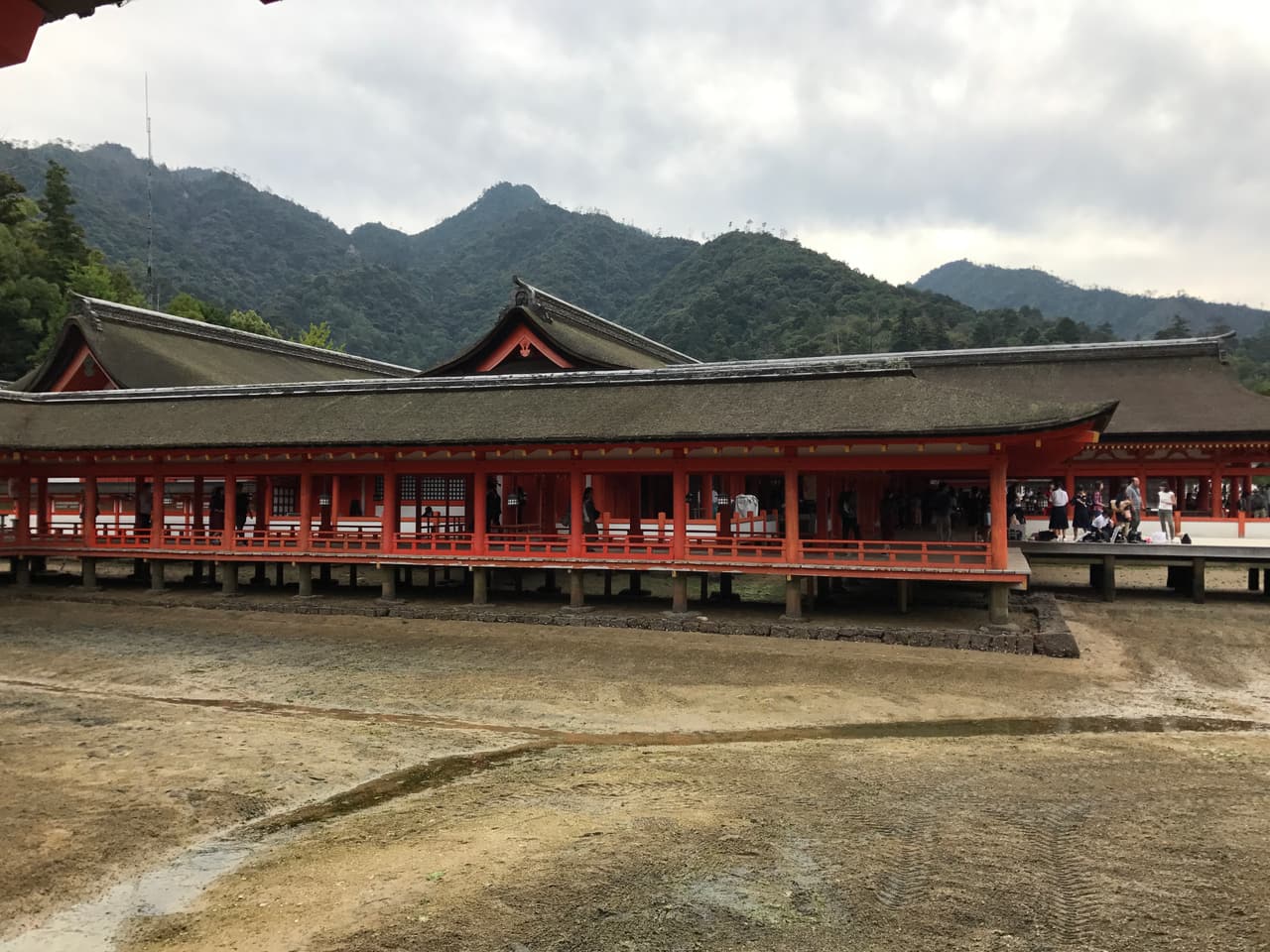
The association's guide to approaching the great torii, updated in July 2026, notes that during high water you can get close to the gate from the sea by rowing boat or on an evening cruise. If your travel dates simply contain no sub-100 cm window, that is the only remaining way to see the torii up close, and it is worth researching before you go rather than discovering it on the day.
Tide tables, ropeway timings, the last ferry, whether a shop is still open — you will be checking your phone all day on Miyajima, and coverage is not uniform across the island. Sorting an unlimited-data KKday Japan eSIM before you fly is far more practical than hunting Wi-Fi at the ferry terminal; for how the main options compare, see the Japan eSIM guide.
The 2026 restoration picture
This section is specific to 2026. Plenty of people still picture Miyajima as the place where the torii spent three years inside scaffolding, so the pre-trip question is always whether it is finished. The answer has two halves.
The great torii is done, with nothing new scheduled. The shrine's construction status page states that the torii restoration was completed in December 2022, and the same page notes there is currently no planned work on it. So the gate you photograph in 2026 is the fully restored one.
But the same page lists three projects still live in 2026, and those are what should shape your expectations:
| Project | Dates | What it means on the ground |
|---|---|---|
| Five-storey pagoda conservation | From Jan 20, 2025; due Dec 20, 2026 | Hoarding or scaffolding possible on the pagoda through 2026 — the classic pagoda-and-Senjokaku composition may not be available |
| East Corridor reinforcement | From Apr 10, 2024; due Dec 2026 | Structural work visible along the paid worship route; it does not block passage but it will appear in photographs |
| Nagabashi bridge repair | From May 2025; official page lists to Mar 2026 | That window has passed and it may now be complete; the page has not been updated, so treat on-site signage as authoritative |
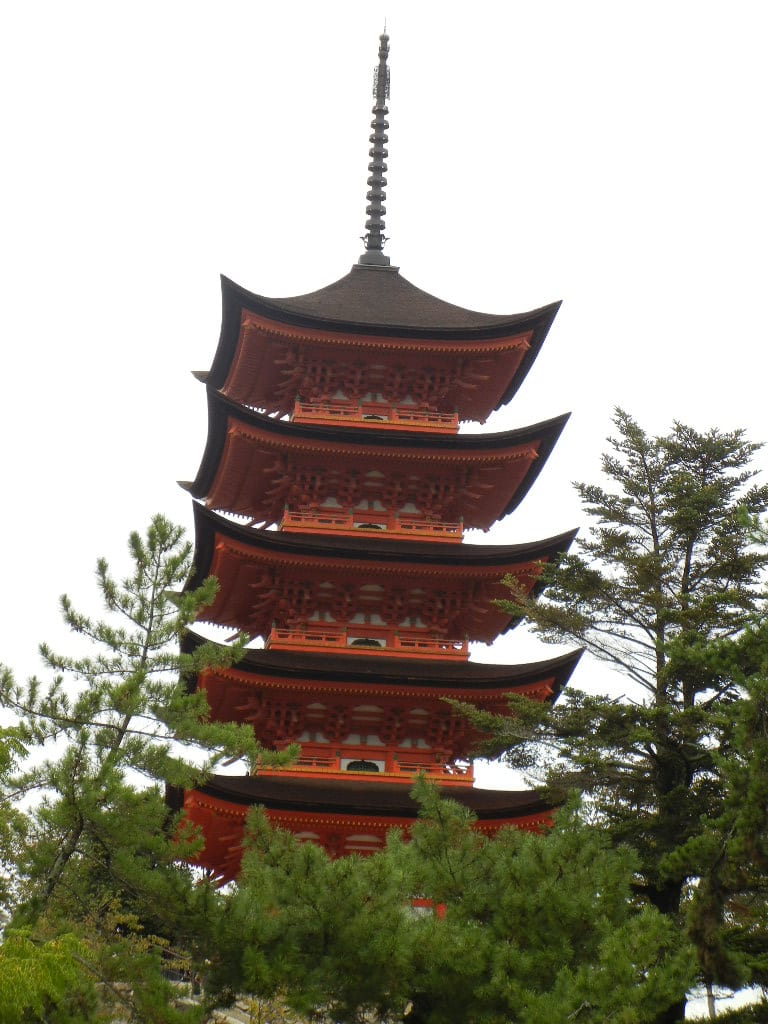
None of this is a reason to skip the shrine. Itsukushima is a living World Heritage site built of timber standing in seawater, and continuous repair is exactly what keeps it alive; seeing the work is evidence it is being looked after. But if the pagoda is specifically on your shot list, reopen the official construction page a week before you fly, or shift your attention to the over-water corridors and the torii instead.
Admission, the Treasure Hall and Senjokaku
The prices are simple; the decision is whether to bundle. From the shrine's official admission page:
| Ticket | Adult | High school | Elementary / junior high |
|---|---|---|---|
| Itsukushima Shrine | ¥300 | ¥200 | ¥100 |
| Treasure Hall | ¥300 | ¥200 | ¥100 |
| Shrine + Treasure Hall combined | ¥500 | ¥300 | ¥150 |
| Senjokaku (Toyokuni Shrine) | ¥100 | — | ¥50 |
The combined ticket maths is trivial: 300 plus 300 is 600, the bundle is 500, so you save 100 yen. The real question is whether you will genuinely go into the Treasure Hall. If Heian craftsmanship and the Taira clan's patronage of this shrine interest you, that extra 200 yen is one of the better-value museum tickets in western Japan. If your plan is corridors, photographs, then straight to the ropeway, buy the shrine ticket alone — forcing yourself through a hall you will not look at, to save 100 yen, is a bad trade of the scarcest resource you have here, which is daylight.
Senjokaku is a separate 100-yen ticket not covered by the bundle. Commissioned by Toyotomi Hideyoshi and left unfinished, it is a vast open timber hall with no walls, which in practice makes it the one place on the island where you can sit down in a through-breeze and stop moving for ten minutes. One honesty note: its opening hours were not obtainable from an official page during verification, so this guide states no times for it — go by the signage on the day rather than by numbers copied around the internet.
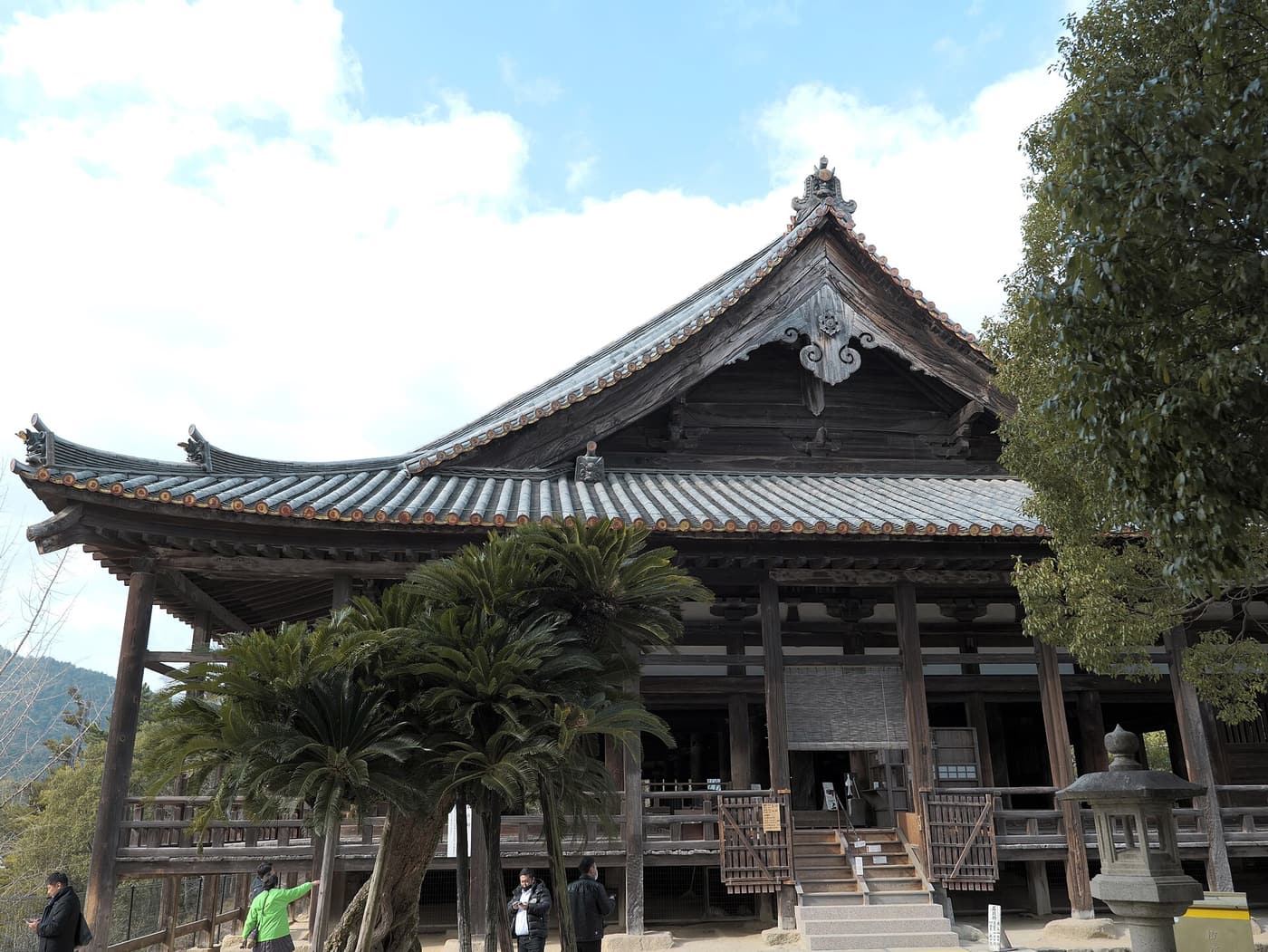
Two more sites nearby cost nothing. Daisho-in is free to enter, open 8:00 to 17:00, the oldest temple on the island, terraced up the hillside and noticeably quieter than the shrine. Daiganji is also free, open 8:30 to 17:00, one of the three great Benzaiten temples of Japan, with its Itsukushima Benzaiten festival on June 17. Both are within easy walking distance of the shrine and are the natural continuation after the paid route.
Seasonal closing times and the autumn trap
This is the second most practically valuable section here, because getting it wrong kills an entire afternoon. Opening is always 6:30 — remarkably early, and dawn on the empty corridors is a genuine insider window — but closing runs on five seasonal bands:
| Period | Open – Close |
|---|---|
| Jan 1 | 0:00–18:30 |
| Jan 2–3 | 6:30–18:30 |
| Jan 4 – end of Feb | 6:30–17:30 |
| Mar 1 – Oct 14 | 6:30–18:00 |
| Oct 15 – Nov 30 | 6:30–17:30 |
| December | 6:30–17:00 |
See the problem? Peak autumn falls inside the shortened band. On October 15 closing drops from 18:00 to 17:30, and by December it is 17:00. Meanwhile the most popular plan people bring to the island — ropeway up Mount Misen after lunch, come down at dusk, then do the paid worship route with low evening light on the water — collapses, because the ropeway's final descent is 16:30. Take that last car, walk back down from Momijidani, queue for a ticket, and you arrive at or after closing.
The autumn and winter fix is to invert the order: do the shrine in the morning or around midday, with the tide window deciding whether you shoot the floating corridors or walk the flats first, then take the mountain in the afternoon and finish on Omotesando or at the ferry. Nothing gets dropped.
From March to mid-October, with closing at 18:00, the afternoon-mountain plan can just about work — but only just, because the 16:30 last descent is a hard edge in every season of the year.
The Misen ropeway and how its clock meets the shrine's
Mount Misen (535 m) earns its place in the day, but its timing matters more than its price. From the official Miyajima Ropeway information:
| Ticket | Adult | Child (6–11) |
|---|---|---|
| Round trip | ¥2,000 | ¥1,000 |
| One way | ¥1,100 | ¥550 |
| Operating 9:00–16:00; final descent 16:30 | ||
The ride comes in two stages: Momijidani to Kayatani takes about 10 minutes, then a change for the four-minute run to Shishiiwa. The operator's own estimate for a round trip including sightseeing is about one hour — and that is the version that stops at the Shishiiwa observatory. If you also want the summit of Misen, the official wording is that it adds about another hour round trip, meaning roughly 30 minutes each way on a proper mountain path.
So budget one hour for the observatory, two hours if you summit, then work backwards from the 16:30 last descent: anyone summiting needs to be on an ascending car by 14:00, because starting at 14:30 means checking your watch at the top instead of looking at the view.
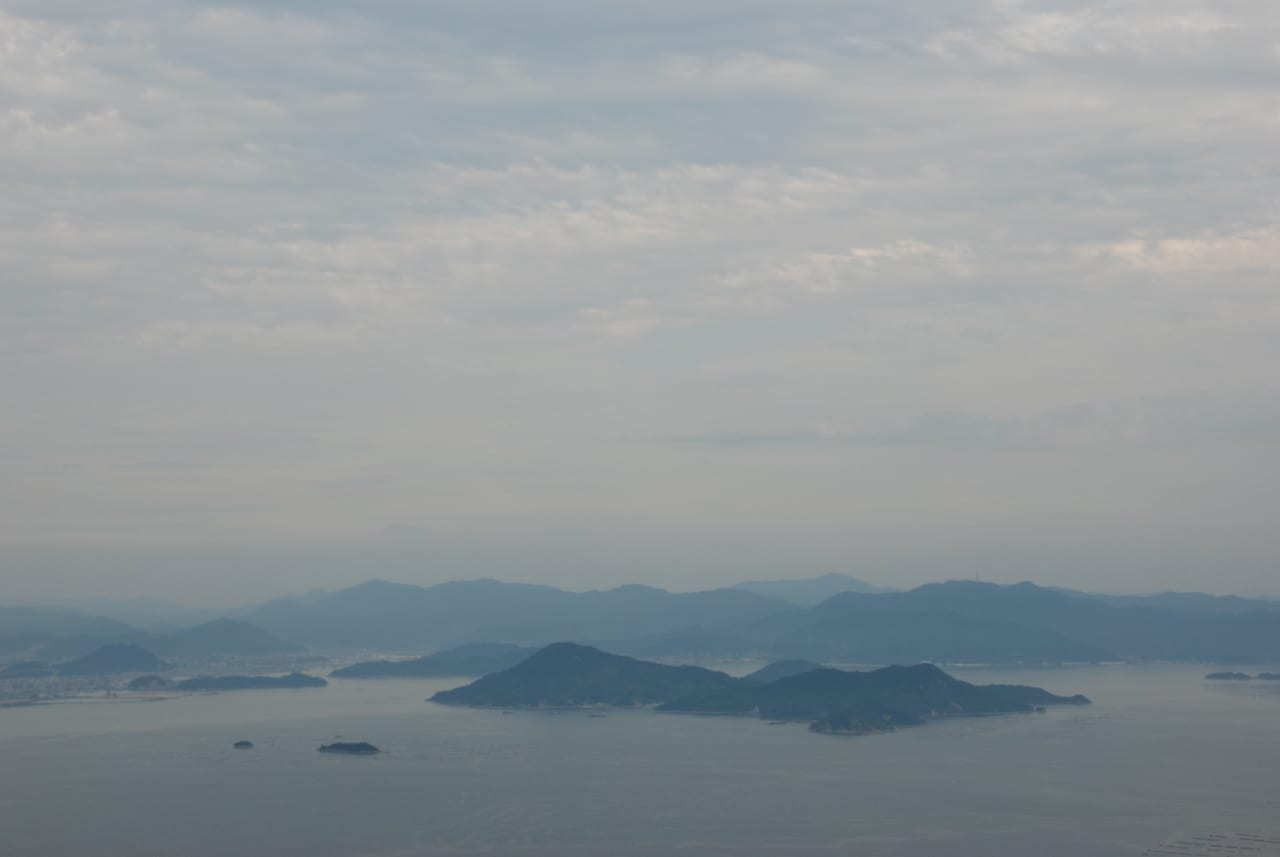
What Shishiiwa gives you is the Seto Inland Sea archipelago spread out below, islands scattered to the horizon on a clear day. If your legs or your clock only allow one, my call is to skip the summit and keep the time for the observatory plus the tidal flats afterwards. The summit view is more open, certainly, but that hour does not buy a proportionate improvement, and a missed tide window is genuinely gone.
Fixed 2026 festival dates (and one myth to kill)
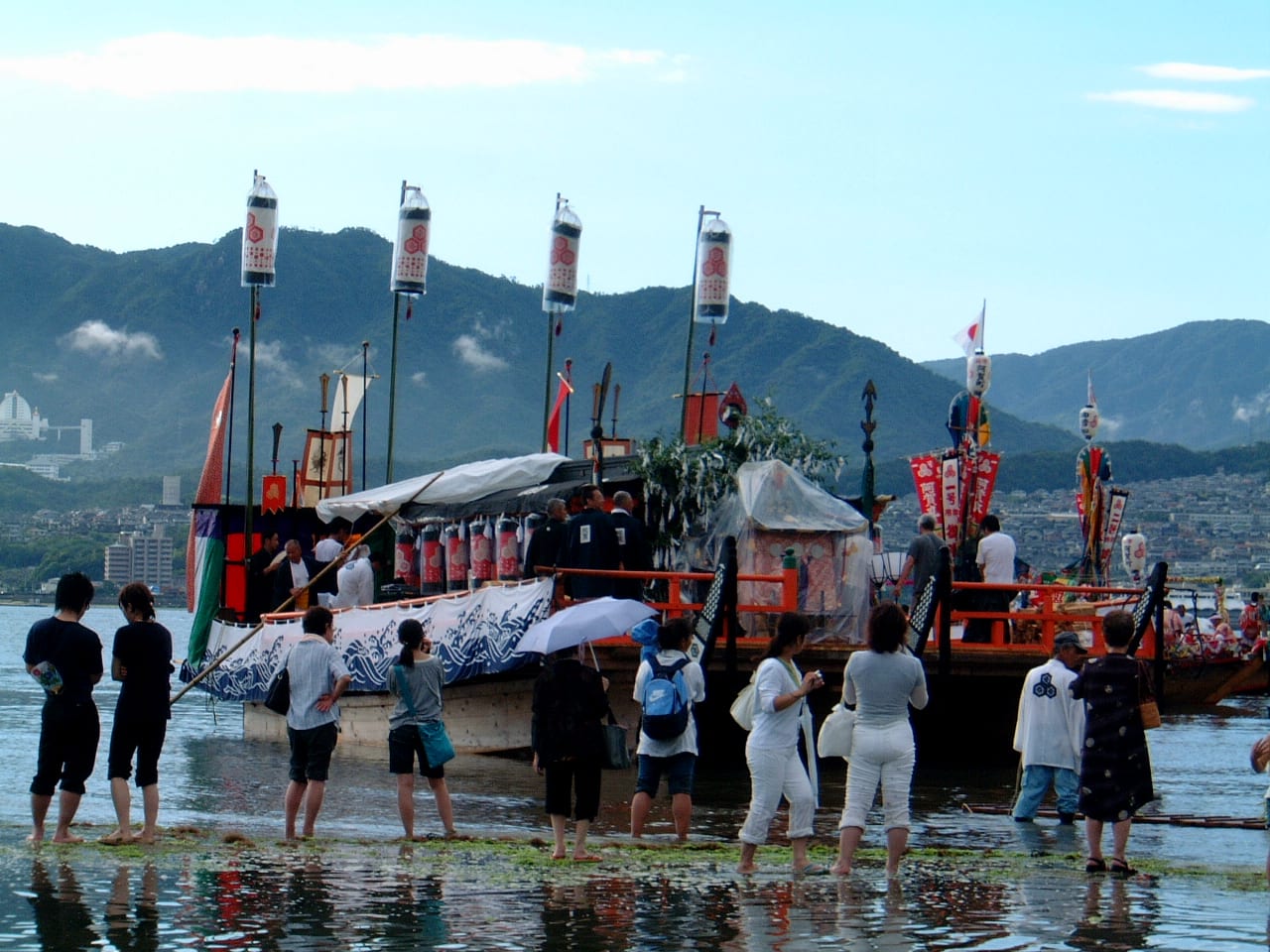
Itsukushima runs a dense festival calendar, and unusually many of its rites happen on the water rather than on land. Below are the confirmed second-half 2026 dates from the shrine's annual events page and the tourist association's monthly calendar, with weekdays cross-checked against the 2026 calendar:
| Festival | 2026 date | Time | Notes |
|---|---|---|---|
| Kangensai | Jul 30 (Thu) | 15:00 – approx 23:00 | One of Japan's three great boat rites; follows the old lunar calendar so the date moves annually. Viewing-boat plans and extra sailings are announced separately |
| Miyajima Odori no Yube | Aug 17 (Mon) – Aug 18 (Tue) | 19:30 – approx 21:00 | Held near the great torii |
| Tamatorisai | Aug 29 (Sat) | Officially undecided | The scramble for a sacred jewel in the shallows; the shrine has not published a time, so check before you go |
| Kikkasai | Oct 15 (Thu) | 17:00 – approx 21:00 | Ten bugaku court dances; admission ticket required |
| Sanno Shrine festival | Oct 23 (Fri) | 10:00 – approx 11:00 | Free to watch |
| Chinkasai | Dec 31 (Thu) | From 16:00 | The great pine-torch fire rite on Mikasahama beach — the centrepiece of New Year's Eve here |
Kikkasai contains an easily missed catch: it begins at 17:00 on October 15, which is the very first day of the shortened 17:30 closing band. Entry arrangements during a festival differ from an ordinary day and an admission ticket is required, so follow the official festival notice rather than reasoning from the normal closing time.
Now the myth. The Miyajima underwater fireworks festival ended in 2019; the tourist association's August calendar states clearly that it is no longer held. It was once the island's marquee summer event, and a large volume of older articles still repeat it, which is why people keep building late-August plans around an event that does not exist. There is no 2026 edition and no revival announcement. If you want a Miyajima evening, aim at the dance evenings on August 17 and 18, or at Kangensai on July 30.
And to repeat the important structural point: never carry a lunar-calendar festival date over from last year. Kangensai is July 30 in 2026 and will be an entirely different day in 2027.
Goshuin: what is published and what is not
Collectors come to Miyajima for two places, and the two differ enormously in how much they publish. I will keep them separate rather than blending them into one confident-sounding paragraph.
Itsukushima Shrine: nothing published, so no figure here. The admission, route and events pages on the official site were all checked and none carries goshuin pricing or reception hours; there is no goshuin page at all. Every number circulating online traces back to visitor reports rather than the shrine, so this guide will not dress one up as official. What is practically reliable is that the seal is received inside the paid worship route — you need an admission ticket to reach it — and that the corridor is a one-way route, so note the reception desk on the way in rather than discovering it after you have exited. Bring coins and treat the posted amount on the day as final.
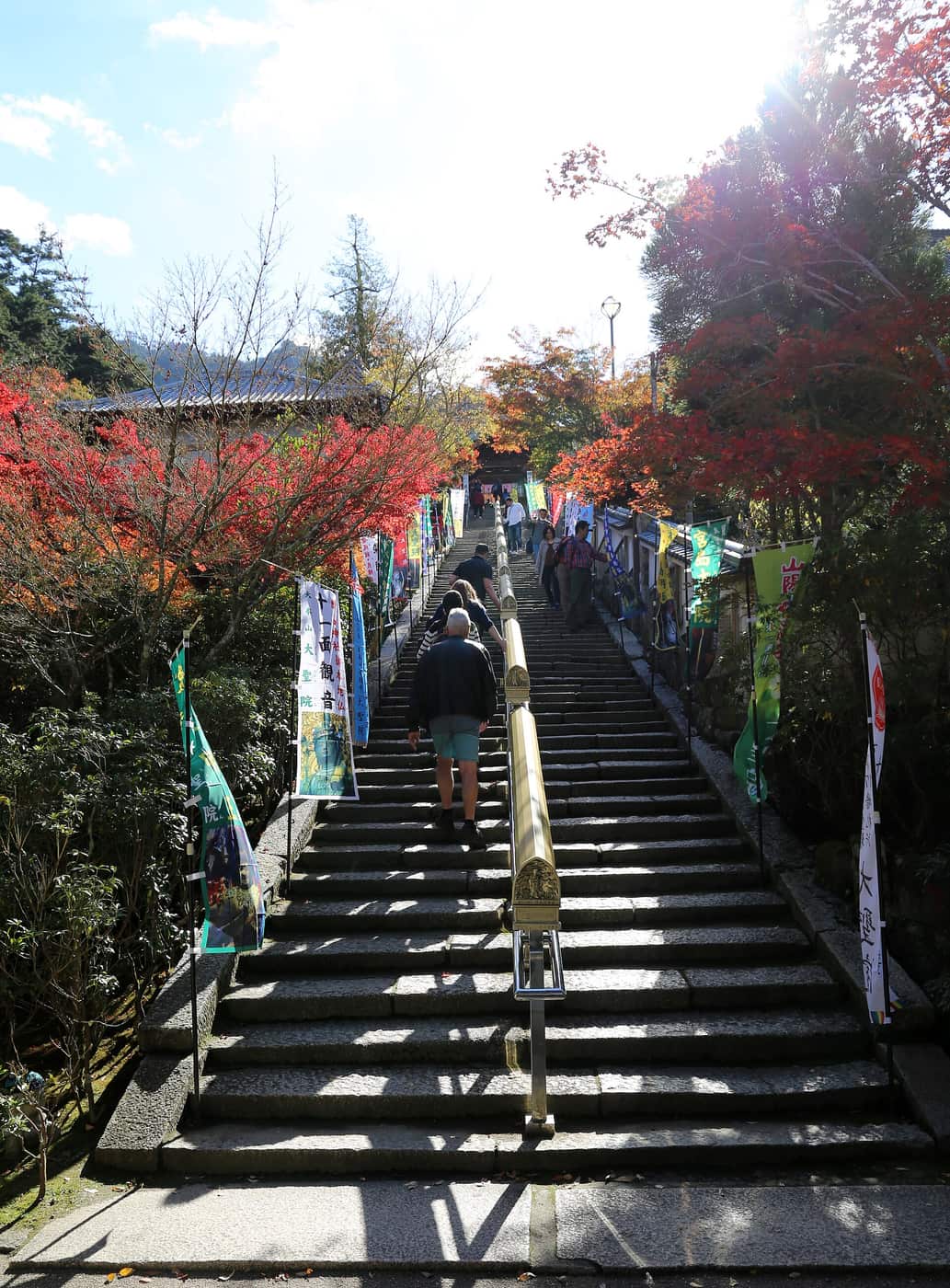
Daisho-in: fully documented, and the better stop for collectors. From the temple's official goshuin page:
- Five different seals, including the principal image Namikiri Fudo Myoo and the eleven-headed Kannon regarded as the Buddhist counterpart of the Itsukushima deity — enough variety to justify a proper stop rather than a quick one.
- Seasonal kirie cut-paper goshuin, listed on the official page at roughly 900 to 1,500 yen, with commemorative special editions priced higher. Kirie designs are cut out rather than brushed, and they look nothing like a standard pre-written sheet in the hand.
- Two reception points: the temple office, and the amulet counter in front of Misen Hondo — useful, because it means hikers coming down the mountain trail can receive one up there.
- Reception 8:00 to 17:00, matching the temple's opening hours.
One caveat in fairness: the amount for the ordinary, non-kirie seals is not stated on the official page either, so that figure is likewise absent here. Treat Daisho-in's 17:00 as the hard deadline for your collecting day and do not amble up the hill at 16:40. For the fundamentals — choosing a book, praying before receiving, the difference between hand-written and pre-written sheets — see our Japan goshuin collecting guide, and for the correct sequence of a shrine visit itself, the Japanese shrine etiquette guide.
Getting there: two ferries, the World Heritage route, the visitor tax
Access comes in two legs: reach Miyajimaguchi, then cross. Hiroshima Station to Miyajimaguchi Station on the JR Sanyo Line takes about 28 minutes per the JR Miyajima Ferry access page. The fare could not be verified from an official source during research — the JR fare search is a dynamic page — so no figure appears here; check it on the day or through JR's own search. From Miyajimaguchi, either ferry takes about 10 minutes.
| Route | Adult one way | Time | What sets it apart |
|---|---|---|---|
| JR West Miyajima Ferry | ¥200 | approx 10 min | Otorii service 9:10–16:10 passes closer to the great torii; the operator flags the starboard side as the best position. Ten national IC card types accepted |
| Miyajima Matsudai Kisen | ¥200 | approx 10 min | ¥400 return; cash, IC, contactless credit and MOBIRY DAYS accepted; the official page states the visitor tax is added on the outbound leg |
| World Heritage Sea Route (Peace Park ⇄ Miyajima) | ¥2,400 | approx 45 min | 17 sailings daily, ¥4,400 return, plus a ¥2,500 combination ticket with the island ferry; online booking closes the day before and IC cards are not accepted (cash or credit) |
Which ferry? Fares and crossing times are effectively identical, so it comes down to one question: do you want the torii shot from the water? If yes, take JR inside the 9:10 to 16:10 Otorii window and stand starboard. If not, board whichever leaves first rather than waiting at the terminal on principle. As for whether a JR Pass covers the JR ferry at no extra cost — it is the common assumption online, but official wording could not be obtained from the fare page during verification, so the conservative advice stands: confirm on the JR West pass coverage page before you build a plan on it.
Is the World Heritage Sea Route worth the premium? It runs straight from the Peace Park in central Hiroshima to the island, removing the train-then-ferry transfer entirely, and the run down the Motoyasu and Ota rivers and out to sea is a genuine part of the experience. The cost is 2,400 yen one way and about 45 minutes, materially more than JR plus the ferry. My call: if you have one day and want to chain the Peace Park to Miyajima without hauling bags through a transfer, it earns its price; if you are staying several nights in Hiroshima with time to spare, JR plus ferry is the better value. Note the two constraints — no IC cards, and online booking only until the previous day.
The Miyajima visitor tax, per Hatsukaichi City, is 100 yen per person per visit, introduced on October 1, 2023, and collected by the ferry operators on top of the outbound fare only; nothing is charged on the way back. An annual 500-yen option exists for frequent travellers, and preschool children, island residents, school activities and disability certificate holders are among the exemptions. For most visitors it is simply 100 yen extra in one direction.
If your trip is a Sanyo loop taking in Okayama, Hiroshima and Miyajima, the JR Okayama–Hiroshima–Yamaguchi Area Pass can absorb the Shinkansen and local legs in one purchase — but run the break-even against your actual route rather than assuming, as regional passes only pay off above a certain number of legs. The method is in our JR Pass guide.
Eating and buying: five named shops, and finish it at the counter
One local rule first, which is both courtesy and self-defence: eat what you buy in front of the shop, then move on — do not walk the street with food in your hand. The reason is direct. Miyajima has a large free-roaming deer population, the animals are entirely unafraid of people, and they will target food, paper bags and even maps. Carrying a grilled oyster or a hot fried snack along Omotesando is a reliable way to acquire an escort and, fairly often, to lose the snack. Most shops keep standing space and a bin at the front for exactly this reason.
Five named shops with verified information below (⚠️ marks anything the official source does not publish, which this guide therefore does not state):
- Anagomeshi Ueno (Miyajimaguchi, founded 1901): the originator of the conger-eel rice box, and crucially it sits at Miyajimaguchi on the mainland, not on the island — so slot it either before you board or after you come back. Bento counter 9:00–19:00 (Wednesdays to 18:00), dining room 10:00–19:00 (Wednesdays to 18:00), open year-round and closing when sold out. If you want the boxed version for a Shinkansen leg, go early.
- Kakiya (Omotesando): the island's only dedicated oyster specialist and a Michelin Guide listing. Officially published prices are two grilled oysters at 750 yen and the Kakiya set meal at 2,900 yen, both tax included, with raw oysters seasonal through March. ⚠️ Opening hours are not stated on the official page, so no times here. This is where I would put the proper sit-down meal of the day.
- Momijido Honten (originator of the deep-fried age-momiji): main shop 9:00–17:30, the Nibanya branch 9:30–17:30. Fillings include red bean, custard, cheese and Setouchi lemon. ⚠️ The unit price is not published officially, so this guide states none — but the method is unambiguous: eat it hot, standing at the shop, because cold defeats the entire point of the crisp shell.
- Yamadaya Miyajima Honten (founded 1932): 9:00–18:00, open year-round. A momiji-manju house with a hand-baking workshop at the main shop and the Ono factory, which is a good option with children. Buy the boxed gifts here and carry them out sealed rather than opening them as you walk.
- Fujiiya Miyajima Honten (founded 1925): the other historic momiji-manju house, and the one usually compared against Yamadaya. ⚠️ Its official site was unreachable during verification, so no hours and no prices appear here — check on site or via the shop's own notices.
How to sequence it: keep the sit-down meal (Kakiya) and the hot snack (Momijido) on the island along Omotesando, buy boxed gifts at Yamadaya or Fujiiya, and put the anago rice at Miyajimaguchi around your ferry leg. That way you never carry hot food across the island, which also solves the deer problem. For a broader look at island eating and the alternatives, see the food section of the Miyajima island guide.
Is Itsukushima Shrine worth a special trip?
The practical question, answered by traveller type rather than hedged.
- First visit to Hiroshima with two days: yes, and give it a full day. Not because there is a huge amount to see, but because of the tide. Capturing both the floating shrine and the walk to the pillars means waiting out a gap of several hours, and that gap is precisely what the ropeway, Daisho-in, Senjokaku and a real lunch are for. Compress Miyajima into half a day and you get one of the two views, effectively at random. For the city side of the trip, see the Hiroshima city guide.
- Repeat visitors chasing the floating shot: do not block out a whole day. Check the table, pick a window above 250 cm, arrive two or three hours either side of it, do the paid route, shoot, leave — and give the rest of the day to Iwakuni or Onomichi. The prerequisite is that you can actually read the table. If you cannot, do not attempt this version, because a miss means the whole trip produced nothing.
- Collectors and history readers: yes, but weight it toward Daisho-in. The shrine publishes nothing about its goshuin and locks it inside the paid one-way route; Daisho-in publishes five designs plus kirie editions, takes requests until 17:00 and even has a counter up at Misen Hondo. If seals are the reason you came, moving part of your time budget from the shrine to the temple returns far more.
As for the best time of year, my answer is not a season — it is those two numbers on the tide table. Cherry blossom and autumn colour are lovely and are also when the island is at its most crowded. Winter is quiet and the oysters are at their best, with the caveat that the shrine shuts at 17:00 through December. The thing that should genuinely move your dates is the table: confirm there is a window above 250 cm inside your trip, then plan everything else around it. Do it in that order, not the reverse.
Frequently Asked Questions
- Q1:What tide do you need for the floating torii at Itsukushima Shrine?
- Stop looking at the words high tide and start looking at the centimetre figure. Per the Miyajima Tourist Association, the shrine and the great torii only appear to float when the tide level exceeds 250 cm, and you can only walk out to the base of the torii when it drops below 100 cm. The association explicitly calls the belief that high tide equals a floating shrine a piece of misinformation, and the reason is simple: high tide is not a fixed height. On some days it peaks well above 300 cm, on others it barely clears 220 cm, and on the latter you can arrive at exactly the right minute and still not get the postcard view. There is a second detail almost nobody mentions in English: those levels are measured against Hiroshima Port, not a separate gauge on the island. So use the association tide table rather than a random app, or your numbers will not line up with the 250 and 100 thresholds.
- Q2:How much is admission to Itsukushima Shrine, and is the treasure hall combo worth it?
- Admission to the shrine itself is 300 yen for adults, 200 yen for high-school students and 100 yen for elementary and junior-high students. The Treasure Hall costs the same 300 yen on its own, but the combined ticket for both is 500 yen for adults, so buying them together saves 100 yen. Whether that is worth it depends entirely on whether you will actually walk into the Treasure Hall. If Heian-period craftsmanship and the Taira clan connection interest you, 200 yen extra is excellent value. If you only came for the over-water corridors and have a ropeway to catch, buy the shrine ticket alone rather than forcing yourself into a museum you will skim in four minutes to save 100 yen. Note that Senjokaku, the great hall on the rise east of the shrine, is a separate 100-yen ticket and is not covered by the combined ticket.
- Q3:Is the great torii still covered in scaffolding in 2026?
- No, but the five-storey pagoda might be, and the two get confused constantly. Per the shrine's official construction status page, the great torii restoration was completed in December 2022, and the same page states there is no new work scheduled for it, so what you see today is the fully restored vermilion gate. However, the same page lists other work still under way through 2026: conservation repairs to the five-storey pagoda began in January 2025 and are scheduled to finish on December 20, 2026, and structural reinforcement of the East Corridor began in April 2024 with completion expected in December 2026. In plain terms, the torii shot is safe but the classic pagoda-and-Senjokaku composition may include hoarding or scaffolding at any point in 2026. Check the official construction page shortly before you travel.
- Q4:What time does Itsukushima Shrine close, and does it change by season?
- It changes five times a year, and this catches people out badly in autumn. Opening is always 6:30, but closing runs on a seasonal schedule: 18:00 from March 1 to October 14, 17:30 from October 15 to November 30, 17:00 for the whole of December, 17:30 from January 4 to the end of February, plus 0:00 to 18:30 on January 1 and 6:30 to 18:30 on January 2 and 3. The trap is how that interacts with the ropeway: the Miyajima Ropeway runs 9:00 to 16:00 with a final descent at 16:30. So the popular plan of riding up Mount Misen in the afternoon and returning to the shrine at dusk simply fails from mid-October onward, because you come down on the last car and reach the shrine at or after closing. In autumn and winter, do the shrine in the morning and the mountain after lunch.
- Q5:How much is the goshuin at Itsukushima Shrine and where do you get it?
- This one needs an honest answer: the shrine's official website does not publish the offering amount or reception hours for its goshuin, and there is no dedicated goshuin page anywhere on the site. Figures circulating online come from visitor reports rather than the shrine, so this guide will not state one. What is practically certain is that you receive the seal inside the paid worship route, meaning you must buy an admission ticket to enter the corridors, and that the corridor route is one-way, so note where the reception desk is on the way in rather than realising at the exit. Bring small change and treat the posted amount on the day as authoritative. Daisho-in temple, on the other hand, publishes its information in full: five different seals including the principal image Namikiri Fudo Myoo and the eleven-headed Kannon, plus seasonal cut-paper kirie designs listed at roughly 900 to 1,500 yen, received at the temple office and at the amulet counter in front of Misen Hondo, 8:00 to 17:00.
- Q6:Is the Miyajima underwater fireworks festival still held?
- No. The Miyajima Suichu Hanabi underwater fireworks festival ended in 2019, and the Miyajima Tourist Association August events page states plainly that it is no longer held, with no revival announced. It is worth stating loudly because every year people build late-August dates around something that does not exist. What Miyajima actually offers on summer evenings in 2026 is the Miyajima Odori no Yube dance evenings on August 17 and 18, held near the great torii from 19:30 to around 21:00, and before that the Kangensai boat festival on July 30. Point your expectations at those two.
- Q7:What is Kangensai and when is it in 2026?
- Kangensai is Itsukushima Shrine's signature festival and one of the three great boat rites of Japan. It descends from the Heian aristocratic pastime of playing court music aboard pleasure boats, which Taira no Kiyomori reworked into a religious rite: a decorated barge carries the deity and a company of musicians out onto the water, moving between the shrine and its associated halls across the strait through the evening. Because it follows the old lunar calendar date of the sixth month, seventeenth day, the Gregorian date moves every year. In 2026 it falls on Thursday July 30, running from 15:00 until around 23:00. Viewing boats are the sought-after option and the tourist association runs a seasonal booking plan with extra sailings announced separately. Two warnings: never reuse last year's date, and arrange your return ferry or accommodation in advance, because the rite runs close to midnight.
- Q8:JR or Matsudai ferry, and how does the Miyajima visitor tax work?
- Both operators charge 200 yen one way for adults and 100 yen for children, with near-identical crossing times, so only two things separate them. First, the JR West Miyajima Ferry runs its Otorii service between 9:10 and 16:10, swinging closer to the great torii, and the operator specifically flags the starboard side as the best vantage point, so take JR in that window if you want the shot from the water. Second, Matsudai's official fare page states that the outbound leg carries the visitor tax on top, and accepts cash, IC cards, contactless credit cards and MOBIRY DAYS. The Miyajima visitor tax itself, per Hatsukaichi City, is 100 yen per person per visit, introduced on October 1, 2023, collected by the ferry operators on the outbound crossing only, with an annual 500-yen option and exemptions for preschool children, island residents, school activities and disability certificate holders. On whether a JR Pass covers the JR ferry free of charge, this guide could not obtain official wording on the fare page at the time of verification, so check the JR West pass coverage page before you plan around it.
- Q9:Is Itsukushima Shrine worth a full day?
- If all you want is one photograph of the great torii, half a day covers it and a full day is overkill. But if you want both faces of the place, the floating shrine and the walk out to the pillars, you need a full day or a night on the island, because the two tide windows are usually several hours apart and you will have a gap to fill. That gap is exactly what the ropeway, Daisho-in, Senjokaku and a proper lunch on Omotesando are for, which is the real argument for a full day. My split: first-time visitors with two days in Hiroshima should give Miyajima one whole day and the city the other, rather than halving both. Repeat visitors who only want the floating shot should pick a window above 250 cm, spend two or three hours and leave the rest for Iwakuni or Onomichi. The one approach I would not recommend is squeezing it in casually, because if the tide does not cooperate you get neither view.
One last thing people ask: Miyajima is one of the Three Views of Japan, alongside Matsushima in Miyagi and Amanohashidate north of Kyoto. All three are seascapes, but they work in completely different ways — Matsushima is an archipelago of more than two hundred islets in one bay, Amanohashidate is a single 3.6 km natural sandbar, and Miyajima is a shrine built out over the tidal flat, where what you are watching is the water level rather than the landform. If you want all three, Miyajima and Matsushima each slot into a day easily; Amanohashidate sits well north of Kyoto and takes the most travel time, so it usually needs a day of its own.
Read next
Miyajima Guide 2026: Floating Torii Tides, Mt. Misen & Oysters
World Heritage Itsukushima Shrine — how to time the floating torii by tide, the Mt. Misen ropeway, ferries, the visitor tax and grilled oysters.
Hiroshima Guide 2026: Peace Park, Okonomiyaki & Miyajima
Chugoku's gateway — 1.5 hr from Shin-Osaka by Shinkansen, the World Heritage A-Bomb Dome, layered okonomiyaki, and a Miyajima day trip.
Goshuin Guide: Collecting Japan Shrine Stamps
How to start collecting goshuin: books, etiquette, fees, and a first-timer route.
📊 See the 2026 Price Index (JR Pass, DPA, eSIM, Airport Transport) →