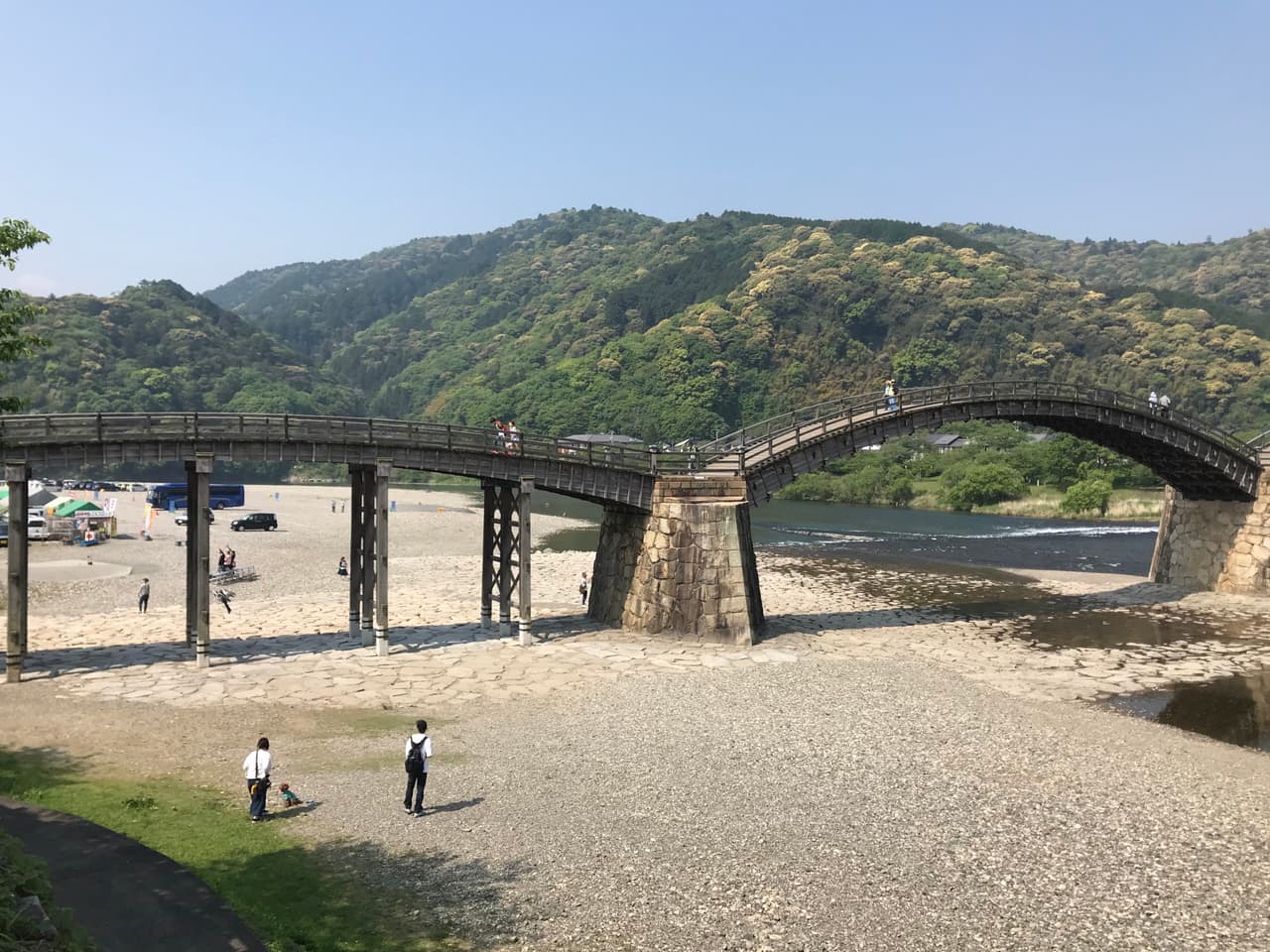
Kintaikyo is one of Japan's "three great bridges," five wooden arches sweeping in a single line across the Nishiki River — and the remarkable part is not how it looks but how it is built: the arch spans are held together almost entirely by precision wooden joinery, without a single nail, first raised in 1673 and rebuilt over the centuries to the same design. Two practical numbers up front: crossing the bridge costs just ¥310 round trip, and a ¥970 combo bundles the bridge, ropeway, and Iwakuni Castle. And it is absurdly close to Hiroshima — about 45 minutes by JR — which makes it the half-day worth slotting into any Hiroshima and Miyajima trip. This guide covers how to buy the bridge and combo tickets, whether the castle ropeway is worth it, Kikko Park's old samurai district, the natural-monument white snakes, Iwakuni sushi and nine-holed lotus root, and how to chain it all with Hiroshima and Miyajima. For the city ends, jump to our Hiroshima guide and Miyajima guide.
- Bridge toll ¥310 round trip; ¥970 combo (bridge + ropeway + castle); a bridge-only ticket can't be upgraded
- The bridge is the star: five wooden arches, nail-free joinery — the reason to come
- Ropeway ¥560 round trip, worth it for the keep's view down over Kintaikyo, though the castle is a 1962 reconstruction
- White Snake Museum ¥200: Iwakuni's white snakes are a national Natural Monument, beside Kikko Park
- ~45 min by JR from Hiroshima — best done as a half-day inside a Miyajima/Hiroshima trip
📖 Contents
- 1. Why visit Iwakuni & Kintaikyo
- 2. Kintaikyo: five arches, nail-free joinery
- 3. Tickets & combo (buy it right)
- 4. Iwakuni Castle & ropeway (worth it?)
- 5. Kikko Park & the samurai district
- 6. White Snake Museum: a Natural Monument
- 7. Iwakuni sushi, lotus root & ukai
- 8. Getting there from Hiroshima / Miyajima
- 9. A half-day / one-day plan
- 10. FAQ
Why visit Iwakuni & Kintaikyo
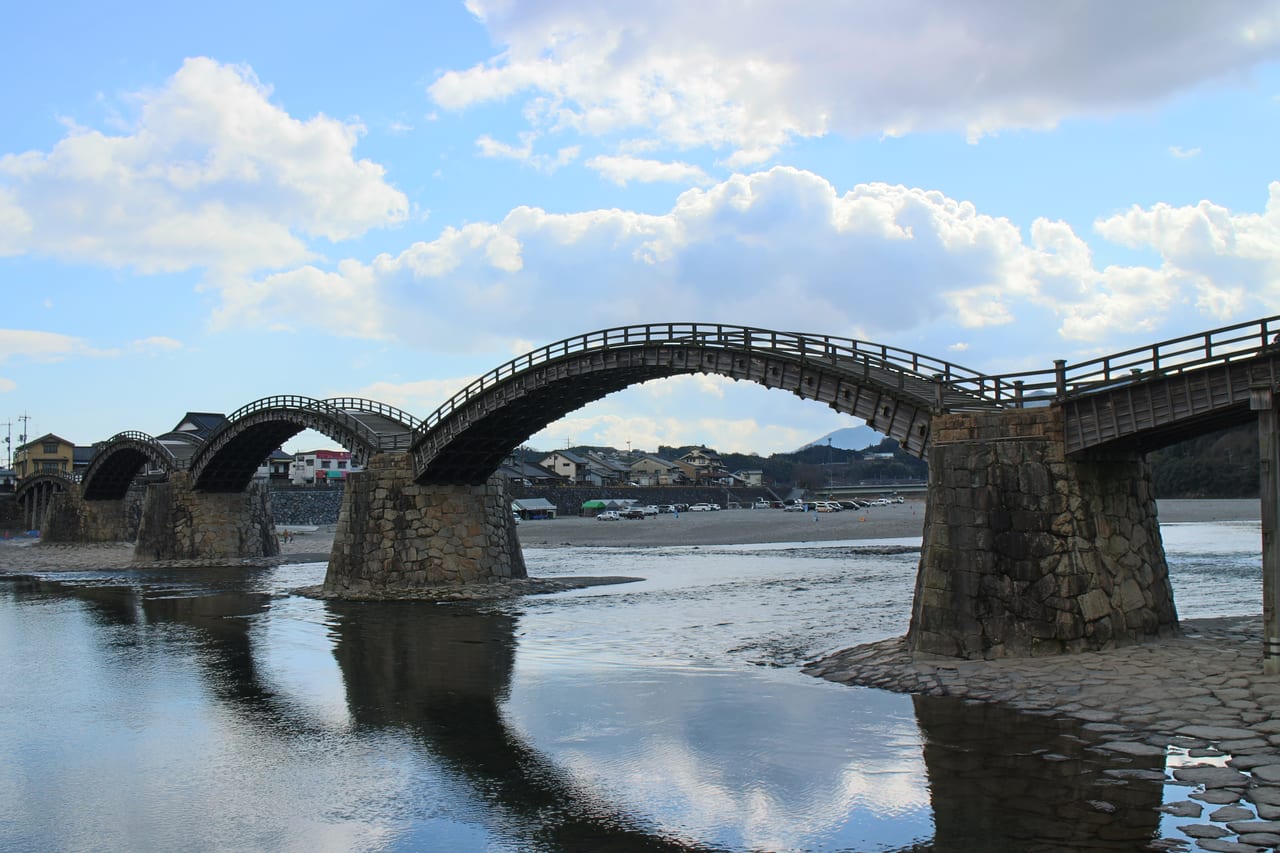
Honestly, Iwakuni is not a city that fills a whole day with sights — its value is concentrated: you come for the bridge. But that bridge carries enough weight to justify the trip. Kintaikyo is ranked alongside Tokyo's Nihonbashi and Nagasaki's Megane-bashi as one of Japan's three great bridges, and what sets it apart is not its looks but its engineering: the five wooden arches rise without mid-span piers and without nails, the entire structure held up by interlocking timber joinery, which is genuinely rare in the history of bridge-building. Stand at one end and watch the five continuous curves mirrored in the Nishiki River and you understand why the Japanese treat it as a national-treasure landscape.
My framing is blunt: Iwakuni is a "half-day highlight," not a place to fill an entire day. The bridge, Kikko Park, the ropeway up to the castle, the White Snake Museum, and a plate of Iwakuni sushi add up to a relaxed 3–4 hours. And precisely because it is compact and only about 45 minutes from Hiroshima, the best way to do it is not as a dedicated overnight but as a half-day inside your Hiroshima and Miyajima itinerary. If you are routing the Chugoku region, Iwakuni is one of its highest-value pieces.
Kintaikyo: five arches, nail-free joinery
Start with the bridge itself. Kintaikyo runs roughly 193 meters across the Nishiki River in five sections: gentle approach spans at each end and three tall wooden arches in the middle, arched steeply enough that you climb up and back down each one, like cresting three small hills in a row. The shape is not for show — in 1673 the Iwakuni domain lord Kikkawa Hiroyoshi wanted a bridge the Nishiki River's floods could not wash away, drew on Chinese arch-bridge ideas, and used the arch form to spread the force of the current. The timber arch members lock together with mortise-and-tenon joints and metal bands rather than relying on mid-span piers, and that "kumiki" interlocking method is the core of why it has lasted centuries.
What the crossing is actually like: the wooden planks have a solid, real-timber feel, and the climb up each arch is steeper than it looks — worth knowing if your legs are tired or you have a stroller (you cannot push a stroller up the arches). Walk down to the riverbank afterward, too: from the gravel bar beneath the bridge you get the cleanest line on the underside of the arches and the joinery, and on a still day the reflection doubles the five curves into a near-symmetrical shape. From the middle of the bridge, looking back at the five arches and their reflection is the best shot; photograph it from both the bridge and the riverbank below. The bridge is still periodically dismantled and rebuilt for maintenance — this is not a fixed relic but a living bridge kept alive by carpentry skills handed down through generations, which is itself reason enough to make the trip. Cherry blossoms in spring, maples in autumn, the torchlight of summer ukai — each season frames it differently.
Tickets & combo (buy it right)
Iwakuni's ticketing is simple, but there is one easy trap — read the table first:
| Item | Adult (jr-high and up) | Elementary | Preschool |
|---|---|---|---|
| Kintaikyo bridge, round trip | ¥310 | ¥150 | Free |
| Iwakuni Castle ropeway, round trip | ¥560 | ¥260 | Free |
| Iwakuni Castle admission | ¥270 | ¥120 | Free |
| Combo (bridge + ropeway + castle) | ¥970 | ¥460 | Free |
Bought separately the three come to ¥1,140 for an adult, so the ¥970 combo saves ¥170. If you plan to go up to the castle at all, buy the ¥970 combo right at the bridge ticket booth. The big trap: per official rules, once you buy a bridge-only ticket (¥310) you cannot pay the difference and upgrade to the combo — plenty of people only decide to climb after crossing, then end up paying the bridge portion twice. The decision is easy: climbing means combo, no climb means the ¥310 ticket, just don't buy bridge-only and then change your mind. The White Snake Museum (¥200) is paid separately and not in the combo, but showing your combo or bridge ticket usually gets a discount — ask at the counter. (Prices per Iwakuni's official tourism information; reconfirm the current-year notice before you go.)
Iwakuni Castle & ropeway (worth it?)
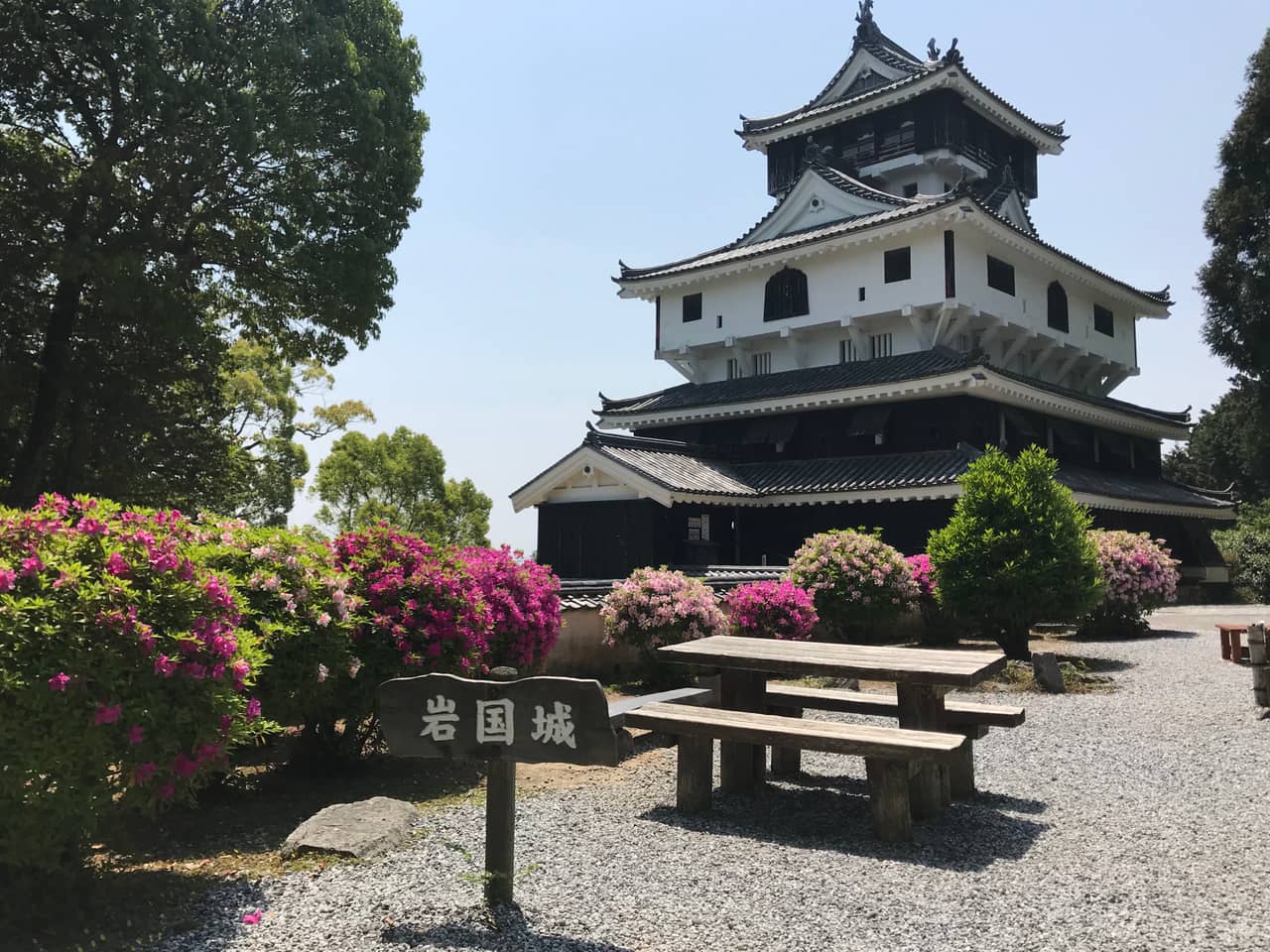
The verdict first: the bridge is the star, the castle is the supporting act, but I'd still recommend the ropeway trip. Iwakuni Castle sits atop Mt. Yokoyama across the river. It was an early-Edo mountain castle, demolished under the 1615 "one castle per domain" edict, and the current keep is a 1962 ferro-concrete reconstruction — so do not expect an authentic old castle; inside is an exhibition hall of armor, swords, and models.
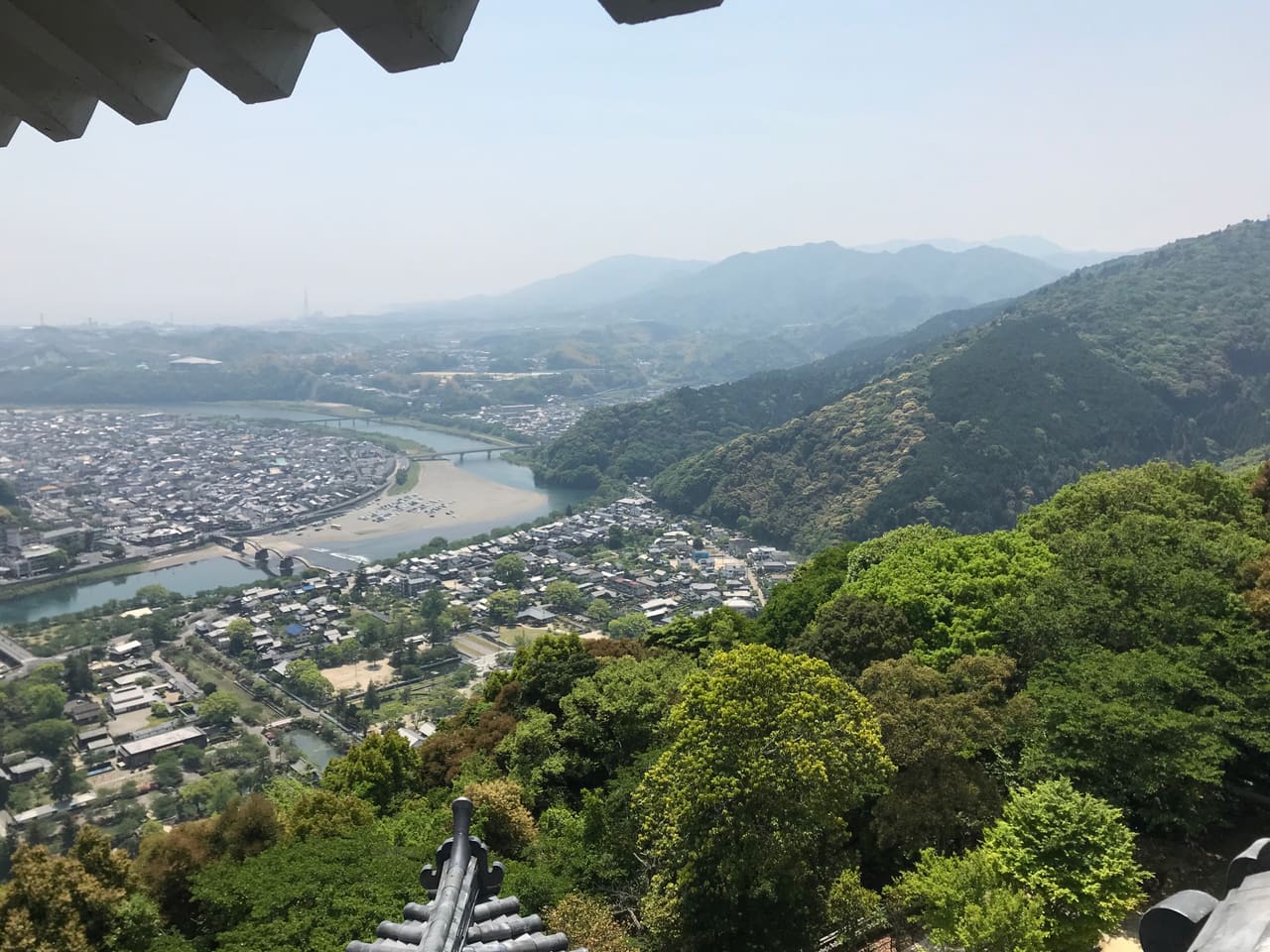
So why recommend going up? It's the view, not the keep's interior. From beside Kikko Park, the Iwakuni Castle ropeway takes about 3 minutes to the summit station, then a few minutes' walk to the keep. The payoff is the angle from the keep's observation deck looking down over Kintaikyo, the Nishiki River, and the town — something you cannot capture from the ground at all; from up high the five arches look like a white wave laid across the river, genuinely striking. The ropeway is ¥560 round trip, roughly every 15–20 minutes. My advice: go up for the overhead view if you have the time, but if you only have 90 minutes or limited mobility, the bridge plus Kikko Park is a complete visit with no regrets — don't force the castle just because you're here.
Look south from the keep's observation deck and the whole of Kintaikyo, the Nishiki River, and the Iwakuni plain open up below you — this is the shot that decides whether the ropeway is "worth it." On a clear, high-visibility day, this overhead angle alone earns back the ¥560 fare.
Kikko Park & the samurai district
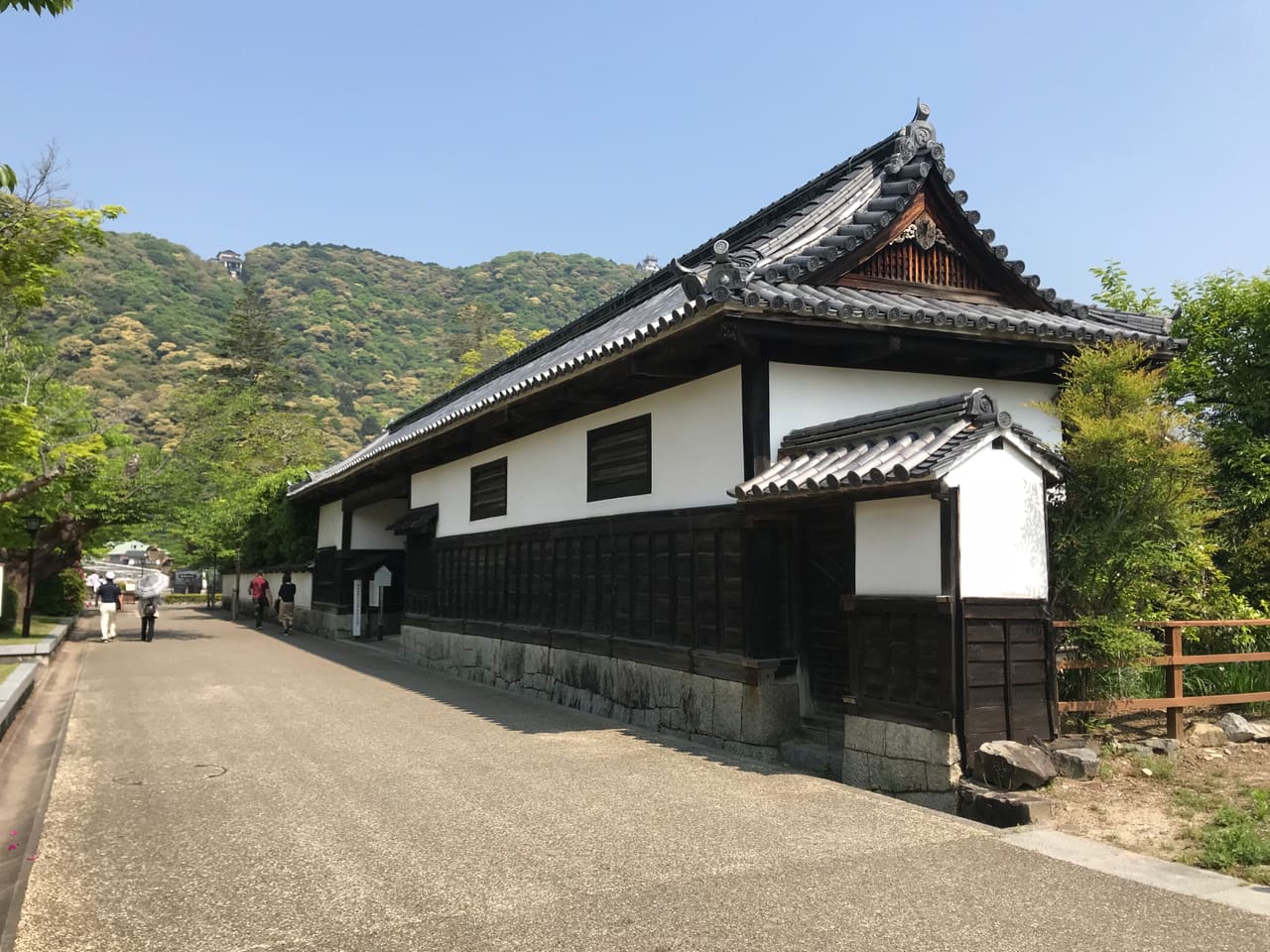
Cross to the far bank, below the ropeway station, and you reach Kikko Park — the old samurai residential district of the Kikkawa lords of the Iwakuni domain, now a free, open historical park and one of Japan's "100 best cherry-blossom spots." It is calmer than a city park, and it preserves a number of old samurai gates (nagayamon), earthen walls, and gardens, so walking through it gives you a feel for the layout of an Edo-era castle town. A fountain anchors the center, with the Kikkawa archive hall, the Kagawa family's nagayamon, broad lawns, and remnants of the moat scattered around — the most pleasant place to stroll after the bridge.
Seasonally, the spring cherry blossoms are the most famous — Kintaikyo plus blossoms plus Kikko Park is Iwakuni's most iconic spring scene, and crowds rise noticeably during bloom. Otherwise it is quite serene, ideal for slowing down after the bridge with a soft serve on the lawn. The White Snake Museum is in one corner of the park, so see it on the way before the ropeway.
White Snake Museum: a Natural Monument
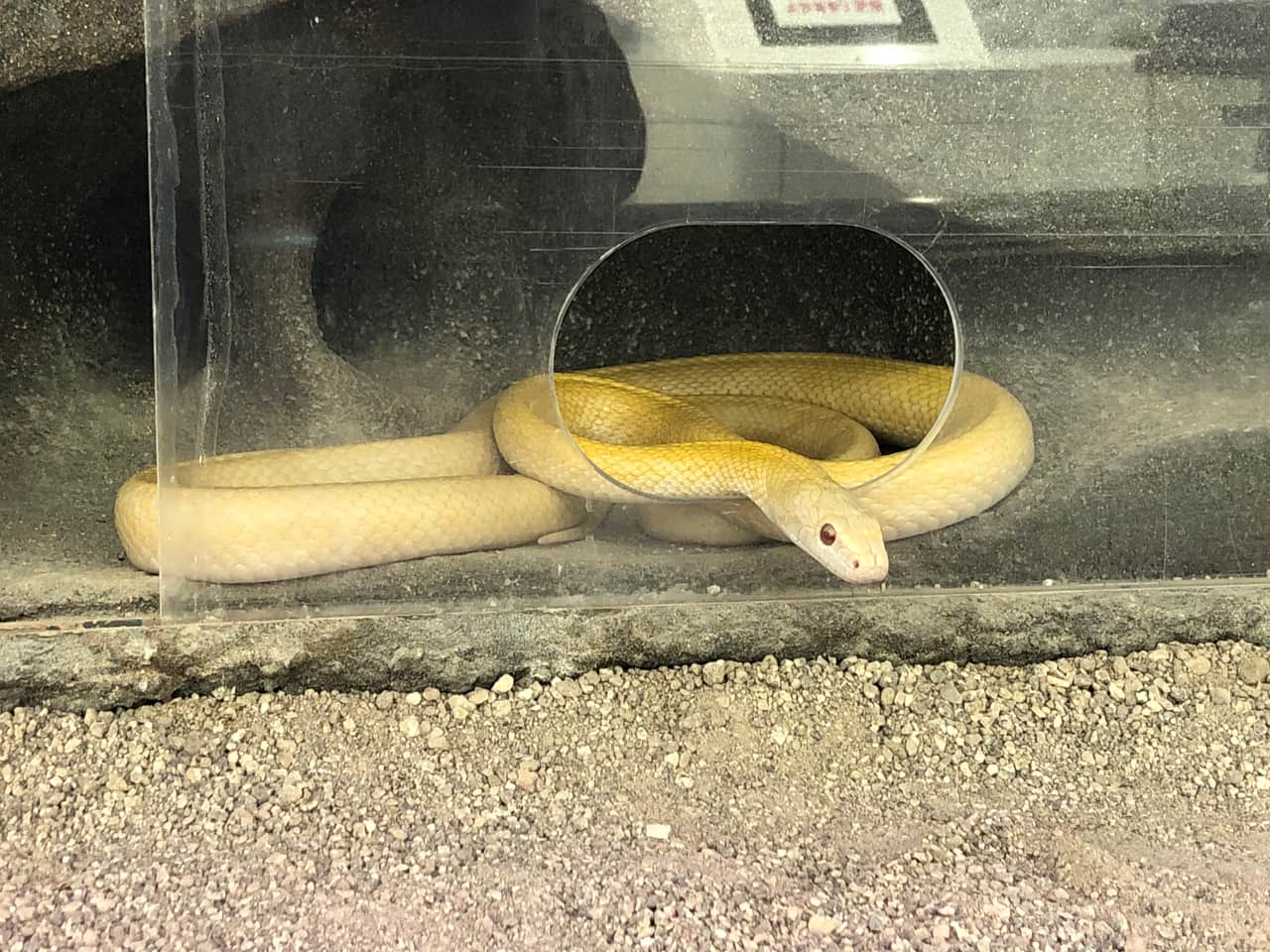
Iwakuni has one signature creature you won't find elsewhere — the white snake (shirohebi). It is an albino variant of the Japanese rat snake, pure white with red eyes, and a nationally designated Natural Monument. Why so many in Iwakuni? In the Edo period locals treated these white snakes as sacred snakes that bring wealth and protected them; with the area's many storehouses and the rats they drew, the snakes bred and persisted into something unique to Iwakuni, and they remain strictly protected today.
To see them, the easiest spot is the Iwakuni White Snake Museum (Shirohebi no Yakata) beside Kikko Park: admission ¥200 for high schoolers and up, ¥100 for younger students, open 9:00–17:00. You can observe live white snakes up close through glass, with models, games, and panels explaining their history and biology — genuinely educational for families with kids. There is also a White Snake Shrine in town where you can pray for good fortune. Snake-averse travelers can of course skip it, but it is one of Iwakuni's most distinctive stops and it is right on the park's edge, so it costs little time to look in.
Iwakuni sushi, lotus root & ukai
After the bridge and park, eat Iwakuni's two local specialties. The first is Iwakuni sushi (Iwakuni-zushi, also "lord's sushi"): a pressed sushi in which vinegared rice, shredded egg, fish, lotus root, and shiitake are layered and pressed in a wooden frame into a single block, then cut into squares — vivid in color, substantial in portion, descended from a feudal-era dish made to feed many at once, and about as regionally representative as sushi gets. The teahouses and local-cuisine restaurants around the bridge and Kikko Park mostly serve it.
The second is Iwakuni lotus root (Iwakuni renkon) — a local variety whose cross-section has as many as nine holes (ordinary lotus root usually has seven or eight), considered auspicious for "seeing far ahead." You'll find it as lotus-root tempura, simmered dishes, and lotus-root croquettes; the texture is crisp and slightly sticky. Iwakuni sushi plus a lotus-root dish makes a fitting local lunch to round off the half-day.
If you come on a summer evening, there's an extra: cormorant fishing (ukai) on the Nishiki River. Fishermen work tethered cormorants over a river lit by torches to catch sweetfish — a centuries-old method you can watch up close from a pleasure boat (reservation required; operating season per the current-year notice, typically summer evenings around June to September). It isn't a must-see, but watching the ukai torchlight beneath the lit-up Kintaikyo is genuinely atmospheric.
Getting there from Hiroshima / Miyajima
This is the most important section for planning Iwakuni, and also its biggest advantage — it's close to Hiroshima. Iwakuni sits at the eastern edge of Yamaguchi Prefecture, right next to Hiroshima Prefecture. Three main ways in:
- JR Sanyo Line (most common, cheapest): Hiroshima → Iwakuni in about 45–50 minutes (local/rapid train, fare around ¥770). From JR Iwakuni Station, transfer to an Iwakuni Bus, about 20 minutes, and get off at the "Kintaikyo" stop. Service is smoother than you'd expect, and this is how most independent travelers do it.
- Shin-Iwakuni Shinkansen station: the Sanyo Shinkansen "Kodama" stops at Shin-Iwakuni, then a bus of about 15 minutes to Kintaikyo. Good if you hold a JR Pass and your route is on the Shinkansen; but for a simple Hiroshima–Iwakuni hop, the local train is cheaper and more direct.
- Direct bus from Hiroshima Bus Center: Hiroshima Bus Center ⇔ Kintaikyo in about 50 minutes, round trip around ¥1,700 (one way ~¥950), no transfers, straight to the bridge — handy if you'd rather not change trains.
On the map, Miyajima is southwest of Hiroshima and Iwakuni a little further west, all on the same Sanyo Line, so the smartest plan strings them together: "Hiroshima city (Atomic Bomb Dome, Peace Park) 1 day + Miyajima's Itsukushima Shrine 1 day + Iwakuni's Kintaikyo half-day." If the wider trip leans heavily on JR and the Shinkansen, run the break-even math in our JR Pass guide first. Heading east you can extend to Okayama and Kurashiki — see our Okayama & Kurashiki guide. Iwakuni has few lodging options, so unless you have a specific reason, do it as a half-day and stay in Hiroshima city.
A half-day / one-day plan
Here is the content shaped into a route that flows (written for a half-day out of Hiroshima):
- Morning: Hiroshima on the JR Sanyo Line to Iwakuni Station → bus to Kintaikyo → buy the ¥970 combo at the bridge booth → walk across Kintaikyo (shoot one set on the bridge, one from the riverbank below).
- Midday: cross to Kikko Park for the old samurai district, gates, and fountain → the White Snake Museum next door for the natural-monument white snakes (¥200).
- Afternoon: take the ropeway up to Iwakuni Castle (about 3 minutes), look down over the full Kintaikyo panorama from the keep → back down for Iwakuni sushi and a lotus-root dish as a late lunch or dinner → train back to Hiroshima.
At a relaxed pace it's about 3–4 hours; with a meal, half a day to a full day covers it easily. If you come on a summer evening, stretch it into the night and add the Nishiki River ukai boat (book ahead). The best overall arrangement is to slot Iwakuni between Miyajima and Hiroshima into a 2–3 day greater-Hiroshima run — three distinct spots, all on the same JR line, with very low travel cost between them.
FAQ
- Q1:Is there a toll to cross Kintaikyo Bridge? Which ticket should I buy?
- Yes, but it is cheap. The round-trip bridge toll is ¥310 for adults, ¥150 for elementary schoolers, free for younger children (the bridge alone). Honestly, though, most people buy the ¥970 combo ticket (adult), which bundles the bridge crossing, the Iwakuni Castle ropeway round trip, and castle admission — ¥170 cheaper than buying the three separately. One trap to know: once you buy a bridge-only ticket you cannot swap it for the combo, so if you plan to go up to the castle, buy the combo right at the bridge ticket booth. If you only want to walk the bridge and skip the climb, the ¥310 ticket is all you need. The full breakdown is in the "Tickets & combo" section below.
- Q2:Is the Iwakuni Castle ropeway worth it, or should I just see the bridge?
- Depends on your time and legs. The bridge is the star — the five wooden arches and the nail-free interlocking joinery are the reason you come to Iwakuni; the castle itself is a 1962 ferro-concrete reconstruction, very much an add-on. But I would still say the ropeway is worth one trip: not for the keep's interior, but for the view down over Kintaikyo and the Nishiki River from the castle's observation deck — an angle you simply cannot get from the ground. The ropeway is ¥560 round trip and about 3 minutes up. If you only have 90 minutes or limited mobility, the bridge plus Kikko Park is a complete visit on its own, and skipping the castle is no real loss.
- Q3:Are Iwakuni's white snakes real? Where do you see them?
- They are real, and they are a nationally designated Natural Monument. Iwakuni's white snakes (shirohebi) are an albino variant of the Japanese rat snake; in the Edo period they were protected as sacred snakes thought to bring wealth, and they bred and persisted into a creature unique to Iwakuni. The easiest place to see them is the Iwakuni White Snake Museum (Shirohebi no Yakata), right by Kikko Park, walkable after you cross the bridge. Admission is ¥200 for high schoolers and up, ¥100 for younger students, open 9:00–17:00; you view live white snakes through glass, with models and games explaining their biology. There is also a White Snake Shrine in town. Snake-averse travelers can skip it, but kids find it fascinating.
- Q4:What should I eat in Iwakuni? What is Iwakuni sushi?
- Two local specialties. Iwakuni sushi (Iwakuni-zushi, also "lord's sushi") is a pressed sushi: vinegared rice, shredded egg, fish, lotus root, and shiitake are layered and pressed in a wooden frame into one big block, then cut into squares — colorful, hearty, and a proper regional dish dating to the feudal domain. The other is Iwakuni lotus root (Iwakuni renkon) — a local variety whose cross-section has nine holes (ordinary lotus root usually has seven or eight), considered auspicious, served as tempura, simmered, or in lotus-root croquettes. Restaurants and teahouses around the bridge and Kikko Park serve both. In summer evenings there are also cormorant-fishing (ukai) boats on the Nishiki River.
- Q5:How should I plan an Iwakuni visit? How long do I need?
- Half a day to a day is about right — no overnight needed. The smooth route: buy the combo at the bridge booth → walk across Kintaikyo (feel the arc of the five arches) → explore Kikko Park's old samurai district, gates, and fountain on the far bank → see the natural-monument white snakes at the White Snake Museum next door → take the ropeway up to Iwakuni Castle and look down over the whole bridge from the keep → come back down for Iwakuni sushi and lotus root. At a relaxed pace it is about 3–4 hours; with a meal, half a day to a full day covers it easily. Iwakuni has few lodging options and most people do not stay over — slot it into a Hiroshima trip as a half-day and sleep in Hiroshima city.
- Q6:How do I get to Iwakuni from Hiroshima? Can I pair it with Miyajima?
- You can, and pairing it with Miyajima and Hiroshima is the smart play. Iwakuni is very close to Hiroshima: the JR Sanyo Line runs Hiroshima → Iwakuni in about 45–50 minutes (local train, fare around ¥770), then an Iwakuni Bus about 20 minutes from JR Iwakuni Station to Kintaikyo; if you are rushing, you can also transfer at Shin-Iwakuni (Sanyo Shinkansen) and bus ~15 minutes. There is also a direct bus from Hiroshima Bus Center to Kintaikyo in about 50 minutes (round trip ~¥1,700). Geographically Miyajima sits southwest of Hiroshima and Iwakuni a little further west, all on the same Sanyo Line, so many people run "Hiroshima city 1 day + Miyajima 1 day + Iwakuni half-day." If the wider trip leans on JR, run the numbers with our JR Pass guide first. The Hiroshima end is in our Hiroshima guide and Miyajima in our Miyajima & Itsukushima guide.
Related reading:
Hiroshima Guide 2026: Peace Park, Okonomiyaki & Miyajima
Chugoku's gateway — 1.5 hr from Shin-Osaka by Shinkansen, the World Heritage A-Bomb Dome, layered okonomiyaki, and a Miyajima day trip.
Miyajima Guide 2026: Floating Torii Tides, Mt. Misen & Oysters
World Heritage Itsukushima Shrine — how to time the floating torii by tide, the Mt. Misen ropeway, ferries, the visitor tax and grilled oysters.
Okayama & Kurashiki Guide 2026: Korakuen, Bikan & Denim
Korakuen (one of Japan's three great gardens), the white-walled Kurashiki Bikan quarter and Kojima denim — the best stop on the Sanyo Line.