Let's kill the scariest headline first. "Kyoto's accommodation tax jumped to ¥10,000 a night" is technically true and practically false for almost every visitor. Since March 1, 2026 the bottom band — rooms under ¥6,000 — still costs ¥200, exactly what it cost before. The band most independent travelers actually book, ¥6,000 to ¥20,000, went from ¥200 to ¥400. That ¥10,000 rate kicks in at ¥100,000 per person, per night. Meanwhile, two genuinely consequential changes are already settled in law: Tokyo switches to a flat 3% rate on April 1, 2027 with the exemption threshold rising from ¥10,000 to ¥13,000 — a ¥12,000 room goes from ¥100 to ¥0 while a ¥30,000 room goes from ¥200 to ¥900 — and Okinawa introduces a 2% tax on February 1, 2027, the first percentage-based prefectural lodging tax in Japan. This guide lays out every rate, effective date and calculation trap across 9 prefectures and 58 municipalities. If you are still building a number for the whole trip, pair this with our Japan trip cost breakdown.
- Kyoto is not the disaster it sounds like: ¥200 under ¥6,000 (unchanged), ¥400 for ¥6,000–20,000; the ¥10,000 band starts at ¥100,000 per person per night
- Tokyo goes flat 3% on April 1, 2027, threshold up to ¥13,000 — some pay 4.5× more, some pay nothing. Right now it is still ¥100/¥200
- Okinawa starts February 1, 2027 at 2% (capped ¥2,000) — the first percentage-based prefectural tax; six municipalities including Onna and Chatan add their own
- Next to start charging: Shirahama on March 1, 2027; Kagoshima City and Ibusuki on April 1, 2027 (¥200 each); Oita Prefecture (Beppu, Yufuin) on June 1, 2027. Nagasaki City from April 1, 2027: every room from ¥6,000 to ¥20,000 pays ¥300 (¥100 or ¥200 today)
- In Hokkaido you add prefectural + municipal rates — except Kutchan, where the town states the total is 3%, and Niseko Town from November 1, 2026. Adding the two rates in either town overcharges you
- Bathing tax ¥150 is a standard, not a national rate: ¥50 for a Hakone day soak, up to ¥500 in Beppu — and it stacks with accommodation tax (Atami: ¥350 per person per night)
- Nozawa Onsen Village already charges 3.5% (rising to 5% on June 1, 2029 — the highest lodging tax rate in Japan), and the Nagano prefectural tax is added on top
- The tax base is the room-only rate — meals and consumption tax come out first, and twin rooms are divided per person before banding
📖 Contents
- 1. What Kyoto's "¥10,000 tax" actually means
- 2. When you pay, who you pay, and whether it's already in your booking
- 3. Tokyo's 2027 switch to 3%: winners and losers
- 4. Okinawa, February 2027: Japan's first percentage prefecture
- 5. All 9 prefectural rates
- 6. All 58 municipal rates
- 7. Hokkaido: addition, and the two Niseko-area exceptions
- 8. Onsen bathing tax: why ¥150 is only a starting point
- 9. Why every city is different and why 2026 exploded
- 10. Who should raise their budget, who can ignore this
- 11. FAQ
What Kyoto's "¥10,000 tax" actually means
Kyoto City moved from a three-band to a five-band accommodation tax on March 1, 2026. The reporting focused on the top figure and skipped the threshold attached to it. Here is the full before-and-after, cross-checked against Kyoto City's rate table, the city's separately worded explanatory page, and the Ministry of Internal Affairs' national register of non-statutory taxes — three independent official sources that agree exactly:
| Room-only rate (per person, per night) | Until Feb 28, 2026 | From Mar 1, 2026 | Change |
|---|---|---|---|
| Under ¥6,000 | ¥200 | ¥200 | None |
| ¥6,000 – under ¥20,000 | ¥200 | ¥400 | +¥200 |
| ¥20,000 – under ¥50,000 | ¥500 | ¥1,000 | +¥500 |
| ¥50,000 – under ¥100,000 | ¥1,000 | ¥4,000 | +¥3,000 |
| ¥100,000 and above | ¥1,000 | ¥10,000 | +¥9,000 |
Translated into real itineraries: a ¥12,000 business hotel near Shijo-Karasuma costs you ¥200 more per night than before. A ¥45,000 machiya townhouse in Gion costs ¥500 more. Only a ¥120,000-a-night luxury ryokan touches the ¥10,000 band. Kyoto steepened the curve; it did not double everyone's bill. The people genuinely affected are those booking high-end properties for multiple nights — a family of four in a ¥100,000-plus ryokan for three nights pays 4 × 3 × ¥10,000 = ¥120,000 in tax alone, which is no longer a rounding error.
Two Kyoto-specific rules catch people out, both taken verbatim from the city's official FAQ:
- Kyoto has no exemption threshold at all. The official line: "if an accommodation charge arises, accommodation tax is levied even if the amount is small." A ¥2,000 hostel bunk still owes ¥200. Tokyo (¥10,000), Osaka (¥5,000) and Kanazawa (¥5,000) all have thresholds. Kyoto does not.
- Age is irrelevant. "Regardless of the guest's age, tax applies whenever an accommodation charge arises." There is no child discount built into the structure.
And the rule that applies everywhere in Japan but gets ignored most often: the tax base is the room-only rate, which Kyoto defines as room charge plus service charge, excluding meals and consumption tax. A ryokan invoicing ¥25,000 with dinner and breakfast, where the food component is ¥8,000, is taxed on ¥17,000 — a full band lower. If you are booking half-board ryokan stays, this single detail is worth more than any of the rate tables.
⚠️ A sourcing warning: one of Kyoto City's own sub-pages (the taxable-scope FAQ, last dated 2021) still displays the old three-band rates. If a search drops you there, the numbers are stale. The March 2026 rate announcement is the page to trust.
When you pay, who you pay, and whether it's already in your booking
This is where budgets get quietly broken, because the tax is not necessarily inside the amount you already paid online.
The municipalities are remarkably consistent — and they all leave the same escape hatch. Kyoto: "Please pay the accommodation facility at which you stayed. Note that it may be included in the amount paid to the reservation site or travel agency, so please check with the property." Tokyo: "There are cases where you will pay at the hotel or ryokan front desk, separately from the travel fee." Hokkaido's official multilingual site: "Please pay by the method indicated by the accommodation facility."
The official answer is unanimously "ask your property." A workable rule of thumb: Japanese booking platforms and direct hotel bookings more often bundle it into the displayed total, while some international OTAs collect room rate only and leave the tax to the desk. The fastest check is scanning your reservation breakdown for a line reading "accommodation tax" or 宿泊税.
Kyoto adds a sharper point in its transition notice: the tax amount is determined by the stay date. "If you paid the pre-revision tax amount at the time of booking, and the stay date falls on or after March 1, 2026, you must pay the difference to the accommodation facility." The same logic will apply to anyone who books a spring 2027 Tokyo trip early — system changes always follow check-in date, not booking date.
On payment method: the claim that "most properties only take cash for this" has no official basis we could find, and the evidence points the other way — Tokyo's wording is that the tax is paid "according to the payment method determined by each accommodation facility." No authority mandates cash. The right preparation is not stuffing your wallet with notes; it is treating this as a line item that may surface at checkout. It only becomes significant with more people and more nights — ¥400 a night for four people over five nights in Kyoto is ¥8,000. For how Japan handles cards and mobile payments generally, see our Japan payment methods guide.
Two more mechanics worth memorising:
- Twin rooms are divided by headcount before banding. Tokyo states it explicitly: "when two or more people stay in one room such as a twin room, the judgment is made by converting to the accommodation charge per person." An ¥18,000 twin is assessed at ¥9,000 each — under the current ¥10,000 threshold, so nothing is due. Most first-timers get this backwards.
- Minshuku and pensions usually escape — but Tokyo changes that in 2027. Tokyo currently says minshuku and pensions "are normally not taxable" unless licensed as hotel or ryokan businesses. From April 2027, simple lodgings and minpaku (both the Private Lodging Business Act and special-zone varieties) are brought fully into scope. Your Airbnb apartment in Tokyo will start carrying this line. ⚠️ Those terms are not synonyms — they are three separate legal regimes (licensing, notification, and specific certification) with different floor-area minimums, night caps and lines of accountability. Which one to book, and how to check a minpaku is legal, is covered in our Japan accommodation and booking guide; this page handles only the tax.
Tokyo's 2027 switch to 3%: winners and losers
If you take one thing from this guide, take this.
What applies today: Tokyo's accommodation tax has run since October 1, 2002, making it Japan's first. It is a flat three-band system — nothing under ¥10,000, ¥100 for ¥10,000 to under ¥15,000, and ¥200 above ¥15,000. The amounts are small enough that most visitors never notice, which is exactly the problem Tokyo says it is fixing.
From April 1, 2027 the whole structure is replaced. Per the metropolitan government's June 30, 2026 press release and the ministerial consent documents:
| Item | Current (stays to Mar 31, 2027) | Stays from Apr 1, 2027 |
|---|---|---|
| Rate | ¥100 for ¥10,000–15,000; ¥200 above ¥15,000 | 3% of the accommodation charge |
| Exemption threshold | Under ¥10,000 per person, per night | Under ¥13,000 per person, per night |
| Scope | Hotels and ryokan in Tokyo | Hotels, ryokan, simple lodgings and minpaku (special-zone and Private Lodging Business Act) |
Tokyo's stated rationale is worth quoting because it explains the design: "as accommodation charges have risen, under the current flat-amount method guests in higher price ranges bear a lower effective tax rate." A flat yen amount is regressive once room rates climb, so they went proportional.
The result is a genuine split — this is not a uniform increase, and a whole segment stops paying entirely:
| Room-only rate per person, per night | Current tax | From Apr 1, 2027 | Change |
|---|---|---|---|
| ¥9,000 | ¥0 | ¥0 | No change |
| ¥12,000 | ¥100 | ¥0 | Becomes free (threshold rises) |
| ¥15,000 | ¥200 | ¥450 | +¥250 |
| ¥30,000 | ¥200 | ¥900 | 4.5× |
| ¥60,000 | ¥200 | ¥1,800 | 9× |
(The 3% column is our arithmetic on the official rate, shown to convey magnitude; the actual base is each property's room-only rate.)
My read: for the business-hotel traveler, Tokyo's reform is good news. Rooms in Ikebukuro, Ueno and Asakusa at ¥10,000–13,000 move from taxed to untaxed. The people paying materially more are those booking Shinjuku, Marunouchi and Ginza upper-tier hotels, and families block-booking several rooms. Do not overlook the scope expansion either — minpaku entering the tax net is the change most likely to surprise apartment-rental users.
The full paper trail, for anyone who wants to verify: metropolitan tax commission report October 2023 → draft published for public comment November 2025 → passed by the Metropolitan Assembly in March 2026 → consented to by the Minister for Internal Affairs on June 30, 2026 → promulgated July 1, 2026 → in force April 1, 2027. Tokyo's own wording: "the new system applies from stays on April 1, 2027."
Okinawa, February 2027: Japan's first percentage prefecture
The second under-reported change: Okinawa Prefecture introduces an accommodation tax on February 1, 2027 at a flat 2%, capped at ¥2,000 — the first percentage-based tax at prefectural level in Japan, arriving two months before Tokyo's.
Two structural details: the tax base is rounded down to the nearest ¥1,000 and capped at ¥100,000; and where a municipality levies its own, the split is 0.8% prefectural plus 1.2% municipal, still 2% in total. A review is scheduled for fiscal 2029.
Three rules for trips that straddle the start date: the night of January 31 to February 1, 2027 is not taxed — the tax starts with check-ins on February 1; a room booked before the start date is still taxed if the stay falls on or after February 1; and there is no exemption threshold, so even the cheapest room pays.
The prefecture names six municipalities planning their own levy: Motobu, Onna, Chatan, Miyakojima, Ishigaki and Nago. That list matters more than it looks — Onna is where the west-coast resort belt sits, and Chatan is American Village. All six carry the same rate — 1.2%, capped ¥1,200 — and the same start date of February 1, 2027, each with ministerial consent. Add the prefectural 0.8% (capped ¥800) and the desk total is 2%, capped ¥2,000.
What it means in practice: a ¥40,000 ocean-view resort night in Onna carries ¥800 (split ¥320 prefectural + ¥480 municipal where applicable — the total is unchanged); a ¥12,000 Naha city hotel carries ¥240. Because Okinawa resort rates are high, a percentage system bites harder than a flat one — if you are planning an Okinawa trip for spring 2027 or later, build a 2% cushion into the lodging line.
All 9 prefectural rates
Nine prefectures have an accommodation tax; Okinawa and Oita are not yet in force. All figures are per person, per night, on the room-only rate, sourced from municipal official pages and the Ministry of Internal Affairs' non-statutory tax register:
| Prefecture | Effective from | Current rate | Threshold | Announced changes |
|---|---|---|---|---|
| Tokyo | Oct 1, 2002 (Japan's first) | ¥100 for ¥10,000–15,000; ¥200 above | ¥10,000 | Flat 3% from Apr 1, 2027, threshold ¥13,000 (not yet in force) |
| Osaka | Jan 1, 2017 (revised Sep 1, 2025) | ¥200 for ¥5,000–15,000; ¥400 for ¥15,000–20,000; ¥500 above | ¥5,000 | Revision complete |
| Fukuoka | Apr 1, 2020 | ¥200; ¥100 where a municipality also levies; ¥50 inside Fukuoka City and Kitakyushu City | None | — |
| Miyagi | Jan 13, 2026 | ¥300 prefecture-wide; ¥100 inside Sendai City (Sendai adds ¥200, still ¥300 total) | None | — |
| Hiroshima | Apr 1, 2026 | ¥200 | None | — |
| Hokkaido | Apr 1, 2026 | ¥100 under ¥20,000; ¥200 for ¥20,000–50,000; ¥500 above | None | 18 municipalities add their own — see section 7 |
| Nagano | Jun 1, 2026 | ¥300 (¥200 for the first 3 years); halved inside Matsumoto, Karuizawa, Achi, Hakuba and Nozawa Onsen (¥150, or ¥100 for the first 3 years) | Under ¥6,000 (room-only, before tax) | — |
| Okinawa | Feb 1, 2027 (not yet in force) | 2%, capped ¥2,000; where municipalities co-levy, 0.8% prefectural + 1.2% municipal | Base rounded down to ¥1,000; capped at ¥100,000 | Review in FY2029 |
| Oita | Jun 1, 2027 (not yet in force) | ¥100 under ¥5,000; ¥200 for ¥5,000–20,000; ¥500 for ¥20,000–100,000; ¥2,000 above | — | Beppu and Yufuin are both in Oita; bathing tax is charged separately |
Two designs worth flagging: Fukuoka and Miyagi split the revenue but fix the total. Inside Fukuoka City it is ¥50 prefectural + ¥150 municipal = ¥200; inside Sendai it is ¥100 + ¥200 = ¥300. You pay the total; the split is an accounting matter.
All 58 municipal rates
Of the 58, 42 are already collecting (first table) and 16 are announced but not yet in force (second table). This is the table with the shortest shelf life in this guide, and the one you should re-check before you travel. Compiled from the Ministry of Internal Affairs register plus individual municipal pages. Amounts are the municipality's own portion — if the prefecture also levies, add it (the exceptions, Kutchan and Niseko Town, are covered in the next section).
| Municipality | Effective from | Municipal rate |
|---|---|---|
| Kyoto City (Kyoto) | Oct 1, 2018 (revised Mar 1, 2026) | ¥200 / ¥400 / ¥1,000 / ¥4,000 / ¥10,000 — five bands, see section 1 |
| Kanazawa (Ishikawa) | Apr 1, 2019 | Nil under ¥5,000; ¥200 for ¥5,000–20,000; ¥500 above (threshold only added Oct 2024) |
| Kutchan (Hokkaido) | Nov 1, 2019 | 2% (stays to Mar 31, 2026) → 3% from Apr 1, 2026, and 3% is the total |
| Fukuoka City (Fukuoka) | Apr 1, 2020 | ¥150 under ¥20,000; ¥450 above (+¥50 prefectural = ¥200 / ¥500 total) |
| Kitakyushu (Fukuoka) | Apr 1, 2020 | ¥150 (+¥50 prefectural = ¥200 total) |
| Nagasaki City (Nagasaki) | Apr 1, 2023 | ¥100 under ¥10,000; ¥200 for ¥10,000–20,000; ¥500 above Planned from Apr 1, 2027: ¥100 under ¥6,000; ¥300 for ¥6,000–20,000; ¥500 above |
| Niseko Town (Hokkaido) | Nov 1, 2024 | ¥200 under ¥20,000; ¥500 to ¥50,000; ¥1,000 to ¥100,000; ¥2,000 above (¥100 under ¥5,001 for the time being) From stays on Nov 1, 2026: a flat 3% of the room rate, prefectural tax included |
| Tokoname (Aichi) | Jan 6, 2025 | ¥200 |
| Atami (Shizuoka) | Apr 1, 2025 | ¥200 (plus ¥150 bathing tax) |
| Takayama (Gifu) | Oct 1, 2025 | ¥100 under ¥10,000; ¥200 for ¥10,000–30,000; ¥300 above |
| Gero (Gifu) | Oct 1, 2025 | ¥100 under ¥5,000; ¥200 above |
| Akaigawa Village (Hokkaido) | Nov 1, 2025 | Nil under ¥8,000; ¥200 for ¥8,000–20,000; ¥500 above |
| Matsue (Shimane) | Dec 1, 2025 | ¥200 |
| Hirosaki (Aomori) | Dec 1, 2025 | ¥200 |
| Sendai (Miyagi) | Jan 13, 2026 | ¥200 (+¥100 prefectural = ¥300 total) |
| Sapporo (Hokkaido) | Apr 1, 2026 | ¥200 under ¥50,000; ¥500 above |
| Hakodate (Hokkaido) | Apr 1, 2026 | ¥100 under ¥20,000; ¥200 to ¥50,000; ¥500 to ¥100,000; ¥2,000 above |
| Otaru, Asahikawa, Kushiro, Obihiro, Kitami, Abashiri (Hokkaido) | Apr 1, 2026 | ¥200 each |
| Furano (Hokkaido) | Apr 1, 2026 | ¥200 under ¥20,000; ¥300 to ¥50,000; ¥500 above |
| Rusutsu Village, Shimukappu Village (Hokkaido; Shimukappu = Tomamu) | Apr 1, 2026 | ¥100 under ¥20,000; ¥200 to ¥50,000; ¥500 above |
| Otofuke (Hokkaido) | Apr 1, 2026 | ¥200 |
| Shintoku (Hokkaido) | Apr 1, 2026 | ¥50 under ¥5,000; ¥100 to ¥20,000; ¥200 to ¥50,000; ¥500 above |
| Toyako (Hokkaido) | Apr 1, 2026 | Combined (prefecture + town) ¥300 under ¥20,000; ¥700 to ¥50,000; ¥1,500 above |
| Koshimizu (Hokkaido) | Apr 1, 2026 | ¥200 (town collects the prefectural portion on Hokkaido's behalf) |
| Yugawara (Kanagawa) | Apr 1, 2026 | ¥300 under ¥50,000; ¥500 above |
| Gifu City (Gifu) | Apr 1, 2026 | ¥200 |
| Toba (Mie) | Apr 1, 2026 | ¥200 |
| Matsumoto (Nagano) | Jun 1, 2026 | City ¥150 (¥100 for the first 3 years); combined city + half prefectural = ¥300, or ¥200 from Jun 2026 to May 2029 |
| Karuizawa (Nagano) | Jun 1, 2026 | Nil under ¥6,000; ¥150 for ¥6,000–10,000 (¥100 for 3 years); ¥200 for ¥10,000–100,000 (¥150); ¥650 above (¥600) |
| Achi Village (Nagano) | Jun 1, 2026 | ¥200 |
| Hakuba Village (Nagano) | Jun 1, 2026 | Nil under ¥6,000; ¥150 for ¥6,000–20,000 (¥100 for 3 years); ¥350 to ¥50,000 (¥300); ¥850 to ¥100,000 (¥800); ¥1,850 above (¥1,800) |
| Nozawa Onsen Village (Nagano) | Jun 1, 2026 | 3.5% (rising to 5% on Jun 1, 2029 — the highest in Japan); nil under ¥6,000. Nagano prefectural tax is added on top |
| Kumamoto City (Kumamoto) | Jul 1, 2026 | ¥200 |
| Miyazaki City (Miyazaki) | Jul 1, 2026 | ¥200 |
| Morioka (Iwate) | Oct 1, 2026 | ¥200 (Iwate has no prefectural tax, so ¥200 is the total) |
| Nasu Town (Tochigi) | Oct 1, 2026 | ¥100 under ¥10,000; ¥300 to ¥20,000; ¥500 to ¥30,000; ¥800 to ¥50,000; ¥1,500 to ¥100,000; ¥3,000 above; children under 12 exempt. Tochigi has no prefectural tax |
Announced but not yet in force (from February 2027)
All of these have ministerial consent. You do not pay them today, but they belong in any itinerary that starts after the date shown:
| Municipality | Rate | Effective (planned) | Why it matters |
|---|---|---|---|
| Nago, Motobu, Onna, Chatan, Miyakojima, Ishigaki (Okinawa) | 1.2% each, capped ¥1,200 | Feb 1, 2027 | Plus 0.8% prefectural = 2% total, capped ¥2,000 |
| Wakkanai (Hokkaido) | ¥200 | Mar 1, 2027 | Plus Hokkaido prefectural tax |
| Shirahama (Wakayama) | ¥200 under ¥10,000; ¥300 for ¥10,000–20,000; ¥500 for ¥20,000–50,000; ¥1,000 above; children under 12 exempt | Mar 1, 2027 | Nanki-Shirahama Onsen and Adventure World are here |
| Fujiyoshida (Yamanashi) | ¥200 | Apr 1, 2027 | Fuji-Q Highland and the Chureito Pagoda are here |
| Fujikawaguchiko (Yamanashi) | ¥200 | Apr 1, 2027 | All of Lake Kawaguchi; Yamanashi has no prefectural tax, so ¥200 is the total |
| Tomakomai (Hokkaido) | 3% | Apr 1, 2027 | Plus Hokkaido prefectural tax |
| Yamagata City (Yamagata) | 3% | Apr 1, 2027 | ⚠️ Ginzan Onsen is in Obanazawa, so this does not apply there |
| Unzen (Nagasaki) | ¥100 under ¥5,000; ¥350 above | Apr 1, 2027 | Unzen Onsen sits here; Nagasaki has no prefectural tax |
| Kagoshima City (Kagoshima) | ¥200 | Apr 1, 2027 | The base for Sakurajima |
| Ibusuki (Kagoshima) | ¥200 | Apr 1, 2027 | Home of the sand baths |
| Kitahiroshima (Hokkaido) | 3% | Oct 1, 2027 | Home of ES CON FIELD |
Two prefectural taxes are also still to come: Okinawa (Feb 1, 2027) and Oita (Jun 1, 2027 — Beppu and Yufuin); their rates are in the prefectural table above. Nagasaki City's April 1, 2027 revision is in the Nagasaki row of the first table.
⚠️ This list is current to the September 30, 2026 batch of ministerial consents; more may have been added since. Check the official page of the municipality you are actually staying in before you go.
Hokkaido: addition, and the two Niseko-area exceptions
Hokkaido earns its own section for three reasons: the prefectural tax only began in April 2026, 18 municipalities stack their own on top, and the two Niseko-area towns calculate it differently from everywhere else. Because ski-season room rates are high, this is where the absolute yen differences are largest.
The principle first: prefectural tax (¥100 / ¥200 / ¥500) plus municipal tax equals what you pay. Hokkaido publishes a combined table on its multilingual site, which saves the arithmetic:
| Area | Municipality | Combined total (prefecture + municipality, per person per night) |
|---|---|---|
| Do-o | Sapporo | ¥300 (to ¥19,999) / ¥400 (¥20,000–49,999) / ¥1,000 (¥50,000+) |
| Do-o | Otaru | ¥300 / ¥400 / ¥700 |
| Do-o | Niseko Town | Stays to Oct 31, 2026: ¥200 (to ¥5,000) / ¥300 (¥5,001–19,999) / ¥700 / ¥1,500 (¥50,000–99,999) / ¥2,500 (¥100,000+) Stays from Nov 1, 2026: a flat 3%, prefectural tax included |
| Do-o | Rusutsu Village | ¥200 / ¥400 / ¥1,000 |
| Do-o | Kutchan | A flat 3% (prefectural tax already included) |
| Do-o | Akaigawa Village | ¥100 (to ¥7,999) / ¥300 (¥8,000–19,999) / ¥700 / ¥1,000 |
| Do-o | Toyako | ¥300 / ¥700 / ¥1,500 |
| Do-nan | Hakodate | ¥200 / ¥400 / ¥1,000 (¥50,000–99,999) / ¥2,500 (¥100,000+) |
| Do-hoku | Asahikawa | ¥300 / ¥400 / ¥700 |
| Do-hoku | Furano | ¥300 / ¥500 / ¥1,000 |
| Do-hoku | Shimukappu (Tomamu) | ¥200 / ¥400 / ¥1,000 |
| Do-to | Kitami, Abashiri, Obihiro, Otofuke, Kushiro, Koshimizu | ¥300 / ¥400 / ¥700 |
| Do-to | Shintoku | ¥150 (to ¥4,999) / ¥200 (¥5,000–19,999) / ¥400 / ¥1,000 |
(Where bands are not labelled, they run under ¥20,000 / ¥20,000–49,999 / ¥50,000 and above. This is Hokkaido's official combined table as of April 2026, so it does not reflect Niseko Town's November 1 change.)
Kutchan and Niseko Town: 3% is the total, do not add the prefectural tax
This is the single most useful trap in the guide. Kutchan Town states its reasoning openly: following Hokkaido's introduction of a banded flat-amount tax, "in order to maintain this town's percentage system," the town raised its rate "from 2% to 3%, with the prefectural tax portion deducted to form the town tax," explicitly to avoid confusion from two different calculation methods. Its breakdown reads: town + prefectural total = 3% of the accommodation charge; Hokkaido's portion = ¥100 / ¥200 / ¥500; Kutchan's portion = the remainder after deducting the prefectural amount. The town adds the line: "A total of 3% of the accommodation charge is levied."
So in Kutchan — which includes the Grand Hirafu side of the Niseko ski area:
- A ¥20,000 night → ¥600 (not 3% plus ¥200)
- A ¥50,000 peak-season night → ¥1,500 (not ¥1,500 plus ¥500)
- A ¥100,000 chalet night → ¥3,000
Timing matters too: Kutchan has levied 2% since November 1, 2019, and 2% applies to stays up to March 31, 2026, with 3% applying from stays on April 1, 2026 (ministerial consent for the rate change came on July 31, 2025).
Niseko Town adopts the same structure for stays from November 1, 2026 — a flat 3% with the prefectural tax inside it — and says openly that the point is to run one system across the Niseko area with Kutchan. From that date both Niseko-area towns total 3%, and the other 16 Hokkaido municipalities are the ones you add up.
If your booking straddles that date, the tax follows the stay date, not the booking date. In Niseko Town a ¥20,000 night costs ¥700 until October 31 and ¥600 from November 1; a ¥100,000 night goes from ¥2,500 to ¥3,000; at exactly ¥50,000 both systems give ¥1,500. Kutchan and Niseko are also the priciest lodging markets in Hokkaido, so double-counting the prefectural tax costs the most yen here. For how to plan around it, see our Japan skiing guide for beginners.
Onsen bathing tax: why ¥150 is only a starting point
Accommodation tax is new. The bathing tax is old, and plenty of people have been paying it for years without noticing.
Its legal basis sits in the Local Tax Act (Act No. 226 of 1950) and takes three articles:
| Article | Key official text |
|---|---|
| Article 701 (levy) | Municipalities where hot-spring bathhouses are located shall levy a bathing tax on bathers, to fund environmental sanitation facilities, spring-source protection, fire-fighting facilities and tourism promotion. |
| Article 701-2 (rate) | "The rate of the bathing tax shall be standard at 150 yen per bather per day." |
| Article 701-3 (collection) | Collection must be by the special collection method — your accommodation collects it and remits it to the municipality. |
The operative words are "shall be standard." ¥150 is a benchmark, not a national fixed amount, and municipalities set their own. The spread is wider than most visitors assume:
| Onsen area | Bathing tax | Exemptions / notes |
|---|---|---|
| Hakone | Overnight ¥150 per person per night Day-trip bathing ¥50 per person | Exempt: under 12s (elementary school and below); communal and general public bathhouses; school groups up to high school with teacher supervision (overseas school trips excluded); long-term convalescents |
| Beppu | Banded by room rate (per person per day): ¥50 for ¥1,500–2,000; ¥100 for ¥2,001–4,500; ¥150 for ¥4,501–6,000; ¥250 for ¥6,001–50,000; ¥500 above ¥50,001. Halved for stays of 8 days or more. Entertainment facilities ¥40 | Exempt: under 12s; communal and public bathhouses; school excursions. The top two bands are an excess levy running Apr 1, 2019 – Mar 31, 2029 |
| Atami | ¥150 per person per day, with the official note that "a one-night, two-day stay is calculated as one day" | Eight exemption categories, including under 12s, public bathhouses, school excursions and facilities charging ¥1,000 or less |
| Kusatsu | Overnight ¥150 where the base room rate exceeds ¥6,000, ¥100 at ¥6,000 or less Day-trip bathing or rest use ¥50 | Exempt: elementary school pupils and younger, junior-high school excursions. High-school excursions pay ¥50 |
So "onsen bathing costs ¥150 a day" is wrong for a Hakone day soak (¥50) and wrong for a mid-range Beppu ryokan (¥250). In Kusatsu an overnight stay is ¥150 (¥100 if the base room rate is ¥6,000 or less) and a day soak is ¥50.
Bathing tax vs accommodation tax: three differences that matter
| Bathing tax | Accommodation tax | |
|---|---|---|
| Legal status | Statutory earmarked tax written into the Local Tax Act | Non-statutory earmarked tax — locally legislated, requires ministerial consent |
| Who levies it | Any municipality with a hot-spring bathhouse | Only municipalities that passed an ordinance |
| Amount | ¥150 standard per person per day; locally variable (Beppu up to ¥500) | Enormously variable: ¥50 to ¥10,000, or 1.2–5% where it is a percentage (the 5% ceiling is Nozawa Onsen from June 2029) |
| Trigger | Bathing — day trips can be taxed too | Staying overnight |
| Common exemptions | Under 12s in most municipalities; communal and public bathhouses | School excursions, plus each area's own threshold |
They stack. The clearest case is Atami: ¥200 accommodation tax (since April 1, 2025) plus ¥150 bathing tax equals ¥350 per person per night. A family of four for two nights is ¥2,800 — real money, if not trip-altering. For choosing between onsen properties in the first place, see our best onsen ryokan in Japan.
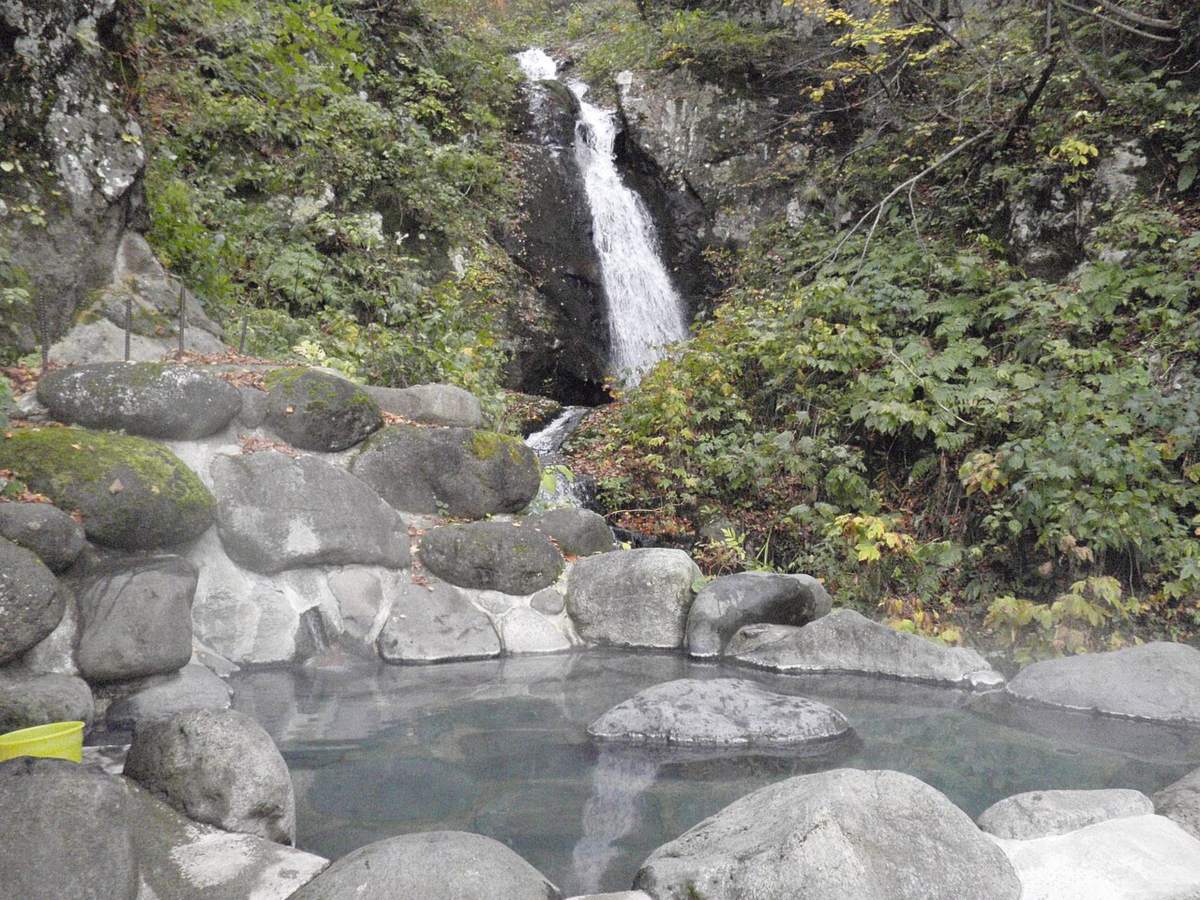
📌 Bathing tax is not the nyuto-tegata. Both involve the word 入湯, and they are unrelated. The nyuto-tegata is the wooden token sold at places like Kurokawa Onsen that lets you visit three outdoor baths — an optional product you can decline. The bathing tax is a tax, collected with your room bill, and you cannot opt out. Seeing 入湯税 on your invoice does not mean someone sold you a bath pass.
Why every city is different and why 2026 exploded
The obvious question by now is why Japan does not simply run one national lodging tax. The answer is in the legal architecture.
Per the Ministry of Internal Affairs, local authorities may create tax items by ordinance beyond those set out in the Local Tax Act — these are "non-statutory taxes." The Omnibus Decentralisation Act of April 2000 converted non-statutory ordinary taxes from a licensing regime to a consultation-with-consent regime, and created the non-statutory earmarked tax category. Accommodation tax is exactly that.
The pipeline runs: local assembly passes the ordinance → consultation with the Minister for Internal Affairs → opinion from the Local Public Finance Council and notification to the Minister of Finance → ministerial consent → entry into force. Crucially, the minister must consent unless one of three exceptions applies: the tax shares a base with a national or other local tax and imposes a markedly excessive burden on residents; it seriously obstructs the movement of goods between local authorities; or it is inappropriate in light of national economic policy.
That structure explains three things at once. Why every city differs — each writes its own ordinance and designs its own bands. Why 2026 produced so many at once — overtourism funding pressure hit simultaneously, and the consent bar is low. Why some announced taxes take over a year to arrive — the gap between passage and effect can be long: Fujikawaguchiko passed its ordinance on March 3, 2026, received consent on June 30, 2026, and starts collecting on April 1, 2027.
Laid out chronologically, the spread is stark: Oct 2002 Tokyo (first in Japan) → Jan 2017 Osaka → Oct 2018 Kyoto City → Apr 2019 Kanazawa → Nov 2019 Kutchan → Apr 2020 Fukuoka Prefecture, Fukuoka City, Kitakyushu → Apr 2023 Nagasaki → Nov 2024 Niseko Town → Jan 2025 Tokoname → Apr 2025 Atami → Sep 2025 Osaka revision → Oct 2025 Takayama and Gero → Nov 2025 Akaigawa → Dec 2025 Matsue and Hirosaki → Jan 2026 Miyagi and Sendai → Mar 2026 Kyoto revision → Apr 2026 Hokkaido plus 15 municipalities, Hiroshima, Yugawara, Gifu City, Toba, Kutchan to 3% → Jun 2026 Nagano, Matsumoto, Karuizawa, Achi, Hakuba, Nozawa Onsen → Jul 2026 Kumamoto City and Miyazaki City → Oct 2026 Morioka and Nasu → Nov 2026 Niseko Town to a flat 3% → Feb 2027 Okinawa and six municipalities → Mar 2027 Wakkanai and Shirahama → Apr 2027 Tokyo at 3%, Tomakomai, Yamagata City, Fujiyoshida, Fujikawaguchiko, Unzen, Kagoshima City, Ibusuki, Nagasaki City revision → Jun 2027 Oita Prefecture → Oct 2027 Kitahiroshima → Jun 2029 Nozawa Onsen from 3.5% to 5%.
From 2002 to 2023, twenty-one years produced seven taxing authorities. From 2024 to 2027, four years added more than fifty. That is not coincidence; it is the fiscal consensus that formed once inbound numbers recovered. My honest expectation is that this curve has not peaked — if you are heading somewhere well-known that does not levy today, the odds of it levying within two or three years are not small, particularly famous onsen towns and ski villages.
Who should raise their budget, who can ignore this
Pulling all of it into an actual recommendation, with the trade-offs stated plainly.
You can ignore this entirely if you stay in business hotels at ¥6,000–15,000 per person, stick to the Tokyo–Osaka–Kyoto corridor, and travel five nights or fewer. Your total additional cost lands somewhere around ¥1,000–3,000 for the whole trip — well under 1% of a typical budget. Rearranging an itinerary or swapping cities over this would be irrational. Whether Kyoto is worth visiting has nothing to do with ¥200.
You should raise your lodging budget if you are:
- A skier. This is where the yen amounts are largest. A ¥50,000 peak-season apartment in Niseko Town costs ¥1,500 per person per night; in Kutchan it is also ¥1,500 (the flat 3%). Six nights is ¥9,000 per person. In Hakuba a ¥50,000 night is ¥350 village tax (¥300 during the three-year reduction) plus half the Nagano prefectural rate; the same ¥50,000 night in Nozawa Onsen is ¥1,750 village tax at 3.5%, plus the Nagano prefectural tax. High nightly rates make percentage and upper-band taxes bite.
- Doing an onsen ryokan circuit. Accommodation tax and bathing tax stack — Atami is ¥350 per person per night, ¥2,800 for a family of four over two nights. Remember to strip the meal component out before banding a half-board rate; a lot of people scare themselves unnecessarily here.
- Booking high-end rooms or long family stays. Kyoto's top band is ¥10,000 per person per night — four people, three nights, ¥120,000. At that scale, confirm before booking whether the quoted total includes the tax.
- Travelling to Okinawa after February 2027, Shirahama after March 2027, Tokyo's upper-tier hotels, the Fuji Five Lakes, Kagoshima City, Ibusuki or Nagasaki City after April 2027, or Beppu and Yufuin after June 2027. These are announced, not-yet-effective changes that belong in next year's planning now.
Three calculations to check yourself before departure: (1) the base is the room-only rate — strip meals and consumption tax first; (2) divide twin rooms per person before reading the band; (3) in Hokkaido add prefectural and municipal rates — except in Kutchan, and in Niseko Town from November 1, 2026.
One more tax that sits outside this article but eats the same budget: the departure tax has gone from ¥1,000 to ¥3,000, effective 1 July 2026. Its formal name is the International Tourist Tax, and it is bundled into your airfare and collected by the airline, so no separate bill ever reaches you. That is why many travellers still do not know it went up. It applies regardless of nationality: Japanese residents pay it on the way out too. A family of four now pays ¥12,000, more than many of them will pay in lodging tax for the whole trip. The line that "booking before 30 June keeps the old rate" is an oversimplification. The official test has three conditions that must all hold: the contract was concluded before 1 July 2026, the departure date was already fixed, and the fare does not itemise the tax separately.
Everything not yet in force (Okinawa Prefecture and its six municipalities, Wakkanai, Shirahama, Tokyo, Fujiyoshida, Fujikawaguchiko, Tomakomai, Yamagata, Unzen, Kagoshima City, Ibusuki, the Nagasaki City revision, Oita Prefecture, Kitahiroshima) is labelled above with its effective date, and ministerial consents are published monthly, so more municipalities will join. Spend two minutes on the official page of the municipality you are actually booking. As for which kind of property this tax lands on — hotels, simple lodgings and minpaku are three different legal regimes in Japan, and choosing between them is its own decision: see how Japanese lodging licences and booking platforms actually work. For the rest of the pre-trip groundwork, start with our Japan travel essentials; for long-distance travel on local trains at the lowest fare, see the Seishun 18 Ticket winter 2026 guide. And to be unambiguous about the thing readers most often conflate: airport refunds concern consumption tax under the tax-free retail system and have nothing to do with these local taxes — the full explanation is in our Japan tax-free shopping guide.
Frequently Asked Questions
- Q1:Did Kyoto really raise its accommodation tax to ¥10,000 a night?
- Only for rooms costing ¥100,000 or more per person, per night. Kyoto switched to a five-band structure on March 1, 2026, but the bottom band did not move at all: under ¥6,000 is still ¥200. The band most independent travelers land in — ¥6,000 to ¥20,000 — went from ¥200 to ¥400, a ¥200 increase. The headline ¥10,000 rate applies to the top band only. One calculation trap matters more than the rate itself: the tax is assessed on the room-only rate (room charge plus service charge), excluding meals and consumption tax. A ryokan billing ¥25,000 with two meals is not automatically in the ¥20,000-plus band once the food portion is stripped out.
- Q2:Is the accommodation tax included in what I already paid on Booking.com or Agoda?
- Sometimes — and no Japanese authority will give you a straight yes or no. Kyoto City says to "pay the accommodation you stayed at," then adds that the amount "may be included in what you paid to the booking site or travel agency, so please check with the property." Tokyo says it "may be payable at the hotel or ryokan front desk, separately from the travel fee." Hokkaido tells visitors to "pay by the method indicated by the accommodation." The universal official answer is: ask your property. There is a related trap in Kyoto's own wording — the tax is determined by the stay date, not the booking date. If you prepaid at the old rate before March 1, 2026 but check in after it, you owe the difference at the front desk. As for payment method, there is no official rule requiring cash: Tokyo's text says the tax is paid "according to the payment method set by each accommodation."
- Q3:Do children pay Japan accommodation tax?
- There is no child exemption anywhere — only thresholds and school-trip exemptions. Kyoto is the bluntest: "regardless of the guest's age, tax applies whenever an accommodation charge arises." Tokyo works through its threshold instead: "even for children, the tax applies when the per-person, per-night charge is ¥10,000 or more" (¥13,000 from April 2027). In practice an infant who does not occupy a bed and generates no separate charge is untaxed — but that is because no charge exists, not because of age. The two exemptions almost every municipality shares are school excursions for pupils and students of schools under Article 1 of the School Education Act (universities excluded) plus their supervisors, and children aged 3 and over on outings run by certified kindergartens and nurseries.
- Q4:What is the onsen bathing tax, and will I be charged both taxes?
- Yes, both apply, and they are completely separate systems. The bathing tax (nyuto-zei) is written into the Local Tax Act itself: Article 701 states that municipalities where hot-spring bathhouses are located shall levy a bathing tax on bathers. Accommodation tax is the opposite — a "non-statutory earmarked tax" that each local assembly must legislate and get the Minister for Internal Affairs to approve. Atami is the cleanest example of both landing on one bill: ¥200 accommodation tax (since April 2025) plus ¥150 bathing tax equals ¥350 per person per night. One clarification for anyone who has read about Kurokawa Onsen: the bathing tax is not the nyuto-tegata bath-hopping pass. The pass is an optional wooden token you buy; the tax is collected with your room bill whether you like it or not.
- Q5:Is the onsen bathing tax always ¥150?
- No. ¥150 is the "standard rate" in Article 701-2 of the Local Tax Act, not a national fixed amount, and municipalities set their own. Hakone charges ¥150 for overnight guests but only ¥50 for day-trip bathers. Beppu bands it by room rate: ¥50 for ¥1,500–2,000, ¥100 for ¥2,001–4,500, ¥150 for ¥4,501–6,000, ¥250 for ¥6,001–50,000 and ¥500 above ¥50,001 (the top two bands are an excess levy running April 2019 to March 2029), with the rate halved for stays of eight days or more. Atami charges ¥150 and specifies that a one-night, two-day stay counts as a single day. Most municipalities exempt children under 12 and public bathhouses. So "onsen bathing costs ¥150 a day in Japan" is simply wrong in a lot of places.
- Q6:How does Hokkaido accommodation tax work — do I add the prefectural and town rates together?
- Yes, except in the two Niseko-area towns. Hokkaido introduced a prefectural tax on April 1, 2026 (¥100 under ¥20,000, ¥200 up to ¥50,000, ¥500 above), and 18 municipalities levy their own on top, so a ¥15,000 room in Sapporo costs ¥100 + ¥200 = ¥300. Kutchan does not work that way. The town raised its own rate from 2% to 3% specifically to preserve its percentage system, defining the town portion as 3% minus the prefectural amount, and states in plain text: "a total of 3% of the accommodation charge is levied." A ¥50,000 night in Kutchan — which covers the Grand Hirafu side of Niseko — is ¥1,500, not ¥1,500 plus ¥500. Niseko Town switches to the same arithmetic for stays from November 1, 2026: a flat 3% of the room rate, prefectural tax included. From that date both Niseko-area towns total 3%, and the other 16 Hokkaido municipalities are the ones you add up.
- Q7:Can I claim the accommodation tax back at the airport like tax-free shopping?
- No — these are two unrelated systems. Airport tax-free refunds concern consumption tax on goods you export, processed through licensed tax-free retailers. Accommodation tax and bathing tax are local taxes, collected by your hotel under a special collection scheme and remitted to the municipality; no local government offers a visitor refund mechanism. The accommodation tax base already excludes consumption tax. Tokyo itemizes what is out of scope — consumption tax equivalents, meals, minibar drinks, weddings, banquets, spa treatments, pool and sauna use, video, laundry, telephone and parking. Only the room-only rate and its service charge are taxed.