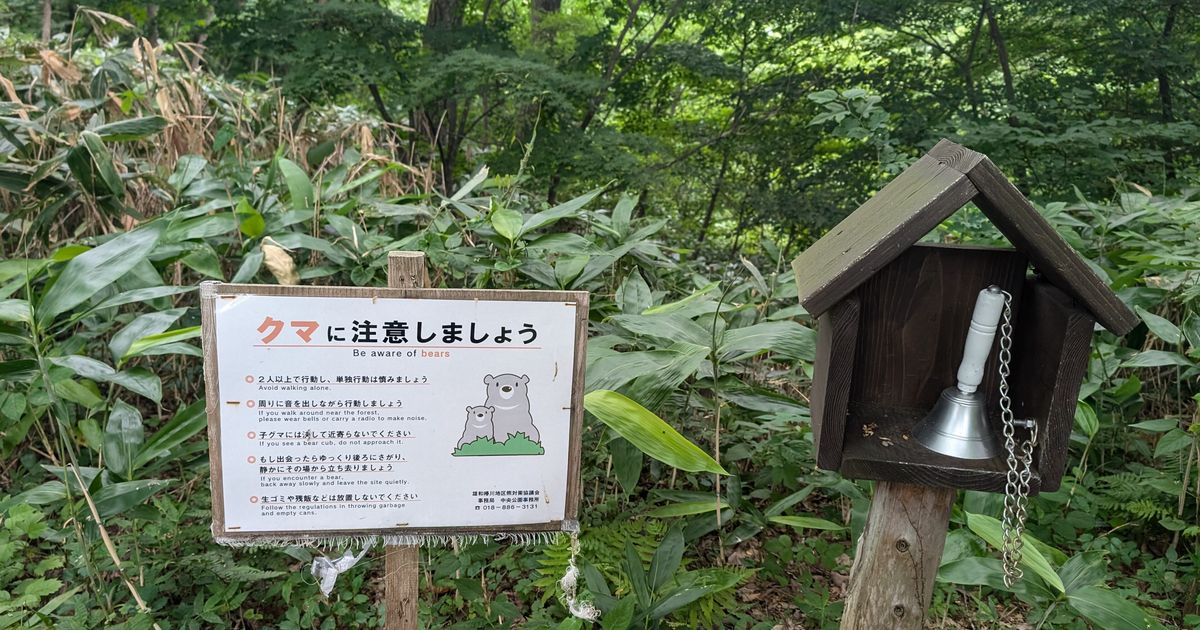
In the Japanese fiscal year running April 2025 to March 2026, bears injured 238 people in Japan and killed 13, both the highest figures on record, and October alone accounted for 89 of the injuries and 7 of the deaths. If your first instinct is to cancel the Tohoku hiking days, read one more official number before you do. The Ministry of the Environment splits casualties by setting, and the split is 282 incidents in the human living sphere — urban areas, around homes, roads and farmland — against 172 in bear habitat, meaning forest and riverbeds. That October spike happened mostly in residential neighbourhoods, on farmland and beside roads rather than up a mountain, and the ministry says so in bold in its own analysis report. This guide puts those 238 people back into the places where they actually were, then deals with the three things that genuinely changed for anyone walking a trail: one fatal attack on a hiking route, one handbook that did not exist before August 2026, and one rule that changes how you pack.
- 282 versus 172. The environment ministry divides casualties into the human living sphere and bear habitat. Its bolded conclusion: in the autumn of a mass-emergence year, a high proportion of injuries happen where people live
- Of the 13 deaths, exactly one is officially placed anywhere, and that one was on a hiking trail — 14 August 2025, Shari, Hokkaido, on the Rausu-dake route in Shiretoko National Park. Where the other 12 happened is not published
- National parks had no unified bear policy until August 2026. The ministry own words: there was no uniform guideline and it was left to each site
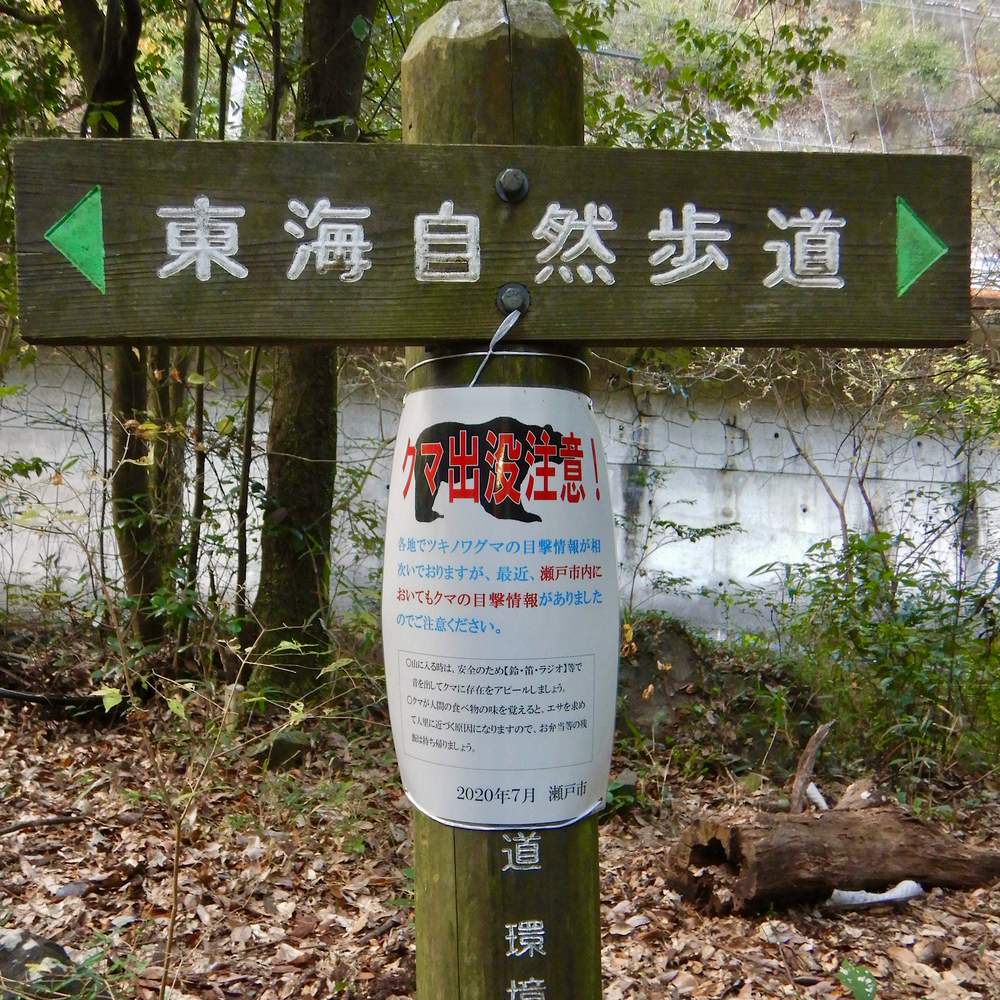
- Bear spray cannot fly, in cabin or hold. The ministry tells visitors to obtain it after landing, which breaks the fly-in-and-hike-the-same-day plan
- Make noise before, not after. Shouting at a bear you can see is on the official do-not-do list
Table of Contents
- Where those 238 people actually were
- What happened in October
- How many of the 13 deaths were on a trail
- National parks had no unified bear policy until 2026
- Can bear spray fly with you
- Should you shout at a bear
- Where to check sightings before you go
- Emergency shooting closes streets, not trails
- Will autumn 2026 be worse
- What this article could not find
- The ten-minute pre-trip list
- FAQ
Where those 238 people actually were
Mostly near their own front doors, not on a trail. The analysis report the Ministry of the Environment released on 27 April 2026 sorts bear casualties into two settings, and this is the single most important table in the whole subject:
| Setting | Official definition | Incidents |
|---|---|---|
| Human living sphere | Urban areas, around homes, roads, farmland — the ministry adds that this includes hamlets in hill and mountain districts bordering bear range | 282 |
| Bear habitat | Forest, riverbeds | 172 |
The report sets out two POINTs in bold and underline, the second of which reads, translated: in the autumn of a mass-emergence year, a high proportion of casualties occur in the human living sphere. The dataset covers a normal year (FY2024, 82 cases) and mass-emergence years (FY2023 and FY2025, 353 cases). One caveat belongs here rather than in a footnote: 282 plus 172 is 454, which does not match the 496 incidents those three years total, and the report does not explain the gap. So this article quotes the two printed numbers and does not compute percentages to make them reconcile.
Go one level down and the two settings differ in activity as well. Within the 282, the largest category is ordinary daily life — walking, doing things around the house. The ministry attaches a heavy sentence to that category: there is no particular behaviour that makes an incident more likely, and anyone can be involved. That is not a scare line, it is an explanation of why those 282 cases cannot be prevented by telling people to stop doing something. Those people were walking near their homes.
Within the 172, the largest category is gathering wild vegetables and mushrooms, with hiking and walking second, followed by hunting, mountain leisure, fishing, gathering chestnuts and walnuts, and forestry work. That is where trail hiking sits in the national picture: second place inside the smaller half, 172 of 454. Not zero, but not the body of the spike either.
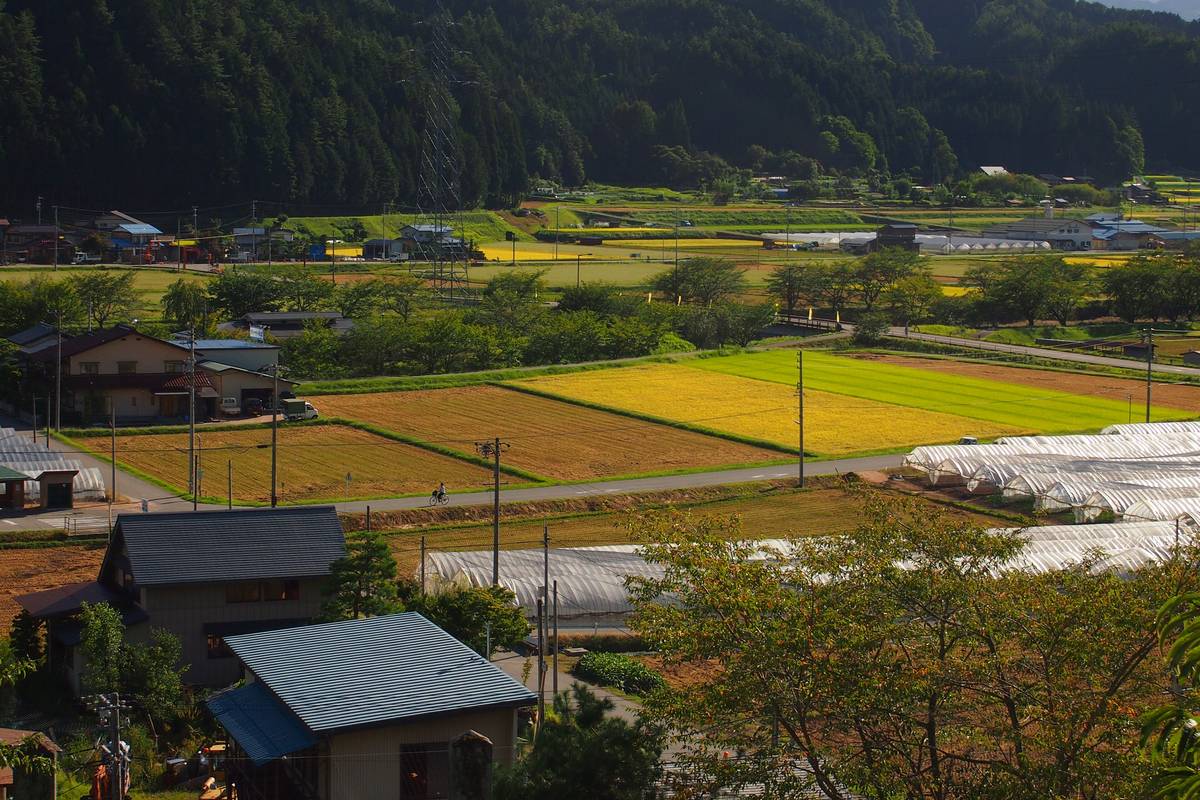
What happened in October
One month held 37 per cent of the year's injuries and 54 per cent of its deaths. The FY2025 distribution by month, counting people injured:
| Month | Apr | May | Jun | Jul | Aug | Sep | Oct | Nov | Dec | Jan | Feb | Mar |
|---|---|---|---|---|---|---|---|---|---|---|---|---|
| Injured | 11 | 10 | 16 | 18 | 14 | 39 | 89 | 33 | 6 | 0 | 1 | 1 |
| Killed | 0 | 0 | 1 | 3 | 1 | 0 | 7 | 1 | 0 | 0 | 0 | 0 |
October and November together come to 122 people, exactly half the annual total of 238. The year as a whole was 216 incidents, 238 injured, 13 killed, of which Asiatic black bears accounted for 211 incidents, 232 injured and 11 deaths, and brown bears for 5, 6 and 2. For context, FY2024 was 85 injured and 3 killed and FY2023 was 219 and 6, which makes 238 the highest in this preliminary series and 13 deaths more than double the previous worst.
The prefectural distribution is heavily concentrated in Tohoku: Akita 67, Iwate 40, Fukushima 24, Niigata 17, Nagano 16, Gunma 12, Yamagata 12, Aomori 10, Hokkaido 6, Toyama 6, Miyagi 5. The six Tohoku prefectures account for 158 people, 66 per cent of the national total, and Akita, Iwate and Fukushima alone for 131. The 13 deaths break down as Iwate 5, Akita 4, Hokkaido 2, Miyagi 1, Nagano 1.
The 50,801 sightings figure needs three footnotes to be usable
The other number in wide circulation is sightings: 50,801 nationally in FY2025, of which 15,998 in October (ministry figures as updated on 6 August 2026). The number is real, but three official notes travel with it that almost never get quoted alongside, and without them it gets misused:
- Hokkaido does not publish sighting counts, so that national total contains no Hokkaido data at all.
- Eight prefectures in Kyushu and Okinawa are excluded from the survey because bears do not live there.
- Each prefecture counts differently — some tally police reports, others collate municipal information. The ministry says so itself.
So 50,801 is not a quantity you can use for prefecture-to-prefecture comparison, and it cannot be set against casualty counts as a ratio. What it does show is simply that in that autumn, the number of times a bear appeared in front of a person went up sharply.
One in-progress set of figures is worth knowing and easy to misread. Through the end of July 2026 the year stood at 49 incidents, 53 injured and 6 deaths, against 4 deaths in the same April-to-July window of the record year, with spring sightings running about 1.67 times the previous year. Spring sighting volume reflects the previous autumn's nut crop and the surviving population, not a forecast for the coming autumn, so it cannot be used to predict how autumn 2026 will go.
How many of the 13 deaths were on a trail
One can be placed, because one is all the ministry placed. Its list of FY2025 fatal incidents, as of 20 November 2025, gives dates and municipalities and no setting column at all: 22 June Omachi, Nagano; 4 July Kitakami, Iwate; 12 July Fukushima town, Hokkaido; 31 July Kitaakita, Akita; 14 August Shari, Hokkaido; 3 October Kurihara, Miyagi; 8 October Kitakami; 10 October Shizukuishi, Iwate; 16 October Kitakami; 24 October Higashinaruse, Akita; 27 October Ichinoseki, Iwate; 27 October Akita city; 3 November Yuzawa, Akita.
The 14 August case in Shari is the fatal brown bear attack on the Rausu-dake hiking route in Shiretoko National Park. That location comes from a separate ministry document, the national park bear handbook, not from the fatality list itself. Where the other 12 occurred is not published, so the reverse claim — that none of them were in the mountains — cannot be made either. What can be said is narrower: this is the only one of the 13 that can currently be matched to a hiking trail, and it is also the only one whose circumstances resemble what a visiting hiker does. The ministry later wrote that event into its own handbook index page as the turning point, saying that the fatal brown bear attack on the Rausu-dake trail in Shiretoko National Park in the summer of 2025 delivered a major shock to society.
The Shiretoko Five Lakes ground trail nearby already has a system built for exactly this problem — guided tours only during bear season, a lecture requirement otherwise — and the three-season structure is covered in the Shiretoko Five Lakes access and lecture rules. What this article adds is the part outside that system: Rausu-dake is a separate route and is not inside the Five Lakes control area.
National parks had no unified bear policy until August 2026
Before that, every park decided for itself. This heading is a statement rather than a question because most readers would never think to ask, and it is the most counterintuitive fact in the subject. In August 2026 the National Parks Division of the ministry issued a 94-page handbook on bear countermeasures in national parks — Japan's first nationally unified guidance on the topic. On the index page the ministry explains why there had not been one: because bear density and the resulting risk of accidents differ so greatly between parks, there was no uniform guideline and the matter had been left to the judgement of each site.
That sentence explains something you may have run into already. If you have researched bear precautions for several Japanese hiking areas and found that every location says something different, with no common rule anywhere, that is not a gap in your research. Until 2026 there was genuinely nothing to copy.
Be clear about what the handbook is, so you do not expect the wrong thing from it. It is written for park managers drafting their own manuals; it is not a document that issues closure notices. Trail closure is among the listed response measures, and the handbook asks each park to include, in its advance analysis, an estimate of how many hikers a closure would affect. Whether a specific trail is open today still comes from that park's own announcements.
One instruction inside it is unusually useful and runs against instinct:
Can bear spray fly with you
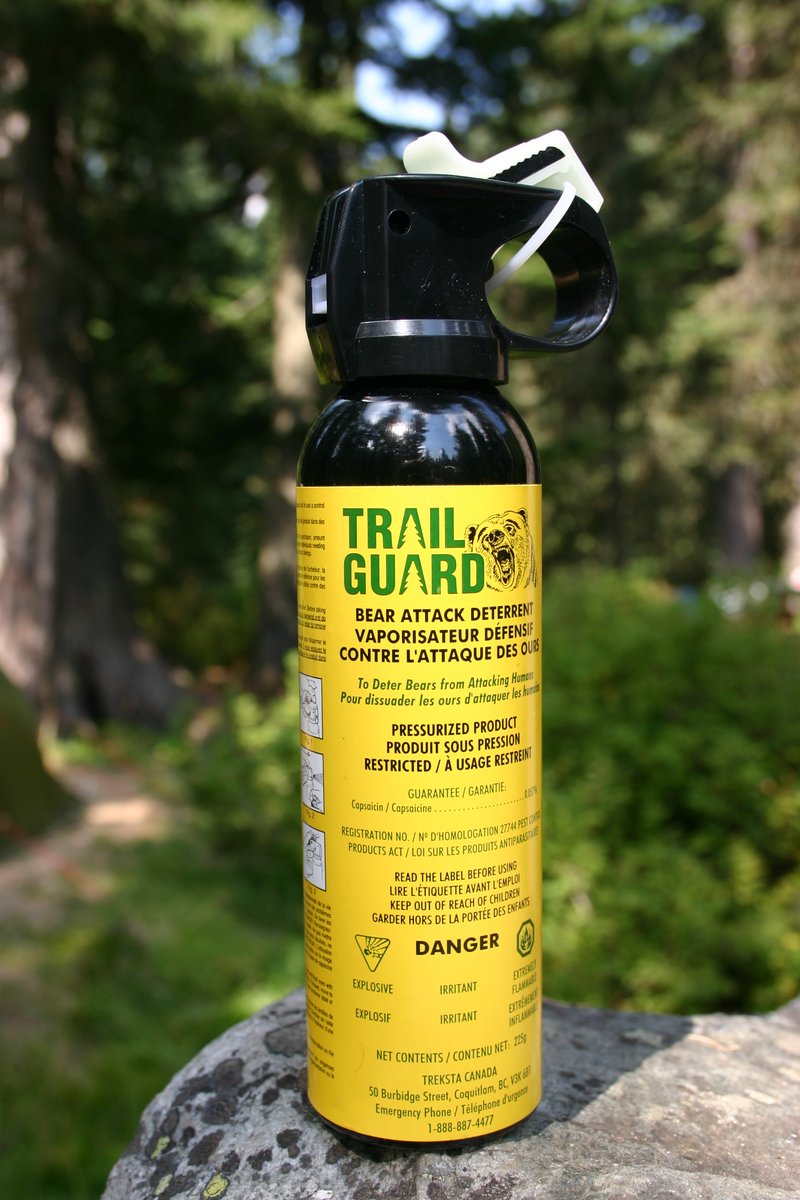
No, not in the cabin and not in the hold. The rule appears on the ministry page written for national park visitors, immediately after the advice to check in advance where bear spray can be bought or rented: the parenthesis states that bear spray cannot be carried onto or checked into an aircraft, so arrange to get hold of it after you get off the plane.
That single line reshapes a common itinerary. Fly into New Chitose, pick up a rental car, drive straight to a Daisetsuzan or Shiretoko trailhead the same day, and nothing bought at home is with you on that trail. Two options remain: buy it at a Japanese outdoor retailer after landing, or rent locally — and where renting is possible has to be settled before you go. One assumption needs correcting here, because it circulates widely: the handbook says visitor centres lending bear bells and spray is something that "may be considered" as appropriate. That is guidance to managers, not a promise that any given centre has stock.
While on the subject of the canister, the ministry also describes how it is meant to be used, because this is widely misunderstood. Bears perform both bluff charges and attacking charges, and bear spray only works if the animal is drawn within the spray's effective range before you fire. The emphasis is on watching the bear's behaviour, having the canister ready, and judging the moment. Emptying it at a distant animal wastes the only canister you have.
For how pressurised canisters, liquids and gases are treated at Japanese airports more generally, see the Japan airport baggage and carry-on rules.
Should you shout at a bear
No — and the official advice deliberately reverses between before and after an encounter. This is the most practical section here, and it rests on two official documents that corroborate each other rather than on any inference of ours.
| Stage | Officially recommended | Officially prohibited |
|---|---|---|
| Before an encounter | Avoid going alone; make your presence known with a bell, a radio, clapping or your voice; take extra care where visibility is poor, along streams, in strong wind and in rain; keep it up until you are back down | — |
| Once you can see a bear | Never approach; back away slowly while watching it; do not force your way past, wait for it to leave; in the living sphere, move so a utility pole or car sits between you and the bear, and seek help at a nearby vehicle or house | Shouting or making loud noise to intimidate it; turning your back and running (it triggers pursuit); approaching for a photo; throwing objects; dropping your pack and fleeing — food inside makes it unintentional feeding |
| If attacked | Lie face down, protect neck, face and abdomen, interlock fingers over the back of the head and neck; use bear spray if you have it | — |
On that last row, the ministry adds in parentheses that the defensive posture is strictly a last resort, for when a bear attacks despite everything above. Arms and back will take the damage, but protecting the vital points is what prevents a fatal injury, and a helmet or a hiking pack reduces damage to the back and head. There is a number behind that emphasis: a separate ministry report from March 2025 found that 77 per cent of bear-inflicted injuries are to the head.
One more set of figures should shape your start time. The analysis report examined when FY2025 incidents occurred and concluded that casualties cluster around daybreak and around sunset, with the peak on the chart at 6am (14 cases) and secondary peaks at 5, 8, 11 and 4pm; the ministry annotates the late-afternoon area to note that incidents also occur around sunset. Translated into itinerary terms: starting a trail after 8am and being off it an hour before dark does more for you than any piece of equipment.
Bear bells: recommended, with three published failure modes
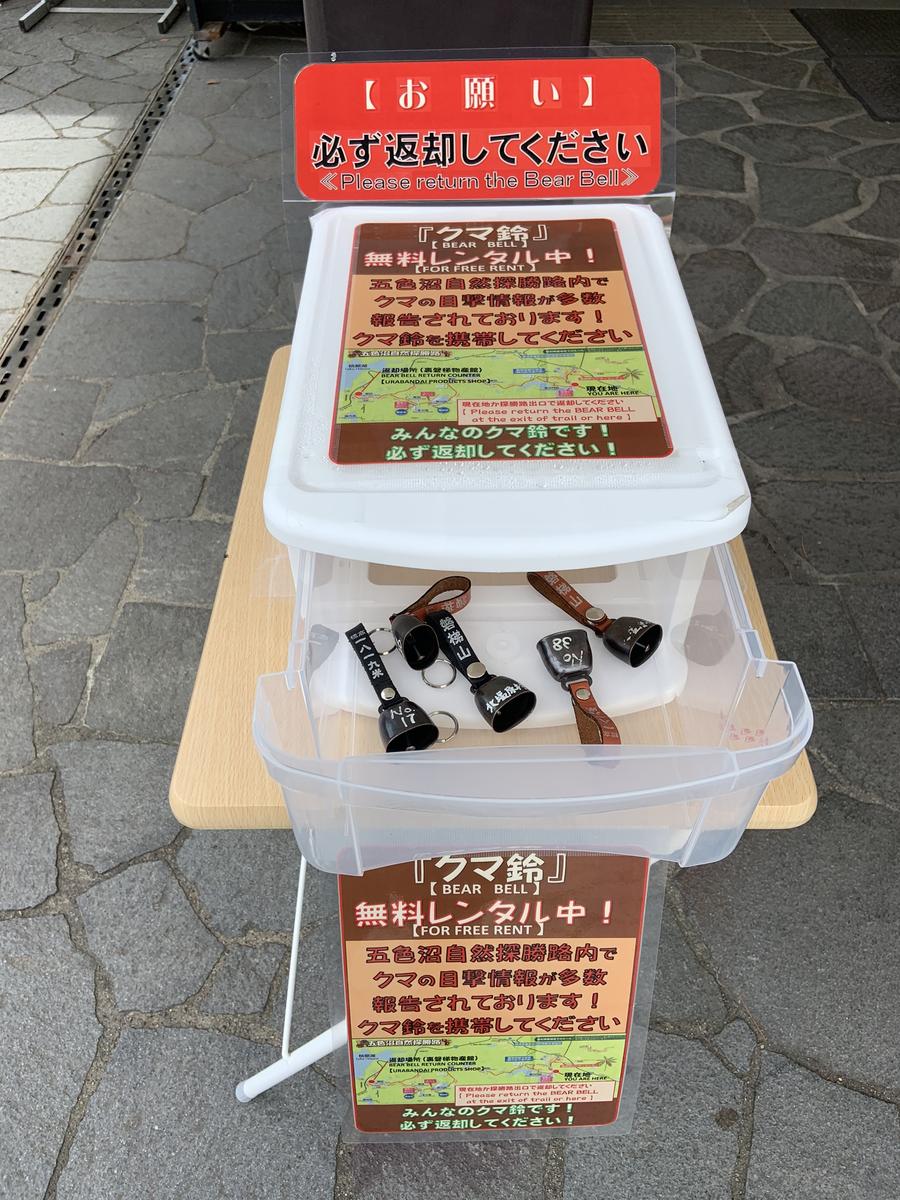
The online argument about whether bear bells work is less precise than what the ministry publishes about its own recommendation. Right after suggesting a radio or a bell, it notes three conditions: in rain, the bell may be pressed under a rain cover and not sound; beside a river, or in the noise of rain, the sound does not carry; and a bell does not ring while you are standing still.
Stack those and the conclusion is uncomfortable: a bell performs worst in exactly the conditions the ministry separately flags as needing extra care, namely rain, streamsides and poor visibility. So treat the bell as a baseline, carry something that does not depend on motion — your voice, clapping, a radio — and switch to sound deliberately where running water covers everything. This is also the underrated point of the advice not to hike alone: two people talking are the steadiest noise source available.
Where to check sightings before you go
There is no usable national portal, and that is worth knowing before you start hunting for one. The ministry public-information page lists sighting links for 33 prefectures in formats with nothing in common: ArcGIS dashboards (Gunma, Saitama, Niigata, Toyama), Google My Maps (Miyagi, Ishikawa, Shizuoka), Power BI (Tokyo), National Police Agency maps (Tochigi, Hyogo), purpose-built sites (Aomori's kumalog, Akita's Kumadas, Fukui), and plain prefectural pages for the rest.
The telling detail is that the ministry itself has to supply click-by-click instructions — choose "Animal" from the menu for Tochigi, look under nature and agriculture for the Kyoto sightings map — and warns that on a smartphone the linked page may not show sightings directly. All 33 are Japanese-language interfaces.
Among them, Iwate's approach is the most usable for a visitor: sighting information runs through a "Bears" app inside a LINE official account, where you can submit and browse reports and set notifications by municipality or even by grid cell (page last updated 20 May 2026). If LINE is already on your phone, nothing further needs installing. The interface is Japanese, and this article did not join the account to test it, which is worth stating rather than glossing over.
Two regional entries map onto routes covered here: the Oirase Gorge walk inside Towada-Hachimantai National Park falls under the separate Aomori, Iwate and Akita pages, while Daisetsuzan National Park has a brown bear information page run by its liaison council plus a dedicated marsh-area bear bulletin at Daisetsu Kogen Onsen.
Emergency shooting closes streets, not trails
The two mechanisms have different scopes, and the trail is not the one being closed. First a correction: emergency shooting is not a 2026 innovation. It was created under Act No. 28 of 2025 and took effect in September 2025, and by April 2026 the ministry stated that more than 50 such operations had been carried out. The scheme applies when a bear or wild boar appears in the sphere of daily human life, allowing shooting by municipally commissioned personnel under safety conditions.
Of the 26 FY2026 cases published, every location is an urban area within a named municipality — Koriyama, Nagaoka, Sendai, Tono, Toyama, Hachinohe, Hirakawa, Aomori, Osaki, Shibetsu, Fukushima, Tsuruoka, Nan'yo, Shimokawa, Yamada, Higashiyoshino, Owase, Tateyama and others. Two of the 26 targeted wild boar; the system is not bears-only.
So what a visitor meets is not a closed trail but a cordoned street and an instruction to stay indoors. The ministry's public-notice flyer, designed for municipalities to post, states four things: passage will be restricted around the site and municipal staff may bar entry to the restricted area; follow staff instructions to keep yourself safe until safety is confirmed; specifically, do not approach the site and do not leave the place where you have taken shelter; and once the operation ends and safety is confirmed, an announcement will follow.
The cordon tape drawn on that flyer carries the sheet's only English: CAUTION: DO NOT ENTER. Everything else is Japanese, and the language of the announcement is not specified officially, so this guide does not claim the broadcast is Japanese-only. The practical upshot: if you see black-and-yellow tape and staff with a loudhailer in a Tohoku city, it may not be a traffic accident. Do what they say.
The policy behind it: Tohoku is aiming for 12,000 bears
If you want to know what Japanese policy on bears actually changed, the answer is in numbers rather than wording. On 27 March 2026 a meeting of relevant cabinet ministers adopted a Bear Damage Countermeasures Roadmap containing block-by-block targets:
| Block | Current estimated population | FY2026 provisional capture target | FY2030 provisional population target |
|---|---|---|---|
| Hokkaido | 11,600 | 12,540 (total for 2025-2034) | 8,200 (2034 target) |
| Tohoku (Aomori, Iwate, Miyagi, Akita, Yamagata, Fukushima) | 19,237 | 3,800 | 12,000 |
| Kanto | 2,983 | 600 | 2,000 |
| Chubu | 17,553 | 3,500 | 11,000 |
| Kinki and Chugoku | 6,420 | 900 | 6,400 |
The document is explicit about direction: Tohoku, Kanto and Chubu are to reduce a bear population that has grown too large, while Kinki and Chugoku are to manage theirs so it does not increase further. Tohoku going from 19,237 to 12,000, a cut of roughly 38 per cent, is the substance of the reduction policy, and it carries cabinet-level authority rather than being a rewritten phrase in a guideline. The same document's stated future vision is the removal of bears from the human living sphere, with a timeframe from FY2031 onward.
Two things are easy to misread. The Hokkaido figure of 12,540 is a ten-year capture total for 2025 to 2034, not one year's number. And the ministry's April 2026 revision of its bear guideline added a population-management framework to the document; it did not rewrite a target from one word to another, whatever secondary summaries may say.
Will autumn 2026 be worse
The only forward-looking official indicator available points the other way, and it is a forecast rather than a promise. Whether bears descend en masse into inhabited areas turns on the mountain nut crop. The ministry guideline says so directly: in years when the main autumn food resources drop sharply, sightings surge, so mast surveys should be run and emergence forecasts published in advance. The same document gives the historical pattern — poor beech-family mast centred on Hokuriku in FY2019 and FY2020, and centred on Tohoku in FY2023 and FY2025, with heavy autumn emergence in each of those years.
So what about 2026? Akita Prefecture's Forestry Research and Training Center published its 2026 beech mast forecast back in November 2025 — nearly a year in advance:
| Survey site | 2026 forecast |
|---|---|
| Hachimori | Good crop |
| Moriyoshizan | Good crop |
| Chokai | Good crop |
| Higashinaruse | Good crop |
| Tazawako | Average crop |
The thresholds are estimated sound nuts falling per square metre: 200 or more is a good crop, 50 to 199 average, 49 or fewer poor. Akita had the highest casualty count of any prefecture in FY2025 at 67 people, so its own forecast saying the nuts will be there is meaningful. And the one site of five that is not a good crop, Tazawako, is precisely the area around Lake Tazawa and the Nyuto onsen villages, which makes it the most specific actionable detail in this whole guide.
Three limits travel with that good news, and none is optional:
- It is a forecast, not a measurement, derived from flower counts almost a year ahead, and it can miss. Prefectures also use different scoring scales, so cross-prefecture comparison is meaningless.
- Mast forecasts predict descent, not absence. The analysis report's first POINT is that in both normal and mass-emergence years, spring and early summer casualties occur inside bear habitat. A good crop keeps bears in the forest — which is to say, beside the trail you plan to walk.
- The national compilation of mast data is attached to the relevant inter-ministry liaison meeting materials, and the autumn FY2026 meeting had not been announced as of 3 September 2026 (the most recent on file is 1 May 2026). At the time of writing, the national 2026 autumn picture does not yet exist.
The accurate framing is therefore neither "2026 will be worse" nor "2026 is safe". It is: one prefecture, five survey points, forecast in November 2025, and here is exactly how narrowly that applies.
What this article could not find
Collecting the gaps in one place beats defending them section by section. Every line below was checked and confirmed absent:
| What officialdom does not publish | What that means for you |
|---|---|
| Nationality is not recorded — six official statistical PDFs contain no nationality field | Both "foreign visitors are X per cent of casualties" and "no foreign visitor has been hurt" are unsupportable in either direction. The breakdown does not exist |
| No denominator — the 238 casualties are not set against hiker numbers, entry numbers or park visitor numbers | Any incidence rate you encounter was computed by whoever published it. This guide does not compute one, and the first question to ask of anyone who does is what their denominator was |
| No unified national sightings portal — 33 prefectures each do their own, from ArcGIS to plain text pages | You check prefecture by prefecture, and all of it is in Japanese |
The national park visitor page exists only in Japanese — its /en/ path returns 404 (only that one path was tested; other language paths were not) | What officialdom has actually delivered to foreign visitors so far is a set of three pictograms published by the Japan Tourism Agency on 19 December 2025 (do not feed bears, do not leave rubbish, do not approach bears), with the note that English supplementary labelling is for reference. Multilingual sighting information is still at the funding-application stage |
| Emergency shooting does not cover trails — its scope is the sphere of daily human life | News of shooting operations in towns is not evidence that mountain trails are closed; conversely, whether a trail is open comes from that national park's own notices |
| The national autumn 2026 mast picture is unpublished | This guide can only offer one prefecture, five sites, forecast in November 2025 |
One further item is the ministry's own stated concern, and printing it is fairer to the reader than hiding it: the handbook notes that publishing bear sighting information risks reputational damage to tourism in the surrounding area, and asks parks to weigh that when deciding what to publish and how. Setting out the distribution by setting is how you avoid both scaremongering and concealment — which is exactly why 282 against 172 appears in the first paragraph of this article rather than buried three screens down.
The ten-minute pre-trip list
- Open the sightings page for the specific prefecture you are visiting. All 33 differ; Iwate runs through the LINE Bears app. Finding nothing does not mean nothing happened — it may just mean that prefecture's interface is awkward.
- Do not buy bear spray at home. It cannot fly in cabin or hold. If you want it, settle before departure where you can buy or rent it after landing; visitor centre lending is a suggestion in official guidance, not a guarantee.
- Start trails after 8am and be off them an hour before dark. Daybreak and sunset are the statistical peaks, with the chart topping out at 6am.
- Do not walk alone. It is the first item on the official list and the only one that costs nothing.
- Carry the bell, but do not treat it as insurance — it fails under a rain cover, beside running water, and whenever you stop moving.
- Memorise the four moves for after an encounter: do not approach, do not photograph, back away watching it, never turn your back and run. Plus one: keep your pack on.
- Stop and read any dated notice board at the trailhead. No board does not mean no bears; the handbook tells parks to take them down after a few days.
- Prepare separately for the other hazards. Japan's earthquake, typhoon and heavy-rain warning names were rewritten wholesale in May 2026 — see the 2026 Japanese alert system explained.
One closing point, more important than any item above. The 238 casualties and the 13 deaths of FY2025 are real — and the ministry itself splits the injury record into 282 cases in inhabited areas against 172 in bear habitat, and states that in a mass-emergence autumn a high proportion of harm occurs in inhabited areas. Transferring a set of injuries that occurred largely in residents' daily lives onto a group the data does not describe is both dishonest and counterproductive, because it moves your attention away from the preparation that would actually help. That preparation is short: check the right prefecture, pick the right hours, do not walk alone, and do not shout when you see one.
This guide belongs to the Japan travel essentials series, where the rest of the pre-trip groundwork is collected.
Official Japanese source text quoted in this article
- Ministry of the Environment, analysis report on bear casualties, POINT 2: 「大量出没年の秋には、人の生活圏において高い割合で被害が発生している。」
- Same report, on casualties in the human living sphere: 「散歩や自宅周辺での活動等の日常生活中の被害が最多となっています。人の生活圏にクマが侵入して起きる事故については、事故に遭いやすい特定の行動があるわけではなく、誰もが事故に遭う可能性があります。」
- Same report, on casualties in bear habitat: 「山での山菜・キノコ採り中に、被害にあった件数が最も多く、次いで登山・散策中、狩猟等や山林でのレジャー中に被害に遭うことが多い結果となりました。」
- Same report, defensive posture: 「(防御姿勢はあくまで最終手段です。上記の正しい対処方法を実施した上でもクマが襲ってきた場合に対処する方法ですので、ご注意ください。)うつ伏せになり、顔や胸、腹部を守りましょう。」
- Same report, on bear bells: 「雨天時にレインカバーに圧されて鈴が鳴らなかったり、川のそばや雨等の水音で鈴などの音が周辺に響かない点に注意しましょう。」/「鈴は立ち止まっているときには音が鳴らない点に注意しましょう。」
- Ministry of the Environment, page for national park visitors, on bear spray: 「クマ撃退スプレーを購入やレンタル等して入手可能な場所を事前に確かめる(注意:クマスプレーは航空機への持ち込みや預け入れができませんので、航空機を降りた後に入手できるようにしましょう)」
- Handbook on bear countermeasures in national parks, index page: 「これまでの国立公園におけるクマ対策は、クマの生息密度やそれに由来する事故等のリスクが国立公園毎に大きく異なることから、一律の指針はなく各現場の判断に委ねられてきましたが…」/「特に、令和7年夏の知床国立公園羅臼岳登山道におけるヒグマによる死亡事故は、社会へ大きな衝撃を与えました。」
- Same handbook, on notice boards: 「ただし、出没注意看板は形骸化するため、ずっと掲示せずに出没の日時を掲示した上で数日たったら撤去する。」
- Ministry of the Environment, emergency shooting public-notice flyer: 「現場周辺で通行禁止・制限を実施する予定です。安全のため、市町村職員からの指示により通行禁止・制限範囲内への立ち入りが禁止されることがあります。」
- Bear Damage Countermeasures Roadmap, 27 March 2026 ministerial decision: 「東北、関東、中部:自然増加率(14.5%)に5%程度を上乗せした約20%を現在の推定個体数に乗じた値を捕獲目標数として暫定的に設定し、増えすぎたクマの個体数を削減」
- Ministry of the Environment, notes attached to the sightings table: 「北海道は、出没数の公表は行っていません。」/「出没数は、都道府県ごとにそれぞれ異なった方法(警察への通報件数、市町村からの情報など)により取りまとめたものです。」
- Akita beech mast forecast 2026, thresholds: 「1m²あたりの健全堅果推定落下数 豊作=200個以上/並作=50〜199個/凶作=49個以下」
Frequently Asked Questions
- Q1:What are the odds of meeting a bear while hiking in Japan?
- Nobody official has published that number, and knowing it is unavailable beats being reassured by a figure someone invented. The Ministry of the Environment publishes absolute counts and their distribution, and has never divided them by any denominator: there is no hiker count, no count of people entering the mountains, no national park visitor figure alongside the casualties. This article will not divide 238 casualties by a tourism headcount to manufacture a rate, because the numerator and denominator describe different populations. What the ministry does provide is a distribution by setting and activity. Across FY2023, FY2024 and FY2025 combined, 282 incidents occurred in what it calls the human living sphere (urban areas, around homes, roads, farmland) and 172 in bear habitat (forest, riverbeds). Within those 172, the ministry ranks the activities: gathering wild vegetables and mushrooms is first, hiking and walking second. So the honest statement has two halves. By absolute count, trail hiking is not the main setting for bear injuries in Japan. It is also not zero, and it sits second within the habitat half.
- Q2:Can I bring bear spray on a plane to Japan?
- No, neither in cabin baggage nor checked. The Ministry of the Environment page written for national park visitors advises confirming in advance where bear spray can be bought or rented, and then adds a parenthetical instruction: bear spray cannot be carried onto or checked into an aircraft, so arrange to obtain it after you land. That constraint bites harder than it looks on a typical itinerary. If you fly into New Chitose and drive straight to a Daisetsuzan or Shiretoko trailhead the same day, nothing you bought at home will be with you on that trail. The two workable options are buying it at a Japanese outdoor shop after arrival, or renting locally, and where renting is possible has to be checked in advance. One common assumption needs correcting here: the ministry handbook says visitor centres lending bear bells and bear spray is something that "may be considered" as appropriate. That is guidance written for park managers, not a guarantee that any given visitor centre stocks them. For how pressurised canisters, liquids and gases are handled at Japanese airports generally, see our airport baggage rules guide.
- Q3:Should I shout to scare a bear away?
- No, and the reversal here is the single most useful thing in this guide. Official advice points in opposite directions before and after an encounter. Before you meet one, the ministry recommends making your presence known: bells, a radio, clapping, using your voice. Once a bear is in front of you, the ministry analysis report lists shouting or making loud noises to intimidate the animal in its explicit "do not do this" column, and the national parks page likewise says not to raise your voice. What it does recommend is concrete: never approach, never move closer for a photo, back away slowly while keeping your eyes on the bear, do not force your way past but wait for it to leave, and do not turn your back and run because that triggers a pursuit instinct. One more item is easy to miss: do not drop your pack and flee. If there is food inside, that becomes unintentional feeding. In the living sphere the ministry adds a further tactic, which is to move so that a utility pole or a parked car sits between you and the bear, and to seek help from a nearby vehicle or house. Defensive posture, lying face down and protecting neck, face and abdomen, is stated by the ministry to be a last resort used only when a bear attacks despite the above.
- Q4:Do bear bells actually work?
- The ministry recommends carrying one and then publishes three conditions under which it fails, which is more precise than either side of the usual online argument. In the section on hiking and mountain leisure, the analysis report suggests carrying a radio or a bell, then notes that in rain the bell may be pressed under a rain cover and not sound, and that beside a river or in the noise of rain the sound does not carry. In the section on gathering wild vegetables it adds the third: a bell does not ring while you are standing still. Stack those three and an uncomfortable conclusion follows. The situations where you most need to announce yourself are the ones where a bell performs worst, because rain, streamsides and poor visibility are exactly the conditions the ministry separately flags as requiring extra care. The practical response is to treat the bell as a baseline and add something that does not depend on motion, meaning your voice, clapping or a radio, and to switch deliberately to sound where running water drowns everything else. This is also the underrated value of the ministry advice to avoid going alone: two people talking are the most reliable noise source there is.
- Q5:Will autumn 2026 be worse than 2025?
- Nobody can assert that, and the only forward-looking official indicator currently available points the other way. The Akita Prefectural Forestry Research and Training Center published its beech mast forecast for 2026 back in November 2025, roughly a year ahead. Of five survey sites, Hachimori, Moriyoshizan, Chokai and Higashinaruse are forecast as a good crop and only Tazawako as average, with the threshold for a good crop set at an estimated 200 or more sound nuts falling per square metre. Akita recorded the most casualties of any prefecture in FY2025 at 67 people, so its own forecast saying the nuts will be there matters. Three limits have to travel with that, though. It is a forecast rather than a measurement, derived from flowering counts almost a year in advance, and it can miss. Mast surveys predict whether bears come down into the human living sphere, not whether there are bears in the forest, and the ministry own POINT 1 is that in both normal and mass-emergence years, spring and early summer casualties occur in bear habitat. And prefectures use different scales and methods, so their forecasts cannot be lined up against each other. The accurate summary: Akita is optimistic about 2026, that neither guarantees safety nor generalises beyond Akita.
- Q6:Where do I check bear sightings before a hike?
- There is no usable national portal, and that has to be said plainly. The ministry information page for the public lists sighting-information links for 33 prefectures, and their formats have nothing in common: ArcGIS dashboards (Gunma, Saitama, Niigata, Toyama), Google My Maps (Miyagi, Ishikawa, Shizuoka), Power BI (Tokyo), National Police Agency maps (Tochigi, Hyogo), purpose-built sites (Aomori kumalog, Akita Kumadas, Fukui) and ordinary prefectural pages for the rest. The ministry itself has to give click-by-click directions, telling readers to pick "Animal" from a menu for Tochigi and to look under the nature and agriculture section for the Kyoto sightings map, and it notes that on smartphones the linked pages may not display sightings directly. All 33 are Japanese-language interfaces. The most usable approach for visitors is Iwate: its sighting information runs through a "Bears" app inside a LINE official account, where you can both submit and browse reports and set notifications by municipality or even by grid cell. The interface is Japanese, and this article did not test the account itself.
- Q7:If emergency shooting is happening in a town, will hiking trails close?
- No. Emergency shooting and trail closure are separate mechanisms with different scopes. The system is also not new in 2026, contrary to how it is often described: it was created by Act No. 28 of 2025 and took effect in September 2025, and by April 2026 the ministry stated that more than 50 emergency shootings had been carried out. The scheme covers bears or wild boar appearing in what the law calls the sphere of daily human life, where a municipality may authorise shooting by commissioned personnel under safety conditions. Of the 26 cases published for FY2026, every one is in a named municipality urban area, from Koriyama and Nagaoka to Sendai, Tono, Toyama, Hachinohe, Aomori, Osaki, Fukushima and Tsuruoka, and two of those 26 targeted wild boar rather than bears. What a visitor actually encounters is therefore not a closed trail but a street cordon: the ministry public-notice flyer for municipalities states that passage will be restricted around the site, that people must not enter the restricted area when instructed by municipal staff, that they should not approach the site or leave the place where they have taken shelter, and that an announcement will follow once the operation ends and safety is confirmed. The cordon tape on that flyer carries the only English on the sheet, reading CAUTION: DO NOT ENTER.
- Q8:There is no bear warning sign at the trailhead. Does that mean there are no bears?
- No, and the absence is deliberate by design. The ministry 2026 handbook on bear countermeasures in national parks recommends putting up notice boards carrying sighting information at trailheads, and in the same breath instructs that such boards become a dead letter if left up permanently, so the date and time of the sighting should be posted and the board removed after a few days. A missing sign may only mean the last one expired and was taken down. The inverse is the more useful reading: a board with a date on it is fresh information and worth stopping to read in full. The handbook is itself new. Before August 2026 there was no unified national guidance for bears in Japanese national parks at all; the ministry index page states that because bear densities and the resulting risks vary so much between parks, there was no uniform policy and decisions were left to each site.
Read next
Japan Disaster Alerts 2026: New Names, and Your Phone
Japan renamed every weather warning on 29 May 2026. The new Level 3-5 names, what JMA says to do in the first minute, and whether a roaming phone alerts at all.
Shiretoko Five Lakes 2026: Rules, Fees and Timing
There is no free-walk season on the ground trail. The three-period system, the ¥450 lecture, bear-season tours, and the 14:00 late-autumn cut-off, all verified for 2026.
Oirase Gorge Guide 2026: Car Ban Dates, Buses & Trail
The 2026 private-car ban runs Sept 7–13 — a month early, with Sept 13 closed to every vehicle class. Shuttle passes, full JR bus fares and timings, and which 9 km of the trail to walk.
📊 See the 2026 Price Index (JR Pass, DPA, eSIM, Airport Transport) →