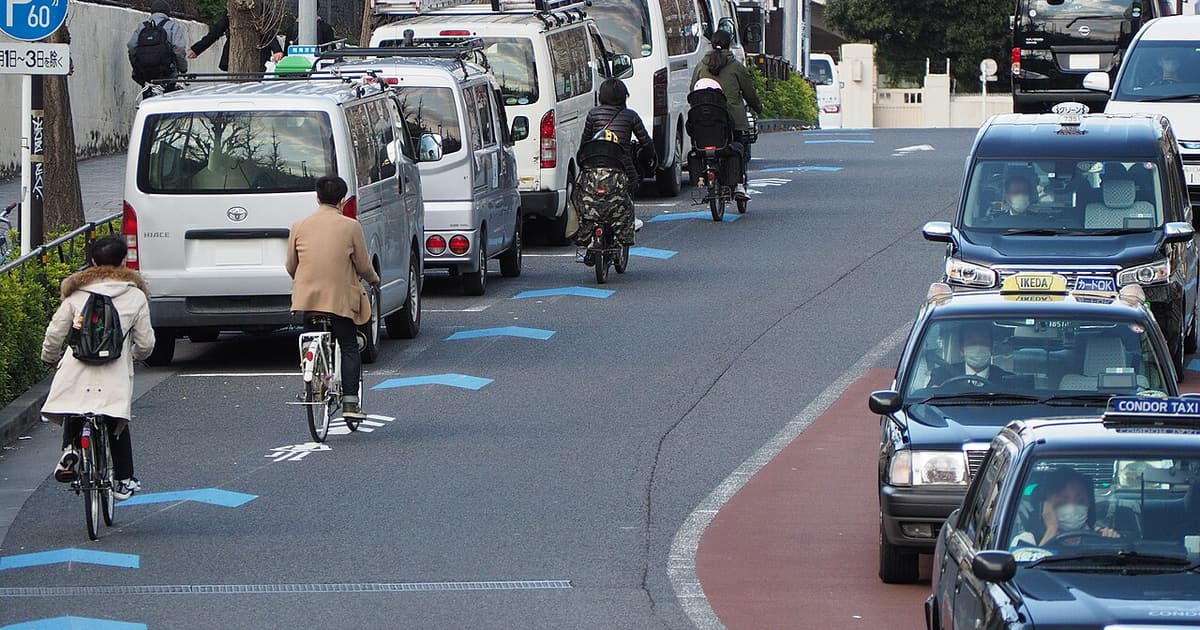
In the first month of Japan’s new bicycle ticketing regime, police across the entire country issued 2,147 fines. In that same month they issued 135,855 verbal warning slips — a gap of roughly 63 to 1 — and nationwide, the number of people ticketed for the offence most visitors worry about, riding on the footway, was five. Total citations actually fell to around 60% of the same month a year earlier. So if you are about to rent a bicycle in Kyoto, Karuizawa or on the Shimanami Kaido, the useful thing here is not a table of fine amounts. It is a single test: whether you get a ticket depends far less on what you did than on what happened afterwards. One identical action can branch three ways — a verbal warning, a fixed-penalty ticket, or full criminal procedure. This guide draws the two dividing lines, and covers three things that only the official documents spell out: cars now owe you a metre of clearance, the fine can only be paid in cash at a bank counter, and there is exactly one thing you can do at the roadside that makes everything worse.
- Ride on the left. This is the single most useful line here. Drift onto the right and you will usually be told to switch; continuing after that warning is what costs ¥6,000
- Holding your phone is the one everyday habit with no warning stage — ¥12,000, the highest figure on the schedule. A phone on a mount is a different matter and is not itself the offence
- No helmet is not a fine. The police say so in writing — though among head-injured cyclists, the fatality rate without a helmet runs about 1.4 times higher
- Fines are paid in cash, at a bank or post office counter, within about seven days. No cards, no convenience stores, no online payment. Anyone collecting cash at the roadside is a fraud — the police tell you to call 110
- The same amendment added a rule protecting riders: cars overtaking a bicycle owe about a metre of clearance, or must slow to roughly 20–30 km/h
📖 Contents
- 1. What actually changed in April
- 2. How many tickets the first month produced
- 3. When a warning becomes a ticket
- 4. Warning, blue ticket, red ticket: how the three branches split
- 5. What each offence costs
- 6. The three habits visitors bring with them
- 7. When and where you are most likely to be stopped
- 8. What to do when you are stopped
- 9. How the fine is actually paid
- 10. Do you need a helmet
- 11. Whose insurance is on that rental bike
- 12. The rule that protects riders
- 13. Three closing points
- 14. FAQ
What actually changed in April
Not the rules. What happens to you after you are caught.
From April 1, 2026, Japan’s traffic violation notification system was extended to bicycles. The official page states this in the past tense — the system has been applied, not will be — so there is no pending delay to wait out. The legal basis is the 2024 amendment to the Road Traffic Act, Act No. 34 of 2024.
To see what the amendment filled in, you have to appreciate how binary enforcement was before it. An officer confronting a cycling offence had two options and nothing in between. One was a verbal warning, which carried no consequence whatsoever. The other was the red ticket, which routes the case directly into criminal procedure: a prosecutor, an interview, and the possibility of a record. That is a heavy instrument to reach for over one red light, and officers largely did not, which meant that in practice almost every cycling offence in Japan ended at the warning tier.
The blue ticket is the missing middle rung. Its defining feature is that paying the fixed penalty keeps the case out of criminal procedure entirely — no prosecutor, no record. The consequence of the amendment, then, is that penalising a cyclist became procedurally realistic for the first time. Nothing that was legal in March became illegal in April. Officers simply gained a calibration mark between "nothing" and "everything".
One threshold matters especially for visitors: the blue ticket applies only to riders aged 16 and over (Article 125, paragraph 2, item 4). Under-16s are, as a rule, given guidance and a warning, with some prefectural forces issuing a distinct safety guidance card instead. Be careful with a second number that circulates alongside this one: the mandatory cyclist course threshold is 14, not 16. Different mechanism, different age, covered below.
How many tickets the first month produced
2,147. In the same month, 135,855 verbal warnings.
On May 14, 2026, the National Police Agency released provisional figures for the system’s first month of operation. They make the case better than any adjective could:
| Measure | Count | Context |
|---|---|---|
| Blue tickets issued | 2,147 | First month of the system |
| Verbal warning slips | 135,855 | 1.5× the previous year’s monthly average |
| Total citations (incl. red tickets) | 2,980 | About 60% of the same month last year |
| Citations for footway riding | 5 | Nationwide, in one month |
Read together, those rows produce three conclusions that all run against intuition. First, warnings outnumber tickets by roughly 63 to 1 — the system exists, but being pulled over and told off remains overwhelmingly the likelier outcome. Second, footway riding produced five tickets in the entire country over a month, which is difficult to reconcile with how prominently that offence features in visitor advice. Third, total citations went down, not up, to around 60% of the previous year. In the first month of a crackdown, fewer people were formally cited than before it began.
The agency’s own explanation to reporters was that this reflects placing the emphasis on roadside guidance and warnings. That is consistent with the line running through every official document on the subject: when a cycling offence is identified, guidance and a warning are, as a matter of basic policy, given at the scene. That sentence appears three separate times across the agency’s summary material and its rulebook. It is policy, not politeness.
One boundary constrains everything above. These figures cover one month. The agency publishes no monthly enforcement series — its bicycle portal carries annual accident statistics only, so nothing after April 2026 exists to compare against. So this article consistently says "the first month (April 2026)" and never "since", "to date" or "cumulatively". The figures are provisional, and the opening month of any new system is naturally weighted toward publicity rather than penalties. Whether enforcement tightens later is genuinely unknown right now.
When a warning becomes a ticket
Not what you did. Whether anything came of it.
That is not an inference — the police FAQ says it repeatedly, in one recurring construction: merely doing X will not, in itself, get you cited.
| The action | The official answer |
|---|---|
| Simply riding on the footway | As a rule, a matter for guidance and warning |
| Riding a child-seat bicycle on the footway | Doing only this will not get you cited |
| Carrying a primary-schooler in a child seat | Doing only this will not get you cited |
| Riding with earphones | Not in itself an immediate offence; not cited for the state alone |
| Using an umbrella holder | Not cited for the state alone |
| Bag hung on the handlebars | Not cited for this alone; losing steering control and causing a collision changes that |
Six questions, one sentence pattern. The police are saying the same thing six ways: these habits carry no dedicated penalty. They are things that make it easier to cross the line that does.
Where is that line? The official example sets it startlingly low. The illustration given for the fourth enforcement category is riding along a footway at speed and thereby causing a pedestrian to stop walking. No contact, no injury, no complaint — a pedestrian who had to halt is enough. Which means "riding on the footway" and "riding fast enough on the footway that people get out of the way" are genuinely different events, and only the first belongs in that five-tickets-a-month bracket.
One qualification, so the table above is not over-read. Earphones, umbrellas and handlebar loads sit under a second layer in most prefectures: violations of public safety commission requirements, which each prefecture writes itself and which carry a ¥5,000 fixed penalty. That does not contradict the "only if something happens" logic — the police are describing these states in isolation.
Warning, blue ticket, red ticket: how the three branches split
The same action can go three ways, and one of them leaves a criminal record.
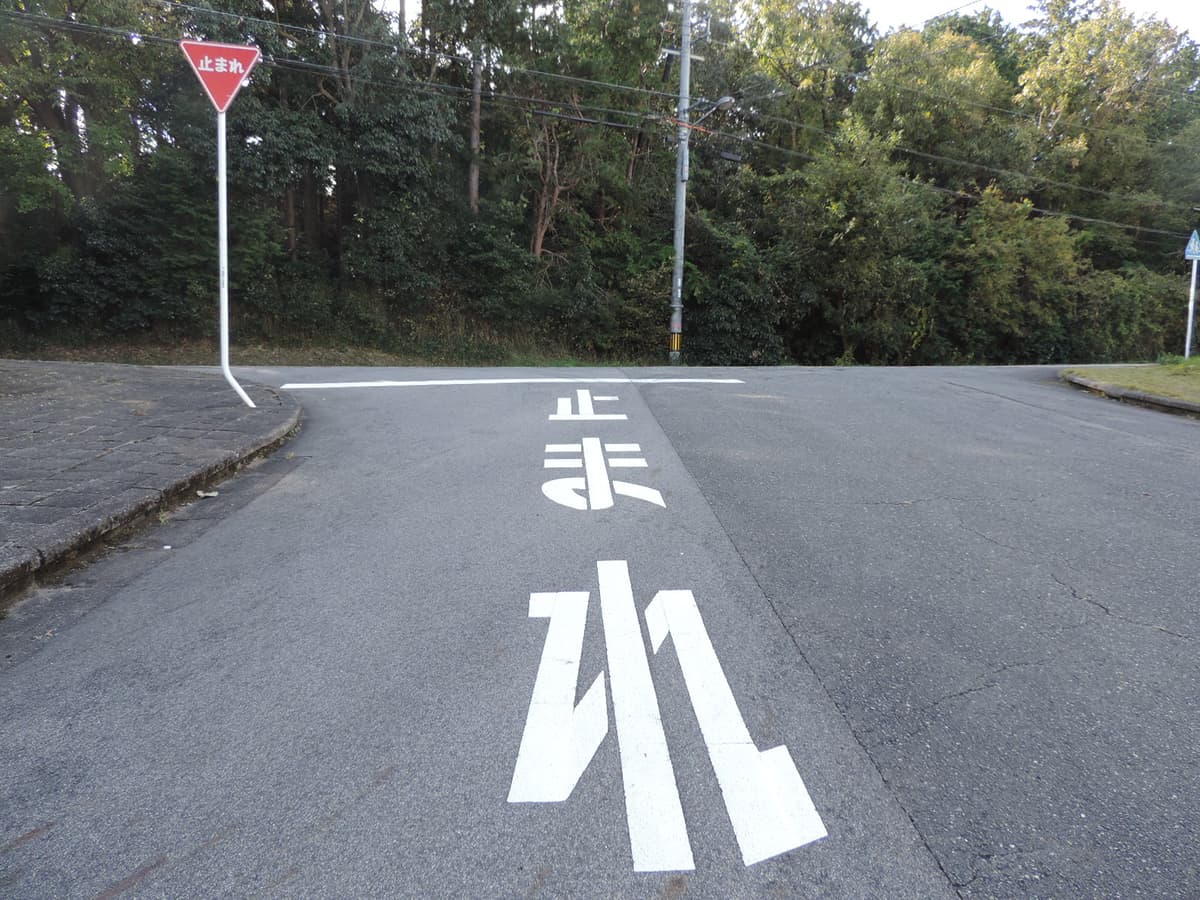
The police sort enforcement situations into five categories, numbered ① to ⑤ in their own documents. These are not five ways to get a fine. That misreading is easy and consequential, because two of the five are not fixed-penalty matters at all:
| Category | Trigger | Outcome |
|---|---|---|
| ① | The offence is itself grave (drink-riding, obstructive riding, phone use causing danger) | 🔴 Red ticket, criminal procedure |
| ② | Fixed-penalty offences with high potential for serious collisions (level crossings, defective brakes, holding a phone) | 🔵 Blue ticket |
| ③ | The offence actually caused a collision | 🔴 Red ticket, criminal procedure |
| ④ | The offence actually produced traffic danger, or materially raised collision risk | 🔵 Blue ticket |
| ⑤ | Having been warned, the rider deliberately continued | 🔵 Blue ticket |
Once that table is clear, the whole system is. Only ②, ④ and ⑤ produce a blue ticket. Categories ① and ③ run through criminal procedure, with a prosecutor and a potential record — a different order of consequence from paying a fine and moving on. And everything that falls into none of the five stays at the first tier: roadside guidance and a warning.
Two examples are worth separating carefully:
- Alcohol: always criminal, never a blue ticket. Neither riding while impaired by alcohol nor riding over the legal threshold (0.3 mg/ml in blood, 0.15 mg/l in breath) is a fixed-penalty offence. Drink-riding a bicycle in Japan is not a fine-and-forget matter.
- Phones: two branches, decided by outcome. Holding the phone to talk or holding it while staring at the screen is the fixed-penalty offence — ¥12,000. Causing actual danger on the road escalates it into the criminal version, punishable by up to a year of confinement or a ¥300,000 fine.
There is one further route into criminal procedure that sits outside the five categories entirely: failing to state your address and name when cited, or leaving the scene (Article 126, paragraph 1, items 1 and 2). That clause matters far more to a visitor than to a resident, and it gets its own section below.
What each offence costs
¥3,000 to ¥12,000, with holding a phone at the top.
The table below covers the brackets most relevant to a visitor. Read it knowing that the amount is not the threshold for being ticketed at all — the 63-to-1 ratio above is the operative reality. This table describes what you pay if the ticket does get written.
| Fixed penalty | Principal offences relevant to visitors |
|---|---|
| ¥12,000 | Mobile phone use (holding) — phone in hand, talking or watching the screen |
| ¥7,000 | Entering a level crossing after the barriers have come down |
| ¥6,000 | Traffic division violation (wrong side of the road; riding on a footway where cycling is not permitted) / running a red light / entering a prohibited road / failing to proceed slowly on a pedestrian road / obstructing pedestrians at crossings / failure of the general safe-driving duty / failing to stop at a level crossing / prohibited emergency braking |
| ¥5,000 | Failing to stop where required (stop lines and signs) / riding without lights / ignoring a flashing signal / lane violations / defective brakes / public safety commission requirements (umbrella rules and similar, set per prefecture) / failing to proceed slowly where required / failure to signal |
| ¥3,000 | Failing to proceed slowly on a footway where cycling is allowed / riding two abreast / carrying a passenger / not using an adjacent cycle track / footway-margin riding violations / improper turning at junctions |
Three of those offence names look nearly identical in English, mean different things, and differ by a factor of two in cost. This is the most commonly garbled group in the entire schedule:
- Traffic division violation (¥6,000): riding on the wrong side, or riding on a footway where bicycles are not permitted.
- Failure to proceed slowly on a footway (¥3,000): riding too fast on a footway where bicycles are permitted.
- Failure to use a cycle track (¥3,000): ignoring a dedicated cycle track alongside you.
- ⚠️ And one that is easy to misapply: this schedule is organised in columns by vehicle type, and the amounts above are the bicycle column. A shared e-scooter is legally a motorised bicycle and takes the "moped etc." column of the same table, where the amounts differ — and so does the rule about who receives a ticket at all. That set is covered in Japan’s e-scooter rules.
Two notes on the table. If you have read that 113 offence types apply to cyclists, that figure has no traceable source in the police’s own documents; the official schedule names 65 offences (the table splits rows by statutory provision, so row count exceeds name count, and 113 may well be a row or sub-item total). And the two pages carrying that schedule are scanned images with no text layer, so anyone citing a single obscure line item should open the original PDF and read it there.
One more misconception worth retiring here: holding a driving licence does not expose you to demerit points for cycling offences. The FAQ states it directly. Serious cases still bite, though — for hit-and-run, fatal collisions or drink-riding, the public safety commission can suspend a licence for up to six months, and three men in their forties and fifties had licences suspended in November 2024 for cycling under the influence.
The three habits visitors bring with them
Wrong side, footway, phone in hand — the first two normally get a warning first, the third does not.
One: ride on the left
Japan drives on the left, and a bicycle is legally a light vehicle, so bicycles belong on the left side of the carriageway. Anyone arriving from North America, continental Europe, Taiwan, Korea or mainland China has the opposite instinct, and it is muscle memory rather than knowledge — the drift back to the right happens at junctions, when attention is elsewhere.
The reassuring part is that this offence has a warning buffer built in. The police file wrong-side riding under category ⑤, described as continuing to ride on the right after an officer has given guidance and a warning. So the correct response to being stopped is exactly one thing: move to the left, immediately, without arguing. Comply and that is normally the end of it; carry on and it becomes ¥6,000.
That is not permission, though. Wrong-side riding simultaneously satisfies category ④ — if your riding creates real danger, such as forcing an oncoming vehicle to brake hard, the ticket needs no prior warning. And it is the first of the sixteen violation types feeding the mandatory cyclist course. Three layers, all live at once: possibly just a warning, possibly an immediate ticket, and a course order if it happens twice.
Two: footways, and reading the sign
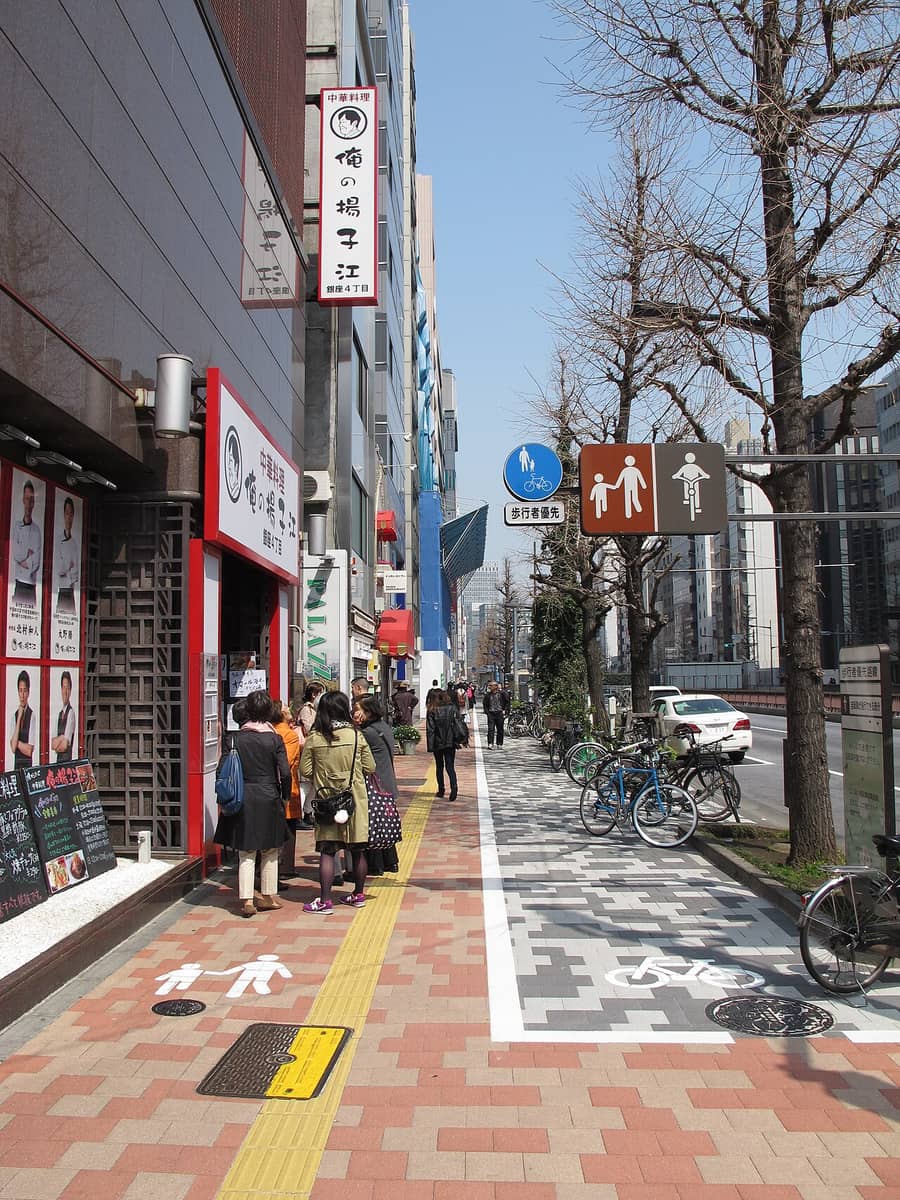
Footways in Japan are closed to bicycles by default, with an exception where a sign permits it (blue, showing a pedestrian and a bicycle together). Riders under 13, riders over 70, riders with disabilities, and situations where the carriageway is clearly dangerous also fall within the exceptions.
Enforcement reality, though, suggests this offence is heavily over-weighted in visitor advice: five citations nationwide in a month. What actually creates risk is not getting onto the footway, it is the speed you carry once there. Where cycling is permitted, the law requires you to keep to the carriageway side and ride slowly enough to stop at any moment, and making a pedestrian halt already crosses the line. The workable version: on a footway, ride at walking pace or get off and push.
Three: the phone, which has no buffer
The first two habits share a warning stage. Holding a phone does not. It sits in category ②, among the three examples of fixed-penalty offences with high potential for serious collisions, and it is the most expensive line on the schedule. It was also the second most common violation in the first month — together with failing to stop at stop lines, the two accounted for over 70% of the total.
The fix is cheap: use a mount. The FAQ is explicit that staring at a mounted screen is prohibited under the Act but attracts no enforcement where no actual danger results — the offence is defined by holding, and a mounted phone does not meet it. Pull over to change your route. There is no grey area to economise in here.
When and where you are most likely to be stopped
Around eight in the morning and five in the evening, on routes each police station publishes itself.
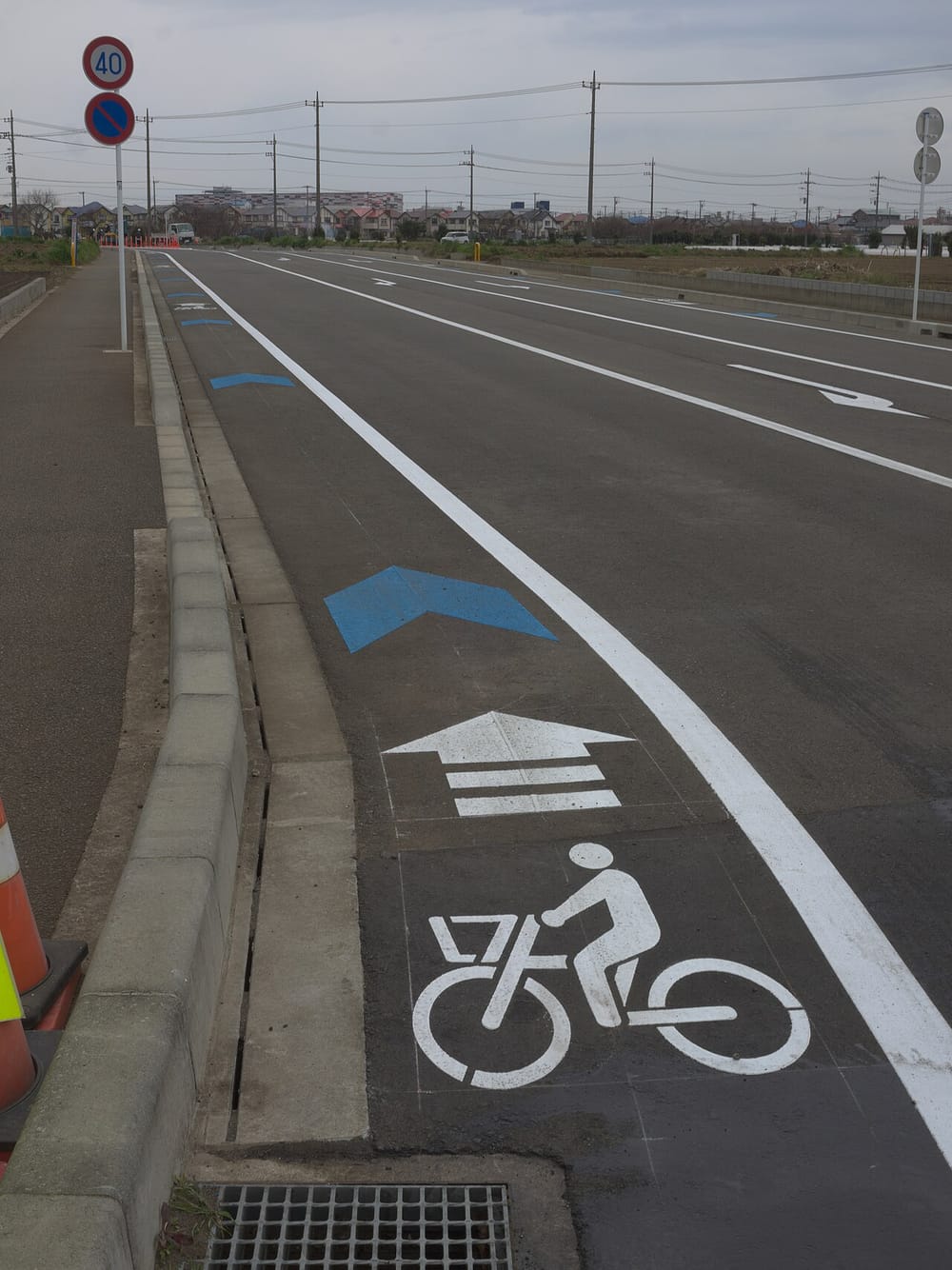
Enforcement locations and times are not arbitrary, and the police publish both. On timing, the stated focus is the morning commuting and school-run period and the dim hours around sunset. That matches the collision data: across 2020–2024, the 36,299 bicycle-related fatal and serious-injury collisions peak twice, at 8am (3,458) and 5pm (2,878).
On location, each police station designates bicycle guidance priority districts and routes, published on the prefectural police website, in the local police box bulletin, and in municipal newsletters, and revised in response to collision patterns and residents’ requests. That term is worth recognising, since it is the wording that appears on the signage.
Two practical conclusions for a visitor. The evening window carries doubled risk — it is simultaneously an enforcement focus and the time people forget to switch on lights, and riding without lights costs ¥5,000. Check that the lights actually work before you leave the rental shop, not after dark. And avoid the 8am commuter flow. Japanese urban cycling density at that hour is remarkable, and for someone still adjusting to riding on the left, it is the worst possible hour to be learning.
What to do when you are stopped
Give your name and address. Do not hand anyone money at the roadside.
This is the section that matters most to a visitor, and both halves come straight from official text.
One: refusing to identify yourself skips straight to criminal procedure
The wording leaves no room: where a person cited for a fixed-penalty offence does not make their address and name known at the scene, or flees the scene, the case is processed under criminal procedure as it was before (Article 126, paragraph 1, items 1 and 2).
Not speaking Japanese is not an exemption. Gesturing, translation apps, phoning your hotel or the rental shop to interpret — all perfectly workable. Walking away is not. It is the only step in the entire process that converts a payable fine into a criminal matter, and it is entirely within your control.
On identification: the FAQ says that without a driving licence, verification uses other documents such as a My Number card or student ID, and failing those, self-declaration plus steps such as contacting family. That answer is written for residents, and whether a passport serves as identification here has never been stated officially. This guide will not tell you a passport is the answer. It is realistically the only official document you will have on you, and carrying it does not hurt — but do not treat it as officially endorsed.
Two: anyone taking cash at the roadside is committing fraud
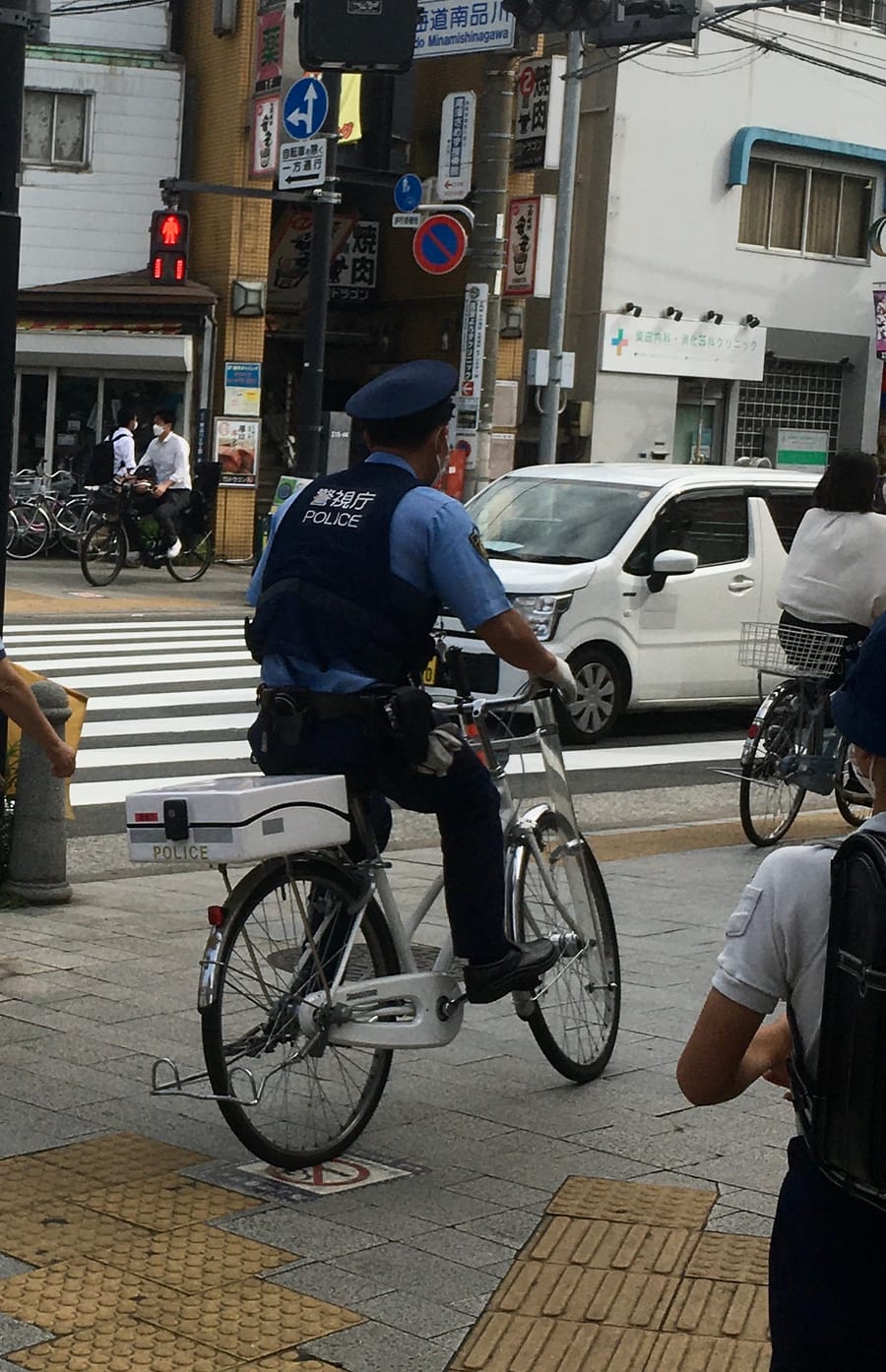
The police FAQ puts two sentences side by side. The fine is paid using the payment slip issued with the citation, at a bank, post office or similar financial institution, and officers do not collect fine money at the roadside during enforcement. If someone impersonating an officer attempts to take a fine from you, call 110.
That the police thought this worth putting in an FAQ tells you it has happened. For a visitor who does not speak the language and has just been stopped by someone in uniform, it is the single most valuable sentence here.
How the fine is actually paid
Payment slip, bank or post office counter, cash, within about seven days.
The Tokyo Metropolitan Police set out the sequence more plainly in their Chinese-language material than the Japanese pages manage: the officer hands over the traffic violation notice (the blue ticket) and a payment slip on the spot; you take the payment slip to the counter of any bank or post office, present it, pay in cash, and receive a receipt.
Translated into travel logistics:
- No cards, no convenience stores, no online payment. This runs against the grain of nearly every other payment in Japan, and the convenience store — which solves most things — cannot help.
- It has to happen on a weekday during banking hours. Ticketed on a Saturday, you are effectively waiting for Monday.
- Around seven days from the day after the citation for provisional payment.
What happens if you have left Japan before those seven days are up has never been addressed officially. The police FAQ, the rulebook, and the Tokyo force’s trilingual material all pass over the scenario of a violator leaving the country. The only documented rule is the system’s own: where the fixed penalty is not paid, the case moves into criminal procedure. Whether that is enforceable against a departed visitor, or has any bearing on a future entry, is not something the authorities have stated.
Official translations exist, but only Tokyo made them
The Tokyo Metropolitan Police produced dedicated Chinese, English and Korean pages and PDFs (updated February 16, 2026), covering the system diagram, a translated fine schedule, and the payment sequence quoted above. The National Police Agency’s English pages carry no blue-ticket material at all — only the older cycling safety rules and helmet guidance.
The system is national. The explanations are not. Stopped in Kyoto, Onomichi or Biei, the officer in front of you has no translated document to show you. Saving the Tokyo force’s English PDF to your phone before the trip is therefore genuinely useful even if you never set foot in Tokyo, because the underlying rules are identical. One caveat on attribution: that material is the Tokyo Metropolitan Police’s, not the National Police Agency’s, and the Chinese version is simplified.
Do you need a helmet
Not wearing one is not a fine.
The official sentence is unusually clean: not wearing a helmet does not make you subject to a fixed penalty as a traffic offence — but to protect yourself, make the effort to wear one when riding. It is a duty of effort, not a penalty, extended to all age groups in April 2023, and it does not appear in any bracket of the fixed-penalty schedule. Folding it into a fine table is a common and consequential error.
With the penalty question settled, the numbers published alongside it deserve a look. In 2024, roughly half of cyclists killed suffered head injuries (161 people, 49%). Across 2020–2024, among cyclists who sustained head injuries, the fatality rate for those not wearing helmets was about 1.4 times that of those who were (2.6% against 1.9%).
So the accurate framing is that this is the one rule that costs you nothing and might save your life. Most rental operations supply helmets on request; on long-distance routes, take one.
Whose insurance is on that rental bike
No national law requires bicycle liability insurance in Japan. It is set by each prefecture’s own ordinance, and they differ. The transport ministry states that the first such ordinance arrived in Hyogo in October 2015, and that “as of 1 April 2024, 34 prefectures require enrolment in bicycle liability insurance by ordinance, and 10 more make it an effort obligation.”
Two caveats. That count is dated 1 April 2024 and the ministry has not refreshed it since, so the real number is probably higher now; the ministry also notes the tally runs on promulgation dates, not effective dates. And the ministry publishes the per-prefecture list only inside a PDF attachment, so check the prefecture you are riding in against that file rather than a second-hand list.
For a visitor on a rental, the whole thing reduces to one question at the counter: does the rental fee include liability cover? Most Japanese rental operators do include it, but that is their own product, not a legal duty to disclose — so ask directly, write down the cover limit if the answer is yes, and rent elsewhere if the answer is vague. Buying standalone cover for a short trip is awkward; in practice the operator’s policy is what you are relying on.
The rule that protects riders
Cars overtaking you now owe about a metre.
It took effect on the same day as the ticketing regime and points the opposite way — it protects the rider.
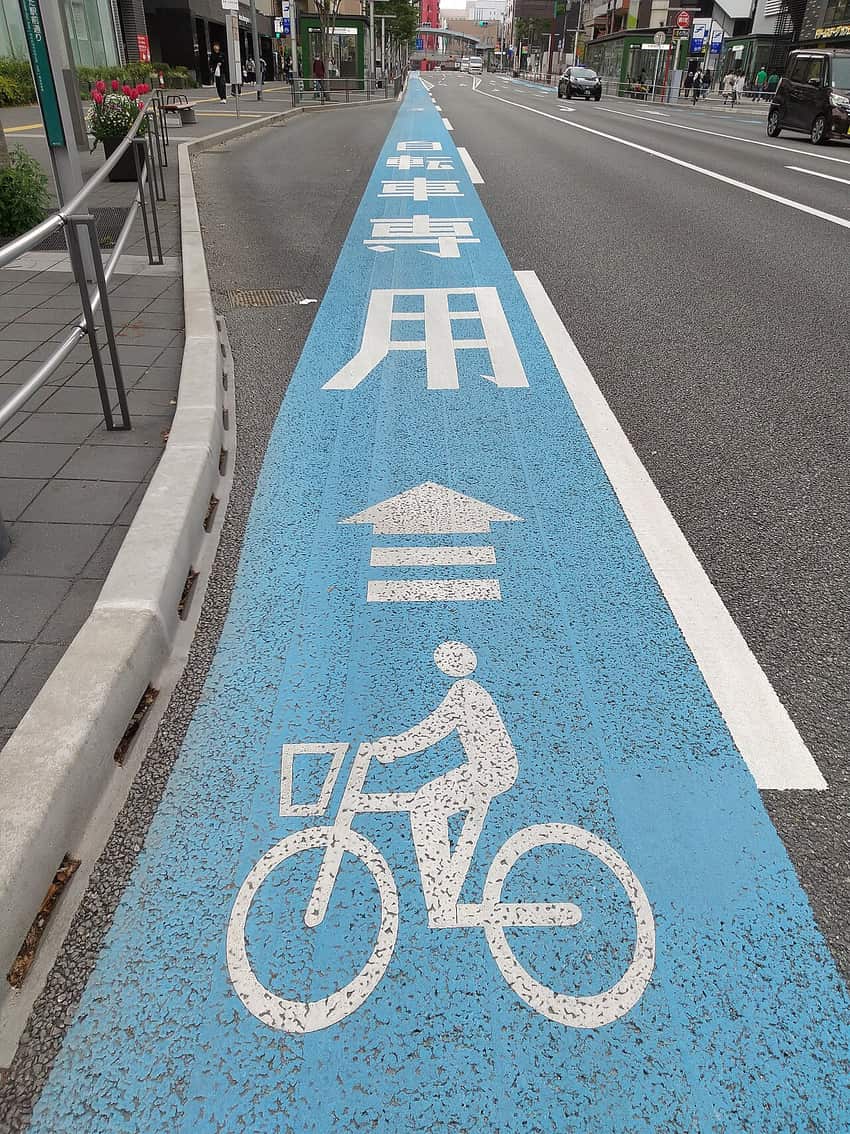
The amended Act adds a lateral passing rule: when a car overtakes a bicycle and there is insufficient clearance between them, the car must proceed at a speed appropriate to that gap; correspondingly, cyclists must keep as far to the left of the road as practicable.
The police guidance figures are specific:
- When passing to the right of a bicycle, leave as much room as possible.
- At least about one metre of clearance is the safe target.
- Where about a metre cannot be maintained, drive at roughly 20 to 30 km/h.
This matters in two ways. It gives the left-side rule a fresh legal footing — the same amendment obliges riders to keep as far left as practicable, so it is not merely convention. And it completes the picture of what the 2026 amendment actually did. The same statute that made cyclists ticketable also told drivers to leave a metre; describing only the first half turns a two-sided reform into a one-sided crackdown.
If your itinerary involves a long-distance route — the seventy-kilometre island-hopping ride across the Shimanami Kaido, or the loop around Lake Biwa — this rule is worth knowing, since substantial stretches of both share tarmac with traffic.
Three closing points
One: ride on the left, and treat everything else as secondary. It is the likeliest mistake for most visitors and it is a matter of reflex rather than knowledge. The good news is the built-in warning buffer — switch sides when told and that is normally the end of it; ¥6,000 is what continuing costs. The bad news is that it can also trigger category ④ directly, the moment your riding forces someone else to brake hard.
Two: remember 63 to 1, and remember the phone is the exception. The first month produced 2,147 blue tickets against 135,855 warning slips, and five footway citations nationwide. Ordinary lapses overwhelmingly stop at the warning tier. The one everyday habit to treat as having no buffer is holding your phone — ¥12,000, the top of the schedule, and the second most common violation recorded in month one. A mount costs a fraction of that.
Three: when stopped, do two things and avoid one. Do: give your name and address, and take the payment slip. Avoid: handing cash to anyone at the roadside — the police state in writing that officers do not collect fines on the spot, and tell you to call 110 if someone tries. As for helmets, they appear in no bracket of the penalty schedule, but the fatality rate among head-injured riders without one runs about 1.4 times higher, and rental shops hand them out for the asking. For the other half of the same Road Traffic Act, driving in Japan and the international permit rules covers the motorised side; if your trip involves the shared e-scooters parked on Tokyo pavements, that is a different vehicle class with its own age and footway rules; for general trip preparation, the first-time Japan checklist is the place to start.
Every enforcement figure here covers a single month, April 2026, and all of it is provisional; as of August 2026 no monthly figures after that had been published. The system is barely months old, its first month leaned toward publicity over penalties, and nobody can yet say whether enforcement tightens. A full year of official data should exist after April 2027.
Appendix: original Japanese source text (click to expand)
The Japanese originals behind the statements above, collected here so you can check them yourself. Sources: National Police Agency bicycle portal and Bicycle Rulebook (September 2025, NPA Traffic Bureau); Tokyo Metropolitan Police multilingual pages.
1. The system is in force (not upcoming)
2026年(令和8年)4月1日から、自転車にも「交通反則通告制度」が適用されました。
2. Basic policy is roadside guidance and warning (three occurrences)
自転車の交通違反を認知した場合、基本的には現場で指導警告を実施
警察では、自転車の交通違反を認知した場合、基本的には現場で指導警告を行います。ただし、その違反が交通事故の原因となるような、歩行者や他の車両にとって、危険性・迷惑性が高い悪質・危険な違反であったときは検挙を行います
青切符導入後も、自転車の交通違反に対しては基本的に「指導警告」を実施
3. The five enforcement categories
① 刑事手続によって処理される重大な違反
② 反則行為の中でも、重大な事故につながるおそれが高い違反
③ 違反により実際に交通事故を発生させたとき
④ 違反の結果、実際に交通への危険を生じさせたり、事故の危険が高まっているとき
⑤ 違反であることについて指導警告されているにもかかわらず、あえて違反を行ったとき
4. Where wrong-side riding sits (the example given for ⑤)
警察官による指導警告に従わず、右側通行を継続したとき
5. The threshold for ④ (making a pedestrian stop)
スピードを出して歩道を通行したため、歩行者を立ち止まらせたとき
6. The six "merely doing X is not enforced" answers
基本的に、取締りには至らない指導警告が行われることになります。例えば、単に歩道通行をしたといった場合は原則として指導警告の対象です。
単に子乗せ自転車で歩道を通行したことだけで取締りを受けることはありません
単に自転車の幼児用座席に小学生を乗せて運転したことだけで取締りを受けることはありません
イヤホンをしながら運転すること自体が直ちに交通違反に当たるわけではありませんが…この違反をしていることだけで取締りを受けることはなく、違反の結果、実際に交通への危険を生じさせたり…場合などには取締りを受ける可能性があります
ハンドルに荷物を掛けて運転したことだけで取締りを受けることはなく、これによりハンドル操作を誤り、事故を発生させた場合などには取締りを受ける可能性があります
7. Phones: mounted versus held
自転車に取り付けてあっても携帯電話・スマートフォンを注視することは道路交通法により禁止されています。これに違反して、実際に交通の危険を生じさせた場合は赤切符(刑事手続)の対象となります。交通の危険を生じさせていない場合は、取締りを受けることはありません
8. Failing to identify yourself means criminal procedure
反則行為をして、警察官によって検挙されたものの、現場において、自らの住所・氏名を明らかにしないときや、その場から逃亡したときには、これまでと同様に刑事手続により処理されます(法第126条第1項第1号、第2号)。
9. Payment method and the fraud warning
反則金は、交通反則告知の際に渡される「納付書」により、銀行や郵便局等の金融機関で納付をすることとなっており、警察官が交通違反の取締りの現場で反則金を徴収することはありません。
警察官を騙る者から反則金を徴収されそうになった場合は、110番通報をしてください。
Tokyo Metropolitan Police official Chinese-language material (updated 2026-02-16):
警察会当场交付《交通反则告知书》(青切符)和《缴付书》。您需要携带《缴付书》,前往任何一家银行或邮局的柜台。在柜台出示《缴付书》,并以现金方式缴纳相应的反则金金额。缴纳完毕后,您会收到收据。
10. Identity verification
運転免許証を持っていない場合には、マイナンバーカードや学生証といった他の身分証で本人確認を行うこととなります。そのような身分証を持っていなかった場合は、自己申告に加えて、ご家族に連絡をするなどして、確認を行うことになります。
11. The age-16 threshold
自転車に導入される青切符は、16歳以上の運転者が対象となります(法第125条第2項第4号)。16歳未満の者による違反については、原則として指導警告を行います。
12. Helmets are not a fixed-penalty matter
ヘルメットを着用しなくても、交通違反として反則金の対象になることはありませんが、自らを守るため、自転車を運転するときはヘルメットを着用するよう努めましょう。
13. Lateral passing (in force the same day)
自転車の通行を保護するため、道路交通法が改正され、自動車が自転車を追い抜く際に、自転車との間に十分な間隔がないときは、その自転車との間隔に応じた安全な速度で進行/自転車はできる限り道路の左側に沿って進行 しなければならないこととなりました。
自動車が自転車の右側を通過するときは、できる限り間隔を空けましょう/少なくとも1メートル程度間隔を空けることが安全です/1メートル程度の間隔を確保できない場合には、時速20キロメートルから30キロメートル程度で運転しましょう
14. Enforcement focus periods
朝の通勤・通学時間帯/日没前後の薄暗い時間帯
15. Consequence of non-payment
反則金を納付しないときは、刑事手続に移行することとなります
Frequently Asked Questions
- Q1:Is riding on the wrong side of the road an instant fine in Japan?
- Usually not. You get one chance. The National Police Agency files wrong-side riding under the fifth of its five enforcement categories, and the official wording describes the trigger as continuing to ride on the right after a police officer has already given you guidance and a warning. An officer stops you, tells you to switch sides, you switch, and that is normally the end of it. What turns it into ¥6,000 is carrying on after being told. So when you are stopped: move to the left immediately and do not argue. But do not read this as permission. Wrong-side riding also satisfies the fourth category, which needs no warning at all: if your riding creates real danger — forcing an oncoming vehicle to brake hard, for instance — the ticket can be written on the spot. It is also the first of the sixteen violation types that trigger Japan’s mandatory cyclist re-education course.
- Q2:Can I use my phone for navigation while cycling?
- Mounted on the handlebars, yes. Held in your hand, that is ¥12,000. Japanese law splits phone use into two entirely separate offences, and the split is worth understanding because the amounts are nothing alike. The fixed-penalty offence is defined by holding — holding the phone to talk, or holding it while staring at the screen. That carries ¥12,000, the highest figure on the entire bicycle penalty schedule, and it sits in the police’s second category, meaning it is one of the few everyday actions with no warning stage at all. A phone fixed to a mount is treated differently: the police FAQ confirms that staring at a mounted screen is prohibited under the Road Traffic Act, but adds that where no actual traffic danger results, no enforcement action is taken. Cause genuine danger and it escalates into the criminal-procedure version of the offence, punishable by up to one year of confinement or a ¥300,000 fine. The practical rule: buy a mount, and pull over before you touch the screen. This is not an obscure clause — phone use and failing to stop at stop lines together accounted for over 70% of all violations in the system’s first month.
- Q3:Will I be fined for cycling without a helmet in Japan?
- No. The official wording is explicit that not wearing a helmet does not make you subject to a fixed penalty. Helmets are a duty of effort in Japan, extended to all ages in April 2023, and they appear nowhere on the fixed-penalty schedule — not in any bracket. Keeping this separate from the penalty rules matters, because the helmet duty and the fixed-penalty schedule are two different instruments that happen to have changed in the same era. That said, the figures the police publish alongside that sentence are worth a moment: in 2024, roughly half of all cyclists killed in Japan suffered head injuries (161 people, 49%), and across the 2020–2024 period, the fatality rate among head-injured cyclists not wearing helmets was about 1.4 times that of those wearing them (2.6% against 1.9%). So the accurate framing is that this is the one rule that will not cost you money and might save your life. Most rental shops in Japan hand out helmets free — you generally just have to ask.
- Q4:How do I pay a Japanese cycling fine? Can I use a card?
- No card, no convenience store, no online payment. Cash, at a bank or post office counter, within seven days as a rule. The Tokyo Metropolitan Police describe the sequence plainly in their own multilingual material: the officer hands you a traffic violation notice (the blue ticket) and a payment slip on the spot; you take that payment slip to the counter of any bank or post office, present it, pay the amount in cash, and receive a receipt. For a visitor this has real scheduling consequences — you need a weekday during banking hours, and the convenience store, which solves most payment problems in Japan, cannot help here. The more important half is the fraud warning, which the police put in their own FAQ: the fine is paid at a financial institution using that slip, and officers never collect fine money at the roadside. If someone claiming to be a police officer tries to take a fine from you in person, the official instruction is to call 110. As for what happens if you leave Japan before paying — there is no official statement on that at all, and this guide will not invent one. The only documented rule is the system’s own: non-payment moves the case into criminal procedure.
- Q5:I have no Japanese ID. How do the police verify who I am?
- The examples the police give are all Japanese documents. A passport is not among them. The official FAQ states that where a person has no driving licence, identity is confirmed using other identification such as a My Number card or a student ID; and where the person carries none of these, verification proceeds by self-declaration combined with steps such as contacting family members. That answer is plainly written for residents, and whether a passport works as identification here has never been stated officially — so this guide will not tell you a passport is sufficient. It is realistically the only official document you will be carrying, and having it certainly does not hurt. What matters far more is the rule that sits next to it, and this one is unambiguous: if you are stopped for a violation and fail to state your address and name, or leave the scene, the case is handled under criminal procedure exactly as before (Article 126, paragraph 1, items 1 and 2). A language barrier is not an exemption. Gesture, use a translation app, phone your hotel or the rental shop for help — all fine. Just do not walk away. That single decision is the only thing in the whole process that reliably makes your situation worse.
- Q6:Who does the blue ticket system apply to? What about children?
- Riders aged 16 and over. Under Article 125, paragraph 2, item 4, the bicycle fixed-penalty system applies to riders of 16 or above; violations by under-16s are, as a rule, met with guidance and a warning, and some prefectural forces (Kyoto and Nara among them) issue a separate "bicycle safety guidance card" in a format that varies by prefecture. There is a second age threshold that is easy to confuse with this one: the mandatory cyclist course applies from 14. That is a different mechanism entirely — being cited twice within three years for any of sixteen specified violations (or causing an accident through one) results in a public safety commission order to attend. The course runs three hours, carries a fee, and failing to attend within three months without good reason is punishable by a fine of up to ¥50,000. Sixteen is the ticket threshold; fourteen is the re-education threshold. Do not merge them. One more frequently garbled point: holding a driving licence does not expose you to licence demerit points for cycling offences — the FAQ says so directly. Serious cases are different: for hit-and-run, fatal accidents or drink-riding, the public safety commission can still suspend a licence for up to six months, and in November 2024 three men in their forties and fifties had licences suspended for cycling under the influence.
- Q7:Do earphones, umbrella holders or bags on the handlebars get you stopped?
- Doing them is not the offence. What happens next is. The police FAQ answers a whole run of these questions using one repeated sentence pattern, and that pattern is really the operating logic of the entire system. Riding with earphones does not in itself immediately constitute a traffic violation, and you will not be cited merely for being in that state — enforcement becomes possible when the behaviour actually produces traffic danger or materially raises the risk of a collision. Umbrella holders get the identical answer. Bags on the handlebars get a more concrete one: simply riding with a bag hung on the handlebars will not get you cited, but losing control of the steering as a result and causing an accident will. Note how low the threshold for "what happens next" actually is. The example the police use for their fourth category is riding along a footway fast enough to make a pedestrian stop walking — no contact, no injury, just a pedestrian who had to halt. So the correct reading is not "anything goes"; it is that these habits carry no dedicated penalty of their own while making it considerably easier to cross the line that does.
- Q8:What actually changed in April 2026? Cycling offences were already illegal.
- What changed is not the rules. It is what happens to you after you are caught. From April 1, 2026, Japan’s traffic violation notification system — the blue ticket — was extended to bicycles, under the 2024 amendment to the Road Traffic Act (Act No. 34 of 2024). Before that date, an officer had exactly two options: a verbal warning, or the red ticket, which sends the case straight into criminal procedure with a prosecutor, an interview and a potential record. The red ticket was heavy enough that officers were reluctant to use it for a red light, so in practice almost everything stopped at the verbal warning, which carried no consequence at all. The blue ticket fills in the missing middle rung: pay the fixed penalty and the case never enters criminal procedure and leaves no record. The real effect of the amendment, then, is that issuing a penalty became a workable option for the first time — not that previously legal behaviour became illegal. And a second change took effect the same day, pointing the opposite way: when a car overtakes a cyclist without sufficient lateral clearance, it must now slow to a speed appropriate to that gap. The police guidance figure is at least about one metre, and where a metre is not available, drivers are told to travel at roughly 20–30 km/h.