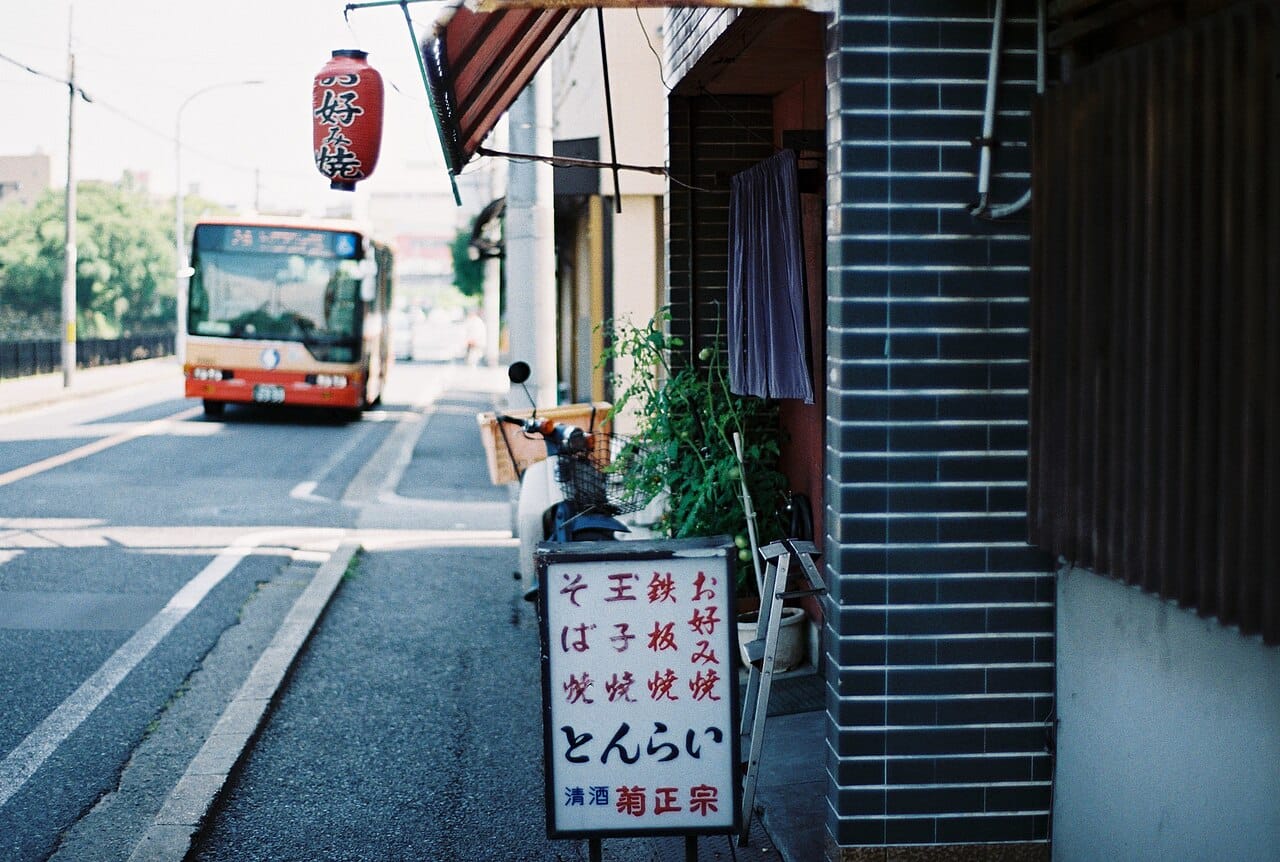
Here's the honest truth: you can travel all over Japan without speaking a word of Japanese. Stations have English signage, convenience stores take a tap to pay, and a translation app reads any menu you point a camera at. But whenever someone asks me "do I need to learn Japanese for Japan," my answer is always the same: you don't need to become conversational — but about ten phrases genuinely change the trip. The difference isn't whether you understand the reply; it's whether you're willing to open with that first line. The same request, made with silent pointing versus a quick "sumimasen" and some gestures, earns two completely different responses.
This isn't a textbook. I won't start you on the kana alphabet or load you up with grammar you'll never use. Instead I've done something more useful: I've taken the situations a zero-to-basic traveler actually hits in Japan — greetings, restaurants, shopping, directions, emergencies, dietary needs — and pulled out the handful of phrases that matter in each, with the Japanese (kana/kanji), the romaji and the meaning side by side so you can just read and say them. At the end I boil it all down to the "if you learn nothing else, learn these ten" shortlist. Let's start with the mindset, then work through the situations.
- One word does it all — sumimasen means "excuse me / sorry / thanks (with apology)" all at once. If you learn one word, learn this.
- Four phrases run a meal — English menu?, this one please, the bill please, thank you for the meal. You never need to read a dish name.
- Grab three fill-in patterns — "... kudasai" (please give me), "... wa doko desu ka" (where is), "... onegaishimasu" (please / to ...). Slot in a noun and you get endless sentences.
- Dietary needs must be specific — "vegetarian" alone isn't enough (hidden fish stock); say "no meat and no fish," "I'm allergic to ___," and carry an allergy card if it's serious.
- Effort beats fluency — broken Japanese is fine; lead with a phrase plus a small nod and Japan is remarkably forgiving and helpful.
Table of Contents
- Mindset first: effort beats fluency, and sumimasen is your Swiss army word
- Greetings & basic politeness: learn these first
- Three fill-in patterns that build everything
- Restaurants: ordering, paying, mealtime manners
- Shopping & tax-free: prices, buying, refunds
- Directions & transit: stations, toilets, taxis
- Allergies & vegetarian: the safety-critical section
- Emergencies & help: the words that matter
- Polite softeners & the bow: getting more goodwill
- Learn just 10: the zero-basics shortlist
- Frequently Asked Questions
Mindset first: effort beats fluency, and sumimasen is your Swiss army word
Before any phrase, internalise something that matters more than any word: in Japan, your manner counts for far more than your Japanese level. Japan is a society that prizes politeness and consideration, and the bar for foreign visitors is generous — you don't need to be correct, you just need to show you're trying politely, and most staff and strangers will instantly soften and help. The flip side: fluent Japanese delivered impatiently, with no greeting, demanding things, actually loses you points. So the spirit of this guide is: learning fewer phrases is fine, but opening politely and finishing with a small nod beats memorising ten more words.
And of all the polite phrases, the one to master first handles roughly half the moments you'll ever need to speak.
Sumimasen: the Swiss army word of travel Japanese
Sumimasen is the most versatile word in Japanese — one word, three jobs, worth learning cold:
| Japanese (kana) | Romaji | Meaning & use |
|---|---|---|
| すみません (attention) | sumimasen | "Excuse me" — to get a server's or stranger's attention before you ask |
| すみません (apology) | sumimasen | "Sorry / pardon me" — a light apology when you bump, squeeze past, or interrupt |
| すみません (thanks) | sumimasen | "Thanks (sorry to trouble you)" — when someone goes out of their way for you |
Calling a server, squeezing past, brushing someone by accident, thanking a person for helping — all of it, one sumimasen. If you ask me which single Japanese word to learn, I don't hesitate: this one. Say "su-mi-ma-sen" with the ending falling naturally; don't stretch it. A more casual everyday version is "suimasen" — same meaning, don't be confused if you hear it.
Greetings & basic politeness: learn these first
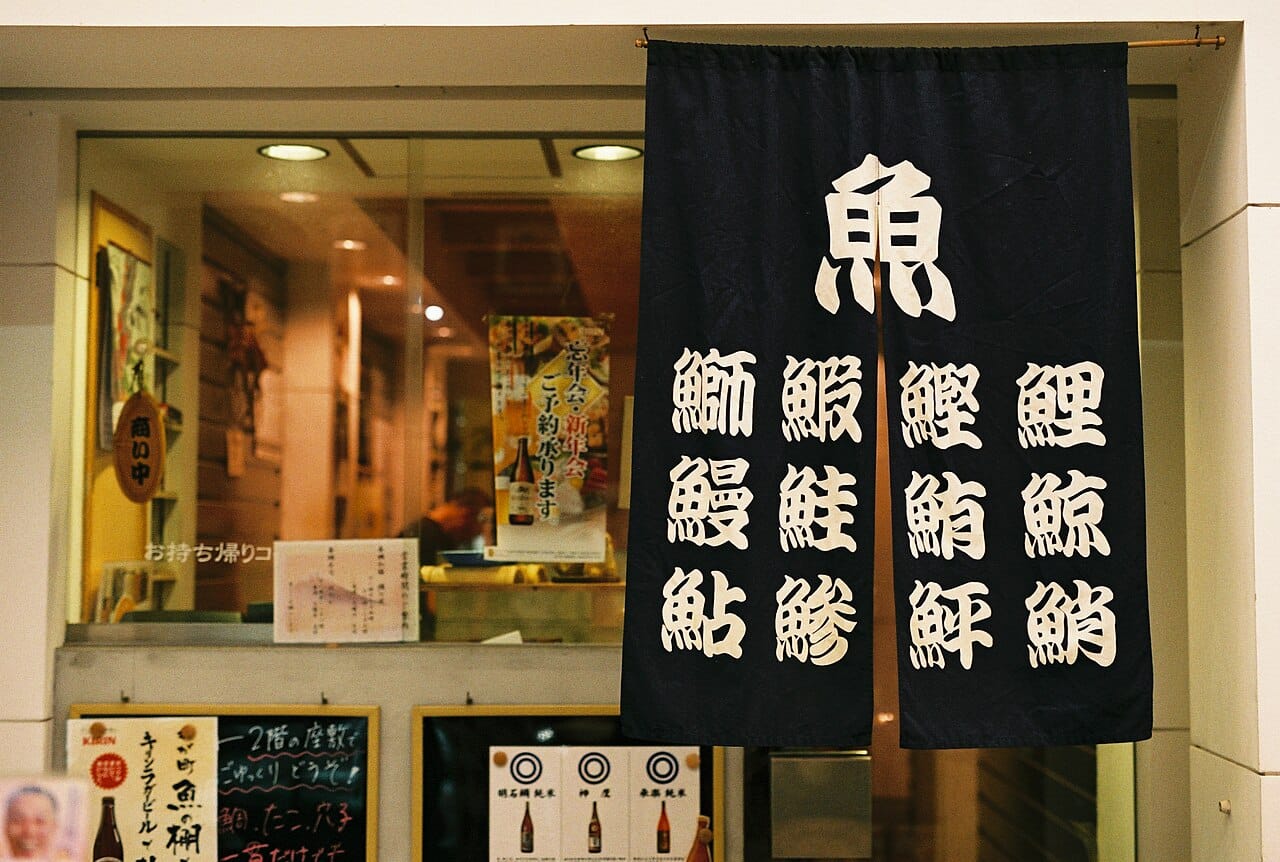
Greetings and thanks are the lowest-cost, highest-return phrases — ten seconds to learn, and they instantly warm an interaction. Say one entering a shop, one when asking directions, one as you finish, and Japanese people will clearly register the goodwill.
| Japanese (kana) | Romaji | Meaning |
|---|---|---|
| こんにちは | konnichiwa | Hello (daytime, all-purpose) |
| おはようございます | ohayou gozaimasu | Good morning |
| こんばんは | konbanwa | Good evening |
| ありがとうございます | arigatou gozaimasu | Thank you (full, polite) |
| ありがとう | arigatou | Thanks (casual) |
| お願いします | onegaishimasu | Please / I'd appreciate it (added to a request) |
| はい / いいえ | hai / iie | Yes / no |
| 大丈夫です | daijoubu desu | It's okay / no thanks (great for declining) |
A few practical notes. Arigatou gozaimasu is the full polite "thank you" — use it with staff and strangers; the short arigatou is for friends. Onegaishimasu is enormously useful: it means "please / if you would," and tacking it onto any request makes it instantly polite — for ordering, for asking someone to do something, for paying. Daijoubu desu is the magic decline: when staff ask if you want a bag or an extra item, you don't need to mime — a simple "daijoubu desu" (it's okay / no thanks) bows out gracefully.
Three fill-in patterns that build everything
Rather than memorise dozens of fixed sentences, learn three "fill-in-the-blank" patterns — slot a noun in and you can build endless useful lines on the spot. This is, to my mind, the highest-value way to learn travel Japanese.
| Pattern (kana) | Romaji | Meaning & example |
|---|---|---|
| ____ をください | ____ o kudasai | "____, please / give me ____." e.g. kore o kudasai (this one, please) |
| ____ はどこですか? | ____ wa doko desu ka? | "Where is ____?" e.g. toire wa doko desu ka (where's the toilet) |
| ____ をお願いします | ____ o onegaishimasu | "____, please / to ____." e.g. okaikei o onegaishimasu (the bill, please) |
See the power of these? "____ kudasai" orders food, buys things, requests any object — you just point ("kore," this) and you don't even need to read a name. "____ wa doko desu ka?" asks for any place. "____ onegaishimasu" makes any polite request. Three patterns plus a handful of key nouns (provided in each section below) handle the vast majority of travel conversations. Learn the patterns, not whole memorised sentences — for a beginner, this is by far the most efficient route.
One more reason patterns beat sentences: they survive the moment you forget. Memorise a long fixed line and one missing word can freeze you; learn a pattern and a noun and you can always fall back on point-and-slot. A common worry is the reply — what if they say something back you don't understand? Honestly, for the situations in this guide it rarely matters. When you ask the price, you'll be shown a number; when you ask for the toilet, you'll be pointed or walked; when you order, you'll get the dish. The phrases above are designed to get a useful answer that doesn't depend on you parsing rapid Japanese. And when it does — say a longer explanation — that's exactly where your phone's translation app steps in, which is why I treat "a few solid phrases plus reliable data" as the real toolkit rather than a fat vocabulary list you'll never recall under pressure.
Restaurants: ordering, paying, mealtime manners
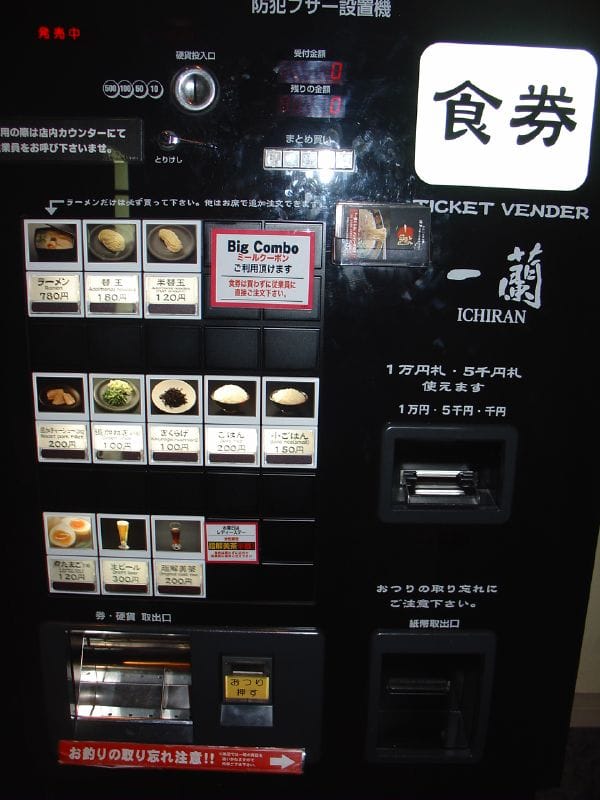
Meals are where you'll speak most often, yet four phrases carry the whole thing. Many places have picture menus or plastic food models, so worst case you just point — no need to stress.
| Japanese (kana) | Romaji | Meaning |
|---|---|---|
| 英語のメニューはありますか? | eigo no menyuu wa arimasu ka? | Do you have an English menu? |
| これをください | kore o kudasai | This one, please (pointing at the menu/food) |
| お会計お願いします | okaikei onegaishimasu | The bill, please |
| ごちそうさまでした | gochisousama deshita | Thank you for the meal (said when leaving) |
| いただきます | itadakimasu | Let's eat / I gratefully receive (said before eating) |
| お水をください | omizu o kudasai | Water, please |
| 持ち帰りできますか? | mochikaeri dekimasu ka? | Can I take this away (to go)? |
A few field notes. Don't rush to grab a seat — many Japanese restaurants seat you, so wait a moment by the door; staff will ask how many (just hold up fingers). Ramen and set-meal shops often use a ticket vending machine (shokkenki) at the entrance — pick a dish from the picture buttons, pay, take the ticket, hand it over, all without speaking, which is perfect when you have zero Japanese. Kore o kudasai is the all-purpose restaurant line: point at the menu or the next table's dish and you've ordered, no need to pronounce anything. As you leave, say gochisousama deshita — Japanese diners always say it, and staff are usually delighted to hear it from a foreign guest. For more on Japanese food and what's worth seeking out, pair this with our Japan food guide.
Shopping & tax-free: prices, buying, refunds
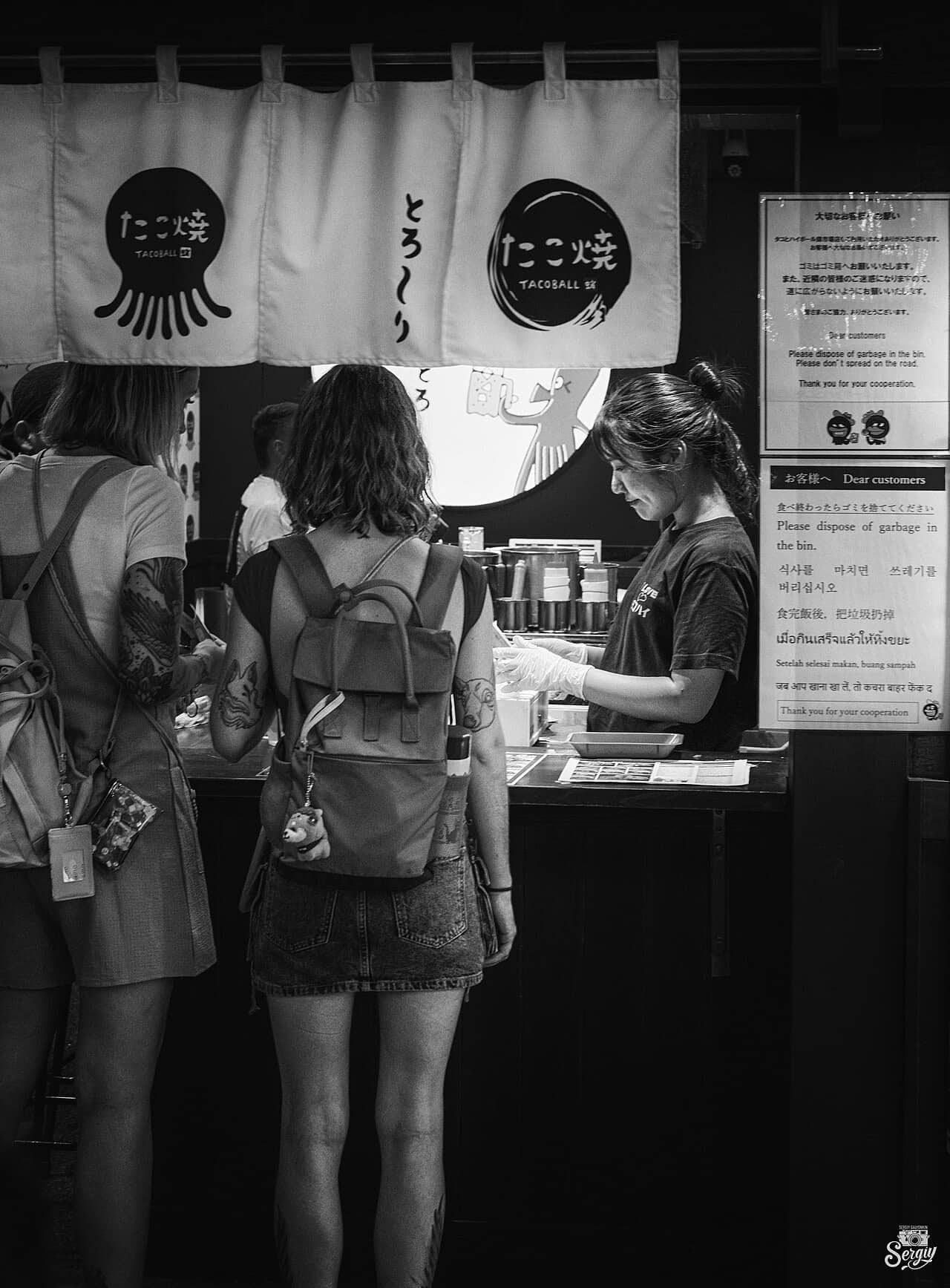
Shopping Japanese is even simpler than restaurant Japanese, because prices are usually labelled. The core is just two things — asking the price and "I'll take this" — plus the tax-free question.
| Japanese (kana) | Romaji | Meaning |
|---|---|---|
| いくらですか? | ikura desu ka? | How much is it? |
| これください | kore kudasai | I'll take this one (pointing) |
| 免税できますか? | menzei dekimasu ka? | Can I get tax-free (a tax refund)? |
| カードは使えますか? | kaado wa tsukaemasu ka? | Can I pay by card? |
| 袋はいりません | fukuro wa irimasen | I don't need a bag |
| 見ているだけです | mite iru dake desu | I'm just looking (declining a salesperson) |
Ikura desu ka? is the all-purpose price question — and if you can't catch the spoken number, no problem: staff usually show the total on the register or tap it into a calculator for you. Menzei is Japan's consumption-tax exemption for visitors; it applies above a same-day, same-store threshold of 5,000 yen pre-tax on showing your passport — so ask “menzei dekimasu ka?” before you pay. One thing to know before you use the phrase: what happens next depends on the date you buy, not the date you fly. Up to 31 October 2026 the tax comes off at the register. From 1 November 2026 you pay the tax-inclusive price, register how you want to be repaid, and the shop refunds you after you scan your passport at a self-service kiosk at the departure airport — so expect staff to ask you an extra question at the till. The mechanics are in our pay-first, refund-later walkthrough. If a salesperson approaches and you're not buying, "mite iru dake desu" (just looking) or the earlier "daijoubu desu" gets you out gracefully.
Directions & transit: stations, toilets, taxis
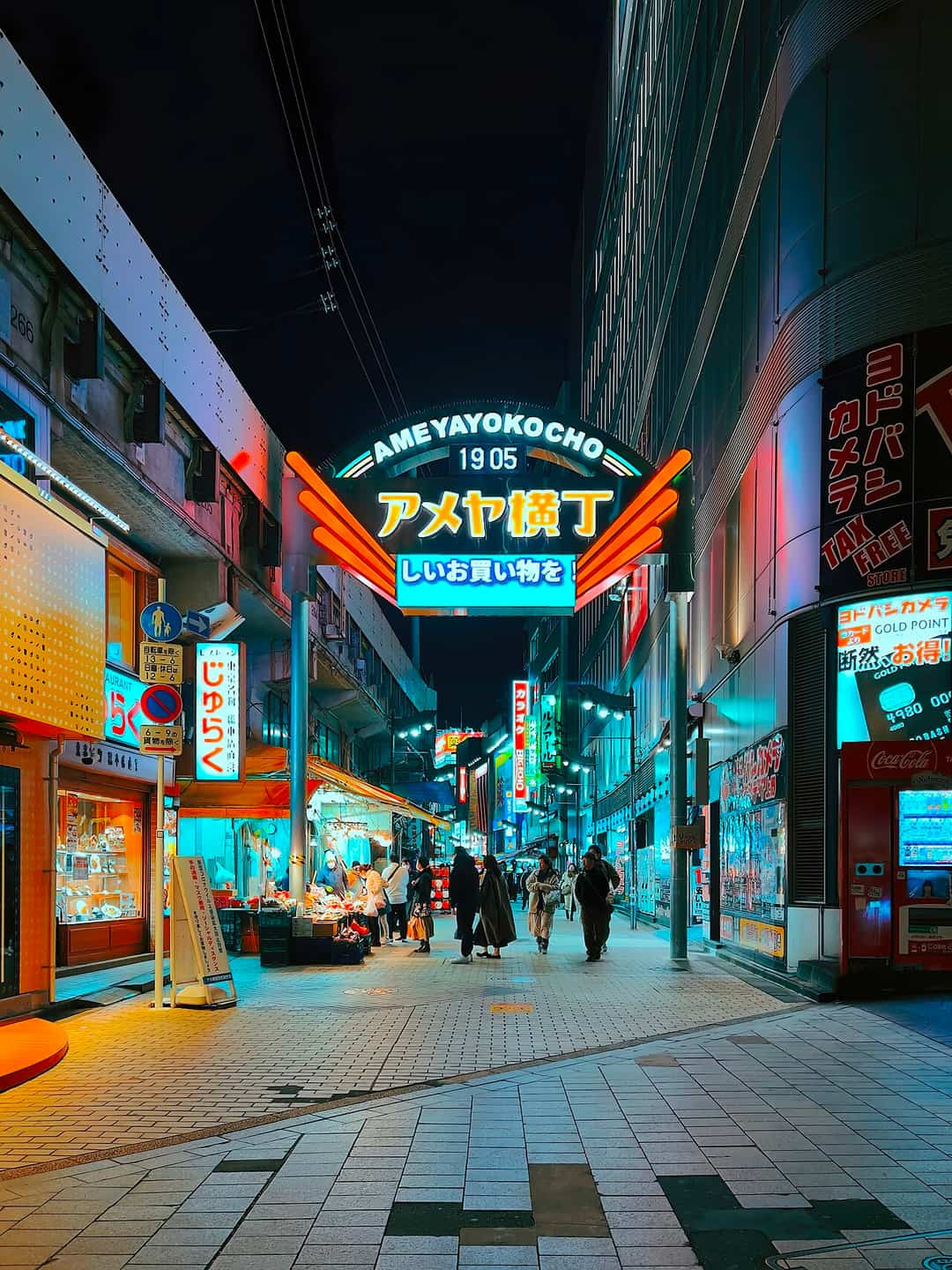
Directions run on a single pattern: "____ wa doko desu ka?" (where is ____?) — slot in the place you're after. You won't follow a detailed spoken answer, but between gestures, the person walking you a few steps, and checking against your phone map, asking directions is easier than it sounds.
| Japanese (kana) | Romaji | Meaning |
|---|---|---|
| ____ はどこですか? | ____ wa doko desu ka? | Where is ____? (all-purpose directions pattern) |
| 駅はどこですか? | eki wa doko desu ka? | Where is the station? |
| トイレはどこですか? | toire wa doko desu ka? | Where is the toilet? (you'll use this a lot) |
| ____ までお願いします | ____ made onegaishimasu | (in a taxi) To ____, please |
| ここに行きたいです | koko ni ikitai desu | I want to go here (showing a map) |
| 歩いて行けますか? | aruite ikemasu ka? | Can I walk there? |
Learn a few key nouns first: eki (station), toire (toilet), konbini (convenience store), deguchi (exit), basu-tei (bus stop). For taxis, the safest move is to have your destination written down or pinned on your phone map and shown to the driver, with a quick "koko made onegaishimasu" (to here, please). Note that you don't tip taxi drivers in Japan — it's not expected. For passes, transfers and IC cards, plan it out before you go with our JR Pass guide; actual navigation and live route checks, though, all need data.
Translation apps and maps both need data: unlimited Japan eSIM (KKday) →Why bring up an eSIM here? Because the best partner to your travel Japanese is your phone's translation app — when a sentence runs past what you know, type or speak into it and you're understood — and that needs a steady connection. Sorting out data is like giving your Japanese an endless safety net.
Allergies & vegetarian: the safety-critical section
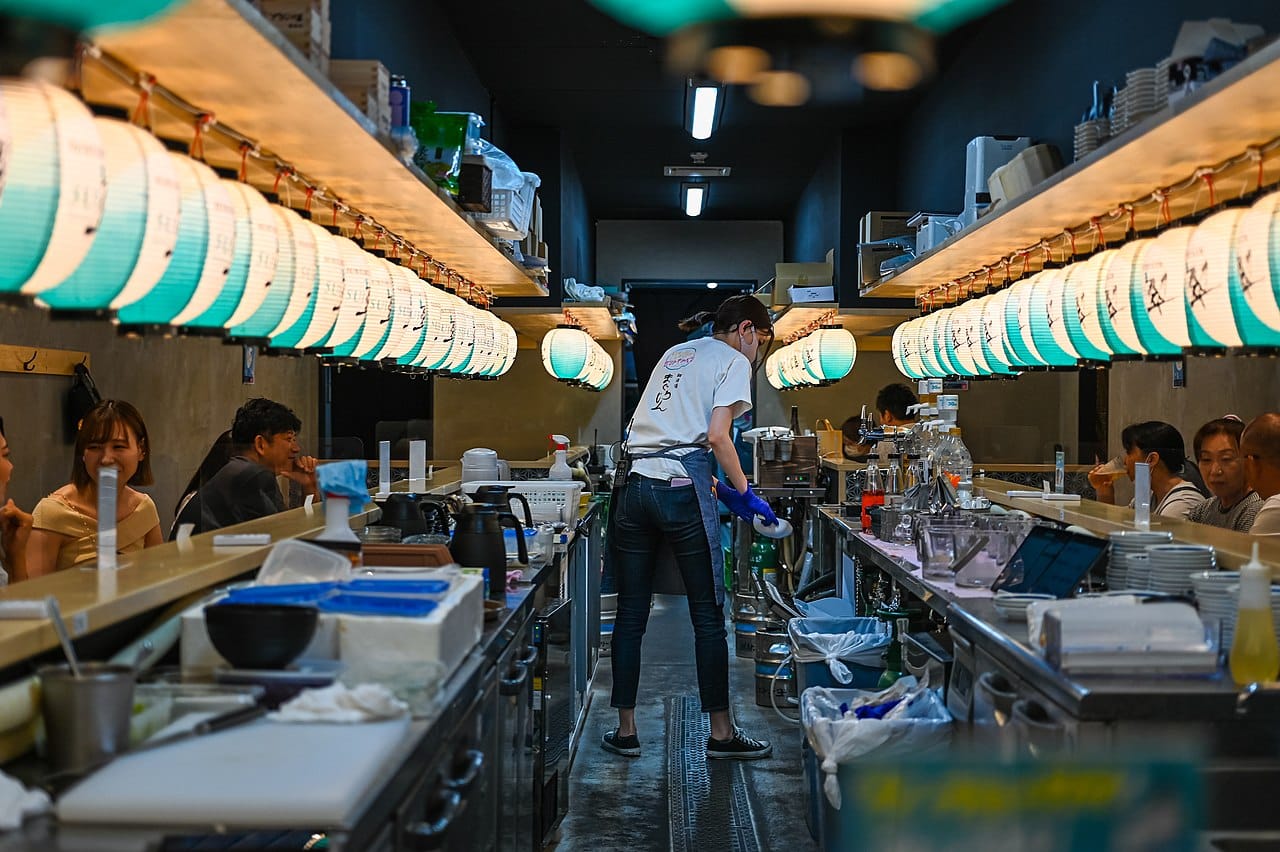
This section matters more than the rest, because it's about safety. If you're vegetarian or have a food allergy, you need to say it clearly — and specifically, because Japanese cooking hides a lot of ingredients you can't see.
Vegetarians must watch the "stock" trap. Many dishes that look meat-free (miso soup, udon broth, dressed vegetables) are made with fish or bonito stock (dashi), so just saying "I'm vegetarian" often isn't enough — staff may assume "no visible chunk of meat = vegetarian." Be more specific:
| Japanese (kana) | Romaji | Meaning |
|---|---|---|
| 肉と魚なしでお願いします | niku to sakana nashi de onegaishimasu | No meat and no fish, please |
| ベジタリアンです | bejitarian desu | I'm a vegetarian |
| だしも入っていませんか? | dashi mo haitte imasen ka? | Is there no dashi (stock) in it either? |
| ____ アレルギーがあります | ____ arerugii ga arimasu | I'm allergic to ____ |
| これは ____ が入っていますか? | kore wa ____ ga haitte imasu ka? | Does this contain ____? |
Slot the allergen into "____ arerugii ga arimasu" to warn staff clearly. Common allergens in Japanese: tamago (egg), soba (buckwheat), piinattsu (peanuts), ebi (shrimp), kani (crab), nyuu (dairy), komugi (wheat).
Emergencies & help: the words that matter
Hopefully you'll never use a single one, but on the road these are worth two minutes to learn — if something does go wrong, being able to get one Japanese phrase out can make a real difference.
| Japanese (kana) | Romaji | Meaning |
|---|---|---|
| 助けて! | tasukete! | Help! / Help me! (in genuine danger) |
| 病院はどこですか? | byouin wa doko desu ka? | Where is a hospital? |
| 気分が悪いです | kibun ga warui desu | I feel unwell / ill |
| 英語が話せる人はいますか? | eigo ga hanaseru hito wa imasu ka? | Is there anyone who speaks English? |
| 警察を呼んでください | keisatsu o yonde kudasai | Please call the police |
| 救急車を呼んでください | kyuukyuusha o yonde kudasai | Please call an ambulance |
A few key facts to keep in mind: in Japan, police is 110, fire and ambulance is 119. The neighbourhood police box (koban) is everywhere in tourist cities — for getting lost, found or lost property, or any safety worry, just go to the police; they're very used to helping visitors. When you need help and fear the language gap, opening with "eigo ga hanaseru hito wa imasu ka?" (is there anyone who speaks English?) often finds someone you can communicate with. In a crisis, data and a translation app are your strongest backup — which is exactly why I always suggest sorting your Japan data plan before you go, rather than scrambling on arrival. And don't forget to arrange travel and medical insurance before you fly.
Polite softeners & the bow: getting more goodwill
Once you have the basic phrases, there's a layer of "make people want to help you" soft skill — polite softeners and body language. It's often overlooked, but its effect on how warmly you're treated rivals the phrases themselves.
- Open with sumimasen — before any request, say "excuse me" first, and your tone reads as instantly more polite, just like leading with "excuse me" in English.
- End with onegaishimasu — it softens a request. "Kore" (this) is blunt; "kore o onegaishimasu" (this one, please) is much politer.
- When you don't understand, say "sumimasen, mou ichido onegaishimasu" — "sorry, one more time please." Far better than freezing awkwardly.
- A small nod / bow — Japanese people habitually dip their heads slightly when thanking, apologising or requesting. You don't need a deep bow, but a small nod as you say "thank you" or "sorry" radiates goodwill, and people respond more warmly.
On bowing, the practical advice for a beginner: don't fuss over angles or the depth-of-bow etiquette Japanese people use — you're a visitor, nobody expects you to nail it. All you need is to dip your head naturally when you thank or apologise; it signals respect and goodwill, and Japanese society returns the favour to foreigners who try politely, often beyond what you'd expect. To repeat the single most important line of this guide: effort matters more than fluency. Not being able to form a full sentence is fine — be polite, be willing to speak, and Japan will be gentle with you. For the finer points of Japanese public etiquette (train manners, onsen rules and so on), follow up with our Japan etiquette guide; prepared alongside the language, it'll make the whole trip smoother.
Learn just 10: the zero-basics shortlist
If you're short on time and want to memorise nothing else, learn these ten — they cover about 80% of the moments you'll need to speak. I've deliberately picked the highest-frequency lines and the patterns that extend furthest, not textbook order.
| # | Japanese (kana) | Romaji | Meaning |
|---|---|---|---|
| 1 | すみません | sumimasen | Excuse me / sorry / to get attention (the Swiss army word) |
| 2 | ありがとうございます | arigatou gozaimasu | Thank you |
| 3 | お願いします | onegaishimasu | Please / I'd appreciate it |
| 4 | これをください | kore o kudasai | This one, please (ordering & shopping) |
| 5 | いくらですか? | ikura desu ka? | How much is it? |
| 6 | ____ はどこですか? | ____ wa doko desu ka? | Where is ____? (directions pattern) |
| 7 | お会計お願いします | okaikei onegaishimasu | The bill, please |
| 8 | 大丈夫です | daijoubu desu | It's okay / no thanks (declining) |
| 9 | はい / いいえ | hai / iie | Yes / no |
| 10 | ごちそうさまでした | gochisousama deshita | Thank you for the meal (after eating) |
Look at this list and you'll spot a pattern: the truly high-frequency items aren't full sentences but reusable building blocks — sumimasen, arigatou, onegaishimasu, kudasai. Lock those in, add the two physical moves of "point (kore) + nod," and you're set for most situations. Whenever you need something more complex, the translation app fills the gap — which is exactly why travel Japanese shouldn't be about cramming: getting the high-frequency blocks fluent and your data sorted beats memorising a stack of sentences. If it's your first trip and you want to plan the whole thing end to end, read on with our Japan 7-day first-timer itinerary so "what to say" and "where to go" come together.
One Last Piece of Advice
The most common mistake with travel Japanese is trying to "learn more." But what actually makes a trip flow has never been vocabulary count — it's whether you'll open with that one line, plus a small nod. Japanese people reward foreign visitors who try, politely, to speak Japanese almost without exception — stumble through it all you like, but lead with sumimasen and finish with arigatou gozaimasu, and a lot of otherwise cold interactions turn warm in an instant. Memorise this guide's ten-phrase shortlist, keep a translation app as backup, and leave the rest to your smile and that small nod. Get this ready before you fly, and Japan opens up to you more than you'd expect.
Frequently Asked Questions
- Q1:Can I travel Japan as a tourist if I speak no Japanese at all?
- Absolutely. In Tokyo, Osaka, Kyoto and other big cities, stations, airports, chains and convenience stores have English (and often Chinese) signage, tourist areas usually have some English-speaking staff, and a phone translation app covers the rest. Plenty of zero-Japanese travelers do Japan independently with no trouble. But 'can do it' and 'do it comfortably' are different things — being willing to say even a few words of Japanese noticeably changes how people respond to you. The point isn't speaking correctly; it's politely making the effort. At minimum, learn the 10-phrase shortlist at the end of this guide and keep a translation app as backup (we cover good offline-capable apps in our Japan travel apps guide) and you'll be fine.
- Q2:What does 'sumimasen' actually mean, and why do I hear it everywhere?
- Sumimasen is the single most useful word in traveler's Japanese — a genuine Swiss-army word. It does three jobs at once. (1) 'Excuse me' — to get a server's or stranger's attention before you ask anything, exactly like English 'excuse me.' (2) 'Sorry' — a light apology when you bump someone, squeeze past, or interrupt. (3) 'Thank you (with a touch of apology)' — when someone goes out of their way for you, sumimasen conveys 'thanks, sorry to trouble you.' One word covers getting attention, apologising and thanking. If you only ever learn one Japanese word, make it this one. It's pronounced 'su-mi-ma-sen,' with the ending falling naturally; a casual variant is 'suimasen.'
- Q3:How do I order and pay at a restaurant in Japanese — which phrases matter most?
- Four phrases carry you through almost any meal. (1) To ask for an English menu: 'eigo no menyuu wa arimasu ka?' (do you have an English menu?). (2) To order, pointing at the menu or food: 'kore o kudasai' (this one, please) — the simplest, most universal line; you never need to pronounce a dish name. (3) To pay: 'okaikei onegaishimasu' (the bill, please), or just 'okaikei.' (4) When you leave: 'gochisousama deshita' (thank you for the meal) — Japanese diners always say this, and staff love hearing it from a visitor. Note that many ramen and set-meal shops use a ticket vending machine ('shokkenki') by the door: pick from the picture buttons, pay, take the ticket, hand it to staff — no talking required.
- Q4:I'm vegetarian / have a food allergy — how do I say it in Japanese?
- This is the safety-critical section, so memorise it. Vegetarianism is uncommon in Japan, and many seemingly meat-free dishes contain fish stock (dashi) or meat broth, so just saying 'I'm vegetarian' isn't enough — be specific. Useful lines: (1) 'niku to sakana nashi de onegaishimasu' (no meat and no fish, please); (2) to rule out stock too, 'dashi mo haitte imasen ka?' (is there no dashi in it either?). For allergies, be explicit: (3) '... arerugii ga arimasu' (I'm allergic to ...), inserting the allergen — e.g. tamago (egg), soba (buckwheat), piinattsu (peanuts), ebi (shrimp). If your allergy is serious, carry a card with the allergen written in Japanese and show it directly to staff — that's far safer than relying on pronunciation. Our Japan vegetarian and vegan guide goes deeper on restaurants and wording.
- Q5:What phrases do I need for directions, transit and shopping?
- Directions hinge on one pattern: '... wa doko desu ka?' (where is ...?), with the place slotted in — eki (station), toire (toilet), konbini (convenience store). For a taxi or 'take me to': '... made onegaishimasu' (to ..., please). Shopping and prices run on 'ikura desu ka?' (how much?); to buy, point and say 'kore kudasai' (this one). For tax-free, ask 'menzei dekimasu ka?' (can I get tax-free?) — the threshold is 5,000 yen pre-tax, same store, same day, with your passport. The phrase does not change, but the answer does: goods bought up to 31 October 2026 have the tax deducted at the register, while goods bought from 1 November 2026 are sold at the tax-inclusive price and refunded by the shop after customs confirms the goods at your departure airport. You don't need to understand the reply — between gestures and a translation app you'll get there.
- Q6:How do I ask for help in an emergency in Japanese?
- Learn a few words that could matter. 'tasukete!' (help! / help me!) for genuine danger; 'byouin wa doko desu ka?' (where is a hospital?); if you feel unwell, 'kibun ga warui desu' (I feel ill). To find an English speaker: 'eigo ga hanaseru hito wa imasu ka?' (is there anyone who speaks English?). Key numbers: police is 110, fire and ambulance is 119. The neighbourhood police box (koban) is everywhere in tourist cities — for getting lost, lost property or safety worries, just go to the police; they're used to helping visitors. Sort travel and medical insurance, and connectivity, before you fly — a translation app is invaluable in exactly these moments, so lock down your Japan data plan first.
- Q7:Is Japanese pronunciation hard? Will speaking badly be embarrassing?
- Japanese is friendlier to pronounce than people expect: it's evenly paced, one sound per kana, with none of the tones of, say, Chinese. Say each sound clearly and steadily and you'll mostly be understood. Romaji reads as written: a as in 'father,' i as in 'machine,' u as in 'flute,' e as in 'pet,' o as in 'go' — so arigatou is 'a-ri-ga-to-u.' Don't worry about sounding perfect: Japanese people are overwhelmingly warm toward visitors who try. Just lead with 'sumimasen,' add gestures, and they'll patiently help. More than vocabulary, what matters is opening your mouth plus a small nod (a half-bow signals goodwill). Remember: effort beats fluency — get the attitude right and you'll get far even with broken Japanese.
Read next
Japan Etiquette 2026: Trains, Onsen & Dining Dos & Don'ts
Tipping can offend, never stand chopsticks in rice, wash before the onsen, stand left in Tokyo but right in Osaka. The mistakes tourists actually make — and which rules are overblown.
Japan Must-Eat Food Guide 2026: Sushi, Ramen & Wagyu
What to eat first in Japan — sushi, ramen, wagyu, takoyaki and regional specialties, with a specialty-by-region-by-budget table, ordering rules, and an opinionated over/underrated take.
Japan trip prep checklist
eSIM, Visit Japan Web, tax-free, insurance — done in one read.