Increasingly popular on the Japan-travel scene, the gojoin is, put simply, a "castle-visit commemorative stamp" — climb a castle's keep or visit a castle site and you can buy, at the ticket office or the keep's reception, a slip printed with the castle name, family crest and your visit date, to collect in a dedicated book. It gets compared to the goshuin constantly, but the two are entirely different things. This guide first makes the difference between gojoin and goshuin crystal clear, then walks the most collectible through-line of the whole gojoin world: the 12 surviving "original keeps" (genzon tenshu) — the only castle keeps whose wooden structure has stood since the Edo period without being rebuilt. The key honest point: for these 12, official verification found only 5 that post a price online; the other 6 are confirm-on-site, so the city-by-city collecting map below flags exactly which is which rather than repeating internet figures. At the end come side-trip routes for Himeji, Matsumoto, Hikone and Matsuyama — castles we already have full guides for — so you can thread gojoin collecting into an itinerary that actually works.
- Gojoin is not goshuin: goshuin is proof of worship (religious); gojoin is a visit souvenir (memorabilia) — keep them in separate books
- Only 12 original keeps exist: keeps whose timber survives unrebuilt from centuries ago — the most satisfying collecting through-line
- The honest price: of the 12, only 5 post an official price (Hirosaki/Matsumoto/Maruoka/Inuyama/Matsue), around 300 yen; the other 6 are confirm-on-site
- Where to buy: the castle ticket office, keep reception, or a local tourism office — separate from admission, mostly cash
- Nagoya and Osaka Castle are NOT original keeps: both are modern RC reconstructions — fine to visit, just not original timber
- Easiest side trips: Himeji, Matsumoto, Hikone and Matsuyama all have full guides on site to thread gojoin into
Contents
Gojoin vs goshuin: the difference
Many people hearing "gojoin" for the first time assume it is "the castle version of a goshuin" — which is only half right. Both are collected in a dedicated book and both print a name and visit date, but their nature is completely different. If you want to get the goshuin side down first, our complete goshuin starter guide covers it in detail; here is just the key distinction:
| Compared | Goshuin | Gojoin |
|---|---|---|
| Nature | A shrine/temple proof of worship with religious meaning, rooted in the nokyo sutra-offering tradition | A castle-visit commemoration, a recent trend, closer to tourist memorabilia |
| How it is given | Usually brushed live by a priest/monk plus a red seal, each one unique | Usually a pre-printed slip (kakioki) with castle name, crest and visit date |
| Before you get it | You must worship first, in that order | Visiting or climbing is enough; sold at the ticket office or keep reception |
| Where it is kept | A goshuincho | Best in a separate gojoincho; convention is not to mix with goshuin |
In one line: goshuin is about worship, gojoin is about commemorating a visit. Because their nature differs, the collector convention is to keep the two apart — pasting a castle's commemorative stamp into a book dedicated to gods and Buddhas strikes purists as inappropriate, and some shrines and temples discourage it. So if you plan to collect both, the tidy approach is to prepare two books from the start: a goshuincho for shrines and temples, a gojoincho for castles. More on this in the FAQ below.
Where to buy and what it costs (verified)
The gojoin sales channel is straightforward: almost always at the castle ticket office, inside the keep at reception, or at a tourism office in the castle town, purchased separately from admission and usually cash-only — like many Japanese sights, do not assume cards work. What really needs an honest accounting is the price, because the internet copies "gojoin are all 300 yen" everywhere, yet checking official primary sources is not that clean.
Per a July 2026 city-by-city check of the 12 original keeps' official pages: only 5 (Hirosaki, Matsumoto, Maruoka, Inuyama, Matsue) print the gojoin price on their official web pages. Another 6 (Hikone, Himeji's standard version, Bitchu-Matsuyama, Marugame's keep version, Uwajima, Kochi) confirm on their official pages that gojoin are sold and give the location and hours, but the pages themselves list no amount — very common on Japanese regional tourism-association pages, where prices are often only posted on-site signage. That does not mean no sale, only that the site does not state a figure. One more (Matsuyama) had no price-bearing official page that I could find (the attempted official URLs returned 404), so its price is likewise confirm-on-site.
For the ones with official prices, the landing points are roughly: Hirosaki, Maruoka and Inuyama are 300 yen each; Matsumoto is 300 yen for one design, 500 yen for two combined; and Matsue has the most versions and the most fun — a standard hand-written version at 550 yen, a character collaboration at 700 yen, ghost-story and ancient series at 650 yen, a daimyo series at 600 yen, a match-making series at 1,000 yen and a limited National-Treasure edition at 1,000 yen (purchase-limited). So rather than memorising "300 yen", budget this way: about 300 to 500 yen for a standard version, more for limited or special formats (600 to 1,000 yen), carry 100- and 500-yen coins, and confirm the real amount at the on-site notice.
The 12 original keeps: collecting table
This table is the heart of the piece: all 12 original keeps, city by city, with gojoin sale point, price and on-site guide. The price column follows official verification honestly — an amount where officially posted, "confirm on site" where the official page lists none — and never substitutes a third-party blog figure for an official one. The 4 with a full guide here (Matsumoto, Hikone, Himeji, Matsuyama) are linked so you can thread collecting into an existing itinerary.
| Castle (original keep) | Prefecture | Gojoin sale point | Price (verified) | On-site guide |
|---|---|---|---|---|
| Hirosaki | Aomori | Peak season (Apr 1–Nov 23) inside the keep / winter at the Hirosaki Castle Information Hall | 300 yen each | — |
| Matsumoto | Nagano | Matsumoto Castle Management Office (inside the paid area) | 300 yen for one, 500 yen for two | Matsumoto guide |
| Maruoka | Fukui | Maruoka Castle ticket office | 300 yen each (limited editions extra) | — |
| Inuyama | Aichi | Inuyama Castle tourism office | 300 yen each | — |
| Hikone | Shiga | Omotemon ticket office / Kaikoku Memorial Hall | Not stated (confirm on site) | Lake Biwa & Hikone |
| Himeji | Hyogo | Standard version not on official page; event-limited version near the venue exit | Not stated (confirm on site) | Himeji tickets and climb guide |
| Matsue | Shimane | Buratto Matsue tourism office and several other points | From 550 yen (multiple versions, up to 1,000 yen limited) | — |
| Bitchu-Matsuyama | Okayama | Ticket office (Honmaru entrance) | Not stated (confirm on site) | — |
| Marugame | Kagawa | In-castle souvenir shop (gojoincho) / keep reception | Gojoincho 2,800 yen; keep-version stamp not stated | — |
| Matsuyama | Ehime | Honmaru plaza ticket window (confirm on site) | Not stated (official page not obtained) | Matsuyama & Dogo |
| Uwajima | Ehime | The keep (on-site only) | Not stated (confirm on site) | — |
| Kochi | Kochi | Keep reception / ticket office (confirm on site) | Not stated (confirm on site) | — |
Two things to read from this table. First, "not stated" is not the same as "not sold" — all 6 of those castles officially confirm gojoin sales, they simply do not put the amount on the web page; check the on-site ticket office, where it usually sits in the 300 to 500 yen band too. Second, versions vary hugely: Matsue alone has six or seven series formats, while Hirosaki and Maruoka are a single 300-yen version. If you are the completist type, check before you go whether the castle has a limited edition running so you do not miss it. Marugame is a special case — what the official page confirms is the gojoincho (collecting book) at 2,800 yen; the amount for the keep-version stamp itself is not stated officially, and the table reflects that honestly.
Side-trip routes: Himeji, Matsumoto, Hikone, Matsuyama
The 12 original keeps are scattered from Aomori to Kochi, so no single trip collects them all; in practice most people collect whichever they pass. Here are 4 that already have full guides here, with how to thread the gojoin into your itinerary — and they happen to be the easiest to reach and plan.
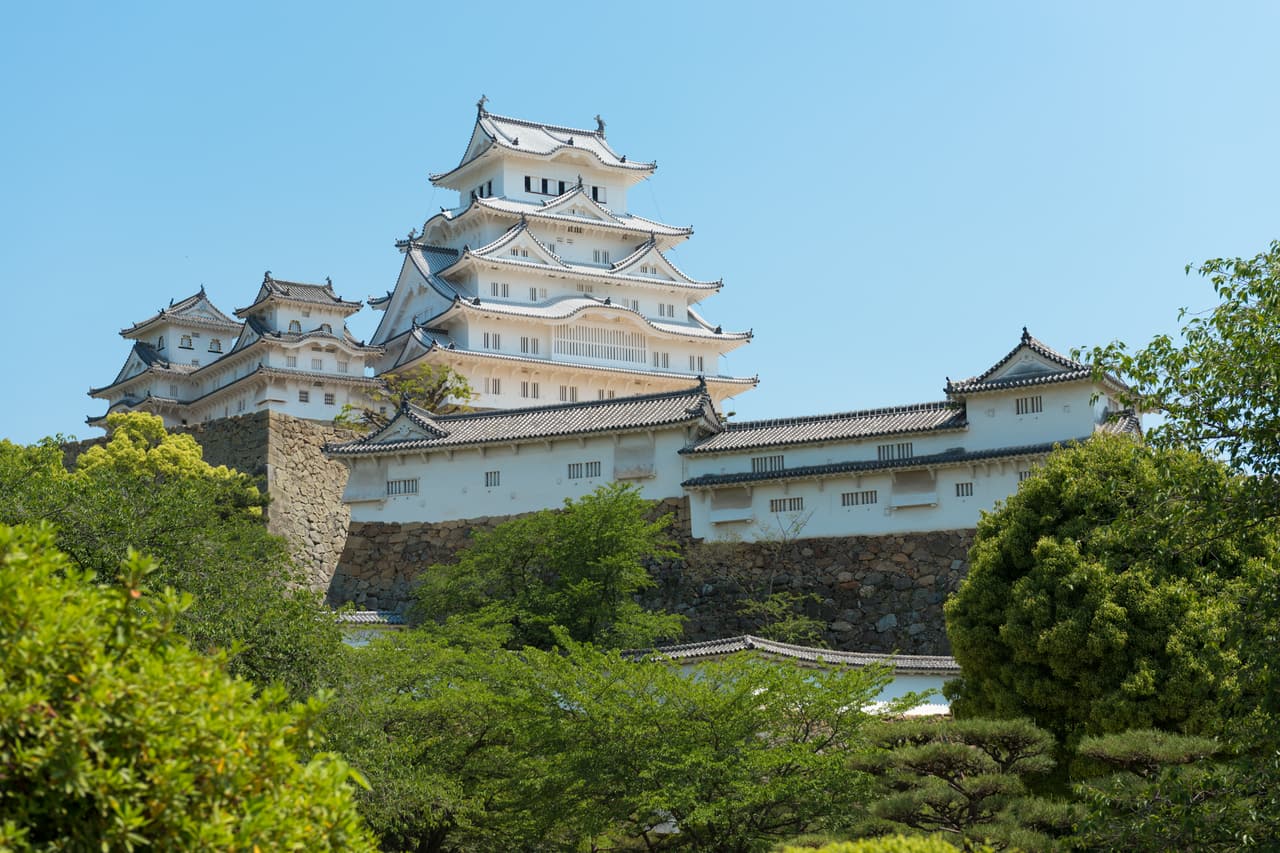
Himeji Castle (Hyogo) is the most iconic of the 12 in both fame and scale, its white main keep a World Heritage Site, within a day trip of Osaka and Kyoto by shinkansen — the easiest original keep to fit into a Kansai itinerary. A caveat: rechecked in August 2026, the official Himeji Castle site still makes no mention of gojoin at all, and even the event-limited version (such as the "Kyoka Suigetsu" release tied to an illumination) no longer has a live sales page — it redirects to the top page. So the standard keep version's sale point and price are confirm-on-site, and the figures circulating online for the event-limited version are not the standard price. For the March 2026 fee, the last-entry cutoff and the scaffolding standing until July 2027, see our guide to visiting Himeji Castle at ¥2,500.
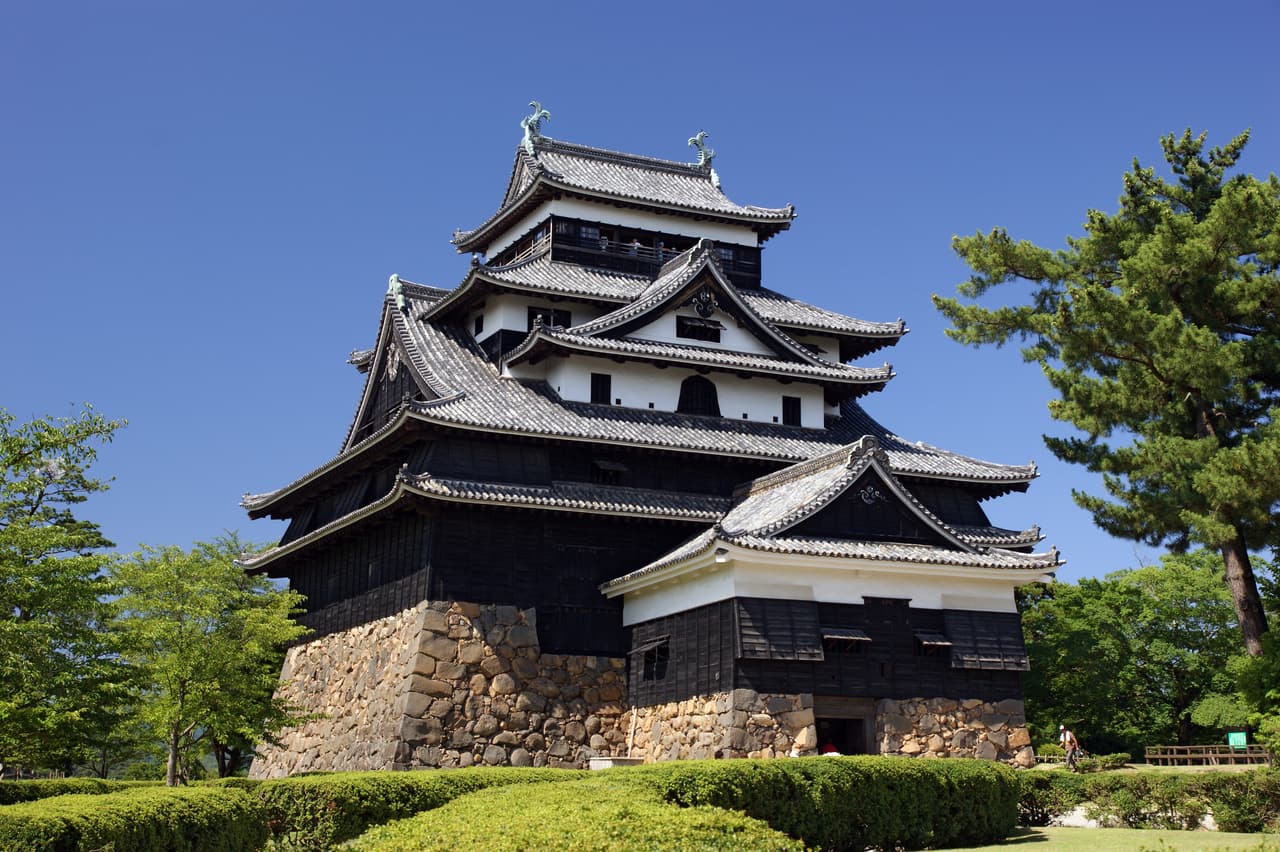
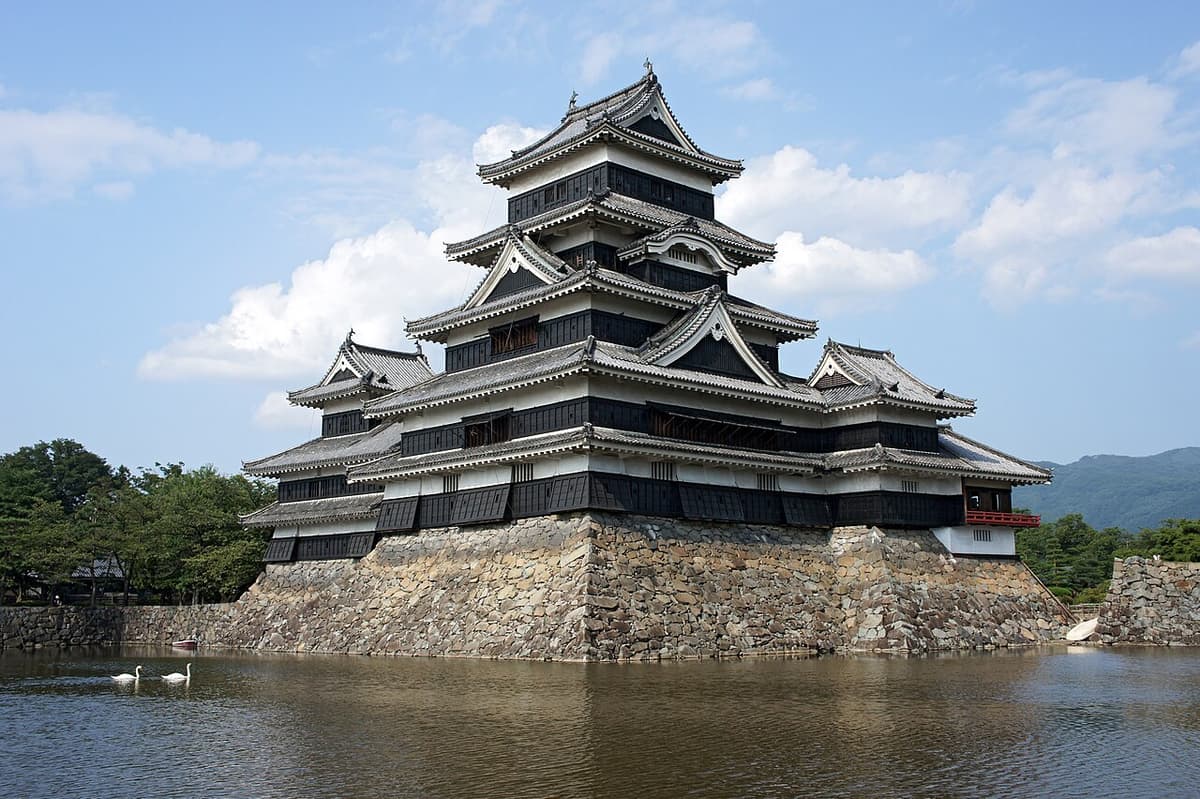
Matsumoto Castle (Nagano) is the most price-transparent — the official page states 300 yen for one design, 500 yen for two, sold at the Matsumoto Castle Management Office inside the paid area, so after touring the black National-Treasure keep you collect one on the way out. Matsumoto is about two and a half hours from Tokyo on the Azusa limited express, and pairs well with Kamikochi and Karuizawa. Details in our Matsumoto guide.
Hikone Castle (Shiga) has the advantage of being right on Lake Biwa, close to Kyoto — add a day to a Kansai trip and you have it. Gojoin are sold at the Omotemon ticket office or the Kaikoku Memorial Hall (which sells them until 16:45); the official page lists no amount, so confirm on site. For how to combine Hikone Castle with Lake Biwa into one day, see our Lake Biwa & Hikone guide.
Matsuyama Castle (Ehime) is in Shikoku, reached by ropeway or chairlift up to the Honmaru plaza, with gojoin sold at the plaza ticket window (the official page returned 404 when I checked, so the amount is confirm-on-site). Matsuyama's big bonus is that after collecting the gojoin you can soak at Dogo Onsen — a nicely paced day. See our Matsuyama & Dogo guide.
Nagoya and Kumamoto: side trips, but not original keeps
Finally, two hugely famous castles that are not among the 12 original keeps, because so many people confuse them. They are not "original wooden keeps surviving from centuries ago" but modern reconstructions — well worth a side trip, but understand their status before collecting a gojoin.
Nagoya Castle's keep burned in WWII air raids and was rebuilt in reinforced concrete in 1959, with a timber-restoration project now underway, so the keep you see (or will see) is not the Edo-period original. On gojoin: checking Nagoya Castle's official publications/souvenir and visitor-info pages, the official pages currently list no gojoin information (third-party claims about sale points and prices are unconfirmed by official pages and are not used here), so confirm on site. For a Nagoya day plan, see our Nagoya day-trip guide.
Kumamoto Castle is a different story — after severe damage in the 2016 Kumamoto earthquakes, its keep completed restoration and reopened in 2021, likewise not an original keep, but the reconstruction work is itself a lesson worth seeing. Here the gojoin prices are, by contrast, clearly official: a Ninomaru standard version at 300 yen and a Honmaru standard version at 300 yen (seasonal/event-limited versions extra), sold respectively at the Ninomaru rest house (9:00–17:00) and the Honmaru rest house (9:00–16:30, inside the paid area). For how to combine Kumamoto with Aso, see our Kumamoto & Aso guide.
One line to close: reconstructed keeps like Nagoya, Osaka and Kumamoto are perfectly fine to visit, photograph and collect gojoin at — their keeps are simply "rebuilt", different in nature from the 12 original keeps' original timber. Grasp that distinction and you will not mistake a reconstruction for an original relic, and you will understand the weight of the gojoin in your hand.
Frequently Asked Questions
- Q1:Can I paste gojoin into my goshuincho (goshuin book)?
- By convention, keep them separate. Gojoin are usually pre-printed separate slips (kakioki format) that may not even fit a goshuincho page, but the deeper reason is that the two are different in nature: a goshuin is a proof-of-worship record with religious meaning, while a gojoin is a visit souvenir closer to tourist memorabilia. Pasting a castle's commemorative stamp into a book dedicated to gods and Buddhas sits badly with purists, and some shrines and temples discourage it. In practice collectors keep a separate gojoincho (castle-stamp book) — there are dedicated collecting books (Marugame Castle, for example, sells an official gojoincho for about 2,800 yen incl. tax), or people file the kakioki slips in a folder or album. For a full intro to collecting goshuin, see our complete goshuin starter guide.
- Q2:What does "original castle keep" (genzon tenshu) mean?
- An original keep (genzon tenshu) is a castle main tower whose wooden structure has survived from the Edo period or earlier without being rebuilt after fire, war or demolition. Japan officially recognises only 12: Hirosaki, Matsumoto, Maruoka, Inuyama, Hikone, Himeji, Matsue, Bitchu-Matsuyama, Marugame, Matsuyama, Uwajima and Kochi. Their value is that the timber, beams and stairs are genuine centuries-old originals — climb one and the staircases are steep, narrow and the ceilings low, the real feel of an old building rather than a modern replica with a lift. Five of them (Matsumoto, Inuyama, Hikone, Himeji, Matsue) are further designated National Treasures. These 12 are also the most satisfying through-line for collecting gojoin.
- Q3:Do Nagoya Castle and Osaka Castle count as original keeps? What about their gojoin?
- Neither counts. Both keeps were rebuilt in the modern era — Osaka Castle's keep was reconstructed in reinforced concrete in 1931, and Nagoya Castle's keep burned in WWII air raids and was rebuilt in RC in 1959 (a timber-restoration project is now underway) — so neither is among the 12 original keeps. That does not make them not worth visiting or without gojoin — they are famous and easy to reach, and are great side trips; just understand that the keep you see is a reconstruction, not original timber. On gojoin: checking Nagoya Castle's official publications/souvenir and visitor-info pages, the official pages currently do not list gojoin information (third-party claims about sale points and prices are unconfirmed by official pages and are not used here), so confirm on site. For Nagoya as a day trip, see our Nagoya day-trip guide.
- Q4:Where do I buy gojoin, and how much do they cost?
- Almost always at the castle ticket office, the keep's reception, or a nearby tourism office — a separate purchase from admission, usually cash. On price, the honest answer: of the 12 original keeps, official verification found only 5 (Hirosaki, Matsumoto, Maruoka, Inuyama, Matsue) that print a price on their official web pages; the other 6 confirm sales but do not post an amount online, so it is confirm-on-site. Where officially priced, several sit around 300 yen (Hirosaki, Maruoka, Inuyama are all 300 yen; Matsumoto is 300 yen for one design, 500 yen for two). Matsue, with the most versions, runs from a standard hand-written 550 yen up to a limited National-Treasure edition at 1,000 yen. Budget about 300 to 500 yen for a standard stamp, more for limited or special formats, and carry small coins.
- Q5:Can gojoin be mail-ordered or collected by proxy?
- Most require buying in person, and mail-order rules vary by castle. Checking official pages, Uwajima Castle states plainly that it does not accept purchase requests by phone, email or letter (on-site only); Kumamoto Castle's official page also states it does not offer mail order. These two are the cases with an explicit official statement; most other castles say nothing online, which effectively defaults to in-person. As for proxy collecting, gojoin are more souvenir-like than goshuin and do not stress personal worship — but since they are mostly sold on site anyway, the practical move is to slot the castle into your itinerary and buy one at the ticket office on the day you climb it — the joy of a gojoin is, after all, that you actually climbed that keep.
Keep reading:
Is Himeji Castle worth ¥2,500? 2026 tickets & hours
Admission is now ¥2,500, and the city says entries fell 16.8% in month one — so it is quieter. But scaffolding stands until July 2027, and the gate stops admitting at 16:00, not 16:30.
Matsumoto Guide 2027: Matsumoto Castle, Nakamachi & Kamikochi Gateway
The old capital of Shinshu with National Treasure Matsumoto Castle — the black Crow Castle, the old streets, a Kusama museum, gateway to Kamikochi.
Goshuin Guide: Collecting Japan Shrine Stamps
How to start collecting goshuin: books, etiquette, fees, and a first-timer route.