Collecting goshuin is the single thing that most reliably turns a Japan trip from grabbing a torii photo into actually walking a shrine properly. Instead of snapping a gate and moving on, you complete the approach, pray at the main hall, then hand over a dedicated goshuincho and watch a priest brush the shrine name and date in front of you. But almost everyone gets stuck on the same five questions the first time: where to buy the book, whether to pray first, how much it costs, whether you get a hand-written or printed stamp, and whether someone can collect one for you. This guide answers all five using what official sources actually say — especially the most-searched one, cost. The short version up front: most shrines do not post a fee at all, and I will explain why, and what the one officially-priced example actually charges, so you set the right expectation. At the end I add a beginner first-book route through Kamakura and Enoshima that ties neatly into our Tsurugaoka Hachimangu and Enoshima guides.
- Goshuin = proof of worship, not a collectible stamp: pray first, then queue at the stamp desk — never the other way around
- Get a goshuincho ready: buy one at a shrine office, temple, stationery store (LOFT / Tokyu Hands) or online; palm-sized, accordion-fold
- Most shrines do not post a fee: confirm on site; the one officially-priced example, Kyoto Hachidai Jinja, starts at 500 yen and tops out around 2,000 yen for special formats
- Hand-written (jikagaki) vs kakioki: brushed live vs a printed sheet you paste in; peaks and priest-absent days often mean kakioki
- Proxy collecting is discouraged: the book can be mail-ordered, but the goshuin itself you collect in person
- Best first book: Kamakura and Enoshima — shrines are close together on one train line, so a single day fills several pages
Contents
What a goshuin is, and where it comes from
A goshuin is a kind of proof of worship issued by a shrine or temple. A priest or monk brushes the name of the shrine or temple, the enshrined deity or principal image, and the date of your visit into your goshuincho, then presses one or more vermilion seals — the shu (red seal) in the word goshuin refers to exactly those stamps. It is not a novelty stamp, and definitely not a sticker to grind through; it is evidence that you genuinely came and worshipped here.
Its origins are debated, but the most commonly cited theory traces it to nokyo — worshippers once copied and offered sutras at temples, and the temple returned a receipt of that offering, which was later simplified and extended to shrines, evolving into today's goshuin. Precisely because the root is offering and worship, the etiquette core never changes throughout: you must worship before you are entitled to a goshuin. I stress this at the very front because the recent craze of treating goshuin as tourist stamp-rallying genuinely troubles many shrines — some visitors now queue only to get the seal without praying. Please do not be that person.
One common misconception to clear up early: every goshuin is written for you in that moment, so no two are ever identical. The same shrine, a different priest, a different day — the brushwork differs, and that is the charm, and why it is a different category from a factory-printed souvenir. Many shrines now also issue limited-edition goshuin (seasonal, grand-festival or anniversary designs), often elaborate and often requiring a queue; collectors chase them. I cover this in the cost section, because limited versions usually cost more too.
How to buy and choose a goshuincho
The first step in collecting goshuin is having a goshuincho of your own. It is an accordion-fold (concertina) blank book that opens into one long strip and can be written on both sides, in roughly two sizes: standard (about 11x16cm, easy to carry) and large / oban (about 12x18cm, bigger canvas, better for grand hand-writing or double-page versions). For a first book I would pick the standard size — light, and a perfect fit for a bag.
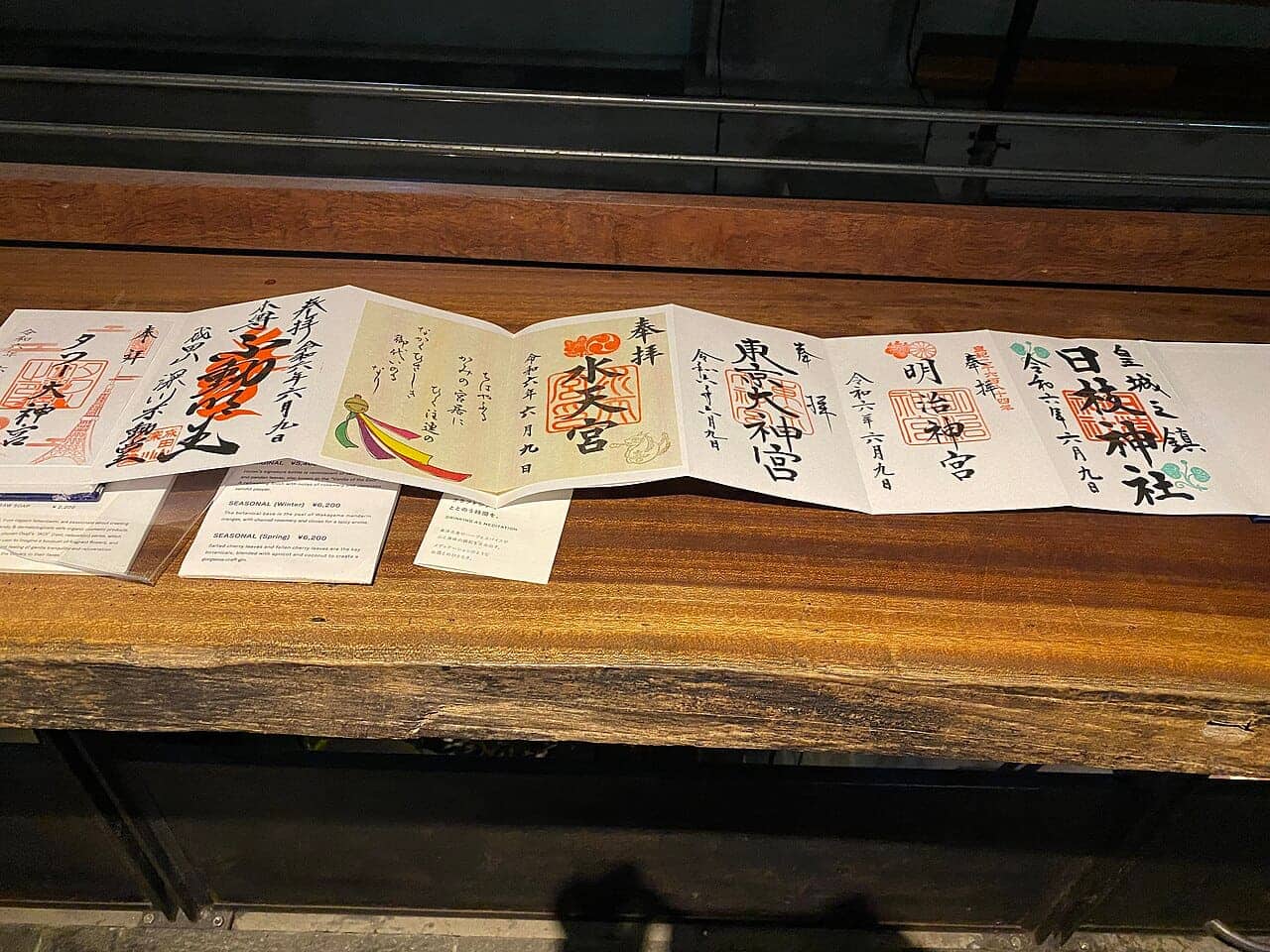
Where to buy? The main channels, with trade-offs:
- A shrine or temple office — the most meaningful way. Many shrines have their own designed goshuincho (covers often feature the shrine crest, a signature sight or a seasonal flower), and buying one as your first book is a lovely keepsake. On price, most sites do not post it, but one officially-priced reference is Kyoto Hachidai Jinja: standard 1,700 yen, large 2,000 yen, double-page 3,000 yen (per its official amulet_goshuin page) — roughly the common band you will see for goshuincho.
- Stationery and lifestyle stores — LOFT, Tokyu Hands and the stationery floor of big bookstores all stock them, with plenty of designs, good if you want to pick a pattern you love before setting out.
- Online (including official web shops) — Sensoji's official online shop (senso-ji.online), for example, sells blank goshuincho books (note: it sells only the book and amulets, not the hand-written goshuin itself). Buying one before you fly is entirely fine.
Choosing tips: first, paper quality — accordion-fold books with thick enough paper bleed through less, so hand-written ink does not seep to the back. Second, whether to keep shrines and temples in separate books — there is no hard rule, but some temples (certain Buddhist ones especially) prefer not to write in a book mixed with shrine goshuin, so purists keep one book for shrines and one for temples; if that feels fussy, a single book for everything is fine — your call. Third, the first page — traditionally many people leave the first page for Ise Grand Shrine or blank; not a hard rule, just something to be aware of.
One more option worth knowing about, because it has become genuinely practical: the okigaki holder — a pocket-style album made specifically for loose pre-written goshuin sheets. With more and more shrines issuing only pre-written sheets on ordinary days, stationery stores (LOFT, Hands) and online shops now sell sleeve-type albums where you simply slide each sheet into a clear pocket — no glue involved, and sizes usually track the standard and oban book formats. It is a different animal from the traditional accordion book: the accordion book is for hand-written pages, the holder is for loose sheets. My advice: still make your first purchase a traditional accordion goshuincho — the hand-brushed page is the heart of this hobby — and add a holder later once loose sheets genuinely pile up and pasting them in becomes a chore. The two coexist happily.
Etiquette and the desk process (4 steps)
Break the whole thing into four steps, and remember the core in one line: worship first, stamp desk second.
- Prepare your goshuincho: have the book ready before you enter, turned to the page you want (or marked with a ribbon), so you can hand it over at the desk without fumbling through it on the spot.
- Pray first, then queue: a goshuin is proof of worship, so complete your prayer at the main hall first — at a shrine the form is two bows, two claps, one bow, after purifying your hands and mouth at the water pavilion before entering; at a Buddhist temple you press your palms together without clapping. Only then head to the stamp desk (jusho). This is only the short version; for a step-by-step walk through shrine worship — the torii bow, the five temizu steps, the offering and two-bows-two-claps-one-bow, and which parts are official versus folklore — I wrote a full companion guide.
- Hand over the book and offer the fee: pass your goshuincho, opened to the right page, to the desk staff, and a simple "goshuin o onegaishimasu" is enough. The fee follows the notice posted on site, and please carry small coins — offering a large note and asking for change slows the whole queue and is not polite. A related heads-up: many shrine desks in Japan are cash only, so do not assume cards or mobile pay; how to keep coins and cash handy is covered in our Japan cash and mobile payment guide.
- Receive it and let the ink dry: a hand-written goshuin has wet ink, and the staff usually slip in a sheet of blotting paper, so do not snap the book shut or shove it into your bag; let it dry a little first. If what you receive is a kakioki (a separate printed slip), paste it flat into the book back at your hotel.
A few easy traps to avoid: do not rush the desk or lean over to stare while the priest writes — waiting quietly is basic courtesy; ask before photographing the writing process, which is banned in plenty of places; and during peaks (New Year, grand festivals, long weekends) many places switch to kakioki or number-limits, so do not take it personally — it is how they cope with crowds. Treat this as a proper act of worship rather than a stamp to grab on a tight schedule, and you will enjoy the collecting far more.
Hand-written vs kakioki vs mail order
There are two main forms your goshuin can take, plus the often-asked question of whether it can be mailed. Here is a table of the differences, who each suits, and the practical caveats (rules below drawn from the official pages of Sensoji, Enoshima Shrine and Hachidai Jinja, verified July 17, 2026):
| Form | What it is | Upside / who it suits | Watch out for |
|---|---|---|---|
| Jikagaki (hand-written) | You hand over your book and a priest brushes and seals the page live | Each one unique, with warmth; choose this for the ceremony of it being written for you | Needs waiting time; wet ink to protect; peaks or priest-absent days may switch to kakioki |
| Kakioki (printed sheet) | A pre-written / printed separate slip you paste into the book | Fast, uniform; efficient at peaks; limited editions often issued this way | You paste it in at home (glue stick / tape); per Hachidai Jinja this is normally an exception for when a priest is absent, not the default |
| Mail order | Sent via an official online desk | Lets you receive related items from overseas | At Sensoji the official online shop ships amulets and blank books only, not the hand-written goshuin; Enoshima Shrine states plainly it does not offer online distribution. Bottom line: the goshuin itself is almost always collected in person |
My take is blunt: get it hand-written whenever you can — that is the most rewarding part of collecting goshuin; only fall back to kakioki when the crowd is overwhelming or the shrine is only issuing printed sheets that day. As for mail order, treat it as a channel to restock a book or buy an amulet, and do not expect to mail-order the on-site hand-written goshuin — that runs against the whole point, and officials generally do not offer it.
⚠️ One caveat worth checking before you go: at some shrines kakioki is not a fallback for a busy day but the only thing on offer, as a matter of policy. Kanda Myojin in Tokyo is one — its official amulet page states it in Japanese, Chinese and English, the English reading word for word "Handwritten stamps are not available," at an offering of 500 yen. If you want to know what else that shrine is worth planning around, it has its own guide built around the festival it hosts.
What it costs, and why sites never post a price
This is the most-searched section of the piece and the one where I most need to be honest. You have probably arrived expecting a fixed 300 yen, or a 300 to 500 yen band. When I actually checked the official primary sources, the conclusion was this: most shrines simply do not publish the offering fee on their official websites at all.
Specifically, I checked the three most-visited: Meiji Jingu's goshuin page lists only the desk location (the Chodono in front of the Kagura hall) and hours (from 9:00 until closing), with no amount anywhere on the page; Sensoji's page notes there are two goshuin (the principal image Kannon, and the Asakusa Seven Lucky Gods Daikokuten), that the desk is at the Yogodo, hours 8:00 to 16:30, but likewise posts no price; Tsurugaoka Hachimangu does not even have a goshuin page on its official site, so no figure can be found. Which means one thing: the widely-repeated official 300 yen claim has no official basis from these three major shrines — between the three official sites, there is not a single figure.
So what should you budget? I found a rare example that prints prices right on the official site — Hachidai Jinja in Ichijoji, Kyoto (the shrine tied to the Miyamoto Musashi duel at Ichijoji Sagarimatsu). Its official amulet_goshuin page states clearly:
| Hachidai Jinja goshuin (official price) | Offering fee |
|---|---|
| Standard goshuin | 500 yen |
| Double-page (mihiraki, grand festival) | 800 yen |
| Monthly-changing goshuin | 500 yen standard / 800 yen double-page |
| Four-panel goshuin (special format) | 2,000 yen |
From this one officially-priced example, two things are clear: a typical single goshuin starts around 500 yen, and double-page, limited or special formats cost more, up to about 2,000 yen. But I must stress — this is one shrine's official price, not enough to generalise into a nationwide fixed rate. So prepare this way: budget about 500 yen per stamp, double for special formats, and carry small coins (100-yen and 500-yen coins are especially useful), and always confirm the real amount at the desk notice on the day rather than trusting an internet figure. This no-price-online, confirm-on-site situation is very common in Japan — not shops hiding prices, but the fact that a goshuin leans toward an offering rather than a priced product.
A beginner first-book route: Kamakura and Enoshima
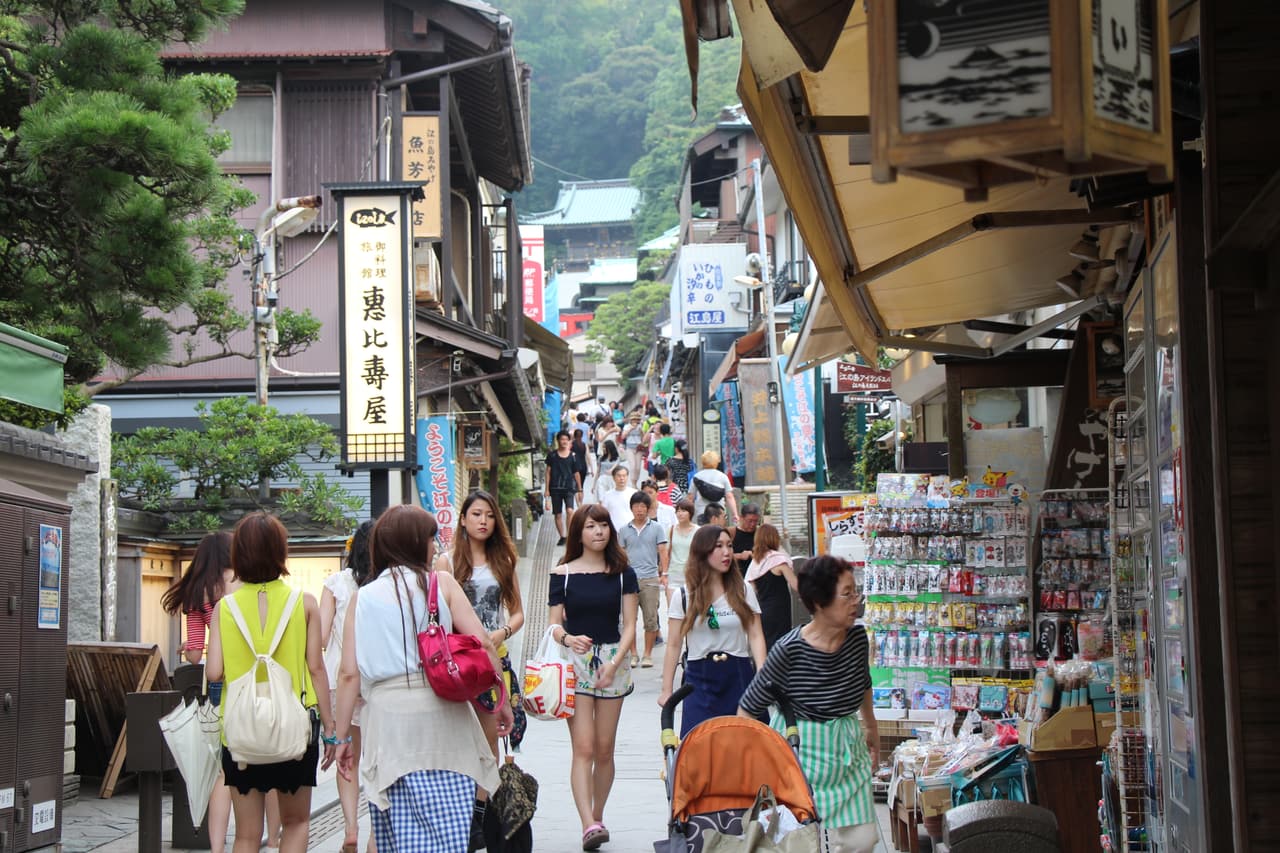
If I had to pick one place for a first goshuincho, I would send you straight to Kamakura plus Enoshima: shrines and temples cluster together, the route is a single Enoden train line end to end, and both are within a day trip of Tokyo, so you can fill several pages calmly in one day without rushing.
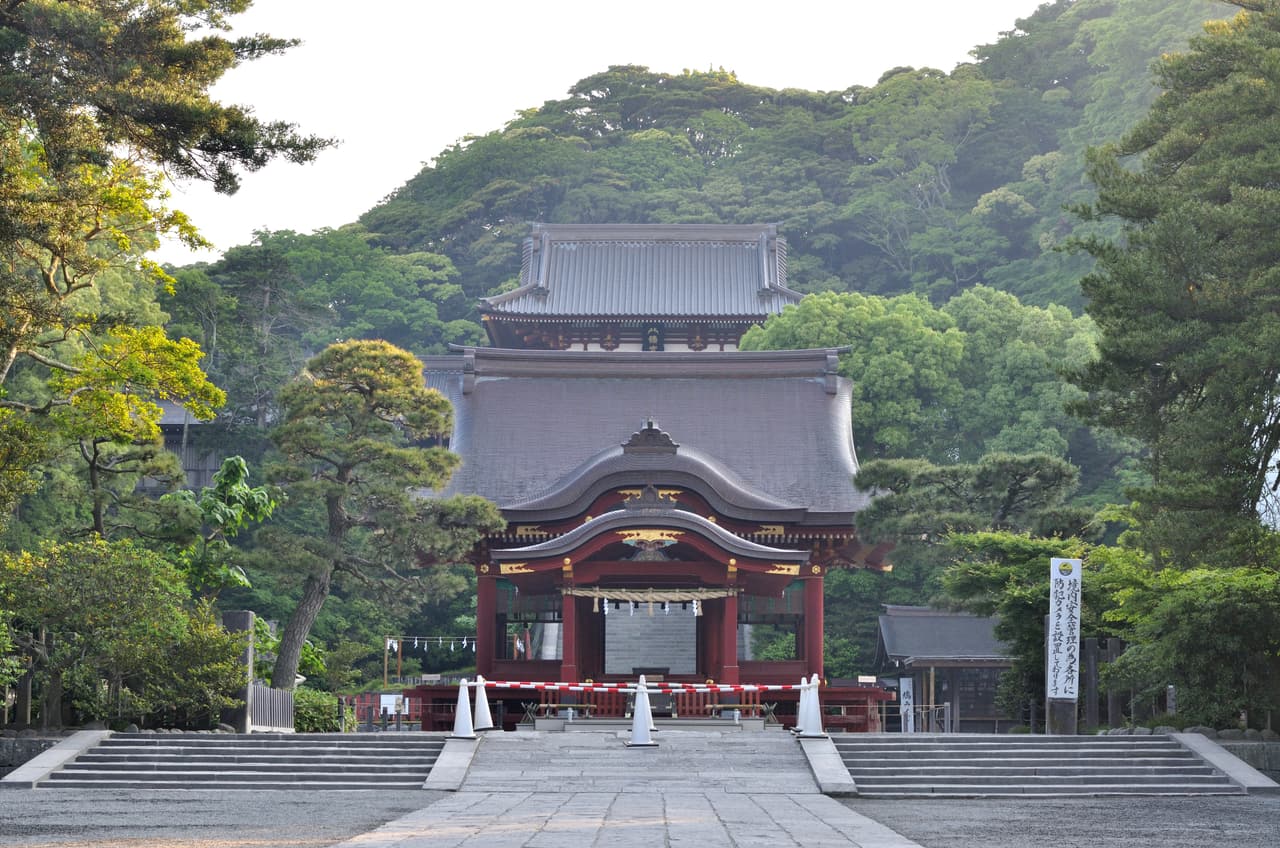
Full disclosure: I only started collecting goshuin recently myself, and my first book began right here in Kamakura and Enoshima. I chose it partly because it is easy to walk, and partly because the shrines on this line each have their own character: Tsurugaoka Hachimangu is Kamakura's spiritual heart, with generous grounds, ideal as a first stop to feel the rhythm of worship slowly (one caveat: it does not post a goshuin fee officially, so the amount is confirm-on-site — just carry coins; details in our Tsurugaoka Hachimangu guide). Ride the Enoden south to the end and up onto Enoshima, where Enoshima Shrine spreads along the approach across three halls (Hetsumiya, Nakatsumiya, Okutsumiya) — climb and worship your way up, collecting as you go, with a sea view to finish (the island's full plan is in our Enoshima day-trip guide).
Note that Enoshima Shrine has no standalone goshuin page on its official site and plainly does not do online distribution, so hours and whether it is hand-written or kakioki on the day are confirm-on-site — which is the best illustration of my running theme: do not rely on internet hearsay, confirm on the ground. For the route I would order it like this: Tsurugaoka Hachimangu first thing in the morning (quiet, and it opens at 6am), lunch along Komachi-dori, then the Enoden to Enoshima in the afternoon, finishing the island's goshuin just as the sunset arrives — by day's end your first book already has several pages written, and the sense of accomplishment is real. If you want to follow it stop by stop, I have expanded this line — including the two Kita-Kamakura Zen temples — into a full one-day goshuin collecting route with desk hours and fees for every stop.
There is one more format worth knowing about: limited-period pilgrimage circuits. These hand out a dedicated stamp book, run for a fixed window and reward completion, which turns goshuin collecting into a route rather than a series of one-offs. The most approachable is the Kyoto Sixteen Shrines circuit — January 1 to February 15, 300 yen per shrine, the dedicated book free, and a zodiac figurine for collecting all sixteen, with the membership list adjusted occasionally (one shrine changed from 2026). Its real value is that you do not have to fight the January 1 to 3 crowds; arriving in mid-January still leaves six weeks. Rules and desk hours are in the Kyoto New Year and hatsumode guide.
One last piece of mindset advice: do not rush your first book, and do not queue only to stamp without praying just to fill it fast. Walk slowly, worship properly, watch the priest set brush to paper, and you will find the real joy of goshuin is that it forces you to explore every shrine fully — which is far more interesting than filling a whole book.
Frequently Asked Questions
- Q1:What is the difference between goshuin and gojoin (castle stamps)?
- They are two different systems. A goshuin is a proof-of-worship stamp given by a shrine or temple: a priest brushes the name, the enshrined deity and the date by hand and adds a red seal, collected in a goshuincho, with roots in the old tradition of offering copied sutras. A gojoin (castle stamp), by contrast, is a recent trend — a visit commemoration issued by castle operators or local tourism offices, usually a pre-printed sheet bearing the castle name, family crest and visit date, closer to a souvenir than a religious record. In short: goshuin is about worship, gojoin is about commemorating a visit, and collectors often keep them in separate books. If you want the full picture of how castle stamps work, where to buy them and whether to mix them with goshuin, I wrote a companion piece: how gojoin castle stamps differ from goshuin.
- Q2:How much does a goshuin cost?
- Honestly, there is no single official answer: most shrines do not publish the offering fee (hatsuhoryo) on their official websites at all. I checked Meiji Jingu, Sensoji and Tsurugaoka Hachimangu directly, and none list a goshuin price — only the desk location and hours — so the familiar fixed-rate figure has no official basis from these major shrines. The simple takeaway: official pages mostly do not post an amount, so treat it as confirm-on-site at the desk and carry small coins. For the rare shrine that does print official prices, and how much to budget, I give a concrete named example in the main 'What it costs' section above.
- Q3:What is a kakioki, and how does it differ from a hand-written goshuin?
- A kakioki is a pre-written, pre-printed goshuin sheet: you receive a separate slip of paper and paste it into your book at home. A jikagaki (hand-written) goshuin, by contrast, is brushed live onto the page of the book you hand over. The difference: hand-written is made for you in the moment, with warmth and a short wait; kakioki is fast, uniform, and common during peak times or when no priest is available. Per Hachidai Jinja, hand-writing is the norm and a kakioki is only given in exceptions such as when a priest is absent — so it is not that every shrine defaults to printed sheets; it depends on the day. When you get a kakioki, do not stuff it into your bag; let the ink dry, keep it flat, and paste it neatly into the book back at your hotel.
- Q4:Can I ask a friend or family member to collect a goshuin for me?
- As a rule, no — and most shrines do not accept proxy stamp collecting. A goshuin is proof that you personally worshipped, not a souvenir stamp, so handing your book to someone else to collect on your behalf is not appropriate etiquette. As for mail order: at Sensoji, the official online shop (senso-ji.online) does sell things, but what it sells are amulets and blank goshuincho books, not the hand-written goshuin itself — meaning the book can be mail-ordered, but the stamp must be received in person. Enoshima Shrine states even more plainly that it does not offer online distribution. The conclusion is clear: a goshuincho can be bought online or by a proxy, but the goshuin itself you should collect yourself by worshipping — which is the whole point.
- Q5:What are typical goshuin desk hours?
- There is no nationwide standard — each place sets its own — but a good rule of thumb is that they follow the grounds or shrine-office hours, usually somewhere between 9am and 4 to 5pm. Concrete examples (all confirmed on official pages): Meiji Jingu issues goshuin at the Chodono desk in front of the Kagura hall, from 9:00 until closing; Sensoji at the Yogodo west of the main hall, 8:00 to 16:30 (extended during Shimanrokusennichi and the New Year); Kyoto Hachidai Jinja office 9:00 to 17:00. Practical tip: do not turn up in the final ten minutes before closing — hand-writing takes time, so arriving too late may mean only a kakioki or nothing at all. Weekday mornings are the calmest; avoid the New Year, grand-festival and long-weekend peaks. Check the day's official notice on your phone before you go.
Keep reading:
Tsurugaoka Hachimangu Guide 2026: Goshuin, Hours & More
Free to visit year-round, 6am–8pm, with the goshuin fee confirmed at the desk — plus the Sept 14–16 grand festival's yabusame archery and Komachi-dori's best snack stops.
Enoshima Day Trip 2026: Shrine, Sea Candle & Slam Dunk
Enoshima makes Kamakura's ideal sunset afternoon: Enoshima Shrine, the Sea Candle, the Iwaya caves and the Slam Dunk crossing. Passes and tips for 2026.
Kamakura Day Trip 2026: Great Buddha, Hasedera & Enoden
About 57 minutes from Tokyo on the JR Yokosuka Line — the Great Buddha you can step inside, Hasedera in hydrangea season, and the Enoden out to Enoshima.