The unlimited-travel bus pass most visitors still have in mind stopped being sold nearly a year ago. WILLER's official English page still carries the notice today, with all five ticket types marked Sold out. But the day after it closed, another nationwide pass opened for sale. ⚠️ That one is now unbuyable too. The JBL Pass site said on 8 September 2026 that the pass is sold out and that a new JBL Pass goes on sale on 1 October 2026; the previous year’s purchase window closed on 31 August. So right now there is no nationwide bus pass in Japan you can actually buy, and the price and conditions of the October version were still unpublished when this was updated. Treat the figures below as last year’s, useful for order of magnitude and nothing more: the All Day 3-day option went from 12,800 yen to ¥20,000 — up 56% — validity was cut from two months to one, and coverage expanded from WILLER's own two brands to an operator network reaching Shirakawa-go and Takayama.
So the first job of this guide is to put the current facts on the table: which nationwide pass exists today, what it costs, and how far it reaches. The second job matters more. Using official figures, this article shows you why most visitors on a 5-14 day trip should not buy any bus pass at all — and why overnight buses still deserve a place in your plan, for a reason that has nothing to do with saving money.
- The pass changed hands, it did not vanish — WILLER stopped selling on 30 Sep 2025; the JBL Pass purchase window opens from 1 Oct 2025.
- ⚠️ The date that matters most — the current JBL Pass edition closes for purchase on 31 August 2026, with a last departure date of 30 September 2026. Nothing has been announced for the following year.
- The break-even is brutal — All Day 3-day at ¥20,000 means roughly 6,667 yen of fare per day, against a lowest Tokyo-Osaka one-way of 3,300 yen.
- "3-row good, 4-row bad" is wrong — WILLER lists Prime and Relax as 4-row, and calls Prime its most comfortable 4-row seat.
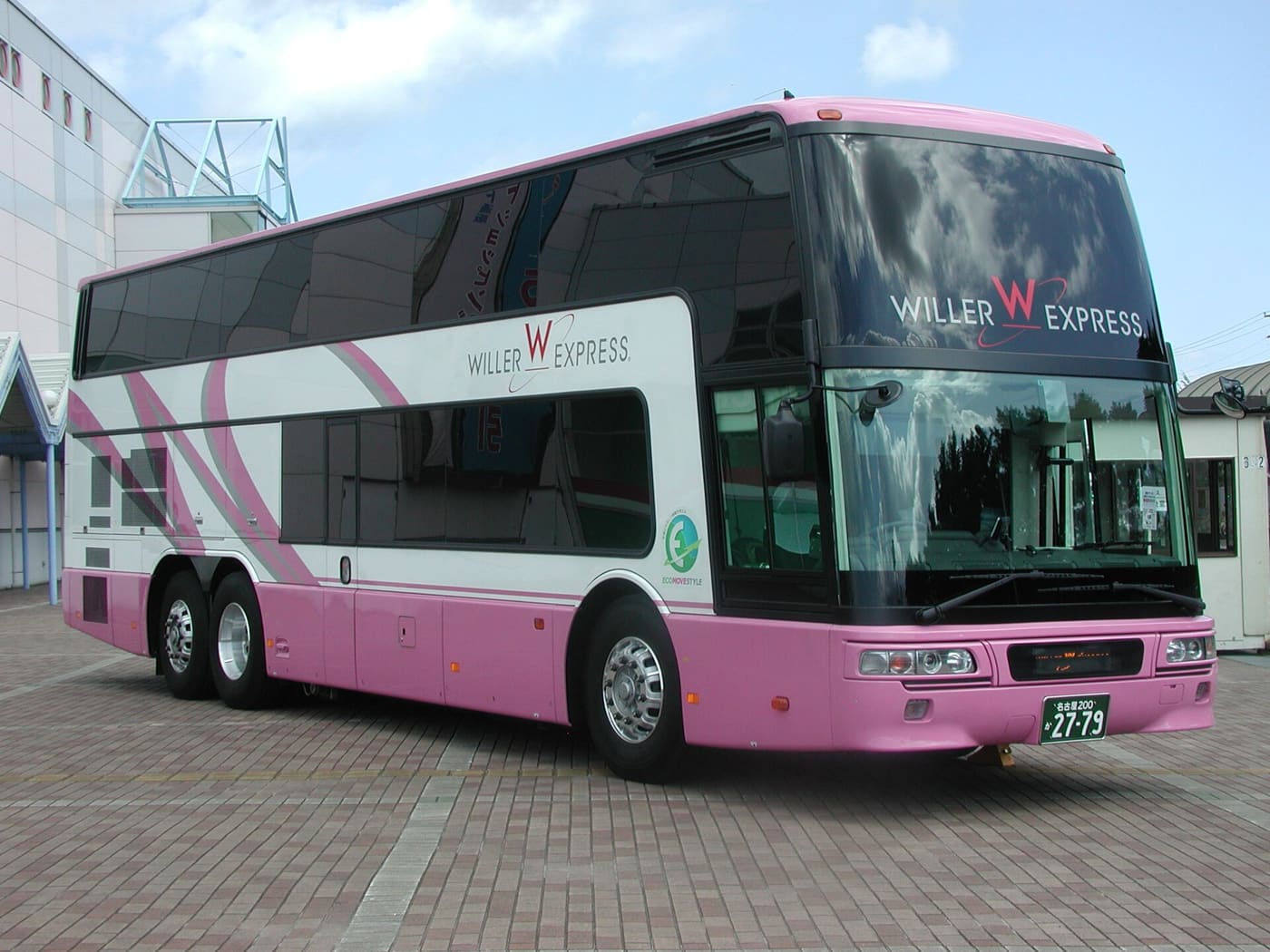
- Double-deckers have no luggage trunk — official policy, and the lower deck has no overhead racks either.
- Tickets open one month and one day ahead, at 10:00 am — count back from the day before travel, not from travel day.
📖 Contents
- The pass that changed hands
- Is a Japan bus pass worth it? The honest math
- Two regional passes you can still buy
- Why there is no fare table for Japanese buses
- Choosing a seat: row count is not the point
- When tickets open, where to buy, what you cannot change
- Cancellation fees: ten patterns from one company
- Luggage: the double-decker trap
- Are overnight buses safe? The regulation
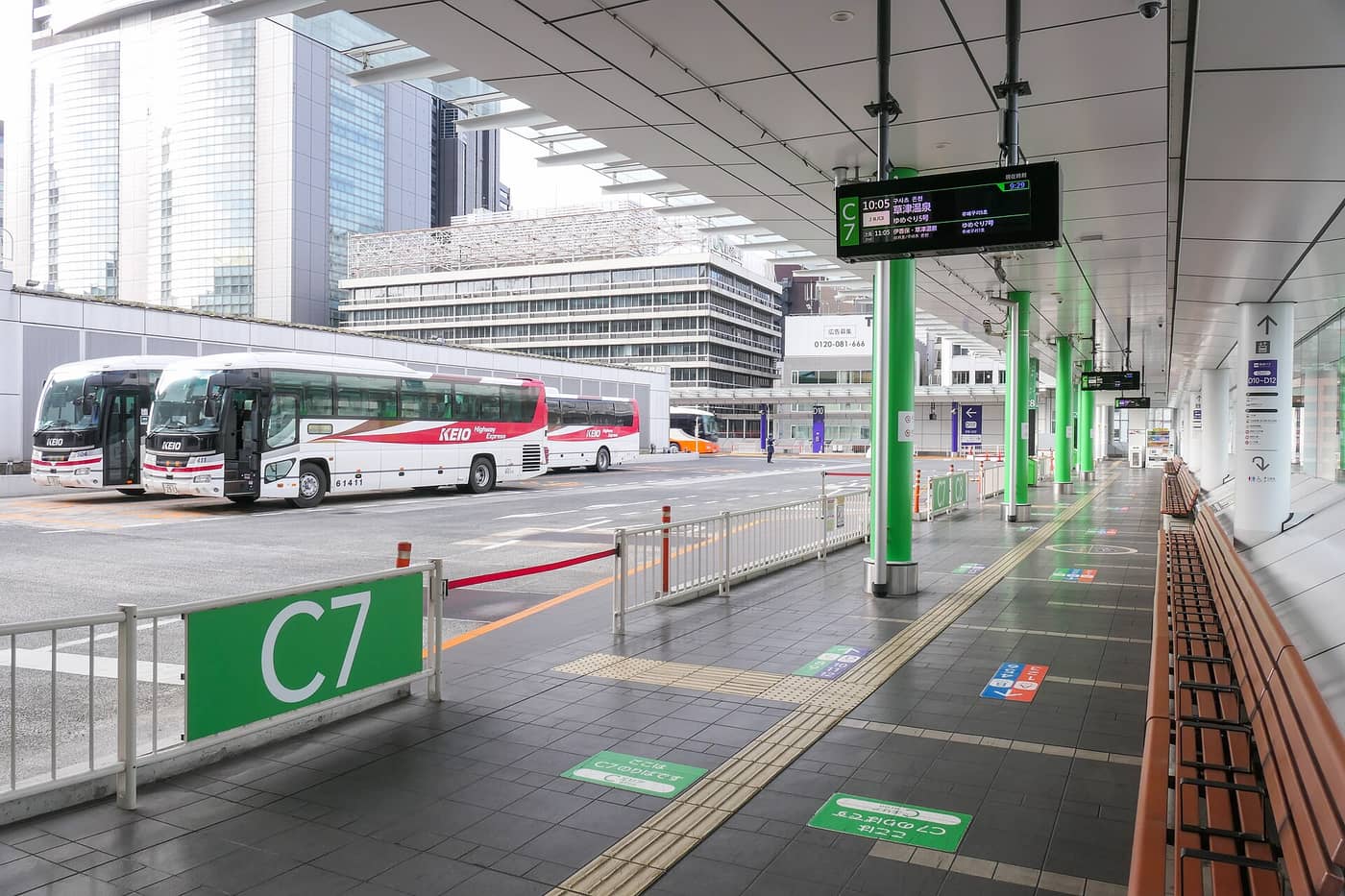
- Busta Shinjuku: floors, exits and counter hours
- Buses as a rail-disruption backup
- Who should ride, who should not
- FAQ
The pass that changed hands
Start with the primary source. WILLER's English Bus Pass page states it without hedging:
“The sale of the JAPAN BUS PASS will be discontinued after September 30, 2025. The pass purchased before that date will remain valid until the expiration date listed on the pass details page.”
The harder evidence is the page layout rather than the sentence: every one of the five ticket types shows "Sold out" beside its price. For the record, the pre-closure pricing was ¥10,200 / ¥12,800 / ¥15,300 for MON-THU 3 / 5 / 7 days, and ¥12,800 / ¥15,300 for All Day 3 / 5 days. Worth correcting a common misremembering: the old All Day tier never had a 7-day option.
What about passes already purchased? The operator says they stay valid to the expiry date on the pass details page. Since validity ran two months from purchase, applying that rule puts the last possible expiry at around 30 November 2025 — meaning no valid JAPAN BUS PASS is in circulation today. The operator never states that conclusion itself.
What opened the next day
The verified fact is a sequence: WILLER closed sales on 30 September 2025, and the JBL Pass purchase window runs from 1 October 2025. The two rulebooks overlap heavily — three buses per day maximum, at most one of them overnight, a minimum one-hour gap between services, use days that need not be consecutive, foreign passport plus membership plus credit card, and departures between midnight and 3:00 am counted against the previous day. But no official document from either company calls the JBL Pass WILLER's successor product. The timeline is evidence; the causation is an assumption.
More expensive, shorter, and much bigger
| Item | WILLER JAPAN BUS PASS (discontinued) | JBL Pass (current edition) | Change |
|---|---|---|---|
| MON-THU 3 days | ¥13,500 | +3,300 (+32%) | |
| MON-THU 5 days | ¥17,000 | +4,200 (+33%) | |
| MON-THU 7 days | ¥22,000 | +6,700 (+44%) | |
| All Day 3 days | ¥20,000 | +7,200 (+56%) | |
| All Day 5 days | ¥26,000 | +10,700 (+70%) | |
| All Day 7 days | Did not exist | ¥36,500 | New tier |
| Validity | Two months from purchase | One month from purchase | Halved |
| Operators covered | WILLER EXPRESS and STAR EXPRESS only | Self-described 60+ companies, 100+ routes | Greatly expanded |
| New Year blackout | Not listed | 20 Dec 2025 - 4 Jan 2026 unusable | Added restriction |
| Daily service cap | 3 buses (max 1 overnight) | 3 buses (max 1 overnight) | Same |
Flag the provenance on those coverage numbers: "60+ operators, 100+ routes, 35 prefectures" is the platform's own marketing claim, not an independently audited figure. That said, the direction is credible — the named member list on the official site includes Keio Dentetsu Bus, Meitetsu Bus, Nankai Bus, Odakyu City Bus, Keisei Bus, Kokusai Kogyo, Alpico Kotsu, Hiroshima Electric Railway, Nohi Bus and Iyotetsu Bus. The presence of Nohi and Alpico is the interesting part, because those two are how you reach Takayama, Shirakawa-go and Kamikochi — the corridor where buses are not the cheap option but the only sensible one.
Three more official rules shape how usable this pass actually is: it is sold only on the Japan Bus Lines website (not by phone, email or at bus terminals), it is ticketless (bring the booking confirmation and your passport), and missing your reserved bus means no standby seat on a later one. That last rule returns below when we look at buses as a disruption backup.
Is a Japan bus pass worth it? The honest math
There is an easy trap in writing about passes: because the pass is the topic, the article ends up arguing that the pass is good value. Run the operator's own numbers instead and the conclusion is not ambiguous.
The break-even: about 6,667 yen a day
Take the flagship tier. All Day 3 days at ¥20,000, divided by three, is roughly 6,667 yen of fare you must consume every day to break even. The 5-day at ¥26,000 works out to 5,200 yen per day and the 7-day at ¥36,500 to about 5,214 yen per day — note what that means: buying more days brings essentially no volume discount.
Now hold that against real fares. These are the "best highway bus fare (one way)" figures WILLER's own search page showed on 8 August 2026. They are promotional lowest fares, not fixed prices, and they move with the date:
| From Tokyo to | Lowest one-way shown | From Tokyo to | Lowest one-way shown |
|---|---|---|---|
| Osaka | ¥3,300 | Kanazawa | ¥3,970 |
| Kyoto | ¥4,000 | Aomori | ¥5,450 |
| Nagoya | ¥2,400 | Fuji Kawaguchiko | ¥2,200 |
| Sendai | ¥3,000 | Takayama | ¥8,000 |
| Niigata | ¥2,800 | Hiroshima | ¥5,590 |
| Wakayama | ¥5,500 | Source: WILLER official site, snapshot of 8 Aug 2026 | |
Tokyo to Osaka bottoms out at 3,300 yen. To justify the All Day 3-day pass you would need to consume nearly twice that, every day, for three consecutive days, on full-price rather than discounted routes. That is not an itinerary; that is a schedule built to rescue a ticket purchase. And because passes burn calendar days rather than travel days, a single rest day in a city wrecks the arithmetic entirely.
So when does an overnight bus actually earn its place?
It does, though the reason is not the obvious one. For a first trip of a week or less, especially with older parents or small children, my position in the 7-day first-timer itinerary stands: take the shinkansen. This guide is written for the other cases, and there are three of them.
- Places the shinkansen does not reach. Takayama, Shirakawa-go, Kamikochi, inland Shikoku — either there is no bullet train, or the transfer count makes the bus faster in practice. Look at the fare table again: Tokyo to Takayama is the most expensive route on it at 8,000 yen. That is the clearest evidence that the value here is directness, not cheapness. Access logistics for that corridor are in our Kamikochi access guide.
- Long, loose trips where time is cheaper than money. Two weeks or more with slack in the schedule is where the double saving — fare plus a night's accommodation — genuinely compounds. If you would rather trade time for money on the rails, compare it with the Seishun 18 break-even maths.
- Legs that were always going to be overnight anyway. If a stretch of your itinerary is dead time in the dark regardless, a bus converts it into progress.
Equally, three profiles we would actively steer away: light sleepers with a fixed commitment the next morning (a park opening, a reserved restaurant, a timed-entry attraction); anyone travelling with a large suitcase, for reasons that get their own section below; and anyone whose trip revolves around the Tokyo-Kyoto-Osaka corridor, where the real comparison is shinkansen versus domestic flights.
Two regional passes you can still buy
The JBL Pass is the only nationwide option, but two regional passes remain — and each has an advantage the national pass lacks.
Tohoku Highway Bus Ticket
Covers roughly 80 expressway and local bus routes across Tohoku's six prefectures (Aomori, Akita, Iwate, Yamagata, Miyagi, Fukushima) with 17 operators including Konan Bus, Iwate Kenkotsu, JR Bus Tohoku and Fukushima Kotsu. Regular-season 3-day pricing is ¥11,000 for the Northern Tohoku plus Miyagi version and ¥9,000 for Southern Tohoku, valid for 2 or 3 days of your choosing within one month of purchase.
Its real advantage is that the operator explicitly states there are no blackout dates. Set against the JBL Pass and its three blocked windows (New Year, Golden Week, Obon), that is a concrete difference when you are travelling in peak season. Obon is the one people underestimate: the expressway weekend discount is officially suspended over those dates, so the whole cost structure of road travel shifts that week. A 2-day version exists; check its price on the operator's page. A discounted winter rate ran from December 2025 to February 2026 at 8,400 / 6,500 yen — that window has closed, so treat those numbers as historical if you find them quoted.
Shikoku Highway Bus Pass
Covers seven expressway bus routes within Shikoku, operated by Tosa Den Kotsu, Iyotetsu Bus, JR Shikoku Bus, Shikoku Kosoku Bus, Okawa Bus and Tokushima Bus. Pricing is ¥10,000 for 2 days, ¥11,000 for 3 days and ¥12,000 for 5 days.
That pricing structure is genuinely unusual and worth a moment: going from 2 days to 5 days costs only 2,000 yen more. Per day that is 5,000 yen on the 2-day and just 2,400 yen on the 5-day — the exact opposite of the JBL Pass's near-linear pricing. It also has no daily cap on the number of buses (the JBL Pass allows three) and no blackout dates. Our reading is blunt: this pass only makes sense at the long end. The 2-day version has a per-day cost high enough that it is not worth considering.
As for WILLER itself, the navigation still shows a Bus Pass menu, but what is actually on sale is regional and sightseeing-oriented (a Shirakawa-go world heritage bus pass, a Kyoto Tango area pass). The nationwide product is gone. Check pricing and conditions for those two regional passes on WILLER's own page.
Why there is no fare table for Japanese buses
Japanese highway buses do not have a fixed, publishable fare table. That is structural, and the evidence is on the operators' own pages — JR Bus Kanto, Keio, Kintetsu Bus and the JR bus booking portal:
- Kintetsu Bus has announced a fare revision on the Kintaro-go and related services effective 1 October 2026.
- The JR bus booking portal posted a fare revision for the Dream Rurie service effective 1 July.
- JR Bus Kanto states formally that coupon books and round-trip discounts for highway buses have been discontinued.
- JR Bus Kanto's cancellation fee table is itself split between "ordinary tickets" and "advance-sale / discount tickets" — direct proof that one route carries several simultaneous prices.
The same route can vary by two or three times
Put two official snapshots side by side and this becomes concrete. WILLER's site showed a lowest Tokyo-Osaka one-way of 3,300 yen. The kosokubus.com platform — which describes itself as carrying over 3,000 daily services from around 160 operators nationwide — listed a reference band of roughly 7,000 to 9,000 yen for the same city pair at the same time.
These do not contradict each other, but they are also not strictly comparable: one is a year-round promotional floor, the other a reference range on a booking platform. What they teach together is the useful part — on a single route, your date, operator and seat class can move the price by a factor of two or three. Any article quoting "the" Tokyo-Osaka bus fare is reporting a momentary value.
Where the fare numbers stop
JR Bus Kanto's digital timetable and fare site does not open — it serves an SSL certificate issued for an unrelated domain. So there is no official JR bus fare here for Tokyo to Osaka, Nagoya or Sendai, for the Tomei Highway Bus, Grand Dream, Seishun Eco Dream or Dream Rurie services alike. Price those by date through the JR bus booking portal instead.
What that operator does publish as plain text is the institutional material — the sales-opening rule and the cancellation fee patterns — and both appear below.
Choosing a seat: row count is not the point
Here is the misconception this guide most wants to intercept. Seat selection usually gets reduced to a single rule: 3-row independent seats are good, 4-row seats are cramped. WILLER's own seat specification page dismantles that rule.
| Seat name | Rows per row, per the operator | What the official description emphasises |
|---|---|---|
| Dome | 3 across | Shell-shaped seats and canopies creating a private space |
| Prime | 4 across | Described as WILLER EXPRESS's most comfortable 4-row seat, a significant upgrade over Relax |
| Reborn | 3 across | Built around sleep; the pitch is turning travel into rest |
| Luxia | 3 across | Curtains between seats for a sense of privacy |
| Comodo | 3 across | Headrest stability is the selling point |
| Relax | 4 across | Hood that hides your sleeping face; noted as popular with women |
| Economy | 4 across | Sightseeing-coach style seat (STAR EXPRESS); not fitted on WILLER's pink buses |
The consequence: the "4 across" label covers the cheapest seat in the range and two upgraded ones simultaneously. Filter by row count and you will exclude the seat the operator itself calls its most comfortable. Sort by seat name and published specification; treat the row count as one field among several, not the verdict.
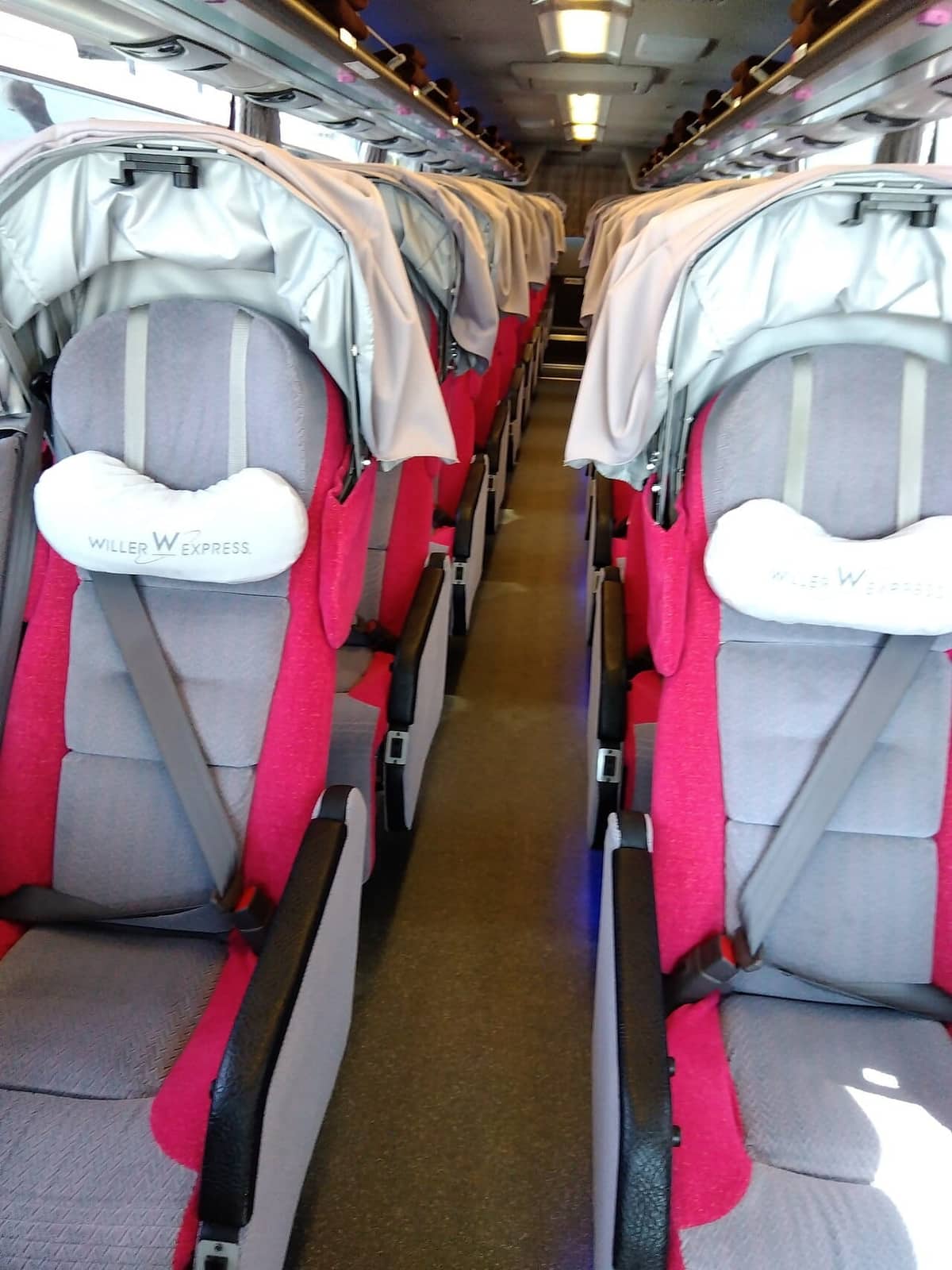
Two footnotes. First, if you have seen "reclines to about 150 degrees" quoted, that comes from a third-party booking site describing the generic "2-across wide seat" category — it is not the operator's specification for any of the seats above. Second, the industry does use a rough tiering of 4-across standard, 3-across independent and 2-across wide, which works fine as a mental map, but it is trade shorthand rather than an official or regulatory definition. For any specific vehicle, the operator's own page wins.
When tickets open, where to buy, what you cannot change
Sales open one month and one day ahead — count from the day before travel
This is the most practical detail in the article, and the reason a lot of people miss out on seats they thought they had timed correctly. JR Bus Kanto's official ticketing page specifies that one-way tickets go on sale at 10:00 am on the date one month before the day preceding travel.
Their worked example makes it unambiguous: travel on 1 May, the preceding day is 30 April, one month back gives a sale opening of 30 March — a day earlier than "one month before travel" would suggest. Other rows from the official conversion table: travel 1 January opens 1 December; travel 1 June opens 1 May; travel 1 November opens 1 October; and travel on 30 March, 31 March or 1 April all open on 1 March (29 February in a leap year).
Where to actually buy
No platform is being sold to you here; these are the channels, listed plainly:
- Operator websites — WILLER, the JR bus portal, Keio's highway bus site and others carry the fullest schedule and seat detail for their own routes. If you want to specify vehicle type and seat class, this is usually where the information is complete.
- Aggregator and comparison sites — kosokubus.com self-describes as covering roughly 160 operators and over 3,000 daily services, accepting credit cards, convenience store payment, PayPay, au PAY and atone deferred payment. Good for surveying the price band before committing to an operator.
- The JBL Pass site — note that the pass is sold only there: not by phone, email or at bus terminals. It is ticketless, so bring the confirmation email (printed or on your phone) plus your passport.
- Terminal counters — major terminals such as Busta Shinjuku have staffed windows and machines (hours below), but popular services are typically sold out well before departure day. Do not rely on this as a primary channel.
WILLER's 330 yen arrangement fee
Since 1 April 2025, WILLER charges an arrangement fee of ¥330 per trip on reserved-seat intercity buses. The operator's reasoning is that the arrangement is completed the moment the booking is, which is why the fee is not refunded if you cancel. One exception worth remembering: routes where the basic adult fare is 5,000 yen or less are exempt.
There is also a payment-method rule that catches people out: bookings paid with WeChat Pay or Alipay+ cannot be modified. You have to cancel and rebook — and pay the arrangement fee again. If those are your payment methods, lock your dates down before you commit.
Finally, WILLER treats the following "changes" as cancellations: reducing the number of passengers, changing or removing add-on options, changing passenger category (student to adult or back), changing passenger gender, and changing boarding or alighting points to a different fare section. Getting those fields wrong at booking can cost more than an email.
Cancellation fees: ten patterns from one company
The headline first: there is no national standard for highway bus cancellation fees in Japan. That is not evasion — it is the platforms' own position. kosokubus.com states officially that conditions differ by operating company and ticket type, and directs you to the cancellation and change policy on the booking screen. Any article giving you a single percentage is inventing a rule that does not exist.
What can be given is a sense of scale. JR Bus Kanto alone publishes ten separate patterns, under a heading that literally says the terms differ by route. The ones most relevant to visitors:
| Routes | Ticket type | Timing and fee |
|---|---|---|
| Tokyo / Shinjuku to Kyoto-Osaka-Kobe (Grand Hiru Tokkyu, Seishun Hiru Tokkyu, Grand Dream, Seishun Eco Dream) | Ordinary ticket | To 9 days before: 100 yen / 8-2 days before: 20% / day before to departure: 30% |
| Advance-sale / discount | To 12 days before: 100 yen / 11-9 days: 20% / 8-2 days: 30% / day before to departure: 50% | |
| Tokyo / Shinjuku to Kyoto-Osaka-Kobe (Dream Rurie) | Ordinary ticket | To 9 days before: 100 yen / 8-2 days: 10% / day before to departure: 20% |
| Advance-sale / discount | To 12 days before: 100 yen / 11-9 days: 10% / 8-2 days: 20% / day before to departure: 30% | |
| Tokyo to Kawaguchiko | Ordinary ticket | To 2 days before: 110 yen / day before to departure: 50% |
| Most suburban routes (Shinjuku-Fukaya Hanazono, Tokyo-Kashima Jingu, Tokyo-Narita Airport, Shinjuku-Tokyo Disney Resort and others) | All | 110 yen flat |
The counter-intuitive row is Tokyo to Kawaguchiko: a two-hour daytime route that charges 50% for a next-day cancellation, heavier than the ordinary ticket on a long overnight run. So the instinct that short routes cancel cheaply is simply wrong — always read the policy attached to the specific service.
Four more official rules to file away:
- Coupon books and round-trip discounts are discontinued. JR Bus Kanto states this formally, so buying a coupon book to save money is no longer an option.
- Suspended services refund automatically. Official wording: when a highway bus is cancelled due to disaster, road closure or similar and you could not travel, the refund is processed automatically with no application required. Useful to know in typhoon season.
- Online refunds have a cut-off. For web tickets on the JR bus portal, you can refund yourself online until two hours before departure from the first stop; after that it is counter-only, and the operator notes some routes close refunds as late as ten minutes before.
- Convenience store tickets carry an extra fee. Tickets issued via FamilyMart incur an administrative fee of 500 yen plus tax on refund, in addition to any cancellation charge — including refunds for suspended services.
Luggage: the double-decker trap
The rules below come from WILLER's official luggage policy — one operator's rules, not an industry standard — but the trap in it is entirely typical.
Sizes and piece limits (WILLER as the worked example)
- Trunk, one item: height plus width plus length up to 155 cm.
- Trunk, two items: 240 cm combined across all three dimensions.
- Piece limits: up to two items per person on WILLER EXPRESS; one item on its airport services (Narita-Ikebukuro, Narita-Osaki, Mishima-Haneda); one item on services operated by other companies.
- Carry-on: under 10 kg in total, each piece no more than 1 m long and 0.027 cubic metres, and everything must fit in the overhead rack or under your seat. The operator also warns that some seats have heaters underneath and that area can get considerably warm — worth knowing before you stow electronics or food there.
- JAM JAM EXPRESS is stricter: 120 cm total across the three dimensions and 10 kg per person, with the official note that oversized luggage means refused boarding and the usual cancellation fee still charged.
What you cannot bring
Prohibited in the cabin: blades of any kind and other objects usable as weapons. Prohibited both in the cabin and the trunk: petrol, kerosene, diesel, alcohol and other flammable liquids (lighters are permitted), film and celluloid products over 100 g, matches over 500 g, batteries (dry cells are fine), human remains, animals, and flammable, explosive, radioactive or corrosive substances and high-pressure or harmful gases, with fire extinguishers and medical oxygen excepted.
Three more that catch people: no pets at all, in the cabin or the hold; bicycles including folding ones are refused on WILLER EXPRESS and STAR EXPRESS, in the cabin and the trunk, though other operators may accept folding bikes — check individually; and skis, snowboards and golf bags have a size exemption on single-deck vehicles, but the operator lists more than a dozen companies that refuse them outright (including Kanto Bus, Kintetsu Bus, Nankai Bus, Nara Kotsu, Odakyu City Bus and JAM JAM EXPRESS). Guitar and bass-sized instruments can go in the trunk if bagged, but Kintetsu Bus, Hankyu Bus and JAM JAM EXPRESS do not accept them.
Are overnight buses safe? The regulation
"Does one driver do the whole night?" is usually answered with reassurance. It can be answered with regulation instead. Japan's Ministry of Land, Infrastructure, Transport and Tourism maintains a relief-driver deployment standard, applied in full to highway express buses since 1 August 2013.
Where the rules came from
The ministry's official page on safety measures following the Kan-etsu Expressway tour bus accident sets out the timeline: a safety and confidence recovery plan for highway and chartered buses adopted on 2 April 2013; the migration of "highway tour buses" into the new "highway express bus" category on 31 July 2013, on which date publication of the old operator list ended; full application of the relief-driver deployment standard in August 2013; and strengthened operation-management rules from May 2014. Every highway bus you can book today operates under that framework.
What the standard actually requires
The pre-existing thresholds still apply — a relief driver is required if duty time exceeds 16 hours, if driving time averaged over two days exceeds nine hours per day, or if continuous driving exceeds four hours. From 1 August 2013 the following layer was added on top, and this is the part that governs overnight services:
| Requirement | Daytime | Night |
|---|---|---|
| One-driver in-service distance limit | 500 km per run in principle (600 km where conditions are met) | 400 km per run in principle (500 km where conditions are met) |
| Continuous driving time | Roughly two hours on in-service expressway sections | |
| Consecutive duty | — | Four consecutive nights maximum (two if in-service distance exceeds 400 km) |
| Rest | At least 30 minutes total every 4 hours of driving | At least 30 minutes total every 4 hours in service; at least 40 minutes roughly every 4 hours beyond 400 km; at least one hour in total during runs over 500 km, divisible into blocks of 20 minutes or more |
| Driving time | Nine hours per run in principle; daily driving capped at a nine-hour two-day average | |
To extend a night one-driver run to 500 km, the published conditions are: an 11-hour rest secured before the run, or a continuous nap of at least one hour in a rest facility somewhere between the 100 km and 400 km marks, together with health reporting during duty and digital tachograph-based operation management. One calculation rule shows how tightly this is drawn: runs separated by less than one continuous hour of rest are not treated as separate runs; and if a driver works two night one-driver runs within a single day's duty, they count as one night run even with an hour or more of rest between them.
My take: this standard turns "are overnight buses safe" from a feeling into something you can check. Long night services must legally account for driver rotation and rest arrangements — that is not operator goodwill. Regulation is not the same as zero risk, but it does give you a measuring stick instead of an impression.
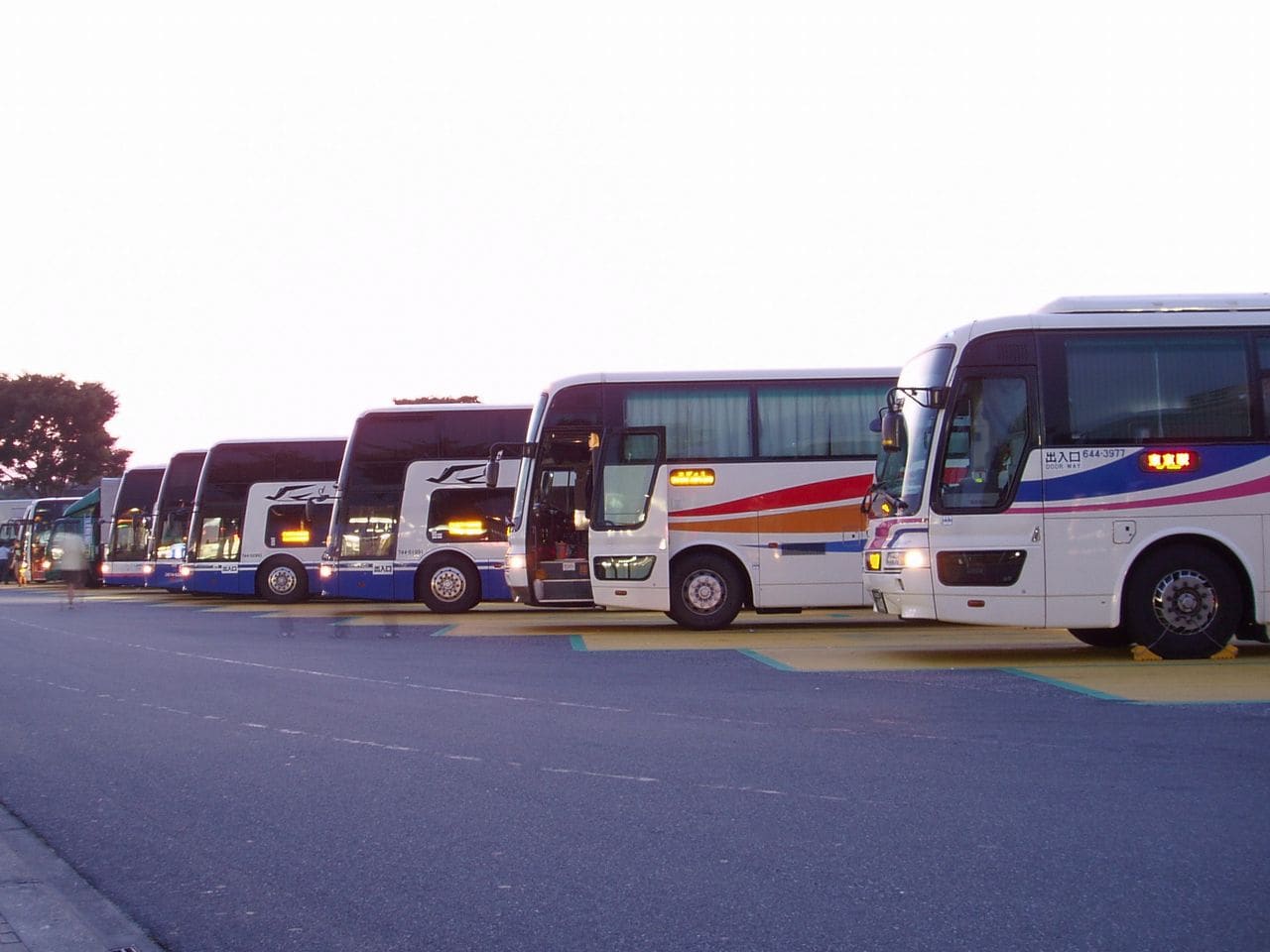
Busta Shinjuku: floors, exits and counter hours
Almost every Tokyo highway bus routes through Busta Shinjuku. Everything below comes from the terminal's own pages.
Floors and access
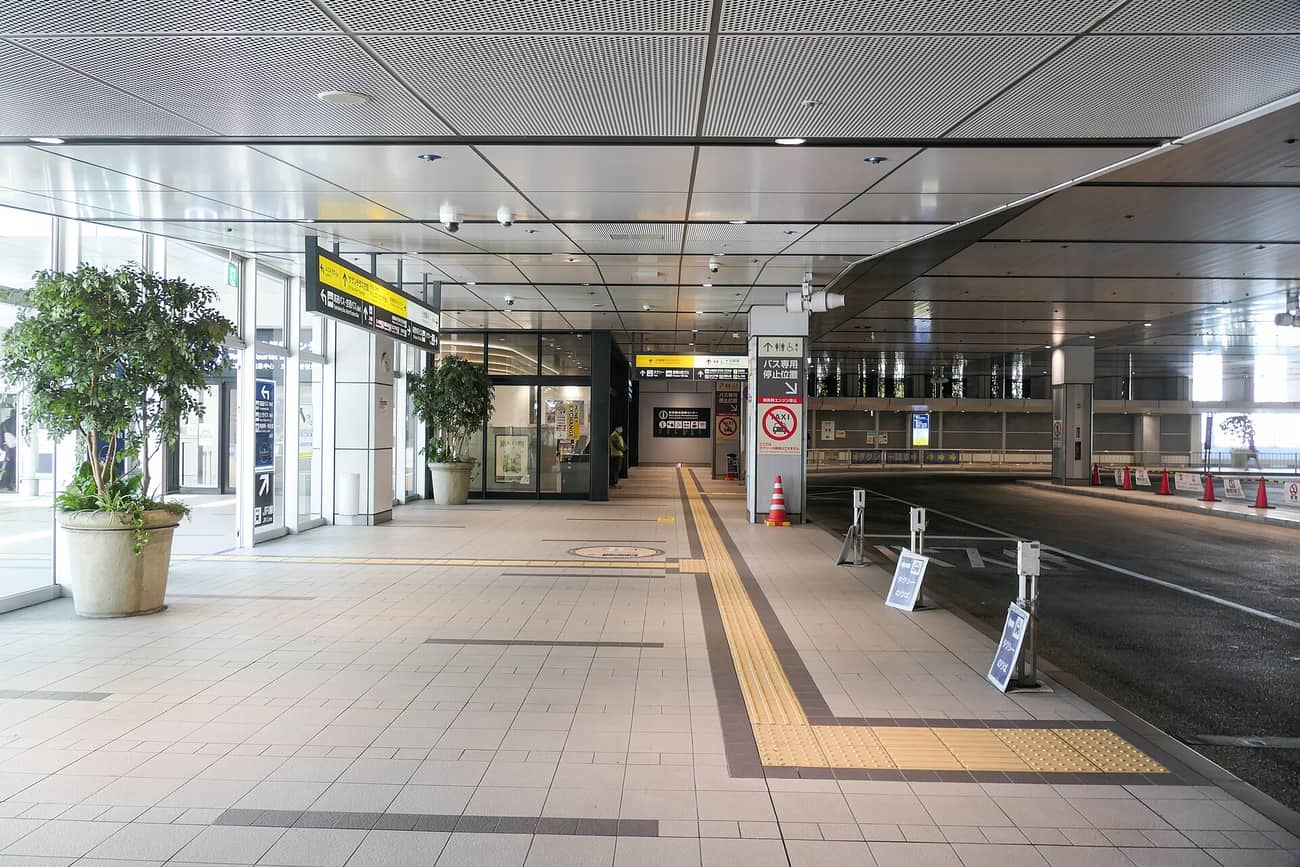
- 4F — highway bus boarding level: waiting area, information desk, ticket windows, ticket machines, coin lockers, ATM, accessible toilets, nursing room, women's changing room, convenience store and souvenir shop.
- 3F — highway bus alighting level.
- 2F — pedestrian deck and station facilities.
- Access: officially "directly connected to Shinjuku Station's New South Gate, 2 minutes" — but the New South Gate operates 5:45 to 24:00, and outside those hours you use the South Exit instead (4 minutes on foot). Odakyu South Exit 4 minutes, Keio's Keio Department Store exit 5 minutes, Toei Shinjuku and Oedo lines 5 minutes, Tokyo Metro Fukutoshin and Marunouchi lines 8-10 minutes.
- The terminal is entirely non-smoking, boarding guidance begins about ten minutes before departure, and buses depart on time.
Counter and shop hours (from the official Q&A)
- Staffed ticket windows: Highway.com 5:40-23:45 / JR bus portal 6:20-24:00 / Hassha Orai Net 6:20-23:55 / Limousine Bus 4:20-22:50.
- Ticket machines: most systems 5:00-24:00 / Limousine Bus 3:40-22:50.
- Shops: Daily Yamazaki 3:30-25:00 / THE Souvenir Shop 6:00-24:00.
Connectivity matters before arrival too: checking live schedules, reading the vehicle type and trunk availability on your booking page, and using that two-hours-before online refund window all require data. Comparison of the main providers is in our Japan eSIM guide.
Buses as a rail-disruption backup
Our guide to what to do when Japanese trains stop, published in August 2026, deliberately left one question open — it states outright that it verified nothing about highway bus or domestic flight rebooking and same-day purchase rules during rail disruption. This article is the place to close that gap, and the answer has official grounding.
On busy long-distance routes, it generally does not work. Two reasons:
- The seats went months ago. JR Bus Kanto opens sales one month and one day ahead at 10:00 am, and acknowledges services can be full at that moment. A route that sells out on opening day does not produce seats on the afternoon a rail line fails.
- Buses have no standby. The JBL Pass terms state that if you miss your reserved bus, you cannot board another. The rail habit of catching the next departure does not transfer.
So the correct posture is: highway buses are planned transport, not emergency transport. If your itinerary is genuinely fragile to disruption, the fix is buffer days and understanding substitute-transport (furikae) rules — not hoping a bus seat materialises. What to do in the moment, which costs the railway will and will not cover, and how substitute transport works are all in that guide.
Who should ride, who should not
Compressed into one table. This is our judgement, not an official position:
| Your situation | Verdict | Why |
|---|---|---|
| First trip, a week or less, travelling with parents or young children | Take the shinkansen | Time and energy are the scarce resources; the fare saved does not buy back tomorrow |
| Heading to Takayama, Shirakawa-go, Kamikochi or inland Shikoku | Take the bus — often there is no alternative | No bullet train, or a transfer chain that makes rail slower in practice |
| Two weeks or more, loose schedule, budget-conscious | Ride buses, but buy point-to-point | The fare-plus-accommodation saving is real; the pass break-even is still too high for you |
| Consecutive long-haul legs falling Monday to Thursday | The one case worth pricing a pass | MON-THU 3-day sets the bar at 4,500 yen a day, far below the All Day tier |
| Travelling with a large check-in suitcase | Verify the vehicle type before booking | Double-deckers have no trunk, and no overhead racks on the lower deck |
| Timed commitment early the next morning | Not recommended | Delay and sleep-quality risk eat exactly the thing you paid to reserve |
One closing thought about what this article is for. It is not selling you a pass; it is showing you how to decide — and on the operators' own numbers, most visitors on a 5-14 day trip should not buy one. Overnight buses earn their place in an itinerary, but the reason is that they carry you past the edge of the rail network, not that they save a few thousand yen. Get that straight and you will never again build a holiday around rescuing the cost of a ticket.
If you are comparing total transport costs across modes, the JR Pass break-even method and the expressway toll and pass structure for drivers apply the same logic to the other two options; read all three and your in-country transport budget is essentially solved.
Sort connectivity before you go: unlimited-data Japan eSIM (KKday) →Frequently Asked Questions
- Q1:Can I still buy the JAPAN BUS PASS?
- No. WILLER's official English page still carries the notice verbatim as of August 2026: "The sale of the JAPAN BUS PASS will be discontinued after September 30, 2025." More tellingly, all five ticket types on that page are marked "Sold out" — the buy buttons are closed, not just the announcement posted. WILLER also states that passes bought before the cut-off remain valid until the expiry date shown on the pass details page. Since validity ran two months from purchase, that means the very last passes expired around 30 November 2025 — so no valid JAPAN BUS PASS exists today.
- Q2:Is the JBL Pass the official replacement for the JAPAN BUS PASS?
- No official document says so. What is verified is the sequence: WILLER stopped selling on 30 September 2025, and the JBL Pass purchase window opens from 1 October 2025 — no gap in between. The rulebooks are strikingly similar (maximum three buses per day, at most one overnight bus, at least one hour between services, non-consecutive use days allowed, foreign passport holders only). But similar rules are not proof of succession. The timeline is a fact; the causation is not.
- Q3:How much does the JBL Pass cost, and can I buy one right now?
- ⚠️ As of August 2026, the current edition runs on these terms: purchase window closes 31 August 2026, the last eligible departure date is 30 September 2026, and validity is one month from purchase. Pricing is 13,500 / 17,000 / 22,000 yen for MON-THU 3 / 5 / 7 days, and 20,000 / 26,000 / 36,500 yen for All Day 3 / 5 / 7 days. Whether the pass returns for the year starting 1 October 2026, and at what price, has not been announced by the operator at all. If you are reading after the end of August 2026, check the Japan Bus Lines site directly rather than trusting these figures.
- Q4:Is a Japan bus pass worth it for a two-week trip?
- For most visitors on a 5-14 day itinerary, honestly, no — and the arithmetic is not close. The All Day 3-day pass at 20,000 yen divided by three days means you must burn roughly 6,667 yen of bus fare every single day just to break even. Meanwhile WILLER's own site showed a lowest one-way Tokyo-Osaka fare of 3,300 yen on 8 August 2026. To clear the bar you would need a long, full-price intercity leg every day with no rest days — and passes count calendar days, not travel days. The reliable method is to price every leg you actually intend to take, add them up, and only then compare. If the total is not comfortably above the pass, buy point-to-point tickets.
- Q5:Are 3-row seats always better than 4-row seats on Japanese buses?
- No, and this rule of thumb is the one most likely to make you pick the wrong ticket. WILLER's own seat specification page lists both Prime and Relax as 4-row seats, and describes Prime as "WILLER EXPRESS's most comfortable 4-row seat", a significant upgrade over Relax. Relax, also 4-row, has a hood you can lower over your face while sleeping. On the same page, Dome, Reborn, Luxia and Comodo are listed as 3-row, and Economy is a 4-row sightseeing-coach seat. So the "4-row" label covers both the cheapest seat and two upgraded ones. Filter by seat name and the operator's published specification, not by the row count alone.
- Q6:When do Japanese highway bus tickets go on sale?
- The rule is a day narrower than "one month ahead" suggests. JR Bus Kanto's official ticketing page states that one-way tickets go on sale at 10:00 am, one month before the day before your travel date. Their own worked example: travel on 1 May, the day before is 30 April, one month back from that puts the sale opening on 30 March. The operator also states plainly that "depending on the ticket type, a service may already be fully booked at the moment sales open". On popular overnight routes in peak season, take that literally.
- Q7:What is the cancellation fee for a Japanese highway bus?
- There is no national standard, so treat any single percentage figure you read as wrong. The booking platform kosokubus.com states officially that conditions vary by operating company and ticket type, and that you must check the cancellation and change policy on the booking screen. For scale: JR Bus Kanto alone publishes ten different fee patterns. On Tokyo/Shinjuku to Kyoto-Osaka-Kobe routes (including Grand Dream and Seishun Eco Dream), a discounted advance ticket cancelled between the day before and departure can cost up to 50% of the fare. At the other end, most short suburban routes charge a flat 110 yen. JR Bus Kanto has also formally discontinued coupon books and round-trip discounts.
- Q8:Are overnight buses in Japan safe? Does one driver do the whole night?
- You can answer this from regulation rather than vibes. Japan's Ministry of Land, Infrastructure, Transport and Tourism has applied its relief-driver deployment standard to highway express buses since 1 August 2013. For night operations, a single driver is limited in principle to 400 km of in-service distance per run, extendable to 500 km only when specific conditions are met — an 11-hour rest secured before the run, or a continuous nap of at least one hour in a rest facility somewhere between the 100 km and 400 km marks, plus health reporting during duty and digital tachograph-based operation management. There are also limits of four consecutive nights of duty (two if the in-service distance exceeds 400 km) and roughly two hours of continuous driving on expressway in-service sections. These are regulator-set standards, not voluntary operator policy.
- Q9:Can I take a large suitcase on an overnight bus in Japan?
- Check the vehicle type first, because of one trap: double-decker buses have no luggage trunk. WILLER's official luggage policy states that Executive, Value, some toilet-equipped buses and Sleeper vehicles have no trunk and cannot accept large suitcases — and that the first deck of a double-decker has no overhead racks either. The operator also notes that trunk availability depends on the seat and bus you booked, and is shown on the booking confirmation page. Size limits (WILLER as the example): one item up to 155 cm total of height plus width plus length, two items up to 240 cm combined; two items per person on WILLER EXPRESS, one on its airport routes and on services operated by other companies. JAM JAM EXPRESS is stricter at 120 cm and 10 kg per person, and states that oversized luggage means refused boarding with the usual cancellation fee still charged.
- Q10:If trains stop running, can I switch to a highway bus that day?
- On popular long-distance routes, usually not — and there is official grounding for that answer. JR Bus Kanto opens sales one month and one day before travel at 10:00 am, and acknowledges that services can already be full the moment sales open. A route that sells out on opening day will not suddenly have seats on the afternoon a rail line goes down. The JBL Pass terms are equally blunt: "if you miss your reserved bus, you will not be able to board another bus" — there is no standby. Treat highway buses as transport you plan in advance, not as a same-day fallback. Our separate guide covers what to actually do when trains stop.
Read next
When Your Train Is Cancelled in Japan: Refunds and Delays
A delay refunds the express surcharge only, never the base fare. But a one-hour departure delay also qualifies if you give up the trip.
Seishun 18 Ticket Winter 2026: Still Worth It?
Winter Seishun 18 tickets go on sale 27 Nov for use from 11 Dec. Since the 2024 overhaul it is one person per ticket on consecutive days: the break-even per day, 3-day vs 5-day, how it compares with the JR Pass and overnight buses, and who should skip it.
JR Pass 2026: Is It Still Worth It?
Four real routes calculated, six alternatives that may beat the Pass.