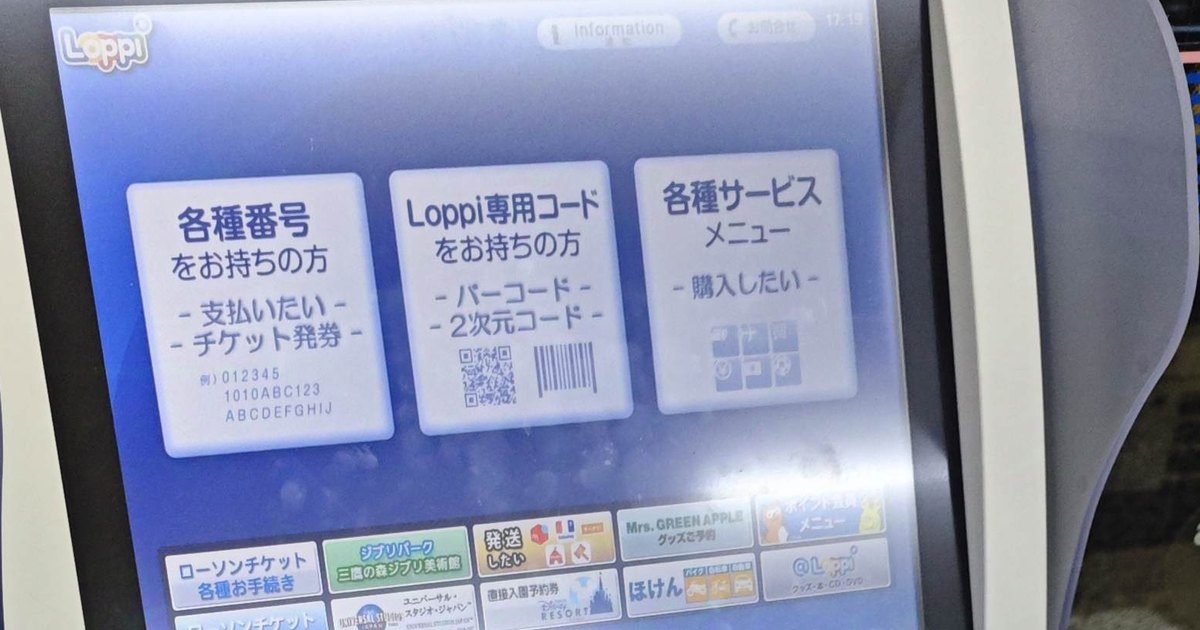
Here is the sentence that reframes the whole problem: you do not receive a piece of paper, you receive a 13-digit number — and which convenience store will take it is decided by the person selling to you, not by you. Ticket Pia's list of accepted payment routes includes 7-Eleven, FamilyMart and a third-party collection service, and pointedly does not include Lawson. Meanwhile Ghibli Park's single-area tickets can only be bought domestically at a Loppi terminal, which lives inside Lawson and MINISTOP. This guide covers the wall people hit at the final step of a Japanese online checkout: a number appears, you are told to pay at a convenience store, and then you discover the store has no English signage for this, the terminal is entirely in Japanese, and the register only takes cash. The three chains document their rules more clearly than you would expect. They simply do not agree with each other, and those disagreements are what this guide lays out.
- It is a number, not a bill: paper slips go to Japanese addresses; visitors get a 13-digit code on screen at checkout
- The seller picks the chain: Ticket Pia excludes Lawson entirely; Ghibli single-area tickets exist only on Loppi
- Cash only: 7-Eleven and Lawson state it explicitly (7-Eleven also takes nanaco); FamilyMart has never put it in writing
- The fee differs by chain: above 50,000 yen it is ¥440 at 7-Eleven and ¥550 at Lawson, which has announced an increase from 1 Sept 2027
- Two deadlines, one only 30 minutes: pay within 30 minutes of the terminal printing your slip; FamilyMart terminals shut down 01:30–05:30 every Tuesday and Wednesday
- The shortest route: on the 7-Eleven route the seller's official instructions let you simply read the 13 digits to the clerk — no terminal, no printing, no Japanese address or phone number
📖 Contents
- 1. One Japanese word, two different things
- 2. Who decides which store you can use?
- 3. Can you pay by card?
- 4. What the handling fee costs, and who bears it
- 5. The route that skips the Japanese terminal
- 6. Two deadlines, and the short one is 30 minutes
- 7. When a visitor actually hits this
- 8. Once you pay, it is gone
- 9. What official pages never say
- 10. FAQ
One Japanese word, two different things
Official documents call both of these a haraikomi-hyo, and the operation, the deadline and the eligible stores are different for each. Sort this out first or every rule below will read as a contradiction.
The first kind is a printed payment slip. Electricity, gas, telephone, water, NHK reception fees, national pension contributions and assorted taxes arrive this way: a barcode on the front, a list of accepted chains on the back. It travels by post to a Japanese address, which is precisely why a short-term visitor almost never sees one. When a traveller does hold one, it is usually a favour for a friend living in Japan.
The second kind is what you will actually meet: you select convenience-store payment at an online checkout and the system hands you a number on the spot. 7-Eleven gives this its own section and states that payment requires either a barcoded slip or a 13-digit number. On the FamilyMart and Lawson side you get two numbers — one identifying the service, one identifying your order — which you type into an in-store terminal.
| Aspect | Printed payment slip | Online konbini payment |
|---|---|---|
| How it reaches you | Posted to a Japanese address | On screen at checkout, plus an email |
| What you hold | Paper with a barcode | A 13-digit number, or two numbers |
| What happens in store | Clerk scans the barcode | Read the number out, or type it into a terminal and print a slip |
| Deadline | The date printed on the slip | The seller's deadline, plus 30 minutes at the terminal |
| Chance a visitor meets it | 🟡 Very low | 🟢 High, especially after a card declines |
Everything below concerns the second kind. If you genuinely are holding paper, the problem is easy: turn it over, look for the chain you plan to visit, and go somewhere else if it is not listed.
Who decides which store you can use?
The seller does, and the list almost always leaves someone out. This is the rule most likely to cost you a wasted trip.
The cleanest evidence sits on Ticket Pia's payment-methods page. The accepted routes are credit card, 7-Eleven, FamilyMart and e-context (which in turn covers convenience stores, Pay-easy ATMs, internet banking and Rakuten Edy), plus one deferred-payment service. Lawson does not appear. The same paragraph adds that available methods differ by performance — so even within one ticketing site, two events can offer different options.
The reverse case is just as clear. Ghibli Park tickets are sold domestically through the Lawson ecosystem: officially you can buy them at a Loppi terminal inside Lawson or MINISTOP, and 7-Eleven is not part of that route at all. GREEN×EXPO 2027's official ticket site, by contrast, lists five chains: Lawson, MINISTOP, FamilyMart, Seicomart and 7-Eleven.
So work in this order.
- Read the seller's list of accepted chains first. It lives on your purchase-complete screen or in the confirmation email — not on the convenience store's website.
- Then go and find that chain. Walking into an unlisted store achieves nothing, because the transaction does not exist in their system for a clerk to find.
- For a printed slip, check the back. Lawson asks customers to confirm that Lawson is named on the reverse of the slip or on the phone screen. FamilyMart is stricter still: paper slips must carry FamilyMart's name on the back, and phone screens must display FamilyMart's logo — only those are accepted.
Can you pay by card?
7-Eleven and Lawson say in writing that you cannot. FamilyMart has never put it in writing at all. This is the most asymmetric rule of the three, and the most expensive misunderstanding.
7-Eleven repeats one paragraph under each of its three bill-collection sections: payment is cash or nanaco only, followed by an itemised list of what will not work — transit IC money, Rakuten Edy, iD, QUICPay, credit cards, debit cards, barcode payments, QUO cards and various gift and shopping vouchers. It adds one more line worth knowing: invoice-payment features inside smartphone payment apps are not handled at convenience-store counters.
Lawson is blunter: cash only, with credit cards, electronic money, prepaid cards and barcode payments named as unusable. Its Loppi number-payment walkthrough repeats the rule at step four, spelling out that credit cards and electronic money cannot be used there either.
FamilyMart deserves an honest sentence rather than an assumption. Its payment-slip page contains no accepted-methods list, no fee table and no deadline. This guide will not import another chain's rules to fill that gap. The practical advice is simply this: assume cash before you walk into a FamilyMart. Being wrong about that costs you nothing, while being wrong the other way leaves you hunting for an ATM at the counter.
One caveat not to over-extend: nanaco has exceptions. 7-Eleven notes that some services cannot be paid with it, so the accurate statement is that 7-Eleven offers one extra option beyond cash, not that nanaco always works.
What the handling fee costs, and who bears it
The two chains that publish a table charge different amounts, and only one of them says outright that the customer pays. The numbers first.
| Bill amount | 7-Eleven | Lawson (current) | Lawson (from 1 Sep 2027) | FamilyMart |
|---|---|---|---|---|
| Under 10,000 yen | ¥110 | ¥110 | ¥132 | ⚪ Never published |
| 10,000 to under 50,000 yen | ¥220 | ¥220 | ¥253 | |
| 50,000 yen and above | ¥440 | ¥550 | ¥550 |
Read the bottom row twice. The same bill of 50,000 yen or more costs 110 yen more at Lawson than at 7-Eleven. The amount is trivial; what it proves is not. There is no national fee schedule — each chain sets its own. Whenever the seller's list gives you a choice of two chains, this row is your tie-breaker.
The wording is more revealing than the figures.
- Lawson says it plainly. Its increase notice, effective 1 September 2027, describes what is being revised as the customer-borne handling fee. Japanese corporate notices rarely name who pays quite that directly.
- 7-Eleven says a fee may arise. Its phrasing is conditional: in addition to the payment amount, a handling fee may be incurred.
- FamilyMart says nothing. No table exists on the payment-slip page.
Both chains with a table add that fees vary depending on the slip, and Lawson goes further by telling customers to check the fee shown on the register screen before paying. So use the table above to compare chains, and treat the register display as the real number.
One budgeting trap worth flagging: this fee does not appear in the total you saw online. The website showed you a ticket price; the store adds 110 to 550 yen on top. Small, unless you walked in with exactly the right notes in your wallet.
The route that skips the Japanese terminal
There is one, and it is unusually clean: go to 7-Eleven and read the 13 digits to the clerk.
Ticket Pia's official instructions for the 7-Eleven route say it directly — show the clerk a printed copy of the slip from the purchase-complete screen or My Ticket area, or tell the clerk the 13-digit payment number. Pay, collect your ticket, done. Any 7-Eleven in the country, 24 hours a day.
For a foreign visitor this removes four barriers at once.
- Nothing to print. The number on your phone screen is enough; copy it onto paper if that feels safer.
- No Japanese-language terminal. You never leave the register.
- No Japanese address or phone number. The number is issued on screen at checkout, so nothing has to arrive by post or SMS.
- No Japanese-issued card. You are paying cash.
If reading digits aloud in Japanese worries you, the safest move is simply to turn your phone screen towards the clerk. Japanese uses the same Arabic numerals you do, so there is no room for a misread.
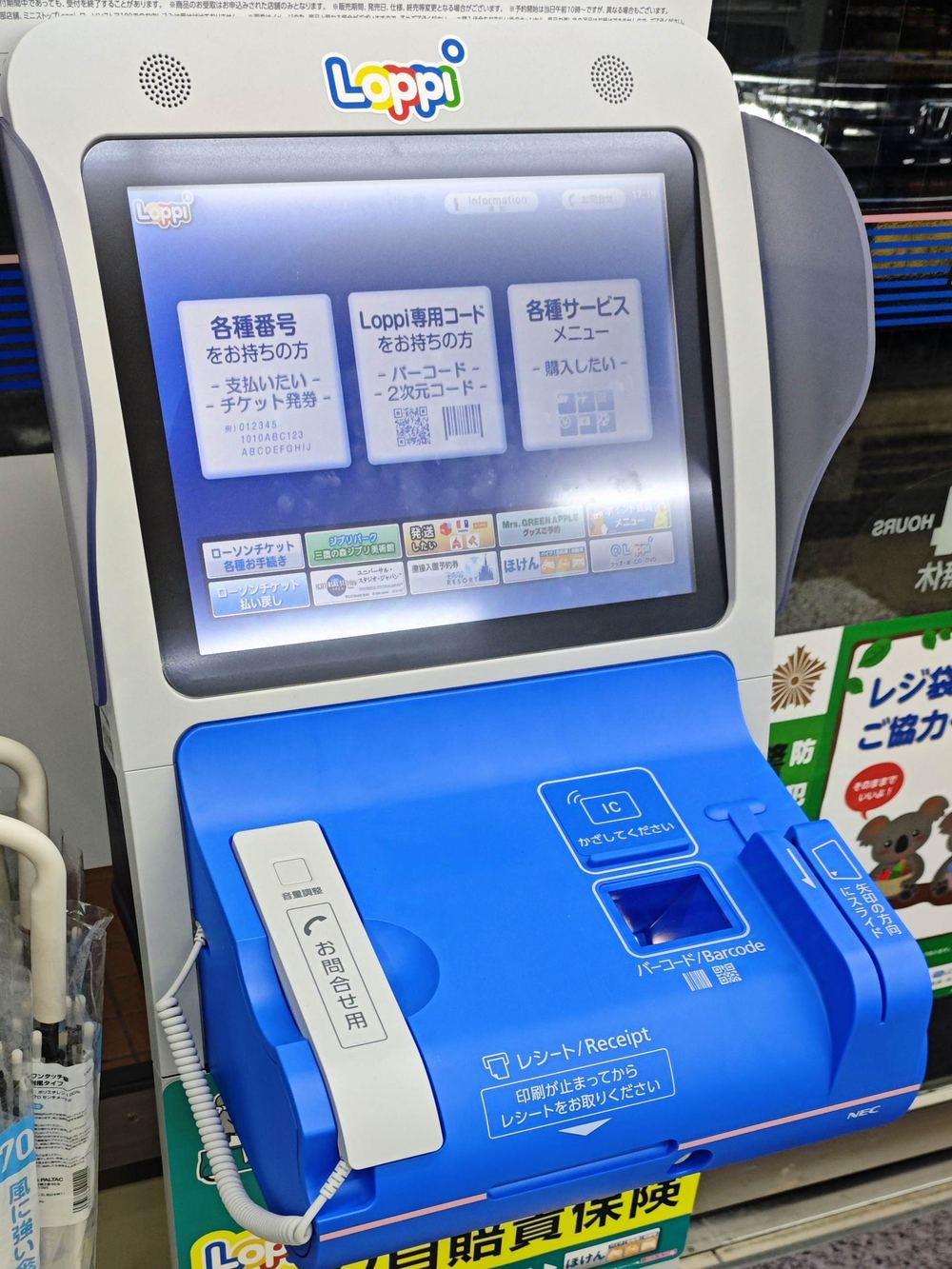
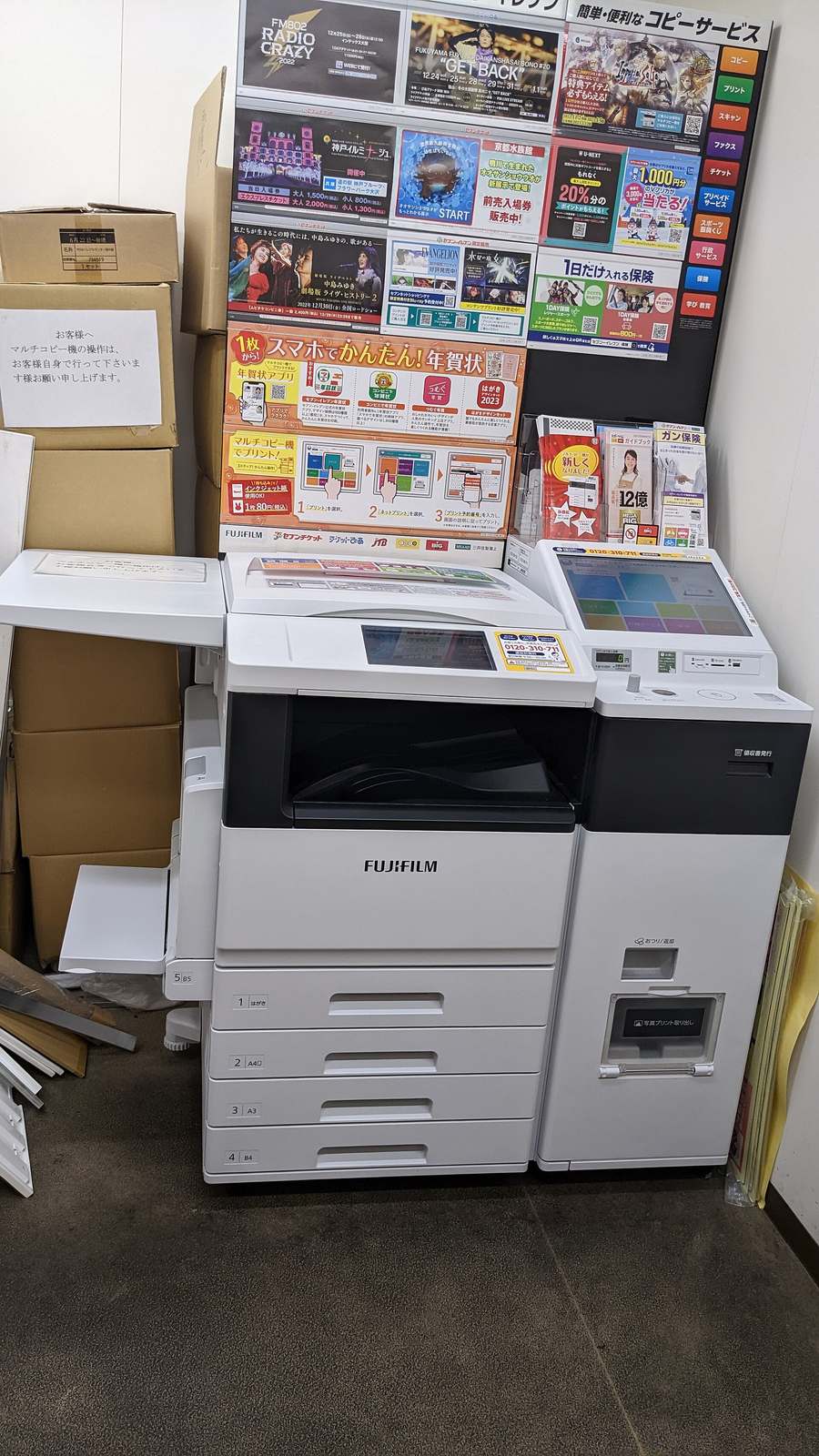
When the list offers only FamilyMart or Lawson, the terminal is unavoidable, and the official steps are specific. At FamilyMart you complete the transaction on the multi-copy machine, which prints an M Copy Service application slip to hand over at the register. At Lawson you touch the option for customers holding numbers, enter the two numbers, confirm the details, print the application slip, pay cash at the register, and take away a customer copy. Keep that copy — Lawson explicitly asks you to take it home together with the transaction receipt issued at the register.
Two deadlines, and the short one is 30 minutes
The seller gives you days; the terminal gives you 30 minutes; the two have nothing to do with each other. Most people only see the first one, then get bitten by the second.
Deadline one: whatever the seller set
Length varies enormously because the seller decides it. Official tickets for GREEN×EXPO 2027 must be paid by 23:59 on the third day counting from the purchase date — three days, no more. Concert lottery winners get a window that depends on the performance. The lesson is not to memorise any number but to open that confirmation email straight away, find the date and put it in your itinerary.
Ticket Pia states the consequence with no softening: tickets not paid for within the payment period become invalid. Not postponed, not surcharged — void.
Deadline two: the 30-minute countdown on the application slip
This one exists only on the terminal route. Once the machine prints your application slip, you have 30 minutes to pay at the register. Lawson's Loppi walkthrough states it at step four, and Ticket Pia's separate description of the FamilyMart flow states the same 30-minute limit — two independent official sources landing on the same number.
Half an hour sounds generous until you remember that the countdown starts when you press confirm, and that convenience-store queues build at lunchtime and after work. Check the queue and count your cash before you touch the machine. Do it in the other order and you will be standing in line holding a slip that is expiring.
And a time-of-day trap: FamilyMart shuts down twice a week
Ticket Pia's FamilyMart section notes that payment is available 24 hours at any FamilyMart with a multi-copy machine, except between 01:30 and 05:30 every Tuesday and Wednesday.
To a Japanese resident that is a non-event. To a visitor it is the opposite — being wide awake at 2am and walking to a convenience store is one of the most predictable things that happens on a first trip to Japan, and that is exactly when the machine is down for maintenance. If you need to pay in the small hours, use the 7-Eleven route, which is documented as 24 hours with no maintenance window noted.
When a visitor actually hits this
Usually when your card fails, or when the seller only sells domestically. No guesswork is needed here — the official lists of payable services spell it out.
| What you are doing | Why konbini payment appears |
|---|---|
| Booking a domestic flight | Japan Airlines and ANA both appear on the official payable lists at FamilyMart and Lawson |
| Booking a highway bus | Kosoku Bus Net, Highway Bus Dot Com, Hassha Orai Net and WILLER all appear on those lists |
| Winning a concert or theatre lottery | Ticket Pia states the 13-digit number arrives in the lottery-result email |
| Buying official event tickets | Payment is often credit card or domestic convenience store only — if the card fails, the store is all that is left |
| Online shopping | Amazon, Yahoo Shopping, Rakuten Ichiba, Yodobashi, Mercari and Paidy all appear on the lists |
One correction to something I published earlier, because it deserves to be stated rather than quietly amended. The GREEN×EXPO 2027 guide concluded that domestic convenience-store payment effectively does not exist for a reader sitting in Taiwan. That is true right up until you land. A three-day payment window is an obstacle from abroad and a perfectly workable route once you are in the country with a train ride to the nearest 7-Eleven.
And what usually pushes you onto this route is the card. The guide to booking Japanese trains online works through the same barrier from the other side: all three JR booking systems treat 3D Secure as mandatory, and e5489 states outright that virtual cards and cards without an IC chip cannot collect tickets. That guide is about the card failing. This one is about what you do next.
Ghibli Park is the other classic case. Single-area tickets are officially sold inside Japan only, and the domestic route runs through Loppi terminals in Lawson and MINISTOP — which means the machine described in section five is the one standing between you and that ticket.
Once you pay, it is gone
No refunds, and all three chains say so separately.
- 7-Eleven: a payment slip that has been paid cannot be refunded.
- Lawson: a slip once paid cannot be refunded.
- Lawson's Loppi number-payment page: refunds and cancellations after in-store payment are not accepted.
Three independent statements of one rule is itself the message. The store is collecting on someone else's behalf, so once the money is in, any refund discussion goes back to the seller — whose cancellation policy is a separate matter entirely, and for some products does not permit cancellation at all.
So before you press confirm on the terminal, or hand the number to a clerk, check the date, the session, the quantity and the amount twice. Ten seconds, and it is the highest-return action in this guide.
Afterwards, keep two pieces of paper: the transaction receipt from the register and the customer copy from the terminal. Lawson asks for exactly that. If anything goes wrong and you have to argue with the seller, those two slips are your only proof that money changed hands.
What official pages never say
This section lists what could not be verified, because saying so is more useful than burying it.
- Terminal language support. Neither Lawson's Loppi page nor FamilyMart's multi-copy machine page mentions language options, and 7-Eleven's English site for inbound visitors never mentions bill collection at all across the two pages checked. So this guide claims neither that English exists nor that it does not. When in doubt, use the counter route in section five.
- A maximum amount. No cap appears in the bill-collection pages of any of the three chains. The widely repeated 300,000-yen figure traces to an individual clause on Lawson's Loppi page for buying Jetstar tickets — and the top of that page states the service ended on 22 March 2023. A terminated service's terms are not a current national rule.
- What FamilyMart accepts. Not published. The working assumption stays the same: cash.
- Lawson Ticket's own rules. That site was completely unreachable during verification, so this guide states none of its rules, deadlines or fees. It is one of Japan's major ticketing platforms and the channel behind Ghibli Park tickets, but unverified is unverified.
- Anything industry-wide. All three chains link to Japan's collection-agency services association, whose site I could not reach either. So there are no sentences here beginning "all Japanese convenience stores…" — the fact that the three chains document different rules is the whole point of this guide.
Three sentences to take away
One: read the seller's list before you choose a store. Ticket Pia excludes Lawson, Ghibli single-area tickets exist only on Loppi, GREEN×EXPO accepts five chains. Walking into the wrong one is not something a clerk can fix — the transaction is not in their system.
Two: carry cash, including the fee. 7-Eleven and Lawson state cash only in writing, and FamilyMart has never published its rule, so assume the same. The handling fee never appears in your online total, and above 50,000 yen Lawson costs 110 yen more than 7-Eleven.
Three: if 7-Eleven is on the list, use 7-Eleven. The seller's official instructions let you just tell the clerk the 13-digit number — no printing, no Japanese terminal, no Japanese address or phone number, and it is open around the clock. For a foreign visitor that is the shortest path through this entire system.
Frequently Asked Questions
- Q1:I chose konbini payment online. Will a payment slip arrive in the post?
- No. What you get is a 13-digit number. Ticket Pia's official payment page tells buyers to take the 13-digit payment number to a store, and lists where that number appears: the purchase-complete screen, the My Ticket area, the confirmation email, and the lottery-result email. The paper slips people picture — electricity, gas, water, NHK, national pension, various taxes — are posted to a Japanese address, which is why short-term visitors almost never handle one. Japanese official documents use the same word for both, so the rules read as contradictory until you know which one you are holding. Paper slips are scanned at the register like a barcode. Your number either gets read out to the clerk or typed into an in-store terminal that prints a second slip.
- Q2:Can I pay by credit card?
- 7-Eleven and Lawson both state in writing that they cannot accept it. Cash only. 7-Eleven's page allows cash or nanaco and then names the exclusions individually: transit IC money, Rakuten Edy, iD, QUICPay, credit cards, debit cards, barcode payments, QUO cards and gift vouchers. Lawson's wording is shorter — cash only — with credit cards, electronic money, prepaid cards and barcode payments listed as unusable. Note how completely this reverses the rules at the same counter: buying a rice ball at that store, almost every payment method works. Paying a bill there, none of them do. FamilyMart is the gap — its payment-slip page says nothing about accepted methods, so this guide will not put words in its mouth. Assume cash before you walk in and you can never be wrong.
One caveat on nanaco: 7-Eleven notes that some services cannot be paid with it, so it is not a blanket alternative.
- Q3:How much is the handling fee, and who pays it?
- The two chains that publish a table do not charge the same, and only Lawson says outright that you pay it. 7-Eleven's published fees are 110 yen under 10,000 yen, 220 yen from 10,000 to under 50,000 yen, and 440 yen at 50,000 yen and above, tax included. Lawson currently charges 110, 220 and 550 yen, and has announced that from 1 September 2027 the first two brackets rise to 132 and 253 yen while the top bracket stays at 550 yen. The same 50,000-yen bill therefore costs 110 yen more at Lawson than at 7-Eleven. The wording matters as much as the numbers: Lawson's notice uses a phrase that translates as "customer-borne handling fee", whereas 7-Eleven says only that a fee may arise, and FamilyMart publishes no table at all. Both chains that publish one add that the fee varies by slip, and Lawson tells customers to check the amount shown on the register screen before paying — so treat the table as a comparison tool, not a guarantee.
- Q4:Is there a maximum amount?
- No nationwide ceiling appears anywhere in official text. Searching the bill-payment pages of all three chains for a cap returns nothing. The 300,000-yen figure that circulates online does have a source, but it is a clause from Lawson's Loppi service for buying Jetstar tickets directly — and the top of that same page states the service ended at 15:00 on 22 March 2023. Quoting a terminated service's individual terms as a current rule sends readers into the wrong budget assumptions. What actually constrains you is the seller's own rules: the seller sets the payable amount, the eligible chains and the deadline. If you need to know a ceiling, read what the seller sent you.
- Q5:Is the deadline days or minutes?
- Both, and they are two separate clocks. The first is the seller's payment deadline and its length is entirely up to the seller — official tickets for GREEN×EXPO 2027, for example, must be paid by 23:59 on the third day counting from the purchase date. The second is the in-store terminal's countdown: once a Loppi or FamilyMart multi-copy machine prints an application slip, official instructions require payment at the register within 30 minutes. That second clock has nothing to do with how many days you have left; it starts when you press confirm. So in the store, check the register queue and your cash before you touch the machine, not after. Miss the seller's deadline and Ticket Pia's wording is blunt: tickets that were not paid for within the payment period become invalid.
- Q6:Do the terminals have an English interface?
- Official pages say nothing about language support, so this guide leaves the answer blank. Neither Lawson's Loppi page nor FamilyMart's multi-copy machine page mentions language options, and 7-Eleven's English site for inbound visitors — both the landing page and its payment page — never mentions bill collection at all. It covers in-store checkout methods, tax-free shopping, Seven Bank ATMs and currency exchange machines, and stops there. Rather than guess, take the route that skips the terminal entirely: Ticket Pia's official instructions for the 7-Eleven route allow you to tell the clerk the 13-digit number, or show a printed copy of the slip. No machine, no Japanese menus, nothing to print. The one prerequisite is that the seller's list of accepted chains includes 7-Eleven.
- Q7:Can I get a refund if I pay for the wrong thing?
- No, and all three chains state it separately. 7-Eleven says a slip that has been paid cannot be refunded. Lawson says a slip once paid cannot be refunded. Lawson's Loppi number-payment page adds that refunds and cancellations after in-store payment are not accepted. Three independent statements of the same rule is a signal worth reading: the store is only collecting on someone else's behalf, so any refund conversation goes back to the seller, whose own cancellation policy has nothing to do with the convenience store. Check the date, the session, the quantity and the amount twice before you confirm. Keep both pieces of paper afterwards too — the register receipt and the customer copy from the terminal. Lawson explicitly asks you to take both home and keep them.
- Q8:When would a visitor actually run into this?
- Usually when a card fails, or when the product is sold only inside Japan. The official lists of payable services answer this directly. FamilyMart's multi-copy machine page and Lawson's Loppi page both name Japan Airlines, ANA, the Kosoku Bus Net highway-bus portal, Highway Bus Dot Com and Hassha Orai Net, alongside Amazon, Yahoo Shopping, Rakuten Ichiba, Yodobashi, Mercari and Paidy. Concert and theatre lotteries qualify too — Ticket Pia states that the 13-digit number appears in the lottery-result email. What all of these have in common is that they assume a domestic customer. The moment your overseas card fails 3D Secure authentication, paying cash at a convenience store is often the only remaining route for that order.
Official Japanese source text
7-Eleven bill collection, accepted payment (sej.co.jp/services/payment/)
お支払いは現金またはnanacoのみとなります。交通系電子マネー、楽天Edy、iD、QUICPay、クレジットカード、デビットカード、バーコード決済、QUOカード、各種商品券、お買い物券ではお支払いいただけませんのでご了承下さい。
※一部、nanacoでお支払いいただけないサービスがございます。
※お支払いが完了した払込票は返金ができません。
インターネット代金収納代行サービス…お支払いにはバーコードのついた払込票又は13ケタの番号が必要です。
Lawson bill collection (lawson.co.jp/service/payment/receipt/)
バーコードが付いた払込票でのお支払いが可能です。(払込票裏面またはスマホの画面上に支払可能なコンビニエンスストアにローソンが記載されているかご確認ください。)
【お支払い方法】現金のみ可能です。(クレジットカード、電子マネー、プリペイドカード、バーコード決済等でのお支払いはできません。)
※1:一度お支払いいただいた払込票は返金できません。
※2:お支払い後、レジより取扱レシートを発行いたします。領収書(払込票のお客様控え)とともにお持ち帰りいただき、大切に保管いただくようお願いいたします。
※3:一部の払込票については、お支払い金額のほかに、別途手数料がかかる場合がございます。お支払い前にレジ画面に表示される手数料をご確認ください。
Lawson fee revision notice
2027年9月1日より手数料が変更となります。昨今の諸物価高騰等の社会情勢の変化も踏まえ、お客さま負担手数料を改定いたします。
Lawson Loppi number payment (lawson.co.jp/service/loppi/numberpayment/)
事前にWEBなどで購入・申込みした商品やサービス等の代金を24時間店頭Loppiにてお支払い可能です。お支払いは現金のみで、便利で安心。
※お支払いには各サイトで案内された2つの番号が必要となります。
※店舗で支払い後の返金やキャンセルはお受けできません。
Loppiから出てくる「申込券」をもって、レジにて30分以内に現金で支払する。
Loppiとは、ローソンの店内に設置してあるマルチメディア端末です。※Loppiは、ミニストップの店内にも設置されています。
FamilyMart payment slips and multi-copy machine (family.co.jp/services/application/)
〇払込票(紙) 表面にバーコードの印字と裏面にファミリーマートの表記があるものに限ります。
〇スマホ 画面上にファミリーマートのロゴが表示されたものに限ります。
事前にWEBなどで購入・申込みした商品やサービス等の代金を支払えます。※お支払いには2つの番号が必要となります。
マルチコピー機からMコピーサービス申込券が発行されます。
Ticket Pia payment methods (t.pia.jp/guide/payment.jsp)
クレジットカード、セブン-イレブン、ファミリーマート、イーコンテクスト(コンビニ、Pay-easy対応ATM、ネットバンキング、楽天Edy)、後払い powered by atoneでお支払いできます。利用可能な決済方法は公演によって異なります
「購入完了画面」、「Myチケット」から印刷できる「払込票」のコピーをレジの店員にお見せください。または、13桁の「払込票番号」を店員にお伝えください。
全国のファミリーマート(マルチコピー機設置店舗)にて24時間(毎週火・水 深夜1:30~5:30を除く)お支払いできます。
手続完了後、マルチコピー機から出力される申込券を30分以内にレジで渡し、代金をお支払いください。
お支払い期間内にお手続きいただけなかった場合、お申し込み頂いたチケットは無効となります。