Standing on a platform where the last train has already gone, almost everyone asks the same first question: how much is a taxi going to cost? That is the wrong question. Worked out from the approved tariff published by MLIT's Kanto Transport Bureau, a night taxi in Tokyo's 23 wards runs roughly ¥2,700 over 5km and ¥5,300 over 10km — and you need about 19 kilometres to break ¥10,000. That is Shinjuku to Urayasu; Shibuya to Chofu and beyond. So the only question that actually matters is how many kilometres you are from your bed. This guide draws that line, and intercepts three answers that changed between 2024 and 2026: Tokyo taxis were re-tariffed in April 2026 without either headline number moving, the late-night express buses have been withdrawn, and the “fix my fare now” button in the app is the option most likely to overcharge you after midnight.
- Distance is the dividing line, not money: ¥3,000 buys about 5.5km, ¥5,000 about 9.3km, and ¥10,000 needs about 19km
- 🔴 The April 20, 2026 fare rise is invisible on the meter: ¥500 and ¥100 unchanged, distances cut from 1.096km to 1.0km and 255m to 232m
- A 20% surcharge applies 22:00–05:00 nationwide — and the moment you miss a last train always falls inside it
- 🚨 Late-night express buses are gone: all five Tokyu routes abolished, Seibu ended July 31, 2024 — not to be confused with the shinya bus that still runs
- Two different last-train traps: the final services not reaching the terminus (11–19 minutes, central) and branch lines closing early (73 minutes to 2h51m, suburban)
- Only Tokyo has an ID-check ordinance for internet cafes; minors are barred after 23:00 (earlier in Osaka) from cafes and karaoke booths alike
📖 Contents
- 1. Turning distance into yen: the night meter, modelled
- 2. The April 2026 fare rise you cannot see
- 3. The decision table: what to do at each distance
- 4. Why locking your fare backfires after midnight
- 5. The two last-train traps — and the operators' own disclaimer
- 6. The dead answer: late-night express buses
- 7. Waiting out four and a half hours
- 8. When booking a room actually makes sense
- 9. FAQ
Turning distance into yen: the night meter, modelled
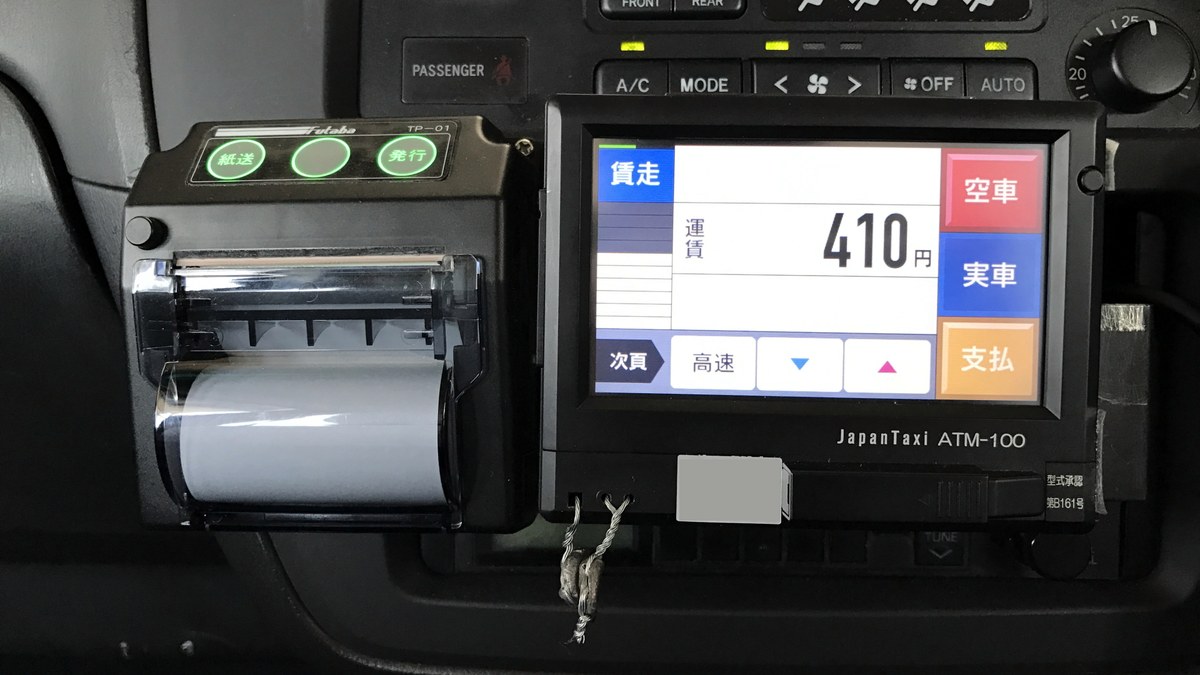
Tokyo's 23 wards — officially the Tokubetsu-ku / Musa district, which also takes in Musashino and Mitaka — currently run a standard-car upper-limit tariff of ¥500 for the first 1.0 kilometre, then ¥100 per 232 metres. A separate time-and-distance rule adds ¥100 every 1 minute 25 seconds whenever the car drops below 10km/h or you ask the driver to wait; expressway sections are exempt from the time component.
Then the night rule. The late-night and early-morning surcharge is a bureau-published principle, not something each company invents: as a rule it applies to journeys between 22:00 and 05:00 at a rate of 20%. The Kinki bureau's text covering Osaka and Kyoto is word-for-word identical, so you can treat it as a national norm across the major cities.
One detail almost every guide gets wrong: the 20% is not applied by multiplying the total by 1.2. The official mechanism is the distance-shortening method — the metered distance itself is compressed so the meter clicks over faster. The result lands close to a 1.2 multiplier but not exactly on it, because every segment rounds up. It also explains something passengers frequently notice and rarely understand: the meter really does run faster at night. That is design, not imagination.
Put both layers together and you get the single most useful table in this guide.
| Distance | Tokyo 23 daytime | Tokyo 23 night | Osaka night | Kyoto night | Tokyo Tama night | For reference: 23 wards night, pre-revision |
|---|---|---|---|---|---|---|
| 3 km | ¥1,400 | ¥1,700 | ¥1,700 | ¥1,600 | ¥1,800 | ¥1,500 |
| 5 km | ¥2,300 | ¥2,700 | ¥2,700 | ¥2,500 | ¥2,900 | ¥2,500 |
| 8 km | ¥3,600 | ¥4,300 | ¥4,300 | ¥4,000 | ¥4,600 | ¥3,900 |
| 10 km | ¥4,400 | ¥5,300 | ¥5,300 | ¥4,900 | ¥5,800 | ¥4,800 |
| 15 km | ¥6,600 | ¥7,900 | ¥7,900 | ¥7,300 | ¥8,600 | ¥7,200 |
| 20 km | ¥8,700 | ¥10,500 | ¥10,500 | ¥9,600 | ¥11,500 | ¥9,500 |
⚠️ This table is modelled on the official fare structure; it is not an officially published night tariff. The public notices state only “distance-shortening method, 20%” and never print the night metre figures. The amounts cover the meter alone — no dispatch fee, no expressway tolls, and no time-and-distance component. That last exclusion is actually good news at night: with clear roads the car rarely drops below 10km/h, which is precisely why a night estimate is far more reliable than a daytime one. That is why this guide is willing to print numbers at all.
Three decision-grade figures fall straight out of the table:
- Breaking ¥10,000 at night in the 23 wards takes about 19 kilometres. ¥5,000 is about 9.3km; ¥3,000 about 5.5km.
- Kyoto is the cheapest of the three cities — short flagfall distance, long increment — while Osaka tracks Tokyo almost exactly.
- 🔴 Tokyo's Tama area is more expensive than the 23 wards, which is the opposite of what most people assume. Staying in Tachikawa, Hachioji or Machida means a different sum.
Two costs sit outside the table but land on your receipt. The first is the dispatch fee for having a car come to you: each operator sets its own, the official schedule leaves that column blank, and so this guide prints no figure. Structurally it can be demand-variable, capped at the base amount plus three times that again — up to roughly four times over. The second is what “upper-limit tariff” means: under the fare-band system an operator may choose a lower tariff (Tokyo's floor for a standard car is ¥480 flagfall and ¥100 per 242m). Most run at the ceiling, but the fare card inside the car is the authority for your ride.
The April 2026 fare rise you cannot see
If you are holding a guide that says “Tokyo taxis start at ¥500 and add ¥100 every 255 metres”, that guide has been wrong since April 20, 2026 — and wrong in a way that is unusually hard to notice.
The Tokubetsu-ku / Musa revision took effect on April 20, 2026 (notified March 19) at a rate of 10.14%. The previous one landed on November 14, 2022 at 14.24%. Two double-digit revisions inside four years make this one of the fastest-decaying numbers on this whole site.
What matters is the method. The licensed operators' notice puts it plainly: the flagfall of 500 yen and the increment of 100 yen did not change. The distances did:
| Item | Before April 20, 2026 | Now | Effect |
|---|---|---|---|
| Flagfall | 1.096 km for ¥500 | 1.0 km for ¥500 | Same ¥500, about 96 metres less riding |
| Increment | ¥100 per 255 m | ¥100 per 232 m | Roughly 0.4 extra clicks per kilometre |
| 10 km at night (modelled) | about ¥4,800 | about ¥5,300 | About ¥500 more |
| 20 km at night (modelled) | about ¥9,500 | about ¥10,500 | About ¥1,000 more |
Why single this out? Because it slips past the only thing a visitor ever checks. Travellers remember headline numbers — “starts at 500” — while the distance parameters live in brackets on a tariff sheet nobody reads. The consequence is that the meter reads identically to last year, the total is a tenth higher, and there is nothing obvious to point at.
The practical rule is blunt: treat any taxi figure quoting “every 255 metres” as expired. It is 232 metres now. The same applies more widely — Tama was revised on March 16, 2026 (flagfall 1.091km to 1.0km, increment 233m to 211m), and Kanagawa, Saitama, Chiba and Gunma all moved around March 2026 too. Japanese taxi pricing was effectively rewritten during 2026.
The decision table: what to do at each distance
Here is everything above compressed into something you can read on a platform in thirty seconds. Measure the distance roughly — straight-line plus a bit is fine. This question only needs the right order of magnitude.
| Distance to where you are sleeping | Modelled Tokyo night fare | The call |
|---|---|---|
| Under 3 km (e.g. Shinjuku to the Shibuya area) | about ¥1,700 | Get in the taxi. No deliberation required. That is less than dinner, and it buys back a proper bed and an intact next day. Agonising over money at this distance is the single worst move in this guide. |
| 3–5 km | about ¥1,700–2,700 | Still take the taxi. Split between two people that is around ¥1,000 each, which buys no alternative in which you can actually lie down. |
| 5–10 km (where most Tokyo hotels sit) | about ¥2,700–5,300 | Taxi, still. This is the band most visitors are genuinely in, and it is nowhere near five figures. A solo traveller might pause at the ¥5,000 end; two or more should not pause at all. |
| 10–15 km | about ¥5,300–7,900 | The pivot. Shared between two or more it still wins; solo, start comparing against a room nearby. Note the comparison is with a hotel rate, not with an internet cafe. |
| 15–20 km | about ¥7,900–10,500 | Seriously consider staying put. The fare is now inside business-hotel territory, and you also spend 40-plus minutes in the car to earn it. |
| Over 20 km | above ¥10,000 | Book a room here and collect your luggage tomorrow. One overlooked bonus: if tomorrow's plan is already in this district, staying is the more efficient route anyway. |
Three conditions attach to that table:
- The fare is per car, not per person. Three people splitting ¥5,300 over 10km pay under ¥1,800 each — group size is the biggest variable in this calculation and the one most often forgotten.
- The moment you miss a last train is always inside the surcharge window. Last trains cluster between 00:00 and 01:00; the surcharge runs 22:00 to 05:00. There is no gap to exploit.
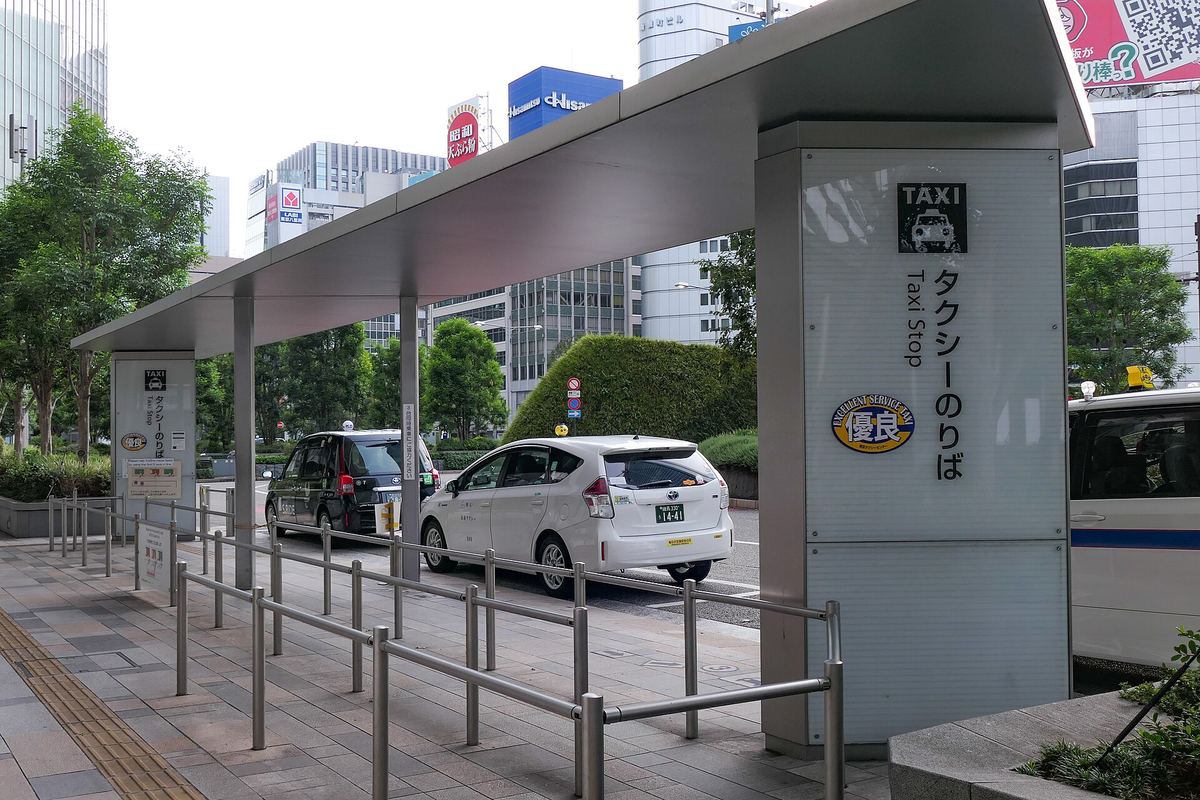
- Dispatch fee and tolls are extra. Central short hops rarely touch an expressway, and flagging a car at a rank avoids the dispatch fee entirely — the ranks outside major stations usually still have cars queuing late.
Why locking your fare backfires after midnight
The “fixed fare” button in a ride-hailing app looks like the safe late-night choice: agree the price up front, no risk of a scenic route. Under the MLIT directive that governs it, the design works against you specifically at night.
A pre-determined fare is computed from an electronically mapped driving distance as a distance-based fare, multiplied by a smoothing coefficient published by the regional bureau director and rounded to ¥1. The decisive words are the parenthetical: the time-and-distance component is excluded. In other words, the traffic-crawl money is taken out of the calculation and folded back in as an average.
Which means a pre-determined fare charges you for an average amount of traffic — and Tokyo at two in the morning is the extreme case of no traffic at all. You pay a price containing congestion you will not encounter.
This is not inference. MLIT requires the app to display the following before you agree:
When the roads are clear and in similar circumstances, the pre-determined fare may be higher than the distance-based fare or a flat fare.
The warning is on screen before you tap. It is simply small, and nobody reads carefully when they want to go home.
Three more rules are in the same directive and almost never quoted:
- Locking the fare does not dodge the surcharge. The directive states that surcharges and discounts are applied to pre-determined fares. If your ride straddles 22:00, the app must tell you in advance that part of it falls in the surcharge band.
- The dispatch fee is not inside the number you see. The directive says the various fees are applied separately from the pre-determined fare. You are locking the fare, not the bill.
- Pre-determined fares do not apply in severe weather or during large-scale traffic restrictions for major events — meaning the nights you would most want a locked price are structurally excluded.
Two operational rules worth knowing: if you change the destination mid-ride, the pre-determined fare ends and is charged at that point and the meter restarts; if the driver changes route (including for traffic restrictions), your consent is required but the amount charged remains the original pre-determined fare.
So the verdict is: for a short central ride after midnight, use the meter. The route is simple, there is little room to wander, and as section 1 explains, night estimates are unusually accurate. Pre-determined fares earn their keep on long daytime rides through traffic, or when you have no feel for the route and want a ceiling for peace of mind — that premium is money well spent. On an empty street at 02:00, you are buying insurance against something that is not going to happen.
One more option deserves a mention: Japan-style ridesharing, created in March 2024 under Article 78(3) of the Road Transportation Act and operated under the management of licensed taxi companies, with data-designated areas including Tokyo, Yokohama, Nagoya, Kyoto, Sapporo, Sendai, southern-central Saitama, Chiba, Osaka, Kobe, Hiroshima and Fukuoka. Two facts matter to you: fares are set at the same level as taxis (it is not the cheap option), and rides are booked through dispatch apps and always run on pre-determined fares, so everything above applies. Also worth knowing: the government's own designated shortage window is Friday and Saturday, from the 16:00 hour through to the 05:00 hour the next morning. ⚠️ That does not mean weekday nights are unservable — only that window is officially designated.
The two last-train traps — and the operators' own disclaimer
Start with the biggest thing: what time the last train leaves was moved earlier in 2021, and it has not moved back.
In 2021 the entire Tokyo network pulled last services forward. Tokyo Metro cut roughly 10 minutes across all lines — the largest individual reductions being 16 minutes on the Chiyoda Line from Kita-Senju, 13 to 14 on the Marunouchi Line from Ogikubo, 13 to 14 on the Yurakucho Line and 11 to 14 on the Fukutoshin Line — citing overnight inspection and engineering time. Tokyu cut 15 to 30 minutes across every line except the Kodomonokuni Line. Toei's stated reason was different again: responding to the state of emergency and requests from MLIT and the four regional governors, for the purpose of suppressing passenger flow.
Five years on? Read every Tokyo Metro and Toei revision notice from 2021 to 2026 and not one of them moves a last train back to a later time. Not a single one.
The strongest evidence is the most recent notice. Metro's September 19, 2026 revision is a genuinely large increase in service — Ginza Line daytime headways from 4 minutes to 3, Marunouchi from 5 to 4 — yet the latest time slot touched anywhere in the document is the 21:00 hour. And the trend still points the other way: JR East announced in November 2025 that it will pull Tohoku and Joetsu Shinkansen last down-services forward by another 20 minutes from spring 2026, after a 20-minute cut in spring 2024 that it says improved construction efficiency by about 10%.
In one line: frequency has been restored and then some; the last train has not. The practical consequence for visitors is that any late-night itinerary advice written in 2019 or 2020 has its whole timeline shifted.
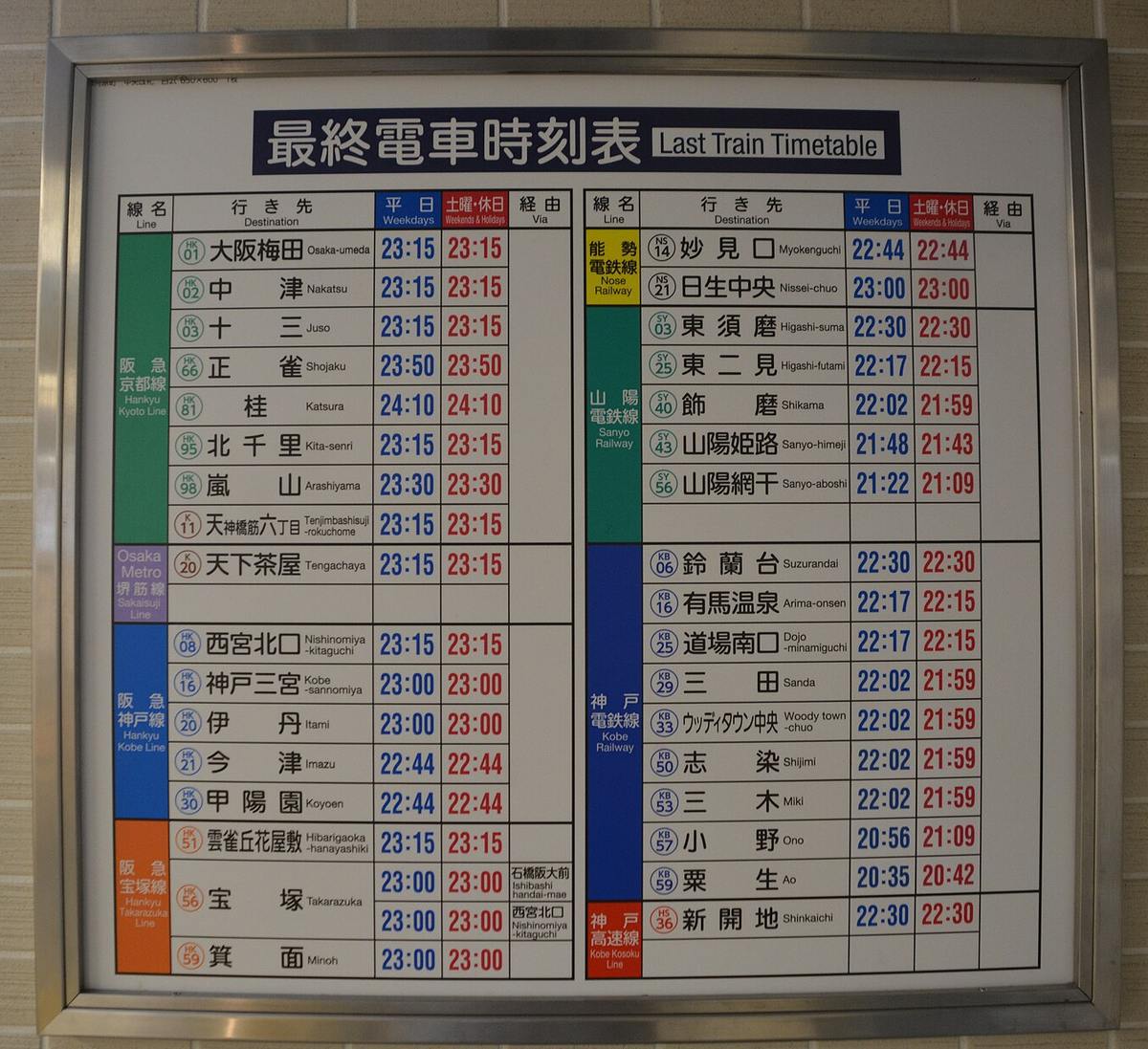
Trap one: the last train does not reach your station (central, 11 to 19 minutes)
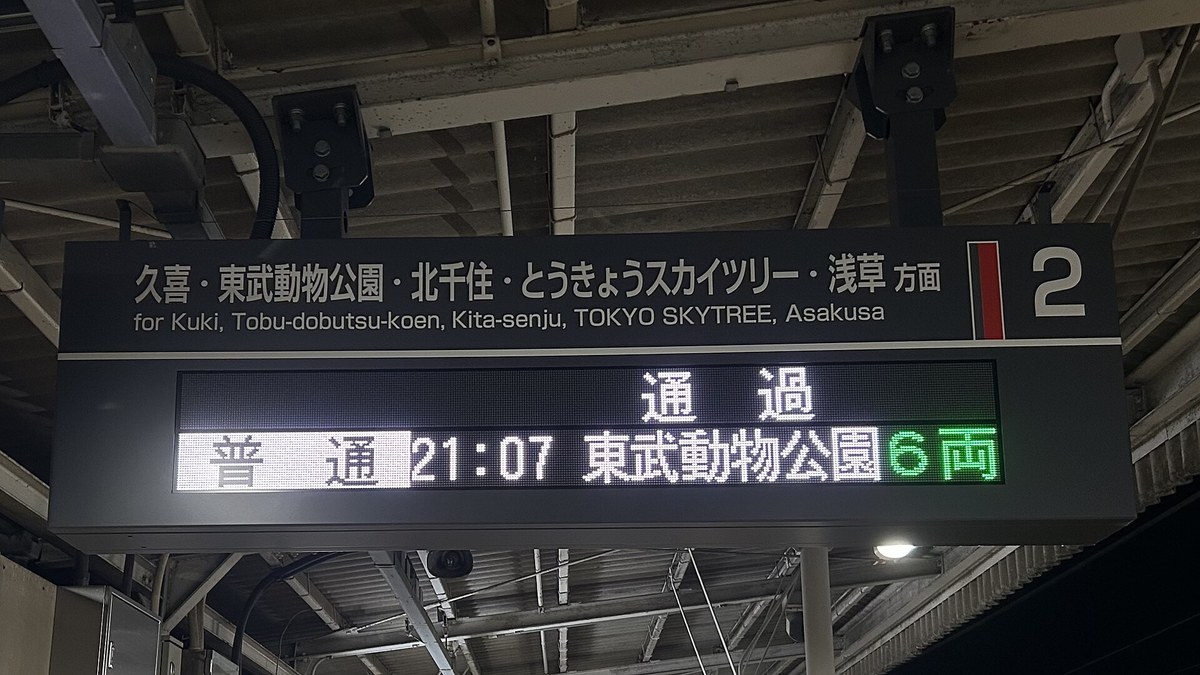
This is the common one and the hardest to catch. The “00:14 last train” you looked up really is the final service in that direction — but it may stop working part-way along the line. Three examples read from official station timetables:
| Station / line / direction | What the timetable shows | Last train that actually gets you there | Gap |
|---|---|---|---|
| Asakusa, Ginza Line toward Shibuya (weekday) | 00:14 (00:03, 00:10 and 00:14 are all Ueno services) | 23:55 (to Shibuya) | 19 min |
| Nakano-sakaue, Marunouchi Line toward Ikebukuro (weekday) | 00:05 (Shinjuku-sanchome service) | 23:50 (to Ikebukuro) | 15 min |
| Shibuya, Ginza Line toward Asakusa (weekday) | 00:02 (Ueno service) | 23:51 (to Asakusa) | 11 min |
The neatest example is one where the official timetable prints the warning itself and nobody reads it. Toei Oedo Line at Roppongi (weekday, toward Tochomae and Hikarigaoka) shows 00:06, 00:15, 00:24 and 00:37 in the midnight hour, and the legend on the same page reads:
To: Tochomae service (no connection toward Hikarigaoka)
Translated into practice: the last train to Hikarigaoka is 00:24, but the final row on the timetable says 00:37. If you are staying near Hikarigaoka and read 00:37 as room for one more drink, those thirteen minutes become a taxi.
⚠️ These times were read from official station timetables (the Tokyo Metro sheets dated March 2026), and Metro revises its timetable on September 19, 2026 — so treat the table as an illustration of what this trap looks like, and check times on the day.
Trap two: branch lines shut one to three hours early (suburban, 73 minutes to 2h51m)
The second trap lives in the suburbs and is far larger. Two Keio examples, read from the operator's own timetable service:
| Station | Main line last train | Branch line last train | Gap |
|---|---|---|---|
| Higashi-Fuchu (weekday) | Keio Line toward Keio-Hachioji / Takaosanguchi 00:47 | Keibajo Line toward Fuchu-Keiba-Seimonmae 21:56 | about 2h51m |
| Takahatafudo (weekday) | Keio Line 00:51 | Dobutsuen Line toward Tama-Dobutsukoen 23:38 | 73 min |
⚠️ Keio revises its timetable on August 17, 2026 — always check the operator's latest published times rather than the figures above. Note also that the Keibajo Line runs extra services on race days at Tokyo Racecourse; 21:56 is an ordinary weekday time.
What makes this dangerous is that it never appears on the route you searched. You asked for Shinjuku to Takahatafudo, and the app told you a 00:20 departure works — which is true of the main-line leg. You arrive at 23:50 and discover the last three kilometres closed at 23:38.
Which leads to a caveat about apps. Our guide to the apps worth installing notes that Google Maps will even remind you about last trains, and that is genuinely useful — but what it gives you is the last train on the route it chose, not on the branch line you were planning to switch to. When checking, set the destination to the station you actually get off at, never a big interchange. That one habit removes about ninety percent of both traps.
The operators already wrote the disclaimer
If your instinct is that a missed connection is the railway's problem, Toei answered that in its 2021 notice:
Because of the earlier last trains, connections between last trains at interchange stations are not guaranteed, and no substitute transport will be provided. Please check in advance before travelling.
Tokyo Metro likewise warned passengers to take care with last-train connections because other operators were moving their timings too.
It is worth holding this next to the opposite case: when a train is cancelled or badly delayed that is the railway's failure, and there are transfer arrangements and refund rules; missing the last train is yours, and there are neither. Those refund rules are genuinely useful and surprisingly intricate — they are in our guide to delays, cancellations and refunds, which also documents Tokyo Metro stating in writing that taxi and late-night bus costs are the passenger's own.
The dead answer: late-night express buses
Search for what to do after the last train and the second answer you will be given is a late-night express bus. That option largely ceased to exist between 2024 and 2026.
- 🔴 Tokyu Bus abolished all five “Midnight Arrow” routes from Shibuya — to Mizonokuchi, Miyamaedaira, Aobadai, Nakamachidai and Shin-Yokohama/Nippa. The official PDF says the routes were abolished “as of July 31 of this year” and never prints the year, so this guide states only that they are gone. The five route pages now return 404.
- 🔴 Seibu Bus ended “Midnight S-tarmine” (Ikebukuro East Exit to Kotesashi North Exit) on July 31, 2024, the final departure leaving Ikebukuro at 25:00. The stated reason was difficulty securing the staff required to operate it. The route had run since 1990 — a thirty-plus-year institution closing.
There is a naming trap here that Seibu itself published a clarification about:
The late-night express bus is being abolished. Please note this is different from ordinary route buses (including shinya bus services).
They are two distinct things:
| Shinya kyuko bus (late-night express) | Shinya bus (late-night service) | |
|---|---|---|
| Purpose | Long-distance run home after the last train | Late departures on an ordinary route |
| Status | 🔴 Tokyu abolished all; Seibu ended July 31, 2024 | Still running |
| Fare | — | Double the normal fare (Odakyu Bus defines a shinya bus as one departing its origin from 23:00 onward, including 23:00 itself) |
| What it means for you | Do not count on this option | It finishes around the same time as the last train, so it does not solve your problem |
So cross “a late bus will save me” off the list. One number explains why this happened: Odakyu Bus, setting out its late-night fare rules, noted that ridership drops sharply after 21:00 — the 22:00 hour was running at half the level of two years earlier, and from 23:00 onward at around 30%. Combine that with the driver shortage and the withdrawal of long-distance night routes is clearly still in progress, which is why buses sit below taxis in this guide's order of options.
Waiting out four and a half hours
Price the wait honestly first. Last trains go around 00:30 and first trains around 05:00, so you are holding out for roughly four and a half hours. From the official station timetables: Ginza Line first trains at Shibuya (toward Asakusa) and Asakusa (toward Shibuya) are both 05:01; Marunouchi at Nakano-sakaue toward Ogikubo is 05:00; Hibiya at Roppongi toward Naka-meguro is 05:16; Oedo at Roppongi toward Tochomae and Hikarigaoka is 05:08. Both Metro and Tokyu stated explicitly in 2021 that first trains would not move, so the gap is fixed rather than shrinking as last trains get earlier.
Set that against the decision table and the arithmetic is stark: if you are inside 5 kilometres (about ¥1,700), trading four and a half hours of consciousness plus tomorrow's energy for under two thousand yen is a bad deal. Waiting out the night makes sense in only two situations — the distance is far enough to break ¥10,000, or you were planning an all-nighter anyway (countdown, a gig, an early flight).
Internet cafes: the rules, not the vibe
Start with the claim that travels furthest and is least accurate: “Japanese internet cafes check your passport” is true only in Tokyo.
Tokyo Metropolis has an ordinance regulating internet terminal businesses. Article 4(1) requires operators to verify a customer's identifying particulars by inspecting a driving licence or other method prescribed by public safety commission rules; Article 4(2) forbids the customer from misstating them. The Metropolitan Police tell foreign visitors to present a passport or seafarer's identity document, with other documents accepted only if issued by a foreign government and showing name, address and date of birth. Under Article 5 the verification record must be kept for three years. The penalties are not trivial either: violating a business suspension order carries up to one year's confinement or a fine of up to one million yen.
But that is Tokyo's own legislation, and Japan has no national equivalent. Checks of Osaka, Kyoto, Aichi, Kanagawa, Fukuoka and Hokkaido turned up no comparable ordinance, and the National Police Agency's white paper records only voluntary industry requests, naming Tokyo as the legislating case. The practical upshot is genuinely interesting: the same chain is legally required to check your ID in Tokyo and merely applying house rules in Osaka. So being asked in one city and not the other is not a staff member being difficult — it is a different legal regime. Either way, carry your passport; you should be anyway.
The second rule gets far less coverage and can stop a family at the door — the late-night ban on minors:
| Prefecture | Prohibited hours (under 18) | Explicitly covered venues |
|---|---|---|
| Tokyo | 23:00–04:00 | Karaoke booths, internet cafes and manga cafes |
| Osaka | Under 16 from 19:00 (22:00 if accompanied by a guardian); 16–18 from 22:00 — both until 05:00 | Karaoke, internet cafes |
| Kyoto | 23:00–04:00 | Manga cafes and internet cafes |
| Aichi | 23:00–06:00 | Karaoke booths, internet cafes and manga cafes |
| Nationwide (game arcades) | 22:00–06:00 | Article 22(1)(v) of the Entertainment Business Act — arcades only |
⚠️ Fukuoka's youth ordinance is written around “promoters and others”, contains no mention of karaoke and does not explicitly list internet cafes, so this guide does not claim Fukuoka covers them.
For families travelling with teenagers the conclusion is hard: “we will all sit in an internet cafe or a karaoke booth until morning” is not legally available — and Osaka is stricter than Tokyo with an additional under-16 tier. This is close to unwritten in English-language guides and it is the rule most likely to break your plan at one in the morning.
Finally, tone. It is fashionable to write “don't sleep in an internet cafe just to save money”, and the official data does not support that framing. Tokyo's survey of unstable-housing workers (report published January 2018, fieldwork November 2016 to January 2017, 222 outlets, 946 user questionnaires) found that among people staying overnight, the largest single reason was accommodation while travelling or on business, at 37.1% — ahead of housing loss at 25.8%. The same survey estimated roughly 15,300 all-night users on a weekday in Tokyo. ⚠️ The caveats belong with the number: it covers Tokyo only, it is a weekday head count rather than a population, the 15,300 base includes capsule hotels and saunas, and the fieldwork is now nearly a decade old with no newer edition.
So the position here is not discouragement but preparation: go if you want, but know three things first — Tokyo requires ID, minors cannot stay, and the space was never designed for sleeping. As for prices, internet cafes, karaoke chains and saunas all set their own and nothing is officially published, so no figures appear in this guide; even branches of one chain differ. Read the board at the door.
Karaoke and saunas: what they are, legally
These venues get lumped together as “places you can sleep”, but their legal footing differs, and the footing determines what they can do for you.
- Karaoke venues are not covered by the Entertainment Business Act. The word karaoke appears nowhere in the statute, and a karaoke booth fits none of the five categories in Article 2(1) — hostess-style food service, premises below 10 lux, seating under 5 square metres, mahjong and pachinko, or gaming machines — so no licence is required. The only regime it can trigger is serving alcohol: Article 33(1) requires a notification (not a licence) to the public safety commission for late-night liquor-serving food businesses, where late night is defined as 00:00 to 06:00. The common claim that karaoke has late-night limits because of this act is simply wrong.
- Saunas and health-land complexes fall under the Public Bath House Act as “other public bath houses”, per Articles 1 and 2 and the ministry's classification, which places health lands under facilities offering recuperation or rest and saunas under those using steam or hot air. ⚠️ The term “super sento” does not exist in the official classification at all, so this guide assigns it no legal category.
- Where is the legal line on sleeping there? Article 2(5) of the Hotel Business Act defines lodging as using a facility with bedding, and the health ministry's minpaku Q&A states that a lodging charge is judged substantively and expressly includes a rest charge. Put together: providing bedding and charging someone to sleep falls inside hotel business, which needs its own licence. Corroboration comes from the ministry's 2024 sauna survey, in which 3 of 11 operators interviewed held a hotel business licence rather than a bath house one. ⚠️ In fairness: no ministry document states this line in these words for bath houses — the above is derived from the statutory definitions, not a ministry ruling. In practice operators differ; ask at the desk.
- On ID, bath houses and hotels are opposites. Neither the Public Bath House Act nor the Entertainment Business Act contains any requirement for customers to show identification (the latter's ID provisions all concern employees). A hotel, by contrast, must see your passport: Article 6(1) plus Article 4-2(3)(i) of the enforcement regulations require a foreign guest without an address in Japan to register nationality and passport number, with the register kept for three years.
One more honest gap: no official page states whether passengers may remain inside a station between the last and first train. This guide therefore claims neither that you can stay nor that you will be removed. Assume you need somewhere indoors that is open.
When booking a room actually makes sense
All of the above collapses into one test: a room is worth considering once the fare approaches the price of a room. On the modelling in section 1, that crossover sits at roughly 15 kilometres in Tokyo's 23 wards (about ¥7,900 at night), and 20 kilometres breaks five figures.
The comparison target matters. Plenty of guides frame this as taxi versus internet cafe, which is a false choice — cafes are cheap, but they are not beds, and as the previous section showed, they are not structurally set up for sleeping either. The real comparison is a late-night taxi against one night's room rate, and it only becomes live at long distance.
Practical tie-breakers:
- Where is tomorrow? If tomorrow's plan is already in this district — you are in Shibuya tonight and Harajuku is on the list — staying saves the return trip. If tomorrow is an early flight or a checkout, go back; do not leave your luggage stranded.
- Luggage and a room already paid for. Booking a second room means paying twice for the same night, which rarely wins unless the fare is genuinely into five figures.
- Group size. Three people sharing a 15km ride at about ¥7,900 pay roughly ¥2,600 each — usually still cheaper than three separate rooms.
If you do decide to stay put, same-night booking is easier than people expect: central business hotels and capsule hotels frequently still show availability in the apps. Check tonight's availability in Tokyo →
Two adjacent topics, signposted rather than repeated here: staying safe alone at night — touts in Kabukicho and Roppongi, spiked drinks, women-only carriages — is covered in our solo travel guide to Japan; and if the situation is medical or personal safety rather than simply transport, the 24-hour Japan Visitor Hotline number is in our emergency preparedness guide. For how the network works in the first place — IC cards, line logic, transfers — start with our Tokyo trains and subway primer.
The verdict in three lines
One: measure the distance before you guess the price. A Tokyo night taxi is about ¥2,700 at 5km, ¥5,300 at 10km, and needs around 19km to break ¥10,000. Inside 10 kilometres with anyone to split it, just get in the car — under five thousand yen to protect an entire following day is not a close call.
Two: three pieces of what you already know are broken. Tokyo taxis were re-tariffed 10.14% on April 20, 2026 with both headline numbers unchanged and the distances cut; late-night express buses were abolished by Tokyu and ended by Seibu on July 31, 2024; and the 2021 early last trains have not been restored by anyone, with JR East pulling Shinkansen last services 20 minutes earlier again in spring 2026.
Three: when you check the last train, set the destination to the station you actually alight at. Not an interchange, not a line name. Central services frequently stop short of the terminus (11 to 19 minutes early), and suburban branch lines can close one to three hours before the main line — and the operators have already written it down: connections are not guaranteed and no substitute transport will be arranged.
Frequently Asked Questions
- Q1:How much is a taxi in Tokyo after the last train?
- Ask how many kilometres first — the yen figure follows from that. The approved upper-limit tariff for a standard taxi in Tokyo’s 23 wards (officially the Tokubetsu-ku / Musa district) is ¥500(初乗運賃(1.0km まで)) for the first 1.0km, then ¥100(加算運賃(232m ごと)) per 232m. Between 22:00 and 05:00 a nationally standard 20% late-night surcharge applies, and it works by shortening the metered distance rather than multiplying the total. Modelled on that official fare structure, a night ride is roughly ¥1,700 at 3km, ¥2,700 at 5km, ¥5,300 at 10km and ¥10,500 at 20km — meaning you need about 19km to break ¥10,000. Most visitors staying in or near the Yamanote loop never get anywhere near that. ⚠️ These are estimates derived from the published fare structure, not an officially published night tariff, and they exclude the dispatch fee and expressway tolls.
- Q2:Tokyo taxis got more expensive in 2026 — so why is the flagfall still ¥500?
- Because the fare rise was hidden in the distance, not the price. The Tokyo 23-ward tariff was revised on April 20, 2026 at a rate of 10.14% (the previous revision, November 14, 2022, was 14.24%). The licensed operators’ own published notice spells it out: the flagfall of 500 yen and the increment of 100 yen are unchanged — what changed is that the flagfall distance shrank from 1.096km to 1.0km and the increment distance from 255m to 232m. The meter you look at reads exactly as it did last year, but the same journey now clicks over more often. Modelled on the fare structure, a 10km night ride costs about ¥500 more than before the revision and a 20km ride about ¥1,000 more. Any guide still saying “¥500 to start, ¥100 every 255 metres” is out of date.
- Q3:Is locking in a fixed fare in the taxi app cheaper at night?
- Structurally, no — late night is exactly when a pre-fixed fare is most likely to cost you extra. Under the Ministry of Land, Infrastructure, Transport and Tourism (MLIT) directive, the pre-determined fare is calculated from a map-estimated driving distance as a distance-based fare that explicitly excludes the time-and-distance component (the part that ticks over in traffic), then multiplied by a smoothing coefficient published by the regional bureau. In plain terms, you pay a price containing an average amount of traffic — and Tokyo at 02:00 is the extreme case of no traffic at all. MLIT even requires the app to display this warning before you accept: when the roads are clear, the pre-determined fare may end up higher than the distance-based fare. Three more rules people miss: the 20% late-night surcharge still applies to a locked fare; the dispatch fee is charged separately and is not inside the number you see; and pre-determined fares do not apply during severe weather or large-scale traffic restrictions around major events.
- Q4:Can I take a late-night express bus instead?
- That fallback has essentially disappeared. Tokyu Bus has abolished all five of its “Midnight Arrow” late-night express routes from Shibuya (to Mizonokuchi, Miyamaedaira, Aobadai, Nakamachidai and Shin-Yokohama/Nippa); the official PDF says only “July 31 of this year” and never states the year, so this guide does not print one — the five route pages now return 404. Seibu Bus ended its “Midnight S-tarmine” (Ikebukuro East Exit to Kotesashi North Exit), which had run since 1990, on July 31, 2024, citing difficulty securing the drivers to operate it. ⚠️ Do not confuse this with the shinya bus that still runs — Seibu published a specific clarification that the two are different. A shinya bus is an ordinary route bus departing after 23:00 at double the normal fare; it finishes around the same time as the last train, so it is not a solution for missing one.
- Q5:Do Japanese internet cafes really check your passport? Can under-18s stay?
- Only Tokyo requires it — it is the one prefecture with an ID-verification ordinance for internet cafes. Under Article 4(1) of the Tokyo Metropolitan ordinance regulating internet terminal businesses, operators must verify a customer’s identifying particulars by methods such as inspecting a driving licence, and Article 4(2) forbids customers from misstating them. The Metropolitan Police ask foreign visitors to present a passport, and under Article 5 the verification record must be kept for three years. But there is no national law: checks of Osaka, Kyoto, Aichi, Kanagawa, Fukuoka and Hokkaido found no equivalent ordinance. The same chain is legally obliged to check your ID in Tokyo and merely following house policy in Osaka. Minors face a separate, stricter and locally variable rule: Tokyo bars under-18s from internet cafes and karaoke booths between 23:00 and 04:00, while Osaka starts at 19:00 for under-16s (22:00 with a guardian) and 22:00 for 16- to 18-year-olds, both until 05:00. Families travelling with teenagers cannot legally use this option at all.
- Q6:Have the pandemic-era early last trains been restored?
- No — not by a single operator. In 2021 the whole Tokyo network pulled its last trains forward: Tokyo Metro by roughly 10 minutes across all lines (up to 16 minutes on the Chiyoda Line from Kita-Senju), Tokyu by 15 to 30 minutes. Metro’s stated reason was securing overnight maintenance and engineering time; Toei’s was different — crowd suppression, following requests from MLIT and the four Tokyo-area governors. Reading every Tokyo Metro and Toei timetable revision notice from 2021 to 2026, not one restores a later last train. The clinching evidence is the newest one: Metro’s September 19, 2026 revision is a substantial increase in service — Ginza Line daytime headways tighten from 4 to 3 minutes, Marunouchi from 5 to 4 — yet nothing in it touches any time slot later than the 21:00 hour. Meanwhile JR East has announced it will pull Tohoku and Joetsu Shinkansen last departures forward by another 20 minutes in spring 2026. Frequency came back; the last train did not.
- Q7:How long is the wait for the first train, and can I stay inside the station?
- About four and a half hours — and whether you can stay in the station is genuinely not documented. Per the official station timetables, weekday first trains run at 05:01 at Shibuya (Ginza Line toward Asakusa) and Asakusa (toward Shibuya), 05:00 at Nakano-sakaue (Marunouchi toward Ogikubo), 05:16 at Roppongi (Hibiya toward Naka-meguro) and 05:08 at Roppongi (Oedo toward Tochomae/Hikarigaoka), while most last trains go around 00:30. Both Metro and Tokyu stated explicitly in 2021 that first trains would not be moved, so the gap is stable rather than shrinking. As for the station itself: no official page states whether passengers may remain inside between the last and first train, so this guide will not tell you that you can stay, nor that you will definitely be moved on. Plan on needing somewhere indoors that is actually open.
- Q8:Are night taxis cheaper in Osaka or Kyoto than in Tokyo?
- Kyoto is the cheapest of the three, Osaka is line-for-line the same as Tokyo, and suburban Tama is more expensive than central Tokyo. Osaka standard cars start at ¥600(初乗運賃(1.2km まで)) for 1.2km then ¥100 per 231m; Kyoto city starts at ¥500(初乗運賃(0.9km まで)) for 0.9km then ¥100 per 255m — the shortest flagfall distance but the longest increment, which is why Kyoto wins over medium and long distances. The late-night rule is identical: the Kinki bureau’s wording (22:00–05:00, 20%, distance-shortening method) is word for word the same as Kanto’s, so treat it as a national norm rather than a local quirk. Modelled on those tariffs, a 10km night ride is about ¥5,300 in Tokyo and Osaka and ¥4,900 in Kyoto; 20km is about ¥10,500 and ¥9,600 respectively. ⚠️ The counter-intuitive one: Tokyo’s Tama area (Tachikawa, Hachioji, Machida) is dearer than the 23 wards, because its increment distance is 211m rather than 232m — about ¥500 more over 10km at night.