Japan's lost property system runs on three clocks — three months, two weeks, two months — and Tokyo alone logged 4.85 million found items in a single year. Yet whether you get your thing back usually has nothing to do with those numbers. It comes down to something more basic: the entire system assumes you are still in Japan. The police say in their own English pages that as a matter of principle they do not make international calls, and that a recovered item can only be shipped to an address inside Japan. This guide walks through where each clock actually starts, why the stretch of track you were on decides which police station receives your item, and what options survive once you have flown home. If you read one line: when you file the report, give them a Japanese phone number.
- Give them a Japanese phone number. The police English page states they do not, in principle, place international calls. Hotel desk, local friend, your own Japanese SIM — any of them works, and none of them costs anything
- Items ship only to a Japanese address. Once you are home, the only route is a friend, relative or hotel receiving it and forwarding it on. A proxy needs a letter of proxy — and for phones, even a relative living with you needs one
- The two-week list is five categories plus animals: umbrellas, clothing, scarves and other worn textiles or leather, footwear, bicycles. But if it is sold, the money is still yours under the same deadlines
- Phones and ID are the exception: after three months they are destroyed, not sold and not handed to the finder. That is the real reason not to wait
- The online database is too slow for a short trip. Several days to appear, no updates on weekends or holidays, and no national portal — the police themselves tell you to call the operator first
📖 Contents
- 1. The system assumes you are still in Japan
- 2. Who do you call in the first hour?
- 3. Same line, different stretch, different police station
- 4. Three clocks: three months, two weeks, two months
- 5. The two-week list: umbrellas, scarves, shoes, bicycles
- 6. What happens to a phone after three months?
- 7. Is the online database fast enough?
- 8. Can the finder ask you for money?
- 9. You are already home. Now what?
- 10. A lost passport, and the paper you need first
- 11. That call saying they found your item
- 12. March 2027: the online filing system moves
- 13. FAQ
The system assumes you are still in Japan
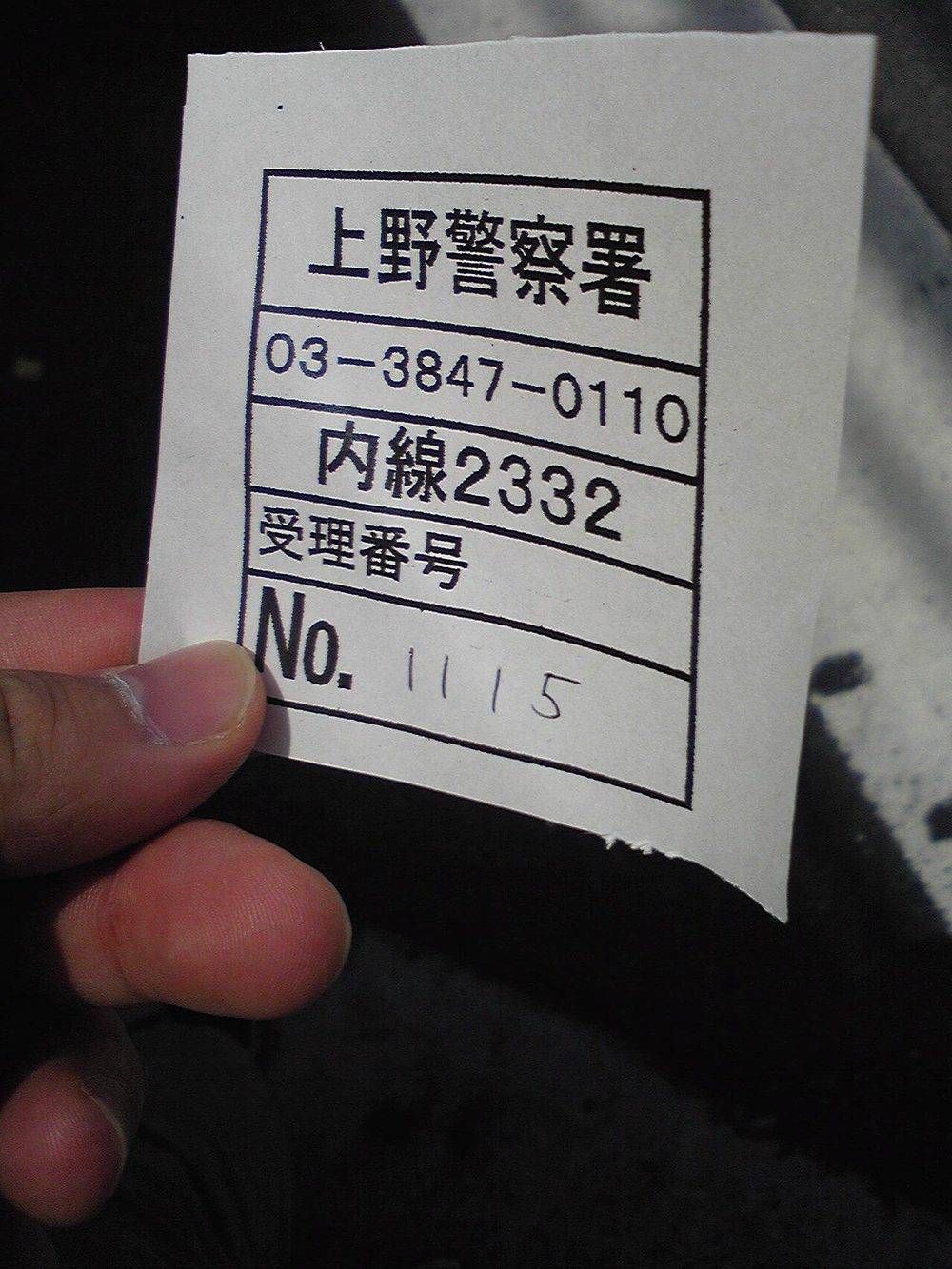
When you file the report, give them a Japanese phone number. That is the single most consequential action in this whole guide, and the reason is printed on the Tokyo police English site: they will contact you if they believe your lost item has been found, and for that purpose they ask for a Japanese phone number, because as a matter of principle they do not make international calls.
It reads like a minor administrative note. It is actually the hinge the entire process turns on. Japan's lost property machinery is built to wait for you: it publishes notices, it stores things carefully, it notifies owners — and every one of those steps presumes a person who is in the country, reachable on a number that a Japanese landline can dial. The moment you land back home, that line goes dead.
Two more things on the same page follow from the same assumption:
- Recovered items ship only to an address inside Japan. When neither you nor a proxy can collect in person, the item can be sent after verification — but the destination has to be Japanese, and you pay the postage.
- The online search is Japanese-only. The English page says so in the same paragraph where it hands you the URL. No English interface exists.
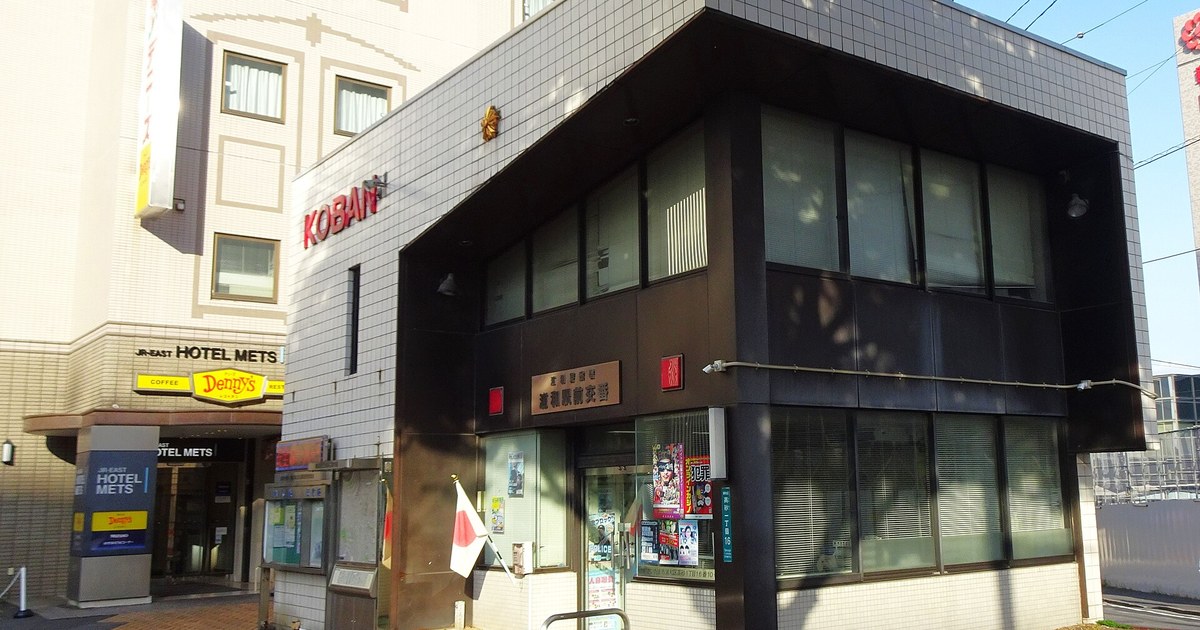
Now the good news, which cuts the other way and gets overlooked constantly: you can file at any police station or koban in Japan. Lost it in Kyoto, woke up in Tokyo? Walk into the koban next to your hotel. The only exclusion is that items lost outside Japan cannot be accepted, stated on both the Japanese and English pages.
So the pre-trip preparation is short and cheap. Get a SIM or eSIM that can receive calls or messages in Japan. Save your accommodation's phone number before you need it. And learn the word for a lost property report so you can say what you want at the counter. The first two exist so the police can reach you; the third exists so the conversation starts correctly.
Who do you call in the first hour?
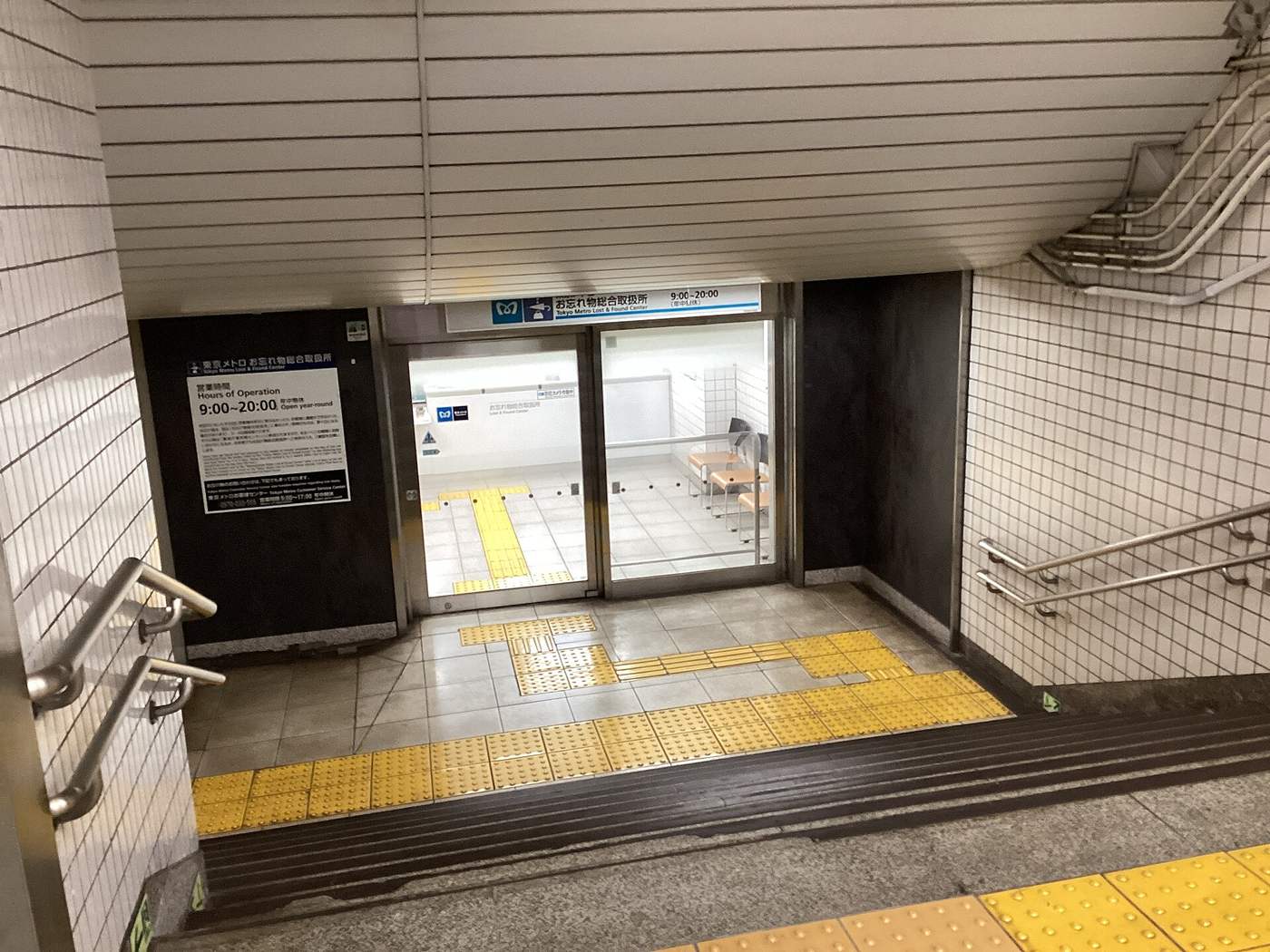
Call the operator, not the police. That order comes from the police themselves. In the same paragraph where the English page explains the online database, it adds that you should also contact the railway or bus company, the airline, or the business where you left the item, because they may keep lost property for a few days.
That detail carries more weight than it looks. An item travels from finder to station staff to the operator's collection point to the police and only then onto the searchable database, and each hop takes time. Your trip may be five days long. For most of that window the item is still with the operator, and the police have nothing to show you.
The Tokyo police publish the major operators' lost property desks on their own site, which conveniently routes around several corporate sites that are hard to reach. The numbers below are from that page.
| Operator | Desk | Phone |
|---|---|---|
| JR East | Telephone Center | 050-2016-1601 |
| Tokyo Metro | Customer Center | 0570-033-555 |
| Toei Subway / Toei Bus | Lost Property Center | 03-3816-5700 |
| Keio (all lines) | Lost Property Office | 03-3325-6644 |
| Keikyu | Keikyu Information Center | 03-5789-8686 |
| Tokyu | Tokyu Customer Center | 03-3477-0109 |
| Odakyu (all lines) | Odakyu Customer Center | 044-299-8200 |
| Seibu Railway | Seibu Ikebukuro Station | 03-3971-0607 |
| JR Central | Runs its own lost property page; the police site links out to it rather than listing a number | |
| Taxis | The official line is blunt: items left in a taxi are handled by the individual taxi company. There is no central desk — the receipt is your only lead | |
That last row deserves a second look. Keep the taxi receipt, not for expenses but for exactly this. A Japanese taxi receipt prints the company name, the vehicle number and the time; without it you do not even know who to call — and taxis are the only mode on the list with no central lost property desk at all.
Airports keep longer hours than the police do
Haneda routes lost property questions through a chat service run by a private company, open 9:00 to 21:00 including weekends and public holidays. By phone, the domestic terminals answer 9:00 to 20:00, while international pre-departure and post-immigration at Terminal 2 are staffed 24 hours. Areas after immigration at Terminal 3 and some airline lounges are outside the service. Narita maintains its own lost property FAQ page.
What makes this more than a convenience note is that the Tokyo police link to the same chat service from their own search page, describing it as the place to ask about items lost at specific transport operators and commercial facilities. This is a sanctioned route, not a workaround.
Put the hours side by side and the practical conclusion writes itself.
| Desk | Hours | Weekends and holidays |
|---|---|---|
| Tokyo Metropolitan Police Lost Property Center | 8:30–16:30 | 🔴 Closed weekends, public holidays, Dec 29 – Jan 3 |
| Haneda chat service | 9:00–21:00 | 🟢 Open |
| Tokyu Customer Center | 9:00–17:00 | 🟢 Open (excluding the new year period) |
Lose something on a holiday and the police desk is shut while the operator's is open. The new year window makes this sharpest — the Lost Property Center is closed December 29 through January 3, which is precisely when a lot of visitors are in town. If your trip lands on New Year in Tokyo, factor that in.
One rule that tells you which side to call
Railways and bus companies are designated facility occupiers, allowed to hold found property themselves for a period before handing it to the police — but the cabinet order carves out the valuable stuff. Cash, securities, precious metals and gemstones worth ¥100,000 or more are excluded from that arrangement.
Translated into action: umbrella, scarf, tote bag — call the operator. Wallet with serious cash, or jewellery — go straight to the police. That is a statutory line rather than a rule of thumb, which makes it more reliable than guessing.
Same line, different stretch, different police station
"I was on the Yamanote Line" is not enough information. They need to know which stretch. The Tokyo police publish two tables of collection stations for JR and for private railways, and the column showing which police station ultimately receives the items changes segment by segment.
This is almost entirely absent from English-language advice, and it determines where you end up going. Here are representative rows.
| Line / segment | Collection station | Goes to |
|---|---|---|
| Yamanote Line (all stations) | Tokyo Station | Lost Property Center |
| Keihin-Tohoku, Kawaguchi – Saitama-Shintoshin | Urawa Station | Urawa Police Station |
| Keihin-Tohoku, Akabane – Kamata | Tokyo Station | Lost Property Center |
| Keihin-Tohoku, Yokohama area | Yokohama Station | Tobe Police Station |
| Chuo Line | 🔴 One line, five collection stations: Tokyo, Mitaka, Tachikawa, Toyoda, Hachioji | |
| Tokyu Toyoko, Shibuya – Tamagawa | — | Lost Property Center |
| Tokyu Toyoko, Shin-maruko – Yokohama | — | Tobe Police Station |
Two patterns run through it. First, crossing a prefectural boundary changes the destination — the Toyoko Line runs south from Shibuya, and once it crosses the Tamagawa into Kanagawa, items stop going to Tokyo's Lost Property Center. Second, long lines get chopped into segments with their own collection points, which is why the Chuo Line has five.
Before you pick up the phone, settle three facts: which line, which station you boarded at, and roughly where you were when you noticed. Those are the questions the desk will ask, and answering them narrows the search enormously.
⚠️ These tables belong to the Tokyo Metropolitan Police and cover Tokyo and its immediate surroundings. I did not find equivalents for Kansai, Kyushu and Hokkaido — the prefectural police URLs tried either failed to connect, returned 404, or served a homepage instead of the page requested. So every desk, hour and service in this guide is Tokyo-specific. Elsewhere, go to that prefecture's police site directly.
Three clocks: three months, two weeks, two months
All three start on different days, and none of them starts on the day you lost the thing. It is easy to run the two together, and it is what decides the date you need to act by.
| Clock | Length | Starts on | What happens at the end |
|---|---|---|---|
| Custody period | 3 months (6 months for buried property) | The statute says the day of public notice; the police consistently restate it to the public as the day the item reached the police | Ownership passes to the prefecture the police station belongs to |
| Sale window for listed items | 2 weeks | Day of public notice | The police station chief may sell the five listed categories and animals (next section) |
| Finder's collection period | 2 months | The day the finder acquires ownership | The finder loses ownership if they do not collect |
The first clock has a wrinkle worth being precise about. The statute counts three months from the day of the public notice, and the notice happens after the police receive the item. But three separate Tokyo police pages restate it for the public as running from the day the item was delivered to the police — the counter guide, the postal request page and the search database's terms of use all use that wording. The two differ by a handful of days; go with the operational wording the police publish.
What you must not do is count from the day you lost it. If an operator held the item for five days before handing it over, your three months had not even begun. For short-trip travelers this is quietly reassuring: you can be home for a week and the clock may still be in its opening days.
The third clock belongs to the finder, but it touches you too. After ownership passes at the three-month mark, the finder has two months to come and collect. Finders also run a clock of their own: submit the item to the police more than a week after finding it (or more than 24 hours after finding it, if handing it to a facility occupier) and they forfeit their claim to expenses, to a reward, and to eventual ownership. That deadline is why station staff receive found items on the spot — waiting costs the finder everything.
The two-week list: umbrellas, scarves, shoes, bicycles
The list is five categories plus animals, not three items — and a sale does not take your money away. Two widely repeated claims need correcting here.
Article 9(2) permits the sale of items in everyday use that are widely sold, where no owner is identified within two weeks of the public notice. Which items qualify is left to a cabinet order, and Article 3 of that order lists:
| # | Category | What travelers actually lose |
|---|---|---|
| 1 | Umbrellas | The clear convenience-store umbrella; folding umbrellas |
| 2 | Clothing | The jacket taken off and left over a chair back |
| 3 | 🔴 Handkerchiefs, scarves, neckties, belts and other textile or leather goods worn together with clothing | Nearly everything a winter traveler drops: scarves, gloves, beanies |
| 4 | Footwear | The pair bagged after changing shoes and left in a coin locker |
| 5 | Bicycles | The rental left parked and forgotten |
| — | Animals | — |
Guides that summarise this as "umbrellas, clothes and bicycles" drop categories three and four, and category three is exactly the bucket that swallows winter accessories. On a Hokkaido or Tohoku itinerary, a scarf slipping out of a coat pocket is routine, and it runs the same two-week clock as an umbrella.
But "sold" is not "gone"
Here is the first claim this guide overturns. Article 9(4) states that when an item is sold, the proceeds less the cost of sale are deemed to be the item itself for the purposes of custody, return and ownership. The identical rule appears at Article 20(5) for items held by designated facility occupiers such as railways.
In plain terms: two weeks on, your scarf may have become a sum of money — and if you claim it inside the three-month custody period, that money is what you receive. Writing this up as "sold after two weeks, you get nothing" collapses two separate things, the object being gone and your right being gone, into one.
Just keep expectations calibrated. The cabinet order also permits discretionary disposal where the estimated sale value does not exceed ¥10,000. A convenience-store umbrella, run through the full statutory process, does not come back as enough money to buy another one. Small, but not zero — both halves of that are true.
The statistics close the loop. In Tokyo's most recent published year, the third-largest category of found property was clothing and footwear at 460,667 items, 9.5% of the total — sitting squarely inside categories two, three and four above. This is not an edge case; it is an entire class of object running the two-week clock.
What happens to a phone after three months?
It is destroyed. Not sold, not handed to the finder — disposed of under the statute.
Article 35 lists categories of item a finder may never acquire ownership of, including documents, drawings and electromagnetic records containing personal secrets, and anything recording the owner's or a related party's address or contact details. Phones, notebooks and personalised cards are all in there. The Tokyo police put it in one sentence on their own page: items containing personal information, such as phones and cards, cannot be given to the finder.
So where does it go at three months? Article 37(2) answers: items of that kind must be promptly discarded if no owner is identified within three months of the public notice.
Laid out side by side, the two paths look like this.
| Item type | After two weeks | After three months |
|---|---|---|
| Umbrella, scarf, shoes, bicycle | May be sold — but the money is yours | Passes to the prefecture, or to the finder |
| Ordinary items (backpack, camera, suitcase) | Held normally | Passes to the prefecture, or to the finder |
| 🔴 Phones, ID and cards with personal data | Held normally, but the finder can never take it | 🔴 Discarded |
The bottom row is the only one with no second chance. An ordinary item still exists after three months, so a late enquiry has somewhere to go; a phone does not. If it is a phone, do not sit on it.
One upstream thought while you are here: losing a phone in Japan takes out your data connection and your payment method in the same stroke. Working out a backup before you go overlaps almost completely with what you would prepare for an earthquake or typhoon while traveling in Japan, so it is worth reading the two together.
Is the online database fast enough?
Not for a five-day trip, and there is no national entry point either.
Start by correcting a claim that circulates widely: that a blank result in the police database means the item is still with the railway company. That has it backwards. Article 18 applies the public-notice duty to railways and other designated facility occupiers, and the police search page states that items held by railway operators are published even when already disposed of or returned, flagged with a note meaning lawful disposal has occurred and no physical inspection or return is possible. Railway-held items are in the database.
The real problems are elsewhere, and they are about timing and coverage rather than presence.
Problem one: slow, and frozen at weekends
The database's terms of use volunteer two facts. It takes several days from an item reaching the police to it becoming searchable, and items found inside facilities — trains, buses, shops — publish later still, because the facility occupier batches them before submitting. On top of that, no update work is done on Saturdays, Sundays, public holidays, or December 29 through January 3.
Run that against a five-day trip. Lose something on day two, and the earliest realistic appearance is day four or five; if those days include a weekend, it slides past your departure entirely. The database is not broken — its tempo simply does not match a short visit. The official remedy is the one from the previous section: phone the operator.
Problem two: no national portal
Every prefectural police force publishes its own database, and that is a statutory duty — Article 8(2) requires prefectural police headquarters to publish information on noticed items via the internet or other means. What does not exist is anything joining them up.
Cross-prefecture circulation is also gated. The Tokyo terms of use define the published scope as items found in Tokyo and delivered to Tokyo police, items found elsewhere but delivered to Tokyo police, and items found in Tokyo but delivered to another prefecture's police only where they count as valuable property — defined as cash and goods worth ¥10,000 or more, driver's licenses, bankbooks and mobile phones. The same page tells you that anything lost in another prefecture must be searched on that prefecture's own site.
For a multi-city itinerary this means something concrete: fly into Tokyo, out of Osaka, with Kyoto in between and you may be searching three separate systems — and only items above that threshold move between them. A scarf will not.
Can the finder ask you for money?
Yes, 5% to 20% by statute. But they have to consent to being identified first, and most stop there.
Article 28(1) obliges an owner receiving an item back to pay the finder a reward of not less than five and not more than twenty percent of the item's value. That is a duty, not a courtesy. Article 28(2) adds that where a facility occupier — a station, a shop — passed the item along, the finder and the facility each take half.
Two provisions then make it rare in practice.
The first gate is Article 11(2): the police chief may tell you the finder's name and address only where the finder consents. The Tokyo police explain the consequence in their own words — accepting a reward means letting the owner learn who you are, and a finder who withholds consent cannot be paid. Most withhold it.
The second gate is Article 29: once one month has passed since the item was returned to the owner, the reward can no longer be claimed.
So the sane posture is this. Do not budget cash for it; do pay it if someone lawfully asks. Treat it as a low-probability, capped expense rather than a tip you hand over every time you collect something.
Who cannot ask: the line is public corporations, not big companies
Article 28(3) bars the state, local public bodies, incorporated administrative agencies and other public corporations from claiming a reward at all. That draws a clean line almost nobody writes about.
| Operator | Legal character | May claim a reward? |
|---|---|---|
| Toei Subway / Toei Bus | Tokyo Metropolitan Bureau of Transportation — a local public body | 🔴 No |
| JR companies | Ordinary corporations | Legally yes |
| Tokyo Metro Co., Ltd. | Ordinary corporation | Legally yes |
| Private railways | Ordinary corporations | Legally yes |
⚠️ This table is about legal capacity to claim, not observed practice. I could not find any railway operator publishing its own policy, so this guide will not tell you that JR will bill you, nor that it will not. Both would be guesses.
You are already home. Now what?
One route exists: an address inside Japan receives it, and forwards it on.
The Tokyo police English site has a page dedicated to people who have left the country. It says that where neither you nor anyone else can collect in person, then after proper verification items can be shipped to an address in Japan, with shipping costs on you. The same sentence appears on the general English lost and found page.
The reason it stops at the border is prosaic. Japan Post's international mail FAQ states it does not handle cash-on-delivery service, and the EMS FAQ repeats it — no COD, no collect-on-delivery. Even if the police were willing to post internationally, there is no mechanism to collect the postage from someone overseas.
So from home, the workable sequence is:
- Confirm the item actually exists — call the operator, or have someone search the Japanese-only database for you.
- Find a receiver in Japan: a friend, a relative, a student you know, or a hotel you stayed at that is willing to help.
- That person collects or receives it on your behalf, which requires a letter of proxy from you.
- They forward it internationally, and you reimburse the postage.
Step three hides a trap. For phone-type items the letter of proxy is required even where the proxy is a relative living at the same address. The Japanese page's parenthetical is explicit: the exemption for cohabiting relatives covers everything except phones. The category you are most likely to need someone else to fetch has the highest bar.
⚠️ On filing online, the official pages contradict each other
This needs saying plainly, because it determines whether you waste a trip.
- The English page (older revision date) says the form is downloadable, but must be submitted in person at a police office, and that reports sent by email or other means cannot be accepted.
- The Japanese page (newer revision date) says that where the cash contained in the lost property is under ¥1,000,000, the report may be filed through the Tokyo police online procedures site.
The two pages are eight months apart, and the English one does not reflect the online option at all. I did not obtain the eligibility terms for that online system — its form pages returned 403 to every attempt — so whether an overseas resident or a foreign national can use it is unknown to me.
Which is why this is a statement of fact and not a set of instructions: the Japanese page does say cash under ¥1,000,000 may be filed online, but who qualifies, and whether a Japanese address or local identity verification is required, I could not verify. Where two official pages disagree, taking the stricter one is the safer bet for a foreign visitor — file in person while you are in Japan, and ask someone in Japan to help once you have left. That is my recommendation under incomplete information, not an official instruction.
A lost passport, and the paper you need first
Get the police certificate of loss report before you go anywhere else.
The Tokyo police English page deliberately declines to rule on passports. It says only that regarding a police certificate for passport reissue, you should first contact your own country's embassy or consular office to check whether one is needed. The question is passed to your representative office — and for Taiwanese travelers, that office answers it directly.
The Taipei Economic and Cultural Representative Office in Japan states that a passport reissue application must be made in person and cannot be handled by mail, and lists the police report certificate of loss as the second required document. So the order is fixed: police first for the paper, representative office second with the paper in hand.
Two further lines are what actually rearrange an itinerary:
- An e-passport is produced back in Taiwan, taking roughly 3 to 6 weeks. No ordinary trip waits that out.
- Travelers who must return home sooner may apply instead for an entry permit document to travel on — but that option does not apply to anyone heading to a third country or transiting through one on the way home.
That second bullet is the line to underline. Flying direct, the workaround exists. Transiting anywhere, it does not. It decides on the spot whether you are rebooking flights, and it is stated in the official text rather than inferred.
One more provision gets overlooked: anyone applying for reissue after losing a passport twice or more within its validity faces review extended to up to six months under Article 39 of the Passport Act. A second loss is not the same order of problem as a first.
Practicalities from the office's own page: consular hours are Monday to Friday, 09:00–11:30 and 13:00–16:00; Monday to Thursday operate on a walk-in queue and Friday on online reservation. The address is 5-20-2 Shirokanedai, Minato-ku, Tokyo, phone (03) 3280-7811.
⚠️ No fee figures appear in this guide — the office's page does not list them, and copying an unsourced number would be worse than telling you it was not found. Check the official site before you travel.
If you are traveling alone, read this section twice. Everything in the solo travel guide about having nobody to watch your bag or run a second errand bites hardest here: reissue is in person, the queue needs your body in it, and you are rearranging flights at the same time.
That call saying they found your item
If you never filed a lost property report and the phone rings, it is fake. The test is clean enough to memorise.
Narita Airport issued a warning on June 27, 2025, after a spike in reports of suspicious calls from people claiming to be the airport's lost property section or the airport police station. The airport's own identifying rule is a single sentence: the Narita lost property desk calls you only where you yourself have filed a loss report. If it does not match anything you did, treat it with suspicion.
Read alongside the first section of this guide, the logic locks together. This is a one-directional system — you report, then they contact you — and as a matter of principle they do not place international calls. Which gives you:
- No report filed, but a call saying they found it → fake.
- Home already, having left a foreign number, and an international call arrives from "the police" → contradicts the stated principle; be very careful.
- You did file a report and a call comes → proceed normally, but do not hand over financial details over the phone.
March 2027: the online filing system moves
The Tokyo police online procedures site is scheduled to migrate to a new national police portal around March 2027. Lost property reports and facility-occupier found-property reports are both in scope, and the notice says details will follow.
The reason it belongs in this guide is simple: the system name used in the section above has a known expiry date. After March 2027, anything written before that date — this paragraph included — may point at an entrance that has moved.
The new name contains the words for a citizen-facing police portal, which sounds national, and that would map neatly onto the gap described in the search section, where no national entry point exists today. But the notice is one sentence long and says nothing about scope or function, so no inference here about whether it will eventually offer nationwide search. That waits for the 2027 announcement.
The same page carries one more hard date, and it is not about you — worth stating so it is not misread. From September 15, 2026, cash handover arrangements change: cash-only cases of ¥100,000 or less can be collected at the police station named on the found-property receipt, while cash above ¥100,000 and physical goods must be collected at the Lost Property Center. This governs how finders collect cash, not how owners recover their belongings. Anywhere you see it written up as a new rule for owners, it has been misread.
Three sentences, and a pair of numbers I will not divide
One: the only pre-trip task is making sure a Japanese phone can reach you. Hotel, friend, your own local number — any of them. The police say in writing that they do not, in principle, place international calls, which pins the whole system's success on one very small action. And in the first hour after a loss: call the operator before you head for a police station. That is the sequence the police themselves publish, because the item sits with the operator for days first.
Two: the clocks are gentler than they sound, with one exception. The three-month custody period runs from the day the item reached the police, not the day you dropped it, and the two-week sale list — which swallows the entire winter-accessories category — still hands you the money afterwards. The one path with no recovery is phones and ID containing personal data, which are destroyed at three months.
Three: once you are home, everything routes through a Japanese address. Items do not ship abroad, a proxy needs written authority, and phones need it even from a relative under the same roof. Which is why one careful sweep of your belongings on your last morning beats every remedy in this article. Disrupted, late nights are when things go missing — what to do when you miss the last train pairs naturally with this one, and how loss of personal belongings is treated on the insurance side belongs to the Japan travel insurance guide.
The final numbers, and why I am not turning them into a percentage
Tokyo's most recent published lost property figures look like this.
| Category | Found and submitted | Reported lost by owners |
|---|---|---|
| Cases | 4,538,244 | 1,100,657 |
| Items | 4,850,775 | 2,291,811 |
| Cash | ¥4,508,824,075 | ¥8,325,160,470 |
The two rows point in opposite directions. For objects, submissions outnumber owner reports by more than two to one — a great deal gets found, logged, and never claimed. For cash it reverses: the money reported lost is nearly double the money handed in.
The temptation is to divide one column by the other and produce a recovery rate. I am not going to, because the arithmetic would be meaningless: these are independent counts from two separate reporting systems, one loss report can correspond to many items, and the found column includes an enormous volume of things nobody ever reported. The Tokyo police do not publish a return rate, and any percentage you see is two numbers that cannot be paired, forced into a fraction.
What the figures genuinely support is one sentence, and it happens to be the useful one: the system is holding a mountain of unclaimed property, which makes filing a loss report the single highest-yield action available to you. Filing it does not guarantee a recovery. Not filing it very nearly guarantees the opposite.
Frequently Asked Questions
- Q1:Which police station do I have to report a lost item to?
- Any of them. You do not have to go back to the ward where you lost it. The Tokyo Metropolitan Police Department states plainly on its own site that a report can be filed at any police station or koban. The single exclusion is that items lost outside Japan cannot be accepted — both the Japanese and English pages say so. But one thing matters far more than which station you pick: give them a Japanese phone number. The department's English page explains why in one sentence — as a matter of principle, they do not make international calls. A hotel front desk, a Japanese friend, your own local SIM or eSIM number all work. It is the easiest step to skip and the most expensive one to skip. Separately, if you left the item on a train, a bus, in a shop or at an airport, the police themselves tell you to contact the operator first, because operators hold found property for a few days before handing it over.
- Q2:Can the police ship my item to my home country?
- No. It only ships to an address inside Japan. The Tokyo police English site has a page literally titled for people who have already left the country, and it says that when neither you nor anyone else can collect in person, then after proper verification items can be shipped to an address in Japan, with you covering the shipping cost. There is a practical reason behind the limit: Japan Post's international mail FAQ states outright that it does not offer cash-on-delivery service, and the EMS FAQ says the same — no COD, no collect-on-delivery. So once you are home, exactly one route remains: have a friend, relative or a hotel in Japan receive the item, then forward it internationally themselves. A proxy needs a letter of proxy from you, and for phones the letter is required even for a family member living at the same address — the exemption for cohabiting relatives explicitly excludes phone-type items.
- Q3:Is my umbrella or scarf really thrown away after two weeks?
- It may be sold, but the money is still yours. This is the most commonly mangled part of the law. Article 9(2) of the Lost Property Act does let a police station chief sell certain items if no owner is identified within two weeks of the public notice — and the cabinet order that defines those items lists five categories plus animals: umbrellas; clothing; handkerchiefs, scarves, neckties, belts and other textile or leather goods worn together with clothing; footwear; and bicycles. Almost everything a winter traveler drops falls into that third category. But Article 9(4) continues: after a sale, the proceeds minus the cost of selling are deemed to be the item itself, and the rules on custody, return and ownership apply to that money exactly as they applied to the object. Passing the two-week mark does not wipe you out; your scarf simply becomes cash. Do not expect much cash, though — the cabinet order allows discretionary disposal where the estimated sale value does not exceed ¥10,000, and a convenience-store umbrella is not going to fund your next one.
- Q4:What happens to a lost phone if nobody claims it within three months?
- It is destroyed. Phones do not travel the same path as a backpack. Article 35 of the Lost Property Act excludes from finder ownership any item containing documents, drawings or electromagnetic records of personal secrets, as well as anything recording the owner's or a related person's address or contact details. The Tokyo police page puts it directly: phones and cards containing personal information cannot be handed to the finder. Article 37(2) then requires that such items be promptly discarded if no owner is identified within three months of the public notice. So the ending is neither a sale nor a handover — it is disposal. An ordinary lost item at least still exists after three months, having passed to the prefecture or to the finder; a phone does not. That asymmetry is the real reason not to wait on a lost phone.
- Q5:Will the person who found my item demand a 5–20% reward?
- They are legally entitled to, but in practice most never collect, because of a gate they have to walk through first. Article 28(1) says the owner receiving an item back shall pay the finder a reward of not less than five and not more than twenty percent of the item's value. Where a facility occupier (a station, a shop) handled the item, Article 28(2) splits that amount in half between finder and facility. But Article 11(2) says the police chief may disclose the finder's name and address to you only where the finder consents — and the Tokyo police spell out the consequence themselves: taking a reward means letting the owner know who you are, and a finder who will not consent cannot be paid. Most decline. Article 29 adds a second gate: once one month has passed since the item was returned, the claim expires. So do not travel with a stack of cash set aside for this; just know that a lawful demand is a lawful demand. One clean dividing line worth knowing: Article 28(3) bars the state, local public bodies and other public corporations from claiming a reward at all — Toei Subway and Toei Bus are run by the Tokyo Metropolitan Bureau of Transportation and therefore cannot claim, while JR companies, Tokyo Metro Co., Ltd. and the private railways are ordinary corporations that legally can. ⚠️ No railway operator publishes whether it actually does, so this guide says only what the law permits.
- Q6:I lost my passport in Japan. What do I ask the police for?
- A certificate of loss report — in Japanese, a rough transliteration of the term is what you say at the koban counter. The Tokyo police English page deliberately takes no position on passports; it tells you to contact your own country's embassy or consular office first to find out whether a police certificate is even needed. For Taiwanese travelers, the Taipei Economic and Cultural Representative Office in Japan answers it clearly: a replacement passport application must be made in person and cannot be handled by mail, and the required documents include the police report certificate of loss. Two further lines are what actually break itineraries: an e-passport is produced back in Taiwan and takes roughly 3 to 6 weeks; and travelers who cannot wait may instead apply for an entry permit document to return home — but that option does not apply to anyone traveling onward to a third country or transiting through one. Direct flight home, you have a workaround. Transiting somewhere, you do not, and that single sentence is what decides whether you rebook. Anyone who has lost a passport twice within its validity faces review of up to six months under Article 39 of the Passport Act.
- Q7:If the police database shows nothing, does that mean nobody found it?
- No — and a popular explanation for the blank result is backwards. You will often read that an item missing from the police database is probably still sitting with the railway company. But Article 18 applies the public-notice duty of Article 7 to railway operators and other designated facility occupiers, and the Tokyo police search page states that items held by railway operators are published even when already disposed of or returned, marked with a note meaning the item has been lawfully disposed of and can no longer be inspected or returned. Railway-held items really are in the database. The genuine problems are different. First, speed: the terms of use admit it takes several days from the moment an item reaches the police before it becomes searchable online, longer still for items collected inside a facility and batched to the police afterwards — and the published data is not updated on Saturdays, Sundays, public holidays or December 29 to January 3. Second, there is no national portal: each prefectural police force runs its own system, and only high-value items — cash and goods worth ¥10,000 or more, driver's licenses, bankbooks and phones — circulate across prefectural lines. On a five-day trip those two facts together make online search structurally useless, which is exactly why the police tell you to phone the operator first.
Appendix: official source text (Japanese and English, click to expand)
Longer official quotations referenced above are collected here so you can check them yourself. Verified August 29, 2026.
1. Lost Property Act, Article 7(4) — custody period
警察署長は、公告をした後においても、物件の遺失者が判明した場合を除き、公告の日から三箇月間(埋蔵物にあっては、六箇月間)は、前二項に定める措置を継続しなければならない。
2. Lost Property Act, Article 9(2) and 9(4) — the two-week sale, and proceeds deemed the item
警察署長は…提出を受けた物件…が次の各号に掲げる物のいずれかに該当する場合において、公告の日から二週間以内にその遺失者が判明しないときは、政令で定めるところにより、これを売却することができる。
売却をしたときは、物件の保管、返還及び帰属については、売却による代金から売却に要した費用を控除した残額を当該物件とみなす。
The identical rule for designated facility occupiers appears at Article 20(5).
3. Lost Property Act Enforcement Order, Article 3 — the two-week list
法第九条第二項第一号…の政令で定める物は、次に掲げる物とする。一 傘 二 衣服 三 ハンカチ、マフラー、ネクタイ、ベルトその他衣服と共に身に着ける繊維製品又は皮革製品 四 履物 五 自転車
法第九条第二項第二号…の政令で定める物は、動物とする。
4. Lost Property Act, Articles 35 and 37(2) — disposal of items with personal data
…第三十五条第二号から第五号までに掲げる文書、図画又は電磁的記録に該当するもの…公告をした後三箇月以内に遺失者が判明しないときは…速やかにこれを廃棄しなければならない。
ただし、携帯電話やカード類など、個人情報が入った物については、拾った人にお渡しすることはできません。
5. Lost Property Act, Article 36 — the finder's two months
…物件の所有権を取得した者は、当該取得の日から二箇月以内に当該物件を警察署長又は特例施設占有者から引き取らないときは、その所有権を失う。
6. Lost Property Act, Articles 28, 29 and 11(2) — the reward
物件…の返還を受ける遺失者は、当該物件の価格…の百分の五以上百分の二十以下に相当する額の報労金を拾得者に支払わなければならない。
国、地方公共団体、独立行政法人…その他の公法人は、前二項の報労金を請求することができない。
…物件が遺失者に返還された後一箇月を経過したときは、請求することができない。
警察署長は、拾得者の同意があるときに限り、遺失者の求めに応じ、拾得者の氏名又は名称及び住所又は所在地…を告知することができる。
(注記)落とし主が判明した時に、お礼をもらうことはできます。この場合、拾い主は、自分の氏名等を落とし主に知らせることになります。拾い主はそれに同意をしないと、お礼をもらうことはできなくなりますので注意してください。
7. Tokyo Metropolitan Police, English pages
We will contact you if we believe your lost item has been found. For this purpose, please provide a Japanese phone number. As a matter of principle, we do not make international calls.
If it is impossible for you or someone else to pick up your item in person… After proper verification, items can be shipped to an address in Japan. You will have to incur the shipping costs.
Access the police online database of lost items from the URL below. This service is only available in Japanese.
Also contact railway or bus companies, airlines or businesses where you left your item as they may keep lost property for a few days.
The form is also available on this website. Simply fill it out in advance and submit it in person to a police office. We can't accept reports sent by email or other means.
However, we cannot accept reports of items that were lost outside Japan.
8. Tokyo Metropolitan Police, Japanese pages — scope, proxy, online filing
届出はどこの警察署、交番等でも構いません。ただし、国外で落とし物をした場合は受理できません。
代理人の方が受領される場合は、上記2点に加えてあなたの作成した委任状(携帯電話類以外は、同居の親族の場合は不要)
また、遺失した物件に含まれる現金の金額が100万円未満の方は、「警視庁行政手続オンライン」サイトで届出を提出することができます。
9. Lost property search database, terms of use — coverage and lag
鉄道事業者等で自社保管されている拾得物については、処分済・返還済等のものも公表されています。公表データ内に「(処分済)」と表記されている物件は法令に基づき処分済みであるため、問合せ先にお問い合せされても、現物確認・返還の対応はできません。
落とし物が警察に届けられてから、ネット上で検索できるまでに数日を要します。また、施設内(電車、バス、店舗等)で拾われ…施設の占有者が取りまとめて警察に提出するため、公表が遅くなるケースがあります。
休日(土曜日、日曜日、祝祭日及び12月29日から1月3日まで)は公表データの更新作業は行いません。
※「貴重な物件」とは、1万円以上の現金及び物品、運転免許証、預金通帳、携帯電話等です。※ 他道府県内で落とした場合は、「他道府県警察のホームページ」での検索をお願いします。
10. Narita Airport, June 27, 2025 — suspicious call warning
最近、成田空港遺失物係および成田空港警察署を名乗る不審電話がかかってきたとのご意見が多発しております。成田空港遺失物窓口から電話連絡をする際は、お客様がお忘れものの遺失届を作成した場合のみでございます。お心当たりのない場合は、くれぐれもご注意ください。
11. Tokyo Metropolitan Police — the two scheduled changes
変更後 10万円以下の現金のみの場合は、拾得物件預り書に記載の警察署(交番に届け出た場合は、その交番を管轄する警察署)で受け取り可能です。10万円を超える現金及び物品は遺失物センターでの受け取りになります。(注記)令和8年9月15日以降に届出された落とし物が対象です。
警察国民向けポータル の運用開始 遺失届出、占有者拾得物件届出については、警視庁行政手続オンラインから警察国民向けポータルに移行し運用を開始します。令和9年3月頃を予定していますが、詳細は追ってお知らせします。
12. Japan Post international mail FAQ — why it cannot be shipped abroad
着払サービスはお取り扱いしておりませんが、国際郵便料金受取人払(IBRS)はお取り扱いしております…
申し訳ございませんが、現在着払・代金引換サービスは取り扱っておりません。
13. Taipei Economic and Cultural Representative Office in Japan — passport reissue
Official page, verbatim (Chinese): reissue must be applied for in person and cannot be handled by mail; required document 2 is the police report certificate of loss; an e-passport is produced domestically and takes approximately 3–6 weeks; those unable to wait may apply instead for an entry permit document, which does not apply to travelers heading to or transiting a third country; and applicants who have lost a passport twice or more within its validity face review extended to up to six months under Article 39 of the Passport Act.
14. What I could not verify
- The Tokyo police online procedures site returned 403 to every form-page request → eligibility for overseas residents and foreign nationals is unknown, so online filing is stated as a fact and never as a recommended step.
- Individual railway operators' own retention periods and shipping policies were not obtained → only statutory rules are described here.
- Whether railway operators actually claim rewards in practice: no operator publishes it → only "legally permitted" is stated.
- Prefectural police pages for Kyoto, Hokkaido and Osaka could not be retrieved (connection failure, 404, or a homepage served instead) → all desks, hours and services here are Tokyo-specific.
- Passport reissue fees: not listed on the representative office page → no figure given.
- Lost property desks at airports other than Narita and Haneda: I did not check those.
- Return rate / probability of recovery: the police publish no such statistic → no percentage appears anywhere in this guide.