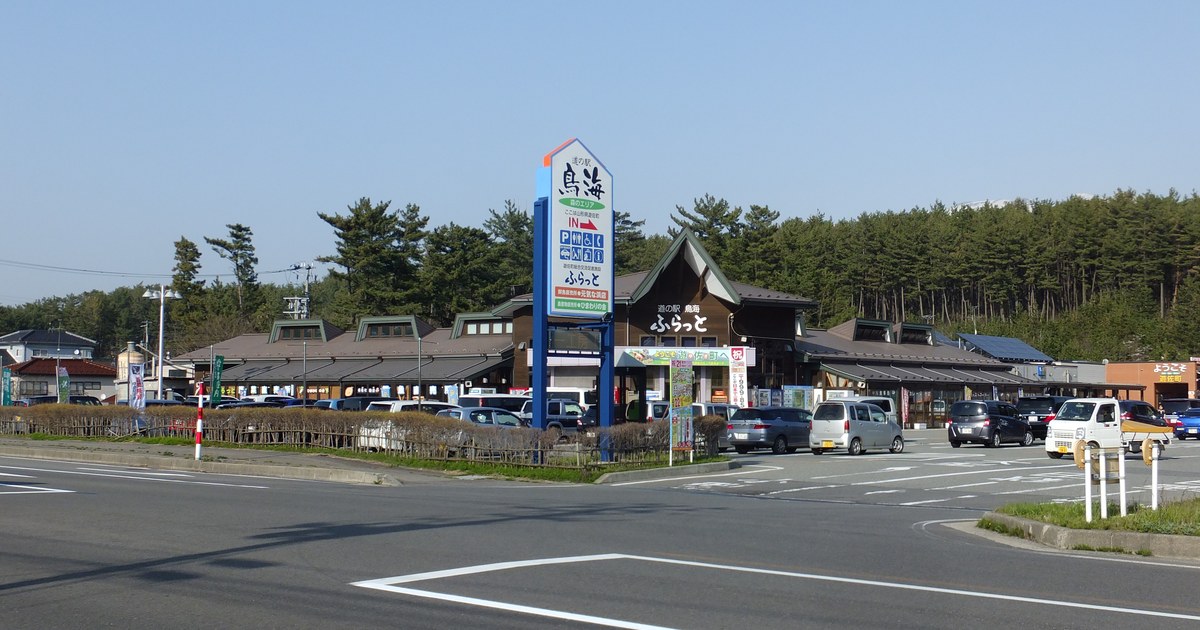
Japan has 1,231 michi-no-eki (roadside stations) as of the 64th registration round on 19 December 2025, and on the question everyone actually asks — can I sleep in my car here? — there is no national rule at all. There is exactly one national line, and it is not the one you think. English guides tend to land on one of two wrong answers: either "Japan bans overnight stays at roadside stations" or "everyone does it, nobody cares". The transport ministry's own public Q&A says, word for word, that taking a nap in your vehicle mid-drive to recover from fatigue is fine. What it asks you to refrain from is lodging use — and the verb it uses is the polite one for "please avoid", not the word for prohibition, with no penalty attached anywhere. This article opens the official texts and shows you the actual yardstick, which side of a painted white line it falls on, and why a disaster can legally get you removed.
📍 This piece is about the rules and how to read them: which words officials use, what condition is attached to the free parking, and why the paid bay can legally sell you a night. For licences, insurance and getting on the road in the first place, see our guide to driving in Japan as a visitor.
- Napping is officially permitted, in writing. The ministry's Q&A says recovering from fatigue in your car mid-drive is fine. What is discouraged is lodging use — phrased as "please refrain", with no penalty
- There is no national rule, only one national line. Officials state it differs by station, but that at every michi-no-eki, road users who came to rest must not be impeded. That is what gets judged — not whether you sleep
- The "free" was conditional from day one. The registration guideline says parking and toilets are free for users whose purpose is rest. You are not a free-parking customer; you are a resting road user
- One station, two legal regimes. A ministry committee document states that overnight parking spaces are currently located outside the road zone — the free bay and the paid bay sit on different sides of the law
- A disaster can legally evict you. Of 512 designated disaster-base car parks, 366 are michi-no-eki (as of 7 March 2024), and the road administrator may prohibit or restrict ordinary use
- RV Park is not a government scheme. It is a private trade association's registered trademark and paid certification (¥30,000 application plus ¥10,000 a year), with zero mentions of the transport ministry across its own pages
📖 Contents (tap to expand)
- What officials actually said: four words, none of them "banned"
- No national rule — one national line
- That free parking came with a condition attached
- One station, two legal regimes, one white line apart
- The three-step check (and why there is no banned list here)
- What "lodging behaviour" means in practice: ten prohibited acts
- In a disaster, the state can lawfully clear you out
- Rental cars: five companies silent, one that matters
- Paying to sleep legally — but not to the government
- The straight answer for road-trippers
What officials actually said: four words, none of them "banned"
Start with the passage everyone paraphrases and almost nobody quotes in full. The Ministry of Land, Infrastructure, Transport and Tourism runs a public advice service whose Q&A includes the question "Is car camping possible in a michi-no-eki car park?" The answer, translated closely:
Because a michi-no-eki is a rest facility that drivers and others may use 24 hours a day for the prevention of traffic accidents, taking a nap in your vehicle mid-drive to recover from fatigue and similar is fine. However, lodging use of public spaces such as car parks is something we basically ask you to refrain from.※
※ Separately, there are michi-no-eki that have provided parking spaces intended for overnight stays, so please check the website of each individual michi-no-eki for details before use.
Three things in that paragraph get lost in translation, every time. First, the verb applied to napping is kamaimasen — in Japanese officialese that is straightforward permission. Second, the phrase applied to lodging is kihonteki ni go-enryo itadaite imasu, the polite "we basically ask you to refrain". It is not the word for prohibition, and there is no penalty anywhere on the page. Third, and least quoted: the ministry writes its own exception into the footnote, acknowledging stations that sell overnight bays.
What the ministry doesn't do is just as revealing. Read the whole answer and you find that the Japanese word for car camping, shachūhaku, appears only in the question title and never once in the answer. Officials decline to take a position on that word at all. Instead they split it into two separate things — napping and lodging — and answer those. That is not evasion. That is the key to the entire subject.
| Official term | How officials use it | Official stance | What you are, in the system |
|---|---|---|---|
| Kyūkei (rest) | The legal definition of a michi-no-eki; "rest facility" is the official designation itself | The reason it exists | A road user |
| Kamin (nap) | "Napping in your vehicle mid-drive to recover from fatigue" — explicitly classed as a form of rest | 🟢 Permitted, in writing | Still a road user |
| Shukuhaku (lodging) | "Lodging use of public spaces such as car parks" — the category opposed to rest | 🟡 Please refrain. No penalty, and a footnoted exception | Someone using a rest facility as accommodation |
| Shachūhaku (car camping) | Appears only in the question title; zero occurrences in the answer | ⚪ Deliberately unaddressed; split into the two terms above | — |
🔴 One popular claim needs killing right here: "sleep more than X hours and it becomes lodging." I read the full text of the ten relevant ministry Q&A pages. Zero hour figures. Zero time windows. Those thresholds have no traceable official source. The line officials draw is drawn on purpose and effect, not on a clock — and the next section is where that stops sounding like a technicality.
No national rule — one national line
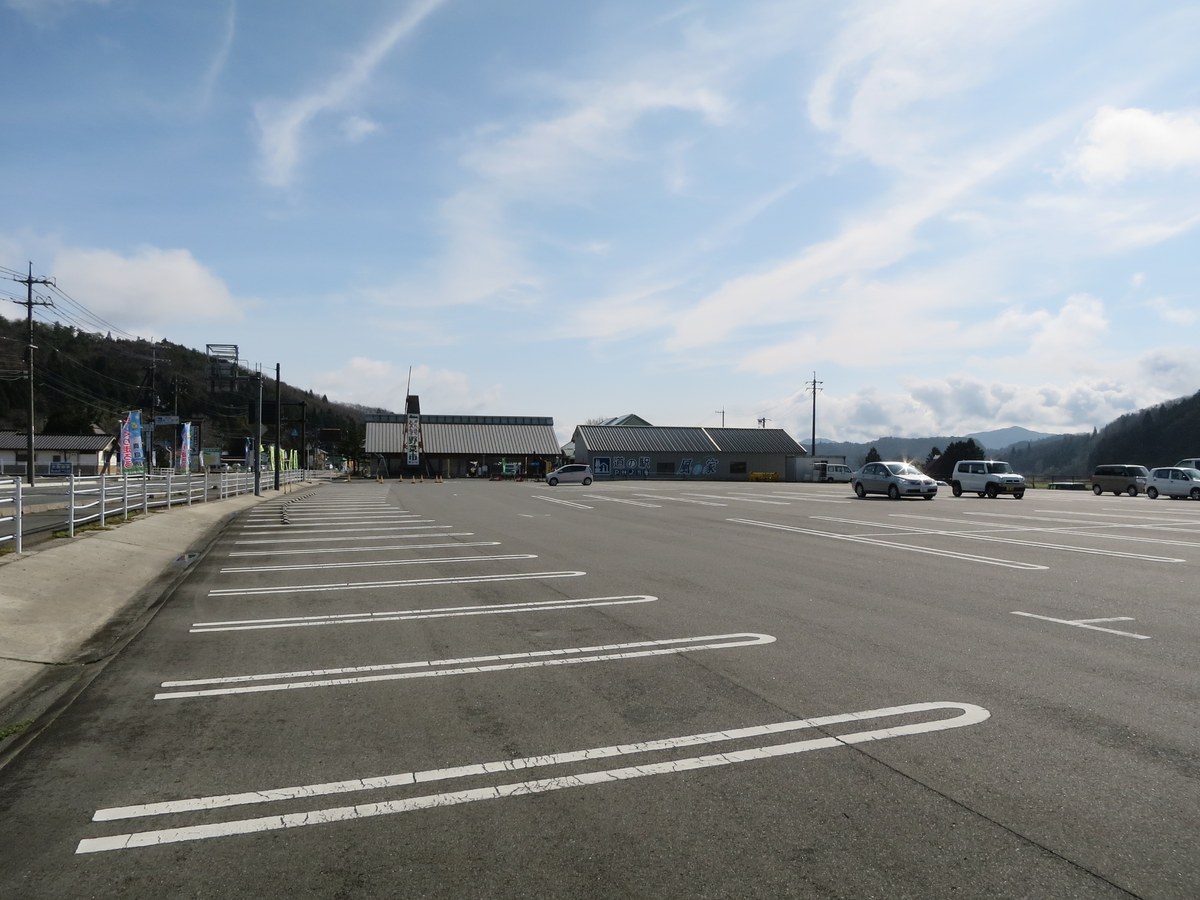
The same advice service has a second Q&A, asking whether the car park may be used for purposes other than resting. It is barely quoted anywhere in English, and it is the most important sentence in this article:
How far use of the car park for purposes other than rest is permitted differs by individual michi-no-eki, depending on the capacity of the car park and the purpose of the facility, but common to every michi-no-eki, it is necessary that use by road users whose purpose is rest is not impeded.
For this reason, where the use of the facility by resting users is hindered, the municipality or the operator may ask you to refrain from long-duration use.
In addition, municipalities may set usage rules for the facility by ordinance and similar, in light of effects on other users and nearby residents.
In plain terms: whether you can sleep there is explicitly a per-station matter. The one rule that applies nationwide is not about sleeping at all — it is that you must not obstruct road users who came to rest.
That is enormously freeing, because it means you do not have to research stations one by one. You may have come across a "banned list", which reads as though a national rule existed with local exceptions. The ministry describes the opposite: no national rule, one national line — and that line governs whether you take up space and spread out, not whether your eyes are closed.
It also explains why the odd-looking split between napping and lodging is internally consistent. When you nap, you are still a road user — pausing mid-journey, then continuing. When you lodge, you become an occupant, using a public rest facility as a place to stay. Officials are judging your status and your effect on others, which is precisely why they never needed to give you an hour count.
And this is not just a help-desk improvisation. I extracted and searched the full nine pages of the scheme's founding administrative document, the Michi-no-Eki Registration and Signage Guideline: the Japanese words for lodging, car camping and napping return zero hits each. Move forward to current policy and the picture holds — the ministry's Michi-no-Eki "Third Stage" policy pages, and the four documents distributed at the most recent promotion committee meeting in March 2026, return zero hits for lodging, car camping, RV Park and long-stay alike. Neither the founding document nor the live policy programme has ever written overnight stays into the scheme. That is far harder evidence for "there is no national rule" than any commentary.
That free parking came with a condition attached
Here is the line worth remembering above all others, and it comes from the text of the scheme rather than from interpretation. The registration guideline's facility-composition clause reads:
…shall be equipped with a car park of sufficient capacity and clean toilets that users whose purpose is rest can use free of charge…
Look at the subject of that sentence. Free parking has been tied to the purpose of resting since the scheme's first day. It was never an unconditional public benefit. So the accurate framing is this:
You are not "a user of a free car park". You are "a road user whose purpose is rest". The free part belongs to the second description — and the moment you stop fitting it, you are outside the sentence.
While we are in the founding document, one widely repeated summary needs correcting. The registration requirements are often given as a trio: 24-hour free parking, 24-hour toilets, and information provision. That trio comes from the ministry's own summary PDF, which merges two different lists into one and drops an item. Against the guideline text itself:
| Requirement | Items | What the guideline text specifies |
|---|---|---|
| Free (2 items) | Car park, toilets | Limited to users whose purpose is rest |
| Available 24 hours (4 items) | Car park, toilets, baby care corner, telephone | The summary version omits the telephone entirely |
| Information provision | Information desk or corner | A separate function, not part of either list above |
The operational policy attached to the same document adds minimum standards you can actually use on the ground: roughly 20 parking spaces or more (one large-vehicle bay counted as two), roughly 10 toilet fixtures or more, in principle all Western-style, and an information facility within a 2–3 minute walk of the car park. There is also a provision almost nobody knows about and travelling parents will care about: stations are required, with the cooperation of relevant parties, to sell nappies individually.
Worth knowing about the other half of the scheme: michi-no-eki are established by municipalities (or public bodies acting for them) and registered by the Director-General of the Road Bureau, with the registration certificate required to be displayed visibly inside the facility — and the guideline provides for registration to be revoked. The December 2025 round did exactly that: two new registrations, one revocation, producing the total of 1,231. ⚠️ Treat that number as a snapshot of the 64th registration round (19 December 2025), not as "currently". Rounds happen roughly once or twice a year.
One station, two legal regimes, one white line apart
By now the ministry may look like it is contradicting itself: please don't stay overnight, but also, some stations have overnight bays. Those two statements are not about the same piece of ground.
The proof is in the ministry's own committee material. The slide is titled "Responding to demand for overnight stays", and reads:
In recent years, with rising interest in outdoor leisure, cases of developing car-camping parking spaces within or around michi-no-eki areas have been observed. On the other hand, there are cases where car camping impedes the rest function that is a michi-no-eki's original purpose.
From the standpoint of responding to these issues, should we not pursue appropriate separation of uses from rest use, including by advancing the provision of car-camping spaces?
※ Car-camping parking spaces are, at present, established outside the road zone.
Two things follow. First, the ministry's direction is separation, not enforcement — the question on the table is whether to expand provision of overnight spaces. Nobody reading this document could honestly describe official policy as a crackdown. Second, that footnote is where the whole argument resolves: overnight bays currently sit outside the road zone.
Connect that to the legal structure and it clicks:
- The free bay (rest parking) is inside the road zone. In the integrated construction type, the car park and toilets are built by the road administrator, and the Road Act folds "appurtenances of the road" into the definition of "road" — meaning the ground under your tyres may legally be the road. Hence "please refrain from lodging".
- The paid bay (car-camping space or RV Park) is outside the road zone, free of that regime, which is exactly why it can lawfully sell you a night.
The clearest teaching example on the ground is Michi-no-Eki Otofuke in Hokkaido, whose official page splits the site into a matched pair: parking for the purpose of staying overnight in your vehicle → the dedicated car-camping car park; parking for the purpose of rest (including napping) → the general car park. One station, two plots, two rule sets — and note the bracket: the station itself files napping under rest, exactly as the ministry does.
| What you are doing | Official term | Legal position of that ground | Cost | The test applied |
|---|---|---|---|---|
| Napping mid-drive | Kamin (a form of rest) | Inside the road zone / public facility | Free | 🟢 Officially fine, provided resting road users are not impeded |
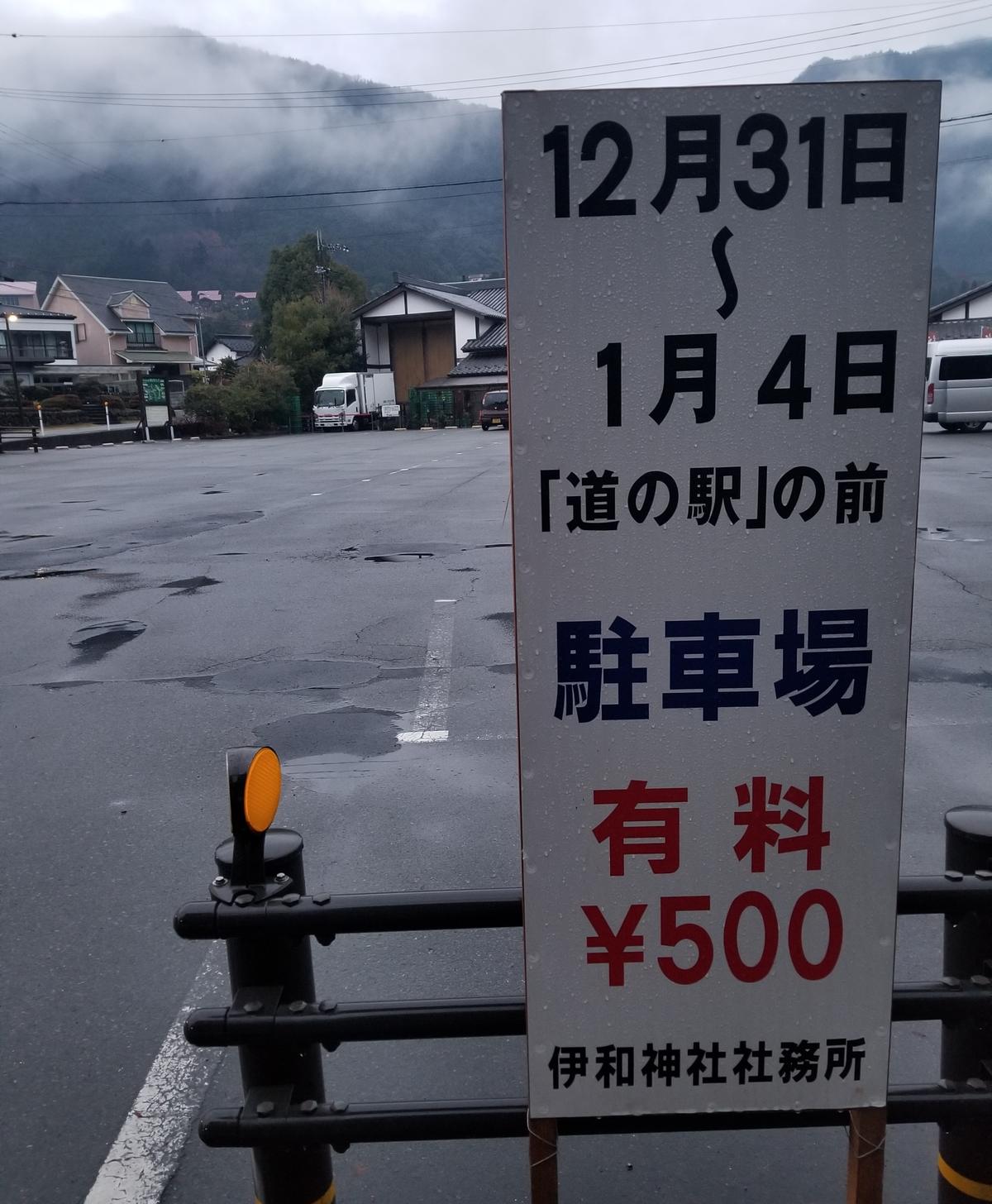
| Using the site as tonight's accommodation | Shukuhaku (lodging) | Same ground, the free bay | Free, but not intended for this | 🟡 "Please refrain". No penalty, but the operator may ask you to move on |
| Parking in a marked overnight bay | Dedicated car-camping bay / RV Park | Outside the road zone | Typically ¥1,500–4,000 a night | 🟢 Lawful overnight stay; rules set by the facility or municipal ordinance |
Who writes the rules has a legal root too. A michi-no-eki is at once an appurtenance of the road under the Road Act and a public facility under Article 244-2 of the Local Autonomy Act — established by municipal ordinance, usually operated by a designated management company. The usage rules come from that second layer, which is why they vary by municipality. That is the root of "it differs by station".
⚠️ An honest boundary: I did not establish whether the car park of an "independent type" station (built entirely by the municipality) constitutes a "road" under the Road Traffic Act, and obtained no case law or administrative interpretation on the point. What is verifiable is only the first half — that two different legal instruments are in play. No further inference here.
The three-step check (and why there is no banned list here)
Position first: this article deliberately does not publish a list of michi-no-eki that ban car camping. The reasons are in the FAQ; the decisive one is that officials state rules differ station by station, and the ministry has never compiled such a list itself. One station these lists routinely name could not be verified on any official page at all — the official URL still listed in the national directory now returns a 404. Publishing a list you cannot make exhaustive teaches readers that absence from the list means permission. That is the most dangerous thing this article could do.
The method officials give you instead is concrete, and it is three steps:
- Read the signage on site. The ministry tells you to do this in as many words: check the information posted within the facility, and cooperate where the municipality or operator makes a request. What is on the board beats anything you read online.
- Check that station's own website. Also official, from the footnote: check the website of each individual michi-no-eki before use.
- Look for a separately marked paid area. The bay labelled "car camping only" or "RV Park" is the one where staying the night is what you are supposed to do — the practical version of the Otofuke pairing.
Something more useful than a list: learn to read how strongly each station words it, because the variation is enormous. Michi-no-Eki Hakuba in Nagano uses the hardest phrasing available — lodging use is prohibited. Funaya-no-Sato Ine in Kyoto asks you to refrain and notes it is doing so "based on the view of the Ministry of Land, Infrastructure, Transport and Tourism". Uzushio in Hyōgo bans only long-term stays and out-of-purpose uses such as generators, electricity theft and water theft — it never actually says you cannot sleep one night. Three different postures deserve three different responses; flattening them all into "banned" throws away your own judgement.
One more sentence appears at almost every station, and it matters as much as the rules: the michi-no-eki accepts no responsibility for accidents or theft. A free car park is not a supervised place to stay. Worth settling in your mind before you recline the seat.
What "lodging behaviour" means in practice: ten prohibited acts
"Do not impede resting road users" sounds abstract until you find the document that converts it into actions. That document was produced by the Iwate Prefecture Michi-no-Eki Liaison Council and is published on the website of the Tōhoku Regional Development Bureau of the transport ministry. Its ten "generally prohibited" behaviours:
- Extended engine idling
- Parking outside the marked bays
- Barbecuing, cooking, boiling water, open fires and fireworks — use of cooking equipment inside a campervan is expressly excluded
- Use outside the vehicle of chairs, tables, beds, side awnings, tarps, tents, shelters, ground sheets and generators
- Drawing power from the station's buildings (electricity theft)
- Removing toilet paper from the toilets
- Washing cars or otherwise using large volumes of tap water
- Washing dishes, clothes, hair or your body at the toilet hand basins
- Drying towels or laundry in the open
- Littering, discarding cigarette butts, or abandoning unwanted items
See the pattern? Item 4 converts "lodging behaviour" into one observable thing: what you take out of the vehicle. Chairs, tables, beds, awnings, tarps, tents, generators — the moment those appear outside your car, you have gone from "a road user resting inside a vehicle" to "someone camping in a public space". That test is far more usable than any hour count, and it is the same idea the ministry expressed abstractly.
🟢 There is a counterintuitive exception in there worth memorising if you rent a campervan: fire and cooking are prohibited, but use of cooking equipment inside a campervan is explicitly carved out.
⚠️ Precision matters here: this is a prefecture-level council document hosted on a ministry site — it is not a national rule made by the ministry. Do not quote it as "Japanese law". That said, its content matches the ministry's position exactly, and the Hokkaido regional body publishes a near-identical set of manners, likewise stating that lodging use should be refrained from while napping at the facility is fine. One structural detail is telling: regional councils publish usage manners; the national council does not. Every layer of the system pushes this question downward — which is the organisational evidence for "there is no national rule".
Two practical differences to know. Rubbish: the Hokkaido guidance says to follow each individual station's rules and to cooperate by taking home waste the station cannot process — there is no national practice, and the default is that you carry it out. Large-vehicle bays: no dedicated official rule exists; the Iwate list only covers parking outside marked bays. But those bays exist so freight drivers can rest, so taking one lands squarely on the single national line. That last step is my inference from the official test, not an official statement.
In a disaster, the state can lawfully clear you out
This section has essentially no coverage in English, and its conclusion runs against most people's instincts.
A March 2021 amendment to the Road Act created a new category: disaster-base vehicle parking. Three articles do the work:
- Article 48-29-2: the Minister may designate car parks that are appurtenances of the road as disaster-base vehicle parking.
- Article 48-29-3: when a disaster occurs, the road administrator may prohibit or restrict any use other than use as a base for wide-area emergency response.
- Article 48-29-4: and a road sign must be installed at the entrance and other necessary places, stating what is prohibited or restricted.
The scale is the point. As of the official announcement dated 7 March 2024, 512 sites were designated nationwide, of which 366 are michi-no-eki (the other 146 being expressway service and parking areas). Nearly three in ten roadside stations in the country can lawfully remove ordinary users when a major disaster strikes.
Stations say so themselves. Michi-no-Eki Asagiri Kogen in Shizuoka puts it in front of readers:
This michi-no-eki car park has been designated by the Ministry of Land, Infrastructure, Transport and Tourism as "disaster-base vehicle parking" serving as a base for emergency disaster response, and in an emergency, use by members of the public may unavoidably be restricted or suspended.
Note what this does to the hierarchy of rules. The everyday "please refrain" carries no penalty; this one has statutory force. The hardest rule you will meet in a michi-no-eki car park is not about sleeping. It is about disasters.
Two schemes get conflated constantly, so: the "disaster-prevention michi-no-eki" designation (79 stations after the May 2025 additions) marks sites intended as wide-area bases for the Self-Defense Forces, police and TEC-FORCE, with selection criteria including a car park of 2,500 m² or more, seismic reinforcement, uninterrupted power, and a business continuity plan. In the ministry's own diagram, it is ordinary michi-no-eki that are labelled temporary local evacuation sites. So the instinct that a disaster-prevention station is the safer place to shelter is backwards — that space is reserved for the people doing the rescuing. The priority was baked in from the start: where a private operator runs a station, the agreement must include an undertaking to use the michi-no-eki for the rescue of local residents and users in an emergency.
⚠️ Date the number: 512 is a snapshot from 7 March 2024, now over two years old, and I found no announcement of additional designations for the following fiscal years. The reliable check is not the figure but the sign at the entrance — the statute requires it to be there. For what to actually do when the alert sounds, see our Japan earthquake and typhoon preparedness guide.
Rental cars: five companies silent, one that matters
For most visitors flying in, the real question is not about the roadside station at all. It is about the contract you signed at the rental counter.
I read the complete rental terms and FAQ trees of Japan's five major rental companies, searching the Japanese terms for car camping, lodging, napping, out-of-purpose use and night-time use:
| Company | Terms version | "Car camping" | "Lodging" | Nearest relevant clause |
|---|---|---|---|---|
| Toyota Rent a Car | In force 1 Apr 2026 | 0 hits | 0 hits | Art. 16(2) use other than the agreed purpose |
| Nippon Rent-A-Car | In force 15 Jan 2026 | 0 hits | 0 hits | Art. 17(2) use other than the agreed use |
| ORIX Rent-A-Car | Supplementary 1 Nov 2022 | 0 hits | 0 hits | Art. 17(2) use other than the agreed use |
| Nissan Rent a Car | In force 24 Mar 2025 | 0 hits | 0 hits | Art. 18(2) use other than the agreed use |
| Times Car Rental | Revised 1 Apr 2026 | 0 hits | 0 hits | 🟢 Art. 22(13) inappropriate parking or stopping |
First, kill the over-reading. Those clauses about "use other than the agreed purpose" do not mean "no sleeping in the car". In Toyota's terms, Article 7 defines the rental conditions as the booking parameters — dates, vehicle class, named drivers, payment method. There is no list of permitted uses anywhere, so reading a car-camping ban into that clause is inventing one. The English-language versions of these terms return zero hits too.
The one company with a genuinely relevant clause is Times:
(13) Irregular driving … or inappropriate parking or stopping (regardless of whether the location is public or private land) and other acts that impair the safety of traffic or the surrounding environment.
Sit with that for a second. The rental company does not regulate whether you sleep. It regulates whether you parked properly — and it says so about public and private land alike. Two entirely unrelated institutions, two separate documents: the transport ministry asks whether resting road users are impeded, and the rental company asks whether the parking was inappropriate. They converge on the same thing. The yardstick this article has been describing shows up twice, independently.
The honest framing: no major Japanese rental company forbids sleeping in the car, and none permits it either — they simply do not address it. What binds you is the rules of the place you parked, not the rental contract.
If you are serious about this style of travel, renting a campervan is the cleaner route. Operators state that, excluding some vehicles, campervans are under 3.5 tonnes and can therefore be driven on an ordinary licence including automatic-only — but note the hedge, because it depends on the specific vehicle you book. The Japan RV Association lists 51 member rental operators nationwide.
🔴 There is one gap I could not close, and it needs saying out loud. What Article 107-2 of the Road Traffic Act grants a visiting driver is the vehicle category printed on the International Driving Permit, not the scope of a Japanese ordinary licence. The weight ceilings match at 3,500 kg, but a Geneva Convention category B permit covers vehicles seating eight passengers besides the driver, while Japan's ordinary category runs to a capacity of ten — and 10-seat campervans are on the rental market. The National Police Agency publishes nothing addressing that seat-count gap, so I will not assert an answer in either direction. If you want a larger vehicle, confirm with the operator and the local police before you book.
While we are on licences, the clock matters for long road trips: an IDP is valid in Japan for whichever is shorter of one year from your date of entry, or the permit's own validity — and the permit itself is valid for one year from the date of issue, so one obtained three months before departure gives you nine usable months, not twelve. Drivers on the licence-plus-official-translation route (which is how Taiwan is handled) run on the same clock. And the translation does not have to come from one single body: alongside the country-specific issuers, the National Police Agency lists JAF, Zip Plus Inc. and the Japan Visiting Drivers Support Association as designated issuers — genuinely useful if you are already in Japan. The same page carries a warning worth heeding: foreign sworn translators are not included.
⚠️ A ready-made cautionary tale: one campervan rental operator's own website lists Estonia among the countries whose licences need an official Japanese translation. Estonia appears neither in the enforcement order nor on the police agency's list. The operator is wrong; the regulation governs. This is exactly why anything that can stop you driving should be checked against the police agency page yourself.
Paying to sleep legally — but not to the government
If what you want is to sleep until morning without a thought in your head, the answer is a paid overnight bay. One premise has to be stated correctly first:
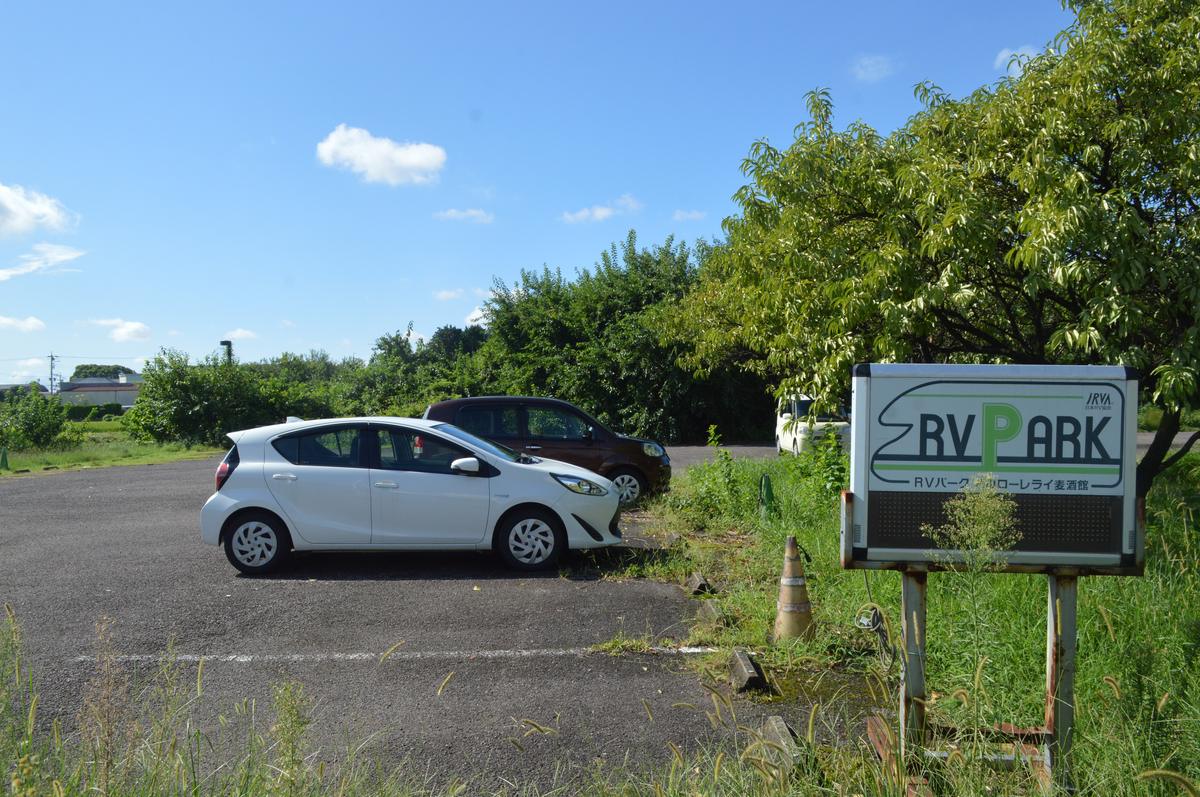
🔴 RV Park is not a government scheme, and not an officially designated legal alternative. It is a certification from the Japan RV Association, which states on its own site that it is an organisation composed of campervan-related companies. Decisively: the association's page reads that "RV Park" is a trademark it has obtained and that unauthorised use by uncertified facilities is prohibited, while facilities pay an application fee of ¥30,000 plus ¥10,000 a year. A registered trademark plus paid certification — not an administrative licence. Across six of the association's own pages, the transport ministry is mentioned zero times.
None of which is a knock on it. RV Parks are private industry filling the gap the state left, and they work well. Just be clear that their legitimacy comes from the land sitting outside the road zone, not from official designation. As of 23 August 2026 the official directory listed 685 certified sites nationwide — ⚠️ a figure that moves monthly (23 were added in July 2026 alone), so re-check before you travel.
On price: a night for one vehicle mostly falls in the ¥2,000–4,000 range, with a median around ¥3,300, set individually by each facility — and different bays within the same site can differ. ⚠️ Online bookings carry an additional service charge (noted as introduced in June 2025), but the amount is not officially published, so no number is invented here.
For overnight bays located inside michi-no-eki, here are three worth studying, chosen because each represents a different institutional model:
| Facility | Price | Size | Why this one |
|---|---|---|---|
| Michi-no-Eki Yamagata Zao (Yamagata City) | ¥2,000 | 5 bays | ⭐ The ordinance-and-permit model: authorised under the Yamagata City Michi-no-Eki Ordinance and its enforcement rules, with a use permit plus power and waste-container keys handed over at check-in. The only concrete example I found of the ministry's "municipalities may set rules by ordinance" |
| Michi-no-Eki Akan Tancho-no-Sato (Kushiro) | ¥1,500 / ¥2,000 with power | 19 bays | The cleanest "two plots, two rule sets" pairing: the same official page asks you to refrain from overnight use of the ordinary car park while selling you the other one. The fee includes one hot-spring bath admission |
| Michi-no-Eki Hota Elementary School (Kyonan, Chiba) | ¥3,500 | 2 bays | The site itemises what the fee buys: space, electricity, water — and one 45-litre Kyonan-designated rubbish bag. Being able to dispose of your waste legally is one of the most practical differences between a paid bay and a free one |
🚨 Read the capacity before the price. Those three have 5, 19 and 2 bays respectively. Two to five spaces is typical, which makes paid overnight bays a lovely bonus when one falls on your route and a bad thing to build a day around. Cancellation terms also vary widely by facility, so check the station's own page before you commit.
Two limitations almost no guide mentions:
- There is a downgraded "RV Park Light" tier. Of the eight certification conditions (a 4 m × 7 m bay, 24-hour toilets, 100 V power, bathing facilities within a 15-minute drive, waste disposal, free entry and exit, signage, and multi-day stays), bathing, waste disposal and multi-day use are negotiable for the Light tier. Seeing the sign does not guarantee all eight.
- Not every site takes online bookings. None of the eight conditions mentions reservations at all; in practice some take web bookings only, others telephone only. And officials state plainly that these are car parks where sleeping in your vehicle is permitted — camping behaviour is not. Paying does not buy you a tent pitch.
If part of your trip involves sleeping under a roof, the licensing categories behind Japanese accommodation, why unstaffed check-in is lawful, and Osaka's halt on new private-lodging registrations are covered in our guide to how Japanese accommodation is regulated.
The straight answer for road-trippers
The whole article compresses into one operational test: the question is not "does this michi-no-eki allow car camping", it is "am I taking a space away from someone who came here to rest".
Concretely, tick these boxes and you are doing the thing officials described in writing as fine: one ordinary bay (not the large-vehicle bay, not the accessible or expectant-mother spaces), everything stays inside the vehicle (no chairs, no table, no awning, no generator), no fire, no laundry, no towels hung out, rubbish carried out with you, no extended idling, and back on the road in the morning. Conversely, the moment you start treating the ground outside your car as yours, you have changed status — and once you have, being asked to move on is entirely fair.
So what if you genuinely want a full night's sleep? The recommendation here is blunt: plan sleeping and resting as two separate things. Use the free bay for the fatigue nap in the middle of a long drive — that is the officially sanctioned use and you should feel no guilt about it. For a full night, take the paid bay, or book a room. Two to four thousand yen buys you no risk of being moved on, power, a legal way to dispose of rubbish, and a bath nearby. In the budget of a self-drive trip that is small, and what it buys is a night with no uncertainty in it.
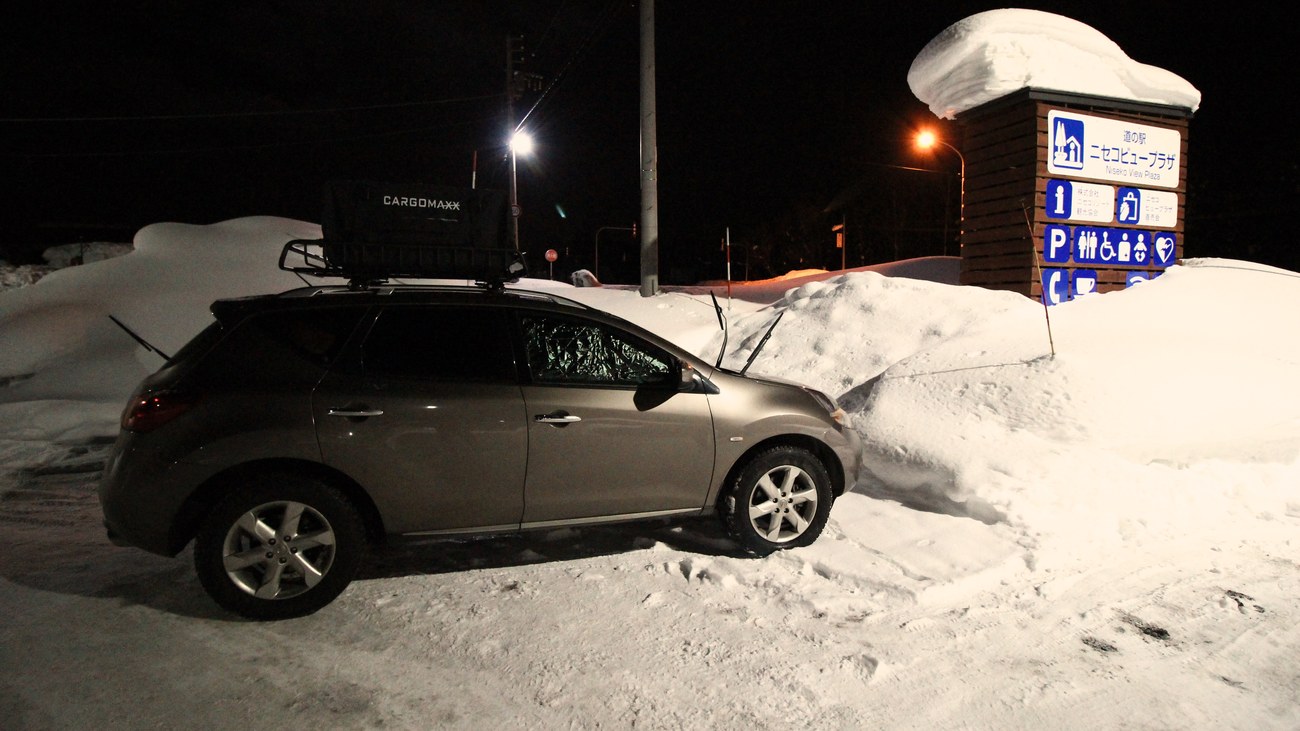
Two situations deserve their own mention. First, severe weather: deciding that a blizzard or torrential rain makes driving unsafe, and pulling into a michi-no-eki to rest, is the textbook case of "napping mid-drive to recover" — expressly permitted, and the last thing I want any reader to hesitate over. The judgement calls and stopping logic for Japanese winter roads are in our winter driving guide for Japan. Second, expressway service and parking areas are a different system entirely — not michi-no-eki, different rules, different economics. For how toll costs actually work and whether a flat-rate ETC pass pays off, see our breakdown of ETC and expressway passes.
One closing boundary, because it changes how you should use this article. I cannot enumerate the rules of all 1,231 michi-no-eki — building an index from the national association's directory produced 1,295 official URLs, and the crawl timed out before finishing. So what you have here is a test, not a list. On the ground, the order officials give never stops working: read the sign, then the station's website, then look for the separately marked paid bay.
Frequently Asked Questions
- Q1:Can you sleep in your car at a michi-no-eki in Japan?
- Yes for a nap, and the government says so in writing. The Ministry of Land, Infrastructure, Transport and Tourism runs a public Q&A page asking exactly this question, and the answer states that because a michi-no-eki is a rest facility open 24 hours to prevent traffic accidents, taking a nap in your vehicle mid-drive to recover from fatigue is fine. The Japanese verb used is "kamaimasen" — it is permission, not a grey area. What officials ask you to avoid is something different: lodging use of a public space such as a car park. The wording there is "kihonteki ni go-enryo itadaite imasu", meaning please generally refrain. It is not the word for prohibition, and no penalty exists anywhere in the text. The same page carries a footnote in which the ministry itself concedes that some michi-no-eki have set aside separate parking spaces intended for overnight stays. So the accurate summary is not "Japan bans car camping at roadside stations". It is: do not treat a rest facility as accommodation, and note that some stations sell you a space where you can.
- Q2:Is car camping legal in Japan?
- Sleeping in a vehicle is not itself illegal in Japan, and no national statute governs it at michi-no-eki. What actually decides whether you are fine or not is where you park and whether you obstruct anyone. The ministry states that how far non-rest use of a car park is permitted differs by individual michi-no-eki depending on capacity and purpose, but that one requirement is common to all of them: the use of the facility by road users who are there to rest must not be impeded. That single sentence is the entire national rule. It is also mirrored, from a completely different direction, in rental car contracts — Times Car Rental prohibits inappropriate parking or stopping, and specifies that this applies regardless of whether the location is public or private land. Two unrelated institutions, two separate documents, the same yardstick: not whether you sleep, but whether you take up space that belongs to someone else.
- Q3:How many hours count as a nap before it becomes staying overnight?
- There is no official number. I read the full text of the ten relevant ministry Q&A pages and found zero hour thresholds and zero time windows. The hour limits you may have seen quoted have no traceable official source, and I will not repeat them. The line officials actually draw is drawn on two things: purpose (recovering from fatigue so you can keep driving, versus treating the site as your accommodation for the night) and effect (whether people who came to rest are obstructed). The practical translation is far more useful than a clock anyway: take one ordinary space, keep everything inside the vehicle, do not take the large-vehicle bay, and move on in the morning. If your presence starts costing other road users a space, that is the trigger — not the hour.
- Q4:Is an RV Park an official government-approved place to sleep?
- No, despite how official the name sounds. RV Park is a certification issued by the Japan RV Association, which describes itself on its own site as an organisation composed of companies related to campervans — an industry body. More decisively, the association states that "RV Park" is a trademark it owns and that unauthorised use by uncertified facilities is prohibited, and the operator-facing page lists an application fee of 30,000 yen plus an annual registration fee of 10,000 yen. That is a registered trademark plus a paid certification, not an administrative licence. I searched six of the association's own official pages for any mention of the transport ministry and found zero hits. Compare that with michi-no-eki itself, where the ministry states plainly that registration is made by the national government upon application from the municipal mayor. That is what a registration scheme looks like. RV Parks are private industry filling a gap the state left open — genuinely useful, just not a government programme.
- Q5:Does my rental car contract let me sleep in the car?
- It almost certainly says nothing at all. I read the complete rental terms and FAQ trees of Japan's five major rental companies — Toyota, Nippon, ORIX, Nissan and Times — searching for the Japanese terms for car camping, lodging and napping. Zero hits at all five. No company forbids it; no company permits it; they simply have not addressed it. One clause is regularly over-read: several contracts prohibit using the vehicle "for purposes other than those agreed", but the agreed conditions are defined elsewhere in the same contracts as the booking parameters — dates, vehicle class, named drivers, payment method. There is no list of permitted uses, so reading that clause as a car-camping ban is over-interpretation. The one company with a genuinely relevant clause is Times, which prohibits inappropriate parking or stopping, explicitly regardless of whether the land is public or private, and separately bans taking the car onto beaches, riverbeds and forest tracks. The takeaway: rental companies regulate where you park, not whether you sleep.
- Q6:Are michi-no-eki safe places to shelter during an earthquake or typhoon?
- Not in the way most people assume, and the law runs in the opposite direction. A 2021 amendment to the Road Act created a category called disaster-base vehicle parking. Article 48-29-3 empowers the road administrator, when a disaster occurs, to prohibit or restrict any use of that car park other than use as a base for wide-area emergency response. Article 48-29-4 requires a road sign at the entrance stating what is being prohibited or restricted. As of the official announcement dated 7 March 2024, 512 sites were designated nationwide — and 366 of them are michi-no-eki. In other words, roughly three in ten roadside stations can lawfully clear out ordinary users when a major disaster hits, because the space is needed by the Self-Defense Forces, police and the ministry's TEC-FORCE teams. Michi-no-eki Asagiri Kogen in Shizuoka spells this out on its own homepage. Separately, the 79 stations selected as "disaster-prevention michi-no-eki" are rescue-operation bases; it is ordinary michi-no-eki that the ministry's own diagram labels as temporary local evacuation sites.
- Q7:Why does every michi-no-eki have different rules?
- Because of how they are constituted in law. A michi-no-eki is simultaneously two things. Under the Road Act it is an "appurtenance of the road" — in the integrated construction type, the car park and toilets are built by the road administrator, and the Road Act folds appurtenances into the legal definition of "road", meaning the ground you park on may legally be the road itself. Under the Local Autonomy Act it is a "public facility" established by a municipal ordinance under Article 244-2, usually then operated by a designated management company. The usage rules come from that second layer, which is why they vary municipality by municipality. The ministry says as much: how far non-rest use is permitted differs by station, and municipalities may set usage rules by ordinance. One honest caveat: I read several such ordinances and found only general provisions on establishment, management and use permits — not one of them names car camping or overnight stays in its text.
Read next
Self-Drive in Japan 2026: License, Insurance & ETC Guide
The thing that stops first-timers isn't driving on the left — it's the licence. Geneva vs Vienna IDP, where to drive, CDW+NOC insurance, ETC cards, fuel and winter tyres.
Winter Driving in Japan: Snow Tires, 4WD & Whiteouts
Renting a car in snow country isn't enough — studless tires, 4WD, chain zones, whiteouts, roads to skip, plus insurance and JAF rescue.
Japan Expressway Pass & ETC Card Guide 2026
From spring 2026, 65 toll gates take ETC only — no cash lane at all. How visitors rent a card, and when each regional pass actually pays off.
📊 See the 2026 Price Index (JR Pass, DPA, eSIM, Airport Transport) →