Four dates carve up Japan's November 2026 — Tori no Ichi on Saturday the 7th, Shichi-Go-San on Sunday the 15th, the second Tori no Ichi on Thursday the 19th, and the Labor Thanksgiving three-day weekend of November 21–23 — and this year, for the first time, that last block has been locked down by the railways themselves. On May 21, 2026 JR Central and JR West issued a supplementary announcement extending the Nozomi all-reserved policy from four traditional peak blocks to eight, ordinary three-day weekends included. That makes November 21–23, 2026 the first Labor Thanksgiving weekend in history with no Nozomi non-reserved seats. Over the same three days NEXCO switches off the expressway holiday discount entirely. This is not another list of November festivals — those are everywhere. This is about how the month's crowds and transport are structurally built: which three days need a reservation a month out, which day you must not drive, whether you really should haggle for a kumade rake (the internet has the tense wrong), and one directional error that could cost you a plane ticket — late November is not the end of maple season, the maples have not arrived yet.
- Nov 21–23 is the first Labor Thanksgiving weekend with no Nozomi non-reserved seats — a policy extended on May 21, 2026
- NEXCO's holiday toll discount is off across all three days; Culture Day on Nov 3 still gets it — the test is length of break, not holiday status
- No third Tori no Ichi in 2026: Nov 7 (Sat) and Nov 19 (Thu) only. The fire superstition is quoted verbatim on the official site — and switches on in 2027
- 🔴 Late November is not the tail of the foliage: JMA maple normals are Nov 28 Tokyo, Dec 5 Kyoto. The weekend lands on Tokyo's ginkgo normal of Nov 23
- Shichi-Go-San is not limited to Nov 15 (Meiji Jingu takes walk-ins any day) — but in 2026 the 15th is a Sunday, the month's worst shrine day
📖 Contents
- 1. Four hard dates, all on the wrong day of the week
- 2. Nov 21–23: the first three-day weekend with no non-reserved seats
- 3. Expressways: discount off for three days, on for Culture Day
- 4. Flipping “end of the foliage” around: the JMA has no peak category
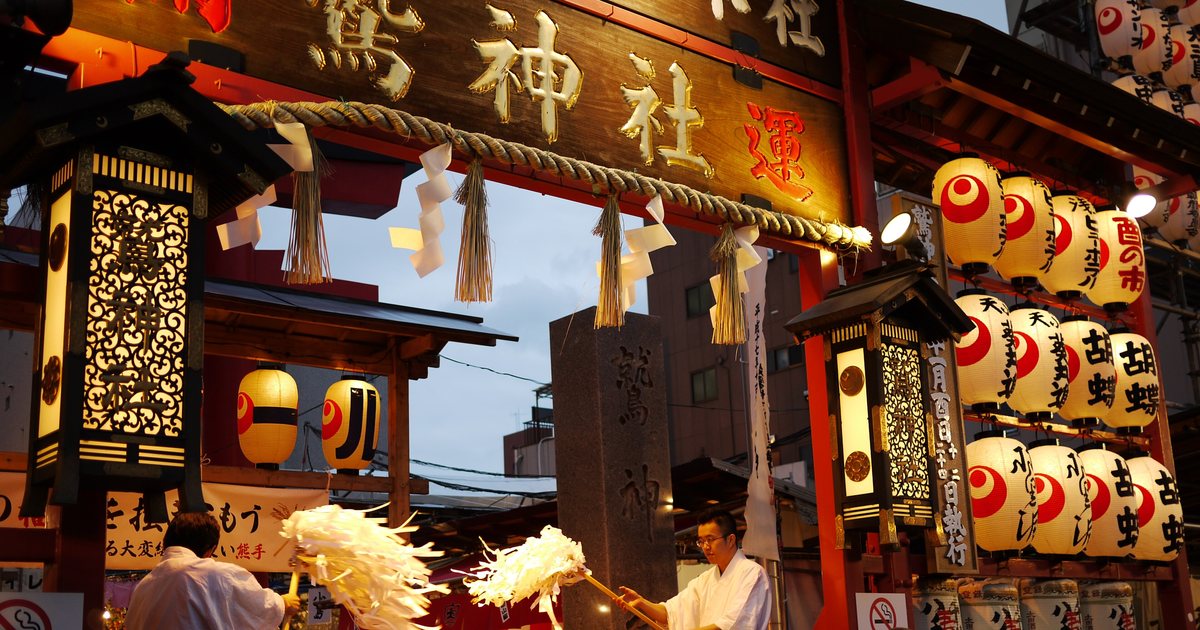
- 5. Tori no Ichi: no third market in 2026, and how to buy a kumade
- 6. Shichi-Go-San: not just the 15th — but avoid the 15th
- 7. How I would plan this month
- 8. FAQ
Four hard dates, all on the wrong day of the week
Start with the skeleton. Only a handful of November 2026 dates will genuinely bend your itinerary, and this year they have all landed badly.
| Date | Day | Event | What it means in practice |
|---|---|---|---|
| Nov 3 | Tuesday | Culture Day (national holiday) | An isolated single-day holiday — the smoothest day of the month. Toll discount applies, non-reserved seats run normally |
| Nov 7 | Saturday | Tori no Ichi (first rooster day) | Lands on a Saturday, so Asakusa and Shinjuku hit their annual evening ceiling. The Asakusa market runs 24 hours, which gives you an escape route |
| Nov 15 | Sunday | Shichi-Go-San (formal date) | Formal date on a Sunday means the whole country is free at once. Major shrines are at their fullest |
| Nov 19 | Thursday | Tori no Ichi (second rooster day) | A weekday — the better of the two markets to attend |
| Nov 21–23 | Sat・Sun・Mon | Labor Thanksgiving weekend | 🚨 Nozomi fully reserved plus no toll discount. The hardest block of the month |
The two holidays come from the Cabinet Office calendar: Culture Day on Tuesday November 3 and Labor Thanksgiving Day on Monday November 23, with no substitute holidays in November 2026. Because the 23rd is a Monday it attaches to the preceding weekend, and the three-day block forms.
One conclusion up front, with the reasoning to follow: if your dates are still movable, put your long-distance travel between November 4 and November 20 and every problem in this article halves.
Nov 21–23: the first three-day weekend with no non-reserved seats
This is the most valuable section here, because it is a rule that only took effect this year and almost nobody has written about it in English.
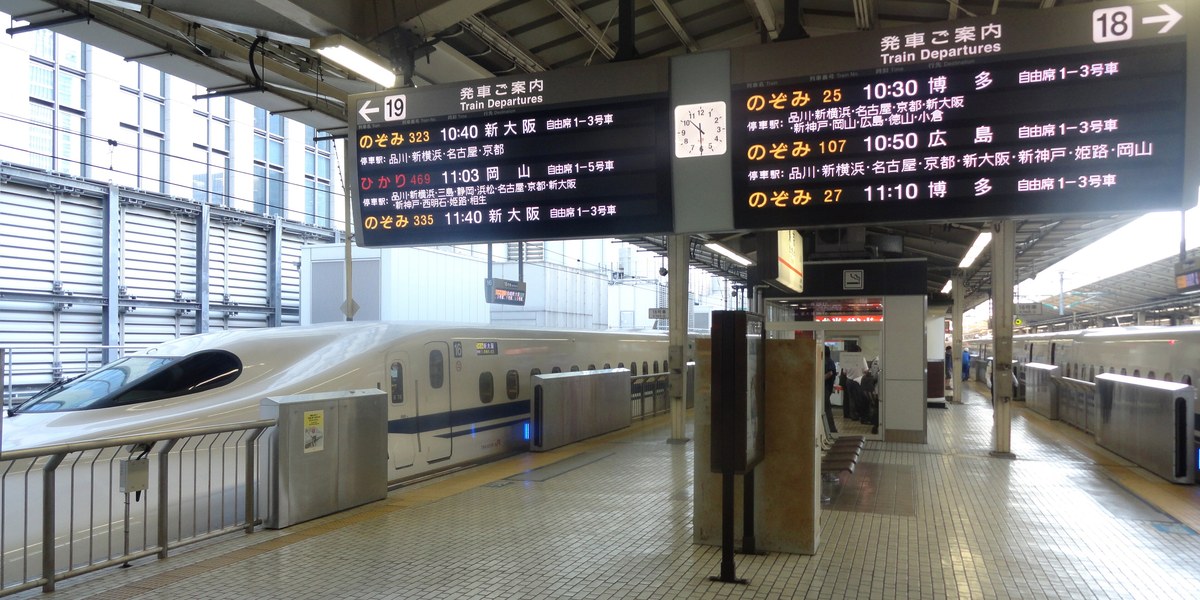
Some background. During defined peak windows the Nozomi runs all-reserved — the non-reserved cars are withdrawn entirely, and passengers holding non-reserved limited express tickets may not occupy a seat; the vestibule is all that remains. Historically this covered four blocks only: Golden Week, Obon, Silver Week and New Year. The obviously terrible ones.
On May 21, 2026, JR Central and JR West extended it to ordinary three-day weekends. The 2026 fiscal-year list therefore runs to eight blocks:
| Block | Dates | Status |
|---|---|---|
| Golden Week | Apr 24 – May 6 | Pre-existing |
| Obon | Aug 7 – Aug 16 | Pre-existing |
| Silver Week | Sep 18 – Sep 23 | Pre-existing |
| Sports Day | Oct 10 – Oct 12 | 🆕 Newly added |
| Labor Thanksgiving | Nov 21 – Nov 23 | 🆕 Newly added |
| New Year | Dec 25 – Jan 5, 2027 | Pre-existing |
| Coming of Age Day | Jan 9 – Jan 11, 2027 | 🆕 Newly added |
| Vernal Equinox | Mar 20 – Mar 22, 2027 | 🆕 Newly added |
Strictly, the first ordinary three-day weekend caught by the new rule was Sports Day in October. But for the Labor Thanksgiving weekend specifically, 2026 is the first time it has ever run without non-reserved seats. That matters because every English-language guide to travelling on a Japanese long weekend rests on an assumption that has just expired: that non-reserved is always there as a fallback.
What can you still ride?
JR Central spells this out: during those periods, trains other than the Nozomi — the Hikari, Kodama, Mizuho, Sakura and Tsubame — continue to offer non-reserved seating as normal.
So there are two workable answers, and I would choose between them like this:
- Dates fixed and budget not the issue → book a reserved Nozomi seat, as early as humanly possible. How to book earliest is below.
- Just getting from Tokyo to Osaka and not in a hurry → take a Hikari. Roughly thirty to forty minutes slower, but non-reserved still exists and you skip the release-morning scramble entirely. For anyone travelling on a JR Pass this is a non-decision anyway: most passes exclude the Nozomi regardless, so these three days cost you nothing extra.
Booking earliest is not “one month before at 10:00”
Everyone knows reservations open at 10:00 exactly one month before departure, and everyone duly sets an alarm. JR Central's page also states something far more useful:
- General release: from 10:00, one month before the travel date
- Smart EX (no annual fee) and Express Reservation: from 05:30, one year before the travel date
If your dates are already locked in, booking a year out takes most of the pressure off the release morning — but it does not remove it. The same official page attaches three conditions: the EX Hayatoku early-bird fares, S Work seats, wheelchair spaces and oversized-baggage seats are excluded from one-year-ahead booking, so the cheap fares still make you wait; bookings placed between one year and one month out have neither the train nor the seat confirmed; and confirmation only lands at 14:00 one month before travel, with changes to confirmed bookings possible after 10:00 one month out. So what a year-ahead booking buys is the travel date, not the fare and not the seat. Eligibility and card requirements across all three official systems — including the fact that Eki-net is restricted to residents of Japan — are set out in our guide to booking Japanese train tickets online.
If your problem turns out to be a cancelled train rather than a full one, that is a separate rulebook — refunds cover the limited express surcharge, and abandoning travel after a one-hour departure delay is refunded in full. We cover it in our guide to Japanese train delays and cancellations.
Expressways: discount off for three days, on for Culture Day
The second restriction is on the road, and it is even less intuitive than the first.
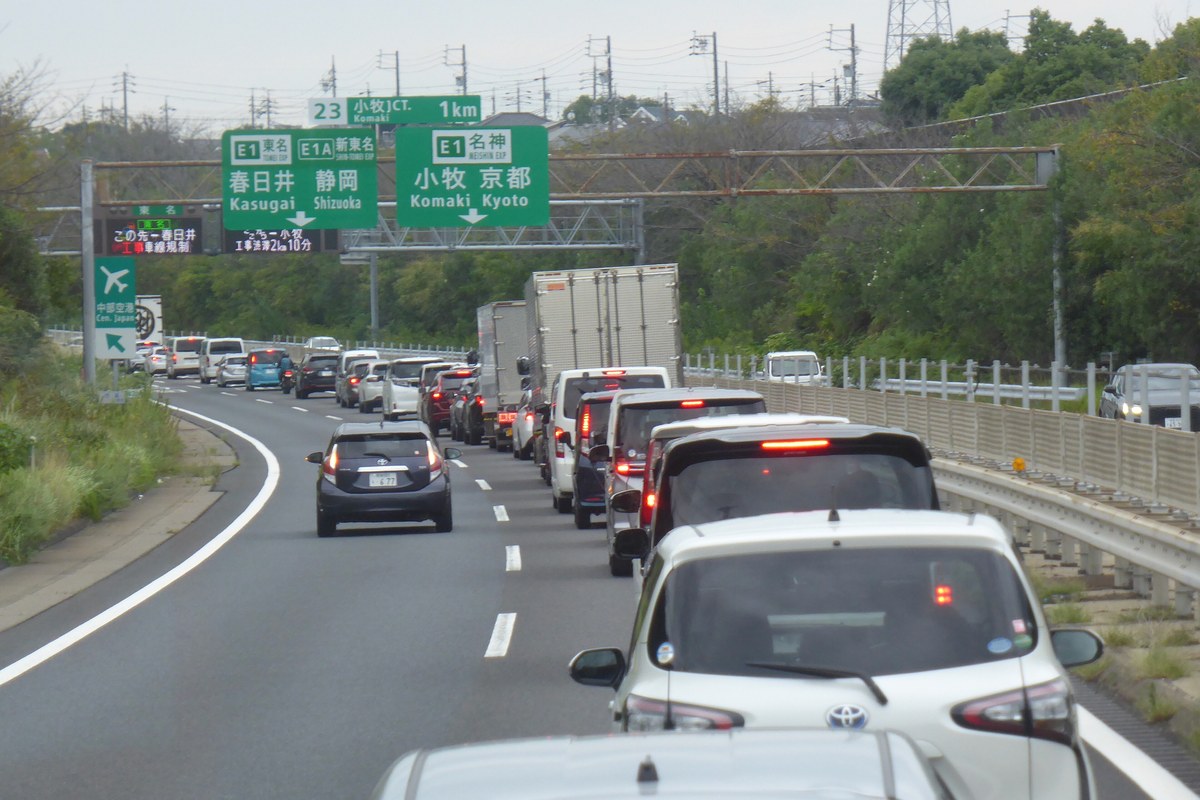
NEXCO's holiday discount applies to weekends and national holidays. The natural assumption is that a long weekend brings the discount — the reality is the exact opposite: the operators deliberately switch it off for long weekends.
The annual notice published on March 17, 2026 states the rule plainly: the holiday discount applies except during congestion periods — Golden Week, Obon, New Year, Silver Week and three-day weekends.
Applied to November 2026, the calendar attached to that notice works out day by day as follows:
| Date | Day | Holiday discount | Why |
|---|---|---|---|
| Nov 1 | Sun | ✅ Applies | Ordinary weekend |
| Nov 3 | Tue | ✅ Applies | Culture Day — a single-day holiday, so the discount stands |
| Nov 7・8 | Sat・Sun | ✅ Applies | Ordinary weekend (first Tori no Ichi) |
| Nov 14・15 | Sat・Sun | ✅ Applies | Ordinary weekend (Shichi-Go-San) |
| Nov 21 | Sat | ❌ Excluded | Entire three-day block excluded |
| Nov 22 | Sun | ❌ Excluded | |
| Nov 23 | Mon | ❌ Excluded | |
| Nov 28・29 | Sat・Sun | ✅ Applies | Ordinary weekend |
The line worth memorising is not which days lose the discount but the contrast: November 3 is a national holiday and gets the discount; November 23 is also a national holiday and does not. The difference is not holiday status — it is whether the date forms part of a three-day run.
If a rental car was in the plan for a Tokaido or Chuo run, this rewrites the budget. Our separate guide covers ETC and how the regional touring passes break even: Japan expressway ETC and regional passes. My advice is blunt: do not drive between regions on November 21–23. Not because it is expensive, but because you lose the discount and gain the jam simultaneously — the worst possible pairing. If you want to drive, move it forward to the November 14–15 weekend, when the discount still applies.
Reading two things side by side helps here. Obon carries harsher measures still — the touring passes are not merely poor value but withdrawn from sale — and we break that down in our complete guide to Obon; the comparison across Golden Week, Obon and New Year sits in our guide to Japan's three big holiday periods. From fiscal 2026 onward, that framework needs one more line: it is no longer only the big three that carry official measures.
Flipping “end of the foliage” around: the JMA has no peak category
An admission first: I also assumed late November was the tail end of the maples and that you had to beat the long weekend to them. Checking the official observations showed the direction is reversed.
These are the Japan Meteorological Agency's phenological normals, based on the 1991–2020 period:
| City | Maple colouring date (normal) | Ginkgo yellowing date (normal) |
|---|---|---|
| Tokyo | November 28 (earliest Nov 8 in 1953; latest Dec 5 in 1990) | November 23 (latest Dec 3 in 2024) |
| Kyoto | December 5 (earliest Nov 10 in 1976; latest Dec 20 in 2024) | November 24 |
| Nara | November 21 | — |
| Kobe | December 1 | — |
Drop the three-day weekend into that table and the picture changes completely:
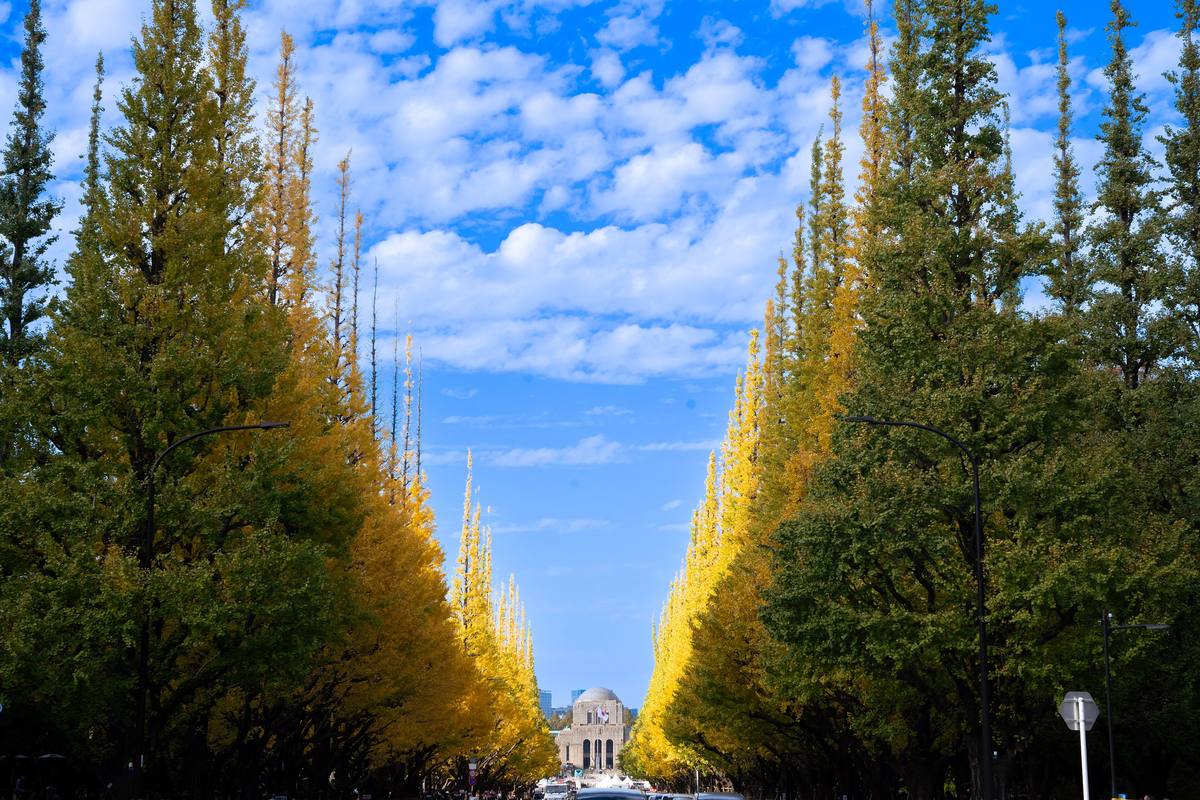
- November 23 — the final day of the long weekend — is precisely Tokyo's ginkgo normal. That is the seasonal anchor for the avenue at Meiji Jingu Gaien, and it happens to fall on the most crowded day available.
- Maples are still five days out in Tokyo (Nov 28) and twelve days out in Kyoto (Dec 5). The weekend does not catch the end of the maples; it arrives ahead of them.
And the trend keeps sliding later. Recent observed dates: Tokyo maple Nov 29 in 2023, Dec 3 in 2024, Nov 23 in 2025; Kyoto maple Dec 13 in 2023, Dec 20 in 2024, Dec 10 in 2025. That December 20, 2024 in Kyoto is the latest since observations began in 1953. Tokyo's ginkgo set its own record the same year at December 3.
Writing late November up as “the last chance, go now” therefore produces the opposite of the intended effect: readers arrive early and the maples are not red yet. That is a mistake at the level of booking the wrong flight.
🔴 The key point: the JMA has no “peak viewing” category
Whether those numbers are useful depends on knowing what they measure. This is the real substance of the section:
The JMA defines its colouring date as the day on which the target plant's leaves have changed mostly to red (or yellow) tones, with almost no green tones remaining — the specimen tree being the Japanese maple Acer palmatum.
In plain terms, that is the day of complete colour change, when the green has essentially gone. What travellers call peak viewing is normally the 60–80% stage, when red and green still mix — which is when it photographs best. Two different things.
So: the JMA has no peak-viewing observation category and does not issue peak forecasts, full stop. Every “official peak forecast” you find online originates with a prefecture, a tourism association, or a private weather company. Not the agency.
We hit exactly the same structure writing about plum blossoms: the JMA observes plum flowering but has no full bloom category, which is why the familiar cherry-blossom arithmetic — flowering plus about seven days equals full bloom — simply does not transfer. Autumn colour is built from the same mould.
So where should you actually go in late November? My answer: chase ginkgo, not maple. Over the long weekend Tokyo's ginkgo sits right on its normal, which puts the Gaien avenue, Meiji Jingu Gaien and Showa Kinen Park genuinely in season. If maples are the goal, the move at this point in the calendar is upward in elevation — Hakone, Nikko and the upper slopes of Mount Takao turn well before the city — or simply to shift the Kyoto leg into early December. Our ginkgo routes are in the Tokyo ginkgo avenues guide, and the national timeline is in our Japan autumn foliage guide and Kyoto autumn leaves guide.
Tori no Ichi: no third market in 2026, and how to buy a kumade
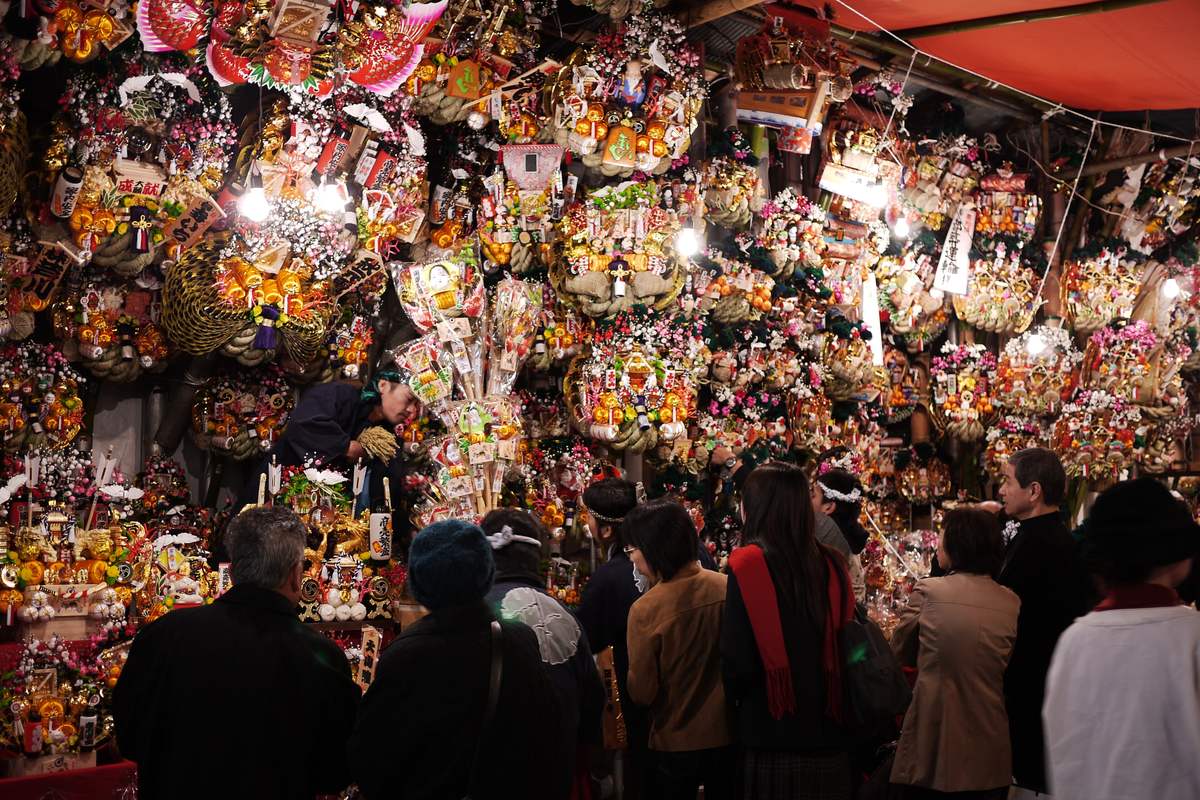
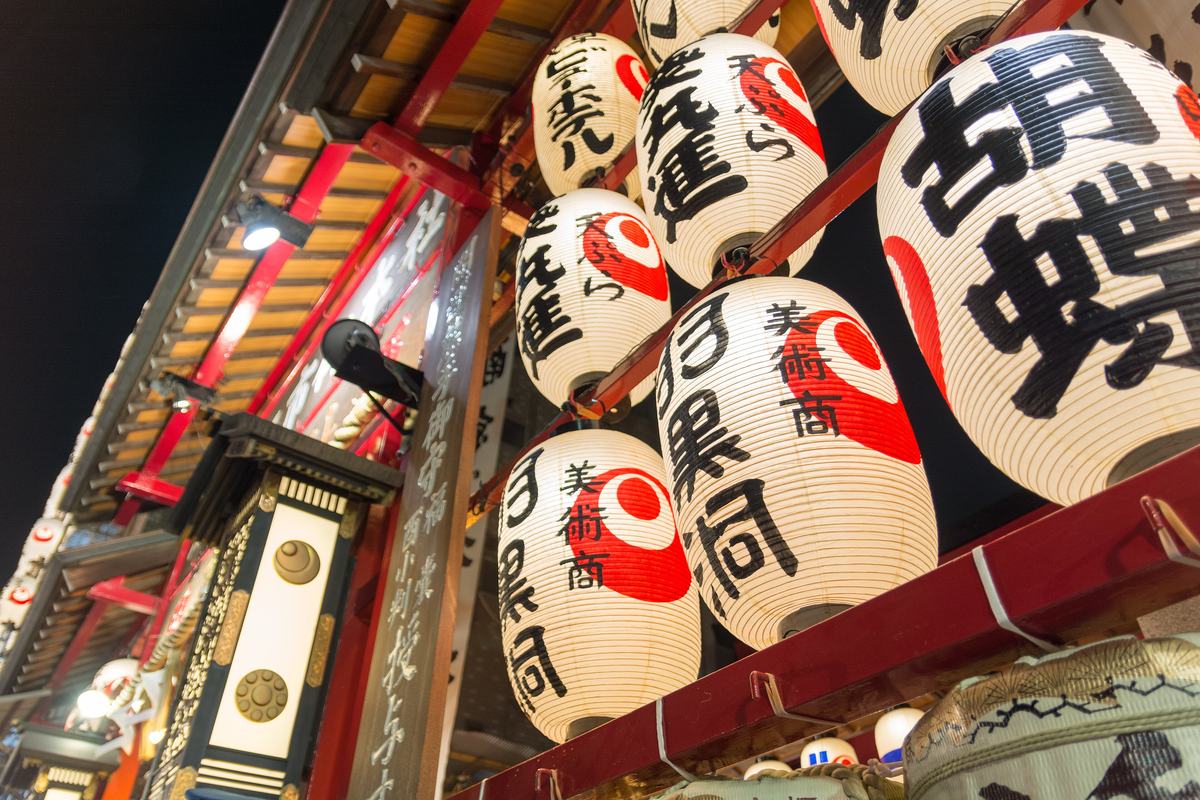
Tori no Ichi is the most photogenic and the most visitor-friendly thing in the November calendar: free, open late into the night, no reservation, and legible without a word of Japanese.
There are only two rooster days in 2026: November 7 (Saturday) and November 19 (Thursday). There is no third. That is confirmed across three independent official sources — the Tori no Ichi organisers, the shrine itself, and Yokohama City's official tourism information.
Why do some years have three? Because rooster days follow the sexagenary calendar and recur every twelve days, so whether a third one fits inside November depends on which sign November 1 lands on.
The fire superstition is not folklore — the official page says it
This usually gets passed along as quaint local superstition. In fact it is written verbatim on the official Tori no Ichi page, in the present tense:
Because the rooster festival day comes round every twelve days, there are years with two markets and years with three — and even today, years that include a third rooster day are said to bring more fires.
You can quote that without hedging; the organisers say it themselves. And 2026 has no third rooster day, so the light stays off this year. November 2027 has three (the 2nd, 14th and 26th) — that is the year the superstition applies. Worth noting if this kind of thing is why you travel.
Where it comes from: it was a harvest festival
The official account of the origin: Tori no Ichi is said to have begun at Hanamata village on the edge of old Edo — today's Otori Shrine in Hanahata, Adachi Ward — and started life as a harvest festival, farmers thanking their tutelary deity.
Knowing that changes how you read the merchandise. Those ornate bamboo rakes hung with gold coins, sea bream, rice ears and a beaming Daikoku are descended from farm tools, and their function is to rake in good fortune. They are not souvenirs that happen to look Japanese.
🔴 How to buy a kumade: the internet has the tense wrong
This is the correction I most want to land. Search for kumade etiquette and you get one remarkably uniform answer: haggle the price down, then leave the difference with the seller as a goshugi gratuity — that is the stylish way to do it.
The official page does describe both actions. But it puts the two actions in two different tenses:
| Action | Tense used officially | What it means for you |
|---|---|---|
| Haggling | Present tense: open below your budget; how far you get depends on your skill | ✅ Still done today. Go well and you get the seller's cheerful “maketa, maketa” — the sound of a deal struck |
| Goshugi (returning the discount) | 🔴 Past tense: this used to be considered the stylish way to buy a kumade | ❌ Not an obligation. The official page describes it as something people once did |
| Tejime | Present tense: hold the kumade you have bought up in the middle of the stall | ✅ This is the ritual actually written into the procedure — raise it high and receive the rhythmic hand-clapping from the surrounding sellers |
So the visitor's answer is: haggle if you enjoy the exchange, forget the gratuity, and do not miss the tejime. Presenting a past-tense custom as a rule you must obey only makes first-timers freeze at the stall — and freeze through the one moment actually worth being there for.
On price, the official page is refreshingly honest: there are small “bean kumade” at around ¥1,000, but the best sellers run ¥10,000–50,000. There is no need to stretch — the bean version is the same object, and it is the one that fits in a suitcase. (For how lucky charms work generally, when they are meant to be returned, and how they sit alongside amulets, see our hatsumode guide.)
Which market? The practical differences
| Venue | Confirmed hours | Character and trade-offs |
|---|---|---|
| Asakusa: Otori Shrine / Chokoku-ji 3-19-6 Senzoku, Taito-ku, Tokyo | Midnight to midnight — a full 24 hours, opening with the first drumbeat at 00:00 | The largest, and the one with the fullest official information. The shrine and the Buddhist temple stand adjacent and hold the market simultaneously, so you can walk both the Shinto and Buddhist sides — a combination unique to Asakusa. Running 24 hours also means you can dodge the peak: late night and early morning are visibly easier |
| Yokohama: Kotohira Otori Shrine | Traffic control 11:00–24:00 / amulet office 10:00–21:30 / stalls 11:00–21:30 | Registered with Yokohama City's official tourism information, with clear hours. Both the stalls and the amulet office close at 21:30 — much earlier than Asakusa, so do not assume Asakusa's rhythm applies |
| Shinjuku: Hanazono Shrine | ⚠️ We could not confirm | One of Tokyo's big three, and the only venue with a misemono-goya traditional sideshow tent. But at the time of verification the shrine's website would not connect at all — all four variants (HTTP and HTTPS, with and without www) timed out. So this article states only that the market falls on November 7 and 19, which follows from the rooster days themselves; hours, any eve-of-festival structure, and whether the sideshow appears are things I found no official basis for, so this guide does not state them. Check on site or with the shrine's own notice for the year |
What I would do: for photographs and breathing room, take the second market on Thursday November 19, in Asakusa. A Thursday evening and a Saturday evening are two entirely different experiences, and since Asakusa runs around the clock you can simply arrive later. If Saturday November 7 is your only option, make it the last stop of the day and do not plan anything after it.
Shichi-Go-San: not just the 15th — but avoid the 15th
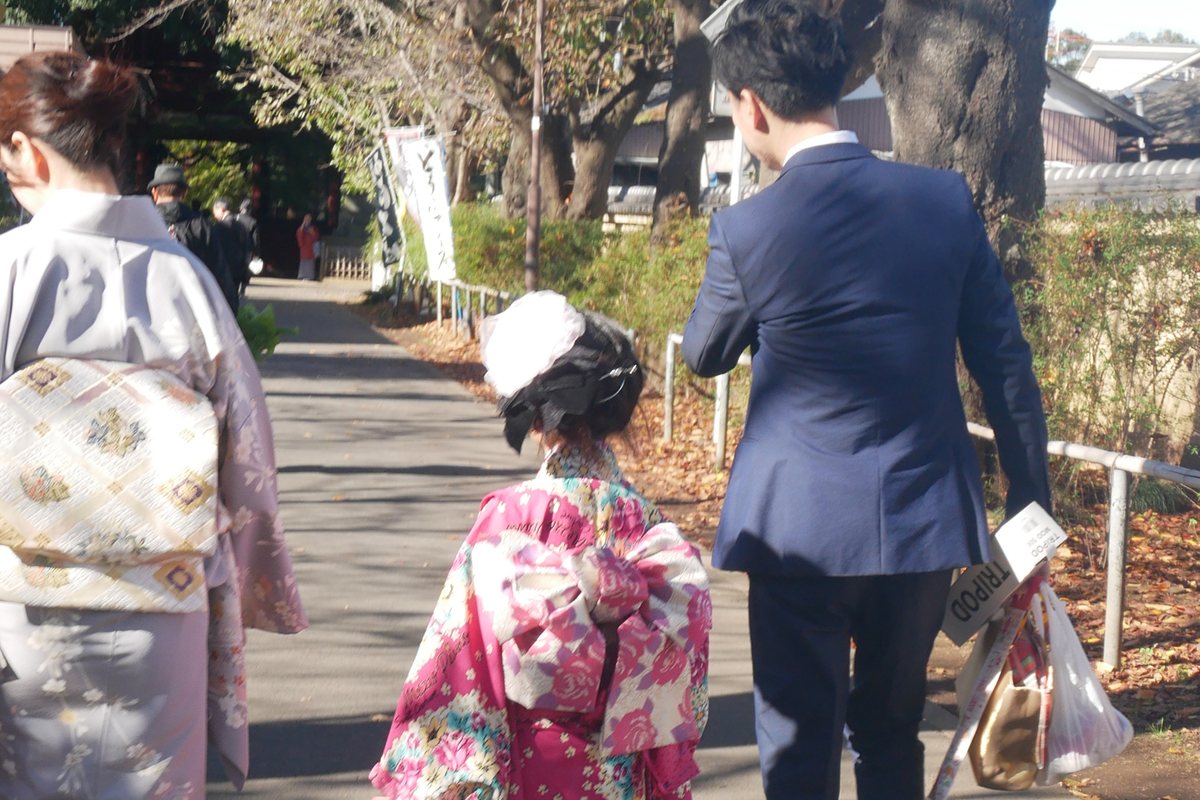
Shichi-Go-San is the loveliest thing happening in a November shrine precinct: children of three, five and seven brought to pray in formal dress. For a visitor it is not a participatory event but something that substantially reshapes shrine crowds, so you need to know when it happens.
Per the Association of Shinto Shrines, the custom descends from three older rites — hair-letting at three, first hakama at five, and the sash-untying at seven — and its concentration on November 15 is attributed to the fifth Tokugawa shogun, Tsunayoshi, praying elaborately for the health of his son Tokumatsu. Note how the Association itself dates it: “a holiday around November 15”. Around, not on.
Two common misconceptions, dealt with
- Misconception one: it only happens on November 15. No. Meiji Jingu's official page states that Shichi-Go-San prayers are conducted at any time. In practice Japanese families pick whichever November weekend suits the child and the photo studio.
- Misconception two: big shrines require a reservation. Also no. Meiji Jingu is unusually direct: individuals do not need to book and are received on the day, with the desk open 09:00 to 16:20. One caveat the shrine adds itself: during the hatsumode and Shichi-Go-San seasons the reception location may differ from usual, so follow the signage on arrival.
On the offering, I had assumed most shrines do not publish a figure. Checking proved that wrong. They do publish, but as a floor rather than a price. Meiji Jingu states its hatsuhoryo is accepted from ¥5,000, with names inscribed on the talisman from ¥10,000. That is a minimum the worshipper decides upward from, not a tariff.
Which is exactly why this guide gives no single figure for it — it is not a ticket. Shrine goshuin pricing works the same way in the Meiji Jingu guide.
One unwritten but important courtesy: this is somebody else's child's milestone, not your photo subject. Wide shots, atmosphere and the colours of the formal dress are all fine; close-ups of strangers' children are not, and neither is blocking a family group's line of sight to get your frame. Shrine etiquette in full — the purification basin, the two bows and two claps, when to be quiet — is in our shrine etiquette guide; November is also a strong month for seasonal goshuin designs if you collect them.
How I would plan this month
Everything above, reduced to decisions. These are my choices, not a menu.
If your dates are still movable
Take November 4 to November 20. Inside that window Culture Day is done, the long weekend has not started, Nozomi non-reserved cars run normally, the toll discount applies, accommodation is at its cheapest for the month — and the second Tori no Ichi on Thursday November 19 sits right at the end of it, so you get a weekend-grade festival at weekday prices. Nothing else in November comes close on efficiency.
If November 21–23 is genuinely your only option
Then hit it correctly rather than head-on:
- Register for Smart EX today. It is free and it opens reservations a full year before travel, which takes most of the sting out of the 10:00 release morning. Set expectations correctly, though: the EX Hayatoku early-bird fares are explicitly excluded from one-year-ahead booking, and neither train nor seat is confirmed until 14:00 one month before travel. It secures the date, not the price.
- Do not drive between regions. No toll discount plus long-weekend traffic is the worst available combination. Move by rail.
- If reserved Nozomi seats are gone, take a Hikari. Non-reserved still exists, and Tokyo to Osaka costs you roughly half an hour more.
- Build a single-base itinerary rather than a multi-city one. The pain of a long weekend is in the movement, not the sights. Stay inside one metropolitan area and most of it disappears.
- Book accommodation early and near a transport node. Rooms and rates tighten well ahead of a long weekend, and the ring around the main stations always sells out first.
Check Tokyo hotel availability for November →
What is actually in season
- Ginkgo over maple. In late November Tokyo's ginkgo is right on its normal (Nov 23) while the maples are five days out. For maples, gain elevation — or move the Kyoto leg to early December.
- Take the second Tori no Ichi (Thu Nov 19). Same festival, far fewer people, and Asakusa runs 24 hours so a later arrival is comfortable.
- Avoid Shichi-Go-San on Sunday Nov 15 — unless density is the point.
- Culture Day, November 3, is the underrated date. An isolated single-day holiday: toll discount intact, rail normal, and many museums and cultural facilities run special openings. If you want holiday atmosphere without long-weekend penalties, this is the best-value square on the calendar.
- Worth flagging: November 23 is also the day Shuri Castle's reconstructed main hall opens to the public in Okinawa — this long weekend is adding pressure even down there. Note that the park is closed all that morning and opens at noon (free zone until 11:15, paid zone until 12:00), so rebuild the day around that — see the Shuri Castle Seiden 2026 guide. Our Okinawa seasonal notes are in the Okinawa New Year guide.
Conclusion: three sentences
One: November 21–23 is the first Labor Thanksgiving weekend in history with no Nozomi non-reserved seats. Fully reserved trains, no expressway discount for three days, and it is a rule only extended on May 21, 2026 — which means any guide to Japanese long-weekend travel written before this year is out of date. Book reserved seats early (Smart EX opens a year ahead, though early-bird fares are excluded from that window and seats are only confirmed at 14:00 one month out) and do not drive.
Two: late November is not the end of the foliage — it is the middle of the ginkgo and ahead of the maples. JMA maple normals are November 28 in Tokyo and December 5 in Kyoto, and the agency has no peak-viewing category at all; it publishes only the full colour-change date. When you see the words “official peak forecast”, check who actually issued it.
Three: both Tori no Ichi and Shichi-Go-San are more flexible than you think. There is no third rooster market in 2026 (that is 2027), the kumade gratuity appears in the past tense in the official text and is not a rule, and Shichi-Go-San runs all month with no reservation needed at Meiji Jingu — but November 15 falls on a Sunday this year, and on that day the precinct will be too full to photograph anything.
Frequently Asked Questions
- Q1:Is November a good month to visit Japan in 2026?
- Yes, but only if you dodge one weekend and understand what is actually happening to the leaves. Four dates shape the month, and in 2026 they all landed on awkward days of the week: Tori no Ichi (first rooster day) Saturday November 7, Shichi-Go-San Sunday November 15, Tori no Ichi (second rooster day) Thursday November 19, and the Labor Thanksgiving three-day weekend November 21–23. That last block carries two deliberate official restrictions on movement, explained in full below. The other national holiday, Culture Day, falls on Tuesday November 3 — an isolated single-day holiday, which makes it one of the smoothest days of the month rather than one of the worst. The genuinely easy window is November 4 through November 20.
- Q2:What are the transport restrictions on November 21–23, 2026?
- There are two, and both are imposed on purpose rather than being the usual it-gets-busy warning. First, every Nozomi shinkansen between Tokyo and Hakata runs fully reserved on November 21, 22 and 23 — no non-reserved cars at all. This is new: JR Central and JR West issued a supplementary announcement on May 21, 2026 extending the all-reserved policy from four traditional peak blocks to ordinary three-day weekends as well. Second, NEXCO's expressway holiday discount is suspended on all three days, per the annual notice published on March 17, 2026. The instructive contrast is Culture Day on November 3: it is equally a national holiday, and the discount does apply. NEXCO's test is the length of the break, not whether the date is a holiday.
- Q3:Are there three Tori no Ichi markets in 2026? What is the fire superstition?
- No — 2026 has only two: November 7 and November 19. Rooster days come round every twelve days on the sexagenary calendar, so some Novembers hold three and some hold two. The fire superstition is not internet folklore: the official Tori no Ichi site states it word for word, and uses the present tense — because the festival day recurs every twelve days there are years with two markets and years with three, and even now years that include a third rooster day are said to bring more fires. So you can quote it without hedging; the organisers say it themselves. It simply does not apply this year. 2027 does have three rooster days (November 2, 14 and 26), so the superstition switches back on next year.
- Q4:Do I have to haggle for a kumade rake and then give the discount back as a tip?
- No, and this is the single most mistranslated piece of advice about Tori no Ichi. The official page does describe both actions — but in different tenses. Haggling is present tense: you open below your budget, and how far you get is described as depending on your skill, with the stallholder's cheerful cry of “maketa, maketa” as the reward. Returning the discount as a goshugi gratuity, however, is written in the past tense — it says this used to be considered the stylish way to buy. The official page never tells you to do it now. The ritual that is actually written into the procedure is different: hold your new kumade up in the middle of the stall and receive the tejime hand-clapping from the surrounding sellers. Haggle if you enjoy it, skip the gratuity, and do not skip the tejime.
- Q5:Will the autumn leaves be out in late November 2026?
- It depends which tree, and the answer runs opposite to most travel advice — late November is not the tail end of maple season, it is before it. Using the Japan Meteorological Agency's 1991–2020 normals, the maple colouring date is November 28 in Tokyo and December 5 in Kyoto, while the ginkgo yellowing date is November 23 in Tokyo and November 24 in Kyoto. So the three-day weekend lands exactly on Tokyo's ginkgo normal, with maples still five days away in Tokyo and twelve days away in Kyoto. The trend is also getting later: Kyoto's observed maple date in 2024 was December 20, the latest since records began in 1953. If maples are the reason for your trip, late November in Kyoto is early, not late.
- Q6:Does the Japan Meteorological Agency publish autumn foliage peak forecasts?
- No. The JMA has no “peak viewing” observation category at all. What it publishes is a colouring date, defined as the day the specimen tree's leaves have turned mostly red or yellow with almost no green remaining. That is full colour change, which is a later and different thing from the roughly 60–80% turned stage travellers call peak viewing. Every “official peak forecast” circulating online therefore comes from a prefecture, a tourism association, or a private weather company — never from the JMA. It is the same structural gap we found writing about plum blossoms: the agency observes plum flowering but has no full bloom category, which is why the cherry-blossom rule of thumb does not transfer. The only hard official numbers are the normals, and the normals describe full colour change.
- Q7:Does Shichi-Go-San only happen on November 15? Do I need a reservation?
- Neither. It runs across the month, and major shrines generally take walk-ins. The Association of Shinto Shrines describes the timing as “a holiday around November 15”, and Meiji Jingu's official page states that Shichi-Go-San prayers are conducted at any time, adding explicitly that individuals do not need a reservation and are received on the day, with the desk open 09:00 to 16:20. What visitors should actually note is the reverse problem: November 15, 2026 falls on a Sunday, putting the formal date on the one day every family is free. That makes it the most crowded shrine day of the month. Shift to any other weekend for a calmer visit — or go on the 15th precisely because you want the density. Note too that the reception location can differ from normal during the season.
- Q8:How much is the Shichi-Go-San offering, and do shrines publish it?
- They do publish it, but as a floor rather than a price. Meiji Jingu states its hatsuhoryo offering is accepted from 5,000 yen, with names inscribed on the talisman from 10,000 yen. So the figure is a minimum that the worshipper then decides upward from — which is exactly why this guide gives no single figure for it: it is not a ticket, and its audience is Japanese families rather than travellers. If you simply want the atmosphere of a November shrine, none of this costs anything and you do not take part in the prayer at all. Watch from outside the hall, and please do not point a lens at somebody else's child.