Obon is not a public holiday in Japan. The only national holiday in August is Mountain Day on the 11th, banks are legally required to stay open under Article 15 of the Banking Act, and city halls work a normal week. What actually disrupts a trip is something else entirely: from 7 to 16 August 2026 every Nozomi shinkansen between Tokyo and Hakata runs with all seats reserved, and over the same window the expressway operators switch off the weekend toll discount on 8, 9, 11, 15 and 16 August and suspend sales of their touring passes. 2027 adds a rare coincidence on top: Okinawa's lunar-calendar Obon calculates to 14–16 August, all but overlapping the mainland dates, where in 2026 the two were eleven days apart. This guide sets out the three parallel date systems, a day-by-day 2027 calendar, and the official times, rules and ticket prices for the fires and dances — sourced, and with the gaps flagged as gaps.
- Not a holiday: August's only national holiday is Mountain Day (11 Aug). The Banking Act and its enforcement order list bank closures exhaustively as national holidays, 31 Dec–3 Jan and Saturdays — mid-August is not on the list
- Three date systems coexist: July Bon 13–16 Jul, month-delayed Bon 13–16 Aug, Okinawan lunar Bon floating. "Tokyo does July Bon" is an oversimplification — the metropolitan cemeteries run both
- The 2027 quirk: Okinawan Obon calculates to 14–16 Aug, overlapping the mainland; in 2026 it was 25–27 Aug
- Two hard transport restrictions: Nozomi all-reserved (7–16 Aug 2026) and no expressway holiday discount on 8, 9, 11, 15, 16 Aug, plus touring passes withdrawn from sale
- 15 August is the crowded night: Nagasaki's spirit boats, Nara's Daimonji, Todai-ji's lantern service and Kasuga Taisha's second lantern night all fall together. You have to choose
📖 Contents
- Obon is not a public holiday — the statutory proof
- Three date systems: July, month-delayed, and Okinawa
- A day-by-day Obon calendar for 2027
- Transport: two official restrictions and one suspension
- Kyoto Gozan no Okuribi: times, viewpoints, three rules
- Nara on 14–15 August: three nights a year
- Nagasaki Shoro Nagashi: a funeral, not a festival
- Choosing a Bon dance: Awa, Gujo, Nishimonai
- What the four days actually consist of
- How I would plan the week
- FAQ
Obon is not a public holiday — the statutory proof
The single most repeated claim about Obon in English-language travel writing is that Japan shuts down. It is wrong, and believing it leads to the wrong preparations.
Start with the holidays themselves. The Cabinet Office publishes the national holiday list, currently covering both 2026 and 2027, and August contains exactly one national holiday: Mountain Day, 11 August. The 13th to 16th are ordinary working days in law. In 2027 this is even starker, because Mountain Day falls on a Wednesday with no substitute holiday attached — stringing 11 August through to 16 August into a six-day run means personally taking Thursday the 12th and Friday the 13th off.
Then the banks, which is the hardest evidence in this article because it sits at statute level:
Banking Act, Article 15(1) — bank holidays are limited to Sundays and to other days specified by cabinet order.
That cabinet order is the Banking Act Enforcement Order, and its Article 5 lists the days exhaustively: national holidays, 31 December to 3 January, and Saturdays. Mid-August is absent. Walk into a Japanese bank during Obon and it will be trading normally — currency exchange, ATMs, counter services, all of it (with Mountain Day on the 11th as the one exception).
City halls follow the same pattern: Nagasaki City publishes 8:45–17:30 excluding weekends, national holidays and 29 December to 3 January; Tokushima City publishes 8:30–17:00 on identical exclusions. Neither lists Obon. And the Tokyo metropolitan cemeteries do not merely stay open — they put on extra hours: Kodaira Cemetery extends its gate hours across both 11–16 July and 10–16 August (main gate 6:00–19:30), Yahashira extends to 6:00–18:00, and Yanaka sets up temporary water points for grave-cleaning. The same cemeteries genuinely do close from 29 December to 3 January. For a Japanese cemetery, New Year is the holiday and Obon is the busiest week of the year.
Three date systems: July, month-delayed, and Okinawa
The second claim worth correcting is the neat split you see everywhere: Tokyo does Obon in July, the provinces do it in August. That is an oversimplification. Both systems run in parallel, and the same Tokyo authority operates both.
The evidence sits in the 2026 notices from the Tokyo Metropolitan Park Association, which manages the metropolitan cemeteries. Yahashira Cemetery lists two Obon periods, 13–16 July and 13–16 August. Kodaira Cemetery extends its gate hours for 11–16 July and again for 10–16 August. Meanwhile Zoshigaya and Yanaka cemeteries — both in the historic core of Tokyo, exactly where the "Tokyo does July" story places July Bon — issued only August notices in 2026.
For a visitor, the practical point is simpler: the August system is the one that affects you. Every traffic forecast, every rail restriction, every accommodation price spike is pegged to mid-August. July Bon barely registers in a foreign visitor's itinerary.
While you are correcting the record, fix one more detail: July Bon is 13–16 July, four days, not the three days (13–15) you may be expecting. The official cemetery notices say four.
Okinawa: the one system still following the moon
Okinawa uses the 13th to 15th days of the seventh lunar month, three days with their own names: Unke (the welcome), Nakabi (the middle day) and Ukui (the send-off). Because it tracks lunar phases, its position in the Gregorian year moves — and moves a lot.
2027 is the year to pay attention. Working from the National Astronomical Observatory of Japan's published new moon for 2 August 2027 at 19:05 and the solar term Shosho on 23 August, Okinawan Obon in 2027 falls on 14 August (Saturday) to 16 August (Monday) — essentially on top of the mainland's month-delayed Obon. In 2026 it fell on 25 to 27 August (from a new moon on 13 August 2026 at 02:37), eleven days later than the mainland. If your mental model is "the mainland rush passes, then Okinawa has its turn", that model breaks in 2027.
| System | 2027 dates | Who uses it | Effect on visitors |
|---|---|---|---|
| July Bon | 13 Jul (Tue) – 16 Jul (Fri) | Parts of Tokyo; metropolitan cemeteries run both | Negligible — no transport or lodging impact |
| Month-delayed Bon | 13 Aug (Fri) – 16 Aug (Mon) | Most of the country | Every restriction and every peak sits here |
| Okinawan lunar Bon | 14 Aug (Sat) – 16 Aug (Mon) (calculated) | Okinawa Prefecture | Overlaps the mainland in 2027 — book island ferries and rooms earlier |
A day-by-day Obon calendar for 2027
Everything verified as an official fixed date, on one grid. Rows marked confirmed are annually fixed or explicitly published; rows marked unannounced must not be filled in with 2026 numbers.
| Date | Day | What happens | Status |
|---|---|---|---|
| 13–16 Jul | Tue–Fri | July Bon (run in parallel; metropolitan cemeteries observe both) | Confirmed |
| 11 Aug | Wed | Mountain Day — August's only national holiday, no substitute day | Cabinet Office |
| 11–15 Aug | Wed–Sun | Tokushima Awa Odori (official framing: "the five days from 11 to 15 August every year") | ⚠️ 2027 edition unannounced |
| 13 Aug | Fri | Welcoming fire — month-delayed Obon begins | Confirmed |
| 13–16 Aug | Fri–Mon | Gujo Odori all-night sessions (four consecutive nights) | Officially fixed |
| 14–16 Aug | Sat–Mon | Okinawan Obon (Unke / Nakabi / Ukui) | ⚠️ Calculated; official version due mid-2027 |
| 14–15 Aug | Sat–Sun | Kasuga Taisha Chugen Mantoro, 19:00–21:30 | Official "14 and 15 August" fixed |
| 15 Aug | Sun | Nagasaki Shoro Nagashi / Nara Daimonji lit at 20:00 / Todai-ji Manto Kuyo-e 19:00–21:30 | All three annually fixed |
| 16 Aug | Mon | Kyoto Gozan no Okuribi, lit in sequence 20:00–20:20 | Official page states "16 August", no year |
| 16–18 Aug | Mon–Wed | Nishimonai Bon Odori (Ugo, Akita) | Official "16 to 18 August every year" |
| (TBA) | — | NEXCO 2027 traffic forecast / Nozomi all-reserved period for 2027 Obon | ⚠️ Expected mid-July and spring respectively |
Look at what that grid actually says. Four events run simultaneously on the evening of 15 August, split between Nagasaki and Nara; the following evening Kyoto and Akita open at the same time. This is not a week you can complete. You have to choose, and my choices are in the last section.
Transport: two official restrictions and one suspension
This is the section with the most practical value, because these are restrictions the operators impose deliberately rather than vague warnings that it gets busy.
1. The Nozomi loses its non-reserved cars
The 21 May 2026 joint release from JR Central and JR West leaves no room: from 7 August (Friday) to 16 August (Sunday) 2026, all Nozomi services between Tokyo and Hakata operate with every seat reserved, and holders of non-reserved limited express tickets may not occupy a seat — the vestibule is all that remains. The usual traveller's fallback of accepting a couple of hours standing does not apply here, because you are not even guaranteed floor space in a carriage.
Non-reserved seating survives on the Hikari, Kodama, Mizuho, Sakura and Tsubame. Taking a Hikari is the sensible workaround: slower to Osaka, but the option still exists.
The booking detail that matters most is easy to miss. Everyone knows reservations open at 10:00 exactly one month before travel. The same PDF states that Express Reservation (annual fee ¥1,100 including tax) and Smart EX (no annual fee) allow booking up to one year in advance. If your dates are already fixed, this takes you out of the 10 a.m. scramble — but do not read it as “no need to compete at all”. Smart EX lists three limits: EX Hayatoku early-bird fares, S Work seats, wheelchair spaces and oversized-baggage seats are excluded from one-year-ahead booking; bookings placed between one year and one month out have neither the train nor the seat confirmed; and confirmation lands at 14:00 one month before travel, with changes possible only after 10:00 one month out. What you secure a year ahead is the travel date — not the fare, and not that specific seat. Eligibility and card requirements for all three booking systems are covered in our guide to booking Japanese train tickets online.
2. The expressway holiday discount is switched off
This one is genuinely counter-intuitive. Most people assume a long weekend brings the toll discount; during Obon the operators deliberately remove it.
The 17 July 2026 release, issued jointly by NEXCO Central, NEXCO East, NEXCO West, JB Honshi Expressway and the Japan Road Traffic Information Center, defines the Obon period as 7 to 16 August 2026, ten days, and — citing the 17 March 2026 notice on discount-applicable days — confirms that 8, 9, 11, 15 and 16 August carry no holiday discount despite falling on weekends or a national holiday. The same release excludes 7–16 August from sales of the Expressway Pass touring products. The passes are not merely poor value in this window; they are not sold.
For scale, the 2026 forecast (⚠️ 2026 figures only — the 2027 version does not exist yet and NEXCO publishes it in mid-July each year): 436 predicted jams of 10km or more nationwide against 345 actual the previous year, 171 of them in NEXCO Central territory; southbound peaks on 8–9 and again on 13 August, northbound on 14–15; the longest predicted at up to 45km near Sagamiko IC southbound on the Chuo Expressway on 8 August, and up to 30km northbound at the Kobotoke Tunnel on 11 August.
If a rental car was in your plan, this rewrites the budget. Our separate guide to ETC and Japan's regional expressway passes covers how those passes break even — but note that several of them are withdrawn from sale during exactly this window, so they cannot be part of an Obon savings plan.
3. So how should you move?
Bluntly: do not drive long distances between regions during Obon. No discount, jams starting at 40km, service areas full — the cost-benefit of a rental car is at its worst for the year across these ten days. Use rail and reserve early; if your trip was fixed months ago, book through Smart EX up to a year ahead — bearing in mind that a year-ahead booking locks the date rather than the seat (train and seat are only confirmed at 14:00 one month before travel, and early-bird fares are excluded from that window). If you must drive, put the long legs on the in-between days such as 10 or 12 August and avoid southbound 8–9 and northbound 14–15.
Kyoto Gozan no Okuribi: times, viewpoints, three rules
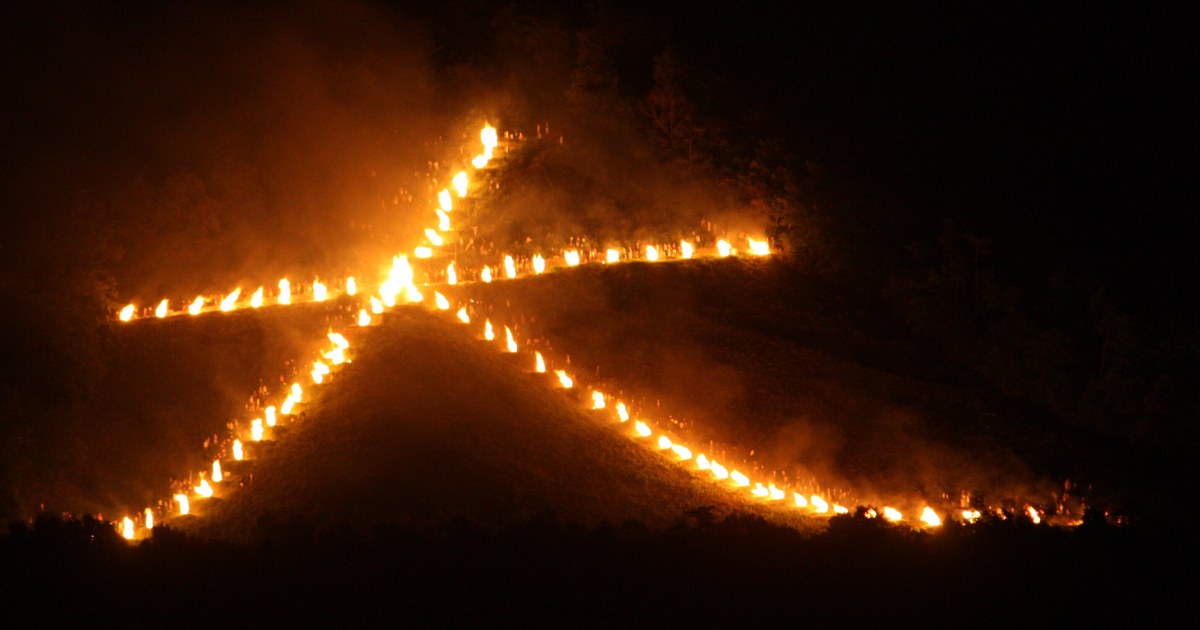
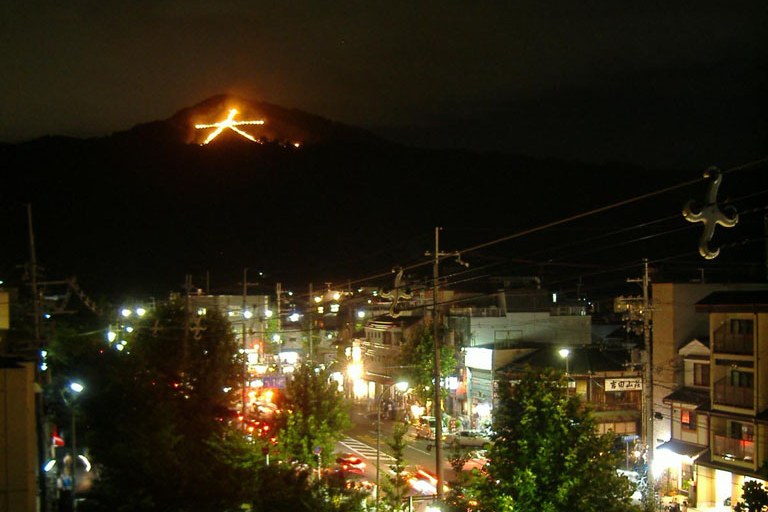
First, the name. It is the Gozan no Okuribi, the five-mountain send-off fire — not "Daimonji-yaki", a nickname that in Japanese also refers to a type of confection and that makes the event sound like a fireworks display. It is not one. The fires send the ancestral spirits back after their stay, all five mountains are registered intangible folk cultural properties of Kyoto City, and writing about it in festival-party language misses what is happening on the hillside.
The date is fixed at 16 August — the Kyoto City Tourism Association page does not even print a year. In 2027 it is a Monday. Lighting sequence and times:
| Time | Mountain (character) | Officially listed viewing areas |
|---|---|---|
| 20:00 | Daimonji (Mt. Nyoigatake) | Kamo river, Marutamachi Bridge to Misono Bridge; Kyoto Imperial Palace grounds |
| 20:05 | Myo / Ho | Myo: Kitayama-dori near Kyoto Notre Dame Women's University. Ho: Takano river upstream of Demachiyanagi; Kitayama-dori east of Matsugasaki Station |
| 20:10 | Funagata (boat) | Kamo river, Kitayama Bridge to Nishigamo Bridge |
| 20:15 | Hidari-Daimonji | Nishioji-dori, Enmachi to Kinkaku-ji |
| 20:20 | Toriigata (torii gate) | Togetsukyo Bridge, Matsuo Bridge, Hirosawa Pond |
Each fire burns for about 30 minutes, with an official caveat that lighting times may shift in adverse weather. Beyond the listed zones the official material adds only "hotel rooftops around the city".
My recommendation: do not attempt all five. The whole sequence spans 20 minutes and the mountains are scattered across the north-east, north, north-west and west of the city; moving between them in that window is not possible. Pick one, at most two. Daimonji is the easiest — the longest viewing stretch, closest to the centre. Toriigata over the water at Togetsukyo is the most photogenic and has the most painful journey home. If you want two in one place, the Kamo riverbank around Kitayama Bridge is the officially listed zone with the least walking between Funagata and the Daimonji direction. Work out your route home in advance using our Kyoto transport guide.
- Climbing any of the five mountains is prohibited — the trails have no lighting and the ban is explicit for that day.
- Neighbourhoods switch their lights off from 19:50 to 20:50 (Yamashina and Fushimi wards excepted), covering neon, outdoor and advertising lighting. It exists so the fires read clearly — which also means navigating on foot during that hour is darker than you expect.
- Riverbanks are restricted when water is high, and the authorities advise avoiding them at night regardless. After rain, stay up on the street.
No official seating — but you can offer a goma-gi
The claim that the Gozan no Okuribi has official paid viewing seats does not survive checking. Neither the tourism association's explainer page nor its merchandise page lists a seat product; the official material offers free public viewing zones plus that line about hotel rooftops. Paid packages on sale are hotel and tour-operator products, not organiser seating — know which you are buying.
What genuinely lets you take part rather than merely watch is offering a prayer stick. The five-mountain common goma-gi is ¥880 including tax, created in 2024 by the Kyoto City Tourism Association together with the Gozan Okuribi Federation, which received around 400 of them that first year — and visitors from abroad can offer one. This is the most open door the event has for foreign travellers. The same range includes a tenugui cloth at ¥1,200, a set of five commemorative talismans at ¥1,500 and a folding fan at ¥3,300, with part of the proceeds supporting preservation of the rite.
⚠️ Sales points and dates change every year (in 2026, from 1 August at Kyo-navi, the Nijo Castle shop, Mina Kyoto, BiVi Nijo, four Aeon Mall branches, Kawaramachi Opa and the city bus and subway information centres), and the individual mountains' own goma-gi reception dates and locations change even more, with an official note that they close early once stock runs out. Check the current year's official page — do not copy last year's list from anywhere, this article included.
Nara on 14–15 August: three nights a year
If I could pick only one city for Obon, I would take Nara over Kyoto. The reason is density: Kyoto's entire event is 20 minutes on the 16th, whereas Nara gives you two consecutive evenings and three events within walking distance of each other.
Kasuga Taisha Chugen Mantoro (14 and 15 Aug, 19:00–21:30)
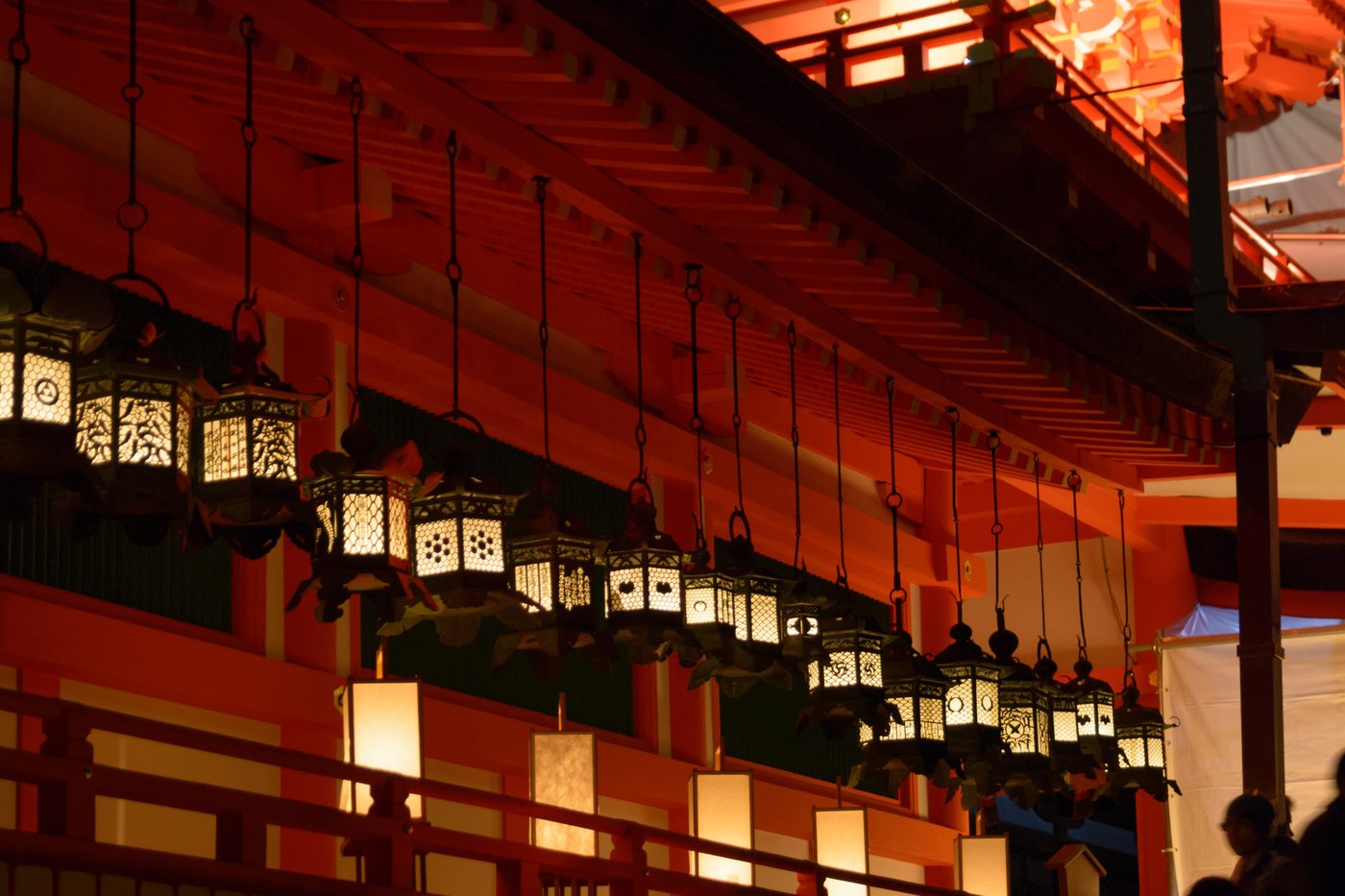
The shrine's own wording is precise: the full lighting of all roughly 3,000 lanterns happens only at Setsubun in February and on the nights of 14 and 15 August. That is three evenings in the entire year. On any other day you are looking at unlit lanterns, which is a completely different sight.
They are not decorations. The Yunoki-gata stone lantern, traditionally attributed to Fujiwara no Tadamichi, dates to 1136, and the Ruri lantern, attributed to Fujiwara no Yorimichi, to 1038 — Japan's second-oldest surviving stone lantern is somewhere in that field of light.
On cost, separate two things: general worship in the grounds is free, but walking the corridor in front of the main sanctuary to see the hanging bronze lanterns close up requires a special-visit offering of ¥700, and an offering of ¥3,000 or more lets you dedicate a lantern in your own name. To build the daytime around it, see our Nara Park and Todai-ji guide.
Todai-ji Manto Kuyo-e (15 Aug, 19:00–21:30)
About 2,500 lanterns are set out on the stone approach in front of the Great Buddha Hall. The reason to be there is something you cannot do on a normal day: the observation window on the hall's facade is opened, so the Great Buddha's face is visible from the approach itself rather than only from inside.
⚠️ No official page publishes an admission figure for that evening. The Nara City Tourist Association page carries the date and times but no fee, so check with Todai-ji directly rather than trusting a third-party figure. (Daytime Great Buddha Hall admission is verified: ¥800 for adults and secondary students, ¥400 for primary school children.)
Nara Daimonji Okuribi (15 Aug, lit at 20:00)
The same evening, a joint memorial service begins around 19:00 at Tobihino in the Kasuga Taisha grounds, and the fire on Mt. Takamado is lit at 20:00. 2026 was the 67th edition.
Its origin is completely unlike Kyoto's and is the most interesting thing about the night: it began in 1960 as a memorial for the war dead, and now commemorates all the departed and prays for world peace. The form is rarer still — Kasuga Taisha's Shinto priests and monks from around 30 temples in the prefecture officiate at the same altar, which the tourism association itself describes as highly unusual nationwide. Shinto and Buddhist rites side by side on one altar is not a common sight in modern Japan. It is free, and visible from many open spots.
How I would sequence it: arrive in Nara late on the 14th and give the evening entirely to the first night of the Mantoro, which draws fewer people than the second; spend the 15th in Nara Park, enter Todai-ji at 19:00 for the lantern service and the opened window, then move to open ground with a view of Mt. Takamado for the 20:00 lighting. No city changes across two days — the least travel-heavy combination available during Obon week.
Nagasaki Shoro Nagashi: a funeral, not a festival
Read this section before deciding whether to attend, because arriving with the wrong expectations here is genuinely offensive.
Nagasaki City's own wording is unambiguous: the Shoro Nagashi is an event with no organiser, and the city states that it has no authority to decide whether it takes place or is cancelled. The city's only involvement stems from its statutory responsibility for waste disposal, which is why it provides the dismantling sites at all.
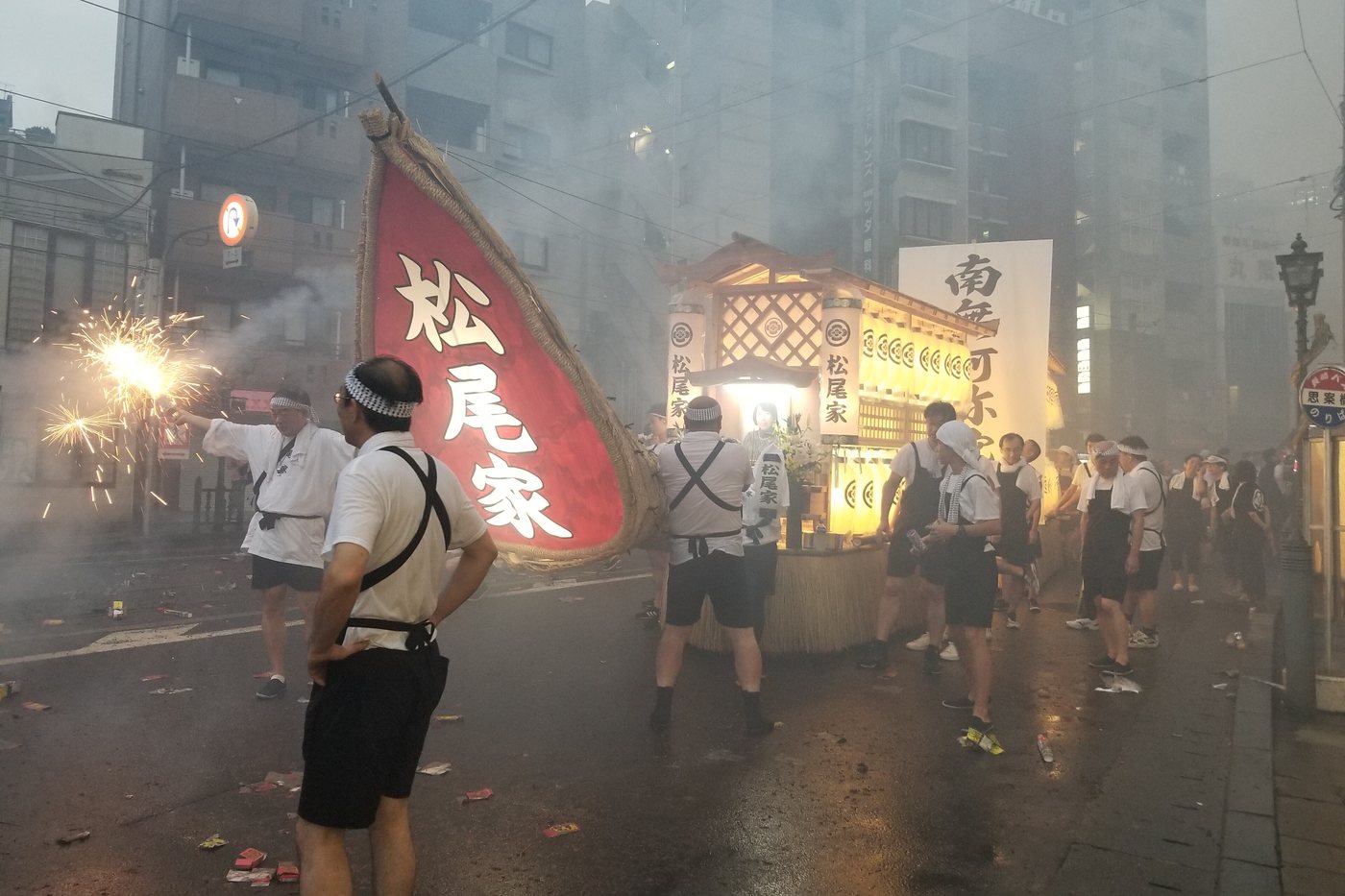
What is actually taking place: families who have suffered a death in the past year build a spirit boat and carry that person out of the city. The people in the street are the bereaved, not performers. The date is 15 August every year; in 2026 boats were received from 17:00 with an expected finish at 21:00.
Three misconceptions to clear:
- The boats do not float out to sea. The city writes explicitly that they must not be spun around or set adrift on the water. They are dismantled at the sites and incinerated at the East Plant, which suspends acceptance of bulky combustible waste from 17 to 26 August to absorb the volume. Setting boats adrift has been prohibited since 1871.
- It is nothing like a floating-lantern ceremony. Nagasaki's version comes with volleys of firecrackers and clanging gongs, and the streets fill with powder smoke. The city bans certain firework types outright and prohibits all fireworks inside the dismantling sites; spirit boats over 2m require a road-occupancy permit from the police.
- Nobody official publishes the road closures. Nagasaki City's stated position is that questions about the route and traffic restrictions go to the nearest police station. This guide therefore lists no closed streets. Follow the marshals on the night, and bring ear protection if you are noise-sensitive or have small children with you.
My position: unless you have some connection to Nagasaki, this is not something I would recommend travelling specially to see — it is not staged for visitors. If you happen to be in the city, stand quietly at the side, keep clear of the procession and do not photograph mourners' faces. That is the whole etiquette.
Choosing a Bon dance: Awa, Gujo, Nishimonai
The Bon dances are Obon's most outward-facing side, but these three have very different personalities. The short version: watch at Awa Odori, dance at Gujo Odori, and go to Nishimonai for the one that feels least like a tourist event.
Tokushima: Awa Odori (11–15 Aug)
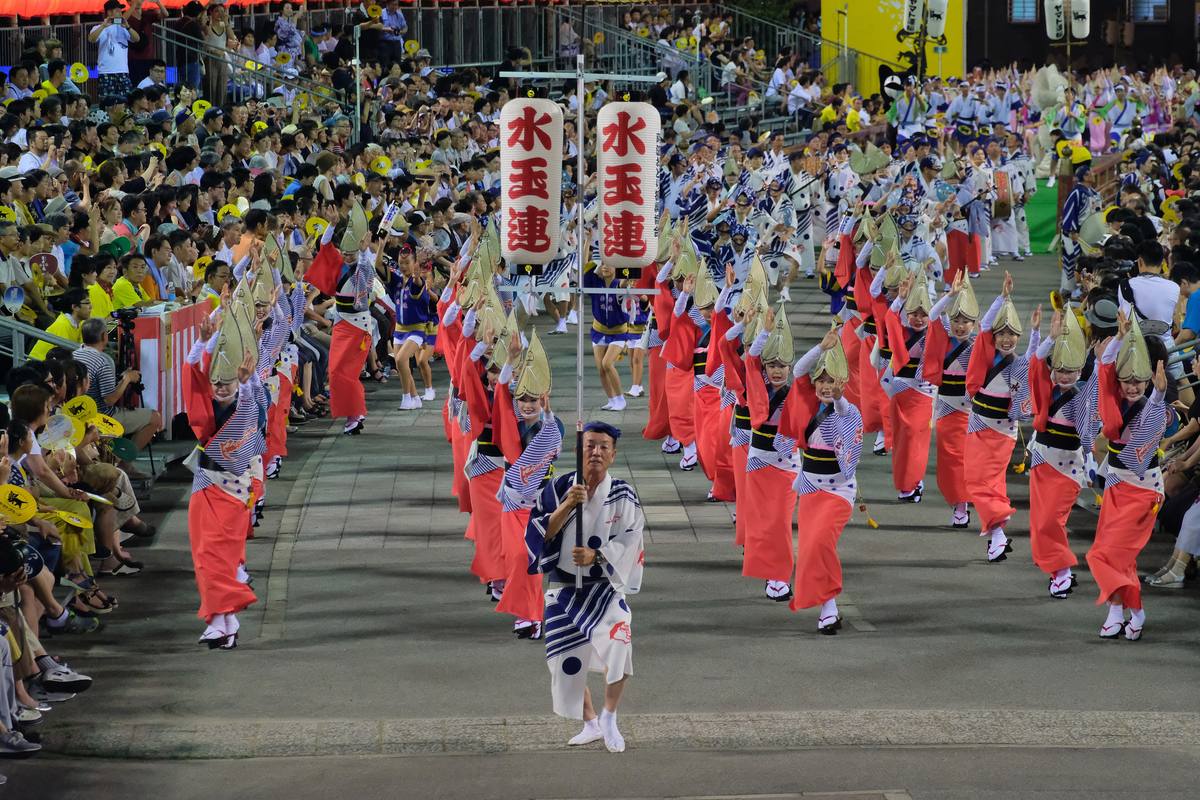
The organising committee defines the run as "the five days from 11 to 15 August every year" — and note what that implies: 11 August is not an "eve festival", which is an outdated label. Under the current structure the 11th is an indoor paid stage, and the outdoor grandstand streets run 12–15 August. On scale, the organisers cite over 400 years of history and around 1.11 million attendees in 2025.
Ticketing has three layers, and it is worth seeing them side by side:
| Type | When and where | Price (2026, advance, incl. tax) |
|---|---|---|
| Outdoor paid grandstands (Sansan Aibahama approx. 4,600 seats / Awagin Minamiuchimachi approx. 2,700 / Bal Konyamachi approx. 2,200) | 12–15 Aug 1st session 18:00–19:40, 2nd 20:20–22:00 (audience changeover) | C unreserved ¥1,000 / B ¥2,000 / A ¥2,500 / S ¥3,000 / SS ¥6,000 / special reserved ¥15,000 (Minamiuchimachi only) |
| Indoor stage "Suguribi" | 11 Aug, Asty Tokushima 12:00 / 15:30 / 19:00, approx. 80 min each, approx. 600 dancers | A ¥2,800 / S ¥3,800 / special reserved ¥5,000 |
| Indoor stage "Matsuribi" | 12–15 Aug, Awagin Hall 11:00 / 13:30 / 16:00, approx. 70 min each | A ¥2,800 / S ¥3,500 / SS ¥4,500 |
| Free viewing streets | Ryogoku Honmachi (approx. 170m, the longest) 18:10–22:00 / Shinmachibashi 18:10–22:00 / Odori Hiroba 18:00–22:00 | Free |
What I would do: buy one cheap unreserved C seat at ¥1,000, then spend the rest of the evening standing at the free streets. That combination gives you both experiences — the grandstand offers a clean frontal view where you can read the formations, while the free streets (especially the 170m Ryogoku Honmachi stretch) put you close enough for the noise and the energy. Spending ¥15,000 on the Minamiuchimachi special reserved seat is not how I would allocate this budget without a specific reason.
Two practical notes: tickets are required from age three (under-threes may sit on a lap), and the indoor stages (late morning to late afternoon) do not clash with the outdoor grandstands (from 18:00), so both fit into one day. Sales run in two rounds — advance sale in mid-June, general sale from 1 July at 10:00, through Ticket Pia's website and the official Awa Odori site. ⚠️ All of the above is 2026 data; 2027 dates and prices are unannounced, and only the "11 to 15 August every year" framing and the sales rhythm carry over. ⚠️ One safety note: the official site is awaodorimirai.com. The older address awaodori.tokushima.jp now serves an unrelated exam-prep blog — do not use it as a source. To pair the festival with the Naruto whirlpools and the Iya Valley, see our Tokushima guide.
Gifu: Gujo Odori (all-night sessions 13–16 Aug)
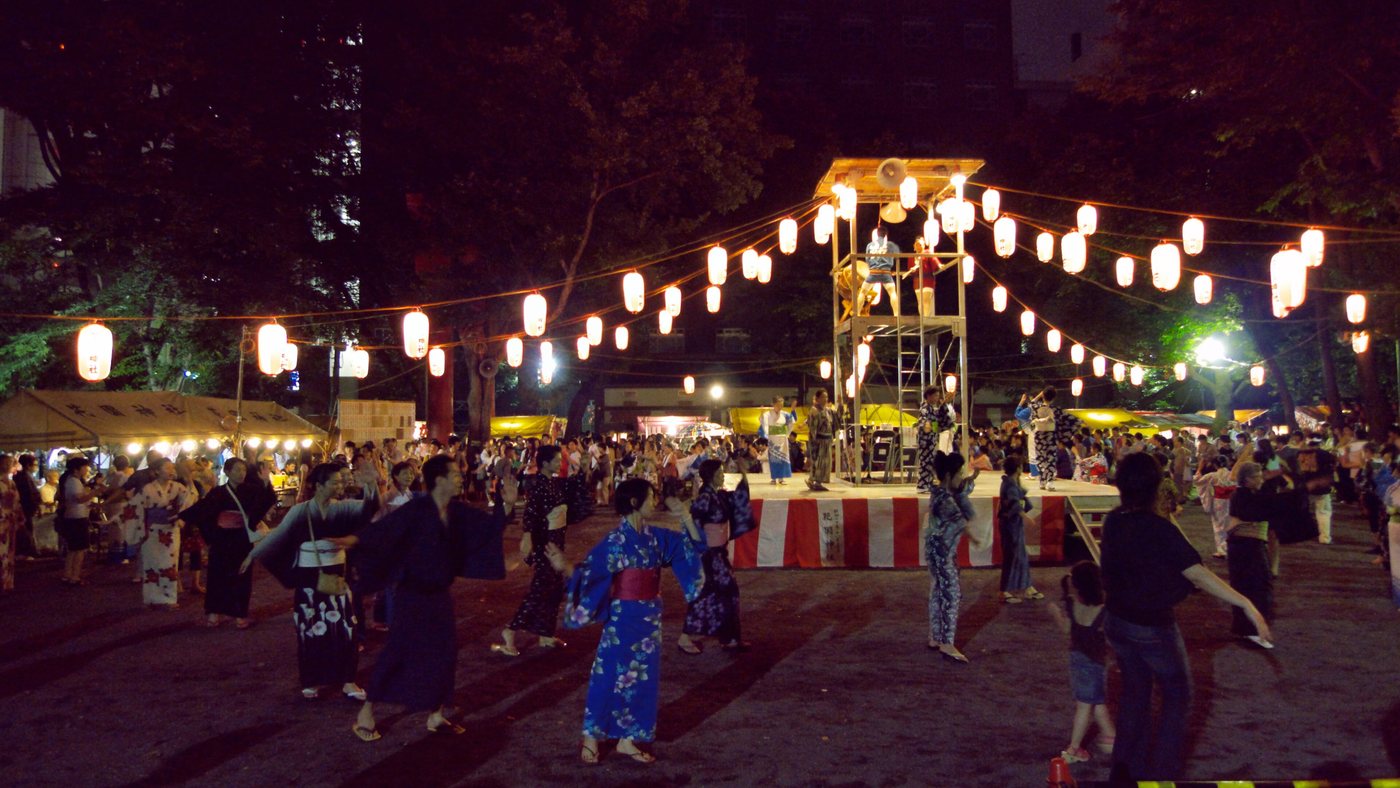
This is the one I would recommend to most travellers, for a single reason: you can join in. The Gujo Hachiman tourism association describes it in its own words as a dance to be danced, not a dance to be watched — visitors and residents share the same circle, participation is free, and no particular clothing is required. The one official suggestion is wooden geta, because the sound of the boards is part of the accompaniment.
The season runs from mid-July to early September across more than 30 nights, which the association bills as Japan's longest-running Bon dance. Within it, 13, 14, 15 and 16 August are the all-night sessions. Ordinary nights run 20:00–22:30 on weekdays and Sundays, 20:00–23:00 on Saturdays. There are ten dances in the repertoire and a certification system in which good dancers are awarded a wooden token.
The wet-weather rule has personality: light rain does not stop it, and the association has a nickname for those who dance through it. Only typhoons and torrential rain cancel.
⚠️ On UNESCO, precision matters: the association writes that Gujo Odori was inscribed in 2022, but what was actually inscribed on 30 November 2022 was Furyu-odori, a group of 41 dances, of which Gujo Odori is one. The same distinction applies elsewhere (Aomori Nebuta is really Hachinohe Sansha Taisai; Takayama Matsuri is really the Yama, Hoko, Yatai float-festival group, 33 items when it was inscribed in 2016 — ⚠️ and that 2016 inscription was itself superseded on 8 December 2025 by UNESCO decision 20.COM 7.b.52, which "incorporates and replaces" entry No. 01059 and records an inventory of the original thirty-three plus four festivals added between 2016 and 2021, so 33 is the historical count, not the current one). Write it as "inscribed in 2022 as one component of Furyu-odori", not as a standalone inscription.
Akita: Nishimonai Bon Odori (16–18 Aug)
The quietest of the three and the one with the most conditions attached. It runs 16 to 18 August every year on Nishimonai Honmachi street; 19:30–22:30 on the 16th and 17th, and through to 23:00 on the 18th.
Four rules you need before you go, each of which changes your evening:
- If you want to sit, you must buy a ticket. The official Q&A states that bringing your own folding chair has been prohibited in principle since 2025, and the English version is blunter still: you have to get paid seats to see the Nishimonai Bon Odori. Same-day tickets go on sale at 16:00 at a special counter inside the Bon Odori hall — grandstand and folding-chair seats ¥3,000 per seat, or a partitioned bench for three at ¥7,000 (sold whole only), first come first served, cash only. Advance applications for the front box and side seats close on 31 May and are drawn by lottery when oversubscribed.
- Arriving at 19:30 gets you the children's half. This is the officials' own wording: the first half is mainly children dancing, and the adult dancers assemble after 21:00. If you only have an hour, come after 21:00 — the single biggest time-saver in this article.
- Rain moves it indoors and changes the rules. It relocates to the Ugo Town gymnasium (announced at 14:00 on the day), shortens to 19:30–21:30, and becomes fully ticketed at ¥3,000 with no entry without a ticket, shoes off inside. Queuing at 14:00 at the usual sales point gets you a numbered slip, but officials note it does not guarantee a ticket.
- Accommodation is genuinely hard. The town states outright that securing lodging within Ugo is extremely difficult — total capacity is around 200 people — and recommends Yuzawa or Yokote instead. Driving in, car parks open at 13:00 and officials note they are typically full between 20:00 and 21:00; the environmental contribution is ¥1,000 for a car, ¥500 for a motorcycle, ¥7,000 for a microbus and ¥12,000 for a full-size coach, paid once with free re-entry. Road restrictions run 16:00–23:30, to 24:00 on the 18th. ⚠️ If anyone inside the restricted zone offers private paid parking, the town accepts no responsibility for what follows.
One free consolation prize that few people know about: the Nishimonai Bon Odori exchange session runs 14:30–16:00 on each of the three days at the community centre town hall, with live hayashi musicians and a chance to try the steps, free of charge. If you cannot get a same-day ticket — or simply want to understand what you are about to watch — that is the best use of the afternoon.
What the four days actually consist of
Once the calendar is unpacked, the logic falls out. Obon is a round trip: the ancestral spirits come home, stay a few days, and are sent back. Almost everything you see during the period is one stage of that journey.
- Welcoming fire, evening of 13 August — lit at the gate to guide the ancestors home. This is why 13 August is one of the outbound travel peaks: people are trying to be home by that evening.
- Grave visits, mid-August — the reason Tokyo's metropolitan cemeteries extend their gate hours from 10 to 16 August. Yanaka installs temporary water points because grave-cleaning requires carrying water, and Zoshigaya prohibits grave construction work during the period. The "everything is closed" story is exactly inverted here.
- Bon dances, various dates — held on the nights between the welcome and the send-off. Gujo Odori's all-night sessions fall precisely on 13–16 August, which lines up with the timeline exactly.
- Send-off fires, 15–16 August — Kyoto's five mountains on the 16th and Nara's Daimonji on the 15th are the large-scale versions; Nagasaki's spirit boats on the 15th carry out the newly dead. One gesture, three cities, three completely different forms.
An honest limit: local practice — what is offered, how the household altar is arranged, what the spirit vehicles are made from — varies enormously across Japan and mostly has no official documentation to cite, so this guide states no generalisations and sticks to what has a source. The same applies to Okinawa: the three-day structure and the names Unke, Nakabi and Ukui are verifiable, but no prefectural or municipal description of the ritual details was obtained, so none is invented here.
How I would plan the week
Stacking every constraint together, here is where I land. These are choices, not a menu:
- Do not make a long journey on 13 or 14 August. No Nozomi non-reserved seats, no expressway discount, and the northbound jam peak is 14–15. Put your long legs on in-between days like 10 or 12 August, or be in position before Mountain Day on the 11th.
- Base yourself in one city for three nights rather than chasing events between regions. Four events run on the evening of the 15th and two on the 16th, hundreds of kilometres apart. Chasing them means catching the end of each.
- If you can pick only one city, pick Nara. Mantoro on the 14th, Todai-ji's lantern service plus the Takamado fire on the 15th — two evenings, three events, all walkable, with Nara Park in between. It is the highest concentration of Obon rites in the country.
- If you are already in Kyoto, commit to one mountain and plan the walk home. The fires occupy 20:00–20:20 and the neighbourhood lights are off from 19:50 to 20:50, so the crowd disperses in the dark. Daimonji from the Kamo riverbank is the safe choice.
- To dance rather than watch: Gujo Hachiman, 13–16 August. Free, open, officially encouraged. It has the lowest participation barrier of any Obon event for a foreign visitor.
- For Awa Odori: buy the cheapest unreserved seat and use the free streets for the rest. And remember that 11 August is an indoor stage rather than an "eve festival", and that
awaodorimirai.comis the only official site. - Anyone heading to Okinawa should re-check the dates. The 2027 lunar Obon calculates to 14–16 August, overlapping the mainland; official municipal confirmation arrives mid-2027. Do not carry over 2026's 25–27 August.
- Money is not the thing to prepare. Banks, ATMs and city offices all operate normally. What needs booking far ahead is reserved seats and rooms.
The limits of this guide, stated plainly: everything here was verified against official pages on 14 August 2026. The 2027 NEXCO traffic forecast (published each mid-July), the 2027 Nozomi all-reserved period (published in spring), the 2027 Awa Odori dates and prices, and official confirmation of the 2027 Okinawan dates did not exist at the time of writing, and none of them is guessed at here. Check the current-year official source before you travel and do not reconcile anything on the ground against this article's numbers — or anyone else's. For whether to avoid Japan's long holidays altogether and how much airfares and hotels move, see our guide to Japan's three big holiday periods; for the completely different closure rules that apply at New Year, see what's open over the Japanese New Year.
Frequently Asked Questions
- Q1:Is Obon a public holiday in Japan? Will banks and city offices be closed?
- No, and no. Obon is not a national holiday, and the banking point has an actual statutory basis rather than an opinion behind it. Article 15(1) of the Banking Act states that bank holidays are limited to Sundays and to days specified by cabinet order, and Article 5 of the Banking Act Enforcement Order lists those days exhaustively: national holidays, 31 December through 3 January, and Saturdays. Mid-August appears nowhere in that list. City halls run on the same rule — Nagasaki City publishes its opening hours as 8:45 to 17:30 excluding weekends, national holidays and 29 December to 3 January, and Tokushima City lists 8:30 to 17:00 on the same exclusions. Neither treats Obon as a closure. The only national holiday in August is Mountain Day on 11 August, per the Cabinet Office holiday list. So if you have heard that all of Japan shuts down for Obon, that is wrong. What does close is owner-operated shops and some companies taking an obon-yasumi, which is custom rather than law and varies by employer — and neither the Ministry of Health, Labour and Welfare nor the Ministry of Internal Affairs publishes official statistics on how long that break is, so any percentage you see comes from a private survey.
- Q2:When is Obon 2027, and why does Okinawa have different dates?
- Three sets of dates run in parallel in 2027. The July version (shingatsu-bon) is 13 to 16 July, Tuesday to Friday — note four days, not three; the Tokyo Metropolitan Park Association notices for the municipal cemeteries state that four-day span. The month-delayed version runs 13 August (Friday) to 16 August (Monday), welcoming fire to send-off fire, and this is the one used by most of the country and the one every transport restriction is pegged to. Okinawa keeps to the old lunisolar calendar, using the 13th to 15th of its seventh month, which drifts every year. For 2027 that matters more than usual: calculated from the National Astronomical Observatory of Japan figures for the new moon (2 August 2027, 19:05) and the mid-term solar point (Shosho, 23 August), Okinawan Obon in 2027 falls on 14 to 16 August — essentially overlapping the mainland dates. In 2026 it fell on 25 to 27 August, eleven days apart. Anyone applying a 2026 Okinawa experience to 2027 will get it badly wrong. NAOJ publishes lunar phases and solar terms but not the old calendar itself, which has no official standing in Japan, so those 2027 Okinawan dates are a calculation rather than an announcement. Municipal confirmations — the rubbish-collection notices Naha and other cities issue for the period, and the All-Okinawa Eisa Festival held the weekend after — usually appear only in June or July of the year in question.
- Q3:Can I ride the Shinkansen without a reserved seat during Obon?
- Not on the Nozomi. A joint press release from JR Central and JR West dated 21 May 2026 states that from 7 to 16 August 2026, every Nozomi service between Tokyo and Hakata runs with all seats reserved, and that holders of non-reserved limited express tickets may not take a seat — the vestibule is all that is available to them. So the familiar fallback of buying a non-reserved ticket and standing for a couple of hours does not even guarantee floor space in a carriage. Non-reserved seating does continue on the Hikari, Kodama, Mizuho, Sakura and Tsubame services, and taking a Hikari instead is the practical workaround: slower, but the non-reserved cars are still there. The same PDF carries a booking detail that is easy to miss. Reservations open at 10:00 one month before the travel date, but Express Reservation (annual fee 1,100 yen including tax) and Smart EX (no annual fee) allow booking up to one year ahead. If your trip is already fixed that removes most of the release-morning pressure — but it is not the same as never competing for a ticket. Smart EX states on its reservation-hours page that the EX Hayatoku early-bird fares, S Work seats, wheelchair spaces and oversized-baggage seats are excluded from one-year-ahead booking, that bookings placed between one year and one month out have neither train nor seat confirmed, and that confirmation only arrives at 14:00 one month before travel. A year-ahead booking secures the date, not the fare and not the seat. Two limits must be stated plainly. First, the dates above are the 2026 edition; the same PDF runs only to 22 March 2027, so the 2027 Obon period has not been announced and, judging by the 2026 pattern, will appear in spring 2027. Second, all of the above is JR Central and JR West only — for JR East peak days and extra services on the Tohoku, Joetsu and Hokuriku shinkansen, check JR East directly.
- Q4:Are there expressway discounts during Obon if I rent a car?
- The opposite — the operators switch the discount off. In a 17 July 2026 release issued jointly by NEXCO Central, NEXCO East, NEXCO West, JB Honshi Expressway and the Japan Road Traffic Information Center, the Obon period is defined as 7 to 16 August 2026, ten days. Citing the 17 March 2026 notice on holiday-discount applicable days, it confirms that 8, 9, 11, 15 and 16 August do not attract the holiday discount even though they fall on weekends or a national holiday. The same release states that the Expressway Pass touring products are excluded from sale between 7 and 16 August. The period combines the worst traffic of the year with no discount and no pass. On the traffic itself, the 2026 forecast put nationwide jams of 10km or more at 436 occurrences (against 345 actual the previous year), with the longest predicted at up to 45km near Sagamiko IC on the southbound Chuo Expressway on 8 August. Treat those as 2026 figures only: the 2027 forecast does not exist yet and NEXCO typically publishes it in mid-July each year. My blunt advice is to avoid long-distance driving in this window entirely and use rail with reservations locked in early.
- Q5:What time does the Kyoto Gozan no Okuribi start, and can I buy a seat?
- It is held on 16 August every year — the Kyoto City Tourism Association page does not even print a year, because the date never moves. In 2027 that is a Monday. The five fires are lit in sequence: Daimonji at 20:00, Myo/Ho at 20:05, Funagata at 20:10, Hidari-Daimonji at 20:15 and Toriigata at 20:20, each burning for roughly 30 minutes, with an official note that lighting times may change in adverse weather. On seating: there is no official paid viewing stand. Neither the association's explainer page nor its merchandise page lists any seat product; the official material gives only free public viewing zones — the Kamo river between Marutamachi and Misono bridges and the Kyoto Imperial Palace grounds for Daimonji, Togetsukyo, Matsuo bridge and Hirosawa pond for Toriigata, and so on — plus a passing line about hotel rooftops around the city. Paid packages you find for sale are sold by hotels or tour operators, not by the organisers. What does let you take part is offering a goma-gi prayer stick: the five-mountain common goma-gi is ¥880(五山共通護摩木(税込)), created in 2024 by the tourism association together with the Gozan Okuribi Federation, and visitors from abroad are explicitly able to offer one. Three rules apply on the night: climbing any of the five mountains is prohibited (the trails are unlit), the surrounding wards switch off neon, outdoor and advertising lighting from 19:50 to 20:50 (Yamashina and Fushimi wards excepted), and the riverbanks are restricted when water levels rise — the authorities advise avoiding them after dark regardless.
- Q6:What is the Nagasaki Shoro Nagashi, and should I go and watch it?
- Understand what it is before you decide, because turning up with the wrong expectations is genuinely disrespectful here. Nagasaki City states in its own material that the Shoro Nagashi is an event with no organiser, and that the city has no authority to decide whether it goes ahead or is cancelled; the city is involved solely because it is responsible for waste disposal, which is why it provides the dismantling sites. What is actually happening is that families bereaved during the past year build a spirit boat and carry their dead out of the city. It is a funeral procession, not a spectacle. The date is 15 August every year; in 2026 boats were received from 17:00 until an expected 21:00 finish. Three corrections are worth making. The boats do not float out to sea — the city writes explicitly that they must not be spun around or released into the water, and they have been prohibited from being set adrift since 1871; they are dismantled at the sites and incinerated. It is nothing like the quiet floating-lantern ceremonies elsewhere in Japan: Nagasaki's version comes with volleys of firecrackers and gongs, and the streets fill with smoke. And the city does not publish the road closures — its official line is that questions about the route and traffic restrictions should go to the nearest police station, so this guide lists no closed streets and treats any route map without an official source as unusable. Follow the marshals on the night, and bring ear protection if you are sensitive to noise or travelling with small children.
- Q7:Which Bon dance festival should I choose: Awa Odori, Gujo Odori or Nishimonai?
- It depends on whether you want to watch or to dance. For spectacle, Tokushima's Awa Odori: the organising committee defines the run as the five days from 11 to 15 August every year, the cheapest outdoor grandstand ticket is the unreserved C seat from ¥1,000(C席(自由席)), three free viewing streets run alongside the paid ones, and roughly 1.11 million people attended in 2025. To dance yourself, Gujo Odori in Gifu: the Gujo Hachiman tourism association describes it in its own words as a dance to be danced rather than watched, visitors and residents share the same circle, participation is free and no particular clothing is required — the one official recommendation is wooden geta, because the sound of the boards is part of the accompaniment. The Bon nights of 13, 14, 15 and 16 August are the all-night sessions within a season that runs from mid-July to early September, over 30 nights in total, which the association bills as Japan's longest-running Bon dance. For the least touristic of the three, Nishimonai Bon Odori in Ugo, Akita, held 16 to 18 August. Know three things first: if you want to sit you must buy a ticket, because bringing your own folding chair is in principle prohibited (same-day seats from ¥3,000(当日券 觀覽席(ひな壇席・パイプ椅子席)/席), sold from 16:00, first come first served, cash only); the official guidance says the first half is mainly children dancing and the adult dancers assemble after 21:00, so arriving at the 19:30 opening buys you the wrong half; and the town can accommodate only about 200 visitors overnight, with the officials themselves recommending you stay in Yuzawa or Yokote instead. One note on framing: the popular ranking of these three as Japan's "three great Bon dances" comes from travel media, and none of the three official sites claims it.
- Q8:Do temples and shrines close for Obon, or is there anything only open then?
- There is no national rule here — each institution sets its own schedule, and this guide will not invent a generalisation. But two verified counter-examples run the other way and open at night specifically for Obon. Kasuga Taisha's Chugen Mantoro lights all of its roughly 3,000 lanterns on the evenings of 14 and 15 August, 19:00 to 21:30. The shrine states that this full lighting happens only at Setsubun in February and on those two August nights — three evenings a year, and no more. Walking the inner corridor to see the hanging bronze lanterns up close needs a special-visit offering of ¥700(回廊内特別参拝(初穂料)), and an offering of 3,000 yen or more lets you dedicate a lantern. These are not stage props: the Yunoki-gata stone lantern, said to have been dedicated by Fujiwara no Tadamichi, dates to 1136, and the Ruri lantern attributed to Fujiwara no Yorimichi to 1038. The same night, Todai-ji holds its Manto Kuyo-e on 15 August, 19:00 to 21:30, laying out about 2,500 lanterns on the stone approach — and on that night the Great Buddha's face can be seen from the approach itself, which is not possible on an ordinary day. The admission fee for that evening is not published by the Nara City Tourist Association and could not be found on the temple's own site, so no figure is given here; check Todai-ji directly. Also on 15 August, Nara lights its own Daimonji Okuribi: a joint Shinto-Buddhist memorial service at Tobihino in the Kasuga Taisha grounds from around 19:00, then ignition on Mt. Takamado at 20:00. It began in 1960 as a memorial for the war dead and is unusual in that Kasuga Taisha priests and monks from around 30 prefectural temples officiate at the same altar — the tourism association calls that combination genuinely rare nationwide.
Read next
Japan Holiday Rushes: Golden Week, Obon, New Year — Go?
Golden Week, Obon and New Year double flight and hotel prices and jam the trains. Which to avoid, how to plan smart if you must, and the festivals only these dates offer.
Japan Expressway Pass & ETC Card Guide 2026
From spring 2026, 65 toll gates take ETC only — no cash lane at all. How visitors rent a card, and when each regional pass actually pays off.
Todaiji & Nara Park: tickets, hours, deer rules & goshuin
Four halls at ¥800 each, one combo ticket, cash only — and Hokkedo shuts at 16:00. Plus the official 1,687-deer count and fixed 2026 event dates.
📊 See the 2026 Price Index (JR Pass, DPA, eSIM, Airport Transport) →