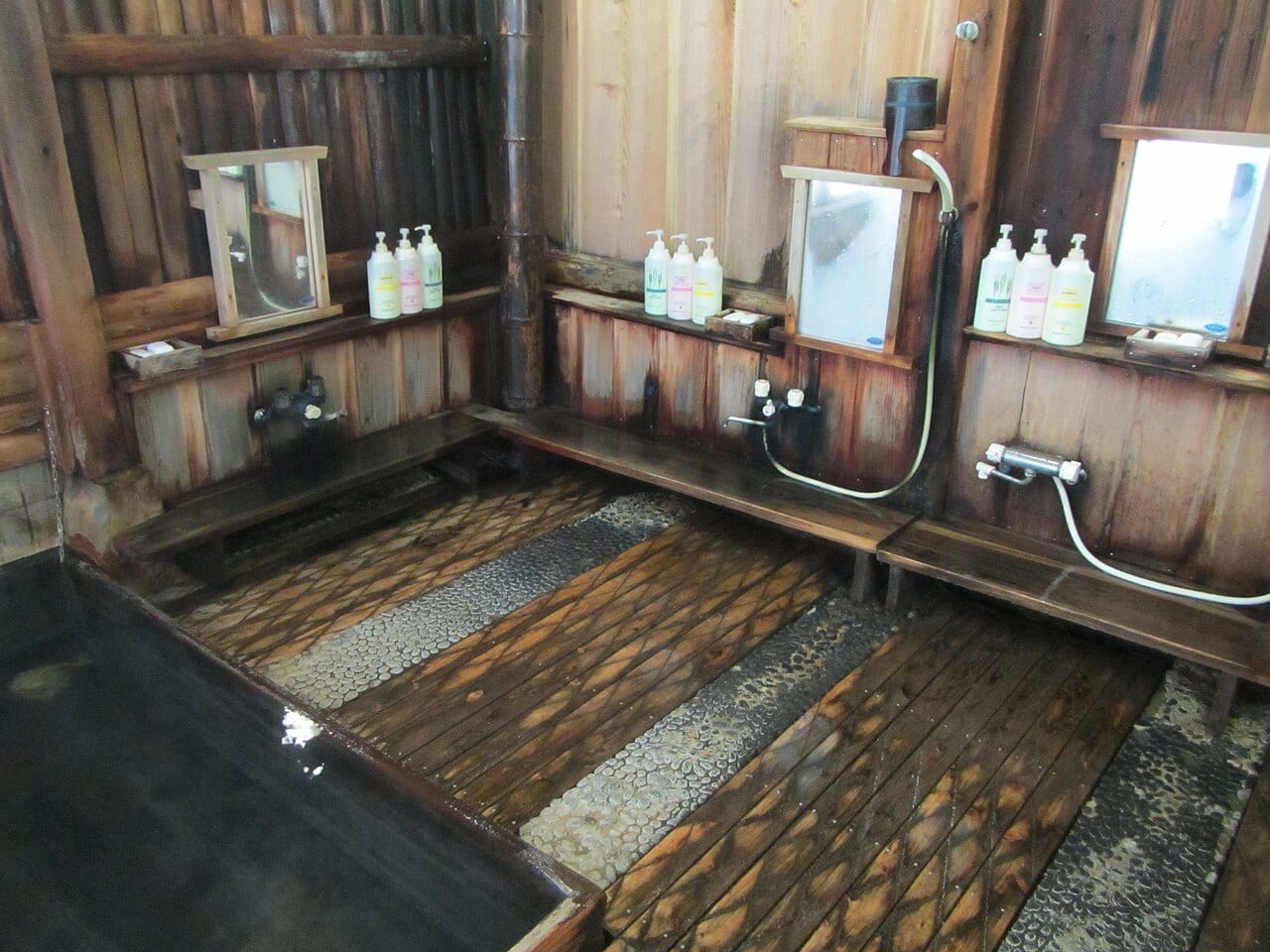
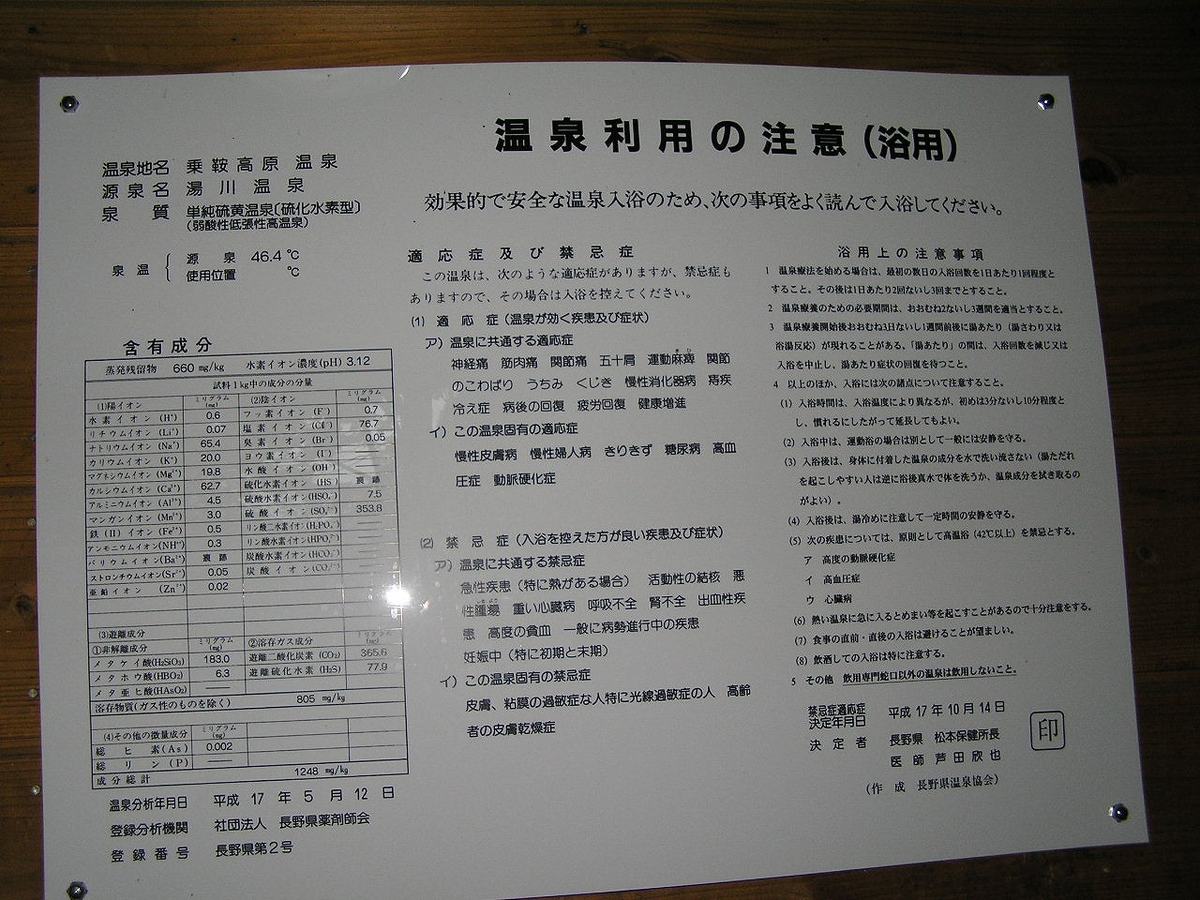
That dense framed notice on the changing-room wall carries nine items every bath must disclose and four more that appear only if the operator does them — adding water, adding heat, recirculating, and using additives or disinfectant. Doing one and staying silent is a criminal offence carrying a fine of up to ¥300,000. Meanwhile the "analysis date" line on that same notice can legally be ten years old. This guide does one thing: it makes those thirty seconds between picking up your key and stepping into the bath actually useful, by showing you what the notice says and, just as importantly, what it will never say. Along the way it settles a confusion almost nobody has been told about — the notice on the wall and the phrase "gensen kakenagashi" on the hotel website are governed by two entirely different laws, and only one of them is compulsory.
- Article 18 of the Hot Springs Act forces that notice onto the wall — in the changing room or on the wall facing the tub. Not posting it, or posting a false one, is a fine of up to ¥300,000
- Added water, heat, recirculation and disinfection are conditional disclosures. A blank line is the operator declaring he does not do it, not an omission
- The notice never tells you the degree — the ministry excluded it on purpose, so "water added" covers a very wide range
- The analysis date can be up to ten years old; a new analysis must be reflected within thirty days
- Contraindications are compulsory, health benefits are not — and only acidic and sulphur springs carry statutory bathing contraindications
- "Gensen kakenagashi" is undefined by the Hot Springs Act, stated outright by the national consumer agency. The phrase is policed by advertising law instead
- Do not look for the "natural hot spring display plaque" — it was abolished on 28 February 2019
📖 Contents
- 1. The notice exists because of a 2004 scandal
- 2. Nine items always, four items only if done
- 3. What a blank line actually means
- 4. Three things the notice will never tell you
- 5. How old can the analysis date be?
- 6. Why contraindications are required and benefits are not
- 7. Acidic and sulphur springs: the rinse question has an official answer
- 8. "Gensen kakenagashi" was never defined by law
- 9. So which law does police the website?
- 10. Three things to do when you arrive
- 11. What this guide could not verify
- 12. FAQ
The notice exists because of a 2004 scandal
Those four lines are not an industry courtesy — they were legislated into existence after operators were caught colouring their water. A March 2005 Ministry of the Environment leaflet addressed to hot-spring operators opens by explaining the trigger: in the previous year it emerged that some hot-spring facilities were using bath additives without disclosing them, and public interest in accurate information from operators rose accordingly. The same leaflet records the mechanics — the amended enforcement regulation was promulgated on 24 February 2005 and came into force three months later, on 24 May.
The incident behind it can now be named from official paperwork. In material the Japan Fair Trade Commission submitted to a Ministry of the Environment advisory council, the first line of the prefectural enforcement table is four operators at Shirahone Onsen in Nagano, dated 19 August 2004, for displaying photographs and text of hot-spring water that had been coloured with a bath additive in their brochures and on their websites. The same document records a warning the commission itself issued ten days earlier, on 9 August 2004, to an operator in Fukuoka advertising "natural hot spring" and a specific sulphur spring type while actually heating well water.
That document is a snapshot dated 17 November 2004 — twenty-one years old. The place names on it (Shirahone, Ikaho, Isawa, Awara, Akiu and others) were the subject of guidance at the time, most of the operators were never publicly named, and the matters were long since corrected. It is quoted here for exactly one purpose: to establish that these four categories of misrepresentation really happened, which is why the four lines ended up in the regulation. Reading it as a list of "fake hot springs" is simply wrong.
Laid out chronologically, the notice has been revised in three rounds rather than settled once in 2005:
| When | What changed | Why it matters to you |
|---|---|---|
| In force 24 May 2005 | Enforcement regulation adds the four items: added water, added heat, recirculation, additives and disinfection | The subject of this guide; unchanged since |
| Amended 2007, in force October that year | Composition analysis required at least once every ten years, with the notice updated accordingly | Where the rule about the "analysis date" line comes from |
| 1 July 2014 | Revised standard for posting contraindications and bathing or drinking precautions | Contains the statutory contraindications for acidic and sulphur springs, and the official answer on rinsing |
Be careful with article numbers. The posting obligation now sits at Article 18 of the Hot Springs Act, which is the numbering after the 2007 amendment. The Ministry of the Environment's own template spring analysis form still prints the pre-2007 numbers, Articles 13 and 14, and its "outline of the Hot Springs Act" page still lists the most recent amendment as a 2007 one when the current text on the government statute portal is a 2022 amendment. Within a single official domain, it is not only the tourist-facing pages that lag — the template forms lag too. Take article numbers from the statute portal, not from explanatory pages.
Nine items always, four items only if done
The correct structure is nine compulsory items plus four conditional ones — not a row of four yes/no boxes. Article 18(1) of the Act itself lists only the composition, the contraindications, precautions for bathing or drinking, and "other information necessary for bathing or drinking as specified by ministry ordinance". Article 10 of the enforcement regulation is what unpacks that.
| Group | Item | Required? |
|---|---|---|
| The water itself | Source name | 🟢 Always |
| Spring type | 🟢 Always | |
| Temperature — at the source and at the point of use | 🟢 Always | |
| Composition | 🟢 Always | |
| Date the composition was analysed | 🟢 Always | |
| Name and registration number of the registered analysis body | 🟢 Always | |
| How to use it | Contraindications for bathing or drinking | 🟢 Always |
| Method of and precautions for bathing or drinking | 🟢 Always | |
| Things that alter the composition | Water added | 🟡 Only if done, with the reason |
| Water heated | 🟡 Only if done, with the reason | |
| Water recirculated (filtration stated separately) | 🟡 Only if done, with the reason | |
| Bath additive used, or water disinfected | 🟡 Only if done, naming the additive or method, with the reason |
That third grouping is not editorial framing. The worked example in the ministry commentary titles the final column "items that affect the composition" in its own words. Those four lines are not scoring the operator; they are telling you the chemistry of the water has been altered.
Where should you look? The commentary is explicit: "a conspicuous place within the facility" means, in the case of bathing, the changing room or a wall facing the tub. So the action is simple — look up when you undress, or look at the wall directly opposite the bath. The same passage adds something equally useful: the operator is not obliged to post the specific annexe table produced by the registered analysis body, only to present appropriate content in a legible form. That is why every bath's notice looks different, and why you should not be hunting for one particular style of plaque.
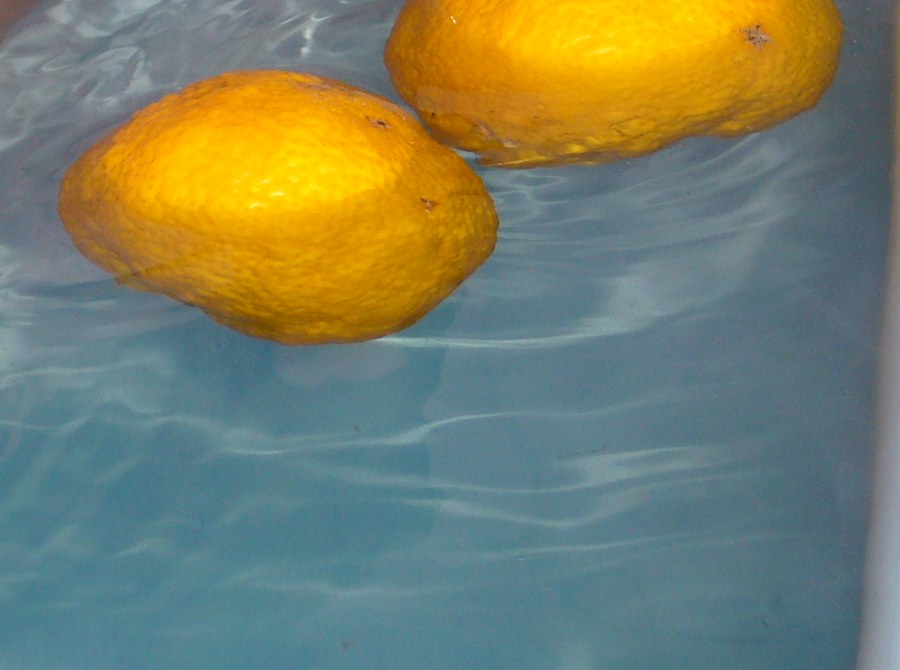
The additives clause deserves its own paragraph, because it runs against intuition. The commentary's test is whether you could tell by looking. Milk, sake and salt — things that dissolve wholly or largely, leaving the bather unable to see what was added — must be disclosed; artificially added mineral sediment must be disclosed; so must artificially manufactured liquids containing the same components as hot-spring water. Conversely, iris leaves and whole yuzu fruit, where anyone can see at a glance what has been added, need not be disclosed at all. So on the winter solstice, when a yuzu bath is floating with fruit, the absence of that line is entirely normal.
The disinfection clause carries a detail that is easy to misread in the other direction. The commentary supplies two model reasons an operator might give, and the second is "to meet the hygiene standards of the prefectural public bathhouse ordinance". In other words, a great deal of chlorination is compelled by prefectural law rather than chosen to cut corners. How that entire public-bathing hygiene regime works is a separate thread, unpacked in the guide to sento fees and rules.
What a blank line actually means
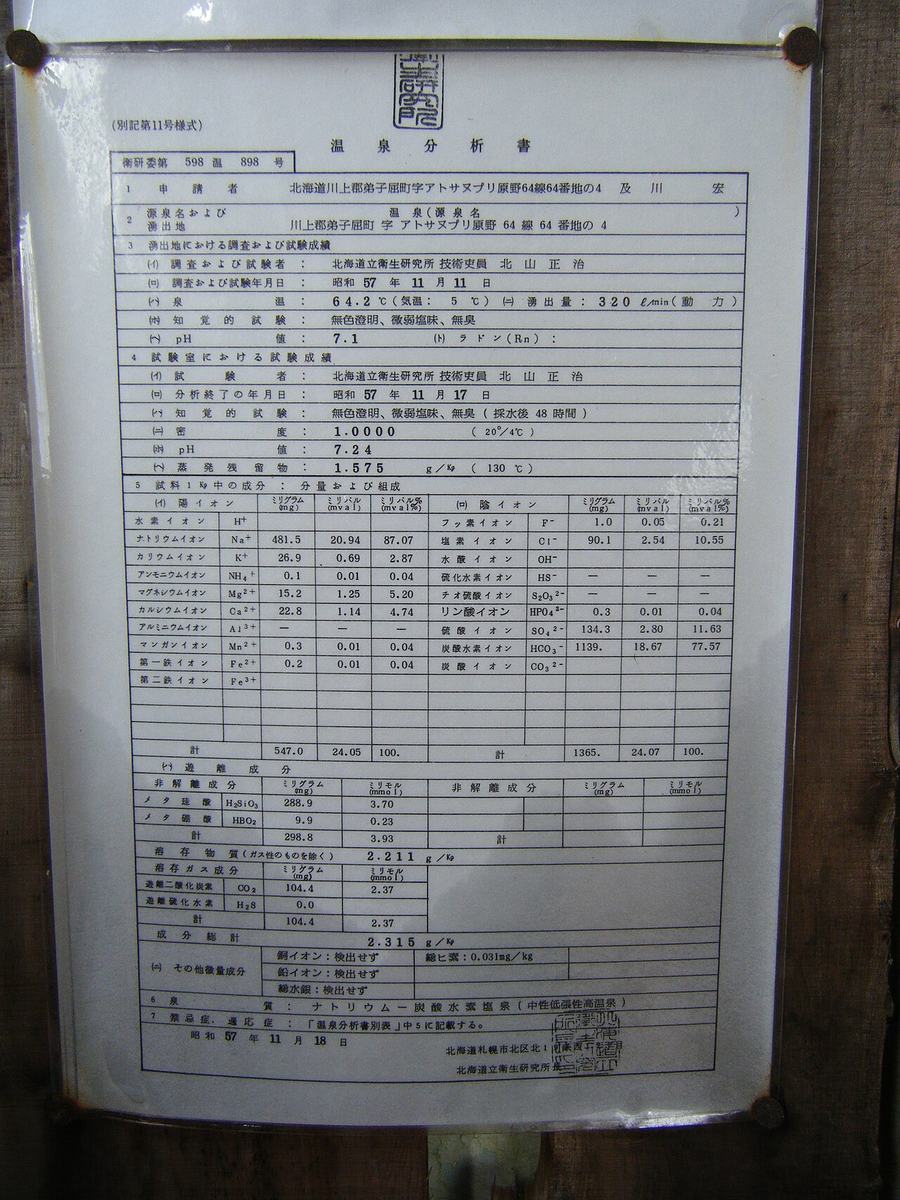
It means the operator has declared to the prefecture that he does not do it — not that he forgot to mention it. This is the part most easily misread, so it is worth going slowly.
Each of the four clauses in Article 10(2) of the enforcement regulation is conditional: disclose if water is added, if the water is heated, if it is recirculated, if an additive or disinfectant is used. Because the clauses are conditional, the intuitive reaction is that silence tells you nothing. The opposite is true. Article 18(1) makes the posting compulsory, and Article 41(2) treats failure to post and false posting as the same offence with the same penalty. Something that should have been written and was not carries exactly the same consequence as something written falsely. That is what turns a blank line into a statement with legal weight.
Here is the full penalty structure, which also settles how heavy this regime actually is:
| Conduct | Article | Penalty |
|---|---|---|
| Failing to post, or posting falsely | Article 41(2) | Fine up to ¥300,000 |
| Posting or changing a posting without prior notification to the governor, or notifying falsely | Article 41(1) | Fine up to ¥300,000 |
| Failing to obtain analysis within the interval, or failing to update the posting | Article 41(4) | Fine up to ¥300,000 |
| Violating a governor's order to change the posting | Article 40 | Fine up to ¥500,000 |
Do not overstate this: all four are fines only, with no custodial term. They are criminal penalties, but they sit in a completely different weight class from the ten-year custodial maximum in the price-control ordinance that governs public bathhouse fees. The two regimes should not be blurred together when comparing the two guides.
There is one more thing the law anticipates that visitors run into constantly: a single inn may legally have some tubs that are not hot spring water at all. The commentary requires that where a facility has both hot-spring tubs and other tubs — heated tap water, for instance — and especially where the two are mixed in the same bathing room, the correspondence between each hot-spring tub and the notice must be made clear. The same applies where multiple tubs draw on different sources or have different compositions. So an outdoor tub of real spring water alongside an indoor tub of heated mains water is perfectly lawful, provided it is labelled. Your move is to check which tub the notice refers to.
Three things the notice will never tell you
It will not tell you the degree, and that omission is deliberate. The ministry commentary states the reasoning plainly: disclosing the degree of added water, added heat, recirculation, additive use and disinfection would be desirable from an information standpoint, but because the degree can fluctuate with air temperature and the number of users, and because measuring and verifying it is difficult, it was not added to the required items.
Translated to the changing room: the same line reading "water added" might mean a modest top-up on a hot afternoon, or most of a tub of mains water. The notice cannot separate them. That is its single biggest limitation, and knowing it in advance stops you over-reading the sheet.
The commentary then lists three pieces of information an operator may supply voluntarily but is under no obligation to provide. They make a ready-made set of questions:
- What kind of water is added — mains, well or stream water, the three the commentary itself distinguishes
- The state of the source and how the water gets to you — flow rate, pumping method, pH, and the supply method and volume from source to tub
- Cleaning and how often the water is changed — this one carries no posting obligation whatsoever, so asking is the only route
These are not gotcha questions. They are the items the government itself identified as useful and then declined to mandate, which is precisely why a reasonable operator will not be surprised to be asked.
How old can the analysis date be?
Ten years. Article 1 of the enforcement order, quoted in the ministry commentary, sets the period referred to in Article 18(3) of the Act as within ten years of the date of the previous spring-water analysis, and the ministry's overview page describes the same requirement as a periodic analysis once every ten years. The clock starts on the "analysis date" line printed on the notice itself.
So a 2016 date on the wall is a fully compliant notice rather than evidence of neglect. The ministry even publishes the rationale: composition changes over the years, and Germany uses the same ten-year interval.
The less-noticed half of the rule is the update duty. Once the operator receives notification of a new analysis result, the posted content must be revised on the basis of that result within thirty days, and any posting or change to a posting must be notified to the prefectural governor in advance. Failing to update lands at Article 41(4); failing to notify lands at Article 41(1).
Why contraindications are required and benefits are not
Because the statute is aimed at preventing unsafe use, not at certifying therapeutic claims. The ministry commentary puts it without hedging: the Act does not impose a posting obligation for therapeutic indications because, from the standpoint of securing public health, the provision places its emphasis on preventing inappropriate methods of use. The 2014 notice adds that the content of indication postings continues to be left to each governor's judgement.
Read that way, the wall is legally a list of people who should not get in. The benefits column you often see is something prefectures permit rather than something the law compels.
The general bathing contraindications the notice lists are: the active phase of an illness, especially with fever; active tuberculosis; advanced malignancy; marked physical debilitation such as severe anaemia; serious heart or lung disease causing breathlessness on slight exertion; serious kidney disease with oedema; gastrointestinal bleeding; visible bleeding; and the acute exacerbation phase of a chronic illness.
The spring-specific bathing contraindications, meanwhile, name only two spring types in the entire table:
| Spring type as posted | Bathing contraindications |
|---|---|
| Acidic spring | People with sensitive skin or mucous membranes; dry skin in the elderly |
| Sulphur spring | Same as acidic spring |
A proviso follows: falling within a contraindication does not preclude spa therapy conducted under the guidance of a doctor with specialist knowledge.
This single table lands directly on several of Japan's most famous baths. Kusatsu is a strongly acidic sulphur spring at around pH 2, Zao runs roughly pH 1.3 to 1.6, and the facilities at Unzen range from pH 2.3 to 4.3. They happen to be the only two spring types in Japan with statutory bathing contraindications attached. If you have sensitive skin or mucous membranes, or you are travelling with an older relative whose skin dries easily, that is not a matter of personal constitution — it is written into the national posting standard.
One layer further up sits the classification that explains why some baths have no benefits column at all. The ministry's template analysis form notes that spring types are determined under the mineral spring analysis guidelines, but that water which cannot be classified under those guidelines gets no spring-type name printed, and that contraindications and indications are recorded only where the water qualifies as a therapeutic spring. The ladder has three rungs:
| Level | Threshold | What appears on the wall |
|---|---|---|
| A hot spring under the Act | 25°C or above at the point of extraction, or meeting the threshold for any one of nineteen substances | Composition table and analysis date |
| A spring with a type name | Classifiable under the mineral spring analysis guidelines | Plus the spring type |
| A therapeutic spring | Qualifying as such under the same guidelines | Plus contraindications and indications |
Three counter-intuitive consequences follow. First, 25°C alone makes it a legal hot spring with no mineral threshold met at all — it may be nothing more than warm groundwater. Second, in the other direction, a 19°C cold mineral spring that meets one substance threshold is equally a legal hot spring. Third, if the notice carries no spring type, that is not a printing omission; the water fits no category.
Acidic and sulphur springs: the rinse question has an official answer
The official default is not to rinse — but the same sentence carves out an exception, and the exception lands squarely on strongly acidic and sulphur water. The 2014 posting standard's guidance on what to do after bathing reads: rather than washing the spring components off the body with warm water, pat the moisture off with a towel, dress, and aim for warmth and about thirty minutes of quiet rest. The bracketed proviso in the same sentence says that people with delicate skin should rinse the components off with warm water where the spring type is strongly stimulating — the examples given are acidic springs and sulphur springs — or where chlorine disinfection is in use.
This is where two official rulebooks are easy to confuse, so state them side by side. The sento answer is the reverse. Section 9(3) of the Ministry of Health bathhouse hygiene management standard requires operators to remind bathers to rinse thoroughly with a shower on the way out. Both are official; they simply regulate different things. The environment ministry's document is about spring chemistry and skin; the health ministry's is about public hygiene in facilities that are mostly heated tap or well water rather than therapeutic springs, where there is no chemistry to preserve in the first place. Our sento guide traces the public bathhouse law and price-control chain in detail, and it runs entirely parallel to the Hot Springs Act described here.
Which reduces to three lines. Therapeutic spring and your skin is fine: don't rinse. Acidic or sulphur spring, or skin that tends to itch: rinse. A sento: rinse.
The same 2014 notice carries a full set of bathing rules that are official policy rather than folklore:
- Do not bathe after drinking alcohol, and especially avoid it while intoxicated; also avoid bathing immediately before or after a meal
- Before getting in, ladle water over yourself starting from the hands and feet and rinse the body
- Straight after waking, drink about a glass of water first
- Older people, and anyone with hypertension, heart disease or a history of stroke, should avoid baths above 42°C
- Start with three to ten minutes, extending to fifteen or twenty once accustomed
- Roughly three days to a week into a course of spa therapy, malaise, insomnia, digestive symptoms or dermatitis may appear — the phenomenon known as yuatari
- Keep towels out of the tub
The drinking-water rules are worth adding because they rarely appear in English at all: under-15s should as a rule not drink the water except under medical guidance; 100 to 150 ml per serving and roughly 200 to 500 ml per day; do not carry water away from a drinking station for later consumption; water below pH 3 must be diluted with fresh water to pH 3 or above and limited to 100 ml per serving; and drinking should happen only at designated points fed directly from the source.
"Gensen kakenagashi" was never defined by law
This is not a gap in our research — it is an official statement that no definition exists. A consumer consultation note published by the National Consumer Affairs Center of Japan on 27 December 2016 says in as many words that while the definition of a hot spring is set by the Hot Springs Act, "gensen kakenagashi" is not provided for in that Act; a second line on the same page adds that neither a definition nor a display obligation exists for "kakenagashi" either.
With no statutory meaning, what circulates are private standards — and there is more than one.
| Whose definition | What "gensen kakenagashi" means | Adding water | Adding heat |
|---|---|---|---|
| Japan Spa Association, voluntary standard level 9 | Overflow is not returned to the tub and the incoming water is hot-spring water; treated as an emphatic claim because it implies a state closer to nature than plain "kakenagashi" | 🔴 Not permitted | 🟢 Permitted (attributed to a Fair Trade Commission view) |
| Japan Spa Association, level 10 ("100% gensen kakenagashi") | A stronger emphatic claim still | 🔴 Not permitted | 🔴 Not permitted |
| Beppu City, municipal hot-spring encyclopaedia | Source water from a source within the facility's own locality fed straight into the tub, with the flow volume not controlled | ⚪ Not addressed in the definition at all | |
| Individual inns | No common specification | ⚪ Unknowable from the phrase | |
The same four words mean different things to Beppu City and to the Japan Spa Association, and neither one is law. The association's version sits at the top of a ten-step ladder — level 6 covers recirculating and recirculating-with-filtration systems, level 7 covers combined overflow-and-recirculation, and level 8, plain "onsen kakenagashi", permits both added water and added heat provided the practice and reason are disclosed as required. Beppu City's version instead separates "gensen kakenagashi" from "hikiyu kakenagashi" purely on whether the source sits in the facility's own locality or is piped in from elsewhere, and never addresses added water or heat.
Which explains something that otherwise looks like a contradiction: an inn whose wall notice says the water is recirculated can still print "kakenagashi" on its website. Two rulebooks, two media, and only the one on the wall is compulsory. Nobody audits the sentence on the website; there is a criminal fine attached to the sheet on the wall.
So what should you do? The consumer centre's own advice is the cheapest possible action: ask the facility on what basis it describes the bath as gensen kakenagashi. Ask that, then read the wall, and you have two independent sources instead of one slogan.
One trap to clear first: do not go looking for the "natural hot spring display plaque". The Japan Spa Association did once issue it, carrying seventeen items across source information and bath-usage information and giving a five-grade naturalness rating on six of them — source, spring type, piped distance, supply and drainage method, added water, and fresh-water injection rate. It is close to exactly what a traveller wants. But the association's page states that all issued plaques reached the end of their validity on 28 February 2019 and the scheme was abolished. Awkwardly, the facility search on the same site still offers "facilities displaying the natural hot spring plaque" as a search filter. Keep it separate from the "natural hot spring display mark" established in 1976, which is a different item and for which no abolition notice was found.
So which law does police the website?
The Premiums and Representations Act — advertising law, not the Hot Springs Act. This is the single most useful thing to take away: the sheet on the wall and the sentence on the booking page answer to two different agencies.
In material submitted to a Ministry of the Environment advisory council, the Japan Fair Trade Commission attached four positions on hot-spring representations under advertising law, drawn from its own survey report on the subject:
- Claiming "100% source water" or "100% natural hot spring" in brochures and similar material, in a way that emphasises using the source as it comes, while in fact adding water, adding heat or recirculating and filtering, risks misleading consumers.
- The phrase "natural hot spring" carries the same problem, because a considerable number of consumers understand it to mean water with no added water, no added heat and no recirculation and filtration. So where a brochure uses that phrase, information on whether water is added, heat is added and recirculation equipment is used must be provided alongside it.
- Where therapeutic indications are displayed and those indications were judged on the basis of the source, that fact must be clearly stated so consumers do not take them as applying to the water in the tub.
- Where indications are claimed for the water in the tub, the operator must confirm that the tub water actually maintains therapeutic-spring threshold values.
Point two is the test you can apply yourself. A page advertising "natural hot spring" with no accompanying statement about added water, added heat or recirculation does not meet what the commission asks for. When you next see those words and nothing else, you now know where to go looking for the rest — the wall.
Points three and four are the same requirement the 2014 environment ministry notice makes from the other direction, telling operators to make clear when indications were judged on the source analysis. Two agencies arrived independently at the same demand, which tells you how routinely it goes wrong.
On article numbers: the 2004 document cites the misleading-superiority provision under its old numbering, Article 4. Under the current Act it is Article 5(1), with cease-and-desist orders at Article 7, and the current text carries a fine of up to ¥1,000,000. I did not verify the commencement date of that fine provision, so this page states only that the penalty exists in the current text, without claiming a date from which direct fines became available.
Three things to do when you arrive
Thirty seconds, three actions, no Japanese required.
- Read the wall. Look up as you undress, or at the wall facing the tub. Find the analysis date first — it is the easiest line to spot, being a short run of characters followed by a year — and note how old it is.
- Match it to the tub. If the bathing room has several tubs, or the indoor and outdoor baths are separate, check which one the notice covers. An inn may lawfully run some tubs that are not hot spring water at all.
- Ask three questions. What kind of water is added, how the water travels from the source to the tub, and how often the bath is drained and refilled. Those three are the items the ministry listed and did not mandate, so asking is the only way to get them. Add the consumer centre's question if the website advertised free-flowing source water: on what basis do you call it that?
One closing position, because this piece is easy to misread as an exposé. It will not tell you that recirculated water is worse. The 2005 ministry leaflet states that it cannot be said in general which of the two methods is superior, since conditions depend on the volume of fresh spring water supplied, the number of users and the standard of hygiene management; the same passage adds that properly maintained recirculation-and-filtration equipment is an important means of conserving hot-spring resources and keeping bathing hygienic. A ranking the government explicitly declines to make is not one this guide will make either. What it can give you is different and more durable: you can now read the notice, and you know where it stops.
A few related threads worth following: the practical playbook for bathing with tattoos is in the tattoo-friendly onsen guide; towel handling, washing order and the rest of the everyday etiquette sits in the Japan etiquette guide; if you want to skip to picking somewhere, five onsen ryokan worth the money lays out the concrete conditions at each; and Beppu's own municipal vocabulary is covered in the Beppu onsen guide.
What this guide could not verify
First, one thing that is not a limitation: there is no pending commencement date and no 2027 change on this topic. Full-text searches of six official pages produced no relevant hits, so this guide manufactures no urgency. What follows is what was genuinely not obtained, and how the text handles it:
| Not obtained | How this guide handles it |
|---|---|
| The statute-portal text of the Hot Springs Act enforcement order | The ten-year rule is cited as "Article 1 of the enforcement order, as quoted in the ministry commentary", without pretending to have read the order directly |
| The date of the advisory council report behind the 2005 amendment | The ministry leaflet, the link slug and secondary accounts disagree, so the text says only "based on the advisory council's report" and gives no date |
| Any original prefectural template notice form | No claim that the notice always shows four yes/no rows — only that you are looking for whether those four lines of text appear |
| Kusatsu Onsen's official spring-type and water-supply pages | The tourism association page did not load and the town page returned a 404, so no assertion is made about whether water is added anywhere in Kusatsu |
| Whether any advertising-law orders on hot-spring representations issued after 2005 | No claim that enforcement continues today; the Fair Trade Commission material is labelled throughout as a 17 November 2004 snapshot |
| The commencement date of the advertising-law fine provision | Stated only as "the current text carries a fine of up to ¥1,000,000" |
| Any language requirement for the notice | Article 18 of the Act and Article 10 of the regulation contain no language provision whatsoever. The notice is in Japanese because the law is silent on language, not because anyone decided to keep it from foreign visitors |
Three sentences to leave with
One: the notice is compulsory, and the blank line is a statement too. Nine items always, four only if done — and failing to disclose carries the same fine as lying, up to ¥300,000. "No mention of added water" is therefore information, not an absence of it.
Two: it will never tell you the degree. The ministry excluded degree on the grounds that it fluctuates and resists verification. If you want to know what kind of water is added or how often the bath is emptied, you have to ask — and those questions come from the government's own list.
Three: "gensen kakenagashi" answers to a different law entirely. The Hot Springs Act never defined it, as the national consumer agency states outright, and what circulates instead are three incompatible private standards. Advertising law is what governs the phrase, and the Fair Trade Commission's requirement is specific: use "natural hot spring" and you must also disclose whether water is added, heat is added and the water is recirculated. For the rest of your pre-trip checklist, start with the Japan travel essentials guide.
Appendix: original Japanese sources (click to expand)
The longer official passages quoted above are collected here so you can check them yourself.
1. Hot Springs Act (Act No. 125 of 1948), Article 18
第十八条 温泉を公共の浴用又は飲用に供する者は、施設内の見やすい場所に、環境省令で定めるところにより、次に掲げる事項を掲示しなければならない。
一 温泉の成分/二 禁忌症/三 入浴又は飲用上の注意/四 前三号に掲げるもののほか、入浴又は飲用上必要な情報として環境省令で定めるもの
3 …政令で定める期間ごとに前項の温泉成分分析を受け、その結果についての通知を受けた日から起算して三十日以内に、当該結果に基づき、第一項の規定による掲示の内容を変更しなければならない。
4 …掲示をし、又はその内容を変更しようとするときは、…あらかじめ、その内容を都道府県知事に届け出なければならない。
2. Enforcement Regulation Article 10(2) — all four clauses are conditional
一 温泉に水を加えて公共の浴用に供する場合は、その旨及びその理由
二 温泉を加温して公共の浴用に供する場合は、その旨及びその理由
三 温泉を循環させて公共の浴用に供する場合は、その旨(ろ過を実施している場合は、その旨を含む。)及びその理由
四 温泉に入浴剤(着色し、着香し、又は入浴の効果を高める目的で加える物質をいう。ただし、入浴する者が容易に判別することができるものを除く。)を加え、又は温泉を消毒して公共の浴用に供する場合は、当該入浴剤の名称又は消毒の方法及びその理由
3. Penalties (Articles 40 and 41)
第四十条 第十八条第五項の規定による命令に違反した者は、五十万円以下の罰金に処する。
第四十一条 次の各号のいずれかに該当する者は、三十万円以下の罰金に処する。
二 第十八条第一項の規定による掲示をせず、又は虚偽の掲示をした者
四 第十八条第三項の規定に違反して、温泉成分分析を受けず、又は掲示の内容を変更しなかつた者
4. Where the notice goes (Ministry of the Environment clause-by-clause commentary, June 2015)
「施設内の見やすい場所」とは、浴用に供する場合にあっては更衣室、浴槽に面した壁等をいう。…また、必ずしも登録分析機関が策定する温泉分析表別表を掲示する必要は無く、適正な内容の掲示を見やすい形式で行うことが必要である。
5. Why "degree" is not a required item (same commentary)
加水、加温、循環及び入浴剤の添加や消毒処理の程度を表示することは、温泉利用者への情報提供を進める観点から望ましい事項であるが、これらの程度については、気温の変化や利用者の多寡により変動する可能性があること、また、測定や検証が困難であることなどから、掲示項目に加えていない
6. Scope of "bath additive" (same commentary)
牛乳、酒、食塩など全部又はその大半が溶解し、利用者が何を添加されているのか一見して認識できないものは、掲示対象に含める。
なお、しょうぶ(葉)やゆず(果実)など、利用者が一見して何が人為的に添加されているか認識できるものについては、掲示の対象とする必要はない。
7. Mixed tubs in one facility (same commentary)
同一施設内に、温泉利用の浴槽とそれ以外の浴槽(水道水を温めている浴槽等)を有している施設、とりわけそれらが同一浴室内に混在する施設にあっては、温泉利用の浴槽と掲示との対応関係が明らかになるようにすること。
8. The analysis interval (enforcement order Article 1, as quoted in the commentary)
温泉法第十八条第三項の政令で定める期間は、前回の温泉成分分析を受けた日から十年以内とする。
9. After bathing (Notice Kanjisohatsu No. 1407012, 1 July 2014)
身体に付着した温泉成分を温水で洗い流さず、タオルで水分を拭き取り、着衣の上、保温及び30分程度の安静を心がけること(ただし、肌の弱い人は、刺激の強い泉質(例えば酸性泉や硫黄泉等)や必要に応じて塩素消毒等が行われている場合には、温泉成分等を温水で洗い流した方がよいこと。)。
10. Source-based or tub-based indications (same notice, section 4)
源泉の分析結果に基づき適応症を判断したものである場合にはその旨が温泉利用者へ分かるようにすること。
11. No legal definition of "gensen kakenagashi" (National Consumer Affairs Center, published 27 December 2016)
「温泉」の定義は「温泉法」という法律で取り決められていますが、「源泉かけ流し」については同法では定められていません。
どういった理由で「源泉かけ流し」と称しているのか、利用する際には、施設に問い合わせてみるようにしましょう。
12. Recirculation versus free-flowing (Ministry of the Environment leaflet, March 2005)
「循環ろ過方式」か「源泉かけ流し方式」かについては、どちらの方式が優れているということは一概には言えません。…また、適切な維持管理に基づく循環ろ過装置の使用は、温泉資源の保護、衛生的な入浴状態の確保の観点から重要な手段であることも理解しておく必要があります。
13. Advertising-law positions (Japan Fair Trade Commission, advisory council material, 22 November 2004)
2 「天然温泉」との表示についても,加水,加温,循環ろ過などを行っていない温泉であると認識している消費者は少なくないと考えられることから,…パンフレット等において「天然温泉」との表示を行う場合には,あわせて,加水,加温,循環ろ過装置の利用の有無に関する情報が提供される必要がある。
14. Abolition of the natural hot spring display plaque (Japan Spa Association)
※「天然温泉表示看板」は、2019年2月28日をもってすべての発行済看板の有効期限が切れたことにより廃止しました。
Frequently Asked Questions
- Q1:The sign says nothing about added water. Does that mean no water is added?
- Yes — and that blank is a legally binding statement, not a gap in the paperwork. All four clauses in Article 10(2) of the Hot Springs Act enforcement regulation are conditional: the operator must disclose added water if water is added, added heat if the water is heated, recirculation if the water is recirculated, and bath additives or disinfection if either is used. No treatment, no line. Because Article 18(1) of the Act makes the notice compulsory and Article 41(2) puts failing to post and posting falsely in the same sentence with the same penalty — a fine of up to ¥300,000 — an operator who adds water and stays silent has committed the same offence as one who lies outright. Two caveats. The penalty is a criminal fine but carries no custodial term, so it is a much lighter regime than the price-control law behind public bathhouse fees. And many prefectural template forms do print four tick-box rows marked "yes / no" — that is form design, not statute, so what you are looking for is whether those four lines of text appear at all.
- Q2:It says water is added. Does that mean the bath is heavily diluted?
- The sign will never tell you how much, and the Ministry of the Environment left that out deliberately. Its clause-by-clause commentary on the Act states that disclosing the degree of added water, added heat, recirculation, additives and disinfection would be desirable for informing bathers, but that the degree fluctuates with air temperature and how many people are using the bath, and is difficult to measure or verify — so it was not included in the required items. In practice, one line reading "water added" can mean a splash on a hot August afternoon or most of a tub of tap water, and the notice cannot distinguish them. The same commentary lists three things an operator may volunteer but is not required to: whether the added water is mains, well or stream water; the source flow rate, pumping method, pH and how the water travels from source to tub; and the cleaning schedule and how often the bath is drained and refilled. Those three make an excellent set of questions for the front desk, precisely because the government listed them and then declined to mandate them.
- Q3:The analysis date on the sign is ten years old. Is that legal?
- Legal. Ten years is the ceiling. Article 1 of the Hot Springs Act enforcement order, quoted in full in the Ministry of the Environment commentary, sets the interval at within ten years of the previous spring-water analysis, and the ministry's own overview page describes it the same way. So a 2016 analysis posted today is a valid notice, not a lapsed one; the ministry even explains the reasoning, noting that composition changes over time and that Germany uses the same ten-year cycle. The other half of the rule gets less attention: once the operator receives notification of a new analysis, the posted content must be updated within thirty days, and any posting or change of posting must be notified to the prefectural governor in advance. Failing to update falls under Article 41(4); failing to notify falls under Article 41(1). One point of chronology worth keeping straight: the ten-year cycle arrived in the 2007 amendment, not the 2005 one that added the water-and-heat disclosures.
- Q4:Are the listed health benefits about the water I am actually sitting in?
- Often not — they usually describe the borehole, not your tub. A July 2014 Ministry of the Environment notice on posting standards says that where the composition does not differ between the wellhead and the facility, the operator may base the notice on the wellhead analysis, and therefore must make clear to bathers when the listed indications were judged on the source rather than the bath. The Japan Fair Trade Commission independently demands the same thing on the advertising side. There is also a more fundamental filter: indications are only ever listed for water that qualifies as a therapeutic spring. Anything reaching 25°C at the source, or hitting the threshold for any one of nineteen listed substances, is legally a hot spring — and water that cannot be classified into any spring type under the analysis guidelines gets no spring-type name printed at all. A missing spring type is not a printing omission; it means the water fits no category.
- Q5:Why are contraindications compulsory when the benefits are not?
- Because the law exists to prevent unsafe bathing, not to underwrite marketing claims. The ministry commentary is unusually direct: the Act does not require posting of therapeutic indications because, from the standpoint of protecting public health, this provision concentrates on preventing inappropriate use. The 2014 notice adds that the content of indication postings continues to be left to each prefectural governor's judgement. So the correct way to read the wall is that it is legally a list of who should not get in. The spring-specific bathing contraindication table names only two spring types in the entire country: acidic springs and sulphur springs, for which the listed contraindications are people with sensitive skin or mucous membranes, and dry skin in the elderly. The same notice adds a proviso: falling within a contraindication does not preclude spa therapy carried out under the guidance of a doctor with specialist knowledge.
- Q6:Should you rinse off after an onsen? Is the rule the same as at a sento?
- Two separate official rulebooks, and they point in opposite directions. On the onsen side, the 2014 Ministry of the Environment posting standard sets the default as do not rinse: rather than washing the spring minerals off with warm water, pat dry with a towel, dress, keep warm and rest quietly for around thirty minutes. But the same sentence carries an exception in brackets — people with delicate skin should rinse the minerals off with warm water when the water is strongly stimulating, and the example the text gives is acidic and sulphur springs, or when chlorine disinfection is in use. On the sento side the answer is reversed: the Ministry of Health bathhouse hygiene standard, section 9(3), requires operators to remind bathers to rinse thoroughly on the way out, because a sento is heated tap or well water rather than a therapeutic spring, so there is nothing to preserve. Both are official; they simply govern different things. Our sento pricing and rules guide unpacks the bathhouse side.
- Q7:Do "gensen kakenagashi" and "100% natural hot spring" have legal definitions?
- No — and that is an official statement, not a gap in our research. The National Consumer Affairs Center of Japan published a consultation note on 27 December 2016 stating in plain terms that while the definition of a hot spring is fixed by the Hot Springs Act, "gensen kakenagashi" is not defined by that Act, and that neither a definition nor a disclosure obligation exists for "kakenagashi". What circulates instead is three mutually inconsistent private standards. The Japan Spa Association ranks it level 9 on a voluntary ten-step scale and bars added water at that level (allowing heating, which it attributes to a Fair Trade Commission view), with level 10 barring both. Beppu City's own definition on its municipal site is completely different: source water fed straight into the tub without controlling the flow, with no mention of added water or heat at all. Everything else is house definitions. The consumer centre's advice is the practical one: ask the facility on what basis it uses the phrase.
- Q8:Is any law policing what the hotel website says?
- Yes — the Premiums and Representations Act, not the Hot Springs Act. In material submitted to a Ministry of the Environment advisory council, the Japan Fair Trade Commission set out four positions drawn from its own survey report on hot-spring representations. One: claiming "100% source water" or "100% natural hot spring" in brochures while adding water, heating or recirculating risks misleading consumers. Two: because many consumers read "natural hot spring" as meaning no added water, heat or filtration, a brochure using that phrase must also supply information on whether water is added, heat is added, and recirculation equipment is used. Three: where therapeutic indications are judged on the source rather than the tub, that must be stated clearly. Four: indications claimed for the water in the tub require confirmation that the tub water actually maintains therapeutic-spring threshold values. Point two is the one you can apply yourself. Under the current Act, misleading superiority claims sit at Article 5(1) and cease-and-desist orders at Article 7; the current text also carries a fine of up to ¥1,000,000.
- Q9:Is a recirculating onsen simply worse than a free-flowing one?
- The government explicitly refuses to rank them, so this guide will not either. A March 2005 Ministry of the Environment leaflet states that it cannot be said in general terms which of the two methods — recirculation-and-filtration or free-flowing source water — is superior, because the bathing conditions of any individual spring depend on the volume of fresh spring water supplied, the number of users, and how hygienically the bath is managed. The same passage then makes a point that cuts the other way: properly maintained recirculation-and-filtration equipment is an important means of conserving hot-spring resources and ensuring hygienic bathing conditions. The three variables that actually decide whether a given bath is pleasant — fresh supply volume, crowding, and hygiene management — are exactly the three the wall notice does not report. Which is why the useful skill is reading the notice for what it does say, and knowing where it stops.
- Q10:Is there a certification plaque that tells me the quality at a glance?
- There was one. Every issued plaque expired on 28 February 2019 and the scheme was abolished. The Japan Spa Association used to issue a "natural hot spring display plaque" carrying seventeen items across source information and bath-usage information, with a five-grade naturalness rating on six of them — source, spring type, piped distance, supply and drainage method, added water, and fresh-water injection rate. That is close to exactly what a traveller wants, and it no longer exists: the association's own page states that all issued plaques reached the end of their validity on 28 February 2019 and the scheme was discontinued. Awkwardly, the facility search on the same website still offers "facilities displaying the natural hot spring plaque" as a filter, so any advice telling you to look for that plaque is out of date. Keep two things separate, though: the "natural hot spring display mark" established in 1976 is a different item, and no abolition notice for it was found. What you can still check on site is the statutory notice on the wall.