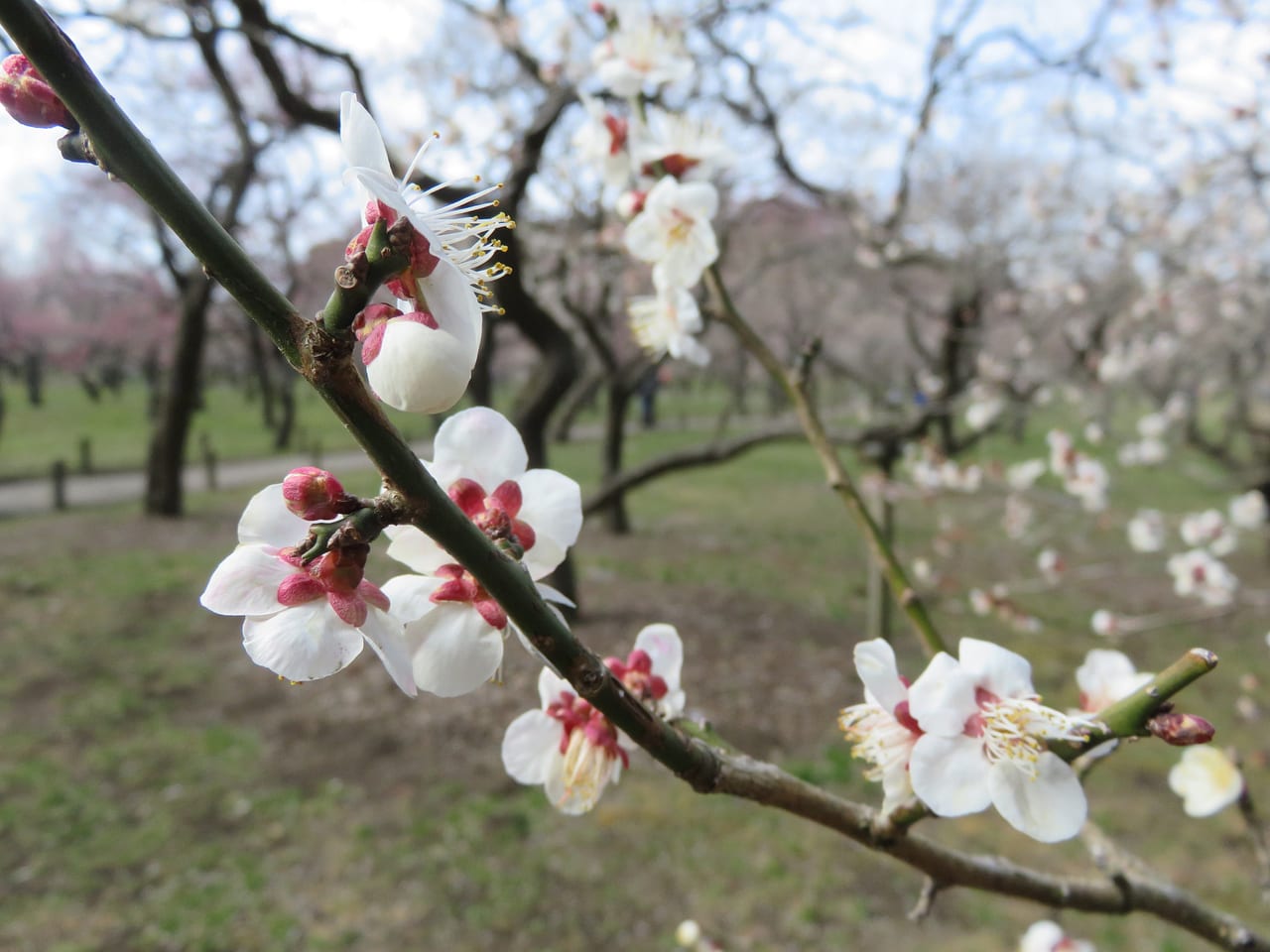
Here is the technical detail that quietly ruins plum blossom trips, and almost nobody mentions it: the Japan Meteorological Agency observes two separate events for cherry blossoms, flowering and full bloom, but for plums it observes flowering only. There is no ume full-bloom category. No official peak date exists, no normals for one exist, and no forecast for either has ever been issued. Meanwhile Japanese plum gardens are deliberately planted with early, mid and late cultivars mixed together, and an individual plum tree holds its flowers for two to three weeks rather than one. The gap between "the flowering date" and "this garden looks good right now" is therefore much wider for ume than for sakura — which is exactly why applying cherry blossom logic to plums fails. This guide gives you the other method: 1991-2020 normals for 21 cities, why no forecast exists, how long after flowering a garden actually peaks, admission and typical festival dates for eight named gardens, and a straight answer on ume vs sakura.
⚠️ Three things up front. Every date below is either a long-term normal or a confirmed 2026 festival period, never a 2027 prediction. Only Atami Plum Garden has announced 2027 festival dates so far (January 9 to March 7); the other gardens have not — they are typically announced in December or January, so check the official page before booking. And because no ume forecast exists, this guide will not tell you "what date it opens this year"; it tells you how to read the season yourself.
- Ume has official observation but no official forecast. The JMA has never forecast plum flowering, and dropped its own cherry forecast in 2010. Your only tools are long-term normals and per-garden bloom reports
- There is no "ume full bloom" observation category — the flowering date is a starting gun, and gardens usually peak two to four weeks later, with cultivars staggered
- Plums run roughly two months ahead of cherries in the same place: the ume line reaches Kyushu through the Pacific side of Kanto by January 31, the cherry line not until late March
- Festivals last four to eight weeks and admission is ¥0 to ¥500 — you do not have to gamble a week of flights, and the cost base is far below theme-park or ropeway itineraries
- Two traps that waste a day: Atami Plum Garden officially has no night illumination, and Kairakuen suspends its free early-morning entry during the plum festival
📖 Table of Contents (click to expand)
- 1. Why there is no plum blossom forecast
- 2. Flowering is not peak: the missing full-bloom category
- 3. 1991-2020 normals for 21 cities
- 4. Ume vs sakura: two months apart
- 5. Telling plum and cherry blossom apart
- 6. Eight gardens: fees, festival periods, which to pick
- 7. Why every Tenmangu shrine plants plum trees
- 8. Robai is not ume: the January trap
- 9. Is plum season worth it, and for whom?
- 10. FAQ
Why there is no plum blossom forecast
Search for a "plum blossom front" and you will find charts, blog posts and aggregator pages happy to give you one. None of them is official, because no official version exists. This is not a case of hard-to-find data. It is a case of data that was never produced.
Start with what happened to cherries. The Japan Meteorological Agency stopped publishing its own cherry flowering forecast in 2010, on the reasoning that private weather companies were already doing it well and duplicating the work served nobody. The three forecasts everyone follows today — Weathernews, tenki.jp and Weathermap — are all private. Plums went further: the agency has never issued a plum forecast at all, and the private sector barely tried. The only documented case is a single season of ume flowering forecasts published by Nihon Kishou in 2020, with no sign of it continuing.
So what official data does exist? Observation. And here is the part of the official record that is easy to get backwards: when the agency drastically cut its phenological observation programme in 2021, plum survived the cut. All 23 animal species were dropped, and the plant list was reduced from 34 species to six — and ume flowering is one of the six that remain. Plums were not abolished; they are among the small handful of plants the agency still actively observes, which is precisely why a solid set of 1991-2020 normals exists to work from.
That difference dictates two completely different planning methods:
- Cherries. Private forecasts appear from mid-January and update weekly, so you can iteratively correct your itinerary right up to departure. The week-picking method is covered in the cherry blossom timing guide.
- Plums. Nothing to refresh. You use long-term normals to choose your broad window — mid-February or early March — and then each garden own bloom-status page to choose the day. Tsukigase Tourism Association and the Osaka Castle Plum Grove Club, among others, publish these each season.
That sounds like a downgrade until you flip it around. A plum garden stays worth visiting for four to eight weeks, so week-level precision was never necessary. Cherry blossoms need forecasting because the window is seven days. Plums do not, because the window is wide by design.
Flowering is not peak: the missing full-bloom category
This is the section that matters most. On the agency observation list, cherry has two entries, flowering and full bloom; plum has one, flowering. A small difference on paper, a large one in practice.
The official definitions, both from the same agency phenology material:
- Ume flowering date — the first day on which five to six flowers have opened on the designated specimen tree. The observation target is white-flowered plum, and the agency botanical note specifies that the flowers are almost stalkless, with typically five white petals and a diameter of around 25 mm.
- Sakura flowering date — the first day on which five to six or more flowers have opened on the specimen tree. Full bloom date — the first day on which roughly 80 per cent or more of the buds have opened. The target is primarily Somei Yoshino.
So for cherries you can legitimately say "full bloom lands about a week after flowering", because full bloom is defined, observed and averaged. For plums, no such date exists in the official record. Anything presented to you as an "ume full bloom normal" did not come from the agency.
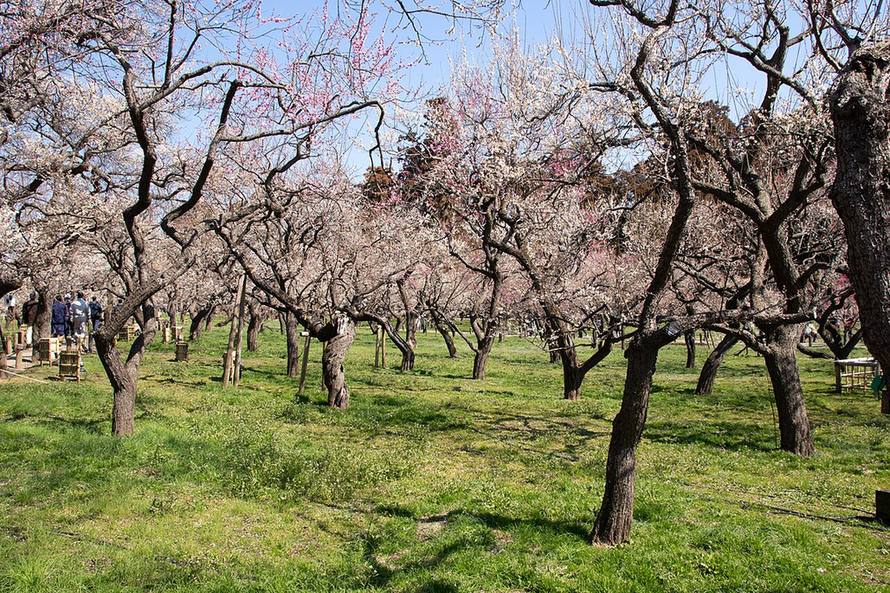
Then there is how the gardens are planted. Almost every famous site deliberately mixes early, mid and late cultivars — roughly 100 varieties at Kairakuen, 105 at Osaka Castle, 50 at Kitano Tenmangu, 60 at Atami. Individual plum trees also hold their blossom far longer than Somei Yoshino, commonly two to three weeks. Put those together and you get this:
A plum garden has no single day when everything peaks at once. It arrives in waves — early cultivars fade as mid-season ones open, and late cultivars take over as those finish. The garden stays worth visiting for four to eight weeks, but on any given day only part of the collection is at its best.
The practical rule follows directly: read the agency flowering date as "plum season has started in this region", not as "go now". Actual garden peaks generally fall two to four weeks after it. To do better than that you have to check the garden own bloom report in the week before you go.
One more planning note that catches people: plum season is genuinely cold. February daytime highs in Kanto and Kansai frequently sit below 10C, and valley sites such as Tsukigase or Chichibu are colder still. Pack for winter, not for a late-March cherry trip. Month-by-month temperatures are in the Japan weather and packing guide.
1991-2020 normals for 21 cities
The table below is drawn from the agency cumulative-record file for ume flowering. The normal column is the 1991-2020 average; the following columns are the actual observed dates for three recent years, so you can see the size of the swing. Again: these are flowering dates, not peak-viewing dates.
| Station | Normal (flowering) | 2023 | 2024 | 2025 |
|---|---|---|---|---|
| Matsuyama | Jan 5 | Dec 29 | Dec 20 | Jan 20 |
| Takamatsu | Jan 13 | Dec 19 | Jan 22 | Feb 17 |
| Naha | Jan 13 | Jan 16 | Jan 19 | Jan 7 |
| Shizuoka | Jan 17 | Jan 17 | Jan 9 | Jan 27 |
| Tokyo | Jan 22 | Jan 21 | Jan 9 | Jan 29 |
| Nagoya | Jan 28 | Feb 9 | Jan 18 | Feb 15 |
| Nara | Jan 31 | Jan 12 | Jan 15 | Feb 15 |
| Fukuoka | Jan 31 | Feb 4 | Jan 11 | Feb 4 |
| Kagoshima | Feb 2 | Feb 1 | Jan 12 | Feb 1 |
| Mito | Feb 3 | Feb 10 | Feb 1 | Feb 26 |
| Kumamoto | Feb 3 | Feb 13 | Jan 18 | Feb 25 |
| Hiroshima | Feb 6 | Feb 23 | Feb 7 | Mar 2 |
| Kobe | Feb 6 | Feb 12 | Jan 19 | Feb 12 |
| Osaka | Feb 13 | Feb 22 | Feb 2 | Feb 27 |
| Kyoto | Feb 22 | Feb 28 | Feb 14 | Mar 11 |
| Kanazawa | Feb 23 | — | Feb 26 | — |
| Sendai | Mar 1 | Mar 4 | Feb 19 | Mar 13 |
| Niigata | Mar 11 | Feb 18 | Feb 19 | Mar 22 |
| Nagano | Mar 18 | Mar 8 | Mar 24 | Mar 28 |
| Aomori | Apr 19 | Apr 5 | Apr 11 | Apr 12 |
| Sapporo | Apr 29 | Apr 15 | Apr 17 | Apr 23 |
Source: Japan Meteorological Agency cumulative records for ume flowering; normal = 1991-2020 mean. Verified August 2026. Dashes indicate no observation that year.
Three things the table tells you
Tokyo is dramatically earlier than Kansai. Tokyo January 22, Osaka February 13, Kyoto February 22 — a full month between Tokyo and Kyoto. The direction matches cherries, where Tokyo also runs ahead of Kansai, but the magnitude does not: for cherries the gap is three to five days. In practice, arrive in Tokyo in early February and plum season is already under way; be in Kyoto the same week and there may be nothing to see. An itinerary that runs Tokyo first, Kansai second, works with the season rather than against it.
The year-to-year swing is too large to book against. Look along the Kyoto row: February 14 in 2024, March 11 in 2025, nearly a month apart. Takamatsu is wilder still, opening on December 19 of the preceding year in 2023 and not until February 17 in 2025. That is several times the volatility of cherry blossom — and unlike cherries, you have no forecast to correct against. This is the whole argument for booking a window and checking garden bloom reports on arrival.
Hokkaido plums flower during Golden Week. Sapporo normal April 29, Aomori April 19 — by which point Honshu cherries are nearly finished. That overlap is the reason people talk about plums and cherries blooming together in Hokkaido: locally, both are squeezed into the same window. If your trip lands in Hokkaido around Golden Week, it is the one place in Japan where you can catch both at once.
What you actually need on the ground is not a forecast but live per-garden bloom status — which cultivars are open, whether the late section is worth waiting for, whether to switch to a different garden today.
Ume vs sakura: two months apart
Placed on the same agency isochrone maps — both 1991-2020 normals, same source, same methodology — the gap is unmistakable:
| Region | Ume (flowering) | Sakura (Somei Yoshino flowering) |
|---|---|---|
| Okinawa and Amami | from mid-January | Kanhizakura, mid-January |
| Kyushu, San-in, Shikoku, Pacific side of Kinki, Tokai and Kanto | reached by Jan 31 | not until late March |
| San-yo to Kinki, western Hokuriku, Kanto-Koshin | reached by Feb 28 | — |
| Eastern Hokuriku, southern Tohoku | March | April 10 |
| Northern Tohoku, Hokkaido | April to May | mid-May |
Source: Japan Meteorological Agency isochrone maps for ume flowering and for sakura flowering and full bloom, both labelled 1991-2020 normals. Verified August 2026.
One sentence version: in the same region, plums run roughly two months ahead of cherries. That is not an impression — it is the same agency, the same reference period and the same style of map on both sides.
Two consequences for planning. First, plum season is the answer for travellers who cannot make the cherry window: the stretch from Lunar New Year to early March is not a floral dead zone in Japan, it simply has a different lead actor. Second, the two seasons barely overlap, so do not build an itinerary hoping to see both — with the single Hokkaido exception noted above. For which week to gamble on cherries and how to read the annual forecasts, that is an entirely different method and it is not repeated here: see when to go for cherry blossom in Japan, or the full cherry blossom guide for spots and night viewing.
Telling plum and cherry blossom apart
Plenty of comparison charts exist, but most blur official description and horticultural folklore together. Here the source level is labelled:
| Feature | Ume (plum) | Sakura (Somei Yoshino) | Source level |
|---|---|---|---|
| Flower stalk | Almost stalkless, flowers sit against the branch | Clear stalks, flowers hang away in clusters | JMA botanical description |
| Petals and size | Usually five white petals, about 25 mm across | — | JMA botanical description |
| Official observation | Flowering only | Flowering and full bloom | JMA observation list |
| Specimen tree | White-flowered plum | Somei Yoshino (Kanhizakura or Ezoyamazakura where it will not grow) | JMA botanical description |
| Petal tip | Rounded, unnotched | V-shaped notch | Horticultural convention |
| Flowers per node | Usually one | Several, in clusters | Horticultural convention |
| Scent | Strong | Almost none | Horticultural convention |
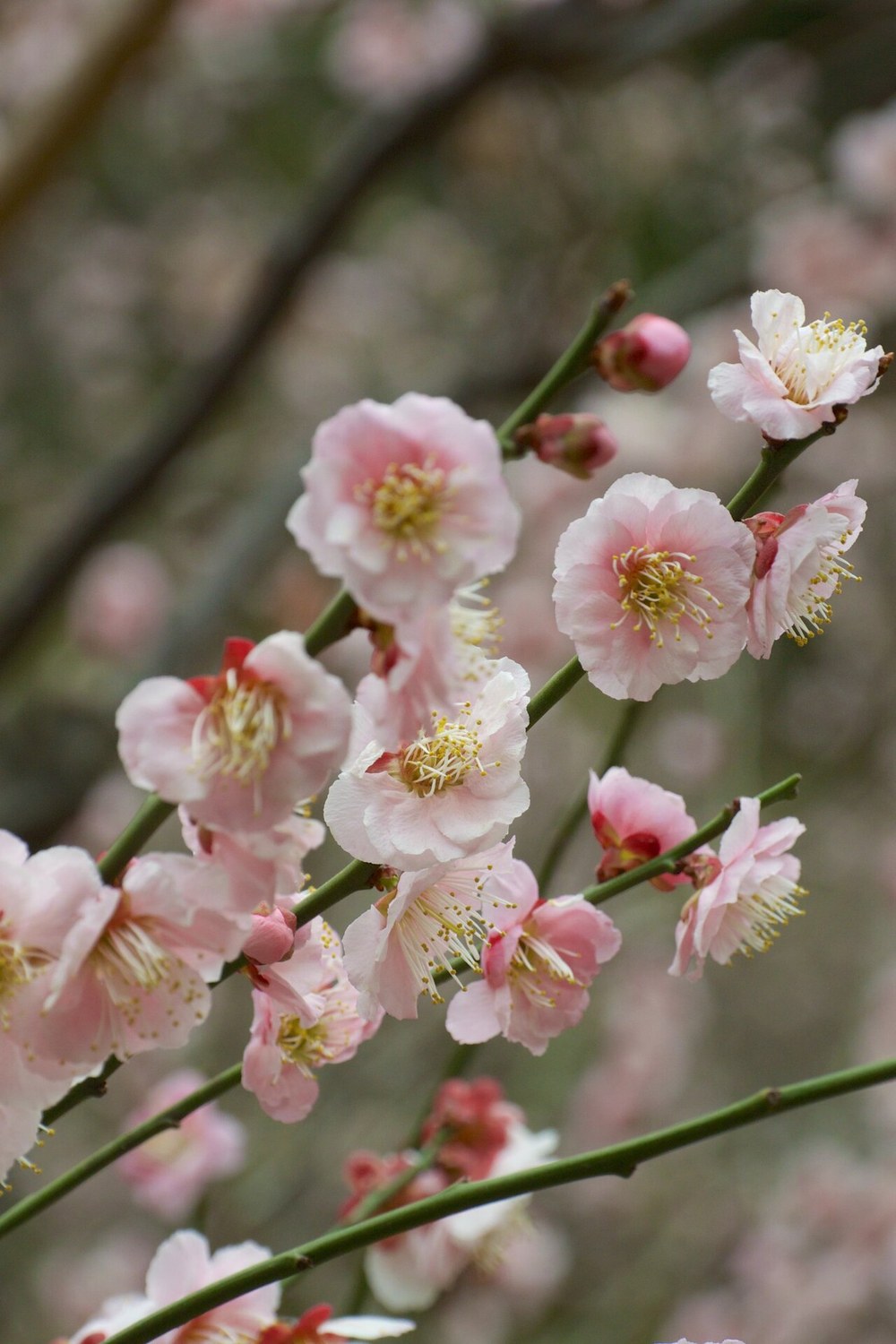
If you remember one thing, remember the stalk. The agency botanical note for ume states plainly that the flowers are almost stalkless, and that is the only marker on this list carried by an official document. Plum blossom looks glued to the branch, roughly one flower per node; cherry blossom pushes out on a visible stem and hangs in clusters. Petal notching and scent are genuinely useful field tests, but they belong to horticultural convention, and dressing them up as official standards would be overselling them.
In reality, the calendar is the strongest test of all. Mass white blossom in Kansai in mid-February will not be Somei Yoshino; clustered pink in Tokyo in early April will not be plum. Timing gives the answer before botany does.
Eight gardens: fees, festival periods, which to pick
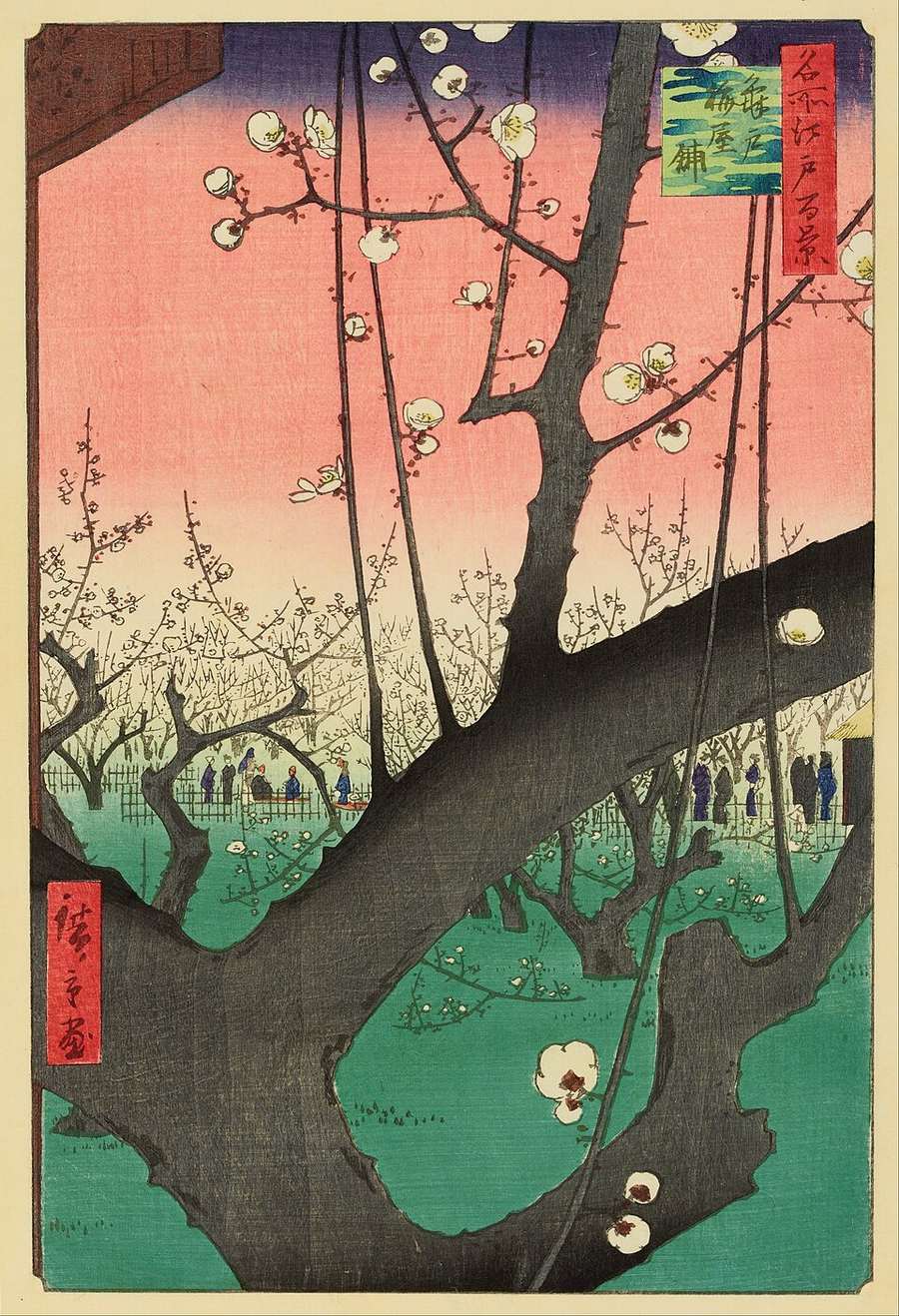
The table compares the eight sites with verifiable official data. All festival dates shown are 2026 editions — that is, seasons that have already finished — included as a guide to the typical calendar. Only Atami has announced 2027 dates (January 9 to March 7); for the others the usual announcement window is December to January.
| Garden | Scale | Admission | 2026 period (typical guide) | Why go |
|---|---|---|---|---|
| Kairakuen, Mito | ~100 cultivars, 3,000 trees | ¥320 | Feb 11 – Mar 22 (130th) | Three Great Gardens; longest window; night illumination |
| Kodokan, Mito | ~60 cultivars, 800 trees | ¥420 | same festival, second venue | Former domain academy; closer to the station |
| Atami Plum Garden | 60 cultivars, 469 trees | ¥300 | Jan 10 – Mar 8 (82nd) | Earliest blooming in Japan; onsen town attached |
| Dazaifu Tenmangu, Fukuoka | ~200 cultivars, 6,000 trees | Grounds free | roughly late Jan – early Mar | Home of the Tobiume legend |
| Kitano Tenmangu, Kyoto | 50 varieties, ~1,500 trees | see note below | plum garden typically early Feb – late Mar | Baikasai on Feb 25; geiko and maiko tea service |
| Osaka Castle plum grove | 105 cultivars, 1,245 trees | Free | typically late Jan – early Mar | Most cultivars of any site here; city centre |
| Ogose Bairin, Saitama | ~1,000 trees, 35 varieties | ¥500 | Feb 14 – Mar 15 | Founded around 1350; a 670-year-old tree |
| Tsukigase Baikei, Nara | ~10,000 trees | Free | Feb 14 – Mar 29 | National Place of Scenic Beauty; largest here |
Best near Tokyo: Kairakuen, with two traps
If you only visit one plum garden from Tokyo, make it Kairakuen in Mito. It is one of the Three Great Gardens of Japan alongside Kenrokuen in Kanazawa and Korakuen in Okayama, and its roughly 100 cultivars and 3,000 trees are split across early, mid and late bloomers — which is exactly the tolerance a plum trip needs. Admission is ¥320 for adults and ¥160 for children. The Kobuntei villa inside the garden is ticketed separately at ¥230, and the third-floor room looking out over the plum grove and Lake Senba is worth the extra.
Two details that cost people a morning:
- The free early-morning entry is suspended during the festival. Kairakuen normally admits visitors free between 6:00 and 9:00, and the official admission page states that this does not apply during the plum festival. Guides that mention the free window without the exception will send you to a ticket gate you were not expecting.
- The festival has two venues. The Mito Plum Festival — the 130th edition ran February 11 to March 22, 2026 — covers Kairakuen and Kodokan, the former domain academy, which holds about 60 cultivars and 800 trees, costs ¥420, and is closer to Mito Station than the garden. With only half a day, take Kodokan first and decide on Kairakuen afterwards.
Two separate evening events also get conflated. Kairakuen UME The Lights ran on Fridays, weekends and public holidays from February 13 to March 15, 2026, 18:00 to 20:30, at ¥800 in advance and ¥1,000 on the day. Yo-Ume-Sai is a different, single-evening event held at Kodokan and the Mito Castle site — March 7 in 2026, 17:00 to 20:00. Different tickets, different location.
On combining trips: Kairakuen is at Mito Station and Hitachi Seaside Park is one stop further at Katsuta, so they chain neatly — but the park nemophila season is late April and does not overlap plum season at all. Access and tickets are in the Ibaraki and Hitachi Seaside Park guide.
Earliest in the country: Atami, and the illumination that does not exist
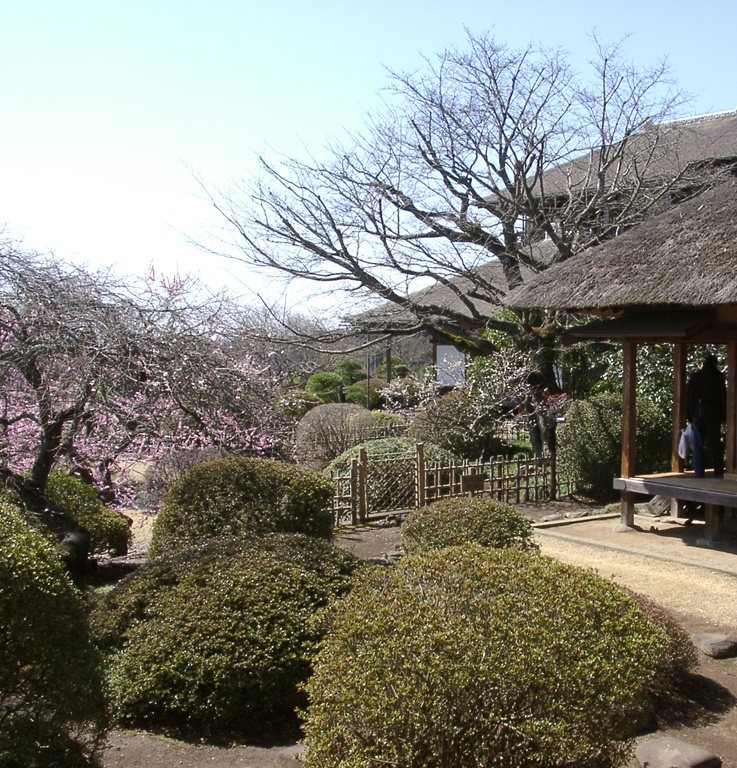
Atami Plum Garden has one clear claim: the earliest blooming plums in Japan. The official wording is blunt — famous as the earliest-flowering plum in Japan, with the first flower of the year opening between late November and early December. The 82nd festival ran January 10 to March 8, 2026, a month ahead of most other gardens, and it is one of very few places in Japan where plum viewing is possible right after the New Year holidays. The Atami tourism association has announced the 2027 festival for January 9 to March 7.
The garden is small — 60 cultivars and 469 trees — with admission at ¥300, opening 8:30 to 16:00 and free entry outside those hours. There is a footbath, souvenir stalls, and free amazake for the first 200 visitors on Sundays and public holidays.
One correction worth making loudly: Atami Plum Garden has no night illumination. The official page states this explicitly. If you are building an evening around it, you will arrive at a closed garden. For illuminated plum blossom in the Kanto area, the correct answer is Kairakuen UME The Lights.
Note also that "first flower in late November" and the agency Shizuoka normal of January 17 are not in conflict. The first refers to a single bloom on an extra-early cultivar inside the garden; the second is the observed date on the agency designated specimen tree. They measure different things. Turning up in December expecting a full grove in flower will not work.
Kyoto: Kitano Tenmangu, and the honest answer about price
Here the useful answer is an admission of uncertainty: nobody can currently tell you what the Kitano Tenmangu plum garden will cost in 2027.
What is confirmed: the shrine holds 50 varieties and about 1,500 plum trees connected to Sugawara no Michizane; the official page describes the plum garden opening period as typically early February to late March; and early cultivars begin swelling from around mid-December and open after the New Year.
What is not confirmed is the price or even the format. For the whole of 2026 the plum garden was not run conventionally — it was replaced by a special art installation produced by the artist Mika Ninagawa and her creative team, running to May 24 with nightly illumination until 20:30, ticketed at ¥2,800 in advance and ¥3,000 on the day. Whether 2027 reverts to the ordinary plum garden has not been announced. For that reason no "current" fee is quoted here; the ¥1,200 figure circulating on other sites is from an earlier conventional season and should not be used for budgeting. Check the official plum garden page before you go.
One thing is unaffected: Baikasai on February 25, the anniversary of Michizane death, which ties the whole plum-and-Michizane thread together. Geiko and maiko from the Kamishichiken district serve tea at an outdoor ceremony the same day; Kyoto City official tourism information lists the tea ticket at ¥3,000 with limited numbers, though this figure is not carried on the shrine own page, so treat on-site notices as authoritative. Entering the shrine grounds does not require a plum garden ticket — on a tight budget, the grounds around February 25 are already a full experience. For shrine etiquette and how goshuin work, see the goshuin guide.
Free and excellent: Osaka Castle and Tsukigase
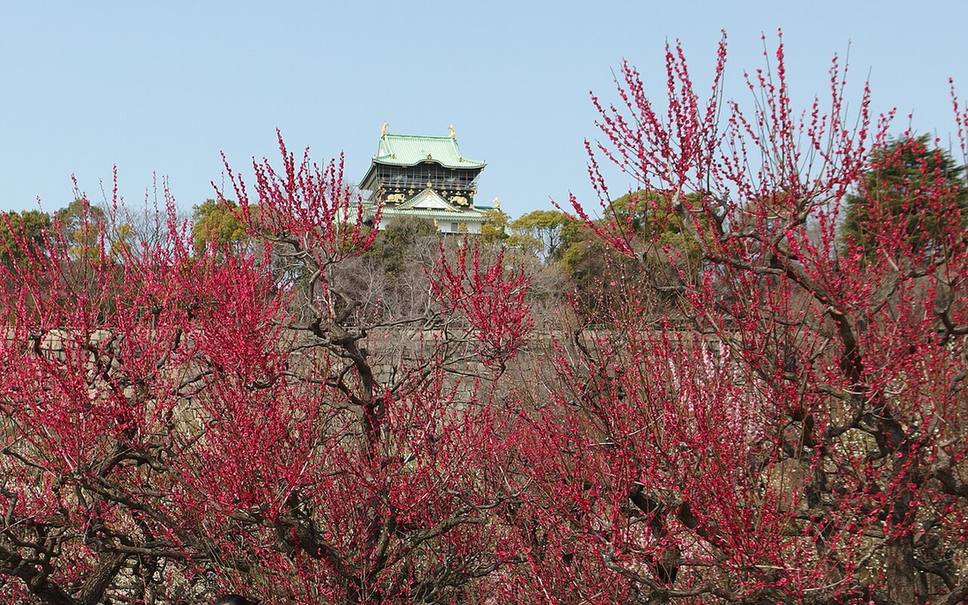
The Osaka Castle plum grove is the best value on this list: free, central, and with the highest cultivar count here — officially about 1,245 trees across 105 varieties over roughly 1.7 hectares, on the east side of the inner moat. That many cultivars means the staggering is unusually fine-grained, so something is generally in flower from late January to early March. The trade-off is that it is an open park rather than an enclosed garden, so on busy days it lacks the quiet of a ticketed site. Note the castle keep is separately ticketed and has nothing to do with the plum grove; tickets and highlights are in the Osaka Castle guide.
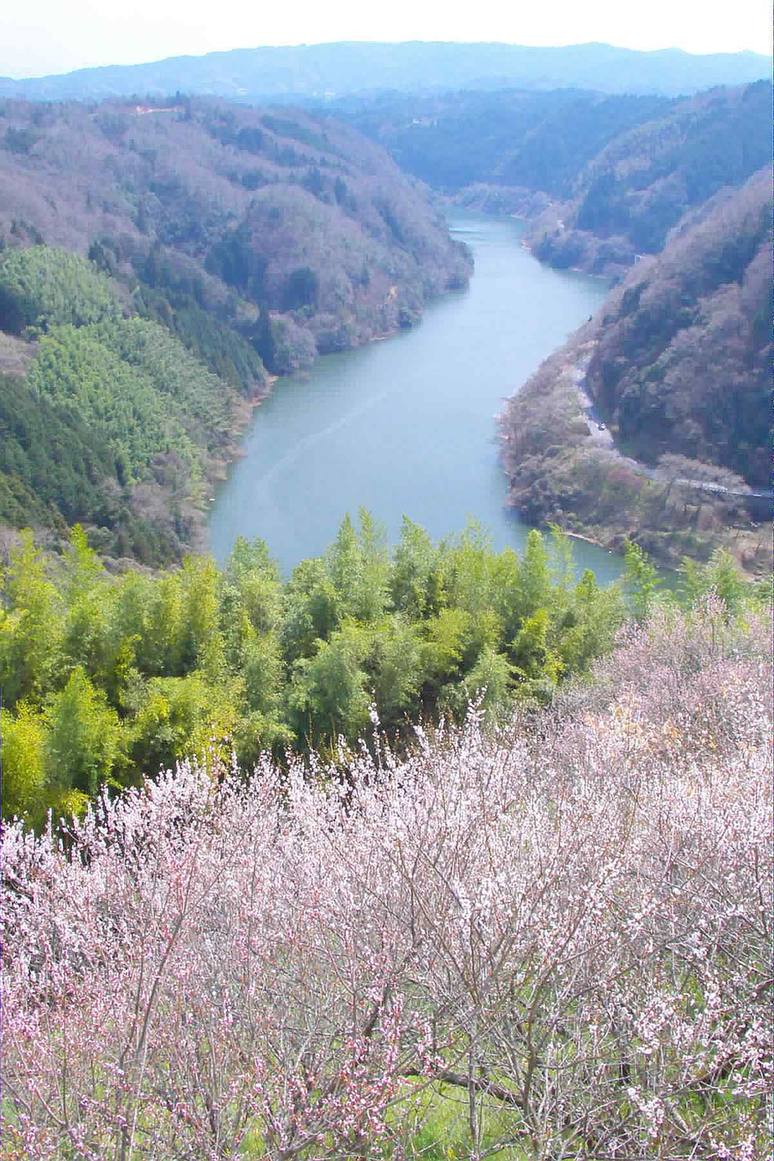
Tsukigase Baikei in Nara is a completely different proposition: roughly 10,000 red and white plum trees along the Nagatani river gorge, designated a National Place of Scenic Beauty, the largest site covered here, and free to enter. The 2026 festival ran February 14 to March 29, close to seven weeks. The cost is access: about 50 minutes by car from central Nara, or roughly 80 minutes by bus from JR or Kintetsu Nara Station, with extra buses laid on for selected 2026 festival weekends between Tsukigaseguchi Station and Oyamaguchi. Without a car this is a half- to full-day commitment, not a stop-off — budget for it accordingly.
Inside Tokyo: Yushima Tenmangu
If you are staying in Tokyo and do not want a day trip, Yushima Tenmangu is the realistic choice: around 300 trees, predominantly white plum with Shirokaga as the main cultivar, free grounds, open 8:00 to 19:30, two minutes from Exit 3 of Yushima Station on the Tokyo Metro Chiyoda Line. The Bunkyo Plum Festival ran February 8 to March 8 in 2026. It cannot compete with Kairakuen on scale, but it is plum viewing you can finish inside the city, and as a Tenmangu shrine it carries a heavy concentration of exam-season prayer traffic in February. (Figures here follow the Tokyo Metropolitan Government official tourism site; the shrine own page returned an encoding fault during verification, so treat on-site signage as authoritative for cultivar counts and evening lighting.)
Saitama: Ogose Bairin, and the best piece of history here
Ogose Bairin does not win on numbers — around 1,000 trees and 35 varieties over roughly 2 hectares, with about 20,000 more in the surrounding area, admission ¥500, 2026 festival February 14 to March 15, 8:30 to 16:00. What it has that nowhere else does is a 670-year-old specimen called Kaisetsu, and an origin story that doubles as documentary evidence — covered next.
Why every Tenmangu shrine plants plum trees
Spend a season chasing plums in Japan and a pattern becomes obvious: a large share of the famous sites are Tenmangu shrines. Dazaifu, Kitano, Yushima, and thousands of branch shrines nationwide. Why?
The flying plum tree legend is a story, not an explanation. Three strands, all traceable to official sources, do explain it:
- Michizane personally loved plum. Dazaifu Tenmangu states it directly: he cherished plum blossom throughout his life, and the shrine records that the first poem he composed, at the age of five, was about plum. That is the root — not folklore.
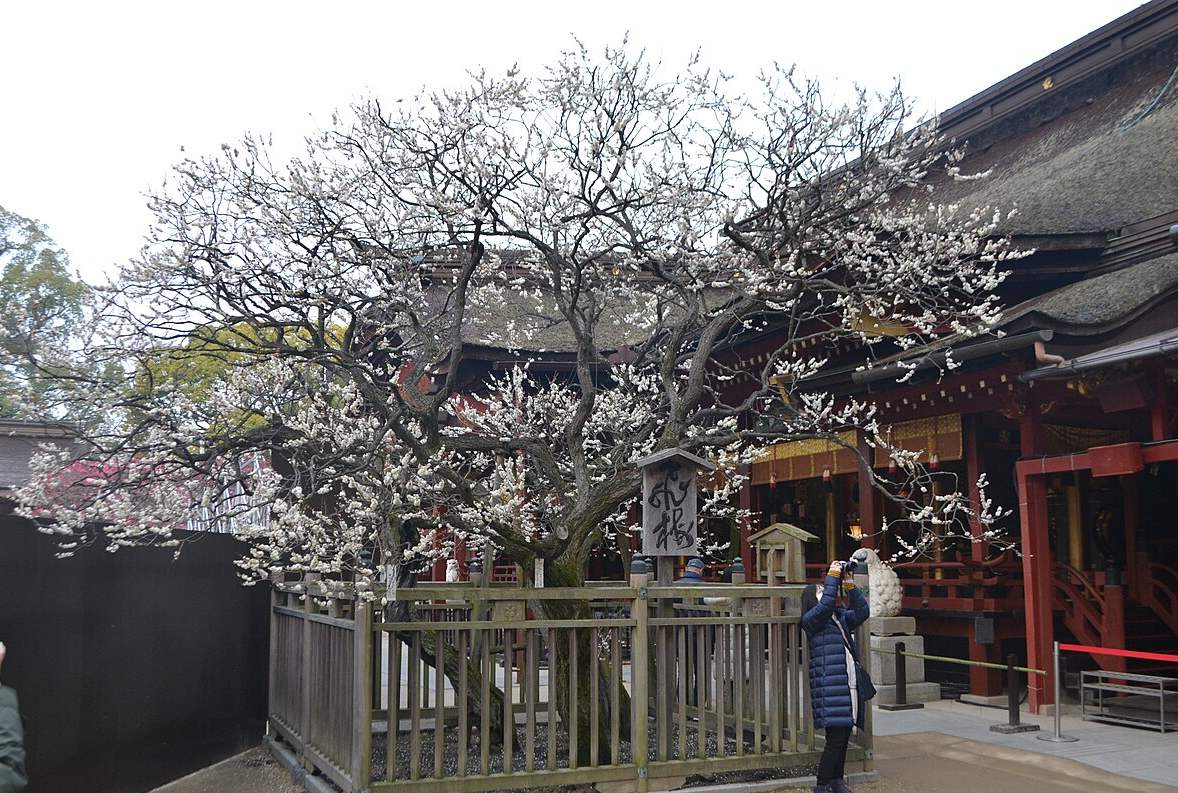
- The farewell poem and the Tobiume legend. Exiled to Dazaifu, Michizane left the poem beginning "kochi fukaba" — when the east wind blows, send your fragrance to me, plum blossom; though your master is gone, do not forget the spring. The shrine official account continues that the tree, pining for him, flew to Dazaifu in a single night. Dazaifu grounds hold roughly 200 cultivars and 6,000 trees, and the Tobiume itself stands before the main hall.
- Plums were planted at the moment of enshrinement — the hardest evidence of the three. The town of Ogose states officially that Ogose Bairin originated when Kosugi Tenmangu (today Baien Shrine) was branched from Dazaifu around 1350, and plum trees were planted in Michizane honour at that time. That is not a retelling of a legend; it is a specific, datable instance of the mechanism at work. Wherever the deity was enshrined, plums followed.
The last piece of the pattern is that Kitano Tenmangu holds its Baikasai on February 25 — the anniversary of Michizane death. The moment in the year when plum blossom is at its finest is also the day he is commemorated, which closes the loop neatly.
So a straightforward recommendation: if you want the flowers, go to Kairakuen, Osaka Castle or Tsukigase. If you want to understand why Japan looks at plum blossom the way it does, go to a Tenmangu. Dazaifu is the source of that line; its main hall is currently under a once-in-124-years restoration and worship takes place at a temporary hall, with access, umegae mochi and the surrounding walk covered in the Dazaifu Tenmangu guide. Dazaifu Kyokusui no En falls on the first Sunday of March, right at the tail of plum season.
Robai is not ume: the January trap
One last correction. Search for plum blossom in Japan in January and you will be flooded with robai reports. Robai is not plum.
Robai — wintersweet — is Chimonanthus praecox, in the Calycanthaceae. Ume is Prunus mume, in the rose family. Different families entirely, linked only by a shared character in their Japanese names. Telling them apart is easy: robai peaks much earlier, generally from late December through January, and its flowers are a translucent, waxy yellow — which is where the name comes from.
The classic confusion is Mount Hodosan in Chichibu, where roughly 800 wintersweet plants are a January highlight, while the separate plum garden on the same mountain only begins in mid-February. So when a source promises plum blossom in early January, check which plant it means. Access and ropeway details for the mountain are in the Chichibu guide.
While clearing up misconceptions: the "three great plum groves of Japan" is not an official designation. Kairakuen, Soga, Nanbu, Atami, Tsukigase and Ogose all appear in competing versions of the list, which contradict one another. The genuinely official title in this area is Kairakuen membership of the Three Great Gardens of Japan — a ranking of gardens, not of plum groves. Treat "three great plum groves" as marketing copy.
Is plum season worth it, and for whom?
The straight answer: ume is not a downgraded sakura, it is a different kind of trip. Three differences decide whether it suits you.
| Factor | Plum blossom | Cherry blossom |
|---|---|---|
| Viewing window | 4–8 week festivals (Atami ~8, Mito ~6, Tsukigase ~6.5) | Peak viewing around 7 days |
| Official forecast | None — normals plus per-garden reports | Three private forecasts, weekly updates |
| Admission | ¥0–500 (Osaka Castle, Tsukigase, Yushima free) | Mostly free sites, but peak-price flights and hotels |
| Crowds | Spread naturally across weeks | Nationwide, compressed into one week |
| Temperature | Jan–Mar; Kanto and Kansai often below 10C by day | Late Mar–Apr; noticeably milder |
| Scent | Yes — a core part of the experience | Almost none |
Three types of traveller should choose plums:
- Anyone with fixed flight dates. Cherries force you to gamble a week; plums give you four to eight weeks of buffer. This is the most practical argument of all, because at booking time nobody knows how the season will shift.
- Anyone who dislikes crowds. Not because fewer people go — no official visitor statistics support that claim, and it will not be invented here — but because the structure spreads them out. The same number of visitors across a six-week festival versus a seven-day peak produces very different density.
- Anyone avoiding peak accommodation prices. February is not the annual high season for Japanese hotels, Lunar New Year aside, and rates sit in a different bracket from late March and early April.
Who should not: anyone chasing the tunnel-of-pink spectacle. Plums do not deliver that. Ume is a flower you look at tree by tree, for its branch structure and its scent, not for cloud-like mass effect. If that mass effect is what you came for, wait for the cherries.
A practical closing plan. Already in Tokyo and want flowers in February? In the city, Yushima Tenmangu (free, two minutes from the station); as a day trip, Kairakuen plus Kodokan — a little over an hour on the Joban Line limited express. In Kansai, early February is too early for Kyoto given a February 22 normal, so start with the Osaka Castle plum grove — free, most cultivars, hardest to get wrong — and save Kyoto for late February. In Kyushu, Dazaifu is on the way and costs nothing. As for transport, plum trips tend to be short hops inside one region, so most travellers should just buy ordinary tickets rather than bending an itinerary around a JR Pass. The arithmetic is in the JR Pass guide.
Frequently Asked Questions
- Q1:When do plum blossoms bloom in Japan?
- According to Japan Meteorological Agency 1991-2020 normals for the first flowering date at each observation station: Matsuyama January 5, Takamatsu and Naha January 13, Shizuoka January 17, Tokyo January 22, Nagoya January 28, Nara and Fukuoka January 31, Kagoshima February 2, Mito and Kumamoto February 3, Hiroshima and Kobe February 6, Osaka February 13, Kyoto February 22, Kanazawa February 23, Sendai March 1, Niigata March 11, Nagano March 18, Aomori April 19, Sapporo April 29. Two warnings come with that list. These are first-flowering dates, not peak-viewing dates, and a plum garden usually looks its best two to four weeks later. And year-to-year swing is enormous: Kyoto opened on February 14 in 2024 and March 11 in 2025, almost a month apart. Plan a window, never a single day.
- Q2:Is there a plum blossom forecast like the cherry blossom front?
- No, and this is the single biggest practical difference between ume and sakura travel. The Japan Meteorological Agency has never issued a plum flowering forecast, and it stopped issuing its own cherry forecast back in 2010, leaving that to private weather companies. For plums, even the private sector has largely stayed away; the only documented attempt is a single season of ume flowering forecasts published by Nihon Kishou in 2020, with no evidence of continuation. That leaves exactly two planning tools: the agency long-term normals, which set your broad window, and each individual garden bloom-status page, which tells you about the coming week. There is no weekly national forecast to refresh.
- Q3:What is the difference between the flowering date and peak viewing for ume?
- For cherry blossoms the agency observes two separate events, flowering and full bloom, so the roughly one-week gap between them is measured and published. For plums it observes flowering only. There is no ume full-bloom category at all, which means no official peak date and no normals for one. On top of that, Japanese plum gardens deliberately mix early, mid and late flowering cultivars: Kairakuen has about 100 varieties, Osaka Castle 105, Kitano Tenmangu 50. Individual plum trees also hold their flowers for two to three weeks, far longer than Somei Yoshino cherries. The combined effect is that a garden has no single best day, just a rolling four to eight week season. Treat the flowering date as the starting gun and expect real viewing quality two to four weeks after it.
- Q4:Ume vs sakura: how do you actually tell them apart?
- The most reliable marker is the flower stalk. The agency botanical description of ume states that the flowers are almost stalkless, sitting directly against the branch, generally one bloom per node, with five white petals about 25 mm across. Cherry blossoms hang on visible stalks in clusters, standing away from the branch. Other common tests are horticultural convention rather than official standard, but they work: plum petals are rounded at the tip while cherry petals have a distinct V-shaped notch, and plums have a strong scent while Somei Yoshino cherries have almost none. Honestly the easiest test is the calendar. In the same city, plums open roughly two months before cherries, so white blossom in mid-February in Kansai is almost certainly ume.
- Q5:Is plum blossom season worth a trip, or should you just wait for the cherries?
- It is worth it, but not because plums are prettier. It is worth it because of tolerance and cost. Cherry blossom peak viewing lasts around seven days; plum festivals commonly run four to eight weeks. In 2026 Atami ran January 10 to March 8, Mito February 11 to March 22, and Tsukigase February 14 to March 29. That means fixed flight dates are no longer a gamble. Admission is also far cheaper: Kairakuen is ¥320, Atami ¥300, Ogose ¥500, while Osaka Castle plum grove, Tsukigase Baikei and the Yushima Tenmangu grounds are free. And because the season is long, the crowd is naturally spread across weeks rather than compressed into one. The trade-off is temperature, since February daytime highs in Kanto and Kansai often sit below 10C.
- Q6:Which plum garden should you choose near Tokyo?
- Kairakuen in Mito, with one caveat that catches people out. It is one of the Three Great Gardens of Japan, with roughly 100 cultivars and 3,000 trees split across early, mid and late bloomers, so the viewing window is unusually forgiving. Admission is ¥320 for adults and ¥160 for children, and the Kobuntei villa inside the garden is a separate ¥230 that buys you a third-floor view over the whole plum grove. The caveat: Kairakuen normally allows free entry between 6:00 and 9:00, but the official admission page states that this early-morning free window is suspended during the plum festival. The festival also has a second venue, the former domain academy Kodokan, which holds about 60 cultivars and 800 trees, costs ¥420, and sits closer to Mito Station than the garden does. If you only want a city-centre option, Yushima Tenmangu has around 300 trees and free grounds two minutes from Yushima Station.
- Q7:How much does the Kitano Tenmangu plum garden cost in Kyoto?
- That question cannot be answered with a current figure, and it is more useful to say so than to guess. The confirmed facts are that the shrine holds 50 varieties and about 1,500 plum trees associated with Sugawara no Michizane, and that the official page describes the plum garden opening period as typically early February to late March, with early cultivars budding from around mid-December and opening after New Year. What is not confirmed is the price. For the whole of 2026 the plum garden was replaced by a special art installation produced by the artist Mika Ninagawa and her creative team, running to May 24 with nightly illumination and priced at ¥2,800 in advance and ¥3,000 on the day. Whether 2027 reverts to the ordinary plum garden has not been announced, so no current price is quoted here. Check the official plum garden page before you travel. Entering the shrine grounds themselves does not require that ticket.
- Q8:Is robai the same thing as ume?
- No, and the naming causes constant confusion. Robai, wintersweet, is Chimonanthus praecox in the Calycanthaceae family. Ume, Japanese apricot, is Prunus mume in the rose family. They are entirely different plants that happen to share a character in their Japanese names. In practice robai blooms much earlier, typically peaking from late December through January, and its flowers are a translucent waxy yellow rather than white or pink. The classic mix-up is Mount Hodosan in Chichibu, where roughly 800 wintersweet plants peak in January while the separate plum garden on the same mountain only starts in mid-February. If you find a source claiming you can see plum blossom in Japan in early January, check which plant it means.
📚 Plum season runs about two months ahead of cherry season. For which week to target for sakura, see when to go for cherry blossom; for nationwide cherry spots, the full cherry blossom guide. For February temperatures and what to pack, see Japan weather month by month.