A basic bowl of ramen costs ¥800–1,200 and is one of the best-value, most quintessentially Japanese meals you'll have on the trip. But the question hits fast: what actually separates shoyu, miso, tonkotsu and shio? What are the "regional bowls" of Sapporo, Hakata, Kitakata and Wakayama? And how do you order from a ticket machine covered in Japanese buttons? This guide breaks down the four broths, noodles and toppings, the regional styles, the ticket machine and the customization ritual — and tells you straight which three to try first and which type is overrated. Ramen sits at the core of Japanese food; the full food map is in our Japan food guide.
- Four broths in a line: tonkotsu = richest/milkiest, miso = heaviest, shoyu = the balanced standard, shio = the clearest
- Try these three first: Hakata tonkotsu, Sapporo miso, Tokyo shoyu (the widest spread, easiest to learn from)
- Ticket machine SOP: pay first → press the top-row house bowl → add topping tickets → hand them to staff
- Customizing: first time, order noodles "kata," and keep broth richness and oil "normal"
- Overrated: the Ichiran chain is convenient but formulaic; the character is in local shops
📖 Table of contents
The four broths: shoyu, miso, tonkotsu, shio
First, bust the most common myth: people assume tonkotsu, shoyu, miso and shio are four parallel ramen "types." In fact there are two layers — the broth base (what's simmered: pork bone, chicken bone, seafood, kelp) and the seasoning tare (what it's flavored with: soy, miso, salt). That's why you'll see combos like "tonkotsu-shoyu" or "chicken-paitan shio," and they aren't contradictions. Once those two layers click, all of Japanese ramen makes sense. Here's the usual "big four" breakdown:
Tonkotsu: the richest and milkiest
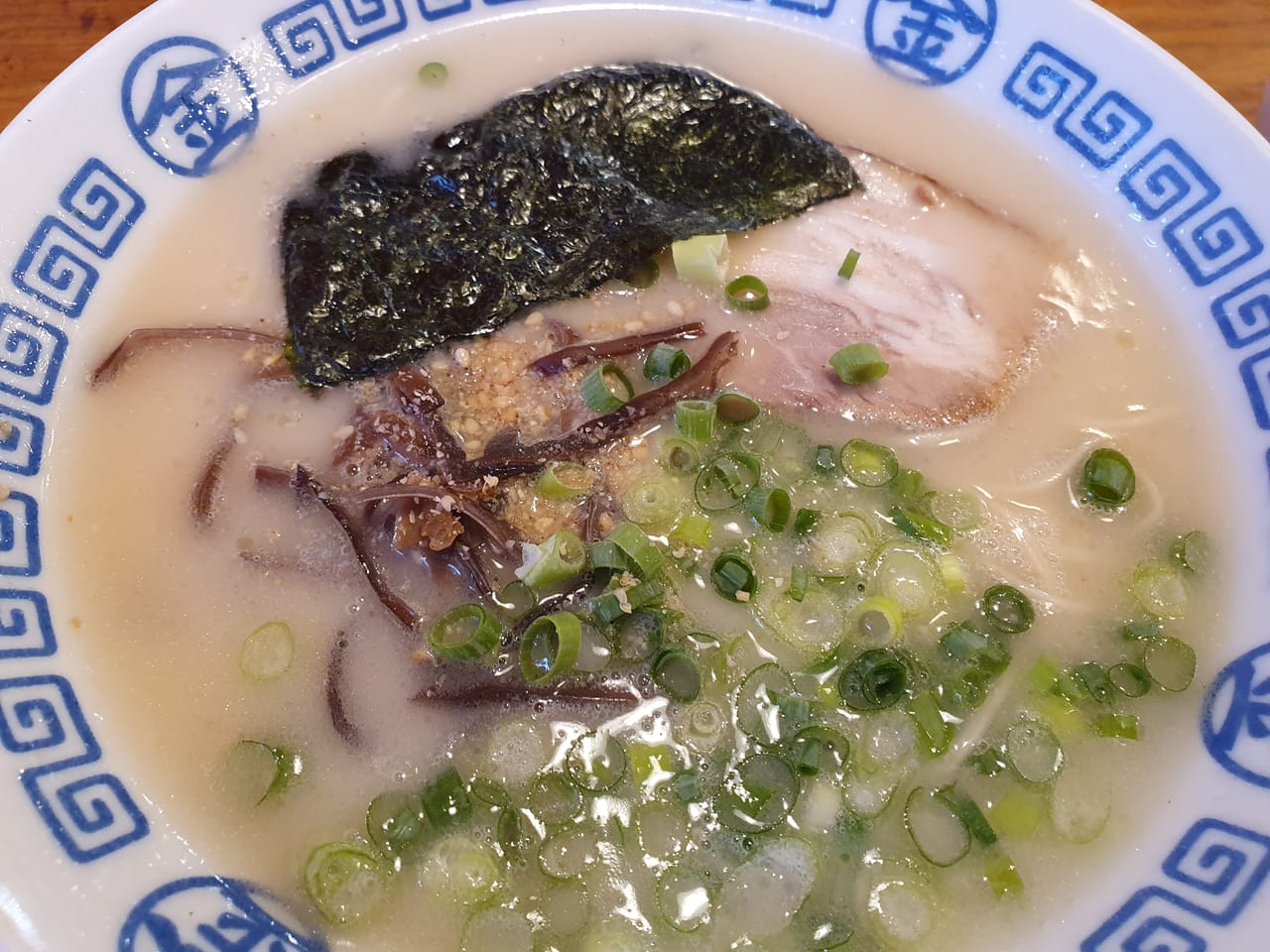
Pork bones are boiled hard and long — often 12 hours or more — until the marrow and collagen emulsify into a milky, rich, porky broth. It was born in Kyushu (Hakata and Kurume) and is the style most international visitors recognize. The classic pairing is ultra-thin straight noodles plus chashu, scallions, pickled red ginger and takana, and it spawned the kaedama refill and firmness-customization rituals. For a first ramen in Japan, tonkotsu is almost a must — it has the biggest impact and the most "I'm eating ramen in Japan" visual.
One thing worth knowing: tonkotsu can smell strongly of pork, sometimes almost barnyard, at the most traditional Kurume-lineage shops. That's not a sign it's gone off — it's the deeply boiled bones, and regulars love exactly that funk. If you're sensitive to it, Hakata-style shops tend to be cleaner and lighter than the older Kurume ones, and a chain like Ippudo (which started in Fukuoka) is the most polished, approachable version. Don't let a strong first whiff put you off the whole style.
Miso: the heaviest, sweet-savory
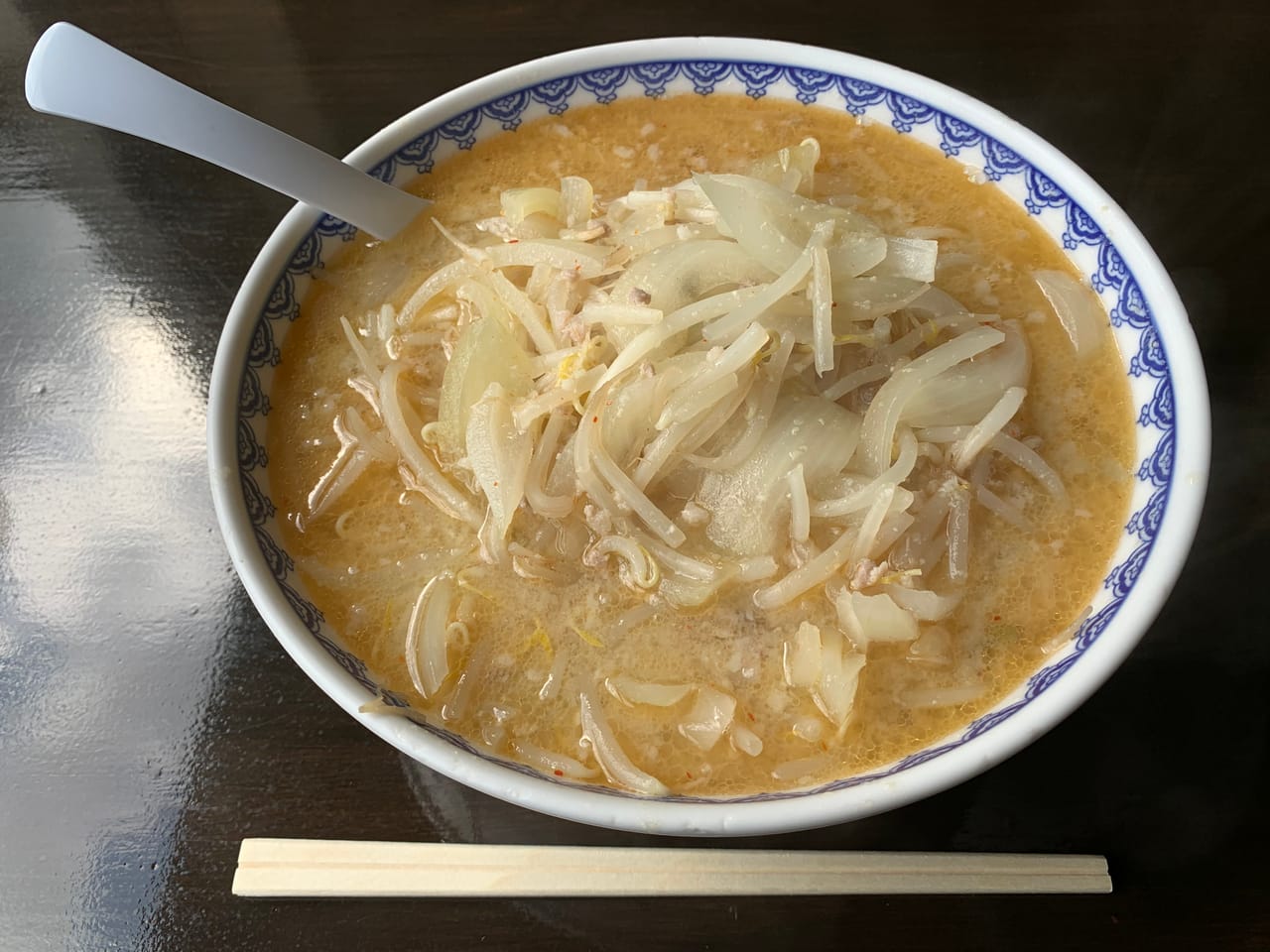
Miso ramen is a relatively "new" style that took off in 1950s Sapporo: seasoned with miso, the broth is heavy and savory-sweet, often with stir-fried ground pork and vegetables for aroma, served with medium-thick wavy noodles that grab the soup, plus butter and corn in the Sapporo classic. It's the most filling and warming of the four, perfect in winter or cold regions. It's the polar opposite of tonkotsu, so try both — the contrast is the clearest.
The detail people miss with miso is the wok work. A good Sapporo miso shop fires the miso tare, ground pork, bean sprouts, cabbage and onion together in a screaming-hot wok before adding the stock, which is what gives the broth that toasty, caramelized edge you don't get from miso alone. That's also why miso ramen holds heat so well — the layer of fat on top keeps it scalding to the last sip, which in a Hokkaido winter is the entire point. If you only eat miso ramen once and it's mediocre, it was probably a shop that skipped the wok step; seek out an old Sapporo specialist rather than a generic ramen chain.
Shoyu: the balanced standard
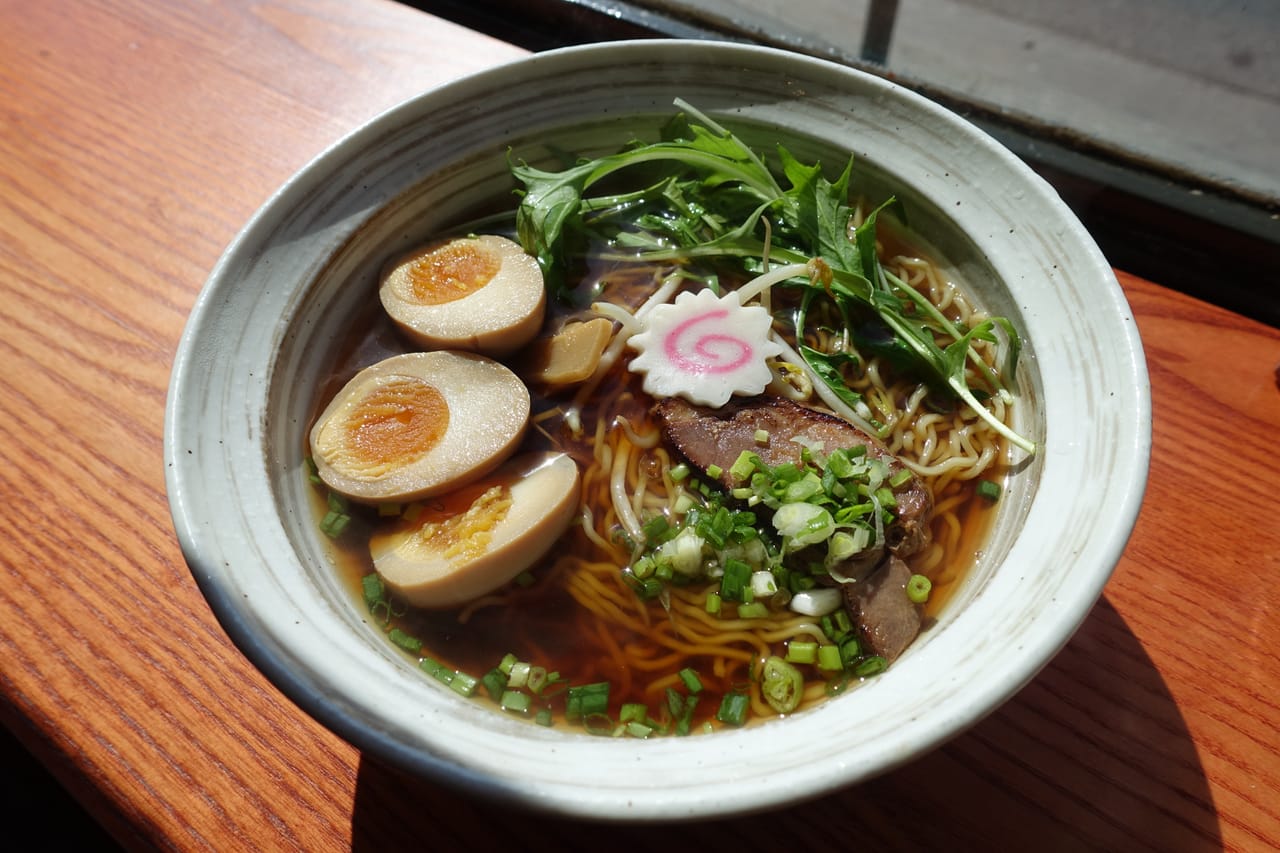
Shoyu is the original archetype of Japanese ramen — a clear, brown-tinted broth, usually a chicken-bone-plus-soy base, balanced rather than overpowering, with chashu, menma (fermented bamboo), nori and fish cake. Most Tokyo ramen is this style, and Kitakata ramen is a shoyu landmark too. If you want a baseline to compare every other style against, shoyu is that standard bowl. It doesn't shout, but a good one has a steady, lingering depth.
Shoyu also covers a huge range that the word "standard" undersells. The old-school Tokyo bowl is light and almost soba-shop-like; the modern wave of specialty shops layers in niboshi (dried sardine), dashi and aromatic oils for a much more intense, umami-forward result. The trendy "chuka soba" you'll see at design-forward Tokyo shops is usually a refined shoyu. So if your first shoyu felt plain, it's worth trying a second one at a dedicated shop — the ceiling on this style is far higher than the simple chicken-and-soy version suggests.
Shio: the clearest
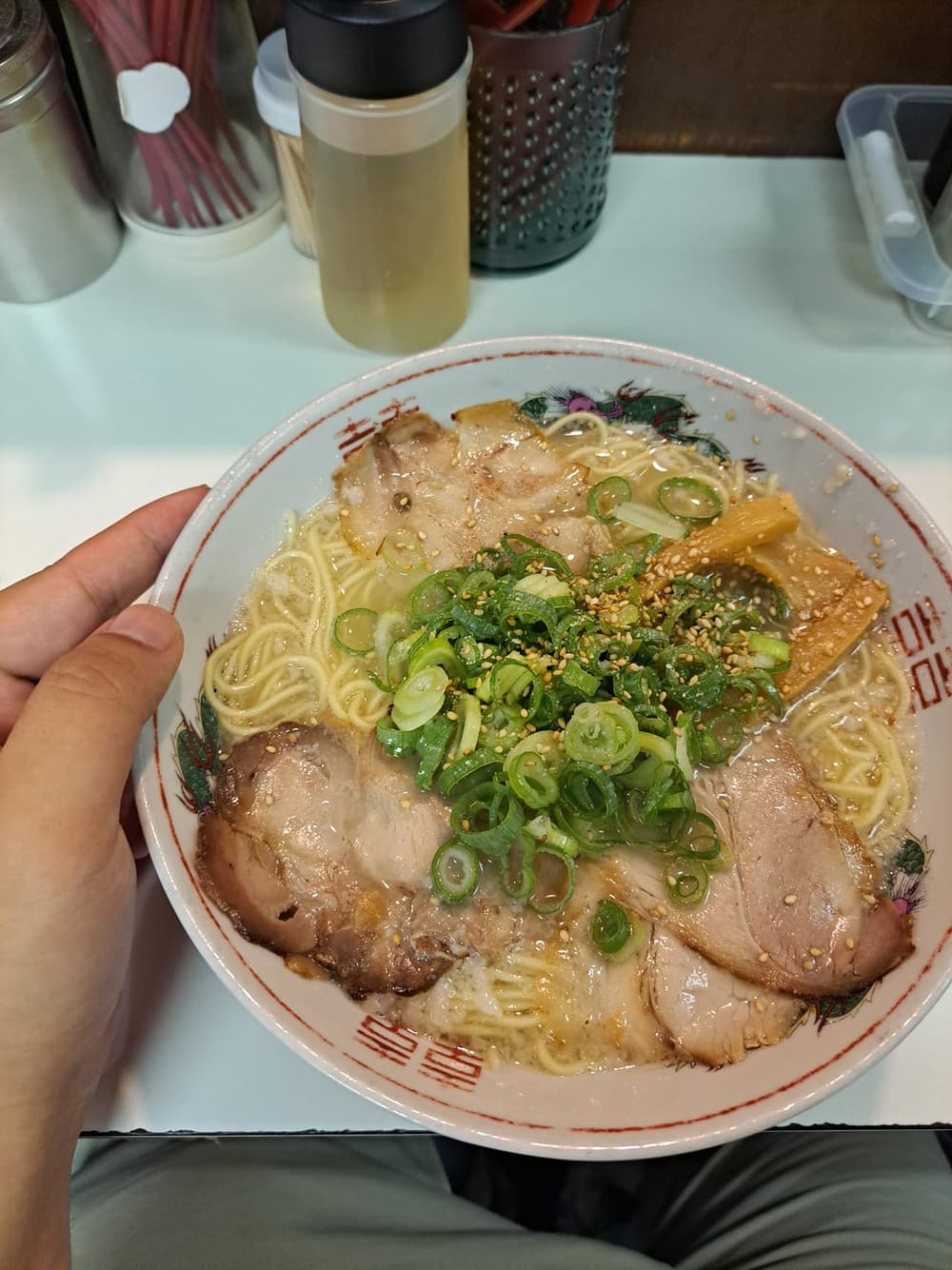
Shio is the lightest seasoning — salt-forward, with the clearest, golden broth, which paradoxically tests the stock the most: with no soy or miso to hide behind, the sweetness of chicken bone, seafood and kelp gets amplified. Hakodate is the home of shio ramen. It's clean and never heavy, ideal if you don't love bold flavors or you're eating several meals a day. Honestly, shio has less impact for a first-timer, so slot it in after tonkotsu and miso.
One table: broth × region × who it's for
Here are the four broths (plus two important offshoots) in one table — the fastest way for a first-timer to order:
| Type | Home region | Character | Best for |
|---|---|---|---|
| Tonkotsu | Hakata, Kurume (Kyushu) | Milky broth + thin noodles + kaedama | First-timers, rich-broth lovers |
| Miso | Sapporo (Hokkaido) | Heavy, sweet-savory + wavy noodles + butter-corn | Winter, want filling and warming |
| Shoyu | Tokyo, Kitakata (Fukushima) | Clear, balanced, the standard | Want a baseline, dislike heavy |
| Shio | Hakodate (Hokkaido) | Clearest, the stock shines | Light eaters, multi-meal days |
| Iekei | Yokohama (Kanto) | Tonkotsu-shoyu + thick noodles + nori with rice | Bold, filling, hearty appetites |
| Jiro style | Tokyo (branches nationwide) | Huge portions + garlic + back-fat | Big eaters up for a challenge |
One heads-up: all four broths above are built on pork bone, chicken bone or seafood, so traditional ramen is essentially off-limits for vegetarian and vegan travelers — even the seemingly light shio and shoyu broths usually contain bonito or chicken stock. Tokyo and Kyoto have started growing a small scene of dedicated vegan ramen (vegan ramen) shops; how to find them and confirm ingredients is in our Japan vegetarian & vegan guide.
Noodles and toppings
The broth sets the direction; noodles and toppings set the detail. On noodles: rich broths pair with thin noodles (tonkotsu uses ultra-thin straight ones that soak fast), while clear or miso broths pair with medium-thick or wavy noodles (more soup-grabbing, more chew). This isn't arbitrary — a rich broth on thick noodles is too heavy, a clear broth on thin noodles is too thin, and Japan's noodle-broth pairings were tuned over a century.
The thin-noodle pairing is also why Hakata shops serve them barely cooked and offer kaedama: ultra-thin noodles overcook in the bowl within minutes, so the move is to eat fast, then refill rather than let one portion turn to mush. With miso and shoyu's thicker wavy noodles you can take your time. Two more terms you'll meet: the noodles' "kansui" (alkaline mineral water) is what gives ramen its yellow color, springy bite and distinct smell — it's what separates ramen noodles from plain wheat noodles like udon — and the broth's surface oil ("abura") isn't grease for grease's sake; it traps heat and carries aroma, which is why a layer of fat is a feature, not a flaw.
For toppings, learn these and you can order anywhere:
- Chashu: braised or seared pork slices; pay extra for a "chashu-men" piled high.
- Soft egg (ajitama): a soy-marinated soft-boiled egg, the near-universal add-on; ¥100–150 well spent.
- Menma: fermented bamboo shoots, crunchy and cutting through the richness.
- Nori, scallions, garlic, red ginger, takana: tonkotsu shops often have free red ginger and takana on the table — great for cutting grease.
- Kaedama: a noodle-only refill (no extra soup) to finish the broth — a Hakata specialty.
Regional bowls: Sapporo, Hakata, Kitakata…
"Gotochi ramen" (regional ramen) is the most fascinating part of Japan's ramen — nearly every region grew its own style, shaped by local climate, local ingredients and local taste, and the version you only really get on the spot. A heavy, fatty bowl makes sense in snowy Hokkaido; a clean, light one suits a milder coast. The key ones:
- Sapporo miso (Hokkaido): the flagship of the miso style — stir-fried veg, butter and corn, wavy noodles, a winter must. Plan the city in our Sapporo travel guide.
- Hakata tonkotsu (Fukuoka): the birthplace of milky tonkotsu, ultra-thin noodles and the kaedama ritual, with the country's densest yatai and local shops. How to eat it in our Fukuoka travel guide.
- Kitakata shoyu (Fukushima): one of Japan's three great ramen, with flat wavy noodles, a clean soy broth and a pork-and-sardine stock — locals even eat "asa-ra" (morning ramen). Kitakata neighbors the Aizu area; pair it with our Aizu & Ouchijuku guide.
- Wakayama ramen (Kansai): a rich tonkotsu-shoyu broth, often with early-pressed sushi and boiled eggs to grab from the table — a rare hearty ramen in Kansai.
- Asahikawa shoyu (Hokkaido): a double pork-and-seafood stock with soy and a layer of pork fat on top to retain heat against Asahikawa's deep cold.
- Tokushima ramen (Shikoku): a dark, sweet-salty tonkotsu-shoyu broth with raw egg and pork belly, hearty and rice-friendly.
- Iekei (Yokohama): tonkotsu-shoyu with thick straight noodles and big sheets of nori, a Kanto style eaten with rice — generously portioned.
To chase regional bowls across cities, rail is the practical way — Sapporo, Hakata, Kitakata and Wakayama are scattered from Hokkaido to Kansai, and to eat several regions' versions in one trip, a nationwide JR Pass often beats buying point-to-point. Check the nationwide JR Pass, then weigh it up with our JR Pass guide.
How to use the ticket machine
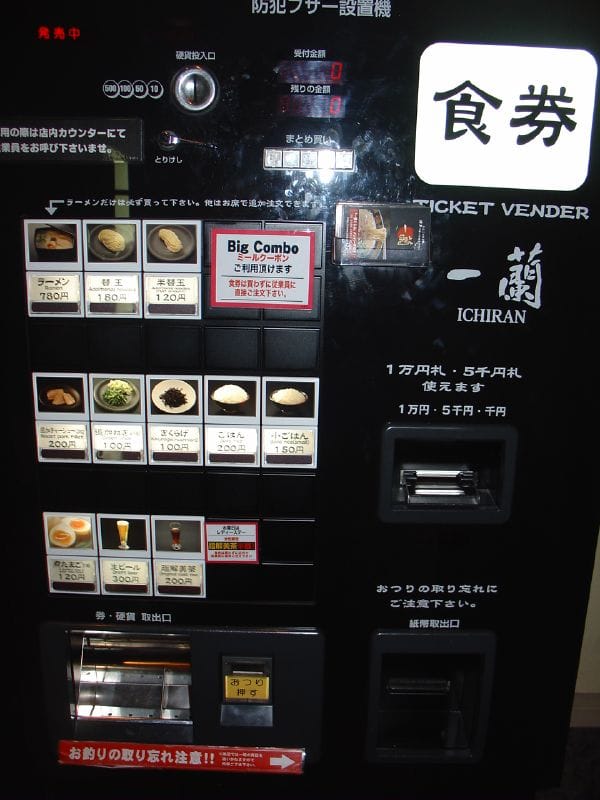
Many ramen shops (especially independents and chains) order via a ticket machine (kenbaiki). Don't panic at a wall of Japanese buttons — the flow is fixed:
- Pay first: most take cash (notes and coins); newer machines now take IC cards and credit cards.
- Press the top row: the button at the top — largest and usually priciest — is the house ramen; press that and you're safe.
- Add topping tickets: then press your add-ons — kaedama, ajitama (soft egg), chashu, nori — one ticket each.
- Take change and tickets, sit, hand them over: the machine dispenses tickets and change; sit down and give them to staff or set them on the table.
Many famous shops and chains have English, photos or numbers; if you truly can't read it, just point at the top-row house bowl. The big upside is you barely have to speak, which makes it the friendliest system for anyone nervous about ordering. Convenience-store and drugstore checkout logic is similar — get a feel for it in our Japan convenience store guide.
Kaedama, richness, oil and firmness
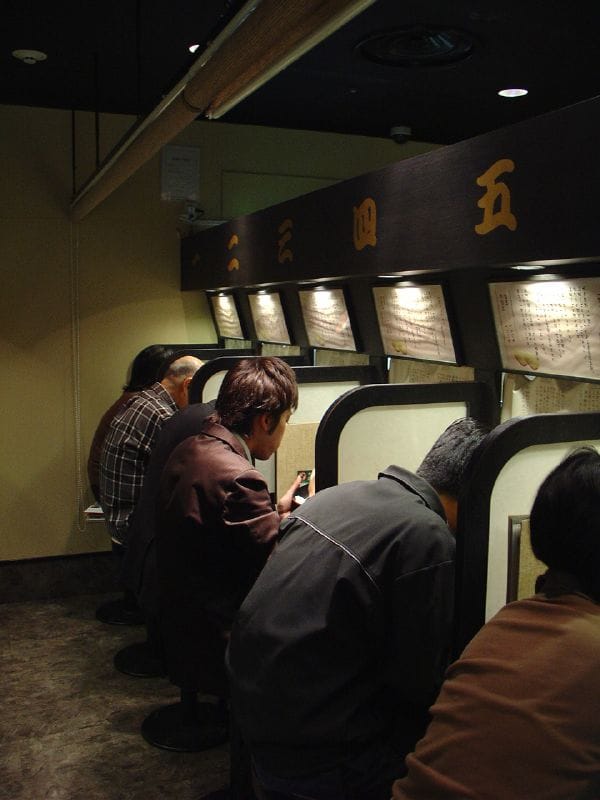
Hakata tonkotsu shops have a customization ritual; staff will ask a few things, and for a first time, choose like this:
- Noodle firmness: you'll hear "barikata (very firm) → kata (firm) → futsuu (normal) → yawa (soft)." First time, pick kata — springy, not mushy, and not so hard it tastes undercooked.
- Broth richness (kosa): choose normal; very rich can be a lot for a non-local stomach.
- Oil (kotteri/assari): go light (assari) if you worry about heaviness, kotteri for bold.
- When to kaedama: when the noodles are gone but plenty of broth remains, call "kaedama" (¥100–200) and staff bring a noodle-only refill so you can finish the rich soup — the heart of Hakata ramen, so don't just eat the noodles.
Bluntly: when unsure, start with everything "normal" and you can't go wrong; no shop looks down on you for it. Once you've found your feel, play with firmness and oil combinations. If you'd like to say a little more at the counter ("kaedama kudasai," "kata de"), a few ordering lines from our essential Japanese phrases guide go a long way with the staff.
A few situational tips. At a kaedama shop, eat at a slightly faster pace than you would at home — those thin noodles wait for no one. If a counter has a small bottle or jar of fresh garlic with a press, a clove or two transforms a tonkotsu bowl, but add it gradually; it's potent. Free pickled red ginger (beni shoga) and spicy takana are there to reset your palate between bites, not to dump in all at once. And when you order a kaedama, you usually pay at the machine first or tell staff and settle at the end depending on the shop, so listen for whether they want a ticket. None of this is mandatory etiquette — it's just how you get the most out of a bowl that was built to be customized.
Queue shops vs chains vs independents
Ramen shops fall into three buckets, and my take is direct:
- Chains (Ichiran, Ippudo, Tenkaippin, Yamaokaya): standardized, open late, English menus — convenience is the main draw. But don't treat chains as "the" Japanese ramen — especially Ichiran: convenient, yes, but pricey and formulaic, and spending your whole ramen budget on chains is a waste. Fine to try once, then move on.
- Famous queue shops (high Tabelog scores, Michelin Bib Gourmand): quality is assured, but you'll queue and need to check hours (many close when sold out). Worth lining up for one or two, but don't pack the whole trip with queues — it gets exhausting.
- Local independents: this is where Japan's ramen truly has character — every shop's broth, noodles and toppings reflect the owner's choices. How to find them: use Tabelog (you'll need data) for shops rated 3.5+ with lots of local diners, and skip the photogenic tourist-queue spots.
One more habit that saves a wasted trip: famous shops keep odd hours and often close midweek or sell out by mid-afternoon, so check the day's status before you walk over. Tabelog is the local gold standard (treat 3.5+ as strong, since the scale skews harsh and a 3.5 is genuinely good), Google Maps reviews are a decent backup in English, and many shops post a hand-written "sold out / closed today" note only on their own social accounts. Finding local shops and checking Tabelog scores and hours all need data, so set up a KKday Japan eSIM before you land and search as you go. To fit ramen into the wider trip, see our Tokyo 5-day itinerary, and for pre-trip prep — tax-free, connectivity, entry — our Japan prep checklist.
Frequently Asked Questions
- Q1:First time in Japan — which ramen should I try first?
- If you can only try three, I'd pick: (1) Hakata tonkotsu — a rich milky pork broth with ultra-thin noodles and the kaedama refill ritual, the most memorable starter; (2) Sapporo miso — a thick, savory-sweet miso broth with butter and corn, a completely different lane from tonkotsu; (3) Tokyo shoyu — a clear, balanced soy-based bowl that works as your baseline. These three broths differ the most, so after them you'll have a feel for the whole spectrum. Save shio and the Jiro style for a second trip unless you're especially curious.
- Q2:What actually separates tonkotsu, shoyu, miso and shio?
- It comes down to two layers: the broth base and the seasoning (tare). Tonkotsu is pork bones simmered to a milky base — it IS the broth. Shoyu, miso and shio are seasonings that can go on chicken, pork or seafood stocks. That's why you'll see combos like "tonkotsu-shoyu" or "tonkotsu-miso," and they're not contradictions. Quick mnemonic: tonkotsu = richest and milkiest, miso = heaviest and sweet-savory, shoyu = the balanced standard, shio = the clearest, where the stock itself shines.
- Q3:Can I order at the ticket machine without Japanese?
- Yes — the flow is fixed: (1) at or just inside the door, find the machine and pay first (most take cash; newer ones take IC cards and credit cards); (2) the button at the top, largest and usually priciest, is the house ramen — press that first; (3) add topping tickets (kaedama, soft egg, chashu, nori); (4) take your change and tickets, sit down, and hand them to staff. Many famous shops have English or photos; if you're stuck, just point at the top row. The whole system means you barely have to speak, which is friendlier than it looks.
- Q4:How do I choose kaedama, broth richness, oil and noodle firmness?
- This is the Hakata tonkotsu customization ritual. For noodle firmness you'll hear "barikata (very firm) → kata (firm) → futsuu (normal) → yawa (soft)"; first-timers should pick kata — springy, never mushy. For broth richness, choose normal. For oil (kotteri/assari), go light if you worry about heaviness. When the noodles are gone but broth remains, order a kaedama (a refill of noodles only, ¥100–200) to finish the rich broth — that's the heart of Hakata ramen. When in doubt, start with everything "normal"; nobody will judge you.
- Q5:Which region is worth a special trip — and which type is overrated?
- Worth the trip: Hakata (tonkotsu) and Sapporo (miso) — their ramen is deeply tied to local climate and food culture, with dense, consistent local shops, and eating it there beats eating it elsewhere. Overrated: the Ichiran chain. It's not bad — standardized, open late, convenient — but it's pricey and formulaic, and treating it as "the" Japanese ramen means missing the shops with real character. Try it once, but don't spend your whole ramen budget on chains.
- Q6:How much is a bowl, and can I get ramen late at night?
- A basic bowl runs about ¥800–1,200; toppings like kaedama, soft egg or extra chashu add ¥100–300 each, so a filling meal is usually under ¥1,000–1,500. Ramen is one of Japan's most late-night-friendly proper meals — yatai stalls, chains (Ichiran, Tenkaippin) and many independent shops run late or even 24 hours, and a "shime no ramen" (closing bowl) after drinks is a local ritual. Cash works almost everywhere; some newer shops and chains take IC cards or credit cards.