🔄 Update log (2 revisions — click to expand)
- :Living page created with 1991-2020 historical-average peak-bloom dates for trip framing; 2027 official forecasts to be logged from mid-January.
- :Restored historical-average dates for Fukuoka, Kochi, Nagoya, Kawaguchiko and Hakodate (dropped when the page was first assembled), plus notes that Kochi is among Japan's earliest and that Osaka Mint's late-blooming yaezakura peak around mid-April, weeks after Osaka Castle's ~4/4.
The cruel truth about sakura: from full bloom to the first falling petals, a Somei-Yoshino tree looks its best for only about seven days — and that window shifts nearly a week each year with a mild winter or a cold snap. One traveler flies in to bare buds while another hits the petal blizzard, and the difference isn't luck. It's whether you turned "betting a single day" into "betting a high-odds window." This guide uses JMA historical averages to explain how the bloom front climbs north, how many days separate first bloom from full bloom, and which week each major city tends to peak — then gives you the strategy straight: the one week I would bet, the safest Tokyo window, and where to chase a late bloom.
⚠️ Up front: every date here is a historical average (JMA 1991-2020 normals and Japan Weather Association records), not a 2027 forecast. The year-specific bloom forecast is published by private weather companies, whose launch dates differ (the earliest issues its first release in mid-December of the previous year), and it only stabilizes in March, so there is no exact 2027 bloom date yet. Use this guide to sketch the skeleton; confirm 2027 against the weekly-updated forecast before you go.
- The bloom front climbs north over ~6 weeks: Tokyo & Fukuoka ~Mar 31 → Kyoto & Osaka Apr 4 → Kanazawa Apr 8 → Sendai Apr 13 → Hirosaki Apr 26 → Sapporo May 6 (all historical-average full bloom, not a year forecast)
- First bloom to full bloom is about a week; days 3-5 after peak are best — target "days 5-10 after first bloom," don't bet a single day
- One week only, want certainty → bet Tokyo late March (~Mar 28-Apr 3): dense spots, the highest tolerance in Japan
- A mild winter tends earlier, but a cold snap pulls it back — don't move dates a week forward and lock flights; defer to the year's forecast
- Chase a late bloom up north: Hirosaki and Hokkaido (late Apr-early May) are Japan's latest front, in or just dodging Golden Week
Once your week is set: chasing two bloom waves? Compare the nationwide JR Pass price →
📖 Table of contents
- 1. What the bloom front is: how the flowers climb north
- 2. First bloom vs full bloom: the gap, and which to target
- 3. Historical-average bloom timing by city
- 4. Mild vs cold winters: how the timing shifts
- 5. How to read the year-specific forecast
- 6. The one week I would bet
- 7. Which week to book flights and hotels
- 8. Night cherries and the rainy petal-fall
- 9. FAQ
What the bloom front is: how the flowers climb north
Japan's meteorologists connect the first-bloom dates of Somei-Yoshino nationwide into a line that moves south to north — the cherry blossom front (sakura zensen). Its broad logic is "earlier in the south, later in the north; earlier at low elevation, later at altitude." Kyushu and Shikoku open first (late March), then Honshu's Kanto, Tokai and Kansai (late March to early April), then Hokuriku and Tohoku (mid-to-late April), and finally Hokkaido (early May). End to end, the front spans nearly six weeks — which is exactly why "what month are cherry blossoms in Japan" has no single answer. You have to pick a city.
But the front has one deeply counter-intuitive feature: at similar latitudes, Tokyo usually blooms before Kyoto and Osaka further southwest. By historical average, Tokyo full-blooms around March 31 while Kyoto and Osaka run around April 4 — Tokyo is 3-5 days ahead. The reason is Tokyo's strong urban heat-island effect plus the warm Pacific current raising local temperatures. This matters for sequencing: a "Tokyo first, then Kansai" order rides the bloom timing better than the "Kansai first" order most people assume.
It's also worth knowing the front is not a clean wave that sweeps north on a fixed schedule. Two cities at the same latitude can differ by days because of coastal warming, elevation, or a basin that traps cold air; a mountain town a short drive from a warm city can lag by a week or more. That's why you plan around cities, not regions — "Tohoku in late April" is too coarse, but "Hirosaki ~April 26" is something you can actually book a hotel against. The table below gives you that city-level resolution.
First bloom vs full bloom: the gap, and which to target
The easiest sakura mistake is treating "first bloom" as "ready to view." The star variety is Somei-Yoshino, planted at roughly 80% of famous spots, and its bloom runs in three roughly week-long phases:
- First bloom: the designated benchmark tree opens 5-6 flowers and the bureau declares "kaika." Overall it's still sparse — show up now and you'll see scattered flowers.
- Full bloom (mankai): about a week after first bloom, 80%+ of flowers are open — the real "whole tree in pink-white" scene.
- Petal fall (chiri): 3-5 days after full bloom, petals start drifting — the limited sakura-blizzard and petal-raft phase.
So the conclusion is simple: don't aim at the bloom date, aim at "days 5-10 after first bloom." Slot your core days into that window for the best odds of hitting peak. Book by the official bloom declaration alone and you may arrive a week early to thin, sparse blossoms.
Historical-average bloom timing by city
| Region | First bloom | Peak bloom | vs average |
|---|---|---|---|
| Fukuoka | 3/23 前後 | 3/31 前後 | historical avg |
| Kochi | 3/22 前後 | 3/30 前後 | historical avg |
| Tokyo | 3/24 前後 | 3/31 前後 | historical avg |
| Nagoya | 3/26 前後 | 4/2 前後 | historical avg |
| Kyoto | 3/28 前後 | 4/4 前後 | historical avg |
| Osaka | 3/28 前後 | 4/4 前後 | historical avg |
| Kanazawa | 4/1 前後 | 4/8 前後 | historical avg |
| Kawaguchiko | — | 4 月中旬 前後 | historical avg |
| Sendai | 4/7 前後 | 4/13 前後 | historical avg |
| Hirosaki | 4/19 前後 | 4/26 前後 | historical avg |
| Hakodate | 4/24 前後 | 4 月末 前後 | historical avg |
| Sapporo | 4/29 前後 | 5/6 前後 | historical avg |
- Japan Weather Assoc. (tenki.jp)— Not yet issued for 2027 (from mid-Jan)
- Weathernews— Not yet issued for 2027
- Weathermap— Not yet issued for 2027
- Japan Meteorological Corp. (JMC)— Not yet issued for 2027
All dates come from official forecasts or JMA historical averages — not on-site observation.
The table above is sorted south to north, giving each city's historical-average bloom and full-bloom dates (JMA 1991-2020 normals and records). Use it as a timeline: from the full-bloom date, count 1-2 days back and 3-5 days forward for that city's golden window. Again — these are historical averages, not a 2027 forecast; confirm against the weekly-updated official version that year. The chase order, south to north, runs roughly: Fukuoka & Kochi (earliest, late March) → Tokyo (earliest major Honshu city, ~Mar 31) → Nagoya (~Apr 2) → Kyoto & Osaka (~Apr 4) → Kanazawa (~Apr 8) → Kawaguchiko / Arakurayama (later at altitude, ~mid-April) → Sendai (~Apr 13) → Hirosaki (early Golden Week, moat petal raft, ~Apr 26) → Hakodate (~late April) → Sapporo (latest in Japan, over Golden Week, ~May 6).
Kochi deserves a special mention: its historical-average full bloom is around March 30, making it among the earliest Somei-Yoshino in Japan — just a day ahead of Fukuoka's Maizuru Park (~Mar 31), and the two are often paired as a "start of the chase" combined with a Kyushu itinerary. One easy mix-up to avoid: Osaka's ~Apr 4 full-bloom date is for Osaka Castle (mostly Somei-Yoshino), but the equally popular Mint Bureau "Sakura no Tōrinuke" walk is planted with late-blooming double-flowered yaezakura, which typically doesn't peak until around mid-April — nearly two weeks after the castle. Don't assume the two Osaka spots peak the same week when you're building the itinerary.
To chase two bloom waves in one trip (Tokyo then top up at Fuji, or Kansai then north to Hirosaki), the the nationwide JR Pass pays off across multiple shinkansen legs; a single-region trip is better served by a regional pass. Which one wins, with four routes calculated, is in our JR Pass 2026 guide. For spot-by-spot timing, see our Tokyo cherry blossom guide, Kyoto cherry blossom guide, Osaka cherry blossom guide, and our Fuji-Kawaguchiko cherry blossoms guide.
Mild vs cold winters: how the timing shifts
When cherries bloom depends on two conditions: a cold enough winter to break dormancy first, then a sustained warm run to accumulate heat toward blooming. Because of this two-step sequence, the intuition "mild winter = early bloom" is only half right.
- Mild winter: a warm January-March accumulates heat fast and usually pulls bloom earlier. 2026 was a classic mild year — Tokyo first-bloomed March 21, about a week ahead of average (per that year's Weathernews forecast).
- A cold snap rebound: but a sudden cold spell in February-March pulls an already-started bloom back. So a mild winter is a "tends earlier" signal, not a guaranteed week ahead.
- Too mild can paradoxically delay: in a few extremely warm winters, even the "cold enough to break dormancy" step is under-met, making bloom uneven or even later — a counter-example most people don't know.
In practice: you can fine-tune by the broad "warm or cold this year" signal, but don't see a mild winter and immediately shove the historical average a week earlier and lock in flights. What actually decides it is the weekly-updated official forecast.
How to read the year-specific forecast
Exact 2027 dates aren't available yet, but you can learn to read the year's forecast. Four reliable sources, best followed together:
- Weathernews: launched its 2026 season on January 8 and updates weekly, down to city and spot level.
- Nihon Kishou (n-kishou): the earliest of the four — its first 2026-season release came on December 18, 2025, covering roughly 1,000 Somei-Yoshino sites nationwide, and ran to a 14th and final release in late April.
- tenki.jp (Japan Weather Association): bloom/full-bloom forecast plus live conditions — best for checking "how open is it now" right before you go.
- Weathermap (sakura forecast): updates Mondays and Thursdays from March — best for the final pre-trip check.
The method is simple: compare the year's forecast bloom date against the historical average here, and see the gap. If all three show 5+ days earlier or later than average, shift the whole itinerary by the same number of days. For example, if Tokyo averages March 31 but the year's forecast says March 24, move your Tokyo segment — originally set for early April — forward by about a week. The final check two weeks out is the key node of this method.
One more thing: on the ground, the single most useful tool is live bloom-status lookups — which spot is how open today, where's at peak, where's already falling — all done on your phone. You can only chase conditions with a connection, so set up a KKday Japan eSIM online before you go; airport SIM counters are jammed during full-bloom week. Which of the five brands to pick is in our Japan eSIM guide.
The one week I would bet
If your time only allows one trip and your flights are locked to fixed dates, you have to make a call. My strategy is clear, split by what you want:
Certainty, first trip → bet Tokyo late March (~Mar 28-Apr 3)
If you want one thing — don't miss it — I'd bet Tokyo in late March. Tokyo averages full bloom around March 31, its spots are dense (Chidorigafuchi, Meguro River, Shinjuku Gyoen and Ueno in a row), and even if the year drifts a few days, some park in the city is usually still at peak — Shinjuku Gyoen especially, with many cherry varieties and a longer, more forgiving window. Add easy transit and plenty of lodging, and for a first sakura trip where you want certainty, Tokyo beats Kyoto. Full planning is in our Tokyo cherry blossom guide.
Temple-and-shrine scenery → Kyoto early April (~Apr 2-8)
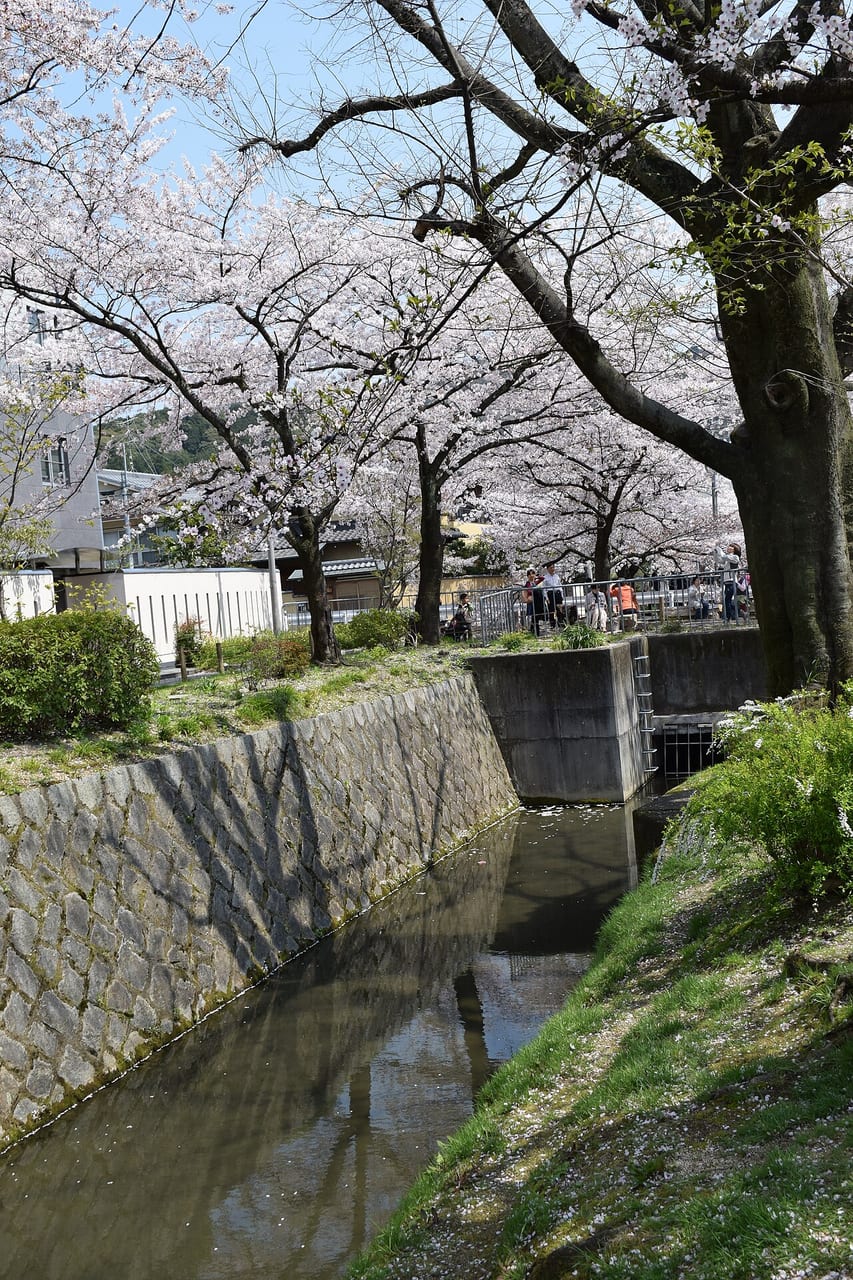
If what you want is cherries framed by old temples and shrines, it has to be Kyoto — just go in knowing its full-bloom week is the year's twin peak of crowds and prices, and that it runs 3-5 days later than Tokyo; don't apply Tokyo's timing to Kyoto. Philosopher's Path, Daigo-ji and the Gion Shirakawa night cherries are the top picks, and before 7am is the only window to shoot empty frames.
Avoid crowds, or only able to go in early May → bet north on Hirosaki and Hokkaido (late Apr-early May)
If the Tokyo/Kyoto crush puts you off, or you can only travel in early May, move your target north. Hirosaki Castle and Hokkaido are Japan's latest bloom front, falling late April to early May — right in (or just dodging) Golden Week. Hirosaki Castle's moat "hanaikada," Hakodate Goryokaku's star-shaped cherries, and Sapporo's Maruyama Park are all late blooms you can chase after Honshu's done. See our Hirosaki & Hokkaido cherry blossom guide.
Which week to book flights and hotels
Sakura is one of the most extreme peak windows of the year, stacking Japan's domestic graduation/entrance season, spring breaks across Asia, and (for Taiwan) the Qingming long weekend. Kyoto and Tokyo full-bloom-week 4-star rates often run 2-2.5x and sell out closest to the date. The hard part: you must book the hot cities using historical averages before the year's forecast even exists. The rule is "book the hot cities first, fill flexible ones later."
| Lead time | Action | Why |
|---|---|---|
| 10-12 weeks | By historical average, book Tokyo, Kyoto, Hirosaki full-bloom-week hotels | One of the year's highest-demand windows; later = pricier or gone |
| 8-10 weeks | Buy flights (early bird saves ~US$70-130) | Sakura is not an airline off-season; Hokkaido (Golden Week) earliest |
| 4 weeks | Reserve night viewings, kimono rental, sakura cruises | Limited capacity, often full |
| 2 weeks | Cross-check Weathernews / tenki.jp / Weathermap, adjust order | A mild winter or cold snap shifts the bloom |
| 1 week | Buy eSIM, light jacket, power bank | eSIMs sell out at counters during full-bloom week; March-April mornings stay cool |
The top row of that table is the one step with no way back: you have to book before that year forecast exists, and once full bloom lands, what is left in Tokyo and Kyoto is either double the price or out in the suburbs. Frame the dates from the historical average, hold rooms that cancel free, then decide in March when the forecast settles — that is the only move here that dodges both "sold out" and "wrong week".
Worried full-bloom week sells out: see what Tokyo still has → Same week in Kyoto →
The core week-picking logic: use the historical-average full-bloom date as an anchor, count 1-2 days back and 3-5 forward, and treat those 5-7 days as your core. If your flights must be fixed and you fear the bloom drifting, raise your odds with a forgiving spot (variety-rich Shinjuku Gyoen, or the late northern front) rather than betting one spot's single day. For the full booking timeline and city choice, plan the whole route in our Japan 7-day first-timer itinerary.
One hedge worth building in: if your trip spans 5-7 days, you can straddle two adjacent fronts on purpose. A trip that opens in Tokyo around its peak and closes in Kyoto a few days later effectively widens your odds, because the two cities don't peak on the same date — by the time Tokyo starts dropping petals, Kyoto is hitting full bloom. The same trick works on the late end: Tokyo first, then north to Hirosaki, lets you trail the front upward instead of betting everything on one city's single week. This is exactly the case where a nationwide pass earns its keep versus a single-region one.
Night cherries and the rainy petal-fall
Once you've nailed the peak week, two things decide what you actually capture: the time of day, and the weather.
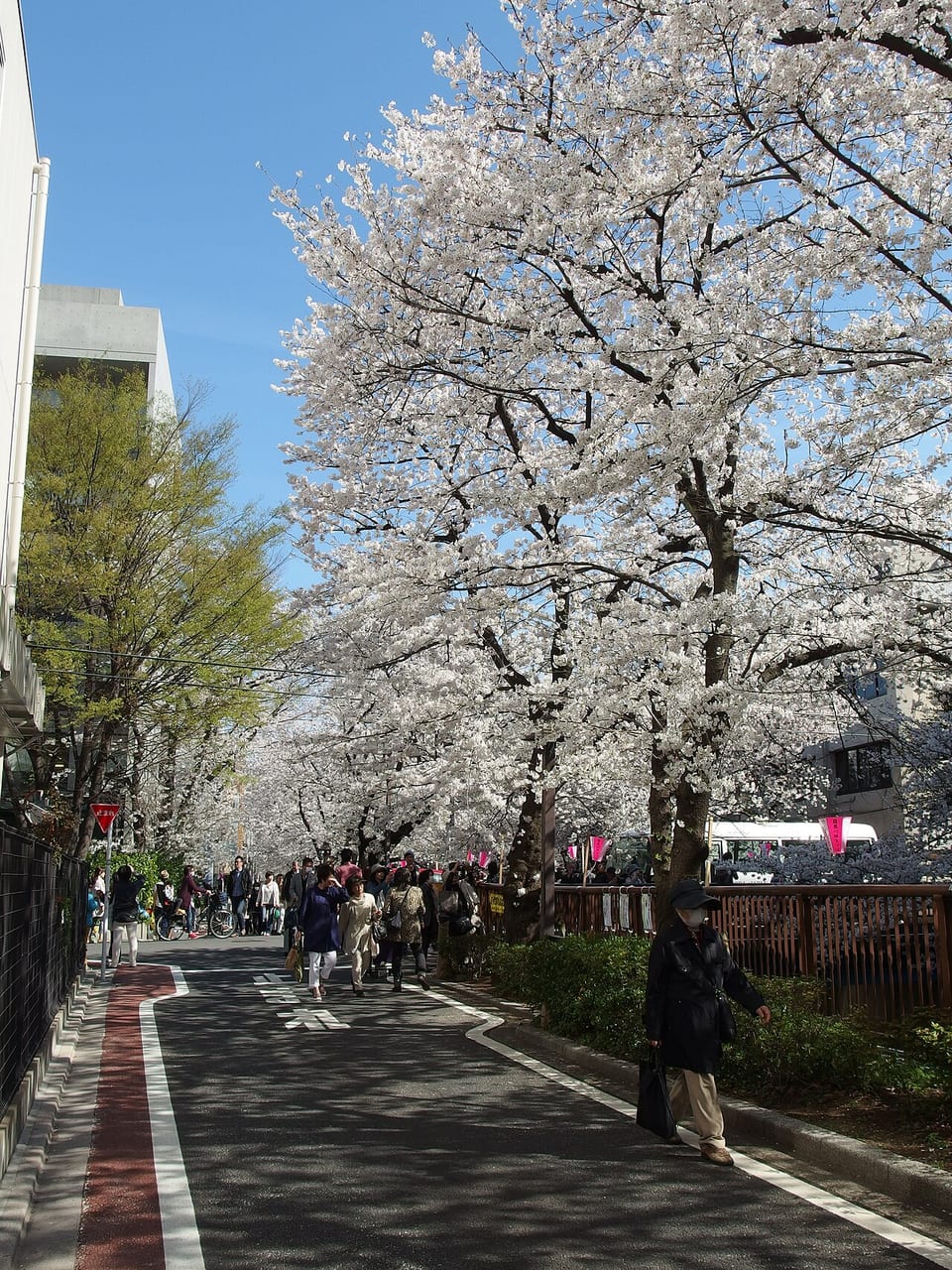
Night cherries: limited illuminations, only at peak week
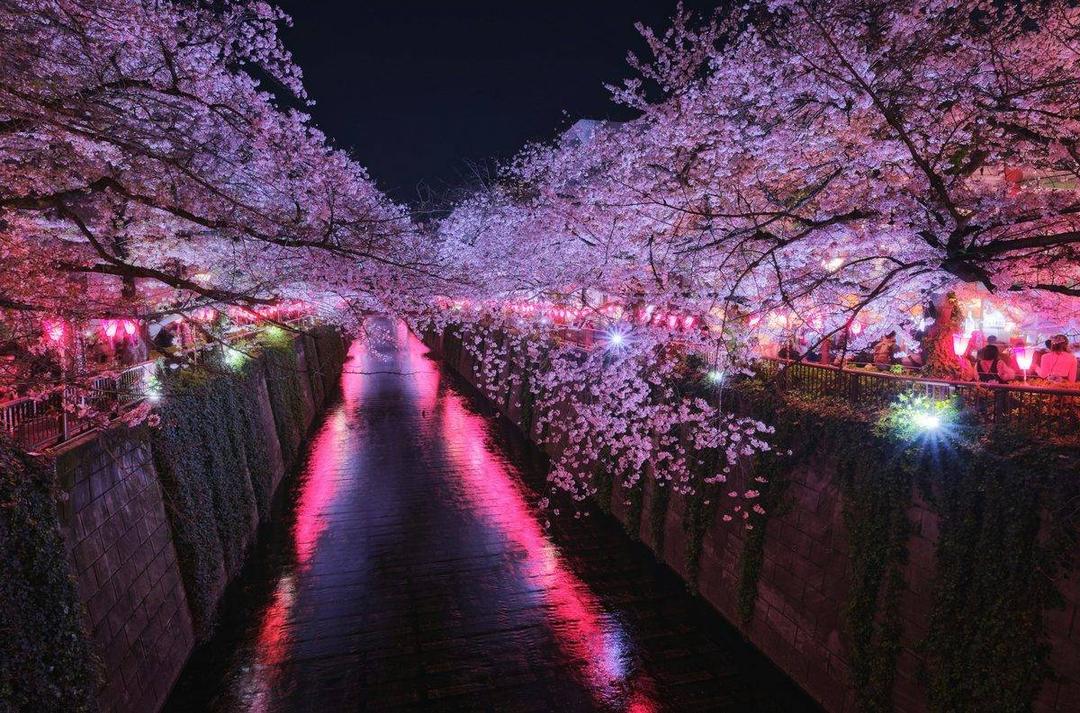
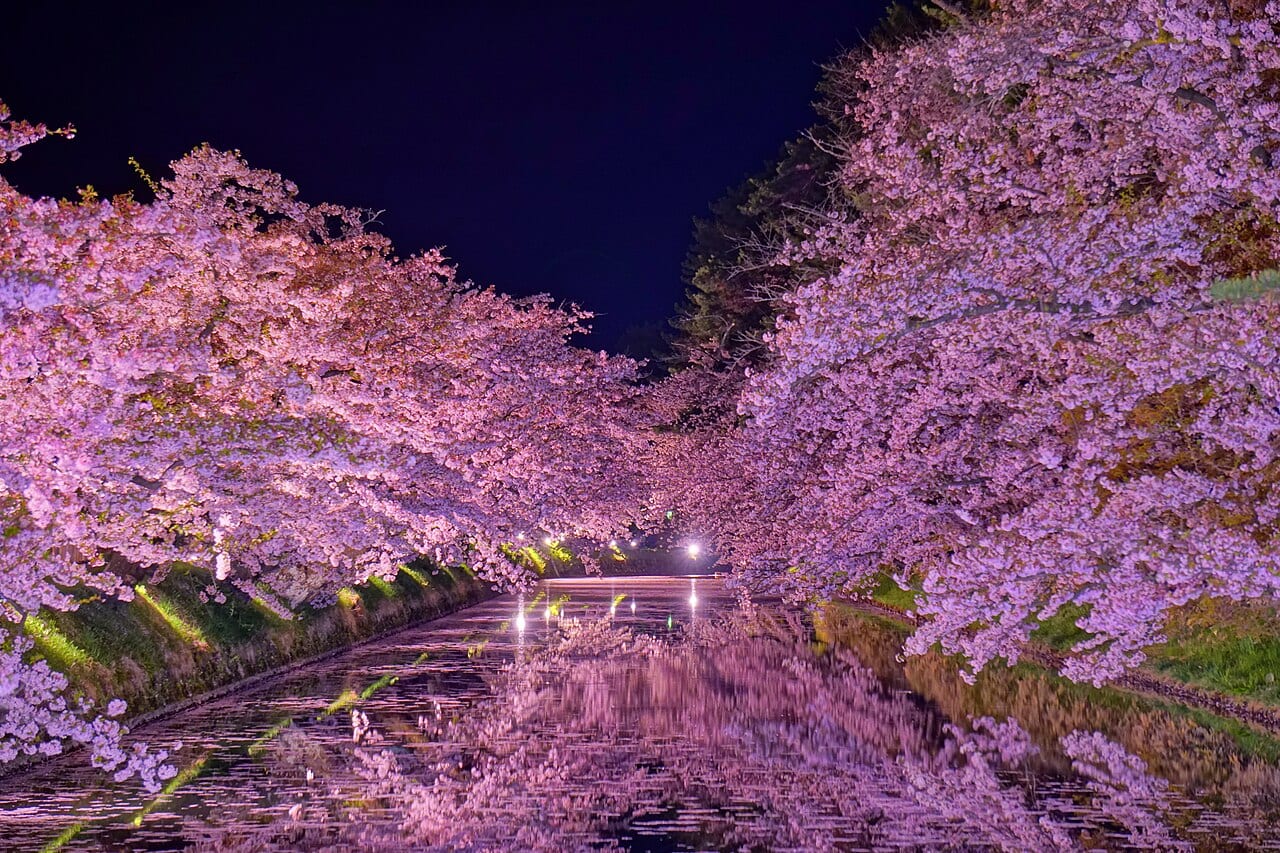
Meguro River (water reflections), Kyoto's Gion Shirakawa and Maruyama Park weeping cherry, Osaka's Mint Bureau, and Hirosaki Castle's moat are the marquee night scenes. The catch: night illuminations usually run only the week around full bloom — which is yet another reason to nail the peak week, since betting the wrong one means no night cherries at all. In practice 6-9pm is the golden slot, and the last 30 minutes before closing clear out fastest. For a clean daytime empty frame, dawn 6:30-8:30am is the only answer; top spots are nearly empty before 8.
Rainy petal-fall: not ruined, just a different limited scene
People assume "once they start falling, I'm late" — but no. Light rain at full bloom barely matters; petals hold, and wet stone paths under pink blossoms look great. The real killer is strong wind plus rain after full bloom, which can strip the trees overnight — so if continuous wind/rain is forecast after peak, put your most-wanted spot in the morning before it hits. And the swirling "sakura blizzard" and the "hanaikada" raft of petals on water (most famous at Hirosaki's moat, Meguro River, and Philosopher's Path) only appear for a day or two. Treat it as a bonus, not a regret.
Frequently Asked Questions
- Q1:What month do cherry blossoms bloom in Japan?
- There is no single nationwide month. The bloom front climbs from Kyushu and Shikoku in late March all the way to Hokkaido in early May — about a six-week spread. By JMA 1991-2020 averages, full bloom is around March 31 in Tokyo and Fukuoka, April 4 in Kyoto and Osaka, April 8 in Kanazawa, April 13 in Sendai, April 26 in Hirosaki, and May 6 in Sapporo. So instead of asking "which month," pick a city first: most of Honshu peaks late March to early April, while the far north waits until Golden Week.
- Q2:When is the bloom forecast released, and can I get exact 2027 dates now?
- No — but you can start watching earlier than most people assume. The private weather companies do not all launch on the same date: Nihon Kishou (n-kishou) issued its first 2026-season bloom and full-bloom forecast on December 18, 2025, about three weeks ahead of its own pattern across the eight seasons from 2018 to 2025, every one of which landed between January 9 and 19; Weathernews launched its 2026 season on January 8. All then update weekly and only stabilize in March. Every date in this guide is a historical average, meant to help you sketch the itinerary skeleton. For exact 2027 first-bloom and full-bloom dates, start tracking from mid-December — Weathernews, the Japan Weather Association (tenki.jp), Nihon Kishou and Weathermap — and do a final check two weeks out.
- Q3:How many days are there between first bloom and full bloom, and which should I target?
- Somei-Yoshino takes about a week to go from "first bloom" (the benchmark tree opens 5-6 flowers) to "full bloom" (80%+ open), then begins falling 3-5 days after that. The genuinely best window is full-bloom day plus the next 3-5 days. So target the window of roughly days 5-10 after first bloom, not the bloom date itself — that gives you the highest odds of hitting peak.
- Q4:If I can only bet one week, which week should it be?
- For certainty, I would bet Tokyo in late March (about March 28 to April 3). Tokyo averages full bloom around March 31, its spots are dense and easy to reach, and even if the year drifts a few days, some park in the city is usually still at peak — the highest tolerance for a misjudged week in Japan. If you want temple-and-shrine scenery, shift to Kyoto in early April (about April 2-8), accepting the twin peak of crowds and prices. If you can only travel in early May or want to dodge crowds, bet north on Hirosaki Castle and Hokkaido (late April to early May).
- Q5:Does a mild or cold winter make the bloom earlier or later?
- Cherry trees need a cold winter to break dormancy, then a sustained warm run to accumulate heat toward blooming. A mild winter usually pulls bloom earlier — but it is not a rule, because a February-March cold snap can push an already-early bloom back. In 2026, a mild winter put Tokyo first-bloom on March 21, about a week ahead of average. So treat a mild winter as a "tends earlier" signal, not a license to move dates a week forward and lock in flights; still defer to the weekly forecast.
- Q6:If it rains or gets windy once the blossoms open, is the trip wasted?
- Not necessarily. Light rain at full bloom is fine — petals hold, and wet stone paths under pink blossoms photograph beautifully. The real killer is strong wind plus rain after full bloom, which can strip the trees overnight. The move: if heavy wind/rain is forecast after peak, schedule your most-wanted spot for the morning before it hits. And the swirling "sakura blizzard" and the "hanaikada" raft of petals on water only appear for a day or two — a limited bonus, not a wasted trip.
📚 For the full national bloom-front timeline, regional viewing routes and night-cherry spots, head back to the sakura pillar — our Japan Cherry Blossom Guide 2027; to match each city's temperatures and packing for your viewing month, see our Japan month-by-month weather calendar. Can't make the cherry window? Plum season in February and March is the practical alternative — festivals run four to eight weeks, so no single week to gamble on: see when plum blossoms bloom in Japan.