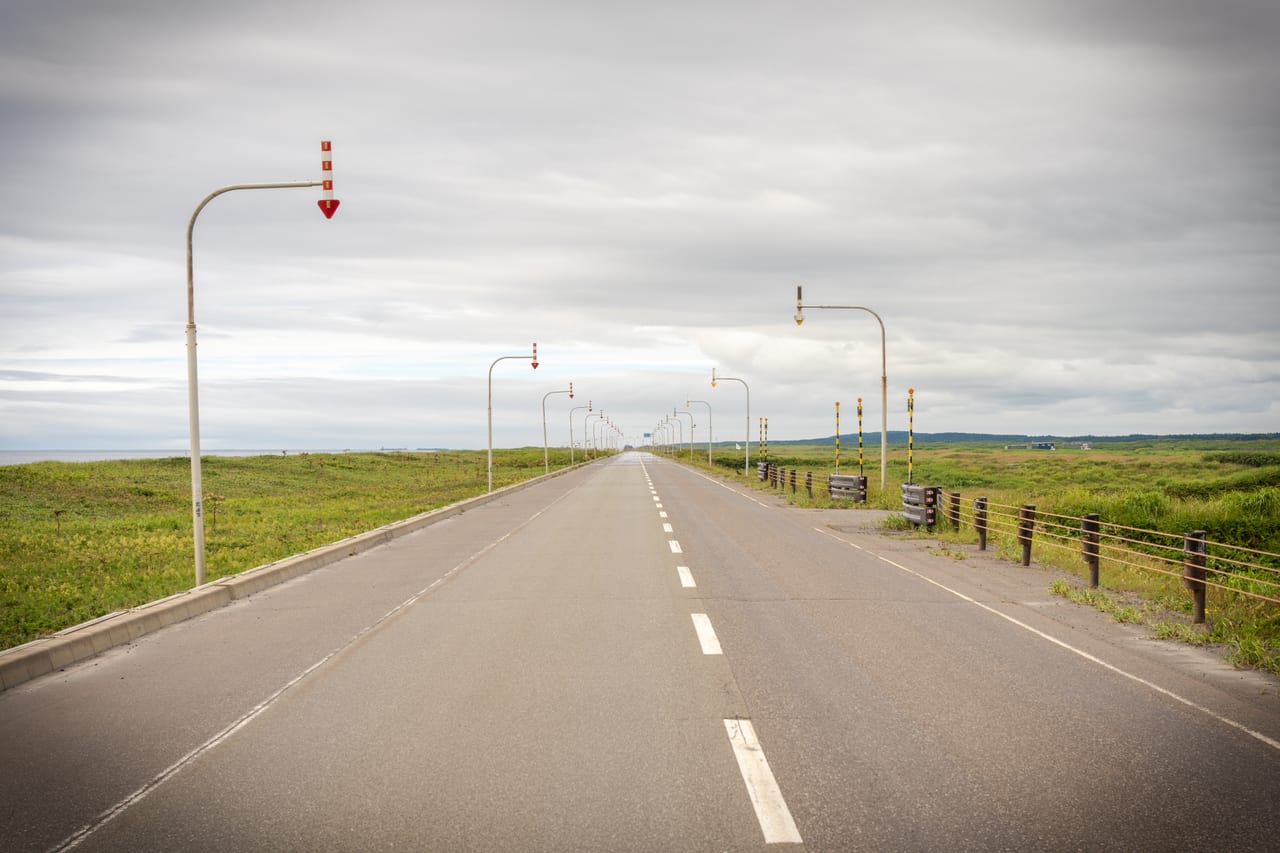
The thing that actually trips people up on a first Japan road trip isn't driving on the left — you'll have that sorted in 30 minutes. It's the licence. Japan only honours International Driving Permits issued under the 1949 Geneva Convention; if your IDP was issued under the 1968 Vienna Convention, it's worthless at the rental counter, and you'll be turned away with your car booked and your trip half-ruined. Get this one detail right and the rest is genuinely easy. This guide covers it all: which licence you actually need, where in Japan is worth driving, rental and insurance, ETC cards, fuel, parking and winter tyres.
The sweet spot for self-driving in Japan is simple: everywhere the trains can't take you. Hokkaido's flower fields and lake roads, Okinawa's coastline, Tohoku's onsen valleys, the capes of the Noto Peninsula — these are unreachable or painfully slow by public transport. With a car they become a different kind of freedom: stop at a beach on impulse, pull into an unsigned noodle shop. The flip side: driving in central Tokyo, Osaka or Kyoto is a self-inflicted headache. Decide whether to rent before you worry about how.
- Get the licence right — most countries: a 1949 Geneva Convention IDP (NOT Vienna). Get it before you fly. Switzerland, Germany, France, Belgium, Monaco and Taiwan use an official Japanese translation instead (JAF is one of three designated issuers), valid for one year from entry or until your licence expires, whichever is shorter.
- Where to drive — Hokkaido and Okinawa for first-timers; Tohoku, Kyushu, Noto and Shikoku are great too. Skip central Tokyo / Osaka / Kyoto.
- Insurance is mandatory mentally — add both CDW (~1,100-2,200 yen/day) and the NOC waiver (~440-660 yen/day). They erase five-figure out-of-pocket risk.
- ETC + navigation — rent the ETC card (~330 yen/day) for longer drives; navigate by Map Code, not address.
- Top rookie mistakes — mis-fuelling (green = regular), drifting right out of car parks, returning without a full tank, no winter tyres in snow.
Table of Contents
- Where to Drive — and Where Not To
- Licences: IDP vs Japanese Translation
- Renting & Comparing Prices
- Insurance: CDW + NOC Explained
- ETC Cards & Expressway Tolls
- Refuelling: Self-Serve vs Full-Serve
- Parking & Michi-no-Eki Roadside Stations
- Snow & Winter Tyres: Survival Rules
- Driving on the Left & Japanese Road Rules
- Map Code Navigation
- Quick Table: Region by Difficulty & Season
- Frequently Asked Questions
Where to Drive — and Where Not To
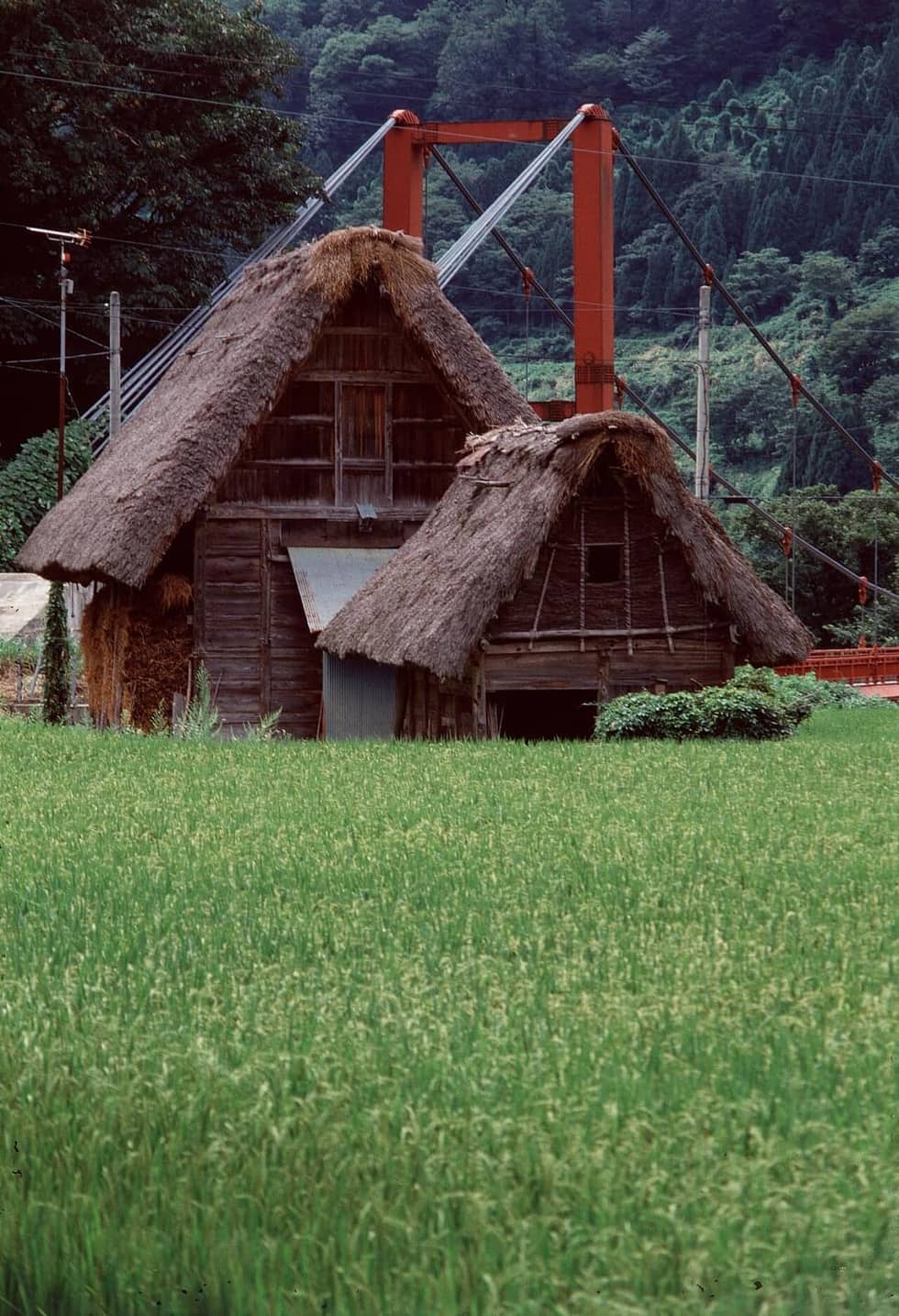
Not every Japan trip needs a car. The test is one question: can the trains and buses get you where you want to go? If yes, skip the car. If no, driving earns its keep. Here's where I'd rent.
Strongly recommended (safe even for first-timers)
- Hokkaido — my number one. Roads are straight and wide, traffic is light, parking is easy, and the highlights (Furano lavender, the Biei hills, Shiretoko, Lake Toya) are spread out, with infrequent buses that make a car-free trip a slog. For a scenic loop see our Central & East Hokkaido autumn drive. The only barrier is winter snow — first-timers should aim for spring through autumn.
- Okinawa main island — beyond the Naha monorail there's essentially no rail; buses are sparse and taxis pricey. Wide roads and slow speeds make it the best place to learn left-side driving. Full walkthrough in our Okinawa car rental guide.
- Tohoku & Kyushu — onsen towns, coastlines and mountain sights are mostly rail-poor, and a car transforms your reach. Roads are a touch more complex (mountains, tunnels) but fine once you've driven once.
- Noto Peninsula & Shikoku — capes, coast roads and mountain hideaways are nearly impossible by train. A car is the only way to see them properly. Noto needs two extra checks: eight locations on five prefectural routes remain closed (full restoration targeted for fiscal 2028, Route 249 along the outer coast for spring 2029), and day-level status lives only on the official Ishikawa Michi Joho Net map at douro.pref.ishikawa.lg.jp, not in any guide; and the Noto Satoyama Kaido has no petrol stations, with the prefecture asking drivers to fill up beforehand. Details in our Noto Peninsula status guide.
Don't bother (renting here is self-sabotage)
Central Tokyo, Osaka and Kyoto. The public transport is absurdly dense — subway, JR and private lines every few minutes — and a car is pure downside: one-way streets, city parking at 400-600 yen/hour that's often full, traffic, and constant navigation stress. Kyoto in peak season is gridlocked. If your itinerary is only the big three cities, you don't need a car at all. Put the rental and parking money toward a JR Pass or city transit passes instead. When you're weighing the cost of driving versus rail, do it against your whole budget — see our Japan trip cost guide.
Licences: IDP vs Japanese Translation
This is the most important section of the guide. Get it wrong and you won't be allowed to rent. Read it fully.
Japan recognises International Driving Permits issued under the 1949 Geneva Convention on Road Traffic. It does not recognise IDPs issued under the 1968 Vienna Convention. Several countries default to Vienna-style permits, so an IDP that's perfectly valid elsewhere can be useless here. (The details below follow JAF, the Japan Automobile Federation.)
Group 1: Geneva Convention IDP holders
If you're from the US, UK, Canada, Australia, New Zealand, most EU countries, or Hong Kong, you carry a 1949 Geneva Convention IDP plus your original home licence. Where to get the IDP:
- United States — AAA, ~$20, same-day in person. Bring your licence and a passport photo.
- United Kingdom — Post Office, ~5.50 GBP, 5 minutes.
- Canada — CAA, ~$25 CAD, same-day.
- Australia / New Zealand — state/national motoring club (NRMA, RACV, AA NZ), ~$40.
- Hong Kong — Transport Department issues a valid 1949 IDP; carry it with your HK licence.
An IDP alone is not valid — you must carry your original home licence with it. If police stop you with only the IDP, that counts as driving without a licence.
Group 2: Japanese-translation countries (no IDP)
Drivers licensed in Switzerland, Germany, France, Belgium, Monaco or Taiwan cannot use an IDP in Japan. Instead they drive on their home licence plus an official Japanese translation. Japan's National Police Agency recognises three sources: the authority that issued your licence or its consular office (Taiwanese drivers can get the translation from a motor vehicle office at home before departure); a body formally recognised by the National Public Safety Commission, which for Taiwanese licences is the Taiwan-Japan Relations Association and for German ones is ADAC; and the three issuers designated by the Commission — JAF, Zipp Plus Inc. and the Japan Inbound Driver Support Association. Most people only know JAF, but the other two are equally valid and give you extra options if you have to arrange the translation after arriving. Carry the original licence, the translation, and your passport. One warning the National Police Agency prints on the same page, verbatim: 「外国の法定翻訳家は含まれませんので、御注意ください。」 — a translation produced by a sworn or certified translator in your own country does not count, notarised or not. (For Taiwanese readers we cover this in depth in the Chinese edition.)
Validity
A Geneva IDP is valid for one year from its issue date, and Japan also treats it as invalid once you've been in the country for one year, even if the printed expiry is later. A Japanese translation runs for one year from your date of entry or the expiry date of your home licence — whichever is shorter, which is the wording the National Police Agency actually uses. If your licence expires in three months, that is exactly how long you may drive, not a year. For a typical one-to-two-week trip neither limit matters; for a working holiday or a long stay, check your licence expiry before you fly.
Renting & Comparing Prices
Japan has plenty of rental brands: Toyota, Nissan, Nippon, Times, ORIX, OTS (strong in Okinawa) and budget chains like NICONICO. For foreign visitors the process is much the same everywhere; the differences are price, English support, vehicle condition and pickup locations.
The booking flow, step by step
- Pick the region and dates first, and confirm that region is actually worth driving (see above).
- Compare and book online: check KKday, Tabirai (a well-established Japan rental price-comparison site), DiscoverCars and the rental companies' own sites. The same car class can vary 500-1,500 yen between platforms and brands — open a few before you commit.
- Choose car class and insurance: tick CDW + the NOC waiver, add an ETC card and child seat if needed.
- Pick up: present your passport, home licence, your IDP or Japanese translation, and the booking confirmation. Sign the contract; a deposit is pre-authorised on your card.
- Inspect the car: walk around it with staff and photograph every existing scratch — this is the step that protects you from being charged for damage you didn't cause.
- Return: refuel to full first (keep the receipt), then drive back for the final inspection.
Insurance: CDW + NOC Explained
Insurance is the most overlooked and most important decision. Base rates usually bundle compulsory cover (high or unlimited liability), but two out-of-pocket traps will hurt if you skip them:
Three layers — understand before you book
| Cover | Cost (per day) | What it does | Verdict |
|---|---|---|---|
| Base (in the rate) | ¥0 | Compulsory cover, but 50,000-100,000 yen damage deductible | Not enough — add to it |
| CDW (Collision Damage Waiver) | ¥1,100-2,200 | Drops the damage deductible to zero | ✅ Add it |
| NOC waiver (ECO) | ¥440-660 | Waives the Non-Operation Charge (~20,000 driveable / ~50,000 towed) | ✅ Strongly recommended |
Plenty of drivers add CDW and assume they're covered — then a minor scrape still costs them a NOC, because the car is off the road earning nothing while it's repaired, and that lost income falls on you. Add both CDW and the NOC waiver. Together they run roughly 1,500 yen a day, about 4,500 yen over three days — trivial next to a 100,000+ yen bill after an accident.
Some premium credit cards include overseas rental cover that can stand in for CDW, but NOC is usually outside credit-card cover, so add the NOC waiver at the counter regardless. And don't forget broader trip and medical cover before you fly — see our Japan travel insurance guide.
ETC Cards & Expressway Tolls
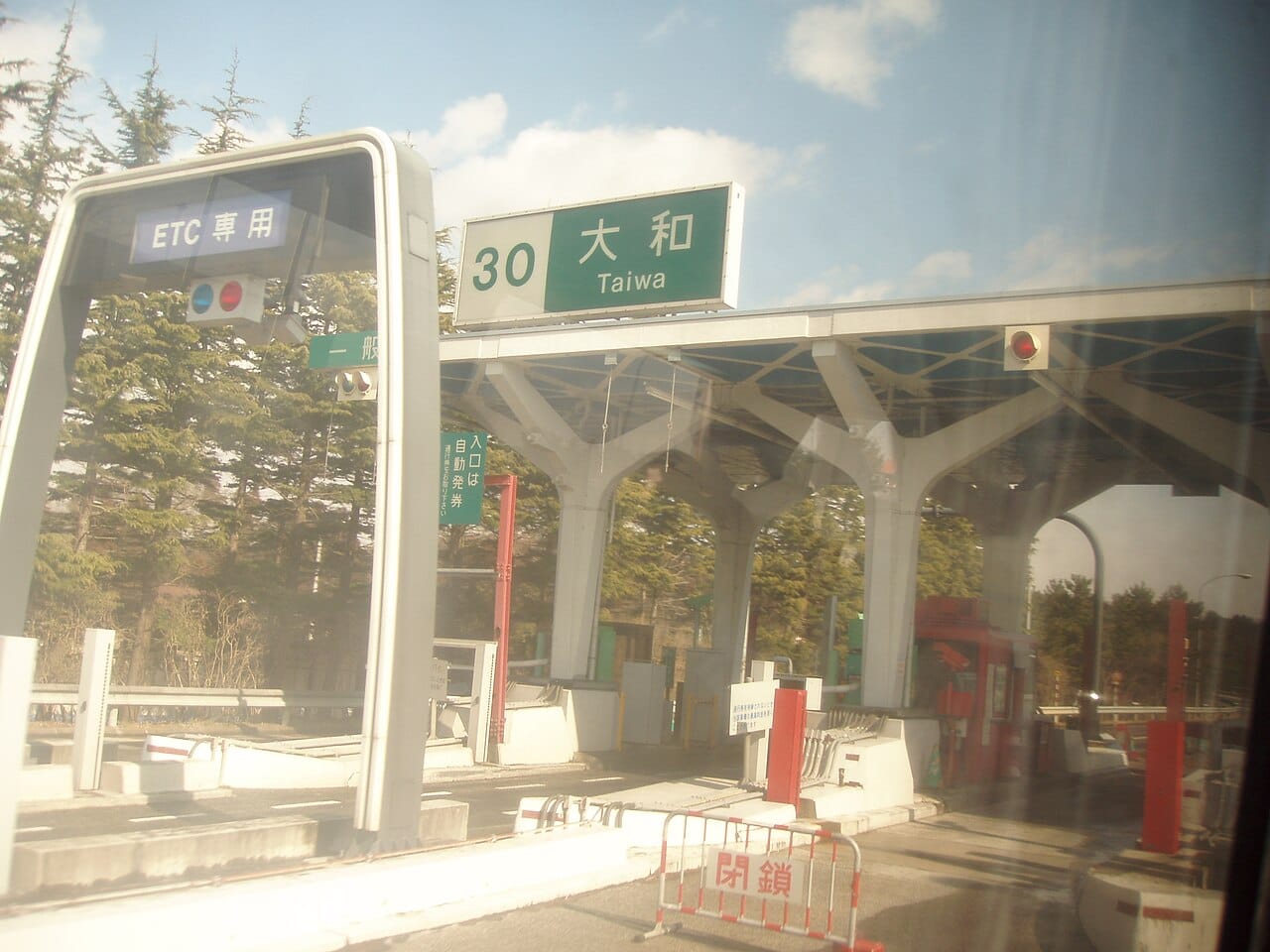
Japanese expressway tolls aren't cheap, and any longer drive will rack them up. The ETC transponder is usually built into the rental car for free, but the ETC card is normally rented separately (~330 yen/day). With the card you breeze through ETC lanes, the toll is deducted automatically, and you settle at drop-off; without it you stop at every manned booth and pay cash.
- Short trips, one or two toll roads: skip the card, pay cash at the manned lane.
- Long, multi-city drives: rent the ETC card. Some regions also offer an Expressway Pass (unlimited tolls for a flat fee) that's excellent value across multiple toll sections — ask when booking whether one covers your route.
Refuelling: Self-Serve vs Full-Serve
Japan's main petrol-station brands are ENEOS, Idemitsu and COSMO, in two styles:
- Full-serve (furu sabisu): an attendant fills up for you. Say "Regular, mantan" — regular unleaded, full tank.
- Self-serve (serufu): do it yourself — select "Regular" → "mantan" (full) → insert card or cash → fuel up.
Parking & Michi-no-Eki Roadside Stations
Two parking habits differ from what you may be used to. First, Japanese drivers reverse into spaces almost universally, so it's easy to pull straight out when leaving; if reversing isn't your strength, pick a roomy bay. Second, many coin car parks have a locking flap plate that rises to trap your wheel — before leaving, go to the nearby payment machine ("seisanki"), enter your bay number and pay, and the flap drops. Never try to force the car out; you'll damage the underbody.
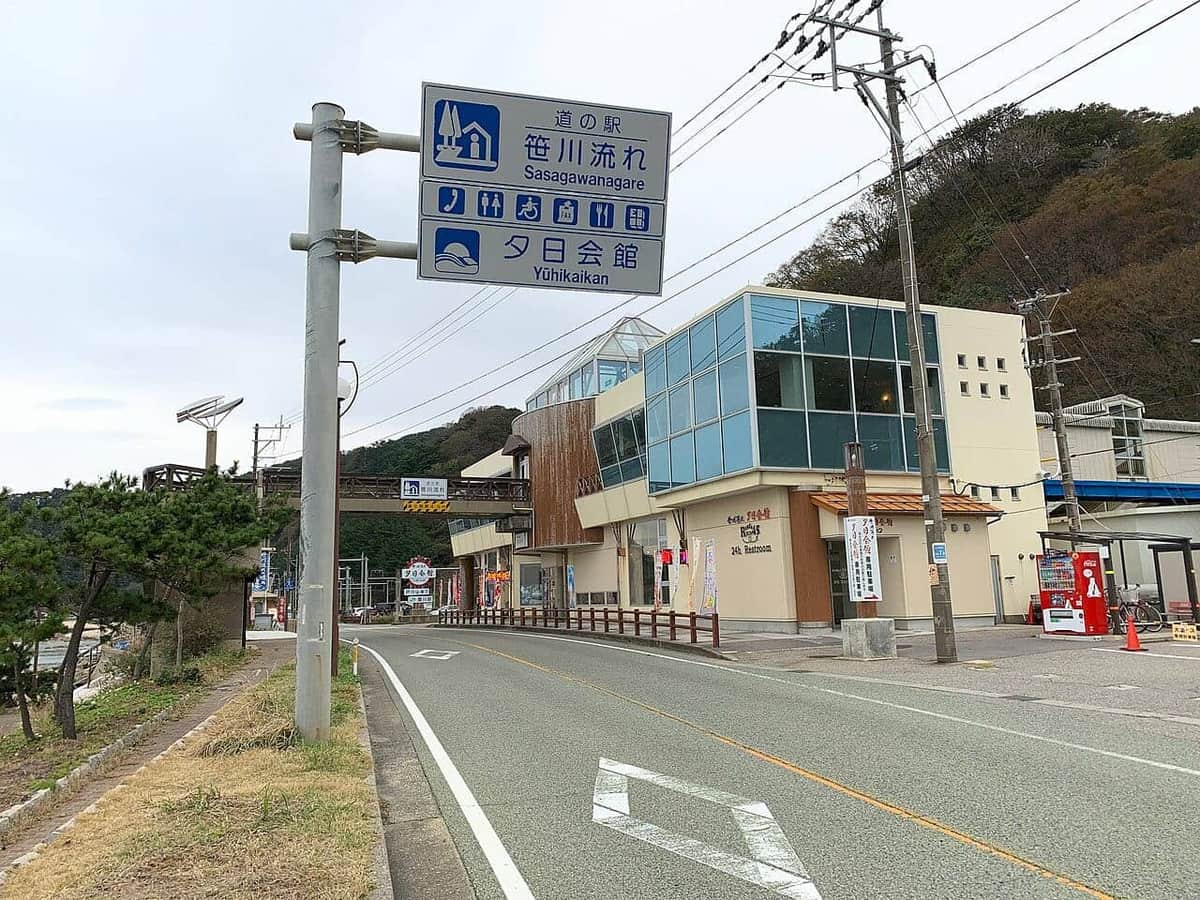
The self-driver's secret weapon is the michi-no-eki ("road station") — a roadside rest stop set up by the municipality and registered with the Ministry of Land, Infrastructure and Transport, with free parking, clean toilets, local produce and freshly cooked food. That "free" is tied to resting as a purpose, which is why whether you may sleep overnight at one has a more evasive official answer than you would expect. They're your default mid-drive break, restock and toilet stop; search "道の駅" in Google Maps. Many are destinations in their own right, with regional produce and snacks that are better and cheaper than anything in the tourist zones.
Snow & Winter Tyres: Survival Rules
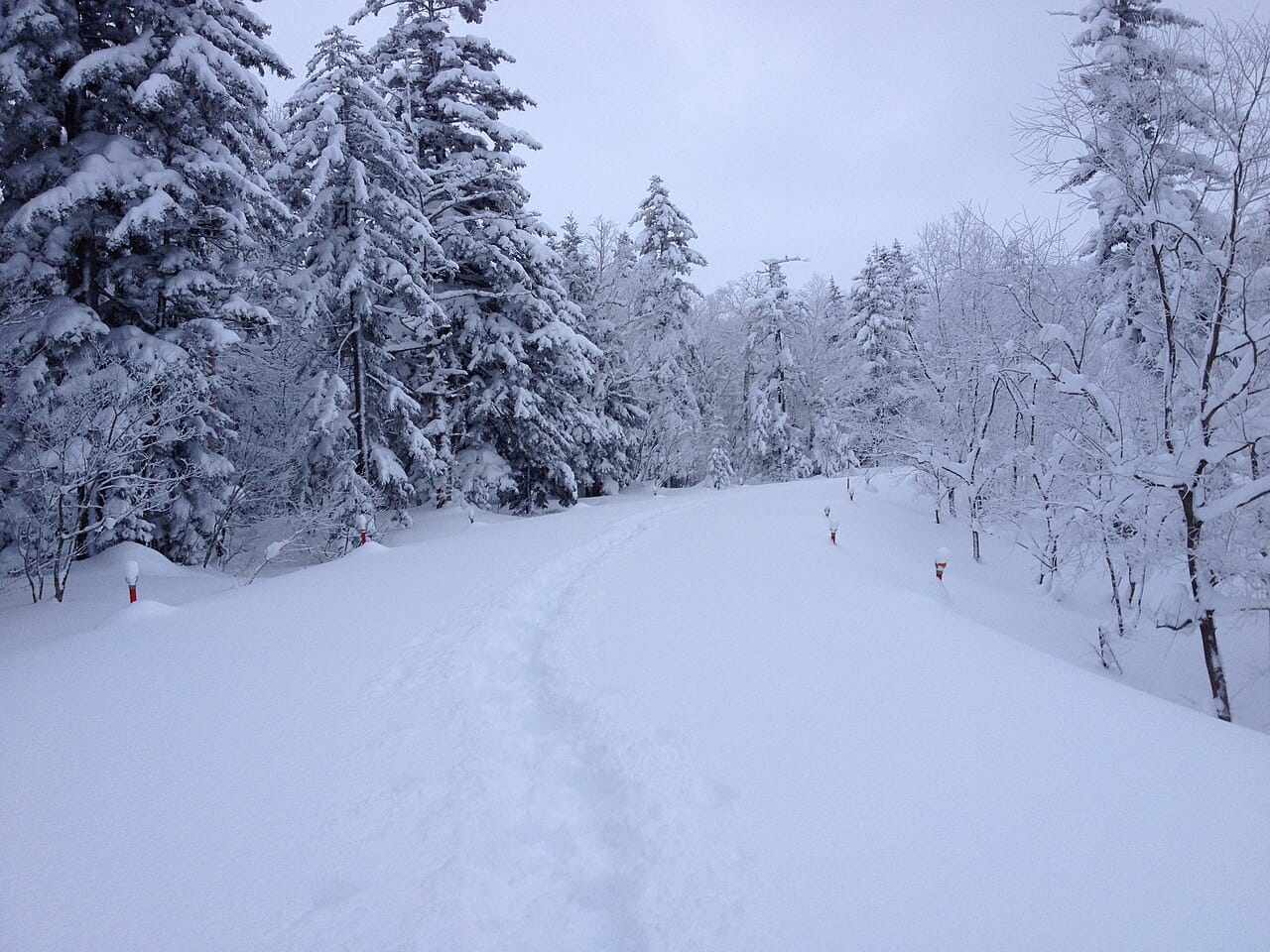
For a winter drive in Hokkaido or Tohoku, snow is the big variable, and whether you can drive safely comes down to tyres and mindset — for the full rundown, see our winter driving in Japan guide.
- Confirm winter (studless) tyres: most Hokkaido and Tohoku rentals fit them in winter, but check at pickup and look for the snowflake mark on the sidewall. The wrong tyres on snow are effectively no brakes.
- Slow down, leave gaps, brake early: stopping distances on ice are several times longer; make every input gentle. Hard braking and sharp steering are what kill you.
- Where black ice hides: bridges, tunnel mouths, shaded stretches, and early morning / late night.
- Kit and judgement: carry a snow brush and de-icer, warm the car to clear fog; if a blizzard is forecast or visibility drops, don't push it — take the train.
Driving on the Left & Japanese Road Rules
Japan drives on the left, wheel on the right. It sounds daunting; 30 minutes in, it's automatic. Keep these differences in mind:
| Item | Left-hand-drive home | Japan (drives on the left) |
|---|---|---|
| Steering wheel | Left | Right |
| Driving lane | Right | Left |
| Indicator stalk | Left | Left (same) |
| Wiper stalk | Right | Right (same) |
| Expressway passing lane | Far left | Far right |
The three classic mistakes — and the rules that matter
- Drifting right out of a car park or petrol station into oncoming traffic — say "keep left" out loud; have your passenger call it at every exit.
- Cutting left turns too tight into the oncoming lane — turn wide.
- Wipers instead of indicators (for left-hand-drive natives): the stalk layout is normal, but with you on the right your hands hit the wrong one for the first few turns. Harmless; it self-corrects.
Rules to respect: pedestrians have absolute priority — you must stop fully at a crossing where someone is waiting, and failing to do so is a ticketed offence; drink-driving is severely punished, and as of July 2026 there is a hard numeric limit as well (see below); city limits are usually 30-50 km/h, expressways 80-100 km/h with slower traffic keeping left and overtaking on the right. You'll need data for navigation and live traffic — sort connectivity before you go with a Japan eSIM.
- Sake-yoi unten (0.5 mg/L or above, or unable to drive normally): up to 5 years' imprisonment or a fine of up to 1,000,000 yen, and 35 demerit points — immediate licence revocation with a 3-year disqualification. (The 35-point figure is the National Police Agency's own.)
- Sake-ki-obi unten (0.15 mg/L or above): up to 3 years or a 500,000 yen fine; 13 points at 0.15-0.25 mg/L (90-day suspension), 25 points above 0.25 mg/L (revocation, 2-year disqualification).
- Everyone else in the car is exposed too. Whoever provided the vehicle faces the same penalty as the driver (up to 5 years or 1,000,000 yen in a sake-yoi case), and anyone who supplied the alcohol or rode along faces up to 3 years or 500,000 yen.
Map Code Navigation
Japanese sights often have no clear street number, and searching a name in Google Maps frequently fails. The Map Code is a Japan-only numeric coordinate (roughly 10 digits) that the in-car GPS reads to pinpoint a location far more reliably than an address or phone number.
- Look them up first: note the Map Code for each destination before you set off (search the place name plus "Map Code" / "マップコード").
- Enter it in the car: choose "Map Code" on the GPS and type the digits. The trailing
*XXis a precision check digit; without it the first digits still place you within ~100 m. - Belt and braces: set the destination by Map Code in the car GPS, and run Google Maps on your phone for live traffic.
Quick Table: Region by Difficulty & Season
| Region | Good to drive? | Road difficulty | Seasonal note |
|---|---|---|---|
| Hokkaido | ✅ Top pick, beginner-friendly | Wide, light traffic; easiest in summer | Winter: winter tyres + slow driving; first-timers avoid deep winter |
| Okinawa main island | ✅ Great learner island | Wide roads, slow speeds — easiest of all | Typhoon season Jul-Oct; don't drive in high winds |
| Tohoku | ✅ Recommended | More mountain roads and tunnels | Heavy-snow belt (Aomori/Akita) is severe in winter |
| Kyushu | ✅ Recommended | Winding mountain roads, narrow onsen lanes | Heavy summer rain; watch for rockfall in the hills |
| Noto / Hokuriku | ✅ Recommended (capes & coast) | Coast roads and country lanes | Winter snow; 5 routes / 8 locations still closed in Noto, day-level status on Ishikawa Michi Joho Net; no petrol on the Noto Satoyama Kaido |
| Shikoku | ✅ Recommended (mountain hideaways) | Narrow mountain roads, tight bends | Go slow on routes like the Iya Valley |
| Central Tokyo / Osaka / Kyoto | ❌ Don't | One-way streets, scarce parking | Gridlock in peak season — take the train |
In one line: rent only where the trains can't reach, and always take transit inside the big three cities. Save the car for the countryside and coastlines that actually reward mobility — that's the smart way to wire a Japan trip together.
One Last Piece of Advice
The real joy of self-driving in Japan isn't speed — it's being able to stop anywhere. A pretty beach by the road? Pull over and walk it for ten minutes. An unsigned little diner? Go in. Trains and taxis can't give you that. And the only prerequisites for enjoying it are two things you settle before you fly: the right licence document (a 1949 Geneva IDP, or a JAF translation if you're from Switzerland, Germany, France, Belgium, Monaco or Taiwan) and the right insurance (CDW + NOC). Lock those two down at home, then slow down, keep left, and enjoy the drive.
Frequently Asked Questions
- Q1:What license do I need to drive in Japan as a tourist?
- It depends on your country. Most visitors need an International Driving Permit (IDP) issued under the 1949 Geneva Convention on Road Traffic — the US, UK, Canada, Australia, New Zealand, most EU states and Hong Kong all issue these. The catch: IDPs issued under the 1968 Vienna Convention are NOT valid in Japan, so check which one your country issues. A separate group — Switzerland, Germany, France, Belgium, Monaco and Taiwan — cannot use an IDP at all; instead they drive on their home licence plus an official Japanese translation. Per the National Police Agency, a valid translation can come from the authority that issued the licence (or its consular office), from a body Japan has formally recognised — for Taiwanese licences, the Taiwan-Japan Relations Association — or from one of the three issuers designated by the National Public Safety Commission: JAF, Zipp Plus Inc. and the Japan Inbound Driver Support Association. Whatever the document, you must also carry your original home licence. A translation is valid for one year from your date of entry, or until your home licence expires, whichever comes first. (Sources: National Police Agency; JAF.)
- Q2:Do I need an International Driving Permit (IDP), and where do I get one?
- If your country issues 1949 Geneva Convention IDPs, yes — and get it before you fly, because you cannot obtain one inside Japan. US: AAA, about $20, issued same-day. UK: Post Office, around 5.50 GBP. Canada: CAA, ~$25 CAD. Australia: your state motoring club (NRMA, RACV, etc.), ~$40 AUD. Hong Kong: Transport Department, issues a valid 1949 IDP. Bring your valid licence and a passport photo; most are issued in 10 minutes. The IDP alone is not enough — you must carry your original licence too. Drivers from Switzerland, Germany, France, Belgium, Monaco and Taiwan use a Japanese translation instead of an IDP.
- Q3:How does rental car insurance work in Japan — what are CDW and NOC?
- Basic rental rates usually include compulsory insurance (high or unlimited liability for injury/property), but two out-of-pocket traps remain. (1) The deductible/excess — after an accident you pay roughly 50,000-100,000 yen toward vehicle damage. (2) NOC (Non-Operation Charge) — about 20,000 yen if you can drive the car back, 50,000 yen if it needs towing, to cover the rental company's lost income while the car is repaired. Fix both by adding CDW (Collision Damage Waiver), ~1,100-2,200 yen/day, which zeroes the deductible, and the NOC waiver (often called ECO), ~440-660 yen/day. Add both — a few hundred yen a day to remove a five-figure risk is the best money you'll spend.
- Q4:Where in Japan is best to self-drive — and where shouldn't I?
- For a first-timer I'd pick Hokkaido or Okinawa: wide roads, light traffic, easy parking, and scattered sights you genuinely cannot reach without a car. Tohoku, Kyushu, the Noto Peninsula and Shikoku are also excellent, with slightly more complex mountain roads. Where you should NOT drive is central Tokyo, Osaka and Kyoto — the trains are dense and fast, one-way streets are everywhere, and parking is expensive and scarce. Honestly, if your trip only covers the big cities, you don't need a car. Save driving for where the rail network gives up. See our Okinawa car rental guide for a worked example.
- Q5:Is driving on the left hard to get used to in Japan?
- Japan drives on the left, with the steering wheel on the right. If you come from a right-hand-drive country (UK, Australia, NZ, etc.) it feels natural; if you come from a left-hand-drive country, give yourself 30 minutes to adjust. The three classic mistakes: (1) drifting to the right when leaving a car park or petrol station — say "keep left" out loud; (2) cutting left turns too tight into the oncoming lane — turn wide; (3) for left-hand-drive natives, hitting the wipers instead of the indicator (the stalk layout is normal, but your hands are on the wrong side). If you have a passenger, ask them to call "keep left" at every turn on day one — it works.
- Q6:Is it safe to self-drive Hokkaido or Tohoku in winter?
- Yes, but only on the right tyres and at the right pace. Confirm the car has winter (studless) tyres before you leave the lot — most Hokkaido and Tohoku rentals fit them in winter, but check the sidewall for the snowflake mark. Then: drive slowly, leave big gaps, brake early — stopping distances on ice are several times longer than on dry road. Bridges, tunnel mouths and shaded sections hide black ice. Keep a snow brush and de-icer handy. If a blizzard is forecast or visibility is poor, don't push it — take the train. If you've never driven in Japan before, don't make a deep-winter snow trip your first attempt; build up in spring, summer or autumn first.
- Q7:What about ETC cards, Map Codes and refuelling?
- A few essentials. (1) The ETC transponder is usually built into the car, but the ETC card itself is normally rented separately (~330 yen/day); with it you sail through ETC lanes and settle at drop-off, without it you queue at manned toll booths and pay cash. For longer drives, rent it — and check whether an Expressway Pass covers your route. (2) Use Map Codes for navigation: a Japan-only numeric coordinate that the in-car GPS reads more reliably than a name or address — look up your destinations' Map Codes before you go. (3) Fuel: most rentals take "Regular" (regular unleaded, green nozzle); say "mantan" for a full tank. Do not mis-fuel — diesel (keiyu) is the yellow nozzle and high-octane (haioku) is red; the wrong fuel can wreck the engine at your own cost. Return the car with a full tank.
Read next
Okinawa self-drive complete guide
Rental company comparison, insurance, must-drive routes.
Nippon Rent-A-Car Guide 2026: Coupon Code, Pickup & Returns
The visitor promo code is 10% off, or 15% on rentals of 6+ days. How to apply it, what to bring at pickup, the pre-selected Anshin Course, ETC and one-way returns.
Japan trip prep checklist
eSIM, Visit Japan Web, tax-free, insurance — done in one read.