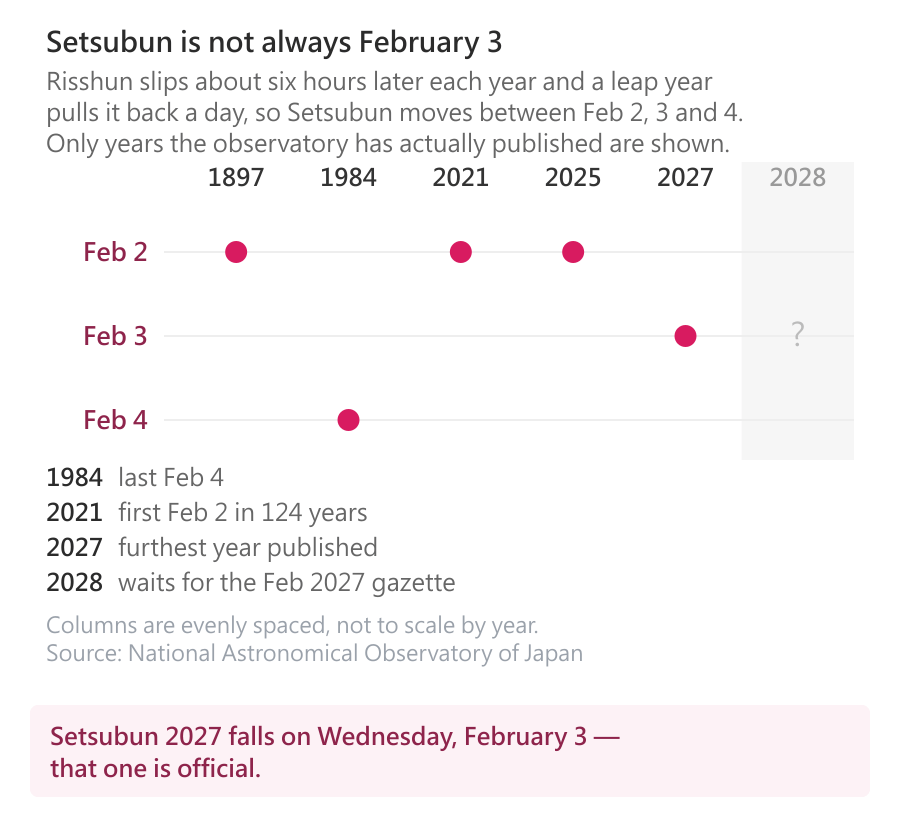
Start with the date, because the usual assumption is wrong: Setsubun is not permanently February 3. In 2021 and again in 2025 it fell on February 2; in 1984 it fell on February 4. That is not folklore — it comes from a page published by the National Astronomical Observatory of Japan under a title that translates as "the date of Setsubun starts to move". For the year you are probably planning, the answer is unusually solid: the observatory's Reiwa 9 (2027) almanac lists "Setsubun, February 3" outright, with risshun at 10:46 on February 4. So 2027's Setsubun is Wednesday, February 3, and you can build an itinerary on it. This guide covers the rest of what a visitor actually needs: how many beans to eat and why there is one extra, the three famous temples that refuse to shout "demons out", why ehomaki is a 1977 marketing campaign rather than a folk tradition, why 2027's lucky direction is north-northwest, and whether you will ever see a sardine head nailed to a doorway — plus seven ceremonies whose details I could verify on official pages. What you will not find here is a walkthrough of how to bow and clap; that lives in the step-by-step shrine etiquette guide, and I am not repeating it.
- Setsubun 2027 is Wednesday, February 3 — listed directly in Japan's official almanac, with risshun at 10:46 on February 4. But the date moves: 2021 and 2025 were February 2, and 1984 was February 4
- Distrust any date given for 2028 onward. The observatory publishes only one year ahead, each February; nothing beyond 2027 is official yet
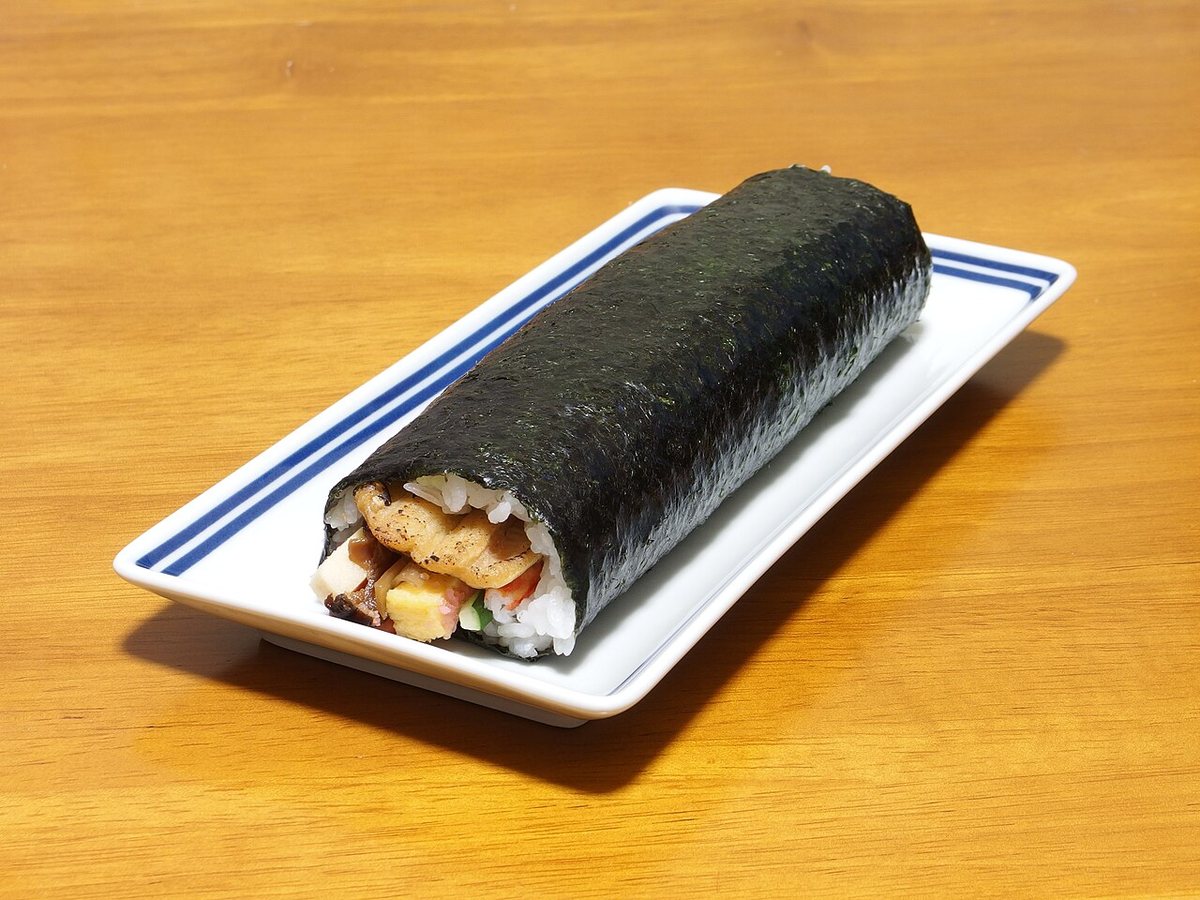
- Ehomaki is not an old tradition. Japan's agriculture ministry writes that its origins are disputed and that its modern spread began with a 1977 Osaka seaweed wholesalers' campaign amplified by convenience stores — the same ministry now runs a food-waste reduction programme for it
- Eat your age plus one bean, and the reason is lovely: Kofukuji states the extra bean survives from when Setsubun was the turn of the year. You are eating next year's bean
- "Oni wa soto" is not universal. Naritasan shouts only "fortune in", Sensoji says "a thousand autumns, fortune in", and Kinpusenji in Yoshino says "demons in". If you only see one Setsubun, see one of those
📖 Contents (tap to expand)
- 1. When is Setsubun 2027 — and why the date moves
- 2. What is Setsubun? There used to be four of them
- 3. Tsuina: from Qu Yuan to the four-eyed court exorcist
- 4. Mamemaki: why beans, how many, and the extra one
- 5. The temples that refuse to shout "demons out"
- 6. Ehomaki: a 1977 campaign, and 2027's north-northwest
- 7. Hiiragi iwashi and the other objects of Setsubun
- 8. Seven ceremonies, from official pages only
- 9. Practicalities: cost, access, and catching beans
- 10. Fitting Setsubun into a February 2027 trip
- FAQ
1. When is Setsubun 2027 — and why the date moves
The answer first: Setsubun 2027 falls on Wednesday, 3 February.
What makes that answer unusually strong is that it is published, not derived. Every year the National Astronomical Observatory of Japan issues an almanac containing a table of the twenty-four solar terms and the supplementary seasonal markers, and Setsubun appears in that table as an entry in its own right. The Reiwa 9 edition lists it as 3 February, with risshun — the astronomical start of spring — at 10:46 on 4 February Japan Standard Time. The page records its own release date as 2 February 2026.
So where does the universal belief in a fixed 3 February come from? It is a textbook case of a coincidence that held long enough to look like a law. The observatory publishes a page whose title translates as "the date of Setsubun starts to move", and it opens like this:
"Asked when Setsubun is, many people will answer 3 February. However, this date is not fixed, and in Reiwa 3 (2021) it becomes 2 February. That it is not the 3rd is the first time in 37 years, since 4 February 1984; that it becomes the 2nd is the first time in 124 years, since 2 February 1897."
Notice that this demolishes two myths at once. Setsubun does not only wobble between the 2nd and the 3rd — it has also been 4 February within living memory.
The mechanism, in plain language
The official reasoning runs in two clean steps. First, Setsubun is a zassetsu, a supplementary calendar marker meaning "dividing the seasons", and it originally referred to the eve of all four seasonal starts — spring, summer, autumn and winter. Only the eve of spring survived in common use. Officials therefore conclude: "once risshun is determined, Setsubun is determined as the day before it."
Second, risshun itself is an instant, not a date: the moment the sun reaches 315 degrees of celestial longitude. A tropical year is 365.2422 days; a calendar year is 365. Officials spell out the consequence — the moment falls roughly six hours later each year, while every leap year pulls it slightly earlier than four years before. Accumulate that drift and risshun slips out of 4 February into 3 February, taking Setsubun down to 2 February with it.
The table below is where the abstraction becomes vivid. Look at the 2021 row:
| Year | Risshun (official almanac, JST) | Setsubun (official zassetsu column) |
|---|---|---|
| 2021 (Reiwa 3) | Feb 3, 23:59 | February 2 |
| 2025 (Reiwa 7) | Feb 3, 23:10 | February 2 |
| 2026 (Reiwa 8) | Feb 4, 05:02 | February 3 |
| 2027 (Reiwa 9) | Feb 4, 10:46 | February 3 |
In 2021 risshun occurred at 23:59 on 3 February — sixty seconds short of being 4 February. I find that the single most useful fact for explaining why the date moves at all. Setsubun is not a cultural decision about which day to celebrate; it is a consequence of which calendar day a particular astronomical instant lands on. One minute either way and the entire national event — temple rites, supermarket ehomaki campaigns, convenience store pre-order deadlines — shifts by a day.
The honest limit: nobody knows about 2028 yet
Tables listing Setsubun dates out to the 2050s look authoritative. They are private extrapolation. The observatory states its own practice explicitly: it publishes the following year's almanac in the first official gazette each February, a system that has run since the 1964 edition.
In practice that means: as of August 2026, the furthest officially published Setsubun is 2027. The 2028 date will be confirmed in the February 2027 gazette. The correct thing to say is that risshun slips about six hours a year and is pulled back by leap years, so February 2 Setsubuns will certainly recur — but which years, officially, we do not yet know. Any page confidently dating Setsubun 2031 is not quoting an official source.
The strongest proof: the temples follow Setsubun, not February 3
Astronomy is only convincing to a traveller if it changes what happens on the ground. Four pieces of evidence that Japanese temples and shrines tie their ceremonies to "the day of Setsubun" as a variable:
- Naritasan Shinshoji — the decisive one. Its official Reiwa 7 (2025) Setsubun page states the date of observance as "2 February 2025". That year Setsubun was the 2nd, so the temple held it on the 2nd.
- Kasuga Taisha writes the date of its Setsubun lantern festival as "the day of Setsubun" — no number at all.
- Sensoji lists its ceremony as "February, Setsubun", and the same page still carries an old notice referring to "the Setsubun ceremony of 2 February 2021 (Tuesday)" — the temple's own archive recording a February 2 Setsubun.
- Kofukuji disagrees with itself: its annual events index says "the day of Setsubun in February", while the detail page for the same rite says "every year on 3 February". Even the temple's own website has absorbed the myth.
Practical upshot: for a February 2027 trip, pin Setsubun to Wednesday 3 February. Nothing beyond 2027 is published yet, so any date you see for 2028 onward is not an official one.
2. What is Setsubun? There used to be four of them
The word means, literally, "dividing the seasons". Calendrically it is a zassetsu — not one of the twenty-four Chinese solar terms, but a supplementary marker of Japan's own.
The fact worth carrying away is that Setsubun was originally four days a year, and on this three independent official bodies agree:
| Official source | What it states |
|---|---|
| National Astronomical Observatory | Setsubun is a zassetsu meaning "dividing the seasons"; it should properly denote the eve of each of risshun, rikka, risshu and ritto, but only the eve of risshun remained. |
| Sensoji (Tokyo) | "Setsubun originally means the four seasonal divisions. Because risshun falls close to New Year's Day on the old calendar, from the Edo period onward the eve of risshun became established as 'Setsubun', a special day for celebrating the new year while also driving out misfortune." |
| Ministry of Agriculture | Setsubun is the eve of risshun; "historically there was a Setsubun at each seasonal division, but by the Edo period 'Setsubun' had come to mean the spring one." |
Three sources, three angles, one conclusion: the spring Setsubun outlived the others because it happened to sit at the head of the old year.
Kofukuji goes further and hands over the underlying calendar arithmetic: five days made one kо̄, three kо̄ made one ki (setsu), six kо̄ made one month, and "the day before a setsu was called Setsubun", functioning as a marker of seasonal change. Then the sentence that ties the whole guide together: "the year-end Setsubun in particular was felt to carry important meaning, since a new year was being welcomed."
That one line explains two things that otherwise look arbitrary. It explains why you eat your age plus one bean — because that day counted as the turn of the year, and the extra bean is next year's. And it explains why ehomaki descends from a New Year custom rather than a spring one. Japan effectively keeps two New Year's Eves: 31 December on the solar calendar, and Setsubun on the older reckoning. The solar one — which shrine, which day, how to return last year's charms — is a separate guide, the hatsumode guide, and I do not repeat it here.
3. Tsuina: from Qu Yuan to the four-eyed court exorcist
This is the section with the most depth and, in English, almost no competition. The best single document I found on the history is not an academic paper — it is the official annual-events page of Kofukuji in Nara, which lays the lineage out in order.
Stop one: Chinese demons and Qu Yuan
Kofukuji cites the Chuci and the poet Qu Yuan: after his death, "the vengeful spirit — the oni — of Qu Yuan repeatedly appeared, bringing calamity to those passing the Miluo River", so people cast rice dumplings into the river on the seasonal division marking his death day, to pacify him. Then the sentence that matters for everything that follows: "in time the dumplings were replaced by the five grains, and then represented above all by beans."
Which means the handful of soybeans you throw at a Japanese temple is, by descent, a rice dumpling thrown into a Chinese river. That was the most unexpected thing I learned in researching this piece.
Stop two: the imperial court and the hoso-shi
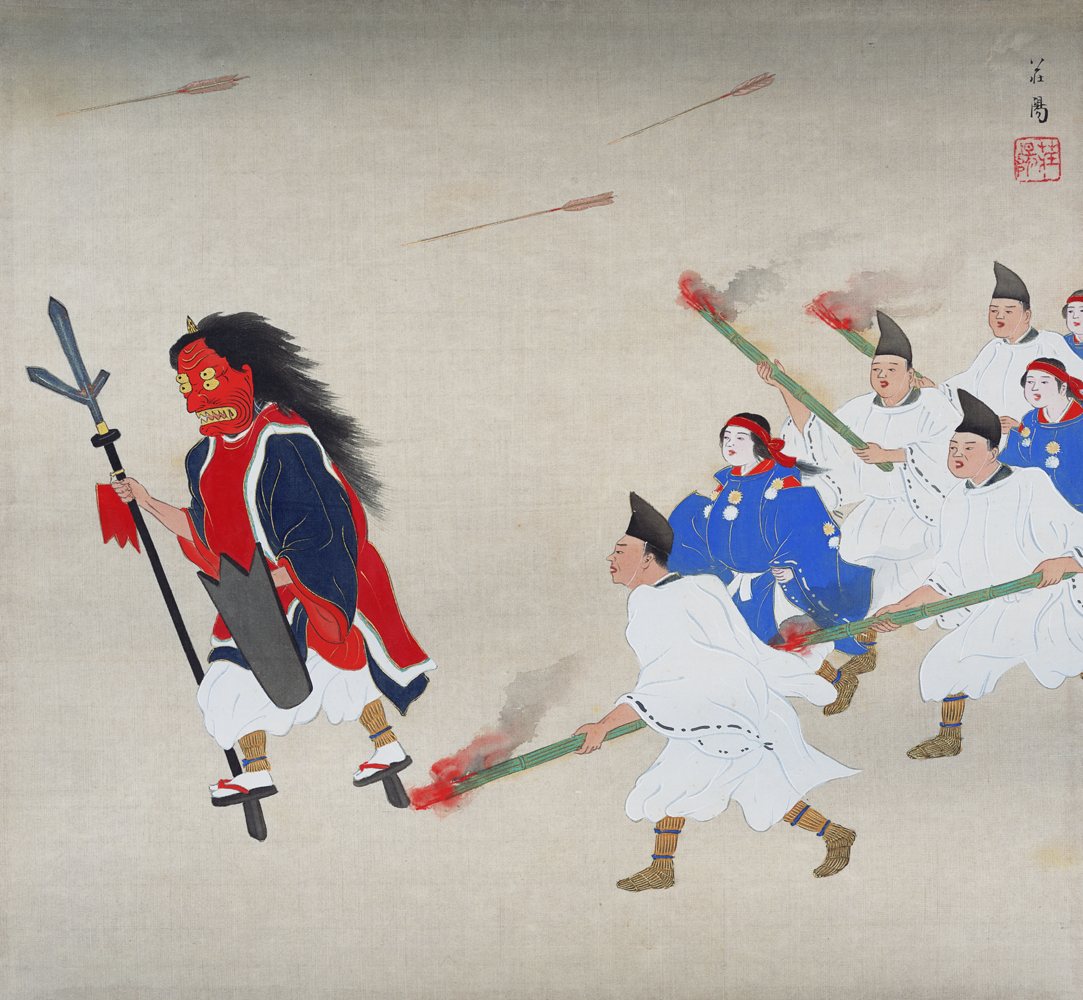
Kofukuji continues: "Japan once had a rite called tsuina, also read oniyarai, performed on New Year's Eve. It began in the imperial court, and its model was sought in China." The ceremony itself: court attendants dressed as plague demons were driven out by the head attendant, who became the hoso-shi — the demon-chaser — wearing a four-eyed mask, while courtiers gave covering fire with peachwood bows and reed arrows. Officials call it "an elegant affair".
Hold on to two details — the four-eyed mask and the peach bow and reed arrow — because they are still in use.
Stop three: Buddhism and the shunie
With Buddhism came the shunie repentance rites, and Kofukuji adds a footnote worth having: "the Indian New Year corresponds to Japan's February", and the shunie is said to be modelled on it. So the ancestry of Setsubun braids together Chinese exorcism, Japanese court ritual and an Indian calendar.
Arrival: the Kamakura period
The temple's conclusion: "these various ideas, services and observances mixed together, and in Japan the Setsubun demon-chasing rite began to take hold generally in the Kamakura period." It took several centuries for a court ceremony to become a public one.
Where you can still watch it: Yoshida Shrine, Kyoto
None of that would matter to a traveller if it were purely historical. It is not. Here is how Yoshida Shrine in Kyoto describes its own rite:
"The tsuina rite is held on the afternoon of the eve at the main shrine and is popularly called oniyarai. Performed annually at the imperial court from the early Heian period, it has been transmitted and inherited in strict accordance with the ancient form, and may be called one of the few rites conveying the character of antiquity to the present day."
"In the ceremony, an attendant dons a golden four-eyed mask, wears black robes and vermilion skirts, takes up shield and halberd, and becomes the hoso-shi, followed by numerous boy attendants. When the onmyoji finishes intoning the ritual text, the hoso-shi cries out and strikes his shield three times, the assembly answering as they circle the dance hall. Finally, the courtiers loose reed arrows from peachwood bows to drive off the plague demons."
Line that up against Kofukuji's account of the Heian court rite and every element matches: hoso-shi, four eyes, peach bow, reed arrow. That is why Yoshida is my pick for anyone who wants Setsubun to be more than a crowd photo — you are not watching a festival re-enactment; you are watching the surviving version of a Heian court ceremony.
The word tsuina survives elsewhere too: at Dazaifu Tenmangu in Fukuoka, the famous onisube fire rite opens with a tsuina-sai in the main hall — that one is 7 January rather than Setsubun, but it is the same logic of expelling demons, and I covered it in the Dazaifu Tenmangu guide.
4. Mamemaki: why beans, how many, and the extra one
Why beans at all
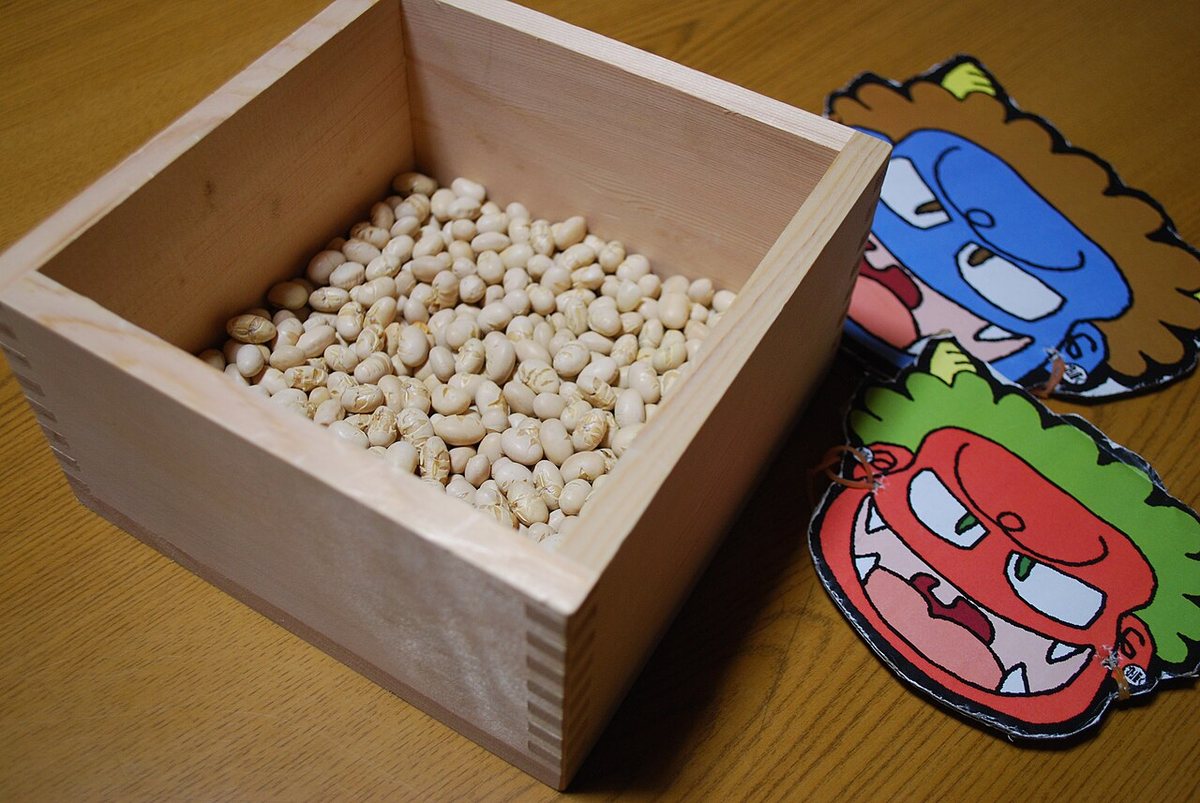
Japan's agriculture ministry runs a consumer Q&A whose title is, in effect, "why do we throw beans at Setsubun?", and the official answer is: "like rice, beans are a source of our energy, and they are said to possess spiritual power; it was thought that by using them to expel sickness and misfortune — that is, the oni — and then eating them, one could receive their strength." The same page notes the custom only spread nationwide after fusing with tsuina, the ancient Chinese demon-expelling rite, which connects neatly to the previous section.
A second ministry page adds the wordplay: people heard mame (bean) as mametsu, "destroying demons". The beans used are roasted soybeans, called fukumame, literally "fortune beans".
One honest note: the explanation that beans must be roasted lest a raw one sprout and bring bad luck does not appear in any of the four ministry documents checked. Officials state that roasted soybeans are used. They give no reason. I am not going to supply one on their behalf.
How many to eat: the sources disagree
"Age plus one" is usually stated as settled fact. In reality official Japanese sources give two different answers:
| Official source | Wording |
|---|---|
| Sensoji | "Eating one more bean than your age is said to bring a year of freedom from illness." |
| Kofukuji | "The bean, indispensable at Setsubun. I imagine everyone eats one more than their own age. This is a remnant of Setsubun having been held at the turn of the year." |
| Ministry of Agriculture | "Eat as many beans as your age" (no extra one). |
Both versions exist, regional habit varies, and I would rather say so than flatten it. That said, if you asked me which to follow, I would take the temple version — entirely because of Kofukuji's explanation, which is my favourite sentence in this whole research round:
The extra bean is not a lucky rounding-up. It is there because Setsubun was New Year's Eve. On the older calendar the year begins at risshun, so Setsubun is the eve — and the bean you eat beyond your age is next year's bean. "Eat one extra for good luck" gets the instruction right and the meaning wrong.
What officials actually prescribe about throwing beans (less than you think)
This part is best written in the negative. Across four ministry documents and every temple page checked, nothing officially prescribes that mamemaki must happen after dark, that the head of the household or a toshiotoko must throw, that windows must be opened and then shut, or that the door must be closed within a set time. Those are folk elaborations, not rules.
What can be stated officially is short: roasted soybeans are used; the throwing expels the oni that represent sickness and misfortune; you eat the beans afterwards to take in their power; and the words shouted vary by temple — which is the entire subject of the next section. For a visitor there is also a practical distinction worth making: the temple version is a staged public ceremony with a published order of events, quite unlike the domestic version. What you attend is the former.
5. The temples that refuse to shout "demons out"
If I could make you read one section, it would be this one — not because it is charming trivia, but because it should change which ceremony you attend.
"Oni wa soto, fuku wa uchi" — demons out, fortune in — is treated as the fixed soundtrack of Setsubun. Several prominent temples do not say it, and each publishes its reasoning:
| Temple | What is shouted | The official reason |
|---|---|---|
| Naritasan Shinshoji (Chiba) | Only "fuku wa uchi" — no "demons out" | Official wording: "before the principal image of Fudo Myoo, even demons have a change of heart through his great compassion." |
| Sensoji (Tokyo) | "Senshu banzai, fuku wa uchi" — a thousand autumns, fortune in | Official wording: because "there are no demons before Kannon", the temple does not say "demons out". |
| Kinpusenji (Yoshino, Nara) | "Fuku wa uchi, oni mo uchi" — fortune in, demons in too | Demons driven out everywhere else are given refuge here; the story credits En no Gyoja with subduing them and changing their hearts. Note on sourcing: this one is verified only via Yoshino Town's official site and Nara Prefecture's official tourism site (municipal, not the temple itself), so no times or fees are given here. |
Read the three together and they are answering the same theological question three ways: Naritasan says the demon is reformed, Sensoji says there is no demon here in the first place, and Kinpusenji says let the demon in. That is a far more concrete window into how Japanese Buddhism handles the problem of evil than any generic paragraph about tolerance — and all three are on official pages.
So my recommendation is blunt: if you are only going to see one Setsubun ceremony, see one that does not shout "demons out." The standard version is available at every supermarket, kindergarten and neighbourhood shrine in Japan. A ceremony that welcomes the demons in exists in a handful of places on earth.
A word on toshiotoko and toshionna
The people throwing from the platform are usually called toshiotoko and toshionna, and they are commonly described as people born under the current zodiac sign. Honest finding: no official page — not Jinja Honcho, not any of the major shrines — defines the terms.
What is official is how temples use the word in practice, which turns out to be more useful anyway:
- Naritasan (Reiwa 7 edition): "Led by sumo wrestlers, many well-known figures take part as special toshiotoko and throw beans in front of the main hall." The sessions open to the general public are named differently — the "kaiun mamemaki" — so the two are distinct things.
- Sensoji: "The head priests of the temple complex and the chosen toshiotoko process from the Denboin to the main hall, and the toshiotoko throw beans from a platform on the east side."
So the accurate reading is that a toshiotoko, at a Setsubun ceremony, is whoever the temple has invited onto the platform — celebrities, wrestlers, that year's historical-drama cast, local dignitaries. Whether they were all born in the right zodiac year, officials do not say, and neither will I.
(Relatedly: which drama's cast Naritasan will invite in 2027 is entirely undecided.)
6. Ehomaki: a 1977 campaign, and 2027's north-northwest
Not a tradition — and the government says so
English and Chinese coverage alike tends to open with "a long-standing Japanese Setsubun tradition". Japan's own agriculture ministry does not describe it that way. From the ministry's Setsubun feature:
"There are various theories about the origin of ehomaki. One is that Osaka merchants began it in the late Edo to early Meiji period as a prayer for prosperous business, but it was forgotten for a long time. It is said to have drawn attention again through a campaign run in 1977 by the Osaka nori wholesalers' association. It spread nationwide through seaweed sales promotion and the marketing strategies of convenience store chains."
In plain terms: ehomaki is what happened when a 1977 seaweed-industry promotion was picked up by convenience stores. Officials themselves flag the merchant-origin story as one theory among several, and explicitly note the tradition lapsed in between. Any article calling it a centuries-old custom is contradicting the responsible ministry.
Officials are actively relaxing the rules
The "rules" of ehomaki are usually presented sternly: face the lucky direction, do not cut the roll, do not speak, finish it in one go. The ministry does state the first few — "cutting an ehomaki is said to be unlucky" and "if you speak while eating, the good fortune escapes from your mouth", hence eating silently with eyes closed while thinking of a wish. But the same passage then adds two sentences almost nobody quotes:
- "However, eating a whole thick roll in one go is hard work, so do not force it — eat it in whatever way is easy for you."
- "The size of an ehomaki has nothing to do with good fortune, so making it a size you can finish, with an eye to not generating food waste, also matters."
That is more reliable than any listicle insisting the roll must be eaten whole to "work" — the government is telling you not to strain. Practically: convenience store ehomaki are often full-size thick rolls. If you are there for the experience, buy a small one or share it. The ministry has no objection whatsoever.
In Japan, ehomaki is a regulated food-waste problem
This is the angle I think is genuinely missing from English coverage. Ehomaki is not merely a seasonal food in Japan; it is a formal target of the agriculture ministry's food-loss reduction programme, run under Japan's food loss reduction law. The ministry publicly recruits and then publishes the list of businesses committing to cut ehomaki waste, and participation has grown steadily:
| Year | Participating businesses (ministry figures) |
|---|---|
| 2020 | 26 |
| 2022 | 46 |
| 2025 | 100 |
The gap is striking: visitors treat ehomaki as the must-eat Setsubun tradition, while the Japanese government is working to persuade retailers to make and discard fewer of them.
One general observation for travellers, offered as exactly that: supermarkets and convenience stores often discount unsold ehomaki late on Setsubun evening, as with any dated seasonal food. I give no discount percentages — no official data exists and practice varies by store.
2027's lucky direction: north-northwest
What is an eho? The ministry defines it as "the direction in which that year's year-god resides, determined by the sexagenary cycle". It also confirms the lineage: ehomaki comes from ehomairi, a New Year practice that "changed form and was revived as a Setsubun custom" — the historical side of which sits in the hatsumode guide's section on lucky directions. Here I deal only with the Setsubun application.
The ministry's published table, keyed to the ten heavenly stems:
| Heavenly stem | Year ends in | Lucky direction |
|---|---|---|
| Kinoe / Tsuchinoto | 4, 9 | East-northeast |
| Kinoto / Kanoe | 5, 0 | West-southwest |
| Hinoe / Kanoto / Tsuchinoe / Mizunoto | 1, 3, 6, 8 | South-southeast |
| Hinoto / Mizunoe | 7, 2 | North-northwest |
2027 divides by ten with remainder 7 (hinoto) and by twelve with remainder 11 (hitsuji), making it a hinoto-hitsuji year. Reading off the table: under the ministry's published rule, the 2027 lucky direction is north-northwest.
The phrasing matters. This is derived from an official rule, not an official announcement of the 2027 direction — a distinction worth preserving. (As a sanity check, the rule reproduces the ministry's own worked example: 2026 is a hinoe-uma year, remainder 6 gives hinoe, and the table gives south-southeast, exactly as officials state.)
A final detail I enjoy: elsewhere in the same text officials describe 2023's direction as "south-southeast, slightly south", which reveals that the underlying system is finer than the sixteen compass points we usually see quoted. Practical advice: get your phone compass somewhere near north-northwest and stop optimising. But note what I am not doing — I am not inventing a "north-northwest, slightly north" for 2027, because officials give hinoto years three words and no modifier.
7. Hiiragi iwashi and the other objects of Setsubun
The sardine head on the holly branch
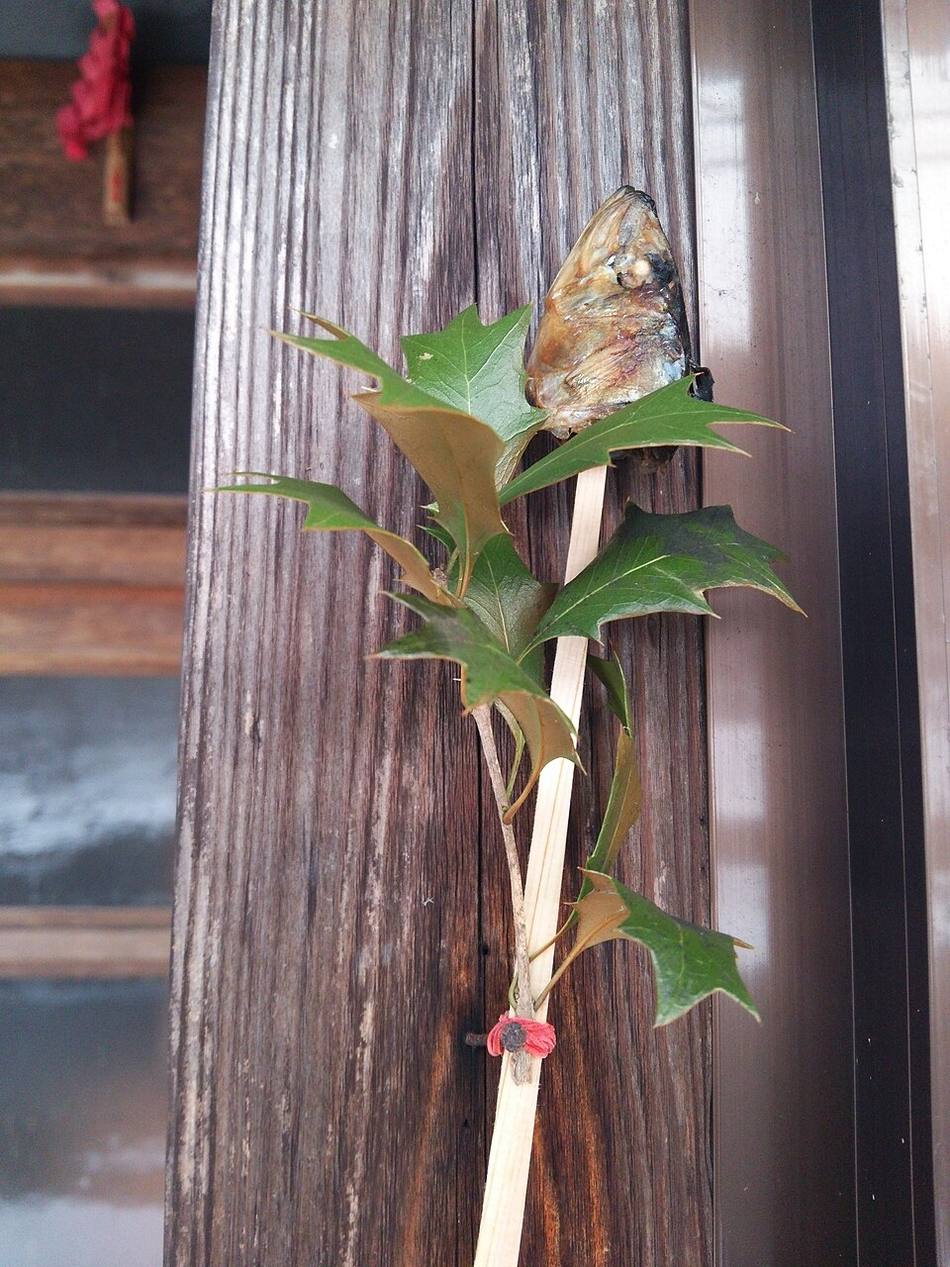
Hiiragi iwashi is a grilled sardine head skewered on a spiny holly branch and fixed by the front door to stop demons entering. The agriculture ministry offers two coexisting explanations for the sardine:
- The strong smell and smoke of grilling drive off malign energy; and
- Sardines weaken the instant they are caught, so iwashi puns on yowashi ("weak") — eating one draws the bad energy out of your body.
A second ministry page compresses the logic: the pungent sardine and the prickly holly are both things demons dislike, hence the charm.
There is a regional dimension as well. Per the ministry, eating sardines at Setsubun is found mainly in western Japan, particularly the Kansai region, with Nara Prefecture especially associated with it; the practice of displaying hiiragi iwashi survives chiefly in sardine-producing areas, notably around the fishing ports of Chiba Prefecture. Preparation is usually salt-grilled, with ginger simmering, fishball soup and karaage as alternatives.
But the sentence a traveller most needs comes from Kofukuji: "these have been decreasing in recent years, though you have probably seen sardines skewered on holly standing at gateways. Demons are said to be weak against the smell of sardines."
"Decreasing in recent years" should be passed on plainly: walking around Tokyo in February 2027, you will very likely not see a single hiiragi iwashi. That is not bad luck; the custom has thinned in cities. If you genuinely want to see one, your odds are far better in Kansai — Nara especially — or around the Chiba fishing ports. I would rather tell you that now than have you scanning doorways in Shibuya for something that is not there.
Masks: four eyes, and three colours of demon
The only masks I can source officially are the ceremonial ones. The hoso-shi wears a golden four-eyed mask with black robes, vermilion skirts, shield and halberd — Kofukuji and Yoshida Shrine describe it identically. It is the most distinctive visual in the entire festival.
Kofukuji's demon-chasing rite also features red, blue and black demons, subdued by Bishamonten, with Daikokuten bestowing fortune with his mallet. The popular gloss that the three colours map to three human afflictions — red for greed, blue for anger, black for foolishness — appears on Nara Prefecture's official tourism site and similar secondary sources, but not on Kofukuji's own pages, so I flag the sourcing rather than presenting it as the temple's teaching.
As for the paper demon masks and novelty oni underwear on sale in supermarkets: that is lived observation, not documented fact. Japanese supermarkets do set up a Setsubun corner in the days beforehand — fortune beans, ehomaki pre-order forms, masks — and that much I will say, but I will not list products or prices without a source.
8. Seven ceremonies, from official pages only
A note on what this section is: an overview of institutions and rites, not a timetable. Most ceremony times are announced annually and the Reiwa 9 (2027) editions are largely unpublished, so everything is marked "typical year". I include only what appears on official pages, and I have tried to lead with what each place has that the others do not.
Yoshida Shrine, Kyoto — the living fossil
The shrine describes itself as "a great event of the capital, proud of faith and tradition since it was performed in the Muromachi period", and states "approximately 500,000 worshippers in a typical year". No other shrine publishes an official figure.
The Setsubun festival runs across three days centred on Setsubun itself. Given the date moves, relative framing ages better than fixed dates:
- Eve of Setsubun: eve festival (main shrine and Daigengu); Ekijin-sai, the plague-deity rite (Daigengu middle gate); the tsuina rite, oniyarai (dance hall before the main shrine)
- Setsubun day: day festival; Karo-sai, the great fire rite (fire pit before the main shrine)
- Day after: closing festival
- All three days: special worship inside the Daigengu
Details worth knowing: around 800 food stalls operate on the eve and the day; the Ekijin-sai asks the plague deities to "rest quietly in the clear places of mountain and river without raging", and is conducted facing outward through the gate; the Karo-sai burns worshippers' old shrine talismans in a huge fire pit before the third torii; and the yakuzuka, a mound erected before the Daigengu that absorbs visitors' misfortune, is described officially as "the centre of Setsubun faith".
The fire rite has a restriction you must know in advance. Officials write that "only old shrine talismans and amulets may be placed in the fire pit", and explicitly refuse dolls, postcards, photographs and other items used in daily life, plus foods such as kagami-mochi, celebratory chopsticks, and even the paper bags used to carry talismans in. That mirrors the rules at New Year receiving stations, which I cover in the hatsumode guide's section on returning old charms — the difference here is that it burns on the spot.
The official page gives only "the afternoon of the eve" and "from the afternoon of the day" — no clock times at all, so treat any "18:00" or "23:00" you see elsewhere as unofficial. Officials do state that "the temporary car park in the precinct cannot be used during the Setsubun festival; please use public transport". On which passes make sense in Kyoto, see the Kyoto transport comparison.
Yasaka Shrine, Kyoto — maiko on the platform, and the fullest published detail
Yasaka traces its rite "back to the Nara period, taking its present bean-throwing form by the Muromachi period". Its distinction in this guide is administrative rather than historical: of the seven, it is the only one publishing both times and prices officially.
The schedule (the page carries no year, so I frame it as eve and day):
| Day | Time | Programme |
|---|---|---|
| Eve of Setsubun | 13:00 | Dance offering, Pontocho — bean throwing follows |
| 14:00 | Bugaku court dance, Iyasaka Gagaku Society — bean throwing follows | |
| 15:00 | Dance offering, Miyagawacho — bean throwing follows | |
| 16:00 | Approach shopping-street bean throwing (Gion and Shijo associations) | |
| Setsubun day | 11:00 | Imayo song offering — bean throwing follows |
| 13:00 | Dance offering, Gion Kobu — bean throwing follows | |
| 15:00 | Dance offering, Gion Higashi — bean throwing follows | |
| 16:00 | Approach shopping-street bean throwing |
Published offerings: fukumame 300 yen (including a raffle ticket where "every ticket wins"), sword amulet 800 yen, kushifuda 1,000 yen. The raffle works like this: receive fukumame at the amulet desk, take one ticket per bag, draw at the raffle office, exchange for one of "more than ten thousand" prizes; drawing runs on the eve and the day, exchanges from 10:00 to 17:00.
And here is the line I would put in bold on a poster: "the fukumame thrown at the bean-throwing do not come with a raffle ticket." The packet you catch from the platform is a souvenir. If you want to enter the draw, you have to queue at the amulet desk for the 300 yen version. That is precisely the sort of rule that ruins an afternoon if you learn it too late.
Caveat: none of those times or prices carry a year on the official page, and times can shift slightly, so treat them as typical-year values.
Naritasan Shinshoji, Chiba — the biggest, and the one you can join
Naritasan's current annual-events page gives character but no dates: "sumo wrestlers and actors throw the beans. At Naritasan's Setsubun ceremony, sumo wrestlers and actors from the year's NHK historical drama throw beans, praying for national peace, the prosperity of the people, abundant harvests and the turning of misfortune into fortune." The temple's Reiwa 8 report describes the ceremony held "on 3 February, the eve of risshun", with toshiotoko, sumo wrestlers and the drama's cast, calling "fuku wa uchi".
The detail comes from the Reiwa 7 (2025) Setsubun page — and a warning attaches to all of it: that page has since been removed from the live site. Everything below is the 2025 edition; the Reiwa 9 version is typically published by the temple in January.
| Item | Reiwa 7 (2025) official value |
|---|---|
| Date of observance | 2 February 2025 — Setsubun that year |
| Special tsuina bean throwing | 11:00 / 13:30 / 16:00, three sessions, from the special platform before the main hall |
| Kaiun mamemaki (open to the public) | 9:30 / 12:30 / 15:00, three sessions, in the main hall |
| Quantity thrown | 860 kg of soybeans plus 400 kg of unshelled peanuts |
| Kenmamori sword amulet | "365 are thrown per session, one for each day of the year (366 in a leap year)" |
| Public participation terms | Officially "anyone may participate"; 100 people per session; primary school age and above; participation fee 10,000 yen (includes an inscribed talisman, fortune beans, a wooden measure and a sword amulet) |
| How to apply | Korinkaku main reception or registered cash mail; officials state telephone applications are not accepted; arrive 30 minutes before the session, entering the ground-floor lobby to the left of the main hall's front steps |
| What happens | Attend the goma fire prayer in the main hall, put on a tsuina haori jacket, throw beans calling "fuku wa uchi", receive a blessed talisman, disperse |
Two object details officials bother to explain, which I like: the wooden masu measures are individually inscribed by monks, with "Naritasan" branded into the base; and the kenmamori is shaped like Fudo Myoo's sword, with its apex offset to the left to form the character for "enter" — meaning fortune and prosperity entering.
Naritasan's role in this guide is specific: it is one of very few temples that publishes a standard operating procedure for how an ordinary person gets onto the platform — capacity, fee, application route, even the jacket. If you want to participate rather than spectate, this is the realistic option, but apply early and note that telephone applications are refused. Being honest again: officials do not describe a route for overseas visitors, registered cash mail is impractical from abroad, and applying in person is the plausible workaround — with places going first come, first served.
Sensoji, Tokyo — where Edo's Setsubun began
Sensoji's official page contains a claim worth quoting: "it was Sensoji that first held this Setsubun observance on a grand scale in Edo." The form of Setsubun ceremony you see across the Kanto region traces back here.
The core today is bean throwing by the toshiotoko: officials describe a procession from the Denboin to the main hall, with beans thrown from a platform on the east side of the main hall. The call is "senshu banzai, fuku wa uchi" for the reason given in section 5. The published order of events is: bean throwing inside the hall by the toshiotoko during the service, then the east-side platform, then the Sensoji kindergarten children throwing in front of the hall, then the Fukuju no Mai.
The Fukuju no Mai, the dance of the seven lucky gods, is one of Sensoji's three great temple dances, hosted by the Asakusa Tourism Federation; there are also sessions with entertainers connected to Asakusa. On amulets, officials note that a paper-cut "Setsubun and risshun talisman" is issued from after New Year until Setsubun, and that fortune beans are given to those who wish. No prices are published, so none appear here.
Two caveats. Sensoji's page carries no ceremony times whatsoever — the only clock times on it are the hall's opening hours and telephone reception — so this guide gives sequence, not schedule. And the page still carries an old 2021 notice announcing that bean throwing and the Fukuju no Mai were cancelled that year; that is an archived notice, not current status, though it doubles neatly as evidence for section 1 that Setsubun was once 2 February.
Kofukuji, Nara — the demon-chasing rite, with an asterisk
Kofukuji's annual events index reads: "the day of Setsubun in February — Tsuina-e. A repentance service for averting misfortune and inviting blessings, performed before the Yakushi Nyorai of the Eastern Golden Hall. A powerful demon-chasing rite and bean throwing are also held."
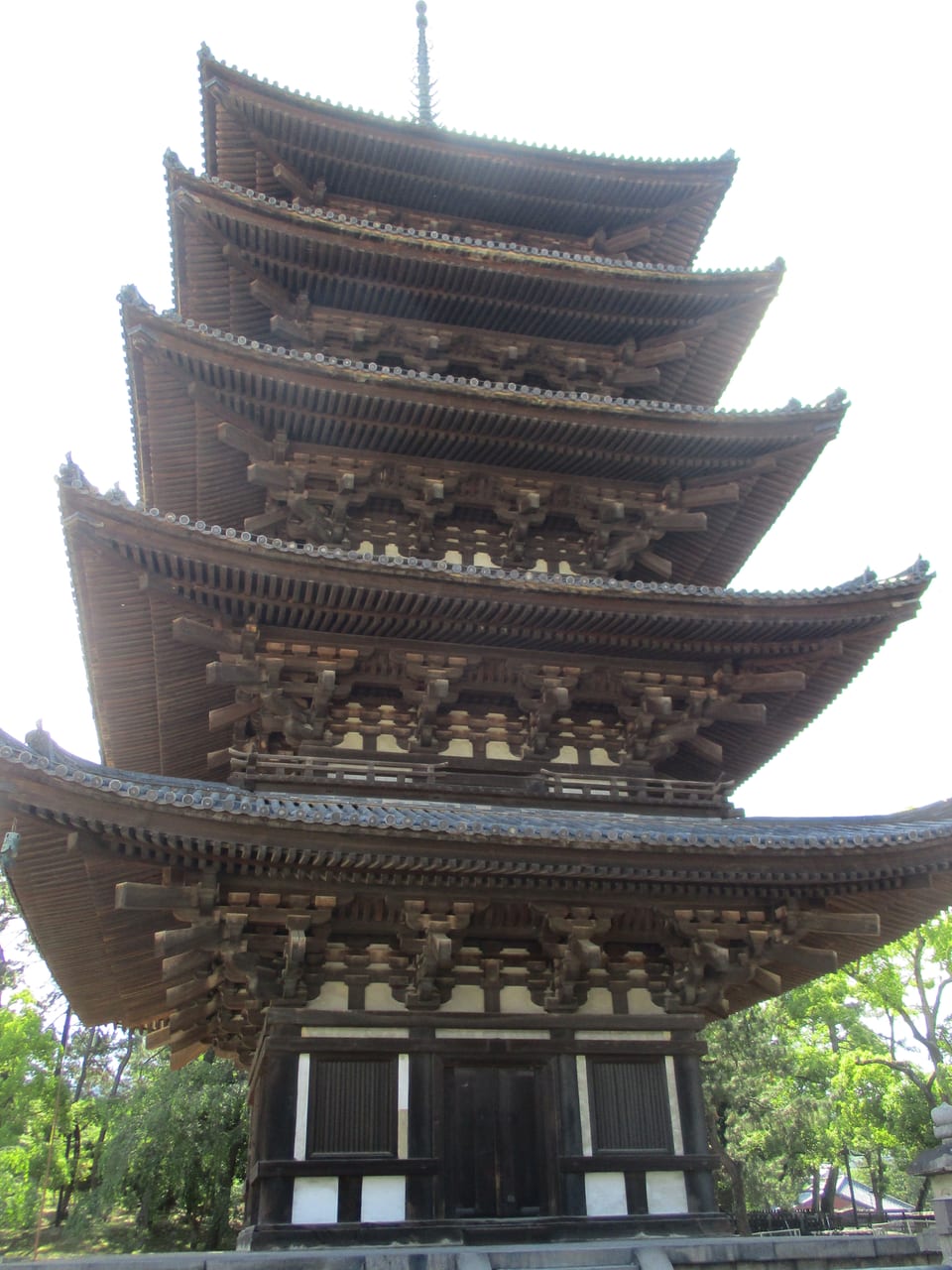
⚠️ Kofukuji is the one entry here whose status is genuinely unclear. Kofukuji's official pages still list the demon-chasing rite and bean throwing, but no official notice, on the temple's homepage or news section, confirms whether the rite runs during the five-storey pagoda's conservation works. Secondary sources report changes for 2026, which is not an official announcement. Treat Kofukuji as a candidate and confirm on the official page in January of the year you travel.
This is also the temple whose own pages disagree with each other, as noted in section 1 — the index says "the day of Setsubun", the detail page says "3 February every year". Which is oddly instructive: even a temple's own website carries the fixed-date assumption. For Kofukuji's regular admission and hours, see the Nara Park and Todaiji guide.
Kasuga Taisha, Nara — the one with no beans at all
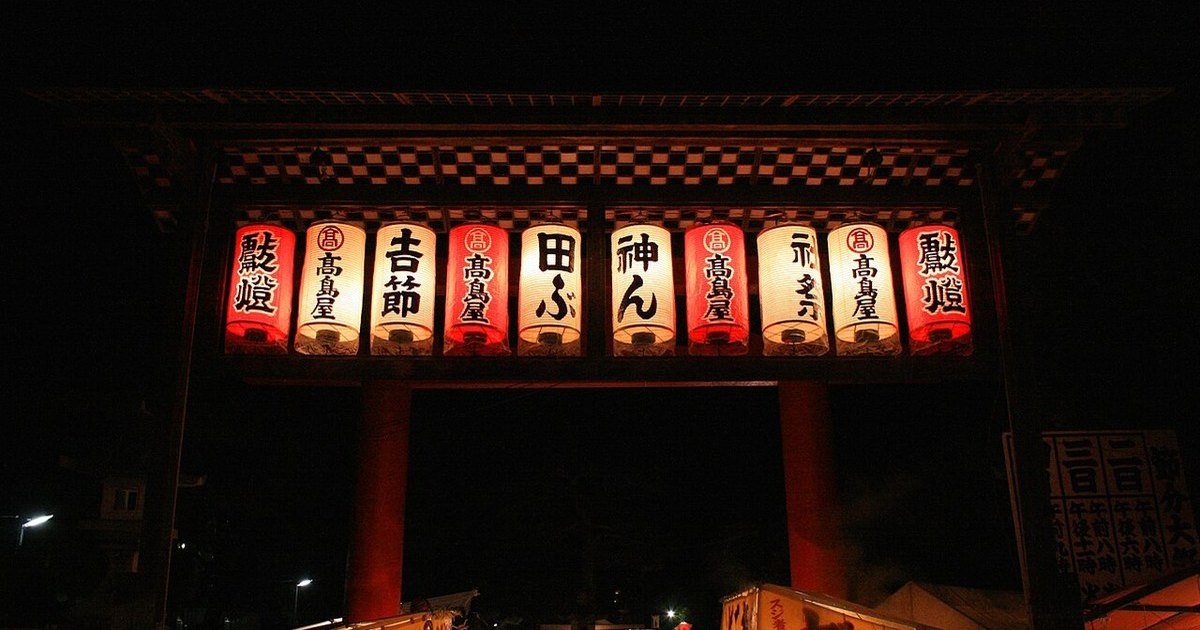
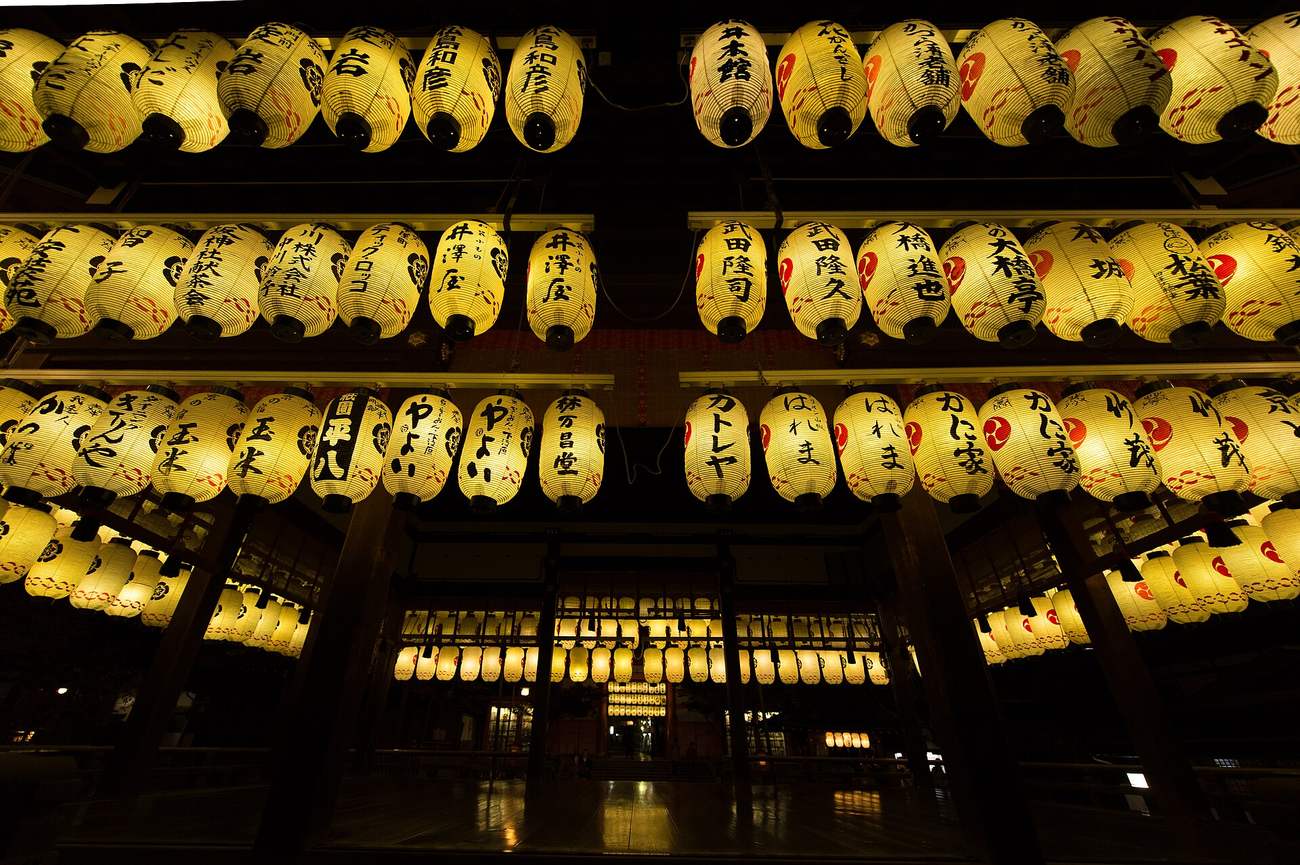
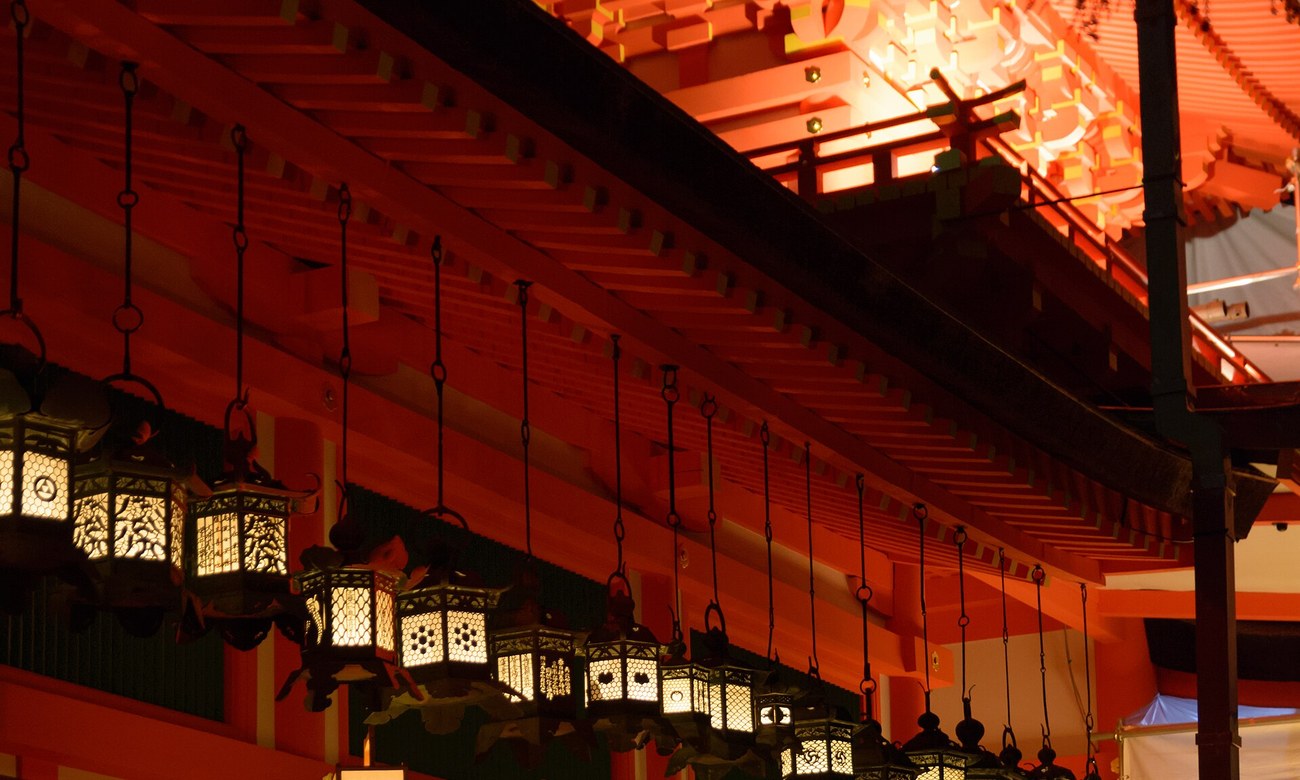
Of the seven, only this one lights lanterns instead of throwing beans — and it is, to my eye, the most photogenic thing happening in Japan on Setsubun night.
Kasuga Taisha's February page gives the date as "the day of Setsubun", which is exactly right. The published schedule runs bugaku court dance from around 17:30, all lanterns lit from around 18:00, and closing at around 20:30. The scale: roughly 3,000 lanterns lit simultaneously — the shrine elsewhere breaks this down as about 2,000 stone lanterns plus about 1,000 hanging bronze ones — across the Naoraiden and the precinct generally.
On cost: the inner corridor special worship is ¥700, and lanterns may be dedicated for an offering of ¥3,000 or more. To be clear, general worship in the grounds is free; the corridor fee is the upgrade that puts you among the densely hung bronze lanterns — which is what you need for the photograph everyone associates with this shrine.
My honest recommendation: if you can attend only one Setsubun event in Nara, choose the lanterns over the daytime bean throwing. The reasoning is scarcity. Bean throwing happens at essentially every temple and shrine in Japan on that day; three thousand lanterns burning at an ancient shrine happens twice a year. Kasuga Taisha's regular information — lantern counts, worship hours, how it fits a Nara day trip — sits in the Nara day-trip guide.
Other February rites there: Kinen-sai on 17 February at 10:00 and Tencho-sai on 23 February at 10:00, with misfortune-averting prayers received throughout the month.
Shitennoji, Osaka — Setsubun without bean throwing
Shitennoji earns its place as a deliberate counterexample: a Setsubun observance does not have to involve beans at all.
The official February page lists the Setsubun Hoshi-matsuri Great Goma Rite, from 10:00 on 3 February, at the Rokujido: "an image of Fudo Myoo is enshrined in the hall, a goma altar is set up, and prayer sticks are cast into the flames in a rite for averting misfortune and fulfilling wishes." Published costs: goma sticks from 300 yen, prayers from 3,000 yen, special prayers from 5,000 yen. The same day at 13:30 there is a Ganzan Daishi service.
⚠️ An important boundary: Shitennoji's official February page lists neither bean throwing nor the famous "Doya Doya" rite (Doya Doya closes the temple's New Year shusho-e on 14 January, a different season entirely), so neither appears in this guide. Shitennoji's role here is the quiet contrast: if crowds scrambling for beans is not your idea of a good evening, a hall of flame and chanting is the other kind of Setsubun.
The seven at a glance
| Place | What makes it different | Source status |
|---|---|---|
| Yoshida Shrine (Kyoto) | Surviving Heian court tsuina, plus a huge ritual fire; around 800 stalls | Undated standing page → typical year; no official times |
| Yasaka Shrine (Kyoto) | Maiko from four geisha districts throwing in rotation; fullest published detail | Undated standing page → typical year |
| Naritasan Shinshoji (Chiba) | Largest scale; the public can apply to throw; only "fortune in" is called | Reiwa 7 special page, now removed; Reiwa 9 typically published in January |
| Sensoji (Tokyo) | Edo's first large-scale Setsubun; "senshu banzai" plus the Fukuju no Mai | Standing page → typical year; no official times |
| Kofukuji (Nara) | Tsuina-e with red, blue and black demons | Typical year; ⚠️ confirm in January whether it runs |
| Kasuga Taisha (Nara) | No beans — around 3,000 lanterns lit at once | Standing February page → typical year |
| Shitennoji (Osaka) | Pure prayer: the Setsubun Hoshi-matsuri goma rite | Standing February page → typical year |
(Kinpusenji in Yoshino, which calls "demons in too", is discussed in section 5 but omitted from this table because I could not obtain the temple's own page for the rite.)
9. Practicalities: cost, access, and catching beans
| Question | What the official sources support |
|---|---|
| Can foreign visitors attend? | Yes, with no procedure at all. Jinja Honcho's English Q&A states there are "no specific restrictions for visitors of other religions or faiths". Setsubun ceremonies are public; you simply stand in the grounds. |
| Is there an admission charge? | No. None of the seven charge to watch bean throwing, the tsuina rite or the lantern lighting. Charges attach to optional extras: Yasaka fukumame 300 yen, Kasuga inner corridor ¥700, Shitennoji goma sticks from 300 yen, Naritasan's public bean throw (10,000 yen in the Reiwa 7 edition). |
| Can I throw beans myself? | Naritasan's "kaiun mamemaki" is the only route I found officially open to the general public — 100 per session, primary school age and up, advance application required, no telephone applications. Elsewhere, throwers are selected or apply in advance, and officials do not state whether overseas visitors may apply. |
| Will I catch anything? | Beans yes, rarities no. Naritasan throws 860 kg of soybeans plus 400 kg of peanuts per ceremony; catching beans is easy. But only 365 sword amulets go out per session. Yasaka also warns that thrown beans carry no raffle ticket. Do not build a day around a rare item. |
| How crowded? | The only official figure is Yoshida Shrine's own "about 500,000 in a typical year", alongside roughly 800 stalls. No other shrine publishes an official figure, and this guide quotes no unofficial ones. |
| Can I drive? | Yoshida Shrine states plainly that its temporary car park is unavailable during the Setsubun festival and asks visitors to use public transport. No Setsubun-specific traffic notices were found for the other sites, so none are claimed here. |
Photography: one official rule that Setsubun makes very easy to break
Jinja Honcho's English guidance is that buildings and grounds may usually be photographed, some areas may be restricted, staff instructions take precedence, and you should not photograph people without their permission.
Applied to Setsubun, that last clause matters more than usual. Yasaka's maiko bean throwing is the single most photographed moment of the season, and also the one where a lens in someone's face is most likely. Shoot the platform, the arc of beans in the air, the lit lanterns — do not push a camera into a maiko's face. Kasuga Taisha's Mantoro is a tripod-and-long-exposure situation, but the precinct is crowded, so check for on-site instructions before setting up.
10. Fitting Setsubun into a February 2027 trip
Everything above, condensed into how I would actually plan it.
- Setsubun 2027 is Wednesday 3 February, which is good news. It is not a weekend, so Kyoto's Yoshida and Yasaka programmes run on a weekday afternoon (Yasaka's earliest is 11:00, latest 16:00) with lighter crowds than a weekend equivalent. And because Setsubun is not a holiday, trains, shops and hotels behave completely normally — you do not have to restructure the trip around it.
- Kyoto supports two ceremonies in one day. Yasaka publishes exact times; Yoshida's fire rite is "from the afternoon". ⚠️ Since Yoshida gives no clock times, build the day around Yasaka's fixed slots and treat Yoshida as the flexible second stop — not the other way round.
- Nara is the no-beans route, and my personal pick. Kasuga Taisha's lanterns run 17:30 dance, 18:00 full lighting, 20:30 closing — the golden three hours of Setsubun night. Pair it with Kofukuji's Tsuina-e in the daytime (if it runs that year) and the Nara Park area in between; everything is walkable. Demons chased in the afternoon, three thousand lanterns after dark — the loudest and quietest faces of Setsubun in one day.
- Kanto: Naritasan to participate, Sensoji for atmosphere. Naritasan needs an advance application and refuses phone applications; Sensoji needs none, but publishes no times, so arrive early.
- Collect the rest of the week while you are there. Early February is dense: the Sapporo Snow Festival opens within days of Setsubun, and Kobe Luminarie finishes around the same window. To decide whether February suits you at all, the best time to visit Japan weighs the seasonal trade-offs, and the month-by-month weather and packing table matters more than usual here, because most of these ceremonies are watched standing outdoors in one of Japan's coldest months.
- On etiquette, one sentence is enough: clap at a shrine, press your palms together silently at a temple. Setsubun happens at both, and that covers you. The full sequence — bowing at the torii, the water pavilion, two bows two claps one bow — is in the etiquette guide. And note that plenty of temples beyond my seven mark the day: Katsuoji near Osaka lists Setsubun in its annual calendar too, so Kansai in particular offers far more options than one shortlist can hold.
Finally, the limits of this guide, stated plainly, because that is more useful than pretending to omniscience. The 2027 date is officially published and you can rely on it. Almost everything else — individual ceremony times, whether a given rite runs, limited amulets — is announced by each temple in January. Kofukuji's status, Naritasan's Reiwa 9 times and fee, and Kinpusenji's schedule are all left deliberately blank here rather than guessed. Check the current year's official page before you travel. What this guide gives you is the rules, the history and a way of judging what you read elsewhere — not that year's timetable.
Frequently Asked Questions
- Q1:What is Setsubun, and when is Setsubun in Japan in 2027?
- Setsubun is the day before risshun, the astronomical start of spring — a folk calendar marker that Japan treats as the eve of the old lunar year, celebrated by throwing roasted soybeans to drive out misfortune. In 2027 it falls on Wednesday, February 3, and that is not a calculation on my part: the National Astronomical Observatory of Japan publishes an annual almanac, and the Reiwa 9 (2027) edition lists "Setsubun, February 3" directly in its table of seasonal markers, alongside risshun at 10:46 on February 4 Japan Standard Time. The page itself states it was released on February 2, 2026. The next part is the one that is easy to get wrong: Setsubun is not permanently February 3. The observatory runs a dedicated page titled, roughly, "the date of Setsubun starts to move", whose opening line says the date "is not fixed, and in Reiwa 3 (2021) it becomes February 2" — the first time it was not the 3rd in 37 years, and the first February 2 in 124 years. Recent actual values: 2021 and 2025 were February 2; 2026 and 2027 are February 3.
- Q2:Why does the date of Setsubun move, and which future years will fall on February 2?
- The mechanism is genuinely elegant. Setsubun means "dividing the seasons", and originally there were four of them — the eve of the start of spring, summer, autumn and winter. Only the spring one survived, which is why officials can state that "once risshun is determined, Setsubun is determined as the day before it". And risshun is not a chosen date; it is the instant the sun reaches 315 degrees of celestial longitude. Because a tropical year runs 365.2422 days against a 365-day calendar, that instant slips about six hours later each year, then gets pulled back by each leap year. Drift far enough and risshun slides from February 4 into February 3, dragging Setsubun onto February 2. The clearest illustration is 2021, when risshun landed at 23:59 on February 3 — one minute from being February 4. As for which future years fall on the 2nd, here is the honest answer: the observatory publishes only one year ahead, in the first official gazette each February, a system in place since 1964. As of August 2026 the furthest official value is 2027. Tidy tables showing "2029, 2033, 2037…" are private extrapolation, not published data. February 2028 will be confirmed in February 2027.
- Q3:How many soybeans are you supposed to eat — your age, or your age plus one?
- Official sources genuinely disagree, so I will lay both out. The temples say age plus one. Sensoji in Asakusa states that eating "one more bean than your age" brings a year free of illness. Kofukuji in Nara says the same and then supplies the reason, which is the single best line I found in this entire research round: "this is a remnant of Setsubun having been held at the turn of the year." On the old calendar, risshun begins the year, so Setsubun is New Year's Eve — the extra bean is next year's bean, not a random lucky increment. The Ministry of Agriculture, Forestry and Fisheries, however, writes "eat as many beans as your age", with no plus one. Both are official, regional habits differ, and I am not going to pretend there is one answer — though I would eat the temple version purely because the reasoning is better. On the beans themselves, the ministry describes roasted soybeans, called fukumame, and explains that people linked mame (bean) to mametsu (destroying demons), using a food believed to hold spiritual power to expel "sickness and misfortune — that is, the oni". The popular claim that beans must be roasted because a sprouting raw bean would be unlucky does not appear in any of the four ministry documents checked. Officials state the fact, not the reason.
- Q4:Is ehomaki an ancient tradition, and which direction do you face in 2027?
- It is not ancient, and the clearest source on that is the Japanese government itself. The agriculture ministry's feature page on Setsubun opens with "there are various theories about the origin of ehomaki", notes one account crediting Osaka merchants in the late Edo to early Meiji period, and then adds the crucial sentence: "it was forgotten for a long time". The revival, officials write, "is said to be a campaign run in 1977 by the Osaka nori wholesalers' association", after which it "spread nationwide through seaweed sales promotion and the marketing strategies of convenience store chains". So the uncut sushi roll you see stacked in every Lawson in early February is a late-1970s marketing success, not a medieval rite. For 2027 the direction is north-northwest. The ministry publishes a table keyed to the ten heavenly stems: kinoe/tsuchinoto years face east-northeast, kinoto/kanoe west-southwest, hinoe/kanoto/tsuchinoe/mizunoto south-southeast, and hinoto/mizunoe north-northwest. 2027 divides by ten with remainder 7 (hinoto) and by twelve with remainder 11 (hitsuji), making it a hinoto-hitsuji year — north-northwest. Phrased precisely: this is derived from the ministry's published rule, not a government announcement of the 2027 direction. One nice detail: elsewhere on the same page officials describe 2023 as "south-southeast, slightly south", which tells you the real system is finer than 16 compass points. Get your phone compass near north-northwest and stop worrying.
- Q5:Can foreign visitors attend a Setsubun ceremony? Is there an entry fee or a booking?
- Yes, with no paperwork, and watching is essentially free. Jinja Honcho's official English Q&A states there are "no specific restrictions for visitors of other religions or faiths", and that applies at Setsubun as much as any other day. Across the seven temples and shrines covered in this guide, no official page charges admission to stand in the grounds and watch the bean throwing, the tsuina rite or the lantern lighting. What costs money are the optional extras, and they differ by site: at Yasaka Shrine, fukumame beans are a 300 yen offering (with a raffle ticket), a sword charm 800 yen, a kushifuda 1,000 yen; Kasuga Taisha charges a 700 yen offering for the inner corridor and 3,000 yen upward to dedicate a lantern; Shitennoji lists goma sticks from 300 yen and prayers from 3,000 yen; Naritasan's participatory bean throw was 10,000 yen in its Reiwa 7 edition. The only thing requiring advance application is Naritasan's "kaiun mamemaki", where officials write "anyone may participate" — 100 people per session, primary school age and up, applications via the temple's reception desk or registered cash mail, and explicitly no telephone applications, with check-in 30 minutes before. Officials do not spell out a route for overseas visitors, and registered cash mail is impractical from abroad. Applying in person on the day is the realistic path, but places fill.
- Q6:Will I actually catch any beans, and can the beans I catch win a prize?
- Two separate questions, and the second one catches people out. Catching beans: Naritasan's Reiwa 7 figures give a sense of scale — a single Setsubun sees 860 kg of soybeans and 400 kg of unshelled peanuts thrown. At that volume, going home with beans is not the hard part. What is scarce is the kenmamori, a sword-shaped amulet, of which officials state only 365 are thrown per session (366 in a leap year) to match the days of the year. That is a lottery. Do not spend a whole day queueing for one. Prizes: Yasaka Shrine publishes a warning that deserves to be quoted before anyone travels — "the fukumame thrown at the bean-throwing do not come with a raffle ticket". Yasaka's raffle works the other way round: you receive fukumame at the amulet desk for a 300 yen offering, get one ticket per bag, draw at the raffle office, and exchange for one of "over ten thousand" prizes; the draw runs on the eve and the day itself, with exchanges from 10:00 to 17:00. So the packet you fought a crowd for is a souvenir, not a lottery ticket. That is the kind of rule you only discover at the worst possible moment, which is exactly why it belongs near the top of a guide.
- Q7:Is Setsubun a public holiday? Will shops and trains be affected?
- No, and nothing shuts. This needs saying because visitors routinely file Setsubun alongside the New Year period, and the two could hardly be more different. New Year is when Japan genuinely closes; Setsubun is an ordinary working day. In 2027 it lands on a Wednesday — people go to work and school, trains run normally, shops and museums open as usual. For a traveller that is good news twice over: the ceremonies happen on a weekday, so crowds are lighter than a weekend equivalent, and you do not have to restructure your accommodation or transport around it. If you want the genuine "what actually closes in Japan" question, that belongs to the New Year period and I covered it in the year-end and New Year opening guide. Worth knowing too: early February is a busy stretch of the Japanese calendar. The Sapporo Snow Festival runs within days of Setsubun, and Kobe Luminarie wraps up around the same window. A first week of February in Japan collects more seasonal events than most people expect.
- Q8:How is Setsubun different from hatsumode and the Japanese New Year?
- They sit on two different calendars, and understanding that unlocks half of this guide. Hatsumode is the first shrine visit of the solar New Year, from January 1 — the world of matsunouchi, hamaya arrows, and returning last year's charms, all of which I cover in the hatsumode guide and deliberately do not repeat here. Setsubun belongs to the lunisolar timeline: risshun is the start of the year in that older sense, so the day before it is that year's eve. Sensoji states it plainly: because risshun falls close to the old lunar New Year's Day, "from the Edo period onward the day before risshun became established as Setsubun, a special day for celebrating the new year while also driving out misfortune". Kofukuji adds that "the year-end Setsubun in particular was felt to carry important meaning, since a new year was being welcomed". So Japan effectively has two New Year's Eves — December 31 on the solar calendar, and Setsubun on the older one. That single fact explains the extra soybean, and it explains why ehomaki descends from ehomairi, a New Year custom that officials say "changed form and was revived as a Setsubun practice".
Read next
Hatsumode 2027: Your First Shrine Visit in Japan
There is no official deadline for hatsumode, and you may pray from the side when it is packed — both straight from the Shinto authority itself.
Japan Shrine Etiquette: How to Pray Step by Step
Temizu, offering and two-bows-two-claps-one-bow, step by step — official rules vs folklore, honestly.
Nara Guide 2026: Todaiji, the Deer Park & Kasuga Taisha
About 40 minutes by Kintetsu from Osaka or Kyoto — the Todaiji Great Buddha, feeding roughly 1,700 free-roaming deer, Kasuga Taisha lanterns, and the Kofukuji pagoda restoration status.
📊 See the 2026 Price Index (JR Pass, DPA, eSIM, Airport Transport) →